Author Guest Post!: The Sum of Our Parts by Tracy Holczer, author of The Secret Hum of a Daisy

Share

“The Sum of Our Parts” by Tracy Holczer

I’ve been thinking a lot lately as to how I became a writer. I used to have it down. I was a writer because I read Little Women and had the run of the library, both at just the right age. But I have come to realize those are just two of many pieces. Once I really reflected, I found so much more, both light and dark. I feel we try so hard to focus on the light, especially those of us who write for kids. But we are who we are because of both. There is no contrast without darkness, and contrast, I believe, is where we find the answers for ourselves. So here is a very incomplete list of the parts of this writer:

  • Loneliness. I was a lonely kid. An only child born at the tail end of the “children should be seen and not heard” era, I had tremendous space to read books and otherwise look to inanimate objects for comfort and camaraderie. I didn’t have any experience with other kids until I went to Kindergarten and was hugely surprised and disappointed when no one wanted me to teach them how to tell time in Roman numerals. I mean, we were there to learn, right? Even the nuns treated me like I was a little off my nut.
  • Sensitivity. I took things hard. Like in second grade when Ms. Parsons got married and would become Mrs. Harrison half way through the year (I abhorred change), or in third grade when Sister Michael Anne read us Martin Luther King, Jr.’s “I Have a Dream” speech. There were several times over my school career that I thought I would die from sadness.
  • Librarians. After my parents told me I couldn’t read anymore because reading was “anti-social”, we moved across the street from a library when I was twelve. I snuck over there every weekend as though my life depended on it. Because it did. Those librarians took me under their wing and always had books to recommend as well as knew when I needed to be left alone to my imaginings. A piece of the writer I have become was conceived in the smelly bean bag chair in the Cupertino Public Library, most likely while reading The Hobbit.
  • Flightiness – otherwise known as Creativity. I was a flighty kid. If one of my teachers read us a book about plants, maybe talking about photosynthesis, but there was a bug on one of the leaves of the plant, and it had strange spots, I would be that kid asking why the bug had spots. My mind never seemed to travel down the right channels. At least not the ones my teachers wanted it to travel down. Every report card I ever received in elementary school pointed out my flightiness and “if she would only apply herself”. I never quite understood what that meant. I get it now, but I so wish they had pointed out my creativity, too. Maybe it wouldn’t have taken me so long to recognize it in myself.
  • Stubbornness.  Holy tamales but I am stubborn. Because I wasn’t a brilliant student, and didn’t finish college, I never really fell into anyone’s spotlight. Teachers liked me, but no one ever singled me out. I floated down the stream of public school with my mostly B’s, sometimes A’s, not causing any trouble. No one expected very much of me and I didn’t expect very much of myself. It wasn’t until I decided I would teach myself to write that I truly found my stubbornness to be useful.
  • BOOKS. All the books.

As a writer for children, I find myself in the incredible position to be able to possibly, maybe, in my wildest dreams, make a difference. I hope my books will bring both light and dark to kids so they get the whole spectrum of what it feels like to be alive and in charge of their destinies. I hope to be able to share my journey with those children so they really get the fact that they are a work in progress and even the most lonely, sensitive, and flighty of us can do great things if we set our stubborn minds to it. We are the sum of our parts in the best possible way.


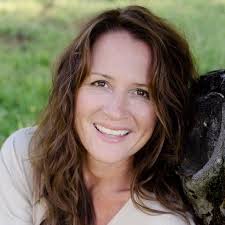
tracy

About the Author: At eleven years old, Tracy Holczer read Little Women, and decided she wanted to be a writer. Feathered ball-point pen in hand, she wrote short blood-curdling stories and long, angst-ridden poems through the rest of her childhood. When she was a teen, her family moved to Grass Valley, California where she convinced her mother to get her glasses, even though she didn’t need them, so she would look smart. This is where Tracy decided she would be the next John Steinbeck and write about the glory of trees.

When she grew up, she took a few detours and worked as a sales clerk, a credit analyst, and a waitress in a honky-tonk bar. Somewhere in there, single momhood happened, so she added impersonating Santa Claus and Spider Assassin to her list of jobs. Eventually, she ended up in Southern California, married a General Contractor and lived happily ever after where she doesn’t have to sell ties, crunch numbers or wear a long white beard. Instead, Tracy gets to raise her three daughters from home, plan things like the Halloween Carnival for the PTA, and write stories.

Tracy Holczer is the author of The Secret Hum of a Daisy due out May 1, 2014. Hum was written in praise of both the imperfection of family, the perfection of nature and all that can be found if you’re willing to learn from your detours.

Tracy’s blog: http://tracyholczer.wordpress.com/
Tracy’s website: http://tracyholczer.com/

Exciting News!
The Secret Hum of a Daisy is an ABA 2014 Indies Introduce New Voices pick for Summer/Fall!
“Holczer presents a tender, transformative exploration of family, loss and reconciliation. The phrasing and the images are beautiful and rich.”—Kirkus Reviews
Starred Review —Publisher’s Weekly

This is definitely a MUST READ this summer!

Signature

**Thank you to Tracy Holczer for her amazing guest post!!**

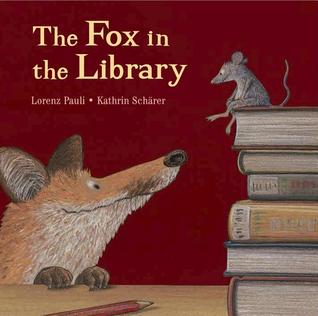
The Fox in the Library by Lorenz Pauli

Share

the fox in the library

The Fox in the Library
Author: Lorenz Pauli
Illustrator: Kathrin Schaerer
Published August 1st, 2013 by NorthSouth

Summary: Fox didn’t come to the library to read a book–he came to catch a mouse! But  Mouse offers the fox a book, Fox gets all sorts of creative new ideas.  Like eating chickens!  Until Chicken points out that chicken bones are dangerous. But then all the animals must band together when the chicken eating, hating-Farmer walks into the library.

Review: I am a sucker for books about bookstores, books, and libraries. I imagine this is the same for all book lovers. The illustrations in this book are bright, and it was very fun to read it to my son. I don’t think you can read too many books about books to kids. They need to understand that there is a world of books out there, and going to the library is cool! Some books lend themselves to silly voices—and this is certainly one of those books. The mouse even mocks the fox for calling the library a “lie-berry.” I suspect that kids won’t ever forget the pronunciation after hearing this book.

Teacher’s Tool For Navigation: This would be a great book to read to children before a trip to the library. It would stir their imaginations and make them excited to discover all of the creatures that may lurk while they visit.

Discussion Questions: How does Mouse outsmart the fox?; What do the animals learn in their trip?; What kinds of books appeal to each of the animals?


We Flagged: “‘Nothing here belongs to you,’ Mouse said with a giggle. ‘You can only borrow things here. And I’ll never be yours. This isn’t the forest; this is the library'” (6).

Read This If You Loved:  Library Lion by Michelle Knudsen, Wild About Books by Judy Sierra, The Boy who was Raised by Librarians by Carla Morris, Tomas and the Library Lady by Pat Mora

Recommended For: 

readaloudbuttonsmall classroomlibrarybuttonsmall

RickiSig

Amulet Books Graphic Novel Teaching Guide

Share

abrams

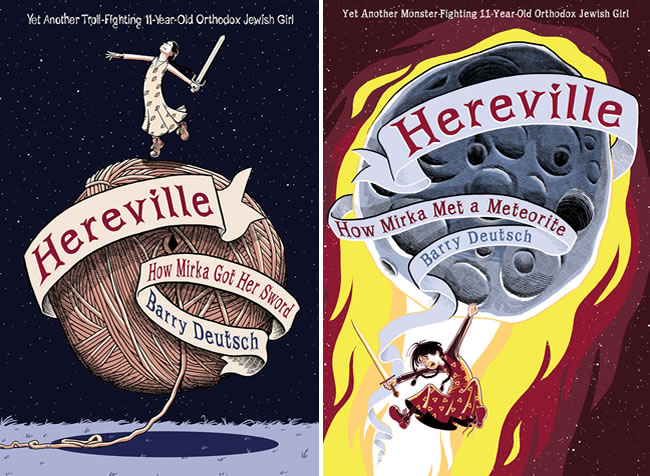
In January, I was contacted by a publicity and marketing associate from Abrams Books/Amulet Books out of the blue. In this email, I was asked to work on a teaching guide about their graphic novels: The Misadventures of Salem Hyde, Nathan Hale’s Hazardous Tales, Hereville, and the Explorer series.

1729025518405488 

13591161135911621729026018405492

1283377017290285

I was beyond honored! And, of course, I said that I would definitely love to do it as I had read all of the graphic novels, and I am a huge fan of them.

First, they asked me to write an introduction about graphic novels and their importance in the classroom. I am a huge advocate for using graphic novels in schools, so I immediately began researching and writing. Here is the introduction:

What are graphic novels? The easiest way to describe graphic novels is to say that they are book-length comic books. However, a more complex definition that educators and librarians use is “book-length narratives told using a combination of words and sequential art, often presented in comic book style” (Fletcher-Spear, 37). Graphic novels are not written in just one genre; they can be in any genre, since graphic novels are a format/medium. Graphic novels are much like novels, but they’re told through words and visuals. They have all narrative elements, including characters, a complete plot, a conflict, etc.

Middle grade and young adult graphic novels cover a wide spectrum of themes and topics. Some common themes found in graphic novels for this age include the hero’s journey; overcoming hardship; and finding one’s identity. For example, in Hereville, we meet Mirka, an everyday girl who learns to use her brains and brawn to overcome her foes. In The Misadventures of Salem Hyde, Salem is working on finding out just who she is (both as a witch and as a person) with the help of her friend Whammy. Graphic novels can cross curricular lines. One example is the Nathan Hale’s Hazardous Tales series—comical nonfiction that takes historical events and presents them in interesting ways, using graphics and humor that will make students want to learn even more about the historical time periods. In the Explorer series, stories include topics such as animal adaptation, volcanic eruptions, and the fate of humanity. Like novels, graphic novels offer opportunities in all subject areas to extend students’ thinking.

Over the past few years, graphic novels have become a hot topic, growing in popularity with both children and educators. While many teachers are beginning to include them in the classroom, there are still teachers, administrators, and librarians who struggle with including this format in their schools. So, why should you use them in your classroom and have them available for students?

  • Graphic novels can make a difficult subject interesting and relatable. (Cohen)
  • Students are visual learners, and today’s students have a much wider visual vocabulary than students in the past. (Karp)
  • Graphic novels can help foster complex reading skills by building a bridge from what students know to what they still have to learn. (NCTE)
  • Graphic novels can help with scaffolding when trying to teach higher-order thinking skills or other complex ideas.
  • For students who struggle to visualize while they read, graphic novels provide visuals that shows what good readers do. (NCTE)
  • Many graphic novels rely on symbol, allusion, satire, parody, irony, and characters/plot and can be used to teach these, and other, literary devices. (Miller; NCTE)
  • Often, in between panels (called the gutter), the reader must make inferences to understand how the events in one panel lead to the events in the next. (McCloud)
  • Graphic novels can make differentiating easier. (Miller)
  • Graphic novels can help ELL (English Language Learners) and reluctant and struggling readers since they divide the text into manageable chunks, use images (which help students understand unknown vocabulary), and are far less daunting than prose. (Haines)
  • Graphic novels do not reduce the vocabulary demand; instead, they provide picture support, quick and appealing story lines, and less text, which allow the reader to understand the vocabulary more easily. (Haines)
  • Research shows that comic books are linguistically appropriate reading material, bearing no negative impact on school achievement or language acquisition. (Krashen)
  • Students love them.

Although you can find graphic novel readers at all reading levels, graphic novels can truly be a gateway to the joys of reading for reluctant and struggling readers. Reluctant readers often find reading to be less fun than video games, movies, and other media, but many will gravitate toward graphic novels because of the visuals and the fast pace. Struggling readers will pick up graphic novels for these reasons as well but also because the graphic novel includes accommodations directly in the book: images, less text, etc.

All in all, graphic novels can interest your most reluctant and struggling readers and also extend all of your readers, including your most gifted.  

Resources

  • Cohen, Lisa S. “But This Book Has Pictures! The Case for Graphic Novels in an AP Classroom.” AP Central. CollegeBoard.
  • Fletcher-Spear, Kristin, Merideth Jenson-Benjamin, and Teresa Copeland. “The Truth About Graphic Novels: A Format, Not a Genre.” The ALAN Review Winter (2005): 37­–44.
  • Haines, Jennifer. “Why Use Comics in The Classroom?” Comic Book Daily. N.p., 20 Mar. 2012.
  • Karp, Jesse. “The Case for Graphic Novels in Education.” American Libraries. N.p., 1 Aug. 2011.
  • Krashen, Stephen. The Power of Reading. Englewood, CO: Libraries Unlimited, Inc. 1993.
  • McCloud, Scott. Understanding Comics. Northampton, Mass.: Kitchen Sink, 1993. 
  • Miller, Andrew. “Using Graphic Novels and Comics in the Classroom.” Edutopia. N.p., 11 Jan. 2012.
  • NCTE, comp. “Using Comics and Graphic Novels in the Classroom.” The Council Chronicle September (2005) http://www.ncte.org/magazine/archives/122031.

 I then began reading and rereading the graphic novels and planning activities and discussion questions that could go along with each book. I was asked to come up with activities for all subjects, so this pushed me out of my comfort zone a bit; however, I loved trying to figure out how these amazing books could be used throughout all classes.  Some examples:

  • Salem Hyde [Science]: At the end of Spelling Trouble, Salem and Whammy have to rescue a whale, but it is done in a very unconventional way. How would real scientists rescue a whale in distress?
  • Hazardous Tales [Language Arts/History]: The Provost (a British soldier) and Nathan Hale disagree about the cause of the Revolutionary War. Based on One Dead Spy, what events caused the Americans to revolt? Do you agree with the Provost or with Nathan Hale about the causes of the war? (This could also be used as a debate question in class.)
  • Hereville [Math]: On pages 31–32 [of Hereville 1], Mirka is given a math problem: Three people are splitting a cake, so they cut it into thirds. But then a fourth person shows up. How can they cut the cake so that each person gets an equalamount of cake? (Mirka comes up with a solution, but are there others?) What if two more people had shown up? Three more? Four more? 
  • Explorer [History]: On page 84 [of The Mystery Boxes], in The Soldier’s Daughter, the man says, “War is a dark power.” Where in history have we seen war consume someone? Have there been wars that did not need to be fought? Research past wars and determine if a war was started because of the need for power or if there was a legitimate reason for it. 

These are just some examples.

I am happy to share the entire teaching guide with you. It can be found at http://www.abramsbooks.com/academic-resources/teaching-guides/ along with other teaching guides. The direct link to the PDF is http://www.abramsbooks.com/pdfs/academic/GraphicNovels_TeachingGuide.pdf.

I hope you find it useful as I am very proud of it,

Signature

We Were Liars by e. lockhart

Share

we were liars

We Were Liars
Author: e. lockhart
Expected Publication: May 13th, 2014 by Delacorte

Summary: A beautiful and distinguished family.
A private island.
A brilliant, damaged girl; a passionate, political boy.
A group of four friends—the Liars—whose friendship turns destructive.
A revolution. An accident. A secret.
Lies upon lies.
True love.
The truth.

We Were Liars is a modern, sophisticated suspense novel from National Book Award finalist and Printz Award honoree e. lockhart.

Read it.
And if anyone asks you how it ends, just LIE.

Review: I can’t tell you anything about this book without giving anything way, and I would never do that to you, so let me just say this—this is a book that I will remember forever. It is haunting and sent chills up my spine. I was sucked into the story of this beautifully screwed up family with too much money for its own good.

Teacher’s Tools for Navigation: This would bridge beautifully with The Great Gatsby. There are so many parallels, and I can’t write them here, or I will give away too much of the plot. The figurative language in this title is also stunning. English teachers will go gaga over the pages upon pages of text that can be used for close reading. It made me want to go back to teaching English!

Discussion Questions: What does this story teach us about humanity?; What drives each of the family members?; What does Gat’s character add to the story?; How does lockhart unravel the plot? What makes her an effective writer?; What is the message of this complex text?

We Flagged: “If you want to live where people are not afraid of mice, you must give up living in palaces” (Chapter 40).

Please note: The above quote is from the Advanced Reader Copy. The chapter numbers is included instead of page numbers because the e-reader did not provide page numbers. The quotes may change when the book is published.

Read This If You Loved: The Great Gatsby by F. Scott Fitzgerald, I Will Save You by Matt de la Peña, If I Stay by Gayle Forman

Recommended For:

closereadinganalysisbuttonsmall litcirclesbuttonsmall classroomlibrarybuttonsmall

RickiSig

Locomotive by Brian Floca (Kellee’s Review)

Share

NF PB 2014

Nonfiction Picture Book Wednesday

Nonfiction Picture Book Wednesday is hosted by Kid Lit Frenzy and was started to help promote the reading of nonfiction texts. Most Wednesdays, we will be participating and will review a nonfiction text (though it may not always be a picture book).
Be sure to visit Kid Lit Frenzy and see what other nonfiction books are shared this week!

locomotive

Locomotive
Author and Illustrator: Brian Floca
Published September 3rd, 2013 by Atheneum Books for Young Readers

Goodreads Summary: The Caldecott Medal Winner, Sibert Honor Book, and New York Timesbestseller Locomotive is a rich and detailed sensory exploration of America’s early railroads, from the creator of the “stunning” (Booklist)Moonshot.

It is the summer of 1869, and trains, crews, and family are traveling together, riding America’s brand-new transcontinental railroad. These pages come alive with the details of the trip and the sounds, speed, and strength of the mighty locomotives; the work that keeps them moving; and the thrill of travel from plains to mountain to ocean.

Come hear the hiss of the steam, feel the heat of the engine, watch the landscape race by. Come ride the rails, come cross the young country!

My Review: Rhythm. Onomatopoeias. (Well-researched) History. Gorgeous (and historically accurate) illustrations. Lyrical narrative. Unique point of view. This book has everything.

YOU (second person POV!) are a passenger on a train cross America with your family in 1869. Throughout the book, you will encounter many different landmarks, experience things on a train very few had at this time in history, and learn about the intricacies of the train. So fascinating! And all told in rich, beautiful language. It is hard to even share much more about the book because it is such an experience.

Check out Ricki’s review of Locomotive as well HERE.

Teachers’ Tools for Navigation: I would LOVE to read this to kids. There are so many places to stop and discuss and research and learn, but never without an enthralling story accompanying.  It would be a great book to use across subjects. There are definitely opportunities for all subjects: social studies (trans-continental travel, history, trains); science (the science of steam engines); math (travel); reading/writing (onomatopoeia, point of view, rhythm).

Also, and this is fresh on my mind because I just read it, but I would love to read this and The Donner Dinner Party and then look at the two journeys. How long did each take? Dangers? It would be an interesting look at how trains truly changed transportation.

Discussion Questions: How does having the book in 2nd point of view make it more enthralling?; What onomatopoeias were used in the book? How did these words help suck you into the story?; How did the author’s rhythm make you feel like you are actually on the train?; What are the landmarks that were passed on the trans-continental railroad? Why are these landmarks significant?; How does a steam engine work? What are the jobs of all of the different people on board?

We Flagged:
“Here is how this road was built,
with a grunt and a heave and a swing,
with the ring of shovels on stone,
the ring of hammers on spikes:

CLANK CLANK CLANK!

Men came from far away
to build from the East,
to build from the West,
to meet in the middle.

They cleared the rocks
and dug the tunnels.
They raised the hammers
and brought them down—

“Three strokes to the spike,
ten spikes to the rail!”

CLANK CLANK CLANK!”

Read This If You Loved: The Donner Dinner Party by Nathan Hale, Train by Elisha Cooper

Recommended For: 

readaloudbuttonsmall closereadinganalysisbuttonsmall classroomlibrarybuttonsmall

Signature

Bruised by Sarah Skilton

Share

bruised

Bruised
Author: Sarah Skilton
Published March 5, 2013 by Amulet/Abrams

Goodreads Summary: Imogen has always believed that her black belt in Tae Kwon Do made her stronger than everyone else–more responsible, more capable. But when she witnesses a holdup in a diner, she freezes. The gunman is shot and killed by the police. And it’s all her fault.

Now she’s got to rebuild her life without the talent that made her special and the beliefs that made her strong. If only she could prove herself in a fight–a real fight–she might be able to let go of the guilt and shock. She’s drawn to Ricky, another witness to the holdup, both romantically and because she believes he might be able to give her the fight she’s been waiting for.

But when it comes down to it, a fight won’t answer Imogen’s big questions: What does it really mean to be stronger than other people? Is there such a thing as a fair fight? And can someone who’s beaten and bruised fall in love?

My Review and Teachers’ Tools for Navigation: Imogen is broken and she must overcome this feeling of hopelessness that surrounds her constantly. What an intense way to introduce us to a character? We then go on a journey with Imogen as she tries to rebuild her life, her memories, her friendships, and her family.

At first I struggled with this book because the timeline was choppy, and Imogen was hard to pinpoint. But then, through the flashbacks, Imogen starts to become clearer to us, the reader, and Imogen’s memories start to become clearer to her. Then you are so sucked into wanting to know everything, and you can only know everything if you stick with the book and see Imogen’s memories as they are revealed. This is a pretty brilliant tactic in making the reader feel like they are in the protagonist’s brain.

Bruised actually reminds me a lot of Speak by Laurie Halse Anderson. Both young ladies are thrown into a tragedy, let that tragedy eat away at their hearts and souls, and have to figure out how to find themselves again. Truly a remarkable journey to go on with a character.  And, like Speak, there are some intense topics/themes dealt with in Bruised that will definitely grab a teen’s attention: sibling rivalry, a disabled parent, disconnected family, friendship, sex, love, survival, and martial arts. It is one of those books that teens need to read, so they can learn to become resilient and to overcome whatever is in their path.

Discussion Questions: Is it ever okay to lie?; Would you have been able to forgive your best friend if she’d done what Shelly did?; Was it right of Imogen to call Grant down during the demonstration?; Why was having Ricky there such an important part of Imogen’s recovery?

We Flagged: “Don’t you recognize me?” says Ricky after a moment.
Confused, I force myself to look up from the floor, up his legs and along his body, until I’m looking him in the eyes.
I hear gunshots, the cashier crying, and the police sirens, but I don’t look away.
He’s my friend from under the table.” (p. 60)

“Today, eleven days later, I slide down the wall of my own shower and curl up in a ball, tuck my knees under my chin, and wrap my arms around my head. I’ve taken showers since the diner, but this one’s different. Get smaller. Small as you can be. Low to the ground is comforting, standing up is bad. Why is standing up bad? What happins if you stand up? (You don’t want to know.) Reset button. Start at the beginning. Gretchen’s in the bathroom when the gunman comes in. I see the glint of his gun, and I hide under the table. There’s Ricky, under a different table, he brings his finger to his lips. Shh…” (p. 95-96)

Read This If You Loved: Speak by Laurie Halse Anderson, Stained by Cheryl Rainfield, Rape Girl by Alina Klein

Recommended For: 

classroomlibrarybuttonsmall

Signature

Each Kindness by Jacqueline Woodson (Ricki’s Review)

Share

Each Kindness

Each Kindness
Author: Jacqueline Woodson
Illustrator: E.B. Lewis
Published October 2nd, 2012 by Nancy Paulsen Books

Summary: Each kindness makes the world a little better

Chloe and her friends won’t play with the new girl, Maya. Maya is different–she wears hand-me-downs and plays with old-fashioned toys. Every time Maya tries to join Chloe and her gang, they reject her. Eventually, Maya plays alone, and then stops coming to school altogether. When Chloe’s teacher gives a lesson about how even small acts of kindness can change the world, Chloe is stung by the lost opportunity for friendship, and thinks about how much better it could have been if she’d shown a little kindness toward Maya.

This unforgettable book is written and illustrated by the award-winning team that created The Other Side and the Caldecott Honor winner Coming On Home Soon. With its powerful message and striking art, it will resonate with readers long after they’ve put it down.

Review: This is a beautiful story that would be FANTASTIC for the classroom. Students of any age can learn from this book, and I would read it to my class on the very first day of school. It is easy to get caught up in drama and gossip, and Jackie Woodson reminds us how hurtful this can be. I am so glad that I own a copy of this book. I plan to read it to my son very often because the lessons are so important, and the story is simply stunning. Usually, I don’t review a book that Kellee has also reviewed on Unleashing Readers, but I couldn’t help but share my thoughts about this incredible text.

Teacher’s Tool For Navigation: I would be remiss if I didn’t direct you to Kellee’s post about this book. She did a fantastic activity with her class that used multi-flow maps.

One of my favorite parts about this book is that it doesn’t have a happy ending. I would love to discuss this with students–why might this be? Is Woodson teaching us something? Then, we might explore other books that don’t have happy endings and discuss why authors might do this intentionally and how it might impact readers’ feelings about the books. Students are notorious for disliking sad endings, so I think this would provoke much discussion.

This book can be both preventative and reactionary to bullying issues in the classroom/school community. While I would read it at the beginning of the school year, I could also see it as an effective tool for teachers who are having issues with bullying during the school year.  This book makes us want to be better people.
Discussion Questions: Why is Chloe so mean to Maya?; What do we know about Maya? Why do you think Woodson characterizes her this way?; Why does this book end in an unhappy way? What does it teach us?; How might we spread kindness?

We Flagged: “And on that first day, Maya turned to me and smiled. But I didn’t smile back. I moved my chair, myself and my books a little farther away from her. When she looked my way, I turned to the window and stared out at the snow” (6).

Read This If You Loved:  Unicorn Thinks He’s Pretty Great by Bob Shea, Endgame by Nancy Garden, Thirteen Reasons Why by Jay Asher,  The Silver Linings Playbook by Matthew Quick, Burn by Suzanne Phillips, The Perks of Being a Wallflower by Stephen Chbosky, Twisted by Laurie Halse Anderson, Everybody Sees the Ants by A.S. King, The Spectacular Now by Tim Tharp, Inexcusable by Chris Lynch

Recommended For: 

readaloudbuttonsmall classroomlibrarybuttonsmall 

RickiSig