Herman and Rosie by Gus Gordon

Share

herman

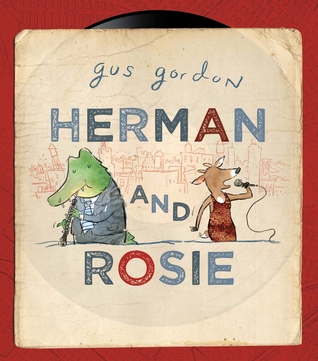
Herman and Rosie
Author and Illustrator: Gus Gordon
Published October 15th, 2013 by Roaring Brook Press

Goodreads Summary: Once upon a time in a very busy city, on a very busy street, in two very small apartments, lived…
 Herman and Rosie. Herman liked playing the oboe, the smell of hot dogs in the winter, and watching films about the ocean. Rosie liked pancakes, listening to old jazz records, and watching films about the ocean. They both loved the groovy rhythm of the city, but sometimes the bustling crowds and constant motion left them lonely, until one night …

My Review: This book is a love note to music and for finding a friend to share your love. This wonderful story is told in a way that makes you fall in love with the characters immediately and feel every up and down with them. Also, the illustrations in this picture book are probably some of my favorite ever. I love the cartoony style mixed with some mixed media. Beautiful.

Teachers’ Tools for Navigation: I think this book will find its most love as a read aloud and as a wait to promote music and other passions; however, the book could definitely be used in other ways in the classroom. The tone and mood of the book takes a drastic turn about halfway through and would be a good introduction to these two narrative elements. It is interesting to look at how the illustrations helped drive the change. Also, there are onomatopoeias throughout that add to the imagery of the book.

Discussion Questions: How does music bring Herman and Rosie together?; Would Herman and Rosie every had become friends without the bad event happening to them?; How are Herman and Rosie similar? Different?

We Flagged: 

“Herman lived on the seventh floor. He liked potted plants, playing the oboe, wild boysenberry yogurt, the smell of hot dogs in the winter, and watching films about the ocean.”

Read This If You Loved: Marvin Makes Music by Marvin Hamlisch, Jazz ABZ by Wynton Marsalis, Ella Fitzgerald and Duke Ellington by Andrea Davis Pinkney, The Fantastic Undersea Life of Jacque Cousteau by Dan Yaccarino

Recommended For: 

readaloudbuttonsmall classroomlibrarybuttonsmall

Signature

All Our Yesterdays by Cristin Terrill [Kellee’s Review]

Share

yesterdays

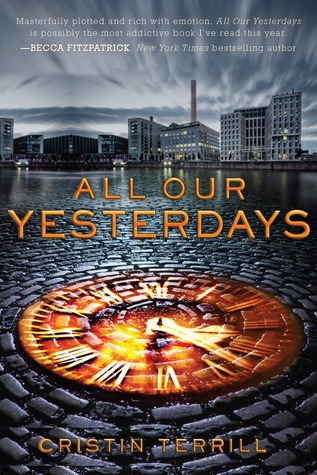
All Our Yesterdays
Author: Cristin Terrill
Published September 3rd, 2013 by Disney Hyperion

Goodreads Summary: What would you change?

Imprisoned in the heart of a secret military base, Em has nothing except the voice of the boy in the cell next door and the list of instructions she finds taped inside the drain.

Only Em can complete the final instruction. She’s tried everything to prevent the creation of a time machine that will tear the world apart. She holds the proof: a list she has never seen before, written in her own hand. Each failed attempt in the past has led her to the same terrible present—imprisoned and tortured by a sadistic man called the doctor while war rages outside.

Marina has loved her best friend, James, since they were children. A gorgeous, introverted science prodigy from one of America’s most famous families, James finally seems to be seeing Marina in a new way, too. But on one disastrous night, James’s life crumbles, and with it, Marina’s hopes for their future. Marina will protect James, no matter what. Even if it means opening her eyes to a truth so terrible that she may not survive it… at least, not as the girl she once was. Em and Marina are in a race against time that only one of them can win.

All Our Yesterdays is a wrenching, brilliantly plotted story of fierce love, unthinkable sacrifice, and the infinite implications of our every choice.

My Review and Teachers’ Tools for Navigation: This is a book that keeps you reading. I couldn’t put it down. I found myself reading whenever I could (including times when I was holding my sleeping son or when I should have been sleeping).  When you find out how Marina and Em are connected, it just blew my mind! I then had to find out how everything was going to turn out. I was just so impressed with everything:

First, the plot. It is so complex and intricate. You have to pay attention to keep up with the timeline, but it isn’t so bad that you’ll get lost. It is so admirable that the author was able to craft such intense timelines and intertwine them seamlessly.

Second, the language. I loved how Cristin Terrill wrote. The imagery throughout transported you into the story.

Third, the suspense. I just HAD to know what was going to happen!

Fourth, the characters. In a way that I’ve never experience before, Cristin Terrill truly gets you into the minds and hearts of the characters. You understand their motives, who they used to be, who they’ll become, all because of the way that Terrill tells the story and crafts her characters. You feel their heartbreak with them (and one particular realization that you find out in the very end just broke my heart and blew my mind), and you are so invested in everything they do.

Finally, the themes. The discussions that would come from this novel would be so interesting. Just the idea of power and corruption that is dealt with would lead to quite a debate.

Ricki also pointed out in her review how fun it would be to have students imagine what they would change if time travel existed.

This text would be a wonderful mentor text to discuss plot and character development, theme, and style. And most importantly, it will be a text that students will be intrigued with, not want to put down, and share with everyone.

Discussion Questions: What would you change if you had the ability to change time?; How far would you go to protect your best friend?; How did Cristin Terrill build suspense throughout the novel?; Why does power lead to corruption? Where have we seen this happen in history?

We Flagged: “Far down the hallway, I hear the clink of a door. Someone is approaching. I bolt upright and lunge for the drain. No telling what the doctor will do if he finds me breaking into it, and if he sees the sheet of paper… The though sends ice through my veins. He’ll kill me for sure. Hands clumsy with rushing, I break the spoon into several pieces and drop them down the drain. I can now make out a pair of heavy boots against the cement. I jam the grating back onto the drain and replace the screws as best I can with fingertips and nails. I swipe up the plastic bag and piece of paper and throw myself at my mattress. I show them both underneath just as Kessler’s face appears at the small window in my cell door.” (p. 9-10)

Read This If You Loved: Chronal Engine by Greg Leitich Smith, Ruby Red by Kerstin Gier, Awaken by Katie Kacvinsky, Lost Time by Susan Maupin Schmid, When You Reach Me by Rebecca Stead, Found by Margaret Peterson Haddix, London Calling by Edward Bloor

Recommended For: 

closereadinganalysisbuttonsmall classroomlibrarybuttonsmall litcirclesbuttonsmall

Signature

Love Letters to the Dead by Ava Dellaira

Share

love letters to the dead

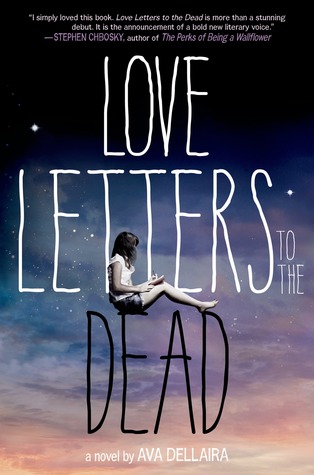
Love Letters to the Dead
Author: Ava Dellaira
Published: April 1st, 2014 by Farrar, Strous, and Giroux

Summary: It begins as an assignment for English class: Write a letter to a dead person. Laurel chooses Kurt Cobain because her sister, May, loved him. And he died young, just like May did. Soon, Laurel has a notebook full of letters to people like Janis Joplin, Amy Winehouse, Amelia Earhart, Heath Ledger, and more; though she never gives a single one of them to her teacher. She writes about starting high school, navigating new friendships, falling in love for the first time, learning to live with her splintering family. And, finally, about the abuse she suffered while May was supposed to be looking out for her. Only then, once Laurel has written down the truth about what happened to herself, can she truly begin to accept what happened to May. And only when Laurel has begun to see her sister as the person she was; lovely and amazing and deeply flawed; can she begin to discover her own path.

Review: Fans of The Perks of Being a Wallflower will fall in love with this story. After her sister’s death, Laurel feels broken. I just wanted to reach in the book and give her a big squeeze. As she writes letters to the dead, she grows and learns more about herself. While most high schoolers may not have experienced a loss like Laurel’s, I think every teen will be able to see themselves in her. Her characterization is authentic and honest. I am including several passages (below) from the book. Rather than describe the power of this book, I want you to get lost in Dellaira’s words.

Teacher’s Tools for Navigation: It may seem a rather obvious assignment for this book, but I think students would truly learn about themselves by writing letters to the dead. I would probably pair this with a mini-research assignment. For example, Laurel knows background information about the people she writes to. She uses this knowledge to make connections to her life.

Discussion Questions: How does Laurel grieve? How does this differ from her parents’ grieving processes?; What commonalities exist across the people Laurel writes to? What specific connections does she make with them?; Do you think Laurel is ready for a romantic relationship? Why or why not?

We Flagged: I can’t help myself. Enjoy the beautiful quotes below. I apologize that there aren’t page numbers, but I wrote the location in the e-book!

“Maybe if I can learn to be more like her, I will know how to be better at living without her.” (Loc 185, 5%)

“I think a lot of people want to be someone, but we are scared that if we try, we won’t be as good as everyone imagines we could be.” (Loc 1651. 43%)

“When we are in love, we are both completely in danger and completely saved.” (Loc 1763, 46%)

“Truth is beautiful, no matter what the truth is. Even if it’s scary or bad. It is beauty simply because it’s true. And truth is bright. Truth makes you more you. I want to be me.” (Loc 1969, 51%)

“I have found that sometimes, moments get stuck in your body. They are there, lodged under your skin like hard seed-stones of wonder of sadness or fear, everything else growing up around them.” (Loc 2153, 56%)

“A friend is someone who gives you total freedom to be yourself—and especially to feel, or not feel. Whatever you happen to be feeling at any moment is fine with them. That’s what real love amounts to—letting a person be what he really is.” (Loc 3117, 81%).

Read This If You Loved: The Perks of Being a Wallflower by Stephen Chbosky, If I Stay by Gayle Forman, Twenty Boy Summer by Sarah Ockler, The Sky is Everywhere by Jandy Nelson

Recommended For:

litcirclesbuttonsmall classroomlibrarybuttonsmall

026F3FBCC8C3913BD3A4D3F6920340D5

Baseball Is… by Louise Borden

Share

NF PB 2014

Nonfiction Picture Book Wednesday

Nonfiction Picture Book Wednesday is hosted by Kid Lit Frenzy and was started to help promote the reading of nonfiction texts. Most Wednesdays, we will be participating and will review a nonfiction text (though it may not always be a picture book).
Be sure to visit Kid Lit Frenzy and see what other nonfiction books are shared this week!

baseball

Baseball Is…
Author: Louise Borden
Illustrator: Raul Colon
Published February 18th, 2014 by Margaret K. McElderry Books

Goodreads Summary: The ultimate celebration of an all-American sport, this picture book captures the joy and the history of baseball;and knocks it out of the park!

Don’t wait for Opening Day to start your baseball season! Crack open Baseball Is…; and revel in the fun of this all-American game! Perfect for the stats-counting superfan and the brand-new little leaguer,Baseball Is…; captures the spirit of this cherished pastime, honoring its legendary past, and eagerly anticipating the future of the sport that is stitched into our history.

My Review: I am a huge baseball fan, have been for over 24 years now, so I am a sucker for baseball books. This one is special though. It captures the beauty of the baseball stadiums around the country, the intricacies of the sport, and the amazing history that baseball holds. I also love the choice of telling baseball’s story in verse. It made it rhythmic like the sport.

Teachers’ Tools for Navigation: This book is a wonderful mentor text for free verse. The poetry is very rhythmic, but has  no rhyme. The book also has some amazing vocabulary: craftsman, poise, spectators, finesse, etc. It captures the sport through imagery: “the crack of the bat,” “slow stride of the manager,” “groans or boos,” etc.

On top of the poetic aspects of the book, you can learn so much about baseball and history from the book. It discusses greats like Babe Ruth and Jackie Robinson. Also talks about the Negro and Women’s Leagues. All parts of history in general, not just baseball.

Discussion Questions: How did Jackie Robinson change the game?; Why was their a Women’s League?; What sounds would you hear at a baseball game?

We Flagged: 
“Baseball is our game…
the sport of America.
Its stories are stitched
through our nation’s history.
Its teams and its heroes
we carry in our heart.” (p. 1-2)

Read This If You LovedBarbed Wire Baseball by Marissa Moss, Chin Music by Lee Edelstein, Something to Prove: The Great Satchel Paige vs. Rookie Joe DiMaggio by Robert Skead, Brothers at Bat: The True Story of an Amazing All-Brother Baseball Team by Audrey Vernick, Silent Star: The Story of Deaf Major Leaguer William Hoy by Bill Wise, The Legend of the Curse of the Bambino by Dan Shaughnessy

Recommended For: 

closereadinganalysisbuttonsmall classroomlibrarybuttonsmall readaloudbuttonsmall

Signature

The Beginning of Everything by Robyn Schneider

Share

beginning

The Beginning of Everything
Author: Robyn Schneider
Published August 27, 2013 by Katerine Tegen

Goodreads Summary: Golden boy Ezra Faulkner believes everyone has a tragedy waiting for them—a single encounter after which everything that really matters will happen. His particular tragedy waited until he was primed to lose it all: in one spectacular night, a reckless driver shatters Ezra’s knee, his athletic career, and his social life.

No longer a front-runner for Homecoming King, Ezra finds himself at the table of misfits, where he encounters new girl Cassidy Thorpe. Cassidy is unlike anyone Ezra’s ever met, achingly effortless, fiercely intelligent, and determined to bring Ezra along on her endless adventures.

But as Ezra dives into his new studies, new friendships, and new love, he learns that some people, like books, are easy to misread. And now he must consider: if one’s singular tragedy has already hit and everything after it has mattered quite a bit, what happens when more misfortune strikes?

Robyn Schneider’s The Beginning of Everything is a lyrical, witty, and heart-wrenching novel about how difficult it is to play the part that people expect, and how new beginnings can stem from abrupt and tragic endings.

My Review: Another novel filled with smart high schoolers—that makes me so happy!! I hope this is a trend because I love seeing brainy characters in my book and not stereotypical ones. The Beginning of Everything is described as witty, and it is very much so. The sarcasm and wit just bleeds out of this book. I found myself laughing out loud at parts, and usually just because a character had the audacity to say something they shouldn’t have.

In The Beginning of Everything, I actually connected more with the secondary characters than the protagonist. They were so well established and had such unique voices while Ezra sounded like any good-0le boy; however, I will say that by making his voice less distinct allowed for him to grow even in his prose. As he found his new, true identity, his voice became to ring out more true. I am not sure if the author did this on purpose or not, but either way it worked!

Oh, and the final pages. Guys, they were so good! Although it felt a bit rushed to me, the lyrical writing got me in the end. Perfect.

Teachers’ Tools for Navigation: Although this book’s main home is in teens’ hands from a classroom, school, or public library, there are definitely parts that can be pulled out to be used in a classroom.

Since the characters are intelligent, many of the conversations have allusions to literature (Mary Oliver, Shakespeare, Fitzgerald, Frost) or their topics are quite deep (connecting organic chemistry to life, panopticon, Banksy, German insults). Also, there are debate topics that would be so interesting to look into such as imperialism, capitalism, and the economy.

One fun activity that I would definitely pull out of this book is fake debates. When Ezra, Toby, Cassidy, etc. were at their debate tournament, they had fake debates where they had to choose a side of quite silly topics like “Should vampires be allowed to vote?” This would be a great activity to do in classes to work on persuasion and arguments. (However, be careful about actually reading aloud the scene this is in as they also make it a drinking game.)

Discussion Questions: Do you feel like we live in a society similar to the panopticon? [If you don’t know what this is, it is quite fascinating: http://en.wikipedia.org/wiki/Panopticon]; Do you think Cassidy made the right choice in the end?; Ezra truly connects with The Great Gatsby because of all the changes his life is going through. What book to you connect with and why?

Flagged: “Her face was inches from mine. I could see the freckles that dusted her nose and the gold flecks in the disquieting blue of her eyes.” (p. 111)

“My admirable opponent argues that vampires do not deserve suffrage, as many great yet misinformed politicians have done before her while calling for the continued marginalization of women, or other minorities.” Cassidy began. “Yet vampires were, at some point human. At what point can a man’s voting rights be revoked, if he is proven to be of rational mind?” (p. 157)

Read This If You Loved: Life in Outer Space by Melissa Kiel, Stargirl by Jerry Spinelli, Paper Towns by John Green

Recommended For: 

classroomlibrarybuttonsmall closereadinganalysisbuttonsmall

Signature

Author Guest Post!: My Top Ten YA Novels About Bullying by Mathangi Subramanian, author of Bullying: The Ultimate Teen Guide

Share

“My Top Ten YA Novels About Bullying” by Mathangi Subramanian

Growing up the bespectacled, bookish, brown-skinned daughter of Indian immigrants, I underwent my share of bullying. But while I was writing Bullying: The Ultimate Teen Guide, memories of witnessing—rather than experiencing—bullying loomed large. Most often, I was reminded of my brief tenure as a public school teacher, when I watched young people I cared about both act like and suffer from bullies.

As a child, my bullies felt like one-dimensional paper-cut outs of people that stopped existing after they terrorized me.  As a teacher, the bullies in my classrooms were more than their misguided actions. They were sons and daughters of parents I admired, musicians and artists and athletes that excelled outside of my classroom, and sheepish people-in-progress who asked me if maybe, even though I was a science teacher, I could help them with their love problems.

And, when my colleagues made comments about me being foreign (even though I am American), godless (even though I am Hindu) and young (okay, that was true), these teens were my defenders, telling me that they didn’t care what other people said, they liked me just fine. How, I wondered, could these compassionate, brilliant young people be the same ones who to hurt their peers?

The more I learn about bullying, the more I believe that it is the result of a failure of empathy. I don’t just mean from teens: I also mean from adults who tell victims to buck up and deal with it; from administrators who punish bullies without investigating what trauma may be driving them to violence; and from students and adults who witness bullying and egg it on.

In fact, the most effective anti-bullying policies—like restorative justice, mental health and social services, and social justice based curriculum—are those that are based on building empathy. It’s a shame that they are still not commonly used.

It’s true, most teachers can’t redo district policy or institute training programs. But here’s one thing they can do: assign some compelling fiction. After all, aren’t stories the best ways to walk in each other’s shoes? Below is a list of ten of my favorite YA books with protagonists that face bullying. These books break silences, feature diverse main characters, and are impossible to put down. Most importantly, they helped me empathize with characters whose lives and choices I ordinarily would find unforgiveable. From school shooters to mean girls to backstabbing friends, the characters in these books helped me realize that everyone has a backstory, and that what almost all of us want, more than anything, is a little forgiveness and a little understanding.

1. Hate List by Jennifer Brown – Valerie must piece her life together after her boyfriend, Nick, stages a school shooting and commits suicide. When she returns to finish her senior year, Valerie learns about forgiveness, redemption, community, and love.

2. Wonder by R.J. Palacio – A great book told from multiple perspectives about a boy with a visible genetic abnormality who decides to go to school for the first time.

3. Orchards by Holly Thompson – Told in verse through the voice of a biracial protagonist, this book is about Kana Goldberg’s journey to come to terms with her role in her friend’s suicide.

4. Jumped by Rita Williams-Garcia – When Trina the diva gets in the way of the angry basketball player Dominique, Leticia knows what’s going to happen – but she decides not to get involved.

5. Okay For Now by Gary D. Schmidt – The bullying eighth grader Doug faces at school is nothing compared to the bullying he faces at home at the hands of his father. Brilliant historical fiction tackling the little-addressed issue of adult bullies.

6. Shine, Coconut Moon by Neesha Meminger – A story about a Sikh teenager coming of age after September 11th, this book tackles dating violence, hate crimes, and Islamophobia.

7. The Absolutely True Diary of a Part Time Indian by Sherman Alexie – This semi-autobiographical book is about a Native American boy who decides to leave the reservation he lives on to get an education at the White school, and the bullying he faces because of his decision.

8. Blue Boy by Rakesh Satyal – Kiran, the main character in this book, is a gender non-conforming Indian American boy who is bullied at school and a puzzle to his parents.

9. I Am J by Cris Beam – The story of J, a transgendered boy trying to grapple with his identity and preserve his most important relationships.

10. Tell Us We’re Home by Marina Budhos – Jaya, Maria, and Lola are the daughters of nannies in a wealthy suburb. When Jaya’s mother’s employer accuses her of stealing, the three friends must fight adult and teen bullies. This book provides a sensitive and nuanced view of classism and xenophobia.


Mathangi Subramanian, EdD, is a writer and educator. She has been a classroom teacher, an assistant vice president at Sesame Workshop, and a senior policy analyst at the New York City Council.

happened bullying

Bullying: The Ultimate Teen Guide draws on stories from young teens around the country, this volume uncovers the social pressures and individual choices that lead to violence. The author surveys effective state, local, and national anti-bullying policies and provides examples of teens throughout the nation whose leadership and courage have helped stop violence. This volume also contains exercises and strategies for young adults to employ that can pave the way for social action. Bullying: The Ultimate Teen Guide is a much-needed resource to help stem the tide of this social epidemic. Featuring a diverse collection of teen voices, this book is designed to help teens take immediate action both individually and collectively. The advice and exercises will not only help teens think critically about bullying but will also empower them to change both themselves and the circumstances that foster abuse in their schools and communities.

Bullying is a topic that all teens deal with and should be discussed in our schools and classrooms. This resource helps make these conversations easier.

Signature andRickiSig

**Thank you to Mathangi Subramanian and Alyssa Washington from Rowan & Littlefield for this guest post**

What Do You Do When Something Wants To Eat You? by Steve Jenkins

Share

NF PB 2014

Nonfiction Picture Book Wednesday

Nonfiction Picture Book Wednesday is hosted by Kid Lit Frenzy and was started to help promote the reading of nonfiction texts. Most Wednesdays, we will be participating and will review a nonfiction text (though it may not always be a picture book).
Be sure to visit Kid Lit Frenzy and see what other nonfiction books are shared this week!

eatyou

What Do You Do When Something Wants To Eat You?
Author and Illustrator: Steve Jenkins
Published October 27th, 1997 by HMH Books for Young Readers

Goodreads Summary: What would you do if something wanted to eat you? Walk on water? Stick out your tongue? Play dead? Animals in the wild use all kinds of methods to protect themselves from their enemies. Using dynamic and intricate cut-paper collages, Steve Jenkins explores the many fascinating and unique defense mechanisms creatures use to escape from danger.

My Review: Steve Jenkins just has a way of making nonfiction more interesting than other authors, and this book is no different than his others. This book takes different animals and shows the different ways they protect themselves: from squirting ink to camouflage.  The illustrations are done in Steve Jenkins’s paper-cut style and are done as well as his other books. The text, though simple, is full of information and definitely makes the reader want to learn more.

Teachers’ Tools for Navigation: This book can definitely be used in reading and science class. It is a good introduction to animal defenses and animal adaptations. It can lead to inquiry and research of each of these animals. It would be a great first research project for students to choose one of the animals and learn more about them. It is also a good introduction to cause and effect. What causes _____ to need to defend themselves? What is the effect of ____ being attacked?

Discussion Questions: What type of defenses do animals use to keep themselves from being harmed?; How does camouflage work?; What causes animals to need to defend themselves? What are the effects of them being attacked?

We Flagged: “A flying fish escapes danger by leaping from the water, spreading its winglike fins, and gliding as far as a thousand feet.”

Read This If You Loved: Any Steve Jenkins book, Any Seymour Simon animal book, Lifetime by Lola M. Schaefer, Frog Song by Brenda Z. Guiberson

Recommended For: 

readaloudbuttonsmall closereadinganalysisbuttonsmall
classroomlibrarybuttonsmall litcirclesbuttonsmall

Signature