Blog Tour, Review, and Author Q&A!: Bramble and Maggie Series by Jessie Haas

Share

bramble1 bramble2 bramble3

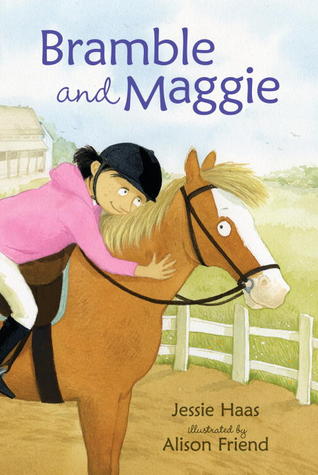
Bramble and Maggie: Horse Meets Girl
Published March 27th, 2012 by Candlewick Press
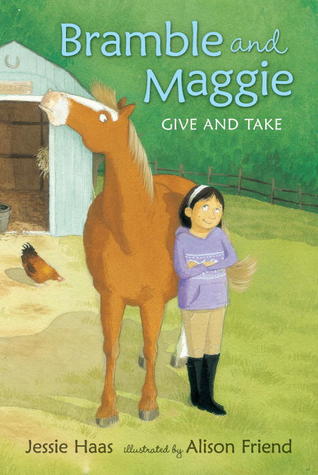
Bramble and Maggie: Give and Take
Published April 23, 2013 by Candlewick Press
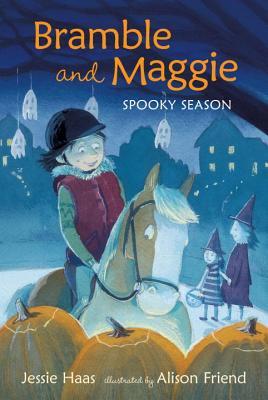
Bramble and Maggie: Spooky Season
Published August 12th, 2014 by Candlewick Press
Author: Jessie Haas
Illustrator: Alison Friend

Bramble and Maggie: Horse Meets Girl Goodreads Summary: Come along for a spirited ride as Bramble – a horse with interesting “little ways”- and her devoted girl, Maggie, make their debut in this inviting early reader.

Maggie wants a pony to ride and take care of, and to prepare she’s been reading a big book on horse care. Meanwhile, Bramble is bored with giving riding lessons and walking in circles. She’s looking for just the right person to take her away from her routine. Is it a perfect match? Maggie loves Bramble as soon as she sees her, but there are some things Bramble has to be sure of. Will Maggie let Bramble venture into new places? Will she protect Bramble from strange objects in the yard? Will she, most importantly, know when Bramble needs her undivided attention? This charming and funny early reader is an ideal match for young animal lovers and anyone who has ever longed for a friend who truly understands.

Bramble and Maggie: Give and Take Goodreads Summary: Maggie and her mischievous horse, Bramble, are back for another spirited romp through the ins and outs of friendship.

Maggie loves introducing her new horse, Bramble, to the neighborhood, the beach, and the backyard. Bramble has fun too, once she is cajoled into participating by a well-timed carrot or two. But when Maggie has to go to school, Bramble is bored and lonely and gets into some trouble with Mr. Dingle next door. A misbehaving hen and a midnight visitor finally help to turn Bramble into a good neighbor. This charming and funny early reader flows at just the right pace for kids who are learning that others don’t always do exactly what you want, but that friends find a way to give and take.

Bramble and Maggie: Spooky Season Goodreads Summary: Bramble, a persnickety but lovable horse, and Maggie, her patient owner, build an even stronger friendship as they brave the surprises of autumn.

In their third adventure, Bramble and Maggie explore a new season together — fall! Leaves crunch underfoot. Acorns ping off rooftops. It all makes Bramble feel wonderfully spooky. But Bramble’s frisky-pretend-scary gait makes Maggie jumpy, and soon Bramble really is nervous. There are alarming new sights and sounds everywhere, like Mr. Dingle’s scarecrow. When Maggie takes a fall, will she want to get back in the saddle? And when Halloween comes, can Maggie trust Bramble to brave the tricks and lead them both safely to the treats?

Kellee’s Review: There is a very specific time in a kid’s life where they are ready to begin reading longer books, but not ready to tackle chapter books yet. This is where Bramble and Maggie fits. These early chapter books will are perfect texts to help lead kids to longer chapter books. The work well for their targeted age level in that they never speak down to readers and have excellently paced stories that hold readers’ attention and will help them feel successful.  On top of all this, the Bramble and Maggie stories are just so sweet! I love all the different adventures they go on and the lessons they learn like overcoming fear, conquering loneliness, and gaining responsibility. Readers will adore these books. 

Ricki’s Review: Kellee hit the nail on the head. As I was reading, I thought to myself, “Why didn’t I have these books available to me when I was transitioning to chapter books?” I remember being devastated that my books no longer had pictures in them, and I resisted the longer texts for this reason. This series is engaging, educative, and fun! The words repeat in ways that will help students learn the vocabulary, particularly the more difficult words that relate to horses. Each book delivers a strong message, and the bond between Bramble and Maggie is one which will connect with readers. When I think about these books, I will always remember Maggie dragging her sleeping bag to the stable to sleep beside Bramble. I can’t wait to share these books with my pre-service elementary school teachers. They will have a special place in classrooms.

Teachers’ Tools for Navigation: Readers would be wise to explore how Haas develops theme in these texts. Each individual book has a different theme, and the content beautifully incorporates the messages. These books would be great models for students to learn about implicit versus explicit themes.

Discussion Questions: What lessons has Maggie learned since she has gotten Bramble? What lessons has Bramble learned since he’s met Maggie?; How has Bramble changed since he went to live with Maggie?; In what ways does the author show the bond of friendship throughout the books?

We Flagged: “Bramble lowered her head. Maggie gave her a carrot, and Bramble took it. She let Maggie put on the bridle. This was better. Give and take” (p. 9 of Bramble and Maggie: Give and Take)

Read This If You Loved: The Franklin School Friends series by Claudia Mills, The Pony Mysteries series by Jeanne Betancourt, and The Pony Scout series by Catherine Hapka

Recommended For:

  litcirclesbuttonsmall classroomlibrarybuttonsmall

Q & A with Jessie Haas

What inspired you to write this series? What inspired you to write about a horse?

I was inspired by two things in writing the Bramble and Maggie books. First, I had a story rejected by Candlewick, but with a request attached. The editor had girls who loved horses and horse books and had read some of mine and they noticed that they were always checked out of the public library. So Candlewick asked if I would like to write a couple of books for beginning readers.

At the time I had just gotten a new horse, Robin. She has a somewhat prickly personality, which I think inspired Bramble’s name, and the way horses and people mesh with each other was on my mind. Of course, I knew my version of events, but I’m always aware that horses have their own points of view, so the story would need to be told from both Bramble’s and Maggie’s perspectives.

What was it like to work with an illustrator? What does the process look like?

Like most authors, I don’t actually “work with” the illustrator. The editor and I work until we have a solid draft. Then the text is sent to the illustrator and she sends sketches. When the editor and I see them, it becomes obvious where we need to add or drop words (usually drop) to make space on the page. A lot of times, the art is telling the story already, and that makes some of the words unnecessary.

Alison Friend lives in England, so we did have one big change she needed to make in the first book. The wonderful picture at the beginning of Chapter Two, with Maggie and her family in the car, had the steering wheel on the right, as in British cars. I must admit, it took me a few times looking at the pictures to spot that. The pencil sketches are always funny and energetic, but the magic happens when Alison begins to paint, and it is always tremendously exciting to see the finished pages. And I got to see the original art for Spooky Season, which was thrilling. I think Spooky Season is one of the most beautiful books I have ever had published.

How do you envision your texts being taught in classrooms? Do you have any suggestions for our viewers who are teachers?

I’m usually stumped by that question. Now, though, I have a great new curriculum guide (it’s a free download on my website) I love some of the ideas there. Spooky Season, the newest book, explores the theme of fear—how we pretend to be afraid (for fun), how we scare ourselves (for fun), and how we sometimes get really scared—and that’s not fun! Bramble is truly afraid of some Halloween decorations like Mr. Dingle’s scarecrow—until she finds out it’s good to eat

Maggie runs into the situation every horseman faces sooner or later. You fall off, and you know you’re supposed to get right back on, or the fear will grow and you might not be able to. That’s easier said than done, of course. But Bramble takes care of Maggie the way good horses do, and Maggie has the experience that I remember from my own life as my very first time confronting and overcoming fear. These are great discussions to have around Halloween.

For Give and Take, the discussion is more about a truly basic issue in children’s—indeed, everyone’s—lives: power. Bramble feels that no one should be the boss all of the time. There should be some give and take. As well as story sequencing discussions, this is a chance for children to talk about—and draw—a time in their own lives when they learned to share, and give a little.

And Horse Meets Girl has a wonderful activity where children are encouraged to imagine, describe and draw their ideal pet. I also love the idea of Maggie needing a babysitter for Bramble, which could be a springboard for kids writing their own stories. The curriculum guide was created for me by Blue Slip Media, working with an educational consultant who’s also an elementary school teacher, and it’s keyed to Common Core curriculum standards—so it’s educationally sound as well as fun.
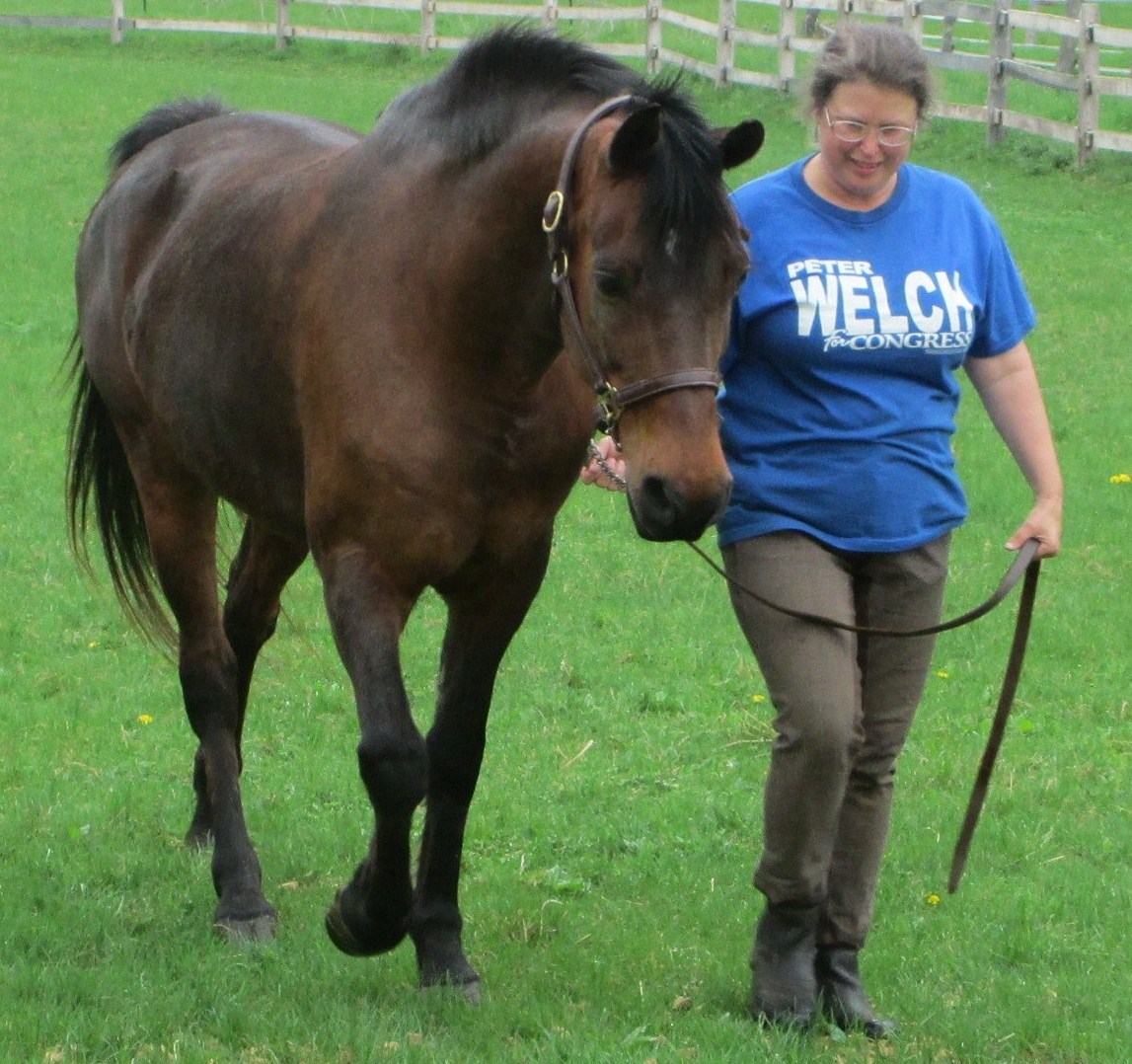
Jessie Haas 2 Jessie Haas w horse

Jessie Haas has always loved horses and has written more than thirty books, most of them about horses, including the first two books ab out Bramble and Maggie. She says, “Horses love pretending to be scared, just like us, and fall is the perfect season for that. Why do they call it fall?” Jessie Haas lives in Vermont with her husband, writer Michael J. Daley; her horse; two cats; a dog; and a hen. For more information, and to download a free curriculum guide, visit her website: http://www.jessiehaas.com/.

RickiSigand Signature

**Thank you to Barbara at Blue Slip Media and Jessie Haas for having us as part of the blog tour!**
Nonfiction Graphic Novels

Share

NF PB 2014

Nonfiction Picture Book Wednesday

Nonfiction Picture Book Wednesday is hosted by Kid Lit Frenzy and was started to help promote the reading of nonfiction texts. Most Wednesdays, we will be participating and will review a nonfiction text (though it may not always be a picture book).
Be sure to visit Kid Lit Frenzy and see what other nonfiction books are shared this week!

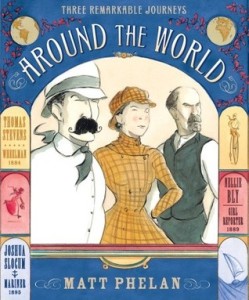
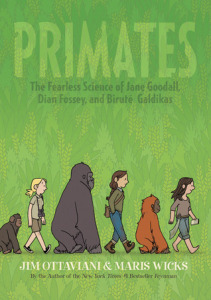
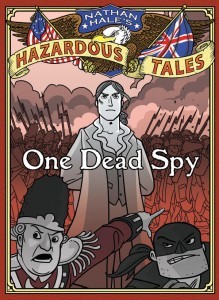
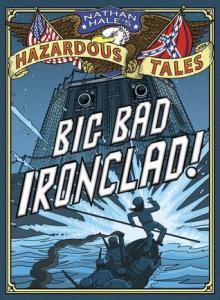
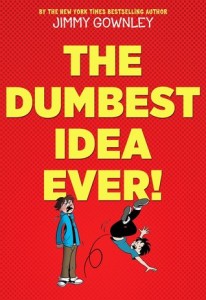
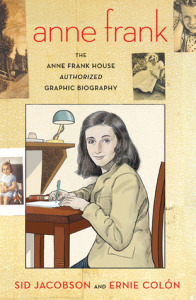
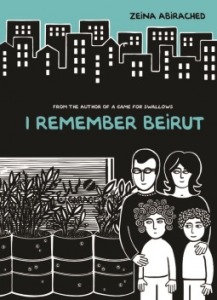
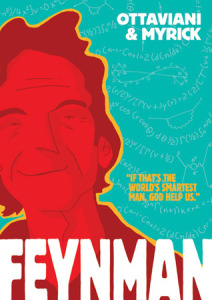
Although many elementary students enjoy and love nonfiction, this love tapers off when students get to middle school. Very few of my students read nonfiction at all. However, there is a wonderful thing happening that is helping increase the amount of nonfiction read in my school: memoir and informational nonfiction graphic novels. Here are some that I have read that my students and/or I have truly enjoyed.
(Clicking on any cover will take you to the Goodreads page or my review.)

Children’s/Middle Grade

deafo around the world primates

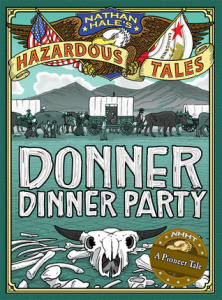
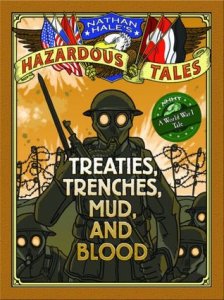
deadspy ironclad donner treaties

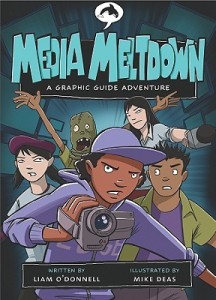
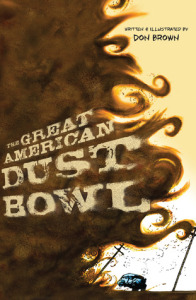
media dust bowl jay z

FC_BC_9780545132060.pdf sisters sharks dinosaursGN

Middle Grade/YA

dumbest 911 annefrank beirut

YA

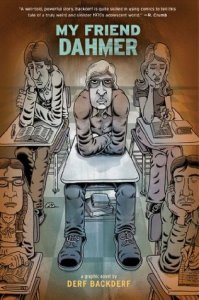
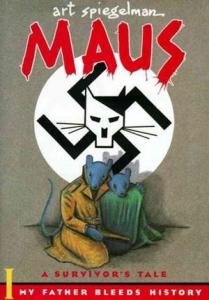
fist feynman dahmer maus

Hope you and your students enjoy some nonfiction graphic novels!

Signature

Captain Underpants Series by Dav Pilkey

Share

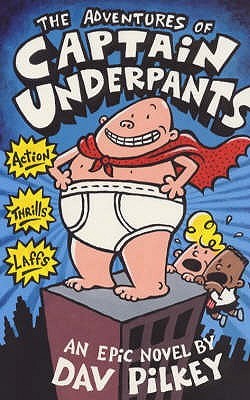
captain1 captain11

Captain Underpants series
Author: Dav Pilkey
#1: Adventures of Captain Underpants published September 1st, 1997 by Scholastic, Inc.
#11: Captain Underpants and the Tyrannical Retaliation of the Turbo Toilet 2000 published August 26th, 2014 by Scholastic Inc.

Goodreads Summary #1: Pilkey plays with words and pictures, providing great entertainment. The story is immediately engaging – two fourth-grade boys who write comic books and love to pull pranks find themselves in big trouble. Mean Mr. Krupp, their principal, videotapes George and Harold setting up their stunts and threatens to expose them. The boys’ luck changes when they send for a 3-D Hypno-Ring and hypnotize Krupp, turning him into Captain Underpants, their own superhero creation.

Goodreads Summary #11: When the Incredible Robo-Plunger defeated the evil Turbo Toilet 2000, George and Harold thought their toilet troubles were over. Unfortunately, their porcelain problems were only beginning . . . Just when you thought it was safe to flush . . . The Turbo Toilet 2000 strikes back! The carnivorous commode known for devouring everything in its path has built up a real appetite . . . for REVENGE! Join Captain Underpants for another epic showdown of Wedgie Power vs. Potty Power as our tighty-whitey-wearing superhero GOES TO ELEVEN!

My Review and Teachers’ Tools for Navigation: Ever since I started teaching I have had Captain Underpants fans in my classroom. Readers (especially boys though, like all books, it is not exclusive) love these books. When I started teaching intensive reading, my students loved that I read so much but were astonished that I had never read a Captain Underpants book. So, during the summer of 2012, I read the entire series that was out at the time.  And suprsingly, I am happy I did. I enjoyed the books so much, and I found many different ways that I could use in the series in classroom. As I read I not only enjoyed the stories (well most of them; the booger one was quite gross), but I kept notes on different ways each book could be a mentor text.  I know that students already love the books so I would love to be able to use them in the classroom. I think that part of what makes Pilkey’s humor work is that he never talks down to his reader. The humor is intelligent and witty, and he makes sure to have his books be as entertaining as possible to keep the reader’s attention.

Teachers’ Tools for Navigation: Some of my favorite things that are addressed in the series are spelling, grammar, vocabulary, and puns. The spelling is not directly addressed; however, Harold and George misspell a lot of words and it would be good to use to talk about phonics and spelling.  Also, each book begins with an anagram which is great word play.  The grammar is sporadic only showing up in some books, but the vocabulary is in all of them.  Some vocabulary I found was billowing, narratively convenient, fizzled, improbability, jubilant, mock, scurried, and merciless and that is just in book 3! Also the puns in each book are really quite clever (check out p. 34 in #11 and any of the flip-o-ramas to see what I mean). Each book also has some great alliteration (#11, p. 29, 27, 208)- each title alone has alliteration in them. There are also allusions and onomatopoeias!

Additionally, I love the set up of the novels. They are a great mix of novel, graphic novel, comics, and picture books. It is a great transition between picture books and Diary of a Wimpy Kid. I especially like the flip-o-ramas. They are unique to the Captain Underpants books and I think it puts a great interactive and kinesthetic feel to the books.

One thing I do not understand is why these books are challenged. Yes, they have some potty humor. Yes, the adults aren’t the best representation of teachers. Yes, it is silly. But they are harmless and actually have some really great qualities to them.

Discussion Questions: In the first Captain Underpants, Harold and George brainstorm a superhero including his name and then create a comic based on their superhero. With a partner, brainstorm a name for a superhero and then complete a story to go along with your superhero. To expand it even more, complete a comic for your superhero.; In #11 novel, time travel plays a large part of in the plot. What event could you go back in time to try to change?; In some of the Captain Underpants books, there are grammar, convention, and spelling mistakes. Why do you think Dav Pilkey makes the choice to use incorrect grammar? What mistakes idd you find?; In #11, Harold and George end up being cloned (kind of). What would you do if there were two of you?

We Flagged (#11): 

Read These If You Loved: Diary of a Wimpy Kid series by Jeff Kinney, Big Nate series by Lincoln Peirce, Charlie Joe Jackson series by Tommy Greenwald, The Adventures of Ook & Gluk and Super Diaper Baby series by Dav Pilkey, Lunch Lady series by Jarrett Krosoczka, Frankie Pickle series by Eric Wight, Knights of the Lunch Table series by Frank Cammuso 

Recommended For: 

readaloudbuttonsmall classroomlibrarybuttonsmall

Signature

Review and Teaching Guide!: El Deafo by Cece Bell

Share

NF PB 2014

Nonfiction Picture Book Wednesday

Nonfiction Picture Book Wednesday is hosted by Kid Lit Frenzy and was started to help promote the reading of nonfiction texts. Most Wednesdays, we will be participating and will review a nonfiction text (though it may not always be a picture book).
Be sure to visit Kid Lit Frenzy and see what other nonfiction books are shared this week!

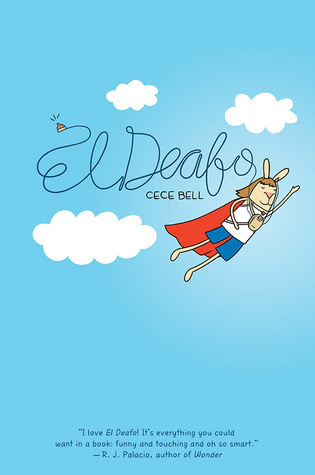
deafo

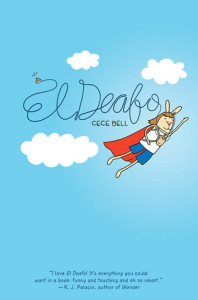
El Deafo
Author: Cece Bell
Published September 2nd, 2014 by Abrams

Publisher Summary: Going to school and making new friends can be tough. But going to school and making
new friends while wearing a bulky hearing aid strapped to your chest? That requires superpowers! In this funny, poignant graphic-novel memoir, author/illustrator Cece Bell chronicles her hearing loss at a young age and her subsequent experiences with the Phonic Ear, a very powerful—and very awkward—hearing aid. The Phonic Ear gives Cece the ability to hear—sometimes
things she shouldn’t—but also isolates her from her classmates. She really just wants to fit in and find a true friend, someone who appreciates her as she is. After some trouble, she is finally able to harness the power of the Phonic Ear and become “El Deafo, Listener for All.” And more importantly, declare a place for herself in the world and fi nd the friend she’s longed for.

Author: Cece Bell has written and illustrated several books for children, including the Geisel Honor book Rabbit & Robot: The Sleepover. She lives in Virginia with her husband, author Tom Angleberger.

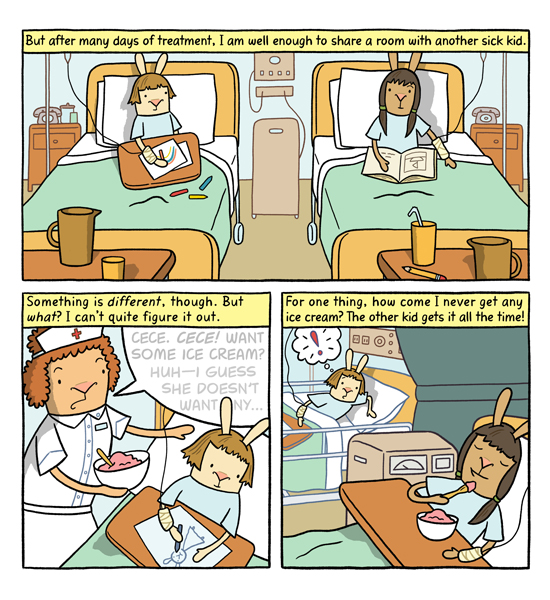
My Review: There are times that you read a book and when you are done, you just know that it is a special book. El Deafo is one of those books. As you all know, I am a huge fan of Hurt Go Happy by Ginny Rorby, and one of the reasons I am is because it looks at disabilities in a positive light and shows that a disability is not an end, but just a change. El Deafo is another novel that does this. Although Cece, like Joey in Hurt Go Happy, finds herself deaf at a young age, we see her overcome this blow and turn it into a superpower. But this book is about more than deafness; it is about being a kid, about growing up, about friendship, about ackwardness, about school, about crushes, about family, about life. This book is truth.

Teachers’ Tools For Navigation: There is so much you can do with this graphic novel. Many activities can be found in the teaching guide that I wrote for Abrams. This book is perfect for independent reading, for lit circles  with other graphic novel memoirs, for jigsawing, for read alouds, and for looking deeply into the text.

(Also, and I didn’t want to harp on this because they are both such unique books, but this book will be loved by the readers of Smile. They both look at such an important part of life.)

Discussion Questions: Language Arts:  Cece uses many different kinds of clues to help her lip-read. (pages 30–31) What are the 4 types of clues? How do they help with lip-reading? In what other ways can these clues be helpful?; On page 60, Cece shares an analogy of her friendship with Laura. She feels like a baited fish that is caught on Laura’s hook. What analogies could we make to
describe Cece’s friendship with Ginny? Martha? Emma?; Science: What is meningitis? How can it cause deafness?;  What is an audiologist? What would you have to study to become one?; History/Social Studies: Many deaf and hard of hearing individuals have made history, including Helen Keller, William Ellsworth Hoy, and Juliette Gordon Low. Research these or other deaf or hard of
hearing individuals throughout history and today. How did being deaf affect their lives? What were their accomplishments?

We Flagged: 

01ORIGINSPanelsREVISED
**From Cece Bell’s blog**

Read This If You Loved: Smile and Sister by Raina Telgemeier, The Dumbest Idea Ever! by Jimmy Grownley, I Remember Beirut by Zeina Abirached, Odd Duck by Cecil Castellucci

Recommended For: 

classroomlibrarybuttonsmall readaloudbuttonsmall closereadinganalysisbuttonsmall litcirclesbuttonsmall

Signature

Blog Tour, Review, Giveaway, and Author Guest Post!: The Top-Secret Diary of Cecile Valentine: Friendship Over by Julie Sternberg

Share

topsecretdiary

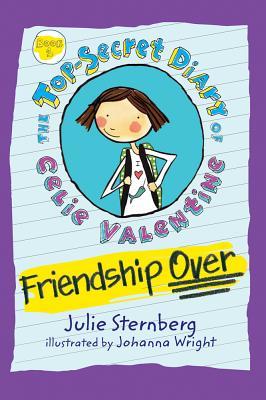
The Top-Secret Diary of Celie Valentine: Friendship Over
Author: Julie Sternberg
Illustrator: Johanna Wright
Published October 1st, 2014 by Boyds Mills Press

Goodreads Summary: Ten-year-old Celie has quite a few things on her mind — fights with her sister Jo, secrets at school, an increasingly forgetful grandmother, and worst of all, a best friend who won’t speak to her. How can a girl who hates change survive, when everything in her life is changing? By writing, of course! Celie’s often comical and always heartfelt diary entries include notes, e-mails, homework assignments, and pages from her top-secret spy notebook.

My Review: I am a very big fan of Julie Sternberg’s Eleanor books. What I enjoy the most about these books is that Julie Sternberg has a way to get into 10 year old’s heads and make her narrator’s voice sound so spot on. As someone who teaches middle school, I am always so impressed when a first person narrative sounds like the students I teach. When I found out that Julie Sternberg had a new series coming out and it would be a diary, I was super excited, and this book did not disappoint.

Celie fills her journal with her deepest thoughts, her art, and other items that help tell her story. Readers will connect with Celie while she deals with her grandmother’s declining health, her best friend’s sudden silence, and her older sister’s identity issues. Great discussions will start with questions such as “Have you and your best friend ever gotten into a fight?”

I asked Julie to share with us how she find her inner 10-year-old voice so effectively. Here is her answer: 

I’m fixated on voice in writing. It’s problematic. I tend to spend weeks—sometimes months—on the first thirty or so pages of a novel, trying and trying to get the voice right. I cannot move forward until I believe I’ve succeeded.

I recognize that this is a silly way to write. I tell myself, Turn off your internal editor! Knock out a terrible first draft! Revising is so much easier than confronting a blank page. Just KEEP GOING! 

But I never can. Because without the right voice, I don’t have a book.

When I think about voice, I think about not just who is telling the story, but also to whom. Audience makes a difference. A child, for example, will relate an anecdote differently to a teacher than to a best friend. So, for my first series, Like Pickle Juice on a Cookie and its sequels, I imagined the main character, Eleanor, telling stories to a friend her age. And, for my latest series, The Top-Secret Diary of Celie Valentine, I imagine Celie pouring her uncensored thoughts into a diary.

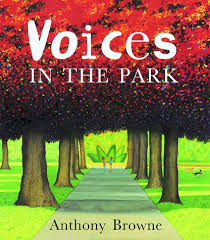
Voice is most shaped by the narrator’s personality and background. When I need a brilliant reminder of this, I re-read Voices in the Park, a picture book by Anthony Browne. In it, four separate narrators tell their version of the same story (one shared afternoon in the park). We get a staggeringly clear sense of each character just from the voice they use to relate that simple story.

voices in the park cover

When I’m trying to define a voice, I pay particular attention to the rhythm and structure of sentences. In The Top-Secret Diary of Celie Valentine, for example, feisty Celie uses simpler and more pointed sentences than her chattier and messier older sister, Jo. For instance, here’s the first sentence in a long note that Jo writes to Celie: “Mom says I’m not allowed to talk to you (I’m supposed to ‘give you your space’) until the end of your timeout, so I can’t just go in there and tell you this, which is what I really want to do.” Celie responds in three sentences, not one of which has more than four words.

A compelling voice can compensate for a host of sins. I learned this as a reader. Some of my favorite books could have better plots, for example. I don’t care. I love the voice in those books, and I want to spend my days with their narrators.

Of course I don’t write perfect books, either (though I want to). If readers nonetheless want to spend their days with Eleanor or Celie or my other narrators because of their voices, then I’m ecstatic.

Author: Julie Sternberg is the author of the best-selling Like Pickle Juice on a Cookie and its sequels, Like Bug Juice on a Burger and Like Carrot Juice on a Cupcake. Like Pickle Juice on a Cookie is a Gryphon Award winner and a Texas Bluebonnet Award finalist; Like Bug Juice on a Burger is a Gryphon Honor Book, a Pennsylvania Young Reader’s Choice Awards Nominee, and an Illinois Monarch Award Finalist. Formerly a public interest lawyer, Julie is a graduate of the New School’s MFA program in Creative Writing, with a concentration in writing for children. She lives with her family in Brooklyn, New York. For more information about her life and work and to download free activity materials based on her books, visit her website: juliesternberg.com.

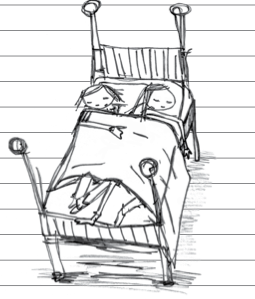
We Flagged: 

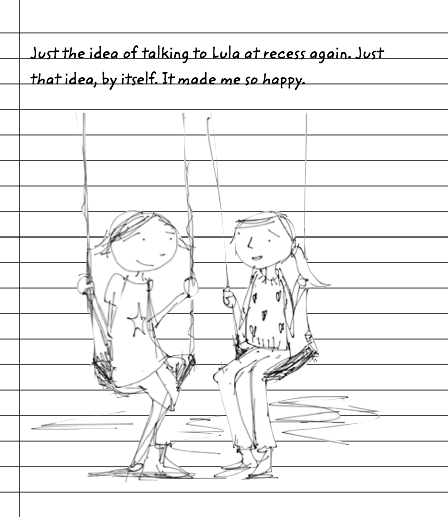
Johanna Wright illustration_Celie and Jo in bed image-on-swing-set-with-words

From Julie Sternberg’s website

Read This If You Loved: Eleanor series by Julie Sternberg, Middle School is Worse than Meatloaf by Jennifer L. Holm, Where I Live by Eileen Spinelli, The Popularity Papers by Amy Ignatow, Mackenzie Blue by Tina Wells

Recommended For: 

classroomlibrarybuttonsmall

Also don’t forget to check out the other stops on Julie’s blog tour: 

Mon, Sept 29
Mother Daughter Book Club
Tues, Sept 30
5 Minutes for Mom
Wed, Oct 1
Sharpread
Thurs, Oct 2
KidLit Frenzy
Fri, Oct 3
The Hiding Spot
Sat, Oct 4
Booking Mama
Mon, Oct 6
Ms. Yingling Reads
Tues, Oct 7
GreenBeanTeenQueen
Wed, Oct 8
Great Kid Books
Thurs, Oct 9
Teach Mentor Texts
Fri, Oct 10
Unleashing Readers
Sat, Oct 11
Bermuda Onion

GIVEAWAY

a Rafflecopter giveaway

Signature

**Thank you to Barbara at Blue Slip Media for providing a copy for review and having us be part of the blog tour!!**

Sam & Dave Dig a Hole by Mac Barnett

Share

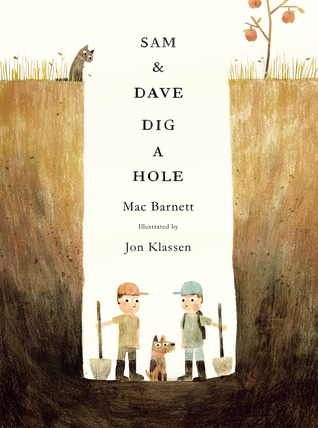
sam and dave

Sam & Dave Dig a Hole
Author: Mac Barnett
Illustrator: Jon Klassen
Published October 14th, 2014 by Candlewick Press

Publisher’s Summary: Sam and Dave are on a mission. A mission to find something spectacular. So they dig a hole. And they keep digging. And they find . . . nothing. Yet the day turns out to be pretty spectacular after all. Attentive readers will be rewarded with a rare treasure  n this witty story of looking for the extraordinary — and finding it in a manner you’d never expect.

About the Creators: Mac Barnett is the author of several award-winning books for children, including President Taft Is Stuck in the Bathillustrated by Chris Van Dusen, and Extra Yarn, illustrated by Jon Klassen, which won a Boston Globe–Horn Book Award and a Caldecott Honor. Mac Barnett lives in California.

Jon Klassen is the author-illustrator of I Want My Hat Back, a Theodor Seuss Geisel Honor book, and This Is Not My Hat, winner of the Caldecott Medal. He is also the illustrator of House Held Up by Trees, written by Ted Kooser, which was named a New York Times Book Review Best Illustrated Children’s Book, and Extra Yarn, written by Mac Barnett, which won a Caldecott Honor. Originally from Niagara Falls, Ontario, Jon Klassen now lives in Los Angeles.

My Review and Teachers’ Tools for Navigation: I just love the work that Mac and Jon do. I don’t think I have read any of their books that I haven’t enjoyed and haven’t found myself wanting to talk about. What I love most about their books is that they are unique and so, so, so smart. Their books are like no other, and this book is no different. It has nuances you have to carefully look for, it has an ending that you can debate about for a very long time, and overall is just so well done. I think this, along with the Hat books, may be the best open-ended picture books out there. Just like wordless books, open-ended books truly invokes conversing. When I finished, I immediately asked my husband to read it, so we could discuss the ending. Travis Jonker has a great post about the different theories about the ending, but I warn you: there are spoilers in the post! Think of all the great conversations or writing your students will have/do because of this thought-provoking picture book.

For some laughs, also check out Mac Barnett and Jon Klassen Make a Book: A Transcript.

Discussion Questions: What do you think happened at the end?; What do you notice about the dog as you are reading the book?; How is the ending different from the beginning?

Book Trailer: 

Read This If You Loved: I Want My Hat Back and This Is Not My Hat by Jon Klassen, Extra Yarn by Mac Barnett

Recommended For: 

classroomlibrarybuttonsmall readaloudbuttonsmall closereadinganalysisbuttonsmall

Signature
**Thank you to Laura at Candlewick for providing a copy for review**

The Most Magnificent Thing by Ashley Spires

Share

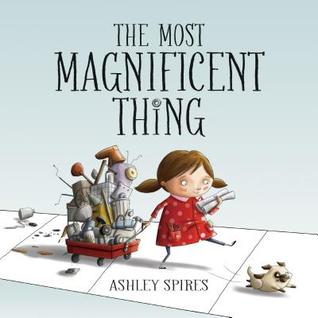
magnificent

The Most Magnificent Thing
Author: Ashley Spires
Published April 1, 2014 by Kids Can Press

Goodreads Summary: Award-winning author and illustrator Ashley Spires has created a charming picture book about an unnamed girl and her very best friend, who happens to be a dog. The girl has a wonderful idea. “She is going to make the most MAGNIFICENT thing! She knows just how it will look. She knows just how it will work. All she has to do is make it, and she makes things all the time. Easy-peasy!” But making her magnificent thing is anything but easy, and the girl tries and fails, repeatedly. Eventually, the girl gets really, really mad. She is so mad, in fact, that she quits. But after her dog convinces her to take a walk, she comes back to her project with renewed enthusiasm and manages to get it just right. For the early grades’ exploration of character education, this funny book offers a perfect example of the rewards of perseverance and creativity. The girl’s frustration and anger are vividly depicted in the detailed art, and the story offers good options for dealing honestly with these feelings, while at the same time reassuring children that it’s okay to make mistakes. The clever use of verbs in groups of threes is both fun and functional, offering opportunities for wonderful vocabulary enrichment. The girl doesn’t just “make” her magnificent thing — she “tinkers and hammers and measures,” she “smoothes and wrenches and fiddles,” she “twists and tweaks and fastens.” These precise action words are likely to fire up the imaginations of youngsters eager to create their own inventions and is a great tie-in to learning about Science, Technology, Engineering and Math.

My Review: Ashley Spires did an amazing job with this book. Her illustrations seem so simple, but really there is so much detail in each one. Amazing digital art. Also, Girl is a character after my own heart as a mom and a teacher. We need more kids like her. Kids who explore, invent, play outside, imagine, etc. I hope my son is like her.

Teachers’ Tools for Navigation: The summary says a lot for me. This is a book that promotes innovation, imagination, perseverance, and experimenting. All things that are so important for kids to have and too often they are not nurtured. Innovation: Girl wants to make something new and magnificent. Imagination: Some of the odd items she makes actually do have a purpose, you just have to use your imagination. Perseverance: Girl almost gives up, but begins to realize that what she made may be exactly what she wanted to make in the first place. Experimenting: She tries to make so many different things for a variety of purposes. All of these themes could be discussed while reading the book with kids.  The book also has amazing vocabulary, many of which are shared in the summary. A great way to discuss synonyms, descriptive language, and imagery.

Discussion Questions: Why did the girl never give up?; What are some of the words that the author uses to help you “see” and “hear” what the girl is doing?; Which of her inventions was your favorite? And what other ways could you use some of them?; Girl plans out her invention. What steps did she take to plan? What else could she have done?

We Flagged: “This is a regular girl and her best friend in the whole wide world. They do all kinds of things together. They race. They eat. They explore. They relax. She makes things. He unmakes things. One day, the girl has a wonderful idea. She is going to make the most MAGNIFICENT thing!”  (p. 6-7)

Book Trailer: 

Fun With The Author: 

Read This If You Loved: The Invisible Boy by Tracy Ludwig, The Dot by Peter H. Reynolds, Noisy Paint Box by Barb Rosenstock, Lost and Found by Oliver Jeffers, Matilda by Roald Dahl, Journey by Aaron Becker

Recommended For: 

readaloudbuttonsmall classroomlibrarybuttonsmall

Signature

**Thank you to Kids Can Press and Netgalley for providing a copy for review**