Review and Giveaway!: Brobarians by Lindsay Ward

Share

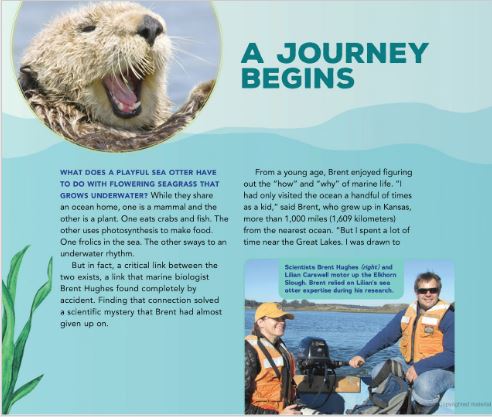
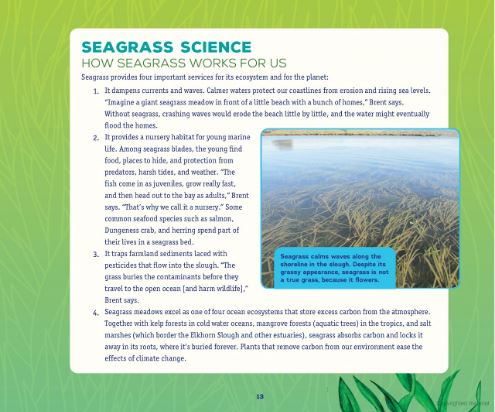
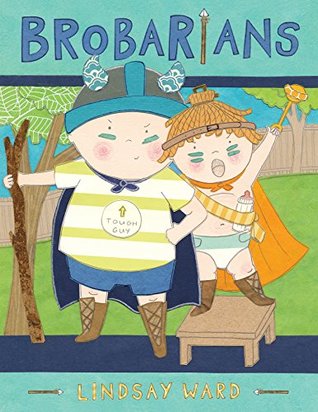
Brobarians
Author & Illustrator: Lindsay Ward
Published March 28th, 2017 by Two Lions

Summary: This is the tale of the mighty Brobarians. Two warriors, once at peace…now at odds.

Iggy the Brobarian has taken over the land. Can Otto the Big Brobarian win it back? Or maybe, with a little help, the two brothers can find peace again…

This is an epic—and adorable—story of sibling rivalry and resolution.

About the Author: Lindsay Ward would never have written this book if she hadn’t stayed up late one night watching Conan the Barbarian. She finds the idea of baby barbarians to be very funny . . . and hopes you do too. Lindsay’s recent books include Rosco vs. the Baby and The Importance of Being 3. Most days you can find her writing and sketching at home in Ohio with her family. Learn more about her at www.lindsaymward.com or on Twitter: @lindsaymward.

Praise for Brobarians

“Highly cinematic, both in imagery and narrative soundtrack…Good and campy and a fine opportunity for vocabulary building.”—Kirkus Reviews

“As readalouds go, it’s pretty epic.” – Publishers Weekly

“Ward’s plot cleverly celebrates the spirit of imaginative toddlers, and her cartoonlike cut-paper collage, pencil and crayon illustrations playfully match the humor of the tale. A boisterous, silly picture book that would work well for story-time.” —School Library Journal

Kellee’s Review: This extended metaphor really embodies what it feels like to be a sibling. As the oldest, I can definitely remember times when I was younger and felt like I was in a battle with my sister for attention or cookies or anything that she had that I wanted. And through this metaphor of siblings as brobarians fighting over territory and bah bahs, hilarity ensues! Once best of friends, they are now at odds–who will win?!

Ricki’s Review: Ah, this book is the best! As a mama of two boys, I feel so lucky to have it in my collection. I read this one with both of my boys on my lap. My older son thought it was fabulous. He did a demonstration of some of the moves after we finished. My younger son pawed at the pages and was clearly enamored, too. I can’t wait until they are both a bit older. We are going to create paper outfits to match the outfits of the characters in the book. I highly recommend this book. I promise that you will get swept into the adventurous spirit of these two boys. 

Teachers’ Tools for Navigation: Publisher’s Weekly says, “As readalouds go,  it’s pretty epic,” and we would have to agree. In addition to the read aloud opportunity, there are opportunities for discussions about siblings to go along with a family unit. Brobarians brings to light the rivalry that siblings may feel against each other which is something that any child with a sibling may feel and may feel is not normal. Using this story, teachers can discuss what it may feel like to have a sibling and ways to deal with sibling rivalry.

You can also check out a coloring sheet and a map of Brobaria here!

Discussion Questions: Why are Iggy and Otto fighting at first?; What does Otto do to make it worse?; Who wins in the end?; Did you see the end coming? Who did you think was going to win?; How does the map on the end sheets help you navigate the story better?

Flagged Passages: 
Read This If You Loved: Pug Meets Pig by Sue Lowell Gallion, Mr. Fuzzbuster Knows He’s the Best by Stacy McAnultyWe Found a Hat by Jon KlassenHoot and Peep by Lita JudgeThat’s (Not) Mine by Anna Kang

Recommended For:

Giveaway! 

a Rafflecopter giveaway

 and 

**Thank you to Barbara at Blue Slip Media for copies for review!**
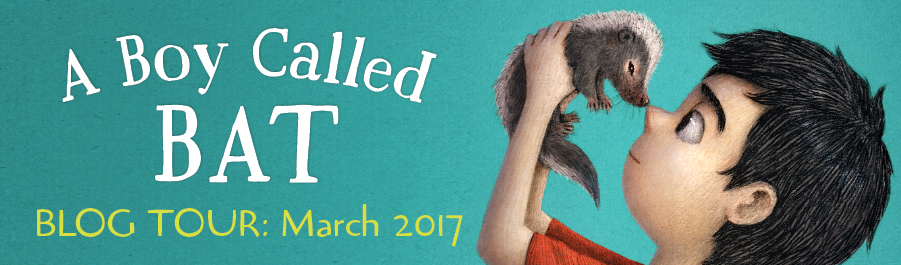
Blog Tour with Review, Teaching Guide, and Giveaway!: A Boy Called Bat by Elana K. Arnold

Share

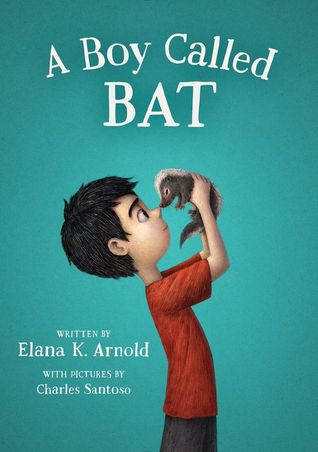
A Boy Called Bat
Author: Elana K. Arnold
Illustrator: Charles Santoso
Published March 14th, 2017 by Walden Pond Press

Summary: For Bixby Alexander Tam (nicknamed Bat), life tends to be full of surprises—some of them good, some not so good. Today, though, is a good-surprise day. Bat’s mom, a veterinarian, has brought home a baby skunk, which she needs to take care of until she can hand him over to a wild-animal shelter.

But the minute Bat meets the kit, he knows they belong together. And he’s got one month to show his mom that a baby skunk might just make a pretty terrific pet.

Critical Praise: 

“Delightful, endearing, and utterly relatable, Bat Tam is destined to be a dear and necessary friend for young readers. I adore him and his story.” — Anne Ursu, author of The Real Boy

“Written in third person, this engaging and insightful story makes readers intimately aware of what Bat is thinking and how he perceives the events and people in his life. With empathy and humor, Arnold delves into Bat’s relationships with his divorced parents, older sister, teachers, and classmates.” — Publishers Weekly (starred review)

“Comfortably familiar and quietly groundbreaking, this introduction to Bat should charm readers, who will likely look forward to more opportunities to explore life from Bat’s particular point of view.” — Kirkus Reviews

“Brimming with quietly tender moments, subtle humor, and authentically rendered family dynamics, Arnold’s story, the first in a new series, offers a nonprescriptive and deeply heartfelt glimpse into the life of a boy on the autism spectrum.” — Booklist

About the Author: Elana K. Arnold grew up in Southern California, where she was lucky enough to have her own perfect pet—a gorgeous mare named Rainbow—and a family who let her read as many books as she wanted. She is the author of picture books, middle grade novels, and books for teens. She lives in Huntington Beach, California, with her husband, two children, and a menagerie of animals. You can find her online at www.elanakarnold.com.

Review: A Boy Called Bat is one of those quiet yet impactful books that will find a special place in many hearts. The story is about Bat’s Asperger’s and his parent’s divorce without it being about that at all. The main character, Bat, is one of those special characters that as I was reading about him I knew that readers getting to know him will make them grow as people and that their empathy to fellow kids who may seem different will grow as well.

Bat’s story will not only appeal to our readers that love stories that promote empathy and understanding of others, Bat and his skunk, Thor, will definitely appeal to our readers who love animals. Bat’s mother is a veterinarian and Bat is 99.9% sure he is going to be as well. There are many animal references throughout the book, so these will all draw in readers who love animals. 

Teachers’ Tools for Navigation: In addition to an amazing read aloud opportunity, I can definitely see the text being part of lit circles. Bat himself is unique, but he and his story remind me of so many other characters who I love and I wish all students would read about: Auggie from Wonder; Melody from Out of my Mind; David from Rules; Candice from The Categorical Universe of Candice Phee; Rose from Rain, Reign; and Adam from How to Speak Dolphin. All of these texts are must reads! I picture all of these texts with their extraordinary characters being part of lit circles with a focus on disabilities/disorders and empathy.

Discussion Questions: How did Thor help Bat grow emotionally? What changes did you see within him and his actions since getting Thor?; What persuasive techniques did Bat use throughout the book to work to try to get his mom to agree to let him keep Thor?; What makes Mr. Grayson a good teacher in general? A good teacher for Bat?

Teaching Guide: 

Flagged Passages: “‘Bat’ was what almost everyone called Bixby Alxander Tam, for a couple of reasons: first, because the initials of his name — B, A, and T– spelled Bat.

But there were maybe other reasons. Bat’s sensitive hearing, for one. He didn’t like loud sounds. What was so unusual about that? And if Janei’s old earmuffs happened to make an outstanding muffling device, was it that funny if he liked to wear them?

There was also the way he sometimes flapped his hands, when he was nervous or excited or thinking about something interesting. Some of the kids at school seemed to think that was hilarious. And, of course, bats have wings, which they flap.

So between the initials and the earmuffs and the hand flapping, the nickname had stuck.

And truthfully, Bat didn’t mind. Animals were his very favorite thing.” (p. 2-3)

Read This If You Loved: Any of the lit circle books I listed above

Recommended For:

  litcirclesbuttonsmall classroomlibrarybuttonsmall 

Giveaway: 

a Rafflecopter giveaway

Don’t miss out on the other stops on the blog tour!

March 1 Read, Write, Reflect
March 2 A Foodie Bibliophile in Wanderlust
March 3 Bluestocking Thinking
March 6 The Official Tumblr of Walden Media
March 7 For Those About to Mock
March 8 Maria’s Melange
March 9 Novel Novice
March 10 Unleashing Readers
March 13 The Haunting of Orchid Forsythia
March 13 Mundie Kids
March 14 All the Wonders
March 15 Teach Mentor Texts
March 19 Nerdy Book Club
March 20 LibLaura5
March 22 Book Monsters
March 27 Librarian’s Quest
March 29 Satisfaction for Insatiable Readers
March 30 Lit Coach Lou

**Thank you to Walden Pond Press for providing a copy for review!**

Honey Girl: The Hawaiian Monk Seal by Jeanne Walker Harvey

Share

nfpb2017

Nonfiction Wednesday

Nonfiction Picture Book Wednesday is hosted by Kid Lit Frenzy and was started to help promote the reading of nonfiction texts. Most Wednesdays, we will be participating and will review a nonfiction text (though it may not always be a picture book).
Be sure to visit Kid Lit Frenzy and see what other nonfiction books are shared this week!

Honey Girl: The Hawaiian Monk Seal
Author: Jeanne Walker Harvey
Illustrator: Shennen Bersani
Published February 1st, 2017 by Arbordale Publishing

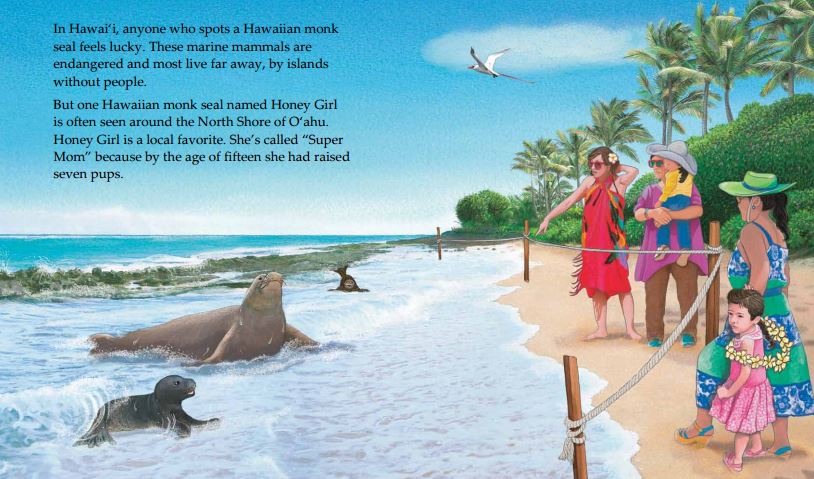
Summary: Hawaiian locals and visitors always enjoy spotting endangered Hawaiian monk seals, but Honey Girl is an extra special case. She has raised seven pups, and scientists call her “Super Mom.” After Honey Girl is injured by a fishhook, she gets very sick. Scientists and veterinarians work to save Honey Girl until she can be released back to her beach. This true story will have readers captivated to learn more about this endangered species.

Website: https://arbordalepublishing.com/bookpage.php?id=HoneyGirl

Review: I loved Honey Girl’s story. Honey Girl is a mother, a survivor, a symbol of hope, and a miracle of science. Jeanne Walker Harvey did a fabulous job not only developing Honey Girl’s character and developing her story but intertwining all of that with scientific undertones. She brings to the forefront issues of endangered species, humans effects on animals, and the importance of conservation scientists. All of this mixed with the colorful illustrations and amazing setting gives us such a beautiful picture picture.

Teachers’ Tools for Navigation: Honey Girl’s back matter gives such a wealth of information. Anything that wasn’t taught during Honey Girl’s story is revealed. The “For Creative Minds” section includes information on the Hawaiian Monk Seal life cycle, fun facts, conservation information, and rescue & rehabilitation.

In addition to all of the science and geography components of Honey Girl’s story that can be discussed and learned from, there are definitely reading and vocabulary opportunities within the book also. Check out:
Teaching Activity Guide
Reading Quiz
Related Websites
For Creative Minds Quiz

Discussion Questions: How did humans effect Honey Girl’s life?; What are some ways that we could help endangered species?; How does Honey Girl give us hope about the Hawaiian Monk Seal?

Flagged Passages: 

Read This If You Love: Who Lives in the Sea?: Ocean Animals of Hawaii by Monika Mira, Ocean Animals by Johnna Rizzo

Recommended For: 

classroomlibrarybuttonsmall closereadinganalysisbuttonsmall 

Signature

**Thank you to Barbara at Blue Slip Media for providing a copy for review!**

Many Reflections of Miss Jane Deming by J. Anderson Coats

Share

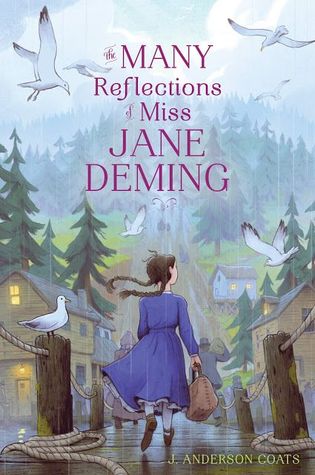
The Many Reflections of Miss Jane Deming
Author: J. Anderson Coats
Published February 28th, 2017 by Atheneum Books for Young Readers

Summary: High-spirited young Jane is excited to be part of Mr. Mercer’s plan to bring Civil War widows and orphans to Washington Territory—but life out west isn’t at all what she expected.

Washington Territory is just the place for men of broad mind and sturdy constitution—and girls too, Jane figures, or Mr. Mercer wouldn’t have allowed her to come on his expedition to bring unmarried girls and Civil War widows out west.

Jane’s constitution is sturdy enough. She’s been taking care of her baby brother ever since Papa was killed in the war and her young stepmother had to start working long days at the mill. The problem, she fears, is her mind. It might not be suitably broad because she had to leave school to take care of little Jer. Still, a new life awaits in Washington Territory, and Jane plans to make the best of it.

Except Seattle doesn’t turn out to be quite as advertised. In this rough-and-tumble frontier town, Jane is going to need every bit of that broad mind and sturdy constitution—not to mention a good sense of humor and a stubborn streak a mile wide.

Review: I didn’t know much about the Washington Territory. I knew that it had to have been settled quite like Oregon (I’m the Oregon Trail generation!) or California, but I didn’t know about the boat expeditions, or any expeditions for that matter, to the territory. It was fascinating to read about Jane’s trip to Washington as well as the complicated family that she traveled with. Jane’s story is not only a look at the history of America and Washington State, it is also a story of the perception about the role of woman in towns and families. Ms. D, in Jane’s story, is such an interesting character. She, as a very young uneducated woman, married Jane’s father who died in the Civil War. Now she is still young and pretty but has a preteen stepdaughter and a toddler son, both things that make you less of an attractive new wife. Jane also has us look at the idea of woman on the frontier because she learns to step outside of the roles her stepmother wants her to have and expand into a well-rounded frontier girl. 

Teachers’ Tools for Navigation: One thing I found disappointing was the lack of back matter in the book though I think this may be where the best classroom opportunity comes from. I assume that most young readers won’t know this time period and the west before it was America, so the reader themselves could use Jane’s story to jump start an inquiry look into the Washington Territory, the expeditions there (were they all in boats?!), and how life was different there than in the east.

Discussion Questions: How does Jane break the female mold in this story?; Why isn’t Ms. D as eligible as a wife as the other girls?; Why do Jane’s friends and Jane part ways a bit once they get to Washington?; Why is Jane’s paper book so important to her?; How did Mr. Mercer use propaganda to get young girls on his boat and also to get men in Washington to help pay for the expedition?; Did Miss Gower need Jane’s help or did she have another motive?

Flagged Passages: “It will need to be grand if it’s to fit the seven hundred unmarried girls and war widows Mr. Mercer plans to bring out west to teach in the schools of Washington Territory or to turn their hands to other useful employment.

Or, if you are Mrs. D, marry one of the many prosperous gentlemen bachelors pining for quality female society.

She’s pinned all her hopes on it. Mrs. D hated working in the Lowell mills. She hated leaving her kitchen and hearth and standing for fourteen hours a day before a loom, sneezing from all the dust and lint and not being able to sleep at night because of the ringing in her ears. She wants to be a wife again, to have someone else go out to work while she keeps house. If she has to go all the way to Washington Territory to do it, by golly, that’s what she’ll do.

After Mrs. D paid our passage, Mr. Mercer gave her a copy of a pamphlet he wrote about the advantages and charms of Washington Territory. She glanced at it once, rolled her eyes, then left it on her chair in teh dining room. I snatched it up and hid it in my secret carpetbag, and when she’s not around, I read it.

I’ve read every word hundreds of times. Even the big words I must puzzle over. Even the boring chapters on Lumber and Trade.” (p. 5-6)

Read This If You Loved: The Oregon Trail, The True Confessions of Charlotte Doyle by Avi, The Very Nearly Honorable Society series by Caroline Carlson, The Chronicles of the Black Tulip series by Barry Wolverton, Rory’s Promise by Michaela MacColl, Hattie series by Kirby Larson, May Amelia series by Jennifer L. Holm

Recommended For:

  readaloudbuttonsmall classroomlibrarybuttonsmall

Kellee Signature

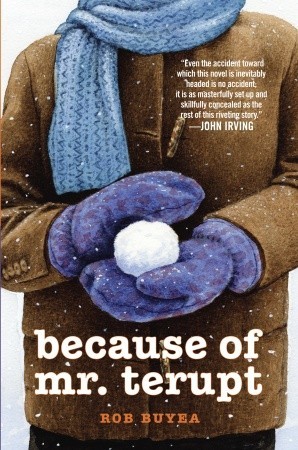
Because of Mr. Terupt by Rob Buyea

Share

Because of Mr. Terupt
Author: Rob Buyea
Published October 12, 2010 by Delacorte

A Guest Review by Julia Kipphut

Summary: Mr. Terupt’s fifth grade class at Snow Hill School is comprised of various types of students, some including: a new student, a popular girl, a bully, and a troublemaker. Their teacher, Mr. Terupt who is passionate and energetic, strives to engage his students and instill a sense of community amongst his class. Unfortunately, one day, a snowball fight goes awry and leaves Mr. Terupt in a coma. His class is rattled and must learn to work together, be kind, and hope for Mr. Terupt’s recovery.

Review: This book includes a variety of characters, each owning their own identity and personality. Each chapter is written from a different character’s perspective, making for a fluid and interesting read. They are relatable for children and allow them to recognize themselves in each character. Each character evolves in the story and shows tremendous growth, proving the rich development of the people in this book. The message of community and forgiveness is nicely intertwined in the story and proves that it is always better to choose kindness. The theme of this book is positive and motivational. 

Teachers’ Tools for Navigation: Because of Mr. Terupt serves as a great reader aloud for upper elementary school students. 4th and 5th graders who are struggling with their identity and place in a classroom community can learn the importance of compassion. Students can learn to embrace individual differences for a common goal or outcome, mirroring the characters in this book. Additionally, this book allows students to study character development throughout the story; each character evolves- allowing for effective classroom discussion.

Because of each character of this book is written from a different character’s perspective, students are able to study point of view and consider the influence each chapter has on the story as a whole. Students are able to learn about each character in depth and can even use literature circles to each study a character for analysis.

Discussion Questions: How might the story be different if the snowball accident did not happen?; What do you think the author’s purpose or message was for this story?; Why do you think the author chose to write this story from different characters points of views? Do you think this was effective?

Book Trailer: 

Read This If You Loved: Out of My Mind by Sharon Draper; Wonder by R. J. Palacio

Recommended For:

  litcirclesbuttonsmall  classroomlibrarybuttonsmall

Thank you, Julia!

RickiSig

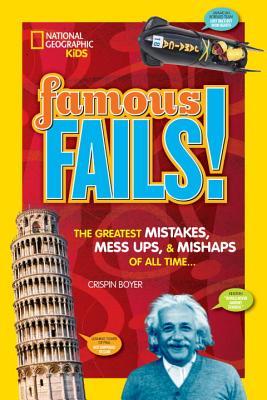
Famous Fails!: Mighty Mistakes, Mega Mishaps, & How a Mess Can Lead to Success! by Crispin Boyer

Share

nfpb2017

Nonfiction Wednesday

Nonfiction Picture Book Wednesday is hosted by Kid Lit Frenzy and was started to help promote the reading of nonfiction texts. Most Wednesdays, we will be participating and will review a nonfiction text (though it may not always be a picture book).
Be sure to visit Kid Lit Frenzy and see what other nonfiction books are shared this week!

Famous Fails!: Mighty Mistakes, Mega Mishaps, & How a Mess Can Lead to Success!
Author: Crispin Boyer
Published October 25th, 2016 by National Geographic Children’s Books

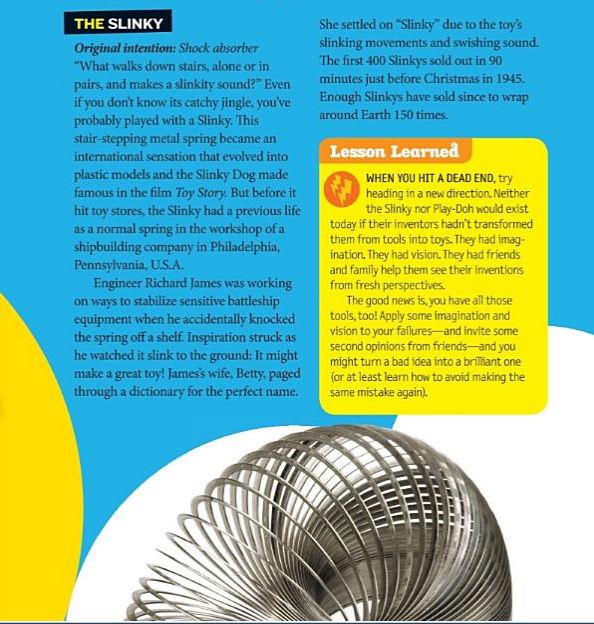
Summary: This fun book of quirky failures and famous flops will keep kids laughing while they learn the importance of messing up in order to get it right. Science, architecture, technology, entertainment — there are epic fails and hilarious goof-ups from every important field. Silly side features help to analyze the failures: “Lesson Learned,” “It Could be Worse!,” “Losing Combinations,” and a “Fail Scale” to help readers navigate the different kinds and scope of the mistakes made. The stories will include what went wrong, what went right, and what kids can learn from each failed attempt.

Review: I think one of the greatest lessons for children to learn is that failure doesn’t always equal failure. So many inventions and success began as what many would consider a failure when in actuality it was the beginning of a great thing. Giving up after a failure means you didn’t learn anything from it when failure is one of the best learning experiences. This text goes through hundreds of examples of famous people who failed or failures that became successes–wonderful stories for young people to read.

Teachers’ Tools for Navigation: As I read more and more of National Geographic’s new books like this one, Awesome 8, Book of Heroes/HeroinesReal or Fake?, and others, I’m coming to realize that these texts are made for project-based learning. These books make me question and inquire so many things within them. As I read, I find myself Googling and thinking and wanting to learn more–and I know they’ll do the same for kids.

Discussion Questions: Which famous inventions did you learn that was from a “failure?”; What famous person did you learn about that surprised you with their “failure?”; When is a time that you “failed” and stopped but now you wish you could go back and keep trying?

Flagged Passages: 

Read This If You Loved: The Marvelous Thing That Came from a Spring: The Accidental Invention of the Toy That Swept the Nation by Gilbert Ford, Earmuffs for Everyone!: How Chester Greenwood Became Known as the Inventor of Earmuffs by Meghan McCarthy, and other books about inventions; The Book of Heroes by Crispin Boyer & The Book of Heroines by Stephanie Warren Drimmer; and other nonfiction texts about inventors, heroes, failures then successes, and history

Recommended For: 

classroomlibrarybuttonsmall

Signature

**Thank you to Karen at Media Masters Publicity for providing a copy for review!**

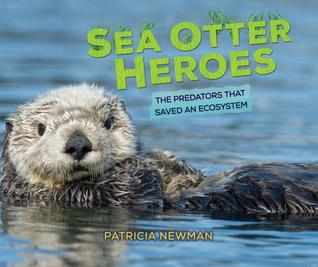
Sea Otter Heroes: The Predators That Saved an Ecosystem by Patricia Newman

Share

nfpb2017

Nonfiction Wednesday

Nonfiction Picture Book Wednesday is hosted by Kid Lit Frenzy and was started to help promote the reading of nonfiction texts. Most Wednesdays, we will be participating and will review a nonfiction text (though it may not always be a picture book).
Be sure to visit Kid Lit Frenzy and see what other nonfiction books are shared this week!

Sea Otter Heroes: The Predators That Saved an Ecosystem
Author: Patricia Newman
Published by January 1st, 2017 by Millbrook Press

Summary: Marine biologist Brent Hughes didn’t think sea otters and sea grass had much in common. But his research at Elkhorn Slough, an estuary on Monterey Bay in northern California, revealed a new and surprising connection between the two. The scientist expected this estuary to be overrun with algae due to the fertilizer runoff from surrounding fields. But it wasn’t. Why?

Review: As someone who struggled with biology when in school, I love narrative nonfiction about nature because it helps me fill in education gaps. Sea Otter Heroes looks at trophic cascade (cause and effect relationships within a food chain) and how it affects an ecosystem–so interesting! This information along with the beautiful photographs make this book a scientific journey.

Teachers’ Tools for Navigation: Patricia Newman’s books (Plastics, Ahoy! and Ebola included) are made for classrooms. This text includes not only the cause-effect relationship between otters and sea grass, but also has experiments, information about careers, a glossary, and an afterword about rethinking our relationship with nature giving the reader real ways they can make a difference. This book would be perfect to use in a life science unit or class.

Discussion Questions: What is the “critical link between” sea otters and flowering sea grass?; Finding the link was an accident, what was Brent Hughes studying when he found the connection? What was the proof that the connection existed?; How does the Elkhorn Slough exist?; What are Hughes’s 7 steps to think like a scientist? Observe nature and go through the 7 steps yourself.; What part did sea hares play in Brett Hughes’s experiment?; What is a trophic cascade?; How are what was discovered about the otters similar to the situations with wolves and sperm whales Newman shared?

Flagged Passages: 

Read This If You Love: Scientists in the Field books, National Geographic and Animal Planet books about animals 

Recommended For:

  readaloudbuttonsmall classroomlibrarybuttonsmall 

Kellee Signature

**Thank you to Lerner and Patricia for providing a copy for review!**