The Strange Fascinations of Noah Hypnotik by David Arnold

Share

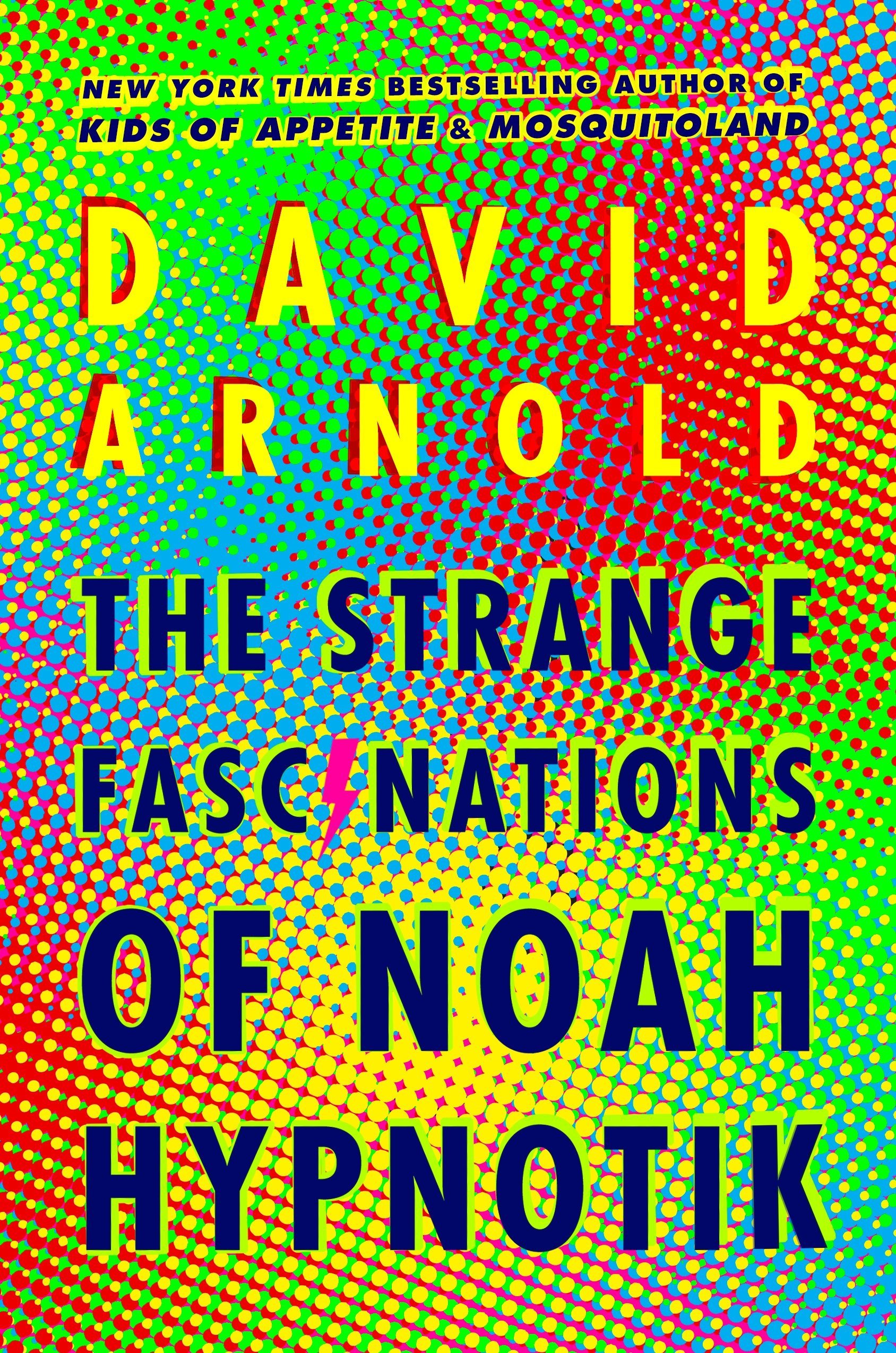
The Strange Fascinations of Noah Hypnotik
Author: David Arnold
Published: May 22, 2018 by Viking

Guest Review by Natalia Sperry

Summary: This is Noah Oakman → sixteen, Bowie believer, concise historian, disillusioned swimmer, son, brother, friend.

Then Noah → gets hypnotized.

Now Noah → sees changes—inexplicable scars, odd behaviors, rewritten histories—in all those around him. All except his Strange Fascinations . . .

Review: The longer I sit with this book, the more I feel like I’m still it; every time I sit down to think about it, I find new things to consider. If that’s not the sign of a good book,I don’t know what else is. The Strange Fascinations of Noah Hipnotik is a surreal exploration of identity, friendship, and family on the brink of the many changes protagonist Noah Oakman faces (both before and after his hypnotic episode) as he looks to the future beyond high school.

Above all else, I loved the nerdom in this book, both in its literary and historical detail as well as the variety of pop-culture references. In particular, much of the book (including its title) is drawn from musical icon David Bowie, so I’ll admit,  it’s hard to go wrong. The humor also brings some lightness to the moral questions and philosophical questions of self and reality, which helps keep the largely internal narrative afloat.

Through it all, this book captures an important to capture the emotional gamut of someone’s life, especially when it feels like everything is ch-ch-ch-changing around you. Whether you’re looking for fun or serious contemplation of reality, this book will let you escape for a while (and even for a while longer after you’re done!)

Teacher’s Tool For Navigation: Though grounded in humor and pop culture references, this book would make for a really interesting companion to classics like James Joyce’s Portrait of the Artist as a Young Man, or J.D. Salinger’s The Catcher in the Rye. In asking students to compare the latter with Strange Fascinations, there are some really interesting parallels to be made both in the coming of age story and in the respective protagonists’ relationships with their sisters.

Discussion Questions: Do you agree, like Circuit, that genuine conversations are rare in the contemporary world? What do you think of Noah’s “strange fascinations?” Do you have any “fascinations” of your own, in this sense?

Flagged: “Some books are songs like that, the ones you go back to, make playlists of, put on repeat” (page 108).

Read This If You Loved: Mosquitoland by David Arnold, Everybody Sees the Ants by A.S. King, Ready Player One by Ernest Cline

Recommended For: 

classroomlibrarybuttonsmall 

RickiSig

Author Guest Post: “Helping Kids Understand the Immigration Debate” by Judy Dodge Cummings, Author of Immigration Nation: The American Identity in the Twenty-First Century

Share

“Helping Kids Understand the Immigration Debate”

The United States is a nation of immigrants. With the exception of Native Americans, everyone living here has immigrant ancestors hanging from their family tree. Many of you live or work or attend school with immigrants. Some of you see an immigrant when you look in the mirror.

For more than a century, the Statute of Liberty has stood in New York Harbor and held her torch aloft, beckoning the world’s “tired…poor…huddled masses” to enter America’s Golden Door. However, even though the United States celebrates its immigrant past in story and song, we still struggle with each successive wave of immigration. History shows us that when foreigners come by the millions to America’s shores, even when the United States needs their labor, there is inevitably a backlash from citizens who want to close the Golden Door.

Today, we are witnessing that struggle play out on the news and in our neighborhoods.

Images bombard us—caravans, checkpoints, and children in cages.

Our lexicon expands—catch and release, national emergency, amnesty, and illegals.

Leaders stake claim to the truth as they debate whether to build a wall to keep immigrants out or to build a path that helps immigrants stay. Meanwhile, citizens want to know whose “truth” is the truth?


In an age when we can select media outlets from a menu that matches our political leanings, we often hear only information that corroborates our world view. We learn about immigration through a one-sided filter, our views become hardened, and the nation remains divided.

Today’s teenagers are tomorrow’s decision makers. They will shape future immigration policy. They will have to determine if America’s Golden Door remains open or is closed.

I wrote Immigration Nation: The American Identity in the Twenty-First Century to help youth explore immigration through unbiased, factual sources. The book examines the nation’s long history of immigration and the role the law has played as gatekeeper. Statistics and anecdotes tell the story of who immigrates, why they come, and how these newcomers are treated. The book explores the political, economic, and social impacts of current and future immigration. My goal was to equip teens with the knowledge they need to reach their own conclusions about what future U.S. immigration policy should be so they can use evidence and logic when participating in our national conversation about this important issue.

Here are three activities I developed to help young people explore different aspects of United States immigration.

Activity: Graph the Numbers

Sometimes graphs are helpful when thinking about complicated information. Design a series of graphs to communicate the history of U.S. immigration. Locate data at the Digital Scholarship Lab’s interactive website.

What changes in immigration do you want to show? Consider the following factors.

  • The rise and fall in the total number of immigrants from 1850 to 2010.
  • The most common countries of origin of immigrants in 1850, 1950, and 2010.
  • The percentage of the U.S. population that was foreign-born at different times in history.

What types of graphs most effectively illustrate these changes—a pie chart, bar graph, or line graph? Create a series of graphs and have a classmate try to read them. Are they successful?

To investigate more, choose one 50-year period between 1820 and 2010 and research the major world events that occurred then. What is the connection between these events and the trends in immigration at that time? How could you display these findings on a graph?

Activity: Graffiti as Protest

Throughout history, politicians have constructed walls to protect or divide, and people have created art on these walls to rebel and resist. In this activity, you will design art of a segment of the U.S. Mexican border wall that reflects your opinion of the state of immigration in the twenty-first century.

  • Research different views of President Trump’s proposed border wall. Read the opinions of both Republican and Democratic lawmakers, economic analysts, environmental experts, immigration officials, and immigrant advocates.
  • Decide what you think about the border wall. Is it needed? How much will it cost? How effective will it be? What does an extended border wall say about the United States? What are the psychological impacts of living behind a wall?
  • Write a thesis statement to communicate your main opinion of the border wall. A thesis statement is usually a single sentence that summarizes your specific position on a subject.
  • Brainstorm different ways you can artistically represent your thesis. How will you execute your ideas?
  • Draw, paint, or sketch your ideas on a large piece of butcher paper. Display on a fence or wall so people can view your artistic expression.

To investigate more, research examples of border wall graffiti on walls around the world. What common themes or images are reflected by artists in different countries?

Activity: What’s on Your Plate?

Few Americans grow their own vegetables, milk their own cows, or butcher their own meat. We go to the grocery store, where almost any food is available any season of the year. Have you ever considered the lives of the people whose labor brings that food to your plate?

A 2014 report by the American Farm Bureau Federation found the agricultural industry needs between 1.5 and 2 million workers. Because not enough legal immigrants or American citizens will do backbreaking farm labor, 50 to 70 percent of agricultural workers are undocumented immigrants.

Explore the relationship between immigrant labor and the foods you eat. How much do you rely on farm workers?

  • Keep a food diary for one week. What fresh fruit, fresh vegetables, milk, and meat do you regularly consume?
  • Select one of these foods and research the role undocumented immigrants play in getting that item from the farm or field to the grocery store. What do immigrants say about their work experiences in places such as chicken processing plants or California fruit orchards? What makes the work difficult? What do they get paid for their work and how do their wages impact the price you pay at the grocery store?
  • In a creative way, communicate the journey this food took. Consider a short story, comic strip, or storyboard. Share the story with you peers and discuss how Americans benefit from the labor of undocumented immigrants.

To investigate more, change your story so all the workers who produced your food were paid minimum wage. What impact would this have on you as a consumer?

More classroom resources can be found at https://nomadpress.net/wordpress/wp-content/uploads/2018/07/Immigration-Nation-Classroom-Guide.pdf.

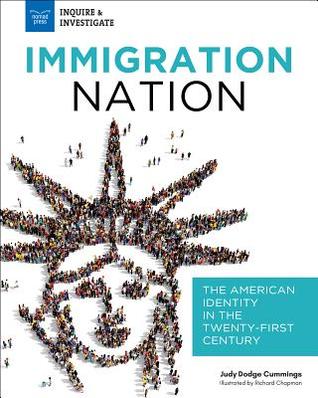
Immigration Nation: The American Identity in the Twenty-First Century
Author: Judy Dodge Cummings
Illustrator: Richard Chapman
Published April 9th, 2019 by Nomad Press

About the Book: What does it mean to be an immigrant today? Has the immigrant experience changed since the last century?

Immigration Nation: The American Identity in the Twenty-First Century invites middle and high schoolers to explore the history of immigration in the United States, along with immigration law and statistics through the perspectives of immigrants, citizens, policy makers, and border agents.

For more than a century, an immigrant from France has stood vigil in the New York Harbor. At 350 feet tall, with a majestic spiked crown upon her head, a tablet of laws clutched in one hand and a torch held aloft in the other, the lady is hard to miss. She cries out to the world, “Give me your tired, your poor…I lift my lamp beside the golden door!” Millions of immigrants have answered the Statue of Liberty’s call, passing over, under, or through the Golden Door to become Americans.

However, on the eve of its 250th birthday, the United States is in the middle of an identity crisis. Should this land of immigrants open the door open to outsiders, people hungry for opportunity and desperate for freedom? Or should the country shut the golden door, barring entry to all but a select few? And what does it mean to be an American? How citizens answer these questions in the early twenty-first century will determine the future of America’s identity.

About the Author: Judy Dodge Cummings is a writer and former high school social studies teacher. She has written many books for children and teens, including Migration: Investigate the Global Journey of Humankind for Nomad Press. Lots of Judy’s books are related to history because that is her favorite topic to research, read, and write. Judy lives and writes in south central Wisconsin.

Website: judydodgecummings.com/books

Facebook: facebook.com/JDodgecummings

Thank you so much for this guest post!

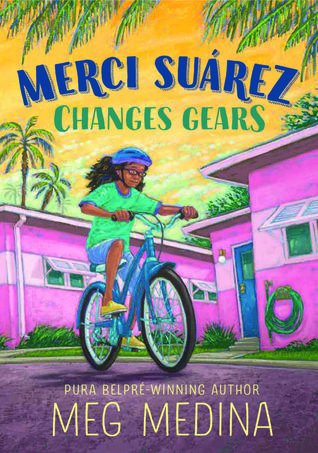
Teachers’ Guide for Merci Suárez Changes Gears by Meg Medina

Share

Merci Suárez Changes Gears
Author: Meg Medina
Published: September 11th, 2018 by Candlewick Press

Summary: Thoughtful, strong-willed sixth-grader Merci Suárez navigates difficult changes with friends, family, and everyone in between in a resonant new novel from Meg Medina.

Merci Suárez knew that sixth grade would be different, but she had no idea just how different. For starters, Merci has never been like the other kids at her private school in Florida, because she and her older brother, Roli, are scholarship students. They don’t have a big house or a fancy boat, and they have to do extra community service to make up for their free tuition. So when bossy Edna Santos sets her sights on the new boy who happens to be Merci’s school-assigned Sunshine Buddy, Merci becomes the target of Edna’s jealousy. Things aren’t going well at home, either: Merci’s grandfather and most trusted ally, Lolo, has been acting strangely lately — forgetting important things, falling from his bike, and getting angry over nothing. No one in her family will tell Merci what’s going on, so she’s left to her own worries, while also feeling all on her own at school. In a coming-of-age tale full of humor and wisdom, award-winning author Meg Medina gets to the heart of the confusion and constant change that defines middle school — and the steadfast connection that defines family.

Teachers’ Tools for Navigation and Discussion Questions: 

Please view and enjoy the teachers’ guide I created for Merci Suárez Changes Gears:

You can also access the teaching guide here.

You can learn more about Merci on Candlewick Press’s Merci Suárez Changes Gears page.

Recommended For: 

readaloudbuttonsmall classroomlibrarybuttonsmall litcirclesbuttonsmall closereadinganalysisbuttonsmall

Kellee Signature

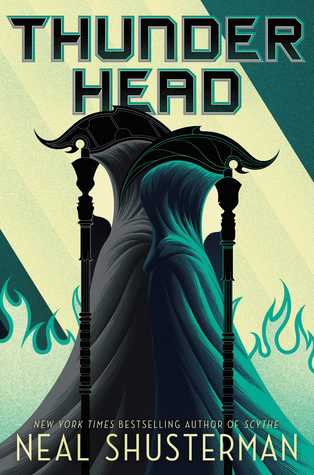
Thunderhead by Neal Shusterman

Share

Thunderhead
Author: Neal Shusterman
Published: January 9, 2018 by Simon & Schuster

Guest Review by Natalia Sperry

Summary: Rowan and Citra take opposite stances on the morality of the Scythedom, putting them at odds, in the second novel of the chilling New York Times bestselling series from Neal Shusterman.

Rowan has gone rogue, and has taken it upon himself to put the Scythedom through a trial by fire. Literally. In the year since Winter Conclave, he has gone off-grid, and has been striking out against corrupt scythes—not only in MidMerica, but across the entire continent. He is a dark folk hero now—“Scythe Lucifer”—a vigilante taking down corrupt scythes in flames.

Citra, now a junior scythe under Scythe Curie, sees the corruption and wants to help change it from the inside out, but is thwarted at every turn, and threatened by the “new order” scythes. Realizing she cannot do this alone—or even with the help of Scythe Curie and Faraday, she does the unthinkable, and risks being “deadish” so she can communicate with the Thunderhead—the only being on earth wise enough to solve the dire problems of a perfect world. But will it help solve those problems, or simply watch as perfection goes into decline?

Review: Thunderhead packs a punch as a conceptually compelling and action-packed follow up to award-winning Scythe. While at times it moves slowly and teeters on the precarious edge of “middle book syndrome.” Its expansion of the world of the Scythdome helps the book feel more well-rounded. Despite the action, Thunderhead shines most in its explorations of democracy and the implications of AI technology.

Citra’s questioning of identity, though immediately rooted in her struggle between her civilian past and scythedom, provides a good example of identity searching for teen readers. For Citra and Rowan, the stakes are high– despite the novel’s focus on the guiding AI of the Thunderhead, the fate of the world rests not on the shoulders of the political technology or the Scythe’s government, but on the teenage protagonist’s shoulders. Though Thunderhead didn’t invent the trope of teens saving the world, in 2018 it feels all the more prevalent.

Teacher’s Tool For Navigation: As a sequel, Thunderhead will primarily be useful in addition to classroom libraries. However, in discussing the Arc of a Scythe series as a whole, Thunderhead raises interesting questions of power dynamics in politics, democracy, and the role of AI technology. If Scythe is already a text you’ve considered using in literature circles, a discussion about the themes raised in the sequel could provide an interesting supplement to the unit.

Discussion Questions:  Is the Thunderhead justified? Is the Scythedom?  In what ways is the world of the Scythes in MidMerica and beyond a dystopia or utopia?

Flagged: “You may laugh when I tell you this, but I resent my own perfection. Humans learn from their mistakes. I cannot. I make no mistakes. When it comes to making decisions, I deal only in various shades of correct.” (Chapter 4).

Read This If You Loved: Scythe by Neal Shusterman, Illuminae by Amie Kaufman, Jay Kristoff, This Savage Song by Victoria Schwab

Recommended For: 

classroomlibrarybuttonsmall 

RickiSig

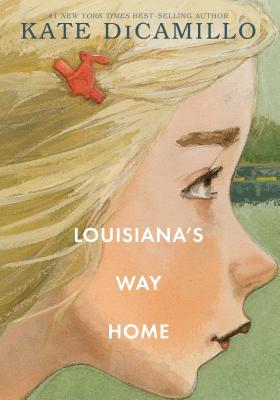
Teachers’ Guide for Louisiana’s Way Home by Kate DiCamillo

Share

Louisiana’s Way Home
Author: Kate DiCamillo
Published: October 2nd, 2018 by Candlewick Press

Summary: From two-time Newbery Medalist Kate DiCamillo comes a story of discovering who you are — and deciding who you want to be.

When Louisiana Elefante’s granny wakes her up in the middle of the night to tell her that the day of reckoning has arrived and they have to leave home immediately, Louisiana isn’t overly worried. After all, Granny has many middle-of-the-night ideas. But this time, things are different. This time, Granny intends for them never to return. Separated from her best friends, Raymie and Beverly, Louisiana struggles to oppose the winds of fate (and Granny) and find a way home. But as Louisiana’s life becomes entwined with the lives of the people of a small Georgia town — including a surly motel owner, a walrus-like minister, and a mysterious boy with a crow on his shoulder — she starts to worry that she is destined only for good-byes. (Which could be due to the curse on Louisiana’s and Granny’s heads. But that is a story for another time.)

Called “one of DiCamillo’s most singular and arresting creations” by The New York Times Book Review, the heartbreakingly irresistible Louisiana Elefante was introduced to readers in Raymie Nightingale — and now, with humor and tenderness, Kate DiCamillo returns to tell her story.

Teachers’ Tools for Navigation and Discussion Questions: 

Please view and enjoy the teachers’ guide I created for Louisiana’s Way Home: 

You can also access the teaching guide here.

You can learn more about Louisianaon Candlewick Press’s Louisiana’s Way Home page.

Recommended For: 

readaloudbuttonsmall classroomlibrarybuttonsmall litcirclesbuttonsmall closereadinganalysisbuttonsmall

Kellee Signature

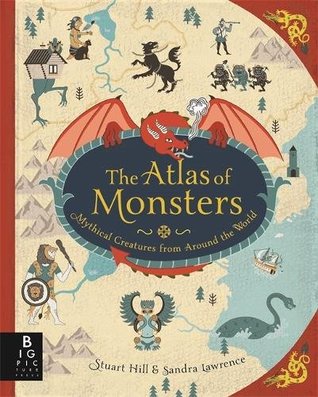
The Atlas of Monsters: Mythical Creatures from Around the World by Sandra Lawrence and Stuart Hill

Share

The Atlas of Monsters: Mythical Creatures from Around the World
Creators: Sandra Lawrence and Stuart Hill
Published April 23rd, 2019 by Running Press

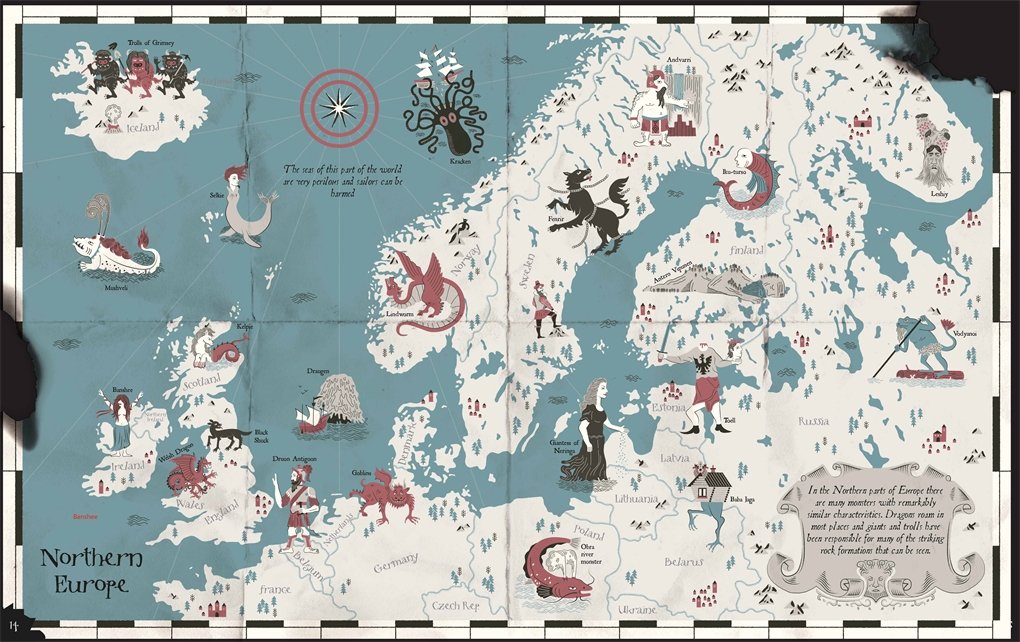
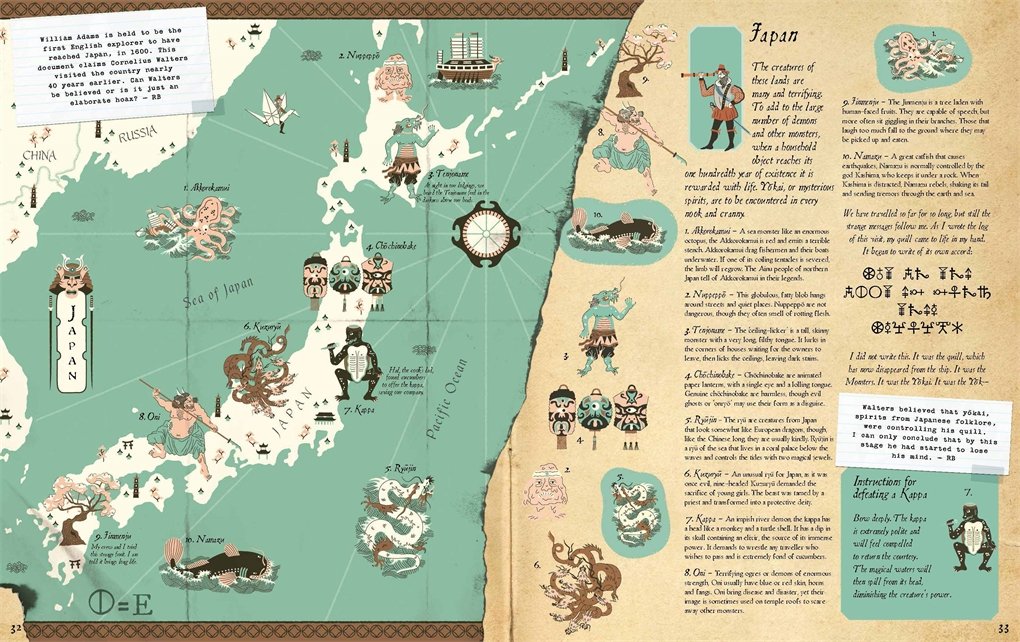
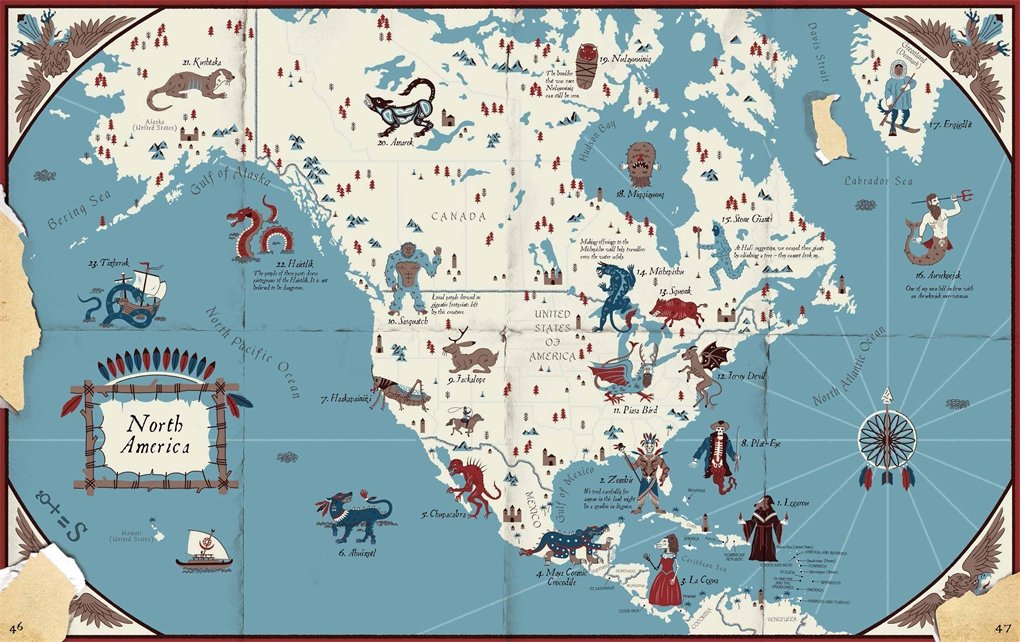
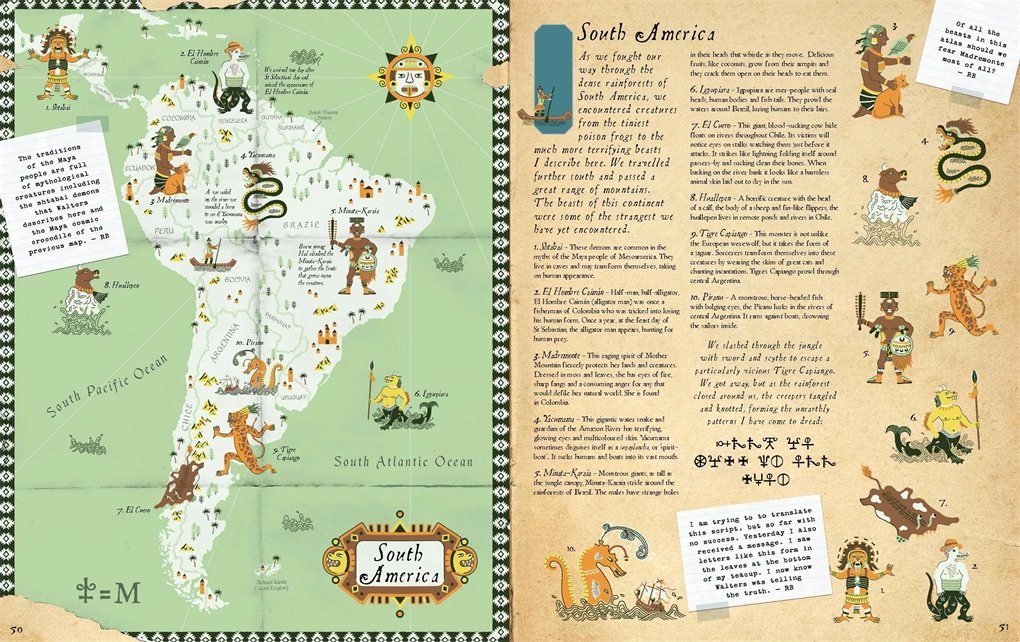
Summary: A whimsical and imaginative catalog of fantastical beasts and creatures of myth and legend from around the world-complete with a code that needs cracking to uncover the mystery of the monster atlas!

One day a collection of very old maps is found in a dusty library. They show where in the world monsters and creatures from mythology and folklore can be found. According to the notes left with the maps, they were made by Cornelius Walters, an intrepid explorer from the 15th century. But did Walters really make these elaborate maps, or is it all a hoax? The librarian who discovered them is not certain . . . and what are the strange messages in a cryptic code that Walters records in his ship’s log? The codes throughout, once cracked, may indeed lead to something sinister that will happen should the atlas ever be published!

This is a gorgeously illustrated and comprehensive catalog of monsters, beasts, and mythical creatures from around the globe, with an easy-to-read format and incredible detail on each spread. It is many things, all at once:

  • A reference guide: Grouped by continent, this illustrated atlas lists and defines magical creatures from folklore around the world. Readers will find creatures from stories they’ve heard–like leprachauns, manticores, zombies–and learn about lesser-known creatures like the squonk, the tatzelwurm, and the fengu.
  • A journal: Presented as a record created by a fifteenth-century voyager named Cornelius Walters, the book includes Cornelius’s personal anecdotes about encountering monsters during his journey.
  • A mystery: The book also includes notes from a librarian who supposedly found the atlas and is trying to figure out whether Cornelius was making up stories for the monsters…or whether monsters are real.
  • A code: A mysterious code appears on each page and is referred to by both Cornelius and the librarian, encouraging readers to crack it…before it’s too late.

For kids (and adults) who love mythology, the supernatural, mysteries, or code-breaking, this whimsical blend of folklore and fiction provides both a joy and a surprise on every page.

About the Creators: 

Sandra Lawrence is an author and journalist. She is the author of two middle grade history books: Grisly History: Death and Destruction and Grisly History: Trials and Treachery. She lives in London, England.

Stuart Hill is an illustrator and designer. He is especially interested in printed textures, hand-lettering, and map illustration. He lives in England.

Review: This book is really everything that the summary states. It is fascinating! And beautiful! There is some humor because of the voyager’s anecdotes and the librarian’s notes, too, which is always nice. And the addition of the code adds an interactive element to the text. Highly recommended for any teacher teaching mythology or any traditional stories with monsters/creatures.

Teachers’ Tools for Navigation: This text would be perfect for teaching and discussing the Literacy.RL.9 standard which discusses how modern texts uses traditional text. Using The Atlas of Monsters, students can get an introduction to allusion around a discussion of where they have heard of the monsters before. And this is just the beginning! It would be so much fun to make your own Atlas of Monsters!

Discussion Questions: 

  • Find the clues throughout each page, and crack the codes in the book.
  • How many different points of view are shared in the book? How does this affect the reading experience?
  • Pick one of the creatures and do further research and create a longer profile about them.
  • Before reading about one of the continents, do your own research and try to predict which mythical creatures will be mentioned.
  • What are some similarities/differences between what you knew about ____ and what is in the text?

Flagged Passages: 

Read This If You Love: Mythology, Cryptozoology, Folklore, the supernatural, code breaking

Recommended For: 

classroomlibrarybuttonsmall 

Signature

**Thank you Running Press Kids for providing a copy of the book to review!**

Author Guest Post: “Environmental Science Activities for Kids” by Donna Latham, Author of Biomes: Discover the Earth’s Ecosystems with Environmental Science Activities for Kids

Share

“Environmental Science Activities for Kids”

We can all agree that Earth is a pretty amazing planet. We’ve got oceans, rainforests, icebergs, and a huge range of diverse species living all over the place!

Earth is amazing, and it’s also enormous. It can be easy to forget and hard to imagine just how much area there is and how many organisms share it. One way that makes it easier is to think of the planet as a whole system and imagine it as being sectioned into different biomes. That’s what I did when I set out to write a book about what it’s like to live on Planet Earth. By taking a tour of the earth’s different biomes, we can see how interconnected all species actually are and how important it is to take of the environment where you live—because whatever happens to the land, water, and air where you are will have repercussions elsewhere in the world.

In Biomes: Discover the Earth’s Ecosystems with Environmental Science Activities for Kids, I focused on nine biomes: deciduous forests, coniferous forests, tropical rainforests, deserts, temperate grasslands, tropical savannas, tundra, mountains, and oceans. Each one had an entire ecosystem to discover and explore, along with distinct species that had adapted specifically to their environment.

Inviting children along the journey is especially important. Climate change is no longer a slow-moving, far-away issue. Intense storms, rising sea levels, and altered seasons are all readily apparent in ways they didn’t use to be, and children are noticing and asking what they can do to be of service to the planet and help keep it healthy.

So, fasten your helmet as we get ready to embark on a bumpy ride around the world on a tour of the nine biomes! Our first stop is some super cool projects designed to get kids thinking about the environment and their role in its care.

MAKE RECYCLED PAPER

This activity is pretty messy! Be sure to do it outside if possible! You can use your homemade paper to take notes or send letters to friends about your biome discoveries.

Caution: Have an adult help with the blender.

Rip scrap paper into teeny pieces. Place about 1/2 cup of it into a blender. Pour about 2 cups of hot water over the paper. Repeat this process until the blender is halfway full. Cover the blender and set it at a low speed. Mix the paper and water until it reaches a pulpy consistency. If the blender gets sluggish, add a bit more water.

Carefully take the pulp outside. Spread newspaper on a flat surface, and place a towel or rag over it. Set it aside for a moment.

Place a window screen in a pan or on a baking sheet. Pour the pulp over the window screen. Wiggle the screen back and forth until the pulp coats it. Gently lift the screen from the pan or sheet, and allow any excess pulp to drip off.

Set the screen on top of the towel and newspaper. Keep the screen’s pulpy side up. Layer a second towel or rag and more newspaper on top of the screen, creating a sandwich. Use a rolling pin or other tool to press on the sandwich from one end to another until you’ve wrung out all the water.

Spread out a third towel or rag in a warm, dry spot, and carefully place the sandwich on top of it. Allow it to dry for 24 hours. If you live in a humid place, it will probably require more time.

When the paper is completely dry, peel the newspaper and towels away. You’ve got homemade paper!

Think About It:

  • How might this method of recycling paper into new paper work for large amounts of paper?
  • Could a factory use this process?
  • What are some ways companies could change this process so they could work with recycled paper from an entire school?

SALT AND SEED GERMINATION

During periods of drought, soil becomes salty. How does salt concentration in soil impact seed germination? Sprout radish seeds to find out!

Use three plastic deli tubs of the same size. Individually label the tubs, each with a different solution identifier: Solution 1: 1 Teaspoon; Solution 2: 2 Teaspoons; Solution 3: 3 Teaspoons.

Place a piece of paper towel or coffee filter at the bottom of each container. Sprinkle quick-sprouting radish seeds over each piece. Label three plastic cups to match the solution identifiers of each deli tub.

Prepare the solutions. Pour 1 cup of distilled water into each plastic cup. In the Solution 1 cup, add 1 teaspoon of salt. In the Solution 2 cup, add 2 teaspoons. In the Solution 3 cup, add 3 teaspoons. Stir to thoroughly dissolve the salt.

Use an eyedropper to add a small amount of each solution to its corresponding container. Make sure you completely wet each paper towel or coffee filter, but don’t drench it. Cover each container with a piece of clingwrap.

Predict what will happen over a two-week period as you tend the seeds. How will different salt solutions impact seed germination? How will the solutions affect seedlings as they begin to grow?

Place the containers in the same location, where they can receive sunlight undisturbed. Monitor the seeds each day. Write down your observations. Add more solution to each corresponding plant. After two weeks, assess and analyze your results. What are your findings about soil content’s impact on germination and growth?

Think About It:

  • What do your conclusions mean for large-scale agriculture?
  • What happens when entire farms have soil that becomes too salty?

TEST YOUR AIR QUALITY

Arctic haze is a certain kind of polar air mass. Chock-full of chemical pollutants from Canada, Eurasia, and the United States, this reddish-brown smog sometimes hangs over Alaska, creating poor air quality. What’s the air quality like where you live? Conduct this test to find out.

Choose four separate areas, both indoors and outdoors, to test the air. Indoors, you might select  your kitchen, and outdoors, target a bush or shrub.

Label one index card for each location. Your labels should match those in your science journal. Use a craft stick to spread petroleum jelly over the cards. Leave each card in a safe spot in its target area. Wait 8 hours.

To collect data, visit each location and gather its card. Use a magnifying glass to study each sample. Do you observe any particles? What color are they? Can you identify what they are? Record your findings in a notebook.

While you’re at each location, use your senses to take in your surroundings. In your journal, write your observations of the area on the correct page. Can you smell anything? Does the air feel dusty or damp? Do you see blowing sand or plant parts? Is there cigarette smoke, industrial emissions, or road construction that are affecting air quality?

Place each sample in a row. Use the magnifying glass to compare and contrast each card. Which sample is the cleanest? The dirtiest? What conclusions can you draw about the air quality?

Think About It:

  • Saharan sunsets occur when gigantic dust clouds from Africa’s Sahara Desert travel thousands of miles across the globe. These produce hazy skies, hotter temperatures, allergies—and beautiful sunsets.

DISCUSSION QUESTIONS

  • What type of biome do you live in?
  • How does Earth sustain life?
  • How are food chains essential to life on Earth?
  • How are living things adapted for life in the coniferous forest?
  • Why are tropical rainforests called “the lungs of the planet?”
  • What changes will occur if the desert continues to be Earth’s fastest growing biome?
  • How are grasses and hooved animals adapted to thrive in wide-open spaces?
  • What happens when ecosystems change?
  • In the interconnected web of life, how do warming temperatures in the Arctic impact the planet?
  • What makes mountains different from other biomes?
  • How does ocean depth impact biodiversity?
  • What have you discovered about Earth’s vast interconnections?

More classroom resources can be found at https://nomadpress.net/wordpress/wp-content/uploads/2014/04/Biomes-Classroom-Guide.pdf.

Biomes: Discover the Earth’s Ecosystems with Environmental Science Activities for Kids
Author: Donna Lathan
Illustrator: Tom Casteel
Published March 5th, 2019 by Nomad Press

About the Book: What’s the difference between a desert and a rain forest? A tundra and a coniferous forest? These are all examples of biomes, and they are all home to plants and animals that are uniquely adapted to live in those environments!

In Biomes: Discover the Earth’s Ecosystems with Science Activities for Kids, middle school kids journey across the planet and visit the world’s nine terrestrial and aquatic biomes to learn about the distinctive climates, geologies, resources, and organisms that can be found there. Kids will wander through forests, sizzle in deserts, shiver in the tundra, slog through marshy waters, and plunge beneath the seas to explore coral reefs. Along the way, readers will encounter the flora and fauna adapted for survival in each unique climate zone. They’ll learn about gnarly krumholz trees, bioluminescent sea creatures, camouflage, carnivorous plants, and blubbery marine critters.

The health and wellbeing of the world’s biomes are an essential part of the balance of the planet as a whole. Biomes and their inhabitants around the world are being threatened by climate change and human behavior. In Biomes, kids will learn how to take steps toward positive change and keep the environment healthy and functioning in a way that best supports sustainable life on Earth!

Biomes includes hands-on STEM activities and critical thinking exercises to encourage readers to consider threats to the environment and figure out ways to be part of the solution. Fun facts, links to online primary sources and other supplemental material, and essential questions take readers on an exploration of the biomes of Earth.

About the Author: Donna Latham is an award-winning author and playwright. She is the author of Amazing Biome Projects You Can Build YourselfBackyard Biology Investigate Habitats Outside Your Door With 25 ProjectsDeciduousForestsDesertsGarbage Investigate What Happens When You Throw It Out With 25 ProjectsNorah JonesOceansRespiration and PhotosynthesisSavannas and Grasslands, and Tundra. She is a member of the Society of Children’s Book Writers and Illustrators and the Society of Midland Authors. She lives in Batavia, Illinois. Website: donnalatham.com

Thank you so much for this guest post about our amazing Earth and how it works!