Author Guest Post: “Environmental Science Activities for Kids” by Donna Latham, Author of Biomes: Discover the Earth’s Ecosystems with Environmental Science Activities for Kids

Share

“Environmental Science Activities for Kids”

We can all agree that Earth is a pretty amazing planet. We’ve got oceans, rainforests, icebergs, and a huge range of diverse species living all over the place!

Earth is amazing, and it’s also enormous. It can be easy to forget and hard to imagine just how much area there is and how many organisms share it. One way that makes it easier is to think of the planet as a whole system and imagine it as being sectioned into different biomes. That’s what I did when I set out to write a book about what it’s like to live on Planet Earth. By taking a tour of the earth’s different biomes, we can see how interconnected all species actually are and how important it is to take of the environment where you live—because whatever happens to the land, water, and air where you are will have repercussions elsewhere in the world.

In Biomes: Discover the Earth’s Ecosystems with Environmental Science Activities for Kids, I focused on nine biomes: deciduous forests, coniferous forests, tropical rainforests, deserts, temperate grasslands, tropical savannas, tundra, mountains, and oceans. Each one had an entire ecosystem to discover and explore, along with distinct species that had adapted specifically to their environment.

Inviting children along the journey is especially important. Climate change is no longer a slow-moving, far-away issue. Intense storms, rising sea levels, and altered seasons are all readily apparent in ways they didn’t use to be, and children are noticing and asking what they can do to be of service to the planet and help keep it healthy.

So, fasten your helmet as we get ready to embark on a bumpy ride around the world on a tour of the nine biomes! Our first stop is some super cool projects designed to get kids thinking about the environment and their role in its care.

MAKE RECYCLED PAPER

This activity is pretty messy! Be sure to do it outside if possible! You can use your homemade paper to take notes or send letters to friends about your biome discoveries.

Caution: Have an adult help with the blender.

Rip scrap paper into teeny pieces. Place about 1/2 cup of it into a blender. Pour about 2 cups of hot water over the paper. Repeat this process until the blender is halfway full. Cover the blender and set it at a low speed. Mix the paper and water until it reaches a pulpy consistency. If the blender gets sluggish, add a bit more water.

Carefully take the pulp outside. Spread newspaper on a flat surface, and place a towel or rag over it. Set it aside for a moment.

Place a window screen in a pan or on a baking sheet. Pour the pulp over the window screen. Wiggle the screen back and forth until the pulp coats it. Gently lift the screen from the pan or sheet, and allow any excess pulp to drip off.

Set the screen on top of the towel and newspaper. Keep the screen’s pulpy side up. Layer a second towel or rag and more newspaper on top of the screen, creating a sandwich. Use a rolling pin or other tool to press on the sandwich from one end to another until you’ve wrung out all the water.

Spread out a third towel or rag in a warm, dry spot, and carefully place the sandwich on top of it. Allow it to dry for 24 hours. If you live in a humid place, it will probably require more time.

When the paper is completely dry, peel the newspaper and towels away. You’ve got homemade paper!

Think About It:

  • How might this method of recycling paper into new paper work for large amounts of paper?
  • Could a factory use this process?
  • What are some ways companies could change this process so they could work with recycled paper from an entire school?

SALT AND SEED GERMINATION

During periods of drought, soil becomes salty. How does salt concentration in soil impact seed germination? Sprout radish seeds to find out!

Use three plastic deli tubs of the same size. Individually label the tubs, each with a different solution identifier: Solution 1: 1 Teaspoon; Solution 2: 2 Teaspoons; Solution 3: 3 Teaspoons.

Place a piece of paper towel or coffee filter at the bottom of each container. Sprinkle quick-sprouting radish seeds over each piece. Label three plastic cups to match the solution identifiers of each deli tub.

Prepare the solutions. Pour 1 cup of distilled water into each plastic cup. In the Solution 1 cup, add 1 teaspoon of salt. In the Solution 2 cup, add 2 teaspoons. In the Solution 3 cup, add 3 teaspoons. Stir to thoroughly dissolve the salt.

Use an eyedropper to add a small amount of each solution to its corresponding container. Make sure you completely wet each paper towel or coffee filter, but don’t drench it. Cover each container with a piece of clingwrap.

Predict what will happen over a two-week period as you tend the seeds. How will different salt solutions impact seed germination? How will the solutions affect seedlings as they begin to grow?

Place the containers in the same location, where they can receive sunlight undisturbed. Monitor the seeds each day. Write down your observations. Add more solution to each corresponding plant. After two weeks, assess and analyze your results. What are your findings about soil content’s impact on germination and growth?

Think About It:

  • What do your conclusions mean for large-scale agriculture?
  • What happens when entire farms have soil that becomes too salty?

TEST YOUR AIR QUALITY

Arctic haze is a certain kind of polar air mass. Chock-full of chemical pollutants from Canada, Eurasia, and the United States, this reddish-brown smog sometimes hangs over Alaska, creating poor air quality. What’s the air quality like where you live? Conduct this test to find out.

Choose four separate areas, both indoors and outdoors, to test the air. Indoors, you might select  your kitchen, and outdoors, target a bush or shrub.

Label one index card for each location. Your labels should match those in your science journal. Use a craft stick to spread petroleum jelly over the cards. Leave each card in a safe spot in its target area. Wait 8 hours.

To collect data, visit each location and gather its card. Use a magnifying glass to study each sample. Do you observe any particles? What color are they? Can you identify what they are? Record your findings in a notebook.

While you’re at each location, use your senses to take in your surroundings. In your journal, write your observations of the area on the correct page. Can you smell anything? Does the air feel dusty or damp? Do you see blowing sand or plant parts? Is there cigarette smoke, industrial emissions, or road construction that are affecting air quality?

Place each sample in a row. Use the magnifying glass to compare and contrast each card. Which sample is the cleanest? The dirtiest? What conclusions can you draw about the air quality?

Think About It:

  • Saharan sunsets occur when gigantic dust clouds from Africa’s Sahara Desert travel thousands of miles across the globe. These produce hazy skies, hotter temperatures, allergies—and beautiful sunsets.

DISCUSSION QUESTIONS

  • What type of biome do you live in?
  • How does Earth sustain life?
  • How are food chains essential to life on Earth?
  • How are living things adapted for life in the coniferous forest?
  • Why are tropical rainforests called “the lungs of the planet?”
  • What changes will occur if the desert continues to be Earth’s fastest growing biome?
  • How are grasses and hooved animals adapted to thrive in wide-open spaces?
  • What happens when ecosystems change?
  • In the interconnected web of life, how do warming temperatures in the Arctic impact the planet?
  • What makes mountains different from other biomes?
  • How does ocean depth impact biodiversity?
  • What have you discovered about Earth’s vast interconnections?

More classroom resources can be found at https://nomadpress.net/wordpress/wp-content/uploads/2014/04/Biomes-Classroom-Guide.pdf.
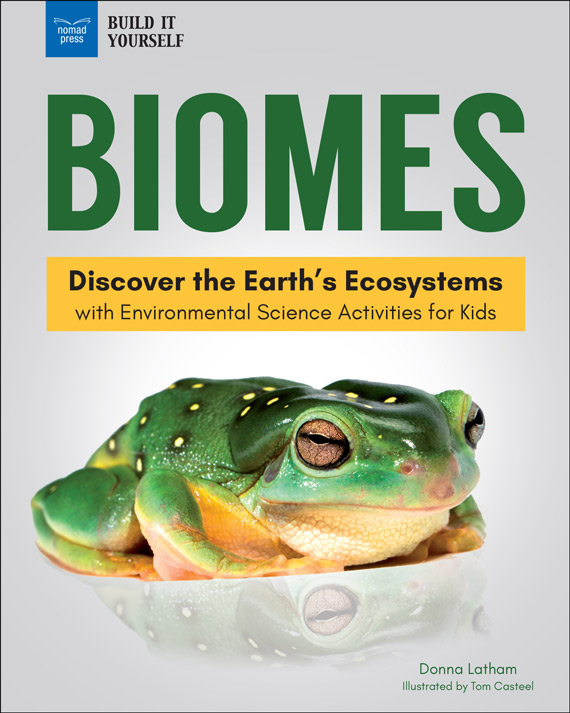
Biomes: Discover the Earth’s Ecosystems with Environmental Science Activities for Kids
Author: Donna Lathan
Illustrator: Tom Casteel
Published March 5th, 2019 by Nomad Press

About the Book: What’s the difference between a desert and a rain forest? A tundra and a coniferous forest? These are all examples of biomes, and they are all home to plants and animals that are uniquely adapted to live in those environments!

In Biomes: Discover the Earth’s Ecosystems with Science Activities for Kids, middle school kids journey across the planet and visit the world’s nine terrestrial and aquatic biomes to learn about the distinctive climates, geologies, resources, and organisms that can be found there. Kids will wander through forests, sizzle in deserts, shiver in the tundra, slog through marshy waters, and plunge beneath the seas to explore coral reefs. Along the way, readers will encounter the flora and fauna adapted for survival in each unique climate zone. They’ll learn about gnarly krumholz trees, bioluminescent sea creatures, camouflage, carnivorous plants, and blubbery marine critters.

The health and wellbeing of the world’s biomes are an essential part of the balance of the planet as a whole. Biomes and their inhabitants around the world are being threatened by climate change and human behavior. In Biomes, kids will learn how to take steps toward positive change and keep the environment healthy and functioning in a way that best supports sustainable life on Earth!

Biomes includes hands-on STEM activities and critical thinking exercises to encourage readers to consider threats to the environment and figure out ways to be part of the solution. Fun facts, links to online primary sources and other supplemental material, and essential questions take readers on an exploration of the biomes of Earth.
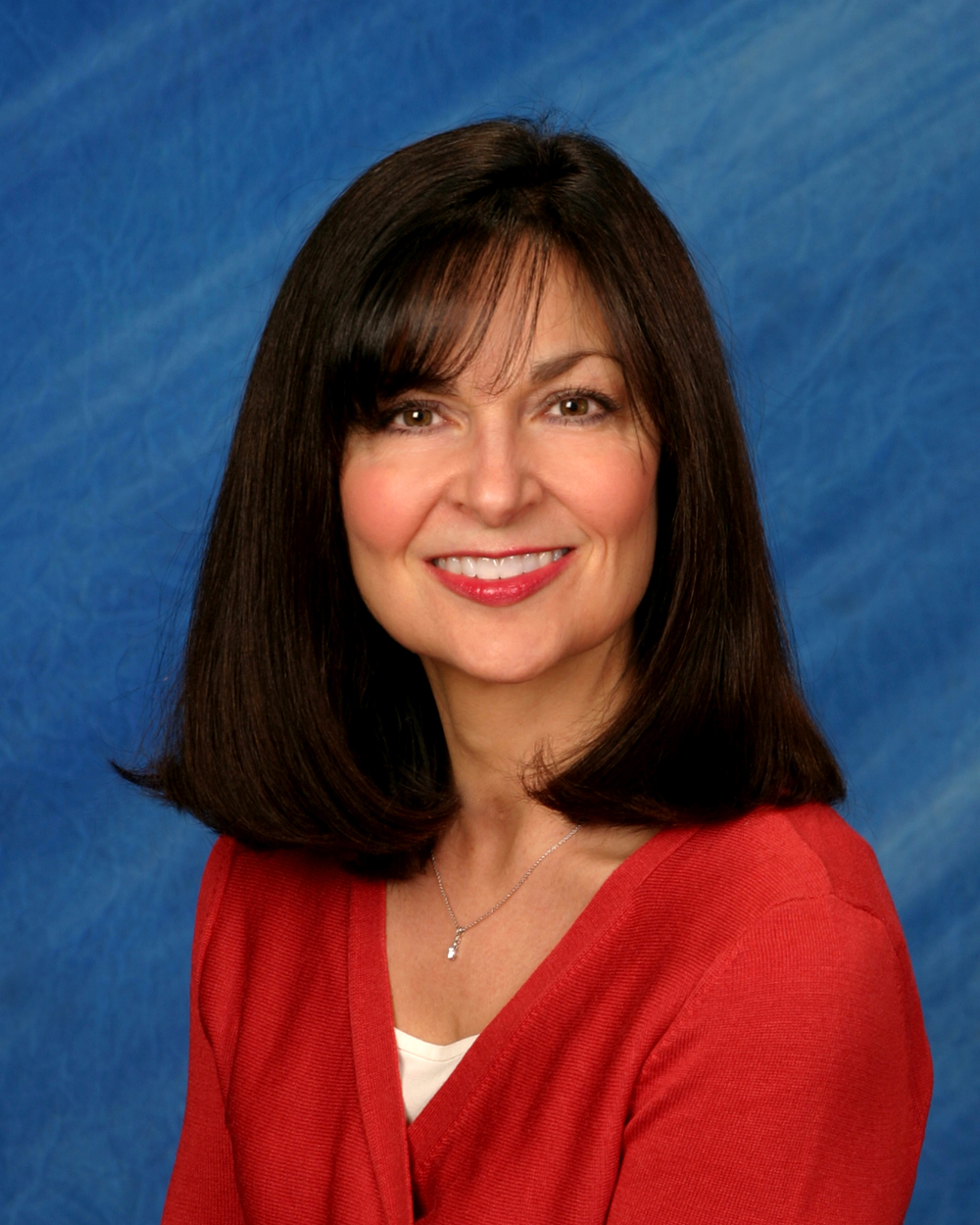
About the Author: Donna Latham is an award-winning author and playwright. She is the author of Amazing Biome Projects You Can Build YourselfBackyard Biology Investigate Habitats Outside Your Door With 25 ProjectsDeciduousForestsDesertsGarbage Investigate What Happens When You Throw It Out With 25 ProjectsNorah JonesOceansRespiration and PhotosynthesisSavannas and Grasslands, and Tundra. She is a member of the Society of Children’s Book Writers and Illustrators and the Society of Midland Authors. She lives in Batavia, Illinois. Website: donnalatham.com

Thank you so much for this guest post about our amazing Earth and how it works!

In-Class Book Clubs with Kellee’s Classes

Share

In-Class Book Clubs are one of my favorite units that I do in my classes. They are my version of lit circles but with the only job of all students is to read, analyze, and discuss. These book clubs build community, stamina, and reading love in my classroom.

I’ve shared a few times about these in-class book clubs. First in April, 2018 where I went over the basic procedures of the book clubs and then in November, 2018 where I shared my students’ choices for this year’s clubs. Now, I am happy to share how this school year’s clubs went!

I did things a little bit differently this year. I had noticed that students were understanding the basics of the narrative and loving the reading but weren’t meeting the standards. I had to make sure to help guide their thinking but also I didn’t want to make the act of reading tedious. It is a slippery slope that I know I am always going to be reflecting about.

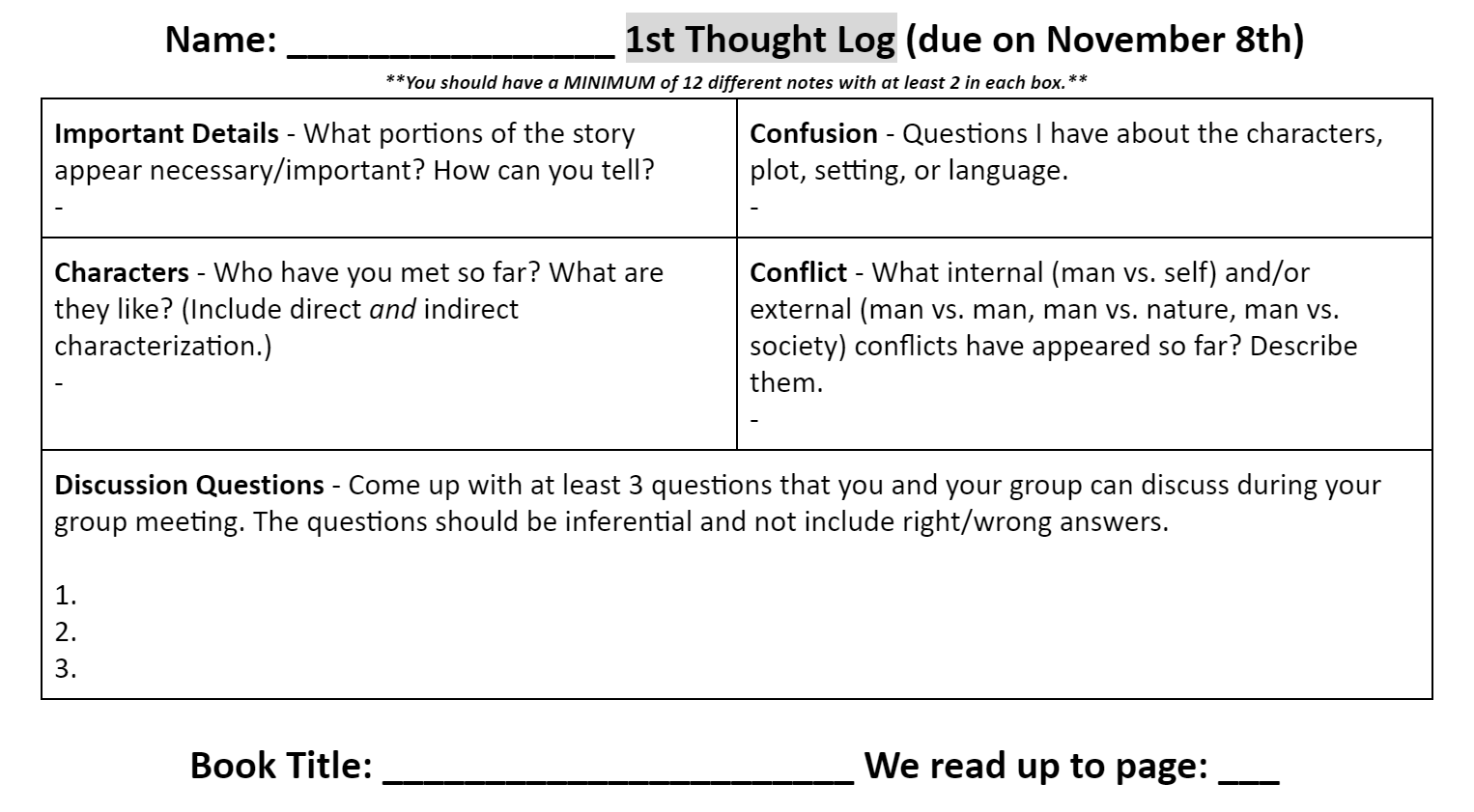
Because of this, I went with thought logs this year. A thought log was a strategy I was introduced to by my teacher friend Sarah Krajewski. Thought logs have four boxes for students to take notes while reading. My thought logs had two constant boxes: 1) Important details & 2) Conflict. Important details allowed them to just take notes on anything important that happened and the conflict box had them track the progress of the conflict. The other two boxes changed for each thought log: Confusion, Characters, Setting, My Feelings, Change, & Theme/Impact. Additionally, I added a bottom to my thought log that asked the students to come up with three open-ended discussion questions. Here’s our first thought log, so you can see an example:

Other than the new thought logs, everything else stayed the same: Students chose their books, I made their groups, we came up with class book club norms, they created their schedule, they met once a week, at the end of the unit I gave an individualized standards-focused assessment, and the kids LOVED it.

Well, everyone stayed the same until the end. At NCTE 2018, I went to one of Kelly Gallagher’s sessions and he shared a way he connects nonfiction and fiction when his students are reading novels: He has the students find nonfiction text features that connect to their novel. I decided to try this with my students, and I loved it!

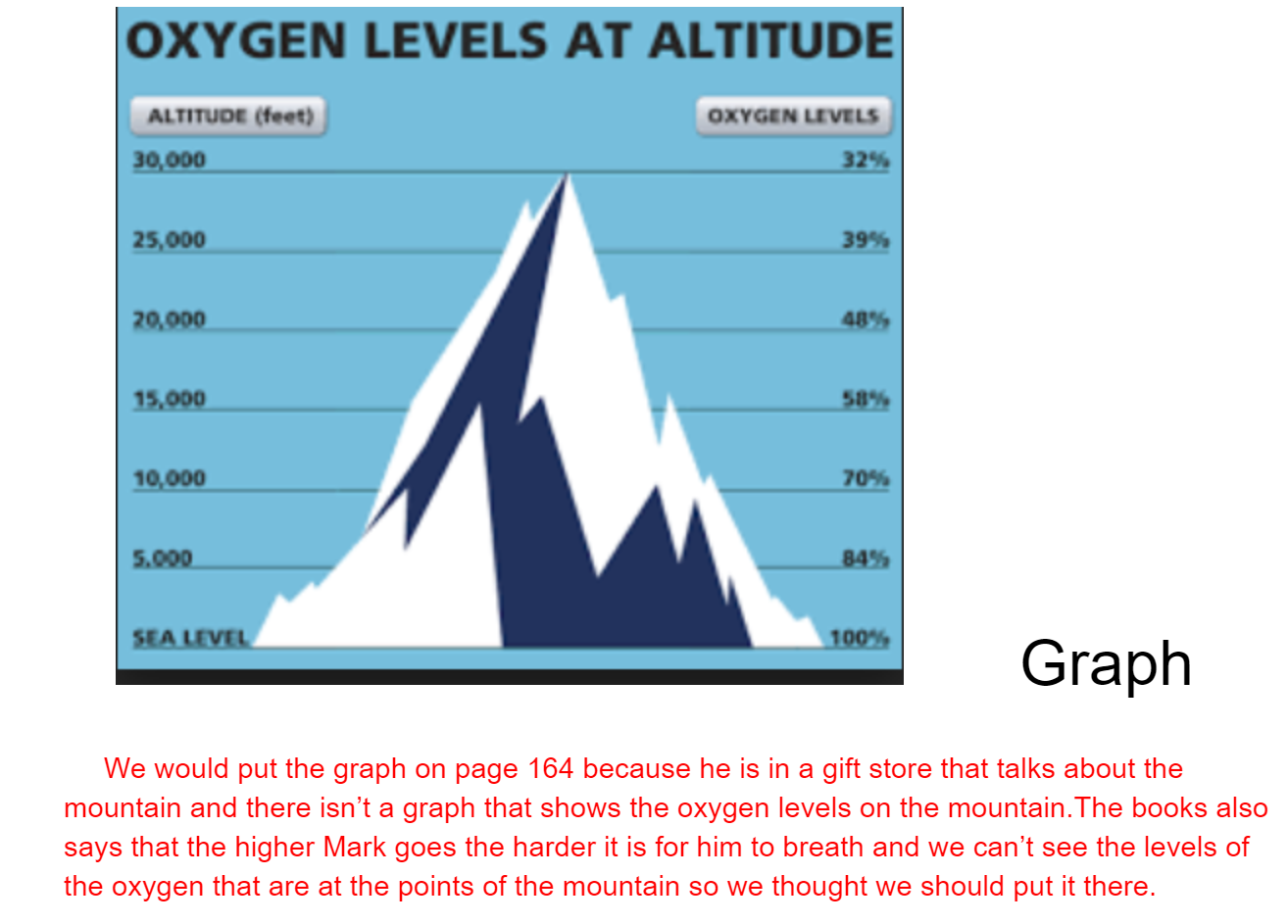
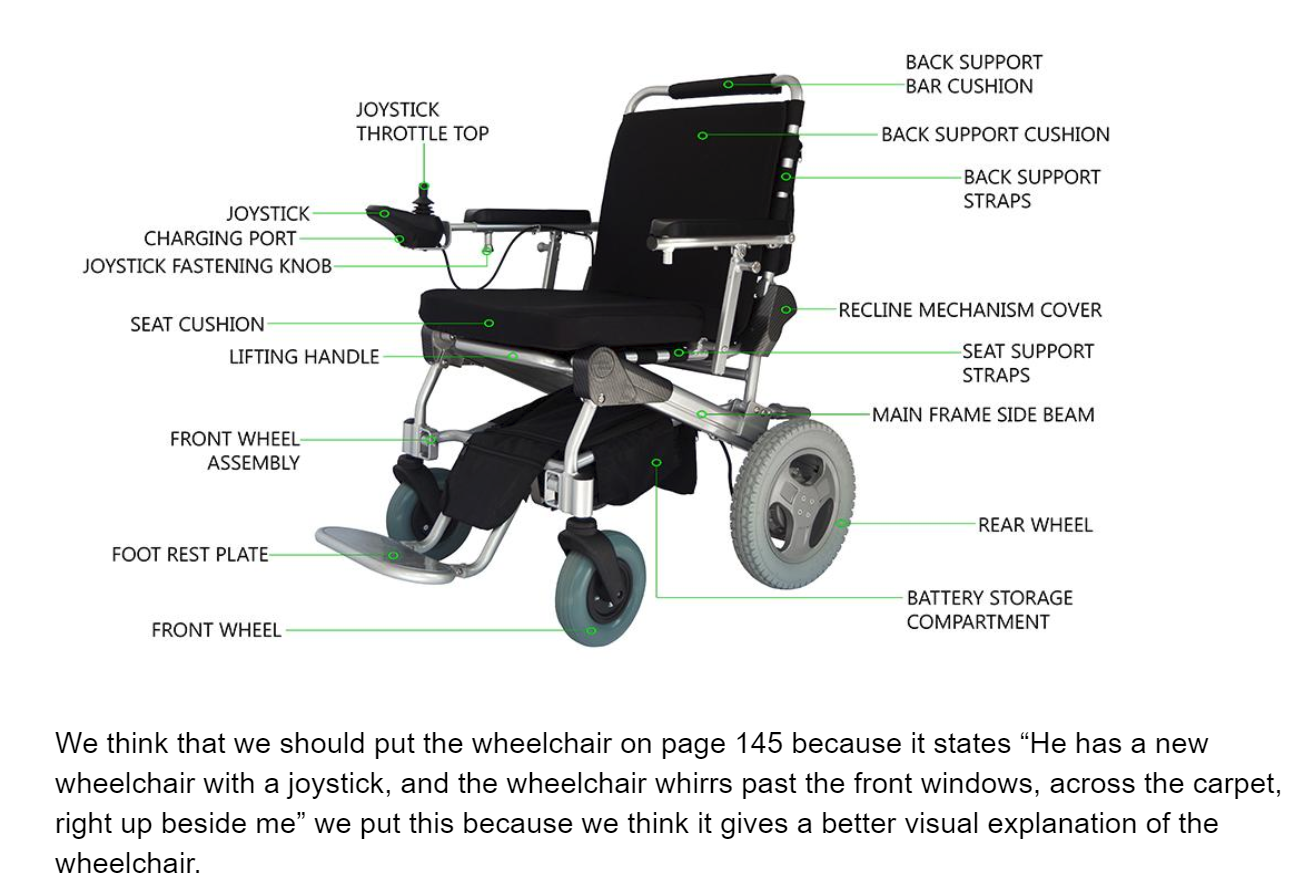
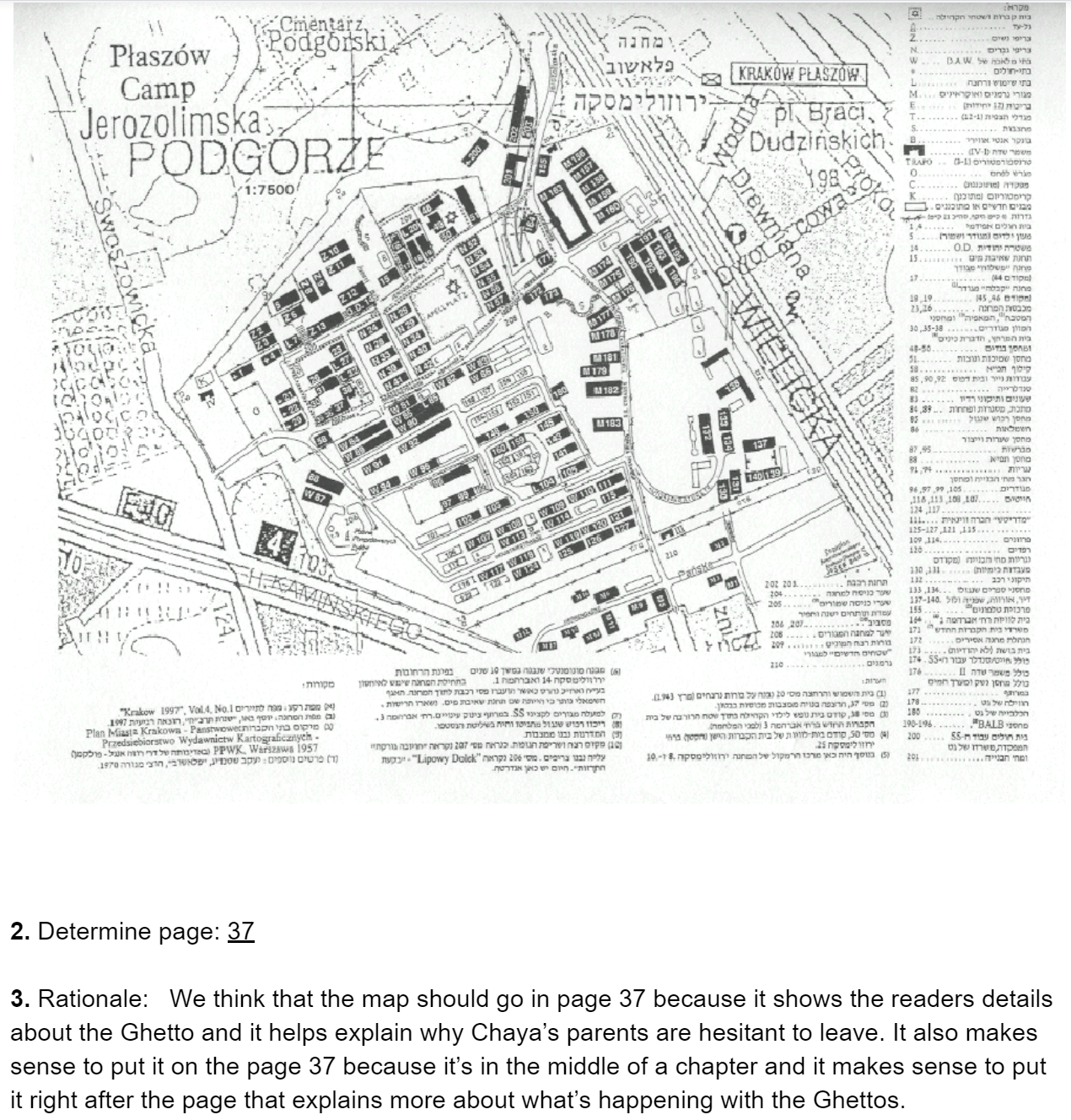
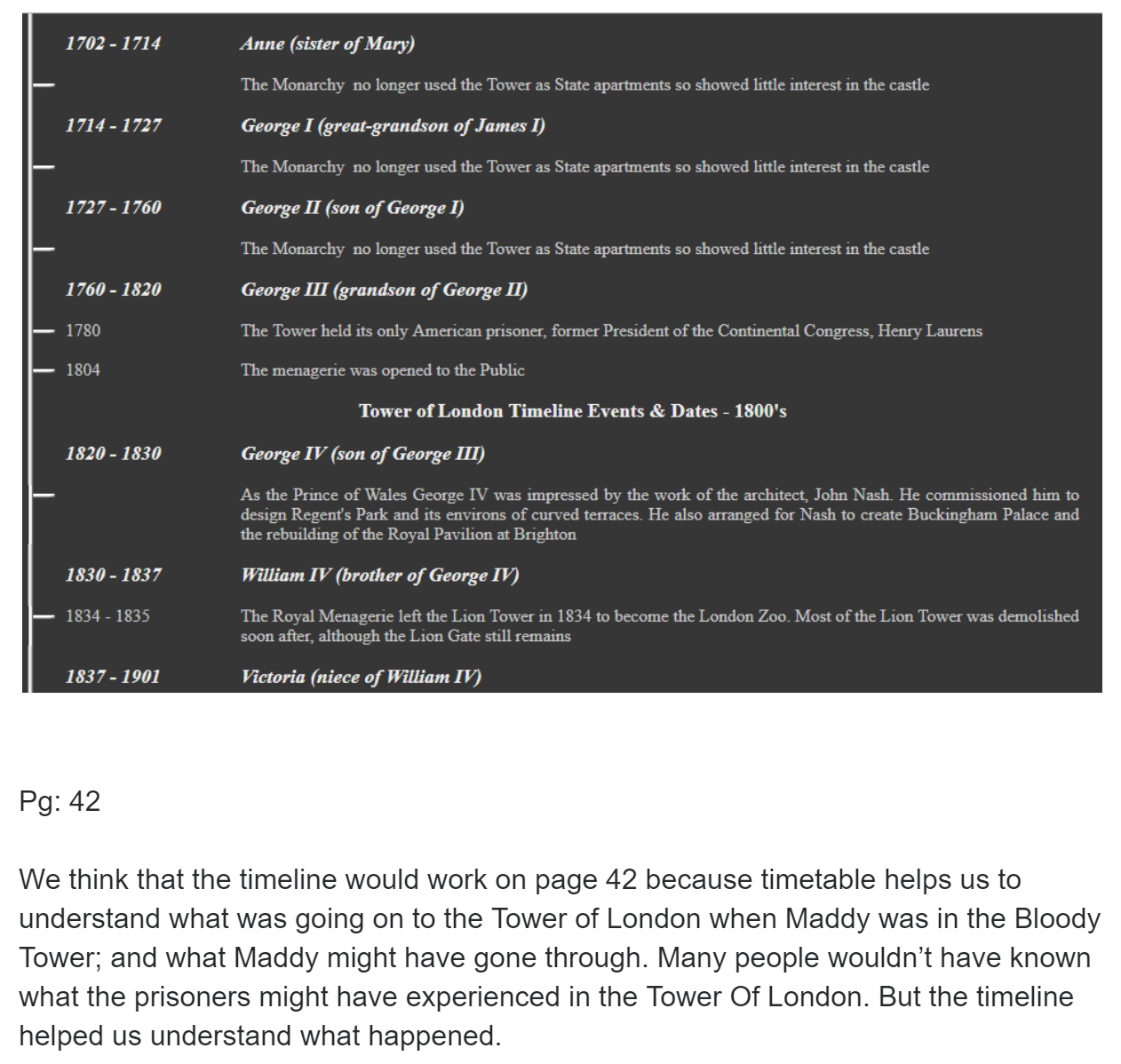
As a book club, my students found two nonfiction elements (maps, graphs, images, etc.) that would help the reader of their book have their experience enhanced. They then said what page they would place the element and explain why it is important.

Here are some of my favorites:

The Honest Truth by Dan Gemeinhart

Rules by Cynthia Lord

Resistance by Jennifer Nielsen

Ravenmaster’s Secret: Escape from the Tower of London by Elvira Woodruff

Reflection: I’m not completely sold on the Thought Logs yet. I don’t want to kill the joy of reading. Ever. But my job is to teach standards, too. Always a conflict within me, and we’ll see what I decide next year! I will say that I loved the nonfiction element, so I think that will stay. Until next year!

Signature

Celebrate #NationalParkWeek! Review and Giveaway: If I Were a Park Ranger by Catherine Stier

Share

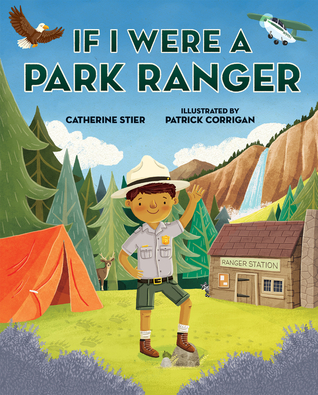
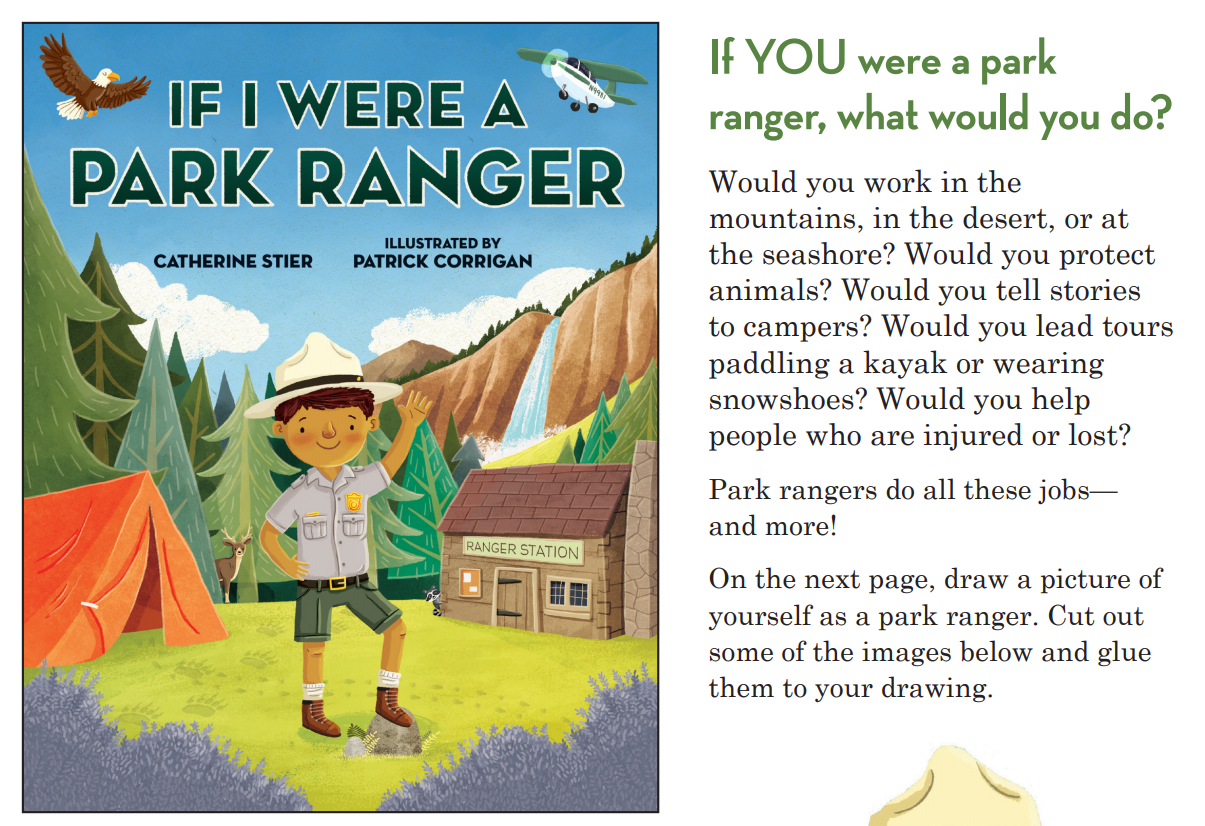
If I Were a Park Ranger
Author: Catherine Stier
Illustrator: Patrick Corrigan
Published April 1st, 2019 by Albert Whitman Company

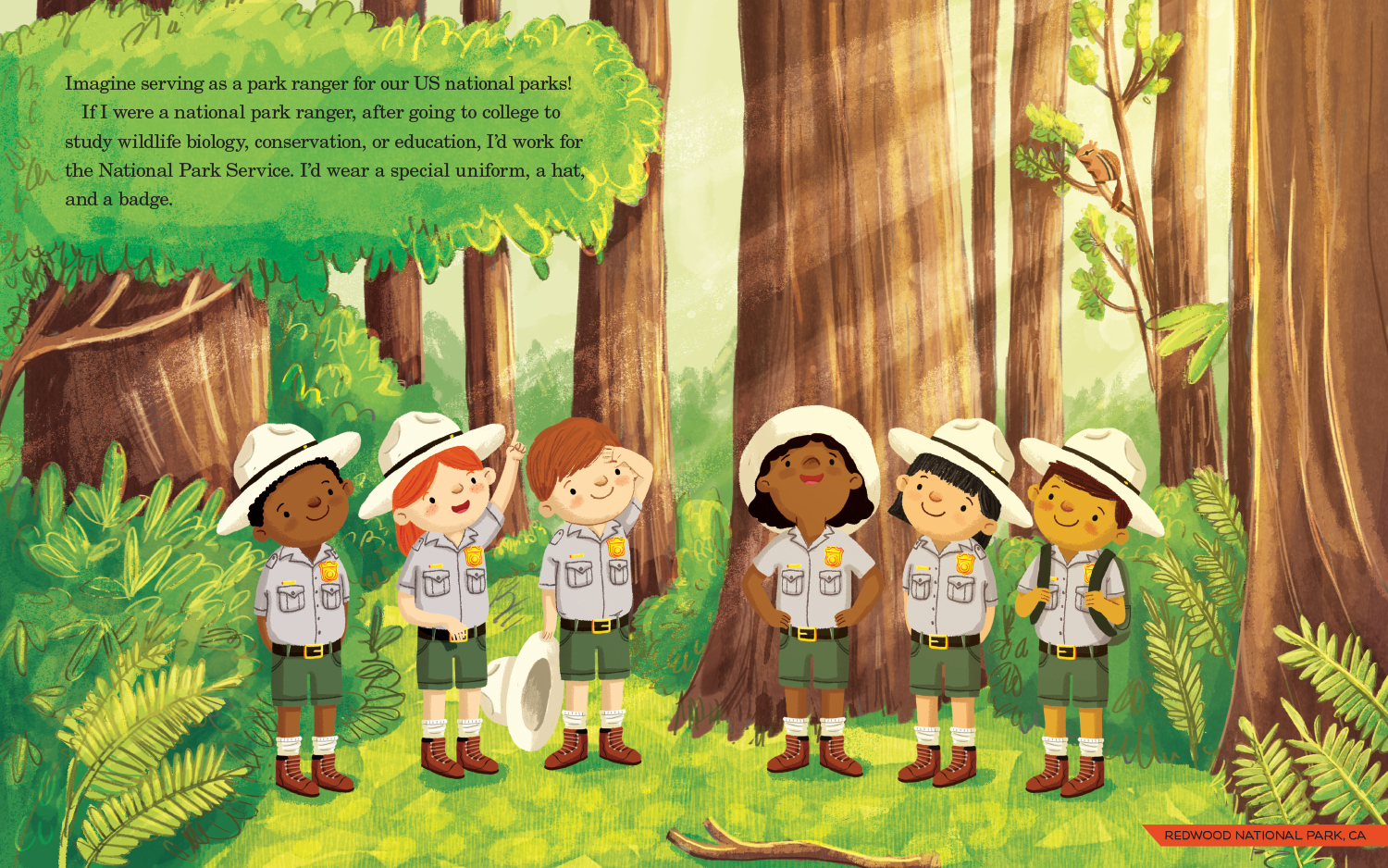
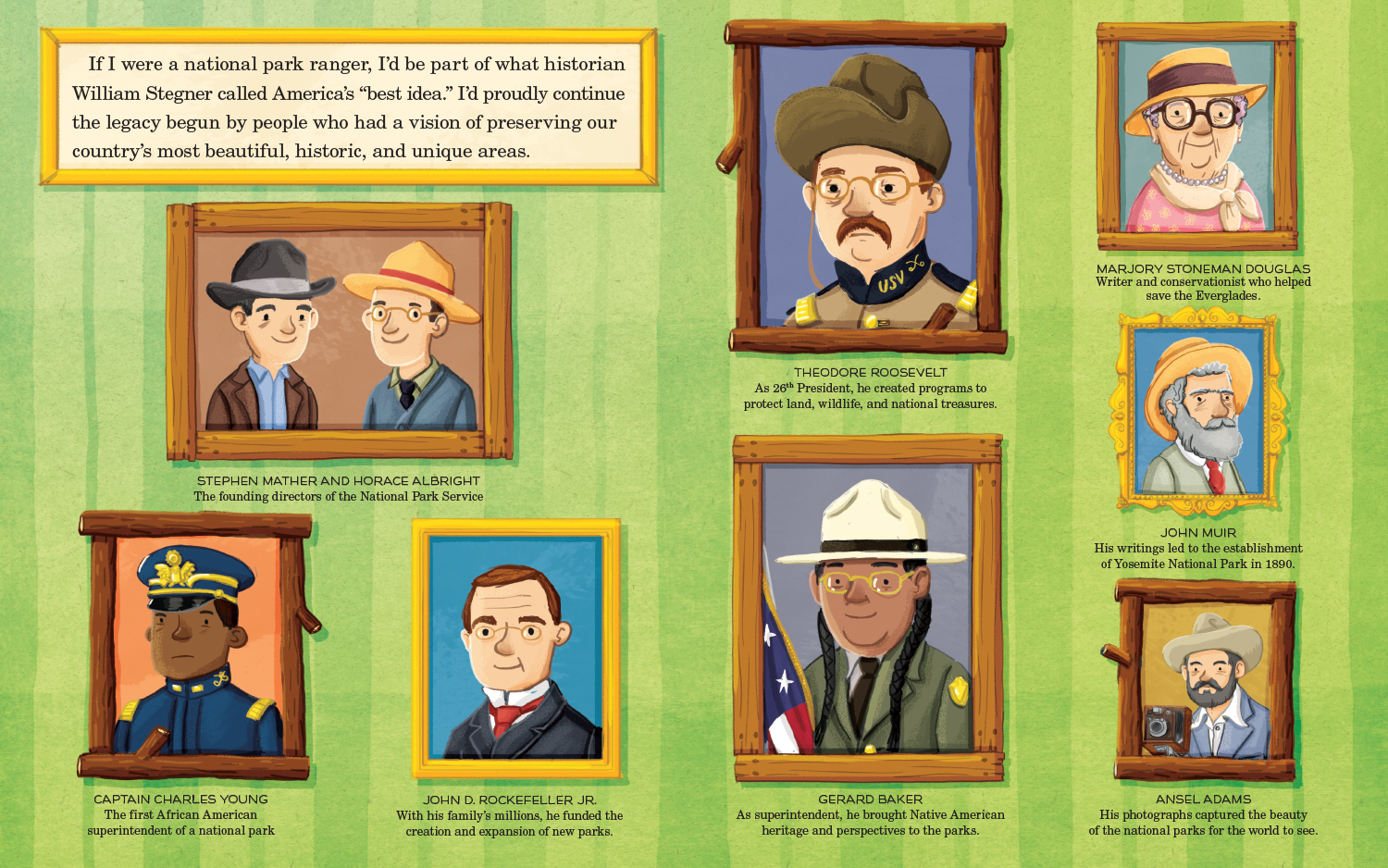
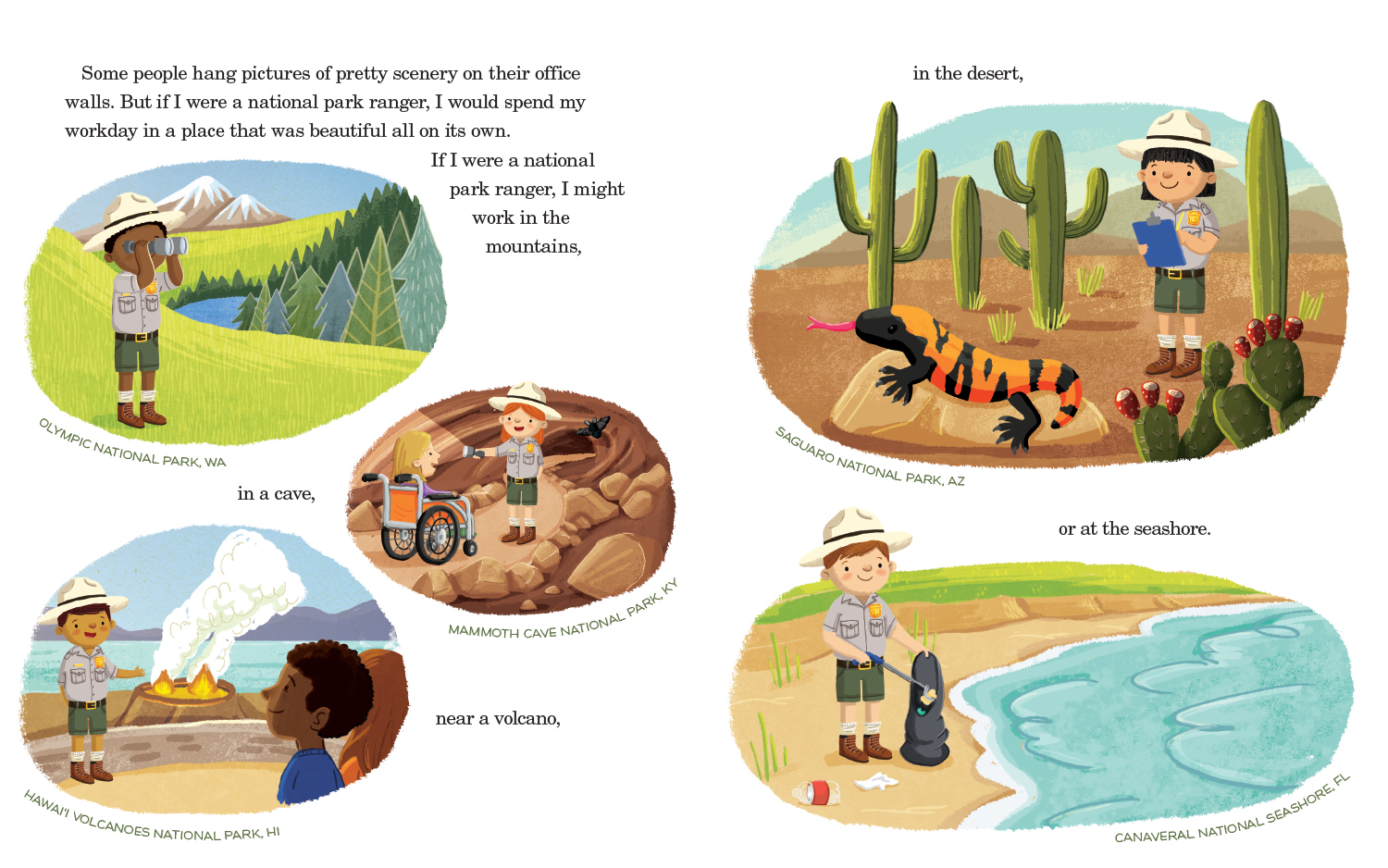
Summary: If you were a national park ranger, you’d spend every day in one of the most treasured places in America. You’d have an amazing job protecting animals, the environment, and our country’s natural and historical heritage, from the wilds of Denali to the Statue of Liberty!

About the Creators:

As a child, Catherine Stier wanted to be an author or park ranger. She visited her first national park as a baby and has been a fan ever since. She is the author of If I Were President and several other award-winning picture books, and has worked as a magazine writer, newspaper columnist, writing instructor, and children’s literature researcher. She lives in San Antonio, Texas with her husband and volunteers with programs that connect families and children with nature and the outdoors. To learn more, and to download free activity sheets and curriculum guides, visit her website: catherinestier.com.

Patrick Corrigan was born in the north of England and grew up drawing and designing. After University, he was an art director in a design studio for nearly ten years. He now lives in London with his wife and cat, illustrating children’s books. See more of his work at www.patrickcorrigan.co.uk.

Review: What a great informational text about National Parks and the park rangers that take care of them! The text did a wonderful job introducing not only the National Parks and all the different ones throughout the country but also all of the amazing things that park rangers do to take care of these national treasures. I was most impressed by how it was all inclusive of all the different types of jobs that keep the parks going as well as all the different types of parks that can be visited. The text, filled with information, along with the colorful illustrations bring it all to life for the reader and keeps them engaged in a way that other non-narrative informational texts struggle with sometimes.

Teachers’ Tools for Navigation: 

2019’s National Park Week is April 20-28th, and If I Were a Park Ranger is a perfect read aloud for the week! It would be perfect for when a class is learning about Theodore Roosevelt or any other founder of National Parks also.

The author’s website also includes activity pages for the book: http://www.catherinestier.com/curriculum-guides/!

Discussion Questions: 

  • What National Park would you want to visit?
  • What does it take to be a park ranger?
  • What type of person do you think would succeed the most as a park ranger?
  • How does science fit into a park ranger’s job? Technology? Engineering? Math? Art?
  • What is the author’s purpose for creating the text?

Flagged Passages: 

Read This If You Love: National Parks, Nature, Conservation

Recommended For: 

classroomlibrarybuttonsmall

Giveaway!

Ten lucky winners will receive a copy of If I Were A Park Ranger by Catherine Stier. One Grand Prize winner will receive a signed copy of the book PLUS a Park Ranger Stuffed Doll, a “National Park Geek” Iron-on Patch, National Park Animal Cookies, Camping Stickers, Woodland Animal Mini Notebook, and Book Cover Postcards! Winners will be selected at random and notified via email. One entry per person, please. US addresses only. Entries are due by 5/3/19. Follow this link to enter!

Signature

**Thank you to Blue Slip Media for providing a copy for review!**

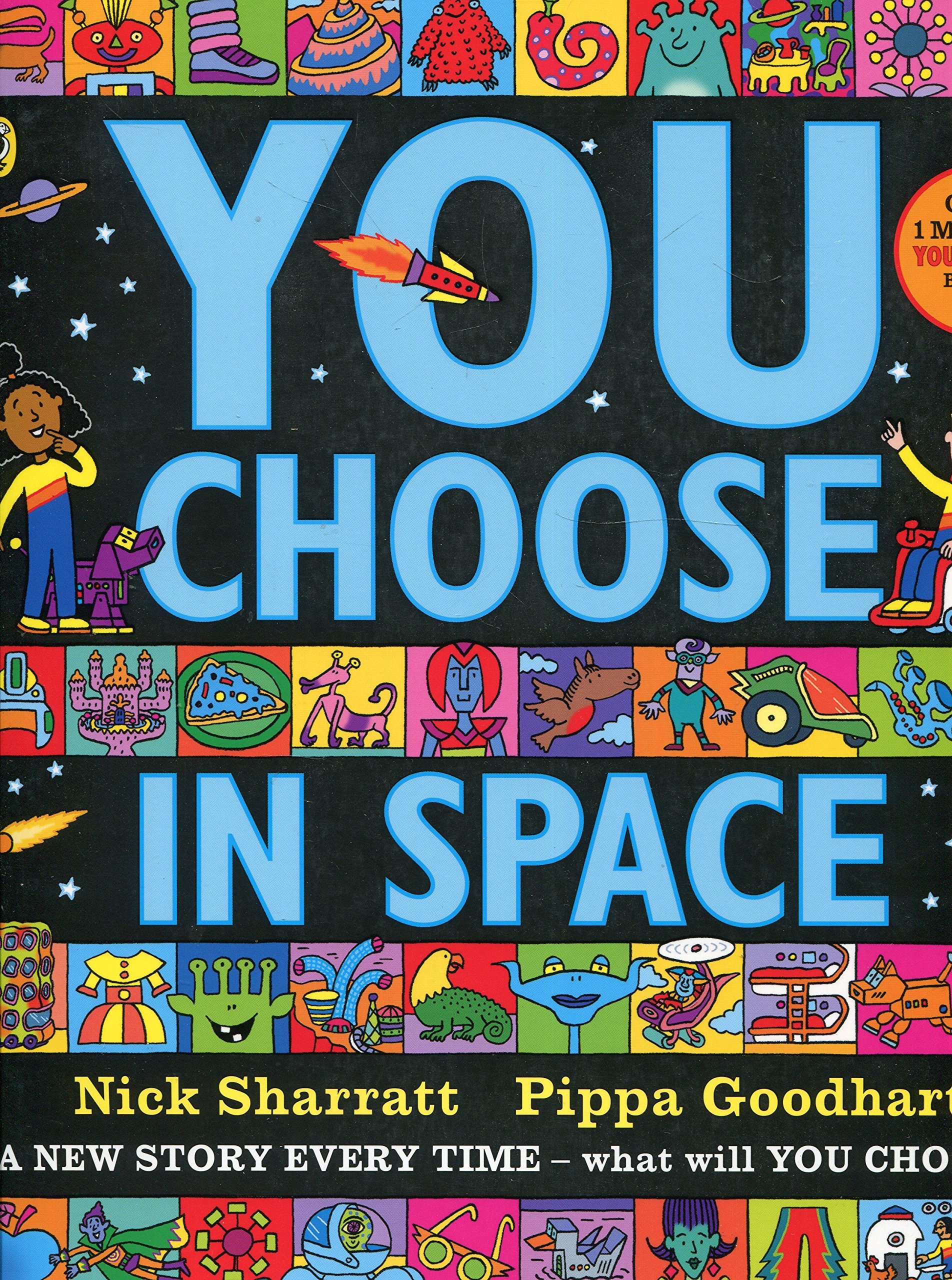
You Choose In Space: A New Story Every Time–What Will YOU CHOOSE? by Nick Sharratt and Pippa Goodhart

Share

You Choose in Space
Author: Pippa Goodhart
Illustrator: Nick Sharratt
Published March, 2019 by Kane Miller Books

Summary: Zoom off into space for an adventure where you choose what happens next. Which alien would you most like to be friends with? And what fantastically freaky food will you decide to munch for lunch?

The possibilities are infinite in this mesmerizing creative toolkit which will inspire children to make their own stories time and again — it’s out of this world!

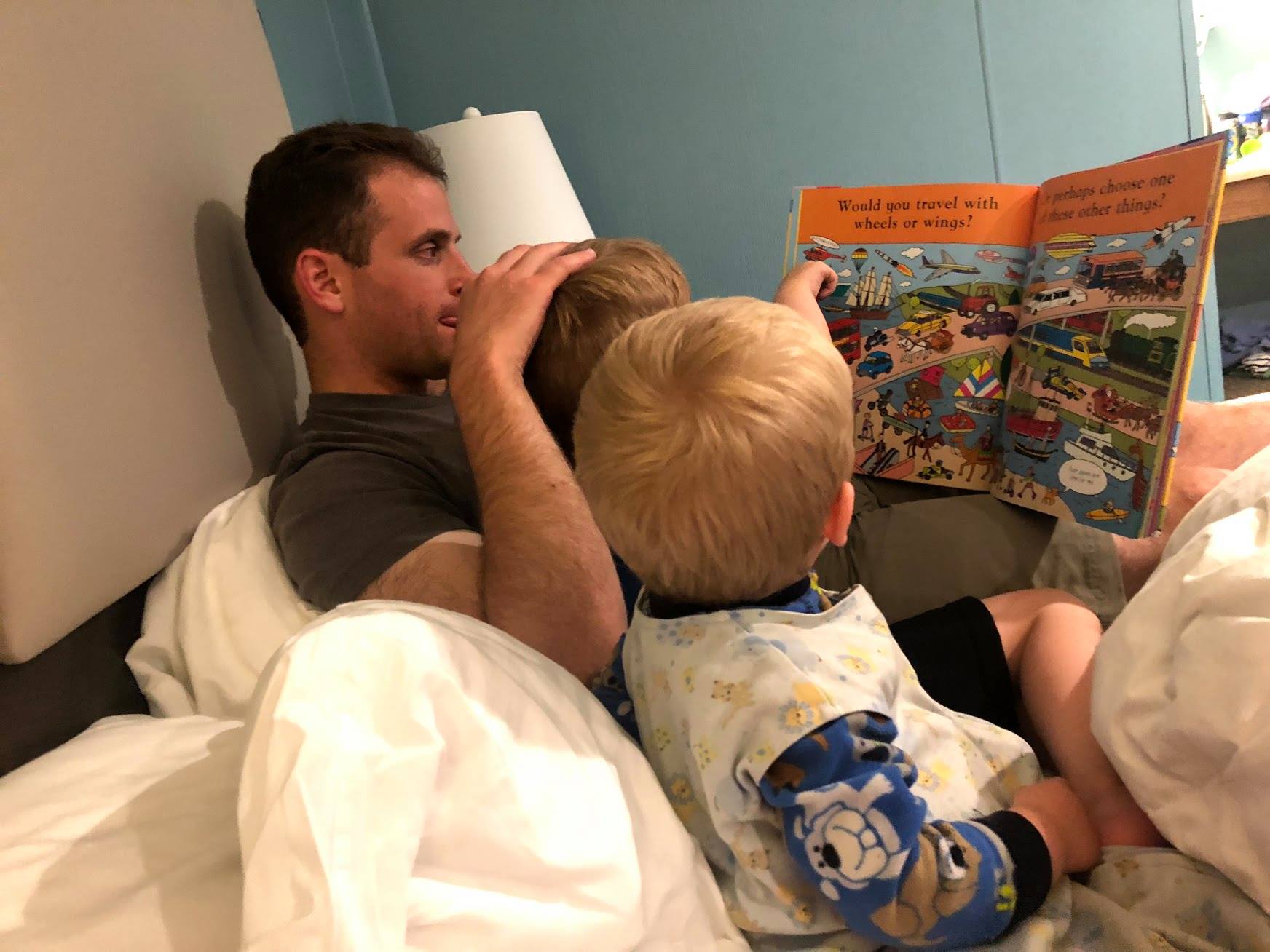
Ricki’s Review: The You Choose series books are easily among my favorite books to read to my kids. We take them on family vacations and visits with relatives and friends because we love to hear what our friends and family would choose. This is one of the best books to bring in car trips because kids can select a different ending every time! When this book came in the mail, my kids shrieked with joy. Since then, we’ve read it dozens of times. I love seeing how my kids’ tastes are different. There is also a lot of great classroom potential in these books (see below).

Kellee’s Review: I’m so glad that Ricki told me to review this You Choose book with her! She received the first one, but I was booked at the time, but she said that I could not let this chance pass, and I am so glad! It is a choose your own adventure book for the picture book age. It really does build up the story-telling capacity because it gives a foundation and lets the reader build up from there. It is such a fun book that is different every time, so a reader is never done!

Teachers’ Tools for Navigation: You Choose in Space, Just Imagine, and You Choose make for fantastic texts for creative writing units and courses. As teachers, we know that students often struggle to get started, and paging through these books allows for wonderful story starters. I use these books to discuss teaching composition with preservice teachers, and I also use them for a unit about using picture books in the classroom. My students love these books!
Discussion Questions: 

  • What did you choose? Why?
  • What did you NOT choose? Why?
  • Which page was your favorite? Why was the spread most interesting to you?
  • Did you notice any trends or patterns with your choices?

Ricki’s family reading one of the You Choose books on vacation: 

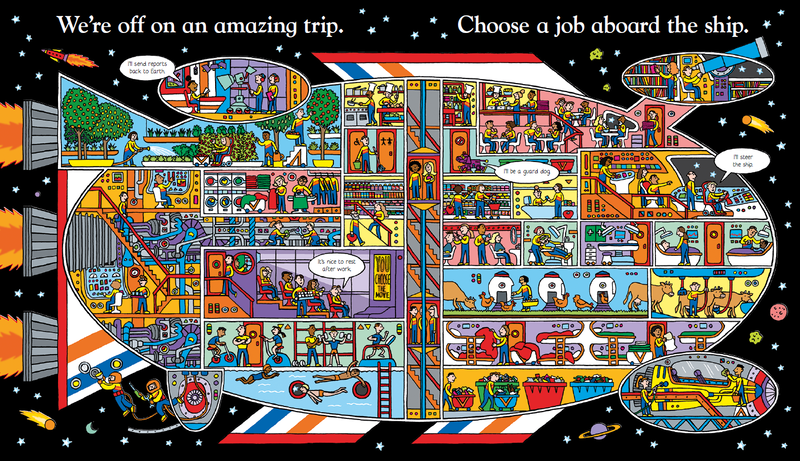
Flagged Spread:

Read This If You Loved: Just Imagine by Nick Sharratt and Pippa Goodhart; You Choose by Nick Sharratt and Pippa Goodhart; Choose Your Own Journey by Susie Brooks and Tracy Cottingham; Story Path: Choose a Path, Tell a Story by Madalena Matoso; Where’s Will? by Tilly; I Want to Be… books by Ruby Brown

Recommended For: 

 classroomlibrarybuttonsmall

 RickiSigand 

**Thank you to Lynn Kelley at Kane Miller Books for sending us this book!**

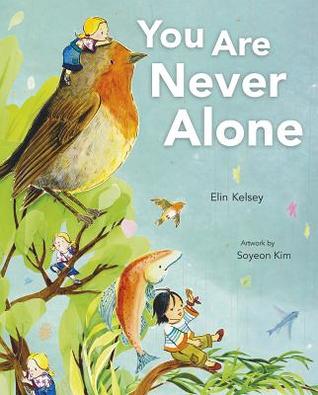
You Are Never Alone by Elin Kelsey

Share

You Are Never Alone
Author: Elin Kelsey
Illustrator: Soyeon Kim
Published April 15th, 2019 by Owl Kids

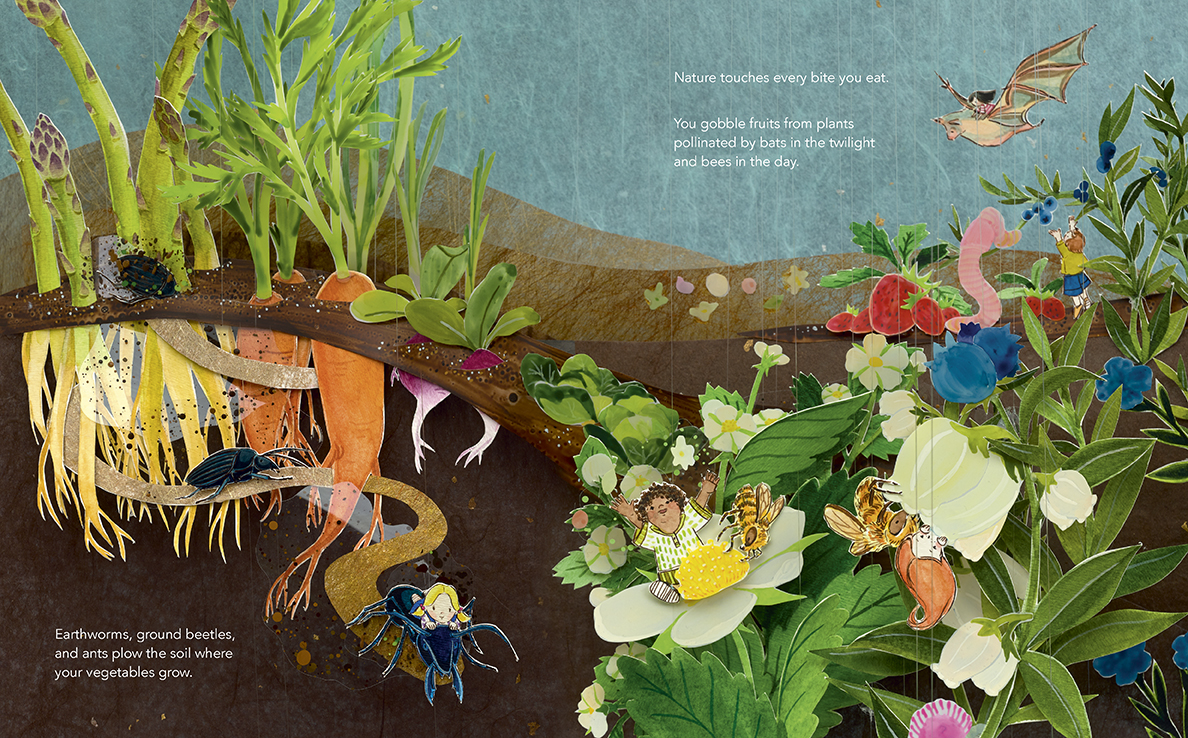
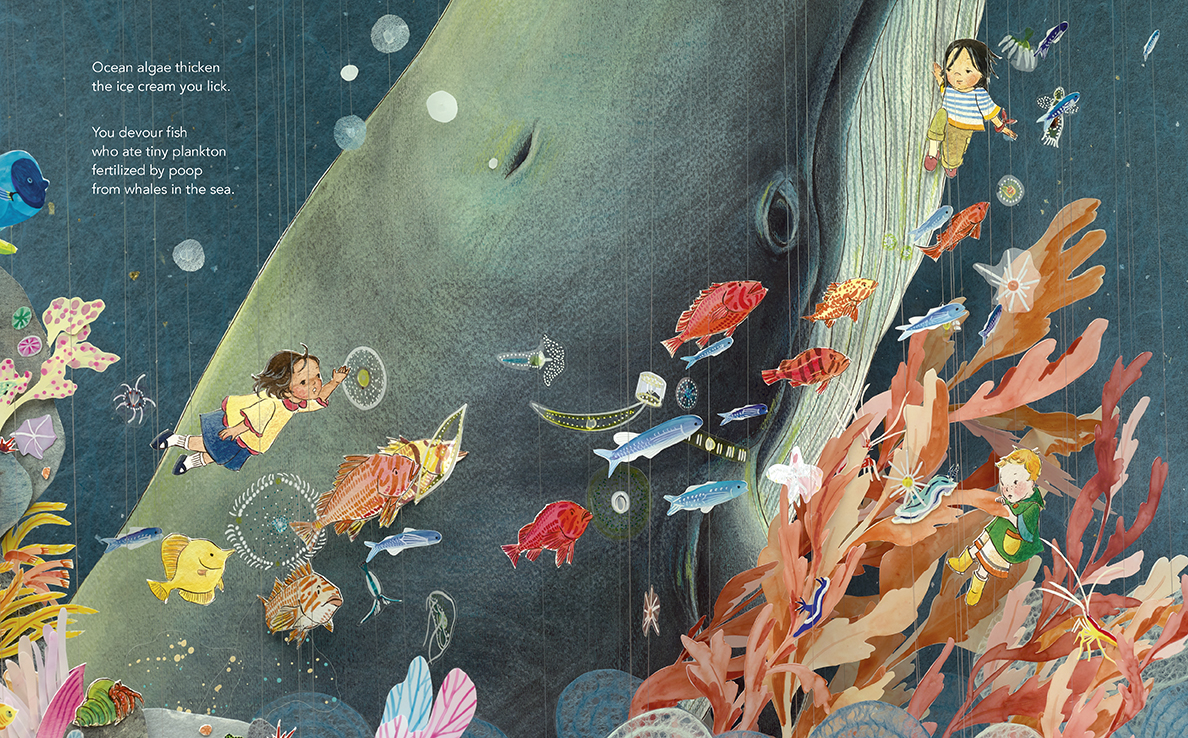
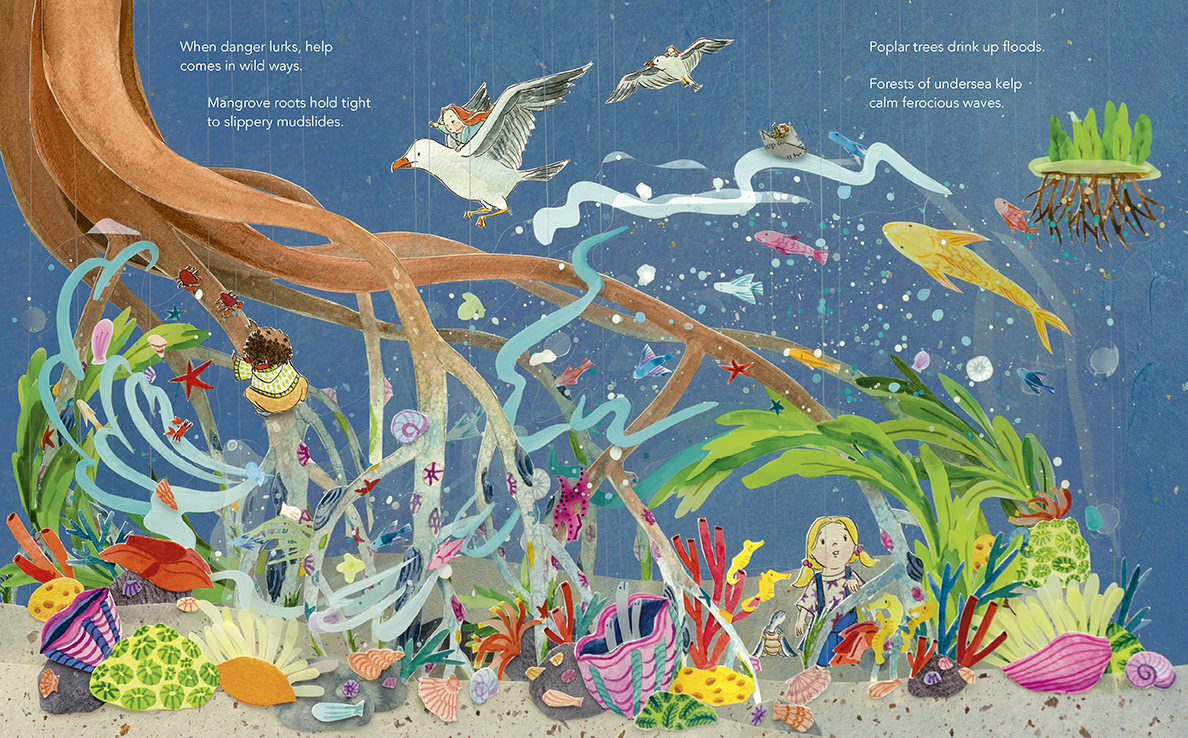
Summary: You Are Never Alone is a picture book that explores how humans are inextricably connected to nature.

Drawing examples from the clouds and the cosmos, the seafloor and the surface of our skin, it explores how we are always surrounded and supported by nature. Whether it’s gravity holding us tight; our lungs breathing oxygen synthesized by plants; the countless microorganisms that build our immunity; or the whales whose waste fertilizes the plankton that feed the fish we eat: nature touches every aspect of how we live.

Using lyrical text grounded in current science alongside detailed diorama art, this informational picture book presents the idea that we thrive through connections to the land and sea and sky, and togetherness is key to nature. It encourages inquiry-based learning, inviting readers to wonder, ask questions, observe the natural world, and engage with big ideas.

About the Creators:

Elin Kelsey, PhD, is an award-winning author and a leading spokesperson for hope and the environment. In 2014, she co-created #OceanOptimism, a Twitter campaign to crowd-source and share ocean conservation successes which has reached 90 million users to date. She frequently works on projects with the Monterey Bay AquariumStanford University and the University of Victoria and is passionate about engaging kids in hopeful, science-based, environmental solutions.

Soyeon Kim is a Toronto-based, Korean-born artist who specializes in fine sketching and painting techniques to create three-dimensional dioramas. She is a graduate of the Visual Arts and Education programs at York University.

Praise for Elin Kelsey & Soyeon Kim:

“Both important and breathtakingly beautiful.” –Kirkus Reviews, starred, on You Are Never Alone

“The depth of the images and the surprising facts work together to create a lovely connection between the readers and the natural world.” –The Boston Globe on Wild Ideas

“Demands to be read and reread, studied and examined, and thoroughly digested. It is perfect for sparking adult and child conversations about our place in the universe. A remarkable achievement.” –Kirkus Reviews, starred, on You Are Stardust

“This is a work that will be read and examined again and again, with something new to be discovered at every turn. Profound and entirely wonderful.” –Kirkus Reviews, starred, on Wild Ideas

Review: What a beautiful representation of how humans and nature intertwine with each other. Often, when we speak of our impact on our planet and the planet’s impact on us, we focus on very huge ideas that may seem so far away for kids, but You Are Never Alone shows the small things that have a large impact.

The mix of beautiful art and research-based science make for a picture book that covers such a wide range of opportunities for classroom discussions and educational activities including themes, poetic verse, science, and diorama art.

Educators’ Guide:  

Flagged Passages: 

Behind the Scenes: 

Soyeon talks about the process of creating the diorama artwork in the book.

Elin explains the scientific research behind three of the poetic lines in the book.

Read This If You Love: The Perfect Tree by Chloe Bonfield; Weeds Find a Way by Cindy Jenson-Elliot; Thank You, Earth by April Pulley Sayre; Over and Under Snow (and its companions) by Kate Messner

Recommended For: 

classroomlibrarybuttonsmall   

Signature

A Brief History of Life on Earth by Clémence Dupont

Share

A Brief History of Life on Earth
Creator: Clémence Dupont
Published March 19th, 2019 by Prestel Junior

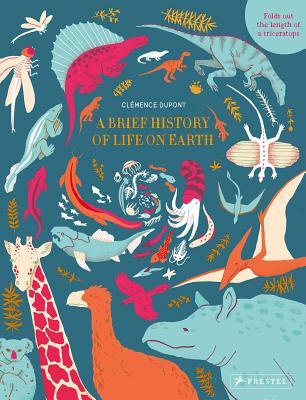
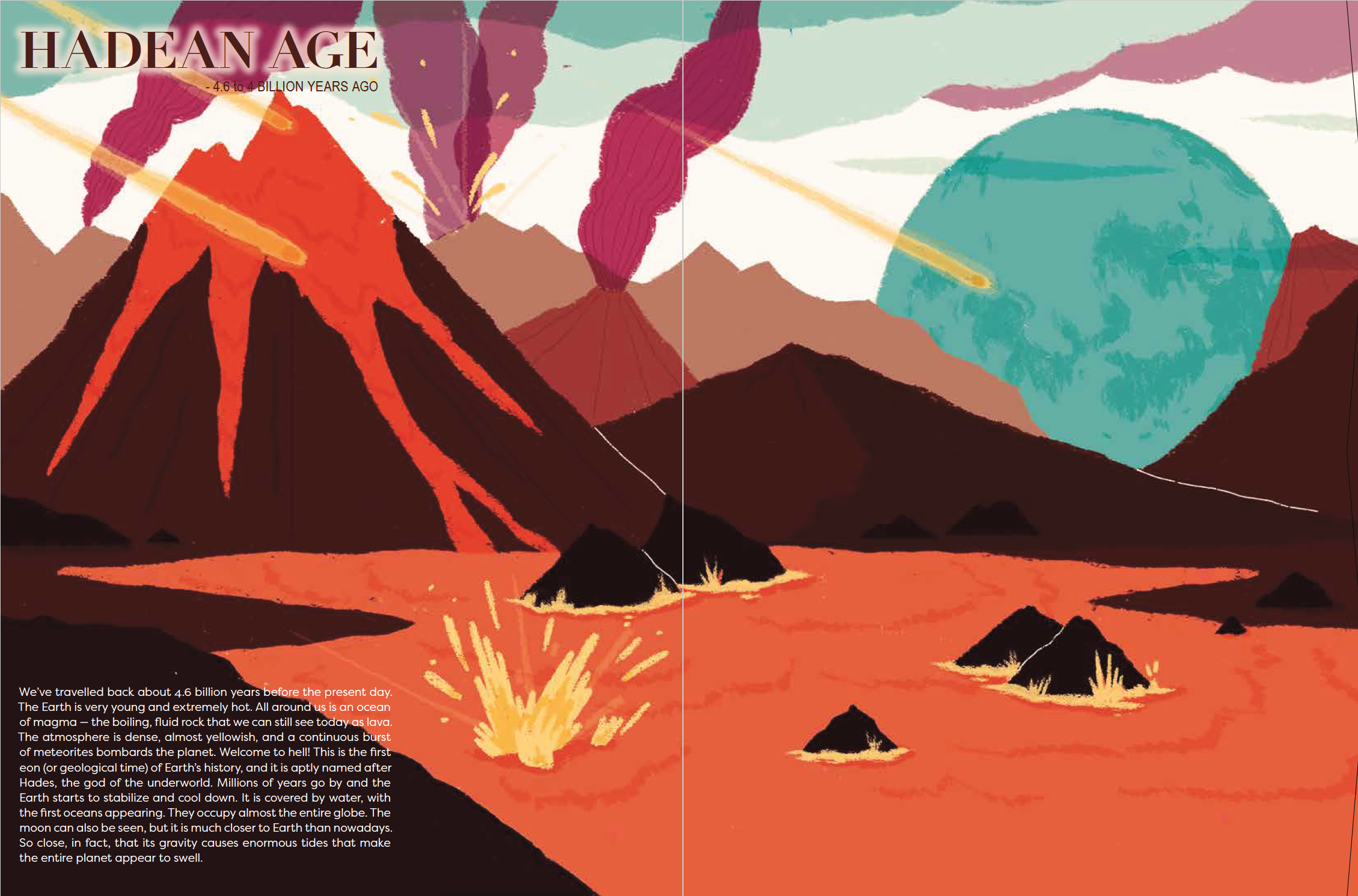
Summary: The story of life on earth unfolds in dramatic fashion in this amazing picture book that takes readers from 4.6 billion years ago to the present day.

It’s difficult to grasp the enormous changes life on Earth has undergone since it first came into existence, but this marvelously illustrated book makes learning about our planet’s fascinating history easy and entertaining. In an accordion style, the series of pages take readers through every major geological period, with bright artwork and detailed drawings. Opening on lava-filled oceans and smoking volcanoes, the book unfolds, era by era, to show how life evolved from tiny protozoa and crustaceans to dinosaurs and mammals.

Fully expanded to 8 meters (26 feet), this spectacular visual timeline is a very impressive panorama that reveals evolution in all its glory. Each page is brimming with illustrations that readers will turn to again and again. A celebration of life, this extraordinary and beautiful book illuminates the history of Earth for young readers in an unforgettable and delightful way.

About the Author: Clémence Dupont is an illustrator living in Strasbourg, France. This is her first book.

Review: This book is so beautiful, useful, and just plain neat! First, I love that it folds out (as does Trent!):

When folded out, it reaches 26 feet with one side showing the images created by the author for each of the time periods while the other side has a timeline which is to scale showing how long respectively each time period was.

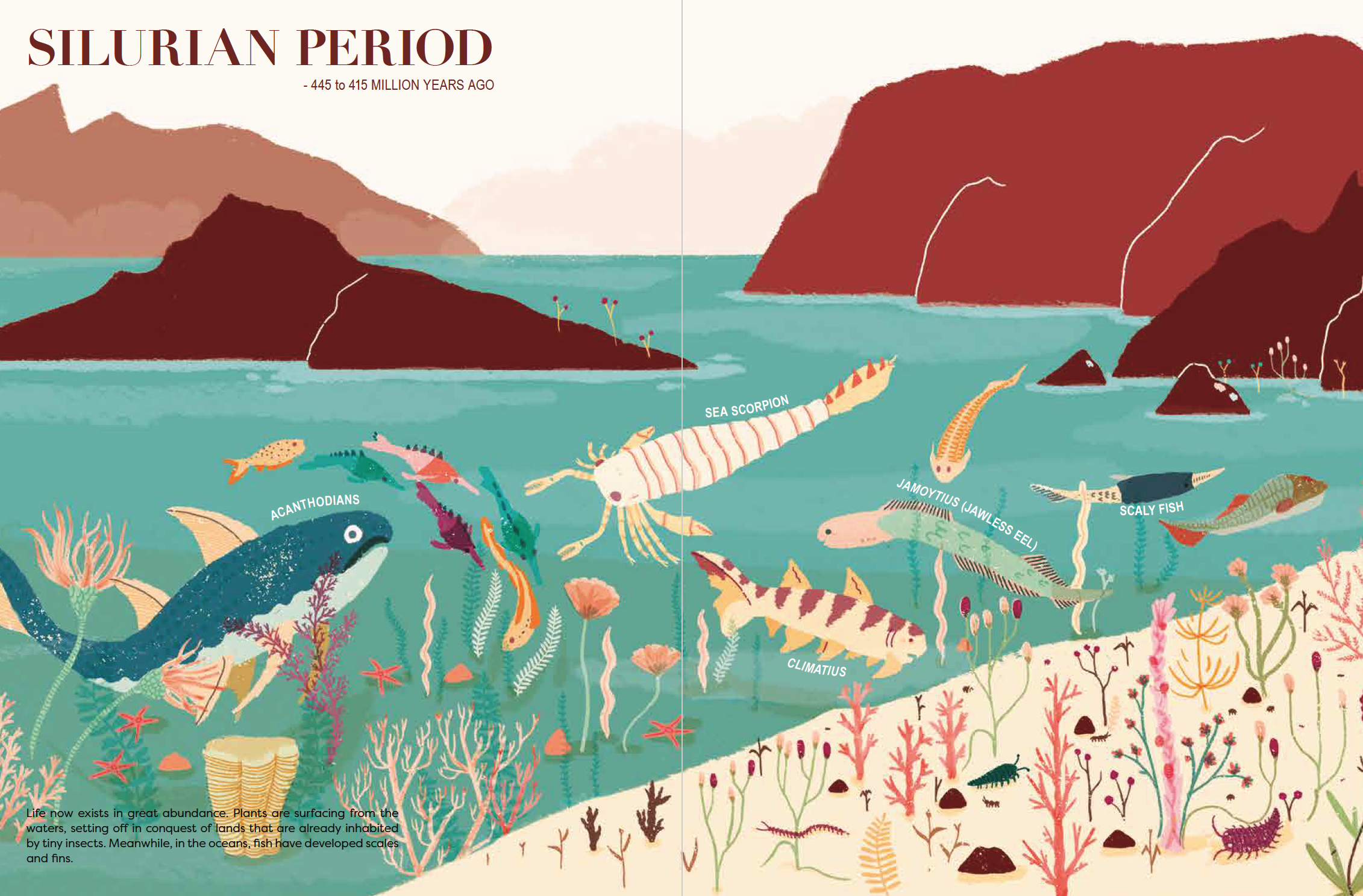
This book is a work of art. How each time period stands alone yet also is part of the entire timeline when folded out is beautiful to see. Additionally, I adore the artist’s technique of art with rough edges and bright colors.

Each spread focuses on one time period and the life on Earth at the time with a brief write up in the bottom left corner; however, many of the organisms/animals/plants not mentioned in the paragraph are labeled allowing readers to jump into inquiry about them if they wish.

Teachers’ Tools for Navigation: Did anyone else do the activity in elementary school where the teacher had the class convert the miles(?) between planets into centimeters then had the class create a to-scale solar system showing just how far apart the planets are? This book reminds me of that activity in that it shows the true expanse of time Earth has existed versus the very small time humans have. I would use this timeline to create a similar to-scale idea for students to show the history of life on Earth.

Also, as I stated above, each time period only has a brief write up and leaves much to research if one is interested.

Discussion Questions: 

  • What surprised you about the history of life on Earth?
  • What did the timeline on the back show you about the history of life on Earth?
  • When did dinosaurs appear? When did the first human ancestor appear? (etc.)
  • What animal surprised you that has been around a long time?
  • What do you believe is the author’s purpose in creating the book in this structure?
  • How did the Earth change from one period to the next? Take two periods and compare and contrast them.

Flagged Passages: 

Read This If You Love: Animals, Biology, Geology, Earth’s history

Recommended For: 

Signature

Author Guest Post!: Classroom Activities with Anything Can Happen in Mrs. Whynot’s Room by Jayne Peters

Share

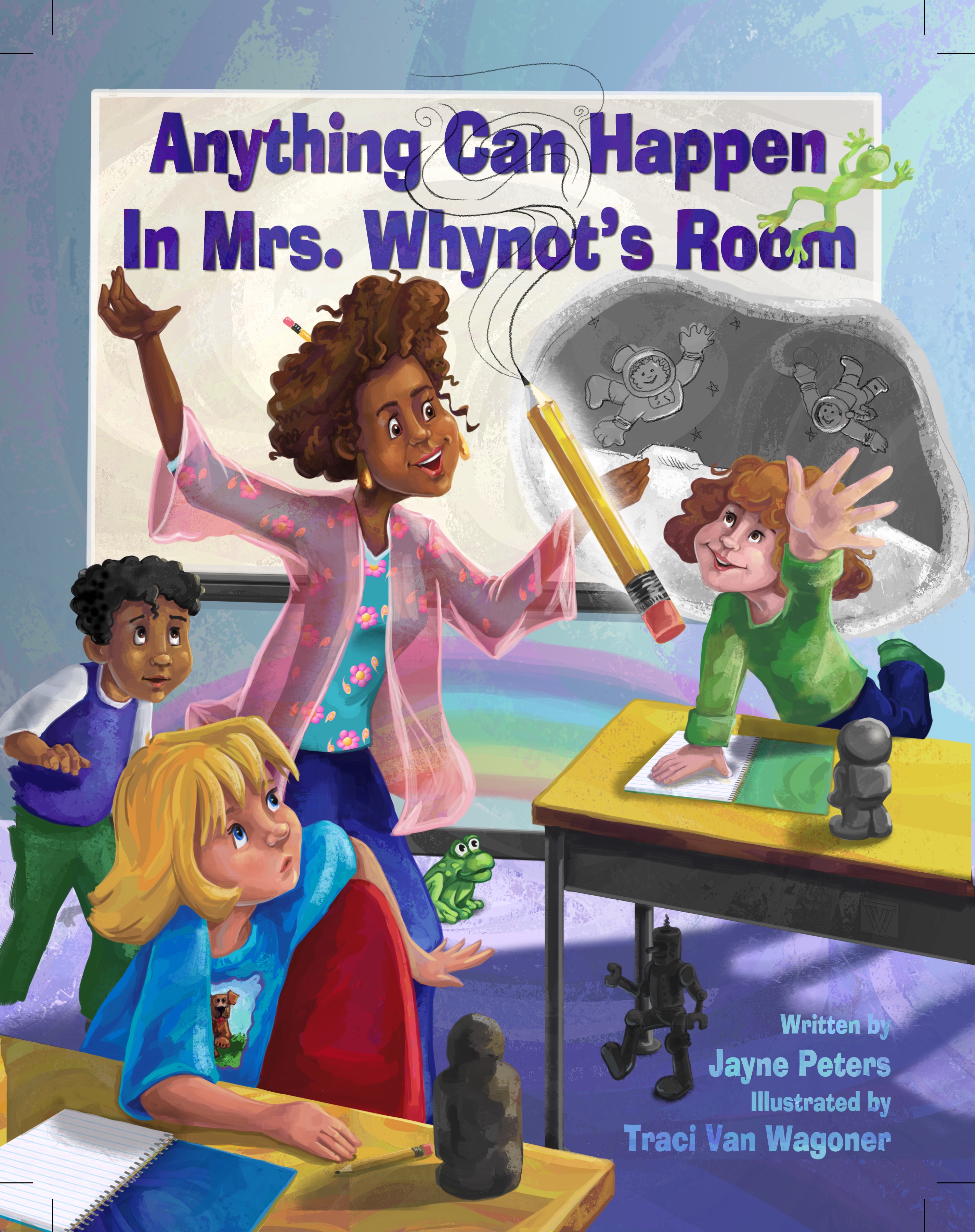
Anything Can Happen in Mrs. Whynot’s Room
Author: Jayne Peters
Illustrator: Traci Van Wagoner
Published October29,2014 by Puddle Duck Publishing

Summary: In Mrs. Whynot’s classroom writing is magical; pencils hover and clay characters come to life. But… everyone has something they find difficult and Marcy is no exception. She would like to do ANYTHING but write. She has NOTHING to write about. By talking to her classmates, playing with words and listening to stories Marcy realizes she has lots of tales to tell.

Classroom Ideas Written By the Author: 

To the reader, once a book has been published, writing can seem magical and easy. (Disclaimer: There is some magic in Anything Can Happen in Mrs. Whynot’s Room) However, writing is the product of many hours of thinking, talking, questioning, observing, reading, and imagining with a huge amount of perseverance, grit and love. These are some of the skills our students need to further their creative journey and their love of reading and writing.

So let’s start with the first hurdle. Everyone, at one time or another, struggles with capturing ideas to write about. Mrs. Whynot, in Anything Can Happen in Mrs. Whynot’s Room, generates excitement and urges her students to think differently. She encourages discussion and creativity when she hands each student a hunk of clay that can be molded into any character they’d like. She wants them to write about everyday things and to use their imagination. Students learn they have full control over their story and that anything can happen as long as they can convince their reader.  Mrs. Whynot gives some good advice when she says, “Write about what you know! Write about what you do! But most importantly, write about what you love!”

Read Aloud: Discussion Questions

Before Reading

Look at the cover

  1. Who are the author and illustrator?
  2. What do you notice?
  3. What do you think the book will be about?
  4. What characters would you expect to find in the story?
  5. Do you think Mrs. Whynot’s name was chosen for a reason?

Read the back cover

Synopsis: In Mrs. Whynot’s classroom writing is magical; pencils hover and clay characters come to life. But… everyone has something they find difficult and Marcy is no exception. She would like to do ANYTHING but write.  She has NOTHING to write about. By talking to her classmates, playing with words and listening to stories, Marcy realizes she has lots of tales to tell.

  1. What do you know now?
  2. What is one thing you find difficult?

During Reading

  1. Page 4: Look at the door. It says “Imagination Required”.  What does that mean?
  2. Page 4: Why did the author use the word trudged? If she used skipped, walked, ran, plodded, etc… would they mean the same thing? Discuss the importance of using verbs that carry the message you want as an author.
  3. Page 15: What do you think the grayed illustration represents? (Could she be imagining herself restless and tired as she tries to come up with an idea? Could she be thinking that her ideas are so boring, everyone has fallen asleep?
  4. Page 29: “She bounced up to the whiteboard and whirled around to face the class.” Discuss how Marcy is feeling now. What words did the author use to help you understand how she feels?
  5. Page 32: Talk about the gray bubble. (Do you think she is continuing her story that she shared with the class?)

After Reading

  1. Was the title an appropriate one? Why or why not? What would you call the book if it was your story?
  2. Can anyone make connections to Marcy? (Text to self, text to text or text to world)
  3. Make a list like the one below with the students as you discuss all of the things Marcy did to help her become more comfortable and confident writing:
  • Molding a clay character
  • Talking about and listening to ideas
  • Creating an authority list
  • Making an “All About Me” collage
  • Getting ideas from other stories and changing them to suit your writing
  • Becoming a word sleuth
  • Carrying a writer’s notebook everywhere so that you can write down ideas
  1. Have students:
  • create an “authority list” in their writer’s notebook listing all of the things they know about or like
  • create an “All About Me” collage to jumpstart their ideas
  • keep lists of interesting words as they are reading or listening to others. Interesting verbs can be especially useful.
  • Talk about their writing ideas and tell lots of oral stories
  1. Teach students to “Show Don’t Tell” when they write. When we read we often need to infer (read between the lines) so when we write we need to show the reader what is happening instead of telling them.
    Example: (Page 12) Marcy gulped, her hands began to sweat, and she stammered, “But I can’t write.” How is Marcy feeling? Nervous? Afraid? Unconfident? That’s way more interesting than if I just said: Marcy was nervous. “But I can’t write,” she said.
  2. Page 24: We hear the beginning of Larissa’s story. Challenge students to finish it. I would love to hear about the mischief Herman gets himself into
  3. Pages 31-32: Finish Marcy’s story for her. Figure out what the promise was her dad made to the witch and write about it.
  4. Traci Van Wagoner did an amazing job illustrating Anything Can Happen in Mrs. Whynot’s Room. Learn more about her: https://tracivanwagoner.blogspot.com/ https://www.tracivanwagoner.com/
  5. Have students mold their own clay characters and use them in their next story.

About the Author:  Jayne Peters is an elementary school teacher/ literacy mentor who has taught in Nova Scotia for twenty-five years. As a child she loved sneaking up on tadpoles, late night reading under the covers and spending time at the cottage. Today, she loves watercolor painting, sunny days and country music. She currently lives in a house filled with red heads, loves molasses on “Grampy’s” homemade bread and wants the covers to stay neatly tucked in at night. When she isn’t teaching, reading or writing you will find her practicing yoga and spending quality time with her family. She is the author of Messy Jessy, Messy Jessy Get’s Active and Whispering Wings (available both in French and English). Jayne lives in Lantz, Nova Scotia, with her husband and their three children. Visit her website at http://puddleduckpublishing.com

About the Illustrator: Illustrator Traci Van Wagoner holds degrees in illustration from Utah State University and in toy design from the Fashion Institute of Technology in New York City. A longtime member of SCBWI, Van Wagoner has illustrated many children’s books, and her work appears in magazines, newsletters, and on toys and games. When not painting, she is designing and developing games with her husband at Imagine That! Design, gardening on her roof, or walking her dog in the BIG city. Her motto is live, laugh, and learn.

Thank you, Jayne, for your great classroom ideas with your book!