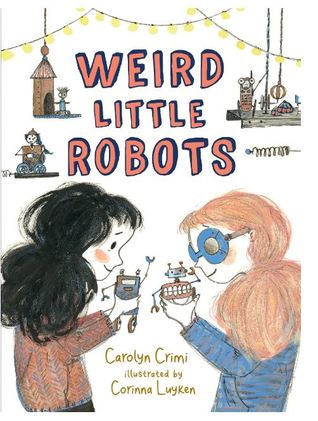
Weird Little Robots by Carolyn Crimi

Share

Weird Little Robots
Author: Carolyn Crimi
Illustrator: Corinna Luyken
Published October 1st, 2019 by Candlewick

Summary: When two science-savvy girls create an entire robot world, they don’t expect the robots to come alive. But life may be a bit more magical than they thought.

Nine-year-old Penny Rose has just moved to a new town, and so far the robots she builds herself are her only company. But with just a bit of magic, everything changes: she becomes best friends with Lark, has the chance to join a secret science club, and discovers that her robots are alive. Penny Rose hardly remembers how lonely she used to feel. But then a fateful misstep forces her to choose between the best friend she’s always hoped for and the club she’s always dreamed of, and in the end it may be her beloved little robots that pay the price.

Praise: [A]uthor Crimi infuses this unassuming transitional novel with compassion, humor, and a refreshing storyline in which girls organically weave a love for science into their everyday lives. Illustrations by Luyken add to the guileless sensibility. A contemplation on the magic of friendship told with sweetness, simplicity, and science.—Kirkus Reviews

**BEA Middle Grade Book Buzz Book

About the Author: Carolyn Crimi enjoys snacking, pugs, Halloween, and writing, although not necessarily in that order. Over the years she has published 15 funny books for children, including Don’t Need Friends, Henry and the Buccaneer Bunnies, Where’s My Mummy?, There Might Be Lobsters, and I Am The Boss of This Chair. Weird Little Robots is her first novel.

For more information, and to download a free classroom guide for Weird Little Robots, visit her website. and Twitter @crims10.

Review: Thank goodness books like this exist out in the world. I cannot wait to see what this new generation of kids are like as adults now that they all have these amazing stories of smart girls to read. Even the characters who fit a certain stereotype for Penny Rose ended up proving her wrong. This book shows that there is more to everything than anyone can imagine: more to science, more to friendship, more to imagination… What a fantastic world that Penny and Lark’s story can be told!

And the story itself is one that is fun to read. Not only do you get to read about robots, engineering, ornithology, and even decorating, but the book includes a story that many kids will connect with: do you abandon one to join the others even if the one is your best friend and the others is giving an opportunity that is hard to refuse. That is something that everyone faces more than once in their life. And told in a lyrical and a bit quirky narrative, the story is just fun to read.

Teachers’ Tools for Navigation: A Classroom Guide for Weird Little Robots can be found on Carolyn Crimi’s website!

Discussion Questions: 

  • What do Penny Rose and Lark have in common?
  • Why do you think Penny Rose made the decision she did about the secret society? Did she regret it in the end? How could she have dealt with it differently?
  • If you were going to build a little robot RIGHT NOW, what items are in your backpack that you could use? Use these items and sketch out a plan.
  • How could Penny Rose have helped her other robots communicate with her?
  • Why do you think the robots waited to communicate?
  • What did the different members of the secret society show Penny Rose, and the reader, about judging others?
  • Create your own conversation starters. Then, in class, group with 2 other people and use the conversation starters to chat. Rotate.
  • What did Penny Rose’s one decision the turned her back on Lark cause?
  • Penny Rose finds her way through the woods just by listening. As a class create an obstacle course that has different sounds throughout it and see if students can navigate through using only their hearing.

Flagged Passages: “First though, Penny Rose would need a detailed plan. She went up to her bedroom, sat on her bed, and turned on the lamp she had made last year from an olive oil can. A stack of notebooks sat on her nightstand: her New Inventions notebook, her Robot Drawings and Descriptions notebook, and her To-Do List notebook. Her most secret notebook, Conversation Starters, was at the bottom of the pile.

She picked it up, found a clean page, and wrote a quick list of Possible Conversation Starters:

  1. “I think binoculars are fun.” (Lark seems to like binoculars.)
  2. “The sun seems strong today.” (Lark often wears sun goop. First determine if the sun does, indeed, seem strong.)
  3. “Sunglasses are very wise.” (Lark wears sunglasses.)
  4. “Do you like robots?” (It is unknown whether or not Lark likes robots, but it is probable that she does since most people do.)
  5. “Yesterday was my birthday. Would you like some leftover cake?” (This seems like a good bet, unless she has allergies or is gluten-free or vegan or something.)
  6. “What is in that metal box?” (This might be too nosy, although if you’re going to carry something so mysterious, you should be prepared for questions.)

Penny Rose looked over her list. She considered what her father said about Lark not hearing before. She decided she would speak loudly.

Penny Rose tore out the page and tucked it into the tool belt she wore in case she happened upon interesting items for her robots.” (Chapter One)

Read This If You Love: Ellie Engineer by Jackson Pearce, Ada Twist by Andrea Beaty, Marty McGuire by Kate Messner, The Evolution of Calpurnia Tate by Jacqueline Kelly, The Last Panther by Todd Mitchell, Frank Einstein by Jon Scieszka

Recommended For: 

classroomlibrarybuttonsmall

Signature

**Thank you to Blue Slip Media for providing a copy for review!**
Weird But True: Class Collaborative Research Activity

Share

My students love the Weird but True books by National Geographic, but one thing they don’t like about the books are the lack of information found in the books. Because of this, as we chatted in class, we decided to make a class “Weird But True” presentation with not only the weird and true facts but with extra information and sources! 

All three of my classes all worked in the same Google Slides presentation and built this amazing document of fascinating facts: 

Weird But True
Please view the Google Slides presentation to see the extra information in the Speaker Notes.

This was such a fun and interesting project! It made students check on facts, learn about reliable sources, and learn all sorts of interesting and fun facts!

Signature

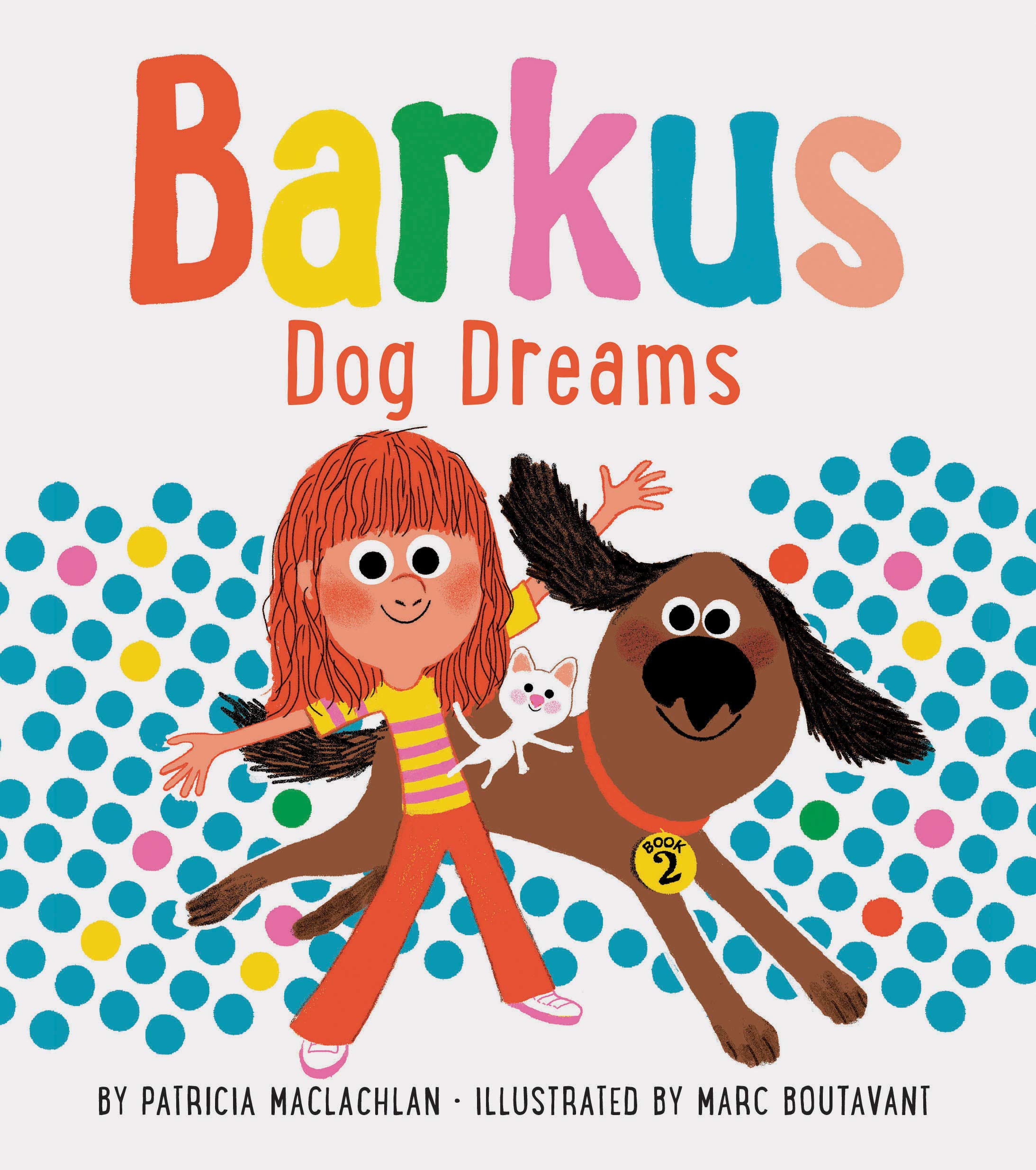
Teachers’ Guide for Barkus series updated with Barkus: Dog Dreams by Patricia MacLachlan

Share

Barkus: Dog Dreams
Author: Patricia MacLachlan
Illustrator: Marc Boutavant
Published: August 7th, 2018 by Chronicle Books

Summary: Barkus is back! With new tricks. New friends. And lots more fun.

The lovable Barkus and his lucky young owner romp through the pages of this delightful series from Newbery Medal–winning author Patricia MacLachlan. The simple text told in short chapters is just right for children ready to take their first steps toward reading on their own.

View my post about Barkus to learn about book one.

Teachers’ Tools for Navigation and Discussion Questions: 

Please view and enjoy the teachers’ guide I created for the Barkus series:

You can also access the teaching guide here.

You can learn more about Barkus on Chronicle Book’s Barkus Book 2 page.

Recommended For: 

readaloudbuttonsmall classroomlibrarybuttonsmall litcirclesbuttonsmall closereadinganalysisbuttonsmall

Kellee Signature

Moonshot by Brian Floca

Share

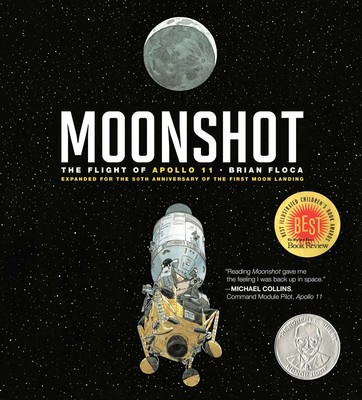
Moonshot: The Flight of Apollo 11
Author: Brian Floca
Published April 7, 2009 by Atheneum

Summary: Simply told, grandly shown, here is the flight of Apollo 11. Here for a new generation of readers and explorers are the steady astronauts, clicking themselves into gloves and helmets, strapping themselves into sideways seats. Here are their great machines in all their detail and monumentality, the ROAR of rockets, and the silence of the Moon. Here is a story of adventure and discovery—a story of leaving and returning during the summer of 1969, and a story of home, seen whole, from far away.

Praise:

“Like the astronauts’ own photographs, [Floca’s] expansive, heart-stopping images convey the unfathomable beauty of both the bright, dusty moon and the blue jewel of Earth.” –New York Times Book Review, July 1, 2019

Ricki’s Review: I thought I knew a lot about the Apollo 11. This book made me realize that I had so much to learn. My sons and I cuddled in one of their beds and read this one together. I whisper-read it because it felt too beautiful to read in a voice that was any louder. My kids followed this model and whisper-asked questions in awe. This book is a masterpiece. There are so many books out there about the Apollo 11, and although I haven’t read them all, I feel confident when I say that this is the best on out there. The illustrations are captivating, the story includes just the right amount of science, and the words dance on the pages.

Kellee’s Review: I love reading about space and have read dozens and dozens of picture books with my son about the topic. This book stands out from the rest. Brian Floca masterfully creates a story that is both engaging and scientifically accurate. This book offers so many possibilities for the classroom for teachers. The words are written in a poetic format which makes the pages easy to read and an excellent balance with the stunning illustrations. If you read just one book about the Apollo 11 this summer, let it be this one. It will knock you off of your feet.

Teachers’ Tools for Navigation: Our minds were buzzing with possibilities after reading this text. Teachers might use this book at the center of a unit on space, or they might use it to catapult students into research studies about any topic of science. We can see this book in classrooms from pre-k through high school. It could be used as a creative writing mentor text or as a text at the start of a high school science unit. It beautifully balances scientific information with narrative, so we think it would be incredibly appealing to teachers of all content areas and grade levels.

 Discussion Questions: 

  • What did you learn about the Apollo 11?
  • How is the information in this book similar or different from what you already knew about the Apollo 11?
  • Why do you think the author chose the poetic format for the words?
  • How do the illustrations add to your understanding of the text?

Flagged Spread: 

Read This If You Love: Moon by Stacy McAnultyThe Sun is Kind of a Big Deal by Nick Seluk, Once Upon a Star by James Carter, Space Encyclopedia by David AguilarYou Choose In Space by Pippa GoodhartA Big Mooncake for Little Star by Grace Lin, Star Stuff by Stephanie Roth Sisson

Recommended For: 

classroomlibrarybuttonsmall 

andSignature

**Thank you to Audrey at Simon & Schuster for providing copies of the book for review!!**
Apollo 11 50th Anniversary Celebration!: Space Book Roundup and Reaching for the Moon Giveaway

Share

Tomorrow marks the 50th anniversary of the groundbreaking Apollo 11 mission. To celebrate this momentous celebration, I am happy to share some fantastic space books! (And don’t forget to enter the giveaway!)

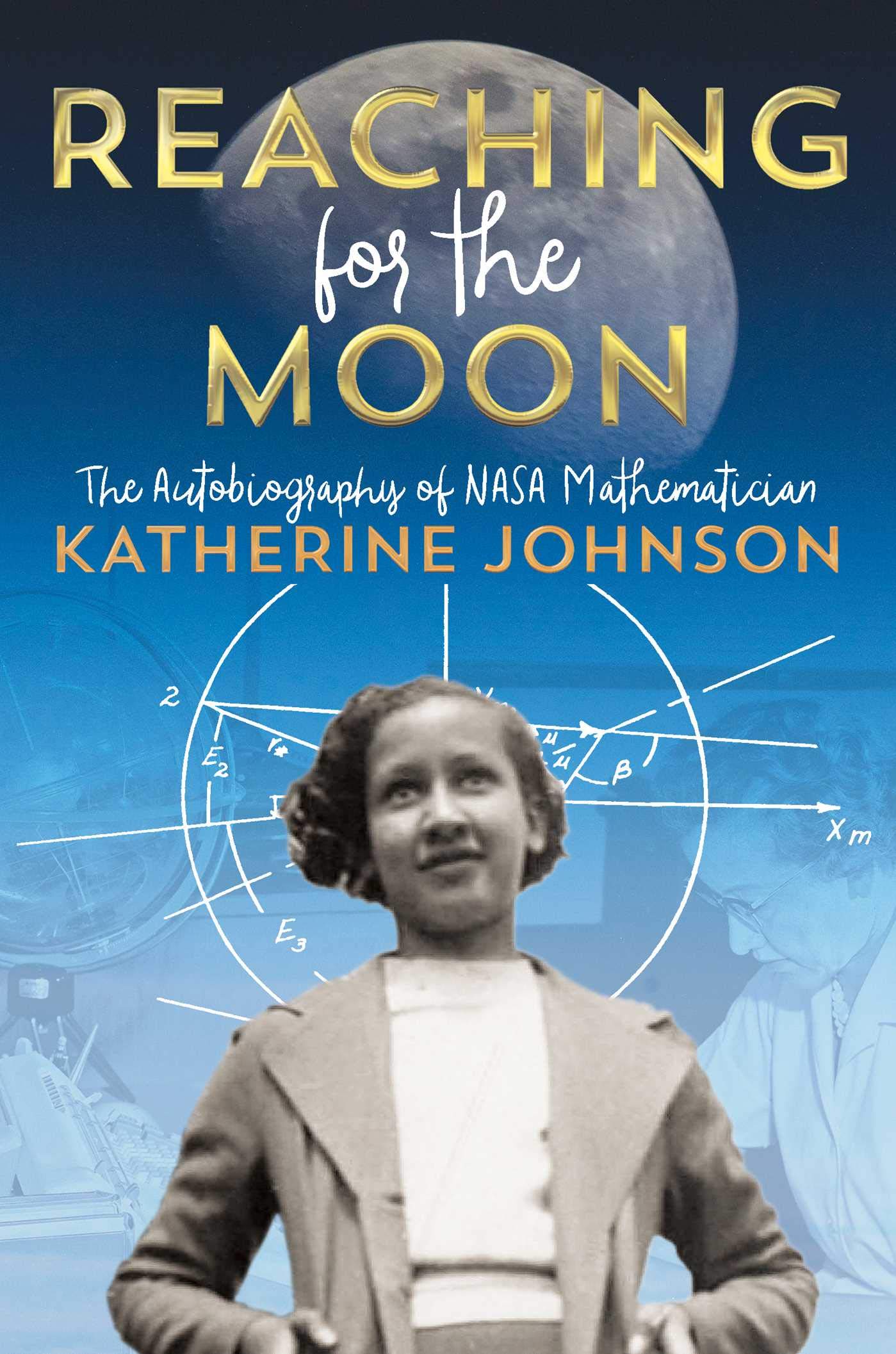
Reaching for the Moon: The Autobiography of NASA Mathematician Katherine Johnson
Author: Katherine Johnson
Published July 2nd, 2019 by Atheneum Books for Young Readers

The inspiring autobiography of NASA mathematician Katherine Johnson, who helped launch Apollo 11.

As a young girl, Katherine Johnson showed an exceptional aptitude for math. In school she quickly skipped ahead several grades and was soon studying complex equations with the support of a professor who saw great promise in her. But ability and opportunity did not always go hand in hand. As an African American and a girl growing up in an era of brutal racism and sexism, Katherine faced daily challenges. Still, she lived her life with her father’s words in mind: “You are no better than anyone else, and nobody else is better than you.”

In the early 1950s, Katherine was thrilled to join the organization that would become NASA. She worked on many of NASA’s biggest projects including the Apollo 11 mission that landed the first men on the moon.

Katherine Johnson’s story was made famous in the bestselling book and Oscar-nominated film Hidden Figures. Now in Reaching for the Moon she tells her own story for the first time, in a lively autobiography that will inspire young readers everywhere.

Moonshot: The Flight of Apollo 11
Author: Brian Floca
Originally Published April 9th, 2019 by Richard Jackson Books

Brian Floca explores Apollo 11’s famed moon landing with this newly expanded edition of Moonshot!

Simply told, grandly shown, and now with eight additional pages of brand-new art and more in-depth information about the historic moon landing, here is the flight of Apollo 11. Here for a new generation of readers and explorers are the steady astronauts clicking themselves into gloves and helmets, strapping themselves into sideways seats. Here are their great machines in all their detail and monumentality, the ROAR of rockets, and the silence of the Moon. Here is a story of adventure and discovery—a story of leaving and returning during the summer of 1969, and a story of home, seen whole, from far away.

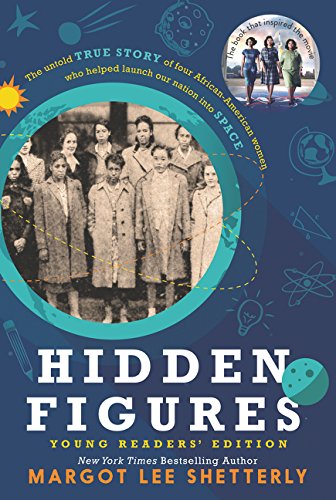
Hidden Figures: Young Readers’ Edition
Author: Margot Lee Shetterly
Published November 29th, 2016 by HarperCollins

This edition of Margot Lee Shetterly’s acclaimed book is perfect for young readers. It is the powerful story of four African-American female mathematicians at NASA who helped achieve some of the greatest moments in our space program.

Before John Glenn orbited the earth, or Neil Armstrong walked on the moon, a group of dedicated female mathematicians known as “human computers” used pencils, slide rules, and adding machines to calculate the numbers that would launch rockets, and astronauts, into space.

This book brings to life the stories of Dorothy Vaughan, Mary Jackson, Katherine Johnson, and Christine Darden, who lived through the Civil Rights era, the Space Race, the Cold War, and the movement for gender equality, and whose work forever changed the face of NASA and the country.

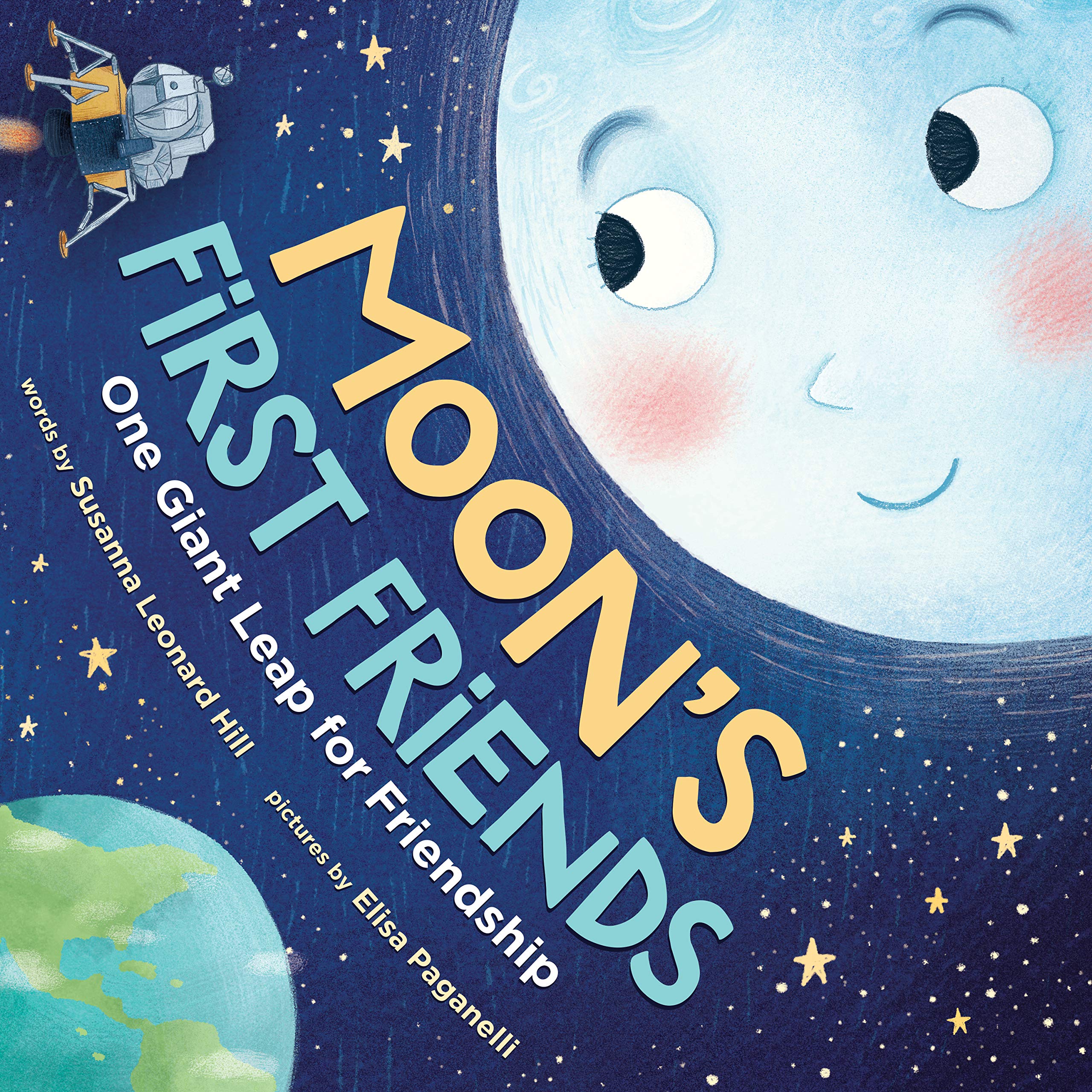
Moon’s First Friends: One Giant Leap for Friendship
Author: Susanna Leonard Hill
Illustrator: Elisa Paganelli
Published May 7th, 2019 by Sourcebook Jabberwocky

A heartwarming story of a friendship-seeking moon that also celebrates the extraordinary 50th anniversary of the Apollo 11 moon landing!

From high up in the sky, the Moon has spent her whole life watching Earth and hoping for someone to visit. Dinosaurs roam, pyramids are built, and boats are made, but still no one comes. Will friends ever come visit her?

One day a spaceship soars from Earth…and so does her heart.

Includes bonus educational pages about the moon mission!

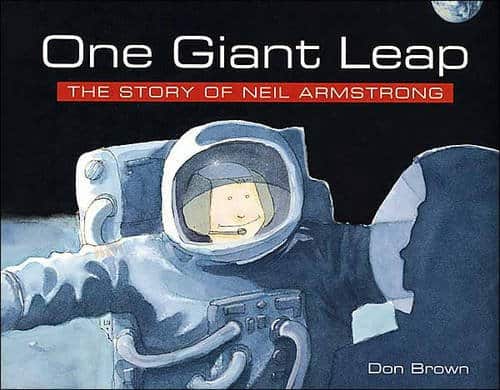
One Giant Leap: The Story of Neil Armstrong
Author: Don Brown
Published September 24th, 2001 by HMH Books for Young Readers

As a young boy, Neil Armstrong had a recurring dream in which he held his breath and floated high above the people, houses, and cars. He spent his free time reading stacks of flying magazines, building model airplanes, and staring through the homemade telescope mounted on the roof of his neighbor’s garage. As a teenager, Neil became obsessed with the idea of flight, working odd jobs to pay for flying lessons at a nearby airport. He earned his student pilot’s license on his sixteenth birthday. But who was to know that this shy boy, who also loved books and music, would become the first person to set foot on the moon, on July 20, 1969. Here is the inspiring story of one boy’s dream – a dream of flying that landed him more than 200,000 miles away in space, gazing upon the awesome sight of a tiny earth hanging suspended in a perfectly black sky. On the thirtieth anniversary of the moon landing, Don Brown’s expressive story reveals the achievement of this American legend, Neil Armstrong.

Previously Reviewed and Recommended:

Giveaway!

a Rafflecopter giveaway

Signature

**Thank you to Milena at Simon & Schuster for providing the books for giveaway!**
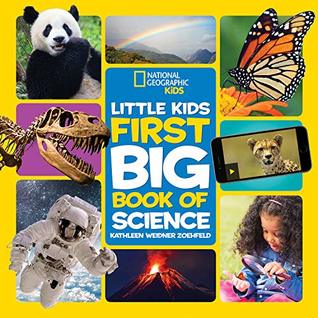
National Geographic Kids: Little Kids First Big Book of Science by Kathleen Weidner Zoehfeld

Share

National Geographic Kids: Little Kids First Big Book of Science
Author: Kathleen Weidner Zoehfeld
Published April 4th, 2019 by National Geographic Kids

Summary: What is science? What do scientists do? This lively reference book answers these questions and many more, all while introducing kids to the amazing things that scientists study: animals and plants, oceans and space, earthquakes and volcanoes, sound and light, inventions, and more!

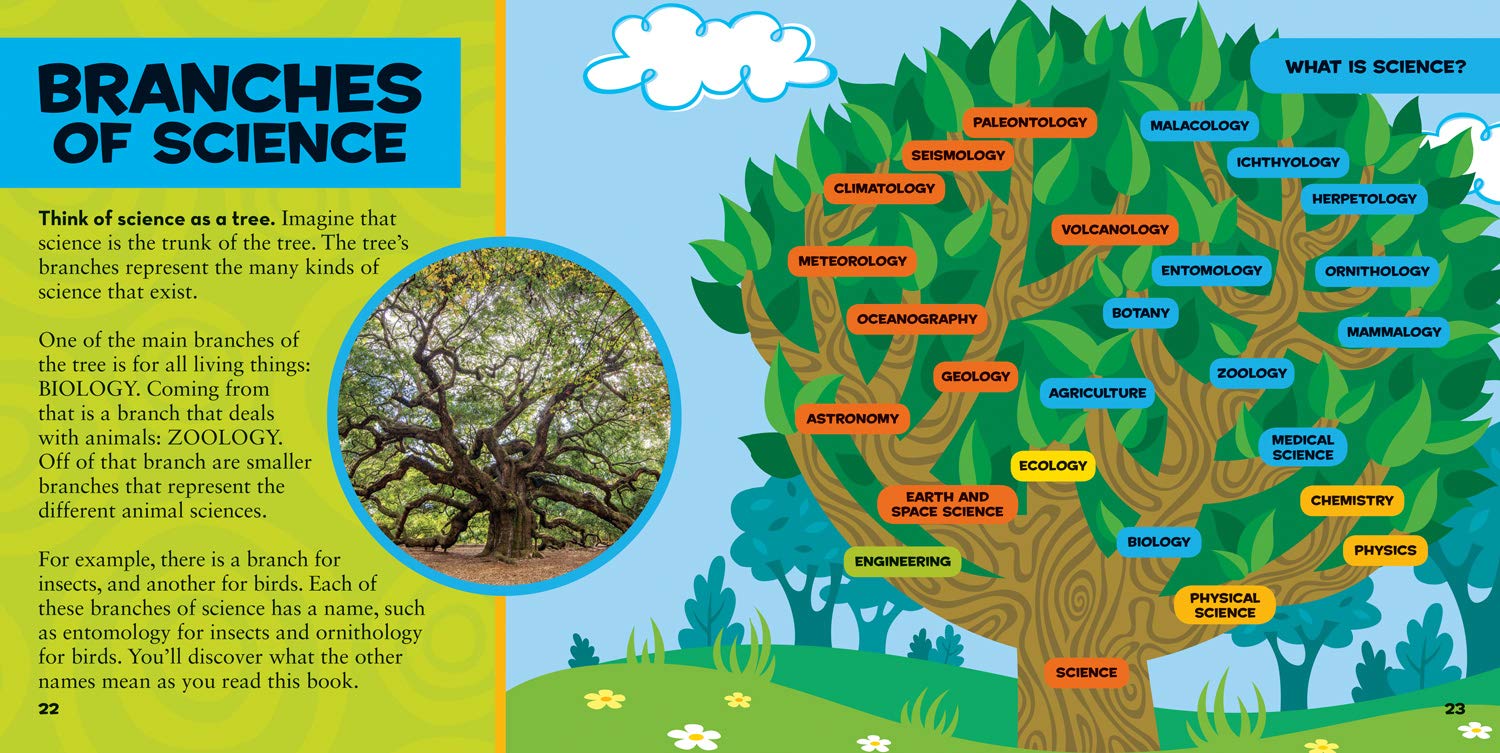
Make sure kids’ first experience of the wonders of science is a thrilling eye-opener with this fun reference book. Fun activities, games, and simple experiments encourage interactive learning, showing kids that anyone can use scientific observation and experimentation to be a scientist and discover new things. With bright images and age-appropriate text, this book inspires kids to be curious, ask questions, and explore the world around them. And, maybe even grow up to be a scientist one day, too! Topics touched on include astronomy, botany, paleontology, malacology (that’s the science of clams, snails, and other animals with shells!), zoology, and more.

Inside you’ll find:

  • More than 200 incredible photos
  • Age-appropriate explanations of the things that scientists wonder about and learn
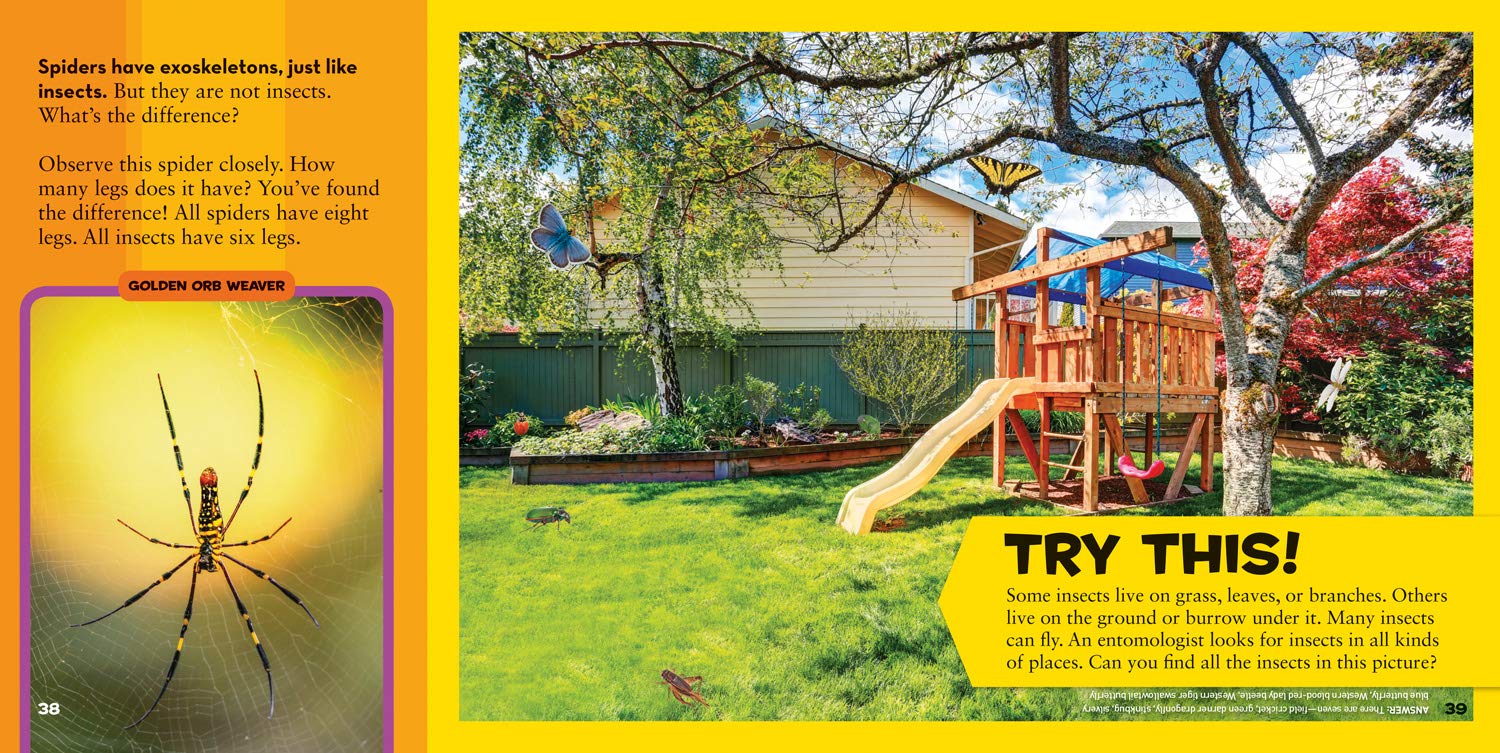
  • Questions and activities in each chapter that encourage interactive learning
  • Simple text for reading aloud or for beginning readers, and fun facts on every page
  • Parent tips that extend the experience beyond the book

About the Author: Kathleen Weidner Zoehfeld was a children’s book editor for more than 10 years before becoming a full-time writer. She has published more than 60 books for children, most about animals and natural history.

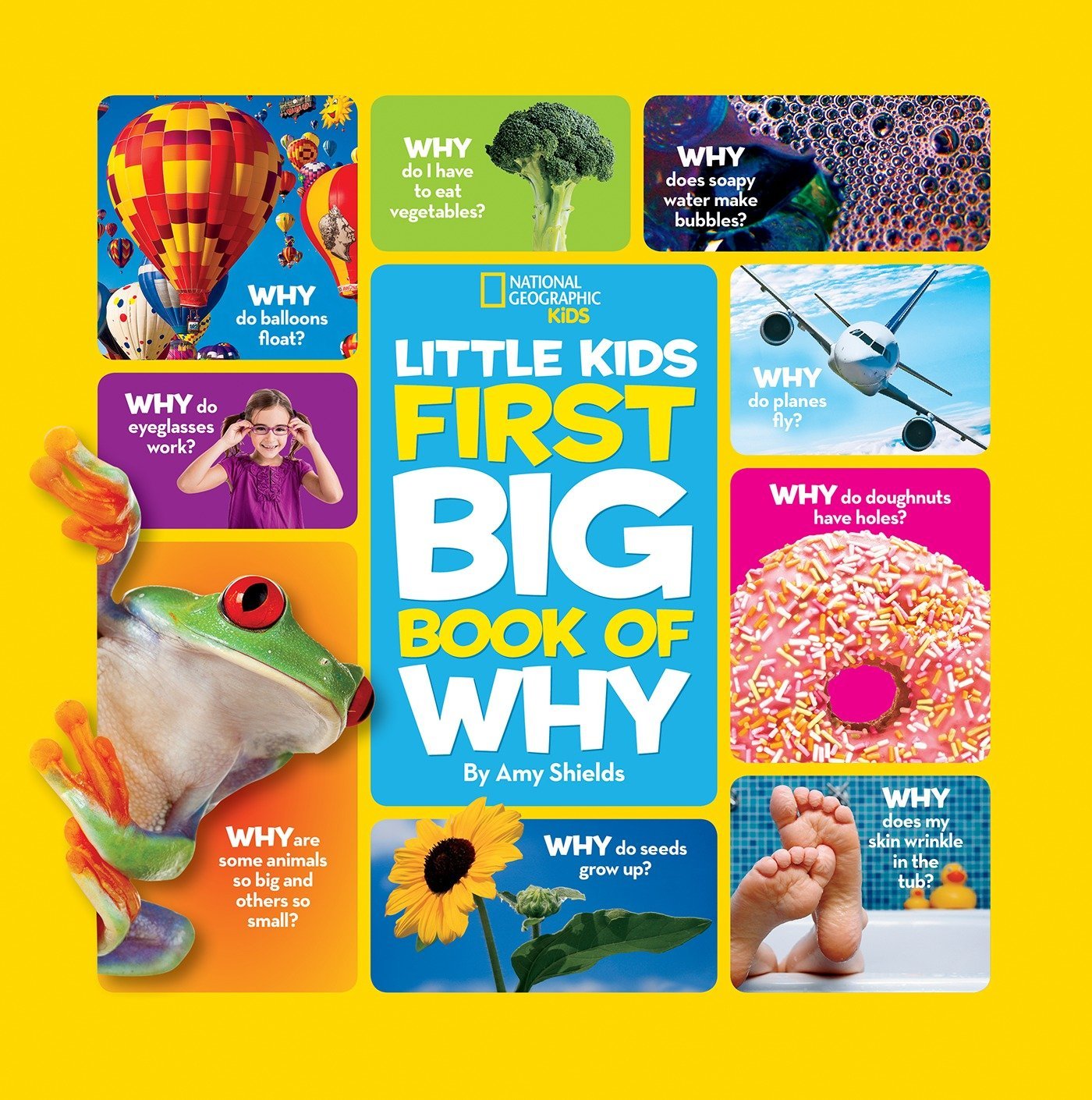
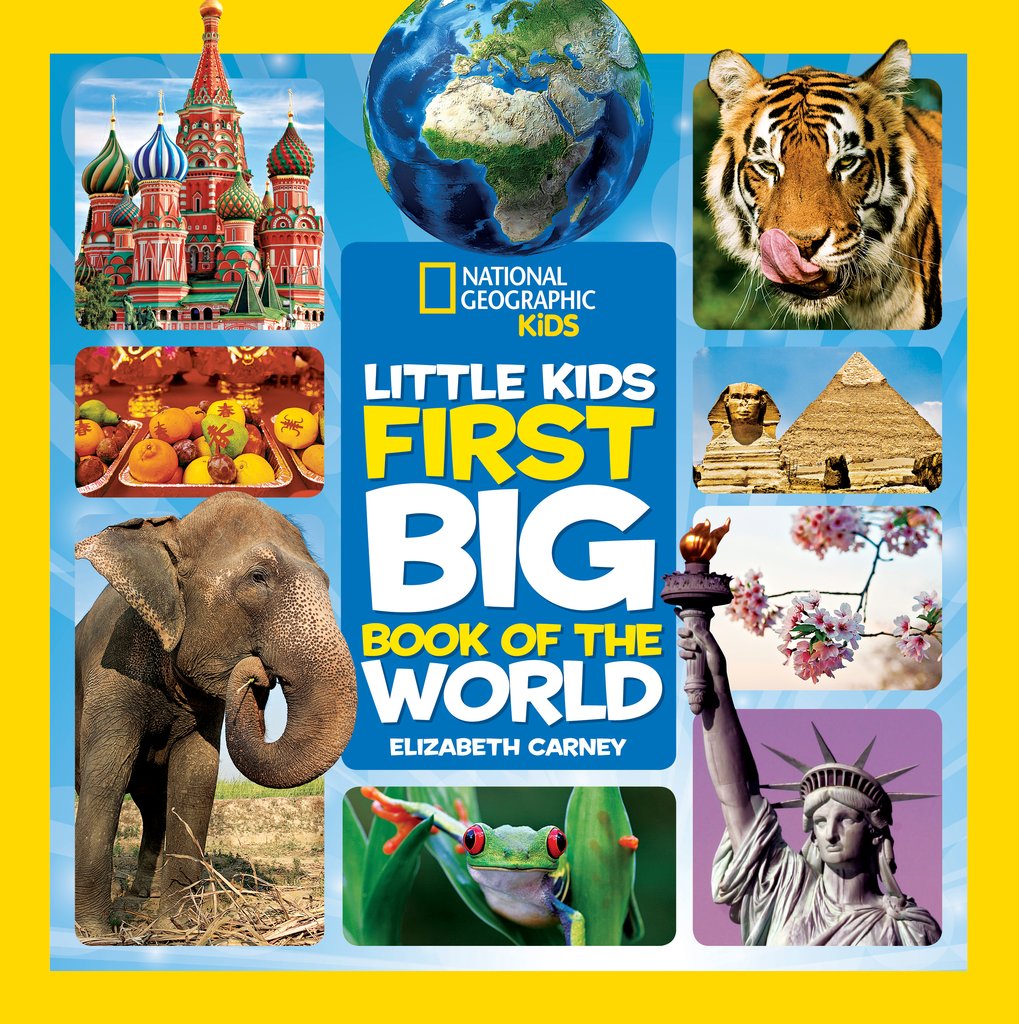
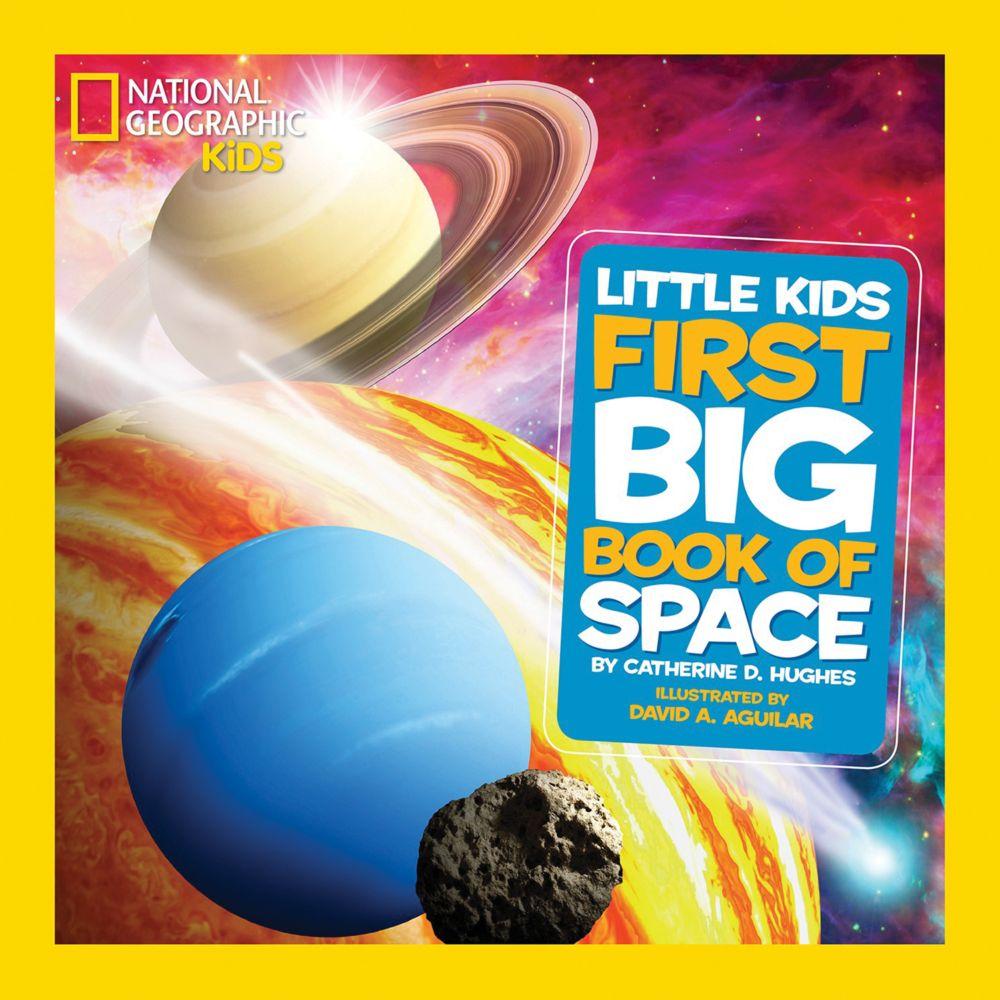
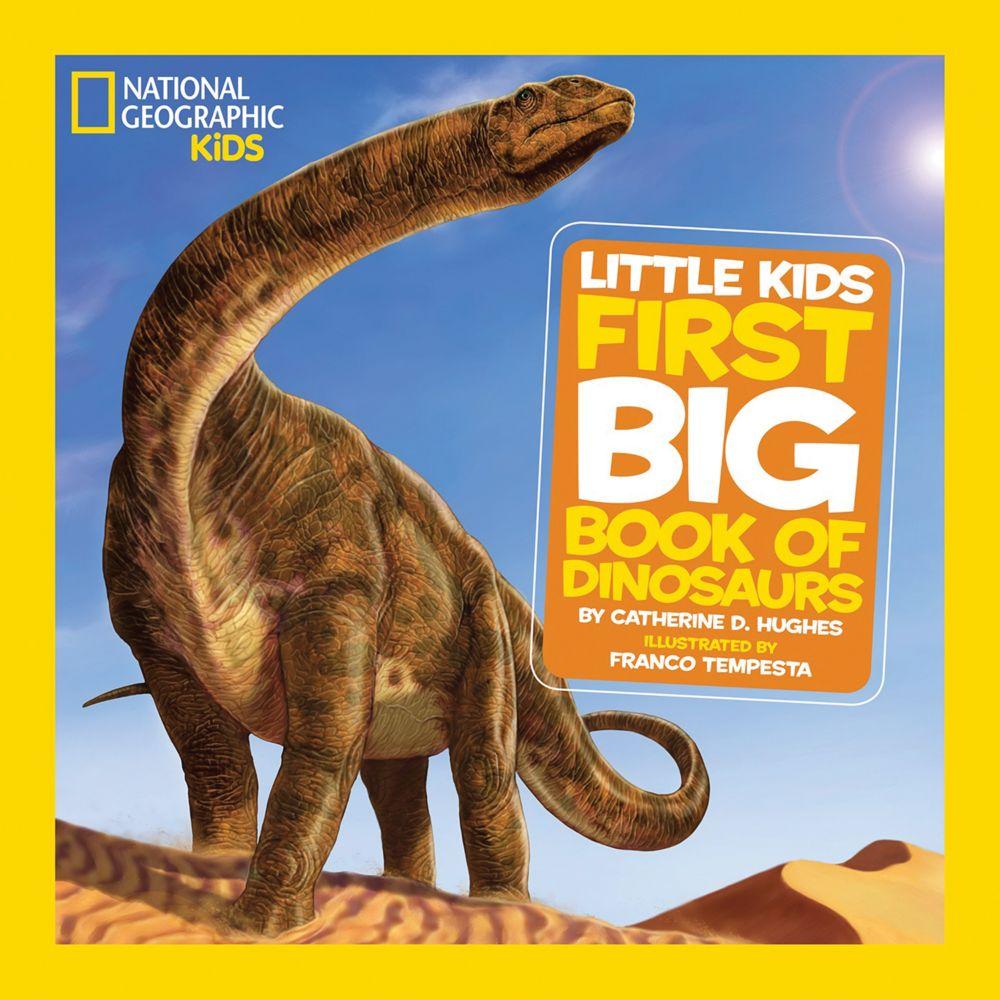
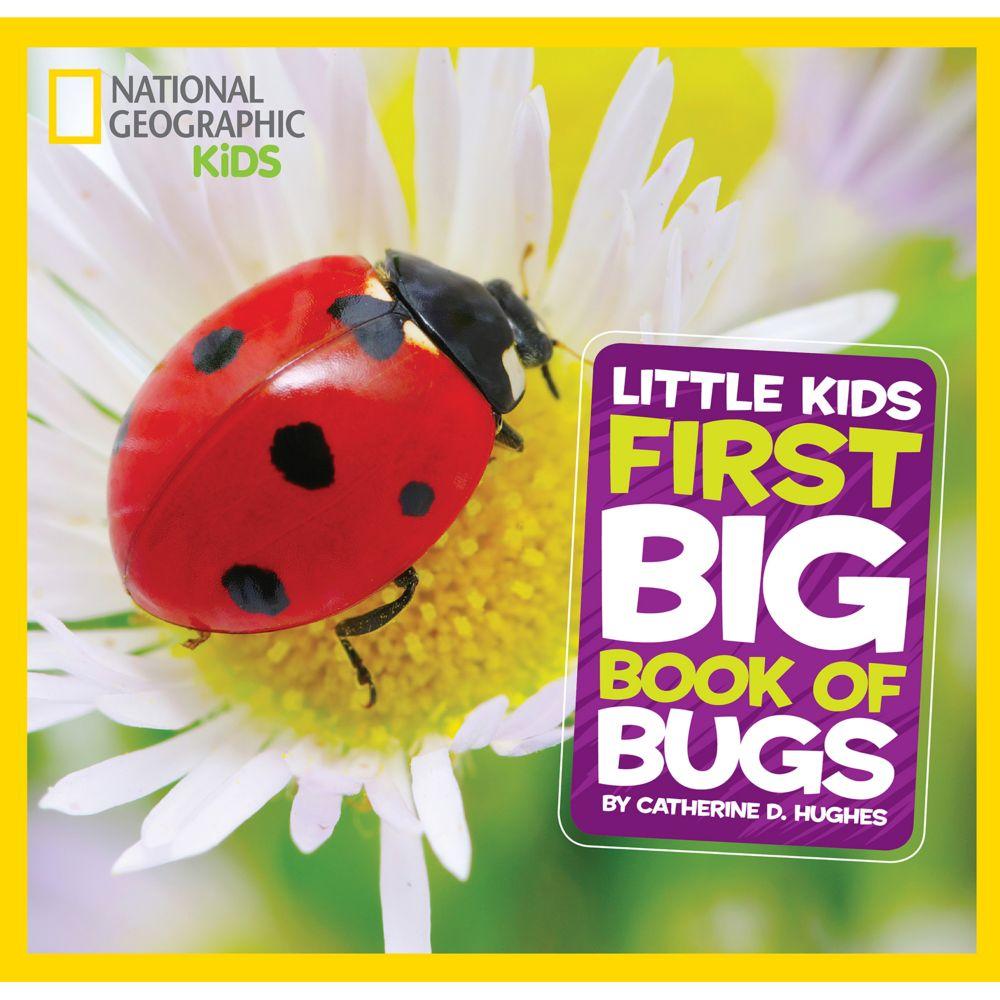
Other National Geographic Kids Little Kids First Big Books:


Review: National Geographic Kids books are such amazing resources for kids and adults! I just love reading through the books because I always learn something, too, and the images are beautiful. And as a mom, I love reading it with Trent because he adores science and the books are such an inquisitive conversation starter. As a teacher, I can see so many ways that this book could be used in an elementary classroom. It is just a perfect triad!

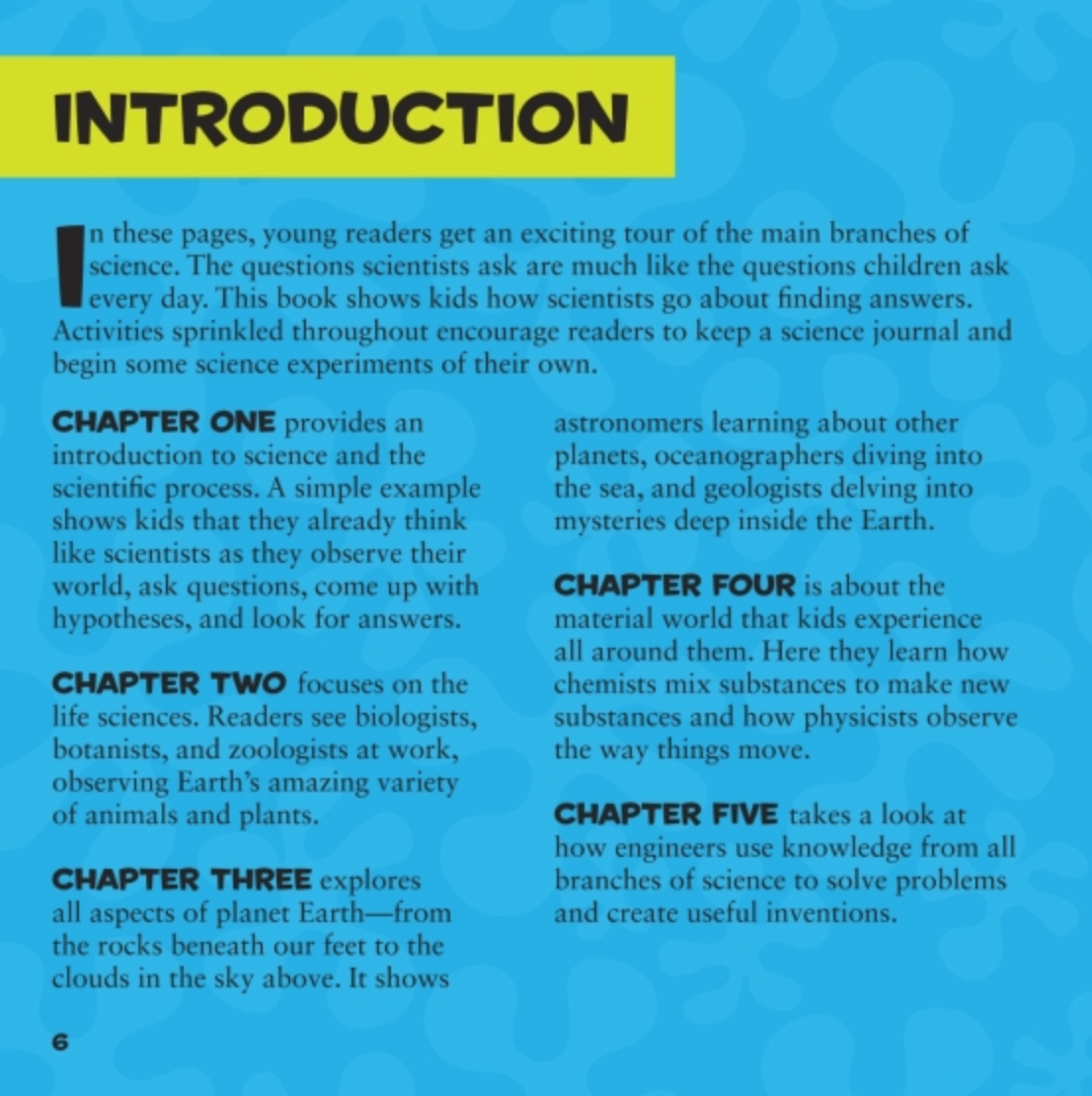
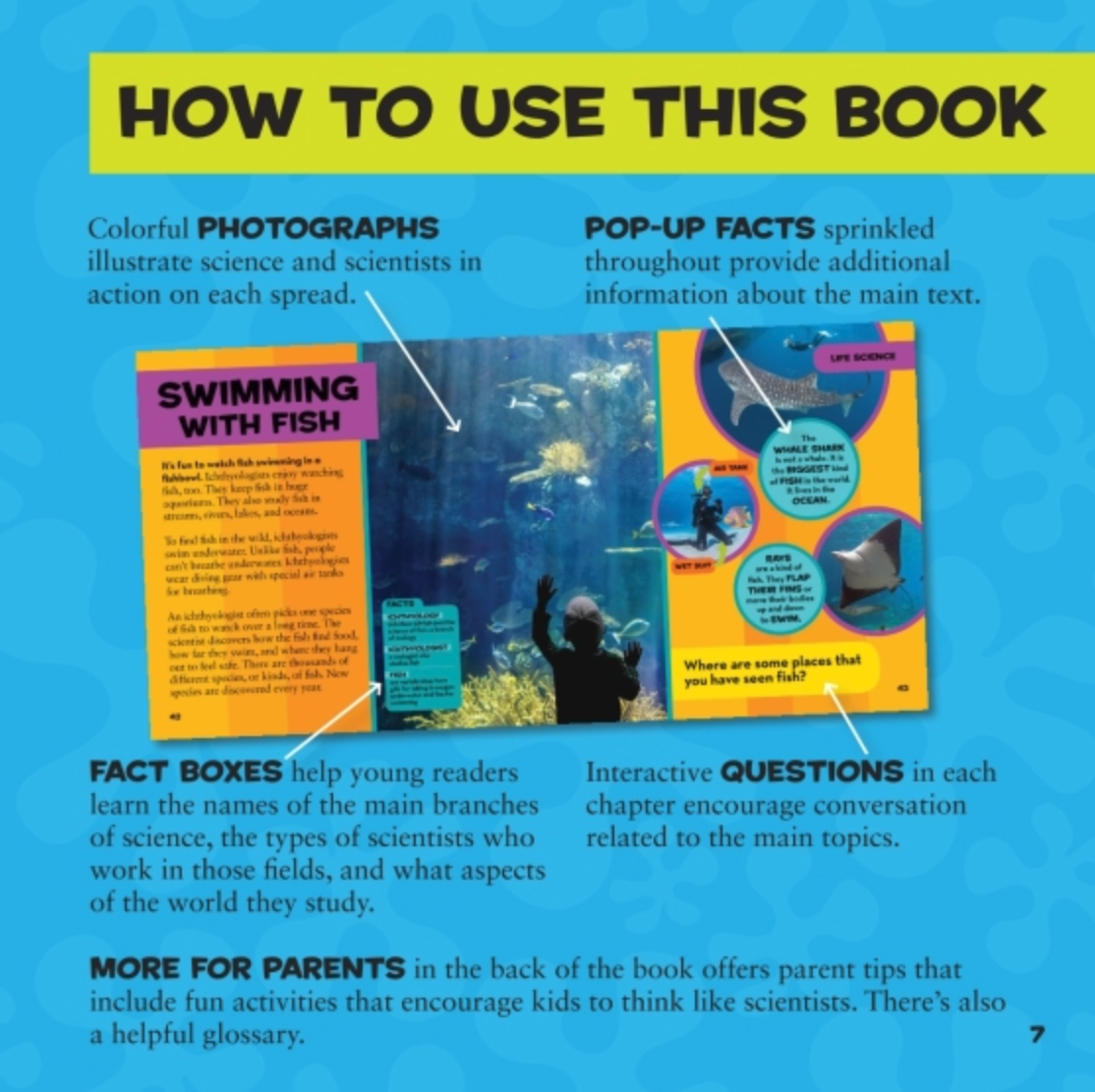
Teachers’ Tools for Navigation: The book is made to be used with children when discussing science. There are a plethora of ways to use it! The book speaks for itself:

Additionally, the parent resources in the back are amazing for home and classroom! Here are some examples of the hands-on science discussions/activities for adults to do with kids in the “Parent Tips” section (just a summary):

  • Egg, Plus Heat (Chemistry): Looks at how heat changes the egg.
  • Moon Shapes (Astronomy): Lunar calendar
  • House of Blocks (Engineering): Make the most stable structures.

Discussion Questions: 

  • What is a hypothesis?
  • What is a Control?
  • What are the different branches of science?
  • Why do we get vaccinations?
  • What are the different kinds of animals?
  • What is an ecosystem?
  • What are the three different states of matter?
  • What moves faster: light or sound?
  • Word play with the glossary!

Some of the Interactive Questions from throughout the book

  • If you could spend a day with one of these scientists, who would you choose?
  • Which part of the body would you like to learn more about? Why?
  • Can you name three ways you look different from when you were a baby?
  • What wild animal would you most like to study? Why?
  • Which ecosystem would you most like to visit? Why?
  • How many ocean animals can you name?
  • If you could travel to another planet, which one would you choose?
  • What would you like to invent?

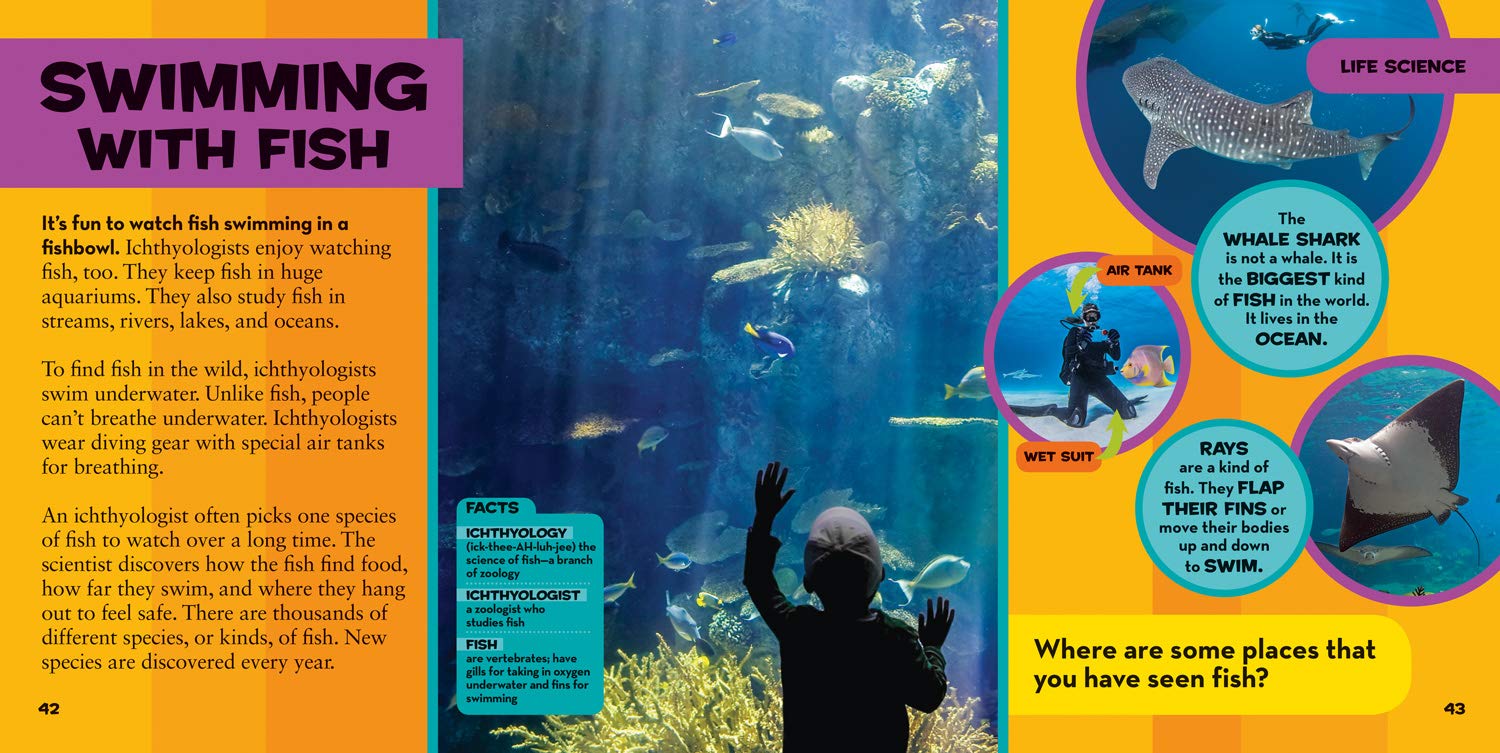
Flagged Passages: 

Read This If You Love: Science!

Recommended For: 

classroomlibrarybuttonsmall 

Signature

**Thank you to Karen at Media Masters Publicity for providing a copy for review**
Blog Tour with Review: Moon! Earth’s Best Friend by Stacy McAnulty

Share

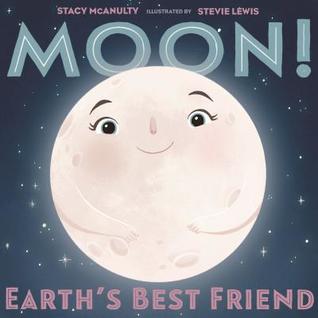
Moon! Earth’s Best Friend
Author: Stacy McAnulty
Illustrator: Stevie Lewis
Published June 11th, 2019

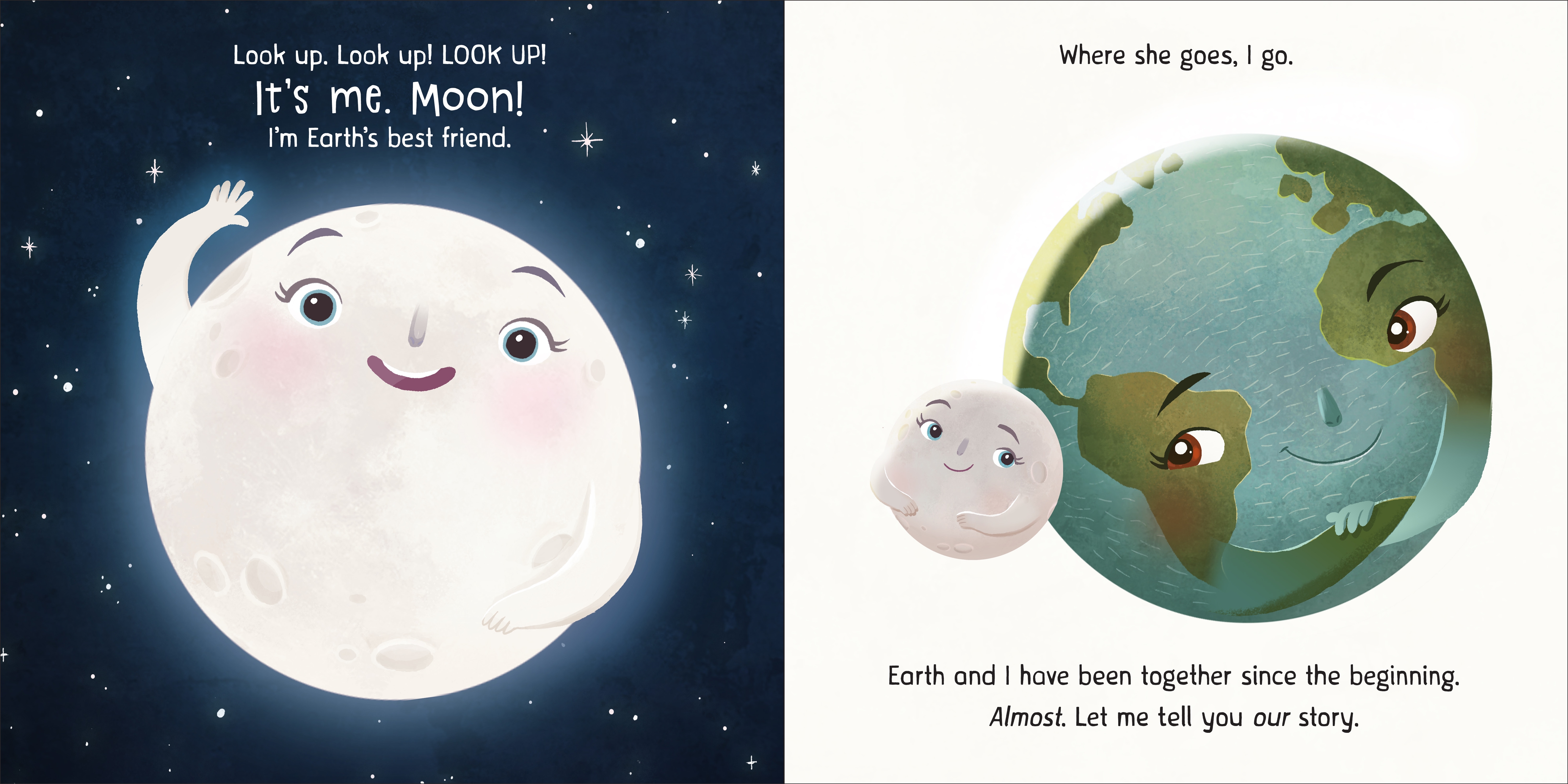
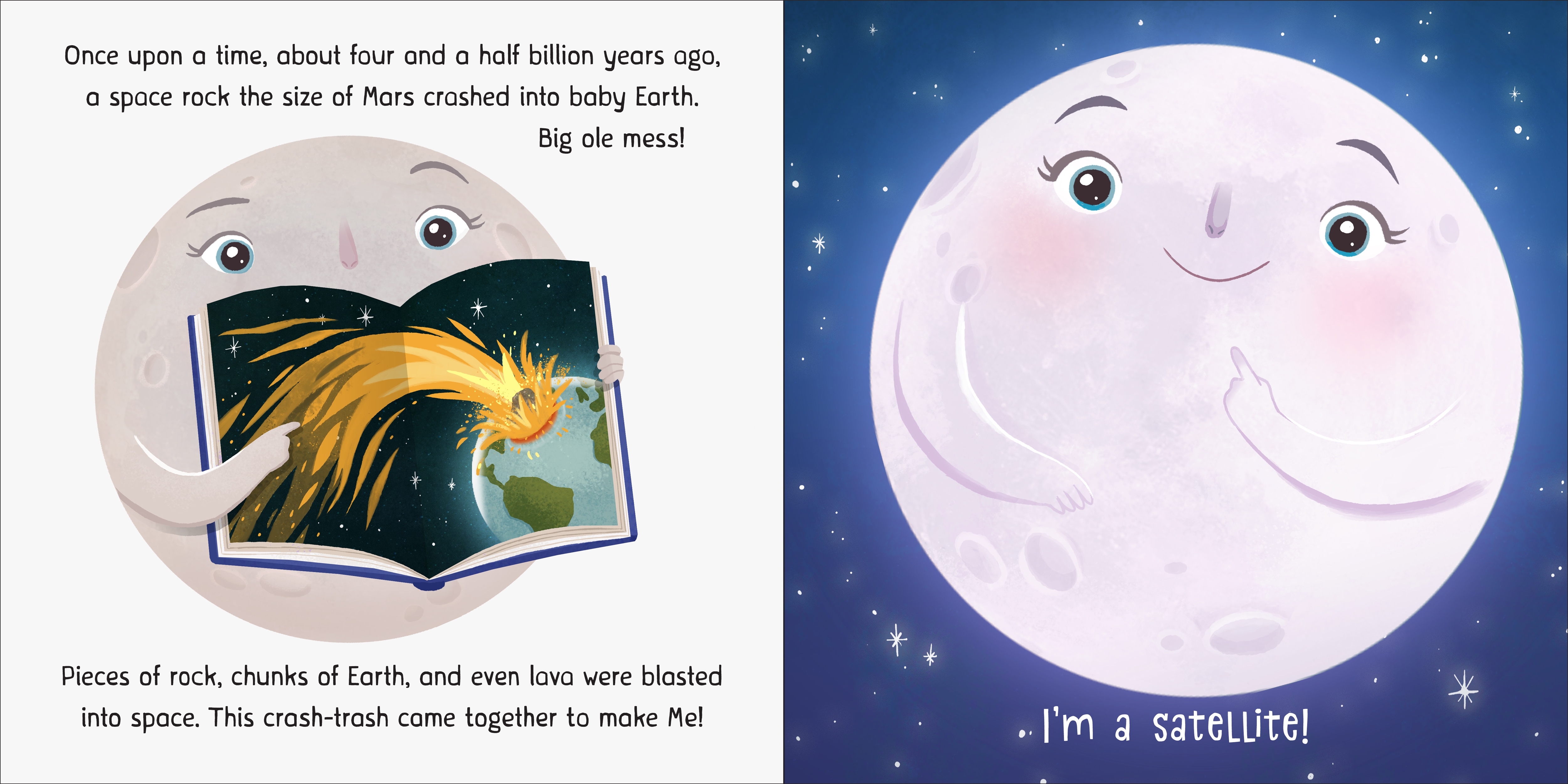
Summary: From writer Stacy McAnulty and illustrator Stevie Lewis, Moon! Earth’s Best Friend is a light-hearted nonfiction picture book about the formation and history of the moon—told from the perspective of the moon itself.

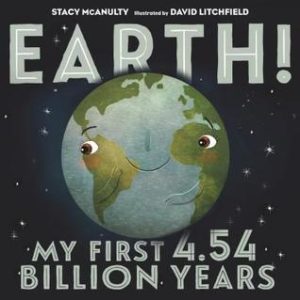
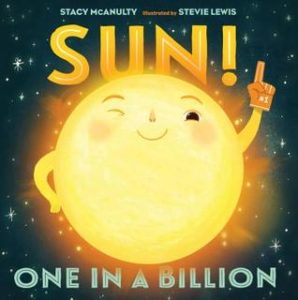
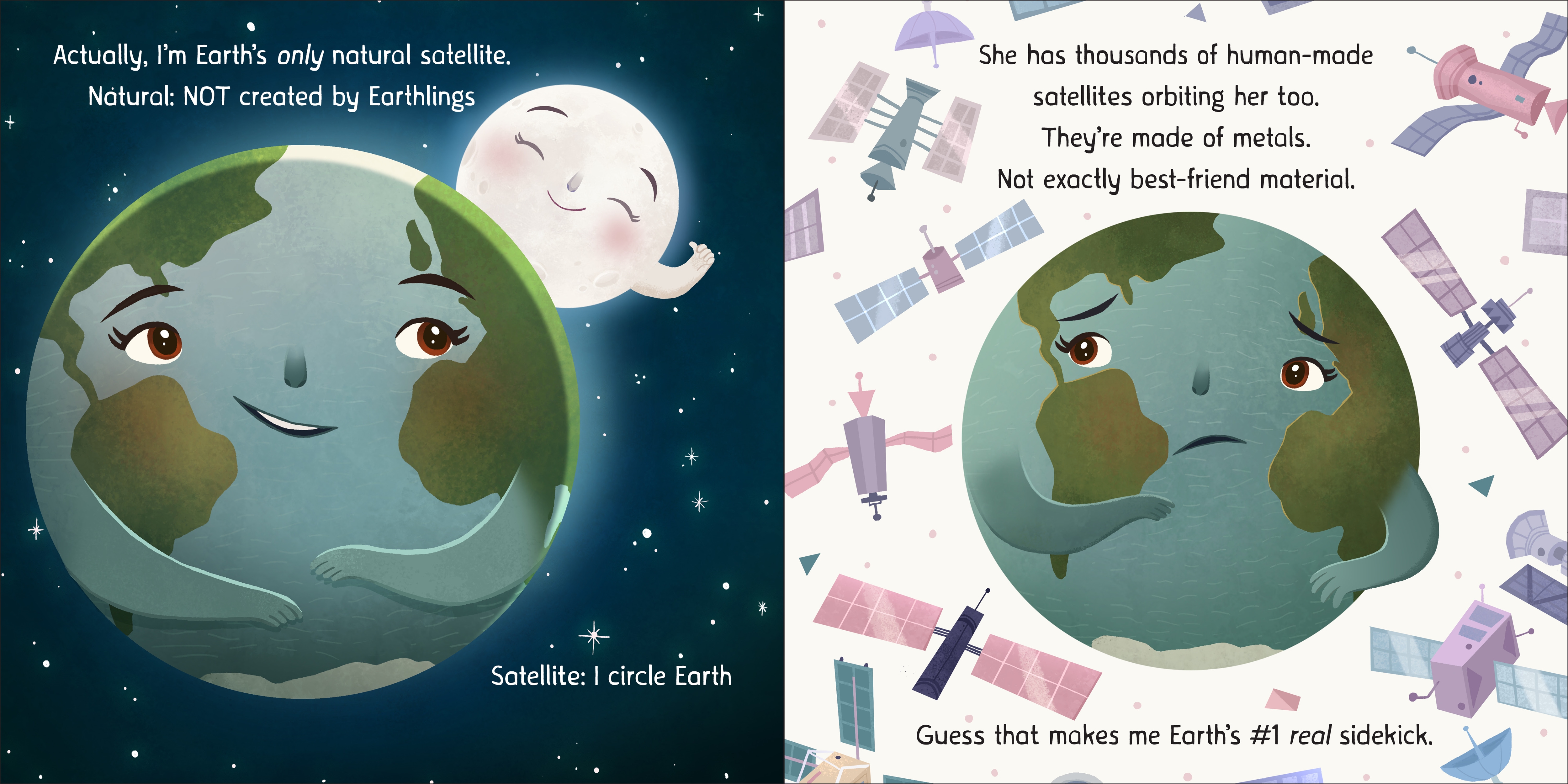
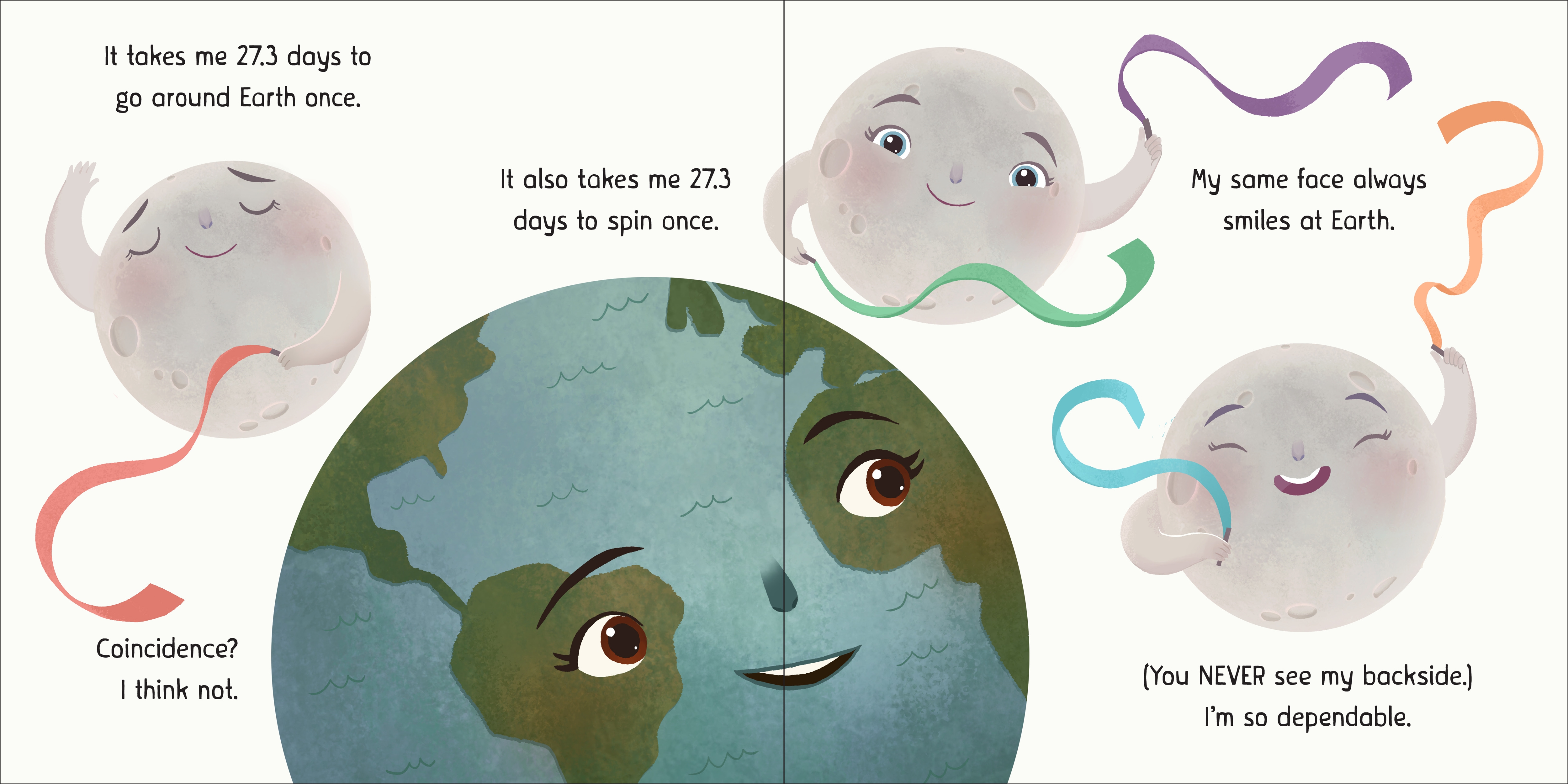
Meet Moon! She’s more than just a rock—she’s Earth’s rock, her best friend she can always count on. Moon never turns her back on her friend (literally: she’s always facing Earth with the same side!). These two will stick together forever. With characteristic humor and charm, Stacy McAnulty channels the voice of Moon in this next celestial “autobiography” in the Our Universe series. Rich with kid-friendly facts and beautifully brought to life by Stevie Lewis, this is an equally charming and irresistible companion to Earth! My First 4.54 Billion Years and Sun! One in a Billion.

About the Author: Stacy McAnulty is the author of several picture books, including Earth! My First 4.54 Billion Years, illustrated by David Litchfield; Sun! One in a Billion, illustrated by Stevie Lewis; Excellent Ed, illustrated by Julia Sarcone-Roach; and Beautiful, illustrated by Joanne Lew-Vriethoff. She lives in North Carolina with her husband, three children, and two dogs.

About the Illustrator: Stevie Lewis spent four years working in animation and now creates art and illustrates children’s books, including Sun! One in a Billion, written by Stacy McAnulty, and Lost in the Library, written by Josh Funk. Stevie lives on the road, furthering her passion for climbing, art, and the outdoors. She gathers inspiration from a variety of places, be it climbing in the high desert in central Oregon, hiking in the wilderness of Alaska, or sharing laughs with fellow travelers around a campfire.

Praise: “Perfect for children—and grown-ups—who have questions about the greater universe.” —Booklist on Moon! Earth’s Best Friend

A Junior Library Guild Selection

Review: I cannot rave enough about this book and the series it is a part of. And as a mom of a kid who adores space, I have read quite a few nonfiction space books, but there are no others like McAnulty and Lewis’s books. There are a few reasons why these books, including Moon!, stand above and beyond others:

  • Humor! You cannot help but giggle when Moon says something funny or cute.
  • Narration! It is awesome having the Moon (or Earth or Sun) narrate the book. It being in 1st person adds to the narrative.
  • Voice! It is so fascinating how McAnulty changes her voice in each of the books. If I read one aloud to Trent without saying which book it was, he would know because of how the characters talk.
  • Interesting! McAnulty does a great job sharing foundational knowledge as well as some unique facts.

View our reviews for the first two Universe books, Earth! and Sun!, also.

Teachers’ Tools for Navigation: The ideas we shared for the other Universe books would definitely book for Moon! also, so check out the other posts linked above, but now that we have three Universe books, there is now the opportunity to do activities will all three books! The options I think of are:

  • Like a jigsaw! Split your class into three groups, and each group reads and discusses one of the books. From the book, they create a handout to share the information that they learned. Then make new groups with 3 students: one from each book’s group. They will then share what they learned with their new group.
  • Split up the class into three groups (one for each group) and have the group read the book and create a readers theater of the book.
  • In-class book clubs! With them being picture books, you can split into three groups and rotate them through all three books. Have students create a one pager sharing what they learned (independently or as a group) or have them write discussion questions and discuss them or give questions to have them discuss.

Discussion Questions: 

  • How did the Moon come to be?
  • Why is Moon capitalized but moon isn’t?
  • How does the author use the narrator’s voice between the three books? How do the voices differ?
  • What reasonings does Moon give for why she’s Earth’s BFF?
  • What new information did you learn about the Moon?

Our Universe Series Book Trailer: 

Flagged Passages: 

Read This If You Love: Universe books by Stacy McAnulty, The Sun is Kind of a Big Deal by Nick Seluk, Once Upon a Star by James Carter, Space Encyclopedia by David AguilarYou Choose In Space by Pippa GoodhartA Big Mooncake for Little Star by Grace Lin, Star Stuff by Stephanie Roth Sisson

Recommended For: 

classroomlibrarybuttonsmall 

Signature

**Thank you to Macmillan for providing a copy of the book for review!!**