Author Guest Post: “Learning STEM Through Stories” by S. Kitanovic, Author of Esie Explores Beneficial Bacteria

Share

“Learning STEM Through Stories”

Germs. Colds. The importance of hand washing. What better way to convey these concepts to kids than through picture books? After all, anything too small for our bare eyes seems unreal, especially to kids. Picture books that educate kids about germs, and how they can protect themselves from getting colds and other illnesses, are important. Kids rarely encounter information, though, about bacteria that benefit humans and other living beings.

The first time I heard about some unusual beneficial bacteria—such as those that make deserts more fertile—was while teaching biotech courses at a community college. I was then also bringing to life an idea from my own student days, when I relied on bacteria as a research tool in a molecular biology lab. With their interesting features, such as taking up other species’ DNA and producing foreign proteins, bacteria seemed the ideal subjects of jokes for science students and scientists. To make them cartoon-worthy, I also planned to give the aspiring bacteria much-needed words and goofy faces.

But after including a few cartoons in a short-lived biotech newsletter at the community college, I wanted to move beyond bacteria in-jokes. I couldn’t help thinking that kids, too, might love to read and learn about the diverse beneficial bacteria that do many amazing things, such as produce food, decrease pollution, and make snow.

Teaching Science with Picture Books

Teachers are nowadays finding little time to teach science in schools. Recent statistics aren’t encouraging— according to the Report of the 2018 National Survey of Science and Mathematics Education (NSME+),  only 17% of K-3 grades receive science instruction on all or most days of the school year. In self-contained classrooms (where one teacher teaches reading, mathematics, science, and social sciences to one class of students), K-3 grades spend an average of 18 minutes per day on science. In a world where STEM permeates our lives more than ever, and promises many career options, such meager student involvement in sciences is concerning.

Time constraints greatly limit teachers’ approaches to science instruction. Engaging hands-on activities, such as experiments, require considerable time to prepare and perform. Yet even finding the time for hands-on activities may be insufficient for comprehensive science instruction. Some science topics are difficult, if not impossible, to teach through classroom experiments or demonstrations—including ecology—the study of plants and animals (and other organisms) in natural environments. Most beneficial bacteria are also unsuitable for hands-on study. Though some classrooms may have the resources to grow common (and harmless) microbes on a Petri dish, many beneficial bacteria require special growth conditions that scientist have yet to discover.

Despite the obstacles, some teachers are delivering complex science topics to kids. By introducing science-themed picture books to classrooms, and developing activities around picture book readings, teachers are simultaneously satisfying science and reading requirements for their K-3 grade students. Unsurprisingly, many of these picture books are nonfiction.

Yet fiction picture books with scientific themes are also finding their way into classrooms. Students have different learning styles and interests, and some prefer fiction. Taking this into consideration, educators Melissa Stewart and Nancy Chesley have identified fiction and nonfiction picture books with related themes. They’ve then designed engaging science lessons around selected fiction/nonfiction book pairs, as described in their “Perfect Pairs” books. Not only do their classroom-friendly lessons cover a wide range of scientific topics—they appeal to many students, as well.

Hybrid Picture Books: STEM Fiction

The line between fiction and nonfiction isn’t always solid, at least in children’s books. When nonfiction seeps into science-themed fiction books, such books may be described as “hybrids.”

In some hybrid books, anthropomorphized characters “explain themselves” through scientific facts. In “I, Fly: The Buzz About Flies and How Awesome They Are,” by Bridget Heos and Jennifer Plecas, the main character is a charismatic and undervalued fly. Page after page, the fly glorifies members of its species to a classroom of kids—who were preparing to study the more beautiful butterflies instead. Readers learn intriguing (and gross) facts about flies from the funny fly character, as it brushes the “lazy” butterflies aside.

Other hybrid books introduce scientific concepts through captivating stories, with few, if any, scientific facts quoted in the story itself. In “Scampers Thinks Like a Scientist,” by Mike Allegra and Elizabeth Zechel, the scientific method—a basic and rather dry concept—is explained through the creative problem-solving efforts of mouse Scampers. After a strange owl suddenly appears and deters Scampers and her fellow mice from feasting in their favorite garden, Scampers determines to find the (scientific) truth about the unwelcome, and possibly dangerous, newcomer.

While the value of using nonfiction picture books in science instruction is hardly questionable, scrutiny surrounds science-themed fiction and hybrid picture books. Can students truly learn from such books? How will they figure what’s fiction, and what’s not? And finally, how to label emerging science-themed hybrid books, which combine fiction with nonfiction? Categorizing these books and ensuring they’re easily found on library shelves is a challenge for librarians, too.

These questions were pondered last year in a lively Twitter discussion, when educator and writer Melissa Stewart suggested a name for science-themed hybrid literature: STEM fiction. As a trained scientist, I’ve also asked similar questions while writing my book, “Esie Explores Beneficial Bacteria.”  Yet teachers who include fiction or hybrid books in science lessons believe in the benefits of this literature, providing that students also read nonfiction books, and participate in classroom discussions to distinguish fact from fiction. How can authors of STEM fiction books facilitate learning in classrooms, as they strive to create stories that both entertain and educate?
Emphasizing the Facts in STEM Fiction

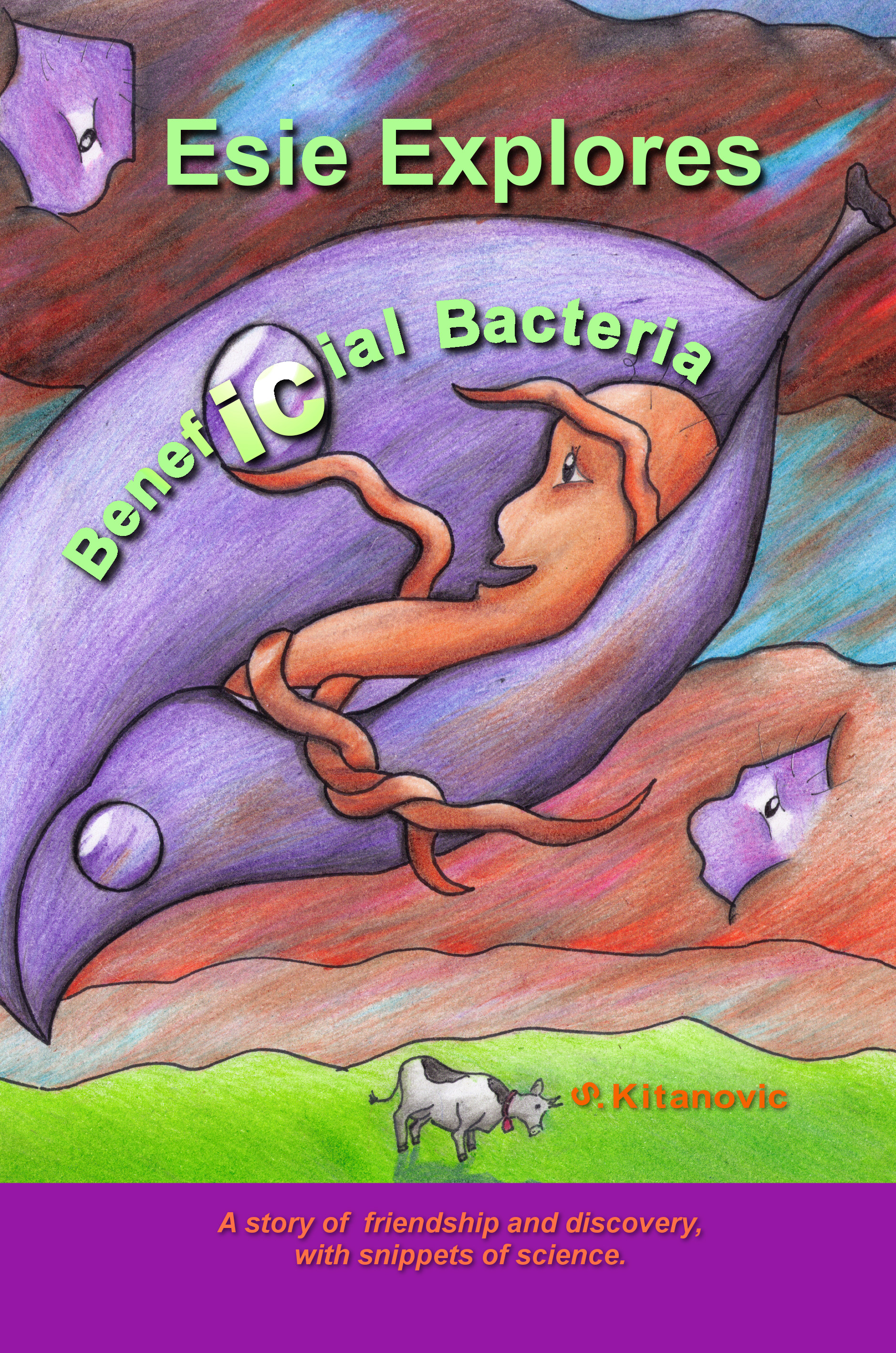
The title of my STEM fiction picture book, Esie Explores Beneficial Bacteria, is clear about the book’s topic—beneficial bacteria—which exist all around us, and enable life on our planet. The story and illustrations, though, are fiction—exploress Esie is a bacterium. After suffering insults from frightened humans, she embarks on a journey to learn more about herself. Along the way, Esie meets chatty bacteria who help answer her key question—Is she a beneficial bacterium, or a dangerous germ?

To create an engaging story, I’ve taken major liberties in depicting beneficial bacteria. The anthropomorphized bacterial characters are exaggerated in size and life span. Yet there are some truths in my interpretation of bacteria. Bacteria do “talk” with each other, but use chemicals instead of words. Bacteria do “see” their surroundings, but rely on senses other than eyes.

STEM fiction authors, such as Heos and Allegra, often complement their stories with scientific facts and activities in the back matter of their books. Some authors also include facts on other book pages, though keeping the facts separate from the story, as in “A Germ’s Journey,” by Thom Rooke, MD, and Tony Trimmer. To distinguish fact from fiction, and provide educational value—without diminishing enjoyment of the story—I, too, have included several features in Esie Explores Beneficial Bacteria:

  1. Front matter. Before immersing themselves in the story, readers can learn what’s fact, and what’s fiction. Addressed here are the most exaggerated elements of the story—bacterial communication, senses, size, and lifespan. Reading this section, though, is not required for comprehension of the story.
  2. Back matter. In addition to a glossary of scientific terms and an activity page, my back matter contains a “Cast of Characters,” which relates fictional characters to real-life bacterial species.
  3. One scientific fact per footer. The bottom portion of almost every page features a scientific fact, contained within a distinct purple band. Though each fact relates to bacterial characters shown on the same page, reading of facts is optional.
  4. Moderate use of scientific terminology in the story. To avoid overwhelming kids with too many new words, I’ve balanced the use of some “big” words, such as “beneficial,” with omission of other scientific terms. For example, I opted for “dangerous” instead of “pathogenic,” when referring to bacteria that cause disease.
  5. Clarification of scientific terminology in the story. Though defined in the glossary, some scientific terms are also explained in the story to avoid interruptions in reading.
  6. Limits on anthropomorphization. Bacterial characters sport no clothes nor any other human artifacts. On the book cover, main character Esie uses a water droplet for magnification, instead of a miniature magnifying glass.
  7. Simple artistic representation of the environment. Bacterial characters were deliberately over-sized with respect to their environment. This helps kids identify objects that bacteria encounter in nature, such as leaves, petals, and sand—as opposed to an unrecognizable microscopic view. Yet in an effort to limit size discrepancies, I kept the scenes simple—they contain few objects, and hardly any signs of human life.

By no means should STEM fiction books compete with nonfiction books in K-3 education. Like people, different books play different roles. With thoughtful design, though, STEM fiction books can do much more than merely entertain—they can draw in young readers to explore unfamiliar worlds, and serve as a valuable introduction to various scientific concepts and topics.

About the Book: Esie leaves her twin Es behind to explore a world teeming with beneficial bacteria. Could she be one of them? Or is Esie just a nasty germ, as some people say? On her rugged journey through air, water, and a cow’s guts, Esie meets new friends who help her find the answers she seeks.

“Kids that love science-themed books filled with fascinating facts will surely get a kick out of this one.” -The Children’s Book Review

About the Author: S. Kitanovic, PhD, became fascinated by microbes as a biology student, and later explored how bacteria “sniff out” their food in a lab at the University of Utah. She enjoys merging science, drawing, and storytelling in picture books to bring the fun of science to young audiences.

What do you think? Do you use or plan to use STEM fiction books to teach science?

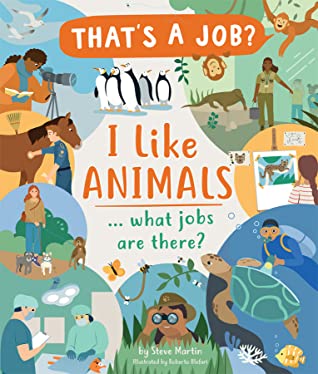
That’s A Job?: I Like Animals…What Jobs Are There? by Steve Martin, Illustrated by Roberto Blefari

Share

I Like Animals…What Jobs Are There?
Author: Steve Martin
Illustrator: Roberto Blefari
Published March 1st, 2020 by Kane Miller Books

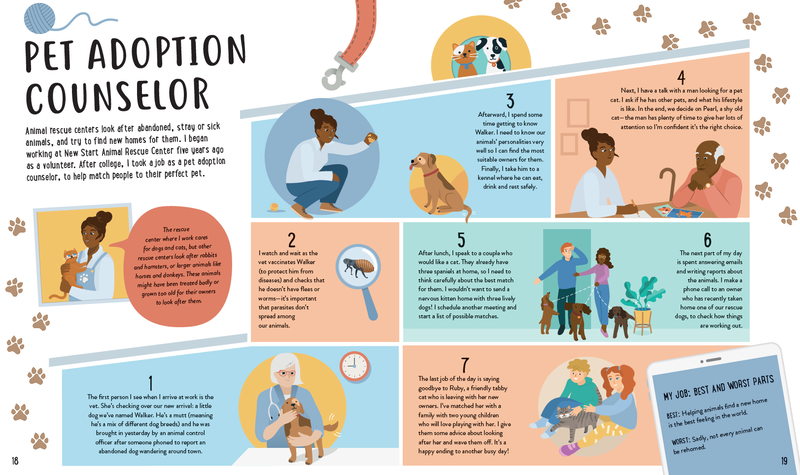
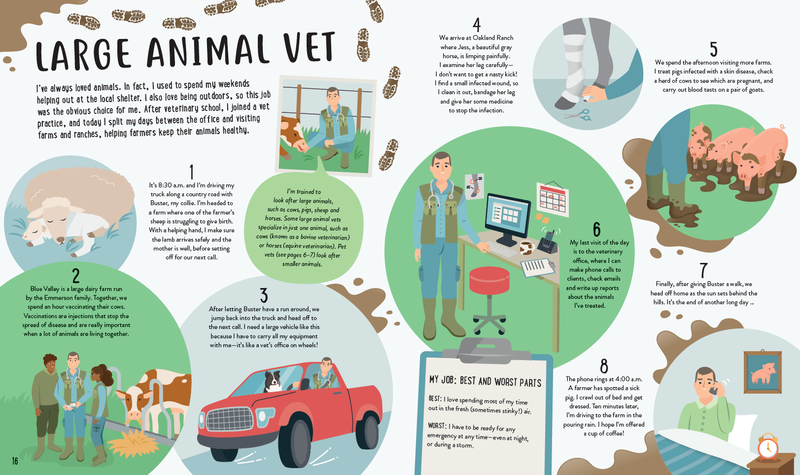
Summary: What do you want to do when you grow up? Children who love animals can find out all about potential future careers, from veterinarian to zookeeper to pet portrait artist, as they’re taken through a “day in the life” of 25 different animal workers.

Praise: 

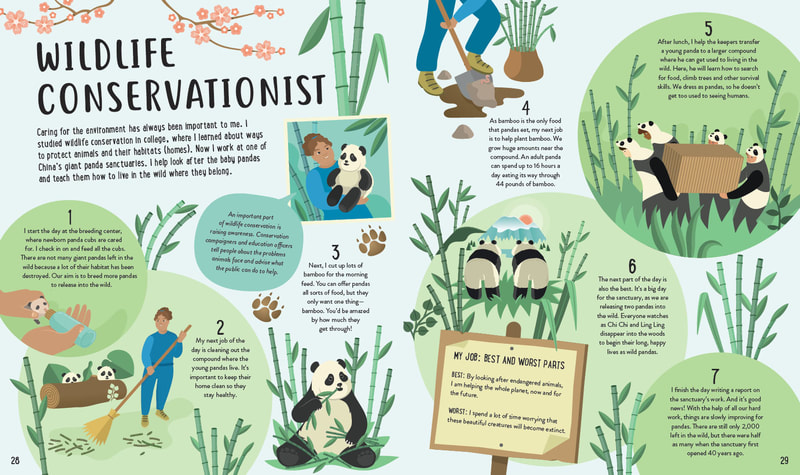
Review: This book was written for so many kids out there! If any of you are librarians or teachers, you know how popular nonfiction animal books are. There are so few kids out there that don’t love animals! My son is one of those kids that adores animals and already says that he wants to be a zoologist and work with turtles, so when I saw this book, I knew I had to get it for him. What I love about the book (and the series I hope it is!) is that it gives options that kids may not know they have. Trent’s first thought for working with animals is working at a zoo, but there is so much more than that which he can choose from.

Each job’s section is really well done! It is written in first person from the point of view of the professional and includes fun yet truthful information, including the best and worst parts. Then, in the back, there is a flow map that helps kids see which job might be their perfect match, and there’s even back matter with more jobs. What a way to open up a kid’s imagination for the future!

Teachers’ Tools for Navigation: My first thought was that this book could be an awesome mentor text for creating a similar type pamphlet. Students could pick something like sports, technology, children, etc. and make a pamphlet about what jobs are out there. This would be a great research project.

Discussion Questions: 

  • Before reading: What jobs do you know of that include working with animals?; After reading: Add to the list.
  • Which job do you think would work the best with your personality and work ethic?
  • Any jobs that you are interested in that weren’t in the book?
  • Why do you think the author chose to write each section in 1st person?
  • Why do you think the author wrote this book?
  • Compare/contrast two of the jobs in the book.

Flagged Passages: 

Read This If You Love: Animals

Recommended For: 

classroomlibrarybuttonsmall 

Signature

**Thank you to Lynn at Kane Miller for providing a copy for review!**

Old Rock (is not boring) by Deb Pilutti

Share

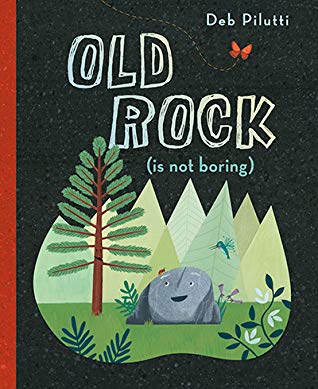
Old Rock (is not boring)
Author & Illustrator: Deb Pilutti
Published February 4th, 2020 by G.P. Putnam’s Sons

Summary: Quirky charm infuses this tale of Old Rock’s life story, which is much more exciting than you’d expect.

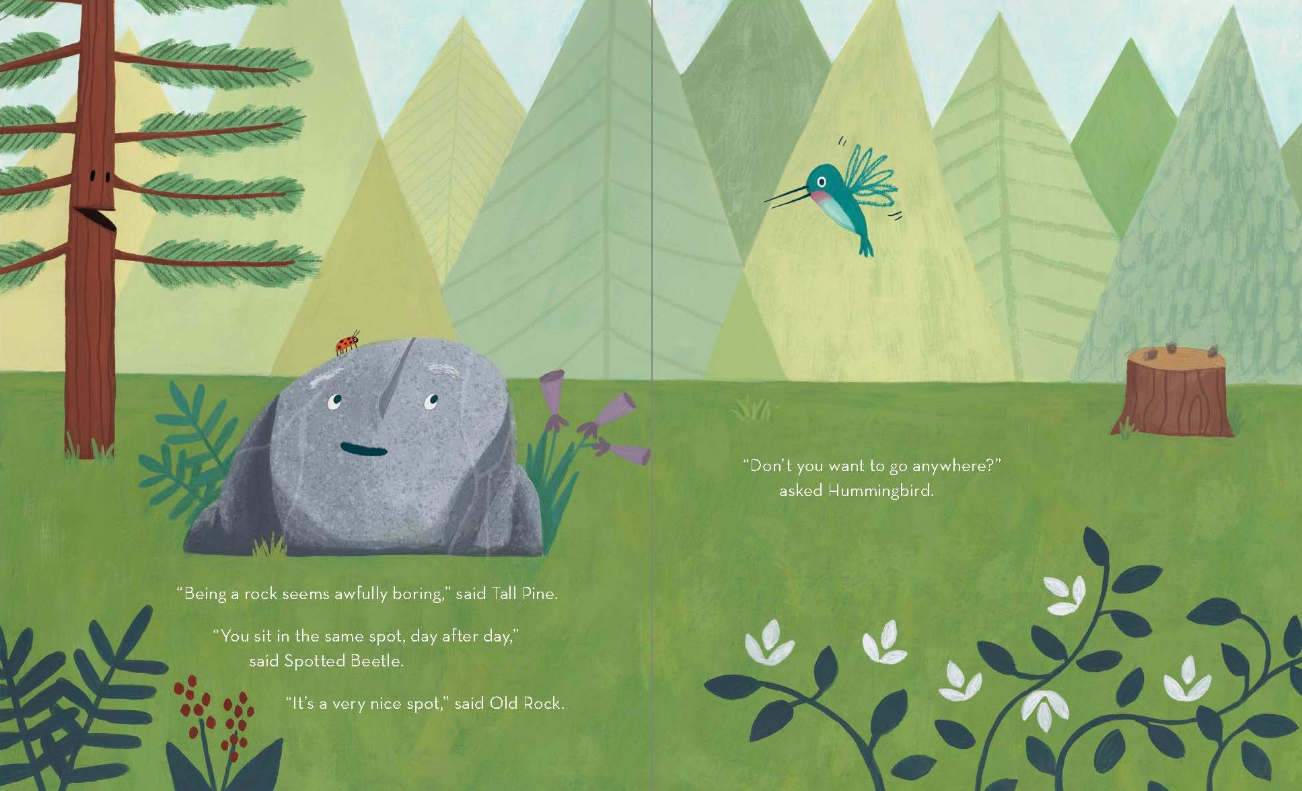
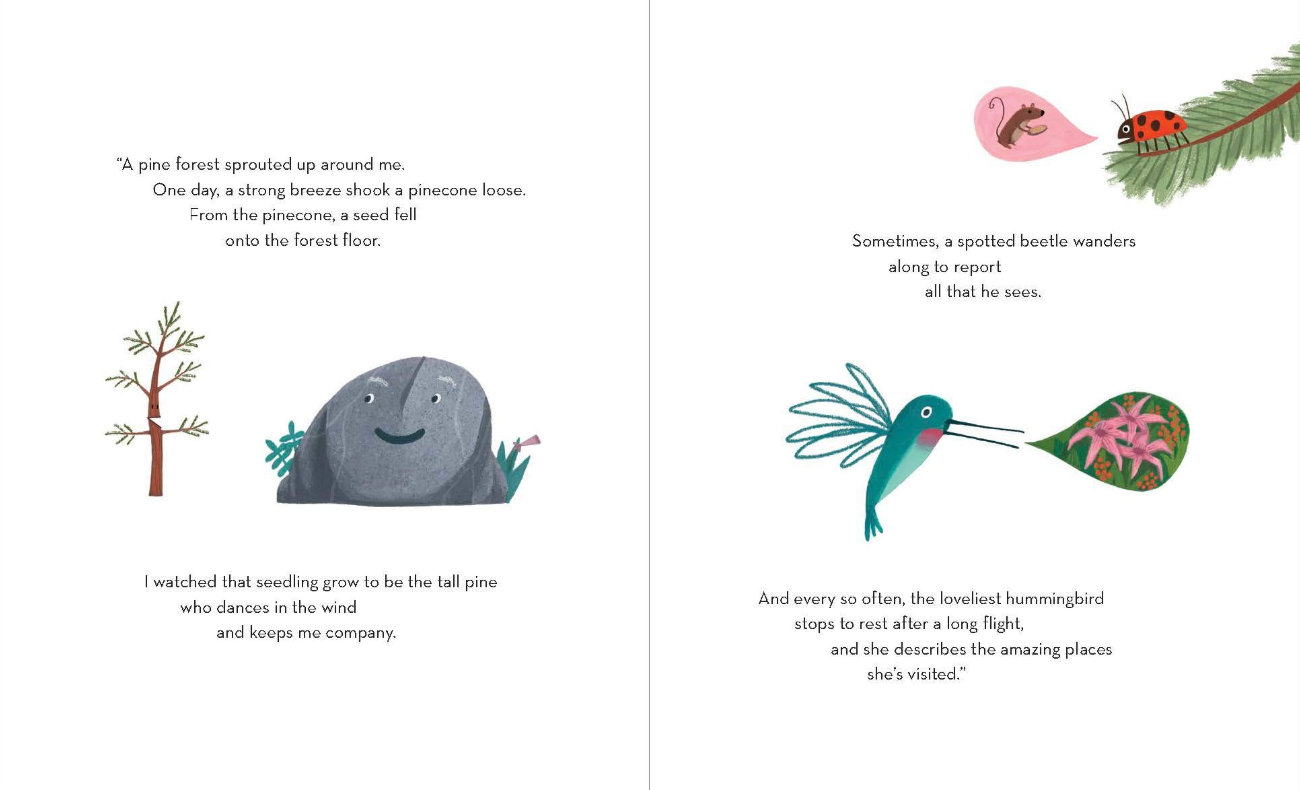
Old Rock has been sitting in the same spot in the pine forest for as long as anyone can remember. Spotted Beetle, Tall Pine, and Hummingbird think just sitting there must be boring, but they are in for a wonderful surprise.

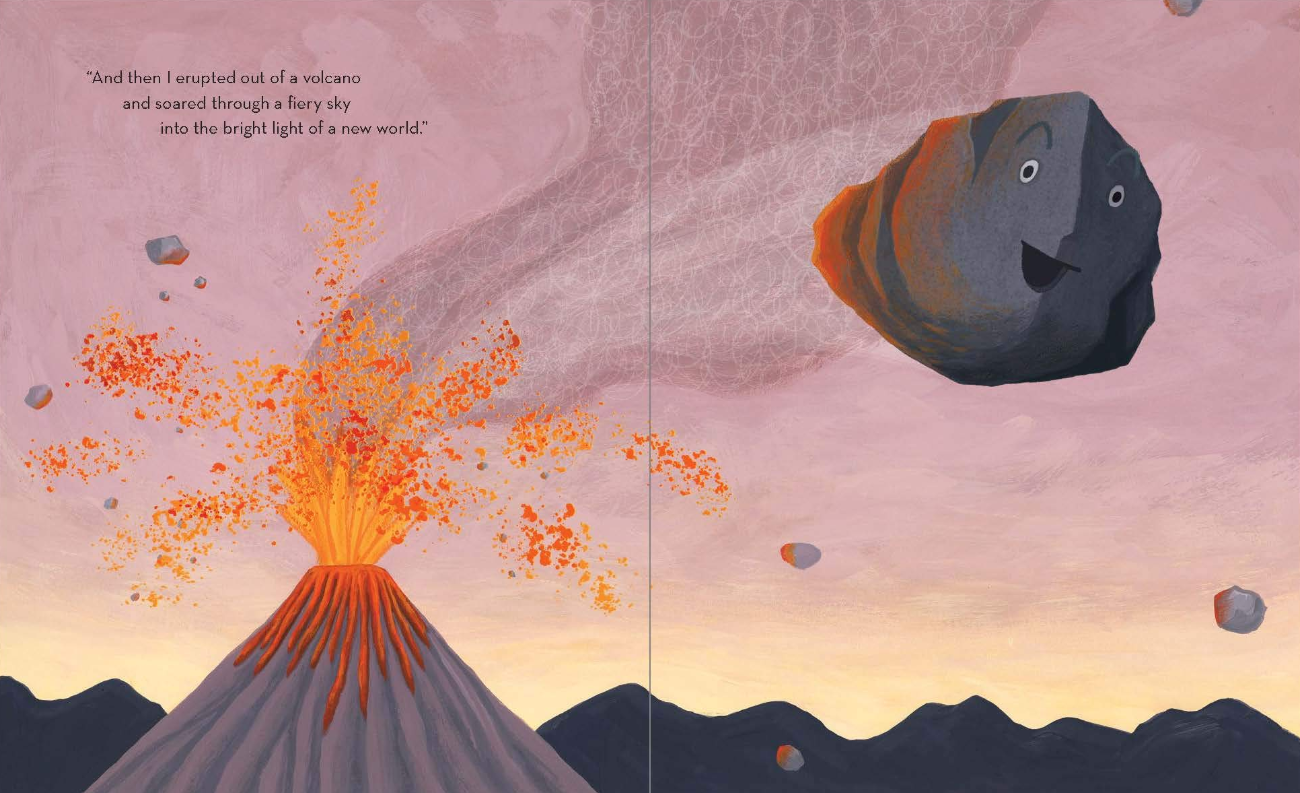
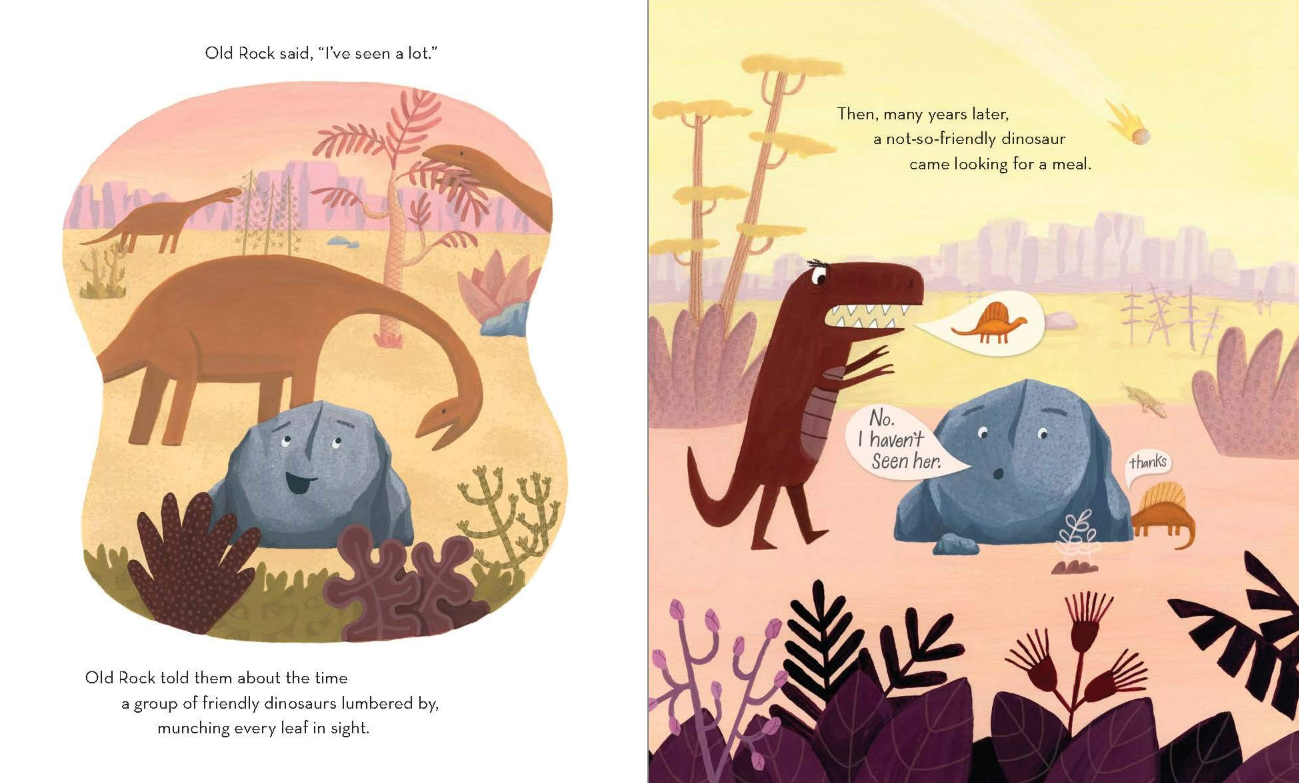
Fabulous tales of adventurous travel, exotic scenery, entertaining neighbors, and more from Old Rock’s life prove it has been anything but boring.

Great storytellers come in all shapes, sizes, and ages, and Old Rock’s stories are sure to inspire questions that lead to wonderful conversations about the past and the natural world.

About the Author: Deb Pilutti feels lucky to have a job where reading, playing with toys and watching cartoons is considered “research”. She lives in Ann Arbor, Michigan with her husband, and nervous border collie. Deb has worked as a graphic designer and illustrator, creating toys and products for children and is the author and illustrator of  OLD ROCK (IS NOT BORING!) Putnam, THE SECRETS OF NINJA SCHOOL (Ottaviano/Macmillan), TEN RULES OF BEING A SUPERHERO (Ottaviano/Macmillan), and BEAR AND SQUIRREL ARE FRIENDS (Simon & Schuster).

Praise: 

“A witty, engaging exploration of deep time . . . This picture book rocks!” –Kirkus, starred review

“This is a wonderful story about mistaken assumptions, and taking the time to listen to a variety of perspectives and experiences. Part scientific history, part storytelling, Old Rock is content with his lot in life, and Old Rock is not boring! This is a brilliant book for school and public libraries and one that children will be drawn to.” –School Library Journal, starred review

“Pilutti puts a smile and wide eyes on the rock and places it among an increasingly fascinated animal audience in a set of simply drawn, usually idyllic cartoon scenes. ‘They are not bored,’ she concludes, nor will younger readers and listeners be once they realize that every rock they see has a similar story to tell.” –Booklist

Review: This book is not boring! I just adore Old Rock and how he puts things in perspective for the beetle, pine, and hummingbird. There is so much to dig into in this book, and it is a fun narrative also. I’m also a big fan of Pilutti’s illustration styles. It is such a fun mix of cartoon and realistic with each character’s personalities shining through the illustrations.

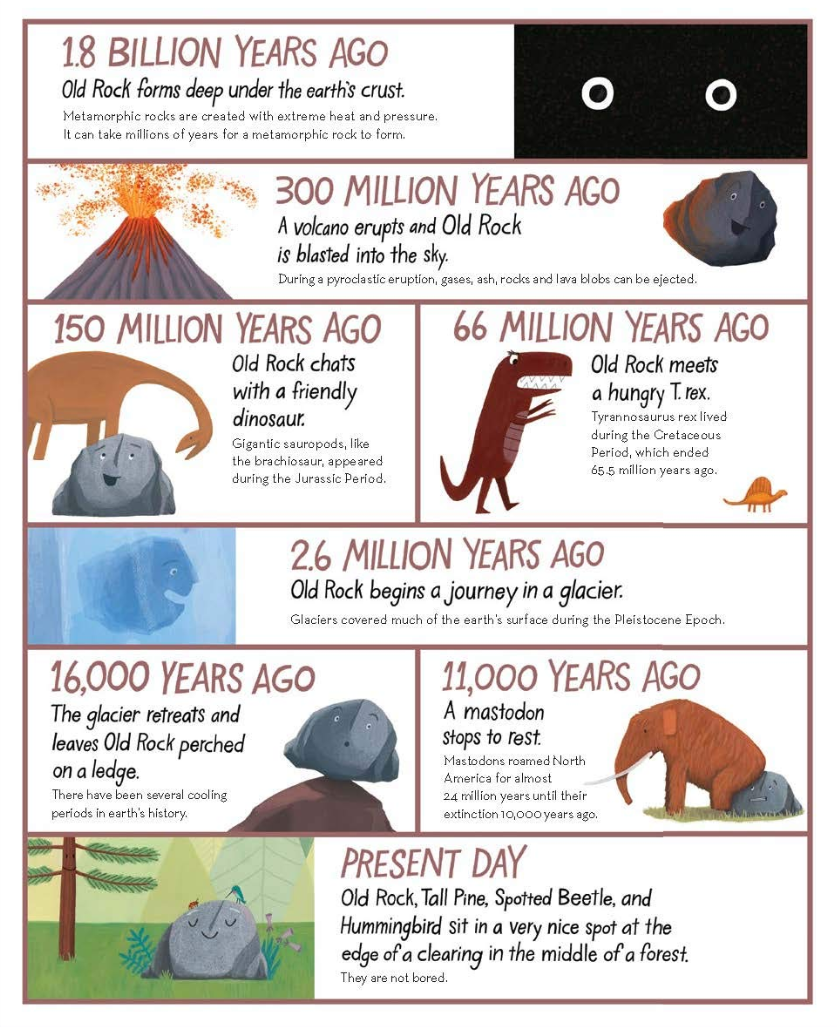
Teachers’ Tools for Navigation: On top of the wonderful storytelling aspects of the story that could be used for a mentor text to initially introduce a personal narrative, looking at points of view of a situation, and seeing how illustrations support a text and add to the story, the book also shares the science behind rock’s stories which is a great introduction to basic geology and some animal science. Yay STEAM! Below is the image in the back matter:

Discussion Questions: 

  • Why does everyone think that being a rock is boring?
  • What has rock done that is definitely not boring?
  • How old is rock?
  • What other things would rock have seen in the timeline given for him?
  • What are some things that rock did that show his character traits?
  • Which of the characters would you want to be friends with? Why?
  • How are the other characters different than Old Rock?

Flagged Passages: 

Book Trailer: 


Read This If You Love: Anthropomorphic picture books, Tiny T. Rex and the Impossible Hug by Jonathan Stutzman, You Don’t Want a Unicorn by Ame Dyckman, Fly! by Mark Teague, Jasper & Ollie by Alex Willan

Recommended For: 

classroomlibrarybuttonsmall

Signature

Dream Big, Little Scientists: A Bedtime Book by Michelle Schaub, Illustrated by Alice Potter

Share

Dream Big, Little Scientists: A Bedtime Book
Author: Michelle Schaub
Illustrator: Alice Potter
Published: February 18, 2020 by Charlesbridge

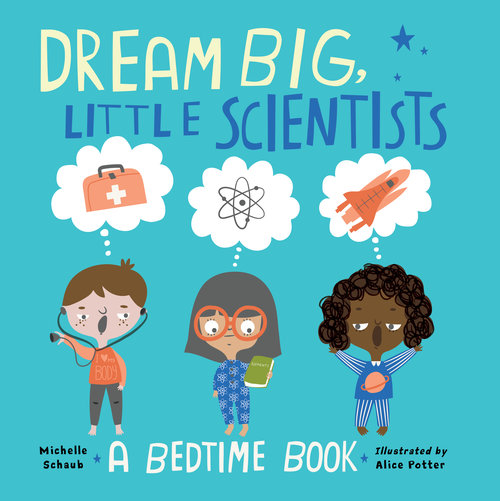
Summary: Twelve kids. A dozen bedtimes. Endless sweet ways to say goodnight with science! Spark curiosity and exploration with this innovative bedtime story for budding scientists that introduces eleven branches of science. From astronomy to physics to chemistry to geology, this STEM picture book will help kids get excited to explore. Includes further information about each branch of science.

Praise:

About the Author: Michelle Schaub is an author, a veteran teacher, and a poetry-in-the-classroom advocate. Her books include Finding Treasure: A Collection of Collections and Fresh-Picked Poetry: A Day at the Farmers’ Market; her poems have appeared in And the Crowd Goes Wild, A Global Gathering of Sports Poems, and The Poetry Anthology for Celebrations. To download free activity kits and curriculum guides for her books, visit her website: http://www.michelleschaub.com/; Twitter: @Schaubwrites; Instagram: @schaubwrites

About the Illustrator: Alice Potter is a London-based illustrator and children’s-wear print designer. Dream Big, Little Scientists is her first picture book. www.alicepotter.co.uk

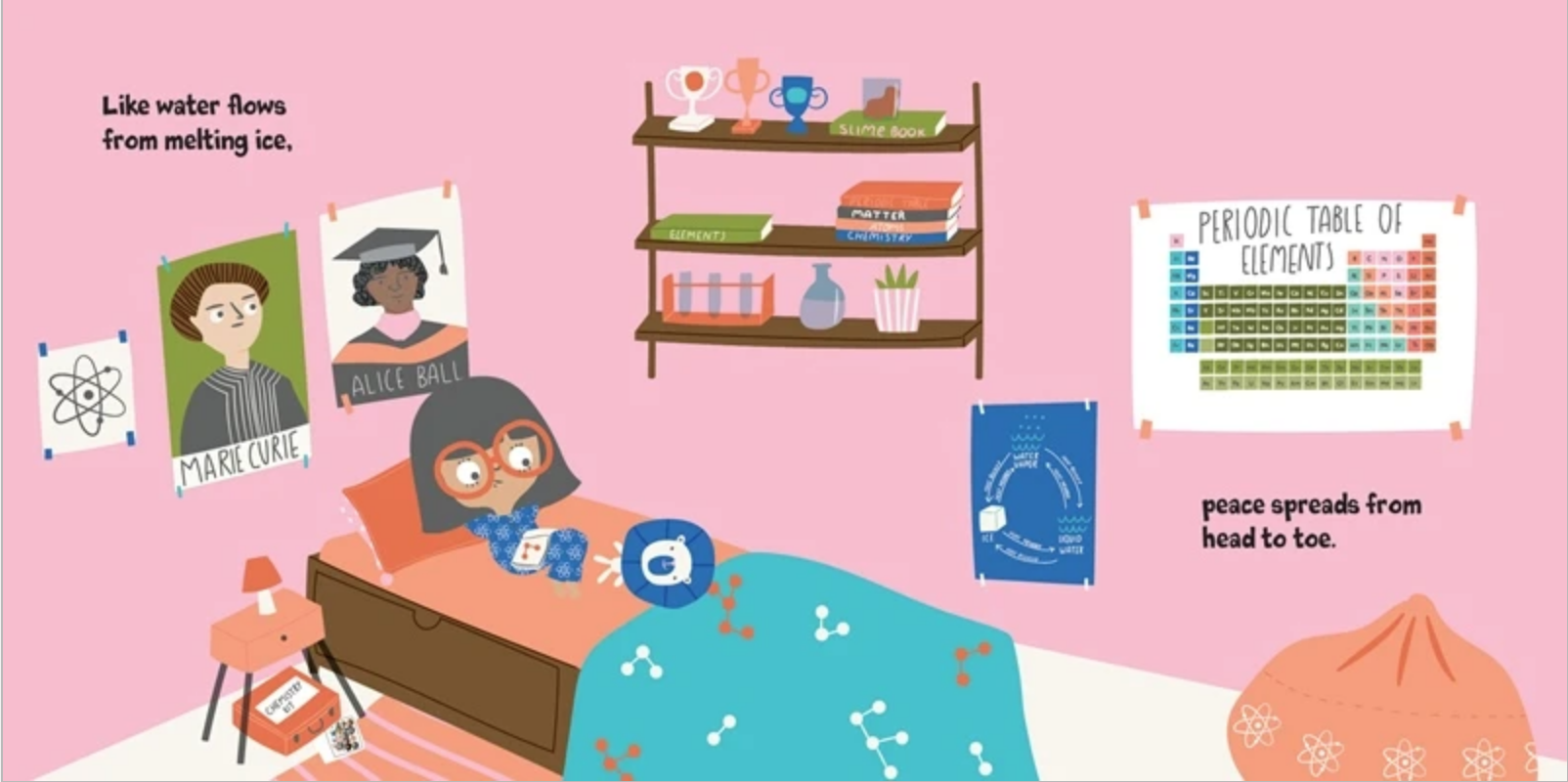
Ricki’s ReviewThis book is very cleverly conceived. The spreads depict the different branches of science, and I had a lot of fun (as an adult) playing detective and examining the different bedrooms. My sons adored the book and asked questions about the different scientists and posters on the walls of the bedroom. We googled and learned about new scientists! A significant amount of thought and care went into this book, and it was not lost on me. I’ve read this several times now with my sons, and each time, I find something new that I enjoy. This book will make readers really excited to learn about science. Further, the language is beautiful, and it is very fun to read aloud. I have two science-y friends who are having a baby soon. You bet that I’ll be buying this book for them!

Kellee’s Review: I love when a traditional book is turned upside down and turned into something new and fresh, and that is exactly what Michelle Schaub and Alice Potter have done. It is a next level bedtime book because while it has such lyrical text that definitely will bring some yawns, it also is a book that will bring lots of curiosity to its readers as each spread unleashes another discussion about a different branch of science. Each page we looked at the posters, decorations, and books to see how they all connect. It was wonderful how the illustrator brought the authors intentions to life!  

Teachers’ Tools for Navigation: Download the EDUCATORS’ GUIDE!

From the author’s note: “Be curious! Look around, explore, and talk about the world where you live . . . just like a scientist! To explore the different branches of science even more, visit: www.sciencekids.co.nz

Visit www.michelleschaub.com/scientists to learn about the scientists on the posters in each kid’s room.”

There are some great assets for this book in addition to learning about each scientist, including a book trailer. Here’s the link to the page on her site: https://www.michelleschaub.com/dream-big.

Additionally, doing a visual analysis of each spread as a connection to science would be such an interesting activity!

Discussion Questions: 

  • Which page excites you the most? Which branch of science is depicted on that page? Why did the page interest you?
  • Which scientist intrigues you? Why?
  • How did the author creatively organize this book? How does this increase your interest, as a reader?
  • How does each room reflect the branch of science the child likes?

We Flagged: 

Read This If You Love: Books about Science; Bedtime Books

Recommended For: 

and

**Thank you to Barbara at Blue Slip Media for providing a copies for review**

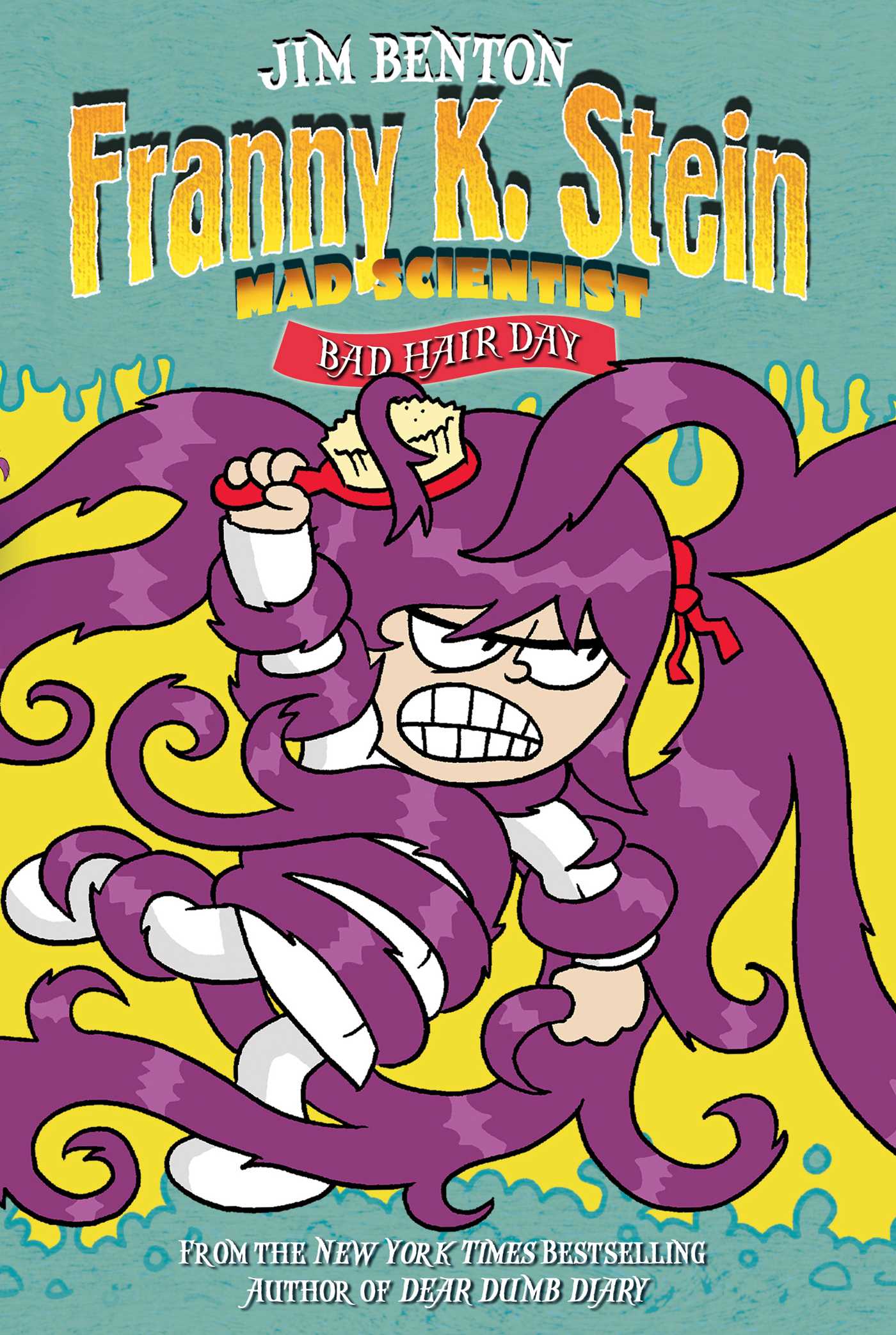
Franny K. Stein, Mad Scientist: Bad Hair Day by Jim Benton

Share

Bad Hair Day
Author and Illustrator: Jim Benton
Published July 23rd, 2019 by Simon Schuster Books for Young Readers

Summary: Franny K. Stein isn’t a fan of glamour. She doesn’t style her hair, the thought of wearing makeup makes her want to gag, and she couldn’t care less about wearing dressy dresses when she’d much prefer her lab coat.

But sometimes Franny wonders if her mom wishes she were different. Which gives Franny an idea…for an experiment! What if she can turn the beauty products her mom loves into something more exciting?

Every experiment has its experimental error, and when Franny’s hair takes on a life of its own, Franny must save the day (and her hair).

About the Author: Jim Benton is the New York Times bestselling writer of the Dear Dumb Diary series and a cartoonist whose unique brand of humor has been seen on toys, television, T-shirts, greeting cards, and even underwear. Franny K. Stein is the first character he’s created especially for young children. A husband and father of two, he lives in Michigan, where he works in a studio that really and truly does have creepy stuff in it.

Review: Franny K. Stein is not worried about all those other things other people worry about–she just wants to do experiments and other mad scientists things. And you know what, I love that!!! And I definitely saw what Benton was trying to do with this book when it comes to glamour and such, but I, as a parent, just didn’t like to see Franny’s mom put a bit of passive aggressive pressure on Franny to be anything other than her amazing self. I mean, she makes creatures and fights them–what does a little messy hair matter?! But in the end, Franny’s mom and the reader are reminded of this, so once again Franny can go on being herself.

Teachers’ Tools for Navigation: Simon and Schuster have a wonderful curriculum guide to use with this series: CLICK HERE.

Discussion Questions: 

  • Franny’s mom is supportive of Franny, but she also questions her. How did you feel about how Franny’s mom in this book?
  • I like to describe Franny as awesome, as in I am awe-struck by her. What traits does Franny have that would lead me to describe her this way?
  • Why did Franny’s pig tails act differently than her ponytails?
  • How was Franny’s mom wrong about Igor?
  • Would Franny be successful in her monster fighting without Igor? Why or why not?

Flagged Passages: CHAPTER ONE: FRANNY’S HOUSE

The Stein family lived in the pretty pink house with the lovely purple shutters down at the end of Daffodil Street. Everything about the house was bright and cheery.

But, of course, the outside of a house is never as interesting as what’s going on inside it.

And inside this house, behind the little round upstairs window, something interesting was always going on, because this was the bedroom and laboratory of Franny K. Stein, Mad Scientist.

Last week, for example, Franny developed a giant sea horse, and the day before that she worked on a way to fly based on how bats flap their wings.

Those projects became pretty expensive, so Franny needed to get a piggy bank to save her money in.

Of course, being a mad scientist, she created her piggy bank from a real live pig, which meant that she had to learn all she could about pigs.

This got pretty messy, but she didn’t mind getting messy, because that’s just what happens when you’re doing mad science.

Read This If You Love: Dear Dumb Diary series, Frank Einstein series, Zita the Spacegirl series

Recommended For: 

classroomlibrarybuttonsmall

Signature

Teacher Guide for AstroNuts Mission One: The Plant Planet by Jon Scieszka

Share

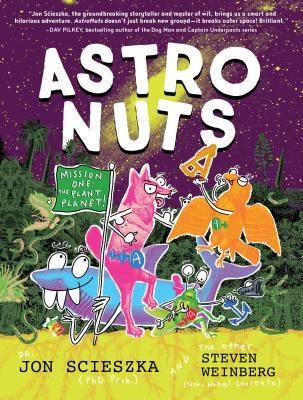
AstroNuts Mission One: The Plant Planet
Author: Jon Scieszka
Illustrator: Steven Weinberg
Published: September 10th, 2019 by Chronicle Books

Summary: AstroWolf, LaserShark, SmartHawk, and StinkBug are animals that have been hybridized to find other planets for humans to live on once we’ve ruined Earth. So off they rocket to the Plant Planet! Will that planet support human life? Or do Plant Planet’s inhabitants have a more sinister plan?

Teachers’ Tools for Navigation and Discussion Questions: 

Please view and enjoy the teachers’ guide I created for AstroNuts Mission One:

You can also access the teaching guide here.

You can learn more about AstroNuts on its webpage.

Recommended For: 

readaloudbuttonsmall classroomlibrarybuttonsmall litcirclesbuttonsmall closereadinganalysisbuttonsmall

Kellee Signature

Educators’ Guide for The Trouble with Shooting Stars by Meg Cannistra

Share

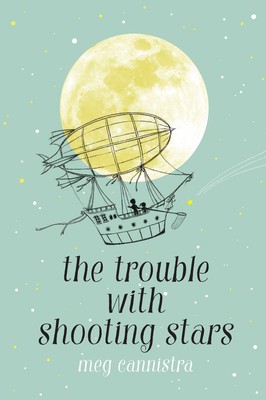
The Trouble with Shooting Stars
Author: Meg Cannistra
Published: August 20th, 2019 by Simon & Schuster for Young Readers

Summary: Twelve-year-old Luna loves the nighttime more than anything else. It’s when no one gives her “that look” about the half mask she has to wear while healing from a disfiguring car accident. It’s also the perfect time to sit outside and draw what she sees. Like the boy and girl from the new family next door…zipping out of the window in a zeppelin and up to the stars.

At first she thinks she’s dreaming. But one night the siblings catch her watching. Now Luna spends her nights on adventures with them, as they clean full moons, arrange constellations, and catch jars of stardust. She even gets to make a wish on a shooting star they catch.

But Luna learns that no wish is strong enough to erase the past — as much as she may hope to.

Teachers’ Tools for Navigation and Discussion Questions: 

Please view and enjoy the teachers’ guide I created for The Trouble with Shooting Stars:

You can also access the teaching guide here.

You can learn more about The Trouble with Shooting Stars on Meg Cannistra’s Cake Literary page.

Recommended For: 

readaloudbuttonsmall classroomlibrarybuttonsmall litcirclesbuttonsmall closereadinganalysisbuttonsmall

Kellee Signature