PlayShifu’s Plugo Letters, Count, and Link

Share

I am extremely excited to share this virtual-hands on learning system with you because my kids love it. Plugo offers a variety of learning options, and I elected to get their Letters, Count, and Link package. I chose the Letters kit by itself, and it came with a very high quality gameboard and alphabet kit (a lot of letters and a display that allows the app to read the letters). I also chose to get the Count and Link dual package, which also came with the gameboard, a three-spiked device named Spike, a lot of numbers that fit on spike, and magnetic patterned tiles for building. All of the materials are very well-made, and the app is very easy to download and follow (my three-year-old, for instance, figured it out immediately).

One thing I love about this system as opposed to other similar systems is that it adapts to the child’s age level. Each of my children have a profile with their grade level noted, and the app saves their progress.

I also like how well-made the product is. The magnets are strong, and the system feels very sturdy. My three-year-old has dropped several of the activity kits a few times, and they are still doing well.

Below, I share more details about each of the systems, all of which I recommend highly. As a family who is home for the summer (we’ve canceled all summer camps), this is what we’ve needed. The kids used to beg me for television, which we only use as a real treat, but now they beg me to play Plugo. This is much, much more exciting than their workbooks, and they love to engage in the varied games that each of the system offers.

Plugo Letters

An alphabet kit that goes beyond word-building. Develop grammar concepts like verbs, vowels, synonyms & more. Learn to spell & use new words through story-based games.

  • 5 story-based games in the app
  • 250+ challenges and puzzles
  • Age-adaptive challenges, PreK to Grade 5
  • Skills: language development, comprehension, storytelling

I love how my kids use this system and are reading and developing their language without even knowing it. I can hear them whispering the words as they sound them out. I see them trying out different vowels and experimenting with words.
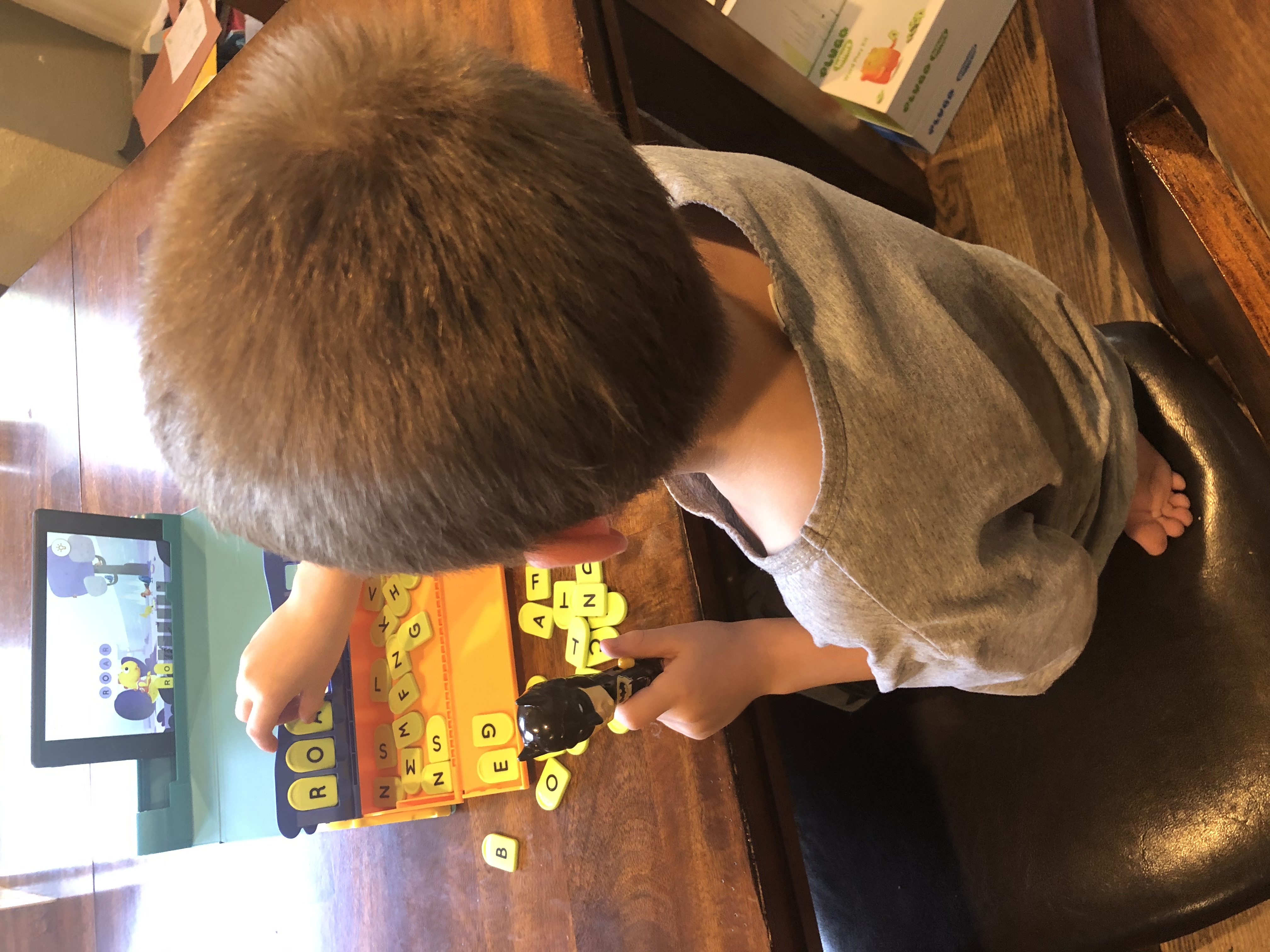
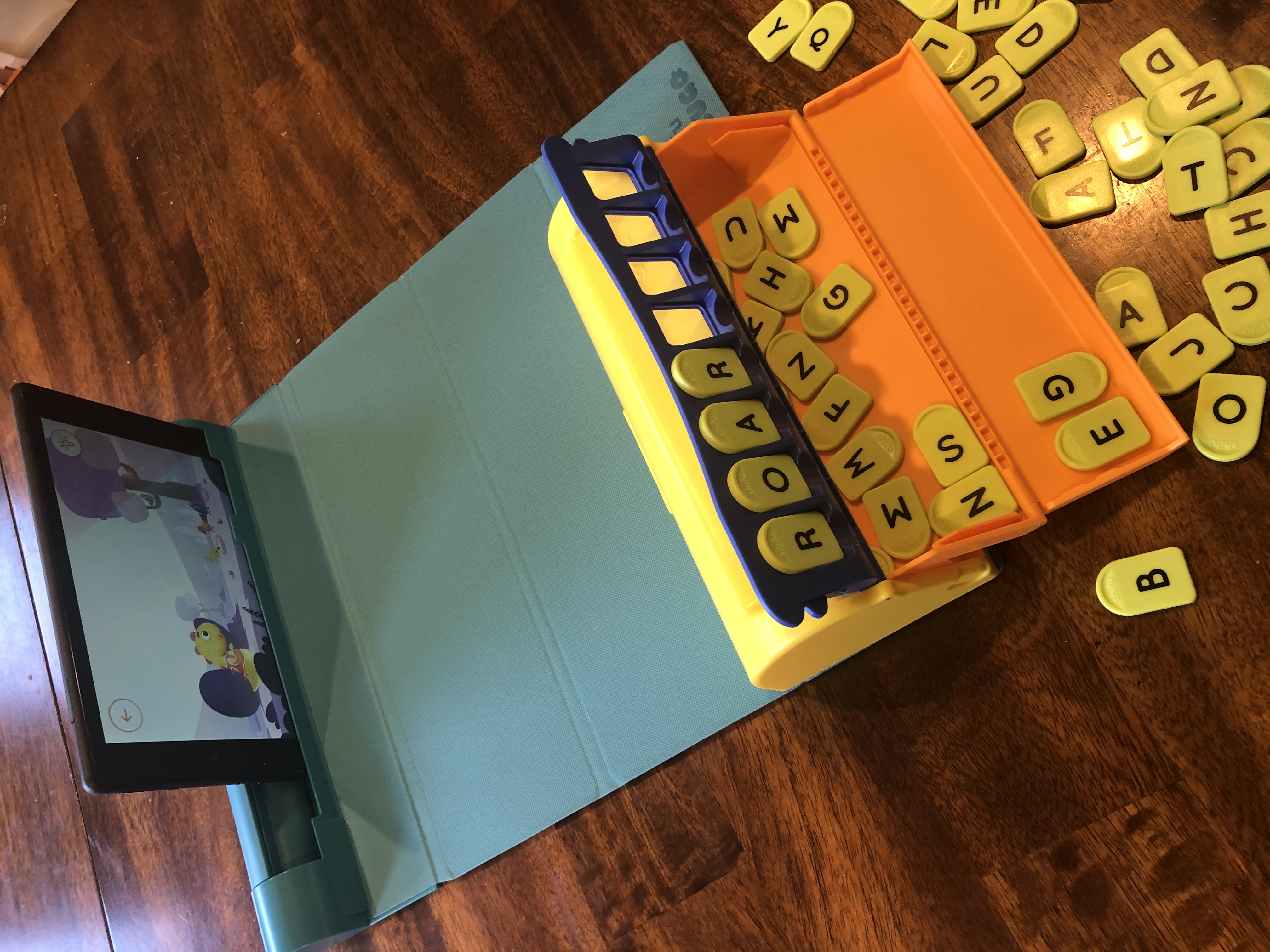
Here, my 6-year-old spells out words along his pathway.
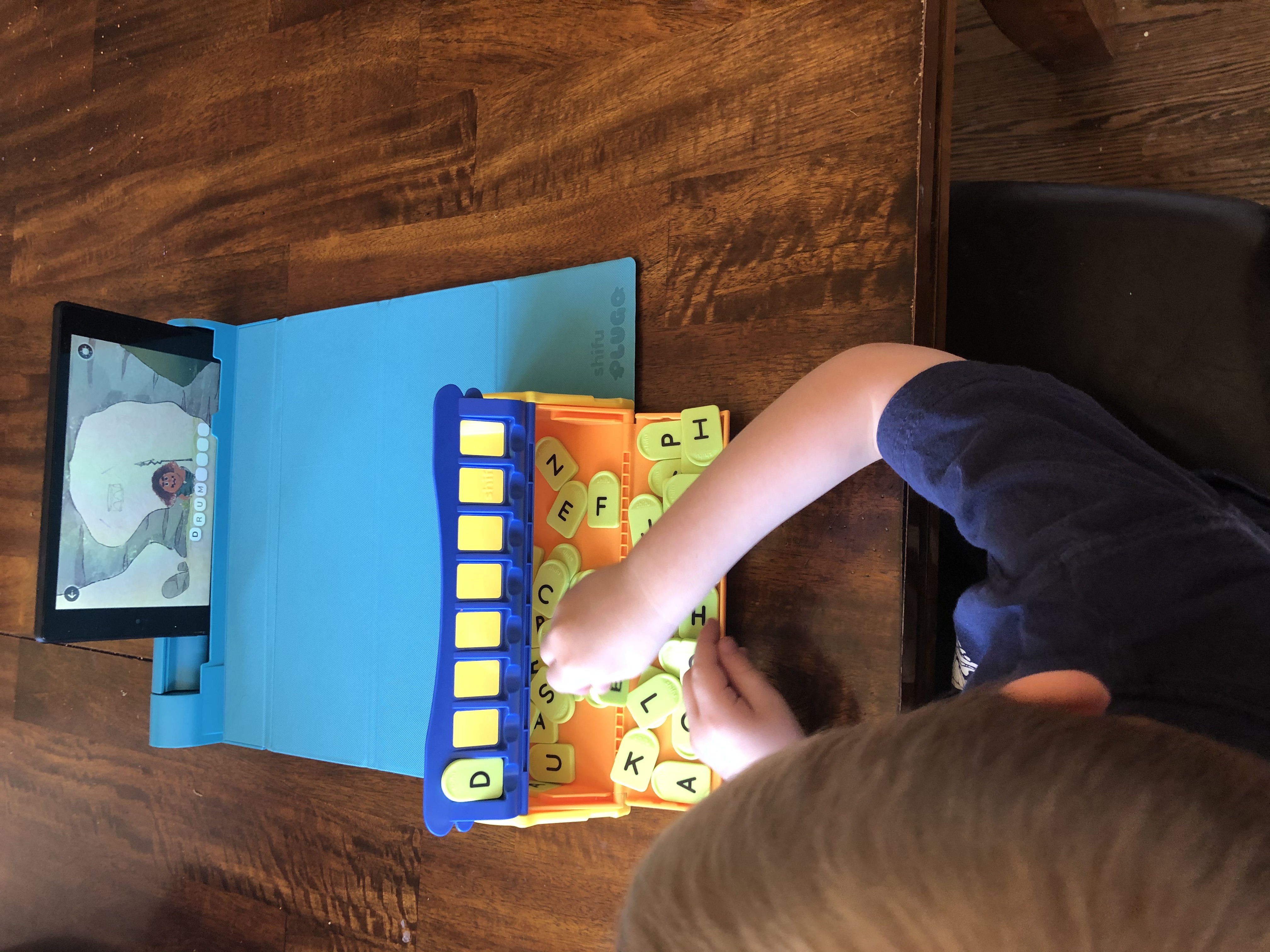
I thought my 3-year-old would be too young for the game, but sure enough, he played for almost an hour (when I cut him off).

The games are fun, and it goes all the way up to fifth grade. This is going to be a learning system that grows with our kids, and I am glad that they are learning letters and words through story. Rather than a video game, the app is more of a narrative that kids follow and stop at selected points to interact with the story using the letter tiles. If they get tired of a story, there are other games within the app to play!

Plugo Count

Traditional math made fun with an innovative hands-on approach. Plugo Count reinvents math with engaging stories that help kids understand and fall in love with numbers.

  • 5 story-based games in the app
  • 250+ challenges and puzzles
  • Age-adaptive challenges, PreK to Grade 5
  • Skills: math (+ – x /), problem-solving, logical reasoning
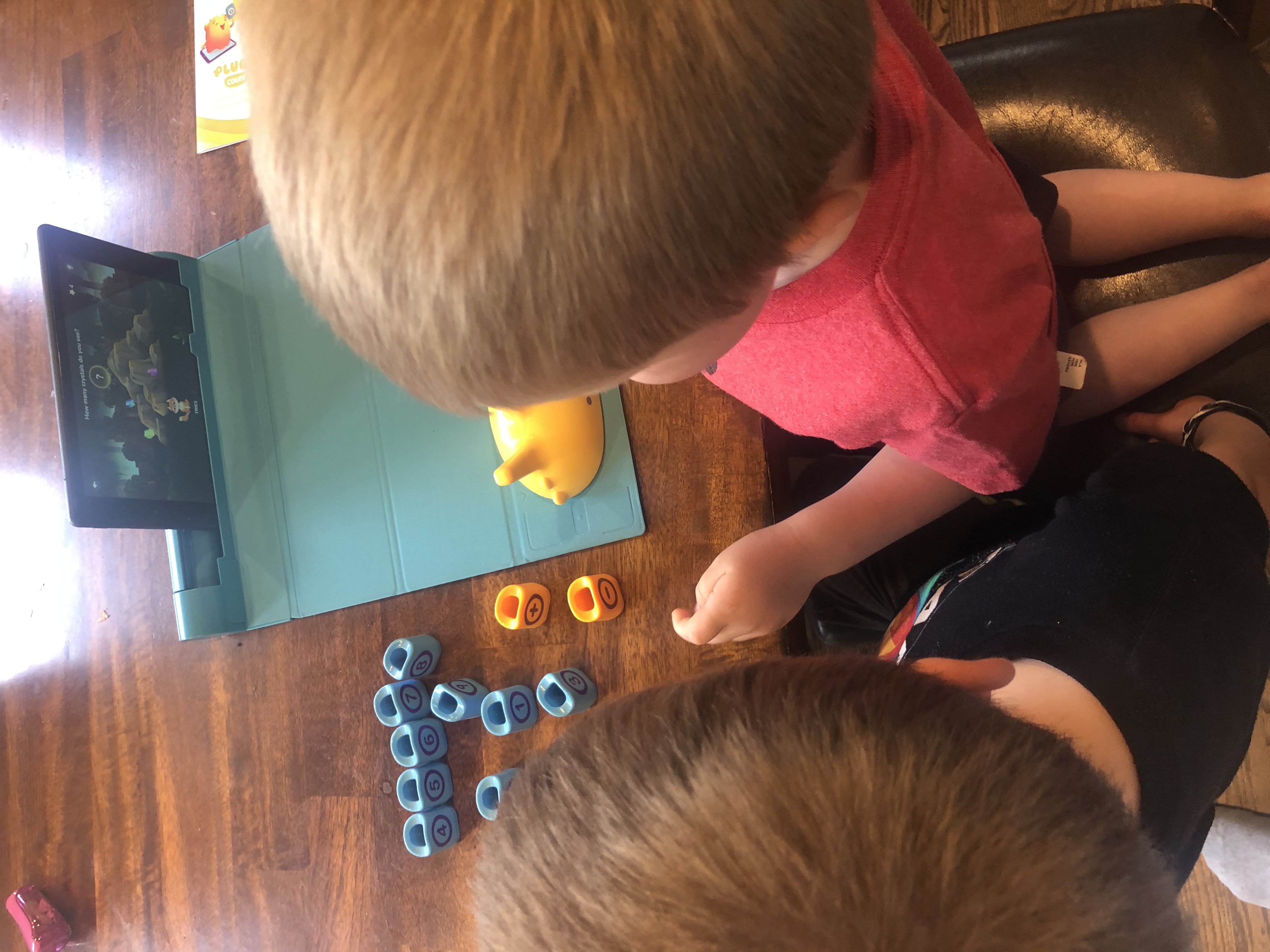
I love, love, love how this system adapts to the age level of the child, too. My 6-year-old loved playing the games and using operators like addition and subtraction. The repetition of the addition phrases is helping strengthen his memory of common equations. He goes through the story and learns math through authentic examples. I am looking forward to him being able to try out the multiplication and division operators in the future.

When my 3-year-old asked to play Count, I hesitated because I didn’t think he’d be able to play it. Imagine my relief when he started playing and the game asked him to count items in the story and complete the missing number (3, 4, 5, ___). I think about all of the worksheets within workbooks that ask kids to do these same skills, but with Count, he is able to count images that go along with a story. This feels more authentic and exciting!

Plugo Link

Classic building blocks meet modern digital play with Plugo Link! Build and balance the magnetic blocks in real world to solve exciting engineering puzzles on the screen.

  • 5 story-based games in the app
  • 250+ challenges and puzzles
  • Age-adaptive challenges, PreK to Grade 5
  • Skills: engineering, analytical thinking, creative design
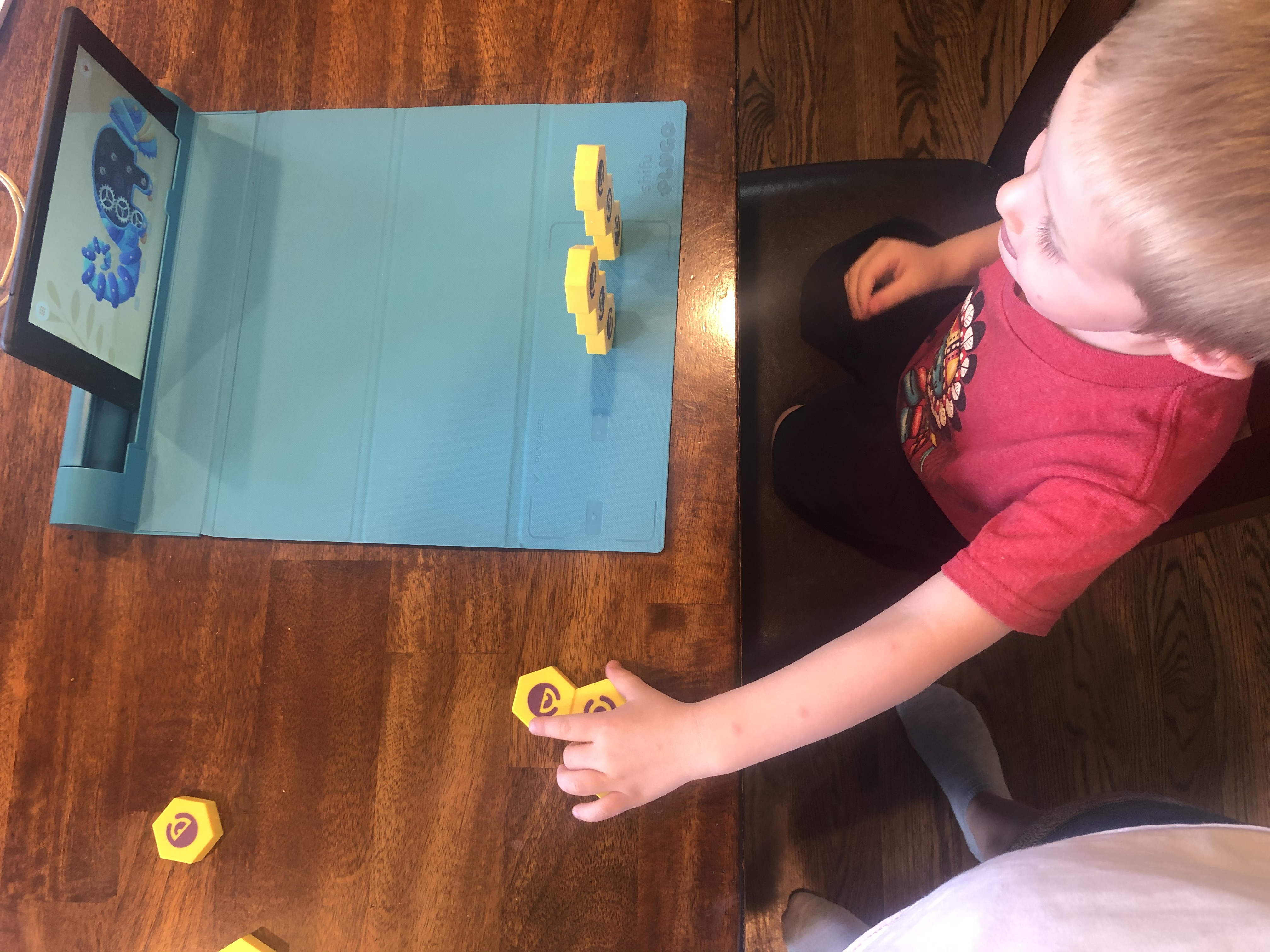
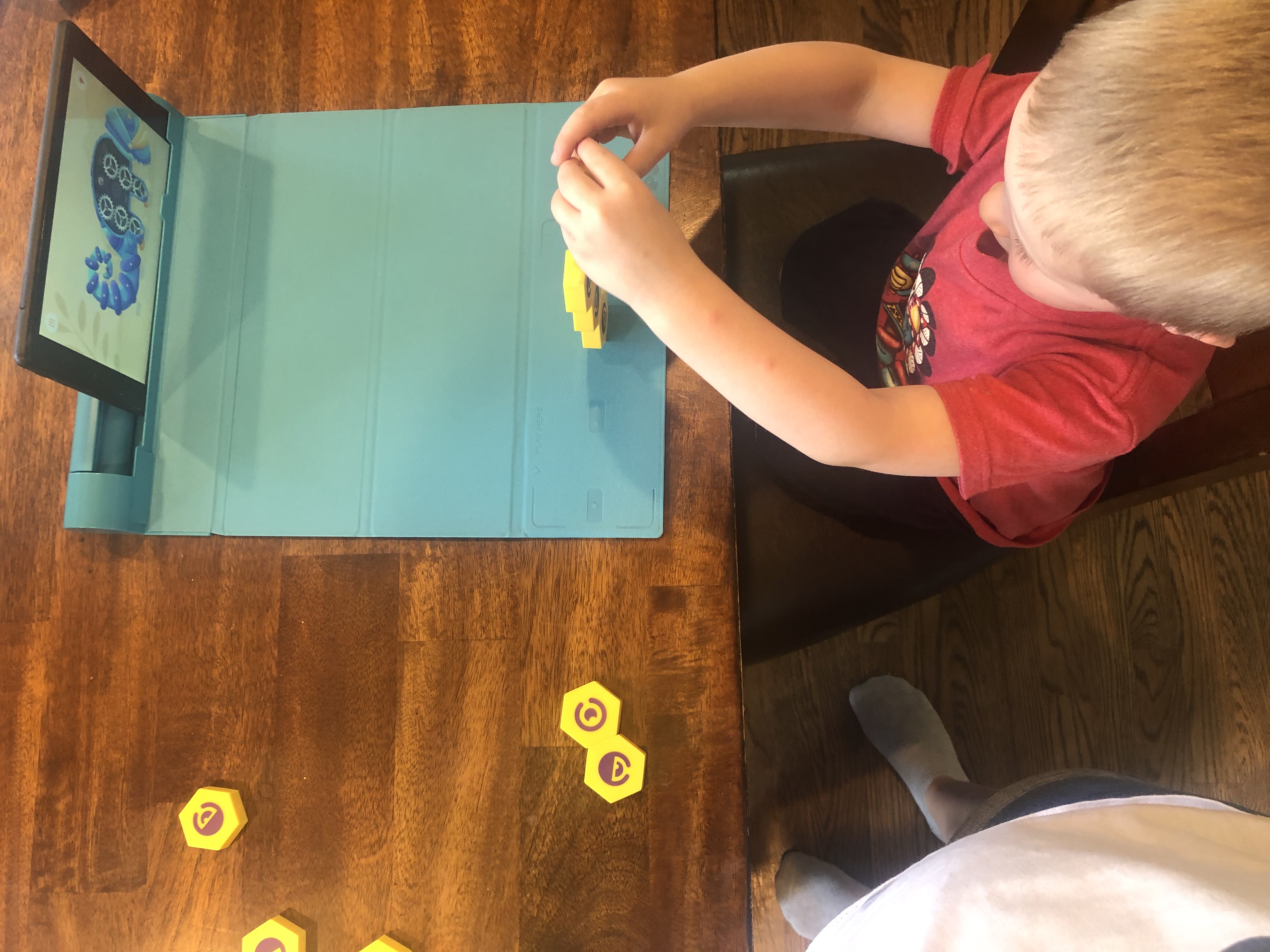
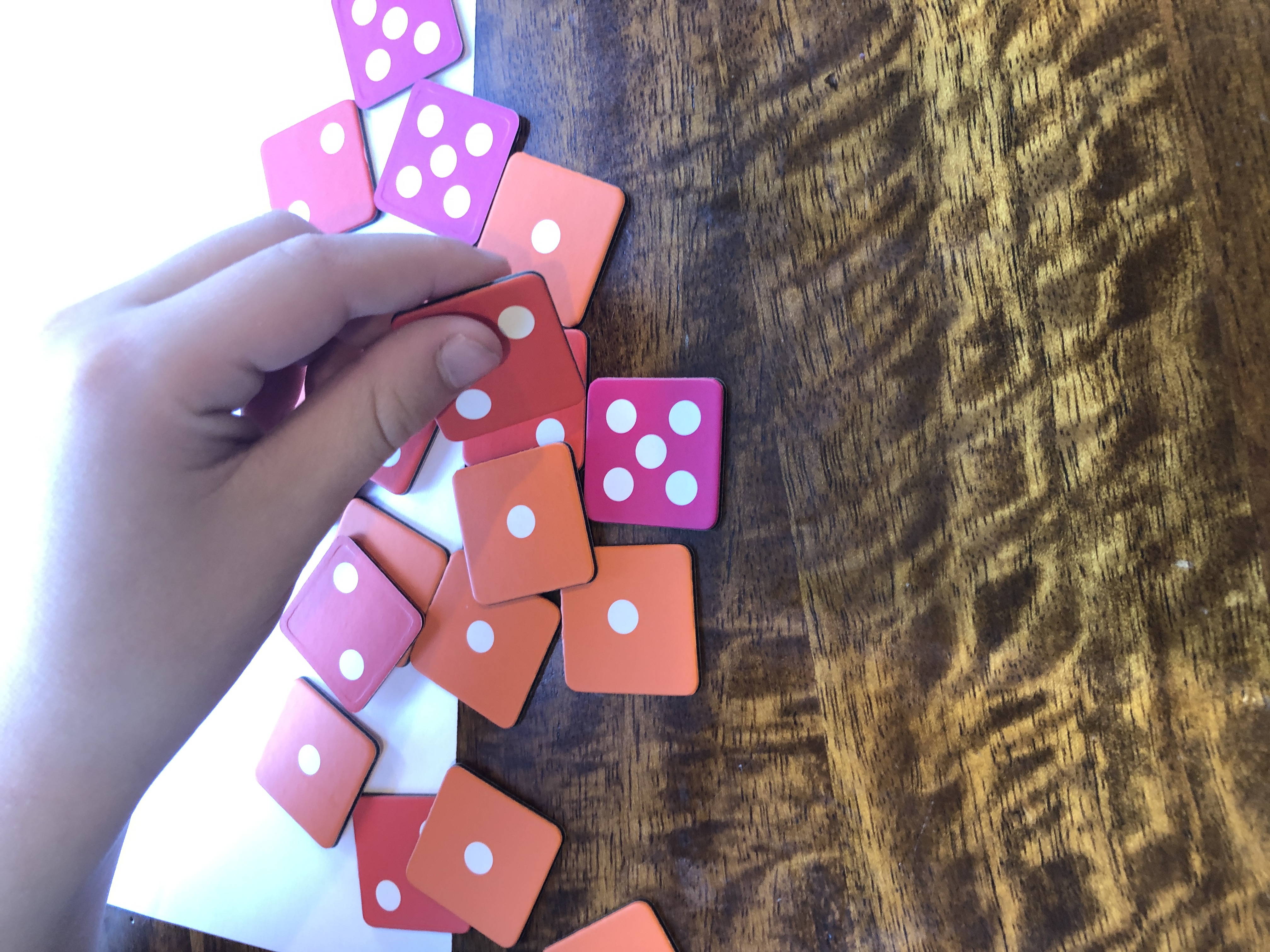
My kids are Lego lovers. They could sit at the table for hours with a new Lego kit. So it comes as no surprise that they are obsessed with Link. In the image above, you see my 3-year-old linking up gears to complete an animal. In another game in the app, for instance, He is figuring out how to build pipes to prevent water from flowing out. Older kids can play a game like a word search to connect letters to make words with the patterned tiles. The kids absolutely love Link and enjoy all of the different building games.

Among Letters, Count, and Link, do I have a favorite? No. All three feel very educational and offer something different that is valuable for a child. It would be like asking me if I wanted my kids to attend math, reading, or engineering class. We’ve had a lot of fun with all three of the systems, and we recommend them all. For parents who are looking for more learning options and for parents who are looking to engage kids with hands-on learning, Plugo offers a fun and exciting option that kids will love.

From a teacher perspective, these systems would be really great options for learning stations and fast finishers. I would be really, really excited to see them in my kids’ classrooms because they offer a kinesthetic approach to learning.

**Thank you to PlayShifu for providing Letters and Count for Review!**
Book Reader Animal Kingdom from Best Learning

Share

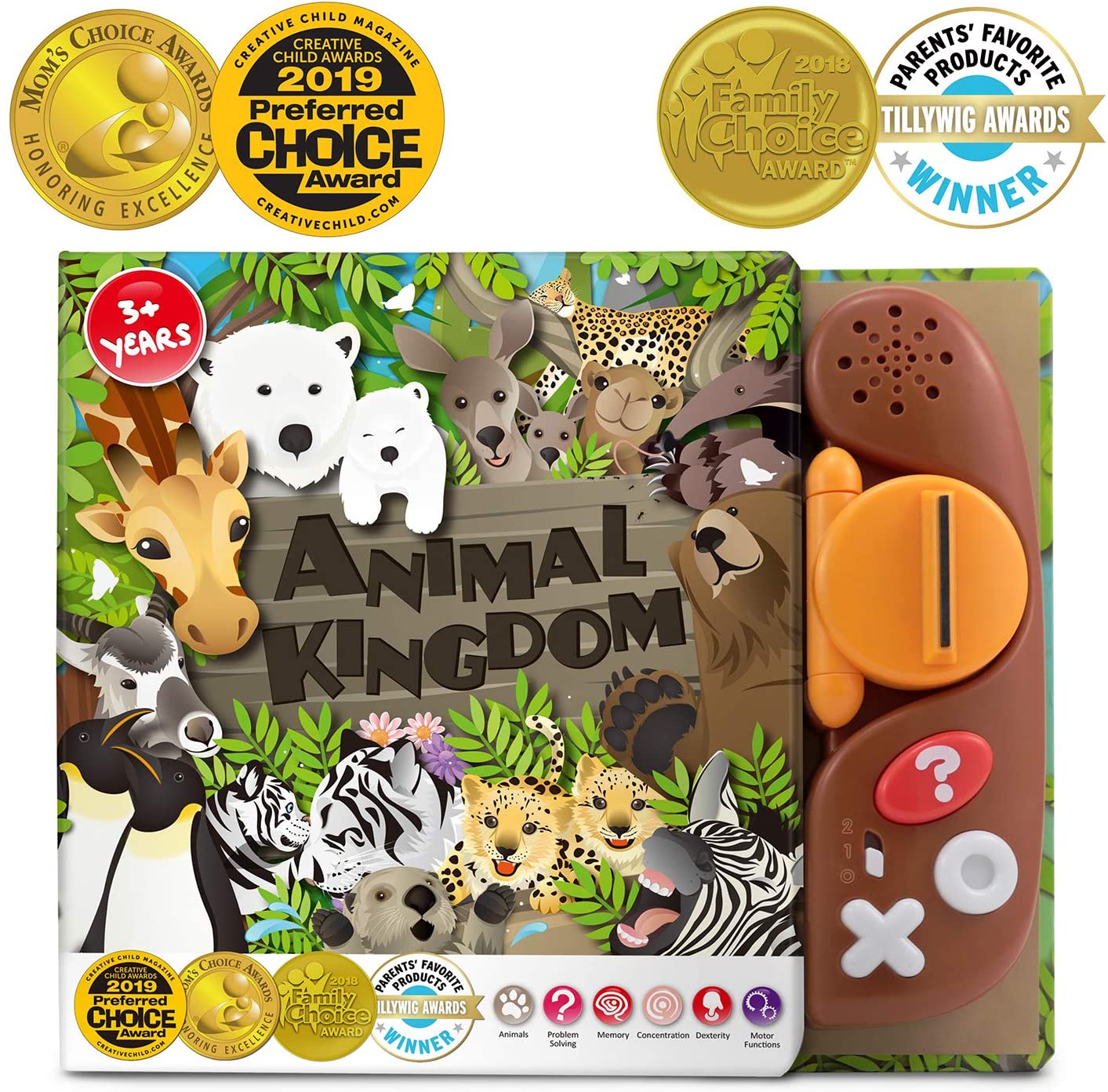
Book Reader Animal Kingdom is an interactive book reader for children to learn about 12 animals through 27 book pages about their appearance, behaviors, habitats and much more! Filled with playful melodies, friendly voices, and interesting sounds of animals and nature! Also comes with Quiz mode for those up for a challenge to keep them enthusiastic and learning at the same time!

  • Family Choice & Tillywig Parents’ Favorite Products Award Winner 2018! An interactive book reader for children to teach 12 animals about their appearance, behaviors, habitats and much more!
  • Simply press the paw down against the page as it reads aloud the contents.
  • Comes with a true and false quiz mode for those up for a challenge to keep them enthusiastic and learning at the same time.
  • Skills learned include animals, memory, dexterity, motor functions, concentration and problem solving.
  • Requires 3 AAA batteries (included); intended for preschoolers and early learners of ages 3 years and up.

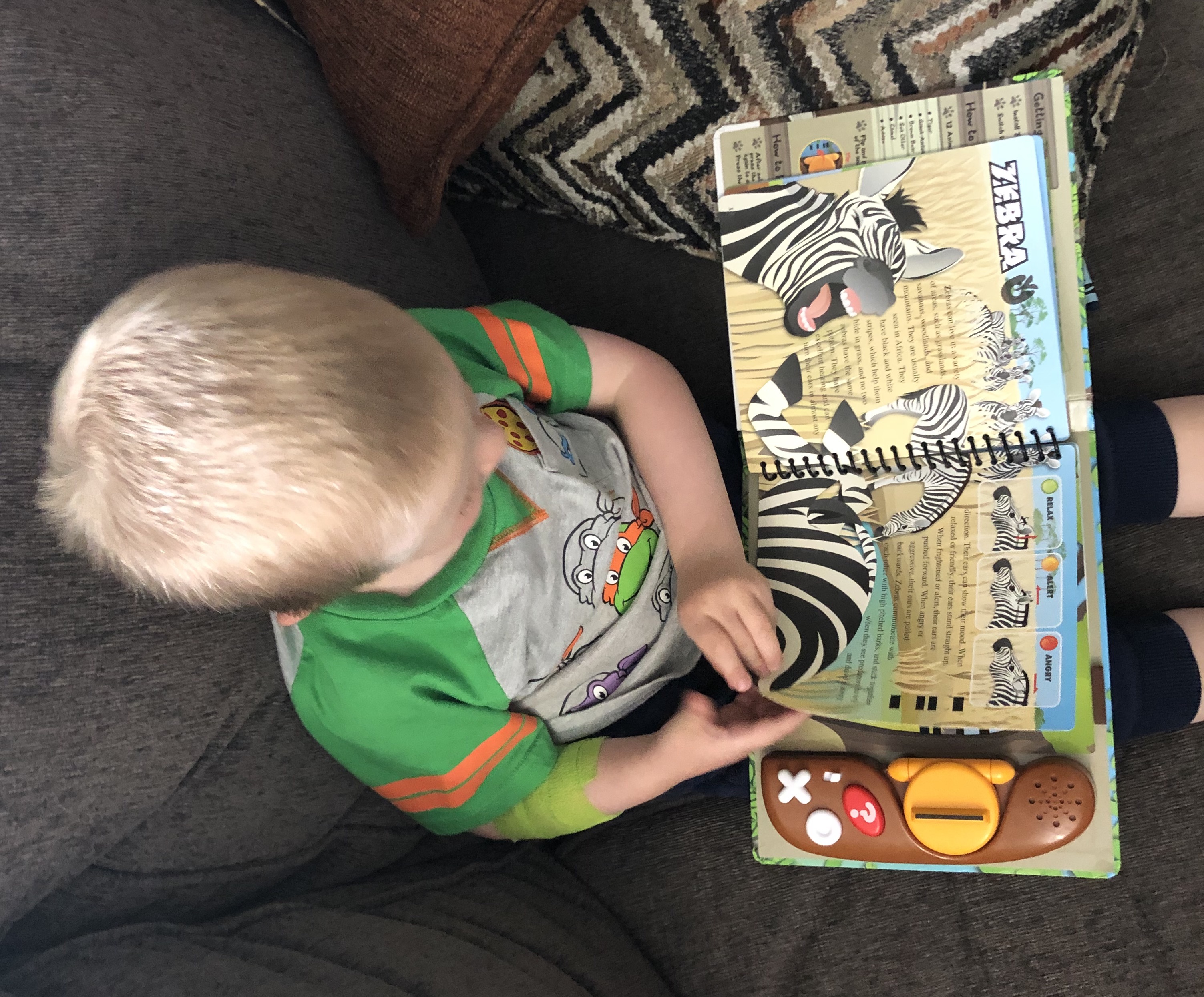
Ricki’s Review: About twenty minutes after my 3-year-old started playing with this book, I messaged Kellee because I had to share about it. I wrote, “The Animal Kingdom book is SO COOL. He’s been playing with it for twenty minutes and hasn’t let his older brother have a turn. It would be so good for classrooms, too. It teaches reading comprehension really well!” Within about five minutes, Kellee had ordered one for her son, too. Although I was supposed to be reviewing this book alone, Kellee is joining me because she loved it just as much.

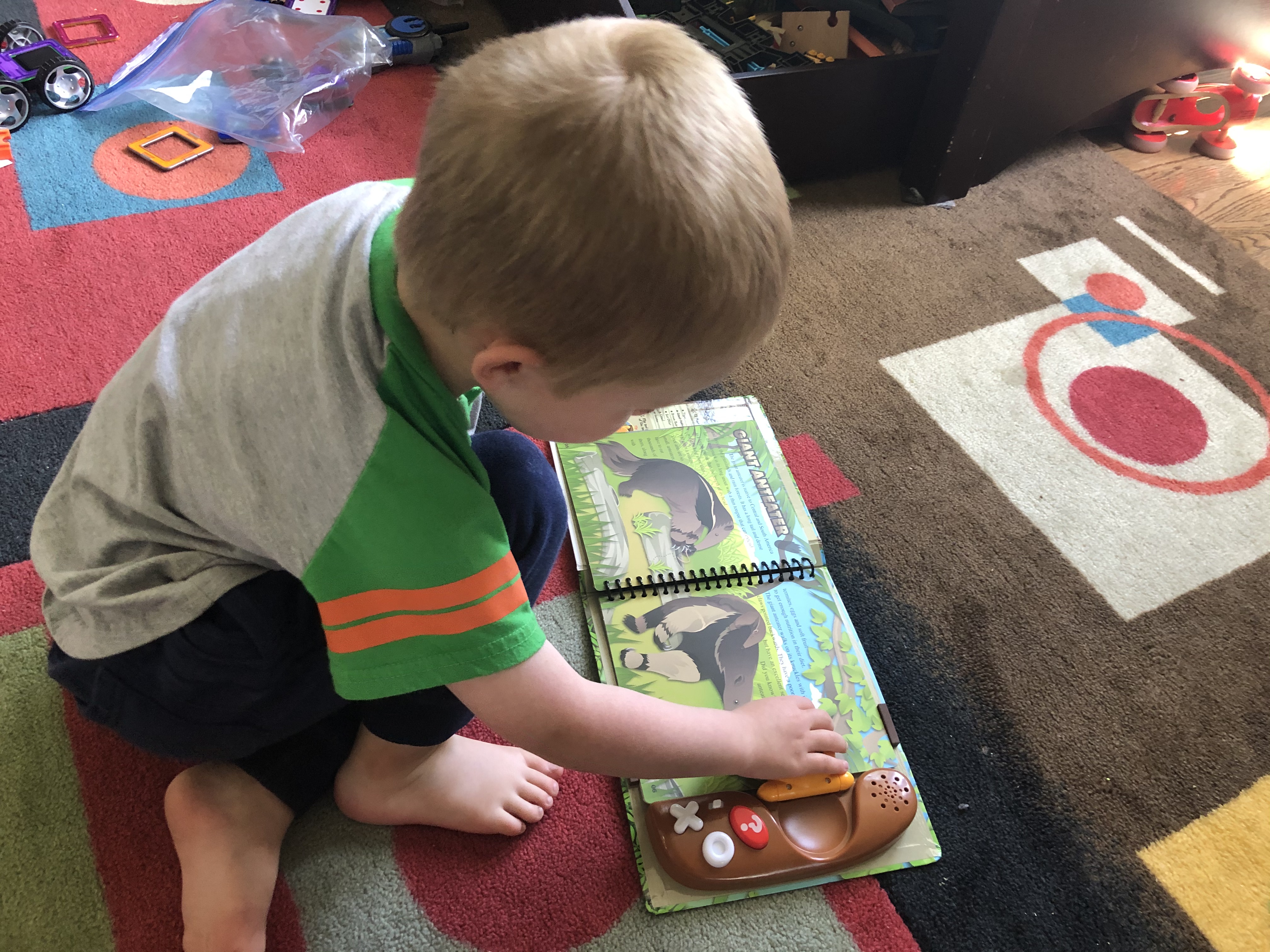
(This is how my 3yo started the book—he immediately placed it on the ground to start reading.)

This is a book (and product) worth sharing about. As you can see in the video above, the pages offer fascinating facts about animals, and the reader is clear and easy to understand. My kids listen intently to the reading, and they are always excited to take the true/false quiz to test their listening skills. Soon, my six-year-old will be able to easily follow along as she reads aloud. My three-year-old typically guesses the answers to the quiz (the concept of true/false is still a bit confusing for him), and my six-year-old is able to practice his listening and reading comprehension skills independently. The both love this product equally, despite their different reading abilities. Even my one-year-old gets a kick out of pushing down the reader to get her talking!

(20 minutes later…)

(I kid you not, 20 minutes after that…)

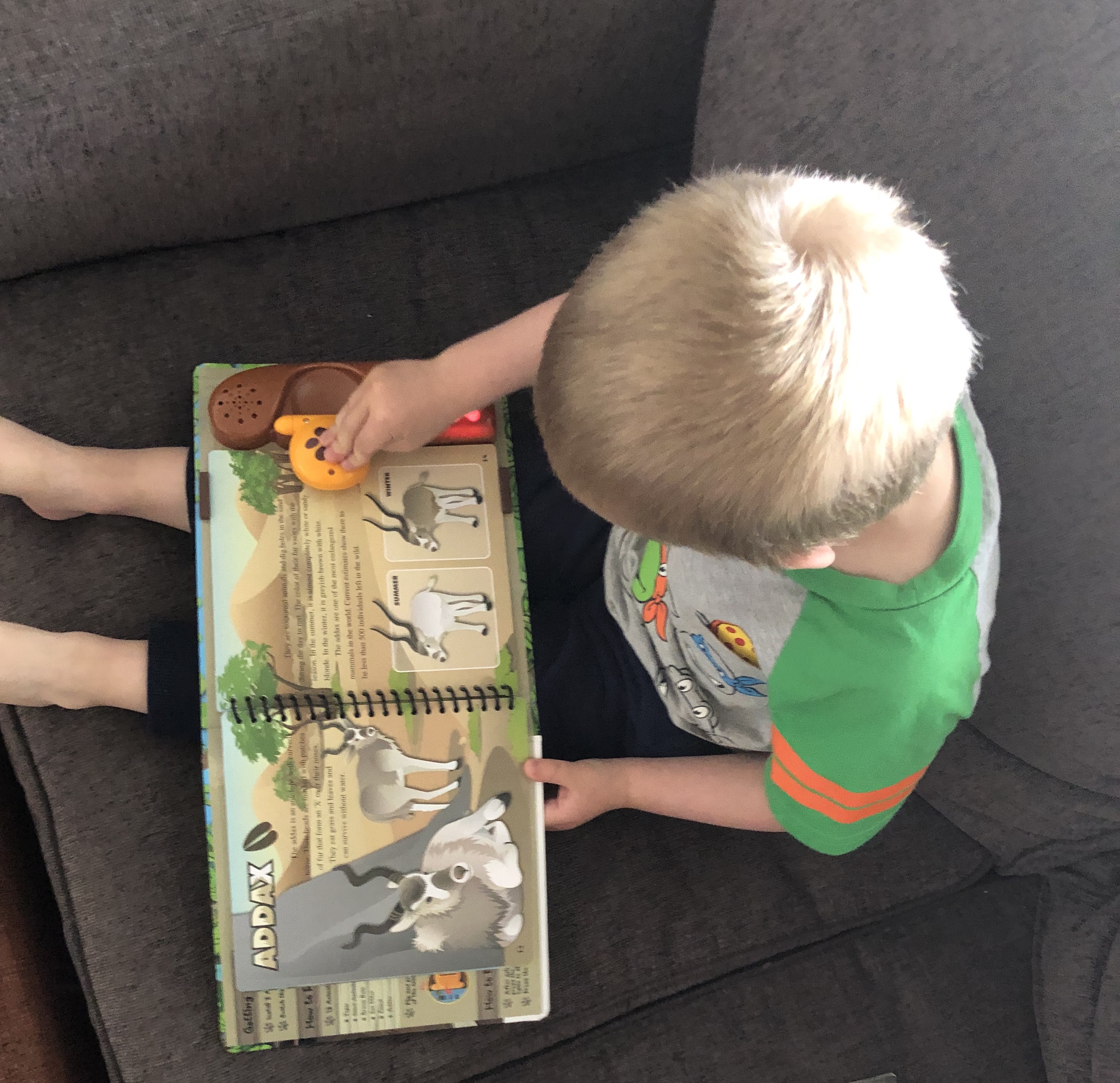
My three-year-old spent almost an hour with this book and even moved to a comfier spot. It is a favorite in our toy room (they consider it to be a toy!). We’ll be gifting this book to friends. (And I plan to write an email begging Best Learning to produce more of these books.)

Kellee’s Review: Like Ricki said, she shared with me how informative and engaging this book was, so I immediately jumped on and bought one for Trent. Trent adores animals but is more interested in watching documentaries and shows about them than reading about them (he is a fiction loving reader), but this book defies his normal interests, and he loves learning everything he can about each of the animals in the book. He’ll re-listen to pages, redo the quiz, and look back at the images over and over. This book is a hit in our household (it is in the living room because he keeps grabbing it to bring out here as a choice activity), and I, like Ricki, look forward to sharing as a gift and hoping for Best Learning to make more readers like this.

Teachers’ Tools for Navigation: ELA teachers focus on reading, writing, speaking, and listening (among the obvious other things like thinking). This is a beautiful example of a book that teaches listening. It would be a great learning tool to place at an independent or group station for reading comprehension. Alternatively, it could also be used for fast finishers. Even adults will find joy in this book.

Additionally, it would be a great mentor text for early education animal research projects. Students can emulate the format of a spread about an aimal of their choice.

andSignature

**Thank you to Best Learning for providing a copy of Animal Kingdom for review!**

Osmo’s Genius Starter Kit: Math, Spelling, Problem Solving, Creativity, and More!

Share

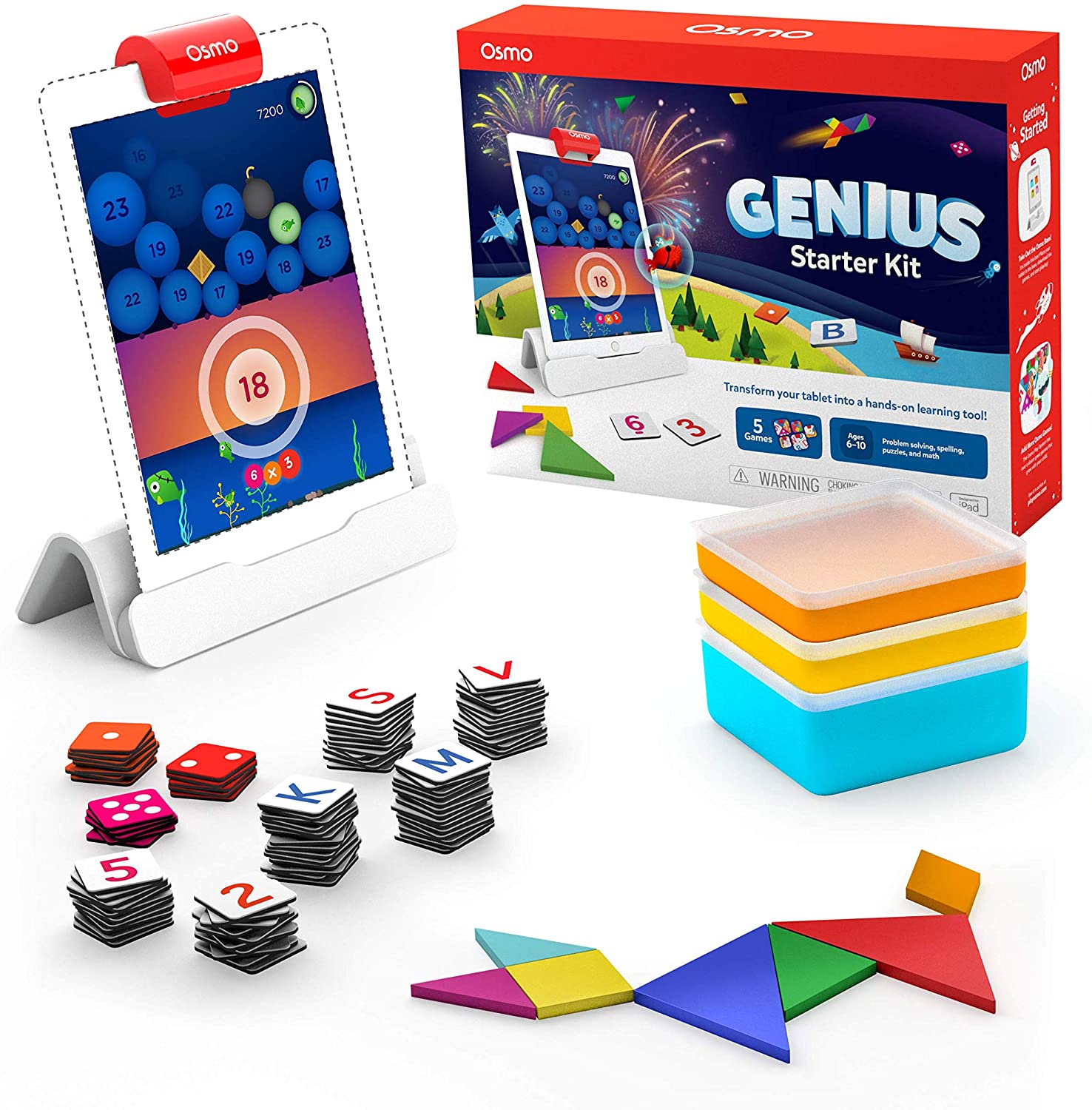
Osmo is an add on for your tablet (iPad or Fire) that brings digital learning to life! The Osmo Genius Starter Kit (from Tangible Play, Inc.) comes with materials for 3 of their different apps and with the Osmo stand and reflector, there are 2 other apps availabe to play without any materials.

Osmo knows kids learn by doing, so each game uses physical action. Whether it’s arranging tangrams, zooming number tiles around, or even freehand drawing, Osmo sees and reacts to every real-live move. Users will receive real-time feedback which lets kids learn through experimentation in a stress-free environment.

To date Osmo has been named one of Time Magazine’s Best Inventions, is a Parents’ Choice award winner, a winner of the prestigious Oppenheim award, and a 2016 finalist for Toy of The Year.

Tangram Demo: https://assets.playosmo.com/videos/games/tangram/tangram-demo-loop.webm

Words Demo: https://assets.playosmo.com/videos/games/words/words-demo-loop.webm

Numbers Demo: https://assets.playosmo.com/videos/games/numbers/numbers-demo-loop.webm

Newton Demo: https://assets.playosmo.com/videos/games/newton/newton-board-demo-loop.webm

Masterpiece Demo: https://assets.playosmo.com/videos/games/masterpiece/masterpiece-demo-loop.webm

Kellee’s Review: What I love about Osmo is that it takes technology and adds kinesthetic aspects to it. It is truly the best of both worlds. This combination of hands-on learning and technology is how we are going to prepare our students for their life journey.

Trent loves Osmo because he thinks everything about it is fun. Even when there is a challenge, he faces it, figures it out, and moves forward because of the engagement he has for the activities. And if it gets too tough, the app is intuitive and helps him out when needed.

It is hard to pick his favorites apps. I think Masterpiece and Newton would be what he picked first to play, but he wouldn’t argue about playing any of them.

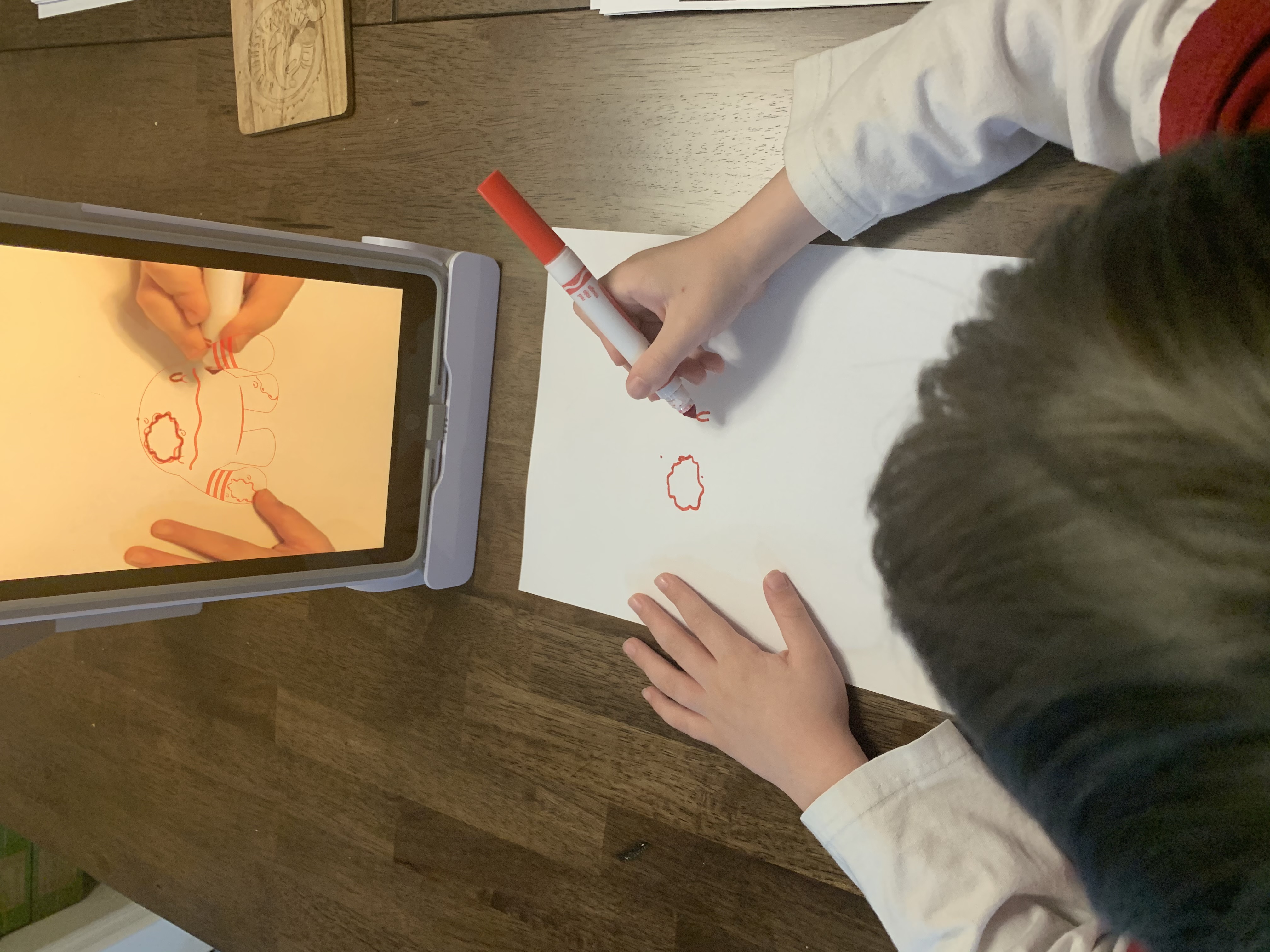
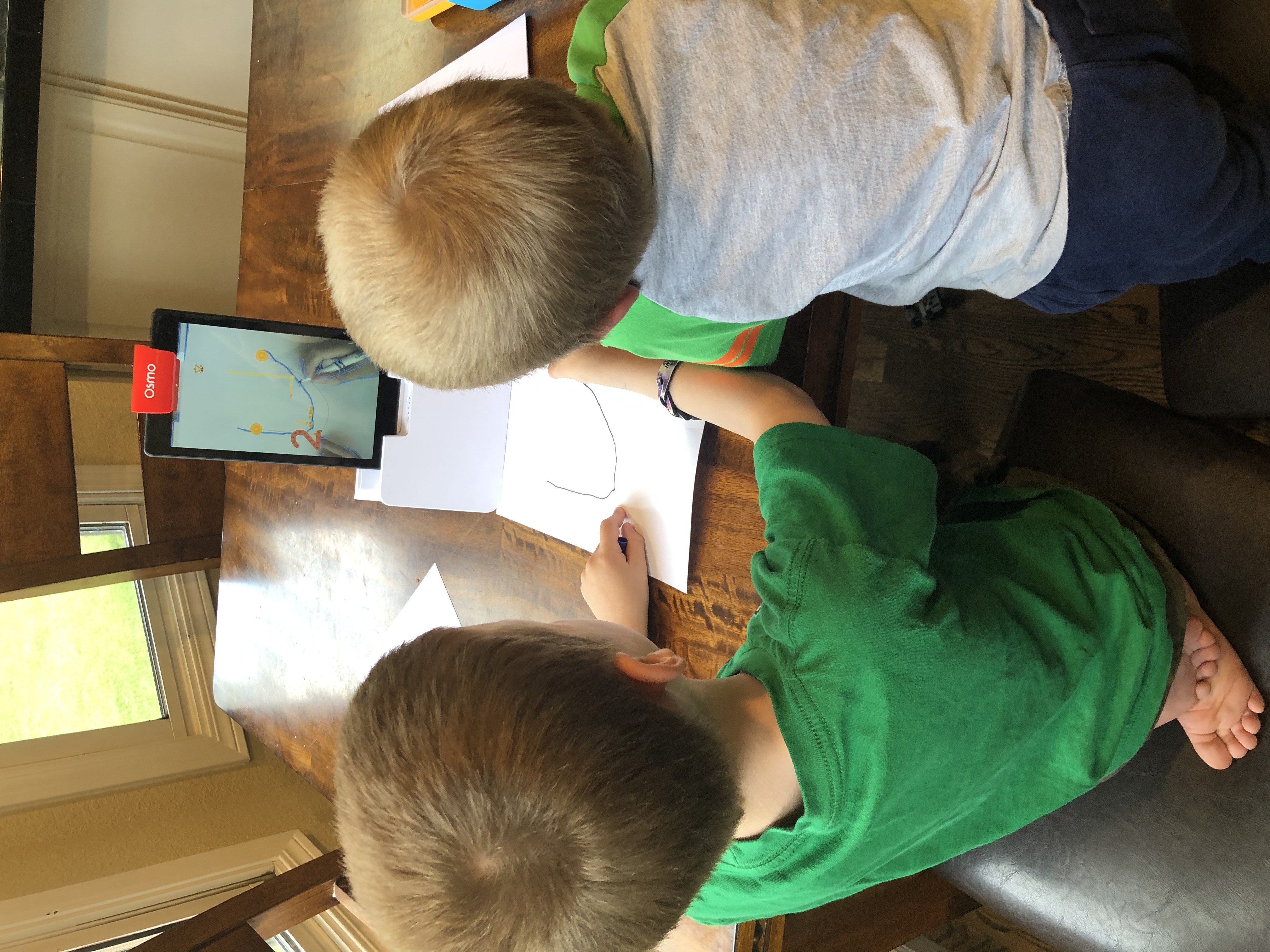
Masterpiece shows his paper on the screen and an outline of what he wants to draw. It can be from their gallery, online, or even a picture he took. Then he can look at the screen and follow the lines. He loves drawing, so him loving Masterpiece makes so much sense.

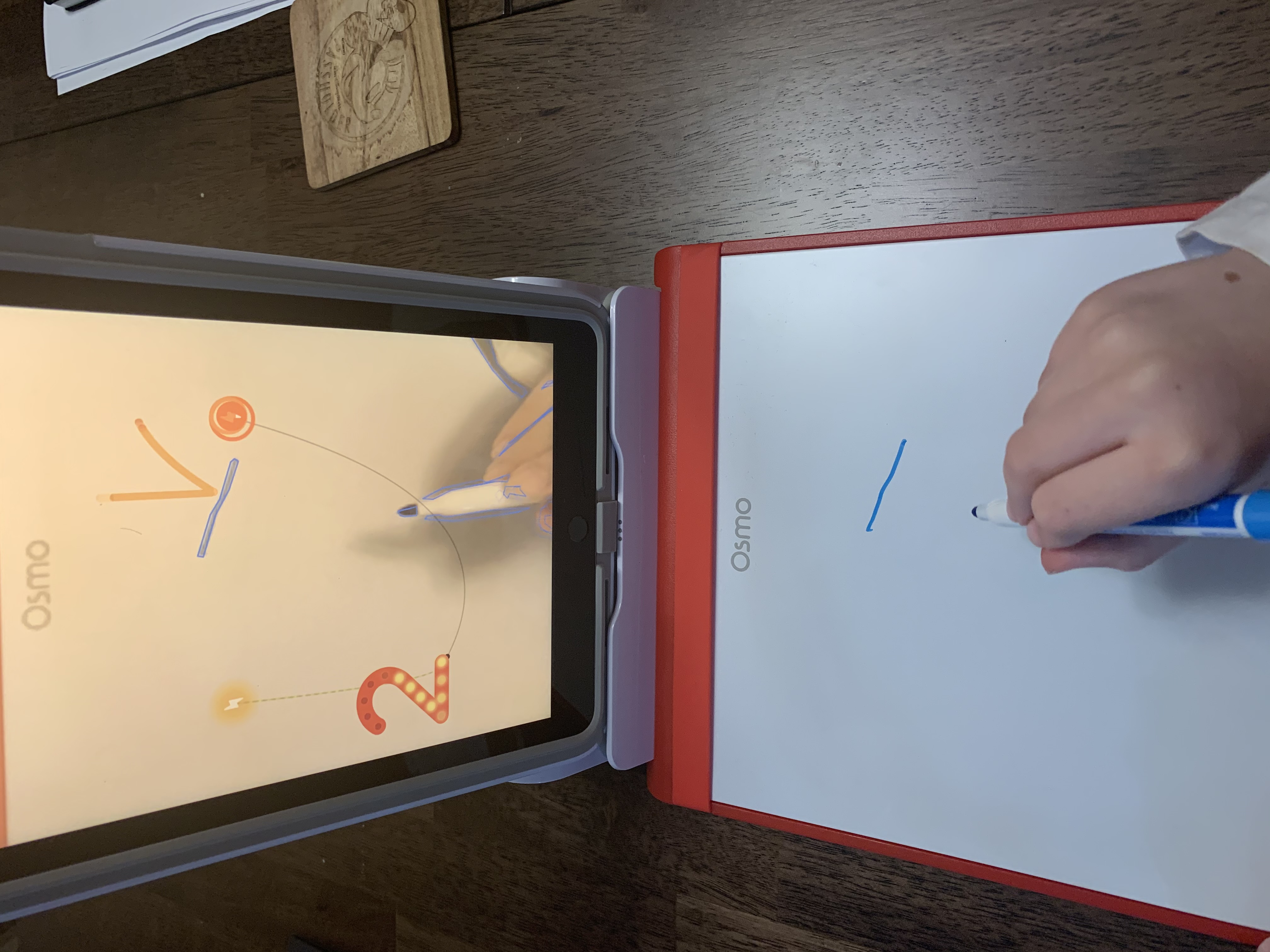
As for Newton, which is a problem-solving physics platform. I found it to be extremely difficult, so I was pleasantly surprised that Trent loved it so much. He figured out so many creative ways to solve the puzzles, past the drawing that it initially instructs the user to do. It was fascinating watching him! (Please note: the Osmo whiteboard in the image is not from the Genius Starter Kit. Trent loved the starter kit so much, we bought other games and it came with another game; however, any white board or paper would work for Newton.)

Words is at this point a bit easy for him, but I know there are ways to up the difficulty, but he is really enjoying it and getting used to searching for the letters, so I don’t want to frustrate him.

Numbers starts with addition which is perfect for Trent and lets him practice his number skills in a low-stakes, fun environment. He is a math fan, so this is another favorite app.

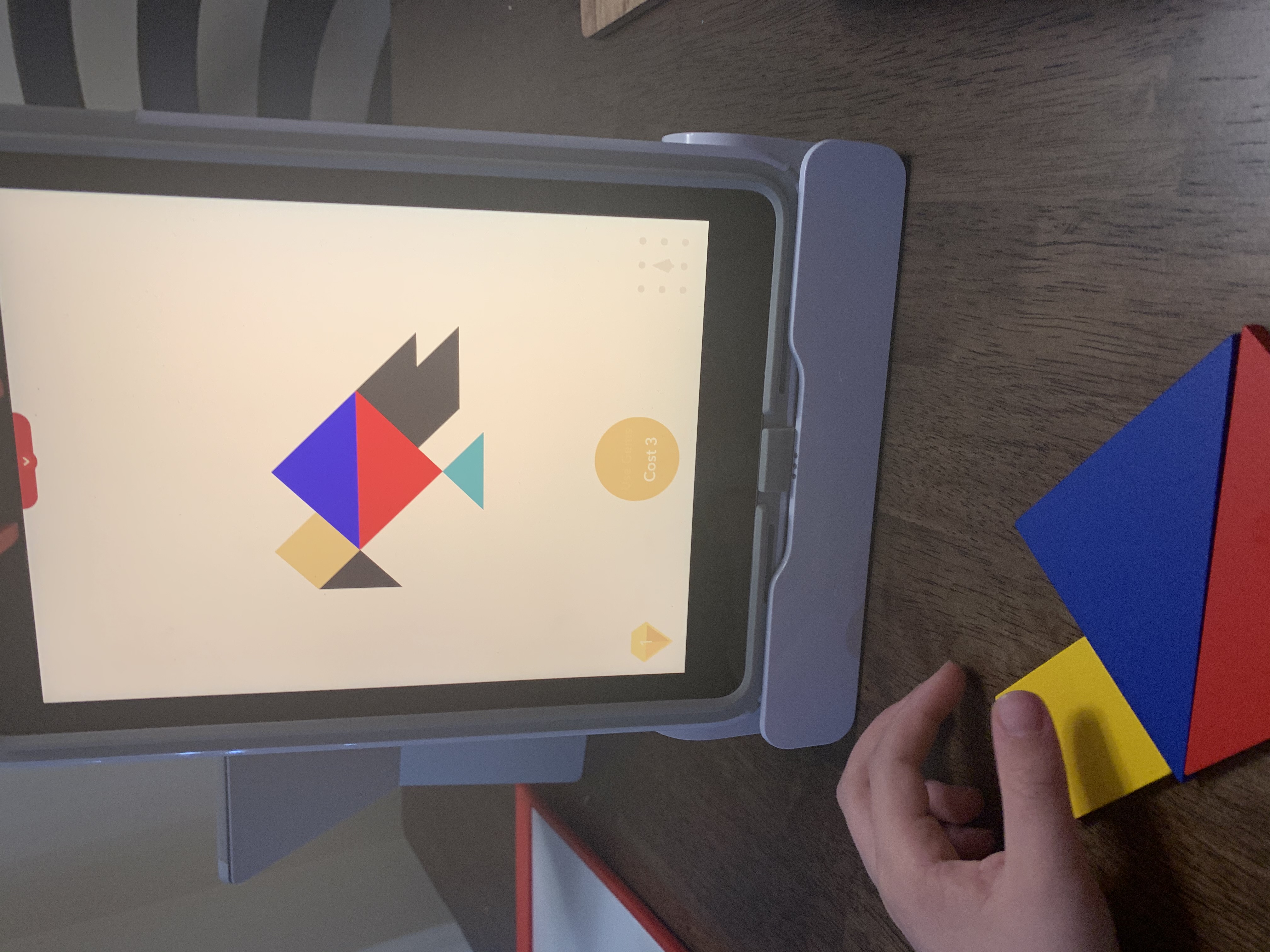
Tangrams is probably the one he struggles with the most. When the tasks get more difficult and do not show which shapes go where, Trent has trouble visualizing which are correct (but I’m the same way, so maybe like mom, like son).

And like I mentioned above, we loved Osmo so much, we’ve purchased other kits which Trent have all enjoyed also! I highly recommend Osmo to parents and teachers as an extension to other learning.

Ricki’s Review: Kellee did an amazing overview of each of the games within the kit, so I will offer more of a holistic overview and perspective from two different kids’ age levels. We have been staying at home pretty much exclusively for three months. My kids are in need of something different. My 3yo is able to read simplistic books and words, and my 6yo is reading fairly fluently now. They are tired of workbooks, they are tired of any book that looks like an early reader, and they are looking for something more interactive. Osmo is the answer.

The kids beg me to play with it during the day. We are pretty strict about screentime in our house, but the Osmo is so interactive that it doesn’t feel like screentime to me. As a parent, it feels remarkably guilt-free as the kids cheer and play the games together.

What intrigues me the most is that Kellee’s son, who is the same age as Henry and has similar interests, has different favorite games than my son. (Although, truly, my kids love ALL of the games.) Tangrams is both of my kids’ favorites. It seems to come naturally to them (which surprises me because I am not very good at spatial recognition). Masterpiece is the hardest for them, and I wonder if they will progress more with it with some time. Regardless, all of the games are huge hits, and they want to play all of them every time they play with the Osmo.

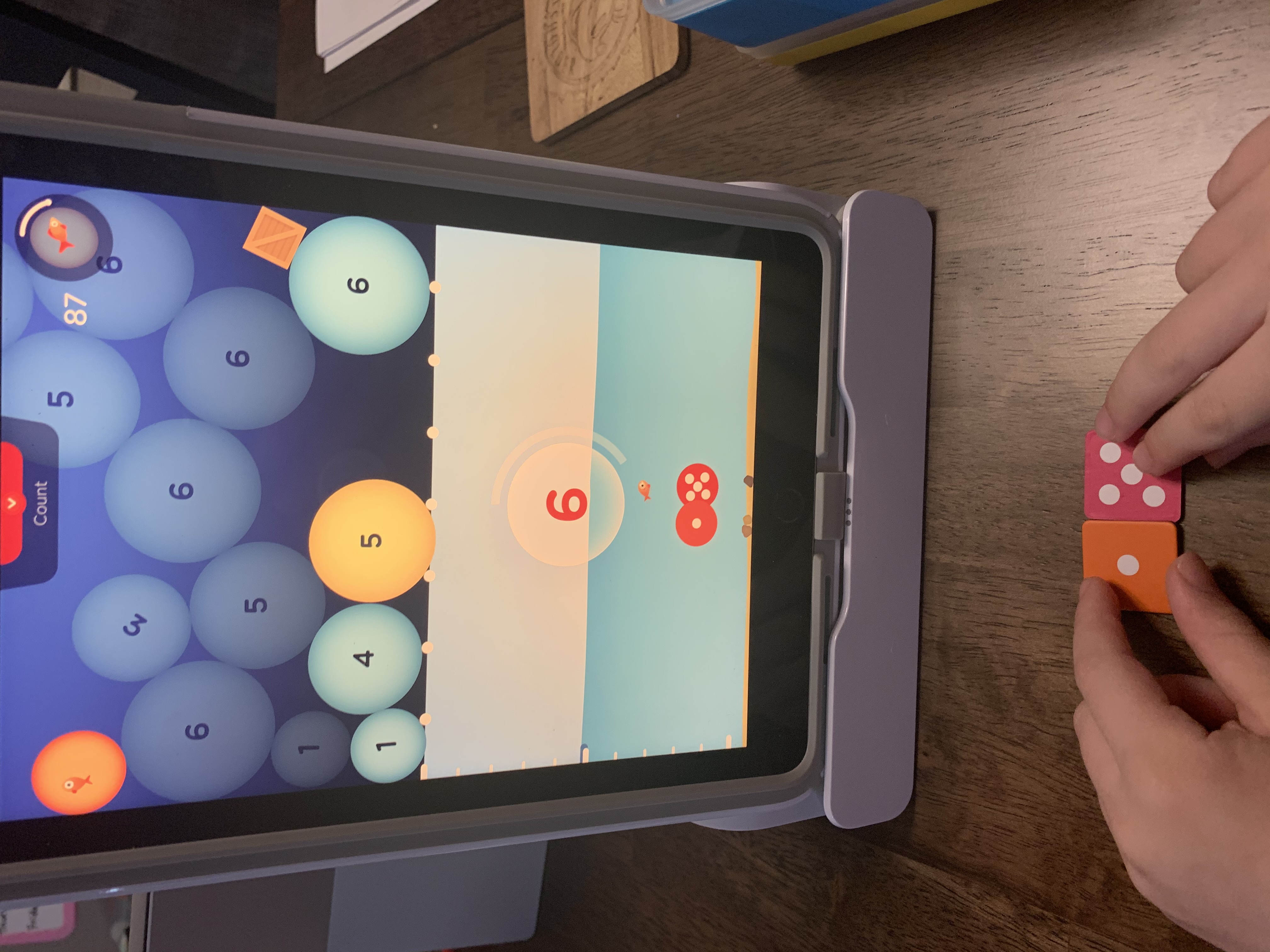
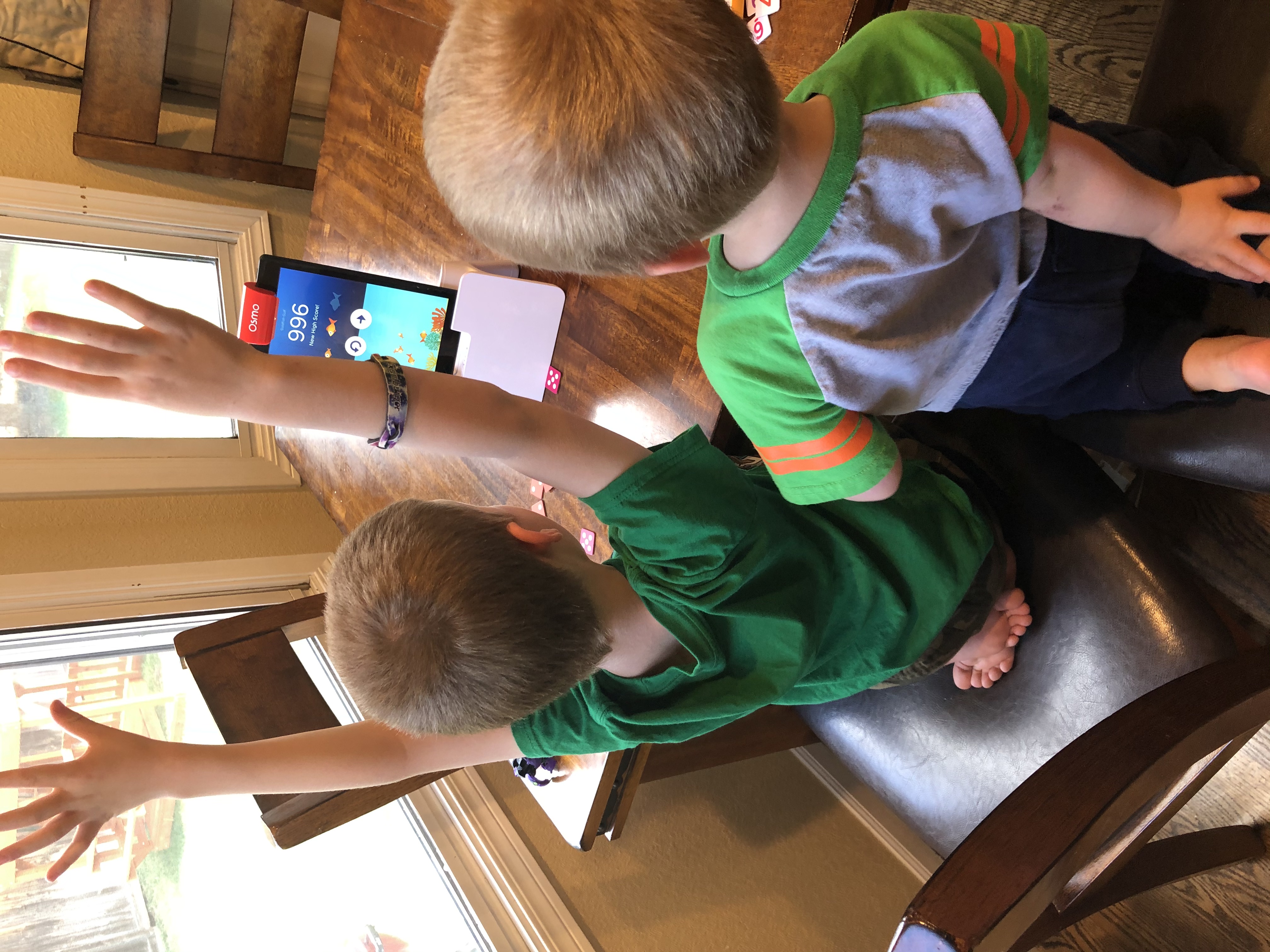
Here, you see my 6yo cheering wildly for himself while he plays numbers. When he met his teacher for a small math group at the end of the school year, she spent a lot of time decomposing numbers. As a parent, I have been focused with addition, subtraction, and number sentences. I hadn’t realized how much decomposing numbers helps their math sense. Osmo’s Numbers does just this. My son is breaking down numbers and figuring out how they work. Using this game in repetition will surely help his math abilities.

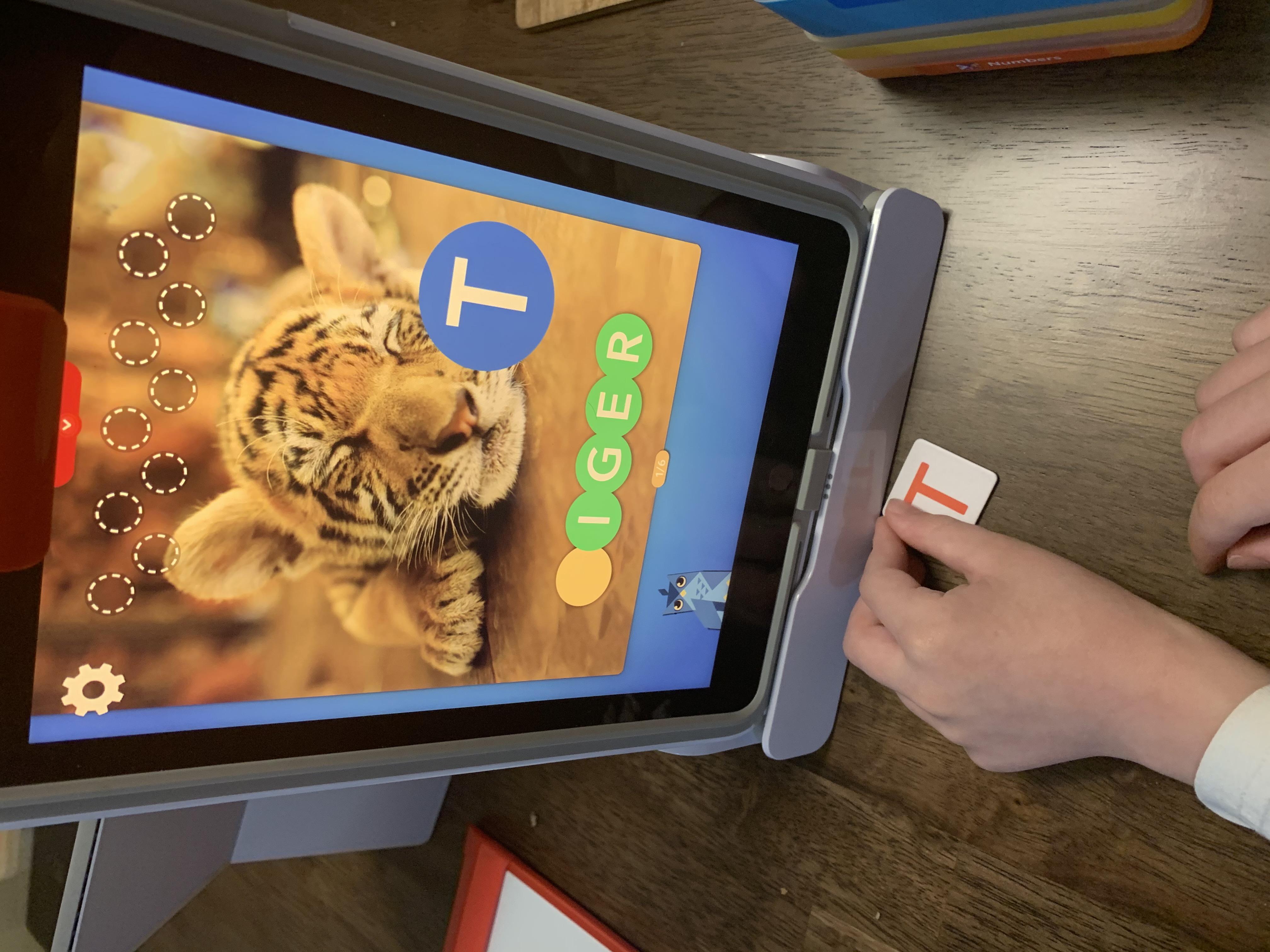
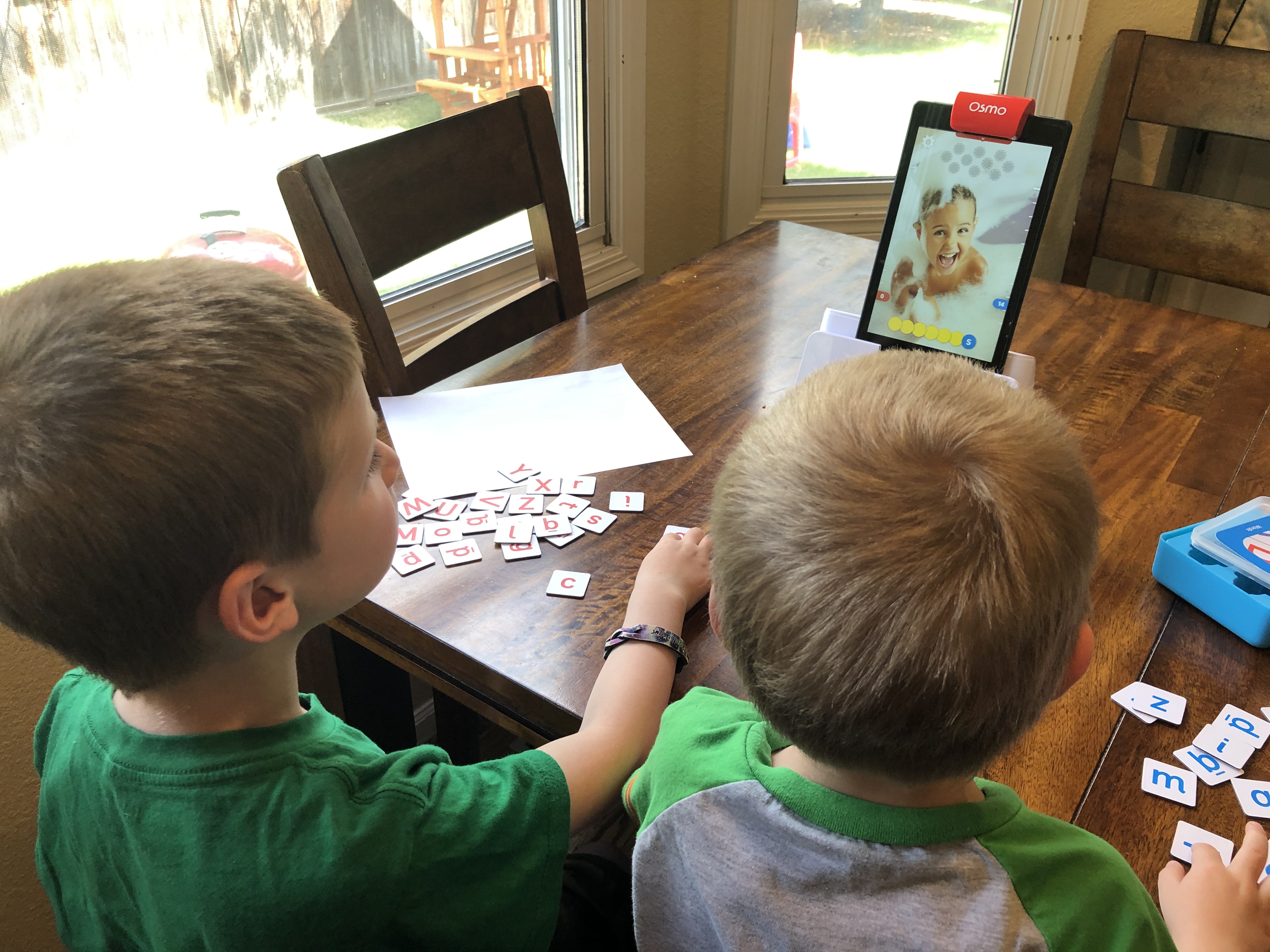
Not pictured: the INTENSITY of this shot. Here, the boys are playing two-player Words. They are each tossing letters into the center and hoping to guess the spelling of the word. For the 6yo, it is conscientious. He is able to consider which vowels are the right fit. For the 3yo, it is a lot of guesswork. He focuses on the first and last vowels. The middle is still confusing, as is suspected. I stress here that despite the 3yo being outside of the age level, he is still able to have fun and try out words, which is fun and exciting for him (and for me!).

And lastly, I share a picture of the boys playing Newton together. (Kellee highlights Tangrams and Masterpiece above.) I said earlier that Tangrams is my kids’ favorite, but now I wonder if their favorite might also be Newton. Gosh this game is so fun. They are considering gravity and physics. The game forces them to problem solve. If they mess up, they might slide the paper a little bit.

If you are on the fence, we recommend the Osmo highly. The kids have been having a BLAST, and it makes learning really fun. As an educator who doesn’t believe much in worksheets, this is a phenomenal system that has brought a lot of joy to our house.

The kids have been making big plans for which kits they are going to put on their wishlists for birthdays and holidays! I am very intrigued by the Pizza kit, so that might be next!

Teachers’ Tools for Navigation: We highly recommend Osmo for centers in classrooms. There are ways to set up multiple profiles which will make it so students can each have their own progress and with the hands-on + technology, students will have so much fun while learning!

Here are the subjects that the Genius Starter Kit compliments:

  • Math: Tangram and Numbers
  • Reading: Words
  • Handwriting: Masterpiece
  • Science: Newton
  • Basic geography (maps): Masterpiece
  • Spatial relationships: Tangram

Signatureand

**Thank you to Tangible Play, Inc. for providing starter kits for review!**

Student Voices: A Posivite Among Negatives: Pollution during COVID-19 by Zack L., 8th Grade

Share

A Posivite Among Negatives: Pollution during COVID-19 by Zack L., 8th Grade, with assistance from Kellee

COVID-19 put a pause on the world, and although its effects have been primarily negative, the effect on our environment has been primarily positive.

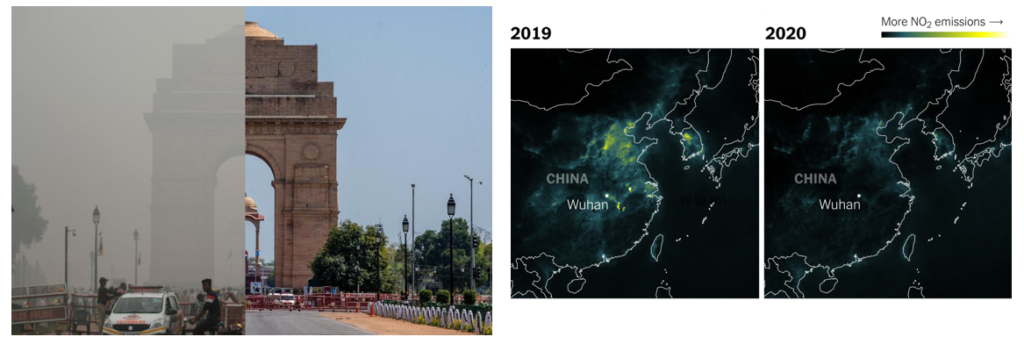
Since we have all been in quarantine, pollution has changed dramatically around the world. The stay at home order around the world has been keepings us away from our cars and onto our bikes. Our pollution levels have dropped due to the large number of people not using their cars. The EPA has said, “motor vehicles collectively cause 75 percent of carbon monoxide pollution in the U.S.” Because of the world wide quarantine efforts, we have all been off the roads and reducing this amount of pollution. These images are good representations of before and afters the quarantine:

Additionally, water pollution has been affected positively by the lessening of carbon pollution levels and other pollution. For example, the Venice Canal, which is normally polluted to where few animals exist and the water is murky became clear and swans, dolphins, and octopuses are spending their time in the canal.

See other examples of positive effects on pollution during the quarantine here: https://www.boredpanda.com/cities-air-pollution-coronavirus-lockdown

The effects of pollution are huge. As we emit more gases into the air, the temperature slowly increases. Due to the increase, things like wildfires become more common. The temperature increase can  also cause glaciers to melt meaning the water levels will rise and possibly even flood some places. Air pollution affects our lungs, heart, and brain. We don’t feel it at first, but later on, our bodies will have taken in so much pollution that we’ll get really sick. Air pollution kills 4 million people a year and many are living with polluted water, but we can stop that. This change shows that our polluted world is reversible.

We can all keep these levels lower by using our bikes or walking instead of driving everywhere we go. We can also keep these levels low by reducing the amount of plastic we use or recycling more. There are many clean up groups out there to help pick up plastic or trash from our streets or plant trees to produce more oxygen. These groups get donations from people to go do more. There is so much we can do to keep this positive effects on the planet from reversing:

If we all join together to keep our Earth healthy, this could be the begining of a better future.

Thank you, Zack, for this inspiring piece!

The Blue Giant by Katie Cottle

Share

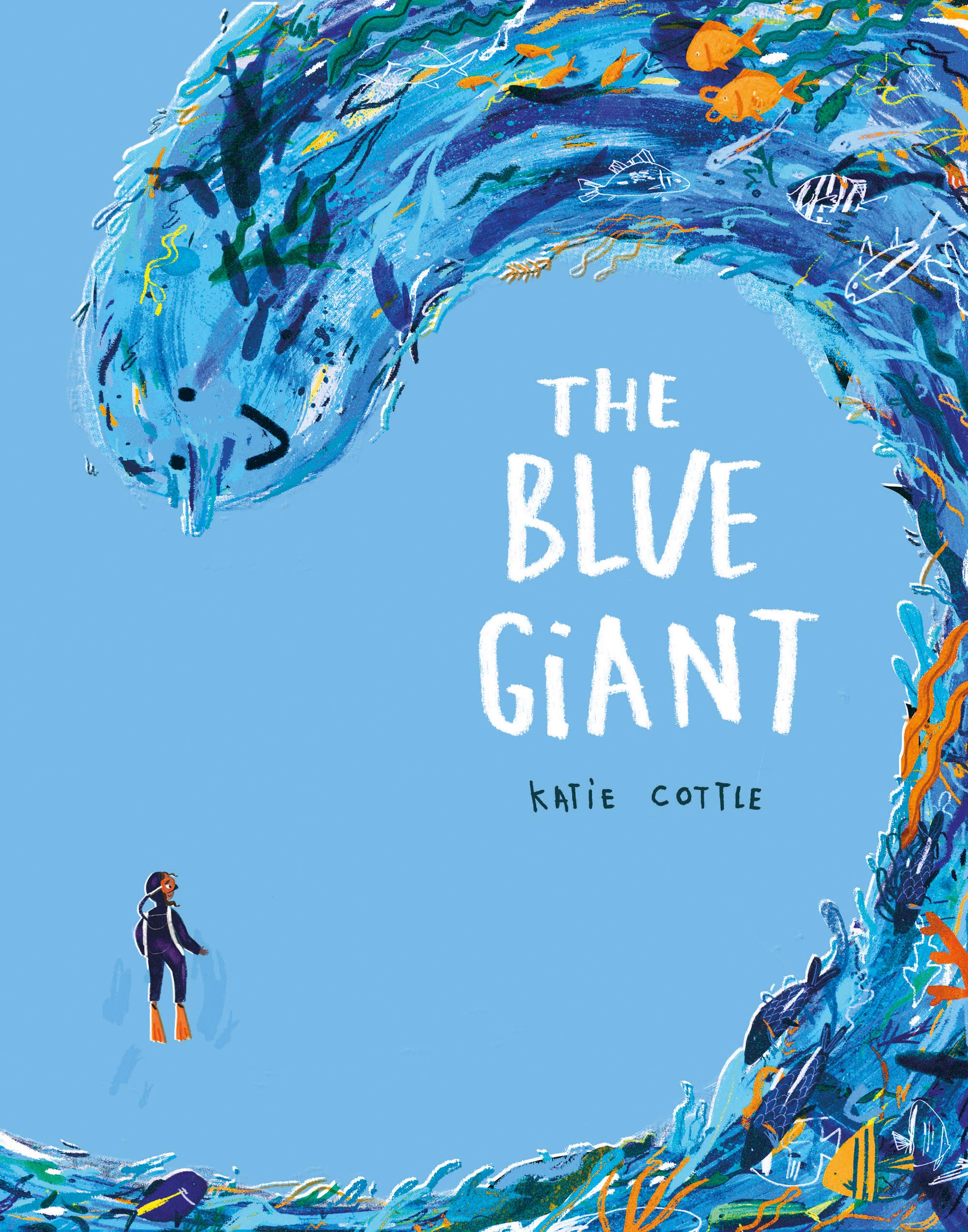
The Blue Giant
Author & Illustrator: Katie Cottle
Published May 26th, 2020 by Pavilion Books Ltd.

Summary: A poignant and timely picture book introducing children to the issue of ocean pollution, with ideas to help the world become a better, cleaner place.

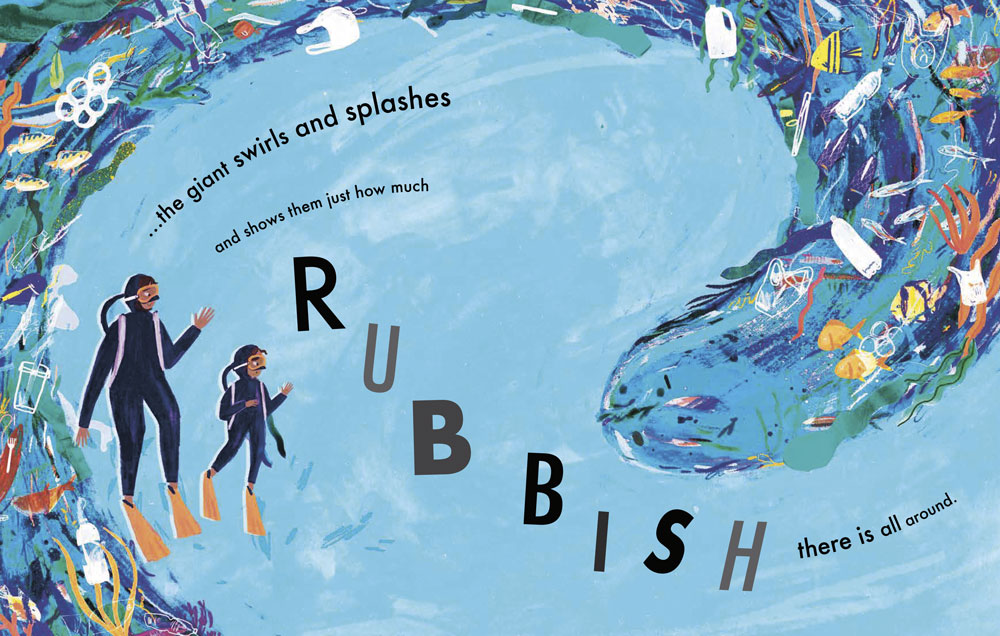
Coral and her mom are enjoying a break at the seaside. Until a creature emerges from the waves! It’s a giant. A blue giant. It is made of water, fish, and sea plants and has a stirring plea to help clean up the ocean.

Coral and her mom agree to help, donning their scuba-diving outfits and setting off to sea. But they can’t do it alone…can they?

This stunning follow-up to Katie Cottle’s debut picture book The Green Giant is another entertaining and beautiful eco-tale from the 2017 winner of the Batsford Prize. It introduces children to the issues of pollution, waste management, and the oceans, with suggestions of lifestyle changes to help clean up our seas.

About the Author: Katie Cottle is an illustrator and printmaker living and working in Bristol, U.K. Her work is often informed by the marks and colors created through traditional lithography. She also works digitally, using an iPad, and occasionally paints with gouache. The Blue Giant is her second book, following on from The Green Giant.

Review: Katie Cottle has caught onto something big with the format of this and her Green Giant book: it truly brings our environment to life and shows the harm that we are doing to it. The anthropomorphism of the ocean makes it even easier to connect to it as an entity as it shows how we are hurting it, and it shows what Meera DOES to try to reverse the effects we’ve caused.

In addition to the theme and story, I also really liked the illustrations. The author’s use of line is used expertly to show movement, and I loved all of the colors to really bring the story to life.

Teachers’ Tools for Navigation: This book is perfect for any discussion of water pollution and the environment. It shows a problem, a potential soultion, and hope for the future. It also specifically talks about single-use plastics which may be a new topic for many students.

Discussion Questions: 

  • What is something you can do to help the ocean?
  • What does Meera do to help the ocean?
  • How does our actions effect the ocean?
  • What is an animal that is effected by our pollution?
  • What is a single-use plastic that you use that you could replace?
  • What was the author’s purpose in writing this book?
  • Why did the author give the ocean a voice in the book?

Flagged Passages: 

Read This If You Love: Learning about the environment

Recommended For: 

classroomlibrarybuttonsmall

Signature

**Thank you to Media Master Publicity for providing a copy for review!**

The Princess in Black and the Case of the Coronavirus by Shannon Hale & Dean Hale, Illustrated by LeUyen Pham

Share

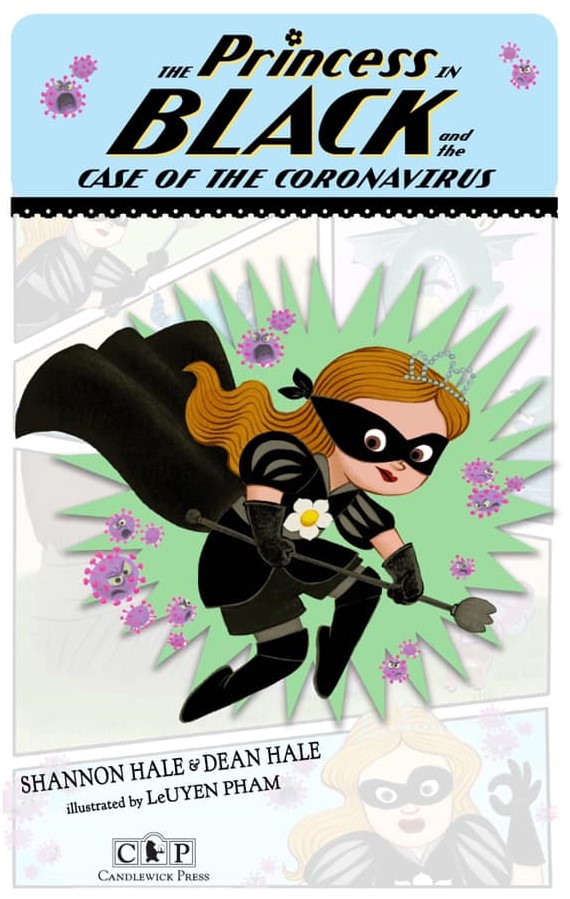
The Princess in Black and the Case of the Coronavirus
Authors: Shannon Hale & Dean Hale
Illustrator: LeUyen Pham

Summary: The creators of the New York Times-bestselling series The Princess in Black – Shannon Hale, Dean Hale, and LeUyen Pham – have created an incredibly child-friendly coronavirus public service announcement, called The Princess in Black and the Case of the Coronavirus.

From Shannon Hale: LeUyen, Dean and I are all parents self-isolating at home with our children. The anxiety and distancing is hard enough on our older kids, but we know that younger kids might be having an even harder time. We hoped that it’d help if a familiar book friend like the Princess in Black talked them through it. Even the Princess in Black is staying home! Even Princess Sneezewort had to cancel playdates! LeUyen had the idea of creating a short comic to download and share widely so caregivers could have an extra tool for talking to kids. Our goal is both to help kids understand what’s going on and to help them feel less alone.

Available for all at: https://www.princessinblack.com/download/pib-coronavirus.pdf

Thoughts: This pandemic is a time that is very confusing for kids, and I am so excited that this story exists for my son and other kids!

Signature

**Thank you to Candlewick Press for sharing this story with us!**

Author Guest Post: “What Kids Can Do to Help the Environment and Why Does It Matter?” by Tracy Richardson, Author of The Field and Catalyst

Share

“What Kids Can Do to Help the Environment and Why Does It Matter?”

I’m a science geek. I know it’s not everyone’s cup of tea, but it’s mine. I loved high school biology and have a Bachelor of Science degree in Biology. I think Bill Nye the Science Guy is cool – I mean who doesn’t? And now I follow Neal DeGrasse Tyson, who’s kind-of like everyone’s friendly astrophysicist, if that’s even a thing!

As part of my science geekiness I’m fascinated by the natural world around us. To me, there’s a magic and beauty to the world that science helps explain. My science background helps me to see how we’re all connected by an elegant design. This has led to my passion for the environment and it’s why I include environmental themes in my young adult novels.

Scientists have been warning us about the dangers of climate change for years. Science is a discipline. Researchers test their hypotheses again and again and revise their conclusions. It’s not an opinion. It’s based on the facts as we currently know them. To say that climate change isn’t real is to deny these facts.

There are so many people who are raising the alarm and young people are especially engaged. It’s their future we’re talking about. The future of the Earth that we live on. There is no second planet.

So, what exactly is Climate Change? What is causing it? Here’s the dictionary definition:

“a change in global or regional climate patterns, in particular a change apparent from the mid to late 20th century onwards and attributed largely to the increased levels of atmospheric carbon dioxide produced by the use of fossil fuels.”

Climate change refers to dramatic changes in global climate conditions, including weather phenomena, temperature, and sea levels. It’s caused by an over-abundance of greenhouse gases, mostly from fossil fuel emissions around the world.

It’s the carbon dioxide HUMANS are putting into the atmosphere by burning fossil fuels. What are fossil fuels? They are the non-renewable energy sources we take from the Earth. Coal, oil and natural gas.

Burning fossil fuel produces carbon dioxide which warms the planet. Accessing these fossil fuels also harms the planet. Fracking for natural gas, which is the environmental theme in my novel, Catalyst, pumps harmful chemicals into the Earth to extract the natural gas which poisons aquifers and has been proven to cause increased seismic activity – earthquakes – in fracked areas.

Climate change adversely impacts the delicate balance of Earth’s ecosystems. Global warming has been linked to dying coral reefs, dangerous new weather patterns such as stronger and more frequent hurricanes, droughts and fires, and the extinction of plant and animal species. Teens have probably seen pictures of emaciated polar bears in the Artic. Loss of the ice covering means they can’t swim far distances to hunt for seals. There is no where for them to get out of the water to rest and wait for seals. Polar Bears are one of many animals that are endangered.

The biggest impact that humans will see might be the rising ocean levels that are already threatening costal cities. Venice is under water for many more days than at any time in the past. Miami is already taking action to address rising sea levels by raising its roads and installing pumps to deal with increased flooding.

So, what can teens do to stop Climate Change? Reducing our Carbon Footprint is one thing we can do. What is a Carbon Footprint? Here’s the dictionary definition:

“the amount of carbon dioxide and other carbon compounds emitted due to the consumption of fossil fuels by a particular person, group, etc.”

So, what does that mean exactly? It essentially refers to our personal contribution to the carbon emissions that cause Climate Change. Here are some ways that each of us can have an impact:

  1. Plant Trees – Trees consume carbon dioxide and emit oxygen
  2. Change your mode of transportation – Bike to school or a friend’s house, carpool, take the bus or the train instead of driving or flying. Teen Climate Activist Greta Thunberg has chosen not to fly to reduce her carbon footprint.
  3. Eat a plant-based diet or have one ‘vegetarian day’ a week.
  4. Reduce household water waste – install efficient shower heads and toilets. Turn off the faucet when doing dishes or brushing your teeth.
  5. Upcycle and repurpose clothing and household items instead of buying new or discarding them.
  6. Reduce the amount of plastic packaging in the products you buy.
  7. Use cloth re-usable shopping bags.
  8. Eat locally produced food to reduce the ‘Food Miles’ it takes for your food to travel to you.
  9. Encourage your parents to tell their legislators to act on Climate Change legislation.
  10. Join environmental groups like the Sierra Club, the Natural Resources Defense Council or the World Wildlife Fund.
  11. Join the environmental club at your school or start one!

I’m sure you can tell I’m a bit passionate about this! I do feel like the tide is turning toward action on addressing environmental issues. We have so little time, but if we all do our part, we can have an impact.

Discussion Questions:

  1. What are natural resources? Can you name two or three examples?
  2. What’s a non-renewable energy source? What is a renewable one?
  3. What is a “Carbon Footprint”?
  4. What is Climate Change?
  5. What do you already know about Climate Change? How is it impacting the planet?
  6. What small steps can you and your siblings or classmates take today to help the environment?

Expected Publication: June 2nd, 2020 by Brown Books Publishing Group

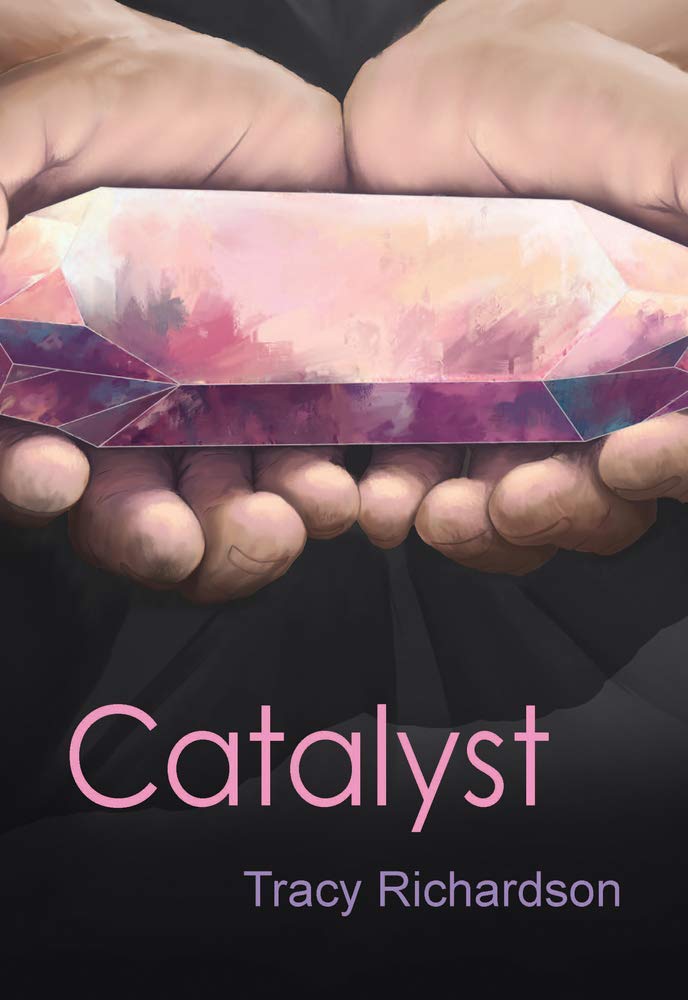
About the Book: Marcie is spending her summer working on the archeological dig that her mother runs: Angel Mounds, a site of an ancient indigenous civilization. Soon after she arrives, she meet some intriguing individuals, and becomes wrapped up in a supernaturally-charged mission to save the planet from the destruction man has brought upon itself.

Marcie Horton has a sixth sense. Not in the “I see dead people” way, but . . . well, maybe a little. She feels a sort of knowing about certain things that can’t be explained-an intuition that goes beyond the normal. Then there was that one summer four years ago, when she connected with a long-departed spirit . . . But nothing that incredible has happened to Marcie since.

This summer, Marcie is spending time working at Angel Mounds, the archeological dig her mother heads, along with her brother, Eric, and his girlfriend, Renee. The dig is the site of an ancient indigenous civilization, and things immediately shift into the paranormal when Marcie and her teammates meet Lorraine and Zeke. The two mysterious dig assistants reveal their abilities to access the Universal Energy Field with their minds-something Marcie knows only vaguely that her brother has also had experience with. Marcie learns how our planet will disintegrate if action is not taken, and she and her team must decide if they are brave enough to help Lorraine and Zeke in their plan to save Mother Earth, her resources, and her history. It looks like the summer just got a lot more interesting.

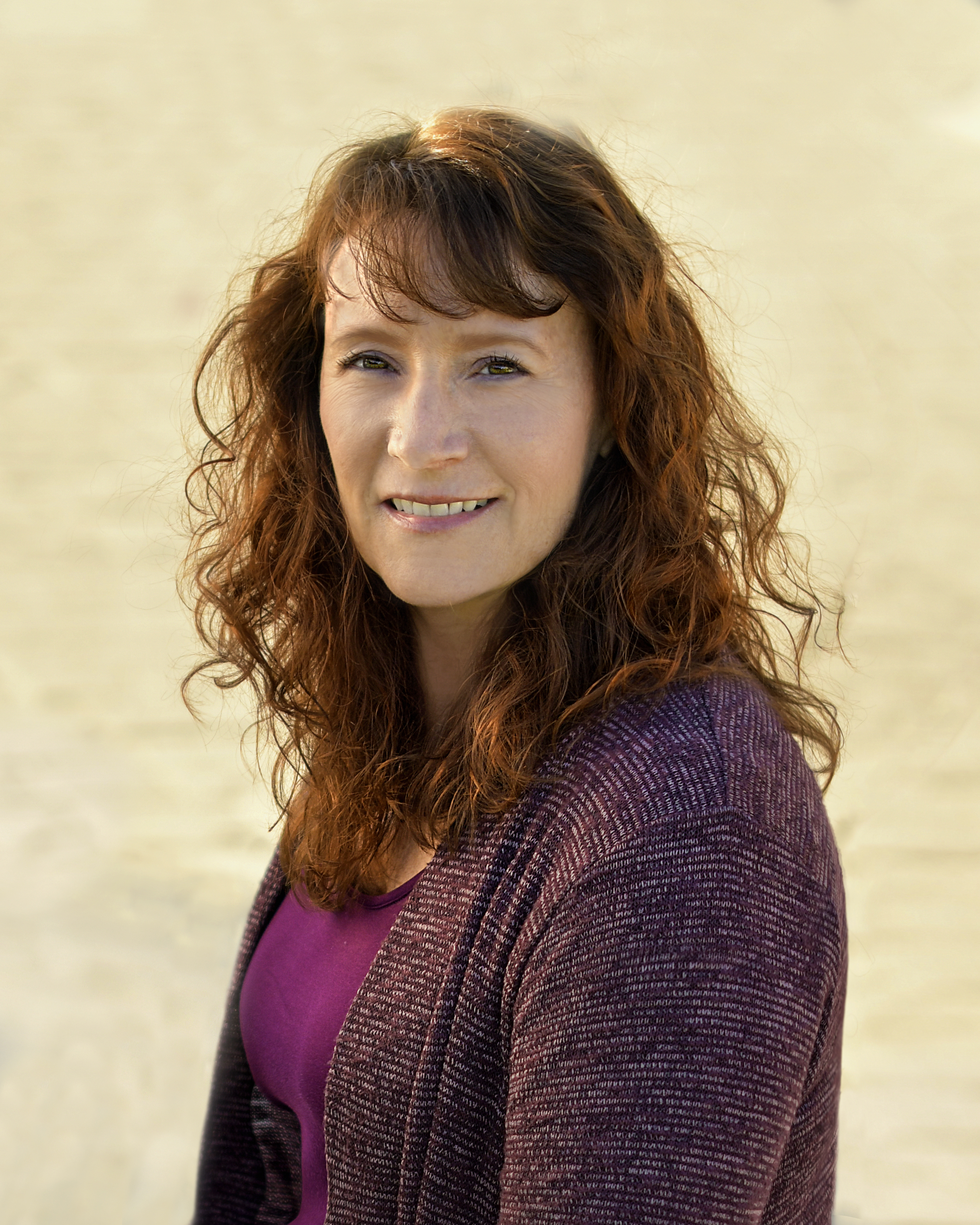
About the Author: TRACY RICHARDSON wasn’t always a writer, but she was always a reader. Her favorite book growing up was A Wrinkle in Time by Madeleine L’Engle. In a weird way that book has even shaped her life through odd synchronicities. She has a degree in biology like Mrs. Murry, and, without realizing it, she named her children Alex and Katie after Meg’s parents. Tracy uses her science background in her writing through her emphasis on environmental issues, metaphysics, and science fiction. Tracy’s upcoming novel, “Catalyst” (Brown Books Publishing, June 2, 2020) is the second installment in the Catalysts series. To learn more about Tracy’s life and work, visit:

Thank you, Tracy, for tying science and your books together–bringing science knowledge to your readers!