Frederick Douglass: The Lion Who Wrote History by Walter Dean Myers

Share

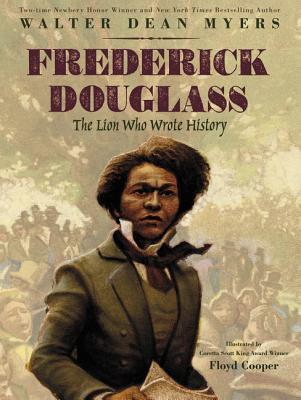
Frederick Douglass: The Lion Who Wrote History
Author: Walter Dean Myers
Illustrator: Floyd Cooper
Publication Date: January 24, 2017 by HarperCollins

Summary: In this picture book biography, the late New York Times bestselling author Walter Dean Myers and acclaimed artist Floyd Cooper take readers on an inspiring journey through the life of Frederick Douglass.

Frederick Douglass was a self-educated slave in the South who grew up to become an icon. He was a leader of the abolitionist movement, a celebrated writer, an esteemed speaker, and a social reformer, proving that, as he said, “Once you learn to read, you will be forever free.”

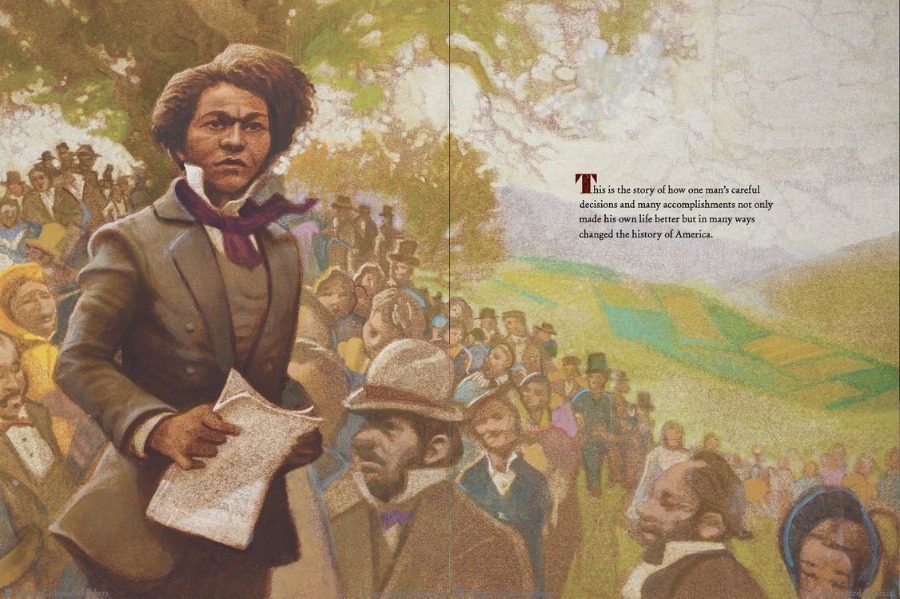
The story of one of America’s most revered figures is brought to life by the text of award-winning author Walter Dean Myers and the sweeping, lush illustrations of artist Floyd Cooper.

Review: We bought this book in 2017 when it first came out, and we read it again and again and again. My kids love to listen and learn about one of the most brilliant people to have ever lived. His story is incredibly inspiring. Even as a young boy, Douglass defied the world and never took no as an answer. The details of his story within this book show children (and adults) that they must push for what is right and commit to changing the world for the better. This book belongs in every classroom (and not just relegated to the classroom library). It should be shared collectively and purposefully with kids.

Teachers’ Tools for Navigation: There are endless uses for this book. One suggestion is that it could serve as a read-aloud and close reading at the start of a research or biography unit. Kids might look at the use of pictures and the pacing of the story to write their own nonfiction picture book.

Discussion Questions: 

  • How does Douglass regularly display strength and resolve throughout his life?
  • How is the book paced to reveal key moments of Douglass’ life?
  • What other famous figures related to issues of equity showed this kind of resolve? How do their stories connect to Douglass’ story?

Flagged Passage: 

Read This If You Love: Nonfiction picture books, Hidden Figures by Margot Lee Shetterly, Schomburg: The Man Who Built the Library by Carole Boston Weatherford, Radiant Child: The Story of Young Artist Jean-Michel Basquiat by Javaka Steptoe, Duke Ellington: The Piano Prince and His Orchestra by Andrea Davis Pinkney, We March by Shane W. Evans, Harlem’s Little Blackbird: The Story of Florence Mills by Renee Watson, Freedom in Congo Square by Carole Boston Weatherford

Recommended For: 

  classroomlibrarybuttonsmall

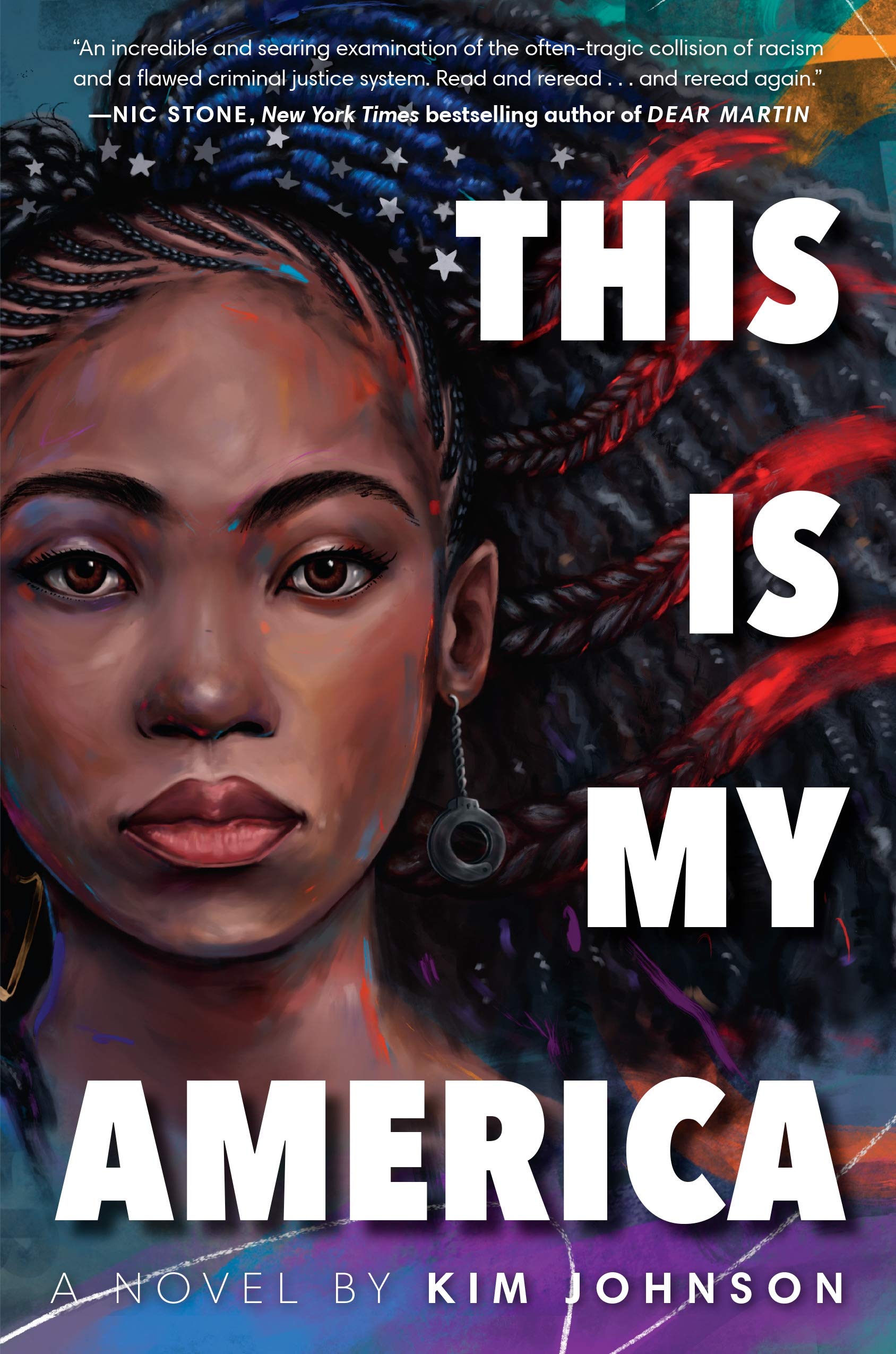
This is My America by Kim Johnson

Share

This is My America
Author: Kim Johnson
Published: February 28, 2017 by Balzer + Bray

GoodReads Summary: Dear Martin meets Just Mercy in this unflinching yet uplifting YA novel that explores the racist injustices in the American justice system.

Every week, seventeen-year-old Tracy Beaumont writes letters to Innocence X, asking the organization to help her father, an innocent Black man on death row. After seven years, Tracy is running out of time—her dad has only 267 days left. Then the unthinkable happens. The police arrive in the night, and Tracy’s older brother, Jamal, goes from being a bright, promising track star to a “thug” on the run, accused of killing a white girl. Determined to save her brother, Tracy investigates what really happened between Jamal and Angela down at the Pike. But will Tracy and her family survive the uncovering of the skeletons of their Texas town’s racist history that still haunt the present?

Fans of Nic Stone and Jason Reynolds won’t want to miss this provocative and gripping debut.

Review: This is a book that will stick with me forever. The characters are powerfully written, and the plot unfolds itself beautifully. It tackles complex themes that offer excellent fodder for classroom discussion. Some of these include implicit and explicit racism, the ripple effects of White supremacy and racism, White privilege, and injustices in the judicial system. I could go on. This book is truly exceptional, and I envision it winning some big awards this year. There is so much to unpack and so much to admire in Johnson’s writing. It’s absolutely brilliant. If you buy no other book this summer, buy this one. It will make you think deeply about equity and justice.

Teachers’ Tools for Navigation: I highlighted so many passages of this book while I was reading it. There are so many sections that would make phenomenal close readings in the classroom. I highly recommend pairing this text with portions or all of Michelle Alexander’s The New Jim Crow: Mass Incarceration in the Age of Colorblindness.

Discussion Questions: What are some of the injustices in this text?; How can we, as a society, work to change these injustices?; How do the injustices have a ripple effect on other characters?; How does Johnson layer the plot to elevate the reading and message of the text?

Flagged Passage: “Corinne never held that memory [of Daddy getting arrested], but I know she feels it in everything we breathe. It’s in the polite nods across the street we have to make, the way our family turns down our music when there are others around. Say yes ma’am and no sir. Leave our jackets and backpacks in the car when we go shopping.

It’s in the way I carry myself that tells our story now. I can’t risk being accused of anything. Because if something goes wrong or missing, I know it’s in the back of someone’s mind that maybe I had something to do with it. And it’s in the way that the voice of the strongest woman I know stumbles when saying, ‘Hello, Officer’ as she walks through the visitation gates to see Daddy.”

Read This If You Loved: Just Mercy by Bryan Stevenson; The Hate U Give by Angie Thomas; All American Boys by Jason Reynolds and Brendan Kiely; by Ilyassah Shabazz and Kekla Magoon; The Rock and the River by Kekla Magoon; How it Went Down by Kekla Magoon; Freedom Summer by Deborah Wiles;

Recommended For:

 litcirclesbuttonsmall closereadinganalysisbuttonsmall classroomlibrarybuttonsmall

RickiSig

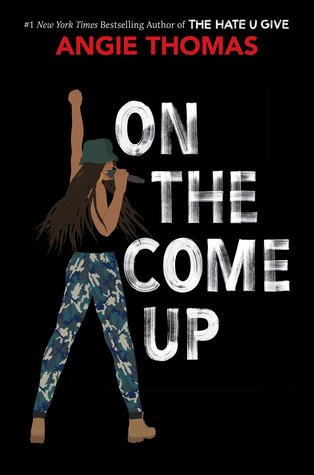
On the Come Up by Angie Thomas

Share

On the Come Up
Authors: Angie Thomas
Published: February 5, 2019 by Balzer + Bray

GoodReads Summary: Sixteen-year-old Bri wants to be one of the greatest rappers of all time. Or at least make it out of her neighborhood one day. As the daughter of an underground rap legend who died before he hit big, Bri’s got big shoes to fill. But now that her mom has unexpectedly lost her job, food banks and shutoff notices are as much a part of Bri’s life as beats and rhymes. With bills piling up and homelessness staring her family down, Bri no longer just wants to make it—she has to make it.

On the Come Up is Angie Thomas’s homage to hip-hop, the art that sparked her passion for storytelling and continues to inspire her to this day. It is the story of fighting for your dreams, even as the odds are stacked against you; of the struggle to become who you are and not who everyone expects you to be; and of the desperate realities of poor and working-class black families.

My Review: After reading this book, I promptly went into my course syllabus for next semester and swapped out another book to include this one. There are so many things that I love about this book. In particular, I really liked how this book tackled the issues of violence against and the assumptions stereotypically made of black females. There are only a few other recent books that tackle these issues, and they are critically important. I get incredibly frustrated by assumptions like “aggressive black female.” Angie Thomas deftly addresses these assumptions and provides a variety of angles for readers. Bri, the narrator, is incredibly strong, and I admire her greatly. I will never have a daughter, but if I did, I would be so proud if my daughter turned out to be like her. This book just feels different from any book that I’ve read. It offers something different that is going to make for great classroom conversations.

Teachers’ Tools for Navigation: I am going to be using this book in a Social Movements and Collective Action course. I will be using it with other texts to talk about the history and currency of the #blacklivesmatter movement. I am very excited that this book exists in the world, and I know that my students will love it.

Discussion Questions: How does the author craft dialogue? What might other writers learn from her work?; What messages does the text reveal? Which messages are less obvious but implicit in a reading of the text?; What connections does this text have with the world today?

Flagged Passage: “There’s only so much you can take being described as somebody you’re not.”

Read This If You Loved: The Hate U Give by Angie Thomas; All American Boys by Jason Reynolds and Brendan Kiely; by Ilyassah Shabazz and Kekla Magoon; The Rock and the River by Kekla Magoon; How it Went Down by Kekla Magoon; Freedom Summer by Deborah Wiles; Audacity by Melanie Crowder; The Boy in the Black Suit by Jason Reynolds

Recommended For:

 litcirclesbuttonsmall closereadinganalysisbuttonsmall classroomlibrarybuttonsmall

RickiSig

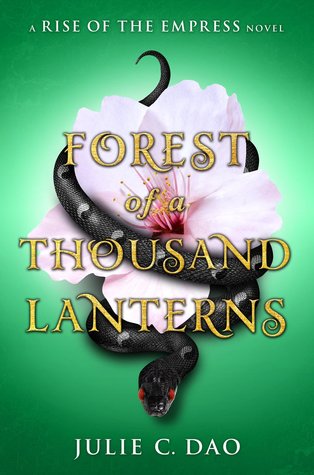
Forest of a Thousand Lanterns by Julie C. Dao

Share

Forest of a Thousand Lanterns
Author: Julie C. Dao
Published: October 10, 2017 by Philomel

Guest Review by Kaari von Bernuth

Goodreads Summary: An East Asian fantasy reimagining of The Evil Queen legend about one peasant girl’s quest to become Empress–and the darkness she must unleash to achieve her destiny.

Eighteen-year-old Xifeng is beautiful. The stars say she is destined for greatness, that she is meant to be Empress of Feng Lu. But only if she embraces the darkness within her. Growing up as a peasant in a forgotten village on the edge of the map, Xifeng longs to fulfill the destiny promised to her by her cruel aunt, the witch Guma, who has read the cards and seen glimmers of Xifeng’s majestic future. But is the price of the throne too high?

Because in order to achieve greatness, she must spurn the young man who loves her and exploit the callous magic that runs through her veins–sorcery fueled by eating the hearts of the recently killed. For the god who has sent her on this journey will not be satisfied until his power is absolute.

Kaari’s Review: The entire time, I wasn’t entirely sure if the  protagonist was the hero or the villain. And, that isn’t necessarily a bad thing! I appreciated this book because it made me think. I’d be cheering for Xifeng and wanting her to win, and then she’d do an awful thing to help her win, and I’d be repulsed by her. This book highlights the struggle of ambition, and how difficult it is for a woman to achieve the dreams she has. And, while I am off put by Xifeng’s methods and don’t necessarily think they were the right decisions, her actions and the way she achieves power could spark great discussions.

The setting and the plot of this book was thrilling, and I Ioved the way that fantasy was woven into a world so seamlessly. The creatures and ideas introduced were thought provoking and had amazing descriptions that made me feel like I was living in the enchanted world with the characters. I do wish that there had been some more resolution regarding some of the magical beings and the warnings they gave, but I think that Dao intends for this to be the first in a series, and I’m sure that more resolution will come in later novels.

Teachers’ Tools for Navigation: I would definitely include this book in a classroom library for kids to check out if they want to read it. However, while this book is interesting, and explores an interesting take on female empowerment, I don’t think I would teach this book in a classroom setting, or use it in literature circles. I am a huge advocate for female empowerment, and discussing the paths for women to claim their power. However, I think that because Xifeng’s methods were so morally questionable, and readers aren’t sure if Xifeng is a hero or a villain, that Forest of a Thousand Lanterns is not the best novel to discuss for this topic. There are many other books that discuss female empowerment in a much more productive light. So, I’d include it in a classroom library, but not necessarily teach it in any way.

Discussion Questions: Do you think Xifeng’s methods were justifiable?; What does the social hierarchy look like in this novel?; Is Xifeng a hero or a villain in this story?; What is the effect of portraying a strong female protagonist in this way?; How is the fantasy world characterized?

We Flagged: “‘I’m a good man, Xifeng. I let you have your own way and speak your mind…’

‘You think I don’t know that? That I’m so blind and stupid?’

‘Yes, I do!’ he shouted, his face bright red. ‘I offer you the world…’

‘Yes, the world as you see it!’

‘I saved you from that evil woman!’

‘Only to trap me yourself.’ She watched him turn away and run a trembling hand over his head. ‘I was Guma’s, and now you want me to be yours. I have my own soul and my own destiny, and I’m tired of belonging to someone else’” (Advanced Reader Copy p. 125).

Read This If You Loved: Monstress by Marjorie M. Liu; Gunpowder Alchemy by Jeannie Lin; Girls Made of Snow and Glass by Melissa Bashardoust

Recommended For:

classroomlibrarybuttonsmall

  RickiSig

**Thank you to Kaari for reviewing this book!**

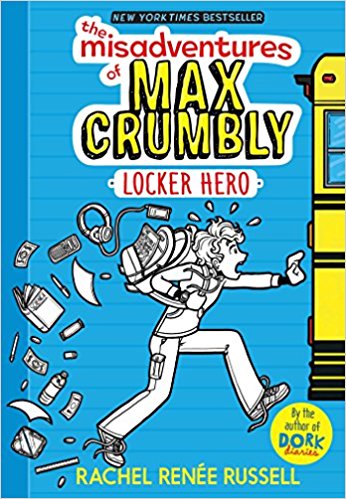
The Misadventures of Max Crumbly: Locket Hero by Rachel Renee Russell

Share

The Misadventures of Max Crumbly: Locket Hero
Author: Rachel Renee Russell
Published: June 7, 2016 by Aladdin

A Guest Review by Emily Baseler

GoodReads Summary: Max Crumbly is about to face the scariest place he’s ever been: South Ridge Middle School. There’s a lot that’s great about his new school, but there’s also one big problem—Doug, the school bully whose hobby is stuffing Max in his locker. If only Max could be like the hero in his favorite comics. Unfortunately, Max’s uncanny, almost superhuman ability to smell pizza from a block away won’t exactly save any lives or foil bad guys. But that doesn’t mean Max won’t do his best to be the hero his school needs!

Review: This book is the beginning of a soon to be very popular series. I suggest you purchase a copy of this book for your classroom library while you still can. In June, the 2nd book will be released and I have a feeling it will not be available on the shelf for long. This book has a very similar style to the “Dairy of a Wimpy Kid” series which children across grade levels love. This book introduces relevant themes to a middle grade reader such as peer conflict, coping with bullying, pop culture, relationships, friendship, surviving middle school, and learning to laugh at yourself. This book was an easy ready and would be ideal for a more reluctant reader or to read for pleasure.

Teachers’ Tools for Navigation: This book is one of the rare few written in second person. Max Crumbly, the narrator, is writing journal entries addressing the reader as “you.” “The Adventures of Max Crumbly” would be an interesting text to explore point of view with your students. You could also use the text to highlight the use of exclamation and variation of font. Additionally, the text could be a resource when reviewing the writing process. There are entire sentences scratched out, arrows redirecting the narrative, edits, revisions, and inclusions in the final text.

Discussion Questions: Is this style of writing something you think you would be able to create?; How does the point of view of the narrator impact your perceptions as a reader?; What value did the illustrations add to the text—if any?; Are there any themes or topics in which you can identify/connect with?

Book Trailer: 

Online Resource: http://maxcrumbly.com/

Read This If You Loved: Dork Diaries series by Rachel Renee Russell, Dairy of a Wimpy Kid series by Jeff Kinney

Recommended For:
 classroomlibrarybuttonsmall

Thank you, Emily!

RickiSig

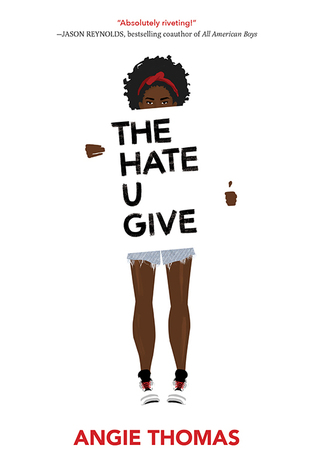
The Hate U Give by Angie Thomas

Share

The Hate U Give
Authors: Angie Thomas
Published: February 28, 2017 by Balzer + Bray

GoodReads Summary: Sixteen-year-old Starr Carter moves between two worlds: the poor neighborhood where she lives and the fancy suburban prep school she attends. The uneasy balance between these worlds is shattered when Starr witnesses the fatal shooting of her childhood best friend Khalil at the hands of a police officer. Khalil was unarmed.

Soon afterward, his death is a national headline. Some are calling him a thug, maybe even a drug dealer and a gangbanger. Protesters are taking to the streets in Khalil’s name. Some cops and the local drug lord try to intimidate Starr and her family. What everyone wants to know is: what really went down that night? And the only person alive who can answer that is Starr.

But what Starr does or does not say could upend her community. It could also endanger her life.

Ricki’s Review: I don’t know where to begin with this very special book. To give proof of my love for it, I will share that this book is on my Adolescents’ Literature course syllabus for next year. It is the book that I am most excited to teach. My research concerns multicultural young adult literature, and I have read a lot of books that interrogate issues of race. When this book was hyped, I knew I had to read it, but I was nervous that it wouldn’t be as good as I wanted it to be. It was everything and more. The characters feel real, and the pacing is fantastic. The author beautifully captures dialogue and life in ways that will grab readers’ attention. It has a strong message without feeling didactic. Teachers will find much to talk about with this text.

You might notice that this book has a 4.66 average rating on GoodReads. I don’t know of any book with that high of an average rating. I am not one to buy into ratings, but I think this extremely high rating shows that this is a book that really resonates with people. If you plan to read one book this year, pick this one. 

Kellee’s Review: When I first heard about The Hate U Give at ALAN in November 2016, Jason Reynolds said it was going to be one of the most important books of our time. Then I started hearing about it being bid on by all of the major publishing houses. Reynolds’s recommendation mixed with the hype made me want to pick it up, but then I also was so worried that it wouldn’t live up to this hype. But it does. It lives up to it all. I have nothing negative to say about the book. It is poignant. It is thought-provoking. It pushes boundaries. It makes white people have to look at race a way that they may not have considered before. It is REAL. It is rough. It is truth. I think Thomas did a phenomenal job writing a narrative of truth that just lays out there the problems with race in our society in a way that no one can deny or argue; it just is. I think their story makes everyone more aware and more empathetic. I finished a month ago, and I still am thinking about Star and Khalil and Natasha and Kenya and Star’s family–I just didn’t want to stop being in their lives. I cannot say any more how phenomenal this book is. Pick it up if you haven’t. (And the audiobook is so brilliant if you want to listen to it.)

Teachers’ Tools for Navigation: Teachers might ask students to analyze the varied themes of this text and dive deeply into discussions of each (power, economics, race, etc.). Then, they might create a civic video essay—one that considers a social issue and provides steps for social action to raise awareness for the viewing audience.

Discussion Questions: How does the author craft dialogue? What might other writers learn from her work?; What messages does the text reveal? Which messages are less obvious but implicit in a reading of the text?; What connections does this text have with the world today?

Flagged Passage: “Sometimes you can do everything right and things will still go wrong. The key is to never stop doing right.”

Read This If You Loved: All American Boys by Jason Reynolds and Brendan Kiely; by Ilyassah Shabazz and Kekla Magoon; The Rock and the River by Kekla Magoon; How it Went Down by Kekla Magoon; Freedom Summer by Deborah Wiles; Audacity by Melanie Crowder; The Boy in the Black Suit by Jason Reynolds

Recommended For:

 litcirclesbuttonsmall closereadinganalysisbuttonsmall classroomlibrarybuttonsmall

RickiSig andKellee Signature

The House of Purple Cedar by Tim Tingle

Share

house of purple cedar

House of Purple Cedar
Author: Tim Tingle
Published: February 18, 2014 by Cinco Puntos Press

GoodReads Summary: “The hour has come to speak of troubled times. It is time we spoke of Skullyville.”

Thus begins Rose Goode’s story of her growing up in Indian Territory in pre-statehood Oklahoma. Skullyville, a once-thriving Choctaw community, was destroyed by land-grabbers, culminating in the arson on New Year’s Eve, 1896, of New Hope Academy for Girls. Twenty Choctaw girls died, but Rose escaped. She is blessed by the presence of her grandmother Pokoni and her grandfather Amafo, both respected elders who understand the old ways. Soon after the fire, the white sheriff beats Amafo in front of the town’s people, humiliating him. Instead of asking the Choctaw community to avenge the beating, her grandfather decides to follow the path of forgiveness. And so unwinds this tale of mystery, Indian-style magical realism, and deep wisdom. It’s a world where backwoods spiritualism and Bible-thumping Christianity mix with bad guys; a one-legged woman shop-keeper, her oaf of a husband, herbal potions, and shape-shifting panthers rendering justice. Tim Tingle—a scholar of his nation’s language, culture, and spirituality—tells Rose’s story of good and evil with understanding and even laugh-out-loud Choctaw humor.

My Review: It took Tingle fifteen years (and many experiences with a Choctaw storyteller) to write this story, and the thoughtfulness of the story makes this feel very true. While this book is marketed for adults, it most certainly has a young adult crossover audience. I was swept away by the lyrical beauty of the words. The book is quite magical. As I think back on the book, vivid scenes replay in my head. I had difficulty putting the book down because the characters were so real. I was wrapped in all of the subplots and did not want to leave the characters. It reminded me much of a John Steinbeck book—East of Eden, in particular. The evilness of Hardwicke in this book reminded me much of Cathy in East of Eden. When I came to the end of The House of Purple Cedar, I felt as if I’d read an epic—or something enormously important. The themes are left to the reader, they are varied, and they pour from the text. This complex story will remain with me for a long time.

Teachers’ Tools for Navigation: Most obviously, teachers could teach this book along with cultural stories from the Choctaw. They might look at reincarnation and its evolution in history and culture, too. Alternatively, teachers could ask students to examine age. What role does age play in this story, and how does it impact character? Teachers might have students read more about the Indian Boarding Schools and their impact on the Native American community.

Discussion Questions: What does Amafo teach us? Would you do the same in his position? How do his lessons impact the rest of the story?; How does Tingle vividly depict characters in ways that make this story come alive? What makes these characters feel so real?; What is Maggie’s purpose in the story? What does she teach us?; What role does family play in this text?

We Flagged: I am choosing a quote that shows just how beautiful Tingle’s language is: “His hand gripped her shoulder and strong fingers seized her upper arm. He flung her on her back and a hot river of strength surged through her. He was massive and his figure blocked the sky.”

Read This If You Loved: Books by Sherman Alexie, House Made of Dawn by M. Scott Momaday, Books by Louise Erdrich, East of Eden by John Steinbeck,

Recommended For:

 closereadinganalysisbuttonsmall litcirclesbuttonsmall classroomlibrarybuttonsmall

RickiSig