The Nazi Hunters by Neal Bascomb

Share

17168240

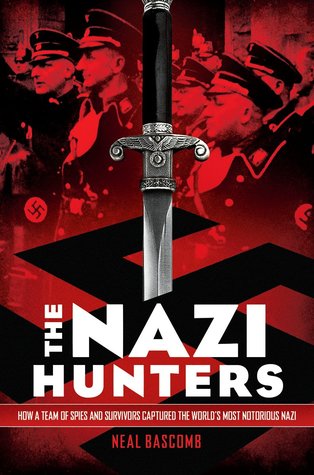
The Nazi Hunters: How a Team of Spies and Survivors Captured the World’s Most Notorious Nazi
Author: Neal Bascomb
Expected Publication: August 27th, 2013 by Arthur A. Levine

Summary: Adolf Eichmann was one of the world’s most notorious Nazis as the head of operations for the Nazis’ Final Solution. Essentially, he organized the transportation of the Jewish people to ghettos and concentration camps. This work of narrative nonfiction begins with the background of Eichmann’s role in the genocide. Then, in 1945, Eichmann disappeared from Germany and went into hiding. Due to the bravery of more than a dozen individuals, Eichmann is captured and put on trial for the world to view.

Review: This is an excellently researched work of nonfiction. I was amazed at the number of intricate details that went into the investigation and capture of this criminal. Neal Bascomb (who is also the author of Hunting Eichmann, the adult-marketed version of this book) was extraordinarily honest in this text. At times, I had to slap myself when I felt pity for Eichmann, as I tend to be too empathetic in my search for humanity in murderers. Bascomb doesn’t glorify the details—his account is genuine and based on numerous interviews of individuals who were connected to this hunt. I find that, in general, I become a bit disengaged when I read nonfiction, but this book kept me hooked; I wanted to read more about the courage and bravery of the Nazi Hunters. I highly recommend this text for all readers.

Teacher’s Tools for Navigation: Nonfiction is, arguably, absent from many classrooms. English curricula tend to focus more on fiction, and I am interested to see if the Common Core will truly shift this reality (err, as much as the creators think it will, anyways). This text bridges the gap between fiction and nonfiction because it is written in narrative form. For students who despise nonfiction texts, this book will have appeal because Bascomb weaves in great characterization and detail. Teachers who enjoy employing literature circles in their classrooms might consider a nonfiction focus for the circles, and this book would make for a fantastic choice for students. Alternatively, it would pair very well with other texts from the Holocaust, such as Night by Elie Wiesel. When I finished reading this book, I couldn’t help but scour the internet for more details about other Nazi criminals and their captures/trials. I imagine that students will feel this same curiosity after reading this text, so I envision it would work well at the center of a research project.

Discussion Questions: Was Eichmann just following orders or is he a murderer? At what point does the excuse of “I was just following orders” become baseless and unreasonable?; Does Eichmann give up? Do you see him as a strong individual by the end of the text?; Do you think Eichmann’s wife was truly ignorant to his crimes? Do you think she should have turned him in?; How do Eichmann’s children’s views reflect on his character and views?

We Flagged: “‘For the first time in history the Jews will judge their assassins, and for the first time the world will hear the full story of the edict of annihilation against an entire people'” (Chapter 10).

Please note: The above quotes are from the Advanced Reader Copy. The e-book (a galley) did not provide page numbers. The quotes may change when the book is published.

Read This If You Loved: Night by Elie Wiesel, Hunting Eichmann by Neal Bascomb, Nuremberg: Infamy on Trial by Joseph E. Persco, books in the The Real Justice seres, or other works of nonfiction that concern WWII, Crime, Police Investigation, War, and Justice

Recommended For:

litcirclesbuttonsmall classroomlibrarybuttonsmall

026F3FBCC8C3913BD3A4D3F6920340D5

Thank you to NetGalley and Arthur A. Levine books for sending me the Advanced Reader Copy!

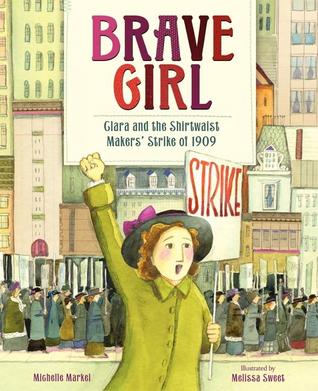
Brave Girl by Michelle Markel

Share

NF PB 2013

Nonfiction Picture Book Wednesday

Nonfiction Picture Book Wednesday is hosted by Kid Lit Frenzy and was started to help promote the reading of nonfiction texts. Most Wednesdays, we will be participating and will review a nonfiction text (though it may not always be a picture book).
Be sure to visit Kid Lit Frenzy and see what other nonfiction books are shared this week!

brave

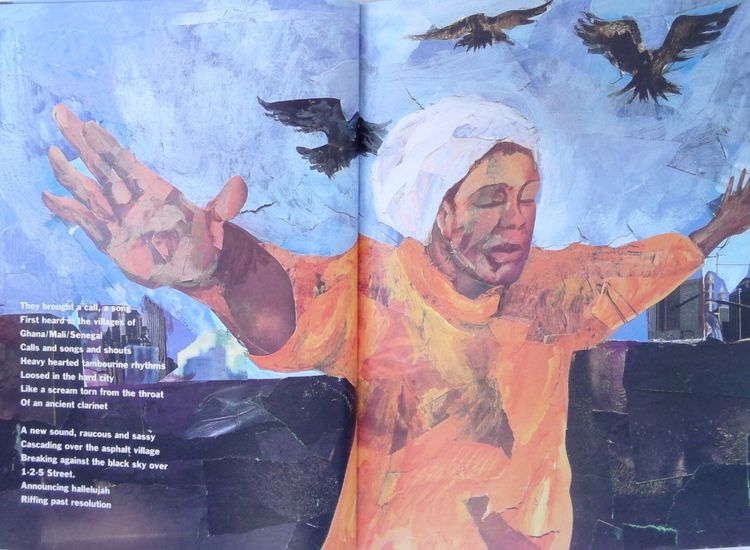
Brave Girl: Clara and the Shirtwaist Makers’ Strike of 1909
Author: Michelle Markel
Illustrator: Melissa Sweet
Published January 22nd, 2013 by Balzer + Bray

Summary: Clara and her family immigrated to New York. They were searching for the American dream. When her father could not find a job, Clara quit school and became a garment worker to support her family. The conditions at her factory were appalling: low wages, unfair rules, and locks on the door. After discussions between the workers, Clara helps urge the girls to fight for their rights.

Review: I am sucker for this biographical picture book for two reasons: 1) I had not known about the Shirtwaist Makers’ Strike of 1909 before and I love learning about new historical moments. I know that it interested me (as I know it would for kids), because after I read the additional information about the garment industry I was on the internet searching for more information. 2) Clara is such a great example of girl power! AND she is a historical figure that shows girls (and boys) that girls can stand up for themselves when they are not being treated well (in real life). I love that she overcame so much to not only stand up for her rights, but also to get an education and take care of her family. What an amazing person to learn about.

Teacher’s Tools for Navigation: The main way that I would use this book is as a read aloud. It will definitely cause a great discussion and may push students to do further research. It would also be a perfect read aloud for a unit on women’s rights, immigration, overcoming obstacles, girl power, labor laws, or the early 1900s to help make connections to history. 

Discussion Questions: Do you think that Clara continuing her education helped her in being able to fight for her labor rights?; Clara made a tough decision between continuing school during the day or working. Do you agree or disagree with her decision? Why or why not? How did her decision affect her life?; What caused the garment workers to strike?

We Flagged: “But Clara is uncrushable. She wants to read, she wants to learn! At the end of her shift, though her eyes hurt from straining in the gaslight and her back hurts from hunching over the sewing machine, she walks to the library. She fills her empty stomach with a single glass of milk and goes to school at night. When she gets home in the late evening, she sleeps only a few hours before rising again.” (p. 12-13)

To see a preview of the illustrations, visit Amazon’s “Look Inside” for Brave Girl.

Read This If You Loved: Here Comes the Girl Scouts! by Shana Corey, The Price of Freedom by Dennis Brindell Fradin, Boycott Blues by Andrea Davis Pinkney, Annie and Helen by Deborah Hopkinson

Recommended for: 

readaloudbuttonsmall closereadinganalysisbuttonsmall classroomlibrarybuttonsmall

Who is a female historical figure who shows as much girl power as Clara that you believe should be talked about more?

Signature

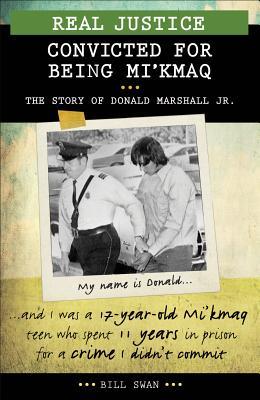
Real Justice: Convicted for Being Mi’kmaq: The Story of Donald Marshall Jr. by Bill Swan

Share

NF PB 2013

Nonfiction Picture Book Wednesday

Nonfiction Picture Book Wednesday is hosted by Kid Lit Frenzy and was started to help promote the reading of nonfiction texts. Most Wednesdays, we will be participating and will review a nonfiction text (though it may not always be a picture book). Be sure to visit Kid Lit Frenzy and see what other nonfiction books are shared this week!

17198555

Real Justice: Convicted for being Mi’kmaq: The Story of Donald Marshall Jr.
Author: Bill Swan
Expected Publication: September 1st, 2013 by James Lorimer & Company

Summary: This book is part of the Real Justice series by James Lorimer & Company that shed light on young people who are wrongfully convicted of crimes. Donald Marshall Jr. spent eleven years in prison for a crime he never committed. He was the eldest son of the Grand Chief of the Mi’kmaw Nation, and racism certainly played a role in his conviction. It was a late night in Wentworth Park when Sandy Seale, a black teen, and Donald Marshall Jr. are waved over by two drunk men wanting cigarettes. One of the men stabs Sandy Seale in the side, and Donald Marshall Jr. runs for help. What he doesn’t know is that the police won’t believe his story, and they will do anything they can to convict him of the Seale’s death.

Review: I enjoyed the journalistic format of this book. Swan does an excellent job researching and depicting the facts of the case. He goes into depth when in his description of each witness’s story, and the reader gets a comprehensive background of the crime scene, investigation, and trial. As a Micmac Indian (the American version of this tribe), I was very interested in this story. Admittedly, I was a bit disappointed that aside from the comments about racism and a brief note toward the end of the book, there wasn’t much information about the Mi’kmaq Indians. I completely understand this, as the author chose to focus more on the investigation and trial, but I was secretly craving more information about Donald Marshall Jr.’s life background and customs. This text would make for a great nonfiction text to use in the classroom.

Teacher’s Tools for Navigation: I love teaching nonfiction units because there is so much variety. Teachers can offer myriad choices of memoirs and informational nonfiction for students to do research. After reading this story, students might research more about the case (if any other information is available) or they could compare and contrast this case with another example of injustice, particularly one that was impacted by racism. I have a feeling that students, like me, will want to research more about Marshall’s culture or the racial imbalance that existed at the time of the crime. I could also see this being paired with Black and White by Paul Volponi, an example of realistic fiction that also deals with injustice due to racism.

Discussion Questions: Does racism still exist today? In what ways did it impact the crime, investigation, and trial? What injustices did you see?; Do you think Marshall should have been compensated more for his eleven years in jail?; How does Marshall show incredible strength throughout his ordeal?

We Flagged: “‘Know what I think?’ MacIntyre added, as though on cue. ‘I think Marshall’s description of some old guy is a crock. The whole thing likely happened when that Indian, fueled up with fire water, got in an argument with the black kid'” (Chapter 5).

“When the reality hit [Donald Marshall Jr.], he cried the tears of childhood” (Chapter 15).

Please note: The above quotes are from the Advanced Reader Copy. Chapter numbers are included instead of page numbers because the e-reader did not provide page numbers. The quotes may change when the book is published.

Read This If You Loved: Hole in my Life by Jack Gantos, Black and White by Paul Volponi, other books in the Real Justice series, other books about Law and Order

Recommended For:

classroomlibrarybuttonsmall

RickiSig