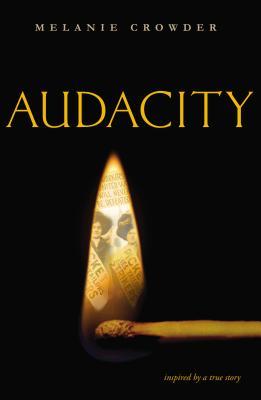
Audacity by Melanie Crowder

Share

audacity

Audacity
Author: Melanie Crowder
Published: January 8, 2015 by Philomel

Goodreads Summary: The inspiring story of Clara Lemlich, whose fight for equal rights led to the largest strike by women in American history

A gorgeously told novel in verse written with intimacy and power, Audacity is inspired by the real-life story of Clara Lemlich, a spirited young woman who emigrated from Russia to New York at the turn of the twentieth century and fought tenaciously for equal rights. Bucking the norms of both her traditional Jewish family and societal conventions, Clara refuses to accept substandard working conditions in the factories on Manhattan’s Lower East Side. For years, Clara devotes herself to the labor fight, speaking up for those who suffer in silence. In time, Clara convinces the women in the factories to strike, organize, and unionize, culminating in the famous Uprising of the 20,000.
Powerful, breathtaking, and inspiring, Audacity is the story of a remarkable young woman, whose passion and selfless devotion to her cause changed the world.

Ricki’s Review: This is an inspirational book in verse based on the true story of Clara Lemlich. She was a Russian Jewish immigrant who was forced to work in horrible factory conditions in the early 1900s. Clara stood up for her rights and fought with the union. What I liked most about this book is the author gives so much information about Orthodox Judaism, unions, and feminism, but she doesn’t hit readers over the head with the information. I don’t enjoy reading books about religion, and I don’t particularly seek out books about feminism (or unions, for that matter), yet I found Clara’s story to be both fascinating and compelling. All types of readers will love this story, and it is very teachable.

Teacher’s Tools for Navigation: I would love to teach this book. It offers great opportunities for building background knowledge about history. I wish this book existed when I used to teach The Jungle because the connections are innumerable. If I taught this book, I would use a jigsaw, research, and/or webquest activity where students spent time researching the 1900s, Russian immigration in the 1900s, unions, feminism, schooling in the 1900s, the Triangle Shirtwaist Factory fire, and Orthodox Judaism. This knowledge would provide a rich reading of this text.

Discussion Questions: How do Clara’s parents and siblings view her actions?; Make a list of your top five values. Then, make a list of Clara’s top five values. Are they the same? Different? Do you think your values differ from hers because of your personalities or because of the different time periods you live in?

We Flagged: “How can I tell Mama / who toils / sunup / to sundown / to be a good mother / a good wife / that this life / (her life) / is not enough for me, / that I dream instead / of words / ideas / a life that stretches far beyond / the bounds of this shtetl?” (p. 12).

*Please note that this quotation is from an advanced reader copy, and the quote may be different in the published version of the book.*

Read This If You Loved: The Jungle by Upton Sinclair, Like Water on Stone by Dana Walrath, A Northern Light by Jennifer Donnelly, Between Shades of Gray by Ruta Sepetys

Recommended For:

 litcirclesbuttonsmall classroomlibrarybuttonsmall

RickiSig

**A special thank you to Penguin for sending this book for review!**

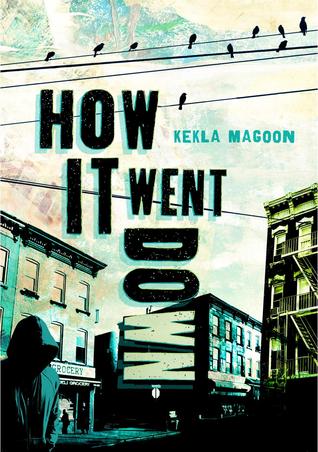
How It Went Down by Kekla Magoon

Share

how it went down

How It Went Down
Author: Kekla Magoon
Published: October 21, 2014 by Henry Holt and Co.

Goodreads Summary: When sixteen-year-old Tariq Johnson dies from two gunshot wounds, his community is thrown into an uproar. Tariq was black. The shooter, Jack Franklin, is white.

In the aftermath of Tariq’s death, everyone has something to say, but no two accounts of the events line up. Day by day, new twists further obscure the truth.

Tariq’s friends, family, and community struggle to make sense of the tragedy, and to cope with the hole left behind when a life is cut short. In their own words, they grapple for a way to say with certainty: This is how it went down.

Ricki’s Review: In light of the recent protests, this is an incredibly insightful book that is very important. The point-of-view shifts every 2-3 pages, which was very thought-provoking. Too often, books depict stereotypical portrayals of members of cultures, and the gamut of characters within this text felt very realistic. For some, this book may be too gritty and too uncomfortable. There is nothing comfortable about discussions regarding inequities and privilege in society. But if you walk down the halls of my high school, there is nothing in the book that is not a concern in schools. This is not a feel-good read, but it made me think. And thinking…is a very good thing.

Teacher’s Tools for Navigation: There is much to discuss in this book. Teachers could use it to start conversations about power and privilege. There are a lot of discrepancies between the characters’ perceptions of the shootings, and I imagine students would disagree about what happened. Teachers might elect to hold a verbal or silent debate. Also, I would love to discuss the structure of the text. The creativity in the form is purposeful, and it would be interesting for students to investigate why Magoon structured it in the way she did.

Discussion Questions: Why does Magoon structure the novel with alternating voices? How is the novel structured as a whole?; Does this story serve as a counter-narrative? If so, how? If not, why not?; Did Tariq have a gun in his hand? Why do/don’t you think so?; How does the story evolve as time passes?

We Flagged: “As a black man, you have to keep your head down. You have to keep yourself steady. You have to follow every rule that’s ever been written, plus a few that have always remained unspoken.”

Read This If You Loved: The Outsiders by S.E. Hinton, On the Run by Alice Goffman, The New Jim Crow: Mass Incarceration in the Age of Colorblindness by Michelle Alexander, Monster by Walter Dean Myers, The Brothers Torres by Coert Voorhees, Autobiography of my Dead Brother by Walter Dean Myers

Recommended For:

 litcirclesbuttonsmall classroomlibrarybuttonsmall

RickiSig

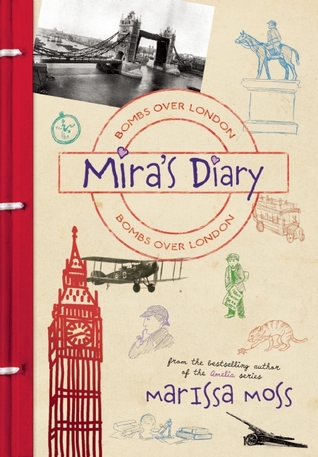
Holiday Blog Hop with Reviews!: Mira’s Diary series by Marissa Moss

Share

mira1 mira2 bombs

Mira’s Diary
Author: Marissa Moss
Lost in Paris Published September 4th, 2012 by Sourcebooks
Home Sweet Rome Published April 2nd, 2013 by Sourcebooks
Bombs Over London Published August 26th, 2014 by Creston Books

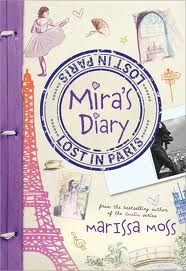
Lost in Paris Goodreads Summary: Mira is shocked when she receives a postcard from her missing mother from Paris. Her father decides it’s time for a trip to France to search for her. While visiting Notre Dame, Mira touches a gargoyle and is whirled into the past. There she meets the famous painter Degas and catches a brief, shocking glimpse of her mother. Mira begins to suspect that her mom didn’t run out on them but is a prisoner of the past. Can one family on an incredible worldwide adventure stop a plot in time?

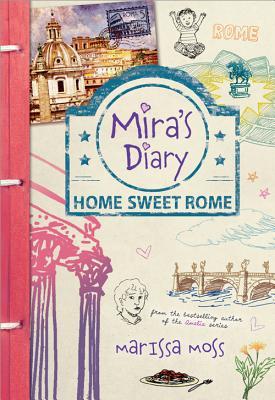
Home Sweet Rome Goodreads Summary: As if traveling to a new country in search of her missing mother weren’t difficult enough, Mira has to do it dressed as a boy. In a different century.

A new postcard from her time-traveling mother points Mira to the 16th century Rome. But before she can rescue her mom, she must follow the clues left around the city to find Giordano Bruno, a famous thinker and mathematician, who discovered something so shocking that important Italian officials don’t want it revealed. All the while avoiding the Watchers–time-traveling police who want Mira back in her own time.

It’s another whirlwind adventure for Mira, and this time she is determined to bring her mother out of the past.

Bombs Over London Goodreads Summary: In the third book of the popular time-travel series, Mira navigates her way through WWI London, meeting famous suffragists and writers like Sir Arthur Conan Doyle. Instructed by her time-traveling mother to steal a German spy’s briefcase full of secrets and pass on the information to British Intelligence, Mira struggles with whether the changes she has been working for are the right thing to do after all. How much control do we really want of history? When is it best to leave our fate in destiny’s hands?

My Review of Lost in Paris:  I was enthralled by this smart, yet still accessible middle grade novel. Once I began it, I did not want to put it down.

The book was not only packed with an interesting concept (Mira and her mother travel through time to try to right wrongs that haven’t happened yet), but the book was filled with information about late 19th century Paris, French history, and art. Although some may feel like there was information overload, I found it all so fascinating. I am primarily sucked in when a book includes history that is less well known and that is exactly what this book did. Do you know about the Dreyfus Affair? After reading you will. I was also so excited to read a book so full of art history and art elements. Each page includes sketches from Mira and throughout the book you meet incredible artists such as Degas, Monet and Rodin. A cast of characters that is better than any fiction. This part of the book actually reminds me a lot of Woody Allen’s Midnight in Paris except Mira is trying to fix something instead of fixing herself.

My Review of Home Sweet Rome and Bombs Over LondonI don’t want to share too much about these titles as my thoughts are a bit spoilery, but I want to say that they did not disappoint. After reading book 1, all I wanted was to know what happened to Mira next, and I was not disappointed in her next adventures. I know book 4 is going to be in our future, and I cannot wait to read that one as well.

Teachers’ Tools for Navigation: One wish I had while reading books 1 & 2 was wanting to see the artists’ works as each artist was introduced. I was blessed enough to have an art-filled childhood so I could picture many of the pieces; however, many students do not have that background knowledge. This would be a great thing to do when reading the novel–share the artwork with students as you encounter them in the story. It would also be meaningful to find primary sources from the time period to share with students as you read Mira’s story.  This will make learning about the time period even more impactful.

Additionally, Marissa Moss’s writing is one that can definitely be used as an example of imagery and descriptive writing during writing workshop or other writing lessons. She actually sucks you in when Mira time travels, and deposits you in history that you can visualize.

Discussion Questions: Research one of the artists mentioned in book 1 or 2, write about his or her life, artwork, beliefs, etc.; Write about a time in your life when you had to trust your instincts, when you weren’t sure what to do but had to make a decision based on what felt right to you in the moment.; Was there a time when you had a feeling your parents were incorrect? What happened?; Which of the three places that Mira has visited would you have liked to go? Why?

We Flagged: “Dad was right – [Notre Dame is] truly a wonder of the world…

Usually when you go into a building, it’s lighter or darker, cooler or warmer than outdoors, but it’s still part of the same world. Stepping into Notre Dame was like changing time zones or countries, crossing some magical border. A hush filled the cavernous, echoey space of the cathedral, despite all of the voices of tourists murmuring and people praying, as if the sound was absorbed into the bones of the building itself.

Light streamed in from the windows like a physical presence, the kind of light you think you can reach out and touch…The air itself felt still and chilled by the stone all around. The walls were stretched thin between the pillars that soared into a vault overhead, like the skin of a massive beast taut between its ribs.” (Lost in Paris, p. 14-15)

“The day was gray and cold. I found myself in a busy street lined with crumbling brick buildings, shabby tenements with darkened windows. Dingy laundry hung in lines across the narrow alleyways. This may have been historical London, but there was nothing charming here. Just three-story houses of shuddering poverty with narrow doors and small pinched windows, as if sunlight cost money. The whole place was dark, muddy, broken-down, stinking of fish and rot and some indefinable yuck. The stench was so thick it had a physical presence, like a filthy hand pressed against my nose.”  (Bombs Over London, p. 26)

Read This If You Loved: Ruby Red (series) by Kerstin Gier, All Our Yesterdays by Cristin Terrill, When You Reach Me by Rebecca Stead, Blue Balliet novels

Recommended For: 

classroomlibrarybuttonsmall closereadinganalysisbuttonsmall

Signature

**Thank you to Gina and Samantha at JKSCommunications for having us as part of the blog hop!**

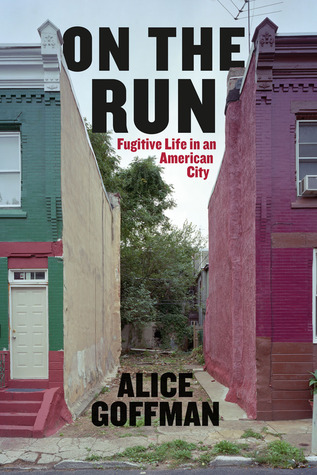
On the Run: Fugitive Life in an American City by Alice Goffman

Share

on the run

On the Run: Fugitive Life in an American City
Author: Alice Goffman
Published: May 1, 2014 by University Of Chicago Press

Summary: Forty years in, the War on Drugs has done almost nothing to prevent drugs from being sold or used, but it has nonetheless created a little-known surveillance state in America’s most disadvantaged neighborhoods. Arrest quotas and high-tech surveillance techniques criminalize entire blocks, and transform the very associations that should stabilize young lives—family, relationships, jobs—into liabilities, as the police use such relationships to track down suspects, demand information, and threaten consequences.

Alice Goffman spent six years living in one such neighborhood in Philadelphia, and her close observations and often harrowing stories reveal the pernicious effects of this pervasive policing. Goffman introduces us to an unforgettable cast of young African American men who are caught up in this web of warrants and surveillance—some of them small-time drug dealers, others just ordinary guys dealing with limited choices. All find the web of presumed criminality, built as it is on the very associations and friendships that make up a life, nearly impossible to escape. We watch as the pleasures of summer-evening stoop-sitting are shattered by the arrival of a carful of cops looking to serve a warrant; we watch—and can’t help but be shocked—as teenagers teach their younger siblings and cousins how to run from the police (and, crucially, to keep away from friends and family so they can stay hidden); and we see, over and over, the relentless toll that the presumption of criminality takes on families—and futures.

While not denying the problems of the drug trade, and the violence that often accompanies it, through her gripping accounts of daily life in the forgotten neighborhoods of America’s cities, Goffman makes it impossible for us to ignore the very real human costs of our failed response—the blighting of entire neighborhoods, and the needless sacrifice of whole generations.

Review: Inspired by a college course in her sophomore year, Alice Goffman seeks an ethnographic experience in inner-city Philadelphia. She gets a part-time job tutoring an African American girl, Aisha, and soon befriends the boys of 6th Street (pseudonym). Mike adopts her as a younger sister, and she comes to live with these boys—studying their every move. This quality piece of ethnographic research is a page turner. While it reads a bit more like a book than a scholarly publication, readers can glean her methodological approach through the footnotes. Goffman’s mission is clear. She wants readers to understand the inequities these African American boys of 6th Street face, and she shows how the criminal justice system (both law enforcement and the justice/prison system) are not working. I was ashamed at the actions of the police, specifically, and think this is very educational to readers of all ages, particularly in the wake of the racially based crimes that we consistently see in the news.

Teacher’s Tools for Navigation: This book is written for adults, but I think it would be very educational for high school students. I would use excerpts of this text to show students the realities of life on 6th Street in Philadelphia. It could be used to better understand crimes in the news, to teach inequity, to examine class issues, to understand the drug trade, and to fight racism. It would be eye-opening for students. While teaching this, I would also consider pairing it with Malcolm Gladwell’s review.

Discussion Questions: What can we do to stop the injustice of the court system? How is it flawed?; What role does race play in this text?; Was Goffman too close to the subjects of her ethnography? Do you think this affected her portrayal of 6th Street? What are the positives and negatives of this approach of qualitative study?

We Flagged: “To be on the run is a strange phrase for legally compromised people, because to be on the run is also to be at a standstill.”

“Thus, the great paradox of a highly punitive approach to crime control is that it winds up criminalizing so much of daily life as to foster widespread illegality as people work to circumvent it. Intensive policing and the crime it intends to control become mutually reinforcing. The extent to which crime elicits harsh policing, or policing itself contributes to a climate of violence and illegality, becomes impossible to sort out.”

Read This If You Loved: Punished: Policing the Lives of Black and Latino Boys by Victor M. Rios; The New Jim Crow: Mass Incarceration in the Age of Colorblindness by Michelle Alexander 

Recommended For:

  closereadinganalysisbuttonsmall classroomlibrarybuttonsmall

RickiSig

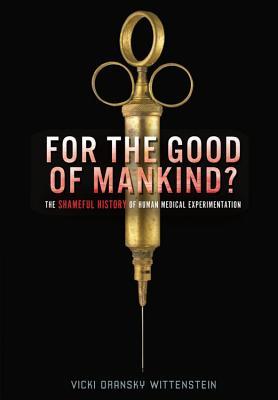
For the Good of Mankind?: The Shameful History of Human Medical Experimentation by Vicki O. Wittenstein

Share

NF PB 2013

Nonfiction Picture Book Wednesday

Nonfiction Picture Book Wednesday is hosted by Kid Lit Frenzy and was started to help promote the reading of nonfiction texts. Most Wednesdays, we will be participating and will review a nonfiction text (though it may not always be a picture book). Be sure to visit Kid Lit Frenzy and see what other nonfiction books are shared this week!

for the good of mankind

For the Good of Mankind?: The Shameful History of Human Medical Experimentation
Author: Vicki O. Wittenstein
Published: August 1st, 2013 by Lerner Publishing Group

Summary: 

Experiment: A child is deliberately infected with the deadly smallpox disease without his parents’ informed consent.
Result: The world’s first vaccine.
Experiment: A slave woman is forced to undergo more than thirty operations without anesthesia.
Result: The beginnings of modern gynecology.
Experiment: From 1946 to 1953, seventy-four boys are fed oatmeal laced with radioactive iron and calcium.
Result: A better understanding of the effects of radioactivity on the human body.

Experimental incidents such as these paved the way for crucial medical discoveries and lifesaving cures and procedures. But they also violated the rights of their subjects, many of whom did not give their consent to the experiments. The subjects suffered excruciating pain and humiliation. Some even died as a result of the procedures. Even in the twenty-first century—despite laws, regulations, and ethical conventions—the tension between medical experimentation and patient rights continues.

How do doctors balance the need to test new medicines and procedures with their ethical and moral duty to protect the rights of human subjects? What price has been paid for medical knowledge? Can we learn from the broken oaths of the past?

Take a harrowing journey through some of history’s greatest medical advances—and its most horrifying medical atrocities. You’ll read about orphans injected with lethal tuberculosis and concentration camp inmates tortured by Nazi doctors. You’ll also learn about radiation experimentation and present-day clinical trials that prove fatal. Through these stories, explore the human suffering that has gone hand in hand with medical advancement.

Review: Human experimentation is a very difficult subject matter, one that both horrifies and fascinates teens. I always try to believe in the good of mankind, but books like this always seem to challenge that assumption. It was difficult for me to read this book because I cannot fathom how any person could justify using individuals (including CHILDREN!) for experimentation. This book is incredibly well-researched and documents a variety of cases of experimentation. I couldn’t put it down because I was so astonished by the details of the cases. It is colorful and eye-appealing, and this will captivate reluctant readers. I think teenagers would see nonfiction in a very positive light if they were given books like this one. I absolutely recommend it to teachers.

Teacher’s Tools for Navigation: Teachers might assign different chapters to groups of students. Students will enjoy reading about and presenting the material covered in this book. Persuasive essays are always a chore, but there are many controversial issues within this book, and I think students would really enjoy writing essays about this subject matter. This book also includes discussion questions for readers.

Discussion Questions: Can we justify the experimentation on a human being if it will better the lives of millions of people?; Why do you think human experimentation was allowed for such a long time? Can we judge the doctors who experimented on people centuries ago?; Applying the stories to animals, do you think animal experimentation is justifiable? Why or why not?

Read This If You Loved: The Immortal Life of Henrietta Lacks by Rebecca Skloot, books in the Real Justice series, Brave New World by Aldous Huxley


Recommended For:

closereadinganalysisbuttonsmall classroomlibrarybuttonsmall

RickiSig

Harlem: A Poem by Walter Dean Myers

Share

0-590-54340-7

Harlem: A Poem
Author: Walter Dean Myers
Illustrator: Christopher Myers
Published 1997 by Scholastic Press

Goodreads Summary: Walter Dean Myers calls to life the deep, rich, and hope-filled history of Harlem, this crucible of American culture.

Christopher Myers’ boldly assembled collage art resonates with feeling, and tells a tale all its own. Words and pictures together connect readers -of all ages – to the spirit of Harlem in its music, art, literature, and everyday life, and to how it has helped shape us as a people.

My Review & Teacher’s Tools For Navigation: After reading this book the first time, I knew I was going to have to tackle it differently than just reading a picture book. I wanted to make sense of it and I knew that I didn’t have the background knowledge so I knew that the power of all of the words had not sunk in yet. So, I typed up the poem in Google Drive and began doing my very own close reading of the poem.  I started with research of terms and names that I didn’t know, building my knowledge of the culture and history of Harlem. Through this build up of knowledge, I began to understand the beauty behind Myers’s poem. The voice of this poem is one of heartbreak, but strength; proud of not only what he has become, but where he came from. This poem is a celebration of the history of Harlem and its citizens—a celebration of its religion, music, poets, authors, and everything that made/makes it a hub for the civil rights movement and African American culture.

This book would be a great one to use across many different subject areas- history, literature, and art.

Discussion Questions: What references to Harlem’s history did Myers intertwine into his poem?; How did Christopher Myers’s illustrations take the poem to another level?; (Writing) Do research about your ancestors and your heritage. Through this research, find people, places, literature, art, musicians, etc. that helped shape who you or your family are. Use this research to construct a poem about your heritage. Find a piece of artwork to accompany your poem. 

We Flagged: 

The uptown A
Rattles past 110th street
Unreal to real
Relaxing the soul

Shango and Jesus
Asante and Mende
One people, a hundred different
People
Huddled masses
And crowded dreams

Read This If You Loved: Duke Ellington: The Piano Prince and His Orchestra and Ella Fitzgerald: The Tale of a Vocal Virtuosa by Andrea Davis Pinkney, The Complete Poems including Harlem by Langston Hughes, Harlem Summer by Walter Dean Myers, Nonfiction books about Harlem

Recommended For: 

classroomlibrarybuttonsmall closereadinganalysisbuttonsmall readaloudbuttonsmall

Signature

Rose Under Fire by Elizabeth Wein

Share

17262236
Title: Rose under Fire
Author: Elizabeth Wein
Expected Publication: September 10th, 2013 by Miramax (Disney)

Summary: While flying an Allied fighter plane from Paris to England, American ATA pilot and amateur poet, Rose Justice, is captured by the Nazis and sent to Ravensbrück, the notorious women’s concentration camp. Trapped in horrific circumstances, Rose finds hope in the impossible through the loyalty, bravery and friendship of her fellow prisoners. But will that be enough to endure the fate that’s in store for her?

Elizabeth Wein, author of the critically-acclaimed and best-selling Code Name Verity, delivers another stunning WWII thriller. The unforgettable story of Rose Justice is forged from heart-wrenching courage, resolve, and the slim, bright chance of survival.

Review: Out of the thousands of books I’ve read, this one is going to sit among my all-time favorites. There is a phenomenal balance of history and narrative that will engage readers while offering harrowing lessons in history. I am not an air and space girl. My husband loves planes, and he was giddy when we went to the Smithsonian Air and Space Museum in Washington D.C. As much as I want to love planes, I don’t find them to be interesting. This book changed my outlook.

Rose under Fire has many similarities with Wein’s Code Name Verity. They are both written in an epistolary format, involve pilots/airplanes, and are set during World War II. Both offer wonderfully complex themes about friendship, loyalty, and the strength of women. However, Rose under Fire focuses more on concentration camps, while Code Name Verity dealt more with the interrogation techniques used during World War II. Neither of these two elements drove the novels, but they are two plot features that make the texts quite different from one other. I found CNV to be a bit slow in the beginning (which isn’t the case with all readers), but I was hooked to Rose under Fire from the very first page. Wein writes characters so vividly that I still feel their presence in my life, long after I finish the books. I recommend this book to everyone. It will appeal to readers of all ages, backgrounds, genders, and interest levels.

Teacher’s Tools for Navigation: Teachers, this is a MUST-HAVE book. It is phenomenally written and shows the truly complexity of young adult literature. It can be used to teach elements like setting, character, dialogue, the epistolary format, imagery, voice, and theme. Students might write letters back to Rose, or they could analyze one of the many well-developed characters in this story. It would also make for a great research unit of topics like the Nuremberg Trials, female WWII pilots, flying bombs, or the experimentation on Holocaust prisoners. History teachers will also find this text to be invaluable.

Discussion Questions: What loyalties did the Holocaust prisoners have for each other? What are some examples of incidents that showed this loyalty?; Why were the Rabbits so important to the concentration camp? What did they add to the story as a whole?; How does Maddie’s friendship with Rose differ from her friendship with Julie?; Why was Nick’s character important throughout the story? How does his level of importance change, and why?; Rose has very different friendships with many of the characters. Describe how three of these friendships differ from one another.; Does the novel end in a hopeful way? Why or why not?

We Flagged: I marked so many passages that it is hard to choose just a few, so I selected two longer quotes that show the quality of Wein’s writing.

Incredible Imagery:

“…and the reason everyone in there was trying to get out in the rain was because they were dying of thirst.

Really dying of it, I think.

Hands and arms and heads stuck out anywhere there was a gap—cupped hands collecting rainwater, some holding bowls or even just a piece of cloth to collect moisture—I saw one woman lying on her back with her hair in the black cinder mud at the tent’s edge, her mouth open, letting a rivulet of water stream down the canvas and into her mouth.”

And Beautiful Figurative Language:

“Hope—you think of hope as a bright thing, a strong thing, sustaining. But it’s not. It’s the opposite. It’s simply this: lumps of stale bread stuck down your shirt. Stale gray bread eked out with ground fish bones, which you won’t eat because you’re going to give it away, and maybe you’ll get a message through to your friend. That’s all you need.

God, I was hungry.”

Please note: The above quotes are from the Advanced Reader Copy. The e-book (a galley) did not provide page or chapter numbers. The quotes may change when the book is published.

Read This If You Loved: Code Name Verity by Elizabeth Wein, Between Shades of Gray by Ruta Sepetys, Nazi Hunters by Neal Bascomb, Night by Elie Wiesel

Recommended For:

 litcirclesbuttonsmall closereadinganalysisbuttonsmall classroomlibrarybuttonsmall

026F3FBCC8C3913BD3A4D3F6920340D5

Thank you to NetGalley and Disney for sending me the Advanced Reader Copy!