How It Went Down by Kekla Magoon

Share

how it went down

How It Went Down
Author: Kekla Magoon
Published: October 21, 2014 by Henry Holt and Co.

Goodreads Summary: When sixteen-year-old Tariq Johnson dies from two gunshot wounds, his community is thrown into an uproar. Tariq was black. The shooter, Jack Franklin, is white.

In the aftermath of Tariq’s death, everyone has something to say, but no two accounts of the events line up. Day by day, new twists further obscure the truth.

Tariq’s friends, family, and community struggle to make sense of the tragedy, and to cope with the hole left behind when a life is cut short. In their own words, they grapple for a way to say with certainty: This is how it went down.

Ricki’s Review: In light of the recent protests, this is an incredibly insightful book that is very important. The point-of-view shifts every 2-3 pages, which was very thought-provoking. Too often, books depict stereotypical portrayals of members of cultures, and the gamut of characters within this text felt very realistic. For some, this book may be too gritty and too uncomfortable. There is nothing comfortable about discussions regarding inequities and privilege in society. But if you walk down the halls of my high school, there is nothing in the book that is not a concern in schools. This is not a feel-good read, but it made me think. And thinking…is a very good thing.

Teacher’s Tools for Navigation: There is much to discuss in this book. Teachers could use it to start conversations about power and privilege. There are a lot of discrepancies between the characters’ perceptions of the shootings, and I imagine students would disagree about what happened. Teachers might elect to hold a verbal or silent debate. Also, I would love to discuss the structure of the text. The creativity in the form is purposeful, and it would be interesting for students to investigate why Magoon structured it in the way she did.

Discussion Questions: Why does Magoon structure the novel with alternating voices? How is the novel structured as a whole?; Does this story serve as a counter-narrative? If so, how? If not, why not?; Did Tariq have a gun in his hand? Why do/don’t you think so?; How does the story evolve as time passes?

We Flagged: “As a black man, you have to keep your head down. You have to keep yourself steady. You have to follow every rule that’s ever been written, plus a few that have always remained unspoken.”

Read This If You Loved: The Outsiders by S.E. Hinton, On the Run by Alice Goffman, The New Jim Crow: Mass Incarceration in the Age of Colorblindness by Michelle Alexander, Monster by Walter Dean Myers, The Brothers Torres by Coert Voorhees, Autobiography of my Dead Brother by Walter Dean Myers

Recommended For:

 litcirclesbuttonsmall classroomlibrarybuttonsmall

RickiSig

Blog Tour with Review, Giveaway, and Author’s Guest Post!: Emmanuel’s Dream: The True Story of Emmanuel Ofosu Yeboah by Laurie Ann Thompson

Share

NFPB2015

Nonfiction Picture Book Wednesday is hosted by Kid Lit Frenzy and was started to help promote the reading of nonfiction texts. Most Wednesdays, we will be participating and will review a nonfiction text (though it may not always be a picture book).
Be sure to visit Kid Lit Frenzy and see what other nonfiction books are shared this week!
emmanuel

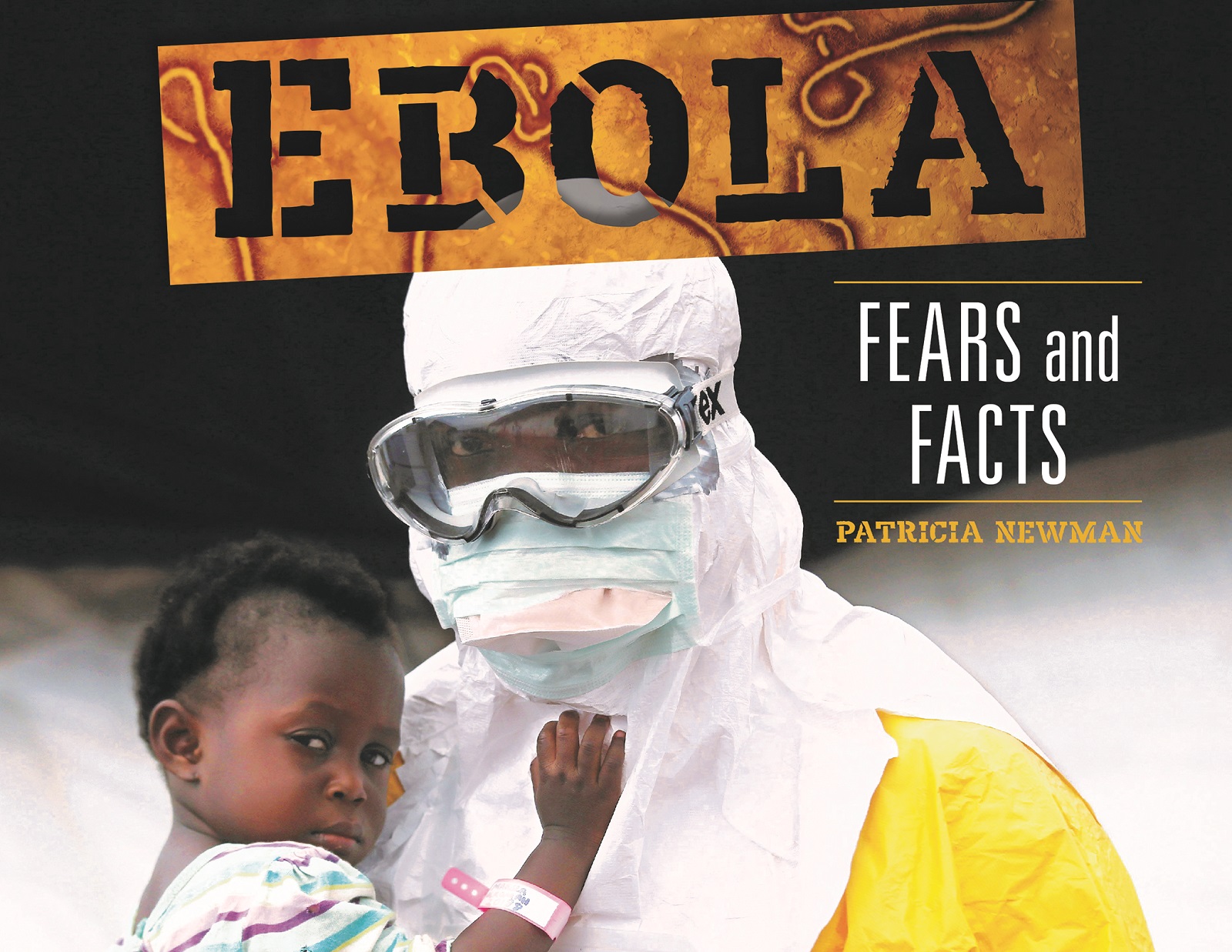
Emmanuel’s Dream: The True Story of Emmanuel Ofosu Yeboah
Author: Laurie Ann Thompson
Illustrator: Sean Qualls
Published January 6th, 2015 by Schwartz & Wade

Goodreads Summary: Emmanuel Ofosu Yeboah’s inspiring true story—which was turned into a film, Emmanuel’s Gift, narrated by Oprah Winfrey—is nothing short of remarkable.

Born in Ghana, West Africa, with one deformed leg, he was dismissed by most people—but not by his mother, who taught him to reach for his dreams. As a boy, Emmanuel hopped to school more than two miles each way, learned to play soccer, left home at age thirteen to provide for his family, and, eventually, became a cyclist. He rode an astonishing four hundred miles across Ghana in 2001, spreading his powerful message: disability is not inability. Today, Emmanuel continues to work on behalf of the disabled.

Thompson’s lyrical prose and Qualls’s bold collage illustrations offer a powerful celebration of triumphing over adversity.

Includes an author’s note with more information about Emmanuel’s charity.

Emmanuel Ofosu Yeboah quote_Unleashing Readers

Author’s Bio: Laurie Ann Thompson is the author of Be a Changemaker: How to Start Something That Matters, a how-to guide for teens who want to change the world. An advocate for social justice, Laurie is dedicated to inspiring and empowering young readers. Emmanuel’s Dream is her picture-book debut. Visit her at lauriethompson.com.

lauriethompson_PhotoByMaryBalmaceda (2)

Kellee’s Review and Teachers’ Tools for Navigation: Emmanuel is inspiring. It is no wonder that Laurie Ann Thompson wrote this story: Emmanuel is truly a changemaker. What gets me about Emmanuel’s story is that he never gives up even when faced with challenges that most of us would crumble under. He proves that kids can make a tremendous difference and that we should be strong in the face of hardships.

Laurie Ann Thompson and Sean Qualls did an amazing job on this text. The story is perfectly paced and truly takes readers on Emmanuel’s journey with him. Additionally, the illustrations are pieces of artwork. I think mixed media was the perfect form for the story.

Please read this story to your students. Talk about Emmanuel, talk about the theme of his story, talk about how he changed the world, and talk about how anyone can do the same.

Ricki’s Review and Teachers’ Tools for Navigation: As Kellee said, this is an inspirational story about a boy who refuses to be overcome by his disability. Others tell him he should just become a beggar, but he is determined to be the best he can be. The illustrations are absolutely beautiful, and the story flows well. Students will find hope and strength in Emmanuel’s strong, resilient spirit.

There aren’t enough books about disabilities in classrooms, and this frustrates me as a teacher. Frankly, there aren’t enough books being published about disabilities–both physical and mental. After reading this book, students could be encouraged to research about different individuals who have been strong in the face of disability. Then, as students share these stories with the class, students will learn lessons of bravery and resilience.

A CCSS-aligned curriculum guide is available at http://www.scribd.com/doc/251881365/Emmanuel-s-Dream-Curriculum-Guide#scribd

Discussion Questions: What adjectives would describe Emmanuel?; How has Emmanuel changed life for himself and other people with disabilities in Ghana or worldwide?; How does Emmanuel show strength—both physically and emotionally? Can you relate him to anyone in your life?

We Flagged: “…He would honor them by showing everyone that being disabled does not mean being unable. It was a big dream, but Emmanuel had a plan.”

Read This If You Loved: Be a Changemaker by Laurie Ann Thompson, A Long Walk to Water by Linda Sue Park, So Long a Letter by Mariama Ba, The Queen of Water by Laura Resau, Now is the Time for Running by Michael Williams, Soccer Star by Mina Javaherbin, Mama Miti by Donna Jo Napoli

Recommended For: 

readaloudbuttonsmall classroomlibrarybuttonsmall litcirclesbuttonsmall

Author Guest Post

At the very end of Emmanuel’s Dream, you’ll find this quote:

“In this world, we are not perfect. We can only do our best.” –Emmanuel Ofosu Yeboah

I chose to include that quote from Emmanuel because I think it exemplifies Emmanuel’s attitude toward life, but also because it was an important lesson for me to learn in my life… and it’s one I still need to be reminded of sometimes.

When I was a child, I was a perfectionist. I would never raise my hand in class. I always chose comfortable options over more challenging ones. I lived in constant fear of making a mistake—any mistake, in any area of my life. Of course, I still made them, and each one haunted me.

After college I got a job as a software engineer. In programming, I soon discovered, there’s no such thing as perfect. Every decision comes with a trade-off: better performance vs. flashy bells-and-whistles, a sooner delivery date vs. adding more features, a clean and simple design vs. a complex and robust one, cross-platform portability vs. the benefits of customization. You learn to do the best you can for the user in the time you have available. And, always, you know there will be bugs.

When I got involved in entrepreneurship, imperfection still ruled. Most startups fail, and successful entrepreneurs accept that, preparing themselves mentally (and financially) to try and try again until they find something that sticks. Even then, they’re often forced to make decisions quickly without having all the relevant information but knowing that to wait would also risk failure.

And now, with writing, perfection is just as hard to come by. Deadlines can cause us to put things out before we’re ready. Even without the pressure of a deadline, knowing when something is good enough to take to the next level is a guessing game. And what’s “good,” anyway? Despite years of working on them and dozens—if not hundreds—of revisions, copyedits, and proofs, there are still things I wish I could go back and change about each of my published books. I love them, but they can never be perfect.

What all of this has taught me is that it’s far better to do something and fail than to do nothing at all just because you were too worried about making a mistake. Worrying never does anyone any good, and the stress from it can actually harm you. But when you DO something, you learn, whether you succeed or not. You move forward, and you help everyone else following along behind. It’s not about perfection: it’s about progress.

I hope readers of Emmanuel’s Dream (and readers of this blog post!) will be inspired to follow their own dreams,  that they’ll accept that they’re not perfect but resolve to do their best anyway. Maybe just doing our best is—in its own way—the very perfection we are seeking.

Follow all the stops on Laurie’s blog tour!
 
Mon, Jan 12
Great Kid Books
Tues, Jan 13
5 Minutes for Books
Wed, Jan 14
Unleashing Readers
Thurs, Jan 15
Sharpread
Fri, Jan 16
Cracking the Cover
Sat, Jan 17
Booking Mama
Mon, Jan 19 (MLK Jr bday)
Once Upon a Story
Tues, Jan 20
Proseandkahn
Wed, Jan 21
Geo Librarian
Thurs, Jan 22
Nonfiction Detectives
Fri, Jan 23
The Fourth Musketeer
Mon, Jan 26
NC Teacher Stuff
Tues, Jan 27
Teach Mentor Texts

GIVEAWAY

a Rafflecopter giveaway

Signature andRickiSig

**Thank you to Barbara at Blue Slip Media for providing copies for review and to Laurie Ann Thompson for her guest post!**

All the Bright Places by Jennifer Niven

Share

all the bright places

All the Bright Places
Author: Jennifer Niven
Published: January 6, 2015 by Knopf

Goodreads Summary: The Fault in Our Stars meets Eleanor and Park in this compelling, exhilarating, and beautiful story about a girl who learns to live from a boy who intends to die.

Theodore Finch is fascinated by death, and he constantly thinks of ways he might kill himself. But each time, something good, no matter how small, stops him.

Violet Markey lives for the future, counting the days until graduation, when she can escape her Indiana town and her aching grief in the wake of her sister’s recent death.

When Finch and Violet meet on the ledge of the bell tower at school, it’s unclear who saves whom. And when they pair up on a project to discover the “natural wonders” of their state, both Finch and Violet make more important discoveries: It’s only with Violet that Finch can be himself—a weird, funny, live-out-loud guy who’s not such a freak after all. And it’s only with Finch that Violet can forget to count away the days and start living them. But as Violet’s world grows, Finch’s begins to shrink.

This is an intense, gripping novel perfect for fans of Jay Asher, Rainbow Rowell, John Green, Gayle Forman, and Jenny Downham from a talented new voice in YA, Jennifer Niven.

Ricki’s Review: A publishing representative who I deem to be a friend pressed this book into my hand. “Read it,” she insisted. She told me I would want to curl up into a ball in my bed and fall into this book. I fell hard. The writing is incredible. I hate to compare books with others because it creates a sense of expectation that often goes unfulfilled for future readers, but I couldn’t help but consider comparisons with my all-time favorite YA texts. The quirky nature of the characters reminded me of Pudge, Alaska, Charlie, Eleanor, and Park. The direction of the plot reminded me of other titles (which will remain unnamed to prevent spoilers). But I cannot compare this book to others because while it allowed to me reminisce about my favorite titles, it was quite different. The deep, honest, hard-hitting depiction of mental illness was enough to take my breath away. I felt rage that made me want to punch my mattress; I felt sadness that made me feel a hopeless sense of emptiness; but above all, I felt the power of love, loyalty, and friendship that made my heart both ache and swell. This is an unforgettable book. I suspect it will be the book that everyone will be talking about this year and for years to come.

Teacher’s Tools for Navigation: Mental illness and bullying are pervasive in our schools. We can’t teach enough books about these themes because they are incredibly relevant for young people. As a former teacher, I was jealous of the teacher who created the assignment for Violet and Finch, and I wanted to do it with my former students. It would be so neat to duplicate this project while students read the book. Additionally, I think students would benefit from creating their own version of the post-it collages that Violet and Finch make. As an alternative, I would consider having students research the warning signs of suicide and finding these instances in the text. There are so many themes for the students to consider, the teaching categories at the top and tags at the bottom of this post show a variety of different directions a teacher might take with the instruction of this text.

Access the book’s website to share your bright place or read Germ MagazineThe educator guide also has CCSS tie-ins.

Discussion Questions: What is the end message of this book? What is the author’s purpose?; What foreshadowing does Niven provide?; How do Violet’s family members show their grief in different ways?; Do you agree with the ending? Would you change it? Why do you think Niven ended the book in the way she did?

We Flagged: “It’s my experience that people are a lot more sympathetic if they can see you hurting, and for the millionth time in my life I wish for measles or smallpox or some other easily understood disease just to make it easier on me and also on them.”

**Please note: The above quotation is from an advanced reader copy. The quotation may change in the final published form of the text.**

Read This If You Loved: Looking for Alaska by John Green, Eleanor and Park by Rainbow Rowell, Dr. Bird’s Advice for Sad Poets by Evan Roskos, The Fault in Our Stars by John Green, Forgive Me, Leonard Peacock by Matthew Quick, It’s Kind of a Funny Story by Ned Vizzini, The Perks of Being a Wallflower by Stephen Chbosky, Twisted by Laurie Halse Anderson, Everybody Sees the Ants by A.S. King, Burn by Suzanne Phillips

Recommended For:

 closereadinganalysisbuttonsmall litcirclesbuttonsmall classroomlibrarybuttonsmall

RickiSig

The Holocaust: A Concise History by Doris L. Bergen

Share

NF PB 2014

Nonfiction Picture Book Wednesday

Nonfiction Picture Book Wednesday is hosted by Kid Lit Frenzy and was started to help promote the reading of nonfiction texts. Most Wednesdays, we will be participating and will review a nonfiction text (though it may not always be a picture book).
Be sure to visit Kid Lit Frenzy and see what other nonfiction books are shared this week!

This week, I did not review a picture book. This text, however, is an incredibly informative nonfiction text that will help teachers and students who are learning about the Holocaust. I wanted to feature it on Nonfiction Picture Book Wednesday because this is a topic that is taught in classrooms with students of all ages.

Holocaust

The Holocaust: A Concise History
Author: Doris L. Bergen
Published September 16, 2009 by Rowman & Littlefield Publishers, Inc.

GoodReads Summary: In examining one of the defining events of the twentieth century, Doris Bergen situates the Holocaust in its historical, political, social, cultural, and military contexts. Unlike many other treatments of the Holocaust, this history traces not only the persecution of the Jews, but also other segments of society victimized by the Nazis: Gypsies, homosexuals, Poles, Soviet POWs, the disabled, and other groups deemed undesirable. With clear and eloquent prose, Bergen explores the two interconnected goals that drove the Nazi German program of conquest and genocide purification of the so-called Aryan race and expansion of its living space and discusses how these goals affected the course of World War II. Including illustrations and firsthand accounts from perpetrators, victims, and eyewitnesses, the book is immediate, human, and eminently readable.

My Review and Teachers’ Tools for Navigation: I read this in preparation for a Teaching the Holocaust Workshop I attended.

I felt a gamut of emotions while reading this important text: anger, disappointment, disgust, and utter sadness. Bergen excellently balances the timeline of the Holocaust in this concise book of fewer than 300 pages. While many books that are taught in schools focus on concentration camps during the Holocaust, Bergen provides a wealth of information of the events both pre-war and post-war. I appreciated the ways in which she dispelled many myths that exist in books, textbooks, and the media. I’ve read over a hundred books about this time period, and while I considered myself an expert, this book was humbling to me. I was unaware of many aspects of the Holocaust that Bergen described, and she situates herself as an expert (and rightfully so, as she has received accolades for her work regarding the time period). I believe all teachers of history and English/language arts (at a minimum) should read this text. Moreover, it would pair well with any fiction or narrative nonfiction about the time period because it gives context of the events. Teachers might elect to use short portions to inform students and contextualize events in history.

I Recommed This Book If You: Teach any book that is set during the Holocaust

Recommended For: 

closereadinganalysisbuttonsmall  classroomlibrarybuttonsmall


RickiSig

Festival of the Bones / El Festival de las Calaveras: The Book for the Day of the Dead by Luis San Vicente

Share

festival

Festival of the Bones / El Festival de las Calaveras: The Book for the Day of the Dead
Author: Luis San Vincente
Translator: John William Byrd, Bobby Byrd
Published September 1st, 2002 by Cinco Puntos Press

Goodreads Summary: On Mexico’s Day of the Dead, the skeletons jump for sheer joy. And no wonder: they’ve been cooped up the whole year and now they’re ready to party. Watch the calaveras shake, rattle, and roll as they celebrate the biggest event of the graveyard’s social calendar!

About the Author: The works of Mexico City artist Luis San Vicente have been exhibited in Mexico, Venezuela, Europe, and the United States. He has won UNESCO’s prestigious NOMA Encouragement Concours Prize for Illustration, and UNESCO honored his work (1997, 1998, and 1999) in their prestigious Youth and Children’s Catalog of Illustrations.

My Review and Teachers’ Tools for Navigation: I first learned about the Day of the Dead when I lived in Texas. My father was the director Laguna Gloria, the art museum in Austin, and I saw some artwork from local Mexican-American artists that depicted the traditional skeleton seen in Day of the Dead art. My father then told me about the holiday and since then I have been quite intrigued with it. San Vicente’s story is a great introduction to the (kind of creepy) holiday, its history, and traditions. The text is in verse with a catchy rhythm and the illustrations are so lively AND it is bilingual. I loved seeing the text in Spanish and English. Then, the afterword further informs the readers about the holiday filling in any gaps left by the story.

Discussion Questions: What did you learn about Mexico’s Day of the Dead? How is it celebrated? What is its history? What food is eaten at the celebrations?

We Flagged: 

“Giddyup! Giddyup!
Oh, they want to catch me.
To that ugly skeleton…
They want to marry me.

¡Arre! ¡Arre!
Oh, me quieren atrapar.
Para esa fea esqueleto …
Ellos quieren que se case conmigo.”

Recommended For: 

readaloudbuttonsmall

Happy Halloween, All Hallows’ Eve, All Saints’ Eve, All Hallows’ Day and Day of the Dead!

Signature

**Thank you to Cinco Puntos Press for providing a copy for review**

Coyote Summer by J.S. Kapchinske

Share

coyote

Coyote Summer
Author: J.S. Kapchinske
Published March 17, 2013 by Moon Halo Books

Goodreads Summary: Heath always looked forward to summer visits at Grandpa’s—long days in the wild Rocky Mountains, fishing with Dad on the Piedra River, and nights sleeping on the screened-in porch. Plus this summer, Dad promised to finally tell him the secret about old Mrs. Baylis—a mysterious Native American woman living down the dusty dirt road… But now, after Dad’s accident, it can never happen that way. Heath and his mother go to Grandpa’s, but only to spread Dad’s ashes in the river. 

In the beginning, Heath feels like he’s been swallowed by the raging Piedra, held upside down in some dark and unforgiving eddy. But one day, wandering along the riverbank, he meets Annie, a wild-eyed tomboy who shows him a hidden cave with a litter of orphaned coyote pups. Together they discover the cave holds another secret—one that might help them figure out the mystery of old Mrs. Baylis. During that summer in the mountains, Heath comes to realize there is both beauty and ugliness in the world, sometimes all tangled together. By opening himself up to Annie and the coyotes, he rediscovers hope and joy in this big, beautiful, mixed-up world.

My Review: You have never heard of this book have you? That makes me so sad. How do such wonderful books fly under so many people’s radars? This is a special book that should be in the hands of middle schoolers everywhere! Heath is a character that so many kids will connect with, and his journey would definitely touch them like it did me.

Heath recently lost his father senselessly when he was hit by a drunk driver. The sudden loss of a man that Heath looked up to affects him tremendously, and he is struggling to find himself. Everything he does at his Grandpa’s house reminds him of his dad, and his mom and Grandpa are dealing with the death in a way that makes Heath feel alone.  But during this summer, his coyote summer, he finds his own identity, makes an everlasting friend, and begins to figure out how to deal without his dad. And there are other subplots that run throughout he book that just add to the depth of the narrative such as Annie’s story and the story of Mrs. Baylis.

Teachers’ Tools for Navigation: This book just needs to be shared. It could definitely be read as a read aloud, but it will probably find its home the best in the right students’ hands either through the classroom library or lit circles. Students who love nature, have suffered a loss, or enjoy identity books will find this one is perfect for them.

Discussion Questions: How does finding Annie and the coyotes change Heath’s summer?; Why is Grandpa acting the way he is?; Why was it important for Heath to spend the summer with the coyotes? How did it affect him?

We Flagged: “As we sat there, a heron swooped down on the far bank and began stalking the shallows for fish. He moved slowly and hardly made a ripple when he walked. Then he stretched his long neck over the water, cocked his head, and froze.

“He’s pretty,” the girl said under her breath, as if talking to herself.

Somehow, her saying that made me feel better. “Herons were my dad’s favorite. He told me we should all learn to be patient like one of them.”

“Your dad sounds nice.”

I looked down at my hands and felt that horrible lump in my throat.” (Location 196, Kindle book)

Read This If You Loved: Hoot, Flush, Chomp, or Scat by Carl Hiassen, Lost in the River of Grass by Ginny Rorby, My Side of the Mountain by Jean Craighead George, Hatchet by Gary Paulsen

Recommended For:

classroomlibrarybuttonsmall litcirclesbuttonsmall

Signature

**Thank you to the author for providing a copy for review**

The Milk of Birds by Sylvia Whitman

Share

milkofbirds

The Milk of Birds
Author: Sylvia Whitman
Published April 16th, 2013 by Atheneum Books for Young Readers

Goodreads Summary: This timely, heartrending novel tells the moving story of a friendship between two girls: one an American teen, one a victim of the crisis in Darfur.

Know that there are many words behind the few on this paper…

Fifteen-year-old Nawra lives in Darfur, Sudan, in a camp for refugees displaced by the Janjaweed’s trail of murder and destruction. Nawra cannot read or write, but when a nonprofit organization called Save the Girls pairs her with an American donor, Nawra dictates her thank-you letters. Putting her experiences into words begins to free her from her devastating past—and to brighten the path to her future.

K. C. is an American teenager from Richmond, Virginia, who hates reading and writing—or anything that smacks of school. But as Nawra pours grief and joy into her letters, she inspires K. C. to see beyond her own struggles. And as K. C. opens her heart in her responses to Nawra, she becomes both a dedicated friend and a passionate activist for Darfur.

In this poetic tale of unlikely sisterhood, debut author Sylvia Whitman captures the friendship between two girls who teach each other compassion and share a remarkable bond that bridges two continents.

My Review: This is a special book. First, because of the characters who tell the story. K.C. is a young girl with learning disabilities which have caused her to hate reading, writing, and school. Nawra is a refugee in Darfur who continues to have an optimistic view of the world even after she has been surrounded by horrors that I can’t even imagine. Both of these girls are not represented very often in books, and they are both so important to know.  Through this book, the reader gets to see the intensity of the situation in Sudan and refugees’ power in overcoming however they can. They also get to see the brilliance of students with learning disabilities. There are so many students in our school just like K.C., and too many of their peers would judge them by their struggles instead of by their heart and soul.

Second, this book is special because of the way the author is able to intertwine these two stories in a flawless way, and a way that keeps the reader engaged in both stories simultaneously. Third, the lyrical writing of Whitman makes this story not only interesting and important, but also beautiful to read. Last, the power of this book lies in the book, and how the book will change those who read it.

Teachers’ Tools for Navigation: This book has some incredibly lyrical aspects which would be perfect for mentor texts for imagery and other descriptive language. I also love the idea of written pen pals, and I would love to see this book being used to start pen pals in a classroom. Finally, K.C.’s friendship with Nawra helps her become an advocate for refugees in Darfur. This would be a great way to talk about ways to make a difference in the world. I would pair it with A Long Walk to Water which shows the same thing. Powerful.

Discussion Questions: What does K.C. teach us about students with learning disabilities?; What does Nawra teach us about Sudanese refugees?; What is your favorite Nawra saying? Why?; How does life here compare to life in the Sudan?; What is a way you could help the refugees in Sudan?; What is another cause in the world that you could help?

We Flagged: “My mother is sitting on the mat where I left her. She shows no surprise that Adeeba and I return so soon with nothing but more words from the khawaja. She does not protest when I lift her.

I carry my mother as I used to carry wounded animals from pasture, arms on one side, legs on the other, her body draped behind my neck and across my shoulders. She is not much heavier than a goat.” (Nawra, p. 3)

“When she explains things, they make sense, for a while. Who cares about the area of a trapezoid, though? That question stumped my teacher for a minute, and then he launched into this spiel about geometry in everyday life, and if I were someone with a trapezoidal yard, I might need to figure out how much fertilizer to spread. As if. Hook up your hose to a bottle of Miracle-Gro, point, and shoot.” (K.C., p. 12)

Read This If You Love: A Long Walk to Water by Linda Sue Park, Golden Boy by Tara Sullivan, Out of Nowhere by Maria Padian

Recommended For: 

classroomlibrarybuttonsmall closereadinganalysisbuttonsmall litcirclesbuttonsmall

Signature