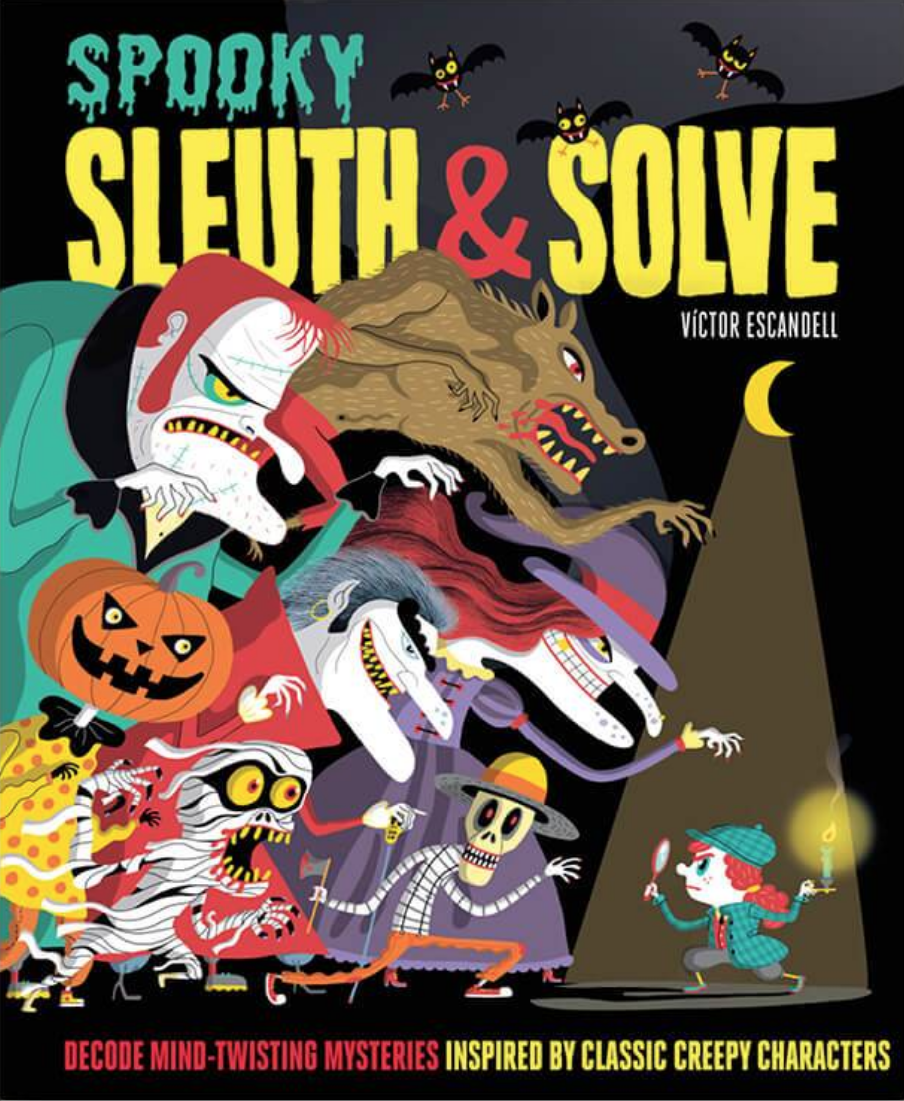
Sleuth & Solve: Spooky: Decode Mind-Twisting Mysteries Inspired by Classic Creepy Characters by Victor Escandell

Share

Sleuth & Solve: Spooky: Decode Mind-Twisting Mysteries Inspired by Classic Creepy Characters: What Will You Find?
Published: August 24, 2021 by Chronicle

Summary: Test your wits in this creepy collection of horror-themed mini-mysteries, a follow-up to Sleuth & Solve!

How does one boy discover the lair of Frankenstein’s monster? What is the identity of the werewolf who torments an isolated village? And how do two sisters escape the vengeful Loch Ness Monster?

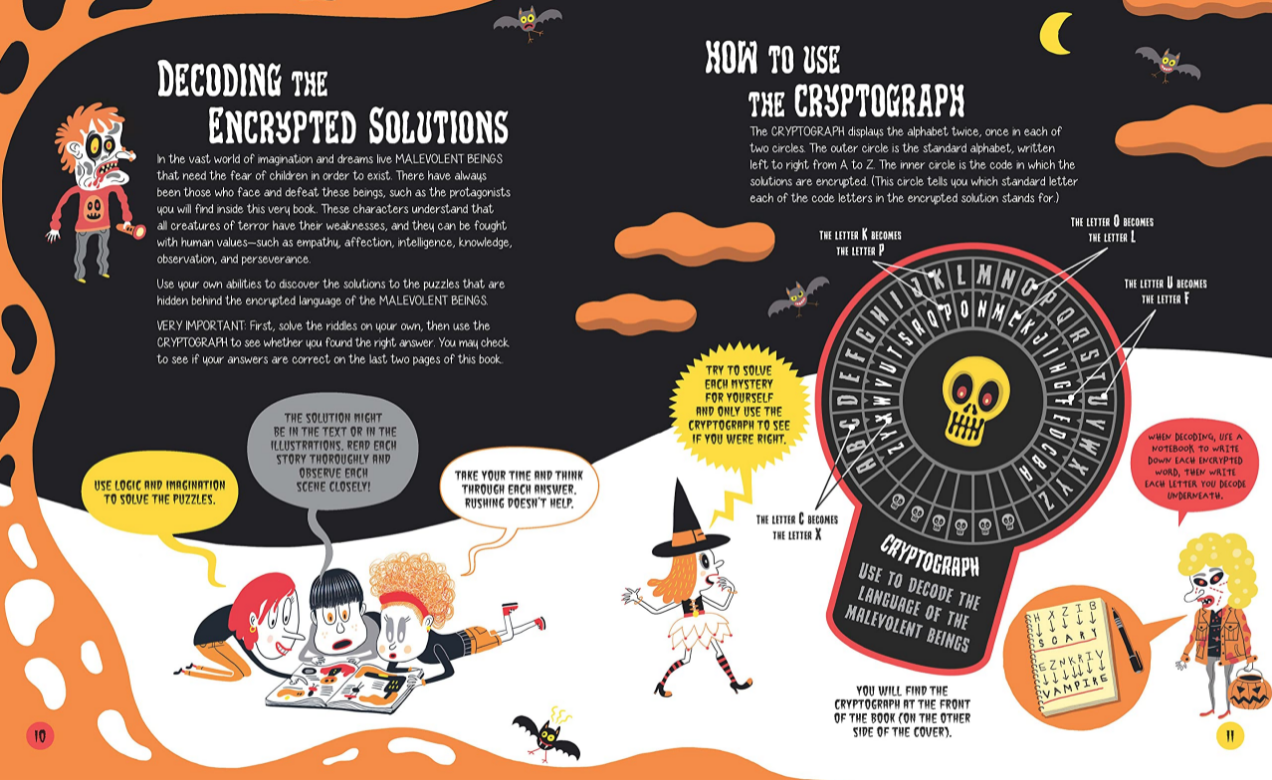
Welcome to the world of Sleuth & Solve: Spooky, where creepy clues are hidden in every detail and clever twists put your wits to the test. These mind-bending mini-mysteries inspired by classic creepy characters feature familiar fiends as well as terrifying new tales of ghosts, witches, and more! Solving this suite of spooky puzzles takes keen observation, strong logic, and lots of creative thinking. Play solo or with friends, collecting points as you crack each compelling case, decode the solution using a clever cryptograph, and reveal whose sleuthing skills reign supreme!

SCARY STORIES ARE IRRESISTIBLE: From monster-themed birthday parties to Dungeons & Dragons, Stranger Things, and Monsters, Inc., it’s clear that readers of all ages have a perennial predilection for all things monstrous and scary. These tales are perfect for reading alone or together, under the covers or in the dark, around the crackling of a campfire . . . as long as you can crack the case before it’s too late. BOO!

EVERYONE LOVES A GOOD MYSTERY: From Encyclopedia Brown to Sherlock Holmes to Clue, mysteries transfix, engage, and entertain! Following the previous two books in the Sleuth & Solve series, this latest smart, age-appropriate take on mysteries for kids will quickly become a family favorite.

A-GAME-IN-A-BOOK: This engaging narrative formula incorporates both a game (players earn points for discerning each answer) and an opportunity to decrypt and decode the clever solutions to each puzzle, adding opportunities for interactivity and upping the stakes of the reading experience.

REINFORCES LOGICAL REASONING SKILLS: These clever mysteries are solved by way of deduction, inference, and logical reasoning, all of which are critical thinking skills crucial to young readers’ intellectual development both in and outside of the classroom.

IDEAL FOR RELUCTANT READERS: With a comic-esque style, unique narrative approach, quirky scenarios, and a compelling mystery/”scary stories” theme, this book packs loads of reluctant reader appeal.

ReviewThis is a great book for elementary and middle schoolers (or kids/adults of all ages!). I did it with my sons, and they both had a great time decoding the riddles and figuring out the puzzles. We spread out the reading of this book across many days, and we did a section each day. It made for a delightful, connected experience. This is a book that offers so many things at once. It includes a mystery that begs to be solved and a really neat cryptograph (that kids can write secret messages outside of the reading of the book!). The author offers advice for making the reading even spookier (reading at night with a flashlight!). After reading this one, we want to check out the other Sleuth & Solve stories!

Teachers’ Tools for Navigation: This is a fantastic book to have at a table in the classroom for fast finishers. Kids will be engrossed in decoding the riddles! They don’t need to read/decode them all at once, so this offers many opportunities for working on these while waiting for peers to finish working.

Discussion Questions: Which was your favorite riddle to solve? Who was your favorite character? Which story was your favorite? What creative text features did the author use in this book?

We Flagged: 
Read This If You Love: Spooky stories; Activity Books; Brain-teasers; Decoding; Riddles

Recommended For: 

classroomlibrarybuttonsmall

**Thank you to Eva at Chronicle for providing a copy for review**
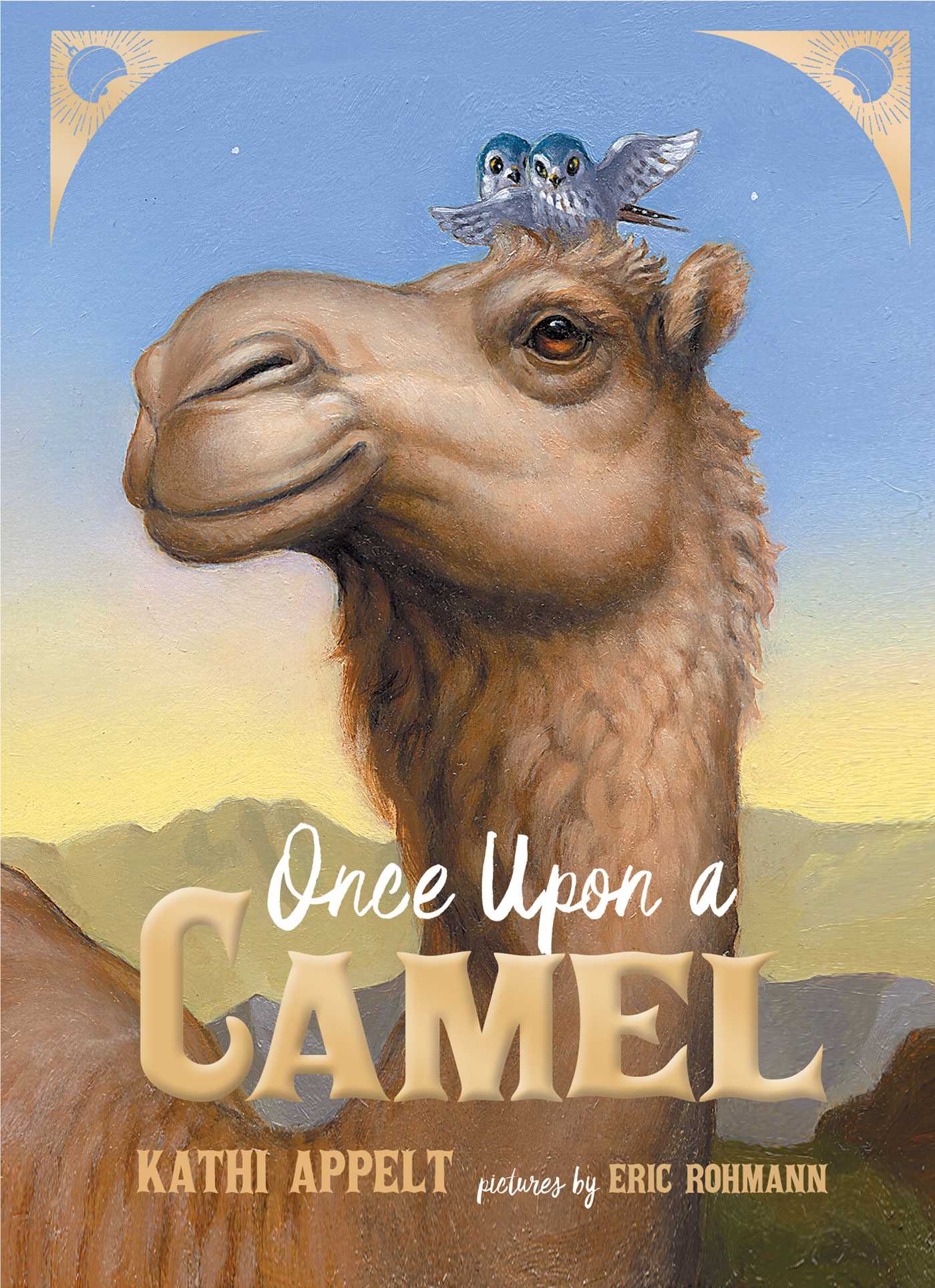
Review and Giveaway!: Once Upon a Camel by Kathi Appelt

Share

Once Upon a Camel
Author: Kathi Appelt
Illustrator: Eric Rohmann
Published September 7th, 2021 by Atheneum/Caitlyn Dlouhy Books

Summary: An old camel is out to save two baby kestrel chicks during a massive storm in the Texas desert.

Zada is a camel with a treasure trove of stories to tell. She’s won camel races for the royal Pasha of Smyrna, crossed treacherous oceans to new land, led army missions with her best camel friend by her side, and outsmarted a far too pompous mountain lion.

But those stories were from before. Now, Zada wanders the desert as the last camel in Texas. But she’s not alone. Two tiny kestrel chicks are nestled in the fluff of fur between her ears—kee-killy-keeing for their missing parents—and a dust storm the size of a mountain is taking Zada on one more grand adventure. And it could lead to this achy old camel’s most brilliant story yet.

About the Author: Kathi Appelt is the author of the Newbery Honoree, National Book Award Finalist, and bestselling The Underneath as well as the National Book Award Finalist for The True Blue Scouts of Sugar Man Swamp. Some of her award-winning books include Maybe a Fox (with Alison McGhee), Keeper, and Max Attacks to name just a few. She lives in College Station, Texas. To learn more, visit her website at kathiappelt.com.

Find Kathi Appelt on Facebook and Pinterest!

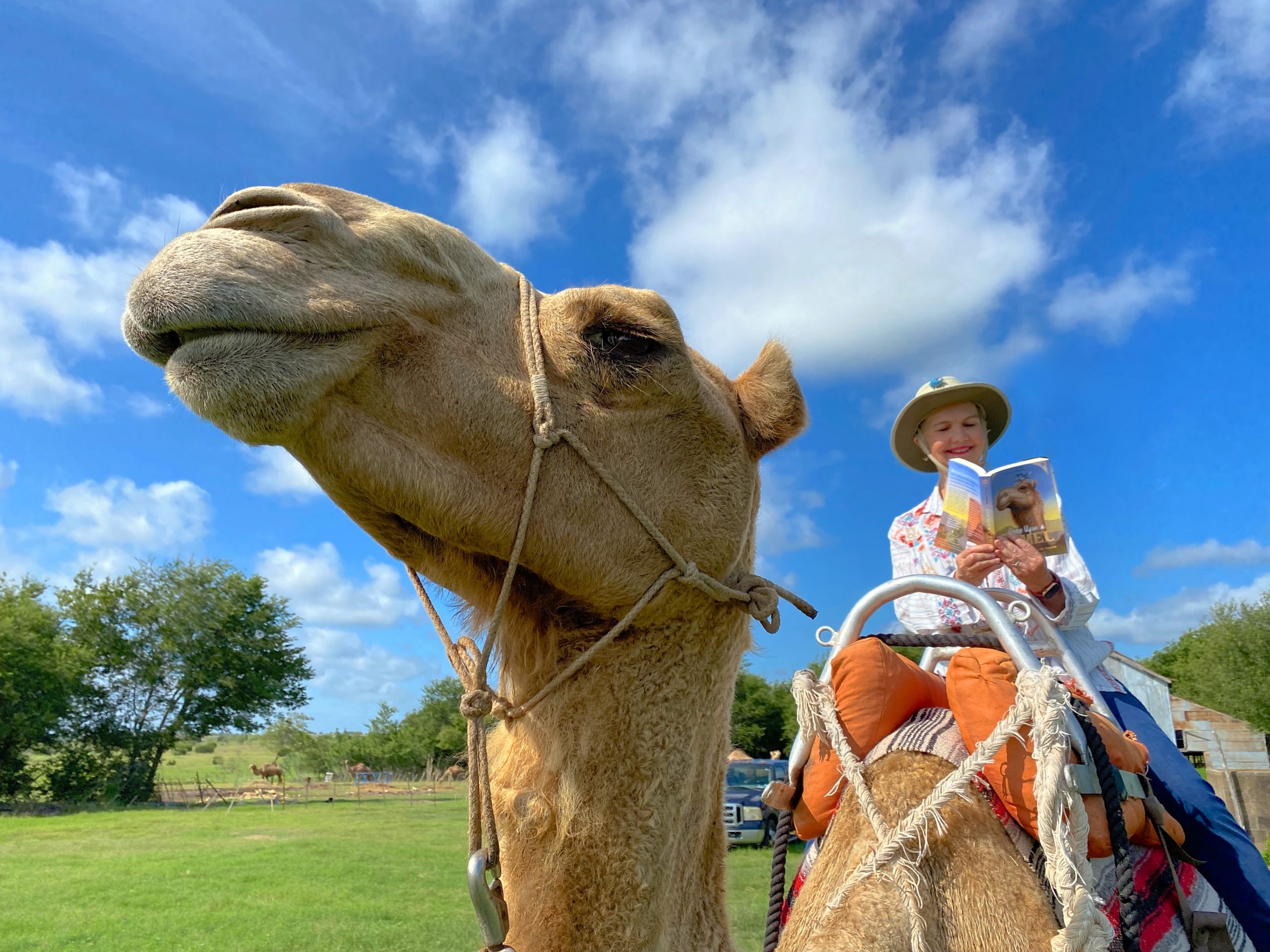
Richard, the camel, and Kathi Appelt taken at Texas Camel Corps. Photo credit: Doug Baum.

Review: Happy book birthday, Kathi & Once Upon a Camel! So honored to review this special book on your special day!

In all of Kathi Appelt’s books, what I have found that I adore the most is her ability to craft voice. She is brilliant. In this book, Zada the camel’s voice rings throughout with patience and determination. I was calmed by her stories of her upbringing as she works to keep the baby kestrels’ minds off of their parents. I think part of Appelt’s magic to craft voice is through her very specific word choice in all instances. Her descriptive words are so precise, and she is never deterred to use a word that may be challenging if it is the correct word. This leads to such lyrical prose–it is a pleasure to read!

There is also so much to learn throughout this story about stories: weather events (haboobs), animals of West Texas (kesterels, mountain lions, hawks, and more), and the history of camels. I found myself going on research tangents as I was introduced to different animals or different adventures that Zada goes on. It is no wonder that the Reading Group Guide is so extensive–there is so much to delve into!

Teachers’ Tools for Navigation (Excerpt from the publisher provided Reading Group Guide): 

  • Explain to students that alliteration is a literary device in which initial consonant sounds of successive or closely related words are repeated. This book contains tons of alliteration. Some examples include “arches and arroyos,” “moving mountain,” “posh Pasha palace,” “Pasha’s princess turns a little pale,” and “best beloved babies.” Using game tiles with letters or small pieces of paper with letters written on them, allow each student to draw a letter and write five alliterative sentences using that letter. Each sentence must contain a subject, verb, and describing words. Once everyone has written their sentences, each person should share their best alliterative sentence with the class.
  • Zada has had a long life filled with experiences and relationships. Her story in the book moves in time as she shares memories while continuing present experiences. Ask students to create a time line for Zada. There are online resources such as Adobe (https://www.adobe.com/express/create/timeline) and TimeGraphics (https://time.graphics) to help with organization. They may also do this in a slideshow format. Have them include dates, locations, and important experiences.
  • Beulah licks Wims, and he is upset. He is described as being “incensed. Put out. Piqued.” Discuss with students how this alliterative and repetitive approach to communicating his feelings is an effective way to convey the strength of those feelings as well as a lyrical way to engage the reader. Ask students to choose one emotion and make a list of synonyms or short expressions that express that emotion. Next, ask them to express the emotion in as many ways as possible in short sentences. Finally, ask them to use their list and sentences to write a paragraph that first explains why their character is feeling that emotion and that then elaborates on how they are feeling in as many ways and with as much creative imagery as possible.
  • Like humans and all other members of the animal kingdom, camels and kestrels have been classified based on shared characteristics. Looking at the list below, you can see that camels, kestrels, and humans are classified together in their kingdom and phylum, but begin to diverge at class groups and fully diverge in orders. Ask students to review the table and have a class discussion about classification. Give students the opportunity to consult some sources, if necessary, to answer their questions.
    • Camels: Animalia (Kingdom) / Chordata (Phylum) / Mammalia (Class) / Artiodactyla
      (Order) / Camelidae (Family) / Camelus (Genus) / Dromedarius or Bactrianus (Species)
    • American Kestrels: Animalia (Kingdom) / Chordata (Phylum) / Aves (Class) / Falconiformes
      (Order) / Falconidae (Family) / Falco (Genus) / F. tinnunculus (Species)
    • Humans: Animalia (Kingdom) / Chordata (Phylum) / Mammalia (Class) / Primates (Order) / Hominidae (Family) / Homo (Genus) / Homo Sapiens (Species)
    • After review and discussion, ask students to write short answers to the following questions:
      • Why do we classify animals and other living things in this manner?
      • What characteristics do all living things have in common?
      • Do camels, kestrels, and humans have the same basic needs?
      • Do humans understand more about animals than animals know about humans?
      • Even though humans and camels are both mammals, do humans or camels have more in common with kestrels than they do with one another?

Discussion Questions (Excerpt from the publisher provided Reading Group Guide): 

  • The story’s action begins with Pard and Perlita telling Zada that a mountain is eating everything and is soon going to eat them. Zada cannot comprehend this. Why do you think that is? How do you handle things you don’t understand? In truth, the mountain is a great sand-and-dust storm coming their way. How does knowing this change your perspective of the situation? How does Zada react?
  • The author explains how a camel has adapted to the desert, and how American kestrels are built for flight. All animals have adaptations: evolved physical and behavioral traits that help their species survive and thrive. Can you think of any other examples of this? What about cultural adaptations? Are there ways in which groups or individuals adapt for their own safety, comfort, or survival?
  • As Zada tries to outrun the storm, she wishes she could fly. This is not the first time in her life she has wished this. Why do you think she has continued to yearn for this ability? Thinking about your life and the environment in which you live, what other animal adaptations would come in handy for you? Explain your answers.
  • As Zada worries about Pecos de Leon, she reflects on the fact that she and the mountain lion have “both traveled a lot of miles and traversed a lot of country. That was worth something.” How can having many experiences help you? Do you think it’s important to experience situations similar to and different from your own life? What might you learn from someone who has lived a long time and done many things? Explain your answers.
  • As Zada moves through the storm carrying the chicks, an enormous old tree comes down behind them. “The wind had yanked it up by its roots. A hundred years, that old tree had stood there, watching over the creek, keeping generations of bird families safe. Now it lay in a heap on its side.” How does the falling tree make Zada feel? How did it make you feel? Do you think generations of bird families will be able to find a new home?
  • As the storm spins Perlita and Pard around, they call out, “‘Keep them safe!’” This is described as the “universal prayer” of parents. What does it mean for something to be universal? Do you have knowledge, ideas, or habits that are universal?
  • Zada’s and Asiye’s motto is “En parlak yildiz ol.” This means “Become the brightest star.” What do they mean by this? How do you see them striving to do this throughout the story?

Flagged Passages: “Chapter 1: Foothills, Chisos Mountains West Texas, 1910

“Incoming!”

Even in her sleep, Zada recognized that voice.

The old camel raised one eyelid. It was still dark. There was at least an hour left before dawn. She did not recall setting an early alarm bird.”

Book Trailer: 

Read This If You Love: Maybe a Fox by Kathi Appelt & Alison Mcghee, The Beatryce Prophecy by Kate DiCamillo, Journey of the Pale Bear by Susan Fletcher, Orphaned by Eliot Schrefer, Good Dog by Dan Gemeinhart, Granted by John David Anderson

Recommended For: 

classroomlibrarybuttonsmall 

Giveaway!

a Rafflecopter giveaway

Signature

**Thank you to Barbara at Blue Slip Media for providing a copy for review and giveaway!**

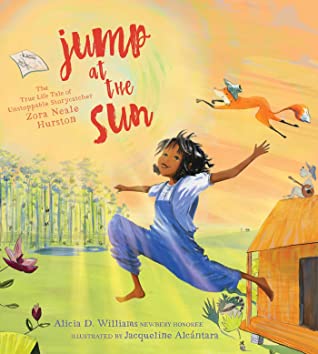
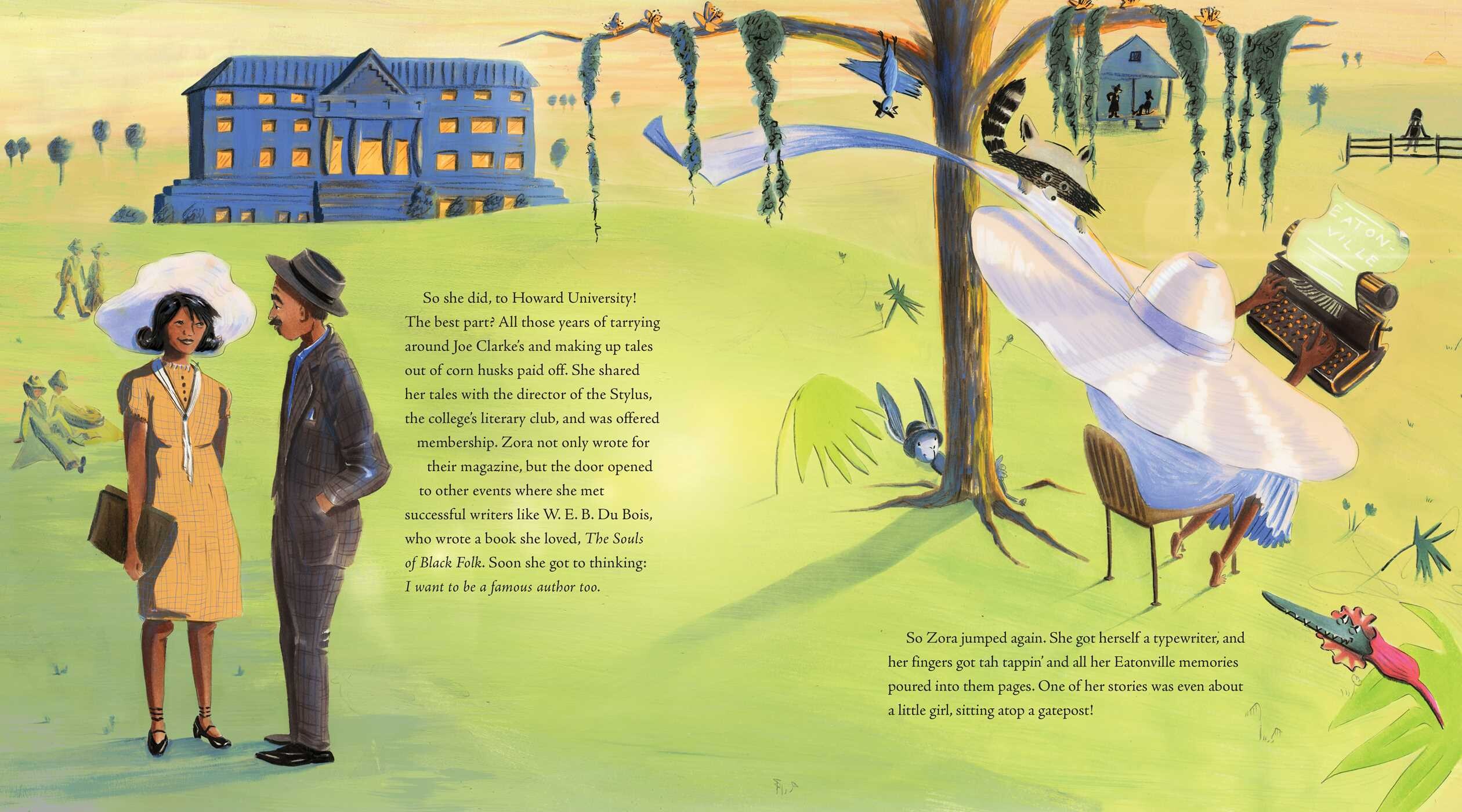
Jump at the Sun: The True Life Tale of Unstoppable Storycatcher Zora Neale Hurston by Alicia D. Williams, Illustrated by Jacqueline Alcántara

Share

Jump at the Sun: The True Life Tale of Unstoppable Storycatcher Zora Neale Hurston
Author: Alicia D. Williams
Illustrator: Jacqueline Alcántara
Published January 12th, 2021 by Atheneum/Caitlyn Dlouhy Books

Summary: A picture book that shines the light on Zora Neale Hurston, the writer and storycatcher extraordinaire who changed the face of American literature.

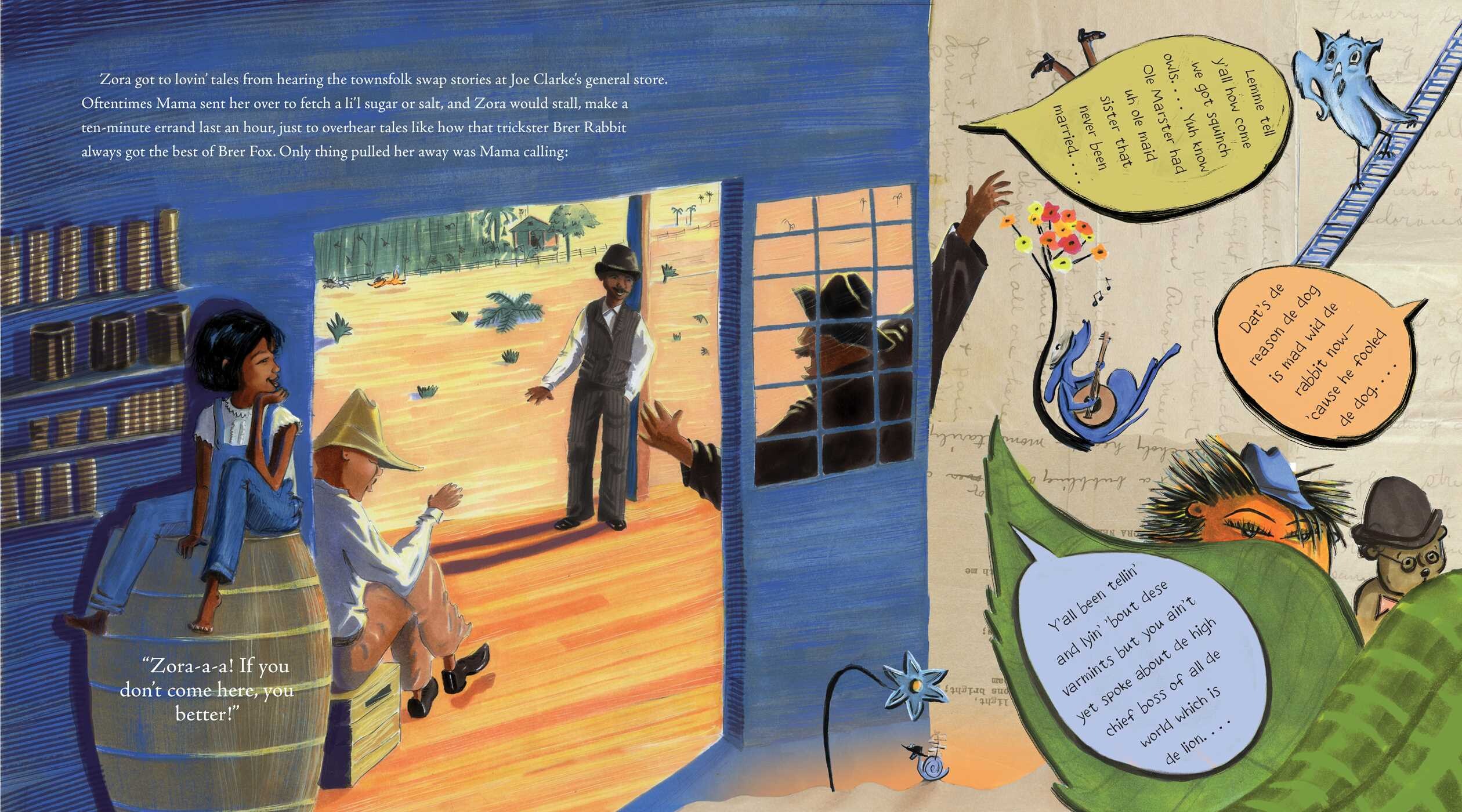
Zora was a girl who hankered for tales like bees for honey. Now, her mama always told her that if she wanted something, “to jump at de sun”, because even though you might not land quite that high, at least you’d get off the ground. So Zora jumped from place to place, from the porch of the general store where she listened to folktales, to Howard University, to Harlem. And everywhere she jumped, she shined sunlight on the tales most people hadn’t been bothered to listen to until Zora. The tales no one had written down until Zora. Tales on a whole culture of literature overlooked…until Zora. Until Zora jumped.

About the Creators:

Alicia D. Williams is the author of Genesis Begins Again, which received a Newbery and Kirkus Prize honors, was a William C. Morris Award finalist, and for which she won the Coretta Scott King – John Steptoe Award for New Talent. A graduate of the MFA program at Hamline University, and an oral storyteller in the African American tradition, she is also a teacher in Charlotte, North Carolina.

Jacqueline Alcántara is the illustrator of the critically acclaimed The Field and Freedom Soup. Her favorite days are spent drawing, painting, writing, and walking her dog. In 2016, she was awarded the inaugural We Need Diverse Books Illustrator mentorship. Find out more at JacquelineAlcantara.com.

Praise: 

*”A lively, joyfully rendered portrait of a literary legend.” – Publisher Weekly, starred review

* “Williams’ narration is a readaloud dream….it will be a joyful guide for folklore enthusiasts” – BCCB, starred review

* “This introduction to an American icon feels just right.” – Kirkus Reviews, starred review

* “A welcome addition to any picture book biography collection.” – School Library Journal, starred review

Review: Zora Neale Hurston has a special place in my heart as Eatonville is right around the corner, and I love the opportunity to be so close to Zora’s home, be inspired by her story, and learn from her. If you are ever here, stop by the Zora Neale Hurston National Museum of Fine Arts!

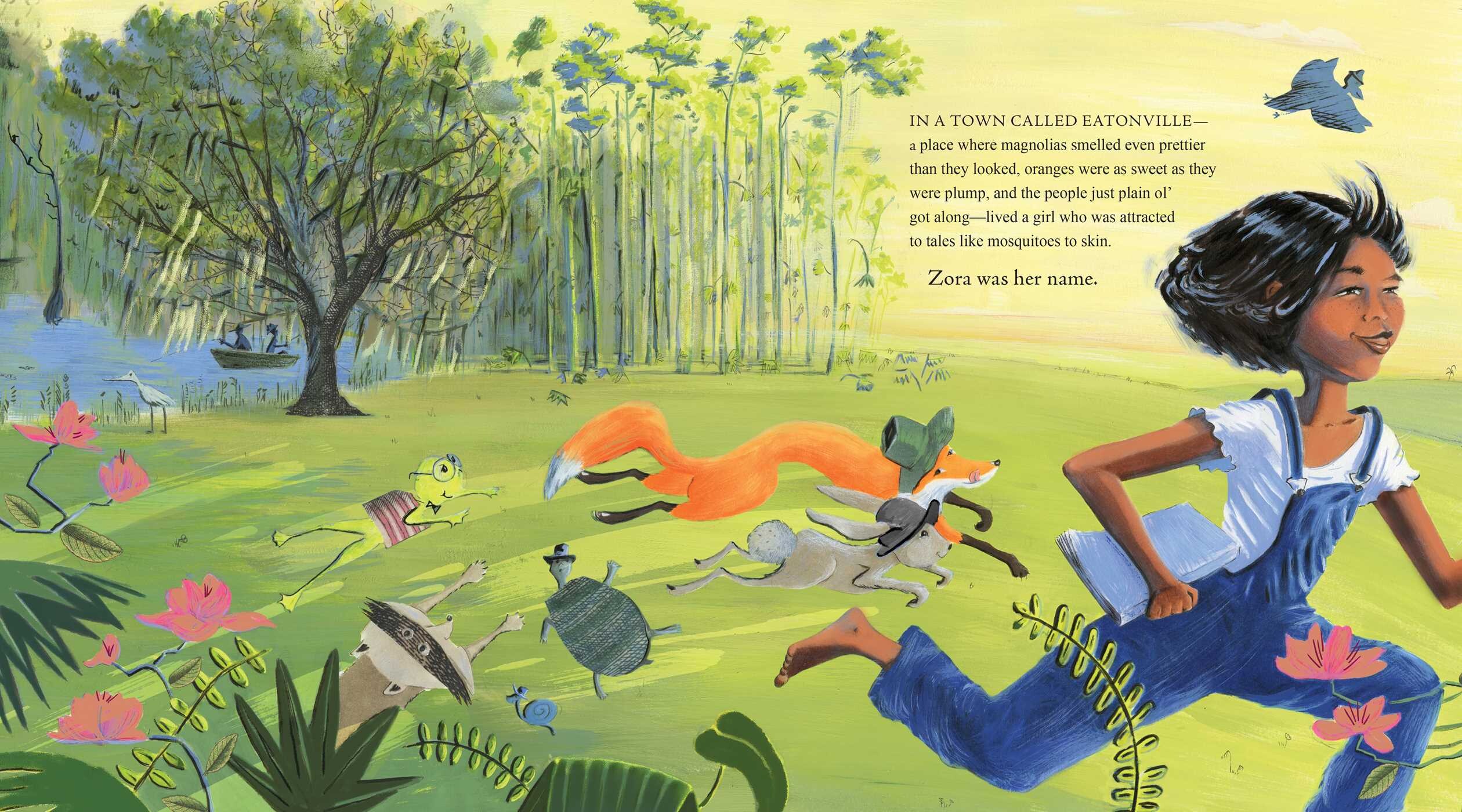
Alicia D. Williams does a beautiful job capturing the spirit of Zora and showing how truly special she was as a person and story teller. And I loved learning new things about her that I hadn’t known before (like that she graduated from high school at 28 and that she may have been lost to white-washed history if not for Alice Walker). And Alicia’s words mixed with the colorful and active illustrations of Alcántara, Zora is brought to life through the pages of this book.

Teachers’ Tools for Navigation: The publisher provided Curriculum Guide is the best resource for using this book in your classroom:

Discussion Questions: 

  • How are the end pages representative of Zora?
  • How were Zora’s stories important to American literature?
  • Why did the author call Zora a “storycatcher?”
  • How did the author integrate fictional characters and stories within her nonfiction biography of Zora Neale Hurston?
  • Why was some of Zora’s storytelling looked down upon?
  • What does the figurative phrase “reach/jump to the sun” mean?

Flagged Passages: 

Read This If You Love: Zora Neale Hurston, Picture book biographies

Recommended For: 

classroomlibrarybuttonsmall 

Signature

**Thank you to Simon & Schuster for a copy of the book to review!**

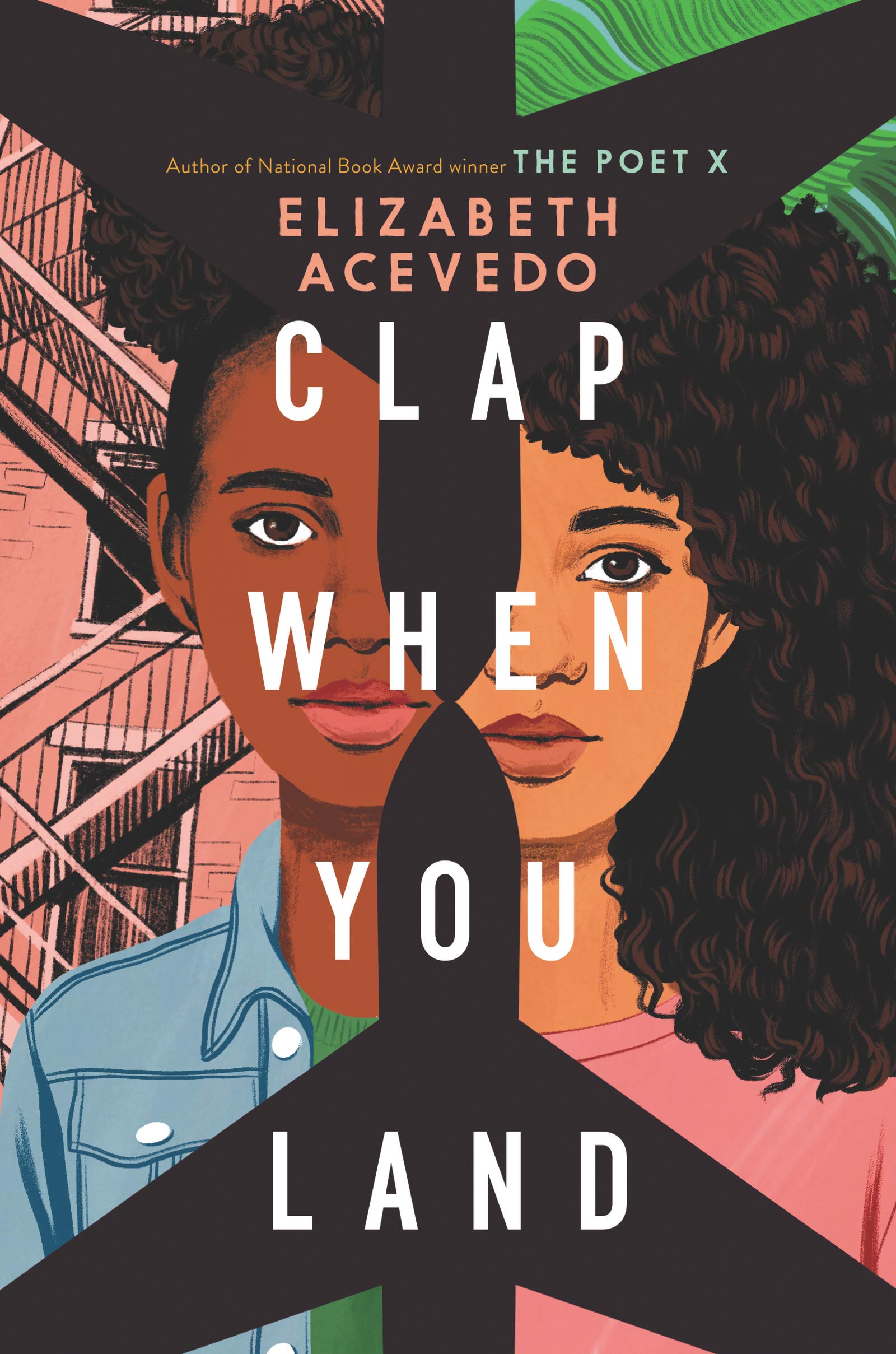
Clap When You Land by Elizabeth Acevedo

Share

Clap When You Land
Author: Elizabeth Acevedo
Published March 5, 2020 by HarperTeen

Summary: In a novel-in-verse that brims with grief and love, National Book Award-winning and New York Times bestselling author Elizabeth Acevedo writes about the devastation of loss, the difficulty of forgiveness, and the bittersweet bonds that shape our lives.

Camino Rios lives for the summers when her father visits her in the Dominican Republic. But this time, on the day when his plane is supposed to land, Camino arrives at the airport to see crowds of crying people…

In New York City, Yahaira Rios is called to the principal’s office, where her mother is waiting to tell her that her father, her hero, has died in a plane crash.

Separated by distance—and Papi’s secrets—the two girls are forced to face a new reality in which their father is dead and their lives are forever altered.

And then, when it seems like they’ve lost everything of their father, they learn of each other.

Ricki’s Review: I was so happy to see that this book won the Amelia Elizabeth Walden Award. It is one of the most beautifully written books that I have ever read. It made me laugh, it made me weep, and it filled me with so many emotions and so many wonderings. The book is beautifully lyrical, and the voices are so strong. There’s a scene in the book that simply took my breath away. If you haven’t read this book yet, I recommend you head out and purchase it now. It’s absolutely magnificent.

Discussion Questions: 

  • How do the two perspectives of the story work together? How did it enhance your reading of the story?
  • How does place function in the story?
  • Where is home for the characters?
  • How do the characters in the story grieve? What understandings did it offer about grief and loss?
  • How do the characters in this book show strength in many different ways?

Flagged Passage: 

“Can you be from a place
you have never been?

You can find the island stamped all over me,
but what would the island find if I was there?

Can you claim a home that does not know you,
much less claim you as its own?”

Read This If You Love: Books. Seriously, it would be very difficult not to see the beauty of this book. Elizabeth Acevedo is one of the greatest writers of our time.

Recommended For: 

classroomlibrarybuttonsmall   

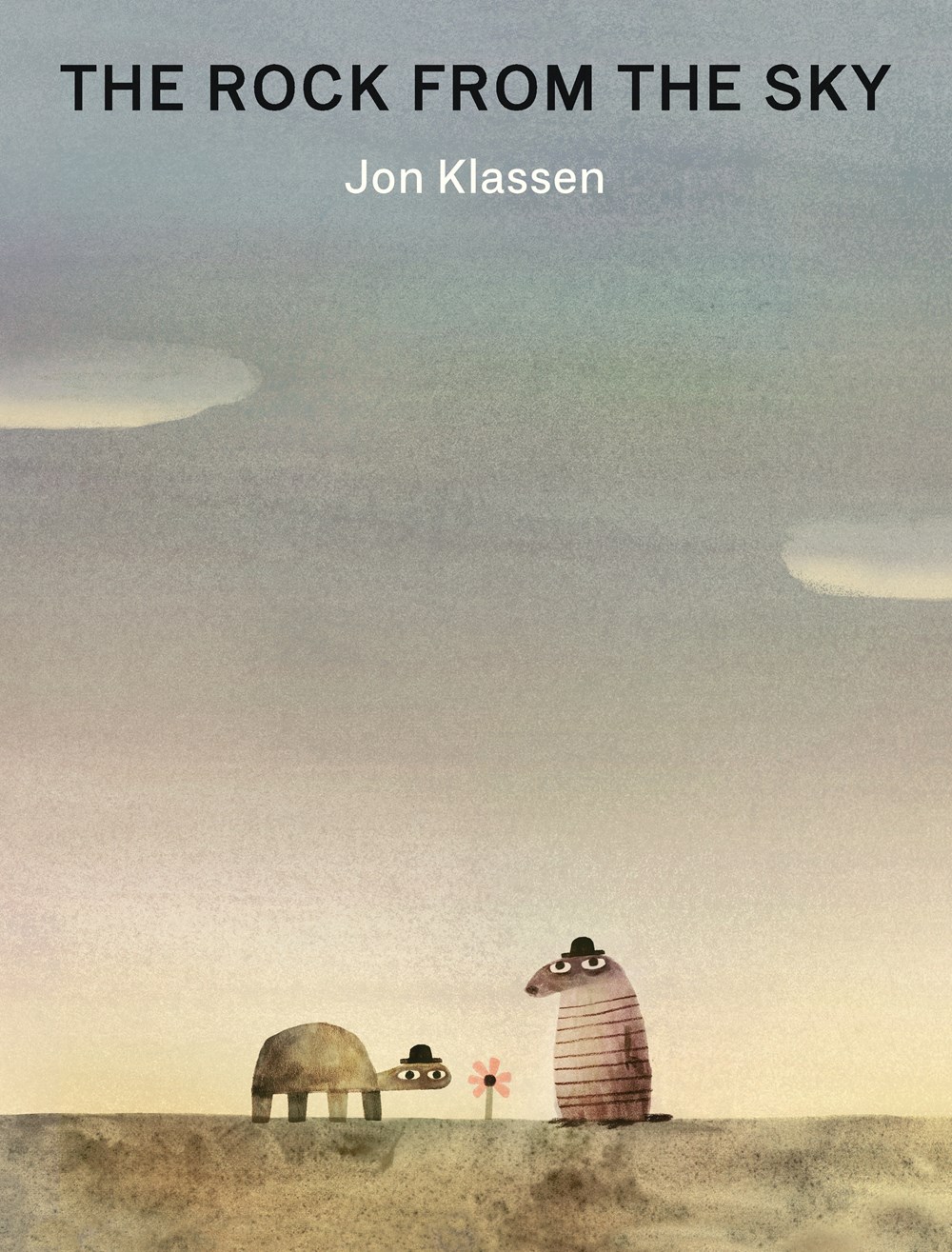
Educators’ Guide for The Rock from the Sky by Jon Klassen

Share

The Rock from the Sky
Author & Illustrator: Jon Klassen
Published: April 13, 2021 by Candlewick Press

Summary: Look up!

Turtle really likes standing in his favorite spot. He likes it so much that he asks his friend Armadillo to come over and stand in it, too. But now that Armadillo is standing in that spot, he has a bad feeling about it . . .

Here comes The Rock from the Sky, a meditation on the workings of friendship, fate, shared futuristic visions, and that funny feeling you get that there’s something off somewhere, but you just can’t put your finger on it.

Teachers’ Tools for Navigation and Discussion Questions: 

Please view and enjoy the teachers’ guide I created for Candlewick Press for The Rock from the Sky:

You can also access the teaching guide here.

You can learn more about The Rock in the Sky on Candlewick’s page.

Recommended For: 

readaloudbuttonsmall classroomlibrarybuttonsmall litcirclesbuttonsmall closereadinganalysisbuttonsmall

Kellee Signature

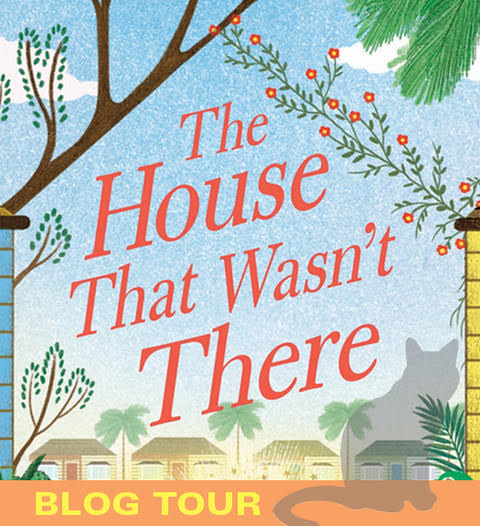
Blog Tour with Giveaway, Educators’ Guide, and Review: The House That Wasn’t There by Elana K. Arnold

Share

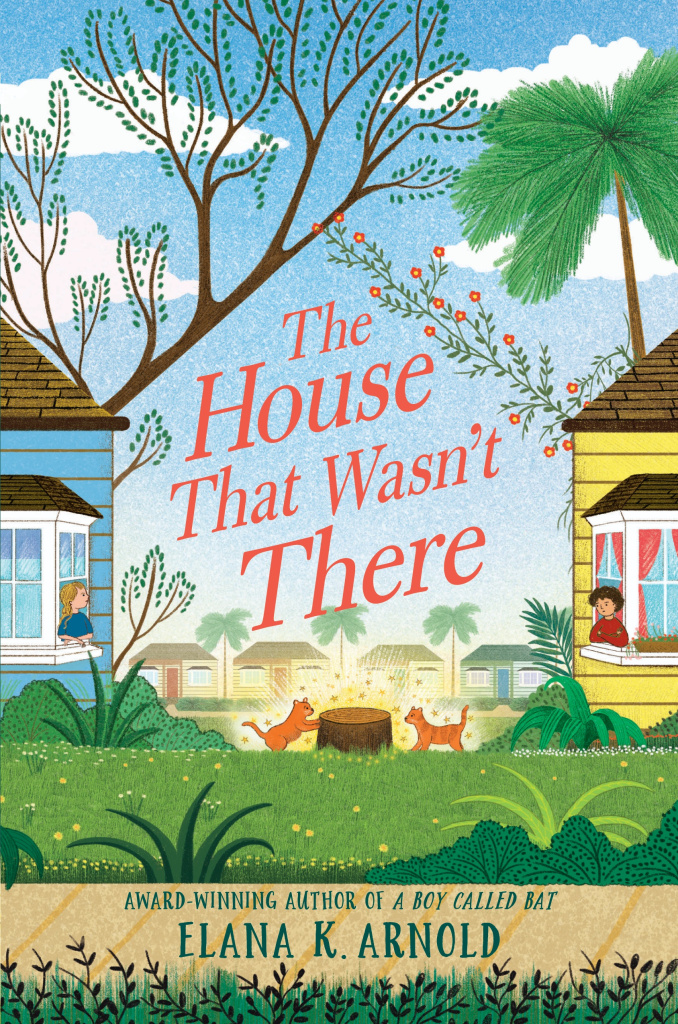
The House That Wasn’t There
Author: Elana K. Arnold
Published March 30th, 2021 by Walden Pond Books

Summary: Alder has always lived in his cozy little house in Southern California. And for as long as he can remember, the old, reliable, comforting walnut tree has stood between his house and the one next door. That is, until a new family—with a particularly annoying girl his age—moves into the neighboring house and, without warning, cuts the tree down.

Oak doesn’t understand why her family had to move to Southern California. She has to attend a new school, find new friends, and live in a new house that isn’t even ready—her mother had to cut down a tree on their property line in order to make room for a second floor. And now a strange boy next door won’t stop staring at her, like she did something wrong moving here in the first place.

As Oak and Alder start school together, they can’t imagine ever becoming friends. But the two of them soon discover a series of connections between them—mysterious, possibly even magical puzzles they can’t put together.

At least not without each other’s help.

Award-winning author Elana K. Arnold returns with an unforgettable story of the strange, wondrous threads that run between all of us, whether we know they’re there or not.

About the Author: Elana K. Arnold is the author of critically acclaimed and award-winning young adult novels and children’s books, including the Printz Honor winner Damsel, the National Book Award finalist What Girls Are Made Of, and Global Read Aloud selection A Boy Called Bat and its sequels. Several of her books are Junior Library Guild selections and have appeared on many best book lists, including the Amelia Bloomer Project, a catalog of feminist titles for young readers. Elana teaches in Hamline University’s MFA in Writing for Children and Young Adults program and lives in Southern California with her family and menagerie of pets.

Praise for The House That Wasn’t There:

“In this luminous story full of mystery and magic, Elana K. Arnold weaves a shimmering tapestry about the lovely and surprising ways we’re connected to each other. Heart-healing, hopeful, and wonderfully inventive, this beautiful novel by a master storyteller is not to be missed.” —Katherine Applegate, Newbery Medal-winning author of The One and Only Ivan

“Told through alternating perspectives that offer clearly rendered details, this compassionate novel gives a unique twist to familiar situations—feeling lonely, adjusting to new environments, forging new bonds—while inviting readers to open their imaginations to all sorts of wonderful possibilities.” —Publishers Weekly (starred review)

“The author enriches her sparely told story with hints of magic, song lyrics, good choices that key sudden sea changes in several relationships, and the small background details that make settings and backstories seem real. A low-key marvel rich in surprises, small fuzzy creatures, and friendships old and new.” —Kirkus Reviews (starred review)

Review: I love what Elana K. Arnold can do with a story! She is brilliant when it comes to weaving in secondary stories that often have way more impact than the reader realizes and for building secondary characters that leave a lasting impression.

In The House That Wasn’t There, I was struck with this talent again as I followed Alder’s and Oak’s life as they collide suddenly at the beginning of 6th grade and how their school project, a walnut tree, a dead possum, and adopted kittens all intertwine to help tell their story. The reader at times will wonder why certain things are happening or why something is being mentioned and then BAM it is revealed. It is quite fun to read! And with a bit of magical realism thrown in just for fun, a seemingly “normal” story becomes an extraordinary one!

It was also quite interesting how Arnold set up the chapters, alternating between Alder and Oak but in 3rd person. It helped keep the POV clear while also showing the reader a bit more about each of the character’s lives.

And finally: A shout out to Beck for not being what was expected; Faith for having a name, being a part of the story instead of the background, and being wonderful; and Mr. Rivera for being an innovative teacher that promotes collaboration, cross-curricular activities, and outside of the box thinking!

Educators’ Guide: 

Flagged Passages: Preview the first two chapters from the publisher: READ A SAMPLE

Read This If You Love: A Girl, a Raccoon, and the Midnight Moon by Karen Romano YoungBrave in the Woods by Tracy HolczerQuintessence by Jess Redman, Ikenga by Nnedi Okorafor, This Was Our Pact by Ryan Andrews, The Trouble with Shooting Stars by Meg Cannistra

Recommended For: 

classroomlibrarybuttonsmall

Don’t Miss the Other Stops on the Blog Tour!

March 28 Nerdy Book Club @nerdybookclub
March 29 YAYOMG @yayomgofficial
March 30 Unleashing Readers @UnleashReaders
March 31 Teachers Who Read @teachers_read
April 2 Maria’s Mélange @mariaselke
April 7 Bluestocking Thinking @BlueSockGirl
April 10 A Library Mama @librarymama
April 12 Storymamas @storymamas

Giveaway!

a Rafflecopter giveaway

Signature

**Thank you to Walden Pond Press for providing a copy for review and giveaway!**

Planet Ocean: Why We All Need a Healthy Ocean by Patricia Newman, Photography by Annie Crawley

Share

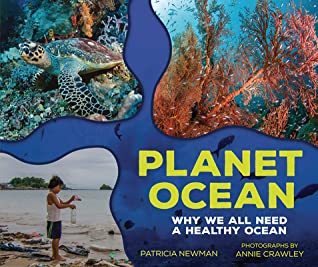
Planet Ocean: Why We All Need a Healthy Ocean
Author: Patricia Newman
Photographer: Annie Crawley
Published March 2nd, 2021 by Millbrook Press

Summary: A little more than 70 percent of Planet Earth is ocean. So wouldn’t a better name for our global home be Planet Ocean?

You may be surprised at just how closely YOU are connected to the ocean. Regardless of where you live, every breath you take and every drop of water you drink links you to the ocean. And because of this connection, the ocean’s health affects all of us.

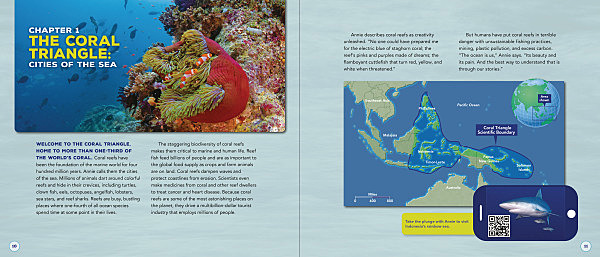
Dive in with author Patricia Newman and photographer Annie Crawley—visit the Coral Triangle near Indonesia, the Salish Sea in the Pacific Northwest, and the Arctic Ocean at the top of the world. Find out about problems including climate change, ocean acidification, and plastic pollution, and meet inspiring local people who are leading the way to reverse the ways in which humans have harmed the ocean.

Planet Ocean shows us how to stop thinking of ourselves as existing separate from the ocean and how to start taking better care of this precious resource.

Scan QR codes to explore the ocean along with Annie Crawley!

About the Creators:

Patricia Newman‘s books inspire young readers to seek connections to the real world. Her titles encourage readers to use their imaginations to solve real world problems and act on behalf of their communities. These books include Sibert Honor title Sea Otter Heroes: The Predators That Saved an Ecosystem; Junior Library Guild Selection Eavesdropping on Elephants; Bank Street College Best Book Zoo Scientists to the RescueBooklist Editor’s Choice Ebola: Fears and Facts; and Green Earth Book Award winner Plastic, Ahoy! Investigating the Great Pacific Garbage Patch. Patricia frequently speaks at schools and conferences to share how children of any age can affect change. Visit her at www.patriciamnewman.com.

Annie Crawley, aka Ocean Annie, travels and works around the world. Trained as a photo and broadcast journalist, her work has been broadcast and published worldwide. From Indonesia to Galapagos, Belize to Papua New Guinea, India to Australia, Annie has explored and documented life on our planet. Based in Seattle, Annie works as a producer, writer, photographer, and motivational speaker. She founded Dive Into Your Imagination, a multimedia company producing books, enhanced eBooks, educator guides, films, motivational art, and more. Annie was the photographer and filmmaker aboard SEAPLEX sponsored by Project Kaisei and Samy’s Camera. Annie specializes in the underwater realm and also works as a photo, video, and scuba diving instructor. She is a member of the Women Divers Hall of Fame and created a dive team for kids and teens. Visit her online at www.AnnieCrawley.com and www.anniecrawleyphotography.com.

Praise: 

♥ Junior Library Guild Selection

“Read Planet Ocean with your children and grandchildren to begin the discussion of what humans can do to save our oceans from pollution and acidification. Books like this one help lead the way to a better climate future for all inhabitants of mother earth.” — Jeff Bridges, Academy Award winner and environmentalist

“A compelling and paramount read for all mankind so that we value our ocean resource.” –-Christine Anne Royce, Ed.D., Retiring President (19-20), National Science Teaching Association; Professor of Teacher Education and Co-Director of MAT in STEM Education, Shippensburg University

“The range of nationalities represented and the inclusion of a variety of Indigenous voices make a particularly compelling argument that ocean health is a whole world problem…Worth exploring in depth.” —Kirkus

“They nailed it! Ocean Annie and Patricia Newman have created a positive, action-oriented educational initiative that will inspire the next generation to be good stewards of our ocean planet!” — Jill Heinerth, Underwater Explorer and Explorer in Residence, Royal Canadian Geographical Society

“The book follows [Annie] Crawley, an underwater explorer and photographer, as a knowledgeable guide to three very different regions connected by ocean waters, the Coral Triangle north of Australia, the Salish Sea bordering Washington State and British Columbia, and the Arctic. Newman’s text describes each place visited, while Crawley’s many attractive photos introduce the people and animals affected by environmental changes there…For each region, illustrated features offer the viewpoints of individuals living there. Presenting a good deal of information within a well-organized framework, the book conveys a strong sense of urgency to clean the global ocean and restore the ecosystems it supports.” —Booklist

Review: I am a HUGE fan of Patricia Newman’s books. This is the 6th of her books that I have reviewed here. Want to know why? Because her books fit the mission of our blog–they are wonderful pieces of informational literature and belong in schools and classrooms because kids need these books. Planet Ocean is no different!

With each of Patricia’s books, I learn new things. I entered this book thinking that I knew all that I could about climate change and the ocean and the effects on our planet, but I left even more knowledgeable and even more scared of the future if we do not make a change. Learning about ocean acidification, the effects on the Arctic, and just how dependent we all are on the ocean was fascinating and change making.

And like Eavesdropping with Elephants, Patricia included QR codes in this book which I believe brings a great interactiveness with the text. It also adds digital literacy with traditional literacy. And Annie Crawley is a great visual storyteller in the linked videos!

Teachers’ Tools for Navigation: The publisher and author share a curriculum guide to go with Planet Ocean on their websites: https://www.patriciamnewman.com/wp-content/uploads/2021/02/Planet-Ocean-Curriculum-Guide.pdf

The guide includes activities for literacy, science, ocean literacy, and sustainability standards.

I’d also like to add that I love Annie’s Pro Tips for Visual Storytelling, and I would love to use these tips to have students create their own visual story!

The book also includes a great “Surfers Welcome” section in the backmatter which gives 7 different websites to further learning!

Why do you need this book in your library? Patricia Newman can explain!

Discussion Questions: 

  • How are maps incorrectly proportioned?
  • Why do we need a healthy ocean?
  • How is your life affected by the ocean?
  • What new word did you learn from the book or glossary?
  • How could you “Go Blue with Annie” in your life?
  • Which of the QR code videos did you enjoy the most? How does this interactive component make the book better?
  • Why does the author include so many different scientists and contributors in the book in the “In Their Own Words” side bars?
  • How do the images and videos add to the information received in the book?
  • What is your favorite animal? How are they affected by the ocean?
  • Why did the Arctic have a whole chapter of the book? What is so important about the Arctic?
  • What do you think the author’s purpose was in creating this book?
  • How does the health of the ocean compare now to the past?

Flagged Passages: 

Read an excerpt on the book’s publisher page!

Read This If You Love: Science, Animals, Learning about Climate Change, Marine science

Recommended For: 

classroomlibrarybuttonsmall 

Signature

**Thank you to Patricia Newman and Lerner Books for providing a copy for review!**