Blog Tour, Giveaway, and Review!: Twenty Yawns by Jane Smiley and Lauren Castillo

Share

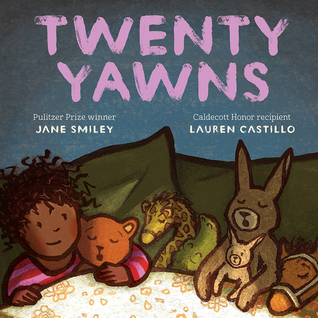
Twenty Yawns

Twenty Yawns
Author: Jane Smiley; Illustrator: Lauren Castillo
Published April 1, 2016 by Two Lions

Goodreads Summary: Featuring lyrical text and beautiful illustrations, this bedtime tale from Pulitzer Prize winner Jane Smiley and Caldecott Honor recipient Lauren Castillo evokes the splashy fun of the beach and the quietude of a moonlit night, with twenty yawns sprinkled in for children to discover and count.

As her mom reads a bedtime story, Lucy drifts off. But later, she awakens in a dark, still room, and everything looks mysterious. How will she ever get back to sleep?

Ricki’s Review: My son asks me to read this book every single night. (I’m not kidding. Imagine his sweet voice asking, “Twenty Yawns, please, Mama?”) My favorite part about this book is that there are many interactive sections that we can read together. He can’t read yet, but he is slowly learning sight words and loves reading the “Flap! Flap! Flap! Flap!” of the umbrella and each of the twenty “yawns.” He also tells me what Lucy is doing on each page. There are a lot of bedtime books out there, but this book truly makes me sleepy. I’m getting sleepy as I think about it right now! My son and I both yawn as we see each character yawn. Parents, READ: This book will make your child(ren) tired! I’d be remiss if I didn’t mention that the illustrations are breathtaking. The drawings of Lucy’s stuffed animals capture my attention every time I read this book. I feel lucky to have this book in my bedtime arsenal. My son is falling asleep more quickly. Could it be the twenty yawns?

Kellee’s Review: I love Ricki’s story of how Henry has imprinted on this book! Trent and I read it, and he said “Night, night!” on each of the pages where someone was going to sleep. And like Ricki said, in addition to having beautiful illustrations and a sweet story, this book will definitely make your child sleepy! I cannot help but yawn when I am reading it.

One other thing Trent loves is a promotional piece we received with the book (and you could win below!): a door hanger. One side says, “Shhh…we’re yawning.” And the other side says, “Come in. We’re ready to play.” It is hanging on his door, and we have to flip it back and forth depending on if he is getting up or going to bed. And on the “Shhh” side, he says goodnight to the little girl.

Teachers’ Tools for Navigation: Teachers might use this book to teach figurative language. Kids will enjoy the bold print of onomatopoeias. The illustrations feature aspects of the story that aren’t always present in the text. I love with authors and illustrators don’t match the illustrations and text perfectly because it provides such great opportunities for students to compare and contrast the story and pictures. They might talk about why the text doesn’t include all of the information from the illustrations and how this enhances the narrative. Also, kindergarten teachers and daycare providers can use this book right before nap time! I would have loved to have listened to this book as a child. Check out the Activity Kit!

Discussion Questions: Why doesn’t the author number the twenty yawns? How does this make the story more interesting to read?; What does Lucy do when she is frightened? How might you learn to soothe yourself when you are scared?; What activities do Lucy and her parents do together? What activities do you enjoy doing with family?

We Flagged: “Lucy started to carry Molasses back to her bed. But the other toys were looking at her, even Leonard, the baby Kangaroo. They seemed lonely.”

Read This If You Loved: Goodnight Moon by Margaret Wise BrownGoodnight Songs by Margaret Wise Brown

Recommended For: 

readaloudbuttonsmall classroomlibrarybuttonsmall

  Follow All of the Stops on the Tour, and Don’t Forget to Enter the Giveaway!:

About the Authors:
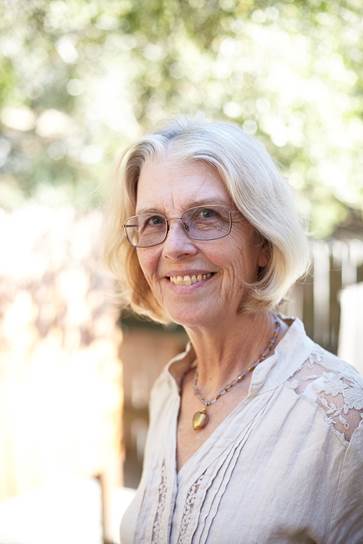
Jane Smiley photo
Jane Smiley is the author of numerous novels, including A Thousand Acres, which was awarded the Pulitzer Prize, as well as five works of nonfiction and a series of books for young adults. In 2001 she was inducted into the American Academy of Arts and Letters, and in 2006 she received the PEN USA Lifetime Achievement Award for Literature. This is her first picture book. She lives in Northern California.
laurencastillo_headshot (2)
Lauren Castillo is the illustrator of many books, including The Reader by Amy Hest. She has also written and illustrated several books, including Caldecott Honor book Nana in the City and The Troublemaker. She lives in Harrisburg, Pennsylvania. To learn more, visit www.laurencastillo.com.
Twitter: @studiocastillo.

RickiSigand Kellee Signature

**Thank you to Barbara Fisch for sending us this book and for allowing us to host the giveaway!**

Kiki and Jacques by Susan Ross

Share

kiki and jacques

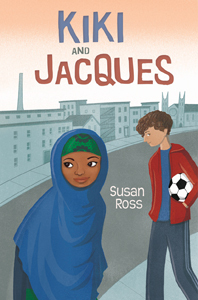
Kiki and Jacques
Author: Susan Ross
Published October 15th, 2015 by Holiday House

Goodreads Summary: Preteens prove that cultural differences can be overcome in this middle-grade novel about a native Mainer and a Somali girl who form an unlikely and supportive friendship.

Twelve-year-old Jacques’s mother has passed away, his father is jobless and drinking again and his grandmother’s bridal store is on the verge of going out of business. Plus he’s under pressure from an older boy to join in some illegal activities. At least Jacques can look forward to the soccer season. After all, he’s a shoe-in for captain.

But the arrival of Somali refugees shakes up nearly everything in Jacques’s Maine town, including the soccer team. So Jacques is surprised to find himself becoming friends with Kiki, a cheerful and strong-minded Somali immigrant. Despite their many differences they are able to help one another triumph over problems with friends, family and growing up.

About the Author: Susan Ross lives in Connecticut. She was born and grew up in the Lewiston, Maine, area. Susan was inspired to write this story by incidents in her childhood hometown when refugees from Somalia began to settle there in the early 2000s. Kiki and Jacques is her first novel.

Susan Ross recently was interviewed by HuffPost Live and wrote an article on the HuffPost Blog about Kiki and Jacques and the amazing refugee kids in Lewiston, Maine — and especially, the vital importance of teaching tolerance/ multiculturalism to children!

My Review: Kiki and Jacques is a perfect introduction to refugees for middle grade students. What makes the story work so well is that Jacques is just like so many middle school boys, so reading about Kiki and Mohammad from his point of view makes the story easy to connect with. The reader also gets to learn about the refugees and their lives and situations along with Jacques which makes it so students with no prior knowledge can live Kiki and Jacques story with them.

Teachers’ Tools for Navigation: Kiki and Jacques is a book that many different students are going to love reading for many different reasons. It is a book for sports lovers, realistic fiction fans, and students who want to learn about something and make a difference. It is a great book for classroom libraries.

Additionally, you can view a teaching guide for Kiki and Jacques which has many ideas for classroom uses: Kiki and Jacques Education Guide

Additionally, Mr. Gorman did an amazing activity with this novel using a mood meter. His blog post includes a wonderful writing activity.

Discussion Questions: How does soccer play a role in the story?; What did you learn about refugees in Kiki and Jacques?; What do you think the theme of the book is?; How does Jacques stay positive and “good” through everything that is going on in his life?; How does Jacques help Mohammad and Kiki?

We Flagged: “Frank Boucher broke out from the back and dribbled the ball toward the goal; in a minute he sliced it in. Boucher was tall, and broader than most of the kids. His bleach-blond hair was spiked marine-style, making him look even longer.

‘Holy crap.’ Jacques whistled. ‘That wasn’t bad.’

‘You’ll be captain,’ Sammy said. ‘Don’t worry. Boucher’s got muscle but your footwork’s better. And nobody trusts him.’

‘Wait up–who’s that kid?’Jacques nodded toward the far end of the field. ‘That big dude…is he one of the Somalis?’

A slim black teenager was dribbling toward them. Fast and accurate, the ball skipped effortlessly from side to side. The boy balanced the ball between his shin and knees, spun around and took a wild shot from mid-field. Tim O’Shea knocked his glasses off trying to stop it, but the ball slipped right past him into the goal.” (p. 6-7)

Read This If You Loved: Booked by Kwame Alexander, Soccer Star by Mina Javaherbin, Out of Nowhere by Maria Padian; also middle grade books about refugees including Inside Out & Back Again by Thanhha Lai and A Long Walk to Water by Linda Sue Park

Recommended For: 

readaloudbuttonsmall classroomlibrarybuttonsmall

Q&A with the Author from Holiday House: 

Susan, this is the first novel you’ve written. Please tell us about it.

KIKI AND JACQUES is a story about kids from very different backgrounds growing up in a small Maine town. It’s about finding common ground and friendship in spite of cultural differences and challenges.

You were inspired to write this book when your hometown in Maine began to see an influx of Somali refugees in the early 2000s. Tell us a little bit about that experience and how the addition of Somalis to your home town changed the cultural landscape.

When I was growing up, we lived in the “twin cities” in Maine—the old mill town of Lewiston and its sister city, Auburn. My great-grandparents came from Russia and opened a store. Three generations later, my parents had a bridal shop in downtown Lewiston. The majority of the population was of French Canadian descent, and my parents often sold dresses speaking basic French. When I read a magazine article about the wave of Somali immigration to Lewiston, I thought that a small Maine town experiencing such profound cultural change would be an amazing setting for a middle-grade novel.

What kind of research did you do for this book? In researching, what did you find most interesting or surprising?

As with most things in life, I found the very best place to start my research was at the library. In this case, I went to the library in Lewiston and met with a librarian, who told me something very important: in her experience, teenagers of all cultures were more alike than they were different.

I spoke with a few Somali kids that day, who were at the library using the computers. I saw that they were on Facebook, just like my teenagers at home. Later, I met with other Somali teens and asked them to read chapters of my book. I was greatly inspired by how strong and ambitious these kids were, and I was touched by how glad they were to have an author listen and learn about their lives.

KIKI AND JACQUES focuses on the importance of two kids respecting cultural, religious and racial differences, but still becoming friends. What do you hope young readers learn from this novel?

I hope that I’ve written a story that kids can relate to. Kiki and her brother Mohamed’s lives are very different than Jacques’s in many respects, but they also have a surprising amount in common—soccer, strong loyalty to family, and great loss (Kiki’s dad was killed in the war in Somalia and Jacques’ mom died in a car accident). Each kid is looking for a safe and permanent sense of home and  belonging.

When did you know you wanted to become an author?

I knew I wanted to become an author when I was in the fourth grade and liked to stay inside at recess and write. My first book was called Diablo, and it was about a wild horse with cruel masters. Not so coincidentally, I had just finished reading one of my  favorite books, Black Beauty. I became a lawyer, but after I stopped practicing law and my kids got older, I learned about the Somali immigration to Maine and thought, wow, this would be a wonderful and important topic to write about.

If you could give any advice to young authors, what would it be?

My best advice is simply that writers must write! Start a journal and keep it close, or take notes on your laptop or phone. Find a writing buddy and send ideas back and forth. Get your words down, whenever and however you’re inspired. Even if your writing isn’t close to perfect at first, it will get better, and you will learn and grow in the process—I promise!

Kellee Signature

**Thank you to Susan for providing a copy of the book for review and for sharing the teachers’ guide and Q&A!**

Blog Tour, Author Guest Post, Giveaway, and Review!: Maybe a Fox by Kathi Appelt and Alison McGhee

Share

maybe a fox

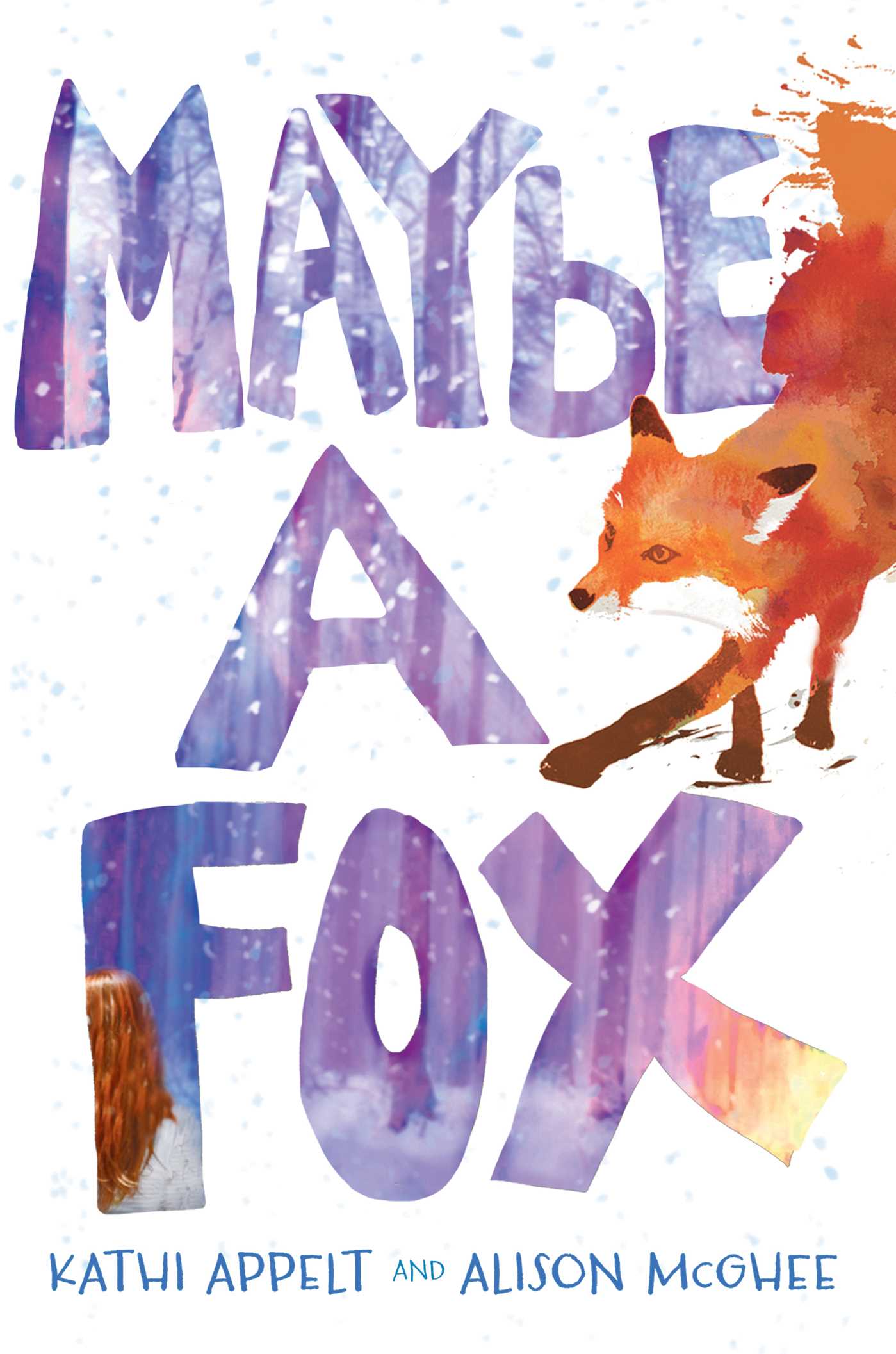
Maybe a Fox
Author: Kathi Appelt and Alison McGhee
Published: March 8, 2016 by Atheneum/Caitlyn Dlouhy Books

Goodreads Summary: A tale about two sisters, a fox cub, and what happens when one of the sisters disappears forever.

Sylvie and Jules, Jules and Sylvie. Better than just sisters, better than best friends, they’d be identical twins if only they’d been born in the same year. And if only Sylvie wasn’t such a fast—faster than fast—runner. But Sylvie is too fast, and when she runs to the river they’re not supposed to go anywhere near to throw a wish rock just before the school bus comes on a snowy morning, she runs so fast that no one sees what happens…and no one ever sees her again. Jules is devastated, but she refuses to believe what all the others believe, that—like their mother—her sister is gone forever.

At the very same time, in the shadow world, a shadow fox is born—half of the spirit world, half of the animal world. She too is fast—faster than fast—and she senses danger. She’s too young to know exactly what she senses, but she knows something is very wrong. And when Jules believes one last wish rock for Sylvie needs to be thrown into the river, the human and shadow worlds collide.

Writing in alternate voices—one Jules’s, the other the fox’s—Kathi Appelt and Alison McGhee tell the tale of one small family’s moment of heartbreak.

Ricki’s Review: I read this entire book in one sitting because, quite simply, I could not put it down. I sobbed through the entire book because I connected so strongly with these characters. As a mom, I couldn’t imagine my son experiencing the pain that these sisters felt from the loss of their mother. As a sister, I can’t imagine my own sister disappearing. These two connections, along with the stunning portrayal of character and story, made this book feel deeply personal for me. While younger students won’t be moms, and thus, won’t have this personal connection I had with the text, they will be sons and daughters. Regardless of a reader’s point of view, they will connect with this book because it is written so beautifully. I won’t forget this book, and I don’t think other readers will forget it, either.

Kellee’s Review: This book is one I’ll be talking about for a while. I will say it is probably the saddest book that I’ve ever read; however, it is beautiful. It is very hard to explain unless you’ve experienced because it gives hope while also being so terribly sad. The characters, animal and humans, are so thought out and detailed that as you read you feel with them and for them. I was also in awe of the way Kathi and Alison were able to tell such a unique story without the reader ever feeling like it was an odd scenario. Whenever I try to describe this book to someone, they give me quite a weird look, so I just stop trying and tell them they should read it because it is a heart print book. There is no other way to describe it. Like Ricki said, every reader will feel for someone in the book. And every reader won’t be able to deny how beautifully written the prose is. 

Teachers’ Tools for Navigation: As you will read in Kathi and Alison’s guest post below, point-of-view makes this story quite powerful. Teachers might ask students to consider the varying perspectives of this story and how they work together to form a cohesive whole. The teacher might provide other examples of texts that feature different points-of-view to compare and contrast authors’ styles. Students might then try their hand at writing in various, connected points-of-view and subsequently analyze how this enhances a narrative.

Discussion Questions: How do the authors unfold the plot in the narrative?; What predictions did you make while reading this story? How might the story have turned out quite differently?; How does Senna’s point-of-view enhance the story for you?; Were there any allusions within the text?; What theme do you take away from Maybe a Fox?

We Flagged: “The baby girl fox, Senna, came into the world in darkness, thirty feet below ground in the end dug out of cool brown earth. She was the middle child, born between her older and younger brothers, the three of them separated by minutes.

The first thing she knew was the feel of her mother’s tongue. Shhh shhh shhh, cleaning her off, licking her into life and warmth and love and safety.

The second thing she knew was the feel and smell of her brothers’ bodies pressed against hers as their mother nursed them, their front paws kneading her belly.

The third thing she knew was that there was someone waiting for her, someone she needed to find.” (p. 75-76)

Read This if You Loved: The House of Purple Cedar by Tim TinglePax by Sara PennyPacker, Counting Crows by Kathi Appelt

Recommended For: 

litcirclesbuttonsmall closereadinganalysisbuttonsmall readaloudbuttonsmall classroomlibrarybuttonsmall

Giveaway!
A Guest Post from Kathi and Alison about Point-of-View

Finding the best possible point of view for a story is one of the most important choices that a writer can make. The point of view, more than any other aspect of literature, dictates the distance created between the character and the reader. When we embarked upon this story, Alison chose to write from the fox’s story and she decided early on that she wanted to write from an omniscient point of view. This allowed her to place Senna deeply within the pocket of her fox family, and to give our readers an intimate sense of their world. It gave her a way to present the fox-world via the senses of all five members of their family, and put the readers squarely inside of the natural landscape.

When we were first drafting, Kathi chose to write Jules from a first person point of view. However, it didn’t take long before she realized that the first person was too limiting. Yes, first person is quite intimate and there are good reasons to use it, but in this case it felt as though it created too many blind spots. Jules needed a bigger canvas and so Kathi switched to third person. That allowed her to broaden the scope of Jules’ experience, and to let Jules, as well as the omniscient narrator, experience the events as they unfolded.

We always knew that Sam’s point of view would be from the third person too, and he stepped into the story in a way that let the reader get a more objective perspective. We also hoped to show that even though Sylvie’s death primarily impacted Jules and her dad, her loss was felt strongly by the entire community. As well, Sam’s earnest desire for the return of the catamount helped to create a sense of possibility that the other characters couldn’t, simply because of their closeness to Sylvie.

The landscape also gave us a perspective. The woods and rocks, and of course the Slip itself with its local legends, provided not only a backdrop, but its own wild voice, a voice that spoke to each of our characters—fox, Jules, Sam, Elk, Sylvie, Zeke, Dad, and the catamount—in a way that only a wild place can speak.

All this to say that the multiple points of view hopefully helped to create stories within stories that, when woven together, made a single story that was enriched by the viewpoints of each character.

Kathi and Alison.

About the Authors:

Kathi Appelt photo 2015_credit Igor Kraguljak

Kathi Appelt is the New York Times best-selling author of more than forty books for children and young adults. Her picture books include Oh My Baby, Little One, illustrated by Jane Dyer, and the Bubba and Beau series, illustrated by Arthur Howard. Her novels for older readers include two National Book Award finalists: The True Blue Scouts of Sugar Man Swamp and The Underneath, which was also a Newbery Honor Book. In addition to writing, Ms. Appelt is on the faculty in the Masters of Creative Writing for Children and Young Adults at Vermont College of Fine Arts. She lives in College Station, Texas. To learn  more, visit Kathi’s website at kathiappelt.com.
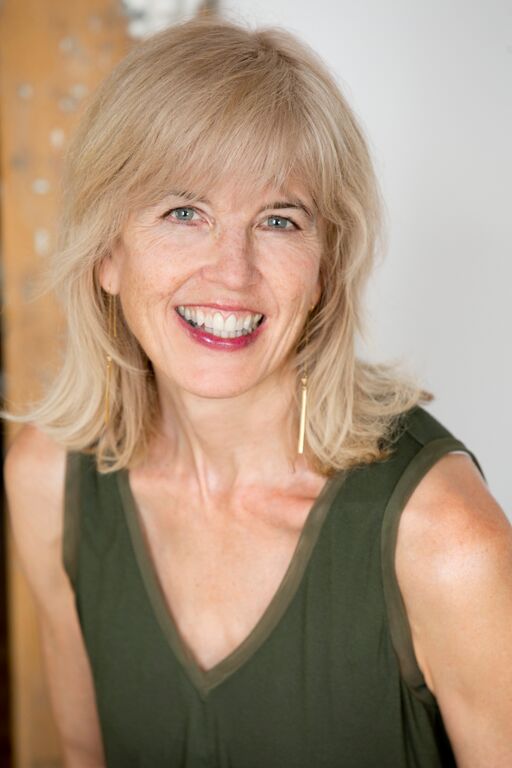
Alison McGhee photo 2015 credit Dani Werner
Alison McGhee is the New York Times bestselling author of Someday, as well as Firefly Hollow, Little Boy, So Many Days, Bye-Bye Crib, Always, A Very Brave Witch, and the Bink and Gollie books. Her other children’s books include All Rivers Flow to the Sea, Countdown to Kindergarten, and Snap. Alison is also the author of the Pulitzer Prize–nominated adult novel Shadowbaby, which was also a Today show book club selection. She lives in Minneapolis, Minnesota, and you can visit her at AlisonMcGhee.com.

MaybeAFox_banner

Follow the blog and book tour!

See Another Guest Post by Kathi Appelt Here!

RickiSigandSignature

**Thank you to Barbara at Blue Slip Media for providing copies for review and the giveaway. Also, thank you to Kathi and Alison for the wonderfully insightful guest post!**

National Geographic Kids: Farm Animals & Rascally Rabbits!

Share

NFPB2016

Nonfiction Wednesday

Nonfiction Picture Book Wednesday is hosted by Kid Lit Frenzy and was started to help promote the reading of nonfiction texts. Most Wednesdays, we will be participating and will review a nonfiction text (though it may not always be a picture book).
Be sure to visit Kid Lit Frenzy and see what other nonfiction books are shared this week!

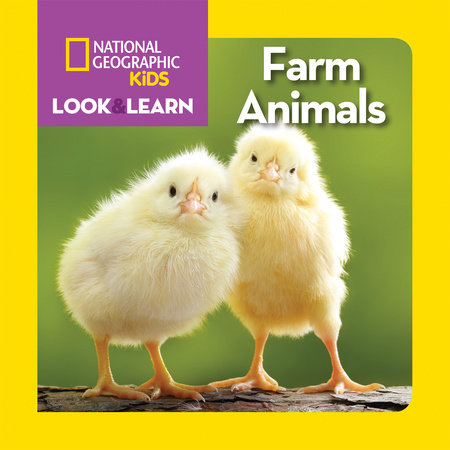
farm animals

Farm Animals
Author: Catherine D. Hughes
Photographs from National Geographic
Published February 9th, 2016 by National Geographic Children’s Books

Goodreads Summary: Young readers will meet their favorite farm animals and learn more about them through simple, age-appropriate language in this colorful board book.

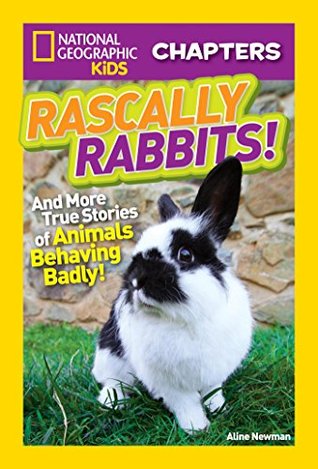
rascally

Rascally Rabbits! And More True Stories of Animals Behaving Badly!
Author: Aline Alexander Newman
Photographs from National Geographic
Published February 9th, 2016 by National Geographic Children’s Books

Goodreads Summary: These bunnies may look adorable, but there’s more than meets the eye! In Rascally Rabbits, meet some rabbits that cause nothing but trouble, a rescue pup who will eat ANYTHING, and a sneaky bear with a taste for treats. Readers won’t stop laughing as they read these hilarious–and completely true!–stories. Filled with engaging photos, fast facts, and fascinating sidebars, readers won’t want to put this book down.


Kellee’s Review: What I like so much about National Geographic Kids books are that they really do take nonfiction to the next level. First, they have nonfiction for all ages. The Look & Learn series are for kids ages 1-4 then move to their Readers Series which is an early reader then to Chapters that is primary level. Each level adds more text but continue to include interesting facts and photographs. Once you get up to Chapters, the text even includes sidebars, an index, and a bibliography. 

Farm Animals was a favorite with Trent immediately. One of his stations at school is all about animals and they spend their time there talking about the different animals, what color they are, and what sound they made, so Trent loved telling me all of the animals’ names and the sound they make. I loved that there were animals facts and sidebars in addition to just the animal photographs and sounds.

Rascally Rabbits! is a perfect first chapter book because it is quite funny (these animals do some crazy things), it is educational because it teaches about the animals as well, and it splits up the stories into nice sections.

Ricki’s Review: I completely agree with Kellee. I much prefer narrative nonfiction, so I always hesitate to pick up informational nonfiction. The National Geographic books remind me just how wrong my assumptions are. I am not crazy about leveling, particularly with nonfiction, but I think that some parents really like it. And I think the leveling in these books is far more accurate than in fiction texts. 

I knew Henry would love Farm Animals the second we got it in the mail. Like most kids, he loves animals. He immediately began singing “Old McDonald” as we started reading the book, and he was bouncing up and down as we went through each of the brightly colored pictures.

Rascally Rabbits! is a bit challenging for him, but he loved the pictures. I opted to read selected text to him aloud, and I read the entire book on my own. Kids who are interested in rabbits will absolutely adore these books. I still remember reading dozens of books about poodles when I was younger. Because I was so interested in the content, I didn’t realize how much I was learning! The book is organized very well, and they did a really nice job with this one.

Teachers’ Tools for Navigation: National Geographic Kids’ books should be a go to for a teacher’s informational nonfiction section. Students will love reading and learning from these texts. Farm Animals and other Look & Learn books are perfect for read alouds and helping young children learn about different parts of our world. Rascally Rabbits! and other chapter books can be used for read aloud, independent reading, or even within a lit circle/jigsaw. For example, with Rascally Rabbits! each group could read about each of the different animals who made a mistake then go group with one person from each of the other groups to share what they read.

Discussion Questions: (Farm Animals) What product do each of these animals give to us?; What other farm animals do you know? What sounds do they make?; (Rascally Rabbits!) What are some things that Babbity does to make Flopsy’s life tough?; What makes bears get near humans?; Why was Neil afraid something bad might happen with Moose? Did something bad happen? Was it Neil’s fault?

We Flagged: “Moo! Cows eat grass. A group of cows is called a herd. People drink milk that comes from cows. Guess What? One cow can give enough milk in a day to fill 400 glasses.” (Farm Animals)

“Did You Know? The best way to pet a rabbit is to gently scratch its forehead and between its eyes.” (Rascally Rabbits!, p. 9)

“A young black dog ran without purpose along a forest road in Lewis County, New York, U.S.A. Rain was pouring down and freezing on the ground. Tiny icicle hung from the dog’s ears and chin. He had a wild-eyed look on his face.” (Rascally Rabbits!, p. 71)

Read This If You Loved: Nonfiction animals books

Recommended For: 

classroomlibrarybuttonsmall readaloudbuttonsmall litcirclesbuttonsmall

Signatureand RickiSig

**Thank you Karen from Media Masters Publicity for providing copies for review!**

Blog Tour, Giveaway, and Review!: Good Morning Yoga by Mariam Gates

Share

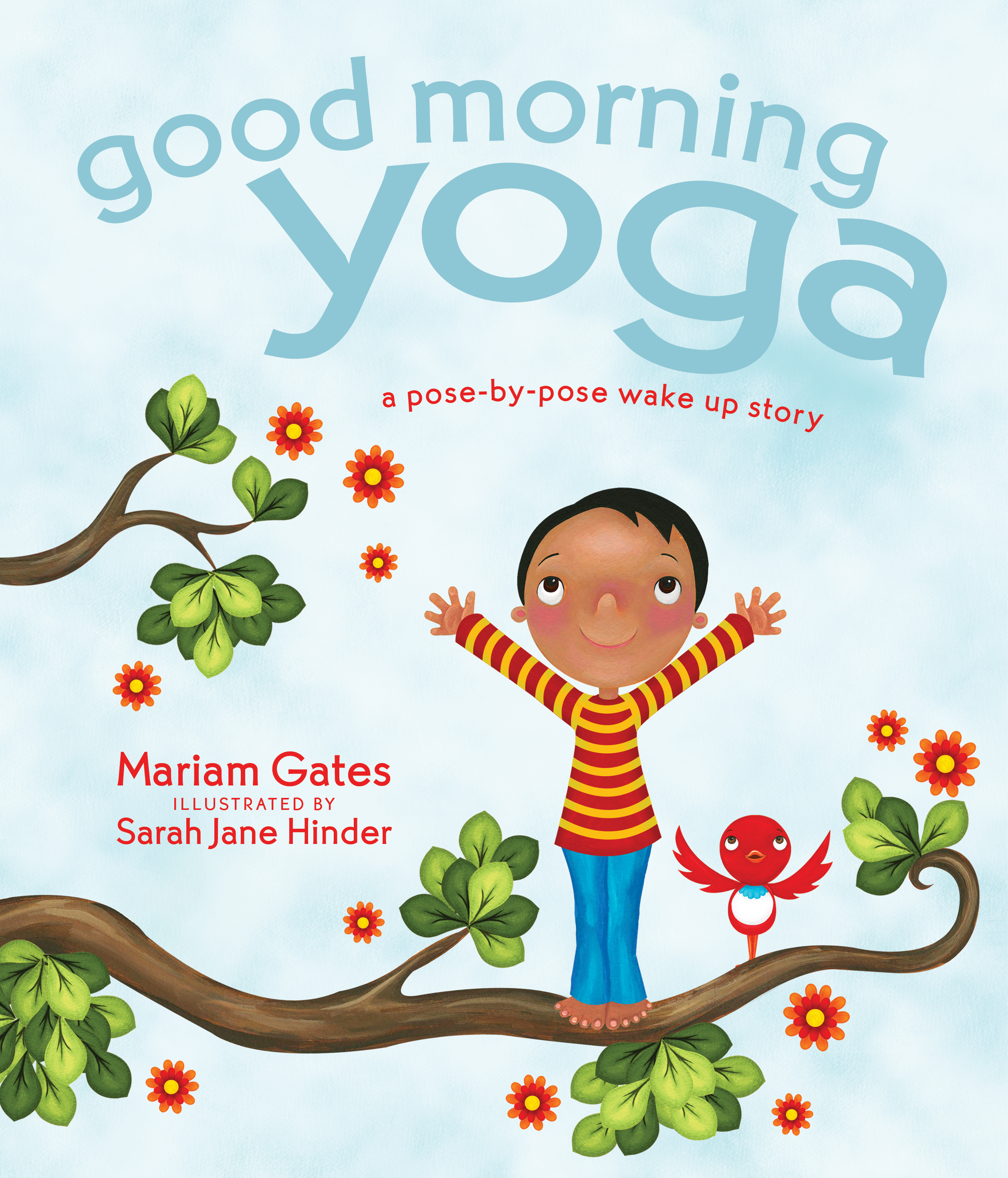
Good Morning Yoga-UPDATED cover hi-res

Good Morning Yoga: A Pose-By-Pose Wake Up Story
Author: Mariam Gates; Illustrator: Sarah Jane Hinder
Published March 1, 2016 by Sounds True

Goodreads Summary: Yoga helps children learn how to focus, relax, and both self-monitor and self-soothe Good Morning Yoga instills these four skills and more, enabling children to jumpstart the day with energy and excitement and meet the adventures that come with mindfulness and perspective.

Good Night Yoga tells the story of the world retiring for the evening and a new generation of readers has fallen in love with the relaxing sequences and beautiful pictures that lead them to dreamland. Good Morning Yoga weaves gentle exercises with a heartwarming narrative and wonderful illustrations to empower children to manage the energies that visit throughout the day from the fiery volcano to the mountain quiet and still. Good Morning Yoga concludes with a visualization for kids to set intentions for the day.

About the Author: Mariam Gates holds a master’s in education from Harvard University and has more than twenty years’ experience working with children. Her renowned Kid Power Yoga program combines her love of yoga with teaching to help children access their inner gifts. She is the author of Good Night Yoga (Sounds True, April 2015), and lives in Santa Cruz, CA, with her husband, yoga teacher Rolf Gates, and their two children. For more information, visit mariamgates.com.

Twitter:  @gatesmariam
Instagram: mariam.gates

Mariam Gates

Review: My father is a pediatrician, and he is constantly recommending meditation and yoga to his patients. He wasn’t a meditation kind of guy when he started practicing medicine, but he came to realize that many of the children who came to him were asking for natural ways to deal with stress and anxiety. I can’t wait to share this book (and Good Night Yoga) with him! There is a definite need for these two texts. Children are rarely taught stress-relieving practices in school, and I wish I’d been taught yoga as a child. 

My two-year-old son and I have had so much fun with this book since it arrived. He constantly asks for the “Woga book.” We practice yoga at least once a day with this book, and it we really enjoy this time together. The narrative that weaves through the book will engage readers and allow them to connect with the yoga moves. The illustrations match the calm beauty of this text, and I think kids will love it. I can’t help but think about how Gates’ books would really help kids grow and develop emotionally and physically.

Teachers’ Tools for Navigation: As a high school teacher, there were many times that I found my students’ energy was flagging. Also, during exams, they were very stressed. We stopped for stretch or meditation breaks. They appreciated these moments and reminded me of them when they’d visit me many years later. This book would be excellent to use in classrooms of all ages. The teacher might read the entire text the first time and then use excerpts in future yoga breaks, depending on time allowance. Research shows that kids who have more recess time perform better. I’d love to do some research on the effect of yoga breaks during schools! This book should be printed in oversized book format!

Encourage yoga time in your home, bookstore, or library with this downloadable kit!

Discussion Questions: How did reading this book make you feel? How might yoga fit into your life?; What are the benefits of yoga?; How does the author’s language connect you with the narrative and yoga moves? How does the illustrator creatively depict the text?; How do the different yoga moves work together?

Book Trailer:


Book Reading:

Another Great Video!:

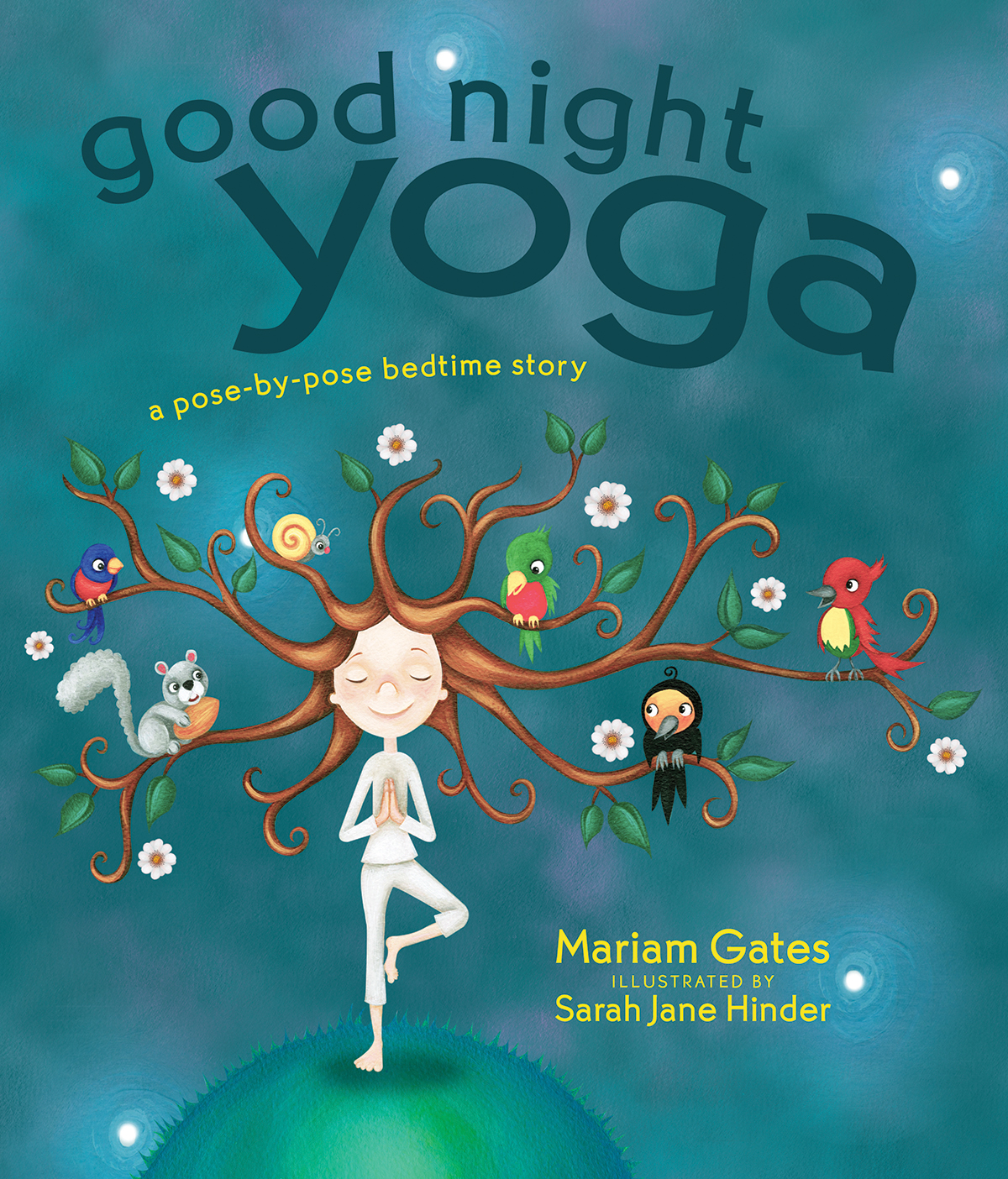
Read This If You Loved: 

Good Night Yoga (2)

Recommended For: 

readaloudbuttonsmall classroomlibrarybuttonsmall


Follow All the Stops on the Tour: 

Wed, Feb 24
Teach Mentor Texts
Fri, Feb 26
Where Imagination Grows
Mon, Feb 29
A Rup Life
Tues, Mar 1
Proseandkahn
Wed, Mar 2
Kid Lit Frenzy
Thurs, Mar 3
5 Minutes for Books
Fri, Mar 4
Once Upon a Story
Mon, Mar 7
Wrapped in Foil
Tues, Mar 8
Sharpread
Wed, Mar 9
A Foodie Bibliophile in Wanderlust
Thurs, Mar 10
Unleashing Readers
Fri, Mar 11
Children’s Book Review
Tues, Mar 15
The Library Fanatic
And Don’t Forget to Enter the Giveaway!:

a Rafflecopter giveaway

RickiSig

**Thank you to Barbara Fisch for sending us this book and for allowing us to host the giveaway!**

Blog Tour, Author Guest Post, and Review!: Dig In! by Cindy Jenson-Elliott

Share

NFPB2016

Nonfiction Wednesday

Nonfiction Picture Book Wednesday is hosted by Kid Lit Frenzy and was started to help promote the reading of nonfiction texts. Most Wednesdays, we will be participating and will review a nonfiction text (though it may not always be a picture book).
Be sure to visit Kid Lit Frenzy and see what other nonfiction books are shared this week!

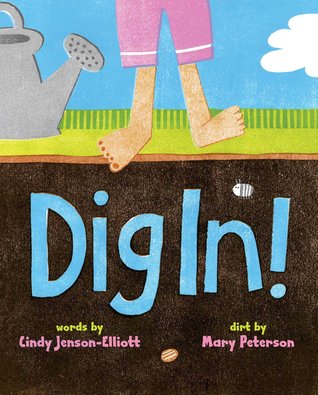
dig in

Dig In!
Author: Cindy Jenson-Elliott
Illustrator: Mary Peterson
Published March 1st, 2016 by Beach Lane Books

Summary: Dig in to this vibrant picture book that celebrates all the surprises found down in the dirt!

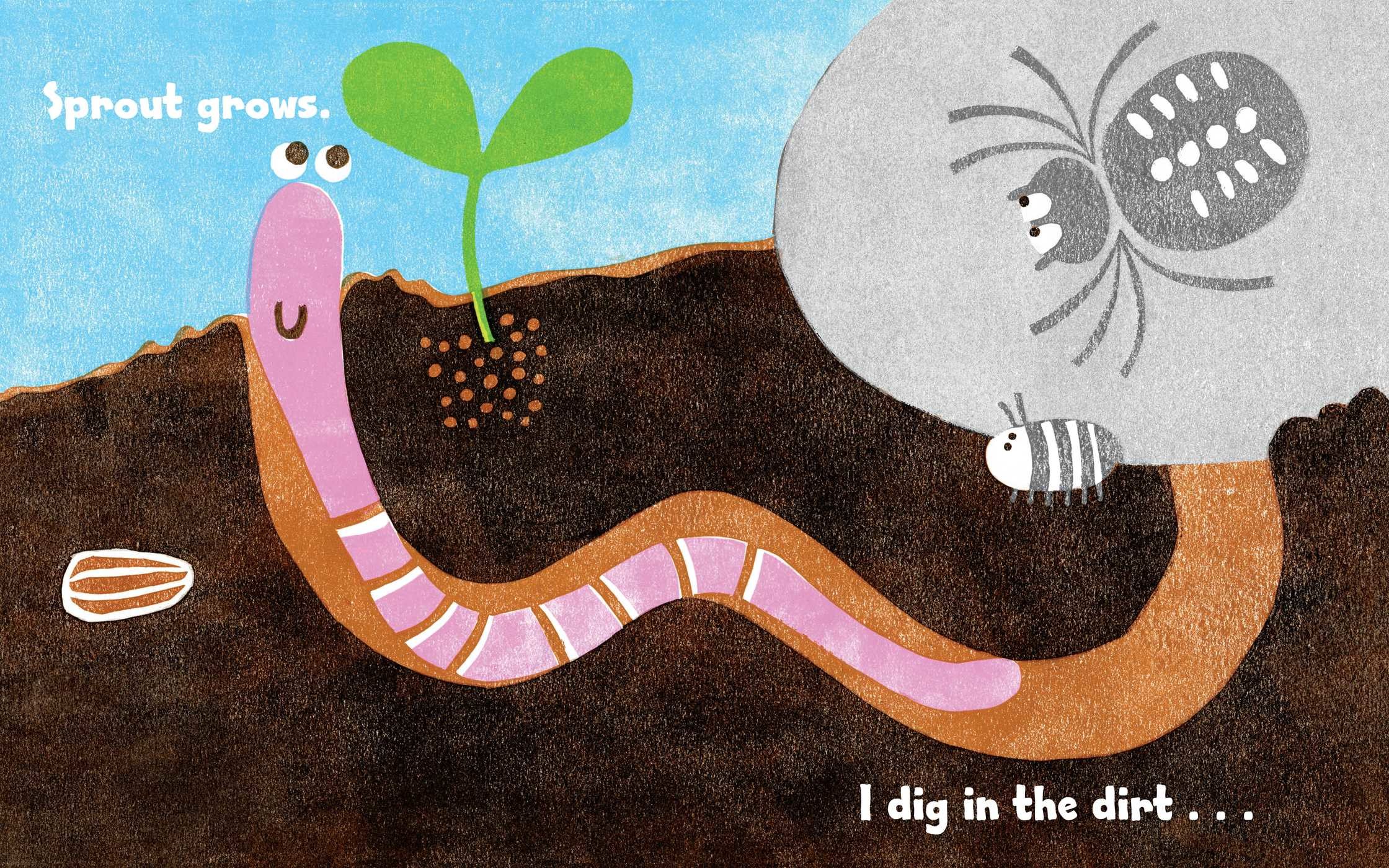
I dig in the dirt…and find a seed.
Seed waits.
I dig in the dirt…and find a spider.
Spider runs.

Explore all of the creepy, crawly, dirty, muddy, green, and growing things that can be found outside in the garden. From pill bugs to worms to leafy green sprouts, young readers will love discovering the muddy garden habitat within the pages of this book—and outside in their own backyards!

This sweet and playful celebration of outdoor exploration is a perfect read aloud for story time.

About the Author: Cindy Jenson-Elliott is the author of the celebrated Weeds Find a Way illustrated by Carolyn Fisher. She is a freelance writer for a variety of newspapers, magazines, and educational publishers, as well as a teacher and natural history instructor. She has an MA in education, and she enjoys spending time outdoors in San Diego, California, where she lives with her family. Visit her at CindyJensonElliott.com.

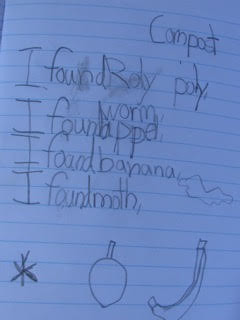
Kellee’s Review: Both of Cindy Jenson-Elliott’s books have truly made me want to get down and dirty in the garden which, if you know me, is exactly the opposite of what you would guess I want to do. Jenson-Elliott has a way of making the ordinary, and dirty, seem extraordinary. It would be great to have students catalog all of the things they find in a dirt. This would make their trips outside quite exciting!

Ricki’s Review: Kellee is absolutely right. Reading this book made me want to get outside in my garden! Oh, I cannot wait for spring! When my son and I read this book, I kept pointing to the pictures and telling him about all of the digging we will do this spring, and I am excited to have this book (and Jenson-Elliott’s Weeds Find a Way) on hand for when the time comes! We live in Connecticut (which is much colder than where Kellee lives), so we can’t quite do any digging yet. This book emanates warmth, and it will make kids want to go outside and start exploring! Cindy Jenson-Elliott seems to find the beauty in things that others may perceive negatively, and I love teaching my son to find the beauty in these unappreciated things!

Teachers’ Tools for Navigation: Cindy Jenson-Elliott has some amazing ideas on how to bring a garden into your curriculum (see below), but you can also use Dig In! to discuss sequencing and cause/effect. First, you can discuss sequencing by having students share each step of what needs to be done to plant and maintain a garden. You can also take the sequencing and extend it into cause/effect by discussing different things you can do to a garden to help or hurt it. It would also be interesting to ask students to research local dirt inhabitants. They might then research the garden plants and critters of another location to learn more about different habitats.

Some More Teachers’ Tools from Cindy Jenson-Elliott:  

“From Compost to Blossoms: Falling in Love with Literature in the School Garden”

An empty pile of dirt. A blank page. A great book. A tender idea. This is how most of my garden adventures with children begin.

Teaching in the garden is alive with possibility in more ways than one. Ideas spring up like weeds – a crazy tangle without discernable order. Bringing an idea to fruition –doing something I have never done before — feels like an enormous reach.  It is like trying to untangle a vine: where should the project begin? What are the steps? Who will help me figure it out? It’s terrifying — and thrilling! Teaching in the garden wakes you up to being a learner, even as you teach. You and the students are partners, learning together from nature. We all know teaching is risky business. Hands-on, project-based teaching – especially in the garden–  is downright dangerous.

Books take the edge off and give you a jumping off point for great projects that connect inside and outside learning. Here are some book ideas to get you started on some thrilling garden adventures of your own.

Sunflower House

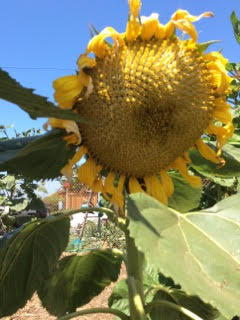
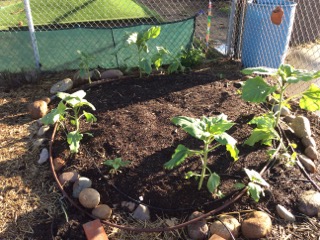
On one particular day in November, I shared Sunflower House by Eve Bunting with my TK- grade 3 students. My crazy idea was to grow our own sunflower house in a bare patch of dirt in the corner of the school garden.

First, I read the book to the children, and I shared my idea.

“We’re going to need a nice pile of garden dirt to go over in that corner,” I told them. “Right now it’s just hard clay.”

We piled dirt and compost on top of cafeteria trays reserved for gardening and students worked in partners to carry them over to the corner. We made a round, flat pad 1 foot high and 10 feet across. After school, I tapped into our drip-line watering system and ran a flexible watering tube over to the circle, looping around and around. The next garden time, students added a small amount of organic fertilizer and planted dozens of sunflower seeds. We planted Russian Mammoths, but also other multicolored and multi-sized varieties. We created a pathway leading to the dirt pad, and put up stakes protecting the area. Then we sat back and and waited, working on other garden projects all the while.

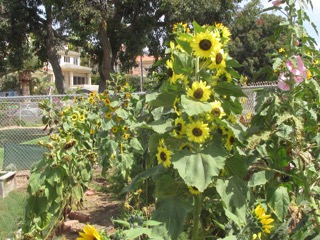
Winter rains in drought-stricken Southern California were sparse, but with dripping irrigation a few times a week, soon the sunflowers were sprouting. We measured them week by week, watching them grow higher and higher. Soon they were as high as a first grader’s head. Finally they were higher than my own head and shooting out buds.

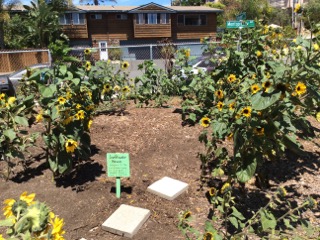
The Sunflower House gave us endless opportunities for learning. We measured and drew the growing plants with pastels and black paper to draw blossoms. Some teachers extended the activity by learning about Van Gough and looking at his paintings of sunflowers. We watched bees visit the blossoms and learned about pollination. When the stalks dried and the heads turned inside out, we learned about the birds that came to eat the seeds. And when the next generation of sunflowers sprouted up from fallen seeds, we could see the complete cycle of life in our circle of flowers. Best of all, students loved sitting in the Sunflower  House to write or draw, or just be. From one book, we developed an entire year’s worth of activities.

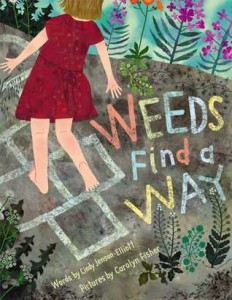
Weeds Find a Way

weeds find a way

After reading my 2014 picture book Weeds Find a Way we searched our garden for the weeds pictured in the book. We drew weeds and researched them, asking how the weeds adapted for survival. Some classes used Weeds Find a Way as a mentor text to write their own “Something Finds a Way” books about another topic. We wrote poetry, and students developed social-emotional understandings by looking at the tenacity, grit and adaptability of weeds and comparing it with their own. Finally, we tried our hands at botanical drawing and we made a giant art piece to hang on the fence of the garden.

Trellis-Bridge Project

A trellis we built last year to hold up a new passion fruit vine in the garden  collapsed and we needed a new trellis. This problem was the catalyst for learning about bridges. Pop’s Bridge by Eve Bunting and Bridges! By Carol Johmann and Elizabeth J. Rieth, were jumping off points for learning about bridges, and designing and building a trellis to hold up our passion fruit plants.

Dig In! #1000HandsDigIn Photography Project

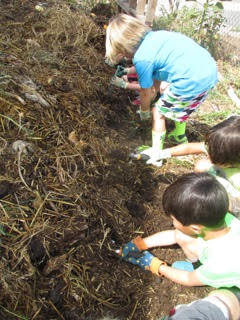
Last week we read Dig In! for the first time. Then we went out to the garden to dig in and photograph our hands and whatever our Mixed Age Class (MAC) grade 1 – 3 students found in the school garden. Students learned to frame, take and edit photos from fabulous teacher Margit Boyeson. Students are sharing their photos to twitter at #1000HandDigIn.

Engagement with Common Core Reading and Writing in the School Garden

            Picture books are the perfect way to connect inside learning and outside doing in the garden. Read Roxaboxen or Westlandia and create your  own special civilization. Read Creepy Carrots and plant a less scary variety. Then write your own creepy stories. Dive into Muncha, Munch, Muncha and see what critters are eating up your garden. Then write your own stories about the critters in the garden. And before you even plant seeds, take a look at your soil. Read Dig In! and discover the wonders living in your dirt.

What will you find when you Dig In! to gardening and literature? A world of wonder!

To see more literature-based projects you can do with students in the school garden, visit my website and follow the links to my naturexplorer blog at www.cindyjensonelliott.com.

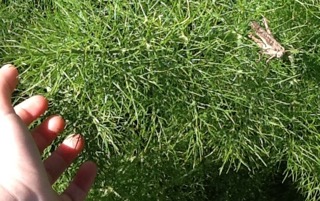
unnamed (1) unnamed Ava's 1000HandsPhoto unnamed (2)

IMG_0211 IMG_3441 (1) IMG_1308

Discussion Questions: How are worms, spider, and pillbugs beneficial to a garden?; What other bugs are beneficial to gardens?; What else does a garden need to succeed?

We Flagged: 

dig-in-9781442412613.in03

Read This If You Loved: Weeds Find a Way by Cindy Jenson-ElliottThe Troublemaker by Lauren Castillo, In the Garden by Elizabeth Spurr

Recommended For: 

classroomlibrarybuttonsmall readaloudbuttonsmall

Kellee Signature andRickiSig

**Thank you Shifa at Simon & Schuster and Cindy Jenson-Elliott for providing a copy for review and for having us as part of the blog tour!**

Normal Norman Written by Tara Lazar, Illustrated by S.britt

Share

normal norman

Normal Norman
Author: Tara Lazar; Illustrator: S. britt
Published March 1, 2016 by Sterling Children’s Books

GoodReads Summary: What is “normal?” That’s the question an eager young scientist, narrating her very first book, hopes to answer. Unfortunately, her exceedingly “normal” subject—an orangutan named Norman—turns out to be exceptionally strange. He speaks English, sleeps in a bed, loves his stuffed toy, goes bananas over pizza, and even deep-sea dives! Oh, no: what’s a “normal” scientist to do?

Ricki’s Review: Norman is one of those great literary characters that will stick with readers for a long time. The book is quite humorous, and my son was giggling as we read it together. Norman is anything but normal, yet the young scientist makes strong efforts to prove that he is normal. She becomes very frustrated, and then Norman teaches her an important lesson. I enjoyed this book because it was a fresh take on the idea of: What does it mean to be normal? I also enjoyed the layout of each page. The quote bubbles from the characters added another layer to the text that would be great to discuss in the classroom with a close reading. This will be a favorite in classrooms, and I recommend it highly.

Kellee’s Review: I love everything that this book stands for. It shows that normal is whatever you make it, that everyone should be accepted for what they are, and normal isn’t always what it seems. Norman helps mold the young scientist’s mind which will hopefully lead readers to also rethink what they think normal is. I am definitely going to use this book as one of our “precepts” in the future because I really think it’ll make students think. 

Teachers’ Tools for Navigation: Teachers might consider using this text to teach broad conceptions of normalcy. Often, young students conceive of normalcy as anything similar to them. A teacher might introduce different groups, customs, and cultures to allow students to understand that normal is a socially constructed concept, and people can be different yet still normal. Or perhaps, students might determine that there is no such thing as being “normal.”

Discussion Questions: What does it mean to be normal? Is anyone normal? How might we conceive of normalcy more broadly?; What lessons does the scientist learn? How does she learn them?

We Flagged: “Allow me to introduce Norman. He will help me demonstrate the word normal. You see, Norman is EXCEEDINGLY normal.” 

normal norman spread

Reprinted with permission from Normal Norman © 2016 by Tara Lazar, Sterling Children’s Books, an imprint of Sterling Publishing Co., Inc. Illustrations © 2016 by Stephan Britt.

Read This If You Loved: You Are (Not) Small by Anna KangGiraffes Can’t Dance by Giles Andreae, Unicorn Thinks He’s Pretty Great by Bob SheaThe Magic of Maxwell and His Tail by Maureen Stolar Kanefield

Recommended For: 

closereadinganalysisbuttonsmall readaloudbuttonsmall classroomlibrarybuttonsmall

Check Out Normal Norman at the other stops on the tour!:

NN Tour Schedule - Sized for Twitter (1)

RickiSigandKellee Signature

**Thank you to Josh from Sterling books for providing copies for review!!**