Teeny Tiny Toady by Jill Esbaum

Share

teeny tiny toad

Teeny Tiny Toady
Author: Jill Esbaum
Illustrator: Keika Yamaguchi
Published: March 1, 2016 by Sterling Children’s Books

Goodreads Summary: When a giant hand scoops up her mama and puts her in a pail, a terrified tiny toad named Teeny hops faster than she ever did in her life. “Mama’s stuck inside a bucket! Help me get her out!” she begs her big, clumsy brothers. “Don’t you worry, kid. We’ll save her!” they promise, bumbling and stumbling and jumbling out the door. But as the boys rush headlong to the rescue, pushing their little sister aside, it becomes clear: brawn isn’t always better than brains—and the smallest of the family may just be the smartest one of all.  Written in lilting verse.

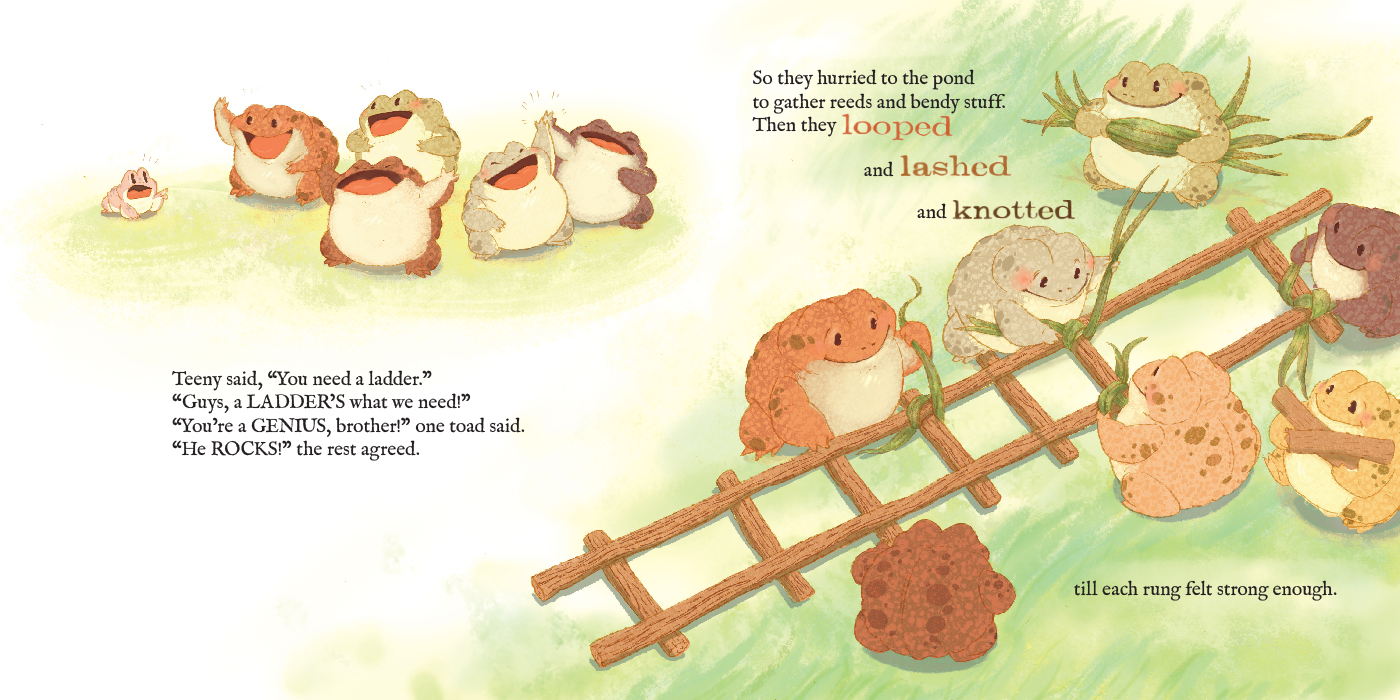
Ricki’s Review: I should be honest that frogs and toads are my favorite animal. I love everything about them! Reading this book was such a joy. I loved how the words danced across the page. If you look at the image below, you will see the way the words pop. The toads are personified in a way that makes me smile. They high five, cheer, hold each other up, etc. Teeny may be little, but she is fierce. It takes her some time to realize that she has valuable ideas. I enjoy teaching my son to be critical of gender as we read this book, and I particularly enjoyed the feminist theme.

Kellee’s Review: I should be honest that frogs and toads are one of my least favorite animals. However, that did not keep me from loving this book! Ricki touched on much of what is superb about the book including the onomatopoeias throughout, the way the words hop like toads all over the page, and the joyousness of these toads’ family. I also particularly enjoyed the theme of this book–it definitely shows how you shouldn’t underestimate people especially if you are basing it off of a prejudicial stereotype. It also  I plan on using this for one of my precept/theme activities with my students because I feel there is so much that could be discussed in this teeny, tiny book. 

Teachers’ Tools for Navigation: This story would be great to use in a creative writing class. The author and illustrator cleverly craft the phrasing and presentation of the story, and this will be inspirational for writers and illustrators. Teachers might also use this text to teach personification, onomatopoeias, and effective use of rhyme.

Discussion Questions: When does Teeny realize that her ideas are valuable? How does her size impact how she feels about herself?; Are there other ways that Teeny could have gotten her family out of the bucket? Try to think of as many ways as you can and how they would have impact the telling of the story.

Flagged Passage:

teeny passageSpread from: http://andreacmiller.com/projects/teeny-tiny-toady/

Read This If You Loved: The Frog and Toad series; Stick by Steve Green; Green Wilma by Tedd Arnold

Recommended For: 

readaloudbuttonsmall classroomlibrarybuttonsmall

RickiSigand Kellee Signature

**Thank you to Josh at Sterling Books for providing copies for review!**

Blog Tour and Review!: Monster Needs to Go to School by Paul Czajak

Share

monster banner

Interactive Monster Needs to go to School Banner

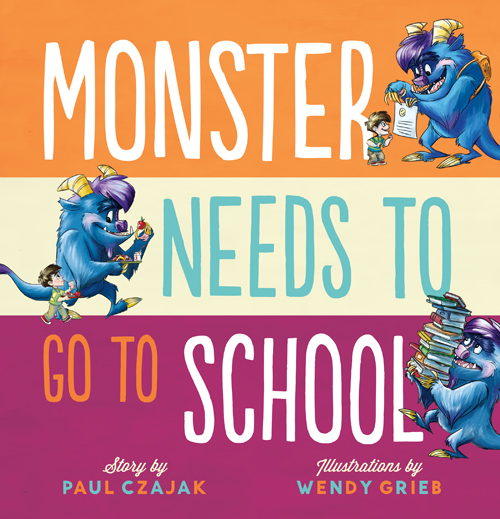
Monster School Cover

Monster Needs to Go to School
Author: Paul Czajak
Illustrator: Wendy Grieb
Anticipated Publication June 28, 2016 by Mighty Media Kids
(Please note the new publication date!)

Goodreads Summary: Monster is dreading his first day of school. But his classroom is full of new friends and so many fun things to learn that Monster forgets his fears in no time…until he catches his friends bullying. What will Monster do?

Another exuberant addition to the award-winning Monster & Me series, addressing back-to-school jitters and the difficulty of dealing with bullies—especially when they’re friends.

Ricki’s Review: The Monster books rank up there as one of my favorite series. I absolutely love reading these books because the monster always make me laugh. My son giggles as we look at the big monster squeezing into a tiny classroom seat. My son is starting preschool in the fall, so it was great to use this book as a teaching tool to discuss his first day of school with him. He became more excited about going to school after reading this book. I also enjoy the lessons that these books teach. Monster sees bullying and isn’t a silent bystander. He speaks out for what he believes is wrong. As a mom, I plan to talk about bullying often. I want my son to stand up for his peers when he sees bullying, and it is great to have this book as a resource to start these conversations.

Kellee’s Review: I love the Monster motto: “Teach kids what matters! After all, they are our future.” This is something I truly believe as well, and I think the Monster books do a great job teaching our children about being a good citizen and human. My first Monster book was Monster Needs Your Vote, and I was really impressed with how Czajak dealt with teaching about politics. Monster Needs to go to School is a bit different because it doesn’t as much teach about a topic but focuses on the importance of education and for kindness. This book will be great to read right before school starts, at the beginning of school, if someone is struggling with school, or when bullying is a problem. I think it would equally work for any of these situations because Monster’s story is fun and one that the reader will connect with. 

Teachers’ Tools for Navigation: This would be an excellent book to start off the school year. I’d read this book on the very first day. It would calm students’ nerves to see a giant monster who is afraid of school. Further, it would jumpstart conversations about bullying to tackle the issue before it might begin.

Discussion Questions: What is monster afraid of? What kinds of things make us afraid? Why is this okay?; What does monster do when he sees bullying? Why is it important to stand up for what is right? What is a bystander? Would you be strong and speak up against bullying?

We Flagged: “When Monster hopped onto the bus, his nerves were at their peak. He crumpled in the nearest seat, afraid to even speak.”

Read This If You Loved: Each Kindness (Kellee’s Review; Ricki’s Review) by Jacqueline Woodson, Unicorn Thinks He’s Pretty Great by Bob Shea, the rest of the books in the Monster & Me series

Recommended For: 

readaloudbuttonsmall classroomlibrarybuttonsmall

RickiSigand Kellee Signature

**Thank you to Carolyn at Mighty Media Press for providing copies for review!**

Mother Bruce by Ryan T. Higgins

Share

Mother Bruce

Mother Bruce
Author: Ryan T. Higgins
Published November 24, 2015 by Disney-Hyperion

Goodreads Summary: Bruce the bear likes to keep to himself. That, and eat eggs. But when his hard-boiled goose eggs turn out to be real, live goslings, he starts to lose his appetite. And even worse, the goslings are convinced he’s their mother. Bruce tries to get the geese to go south, but he can’t seem to rid himself of his new companions. What’s a bear to do?

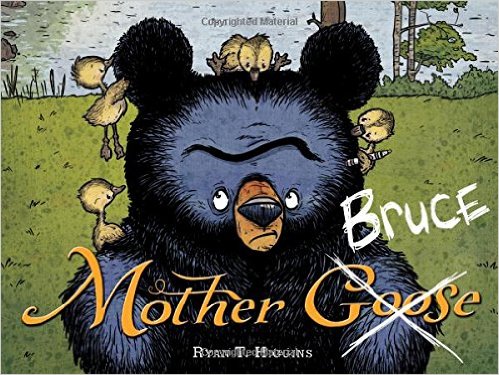
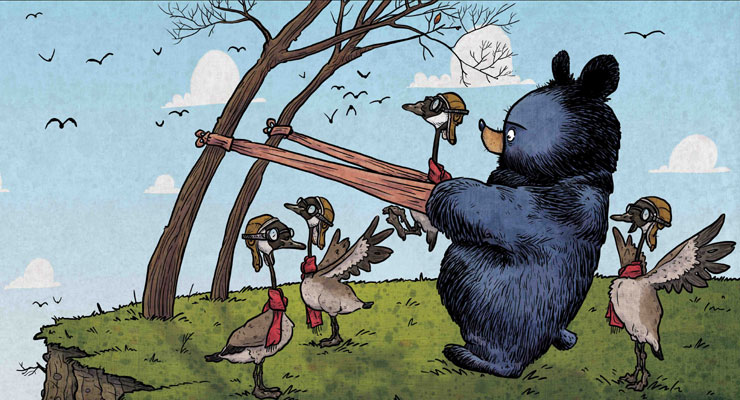
Ricki’s Review: I dare you to try reading this book without smiling. I had so much fun reading this book with my son. It tells the story of a grumpy bear who accidentally hatches goslings instead of hard-boiled eggs for his newest recipe. The goslings imprint on him, and he can’t get rid of them! As you can see below, the illustrations are hilarious. The author is very clever. I will be reading more of his work!

Teachers’ Tools for Navigation: It is always fun to look at original fairy tales and the ways they compare to fairy tale retellings. This book is a bit different because Mother Goose is the imaginary author of fairy tales. The title of this book is a pun on the Mother Goose name. ‘d love to hear the ways that kids can compare this story to other fairy tales. I imagine they would come up with some really clever ideas!

Discussion Questions: What strategies does Bruce use to try to get rid of the goslings?; How does Bruce change throughout the story?; In what ways does the author add humor to the story in both the language and illustrations?; What does the title mean?

We Flagged: 

Mother-Bruce-2

**Image from: http://www.modernmom.com/mother-bruce-giveaway-100-visa-gift-card-116459.html. **

Read This If You Loved: Wilfred by Ryan T. Higgins, Wolfie the Bunny by Ame Dyckman, No Fits, Nilson by Zacharia Ohora, Sylvester and the Magic Pebble by William Steig, This Is Not My Hat by Jon Klassen

Recommended For: 

readaloudbuttonsmall classroomlibrarybuttonsmall

RickiSig

The SLOWEST Book EVER by April Pulley Sayre

Share

NFPB2016

Nonfiction Wednesday

Nonfiction Picture Book Wednesday is hosted by Kid Lit Frenzy and was started to help promote the reading of nonfiction texts. Most Wednesdays, we will be participating and will review a nonfiction text (though it may not always be a picture book).
Be sure to visit Kid Lit Frenzy and see what other nonfiction books are shared this week!

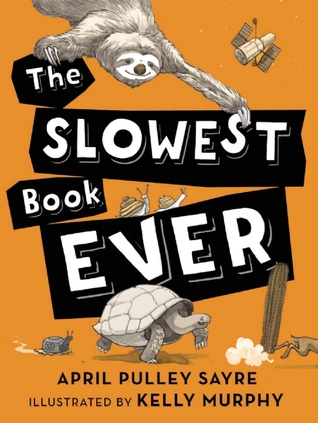
slowest book ever

The SLOWEST Book EVER
Author: April Pulley Sayre
Illustrator: Kelly Murphy
Published April 5th, 2016 by Boyds Miller Press

Goodreads Summary: April Pulley Sayre’s wry, quirky storytelling tone shines from the warning on the first page (“This is a S-L-O-W book. Do not read it while surfing, water skiing, or running to escape giant weasels.”) right through to the glossary at the end. In between, readers will explore an astounding variety of information about all things slow—in nature, geology, art, outer space, etc. Throughout, The SLOWEST Book EVER playfully encourages readers to slow down and savor everything. As Sayre shows: “If you think slowly enough, the entire world is amazing.” This innovative nonfiction work is a treasure trove of information that begs for multiple readings.  

Kellee’s Review: Anyone who teaches knows that the most popular nonfiction books are the ones that have a ton of information in short segments with fun pictures. Well, Sayre’s The SLOWEST Book EVER is exactly that but even better than you are picturing. Sayre does such a great job of having a small amount of information that packs a very big punch. Although each fact is over only a 2-page spread, the information is thorough, interesting, and specific. I loved the wide range of topics that were all covered under the big idea of SLOW, and I think students will be fascinated with all of the information.

Ricki’s Review: I read a lot of books, and I don’t think I’ve read a book that is quite like this one! It is a compilation of fascinating information that will compel readers to want to learn more about their world. It is apparent that a lot of thought and care went into the crafting and production of this book. Each page is a bit different, so if a reader is uninterested in a topic, he or she can flip the page and find something else entirely different. This book would make a great gift because all children will find sections that intrigue them, regardless of their interests. I’d look forward to going to a class where a teacher used this book used as a read-aloud, reading a few sections each day. This book makes learning fun!

Teachers’ Tools for Navigation: Since The SLOWEST Book EVER includes tidbits of information on many different topics, each spread could easily be used as a jumping off point for an inquiry project. Students browse through the book to determine which spread of information interests them the most then they do more research (using the back matter as a place to start) then share the extra information with their classmates.

The SLOWEST Book EVER also does an amazing thing by looking at all the different ways that SLOW can be defined. After finishing the book as a class, revisit all of the different ways slow was used then brainstorm different meanings of other subjective adjectives such as fast, large, and small. Then student, as a class, could write their own fact book using a different adjective but showing different meanings of that word.

Discussion Questions: Which fact surprised you the most?; The book doesn’t only focus on slow speeds–what ever definitions of slow did the author focus on?; What topics would you like to learn more about? Where could you go to get more information?

We Flagged: “Chewy Nature Thoughts
Read them. Think about them. S l o w l y.
Slow thoughts are often big thoughts. So don’t fret if it takes a while to understand them. Don’t worry if you need to read them twice. -Traveling in a circle is, after all, still traveling.” (p. 8-9)

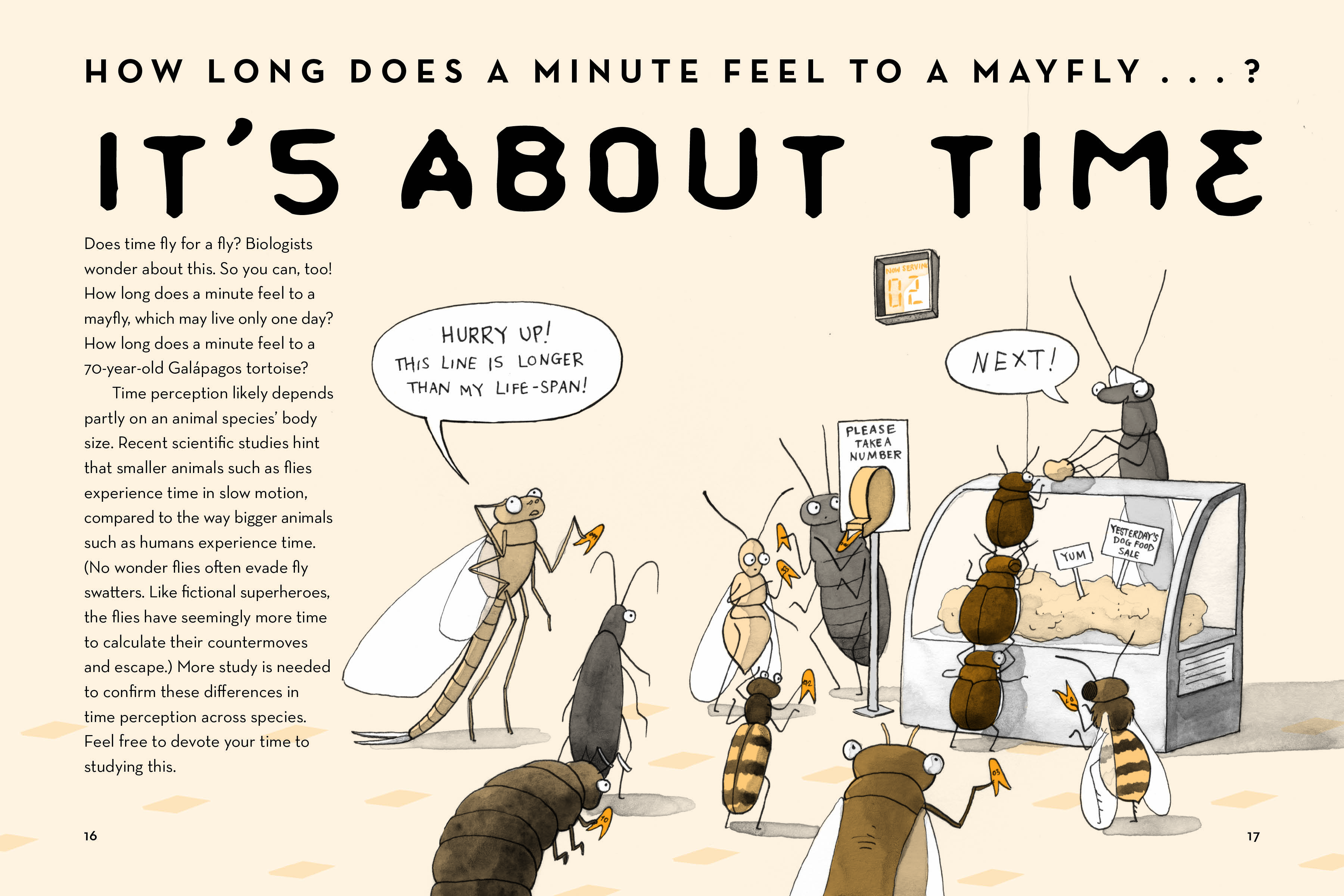
“How long does a minute feel to a mayfly…?
It’s About Time

Does time fly for a fly? Biologists wonder about this. So you can, too! How long does a minute feel to a mayfly, which may live only one day? How long does a minute feel to a 70-year-old Galápagos Tortoise?” (p. 16-17)

SLOWESTBOOK_16-17

Read This If You Loved: Nonfiction books such as Weird but True by National Geographic, Lifetime by Lola M. SchaeferExtreme Oceans and Extreme Earth Records by Seymour SimonIsland by Jason Chin, The Guinness Book of World Records

Recommended For: 

classroomlibrarybuttonsmall readaloudbuttonsmall closereadinganalysisbuttonsmall

Signatureand RickiSig

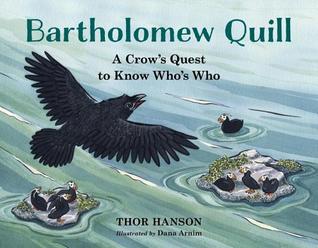
Bartholomew Quill: A Crow’s Quest to Know Who’s Who by Thor Hanson

Share

bartholomew quill

Bartholomew Quill: A Crow’s Quest to Know Who’s Who
Author: Thor Hanson
Illustrator: Dana Arnim
Expected publication April 5th, 2016 by Little Bigfoot

Goodreads Summary: Bartholomew Quill is clever and curious, but he doesn’t know who or what he is. He has feathers not fur, so he can’t be a moose; he is black like a puffin but his beak is the wrong color. This determined bird won’t stop asking questions until he discovers what the reader knows–Bartholomew Quill is a crow!

Acclaimed biologist Thor Hanson takes us on a journey through the animal kingdom, and Dana Arnim’s exuberant watercolor and ink illustrations add to the magic.

About the Author: Thor Hanson is a biologist and author renowned for his adult books about nature (The Impenetrable Forest, The Triumph of Seeds, and Feathers). He won a PNBA Award and The John Burroughs Medal for Feathers, which was also a finalist for the Washington State Book Award. Hanson is a Guggenheim Fellow, a Switzer Environmental Fellow, and sought-after public speaker.

About the Illustrator: Dana Arnim, a northwest native, earned her art degree from the University of Washington. She lives with her husband and family in Seattle and helps lead the Society of Children’s Book Writers and Illustrators (SCBWI) Western Washington chapter.

Kellee’s Review: Bartholomew Quill’s journey is a bit different than other books because the reader already knows the answer to the question the protagonist seeks. I can see reading this with students and students shouting answers and information to Bartholomew as he goes about his journey. What I think is quite wonderful about this book is that although the book is anthropomorphic, the animal information is still factual since it was written by a biologist. Arnim did a beautiful job with the illustrations as well, bringing the animals to life. 

Ricki’s Review: This book touched me in the way that it reminded me of the Native American creation myths my grandfather used to tell when I was a young child. He’d pull me onto his lap and tell me how the river became a river or why the wind whistles. I am sure that these myths made me the reader I am today. Bartholomew Quill is a beautiful story that will leave children to dream about other fictional connections with Mother Nature. It inspires me to get outside and look for animals like Bartholomew in order to learn their stories, too.

Teachers’ Tools for Navigation: Throughout the book, Bartholomew compares and contrasts himself with other animals to help figure out what animal he is. This book would be a great introduction to compare and contrast using the conversations Bartholomew has as well as the illustrations of the different animals.

Students could also use this book as a jumping off point for an animal study of one of the animals within the book. Each animals is quickly discussed, so students could pick the animal that interests them and complete an inquiry project about the animal.

Discussion Questions: How does Bartholomew determine that he is a crow?; How is he different from ______?; How is he the same as ______?

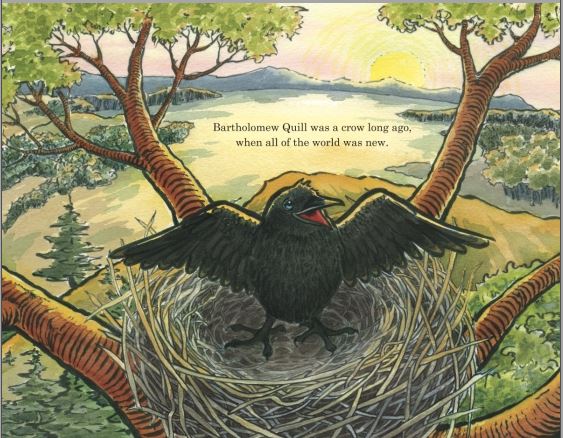
We Flagged: 

bartholomew quill illustration

Read This If You Loved: Frozen Wild by Jim Arnosky, Winter Bees by Joyce Sidman, Feathers by Melissa Stewart

Recommended For: 

readaloudbuttonsmall classroomlibrarybuttonsmall

Kellee Signature andRickiSig

**Thank you Nicole at Sasquatch Books for providing copies for review!**

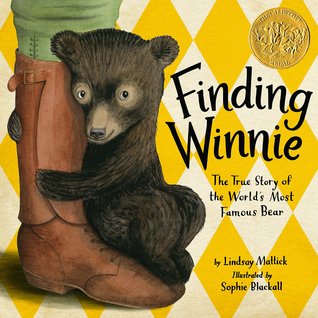
Finding Winnie: The True Story of the World’s Most Famous Bear by Lindsay Mattick

Share

NFPB2016

Nonfiction Wednesday

Nonfiction Picture Book Wednesday is hosted by Kid Lit Frenzy and was started to help promote the reading of nonfiction texts. Most Wednesdays, we will be participating and will review a nonfiction text (though it may not always be a picture book).
Be sure to visit Kid Lit Frenzy and see what other nonfiction books are shared this week!

finding winnie

Finding Winnie: The True Story of the World’s Most Famous Bear
Author: Lindsay Mattick
Illustrator: Sophie Blackall
Published October 20, 2015 by Little, Brown Books for Young Readers

Goodreads Summary: Before Winnie-the-Pooh, there was a real bear named Winnie.

In 1914, Harry Colebourn, a veterinarian on his way to tend horses in World War I, followed his heart and rescued a baby bear. He named her Winnie, after his hometown of Winnipeg, and he took the bear to war.

Harry Colebourn’s real-life great-granddaughter tells the true story of a remarkable friendship and an even more remarkable journey–from the fields of Canada to a convoy across the ocean to an army base in England…

And finally to the London Zoo, where Winnie made another new friend: a real boy named Christopher Robin.

Here is the remarkable true story of the bear who inspired Winnie-the-Pooh.

Ricki’s Review: Many of my blogger friends raved about this book. I knew I needed to read it, but my library hold list was very long. When I saw it won the Caldecott Award, I took action. I drove my son to the bookstore and read the book to him while he sat on my lap. My aunt came with me, and she cried through the entire book.

When we reached the end, we just stared at each other and she said, “Ricki, you have to buy this book. Henry needs to have this special story.” And this is how I broke my rule about buying books. Finding Winnie sits elegantly on my son’s bookshelf, and I don’t regret breaking my rule. We love reading it together. The story is captivating from the beginning to the end, and the author and illustrator paint the scene in a remarkable way that readers will be unable to put the book down. Depicting history in picture books is very difficult, and Mattick and Blackall nail it. I highly recommend this charming book if you haven’t read it yet. It will stay close to your heart.

Kellee’s Review: One of the things I particularly loved about Finding Winnie, that Ricki didn’t mention in her beautiful review above, was that the book was written by the great-granddaughter of Captain Coleburn, the serviceman who owned Winnie originally. Having Lindsay Mattick’s close knowledge of the story helped her delve into the story and transport the reader into Winnie’s stories. The backmatter filled with photos and other primary documents also make it feel like we are peaking into the family’s scrap book.

I also want to praise Sophie Blackall’s illustrations. I love Sophie’s soft style with what seems like pencil and paints just is angelic and brings Mattick’s story to life. Although they both would shine separately, they are stellar together.

Teachers’ Tools for Navigation: As a teacher, I’d love to do two things with this book. First, I’d want to compare it to the Winnie the Pooh stories by A. A. Milne. It would be great to compare and contrast the stories to make connections about how Milne might have been inspired. Then, I’d put this book in semi-literature circles. Students might read all of the books (in the “Read This If You Loved” section below) in small groups, and rotate the books across groups. Then, they could discuss the topic and depiction of animals during wars throughout literature. They could compare and contrast the stylistic choices of the authors and also delve into potential ways that animals might be symbolic of each particular war.

Discussion Questions: How do the author and illustrator depict Winnie? How does Winnie’s story evolve?; What does Harry’s friendship with Winnie teach us about human nature?; How might this story have inspired the fictional Winnie the Pooh story?; Why do you think it won the Caldecott? What qualities make it an award winner?

We Flagged: 

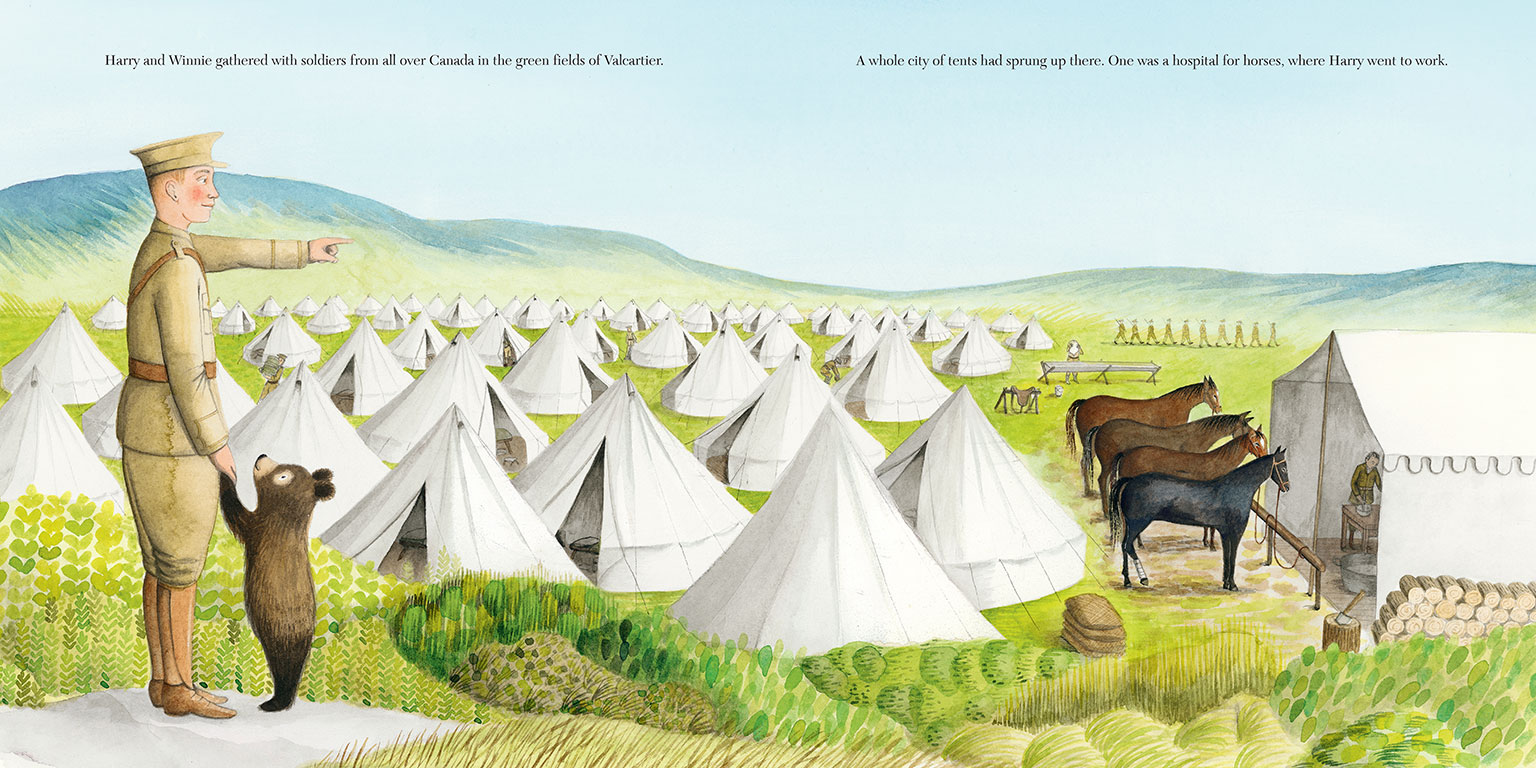
Finding WInnie Spread

**Image from: https://thewalrus.ca/finding-winnie/. We recommend this site, which includes many great images related to the text!**

Read This If You Loved: Winnie: The True Story of the Bear That Inspired Winnie-the-Pooh by Sally M. Walker, Winnie the Pooh  by A. A. Milne, Midnight, A True Story of Loyalty in World War I by Mark Greenwood, Stubby, the War Dog by Ann Bausum, Dogs of War by Sheila Keenan, Faithful Elephants by Yukio Tsuchiya

Recommended For: 

readaloudbuttonsmall classroomlibrarybuttonsmall litcirclesbuttonsmall

RickiSigandSignature

Lousiana State University’s Line 4 Line Program: A Barbershop Literacy Program in Baton Rouge

Share

line for line 9

Last year, I started hearing about barbershops that would cut young boys’ hair for free if the child read to them while they got their haircut. When I first heard about the program, it brought tears to my eyes because I felt that it is such an invaluable service.  In February 2011, NEA released “Focus On: Blacks” which states that 42% of Black students attend under-resourced schools and less than 50% of Black male students graduate on time. These statistics show that there is a dire need to help our Black male youth. The barbershop programs are just one way that communities are working on getting books into young Black boys’ hands to increase literacy rates, and thus, increasing success in lives overall.

In December, my father started working at the Louisiana State University Museum of Art, and he sent me this photo:

O'Neils_Feb_1_2016

And my heart melted! I knew right away that LSU must have a program like what I had heard about. Then, I read a CNN article on March 3rd highlighting a similar program in New York, and I knew that I had to share what LSU is doing in Baton Rouge.

The program in Baton Rouge is called Line 4 Line.  It grew out of LSU’s Neighborhood Arts Project, the outreach program of LSU’s Museum of Art, as well as the Art Works Program, a program which focuses on bringing kids from low-performing schools to the art museum. The LSU program is so much more than just a reading program at a barbershop. They have worked to add books and reading to so many different parts of their community, including reading programs during museum tours and Little Libraries.

line for line 2

Lucy Perera, the Coordinator of School & Community Programs at the LSU Museum of Art, told me exactly when the idea formed and how it grew into what it is today. The rest of this post features her words:

I usually incorporate reading in all our museum programs for kids. One month we were making books as our project, and the students were reading after the art portion of the program. One 1st grader was just so happy to be holding a book! He was trying to sound out the words, and he was slowly getting it, and I was helping him and said to him to keep working on it. I asked him if he had books at home, and the answer was no. I asked if he could take books out from your school library, and he said no he couldn’t because he lostt one, and they won’t let him take anymore out. So I gave him the book to take back on the bus (I ride the buses to and from the program just to get to know kids/teachers/school community better), and at the end of the bus ride his teacher grabbed it from him saying, ‘That’s not your book!’ He looked at me, and I was so shocked by the whole ordeal as well not wanting to step on the teachers toes, I let this happen. Each month thereafter, Richard, the student, would always talk to me about that book and give me updates on his reading—I just felt he WANTED to learn but he had so many obstacles—from teachers, to librarian, to family—and this happened again and again with other kids—I saw them being intrigued by the books we had out for them to look at when at the museum, but their reading levels were low, and they just didn’t have them at home.”

The next part of my story involves Neighborhood Arts Project (NAP), a summer program where we always had a reading station with a carpet and rugs and a teen instructor assigned to help the kids or read to them.  Then last summer, we received a big donation of books which we gave out, and the kids were so excited! They took so many of them! It was such an amazing gift. They mentioned how they would read them to siblings or start a library in their house, and then some of the older boys shared their struggles with reading and how they were now getting in trouble at school. So I decided we needed to get kids books into their houses because while public libraries are great, they are often not accessible. Also, our bookmobile program has switched over to being a digital bus. And the whole issue of getting a library card requires an ID which many of these parents simply don’t have – let alone cars to get them to a library.

So that is where the free Little Libraries came about. I had one of our LSU students (architecture undergrad) who works with me for NAP design a simple structure, and we worked with a few community partners to build them. Then we had kids from our NAP sites paint them — we place one at a NAP site and the other one ended up at the barber shop.

line for line 1

Line 4 Line came about after reading about the Iowa barber who gave haircut for kids in exchange for reading, and I figured it would be perfect for Baton Rouge. It took me a while to find the right barber. I just kept putting the word out to other Black men about the program and finally found O’Neil Curtis at O’Niel’s Barbershop. He is ideal because he is young and gets the importance of reading as well as the importance of being a good role model to young kids who don’t have a positive male figure encouraging them to read at home. So I met with him, and he was excited.. I placed the library  and planted a little garden around it, and we kicked off the program in December. Another local school did a massive book drive which gave us around 4000 books which we have been stocking in libraries and giving out—at a food drive, with a Thanksgiving turkey give away in New Orleans (and for these programs the adults were so happy to get the books for their kids and for themselves).

line for line 8

Line 4 Line takes place once a month, and O’Neil and his other barbers come in and volunteer to cut hair of boys ages 2-13 years for a few hours. I have my helpers who work for NAP assist. We set up books in the barber shop — books from my collection which are either art or Black focused, or classics of all different levels —  and kids come in, and I find out their grade, assess their reading level,  and help them pick a book.  They then read the book to me or one of my helpers with the barber assisting and encouraging while getting hair cut.

line for line 6

For very young readers, we have had younger but strong readers do the reading, or I will work one on one to help them decode and sound out words. As the program is still very new I see lots of ways to adapt, and ways to track progress for repeat kids, and I want to set up an in-house library for all ages in the barbershop and maybe a reading list. There is much to be done to expand this program including book groups or short topics discussions and maybe even mentoring/tutoring — right now we also do art projects with the kids who are waiting for haircuts and at the end of the  evening they can go take books home from the Free Little Library.

line for line 3

LINE 4 LINE BACKGROUND

Line 4 Line is a community program of the LSU Museum of Art that works to close the achievement gap and foster positive opportunities for Black youth by providing out-of-school reading, art and mentoring programs.

Line 4 Line strengthens community from within through the creation of impactful opportunities that develop literacy and foster positive expression. The program is designed to be easily expanded and replicated.

10355566_10153995553799508_2310520001602332382_o

PROGRAM

LINE 4 LINE  is a community-based literacy and arts program that uses barbershops as  unconventional learning sites for Black youth. Growing out of the LSU Museum of Art’s Neighborhood Arts Project LINE 4 LINE leverages the cultural and social significance of barbershops  in Black communities to help under-served youth identify positively as readers and learners. LINE 4 LINE also creates a safe and dynamic program space that encourages learning, exploration and mentoring for young adults to make them truly literate citizens. The guiding principal of the LINE 4 LINE program is to connect relatable Black men and women  to Black youth as positive role models and mentors to encourage, foster and support the concept of lifelong learning.

LINE 4 LINE addresses three important needs of Black youth living in Baton Rouge, Louisiana and serves as a program model to expand into other communities.

  1. Provides Black boys  with opportunities to interact with relatable adult males in positive healthy role model relationships through the Barbershop Program which gives regular free haircuts to boys in exchange for reading a book, and makes free take-home books  accessible to the wider community via a Free Little Library. Books used for this monthly program are considered powerful teaching tools and are selected to be culturally relevant, age appropriate, gender responsive. The reading program works with trained teen mentors who along with Barbers engage and assist children in reading, as well as educators who help track progress.
  2. Establishes in the Barbershop  a safe and dynamic creative space for boys to build healthy relationships  around reading and experiencing positive relatable adult role models who support reading. Creates additional educational opportunities by including post-haircut hands on art making via the LSU Museum of Art’s Neighborhood Arts Project.
  3. Gets books into the hands and households of children and parents. Plans to create a barbershop library of books for patrons of  all ages and levels that focuses on and celebrates Black writers, culture, history and experience. This library will include an honor system lending library, as well as  on-site books and take home bibliographies with easy links to where relevant books are available locally at libraries, and/or on-line.

line for line 7

I cannot wait to see how program expands!

Keep up with the Baton Rouge Neighborhood Arts Project and Line 4 Line on Facebook!

Learn more about the LSU Museum of Art on Facebook!

Kellee Signature

**Thank you again to Lucy Perera and Daniel Stetson of the LSU Museum of Art!
All photographs taken by Simone Schmidt.**