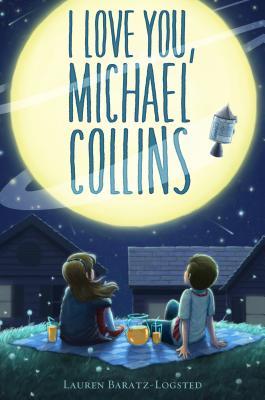
I Love You, Michael Collins by Lauren Baratz-Logsted

Share

I Love You, Michael Collins
Author: Lauren Baratz-Logsted
Published June 20th, 2017 by Farrar, Straus and Giroux (BYR)

Summary: It’s 1969 and the country is gearing up for what looks to be the most exciting moment in U.S. history: men landing on the moon. Ten-year-old Mamie’s class is given an assignment to write letters to the astronauts. All the girls write to Neil Armstrong (“So cute!”) and all the boys write to Buzz Aldrin (“So cool!”). Only Mamie writes to Michael Collins, the astronaut who will come so close but never achieve everyone else’s dream of walking on the moon, because he is the one who must stay with the ship.

After school ends, Mamie keeps writing to Michael Collins, taking comfort in telling someone about what’s going on with her family as, one by one, they leave the house thinking that someone else is taking care of her—until she is all alone except for her cat and her best friend, Buster. And as the date of the launch nears, Mamie can’t help but wonder: Does no one stay with the ship anymore?

I Love You, Michael Collins was a Best Book of June 2017 on Amazon; a semifinalist for the Goodreads Readers’ Choice Awards; and a pick by the Planetary Society for Best Science Children’s Books of 2017.

ReviewThere is so much I really enjoyed about this book!

First, I adored looking into the experience of the moon landing. I cannot even imagine witnessing it happening! What an amazing feat it was and completely unimaginable. (And I hope to at some point see it happen again.) And I thought Baratz-Logsted did a good job showing all the different types of feelings towards the moon landing and space program. But I’m glad that she focused on its amazingness and the excitement.

Second, I think the author did a fantastic job with the character’s voice. With a book of letters it is essential that the writing sounds like the character because it is actually the character writing all the words. I loved seeing all the techniques she used to write like Mamie while still keeping her writing to a literary level.

Third, I loved that the book was not just a reenactment of the moon landing and a family’s celebration of it. The story has so many layers within it: Mamie’s introverted personality and the look into what makes a kid like this happy; her family’s conflicts and issues; and the power of one best friend.

Overall, I Love You, Michael Collins is a fun historical fiction middle grade book that is perfect for so many readers!

Teachers’ Tools for Navigation: The first thing I went to when I thought about this book from a teachers point of view was the idea of letter writing. Mamie writes Michael Collins originally because it is a school project. Mamies letters could be used as a starting point on how to write letters, parts of a letter, etc. And students could even write a letter to someone in the news that is doing something amazing.

Next summer is the 50th anniversary of the moon landing, and at the end of next school year, I am definitely going to do a cross-curricular unit about NASA and the Apollo missions along with a read aloud of excerpts from this novel. It is so engaging as a story and will also be a great way for students in the 21st century to have a window into the 1960s.

But even without this amazing anniversary, Baratz-Logsted’s title is one that middle grade students will find enjoyment in and should definitely be in classrooms and libraries!

Discussion Questions: 

  • How did the author help make her writing seem like a ten-year-old was writing the letters?
  • Michael Collins is not a household name like Buzz Aldrin and Neil Armstrong. Why is that? Do you think we should all know his name in the same context as the other two astronauts?
  • Which character do you think changed the most throughout the book?
  • What do you think is going to happen next with Mamie’s family?
  • How did Buster’s friendship help Mamie keep her positivity and sanity during this tough time in her family?
  • If you were going to have a moon landing party, what would you make?
  • How would the story of Mamie’s parents’ separation have been different in the 21st century?

Flagged Passages: 

“Dear Michael Collins,

I finally figured out why you never write back. Can you figure out how I figured this out? If not, I will tell you. I did the math.

Okay, I didn’t really do the math, since I don’t have all the information. But it struck me that I might not be the only person writing to you. I though, if every school in the country has just one class that is writing letters to the astronauts and if in each class there is just one kid like me writing to you, then that is still a lot of mail.

It’s no wonder you can’t write back to everyone. And of course you do have other things to do right now.

I’m not sure how I feel about the idea of you getting more mail than I originally thought you did. On the one hand, I’m really happy for you. I’m glad you’ve got more than just me. On the other hand, it was kind of nice when I thought I was the only one. It felt special. Like I was the the only one who knew about you. Which of course isn’t true. The whole world knows about you. It’s just that most of them don’t seem to appreciate you very much.

Does it ever bother you that Neil Armstrong and Buzz Aldrin get so much more mail than you do? I hope not. It certainly wouldn’t bother me. There was a time I thought it might be nice to be popular–you know, to have a lot of friends. But then Buster came along, and then Campbell, and I realized that that is quite enough for me…” (p. 30-31)

Read This If You Love: Space! I recommend Space Encyclopedia by David A. Aguilar and Moon Base Crisis by Rebecca Moesta & Kevin J. Anderson. Also check out Planetary.org’s list of recommended books from 2017: http://www.planetary.org/blogs/emily-lakdawalla/2017/1115-space-books-kids.html and 2016: http://www.planetary.org/blogs/emily-lakdawalla/2016/emily-lakdawalla-space-book-recommendations.html

Recommended For: 

classroomlibrarybuttonsmall closereadinganalysisbuttonsmall

Signature

Blog Tour with Giveaway and Review!: The Backup Bunny by Abigail Rayner

Share

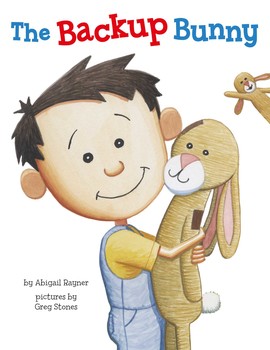
The Backup Bunny
Author: Abigail Rayner
Illustrator: Greg Stones
Published March 6th, 2018 by NorthSouth Books

Summary: Everybody needs a backup plan, especially when you lose your favorite toy.

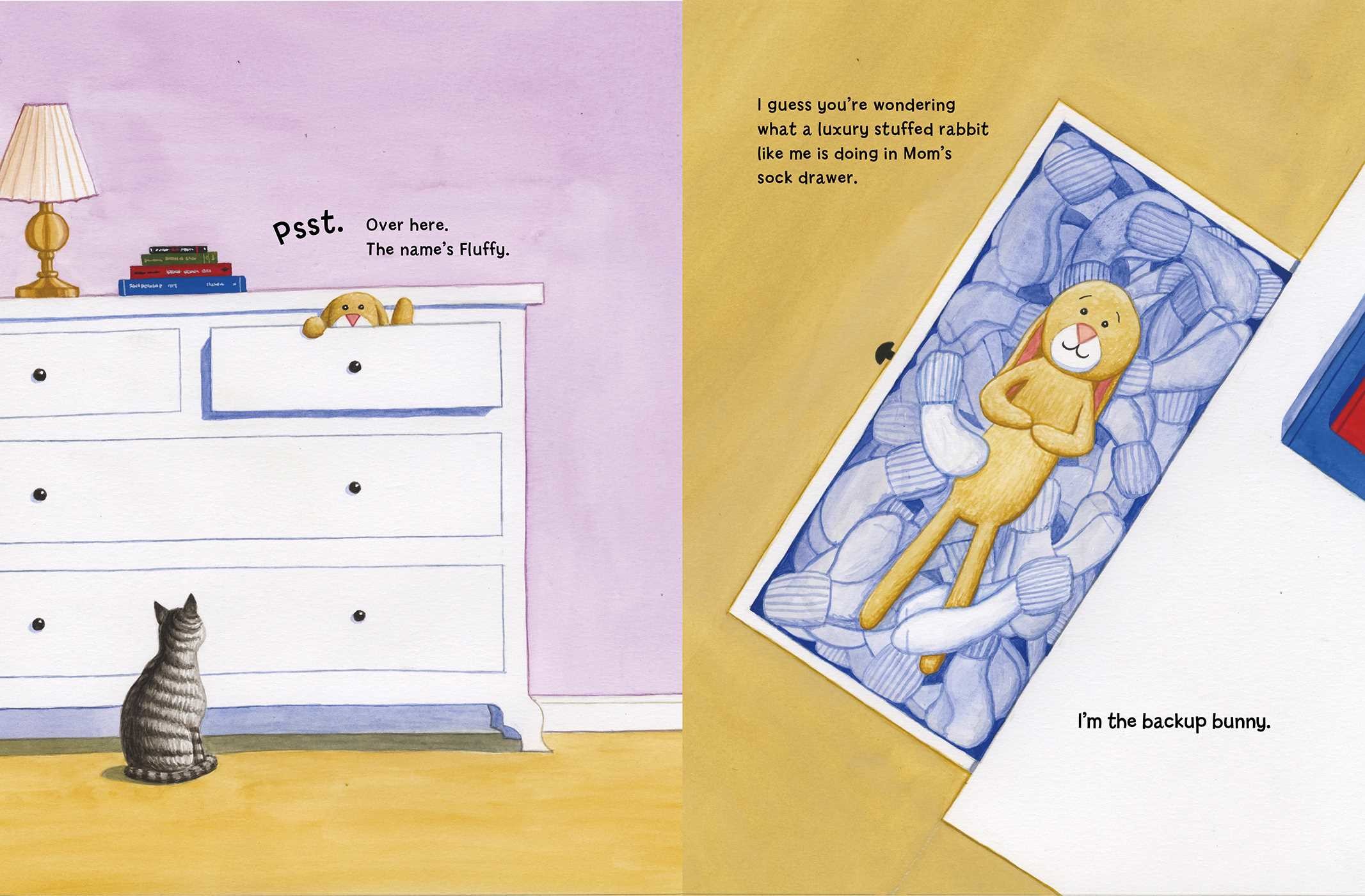
When Max loses his favorite toy—Bunny—his clever mom brings out the “backup bunny”—Fluffy—to save the day. Fluffy is thrilled to have the chance to play with Max, but is soon rejected by the observant child who notices that his ears are too new and perky. Can Fluffy find a way into his favorite boy’s heart?

The Backup Bunny will keep you laughing and inspire you to make room for another favorite story.

ReviewThis book truly made me laugh out loud because it made me think of so many stories! First, as a kid, I had LeeLee and Bean Baby who my mom both tried to get duplicates (Blue LeeLee and Talking Bean Baby) yet they never were equal to the originals. Then, as a sister, my sister had Banky and Huggy Bear who both had backups and were not replaceable. Finally, as a mom, Trent has a baby named Gus who, when I saw that Target was no longer going to carry them, I purchased 2 backup Guses, and when the original got super dirty, I decided it was time to try a backup. I said Gus was going to take a bath, and I brought back a new Gus. Trent hugged him but then looked at him in this super quizzical way and said, “Baby Gus has blue eyes?” And I freaked! I assured him that Gus has blue eyes, but then when we went to sleep, I checked the other Gus only to see that the original had brown eyes. That could have gone worse! Blue-eyed Gus is still going strong, but it almost backfired.

But back to the book. As you can tell from my reminiscing, this book is going to connect with everyone on so many different levels. The adult reader will remember their childhood and be nostalgic, the parent will think of their child and be filled with love, and the child reader will think of the toy that they love so much. And all of these feelings are accompanied by a fun-filled story about Fluffy trying so hard to be Bunny when really he just needs to be Fluffy to be loved.

Teachers’ Tools for Navigation: The Backup Bunny will have a wonderful place in early ed classrooms talking about their important lovies. Having students write about their lovie’s personality would be a perfect early ed creative writing prompt. Fluffy has such a distinct voice, and The Backup Bunny would be a wonderful way to start that conversation about voice and characterization with students both in reading and writing.

Discussion Questions: 

  • How are Fluffy and Bunny different?
  • How did the author give Fluffy a personality that was distinct?
  • Do you have a lovie that is special to you? Tell us about them.
  • In what ways did Fluffy try to be like Bunny? Did it work?
  • What type of socks does Fluffy live with? What does this tell you about that drawer?

Flagged Passages: 

Read This If You Love: Don’t Forget Dexter by Lindsay Ward, Toy StoryCaring for Your Lion by Tammi Sauer

Recommended For: 

Giveaway!: 

Signature

That Inevitable Victorian Thing by E. K. Johnston

Share

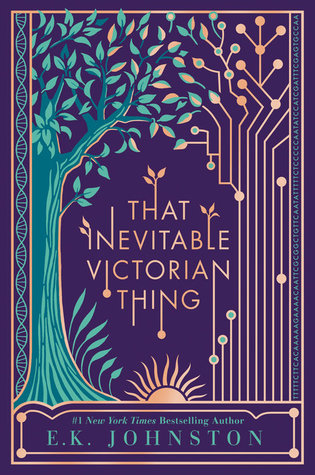
That Inevitable Victorian Thing
Author: E. K. Johnston
Published: October 3, 2017 by Dutton

Guest Review by Kaari von Bernuth

Goodreads Summary: Set in a near-future world where the British Empire was preserved, not by the cost of blood and theft but by effort of repatriation and promises kept, That Inevitable Victorian Thing is a novel of love, duty, and the small moments that can change people and the world.

Victoria-Margaret is the crown princess of the empire, a direct descendent of Victoria I, the queen who changed the course of history two centuries earlier. The imperial practice of genetically arranged matchmaking will soon guide Margaret into a politically advantageous marriage like her mother before her, but before she does her duty, she’ll have one summer incognito in a far corner of empire. In Toronto, she meets Helena Marcus, daughter of one of the empire’s greatest placement geneticists, and August Callaghan, the heir apparent to a powerful shipping firm currently besieged by American pirates. In a summer of high-society debutante balls, politically charged tea parties, and romantic country dances, Margaret, Helena, and August discover they share an unusual bond and maybe a one in a million chance to have what they want and to change the world in the process —just like the first Queen Victoria.

My Review: The futuristic setting of this novel that wasn’t a dystopia was very intriguing to me. Most of the futuristic novels that I’ve read have featured dystopian societies, so it was refreshing to have something that worked. I really enjoyed the multiple perspectives from the different characters, and became personally invested in their lives and experiences. I’d find myself hurting for Helena as she struggled to reconcile her identity, and rooting for August to do the right thing. In some way, all of the characters have to struggle to come of age and develop their identity based on who they want to be. 

However, I wish that this novel had placed a little more effort on the ending. While the rest of the novel had dealt with realistic challenges that an adolescent might face, the ending seemed rather contrived, and less realistic like the rest of the novel. The solution proposed at the end of the novel is not a solution that an adolescent in current society could replicate and learn from, which was disappointing.

Teachers’ Tools for Navigation: This book poses great questions about racism (or rather the eradication of racism), as well as questions of morality. It also would be great for discussions about the influence that society can have on your life verses the influence that you decide for your life. I think that this book would be a great addition to a classroom library for kids to enjoy, or a book to be used in a reading circle. It’s engaging and could lead to interesting discussions, especially about the futuristic government and setting of the novel, and the aforementioned topics of racism, morality, and societal influence vs self. However, I do think that other novels cover these topics in a better way, which is why I wouldn’t recommend it for large classroom discussions.  

Discussion Questions: Is this novel a utopia? Dystopia? Does it fit either criteria?; How is race approached in this novel? Is there racism in the society?; What is the role of colonialism in this novel?; What is the role of the Computer? Do you think this is a good advancement?; What does the computer lack?; What morality questions does this novel pose?

We Flagged: “The Computer is sufficient if you want to know your future without taking into account your soul. I don’t mean in the eternal sense, but in the worldly. The Computer can tell you if your genes are prone to carcinoma or if you might be six feet tall, but it cannot tell you if you will enjoy dancing or if you will prefer cake to pie. I would argue that the latter is more important in terms of a long and healthy relationship” (p. 254).

Read This If You Loved: Matched by Allie Condie; Delirium by Lauren Oliver; The Luxe by Anna Godbersen; The Selection by Kiera Cass

Recommended For:

classroomlibrarybuttonsmall  

  RickiSig

**Thank you to Kaari for reviewing this book!**

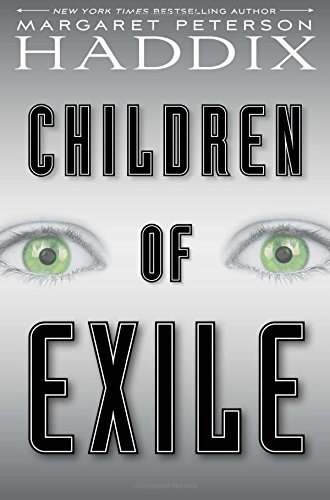
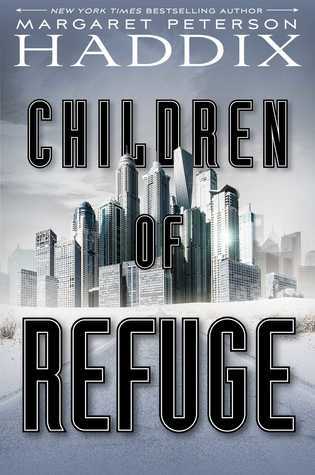
Children of Exile (#1) & Children of Refuge (#2) by Margaret Peterson Haddix

Share

Children of Exile
Published September 13th, 2016 by Simon & Schuster for Young Readers

Children of Refuge
Published September 12th, 2017 by Simon & Schuster for Young Readers

Author: Margaret Peterson Haddix

Children of Exile Summary: For the past twelve years, adults called “Freds” have raised Rosi, her younger brother Bobo, and the other children of their town, saying it is too dangerous for them to stay with their parents, but now they are all being sent back. Since Rosi is the oldest, all the younger kids are looking to her with questions she doesn’t have the answers to. She’d always trusted the Freds completely, but now she’s not so sure.

And their home is nothing like she’d expected, like nothing the Freds had prepared them for. Will Rosi and the other kids be able to adjust to their new reality?

Children of Refuge Summary: After Edwy is smuggled off to Refuge City to stay with his brother and sister, Rosi, Bobo, and Cana are stuck alone—and in danger—in Cursed Town in the thrilling follow-up to Children of Exile from New York Times bestselling author, Margaret Peterson Haddix.

It’s been barely a day since Edwy left Fredtown to be with his parents and, already, he is being sent away. He’s smuggled off to boarding school in Refuge City, where he will be with his brother and sister, who don’t even like him very much. The boarding school is nothing like the school that he knew, there’s no one around looking up to him now, and he’s still not allowed to ask questions!

Alone and confused, Edwy seeks out other children brought back from Fredtown and soon discovers that Rosi and the others—still stuck in the Cursed Town—might be in danger. Can Edwy find his way back to his friends before it’s too late?

ReviewOne thing you can always guarantee when you read a Haddix book is that it will suck you in and will be super unique! The Children of Exile series did not disappoint. I will admit, it is really hard to review either of the books without spoiling. The summaries above both did a really great job, but everything that happens after that suspense-building summary happens would spoil something for you. But I will promise you these things:

  • You will be on the edge of your seat and not be able to figure out what is going on for 90% of the first book.
  • You will be disgusted by the treatment of the children once they are returned to their parents.
  • You will want to help Edwy and his friends so badly throughout the entire second book.
  • You will have to stop reading when the reveal happens in the first book just to process it. Then you’ll reread. Then you’ll text someone who has read it.
  • You will want to know more than book 2 tells you, so we’ll all be waiting impatiently for #3.
  • You will realize that these books are actually a bit older and darker than they first seem.

Teachers’ Tools for Navigation: Like other Haddix books, you will find the best home for these books in the hands of kids. They are going to be talking about these books after they read them!

Discussion Questions: Discussion questions are available on Haddix’s website.

Flagged Passages: “‘Remember to be good little children!’

Good little children, good little children, good little children…

I saw children crying and clinging to their Fred-parents’ legs. I saw men yanking babies from their Fred-parents’ arms. I turned my back to my own Fred-mama and Fred-daddy — maybe to grab them as hard as I could — but the crowd surged just then, pushing Bobo and me up the stairs. I couldn’t see my Fred-parents anymore. I hadn’t even had a chance to tell them a proper good-bye.” (Children of Exile, Chapter 3)

“I’d been counting on being able to run fast enough no one caught up.

‘Good,’ an oily voice whispered in my ear. ‘Now you understand that screaming is useless.’

‘No, I was just–‘ Before I could add deciding what to scream next, a thick hand slid over my mouth. It smelled of onions and sweat and mud and, I don’t know, maybe puke as well.” (Children of Exile, Prologue)

Read This If You Love: Knife of Never Letting Go by Patrick Ness, Tesla’s Attic by Neal Shusterman, Masterminds by Gordon Korman, Spillzone by Scott Westerfeld

Recommended For: 

Signature

**Thank you to Casey at Media Masters for providing copies for review!**

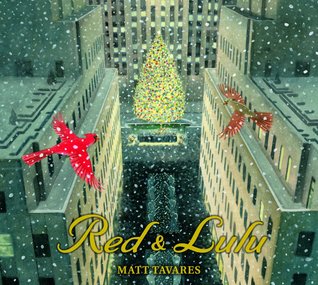
Red & Lulu by Matt Tavares

Share

Red & Lulu
Author & Illustrator: Matt Tavares
Published September 19th, 2017 by Candlewick Press

Summary: Separation and miles cannot keep a determined cardinal from his loved one in an ode to serendipity and belief that is destined to be a new Christmas classic.

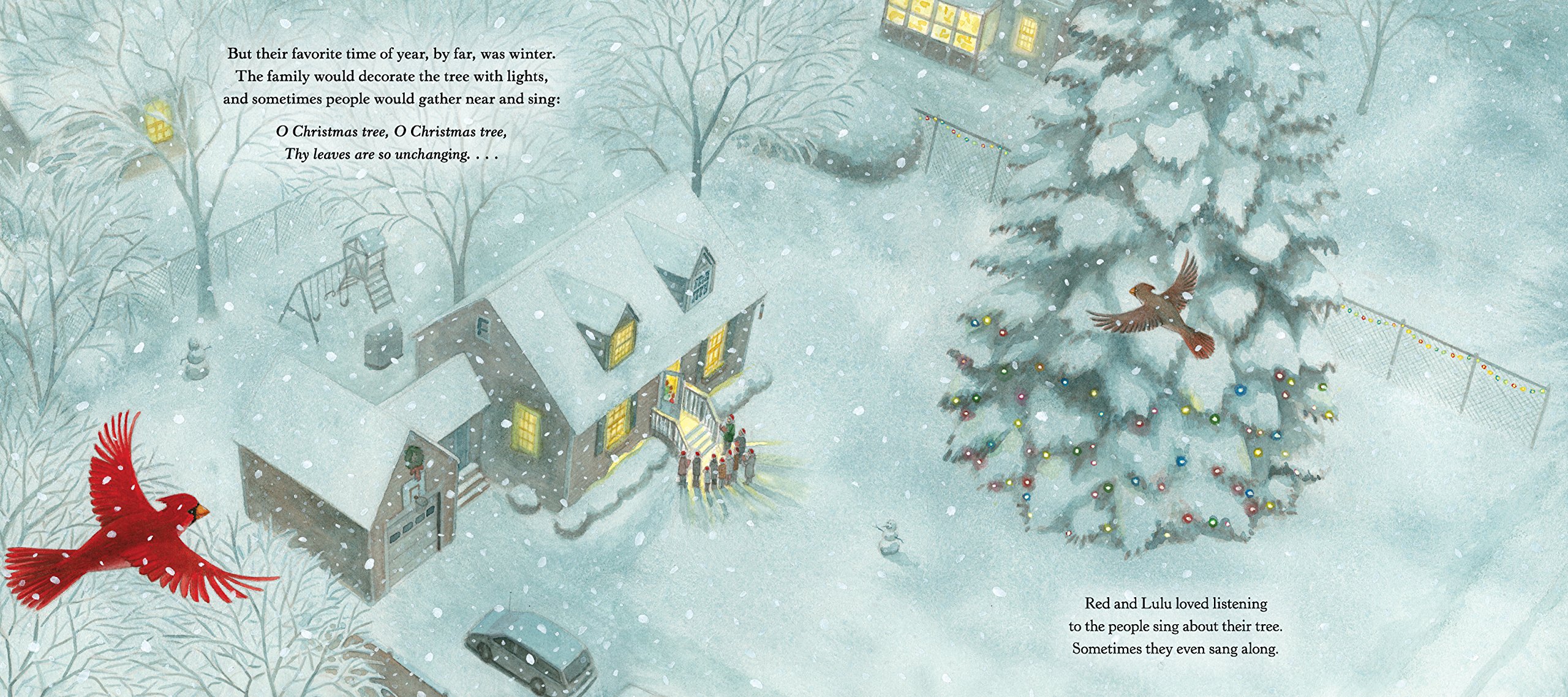
Red and Lulu make their nest in a particularly beautiful evergreen tree. It shades them in the hot months and keeps them cozy in the cold months, and once a year the people who live nearby string lights on their tree and sing a special song: O Christmas Tree, O Christmas Tree. But one day, something unthinkable happens, and Red and Lulu are separated. It will take a miracle for them to find each another again. Luckily, it’s just the season for miracles. . . .

From Matt Tavares comes a heart-tugging story combining the cheer of Christmas, the magic of New York City, and the real meaning of the holiday season: how important it is to be surrounded by love.

Review: Wow, Matt Tavares! So much is going on in this book, and it is all beautiful. First, we meet the stars of our book: Red & Lulu, and you’ll love them right away. Their love flies off the page. And the scene when they are separated broke my heart! And since I don’t read summaries, I had no idea what was going to happen, and it was so sad, but Red would not give up.

In addition to the story of love and separation, it is also a story of the Rockefeller Christmas Tree. Tavares includes back matter about the tree, its history, and traditions. Through its inclusion and the repetition of “O, Christmas Tree,” the mood is set and you are transported to NYC at Christmas time.

Finally, I cannot forget to mention the AMAZINGLY BEAUTIFUL illustrations. They took my breath away. They are edge to edge, inclusive, and so detailed.

Teachers’ Tools for Navigation: Red & Lulu is going to be an instantaneous Christmas classic! And I loved the discussion of Rockefeller Center which allows for a historical and American tradition conversation around the book.

Discussion Questions: 

  • What is so special about the very final page of the book?
  • How can you tell the difference between Red & Lulu? Why did the author choose to illustrate them that way?
  • How did the author’s repetition of “O, Christmas Tree” affect the mood of the book? And what did the lyrics indicate in the story?
  • Before you knew where Lulu ended up, what clues did Matt Tavares include to foreshadow where Lulu was?
  • Which spread of illustrations is your favorite? Why?
  • What did you learn about Rockefeller Center and its Christmas Tree from the book? What would you like to learn more about?

Flagged Passages: 

Book Trailer: 


Read This If You Love: CHRISTMAS!, Birds by Kevin Henkes, Bluebird by Bob Staake, A Christmas Wish for Corduroy by B.G. Hennessy, Other titles on my student Maria’s Top Christmas Books List

Recommended For: 

Signature

**Thank you to Candlewick Press for providing a copy for review!**


Teaching Guide with Activities and Discussion Questions for Maya Lin: Thinking With Her Hands by Susan Goldman Rubin

Share

Nonfiction Wednesday

Nonfiction Picture Book Wednesday is hosted by Kid Lit Frenzy and was started to help promote the reading of nonfiction texts. Most Wednesdays, we will be participating and will review a nonfiction text (though it may not always be a picture book).
Be sure to visit Kid Lit Frenzy and see what other nonfiction books are shared this week!

Maya Lin: Thinking With Her Hands
Author: Susan Goldman Rubin
Published November 7th, 2017 by Chronicle

Summary: In the tradition of DELICIOUS, WIDENESS & WONDER, and EVERYBODY PAINTS!, this is Susan Goldman Rubin’s extensively researched and very accessible biography of civic activist Maya Lin, most famous for her design of the Vietnam Veterans Memorial. The Vietnam Veterans Memorial in Washington, D.C., is one of the most famous pieces of civic architecture in the world. But most people are not as familiar with the reserved college student who entered and won the design competition to build it. This accessible biography tells the story of Maya Lin, from her struggle to stick with her vision of the memorial to the wide variety of works she has created since then. Illustrated extensively with photos and drawings, the carefully researched text crosses multiple interests–American history, civic activism, art history, and cultural diversity–and offers a timely celebration of the memorial’s 35th anniversary, as well as contributing to the current, important discussion of the role of women and minorities in American society.

Activities include: 

Pre-Reading

  • Building Historical and Scientific Background Knowledge: To better understand much of Maya Lin’s extensive work, background knowledge of certain historical and scientific events are needed. Before reading Maya Lin’s biography, separate the class into five groups and assign each group one of these events:
    1. Vietnam War
    2. Civil Rights Movement
    3. Chinese-American Immigration
    4. Endangered and threatened animals
    5. Lewis and Clark’s expedition and the effect on the Indigenous People of Washington State

    Have each group create a timeline using an interactive timeline creator that showcases their event chronologically.  Within the timeline, the students should not only have important dates but they should incorporate visuals, the impact of each event on history/science, and any other supplemental information/media that will increase the knowledge of their event.

    Students then will present their timelines to their classmates to allow for all students to possess knowledge of all five historical and scientific events before beginning Maya Lin’s biography.

Post-Reading

  • Symbolism: Unlike traditional minimalists, Maya Lin uses symbolism in her work. Begin with working with students on symbolism within familiar stories they know. Show students What is Symbolism? at https://www.youtube.com/watch?v=8Vwek28P9Gk then read the Story of William Tell (http://www.mainlesson.com/display.php?author=baldwin&book=fifty&story=tell) and discuss what the apple symbolizes. After this discussion tell students that symbolism in art is the same–symbolism is when a piece of art or an aspect of a piece of art represents something more than its literal meaning.Then, have students analyze her pieces of work for symbols within them. Students should then create a symbolism T-chart showing their found symbolism.Some examples:
    The ark shape of the Riggio-Lynch Chapel Symbolizes that the chapel is a safe place just as Noah’s Ark was.
    The water on the Civil Rights memorial Symbolizes the justice rolling down like waters and righteousness like a mighty stream mentioned in “I Have a Dream” speech by Martin Luther King, Jr.
  • Cumulative Writing Assignment: Legacy
    Maya Lin states, “You need to see me whole as an artist. What I’m doing is art, architecture, and memorials.” Have students write an informative essay explaining how Lin has fulfilled her legacy as an artist, architect, and memorial designer. Have students use evidence from the text, as well as other provided resources if you choose, to support their claim.Other resources:
    http://www.whatismissing.net/
    http://www.mayalin.com
    http://www.biography.com/people/maya-lin-37259
    http://www.theartstory.org/artist-lin-maya.htm

Discussion Questions include: 

  • From a young age, Maya Lin did not like the color red. Why does she not like the color red? What does red represent to her? The color red was included in the Museum of Chinese in America, however. Why was the color included in this project even though Maya Lin does not like it?
  • After completing the Vietnam War Memorial, Lin felt like she was boxed in as a “monument designer,” and refused many invitations to complete more memorials. Why do you think the Civil Rights Memorial was the work that she finally agreed to complete?
  • Maya Lin’s message of sustainability (avoiding the depletion of natural resources to maintain a balance within nature) reaches us through not only her What is Missing? project but through many of her other pieces of work. She states, “A lot of my work is not very glorious. If I succeed, you may never know I was here.” How did Maya Lin’s message of sustainability come through her works?
  • Susan Goldman Rubin’s chapter titles are very specific word choices. Looking at the titles (Clay, Granite, Water, Earth, Glass, Celadon, Dunes and Driftwood, Wood, and Memories), why do you believe the author choose these words to title each chapter?

Teaching Guide Created by Me (Kellee): 

You can also access the teaching guide through Chronicle’s website here.

Recommended For: 

readaloudbuttonsmall classroomlibrarybuttonsmall closereadinganalysisbuttonsmall

Kellee Signature

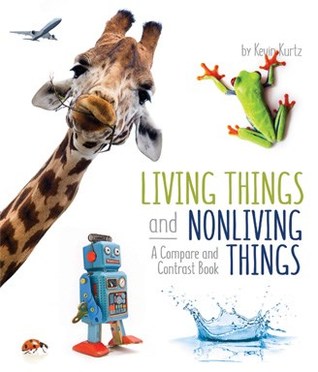
Living Things and Nonliving Things: A Compare and Contrast Book by Kevin Kurtz

Share

nfpb2017

Nonfiction Wednesday

Nonfiction Picture Book Wednesday is hosted by Kid Lit Frenzy and was started to help promote the reading of nonfiction texts. Most Wednesdays, we will be participating and will review a nonfiction text (though it may not always be a picture book).
Be sure to visit Kid Lit Frenzy and see what other nonfiction books are shared this week!

Living Things and Nonliving Things: A Compare and Contrast Books
Author: Kevin Kurtz
Published September 10th, 2017 by Arbordale Publishing

Summary: Using a wide variety of stunning photographs, author Kevin Kurtz poses thought-provoking questions to help readers determine if things are living or nonliving. For example, if most (but not all) living things can move, can any nonliving things move? As part of the Compare and Contrast series, this is a unique look at determining whether something is living or nonliving.

Author Information: Award-winning author Kevin Kurtz holds degrees in English literature and elementary education and started his career by working at a marine biology lab. Since then, he has combined all of these experiences by working as an environmental educator and curriculum writer for organizations such as the South Carolina Aquarium, the Science Factory Children’s Museum, and the Center for Birds of Prey. Kevin has authored A Day in the DeepA Day on the Mountain, and A Day in the Salt Marsh for Arbordale. Kevin also wrote Uncovering Earth’s Secrets after spending eight weeks as the Educator at Sea aboard the marine geology research vessel JOIDES Resolution. Visit Kevin’s website for more information.

ReviewLiving Things and Nonliving Things is a great introduction to what makes something living. Kevin Kurtz uses bright photographs to illustrate his different points that will start great scientific conversations about different things in our world and what makes them living or nonliving. This text is going to be wonderful in classrooms within early STEAM lessons.

Teachers’ Tools for Navigation: Kurtz includes backmatter with permission to photocopy for class use which includes a glossary, discussion questions, an activity, and a “Living or Nonliving Checklist” all which are great resources for classrooms.

Arbordale Publishing also includes a 30-page cross curricular teaching activity guide available for the book:

Additionally, there is an interactive ebook available that reads aloud in English or Spanish and includes word highlighting and interaction with the animals.

Discussion Questions: 

  • What characteristics do living things have?
  • What are the differences between a living and nonliving thing?
  • What are some examples of nonliving things that include characteristics that living things have?

Flagged Passages: 

Read This If You Love: Science, Animals

Recommended For: 

classroomlibrarybuttonsmall closereadinganalysisbuttonsmall

Signature

**Thank you to Heather at Arbordale Publishing for providing a copy for consideration!**