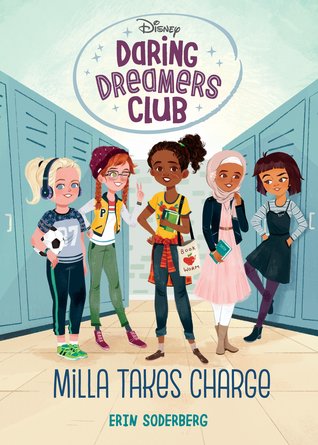
Daring Dreamers Club: Milla Takes Charge by Erin Soderberg

Share

Daring Dreamers Club #1: Milla Takes Charge
Author: Erin Soderberg
Illustrator: Anoosha Syed
Published June 5th, 2018 by Random House

Summary: When you follow your dreams, the possibilities are endless!

Milla loves nothing more than imagining grand adventures in the great wide somewhere, just like Belle. She dreams of traveling the world and writing about her incredible discoveries. Unfortunately, there is nothing pretend about the fifth-grade overnight and Milla’s fear that her moms won’t let her go.

Enter Piper, Mariana, Zahra, and Ruby. Together with Milla, they form the Daring Dreamers Club and become best friends. But can they help Milla believe she’s ready for this real grand adventure?

Diverse, talented, and smart–these five girls found each other because they all had one thing in common: big dreams. Touching on everyday dramas and the ups and downs of friendship, this series will enchant all readers who are princesses at heart.

About the Creators: 

ERIN SODERBERG lives in Minneapolis, MN, with her husband, three adventure-loving kids, and a mischievous Goldendoodle named Wally. Before becoming an author, she was a children’s book editor and a cookie inventor and worked for Nickelodeon. She has written many books for young readers, including the Quirks and Puppy Pirates series. Visit her online at erinsoderberg.com.

ANOOSHA SYED is a Pakistani illustrator & character designer for animation. She received her BFA in illustration at Ceruleum: Ecole d’arts Visuels in Switzerland, and now lives in Canada. Visit her online at anooshasyed.com.

Praise: 

“Though core issues of identity, independence, and teamwork ground the novel, Disney Princess devotees will likely be the most charmed. —Publishers Weekly

“I cannot wait to “hear” the stories of all the other girls! Brava Erin SD for kicking off a new series for the younger MG set! Positive messages for kids! —Goodreads Praise

“Young readers will be able to relate to the story, there is a positive message, and the characters provide a model of friendship, showing how friends work together and support on another. Loved meeting these girls!” —Goodreads Praise

ReviewI know that at first this book may seem like a book that only Disney or Princess lovers would like, but it is so much more than that! So please do not judge this book by that idea! Instead you will find a story about girls who find a deep friendship within each other after being placed in a group at school together. With the guidance of an amazing educator, they look deep within themselves and join as a group while still celebrating their individuality.

Now, as someone who DOES love Disney and Disney princesses, I loved the angle that this book took! After the first assignment by their group teacher, the girls are asked to write about a princess who they connect with. Milla and her friends are using the strengths of the princesses as inspiration to build their own strengths. For example, Milla feels like her life is very sheltered, and she loves to write, so she finds inspiration in Belle. Ruby, who is athletic and prides herself in her strength, first struggles to connect with a princess but then she realizes that Mulan is a person that is very much who she would like to be. And each girl does her own reflection (written in her own words in a journal format).

This first book focuses on Milla, but we get to know all the girls through the inclusion of the journals and from Milla’s point of view. I assume that future books will also be in different points of view to allow readers to get to know more in depth each of the characters. I look forward to future books to see where Piper, Milla, Mariana, Ruby, Zahra and Ms. Bancroft go next!

Teachers’ Tools for Navigation: I love Ms. Bancroft! And I think that how she had the girls introduce themselves and her first assignment that she gave the Daring Dreamers Club would be wonderful activities in a classroom:

  • “I’d love for each of you to introduce yourself and share one of your big dreams.”
  • “I want each of you to think of a princess you connect with or feel inspired by and explain why. Dig deep and really think about your answer.”

Since each of the girls’ answers are shared in the book, they would be a great thing to share as well.

In addition, this book is going to be LOVED by realistic fiction fans! I cannot wait to share it with my students.

Discussion Questions: 

  • Which of the five main characters do you connect with the most?
  • If you had to choose a princess you connect with, who would you choose?
  • Do you think Milla went about getting her moms to trust her correctly?
  • How does Ms. Bancroft inspire the girls? How is she different than the last music teacher?
  • What is one of your big dreams?

Flagged Passages: “Milla loved reading and writing just about anything, but there was nothing she enjoyed more than creating adventures for herself. In Milla’s stories, she was always a brave hero without fears or worries of any kind. One of the things Milla most loved about writing was that she was totally in charge and got to make all the decisions about what would happen on her adventures. The only limitation was her imagination, and her imagination was vast.” (p. 6)

Read This If You Love: Baby-Sitters Club by Ann M. Martin, Harbor Me by Jacqueline Woodson, Be Prepared by Vera Brosgol, Whatever After by Sarah Mlynowski

Recommended For: 

classroomlibrarybuttonsmall 

Disney’s Dream Big, Princess–Be a Champion Campaign: 

Signature

**Thank you to Sydney at Penguin Random House for providing a copy for review!**

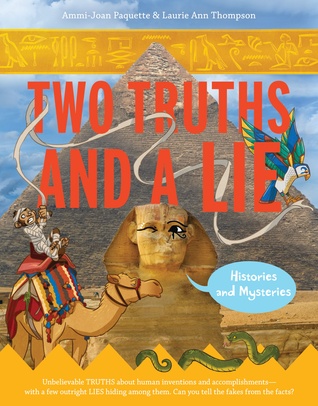
Blog Tour with Review, Teaching Guide, and Giveaway!: Two Truths and a Lie: Histories and Mysteries by Ammi-Joan Paquette and Laurie Ann Thompson

Share

Two Truths and a Lie: Histories and Mysteries
Authors: Ammi-Joan Paquette and Laurie Ann Thompson
Published June 26th, 2018 by Walden Pond Press

Summary: Unbelievable TRUTHS about outrageous people, places and events—with a few outright LIES hiding among them. Can you tell the fakes from the facts?

Did you know that a young girl once saved an entire beach community from a devastating tsunami thanks to something she learned in her fourth-grade geography lesson? Or that there is a person alive today who generates her own magnetic field? Or how about the fact that Benjamin Franklin once challenged the Royal Academy of Brussels to devise a way to make farts smell good?

Welcome to Two Truths and a Lie: Histories and Mysteries! You know the game: Every story in this book is strange and astounding, but one out of every three is an outright lie.

Can you guess which stories are the facts and which are the fakes? It’s not going to be easy. Some false stories are based on truth, and some of the true stories are just plain unbelievable! Don’t be fooled by the photos that accompany each story—it’s going to take all your smarts and some clever research to root out the alternative facts.

From a train that transported dead people to antique photos of real fairies to a dog who was elected mayor, the stories in this book will amaze you! Just don’t believe everything you read. . . .

About the Authors:


Ammi-Joan Paquette loves caves, hates mushy bananas, and is ambivalent about capybaras. She is the author of the novels The Train of Lost Things, Paradox, and Nowhere Girl as well as the Princess Juniper series and many more. She is also the recipient of a PEN/New England Susan P. Bloom Children’s Book Discovery Award honor. Joan lives outside Boston, Massachusetts, where she balances her own writing with her day job as a literary agent. You can visit her online at www.ajpaquette.com.

Laurie Ann Thompson loves capybaras, hates caves, and is ambivalent about mushy bananas. She is the author of several award-winning nonfiction books, including Emmanuel’s Dream,  a picture book biography of Emmanuel Ofosu Yeboah, which was the recipient of the Schneider Family Book Award and was named an ALA Notable Book and a CCBC Choice, among other accolades. She lives outside Seattle with her family, and you can visit her online at www.lauriethompson.com

Unleashing Readers review of Two Truths and a Lie: It’s Alive! https://www.unleashingreaders.com/?p=13591 

ReviewI just love this series for so many reasons! First, it is just so interesting! Even the “lies” include true stories with information switched out to make it not true. There are quizzes and tidbits of information. There is so much to read about and just take in. I am so in awe with the authors who truly find unknown information that is fascinating and will keep kids (and adults!) reading. Also, I think it is so important to teach students/kids (and adults!) how to determine if information being given to us is valid and reliable. Third, I think the authors do a fantastic job including a wide variety of topics to give students who may have different interests interested. And with two books in the series now focusing on two different focuses, it makes it so even more readers will find something they want to learn about. And lastly, I am so glad that the authors are making nonfiction fun! Too many of my students don’t like nonfiction because they find it “boring.” This book is anything but boring.

Teaching Guide:

Flagged Passages: 

Part 1: Hazy Histories

History. Some people think of it as nothing more than a whole bunch of names and events and dates to be memorized. But history is so much more than that. History is people, history is stories, history is fascinating! 

In this section, we’ll spin some amazing tales from ancient history right up to the present day. All of them are remarkable, but remember–one of the stories in each chapter is fake.

Prepare yourself to experience history in a way that you never have before.

Let’s get started!

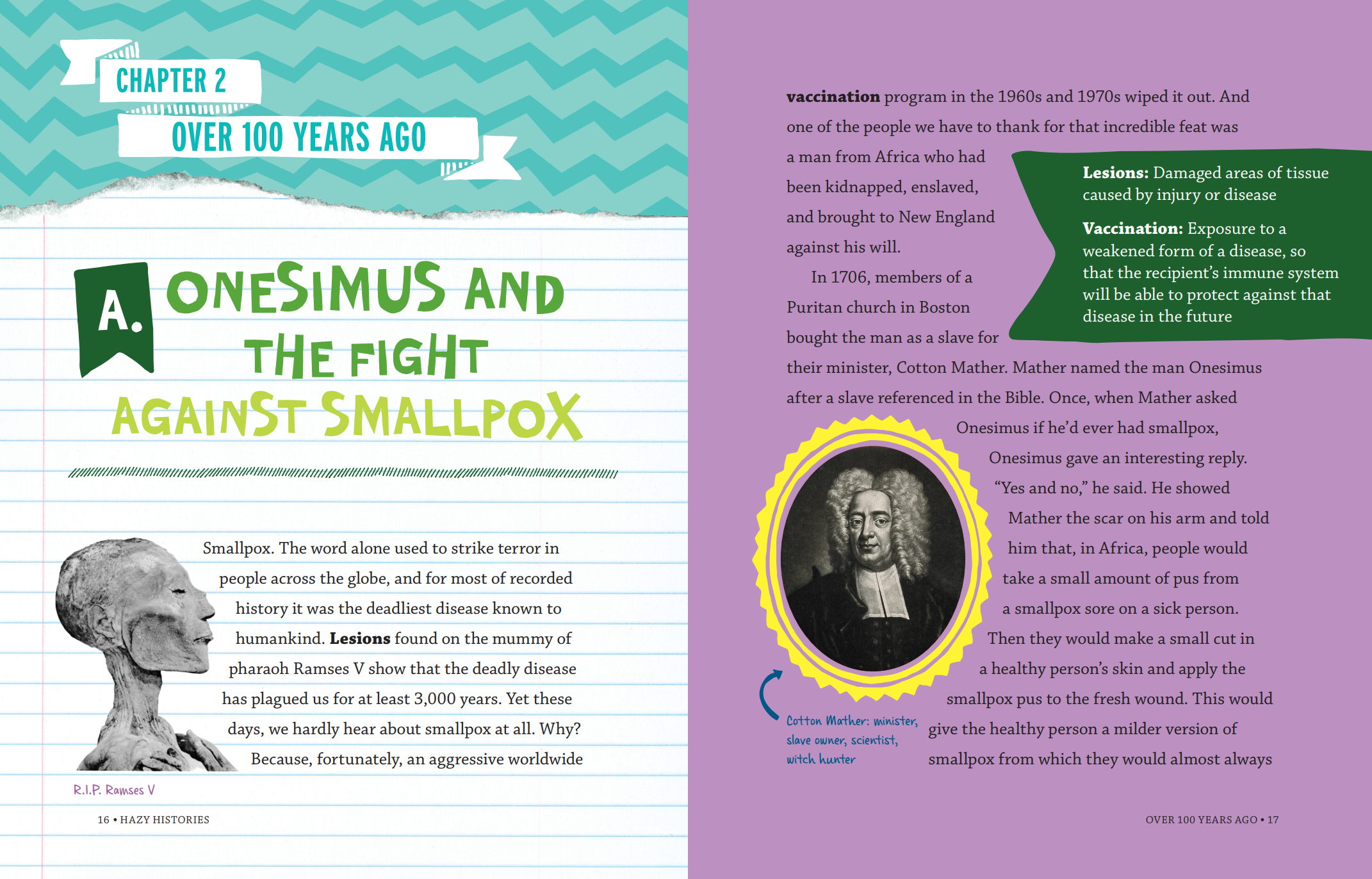
Chapter 2: Over 1,00 Years Ago

Read This If You Love: Unsolved Mysteries from History series by Jane Yolen and Heidi Elisabet Yolen Stemple: The Mary Celeste, Roanoke, The Wolf Girlsand The Salem Witch Trials; History’s Mysteries from National Geographic; History; Nonfiction mysteries

Recommended For: 

classroomlibrarybuttonsmall 

Blog Tour Stops: 

DATE BLOG
6/19 Library Lions Roar
6/20 Geo Librarian
6/21 A Foodie Bibliophile in Wanderlust
6/21 Roadmap to Reality: Helping Kids Find Their Way in a World of Fake News
6/26 The Official Tumblr of Walden Media
6/26 Bluestocking Thinking
6/27 Unleashing Readers
6/27 Nerdy Book Club
6/27 Writers Rumpus
6/28 The Book Monsters
6/29 Pragmatic Mom

GIVEAWAY!

a Rafflecopter giveaway

Signature

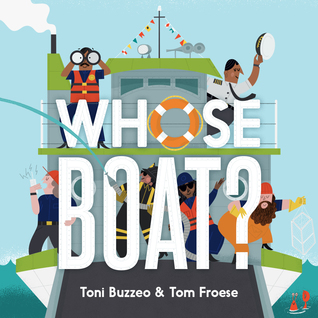
Whose Boat? by Toni Buzzeo

Share

Whose Boat?
Author: Toni Buzzeo
Illustrator: Tom Froese
Published May 22nd, 2018 by Abrams Appleseed

Summary: Smoke billows up.
Cool water flows.
Whose boat is that?
Do you know?

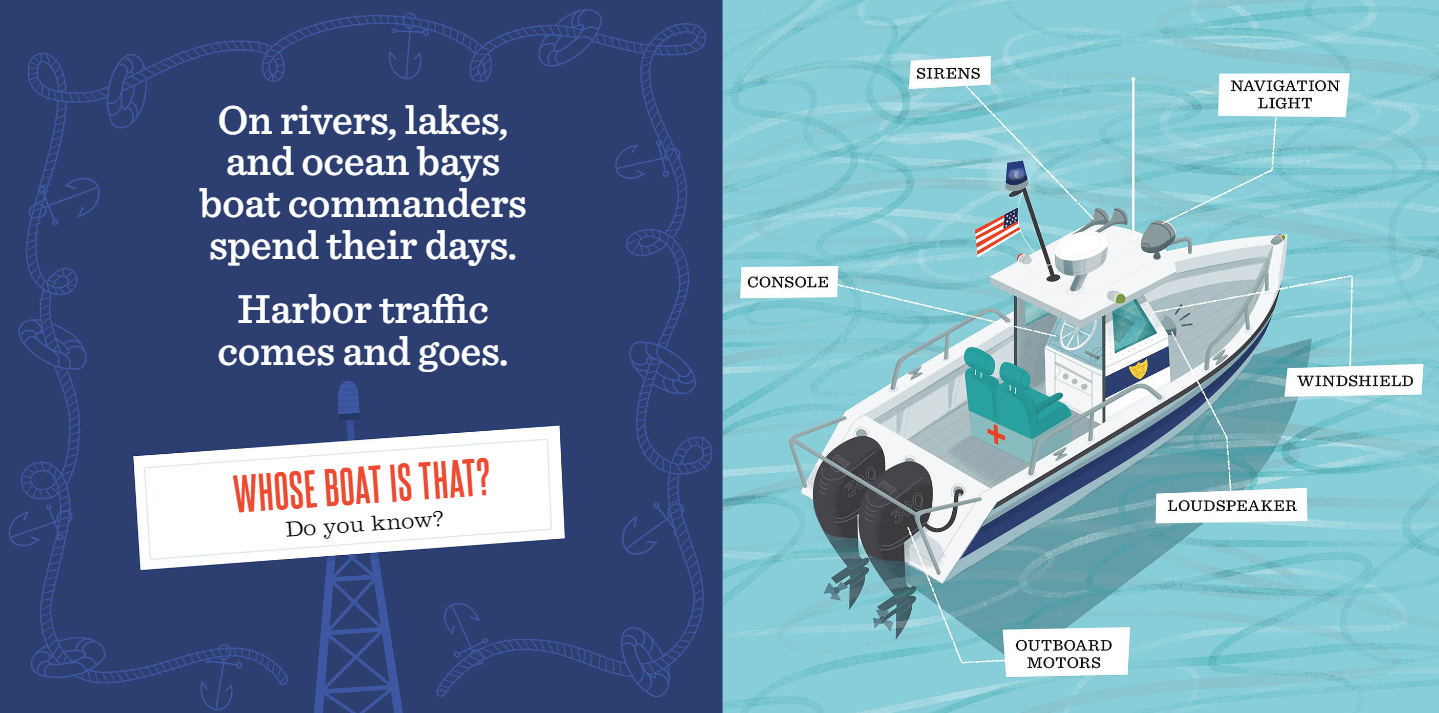
This nonfiction ode to boats features six kinds of workers and their boats—a patrol boat, a tugboat, a car ferry, a lobster boat, a lifeboat, and a fireboat—with important parts properly labeled. The answer to each inquiring refrain lies under a gatefold, engaging the reader in an informative guessing game. With lyrical (and factual!) text by New York Times–bestselling author Toni Buzzeo, and the stylized art of Tom Froese, this sturdy board book is perfect for curious and playful young readers.

About the Author and Illustrator: 

Toni Buzzeo’s first two books in the series, Whose Tools? and Whose Truck?, have sold more than fifty thousand copies. Toni is the author of the 2013 Caldecott Honor Book and New York Times bestseller One Cool Friend, as well as many other books for children. A former elementary school librarian and secondary teacher, she now presents at schools, national and international library and reading conferences, and in district and regional staff development trainings. Buzzeo lives with her husband in Arlington, Massachusetts.

Tom Froese is a commercial artist. His work can be seen in retail stores and publications including MonocleHarvard Business Review, and Wired UK. He lives in Canada.

Kellee’s ReviewThis book quickly became a favorite in our household. Trent was so excited about learning about the boats, and the little bit of a twist at the end makes it so that Trent loves to reveal this surprise and he gets excited every time. I do really like how the book doesn’t only introduce the boats but also shares the who the boat is owned/driven by. The lyrical poems for each boat are also really nicely written and fun to read aloud. 

Trent’s Review:I like how the pages open up. And I like reading it to mom, dad, and my two kitty cats. My favorite boat is the car ferry. Sometime I want to park my car in the car ferry then I’ll go up and up to the top. It is fun how the boats were the kids’ in the pool.  I like this page and this page (he then went through every page).

Teachers’ Tools for Navigation: This would be a great book to discuss careers on the water. Also, the text would be a great introduction to possessive apostrophes since it focuses on the owners of the boats. Students could also write their own poems about a vehicle or boat or building or whatever they want to have their peers guess the owner of what they are writing about.

Discussion Questions: 

  • Which boat helps maintain order in the harbor? Whose boat is it?
  • Which boat moves cars across the bay? Whose boat is it?
  • Which boat helps with fires and accidents? Whose boat is it?
  • Which boat moves larger boats? Whose boat is it?
  • Which boat captures fish and other animals for food? Whose boat is it?
  • What is the twist at the end of the book?
  • What are the differences between the boats? Similarities?
  • What boat vocabulary was new to you?

Flagged Passages: 

Read This If You Love: Jonathan and the Big Blue Boat by Philip C. Stead, Just a Tugboat by Mercer Mayer, Books about vehicles

Recommended For: 

classroomlibrarybuttonsmall 

Signature

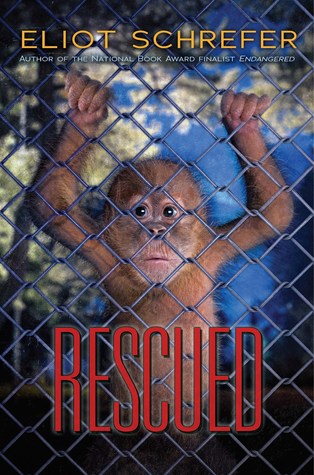
Teaching Rescued by Eliot Schrefer in a Middle School Reading Classroom

Share

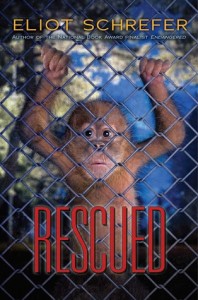
Rescued
Ape Quartet #3
Author: Eliot Schrefer
Published April 26th, 2016 by Scholastic Press

Summary: They grew up together. Now they have to escape together.

Raja has been raised in captivity. Not behind the bars of a zoo, but within the confines of an American home. He was stolen when he was young to be someone’s pet. Now he’s grown up and is about to be sent away again, to a place from which there will be no return.

John grew up with Raja. The orangutan was his friend, his brother. But when John’s parents split up and he moved across the country, he left Raja behind. Now Raja is in danger.

There’s one last chance to save Raja—a chance that will force John to confront his fractured family and the captivity he’s imposed on himself all of these years.

About the Author: Eliot Schrefer is a New York Times-bestselling author, and has twice been a finalist for the National Book Award. In naming him an Editor’s Choice, the New York Times has called his work “dazzling… big-hearted.” He is also the author of two novels for adults and four other novels for children and young adults. His books have been named to the NPR “best of the year” list, the ALA best fiction list for young adults, and the Chicago Public Library’s “Best of the Best.” His work has also been selected to the Amelia Bloomer List, recognizing best feminist books for young readers, and he has been a finalist for the Walden Award and won the Green Earth Book Award and Sigurd Olson Nature Writing Award. He lives in New York City, where he reviews books for USAToday.

ReviewI think out of the three Ape Quartet books published so far, this is the one that is going to hit closest to home for many. It will make many readers uncomfortable and want to make a change. First, it takes place in the United States unlike Africa like the first two. Second, it really digs into an issue that is still very much prominent here–animal injustice.

I find Schrefer’s writing to be so beautiful yet so easy to read. He can pull you into his stories and makes you feel for not only his human characters but also his animal characters. He does such a tremendous amount of research for all of his books and with this one it brings the injustice of Raja alive.

I am a sucker for ape books. I find apes to be the most fascinating animals, and orangutans may be my favorite because they have these amazing eyes that just show me that they are so intelligent and deep thinkers. They are also introverts; I think I just relate to them in that way. This book brings orangutans to life through Raja.

As evident from Schrefer’s status as a two-time National Book Award finalist, his books can be used as a mentor text for just about any aspect of writing that you are looking for: characterization, imagery, voice, conflict, etc. Read any of his books, and you can pull out so much to discuss and use within the classroom. Additionally, there are some amazing ape books, including Schrefer’s other Ape Quartet books, that would make for an amazing lit circle opportunity or text set.

Review originally posted here on May 13, 2016.

Teachers’ Tools for Navigation: Last year, our whole-class novel unit was done using Hurt Go Happy and included a trip to Center for Great Apes. This year, I had a completely different type of novel planned, but my students begged to read more about apes (and visit CFGA again). After looking at all of the available ape books, I decided that Rescued was perfect for the standards I wanted to teach and also included orangutans instead of chimps, and orangutans are the other great ape at CFGA. After setting up a Donors Choose and getting funded (THANK YOU ALL DONORS!), Eliot Schrefer also so kindly contacted me and offered to send even more copies of Rescued to my students–wow! So much kindness! Now that we had a plethora of copies, I wanted to share the love, so I contacted my South Carolina middle school teacher friend, Jennie Smith, to see if she wanted to read Rescued with us and collaborate some how. I was so happy that she said yes!

The Unit

Because I do love whole-class novels, but I also don’t like how a whole-class novel can also ruin a book with too much time spent on one book with way too many assignments during the unit. To try to fight this, I planned the unit quite simply:

  • Each week the students were given a focus question on Monday that they could think about all week then answer on Friday.
    • These focus questions are how we collaborated with Mrs. Smith’s class as well. My 1st and 2nd period posted their answers on Padlet and Mrs. Smith’s students would also post. The kids would then respond to each other.
    • Focus questions:
      • 1. What’s a big idea that’s emerging that’s worth talking about?
      • 2. Is there a passage that struck you as important in developing a character or a conflict in the reading so far? Share the passage and explain.
      • 3. What incident up to this point has had the most impact on the plot? How so? What did the characters’ response to this incident teach you about them?
      • 4. There are many who argue that Great Apes are human-like, including the lawyer who will take apes as plaintiffs to demand rights. What are some examples in this section of Raja showing how close to humans he truly is?
      • 5. How did the characters (specifically John’s mom, John’s dad, John, and Raja) change throughout the book? What other narrative elements helped shape their final persona? Find a piece of dialogue and a specific incident in the book that is evidence for your analysis of the character.
    • The idea of focus questions was something I got from a talk by Kelly Gallagher and Penny Kittle at NCTE 2017.
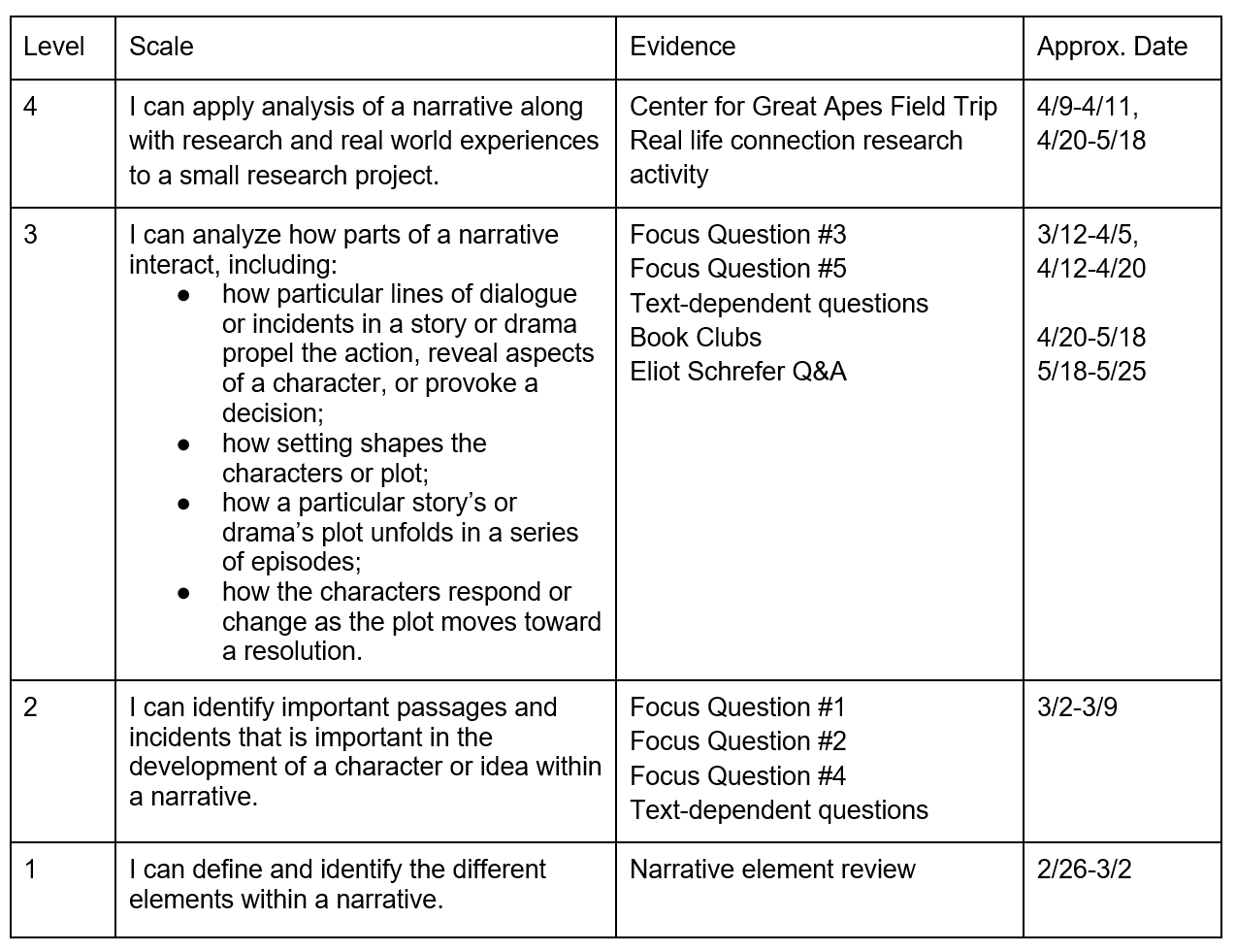
  • Because of one of the standards the unit was focusing on, we also looked at narrative elements, specifically dialogue, setting, and conflicts. Here is my scale for the unit:
  • Throughout the unit, I would also stop to have students think about certain text-dependent questions. I tried not to do this too often to not slow down the narrative; however, I loved seeing my students’ thinking. We would then discuss these questions, but I like allowing my students to write answers first before discussing because it allows them to get their thinking organized. (I shared some of these text-dependent questions and an example of a student’s answers below.)

The Field Trip

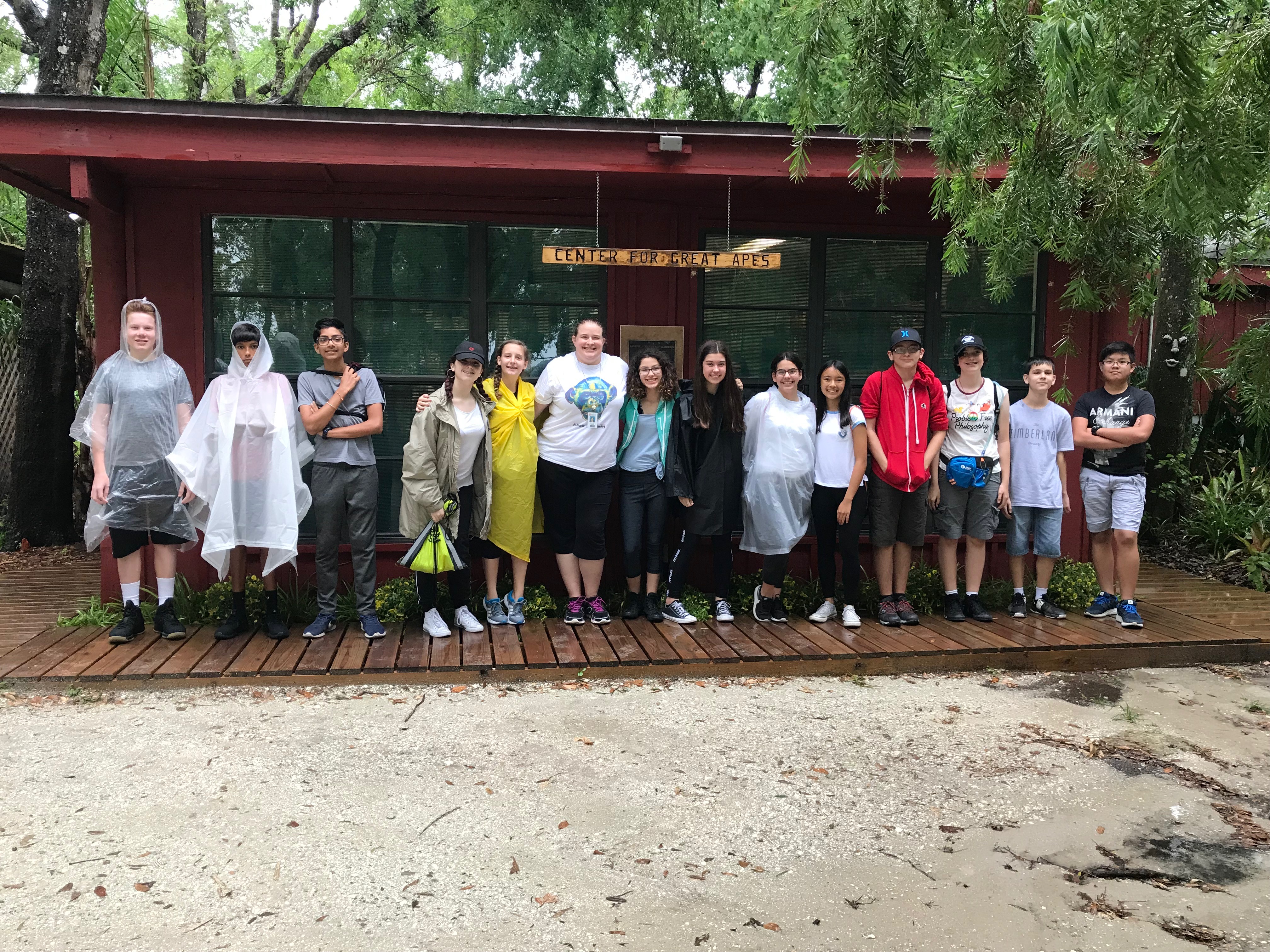
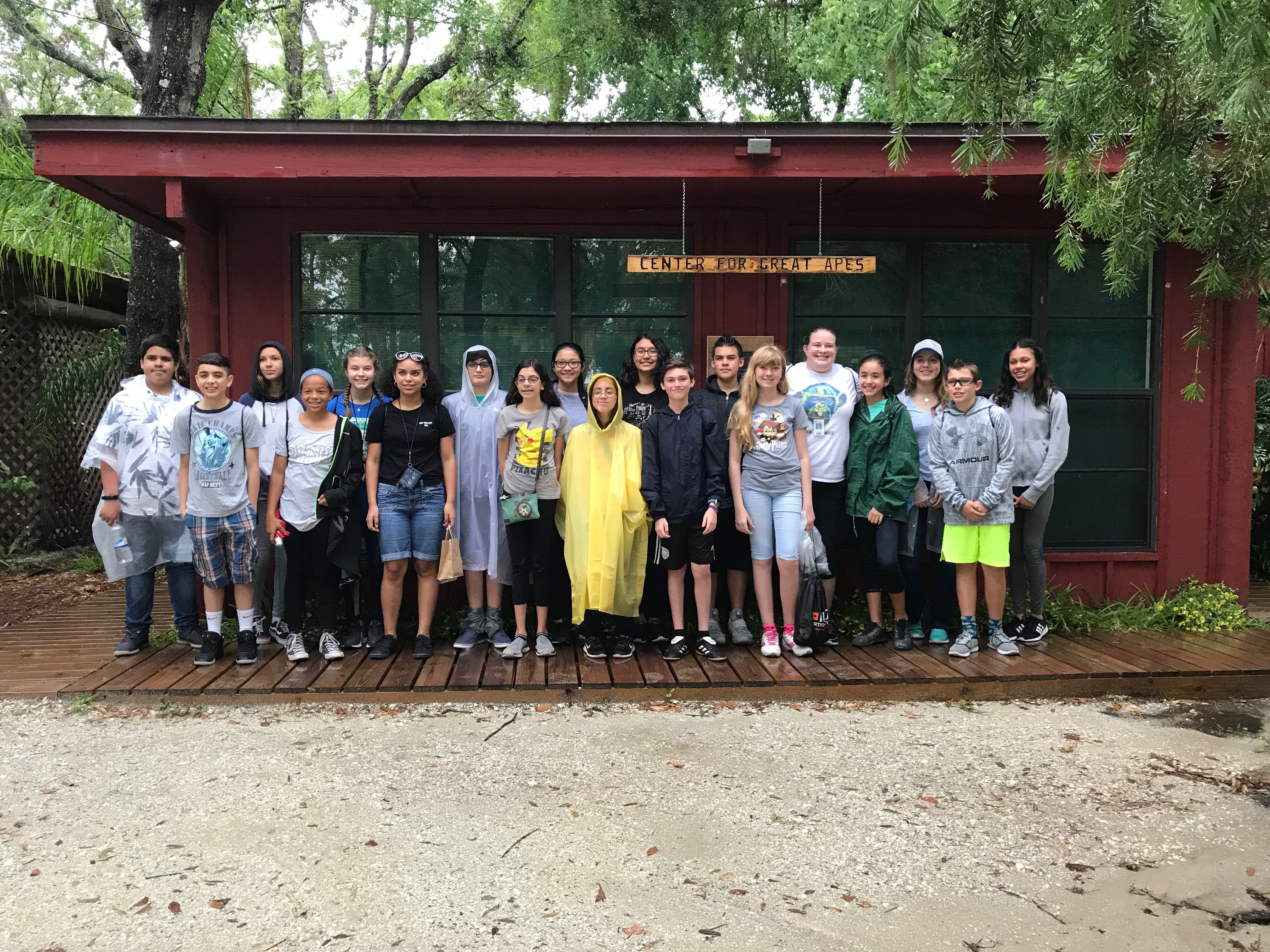
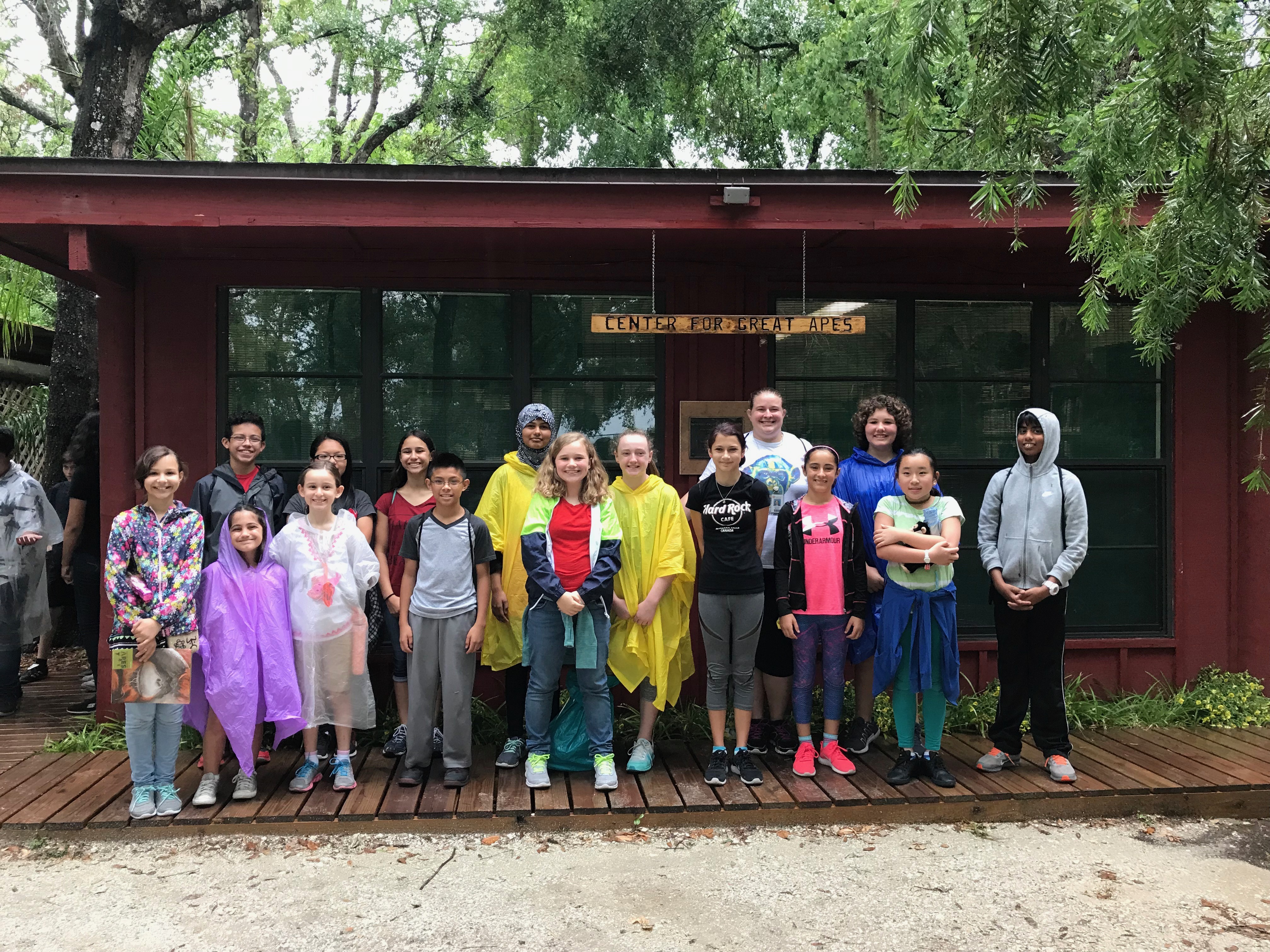
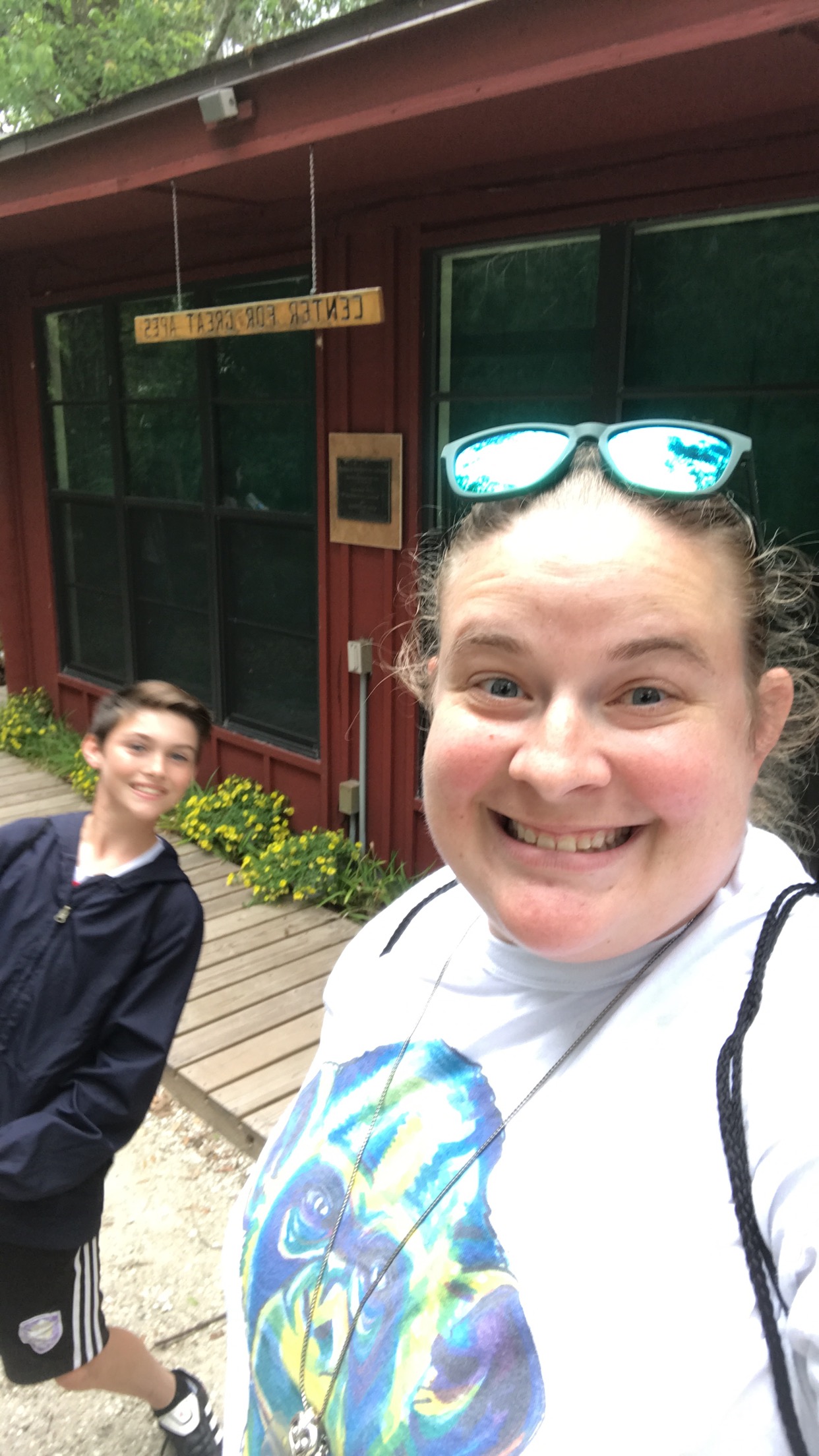
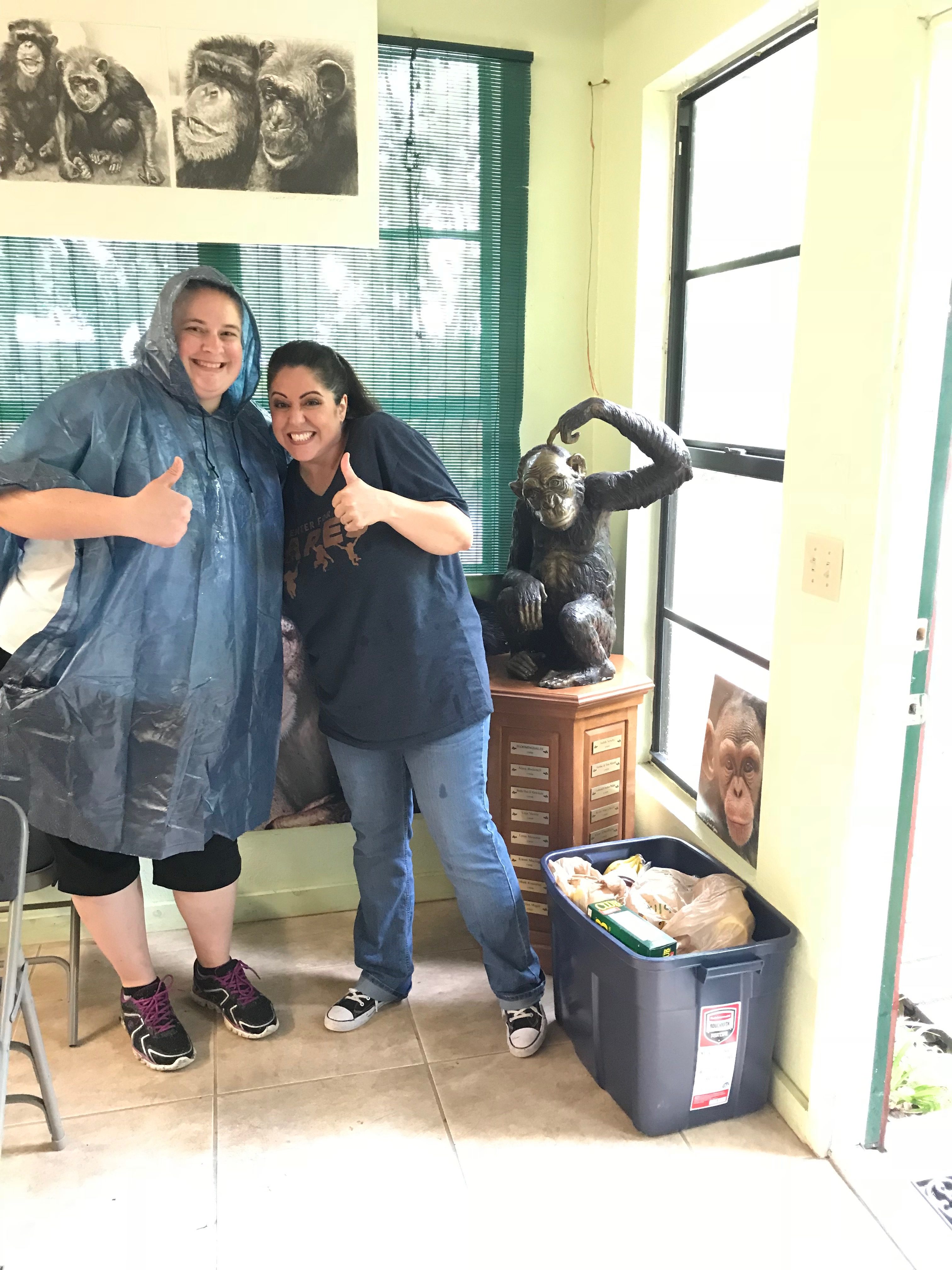
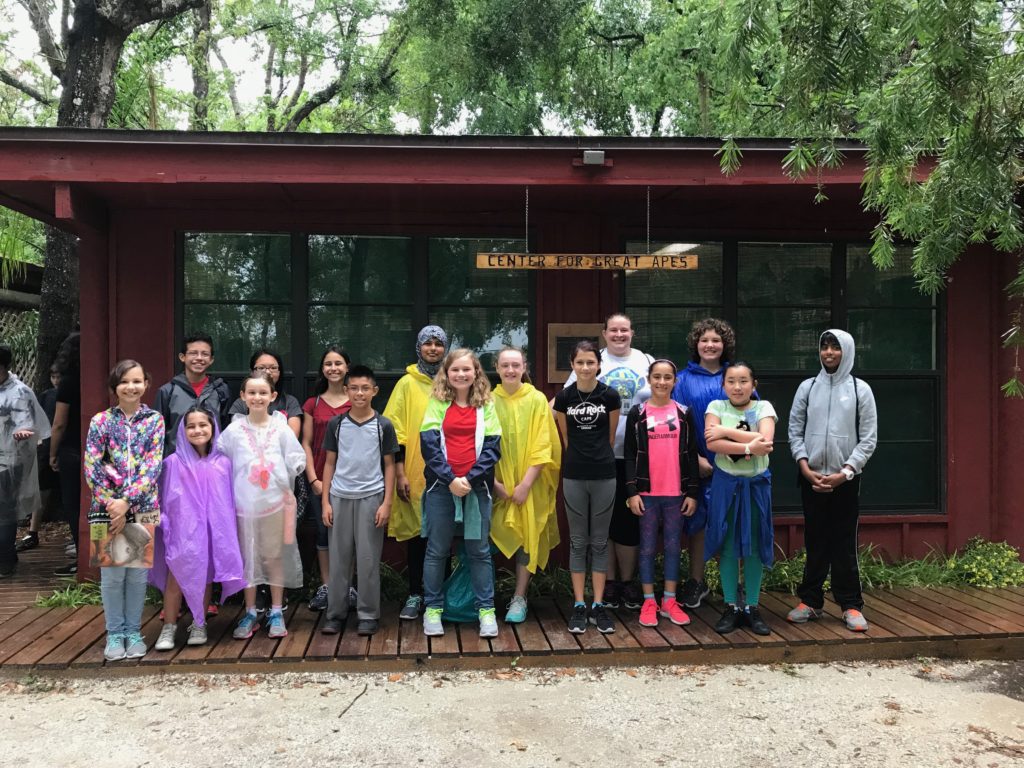
Once again I was lucky enough to bring my students to the CFGAs. All students were able to attend this year, and they were so kind to donate to the Center goodies for the Apes–it always fills my heart to see the empathy in their hearts!

I have gone to the Center for Great Apes for years, and sadly this is the first year it rained. Luckily, we were able to get in a 90-minute tour to see the amazing animals who inspired Schrefer’s novel. To see more about the Center, the apes they’ve saved, and the amazing work they do, please visit http://www.centerforgreatapes.org/.
Author Virtual Visit

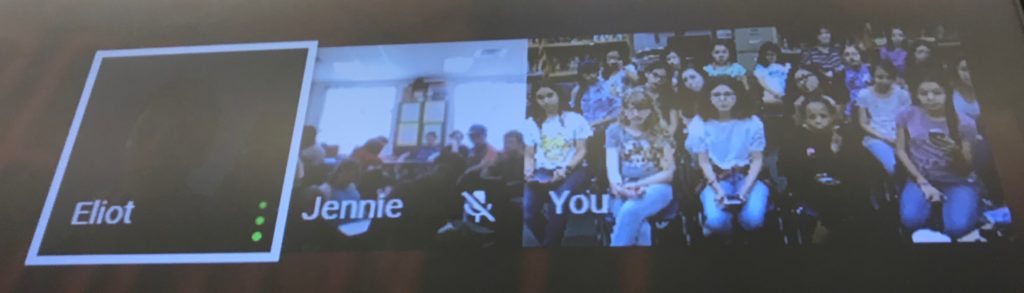
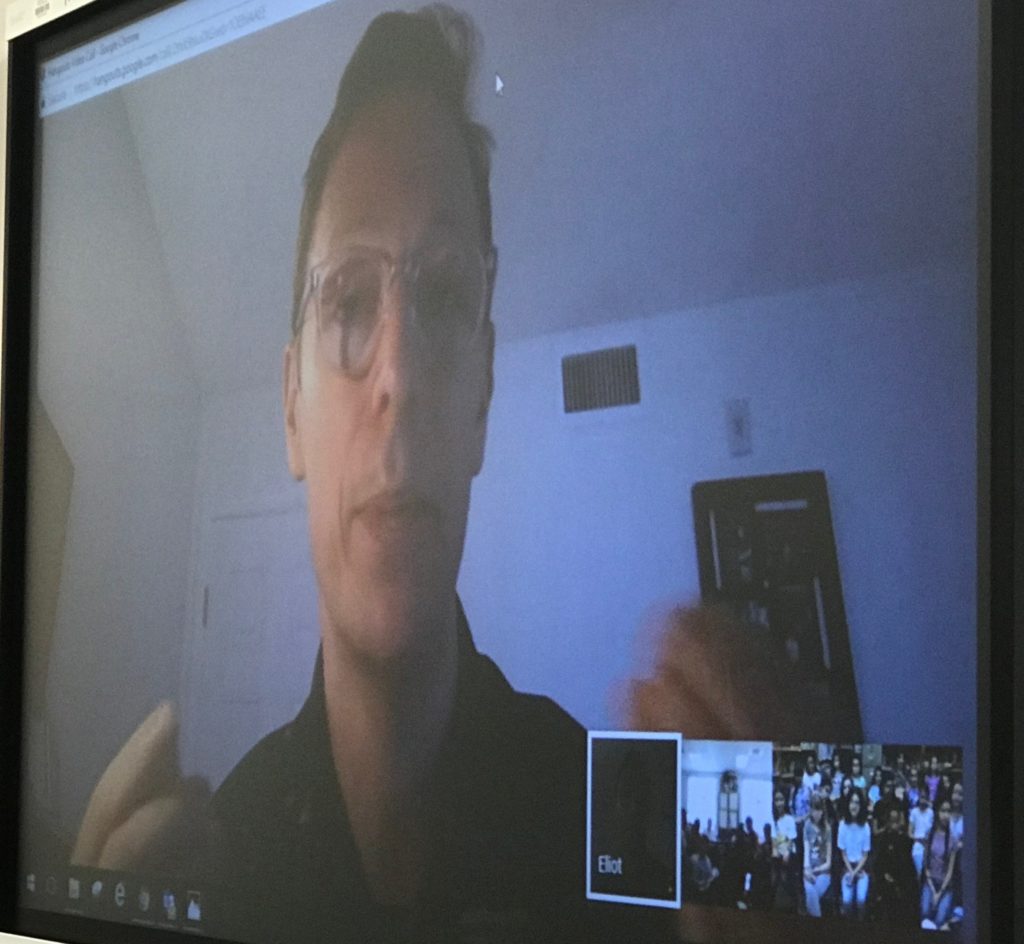
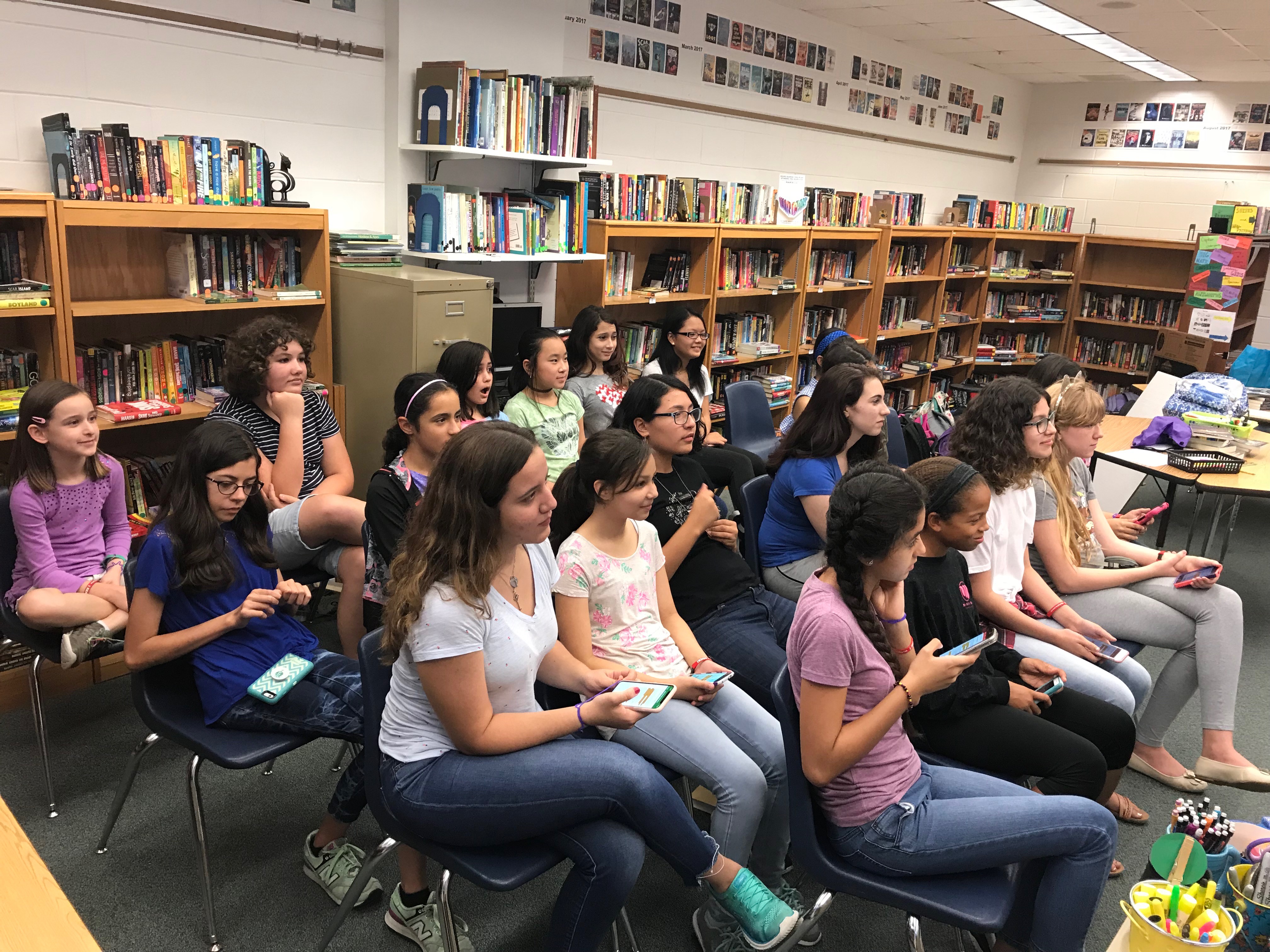
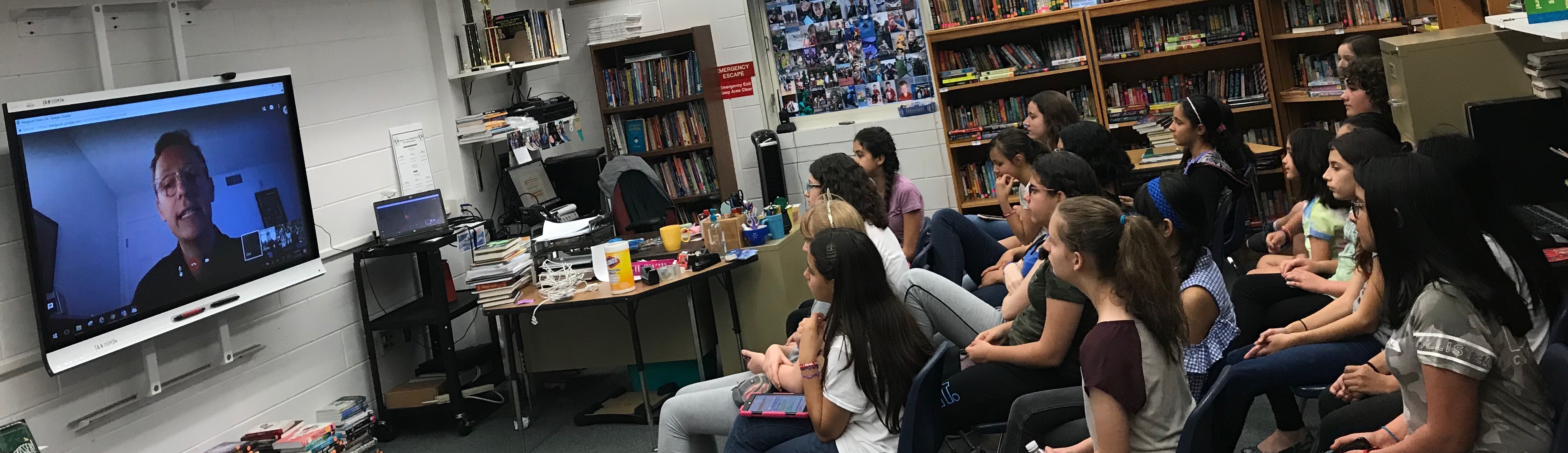
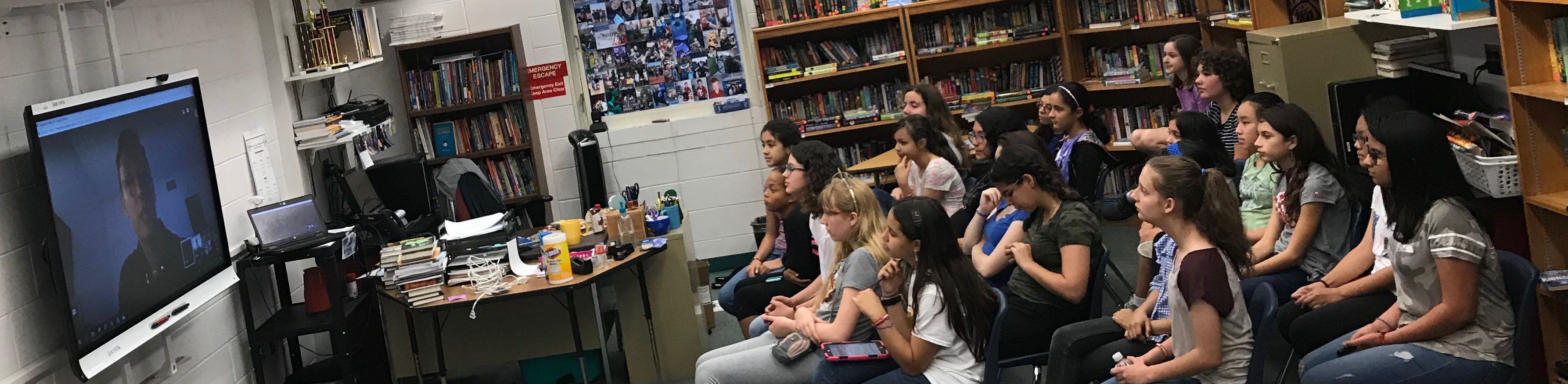
After reading Rescued, I was so happy to be able to give my (and Jennie’s) students an opportunity to interview Eliot Schrefer about the book. Each student wrote down at least one question they had for Eliot then in groups, the students chose their favorites, then based on these choices, we broke it down to 5 per class equaling fifteen interview questions altogether:

  • Why did you start writing about apes in the first place? And how did you decide on the order of publication for the Ape Quartet? 
  • Do you like writing realistic fiction like Rescued or fantasy like Mez’s Magic better?
  • Will you continue to write about apes now that you are done with the Ape Quartet? 
  • While the titles of your other books, Endangered, Threatened, and Captured, inspire a feeling of fear, the title Rescued inspires hope. Did this change in connotation of your title mark your different opinion about orangutans?
  • Were you ever stuck in between two decisions while writing the book? When? 
  • Who do you think the antagonist of the book is?
  • How did you come up with the whole “Raja bites off John’s finger” scenario? 
  • How did you come up with the concept of Friendlyland? 
  • How did you come up with the character traits for each character (Ex. Gary being a bad father)? Did you base them off people you know or knew? 
  • Can you tell us more about the corruption happening in Indonesia which allows palm oil companies to be able to keep burning down forests even though it is illegal? 
  • Do you feel that apes should be treated like human beings and given the same rights such as due process, land, etc. like the lawyer in the book? 
  • Was it hard for you to decide what would happen to Raja at the end of the book or did you know that you wanted Raja to be released into the wild instead of being kept at the sanctuary?
  • Do you have a favorite sanctuary or zoo you’ve visited? Have you visited the CFGA?
  • You used the word “merantau” which means “hitting a dead end and leaving one life to live another elsewhere” which pretty much sums up the theme of the book. Where did you come across this word? 
  • What writing tips can you give to students who want to be a writer?

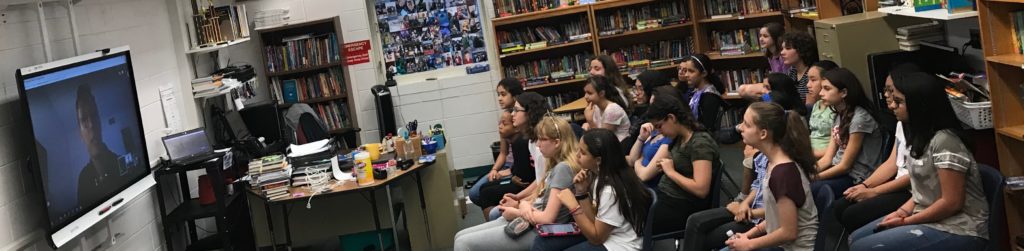
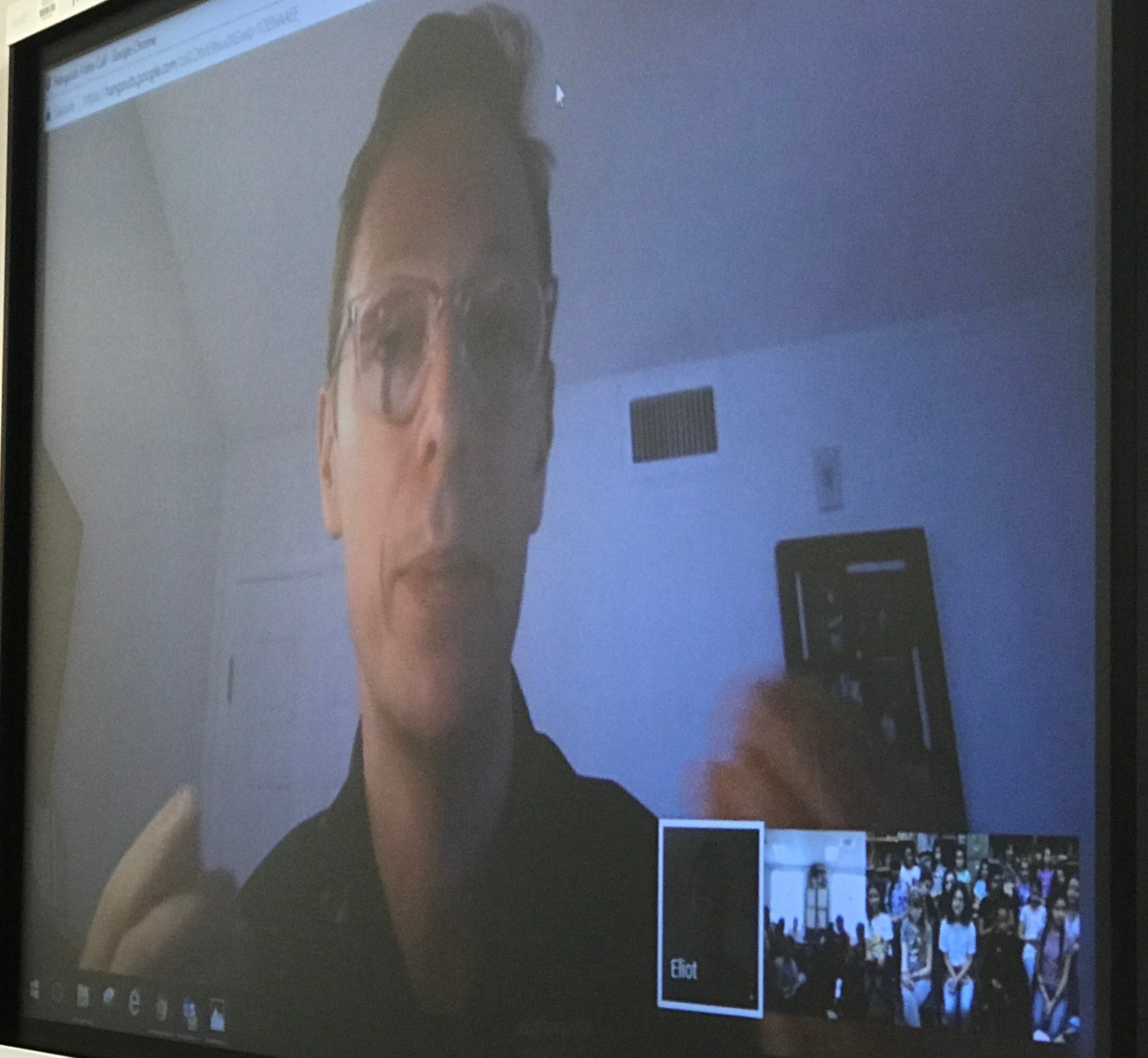
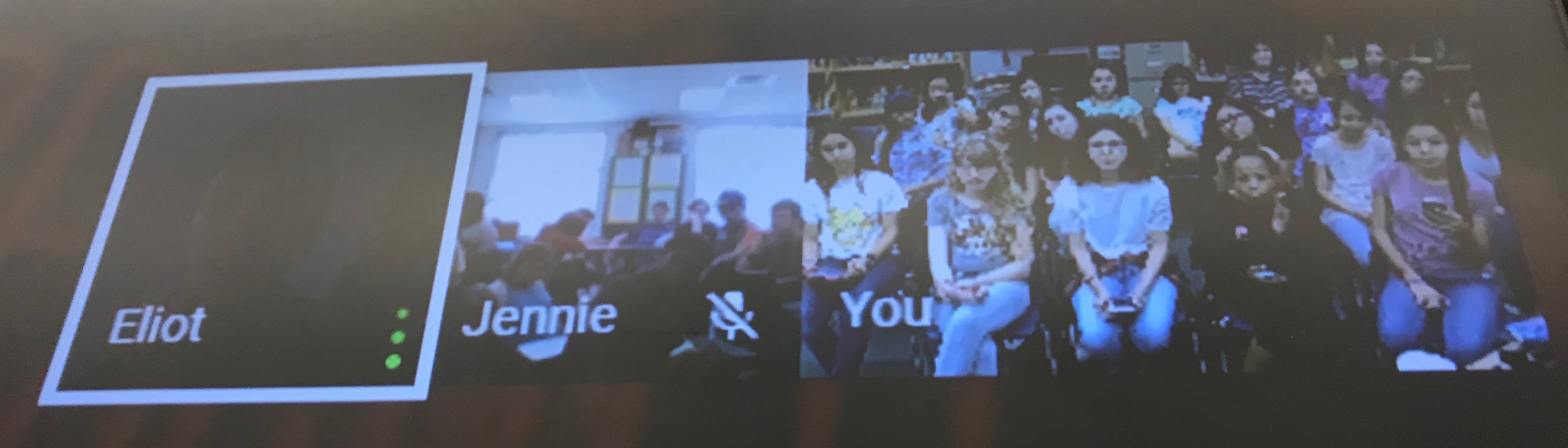
We then did a Google Hangout with Mrs. Smith’s class and Eliot Schrefer on May 25th after school:
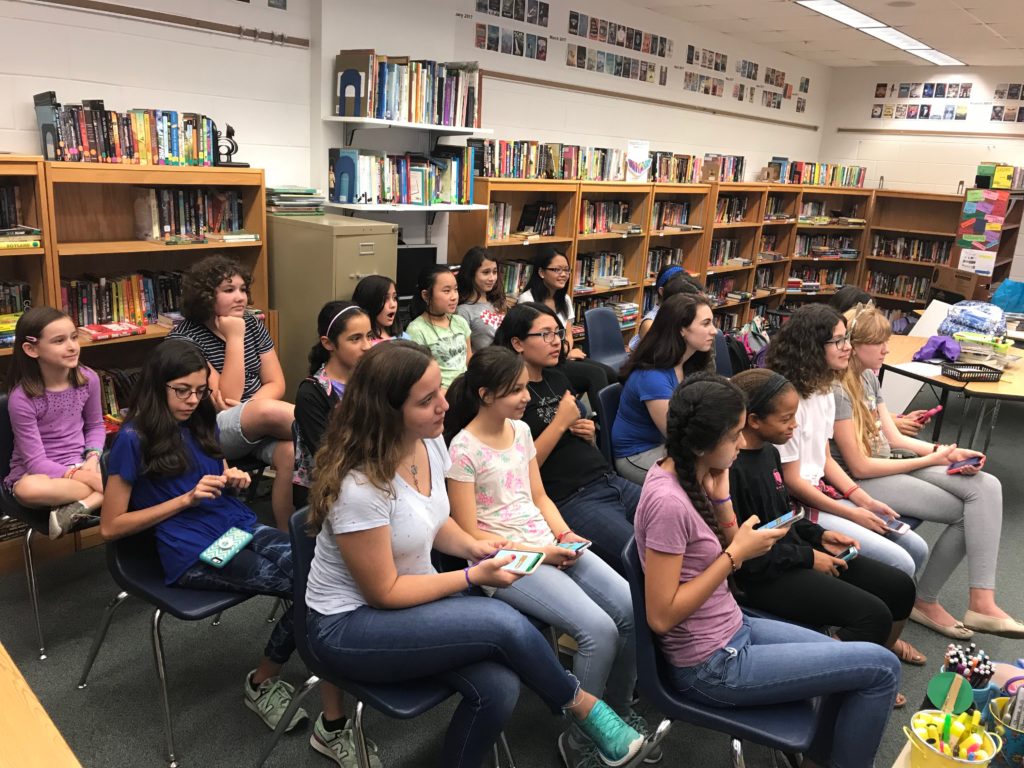
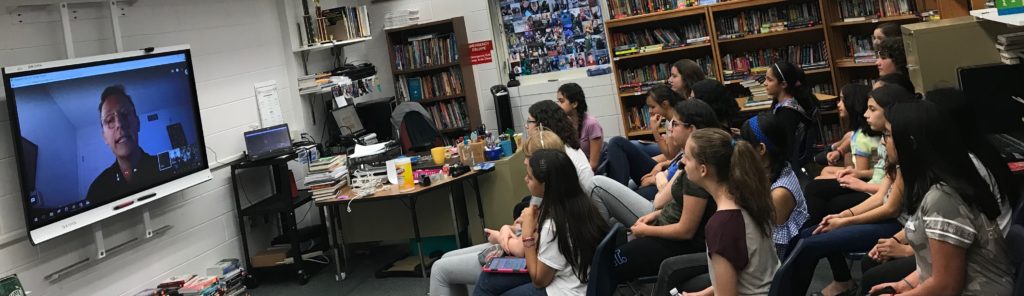
Some of my favorite answers/quotes from the visit were:

  • Realistic fiction allows for a shifting antagonist.
  • Wanted to help people realize that orangutans aren’t stuffed animals come to life.
  • I don’t have characters first. I have stories first then make the best characters for that story.
  • Apes should not be kept against their will.
  • I used the idea of merantau to develop the plot.
  • Advice: For any artistic pursuit, I encourage you to think of the long range range view. It is risky to put all expectations of self in one basket. Focus on the joy you feel when doing the art. Remember what brings you joy! And do research, take advice, and read.

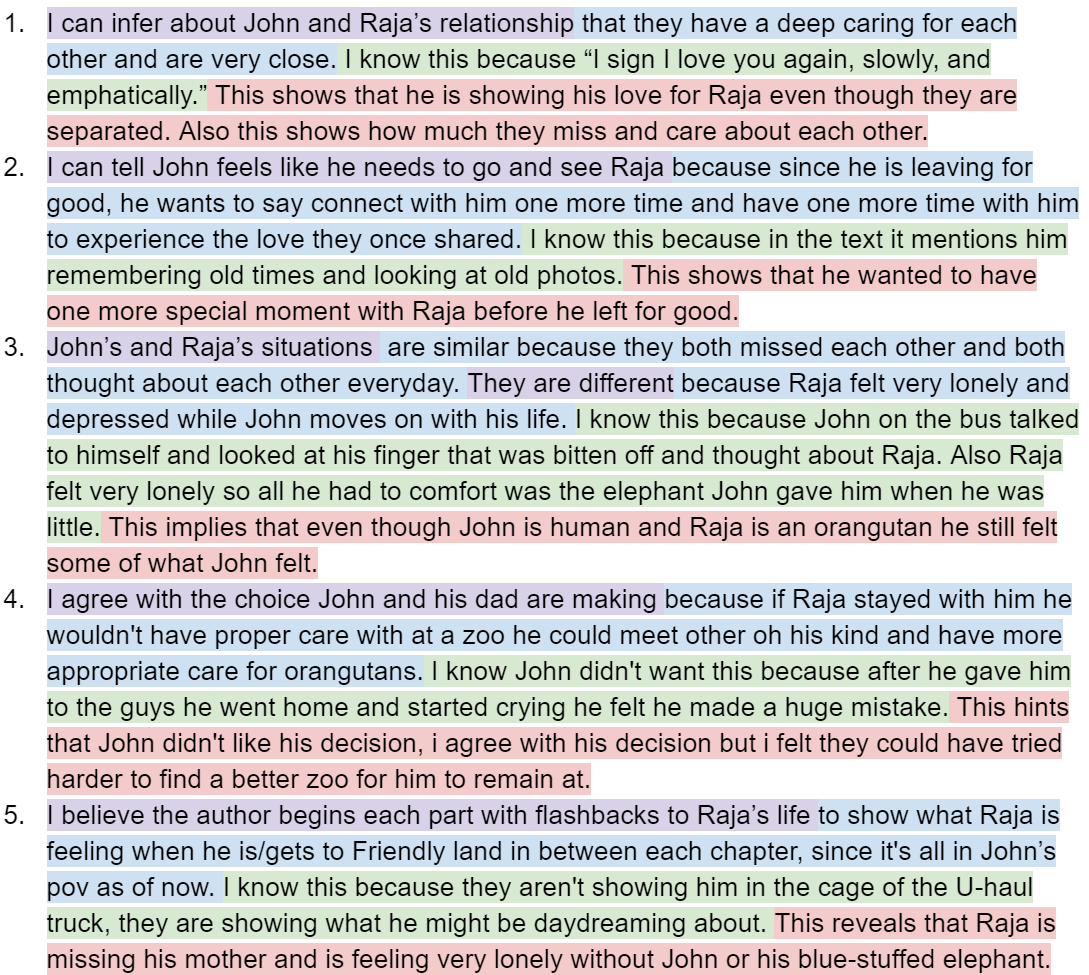
Discussion Questions: These were the first five of the text-dependent questions I asked during our reading of Rescued as well as an example of a student response (color coded for RATE. R=restate, A=answer, T=text evidence, E=elaborate/explain).

  • What can you infer about John and Raja’s relationship based on the first section?
  • Why does John feel like he needs to go see Raja before he leaves?
  • In the Q&A, the author says he “realized that a captive ape’s situation was similar to the plight of a kid during a divorce, getting swept along by the needs of powerful parents, at risk for being seen for what he represents instead of as a child with his own needs” (p. 251). How are John’s and Raja’s situations similar after the divorce? How are they different?
  • Do you agree with the choice John and his dad are making? Why or why not?
  • Why do you believe the author is beginning each part with a memory of Raja’s?
  • How did the author foreshadow this scene (on pg. 99) earlier in the book?

Flagged Passages: “My telltale heart, the one I’d left behind.” (p. 38)

Read This If You Love: Eliot Schrefer novels: Endangered and ThreatenedHurt Go Happy by Ginny RorbyHalf Brother by Kenneth Oppel, The One and Only Ivan by Katherine Applegate, Ivan: The Remarkable True Story of the Shopping Mall Gorilla by Katherine ApplegatePrimates by Jim Ottaviani

Recommended For: 
classroomlibrarybuttonsmall  

Signature

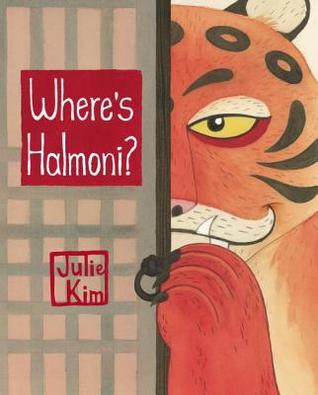
Where’s Halmoni? by Julie Kim

Share

Where’s Halmoni?
Author: Julie Kim
Published October 3rd, 2017 by Little Bigfoot

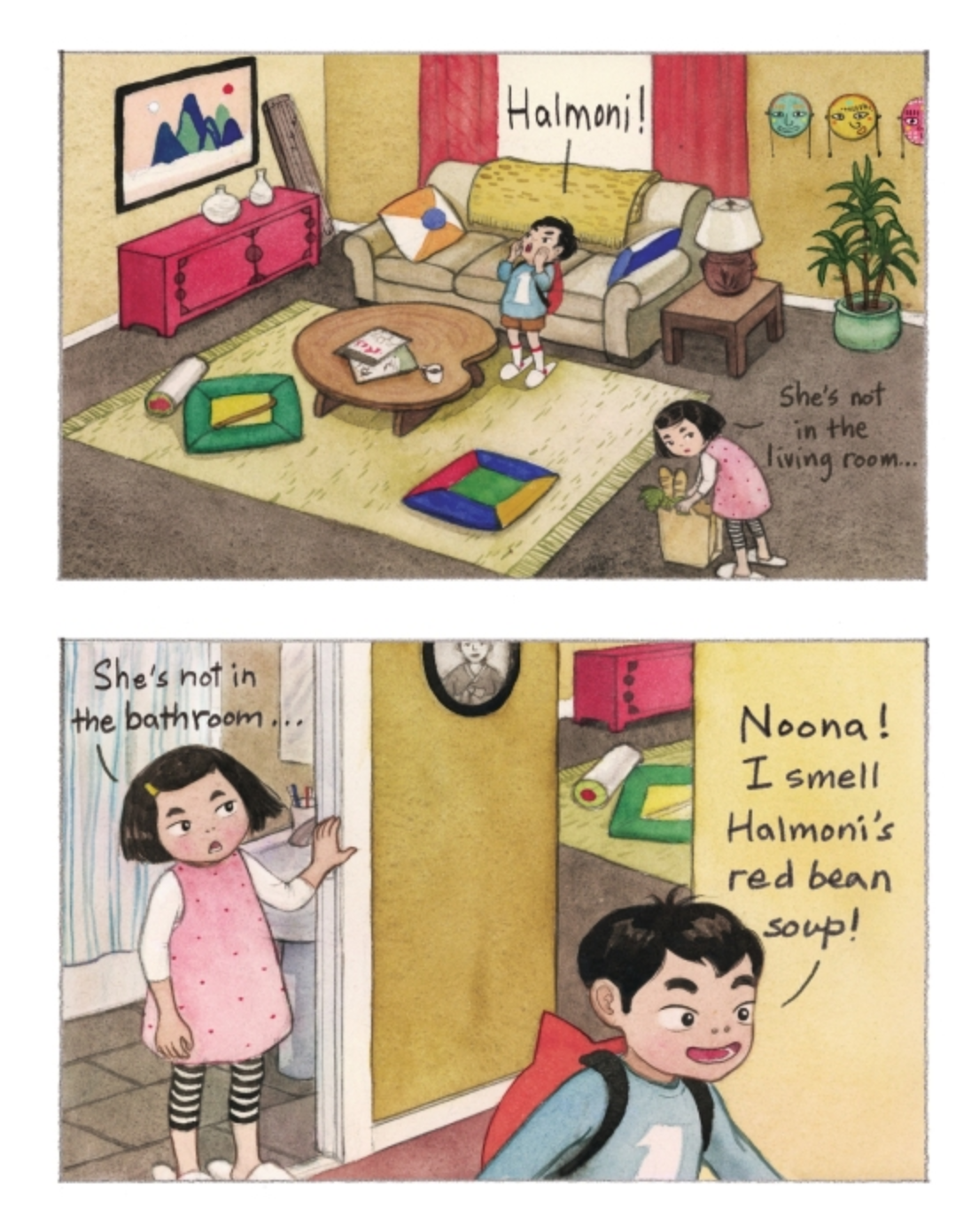
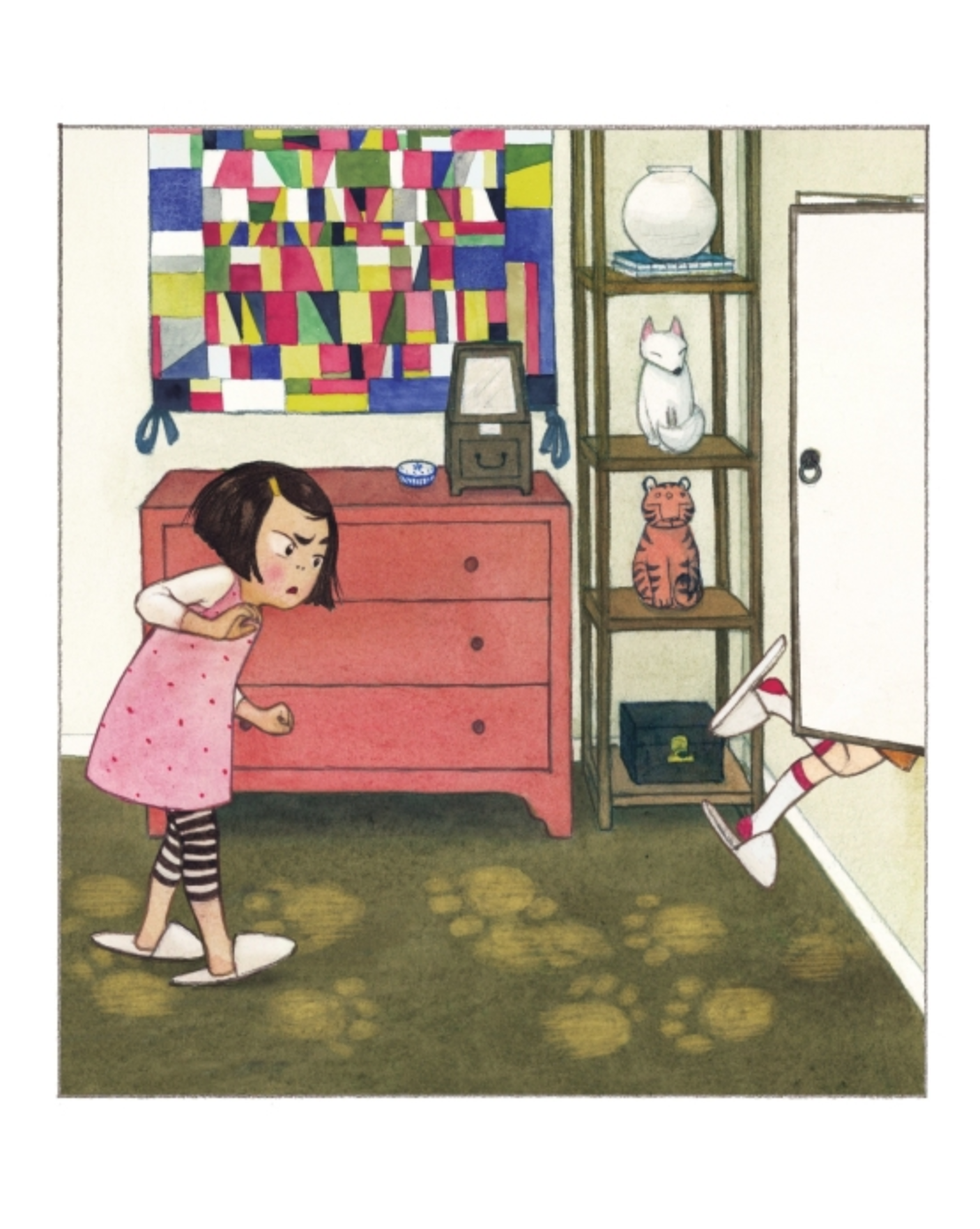
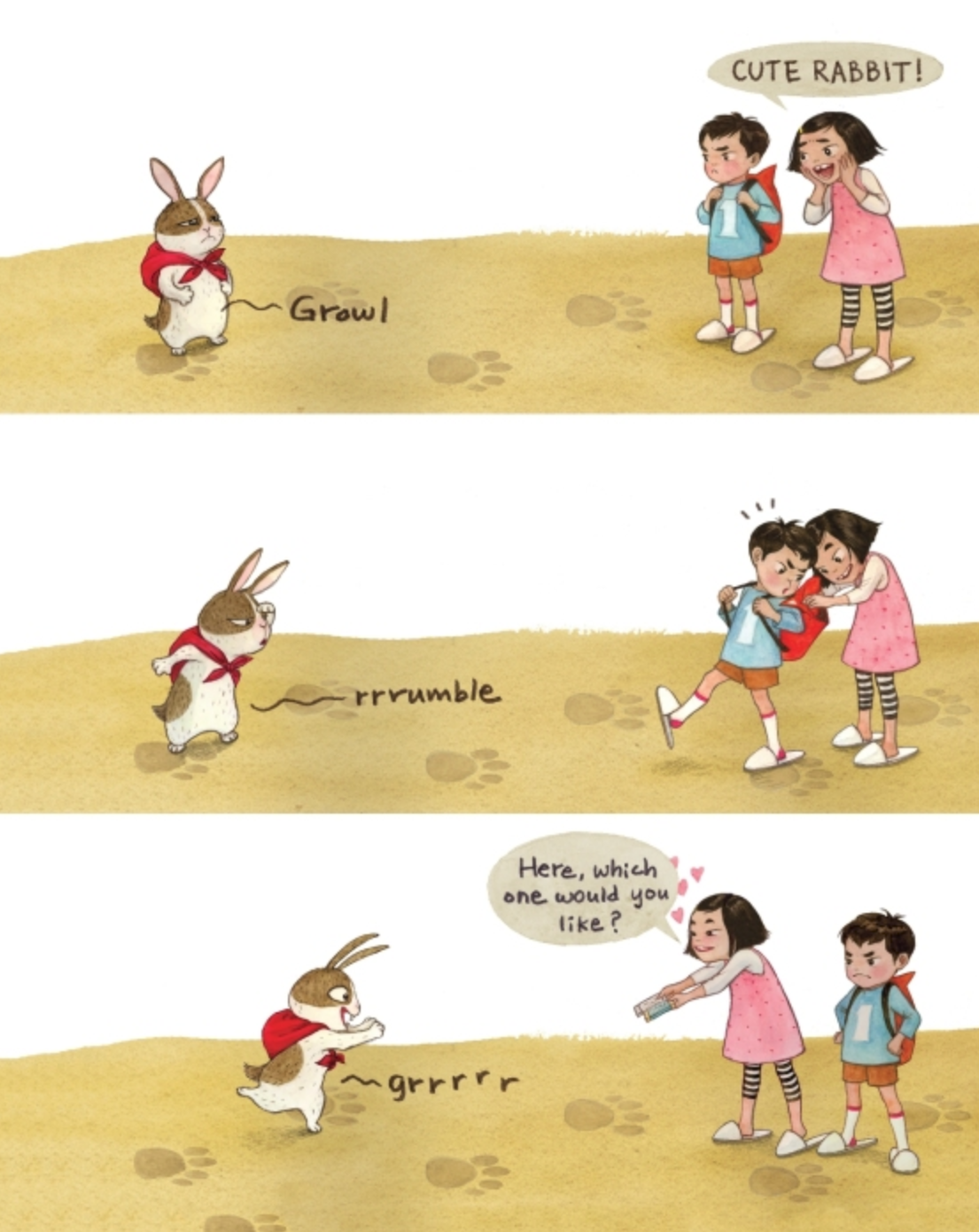
Summary: Where’s Halmoni? is a picture book in a graphic novel style, which follows the story of a young Korean girl and boy whose search for their missing grandmother leads them into a world inspired by Korean folklore, filled with mischievous goblins (dokkebi), a greedy tiger, a clever rabbit, and a wily fox.
Two young children pay a visit to Halmoni (grandmother in Korean), only to discover she’s not home. As they search for her, noticing animal tracks covering the floor, they discover a pair of traditional Korean doors, slightly ajar, new to their grandmother’s home. Their curiosity gets the best of them, and the adventure begins when they crawl through and discover an unfamiliar, fantastical world. As they continue to search for their grandmother and solve the mystery of the tracks, they go deeper into the world of Korean folklore and experience their cultural heritage in unexpected ways, meeting a number of Korean-speaking characters along the way.

Translations to Korean text in the story and more about the folktale-inspired characters are included at the end.

About the Author: Julie Kim is an author and illustrator living in Seattle, WA. She has published with Cricket Magazine, Scholastic, and Mondo. Where’s Halmoni? is her authorial debut.

Praise: “Julie Kim has created a visually stunning world that effortlessly infuses Korean text (Hangul) in rich, expressive art.”Cybils Awards, winner

“For its jaw-dropping art, encouraging bilingual attitude, and conscientious portrayal of Korean culture, Where’s Halmoni? is a perfect choice.” —School Library Journal, starred

“A sophisticated mélange of urban households, traditional Asian landscapes, vibrant color schemes, cultural details, subtle visual jokes, [and] pitch-perfect dialogue… This book is an excellent choice for either the picture-book or graphic-novel collection.” —Booklist, starred

“Kim’s bright, expressive illustrations are a delight…an accessible, diverse title for a broad readership.” —Kirkus Reviews, starred

“The sibling banter is believable and delightful, [and] Kim’s panel sequences teem with energy.” —Publishers Weekly, starred

ReviewThis book is a piece of art. The way that Kim combined traditional Korean folklore characters, including giving an explanation about each of them in the back; realistic sibling relationships; an adventure with beautiful settings; and her amazing artwork lent to the creation of a very special book. There is so much to unpack including homage to traditional Asian art styles, inferring opportunities, introduction to Korean folktales, and inclusion of Korean language. This book will be perfect as a read aloud with discussions, lit circles looking at folktales, or as an independent book for your adventure or graphic novel fans.

Teachers’ Tools for Navigation: Where’s Halmoni? and its back matter are a perfect addition to a folklore unit including a discussion on how authors fracture/retell/modernize folktales in all cultures.

And P.S. a whole discussion/lesson could be done around the end pages!

Discussion Questions: 

  • How did Kim intertwine traditional Korean folktale characters into her story?
  • What do the end sheets tell you that the rest of the story did not?
  • What clues were there at the beginning of the book that ultimately they would encounter a tiger and a fox?
  • How could you infer that Halmoni was their grandmother?
  • Before reading the translations of the Korean in the back of the book, use the context clues and try to guess what the characters are saying.
  • Would you consider this book a picture book or a graphic novel? Why?

Flagged Passages: 

Read This If You Love: Retellings and new takes on folktales

Recommended For: 
classroomlibrarybuttonsmall  

Signature

**Thank you to little bigfoot for providing a copy for review!**

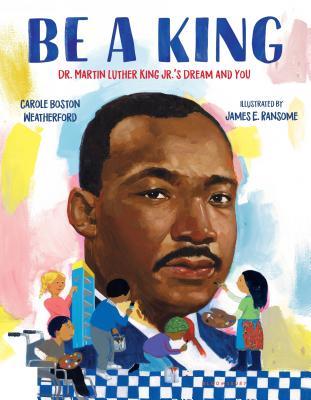
Be A King: Dr. Martin Luther King Jr.’s Dream and You by Carole Boston Weatherford

Share

Be A King: Dr. Martin Luther King Jr.’s Dream and You
Author: Carole Boston Weatherford
Illustrator: James E. Ransome
Published January 2nd, 2018 by Bloomsbury USA Childrens

Summary: You can be a King. Stamp out hatred. Put your foot down and walk tall.
You can be a King. Beat the drum for justice. March to your own conscience.

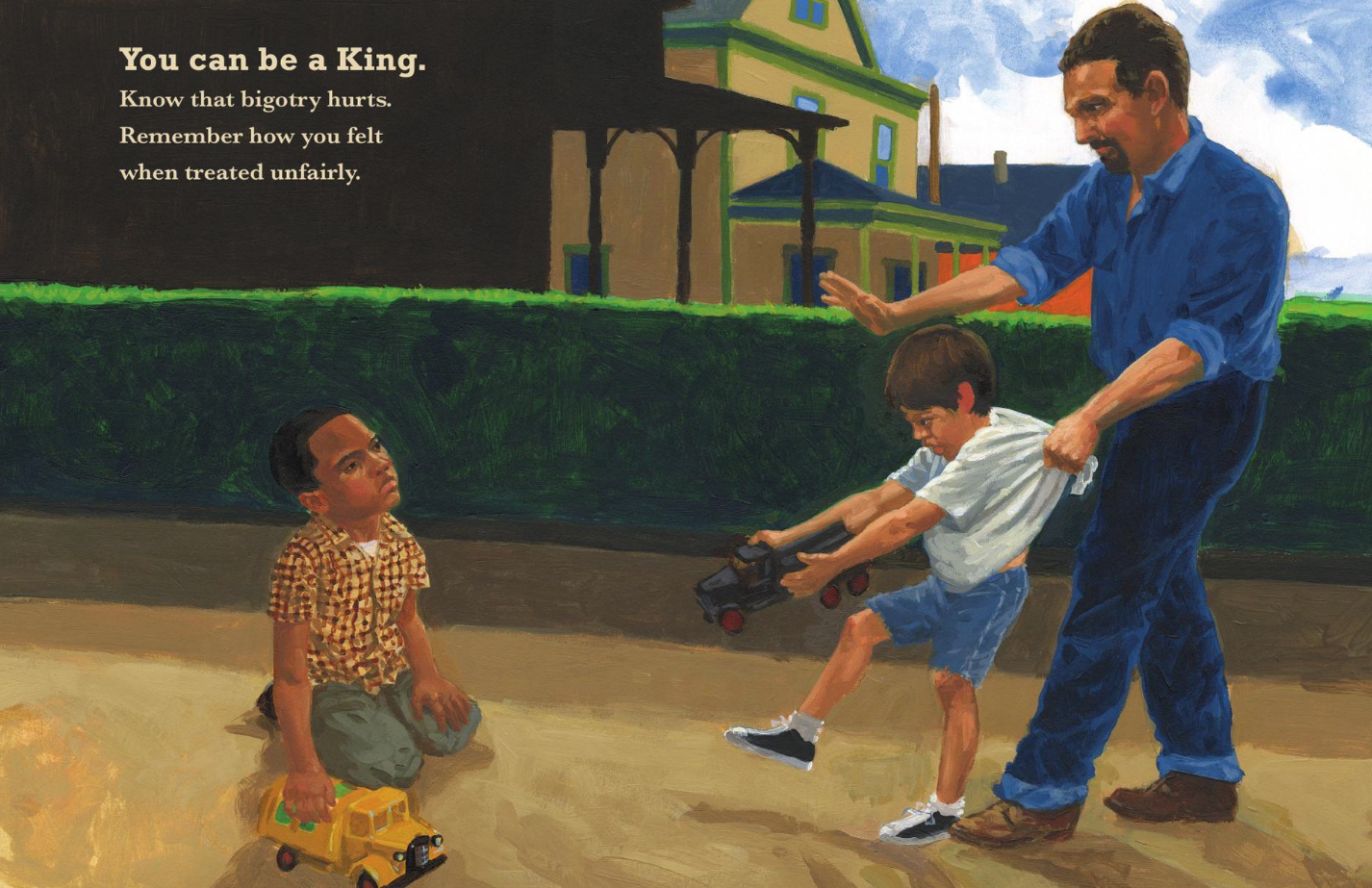
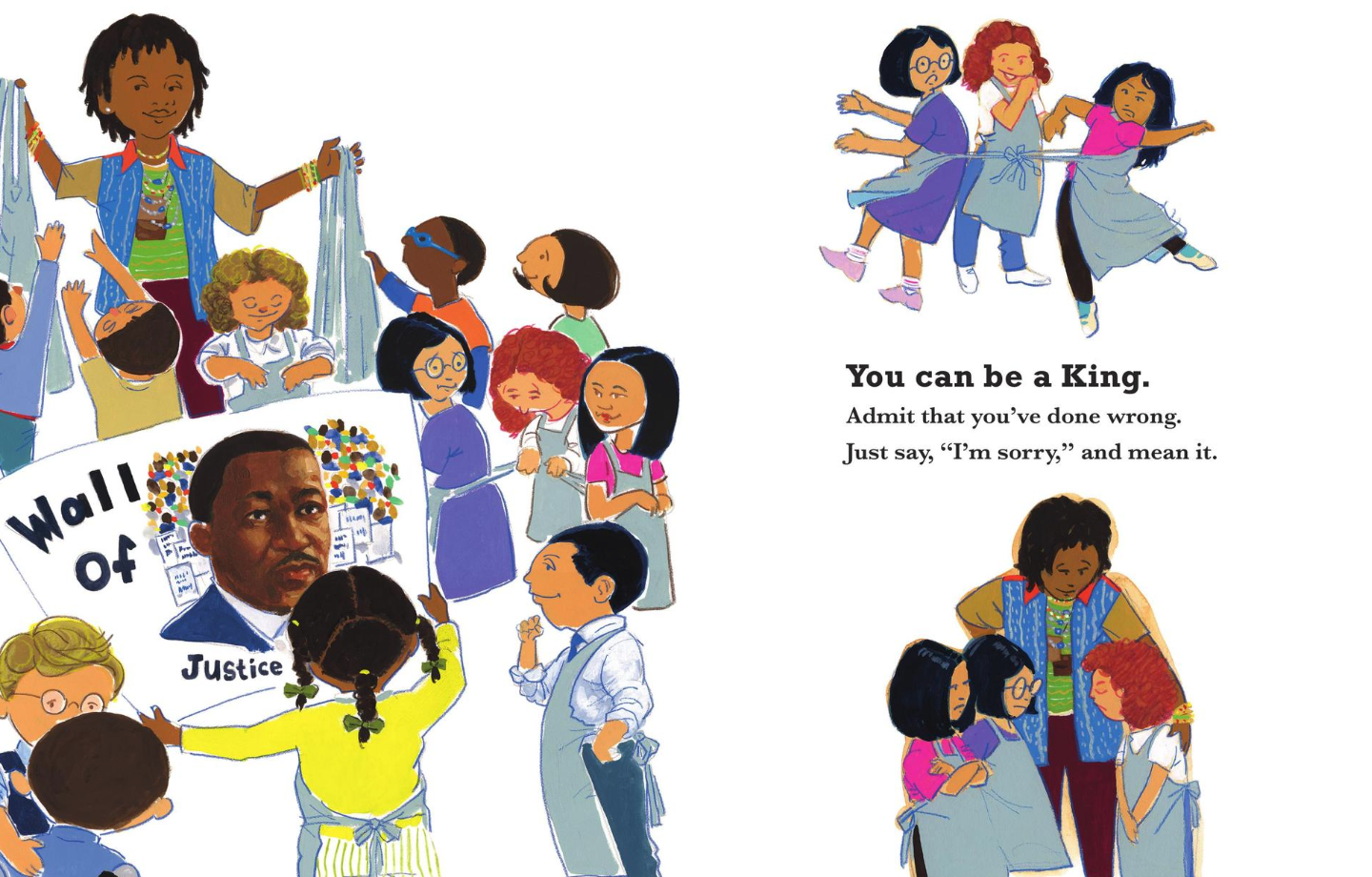
Featuring a dual narrative of the key moments of Dr. King’s life alongside a modern class as the students learn about him, Carole Weatherford’s poetic text encapsulates the moments that readers today can reenact in their own lives. See a class of young students as they begin a school project inspired by Dr. Martin Luther King Jr. and learn to follow his example, as he dealt with adversity and never lost hope that a future of equality and justice would soon be a reality. As times change, Dr. King’s example remains, encouraging a new generation of children to take charge and change the world . . . to be a King. 

Praise: 

“While the book is accessible as an inspiring primer on social justice and taking action, it also challenges more sophisticated readers to make connections between the art, the text, Dr. King’s life, the civil rights movement at large, and the continuing struggle to affect change . . .This book is sure to spark discussion and empower readers of all ages.” –  Starred review, School Library Journal

“Thoughtful paintings of moving scenes are paired with brief, motivational reflections that evoke all the sentiment and fervor of the American civil rights movement.” –  Foreword Review

“The book manages to make essential lessons in civic responsibility accessible to the very young reader.” –  Booklist

“The historical scenes, painted in Ransome’s signature thick, saturated style, are infused with a powerful sense of narrative.” –  Publishers Weekly

“The use of rich, realistic paintings with pencil detailing for King’s life contrasts with the brighter, simpler drawings for the contemporary children, giving a physical reminder that his work is ongoing.” –  School Library Connection

ReviewI am so happy that a book like this exists! It makes a beautiful connection between King’s history and how the same concepts can (and should!) drive us today. The book is very young kid friendly and is a great scaffold to talk about Dr. King or about kindness; however, it could also be used with older kids to infer and go deeper into the lyrical language Weatherford uses. I also loved how Ransome’s illustrations changed between King’s biography and the more contemporary school narrative.

P.S. As a teacher and a person who believes in kindness and equity and acceptance and friendship, I am so happy to see conversations like this happening so freely now! My students and I speak about injustice and prejudice and equity so often now when it would have been a stigma just a few years ago to even mention race or other social justice issues. It is important to talk about race in a non-prejudicial way with children to allow them to learn and grown and reflect. Sadly, it has been through horrific injustices that has gotten us to this point, but hopefully with our future generations having these types of conversations starting at such a young age, these injustices will stop.

Teachers’ Tools for Navigation: Have students look at each school spread (or split up the spreads between groups of students) and ask them to connect the ideals happening in the spread with something that King spoke about. This idea can also be used with the King spreads because it does not explicitly state what historical event each spread is representing, so students could look through King’s story and try to match each illustration and words with an event in his life.

Discussion Questions: 

  • What was Dr. King’s dream?
  • What are some ways you can fulfill this dream?
  • Although he was speaking of a much larger issue than a classroom, how can King’s ideals be transferred to how we treat each other in the classroom?
  • What events of King’s life were portrayed in the illustrations?
  • What other ways could you BE A KING?
  • Why do you believe the author wrote this story?
  • What is the author trying to teach the reader?
  • How did the author structure the story to reach her purpose and theme?

Flagged Passages: 

Read This If You Love: Stories of MLK, Jr.’s life, Books (historical fiction or nonfiction) about the Civil Rights MovementEach Kindness by Jacqueline Woodson

Recommended For: 
classroomlibrarybuttonsmall closereadinganalysisbuttonsmall 

Signature

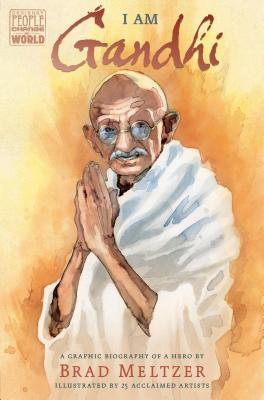
I Am Gandhi: A Graphic Biography of a Hero by Brad Meltzer

Share

I Am Gandhi
Author: Brad Meltzer
Illustrator: 25 Acclaimed Artists
Published May 8th, 2018 by Dial Books

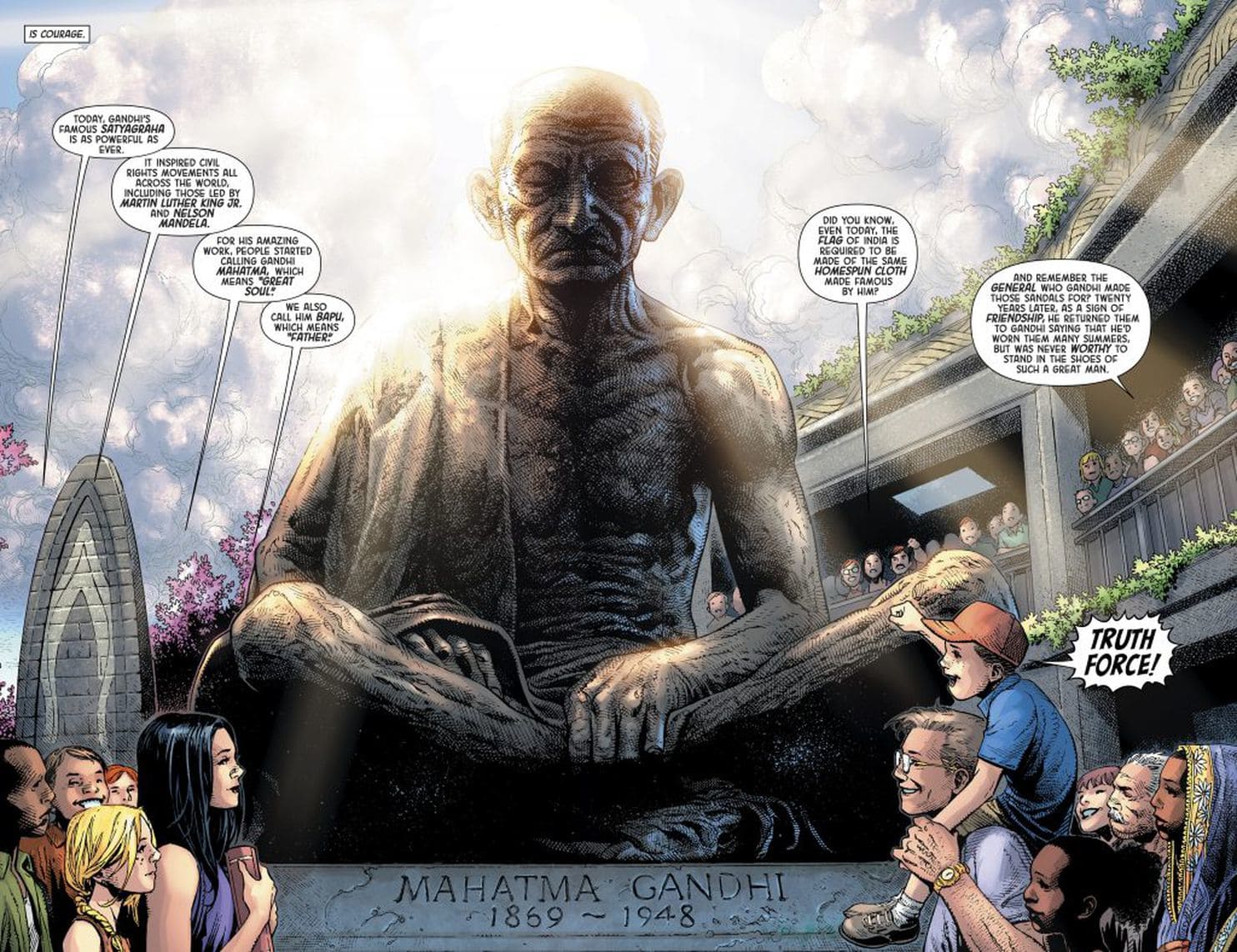
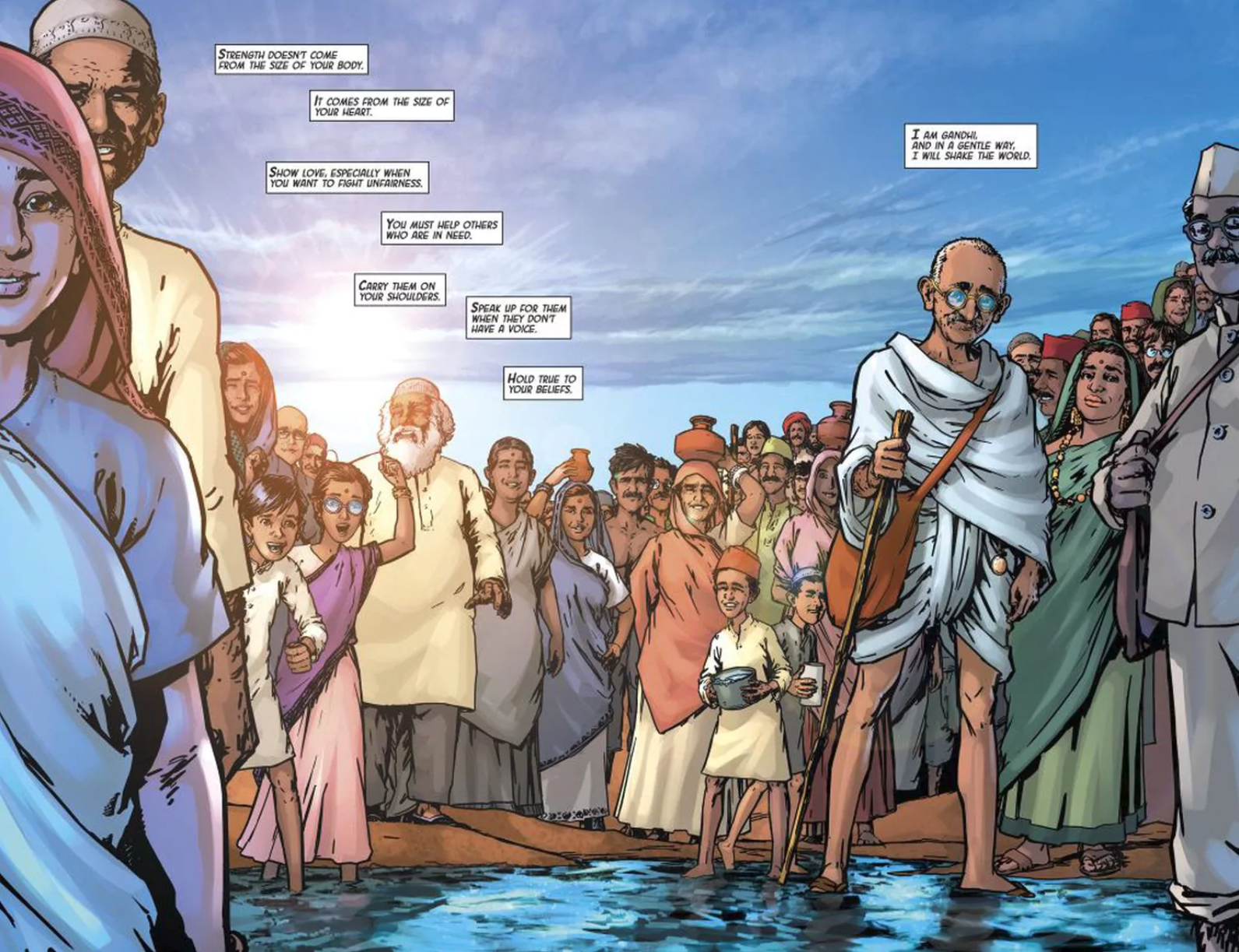
Summary: Twenty-five exceptional comic book creators join forces to share the heroic story of Gandhi in this inspiring graphic novel biography.

As a young man in India, Gandhi saw firsthand how people were treated unfairly. Refusing to accept injustice, he came up with a brilliant way to fight back through quiet, peaceful protest. He used his methods in South Africa and India, where he led a nonviolent revolution that freed his country from British rule. Through his calm, steady heroism, Gandhi changed the lives of millions and inspired civil rights movements all over the world, proving that the smallest of us can be the most powerful.

Galvanized by Gandhi’s example of gentle, peaceful activism, New York Times bestselling author Brad Meltzer asked his friends in the comic book world to help him make a difference by creating this philanthropic graphic novel. Twenty-four illustrators–including many of the most acclaimed artists in comics today–enthusiastically joined the project, agreeing to donate their work so that their royalties can go to Seeds of Peace, a non-profit organization that inspires and cultivates new generations of global leaders. This extraordinary biography is a glorious team effort that truly exemplifies Gandhi’s selflessness and love for humanity.

The illustrators included are: Art Adams, John Cassaday, Jim Cheung, Amanda Connor, Carlos D’Anda, Michael Gaydos, Gene Ha, Stephanie Hans, Bryan Hitch, Phil Jimenez, Siddharth Kotian, David LaFuente, David Mack, Alex Maleev, Francis Manapul, David Marquez, Steve McNiven, Rags Morales, Saumin Patel, Nate Powell, Stephane Roux, Marco Rudy, Kamome Shirahama, Bill Sienkiewicz, and Abhishek Singh.

Kellee’s ReviewI’ll be honest–when I first read on the cover that 25 different artists illustrated this graphic biography, I was worried that the stagnation of illustration styles would hinder the narrative of Gandhi’s life, but I was so wrong. Instead, by allowing each illustrator to give us their interpretation of Gandhi, his spirit instead flowed through the pages as it was obvious that his story had touched each and every artist, and the author, taking part in this graphic biography.

While reading, it was clear to me that Meltzer wanted Gandhi’s message of equality, peace, and kindness to scream at the reader, and this was confirmed when I read the Washington Post article about Meltzer’s inspiration. I believe Meltzer did a beautiful job not only telling Gandhi’s story but also showing that peace is possible in a time of tumultuous relationships but that the only way to truly achieve it is through similar activism as Gandhi.

Ricki’s Review: I read this graphic novel twice to myself and twice with my son. Further, I’ve read portions of it to my students. I can’t stop sharing it! I was blown away by the amalgamation of the 25 graphic novelists—it made for an absolutely stunning text. I appreciate the historical perspective that extends throughout the graphic novel, and I loved that the illustrations really make Ghandi’s story come alive. This is a book that I will share often and widely. If you haven’t read it, I recommend it highly—even if you already know a lot about Ghandi’s life.

Teachers’ Tools for Navigation: Have students connect Gandhi’s philosophies to those who influenced him and those he influenced. For example, in one of my literature classes, one person picked an author who was influenced by another (for example, Woody Guthrie was influenced by Walt Whitman) then the next student built on that (for example, Bob Dylan was influenced by Woody Guthrie OR Ralph Waldo Emerson influenced Walt Whitman) until a complete chain of influences were made. Then each student wrote an analysis paper showing how they were influenced then presented their findings (in order of influences) to the class. This same idea could be done here: Henry David Thoreau influenced Gandhi who influenced Martin Luther King, Jr. who influenced Barack Obama who influenced Cory Booker, etc. This idea could also be used just to look at the idea of peaceful protests that have changed the course of history: Gandhi, MLK, Black Lives Matter, Never Again, etc.

Discussion Questions: 

  • What is the theme of Meltzer’s story of Gandhi?
  • How did Gandhi change the course of history for Indians in South Africa and India?
  • How did the 25 different artists illustrating the graphic novel affect the reading of the biography?
  • How did Thoreau influence Gandhi? Can you infer how Gandhi influence Martin Luther King, Jr.?
  • What was the importance of Gandhi’s march to the sea to hold salt?
  • Why do you believe Meltzer chose the specific quotes he included in the back matter of the book?

Flagged Passages: 

Read This If You Love: The Ordinary People Change the World series (ex. I am Lucille Ball, I am Jackie Robinson), Nonfiction graphic novels such as Drowned City by Don Brown

Recommended For: 
classroomlibrarybuttonsmall closereadinganalysisbuttonsmall

Signatureand