Text Sets for Teachers: Growing Pains: Looking at the Subject of Coming of Age

Share

Text Set Button

Growing Pains: Looking at the Subject of Coming of Age
Text Set for The Curious Incident of the Dog in the Night-Time by Mark Haddon
created by Andrew Johnson

We must all grow up order to fully enter the world as an adult. In some cultures, growing up is a rite of passage. In others, it is a series of events—a gradual process. Everyone grows up in different ways and is influenced by the different circumstances and environments. There is no one singular point in people’s lives when they can decidedly say that they came of age. It simply just happens. It comes to pass through the experiences that change who they are and what they value as individuals. Growing up not only changes how we think about others, but it also changes how we think about our own identities and places in society.

With that said, this text set is immensely important for exposing students to how others manage to grow up and progress through their lives. Students in middle and high school want nothing more than to be older. They want to be grown, even though a part of them also wants to secretly stay young forever. They may have been told at some point in their lives by a parent, teacher, or other adult to “grow up,” but do they really know what this means? How do they know? This text set will take a multicultural, multi-faceted view on the process of growing up in a world that can be strange, harsh, and also very, very enjoyable.

Anchor Text (although other texts may be used!):
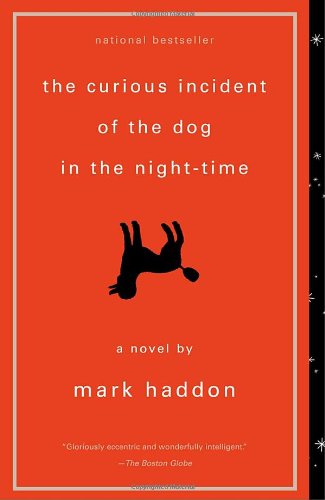
The Curious Incident of the Dog in the Night-Time by Mark Haddon
curious incident of the dog in the night-time

Graphic Novel
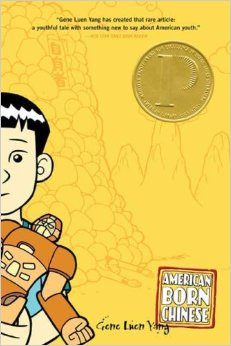
American Born Chinese by Gene Luen Yang
american born chinese

Other Texts
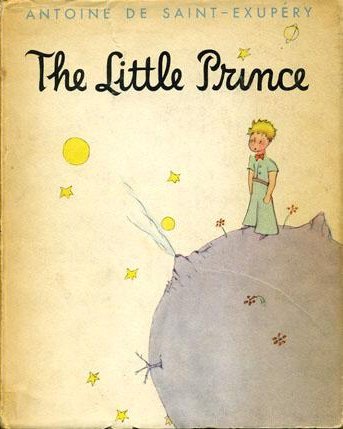
The Little Prince by Antoine de Saint-Exupery
Little prince

The Perks of Being a Wallflower (excerpts) by Stephen Chbosky
perks of being a wallflower

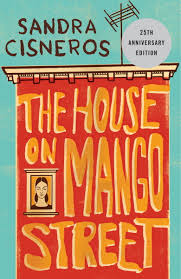
The House on Mango Street by Sandra Cisneros
house on mango street

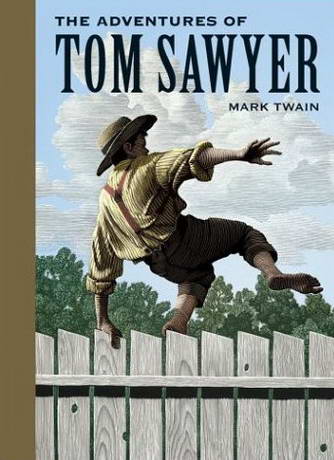
The Adventures of Tom Sawyer (excerpts) by Mark Twain
tom sawyer

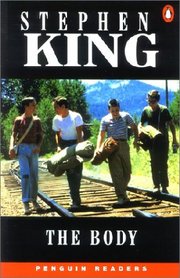
The Body by Stephen King (novella)
the body

Poems/Songs
“If” by Rudyard Kipling
“Lightspeed” by Grieves
“In My Life” by The Beatles
“Nothing Gold Can Stay” by Robert Frost

Short Stories
“Lost in the Funhouse” by John Barth (excerpt)
“Harrison Bergeron” by Kurt Vonnegut

Essay
“Manhood for Amateurs” by Michael Chabon

Movies
Wizard of Oz (part of a prior unit)
Mean Girls
Rain Man (clips/part of introduction to ASD)
Stand By Me (adaptation of Stephen King’s The Body)

TV Shows
Boy Meets World (any and all applicable clips)
Girl Meets World (any and all applicable clips)

Articles/Internet Sources
The Teenage Brain by National Geographic
Should Growing Up in Compton be Considered a Disability VICE
Kids are Growing up Way Too Fast – Manhattan Institute
The Definition of Disability by Deborah Kaplan
Talking About Disability – A Guide to Using Appropriate Language
13 Amazing Coming of Age Traditions from Around the World

Websites
Centers for Disease Control and Prevention (in order to understand the anchor text better)
Autism Speaks (in order to understand the anchor text better)
Simply Psychology (Erikson’s stages of psychosocial development)

Guiding Questions

  • What does being a child mean? What does being an adult mean?
  • Why can the path between childhood and adulthood be confusing or challenging?
  • Do we ever stop “growing up”?
  • Does our environment affect how we “grow up”?
  • Is “growing up” always a good thing? What makes it desirable?
  • Who or what pressures us to “grow up”? Who or what pressures us to stay young?
  • Is maturity synonymous with age?

Writing Topics

  • Describe someone who you consider to be “grown up” or “mature”? List their attributes.
  • Which stage(s) of identity development would you consider yourself to be in?
  • Design one scenario/question to determine if someone is mature or not. What would you look for in the answer?
  • After reading The Curious Incident of the Dog in the Night Time, Do you think that Christopher has “grown up”? What do you think he has learned?
  • Compare and contrast Christopher’s journey and possible “coming of age” with another character of your choosing (or maybe even you!).
  • What are we supposed to learn about ourselves after you’ve grown up? What do you hope to learn about yourself after you’ve grown up?

A special thanks to Andrew for this relevant, engaging text set! We think it would fit in with a variety of age levels and class texts. What do you think?

RickiSigandKellee Signature

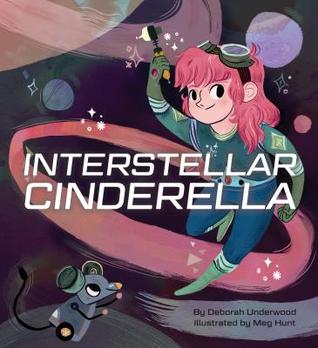
Interstellar Cinderella by Deborah Underwood

Share

interstellar cinderella

Interstellar Cinderella
Author: Deborah Underwood
Illustrator: Meg Hunt
Published May 5th, 2015 by Chronicle Books

Goodreads Summary: 

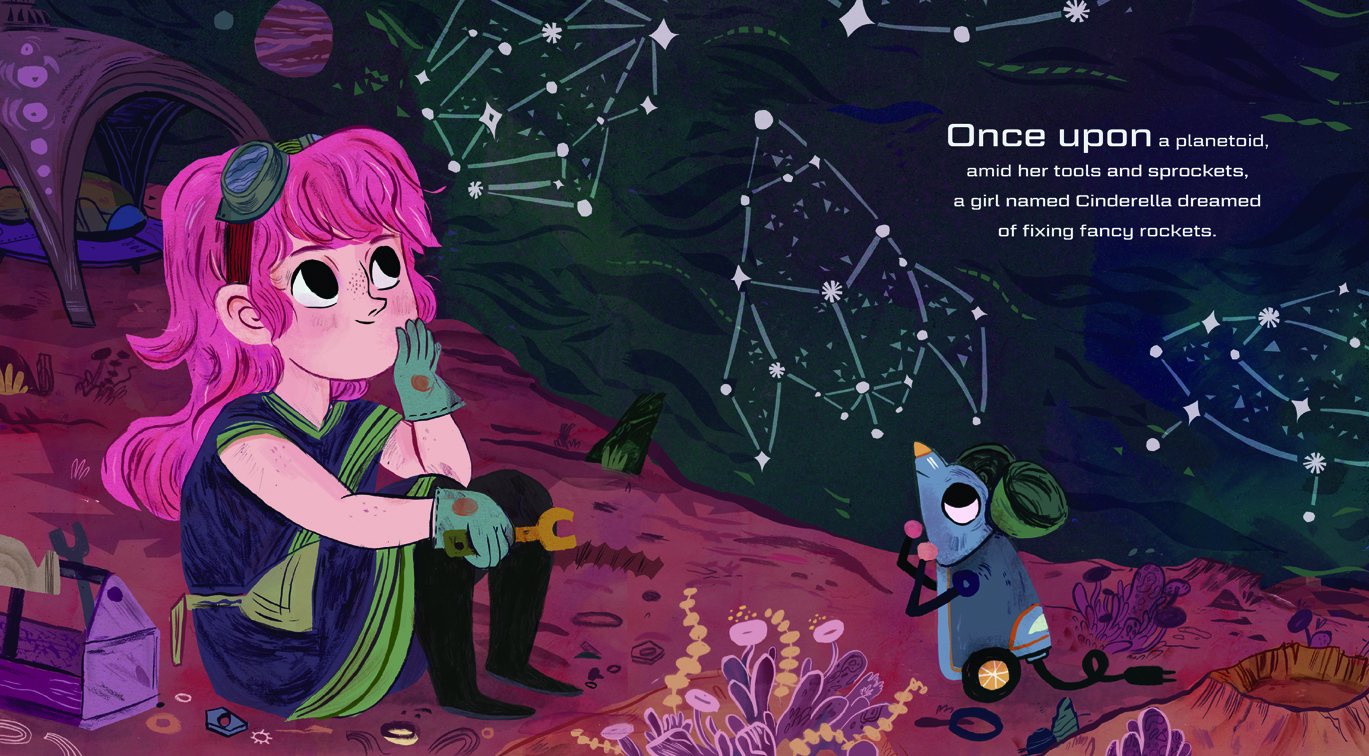
Once upon a planetoid,
amid her tools and sprockets,
a girl named Cinderella dreamed
of fixing fancy rockets.

With a little help from her fairy godrobot, Cinderella is going to the ball–but when the prince’s ship has mechanical trouble, someone will have to zoom to the rescue! Readers will thank their lucky stars for this irrepressible fairy tale retelling, its independent heroine, and its stellar happy ending.

My Review:  I am a huge fan of fairy tale retellings, and I am an even bigger fan of fairy tale retellings that take away the “whoa is me” aspect of the female protagonist. Interstellar Cinderella does just that. Deborah Underwood has given us a Cinderella that we all would aspire to be. She can fix rockets, has robots, and even is quite sensible when it comes to the prince. I am also very impressed with the rhyming of the text. It does not seemed forced and is actually quite humorous at times.

Teachers’ Tools for Navigation: Interstellar Cinderella would be a great addition to a fairy tale unit. I can picture a jigsaw/lit circle of sorts where each group reads an original fairy tale and a picture book retelling the fairy tale then the group discusses how the story was changed, the themes of both stories, compare/contrast the characters and other narrative elements, and then share with the class their analysis. Interstellar Cinderella is also a great example of a science fiction picture book for a genre lesson.

Discussion Questions: How is this Cinderella different than other Cinderellas?; Do you think the book ended with a “happily ever after”?; How does Cinderella save herself?

We Flagged: 

interstellar cinderella spread

Read This If You Loved: Rapunzel’s Revenge by Shannon Hale, Ninja Red Riding Hood by Corey Rosen Schwartz, Fairy Tale Comics edited by Chris Duffy, Princeless by Jeremy Whitely

Recommended For: 

classroomlibrarybuttonsmall readaloudbuttonsmall closereadinganalysisbuttonsmall litcirclesbuttonsmall

Signature

Women Who Broke the Rules: Sacajawea, Judy Blume, Sonia Sotomayor, and Dolley Madison by Kathleen Krull

Share

NFPB2015

Nonfiction Picture Book Wednesday

Nonfiction Picture Book Wednesday is hosted by Kid Lit Frenzy and was started to help promote the reading of nonfiction texts. Most Wednesdays, we will be participating and will review a nonfiction text (though it may not always be a picture book).
Be sure to visit Kid Lit Frenzy and see what other nonfiction books are shared this week!

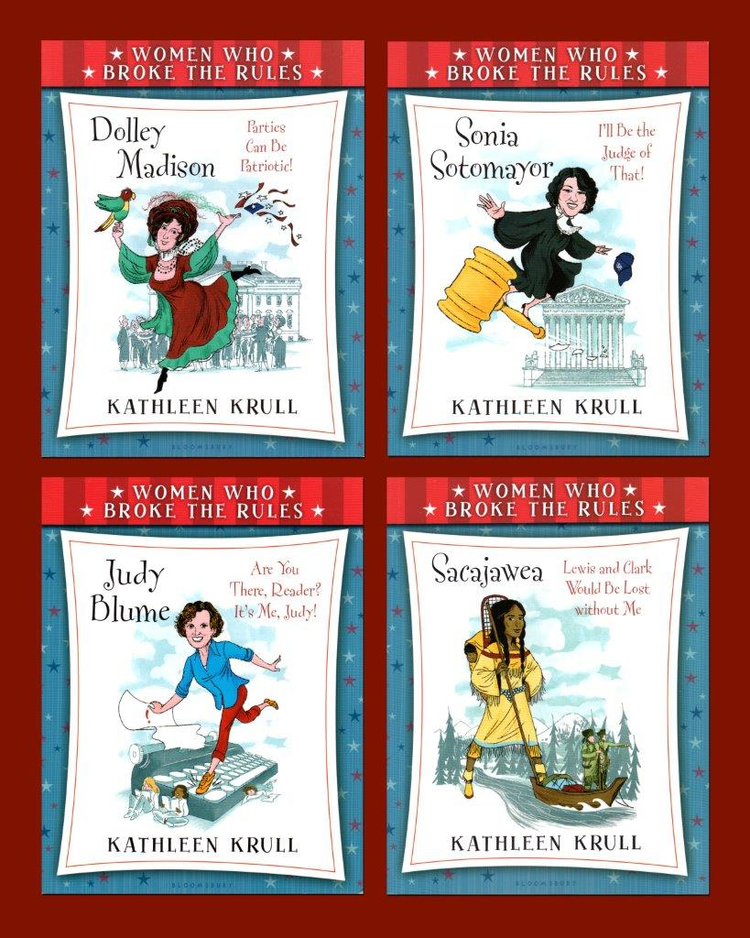
women who broke the rules

Women Who Broke the Rules series
Sacajawea: Lewis and Clark Would Be Lost without Me
Judy Blume: Are You There, Reader? It’s Me, Judy!
Sonia Sotomayor: I’ll Be the Judge of That!
Dolley Madison: Parties Can Be Patriotic
Author: Kathleen Krull
Illustrators: Various
Published 2015 by Bloomsbury

Publisher’s Summary: Many awe-inspiring women have changed the course of history. From fighting for social justice and women’s rights to discovering and shaping our amazing country, women have left an indelible mark on our past, present, and future. But it’s not easy to affect change, and these women didn’t always play by the rules to make a difference! Kathleen Krull blends history and humor in this accessible young biography series.

My Review:  I was first introduced to this series at Kid Lit Frenzy in June when Alyson shared these four biographies with us (along with an informative Q&A and a fun quiz), and as soon as I read her posts, I knew I had to get my hands on them. I am a huge fan of well-done biographies because I think they are an essential part of spreading history into a new generation’s memory. I am an even bigger fan of well-done biographies of strong women. While there has been a good chunk of biographical picture books lately about women, I am very happy to see that students will have longer biographies to explore strong women from history. I also really like that Krull’s series has a mix of contemporary and historical figures and is filled with diversity. Next Krull will be sharing Coretta Scott King and Mary Todd Lincoln’s life.

Teachers’ Tools for Navigation: There are so many ways these books will be used and loved in the classroom. First, add them to your classroom libraries! Krull’s biographies will be a wonderful rung above picture book biographies and below the “big head biographies” on a reading ladder. Also, they would a perfect addition to a unit on women in history and could definitely be used in inquiry lit circles where each group became an expert of a different female leader to share with the class.

Discussion Questions: In what way did ____ play a part in history?; Why was ____ included in the Women Who Broke the Rules series? What rules did she break? How did it change her part in history?

We Flagged: “Like most little kids, Judy Blume had a lot of questions. Okay, maybe more than most kids. What she didn’t have were answers. She grew up in a stifling time, when the rules stopped people from being honest and real.” (p. 7, Judy Blume)

“Was Sacajawea skittish about traveling into the unknown with an infant strapped to her back on a cradle board? Was she scared to be the only woman in a large group of men? We don’t know. The men seemed to treat her with respect, calling her ‘a good creature, of a mild and gentle disposition.'” (p. 13, Sacajawea)

“A girl grows up in a tough neighborhood. Her poor immigrant parents don’t speak English and don’t get along. She tackles a serious illness. . . and rises, rises, rises to become one of the country’s guiding lights.” (p. 7, Sonia Sotomayor)

“Dolley Payne was born with extra zip. And she was going to need as much energy as she could muster.” (p. 7, Dolley Madison)

Check out Kid Lit Frenzy’s post for interior artwork.

Read These If You Loved: Biographies

Recommended For: 

classroomlibrarybuttonsmall readaloudbuttonsmall closereadinganalysisbuttonsmall litcirclesbuttonsmall

Signature

**Thank you to Linette at Bloomsbury for providing copies for review!**

Happy Birthday, Mercy Watson! Review and Giveaway!: Mercy Watson and Deckadoo Drive Books by Kate DiCamillo

Share

Mercy Birthday

One of the most popular chapter book series for newly independent readers turns ten

And beloved creators Kate DiCamillo and Chris Van Dusen give fans even more reason to celebrate with a new spin-off series Tales from Deckawoo Drive

Mercy Watson, the best-selling early chapter-book series written by the two-time Newbery Medal winner and National Ambassador for Young People’s Literature Kate DiCamillo celebrates its tenth anniversary this year. Launched in 2005 the fun-filled stories aimed at readers age five to eight star Mercy Watson, Deckawoo Drive resident, lover of hot buttered toast and the most single-minded of pigs when it comes to the pursuit of adventure – and treats. Illustrated in full color by award-winning artist Chris Van Dusen in his signature retro style, the Mercy Watson books are a popular choice with younger readers making the transition from picture books to chapter books.

Although the sixth and final Mercy Watson installment was published in 2009, the series continues to attract new fans and is published in ten languages with sales of over two million copies worldwide. Last year Kate DiCamillo reunited children with Mercy and her neighbours in the first book in her spin-off series, Tales from Deckawoo Drive. Once more illustrated by Chris Van Dusen, and with all the rip-roaring adventure of Mercy Watson, the series is aimed at older readers of six to nine. The longer chapters and fewer illustrations allow Kate DiCamillo to introduce another level of pathos and sentiment to this series of funny, touching stories starring some unforgettable, heart-warming characters.

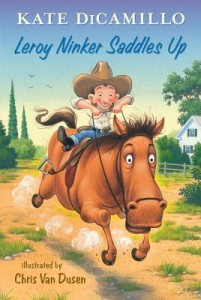
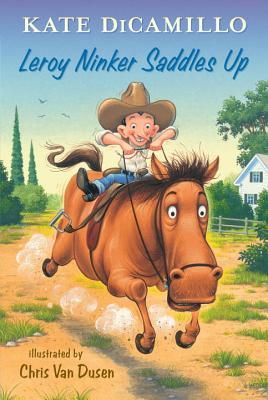
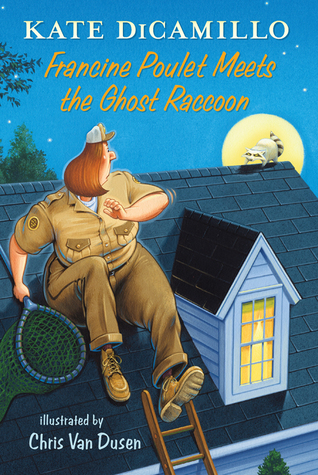
The first title in the new series, Leroy Ninker Saddles Up, became a New York Times bestseller and Amazon Best Book of the Year. Leroy and his rusty rather than trusty steed Maybelline star in this love story bursting with impassioned declarations and plenty of hilarious horsing around. This summer saw the release of book two, Francine Poulet meets the Ghost Raccoon, which also joined the New York Times Best Seller list earlier this month. Francine Poulet is the greatest animal control officer in Gizzford County – but it looks like she may finally have met her match. Funny, fast-paced and with an empowering message at its heart, readers are reunited with some familiar characters amid some riotous raccoon wrangling!

Tales from Deckawoo Drive is the perfect follow-on for original  fans who grew up with Mercy Watson and are ready to move on to a longer read. And for those readers new to Deckawoo Drive, this series is a wonderful introduction to a warm and witty world where readers are left feeling all buttery-toasty inside.
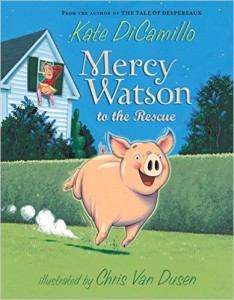
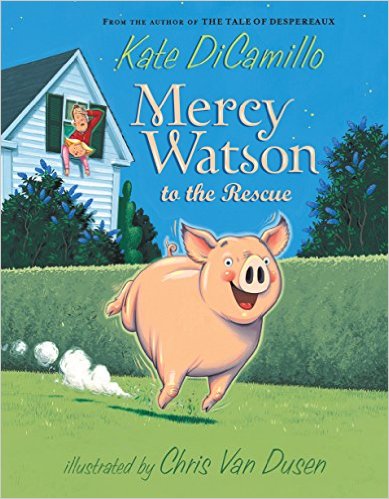
Mercy Watson

My Review: The characters in this story are so endearing. Even Eugenia! The antics of Mercy within these pages mixed with DiCamillo’s way of writing really push the Mercy Watson books past all the other early chapter books into its own league. No wonder Mercy is considered a porcine wonder!

Discussion Questions: What makes the Watsons love Mercy so much? What makes Eugenia dislike Mercy so much?; Did Mercy actually save the day or do you think it was all a coincidence?

We Flagged: 
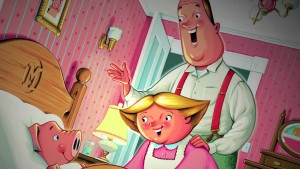
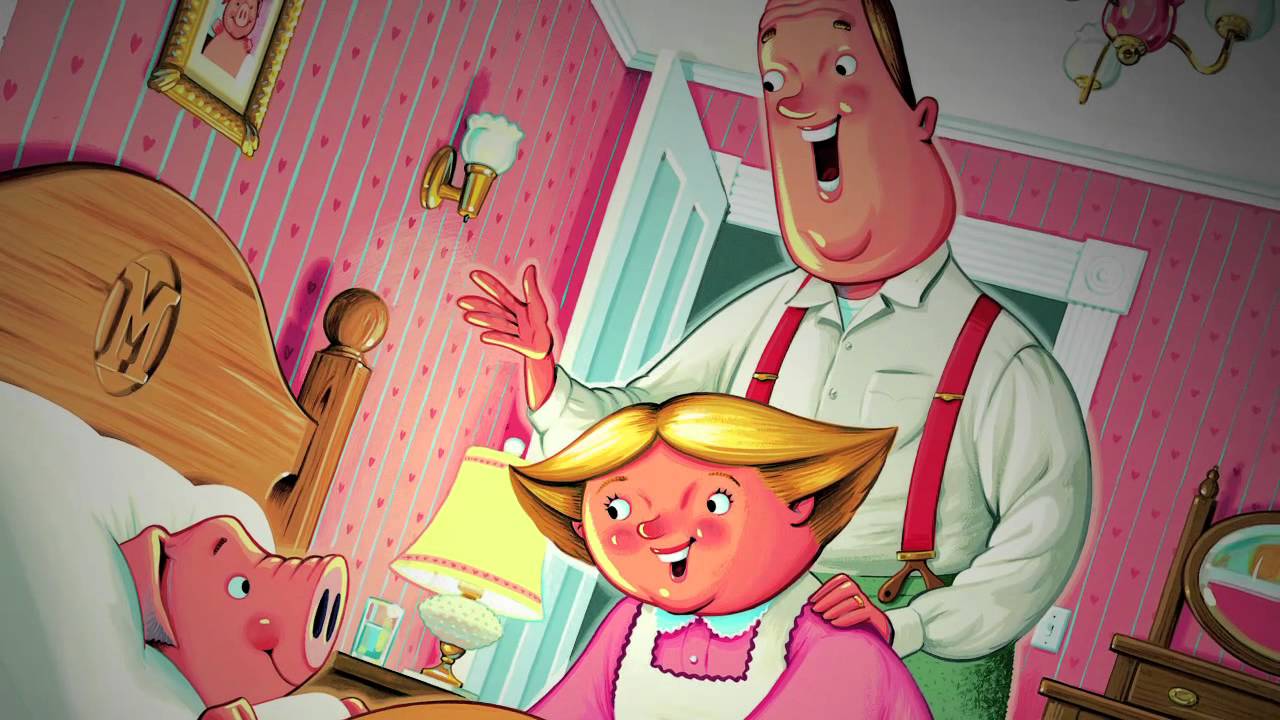
Mercy Illustration

“Mr. Watson and Mrs. Watson have a pig named Mercy.

Each night they sing Mercy to sleep.

‘Bright, bright is the morning sun,” sing Mr. and Mrs. Watson,
but brighter still is our darling one
Dark, dark is the coming night,
but oh, our Mercy shines so bright.

leroy ninker

Goodreads Summary: Yippie-i-oh! Saddle up for the first in a spin-off series starring favorite characters from Kate DiCamillo’s New York Timesbest-selling Mercy Watson books.

Leroy Ninker has a hat, a lasso, and boots. What he doesn’t have is a horse — until he meets Maybelline, that is, and then it’s love at first sight. Maybelline loves spaghetti and sweet nothings, and she loves Leroy, too. But when Leroy forgets the third and final rule of caring for Maybelline, disaster ensues. Can Leroy wrestle fate to the ground, rescue the horse of his heart, and lasso loneliness for good? Join Leroy, Maybelline, and a cast of familiar characters — Stella, Frank, Mrs. Watson, and everyone’s favorite porcine wonder, Mercy — for some hilarious and heartfelt horsing around on Deckawoo Drive.

My Review: Leroy is just so darn loveable. His personality shines through the pages and you just are so happy that Leroy and Maybelline found each other. Also, Kate DiCamillo has a way with voice! I can always hear her characters talking in my head, and they each are so very distinct. I also love her use of vocabulary and humor–perfect! This one is going to be loved by many!

Discussion Questions: Why do you think that Maybelline is the perfect horse for Leroy?; Was Leroy truly prepared to have a horse? How do you know?; Why does Leroy want to be a cowboy?

We Flagged:
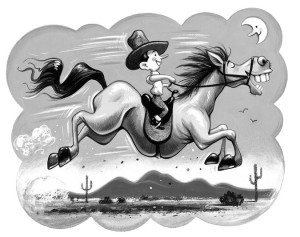
leroy ninker

“Leroy Ninker said ‘Yippie-i-oh’ because Leroy Ninker had a dream. He wanted to be a cowboy.

On Wednesday nights, the Bijou Drive-In Theater ran a Western double feature, and Leroy Ninker Stood and watched in wonder as the great white expanse of the Bijou screen filled with purple mountains, wide-open plains, and cowboys.

The cowboys wore ten-gallon hats. The wore boots. They carried lassos. The cowboys were men who cast long shadows and knew how to fight injustice. They were men who where never, ever afraid.

‘Yippie-i-oh,’ Leroy Ninker whispered to the screen. ‘That is the life for me. A cowboy is who I was meant to be.’”
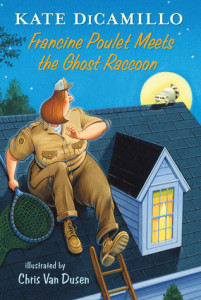
francine poulet

Goodreads Summary: Deckawoo Drive’s intrepid Animal Control Officer meets her match—or does she? A funny, heartfelt, and fast-paced romp from the National Ambassador for Young People’s Literature.

Francine Poulet is the greatest Animal Control Officer in Gizzford County. She hails from a long line of Animal Control Officers. She’s battled snakes, outwitted squirrels, and stared down a bear. “The genuine article,” Francine’s dad always called her. She is never scared—until, that is, she’s faced with a screaming raccoon that may or may not be a ghost. Maybe Francine isn’t cut out to be an Animal Control Officer after all! But the raccoon is still on the loose, and the folks on Deckawoo Drive need Francine back. Can she face her fears, round up the raccoon, and return to the ranks of Animal Control? Join a cast of familiar characters—Frank, Stella, Mrs. Watson, and Mercy the porcine wonder—for some riotous raccoon wrangling on Deckawoo Drive

My Review: Kate DiCamillo has a special way of writing stories. Her characterization is amazing which leads to truly full characters. Her vocabulary always pushes the reader yet never leaves the reader out of the story either. Her voice rings throughout the pages to where you can hear the narrator in your head. In this book, Francine Poulet is a character that all readers will love. She is determined, good at her job, and loves what she is doing. But then she faces her adversary. What happens after is what truly shows what type of person Francine Poulet can be.

Discussion Questions: Do you think Francine does her job because she loves it or because she felt pressured to do it because of her father and grandfather?; What vocabulary words do Kate DiCamillo use throughout the book to add more descriptive language and imagery to the book?; How would you describe Francine? Frank? The raccoon?

We Flagged: 
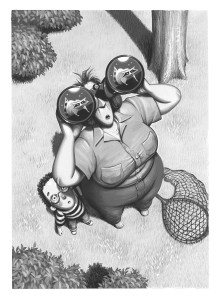
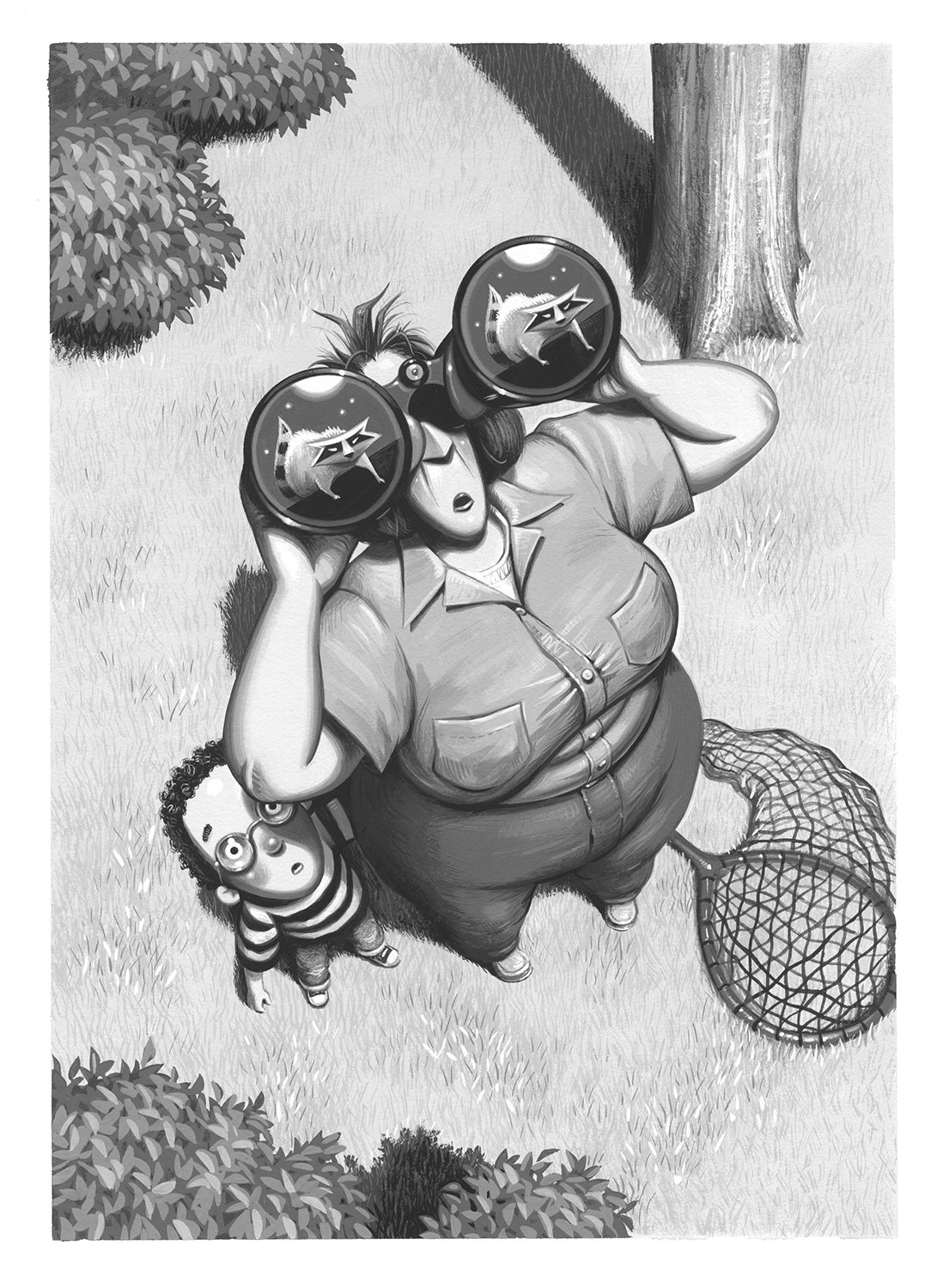
Francine Poulet Image

“Francine put the net on the ground. She took the binoculars. She held them up and looked through them. She saw the raccoon sitting on the roof, staring at her.

The moon was bright, and it was shining on the raccoon’s fur. The raccoon shimmered.”


Teachers’ Tools for Navigation: Teachers’ Guides for Mercy Watson, Leroy Ninker, and Francine Poulet can be found on Candlewick’s website:

Mercy Watson:
http://www.candlewick.com/book_files/0763636444.btg.1.pdf

Leroy Ninker:
http://www.candlewick.com/book_files/0763663395.btg.2.pdf

Francine Poulet:
http://www.candlewick.com/book_files/0763668869.btg.1.pdf

Read These If You Loved: Lulu series by Judish Viorst, Frankie Pickle series by Eric Wight, Bramble and Maggie (series) by Jessie Haas, The Princess in Black (and #2!) by Shannon Hale

Recommended For: 

readaloudbuttonsmall classroomlibrarybuttonsmall litcirclesbuttonsmall closereadinganalysisbuttonsmall

Giveaway!

a Rafflecopter giveaway

Kellee Signature

**Thank you to Alice at Candlewick for providing copies for review and for giveaway!**


I’ll Give You the Sun by Jandy Nelson

Share

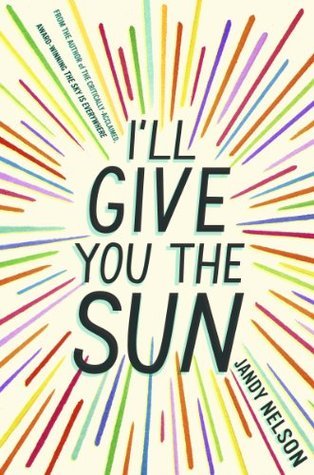
I'll Give You the Sun

I’ll Give You the Sun
Author: Jandy Nelson
Published: September 16, 2014 by Dial

Summary: A brilliant, luminous story of first love, family, loss, and betrayal for fans of John Green, David Levithan, and Rainbow Rowell

Jude and her twin brother, Noah, are incredibly close. At thirteen, isolated Noah draws constantly and is falling in love with the charismatic boy next door, while daredevil Jude cliff-dives and wears red-red lipstick and does the talking for both of them. But three years later, Jude and Noah are barely speaking. Something has happened to wreck the twins in different and dramatic ways . . . until Jude meets a cocky, broken, beautiful boy, as well as someone else—an even more unpredictable new force in her life. The early years are Noah’s story to tell. The later years are Jude’s. What the twins don’t realize is that they each have only half the story, and if they could just find their way back to one another, they’d have a chance to remake their world.

This radiant novel from the acclaimed, award-winning author of The Sky Is Everywhere will leave you breathless and teary and laughing—often all at once.

Review: I haven’t been able to stop talking about this book since I read it. I anxiously awaited its release after reading (and loving) The Sky is Everywhere, and it most certainly didn’t disappoint. Jandy Nelson writes characters that step off of the pages and into readers’ hearts. I cried along with Jude and Noah and felt their grief as if it was my own. The passion of the characters was refreshing, and I felt as if they were my friends by the end of the book. Jandy Nelson is a literary genius. This book is quirky, colorful, and different, which makes it unforgettable for me. I plan to use this in my future Methods courses, and I only reserve those reading spots for the best of the best in YAL. It crosses genres a bit (Jude talks to ghosts), and the alternating perspectives span several years in the siblings’ lives. Students and teachers will find many topics and literary qualities that are worthy of analysis and discussion.

Teacher’s Tools for Navigation: Nelson touches on many life lessons in the text, and she presents them in an implicit way. (We all know that readers hate didactic texts!) I would ask my students to create a billboard: “Lessons I Learned from I’ll Give You the Sun.” Then, they could create a word map of different lessons they learned and cut out quotes or draw illustrations of scenes that taught these life lessons.

Discussion Questions: What does this story teach us about humanity?; How do the different characters cope with tragedy? What outlets (creative, emotional, etc.) do the characters use as coping mechanisms?; How does Jude and Noah’s relationship evolve throughout the text?; How does the nonlinear format impact the story?

We Flagged: “I gave up practically the whole world for you,” I tell him, walking through the front door of my own love story. “The sun, stars, ocean, trees, everything, I gave it all up for you.”

Read This If You Loved: All the Bright Places by Jennifer Niven, Love Letters to the Dead by Ava Dellaira, The Impossible Knife of Memory by Laurie Halse Anderson, The Gargoyle by Andrew Davidson, The Perks of Being a Wallflower by Stephen Chbosky, The Secret Hum of a Daisy by Tracey Holczer, Ask the Passengers by A.S. King

Recommended For:

closereadinganalysisbuttonsmall litcirclesbuttonsmall classroomlibrarybuttonsmall

RickiSig

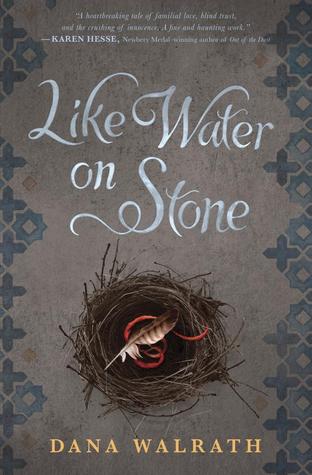
Like Water on Stone by Dana Walrath

Share

like water on stone

Like Water on Stone
Author: Dana Walrath
Published: November 11th, 2014 by Delacorte Press

Summary: Blending magical realism and lyrical free verse, this is an intense survival story of three siblings caught up in the horrific events of the Armenian genocide of 1915.

It is 1914, and the Ottoman Empire is crumbling into violence.

Beyond Anatolia, in the Armenian Highlands, Shahen Donabedian dreams of going to New York. Sosi, his twin sister, never wants to leave her home, especially now that she is in love. At first, only Papa, who counts Turks and Kurds among his closest friends, stands in Shahen’s way. But when the Ottoman pashas set their plans to eliminate all Armenians in motion, neither twin has a choice.

After a horrifying attack leaves them orphaned, Shahen and Sosi flee into the mountains, carrying their little sister, Mariam. Shahen keeps their parents’ fate a secret from his sisters. But the children are not alone. An eagle named Ardziv watches over them as they run at night and hide each day, making their way across mountain ridges and rivers red with blood.

Review: This is a beautiful book in verse that is set in the Ottoman Empire during the 1910s. It blends genres of magical realism and historical fiction. The point of view alternates with each poem, so I came to understand the differing perspectives of the family depicted in the text. The horrific genocide against Armenians is not common in literature, and this text sheds light on a time period that should be depicted more often. The strength of the children in this book will be inspirational to readers.

Teacher’s Tools for Navigation: I would recommend using this book as a literature circle text. Each group could be assigned a text that depicts a different genocide. This would provide rich opportunities to discuss parallels and differences across texts. Then, teachers might consider having students examine both historical and modern genocide. This might involve critical conversations about how we might work to promote social justice. They might even critique conceptions of social justice, such as slacktivism.

Discussion Questions: What does this story teach us about humanity?; How might a feminist read this text? What issues of gender emerge? Is this acceptable due to the historical setting of the text?

We Flagged:

“Hate makes jagged spikes of light,

and blame can crack the sky.

As pierced with wounds

from sharp white teeth,

the Ottoman air had ruptured.

Massacres would come again

as the drum-capped rulers

spread their hate” (p. 17-18).

Read This If You Loved: Tree Girl by Ben Mikaelsen; Audacity by Melanie Crowder; Requiem: Poems of the Terezin Ghetto by Paul B. Janeczko; Between Shades of Gray by Ruta Sepetys; Night by Elie Wiesel; A Long Way Gone by Ishmael Beah

Recommended For:

closereadinganalysisbuttonsmall litcirclesbuttonsmall classroomlibrarybuttonsmall

RickiSig

Review and Author Interview!: Cold War on Maplewood Street by Gayle Rosengren

Share

cold war maplewood

Cold War on Maplewood Street
Author: Gayle Rosengren
Published August 4, 2015 (Today!) by Putnam

Goodreads Summary: Cold War anxieties play out in a sensitively told story set during the Cuban missile crisis in the 1960s, perfect for fans of Gary Schmidt and Kristin Levine.

Joanna can’t get over how her brother broke his promise to never leave like their dad did. Sam is thousands of miles away on a navy ship, and no matter how often he sends letters, Joanna refuses to write back. When she makes a promise, she keeps it.

But then President Kennedy comes on TV with frightening news about Soviet missiles in Cuba—and that’s where Sam’s heading. Suddenly Joanna’s worries about being home alone, building up the courage to talk to a cute boy, and not being allowed to go to the first boy-girl party in her grade don’t seem so important. Maybe sometimes there are good reasons to break a promise.

The tense timeline of the Cuban missile crisis unfolds alongside a powerful, and ultimately hopeful, story about what it means to grow up in a world full of uncertainty.

Ricki’s Review: Cold War on Maplewood Street highlights a time period that isn’t common in the genre of historical fiction. I was intrigued from the very beginning because I have read few books focused on the Cuban missile crisis. The author excellently balances narrative and history in this engaging, thought-provoking text. Joanna is a strong girl who is ashamed of the way she treated her brother when he left for war. She makes a realistic mistake and tries to work through her emotions regarding her treatment of her brother and also the frightening events of war. There are many concepts for teachers to draw upon in this text—family, friendship, war, and fear, to name a few—and teachers will find this text offers rich opportunities for classroom discussion.

Kellee’s Review: What I think Ms. Rosengren does so well in this book is tell a real story with a piece of history as the backdrop. This is a Cold War/Cuban Missile Crisis story, but that isn’t what the book is all about. This book is about Joanna, her family, and her best friend. Her characters are very real and show the real emotions that must have been running through so many peoples’ veins during this tense time.  Because of how well this book is crafted as a narrative within a historical time period, I believe it would be a great introduction to this time period for middle grade readers. Many will have never heard of the Cold War or Cuban Missile Crisis, so learning about it through Joanna’s story is perfect. 

Teachers’ Tools for Navigation: Teachers might consider using this text to ask students to examine their regrets. Students could begin by closely examine characters that have regrets. Who are they? Do their regrets impact others? Then, the students could consider world leaders or pop culture to consider regrets that famous people might have and how these regrets impacted their lives. Finally, the students might journal to make connections with the text by examining mistakes they have made or regrets they hold in their personal lives.

Another interesting aspect of this book is the theme of communication. Students could compare the lack of communication of some of the characters in the book (which led to a major issue) and the lack of communication which led to the Cuban Missile Crisis. How could communication have helped either of these situations?

Discussion Questions: How would you react if your sibling went to war? Is Joanna’s reaction realistic? Is it fair?; How does war impact the lives of those who stay home? How do the characters of this text react differently from each other? Do you think the war impacted the choices Pamela’s family members make?; What is Mrs. Strenge’s role in the novel? How does she enhance our reading of the story?

Author Interview!: 

Unleashing Readers: What interested you in the Cold War, specifically?

Gayle Rosengren: When I wrote the first draft of Cold War on Maplewood Street–twenty years ago(!)–itwas to share a singular experience from my childhood, the Cuban Missile Crisis. But for several reasons, the manuscript never made it to an editor and I had to set it aside.

Years later I decided to revisit it with a different objective in mind. Now, I wanted to tell a story in which the crisis was the backdrop for a story about how poor communication can destroy relationships. The Cold War itself was an example of a break-down in communication on such a major scale that it very nearly led to destruction on a global level. In my novel, poor communication is demonstrated by main character Joanna’s failure to write to her brother and apologize for the terrible things she said to him when he left for the Navy. It’s also shown in her avoidance of a new tenant in their building, an old woman Joanna finds frightening for several reasons; and it’s demonstrated in her best friend Pamela Waterman’s family, when Mrs. Waterman runs away instead of confronting her husband about how desperate she is to see Paris.

UR: What does your research process look like?

GR: My research began with plumbing my own very vivid memories of the week of the crisis. I was twelve, and I was scared, especially since–although they tried to conceal it–I could see that adults were scared too.

But the major source of the historical details in Cold War on Maplewood Street came from the Chicago Tribune’s archives and actual headlines, photos, and articles that appeared in what was then The Chicago Daily Tribune. Remember, I wrote the first draft of the manuscript over twenty years ago. Pre-computer. And given that newspapers and television newscasts were the primary news sources of the day, I felt it was a solid source for my facts. I have a fat file full of copied newspaper pages that provided everything from the news to the weather and the television schedule. (All 4 channels!)

Today we know more about what was going on during that infamous week (in particular the note that Kennedy sent to Khrushchev agreeing to remove our nuclear weapons from Turkey) but I wanted Joanna to know only what anyone else living in the U.S, and specifically Chicago, would have known at the time.

UR: Did you decide on your time period or your protagonist/narrative first?

GR: This was an instance where the time period was clearly the inspiration for the story, and the protagonist and voice followed. I originally wrote this manuscript in the third person, rewrote it in first person, and then went back to third as I struggled to discover the character and voice that would best serve the story.

UR: Did anyone in your life inspire your characters?

GR: I modeled Joanna’s and Sam’s relationship on my close relationship with my brother Dennis. He was in the Air Force at the time of the missile crisis and based relatively safely in Okinawa, Japan, but I imagined that he was in the Navy, on a ship off the east coast of the U.S., and likely to be swept into action as part of the Cuba quarantine and blockade. I imagined how terrified I would have been for him. And then, to up the stakes, I imagined that when he’d left, Joanna in her hurt and anger accused him of deserting them just like their father had years before. The guilt she would feel knowing she might never get to apologize would be overwhelming.

Joanna’s mother was modeled after my single mother who always worked hard and scrimped to take care of us. Pamela was every good friend I ever had with a normal (which at the time meant two-parent) family.

As for Joanna, she was a lot like me at 12–childish and thoughtless one moment, grown-up and sensitive the next, taking awkward steps toward adulthood and all the while longing for the protective cocoon of childhood that was forever left behind in that unforgettable week. Like Joanna, I too loved horses and dogs and hated being alone in the house at night.

We Flagged: “[S]taying positive and hopeful—even pretending to—was much better than giving in to fear.” (p. 142)

Read This If You Loved: Countdown by Deborah Wiles; Paper Cowboy by Kristin Levine; What the Moon Said by Gayle Rosengren; Purple Heart by Patricia McCormick; Spy Catchers of Maple Hill by Megan Frazer Blakemore

Recommended For: 

  litcirclesbuttonsmall classroomlibrarybuttonsmall

 RickiSigandSignature

**Thank you to Penguin for providing copies for review and Ms. Rosengren for the author interview!**