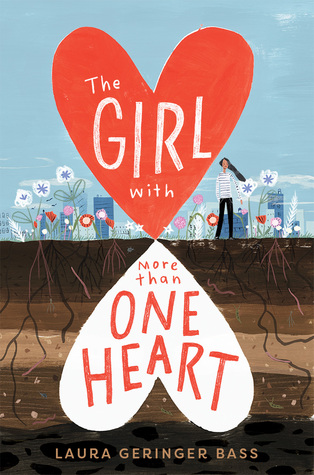
The Girl With More Than One Heart
Author: Laura Geringer Bass
Published April 17th, 2018 by Abrams Books
Summary: There are times we all feel we need more than one heart to get through. When Briana’s father dies, she imagines she has a new heart growing inside her. It speaks to her in her Dad’s voice. Some of its commands are mysterious.
Find Her! it says. Be Your Own!
How can Briana “be her own” when her grieving mother needs her to take care of her demanding little brother all the time? When all her grandpa can do is tell stories instead of being the “rock” she needs? When her not-so-normal home life leaves no time to pursue her dream of writing for the school literary magazine? When the first blush of a new romance threatens to be nipped in the bud? Forced by the loss of her favorite parent to see all that was once familiar with new eyes, Briana draws on her own imagination, originality, and tender loving heart to discover a surprising path through the storm.
About the Author: Laura Geringer Bass is the author of over 20 highly acclaimed books for children, tweens, and teens. Her new novel for middle graders about friendship, love, and loss — The Girl with More Than One Heart — is the lyrical story of a courageous girl who imagines she needs an extra heart to navigate her grief after the death of her dad. It will be published by Abrams this Spring. Laura serves on the National Advisory Board of First Book, a non-profit organization that has delivered over 170 million books to children in need and as a mentor for Girls Write Now and Prison Writes, teaching teens at risk.
Review:This book looks at the struggle of grief when life keeps moving on around you. And like another book I love, Courage for Beginners, it shows the struggle a child has if a parent is suffering and they have to step up in a way that is not what their peers have to. Briana doesn’t know how to deal with the grief and with her mother incapacitated with grief also, Briana finds that she needs a second heart to help guide her through this huge bump in her life. Briana’s story also shows the struggle yet love of being a sibling to a child with special needs.
Written beautifully in a way that will pull at your heartstrings, Bass’s story shows how one girl uses art, love, and courage to make her way through a loss that is unimaginable for most of us.
Teachers’ Tools for Navigation: The Girl With More Than One Heart needs to be in classroom, school, and public libraries. There are so many readers that need this book. There are other readers that will want this book. There are definite readers for this book.
Another way in the classroom that it could be used is a mentor text for writing about memories. Briana’s second heart shares memories with her, one of the ways we get to know her dad, and the memories are so full of imagery. There are many sections that could be read for a mentor text when asking students to write a personal narrative.
Discussion Questions:
How did Briana use art to help her through her grief?
How did Briana’s life change after the loss of her dad?
Aaron is described in the summary as her demanding little brother, but Briana loves him. What are some examples in the story that show this love?
How does Grandpa Ben help guide Briana?
Briana’s second heart is only figurative. What does it represent?
Flagged Passage: “The day my father’s heart stopped, I discovered an extra heart deep in my belly, below my right rib. It talked to me. I wasn’t crazy. Before that day, I had just one heart that never said a word.” (p. 1)
Read This If You Love: Courage for Beginners by Karen Harrington, Rules by Cynthia Lord, How to Speak Dolphin by Ginny Rorby, Be Light Like a Bird by Monika Schröder, Snicker of Magic by Natalie Lloyd, Some Kind of Happiness by Claire Legrand, Far from Fair by Elana K. Arnold
Recommended For:
**Thank you to Casey at Media Masters Publicity for providing a copy for review!**
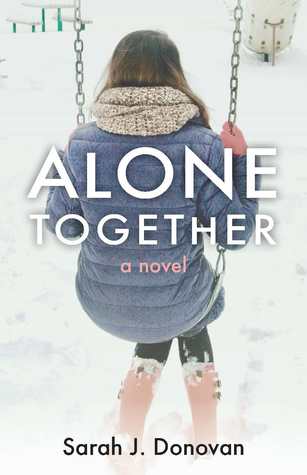
Alone Together Author: Sarah J. Donovan
Published: May 1, 2018 by Seela Books
Summary: Sadie Carter’s life is a mess, as wavy and tangled as her unruly hair. At 15, she is barely surviving the chaos of her large Catholic family. When one sister becomes pregnant and another is thrown out, her unemployed dad hides his depression, and her mom hides a secret. Sadie, the peacekeeper and rule-follower, has had enough. The empty refrigerator, years of hand-me-downs, and all the secrets have to stop. She longs for something more and plans her escape.
However, getting arrested was not her plan. Falling in love was not her plan. With the help of three mysterious strangers—a cop, a teacher, and a cute boy—maybe Sadie will find the strength to defy the rules and do the unexpected.
Told in verse, Sarah J. Donovan’s debut Alone Together has secrets, romance, struggle, sin, and redemption, all before Sadie blows out her 16 candles. It’s a courageously honest look at growing up in a big family.
Review: Sarah’s writing shows that she has a firm grasp on adolescence. The book is a beautiful book in verse. I found myself thinking about the characters long after I had closed the text. Sadie lives in a Catholic household, and she is struggling emotionally. She is the only one of the eleven people in her family to sit at the breakfast table, and one of the few siblings who hasn’t left the family altogether. She is the peacemaker and is sick of the empty fridge and bad choices that others seem to make for her. I think that Sadie has a life that many young people will relate to. She is left wondering about the ways in which people exist alone together. This is a great read, and I will be using it (in part and in whole) in my classes.
Teacher’s Tools for Navigation: The title of this book is quite inspiring. Students might be asked to reflect on all of the ways that we are “alone together” in this world. Teachers can offer space and place for students to critically analyze whether we are alone together or whether we are something else. I’d love to hear students’ thoughts about this.
Discussion Questions:
In this text, what is the role of family? In our world, what role does family play? How are we tied and not tied to our families?
How does Sadie’s family impact her life?
How does Sadie grow within the timeframe of the book? What does she learn?
Which verse resonated with you? How does it connect (or not connect) with your life?
Flagged Passage:
“The only one of eleven
who sets the table every morning
with cereal bowls and spoons,
who matches mounds of socks
without complaint or disdain,
who obeys every stand, kneel, sing in mass
without sneaking out after communion” (6).
Read This If You Love: Because I Am Furniture by Thalia Chaltas; Stop Pretending by Sonia Sones; The House on Mango Street by Sandra Cisneros
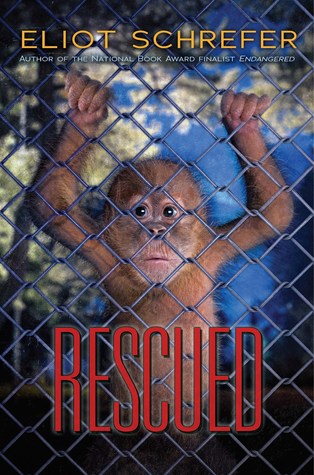
Rescued Ape Quartet #3
Author: Eliot Schrefer
Published April 26th, 2016 by Scholastic Press
Summary: They grew up together. Now they have to escape together.
Raja has been raised in captivity. Not behind the bars of a zoo, but within the confines of an American home. He was stolen when he was young to be someone’s pet. Now he’s grown up and is about to be sent away again, to a place from which there will be no return.
John grew up with Raja. The orangutan was his friend, his brother. But when John’s parents split up and he moved across the country, he left Raja behind. Now Raja is in danger.
There’s one last chance to save Raja—a chance that will force John to confront his fractured family and the captivity he’s imposed on himself all of these years.
About the Author: Eliot Schrefer is a New York Times-bestselling author, and has twice been a finalist for the National Book Award. In naming him an Editor’s Choice, the New York Times has called his work “dazzling… big-hearted.” He is also the author of two novels for adults and four other novels for children and young adults. His books have been named to the NPR “best of the year” list, the ALA best fiction list for young adults, and the Chicago Public Library’s “Best of the Best.” His work has also been selected to the Amelia Bloomer List, recognizing best feminist books for young readers, and he has been a finalist for the Walden Award and won the Green Earth Book Award and Sigurd Olson Nature Writing Award. He lives in New York City, where he reviews books for USAToday.
Review: I think out of the three Ape Quartet books published so far, this is the one that is going to hit closest to home for many. It will make many readers uncomfortable and want to make a change. First, it takes place in the United States unlike Africa like the first two. Second, it really digs into an issue that is still very much prominent here–animal injustice.
I find Schrefer’s writing to be so beautiful yet so easy to read. He can pull you into his stories and makes you feel for not only his human characters but also his animal characters. He does such a tremendous amount of research for all of his books and with this one it brings the injustice of Raja alive.
I am a sucker for ape books. I find apes to be the most fascinating animals, and orangutans may be my favorite because they have these amazing eyes that just show me that they are so intelligent and deep thinkers. They are also introverts; I think I just relate to them in that way. This book brings orangutans to life through Raja.
As evident from Schrefer’s status as a two-time National Book Award finalist, his books can be used as a mentor text for just about any aspect of writing that you are looking for: characterization, imagery, voice, conflict, etc. Read any of his books, and you can pull out so much to discuss and use within the classroom. Additionally, there are some amazing ape books, including Schrefer’s other Ape Quartet books, that would make for an amazing lit circle opportunity or text set.
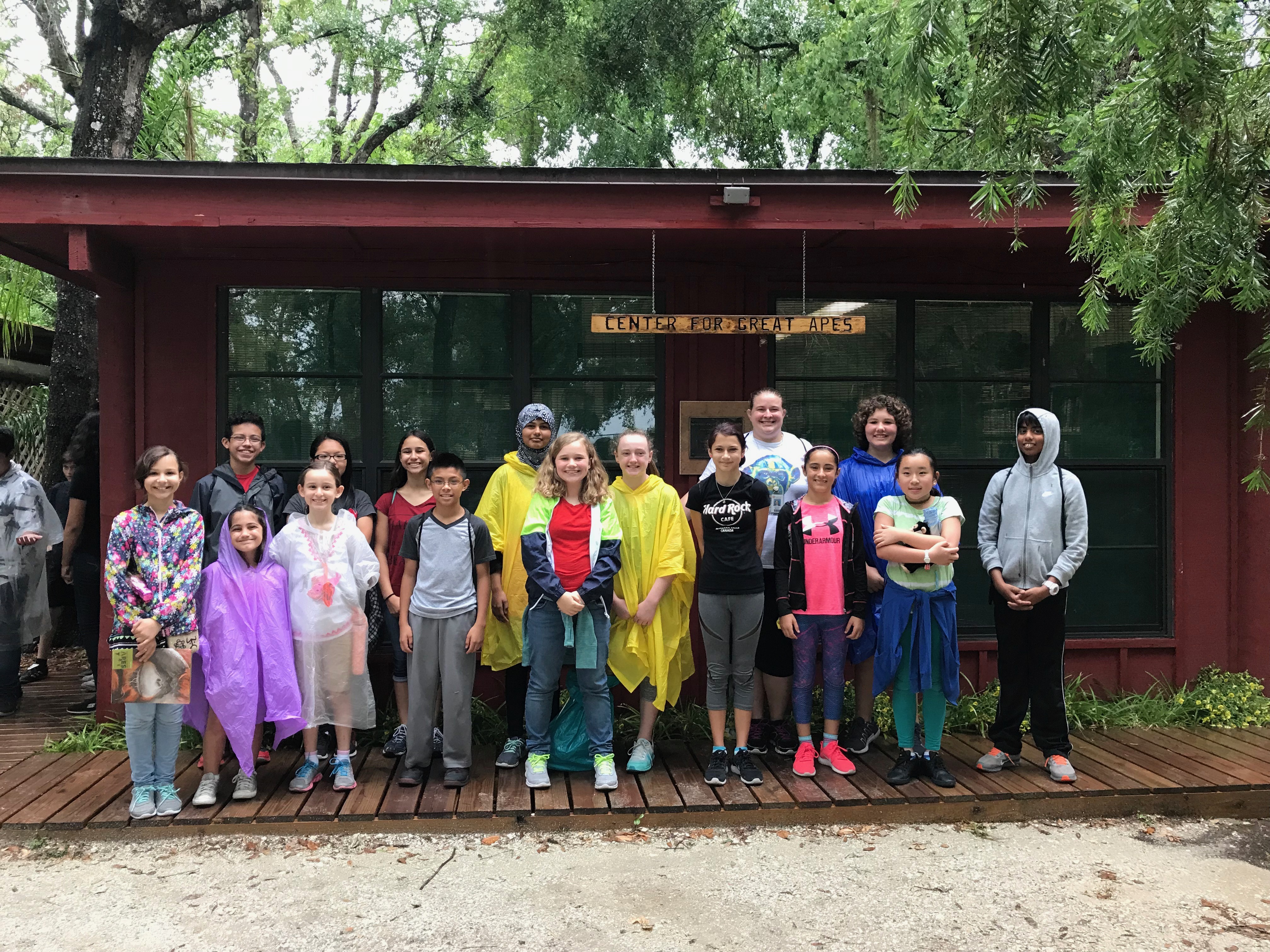
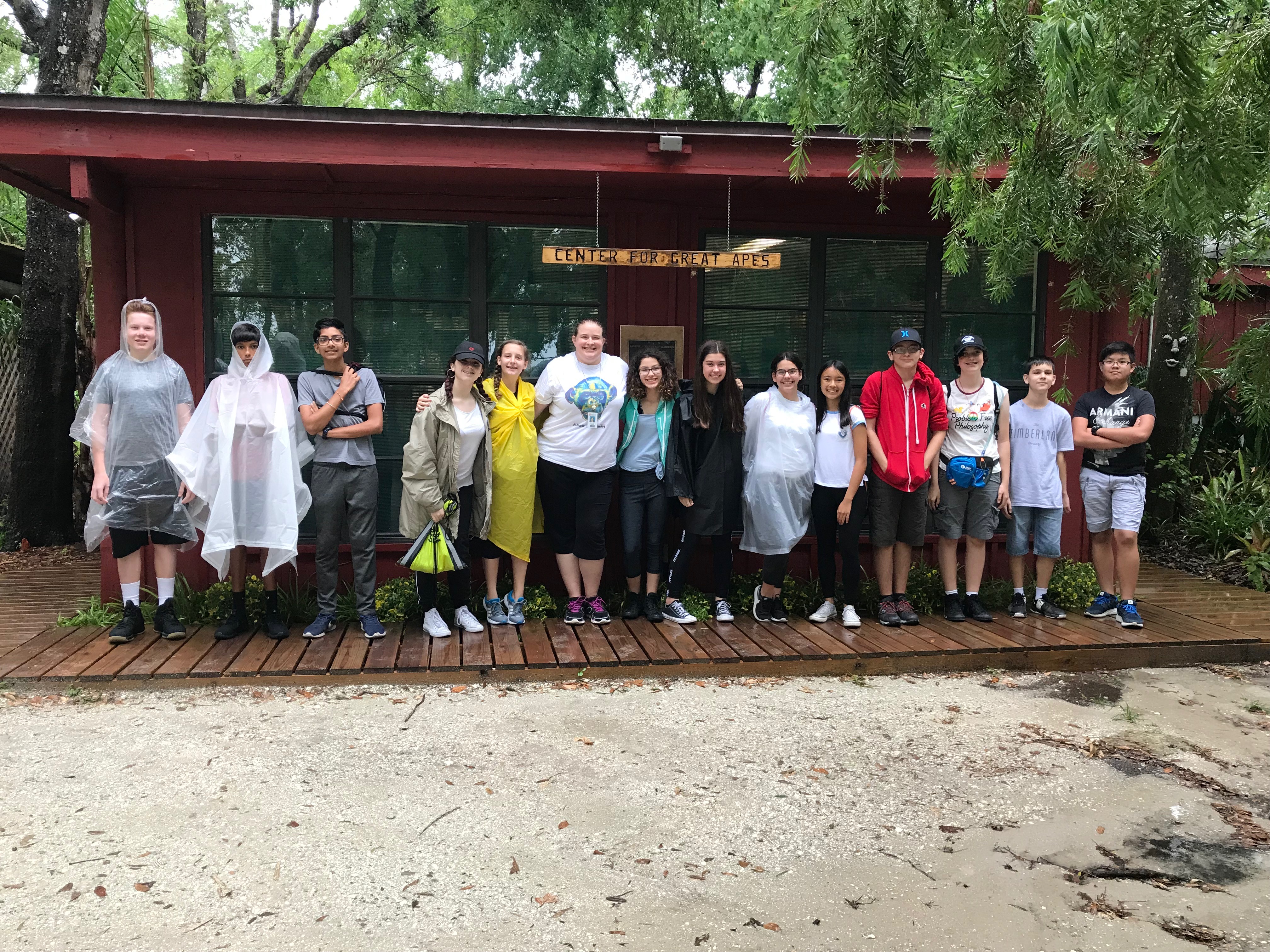
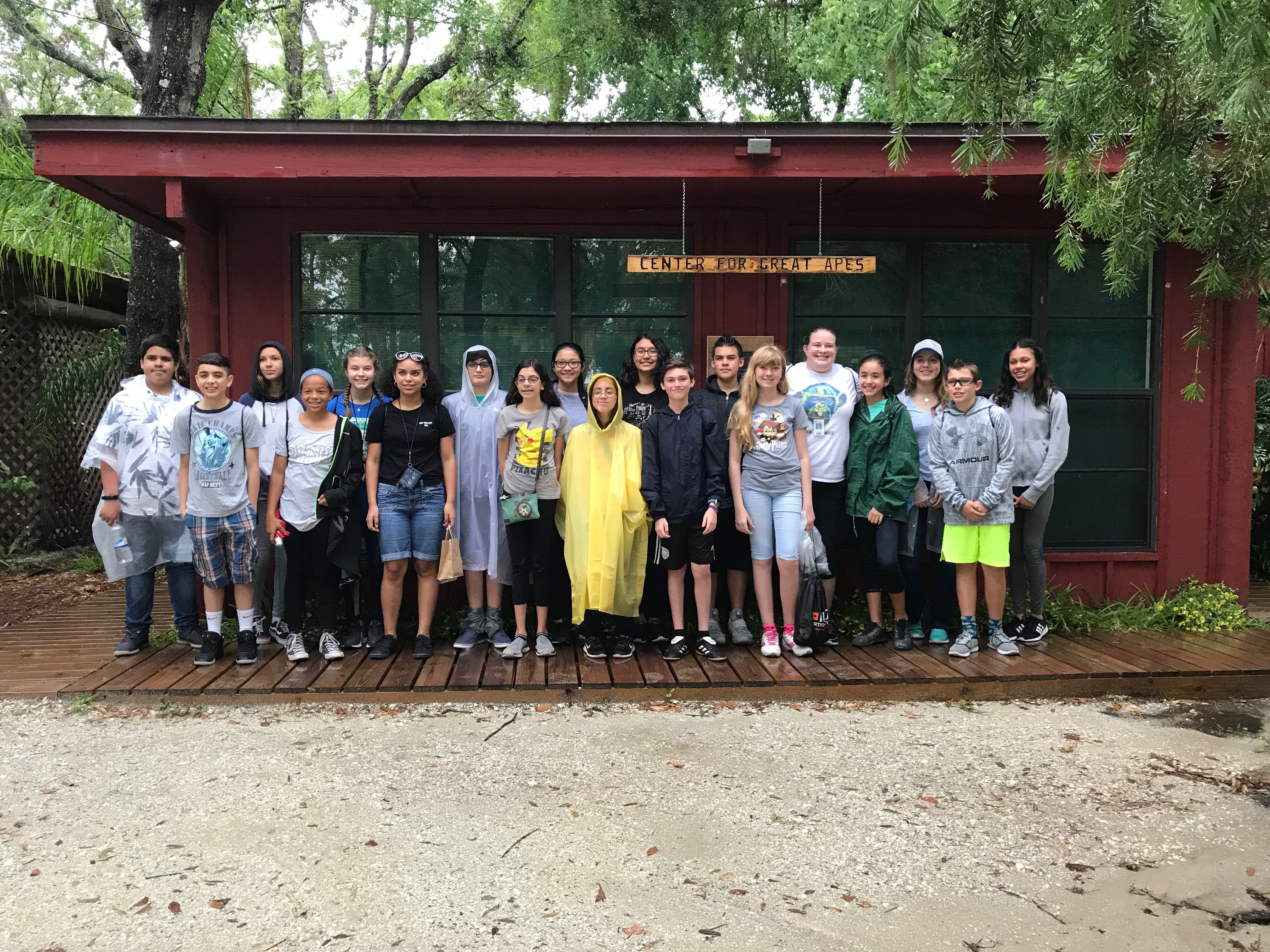
Teachers’ Tools for Navigation: Last year, our whole-class novel unit was done using Hurt Go Happy and included a trip to Center for Great Apes. This year, I had a completely different type of novel planned, but my students begged to read more about apes (and visit CFGA again). After looking at all of the available ape books, I decided that Rescued was perfect for the standards I wanted to teach and also included orangutans instead of chimps, and orangutans are the other great ape at CFGA. After setting up a Donors Choose and getting funded (THANK YOU ALL DONORS!), Eliot Schrefer also so kindly contacted me and offered to send even more copies of Rescued to my students–wow! So much kindness! Now that we had a plethora of copies, I wanted to share the love, so I contacted my South Carolina middle school teacher friend, Jennie Smith, to see if she wanted to read Rescued with us and collaborate some how. I was so happy that she said yes!
The Unit
Because I do love whole-class novels, but I also don’t like how a whole-class novel can also ruin a book with too much time spent on one book with way too many assignments during the unit. To try to fight this, I planned the unit quite simply:
Each week the students were given a focus question on Monday that they could think about all week then answer on Friday.
These focus questions are how we collaborated with Mrs. Smith’s class as well. My 1st and 2nd period posted their answers on Padlet and Mrs. Smith’s students would also post. The kids would then respond to each other.
Focus questions:
1. What’s a big idea that’s emerging that’s worth talking about?
2. Is there a passage that struck you as important in developing a character or a conflict in the reading so far? Share the passage and explain.
3. What incident up to this point has had the most impact on the plot? How so? What did the characters’ response to this incident teach you about them?
4. There are many who argue that Great Apes are human-like, including the lawyer who will take apes as plaintiffs to demand rights. What are some examples in this section of Raja showing how close to humans he truly is?
5. How did the characters (specifically John’s mom, John’s dad, John, and Raja) change throughout the book? What other narrative elements helped shape their final persona? Find a piece of dialogue and a specific incident in the book that is evidence for your analysis of the character.
The idea of focus questions was something I got from a talk by Kelly Gallagher and Penny Kittle at NCTE 2017.
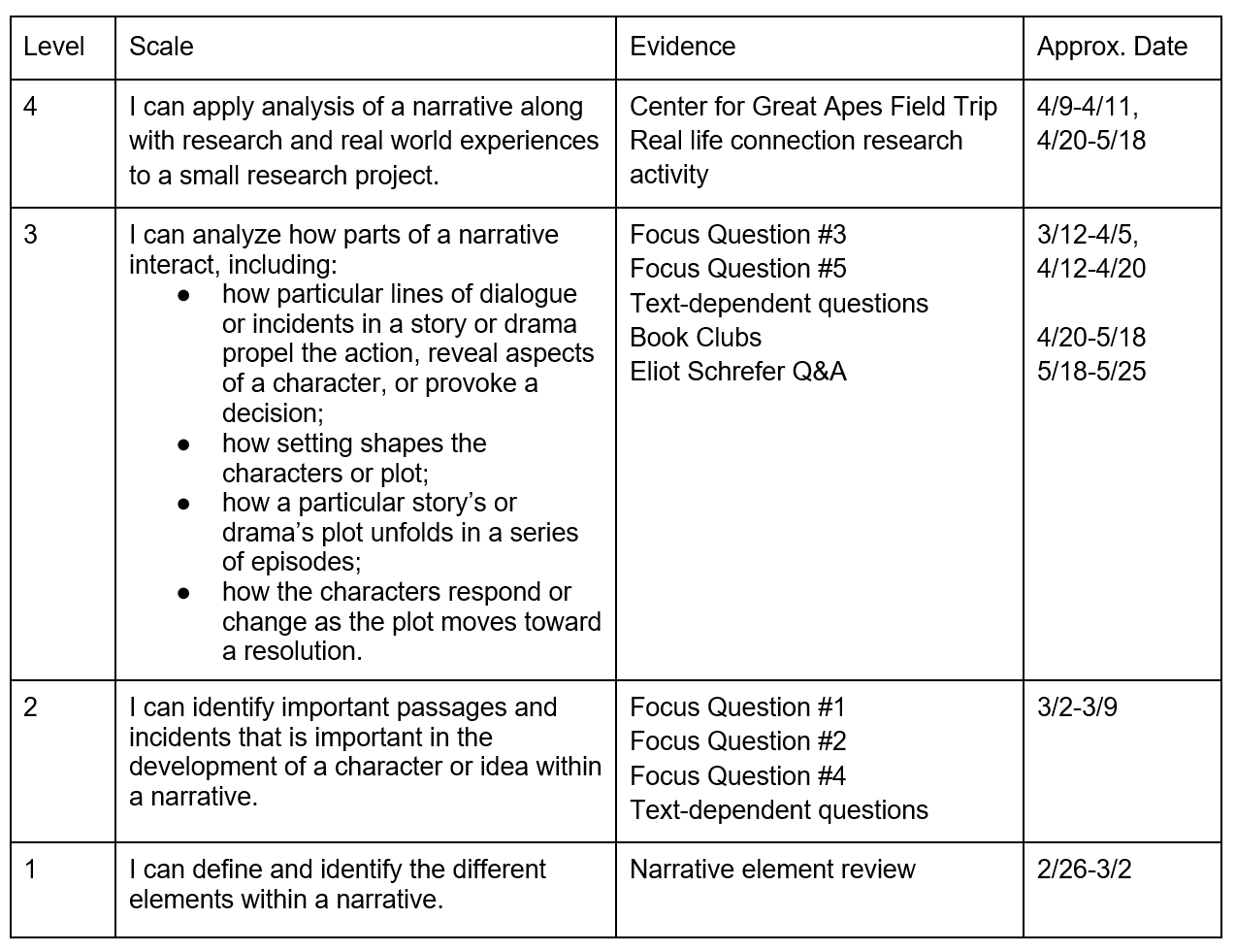
Because of one of the standards the unit was focusing on, we also looked at narrative elements, specifically dialogue, setting, and conflicts. Here is my scale for the unit:
Throughout the unit, I would also stop to have students think about certain text-dependent questions. I tried not to do this too often to not slow down the narrative; however, I loved seeing my students’ thinking. We would then discuss these questions, but I like allowing my students to write answers first before discussing because it allows them to get their thinking organized. (I shared some of these text-dependent questions and an example of a student’s answers below.)
The Field Trip
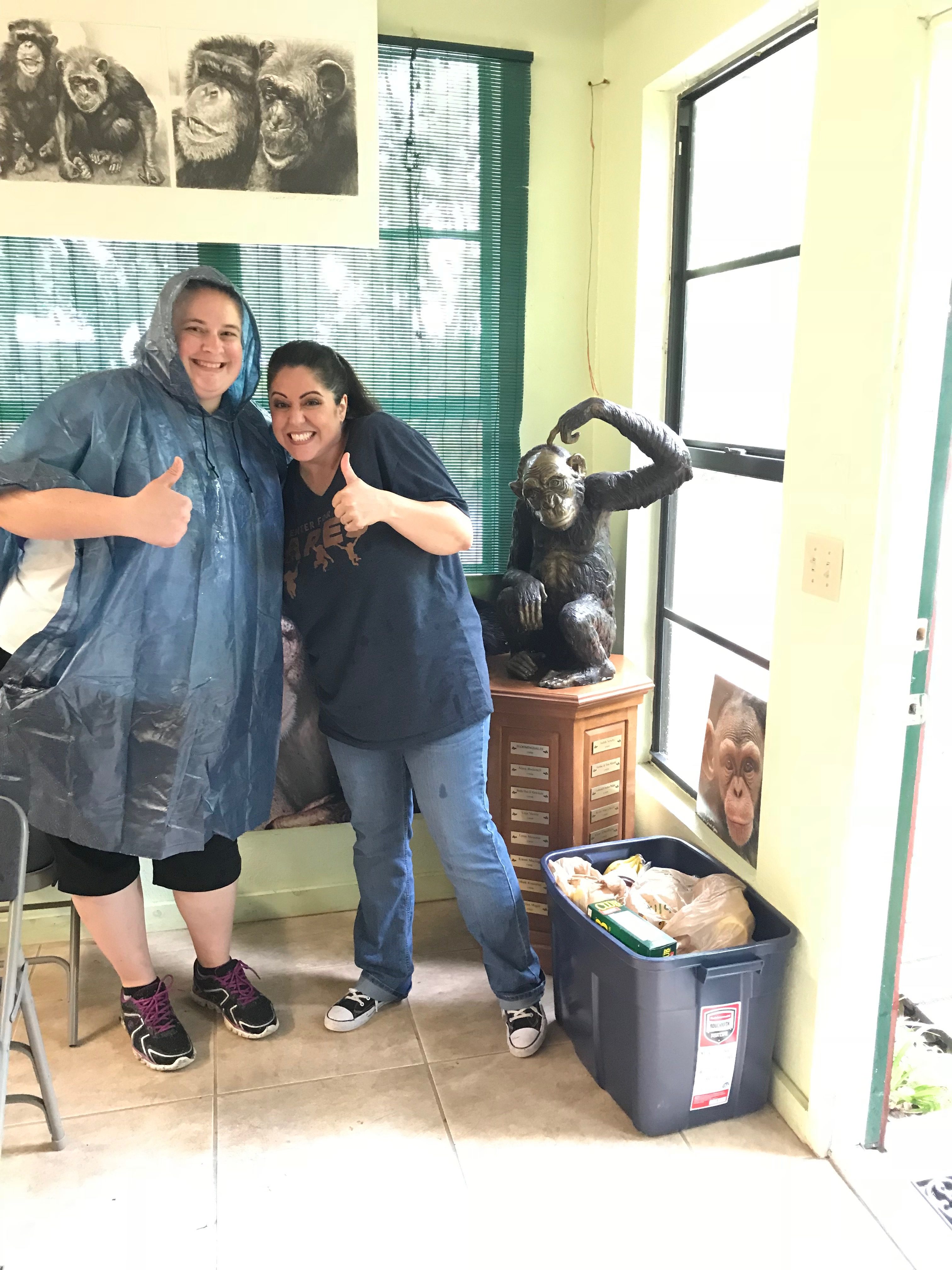
Once again I was lucky enough to bring my students to the CFGAs. All students were able to attend this year, and they were so kind to donate to the Center goodies for the Apes–it always fills my heart to see the empathy in their hearts!
I have gone to the Center for Great Apes for years, and sadly this is the first year it rained. Luckily, we were able to get in a 90-minute tour to see the amazing animals who inspired Schrefer’s novel. To see more about the Center, the apes they’ve saved, and the amazing work they do, please visit http://www.centerforgreatapes.org/.
Author Virtual Visit
After reading Rescued, I was so happy to be able to give my (and Jennie’s) students an opportunity to interview Eliot Schrefer about the book. Each student wrote down at least one question they had for Eliot then in groups, the students chose their favorites, then based on these choices, we broke it down to 5 per class equaling fifteen interview questions altogether:
Why did you start writing about apes in the first place? And how did you decide on the order of publication for the Ape Quartet?
Do you like writing realistic fiction like Rescued or fantasy like Mez’s Magic better?
Will you continue to write about apes now that you are done with the Ape Quartet?
While the titles of your other books, Endangered, Threatened, and Captured, inspire a feeling of fear, the title Rescued inspires hope. Did this change in connotation of your title mark your different opinion about orangutans?
Were you ever stuck in between two decisions while writing the book? When?
Who do you think the antagonist of the book is?
How did you come up with the whole “Raja bites off John’s finger” scenario?
How did you come up with the concept of Friendlyland?
How did you come up with the character traits for each character (Ex. Gary being a bad father)? Did you base them off people you know or knew?
Can you tell us more about the corruption happening in Indonesia which allows palm oil companies to be able to keep burning down forests even though it is illegal?
Do you feel that apes should be treated like human beings and given the same rights such as due process, land, etc. like the lawyer in the book?
Was it hard for you to decide what would happen to Raja at the end of the book or did you know that you wanted Raja to be released into the wild instead of being kept at the sanctuary?
Do you have a favorite sanctuary or zoo you’ve visited? Have you visited the CFGA?
You used the word “merantau” which means “hitting a dead end and leaving one life to live another elsewhere” which pretty much sums up the theme of the book. Where did you come across this word?
What writing tips can you give to students who want to be a writer?
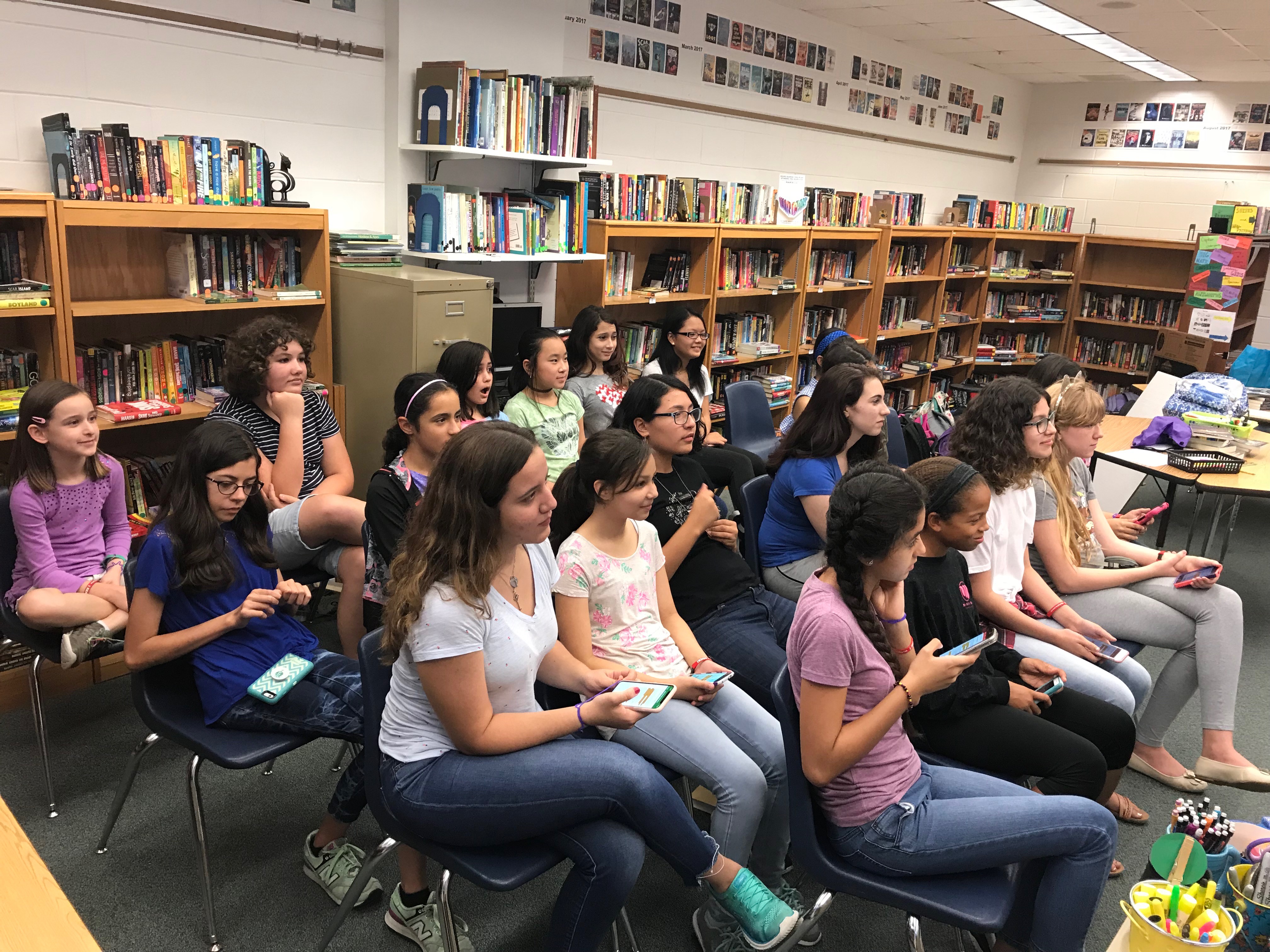
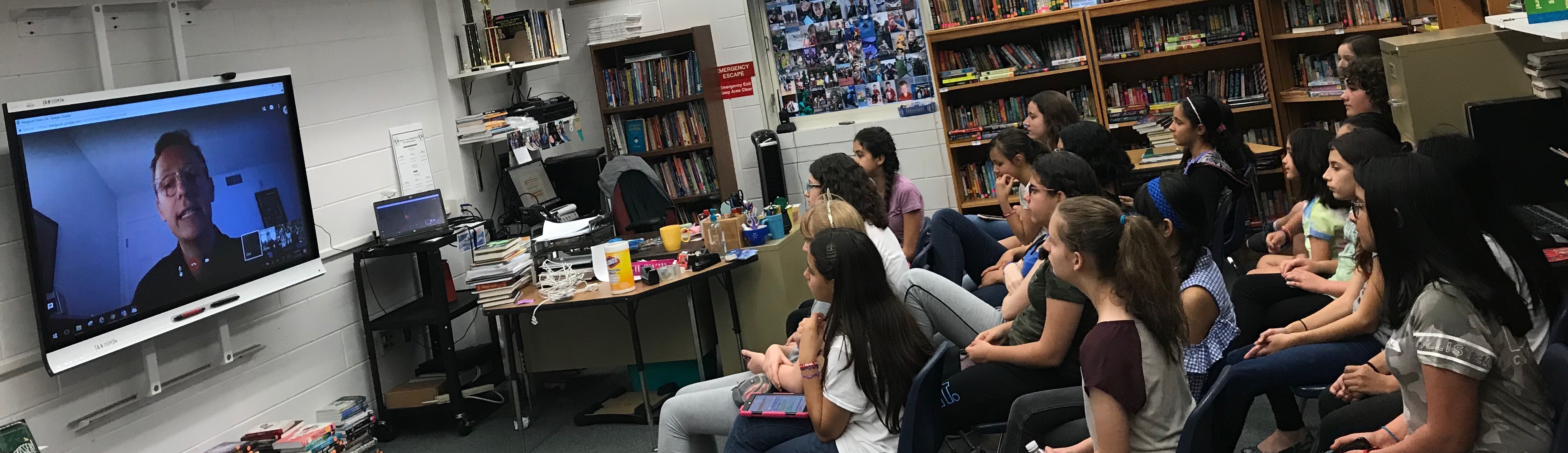
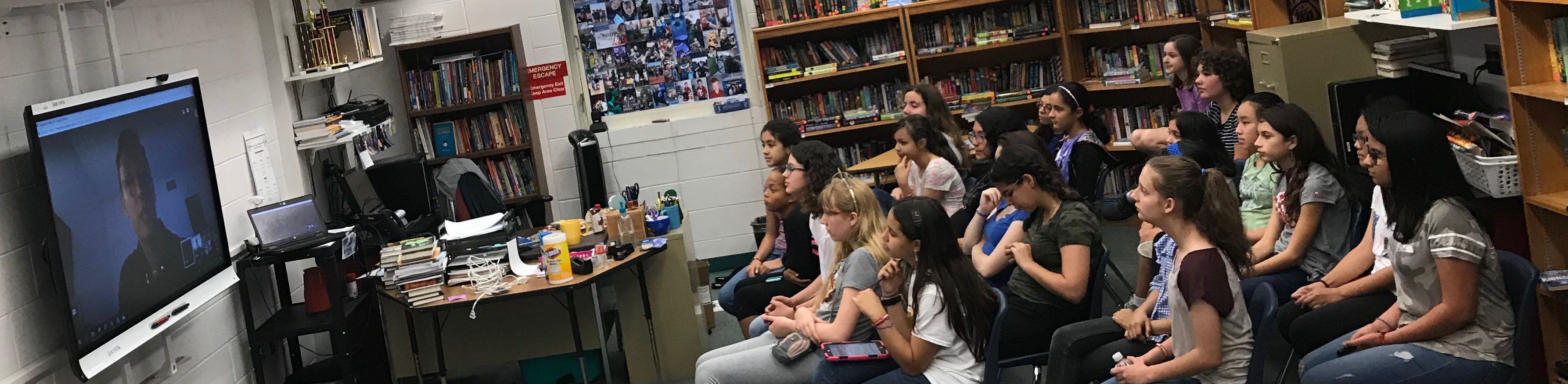
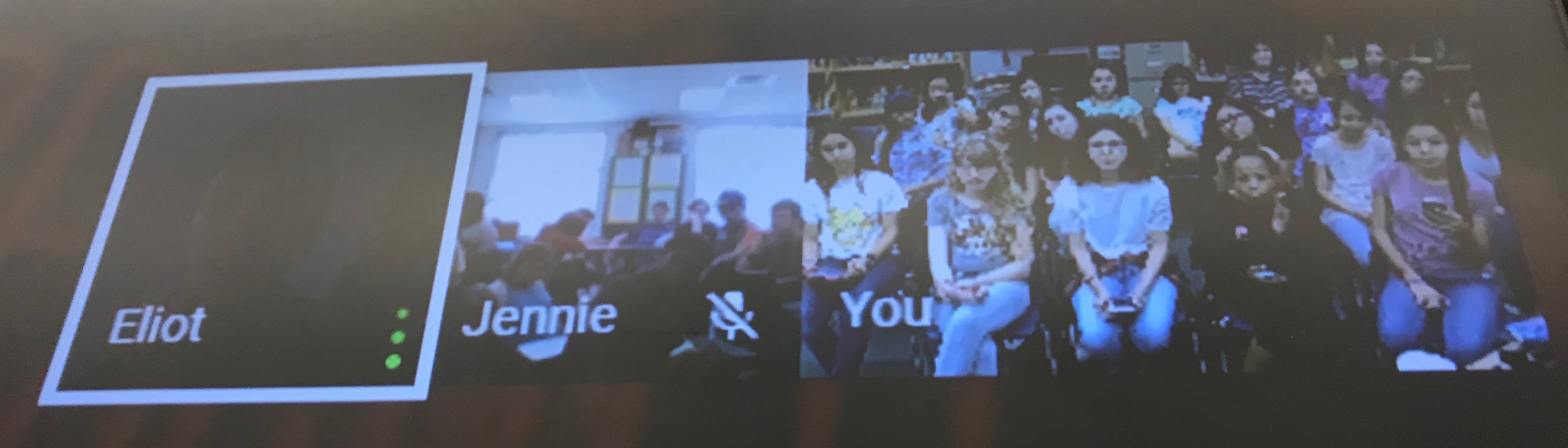
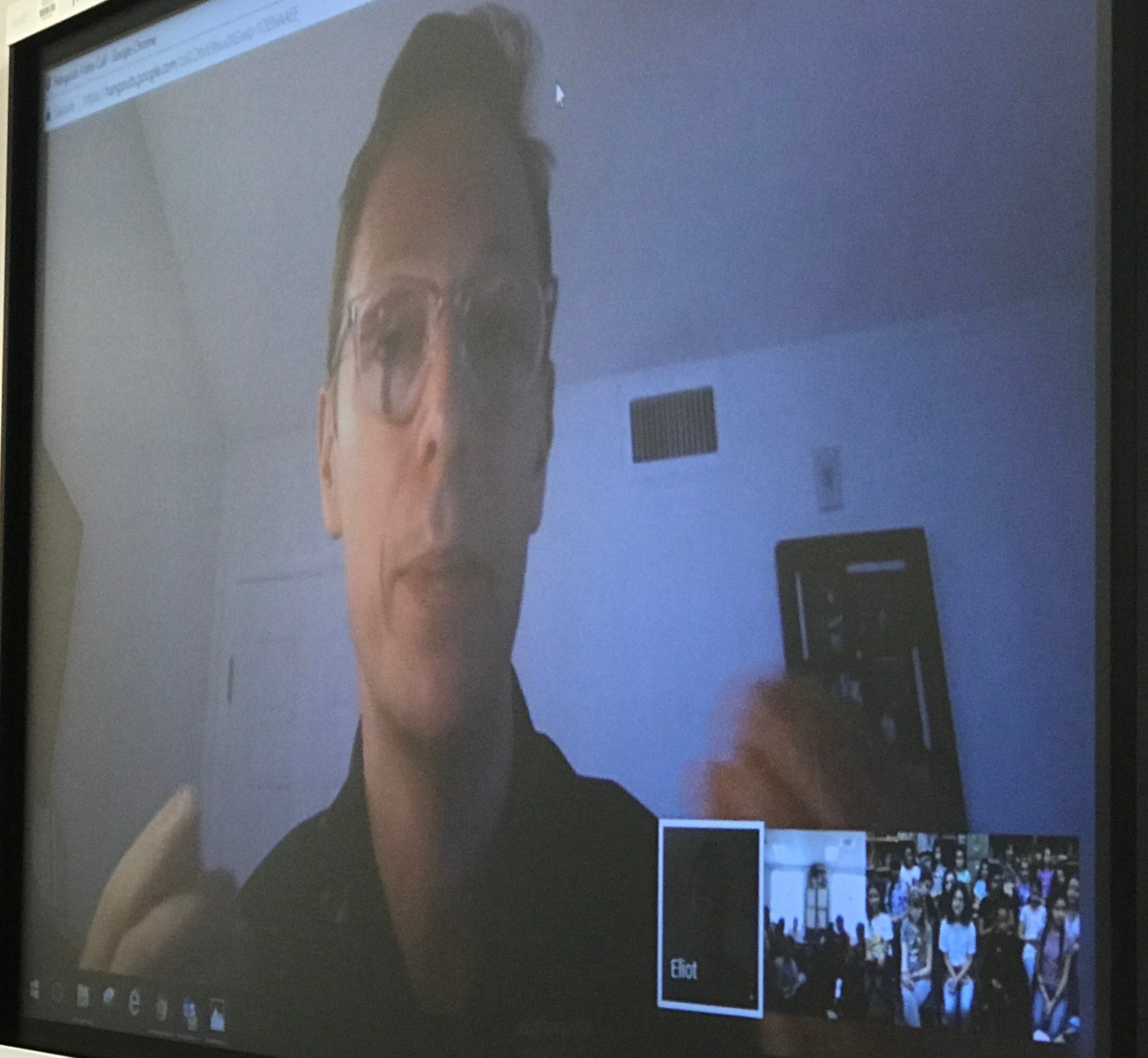
We then did a Google Hangout with Mrs. Smith’s class and Eliot Schrefer on May 25th after school:
Some of my favorite answers/quotes from the visit were:
Realistic fiction allows for a shifting antagonist.
Wanted to help people realize that orangutans aren’t stuffed animals come to life.
I don’t have characters first. I have stories first then make the best characters for that story.
Apes should not be kept against their will.
I used the idea of merantau to develop the plot.
Advice: For any artistic pursuit, I encourage you to think of the long range range view. It is risky to put all expectations of self in one basket. Focus on the joy you feel when doing the art. Remember what brings you joy! And do research, take advice, and read.
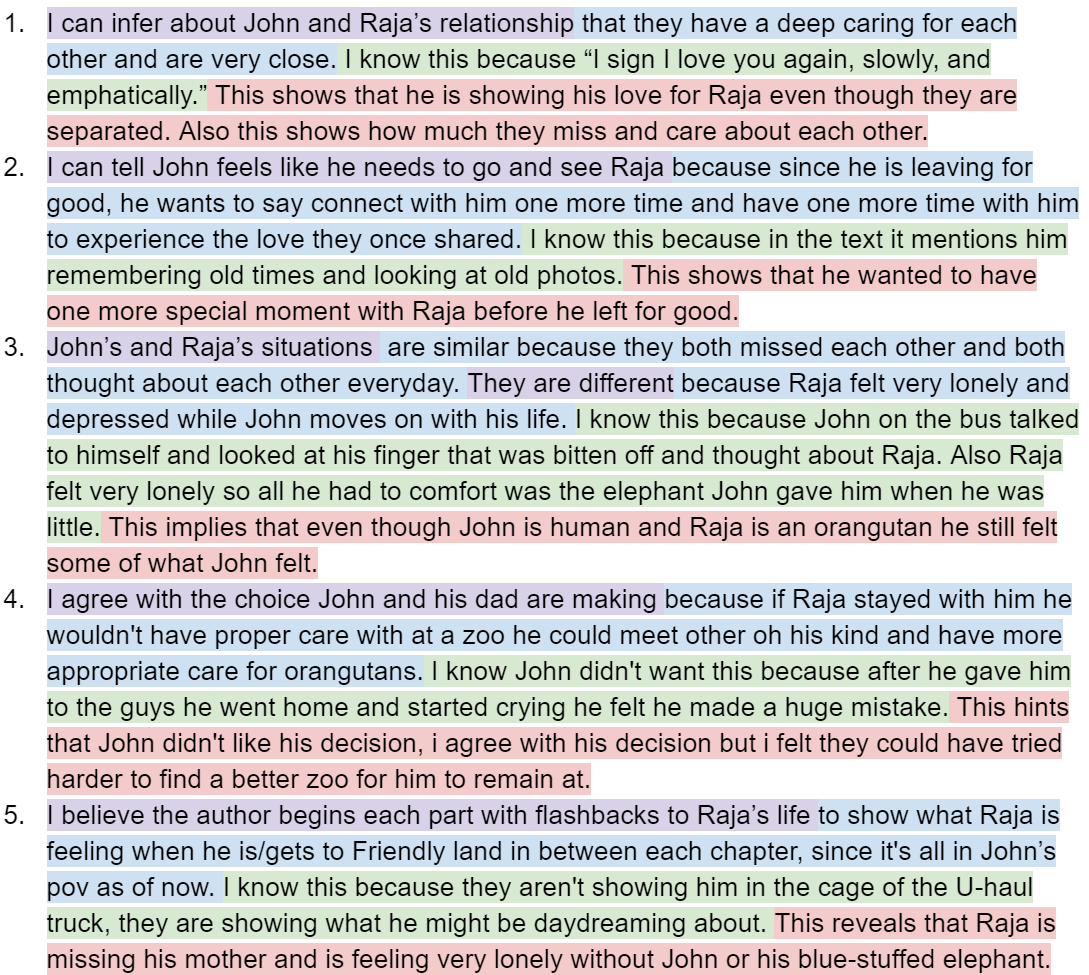
Discussion Questions: These were the first five of the text-dependent questions I asked during our reading of Rescued as well as an example of a student response (color coded for RATE. R=restate, A=answer, T=text evidence, E=elaborate/explain).
What can you infer about John and Raja’s relationship based on the first section?
Why does John feel like he needs to go see Raja before he leaves?
In the Q&A, the author says he “realized that a captive ape’s situation was similar to the plight of a kid during a divorce, getting swept along by the needs of powerful parents, at risk for being seen for what he represents instead of as a child with his own needs” (p. 251). How are John’s and Raja’s situations similar after the divorce? How are they different?
Do you agree with the choice John and his dad are making? Why or why not?
Why do you believe the author is beginning each part with a memory of Raja’s?
How did the author foreshadow this scene (on pg. 99) earlier in the book?
Flagged Passages: “My telltale heart, the one I’d left behind.” (p. 38)
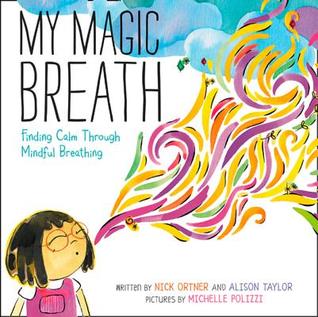
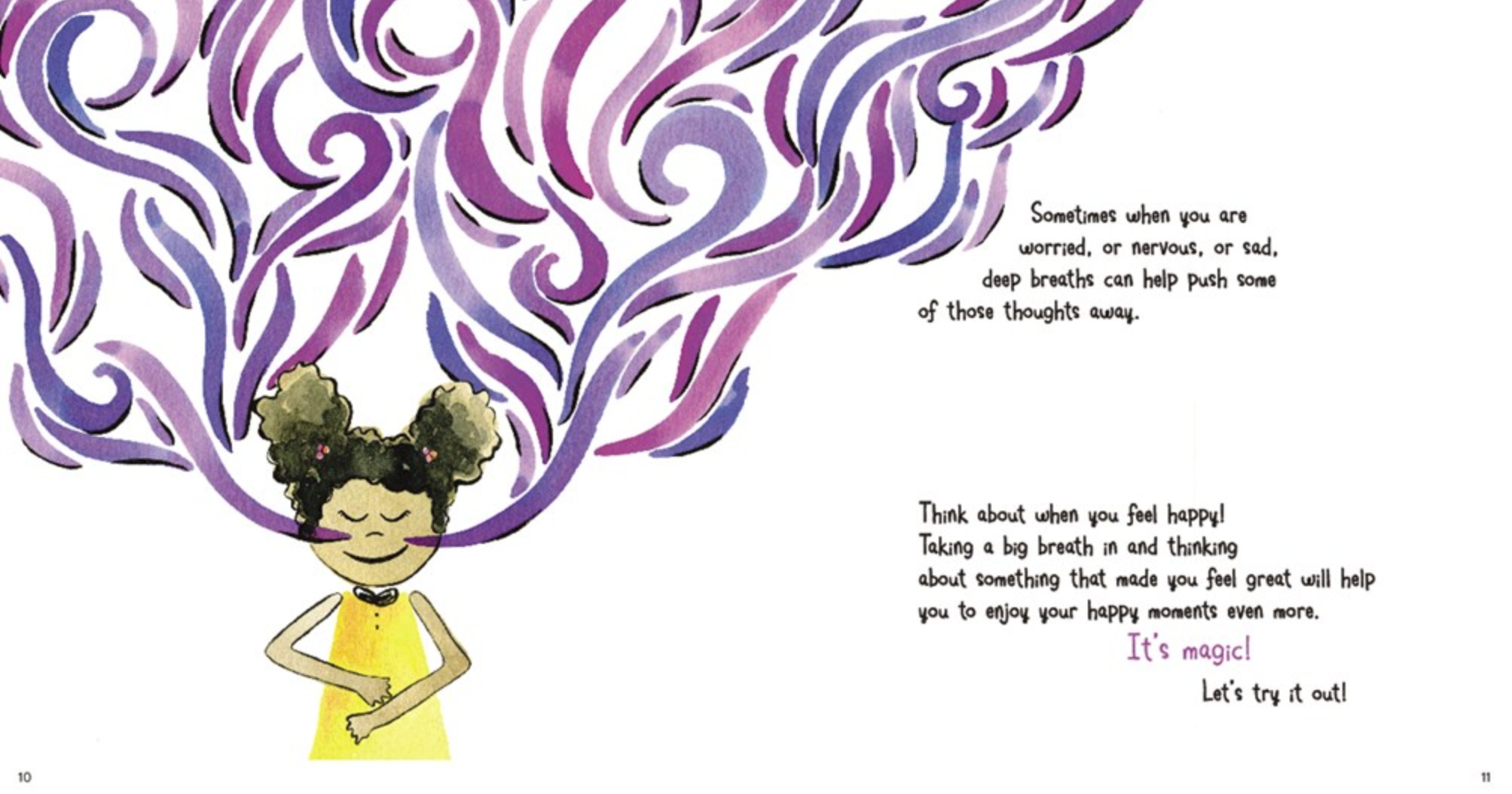
My Magic Breath: Finding Calm Through Mindful Breathing
Author: Nick Ortner and Alison Taylor
Illustrator: Michelle Polizzi
Published May 15th, 2018 by HarperCollins
Summary: Do YOU have the magic breath?
Let’s see…Take a deeeeeep breath in…and BLOW it out…
…and like magic, you can feel better just by breathing! Sometimes it’s hard to feel happy. But with this interactive picture book, children breathe along as they learn how to make angry or sad thoughts disappear.
In a world that is sometimes too busy, with too many things going on, My Magic Breath will help steer children into a serene space of mindfulness, self-awareness, and balance.
About the Authors and Illustrator:
Nick Ortner is CEO of the Tapping Solution, LLC, a company with a mission to promote the natural healing method known as Emotional Freedom Techniques or “tapping” (a combination of Chinese healing practices). This is his second children’s book; his first was The Big Book of Hugs. He is also the New York Times bestselling author of The Tapping Solution,The Tapping Solution for Pain Relief, and the upcoming book The Tapping Solution for Manifesting Your Best Self. Nick lives in Newtown, CT, with his wife and daughter, June. You can find Nick at facebook.com/nortner.
Alison Taylor is an elementary school teacher and coauthor of The Big Book of Hugs. She writes to inspire young people, especially her beloved June and Harris, to find what makes them happy. She lives in Connecticut with her husband.
Michelle Polizzi is an illustrator and designer living and working in California. This is her second book working alongside Nick Ortner and Alison Taylor. She lives in the East Bay with her sons, Rowan and River, her husband, Nick, and their beloved Frenchie, Oscar, where they spend their days creating and inspiring one another. You can see more of her work at designbylovelyday.com.
Review: Deep breathing is a tool that I have taught my son to use to deal with frustration, anger, or sadness. This lesson was even more supported when Daniel Tiger taught him to, “When you feel so mad you want to roar, take a deep breath and count to four.” We use this mantra often to help him refocus when his brain is getting fogged by an emotion. Additionally, some of Trent’s favorite books are interactive picture books like Press Here! or Don’t Touch This Book. My Magic Breath combines these connections in Trent’s life into one! It not only promotes meaningful breathing in a fun way, it turns it interactive through the illustrations and second person narrative. This is going to be a book that is easily going to jump into our picture book regulars, and I cannot wait to be able to be able to tell Trent to “Think about what happened. Now keep it in your mind! Close your eyes and take a deep breath in. Now blow out your breath…”
Teachers’ Tools for Navigation: Anxiety is something that many teachers now find themselves talking to their students about because so much pressure and stress are on kids these days either socially, academically, or at home. My Magic Breath will be a perfect book to introduce at the beginning of the year then use throughout the year to help students understand and deal with their emotions.
Discussion Questions:
When do you feel the most anxious? Angry? Scared? Sad? Try using mindful breathing during these times.
How do you picture your magic breath would look when you blow out during these times? What about a happy time?
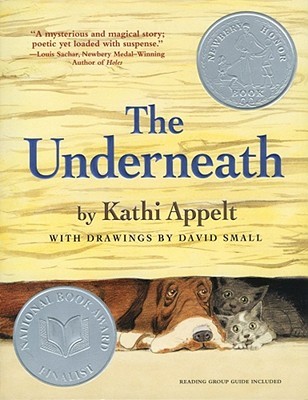
The Underneath Author: Kathi Appelt
Illustrator: David Small
Published May 6th, 2008 by Atheneum Books for Young Readers
Newbery Honor (2009), National Book Award Finalist (2009)
Summary: There is nothing lonelier than a cat who has been loved, at least for a while, and then abandoned on the side of the road.
A calico cat, about to have kittens, hears the lonely howl of a chained-up hound deep in the backwaters of the bayou. She dares to find him in the forest, and the hound dares to befriend this cat, this feline, this creature he is supposed to hate. They are an unlikely pair, about to become an unlikely family. Ranger urges the cat to hide underneath the porch, to raise her kittens there because Gar-Face, the man living inside the house, will surely use them as alligator bait should he find them. But they are safe in the Underneath…as long as they stay in the Underneath.
Kittens, however, are notoriously curious creatures. And one kitten’s one moment of curiosity sets off a chain of events that is astonishing, remarkable, and enormous in its meaning. For everyone who loves Sounder, Shiloh, and The Yearling, for everyone who loves the haunting beauty of writers such as Marjorie Kinnan Rawlings, Flannery O’Connor, and Carson McCullers, Kathi Appelt spins a harrowing yet keenly sweet tale about the power of love, and its opposite, hate; the fragility of happiness; and the importance of making good on your promises.
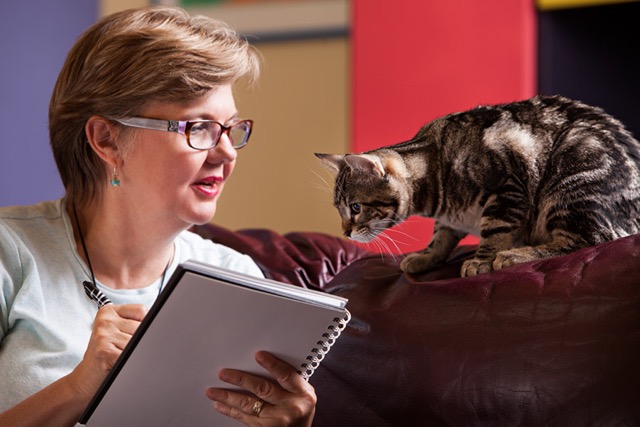
Author: Kathi Appelt is the New York Times best-selling author of more than forty books for children and young adults. Her first novel, The Underneath, was a National Book Award Finalist and a Newbery Honor Book. It also received the PEN USA Award. Her other novels include The True Blue Scouts of Sugar Man Swamp, a National Book Award finalist, and Maybe a Fox, one of the Bank Street Books Best Children’s Books of the Year. In addition to writing, Ms. Appelt is on the faculty in the Masters of Creative Writing for Children and Young Adults at Vermont College of Fine Arts. She lives in College Station, Texas. To learn more, and to find curriculum materials and activity pages, visit her website at kathiappelt.com.
Review: Anyone who has read a Kathi Appelt book knows that she is amazing at two things: weaving a story together in a way that only she can & pulling at heart strings causing definite mood swings while reading. The Underneath is the epitome of her excellence, and I am sad it took me so long to get to this book. Once done, I was very excited to ask Kathi about this masterpiece, and my questions and her answers show more about what makes this book the award winner that it is.
Interview:
Kellee: How do you work to weave different elements into your story such as mythology, the natural world, and contemporary stories?
Kathi: It’s always interesting to me to learn what sets a story off. Some authors swear that they start with characters. And I would say that characters are definitely a good place to start. But when I reflect over my many years of writing, I feel like I mostly start with place. I ask, what is it about this place that lends itself to story? What is the history of it? The social and cultural importance of it? Who has lived here? Who was here a thousand years ago? What were they doing? How did they survive? What impact did natural forces play on this place? What is the flora and fauna? Are there ghosts? Are there particular features of it? So, it seems to me that place creates the basis for most of my stories.
In The Underneath, one of my story lines occurs a thousand years ago, which means that my mythological characters (who were interlopers), would have encountered members of the Caddo/Hasinai nation. Theirs was a sophisticated, highly organized society. But a couple of things happened. One was a massive earthquake that caused a devastating flood which wiped out an entire city, thousands of people. Another was the encroachment of European settlers who brought in disease and ultimately drove the Caddo/Hasinai out of their ancestral lands.
The Caddo were—and still are—known for their pottery, so it made sense to feature a significant jar in my story. That way, I could more clearly link the characters to each other across time periods. One thing leads to another. But in the end, it goes back to place.
Kellee: The Underneath has multiple stories that are interwoven and meet at the end. How do you plan writing a novel like this?
Kathi: Extended narrative has always been difficult for me. I started my professional writing life as a poet and picture book author. As a result, it seemed like everything I wrote tended to finish at the bottom of page three. It was why writing a novel eluded me for such a long time. I always thought that a novel meant writing long chapters, strung together chronologically, and moving from point A to a final point Z. But it wasn’t in my nature to write like that. Long chapters weren’t the way I rolled. Finally, after many failed attempts, I figured out that if I was ever going to write a novel, I would have to go with my grain as opposed to going against my grain. So, I adapted to “writing by snapshot.” In other words, I write in small, significant scenes—I call them SSS’s. I can get a lot done that way without worrying about word counts or chapter lengths, or even transitions. Plus, they’re easy to manipulate. A small scene can be moved hither and yon until it finds the right place in the story.
I think that one of the reasons that writers fail is because they haven’t found their own natural way of working. Long narrative passages aren’t my strength. I’m not saying that I can’t write them, only that they’re not where my strengths lie.
So, finding the form that fits both our natural strengths and that suits the story, is one of the keys to unlocking a book . . . and a writer. Not all of us are meant to be poets. Not all of us are meant to be soaring prose practitioners. It could be that I’m a little ADD, and the short scenes suit me.
At any rate, making this discovery was how I finally finished a novel.
I also want to say in regard to planning, I do make very loose outlines when I embark upon a new project. Those outlines tend to flex as I move through the draft. But I always try to at least have a vague idea of how the story will end. Otherwise, I’ll just write myself right off the cliff. If I can see the destination, I can get there eventually.
Kellee: Personification allows the setting to become its own character in the story. How do you plan this and implement it well when you are writing?
Kathi: I spend tons of time researching the plants and animals that populate the setting. And to me, a living organism, such as a tree, is just that—living. If you spend enough time around trees, it seems like they each have their own personalities, their own needs, and their own ideas. I’m just saying. So, unless something is inanimate—like a rock, say—I can usually find the heart of that living organism. That is always my goal.
Kellee: What about The Underneath do you think resonated with readers 10 years ago and still remains today?
My true hope with The Underneath is that my young readers can see the value of making a good choice. In my story, both the hero Ranger and the antagonist Gar Face have similar experiences, similar fates if you will. They’ve both been badly treated, both been isolated, and yet only one of them turns towards love. Grandmother too, finally, at long last—after the longest time out in history—chooses love. I think that young readers are tuned in to this. I think they’re built for love. What I hope my story does is to give them the courage to make that choice.
Kellee: What feedback have you gotten from readers over the years about The Underneath? What stands out about what the book means to them?
Gosh, it’s hard to say just one thing, but it seems to me that mostly what I hear over and over from them is how much they love the relationship between Ranger and the kittens. That small sweetness seems to be the key that opens the story up. To me, it’s proof that we don’t all have to be the same or look the same or smell the same or whatever to become best friends. And no matter how small we are, we can make a difference for those we love.
Book Trailer:
GIVEAWAY!
Fifteen lucky winners will receive an autographed paperback copy of The Underneath. In addition, one Grand Prize winner will win a classroom set of 20 copies of the book PLUS a 30-40 minute Skype visit for her/his school, classroom, or library with award-winning author Kathi Appelt. Enter here!
Recommended For:
Thank you, Kathi, for your thorough and beautiful answers to my interview questions, and thank you to Blue Slip Media for the giveaway and trailer!
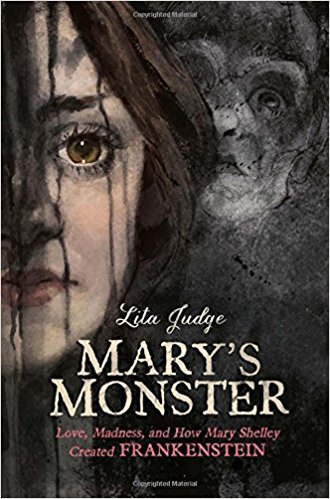
Mary’s Monster: Love, Madness, and How Mary Shelley Created Frankenstein
Author: Lita Judge
Published: January 30th, 2018 by Roaring Book Press
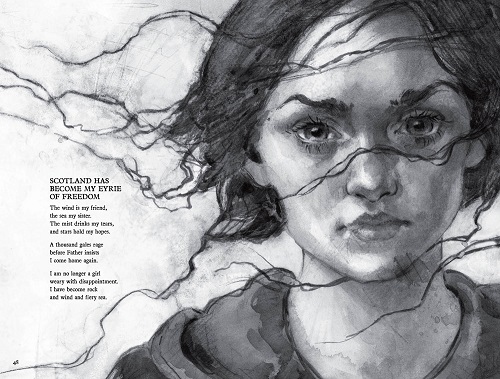
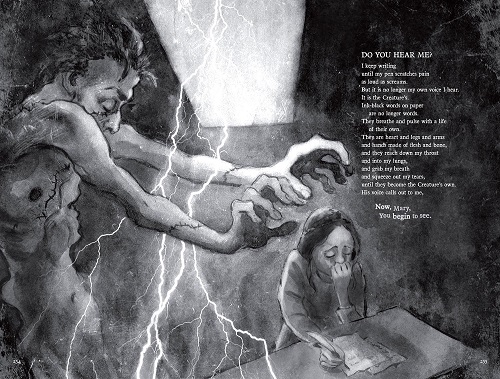
Summary: A young adult biography of Frankenstein’s profound young author, Mary Shelley, coinciding with the 200th anniversary of its publication, told through free verse and 300+ full-bleed illustrations.
Mary Shelley first began penning Frankenstein as part of a dare to write a ghost story, but the seeds of that story were planted long before that night. Mary, just nineteen years old at the time, had been living on her own for three years and had already lost a baby days after birth. She was deeply in love with famed poet Percy Bysshe Shelley, a mad man who both enthralled and terrified her, and her relationship with him was rife with scandal and ridicule. But rather than let it crush her, Mary fueled her grief, pain, and passion into a book that the world has still not forgotten 200 years later.
Dark, intense, and beautiful, this free-verse novel with over 300 pages of gorgeous black-and-white watercolor illustrations is a unique and unforgettable depiction of one of the greatest authors of all time.
Review and Teachers’ Tools for Navigation: Whew. I felt so many emotions as I read this book. I kept thinking, “My goodness, my students are going to love this book.” I was fortunate to receive two copies of this book in the mail, and those two copies have passed from student’s hand to student’s hand. The book doesn’t even make its way back up to my desk before another student snags it. This book defies genre sorting. It’s nonfiction, it’s horror, it’s romance, it’s an illustrated book in verse. I’ve already added it to my book list to teach next semester in my Adolescents’ Literature course.
Students will read this book and want immediately to read Frankenstein. The book reads fairly quickly because it contains verse and illustrations, but readers will struggle not to pause for several minutes to enjoy the beautiful illustrations on the pages.
I’m most excited about the classroom potential for this book. It offers so much to talk about regarding characterization, mood, and poetry. But it also offers a beautiful bridge to read with Frankenstein. I thought I knew a lot about Mary Shelley’s life, but this book told me so much more about it. Reading her story on these pages made me feel as if I was experiencing her life alongside her. If you haven’t read this book yet, I recommend it highly.
Discussion Questions: What factors may have influenced Mary Shelley’s Frankenstein? In what ways does the author use metaphor and symbolism to help us understand her experiences?; What might be the author’s purpose? Is she successful, in your opinion?; What textual features helped you understand Mary’s story? How might this book read differently if the author had used another form?
We Flagged:
Read This If You Loved: Frankenstein by Mary Shelley; Horror; Gothic Literature
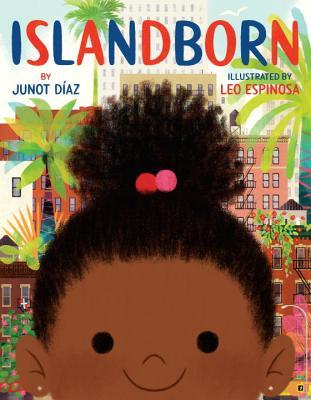
Islandborn
Author: Junot Díaz
Illustrator: Leo Espinosa
Published: March 13, 2018 by Dial
Summary: From New York Times bestseller and Pulitzer Prize winner Junot Díaz comes a debut picture book about the magic of memory and the infinite power of the imagination.
Every kid in Lola’s school was from somewhere else. Hers was a school of faraway places.
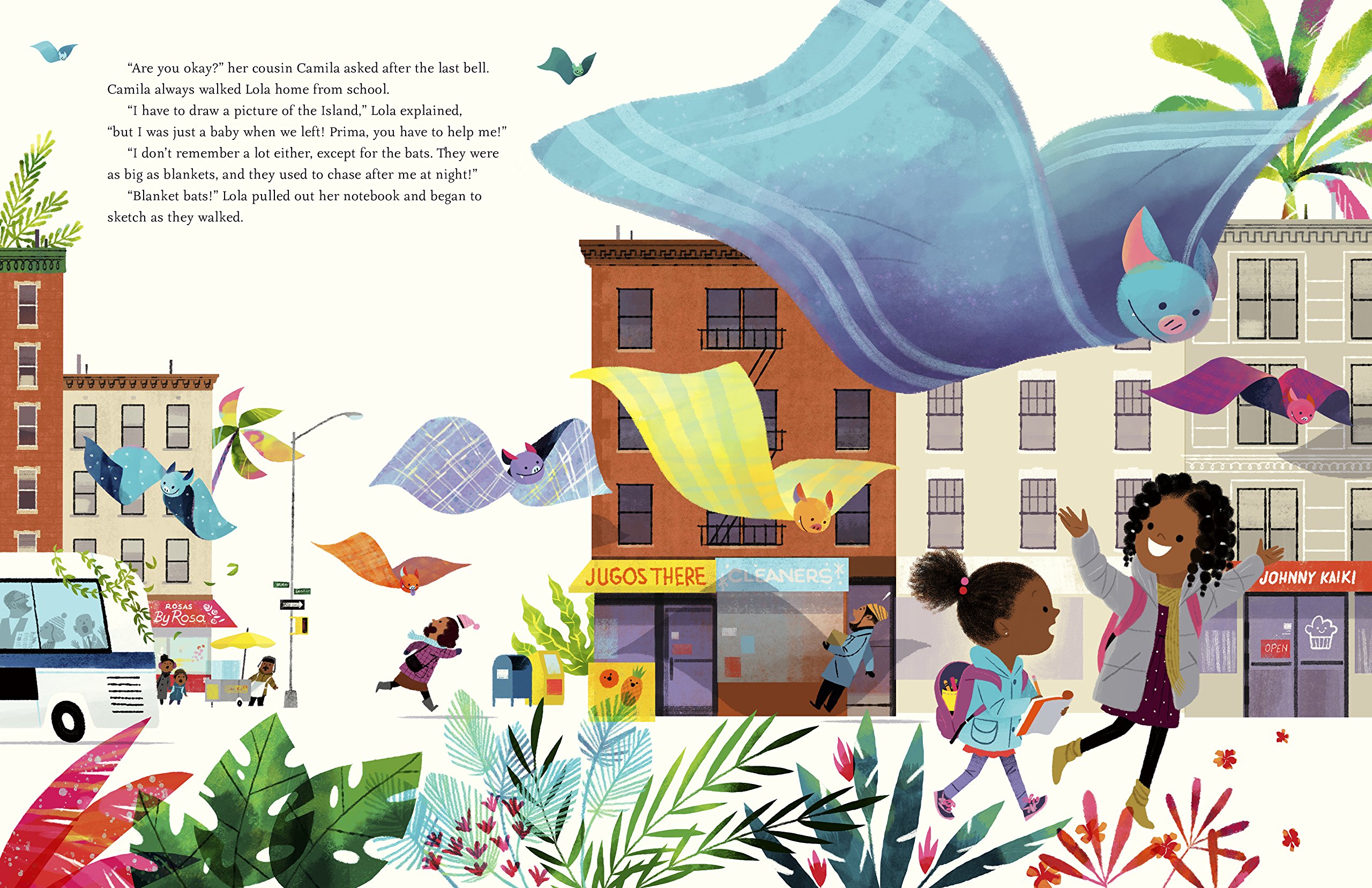
So when Lola’s teacher asks the students to draw a picture of where their families immigrated from, all the kids are excited. Except Lola. She can’t remember The Island—she left when she was just a baby. But with the help of her family and friends, and their memories—joyous, fantastical, heartbreaking, and frightening—Lola’s imagination takes her on an extraordinary journey back to The Island. As she draws closer to the heart of her family’s story, Lola comes to understand the truth of her abuela’s words: “Just because you don’t remember a place doesn’t mean it’s not in you.”
Gloriously illustrated and lyrically written, Islandborn is a celebration of creativity, diversity, and our imagination’s boundless ability to connect us—to our families, to our past and to ourselves.
Review: This book is absolutely enchanting. I can confidently say that it will always be one of my favorite picture books of all time. When Lola asks family and friends about the island that she came from, they have wonderful memories that they share with her. The illustrations and words dance off of the page—Díaz and Espinosa, the author-illustrator team, combine to create a work that will stun readers with its beauty and complexity. I took the pages from the F&G and hung them on my office walls, and they inspire me daily.
As I read this book, I continually paused to reflect on the words (“Just because you don’t remember a place doesn’t mean it’s not in you” and “Memory is magic.”). There is so much to teach from this book, and I am really looking forward to sharing it with students. If you haven’t read this book, I recommend you get in your car and drive immediately to the bookstore.
Teacher’s Tool For Navigation: There are so many possibilities for this section for teacher. They might analyze text and word choice, focusing on figurative language. Or they could examine the emotions that Lola experiences as she tries to learn about the place that she comes from. Or they might have students research their own countries of origin and create an image that represents the magic of the country. Or they might consider a monster that exists in their country and draw it metaphorically or symbolically. This is a book that is meant to be shared and shared.
Discussion Questions: How does Lola feel when she can’t remember the country she came from? How does she learn more about it?; What do Lola’s friends and family tell her about the country she came from? What are the good and bad memories that they share? What might the bad memory represent?