Review and Teaching Guide!: Harzadous Tales: The Underground Abductor by Nathan Hale

Share

NFPB2015

Nonfiction Picture Book Wednesday

Nonfiction Picture Book Wednesday is hosted by Kid Lit Frenzy and was started to help promote the reading of nonfiction texts. Most Wednesdays, we will be participating and will review a nonfiction text (though it may not always be a picture book).
Be sure to visit Kid Lit Frenzy and see what other nonfiction books are shared this week!

undergroundabductor

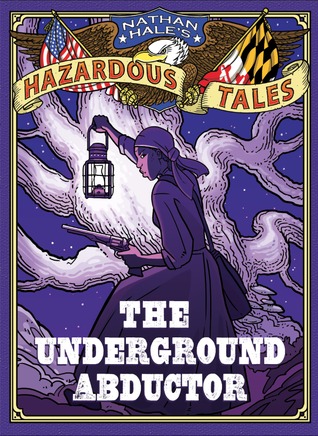
The Underground Abductor
Author and Illustrator: Nathan Hale
Published April 21st, 2015 by Amulet Books

Goodreads Summary: Araminta Ross was born a slave in Delaware in the early 19th century. Slavery meant that her family could be ripped apart at any time, and that she could be put to work in dangerous places and for abusive people. But north of the Mason-Dixon line, slavery was illegal. If she could run away and make it north without being caught or killed, she’d be free. Facing enormous danger, Araminta made it, and once free, she changed her name to Harriet Tubman. Tubman spent the rest of her life helping slaves run away like she did, every time taking her life in her hands. Nathan Hale tells her incredible true-life story with the humor and sensitivity he’s shown in every one of the Hazardous Tales—perfect for reluctant readers and classroom discussions.

My Review: I love this entire series! Nathan Hale has taken history and made it accessible (with a dash of humor!). If you don’t the concept of the series, it revolves around Nathan Hale the Revolutionary War spy who, in the first book, was eaten by a history book so now knows all that has happened in history and is sharing it with the hangman and British officer who are guarding him before he is executed. The first book is Hale’s own story and then each of the following are his telling of different times in history.

This installment of Hale’s graphic novel series may be my favorite so far. I found it to be the most intense of his stories even though it is up against stories of wars, but Harriet Tubman’s story is one of one person’s resilience in the face of pure doom. Although it is evident through any story you hear of Harriet how truly brave she was, Nathan Hale’s story immerses you into Harriet’s life and shows you how much she truly did and faced.

Teachers’ Tools for Navigation: This book is written to start discussions (in reading/language arts OR social studies)! I was lucky enough to write the teaching guide for The Underground Abductor (as well as the rest of the series!), and I have included some of my discussion questions below.

I could also see Hale’s Hazardous Tales being used in lit circles with each group reading a different one of the tales. This could lead to wonderful discussions about each time in history. Students could then present their history to the rest of the class.

Discussion Questions: 

  • When Araminta heard the story of Moses and the pharaoh, she envisioned Moses as a slave and the pharaoh as an owner (page 15). How does Moses’s story compare to a traditional story of a slave? Harriet is later called “Moses” or “Black Moses.” How does Harriet’s story compare to Moses’s?
  • How did Nat Turner’s rebellion affect slave laws (page 21)? He meant to make a positive change, but it actually turned negative. How? Why?
  • On page 44, Nathan Hale personifies debt as the ghosts and men Minty had been dreaming about. Why is debt shown as a terrifying thing? How did Mr. Brodess’s debt affect Mindy and her family?
  • Complete a character web with adjectives describing Harriet Tubman. What type of person was she that allowed her to overcome a debilitating injury and slavery?

Book Trailer: 

Read This If You Loved: Hazardous Tales series by Nathan Hale, March by John Robert Lewis, Stolen Into Slavery by Judith Bloom Fradin, Elijah Buxton by Christopher Paul Curtis

Recommended For: 

classroomlibrarybuttonsmall litcirclesbuttonsmall closereadinganalysisbuttonsmall

Signature

**Thank you to Morgan at Abrams Books for providing a copy of the book!**

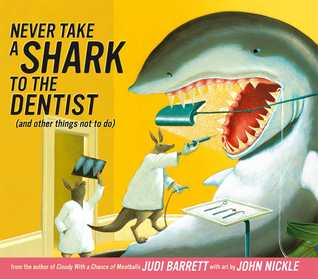
Never Take a Shark to the Dentist (and other things not to do) by Judi Barrett

Share

shark

Never Take a Shark to the Dentist (and other things not to do)
Author: Judi Barrett
Illustrator: John Nickle
Published March 4th, 2008 by Atheneum Books for Young Readers

Goodreads Summary: There are many things you should never, ever, ever do. Like sit next to a porcupine on the subway (ouch!). Or hold hands with a lobster (double ouch!). Or take a shark to the dentist (triple ouch!).

Bestselling author JUDI BARRETT and imaginative illustrator JOHN NICKLE give us a raucous look at the perils of taking giraffes to the movies, goats to the library, and pigs out to lunch…and other such silly stuff.

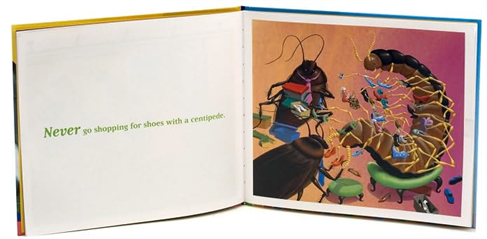
My Review and Teachers’ Tools for Navigation: The combination of Judi Barrett’s humorous DO NOTs and John Nickle’s fantastic illustrations, this book just cracked me up! It is not only a perfect read aloud to suck students in, it is definitely a book that can be used in the classroom. First, each instance has something not to do (Never take a shark to the dentist) with cartoony illustrations, but doesn’t elaborate after that. What would happen? Why wouldn’t you ____? A great cause and effect discussion. These little DO NOTs would also be perfect prompts to get students writing. It can be a prompt for a humorous narrative or for an expository essay about why not do to do these things.

Discussion Questions: What would happen next? Why wouldn’t you ____? What would cause you to need to ____?

We Flagged: 

nevergo

Check out Amazon to LOOK INSIDE Never Take a Shark to the Dentist (and other things not to do)

Read This Book If You Loved: Cloudy with a Chance of Meatballs by Judi Barrett, This Is Not My Hat & I Want My Hat Back by Jon Klassen, Press Here by Herve Tullet, Battle Bunny by Jon Sciezska, The Book of Bad Ideas by Laura Huliska-Beith

Recommended For: 

readaloudbuttonsmall closereadinganalysisbuttonsmall

Signature

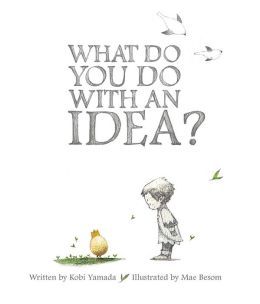
What Do You Do with an Idea? by Kobi Yamada

Share

idea

What Do You Do with an Idea?
Author: Kobi Yamada; Illustrator: Mae Besom
Published: February 1, 2014 by Compendium Inc.

Summary: This is the story of one brilliant idea and the child who helps to bring it into the world. As the child’s confidence grows, so does the idea itself. And then, one day, something amazing happens. This is a story for anyone, at any age, who’s ever had an idea that seemed a little too big, too odd, too difficult. It’s a story to inspire you to welcome that idea, to give it some space to grow, and to see what happens next. Because your idea isn’t going anywhere. In fact, it’s just getting started.

Review: I read this book slowly and purposefully. By page two, I realized I had come upon something very special, and I wanted to savor the moment—because while we can enjoy books over and over again, we can never read a book for the first time twice. When I think of this book, I will remember reading it quietly aloud (cross-legged on the floor of the bookstore) as my son played with trains beside me. What Do You Do with an Idea? illustrates the complexity of ideas, which are inherently imbued with feelings of self-doubt. The child in this book learns to treasure his idea and comes to realize the beauty of its potential. After I read this book, I immediately mailed a copy to my younger sister (who works at Google) because her mind brims with ideas. This book is inspirational for people of all ages. I hope you find it to be inspirational, too.  

Check out Kellee’s review of this text.

Teacher’s Tools for Navigation: The author and illustrator combine efforts to illustrate an abstract idea as a physical thing. Readers might consider how they do this with words and illustrations. Then, they could try to illustrated a different abstract idea in a story of their own.

Discussion Questions: Why might the illustrator have chosen to characterize the idea as an egg with a crown?; How is color intentionally used to tell the story?; Why might the author have chosen to use a first person point-of-view? How might the story have been different otherwise?; What is the author’s purpose?; Why/How might this book resonate with readers of all ages?

We Flagged: 

What Do You Do with an Idea 2

Image from: www.amazon.com

Read This If You Loved: The Most Magnificent Thing by Ashley Spires; The Dot by Peter H. Reynolds, The Noisy Paint Box by Barb Rosenstock, Lost and Found by Oliver Jeffers, Journey by Aaron Becker

Recommended For:

  readaloudbuttonsmall closereadinganalysisbuttonsmall classroomlibrarybuttonsmall

RickiSig

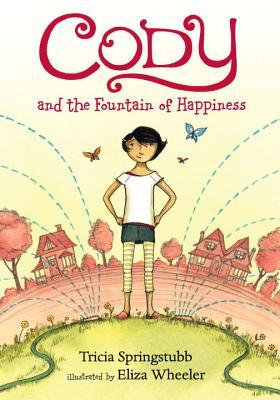
Cody and the Fountain of Happiness by Tricia Springstubb

Share

cody

Cody and the Fountain of Happiness
Author: Tricia Springstubb
Illustrator: Eliza Wheeler
Published April 14th, 2015 by Candlewick Press

Goodreads Summary: For whimsical Cody, many things are beautiful, especially ants who say hello by rubbing feelers. But nothing is as beautiful as the first day of summer vacation, and Cody doesn’t want to waste one minute of it. Meanwhile, teenage brother Wyatt is moping over a girl, Mom is stressed about her new job as Head of Shoes, Dad is off hauling chairs in his long-distance truck, and even camp has been closed for the summer. What to do? Just when all seems lost, Cody bumps into a neighborhood boy named Spencer who is looking for a runaway cat. With a new friend and a soon-to-be-found cat, Cody is on her way to the fountain of happiness.

Kellee’s Review: Cody is one of those spunky, smart, caring, sweet young ladies who anyone would want as a friend. I loved being part of Cody’s summer which was full of a quirky set of characters and an unexpected misadventure. I have been talking to Carrie Gelson about my book gap when it comes to early chapter books, so I am so glad that I found Cody because I think she is going to be loved as much as Marty McGuire, Lulu, Ivy & Bean, and many other loved early chapter book characters.

Ricki’s Review: Kellee’s review made me laugh. I agree that my knowledge of early chapter books is my biggest weakness, so I loved reading this odd-in-a-good-way tale! The illustrations are great–as a young reader, I hated when my chapter books didn’t have pictures, so this will be very appealing to kids. I loved how the author incorporated Spanish words for beginning readers. Also, the quirky bond between Cody and her brother, Wyatt, made me giggle at several points. Wyatt reminded me of my older brother, and I think readers will find similar qualities in their siblings. I will absolutely be recommending this book to younger readers.

Teachers’ Tools of Navigation: Lots of things go into Cody’s fountain of happiness: her family, Mew Mew, Spencer, GG, and her ants; however, each of us have our own fountain of happiness. Have students make their own fountain of happiness list, and then assemble the things they included into a list poem.
(Idea from Tricia Springstubb)

Additionally, Tricia Springstubb’s writing is exceptional and would definitely serve as a mentor text for voice and descriptive writing. The lyrical way that Tricia Springstubb describes Cody’s feelings and surroundings is beautiful and is a wonderful example for student writers and readers.

Discussion Questions: What makes up your fountain of happiness?; Cody uses onomatopoeias to describe things such as her mother’s walking “click-click-click” and her coffee drinking “gulp-gulp-gulp.” What onomatopoeias do you hear around you on a daily basis?

We Flagged: “Late that night, Cody woke up. Her Dad radar was beeping. She raced to the kitchen. Dad sat at the table with Mom. Jumping into his arms, Cody breathed in great gulps of dad smell, a mix of diesel oil, coffee, and eggs over easy.”

cody2

Book Trailer: 

Cody & The Fountain of Happiness-Trailer from Tim Kaegi on Vimeo.

Read This If You Loved: Marty McGuire by Kate Messner, Eleanor books by Julie Sternberg, Lulu books by Judith Viorst, Babymouse by Jenni L. Holm; Annika Riz, Math Whiz by Claudia Mills

Recommended For: 

classroomlibrarybuttonsmall readaloudbuttonsmall

Signatureand RickiSig

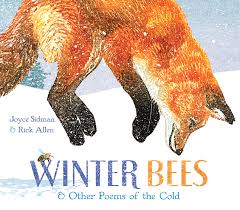
Winter Bees & Other Poems of the Cold by Joyce Sidman and Rick Allen

Share

NFPB2015

Nonfiction Picture Book Wednesday

Nonfiction Picture Book Wednesday is hosted by Kid Lit Frenzy and was started to help promote the reading of nonfiction texts. Most Wednesdays, we will be participating and will review a nonfiction text (though it may not always be a picture book).
Be sure to visit Kid Lit Frenzy and see what other nonfiction books are shared this week!

winter bees

Winter Bees & Other Poems of the Cold
Author: Joyce Sidman
Illustrator: Rick Allen
Published November 4th, 2014 by HMH Books for Young Readers

Goodreads Summary: In this outstanding picture book collection of poems by Newbery Honor-winning poet, Joyce Sidman (Song of the Water Boatman, Dark Emperor and Other Poems of the Night), discover how animals stay alive in the wintertime and learn about their secret lives happening under the snow. Paired with stunning linoleum print illustrations by Rick Allen, that celebrate nature’s beauty and power.

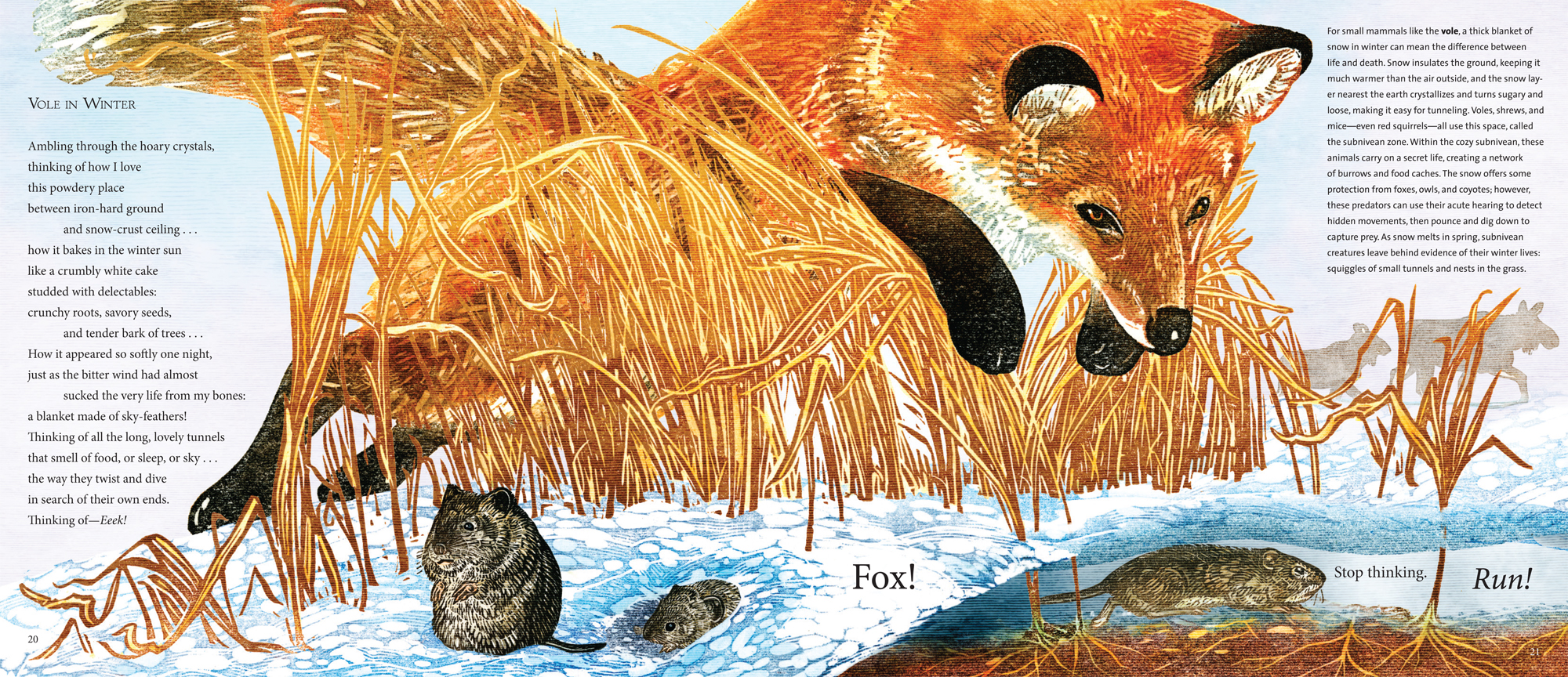
My Review: Alyson and Carrie both nominated this book for our Mock Sibert Award, so I knew it was a book I had to read. After requesting that my library purchase it, I was so happy to finally receive the book. This book is beautiful. Each aspect of the book can stand alone: the poetry is full of imagery and figurative language, the informational aspects are interesting and fact-based, and the illustrations are exceptional and bring the animals to life.

Teachers’ Tools for Navigation: First, this book can be used as a mentor text for poetry. Many different types of poetry are represented and each poem is different. Second, I think this book can be a great jumping off point for an inquiry-based project where students research an animal, write a poem about it, and also write an informational piece of text to accompany the poem. This book is also a great companion to Kate Messner’s Over and Under Snow and other animal survival books which would cause for a great unit as well.

Discussion Questions: Which of the winter animals has the best plan for survival?; What fact in Winter Bees surprised you the most about how an animal survives during the winter?

We Flagged: 

vole

Read This If You Loved: Firefly July by Paul Janeczko, Feathers by Melissa Stewart, Born in the Wild by Lita Judge, Forest Has a Song by Amy Ludwig VanDerwater, Over and Under Snow by Kate Messner

Recommended For: 

classroomlibrarybuttonsmall readaloudbuttonsmall

litcirclesbuttonsmall closereadinganalysisbuttonsmall

Signature

The Crossover by Kwame Alexander

Share

the crossover

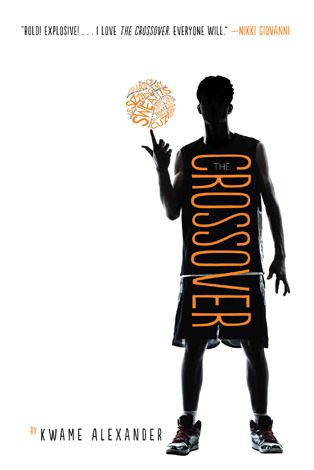
The Crossover
Author: Kwame Alexander
Published March 18th, 2014 by Harcourt Brace and Company

Goodreads Summary: “With a bolt of lightning on my kicks . . .The court is SIZZLING. My sweat is DRIZZLING. Stop all that quivering. Cuz tonight I’m delivering,” announces dread-locked, 12-year old Josh Bell. He and his twin brother Jordan are awesome on the court. But Josh has more than basketball in his blood, he’s got mad beats, too, that tell his family’s story in verse, in this fast and furious middle grade novel of family and brotherhood.

Josh and Jordan must come to grips with growing up on and off the court to realize breaking the rules comes at a terrible price, as their story’s heart-stopping climax proves a game-changer for the entire family.

My Review: Wow. What a powerful piece of narrative and poetry. Any poem from Josh’s story could easily be taken out of context and used as a piece of exemplar poetry writing. In addition to the amazing writing, Josh is a kid that is so easy to connect with. He is so real. You love him (even if he is a little cocky). By the end of the book, you feel like you are part of Josh’s family, and you don’t want to leave.

And to top it all off: one of my reluctant readers grabbed this book and zoomed right through it. It quickly became one of his favorite books! I love when the Newbery Medal winner is accessible to students. Now to just get more students to read it and experience the awesomeness.

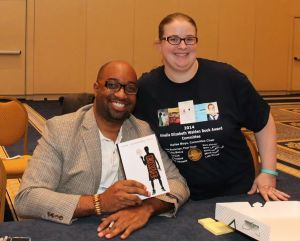
(Also, Kwame was one of my favorite presenters at ALAN, and he was such a pleasure to meet!)

kwame

Teachers’ Tools for Navigation: I cannot wait to have my students make vocabulary poems like Josh does. Such a fun way to play with words. Additionally, like I stated above, any poem in this novel could be used in a poetry unit. I’d also love to have students come up with rules like Josh’s dad did for basketball and have them write them in verse.

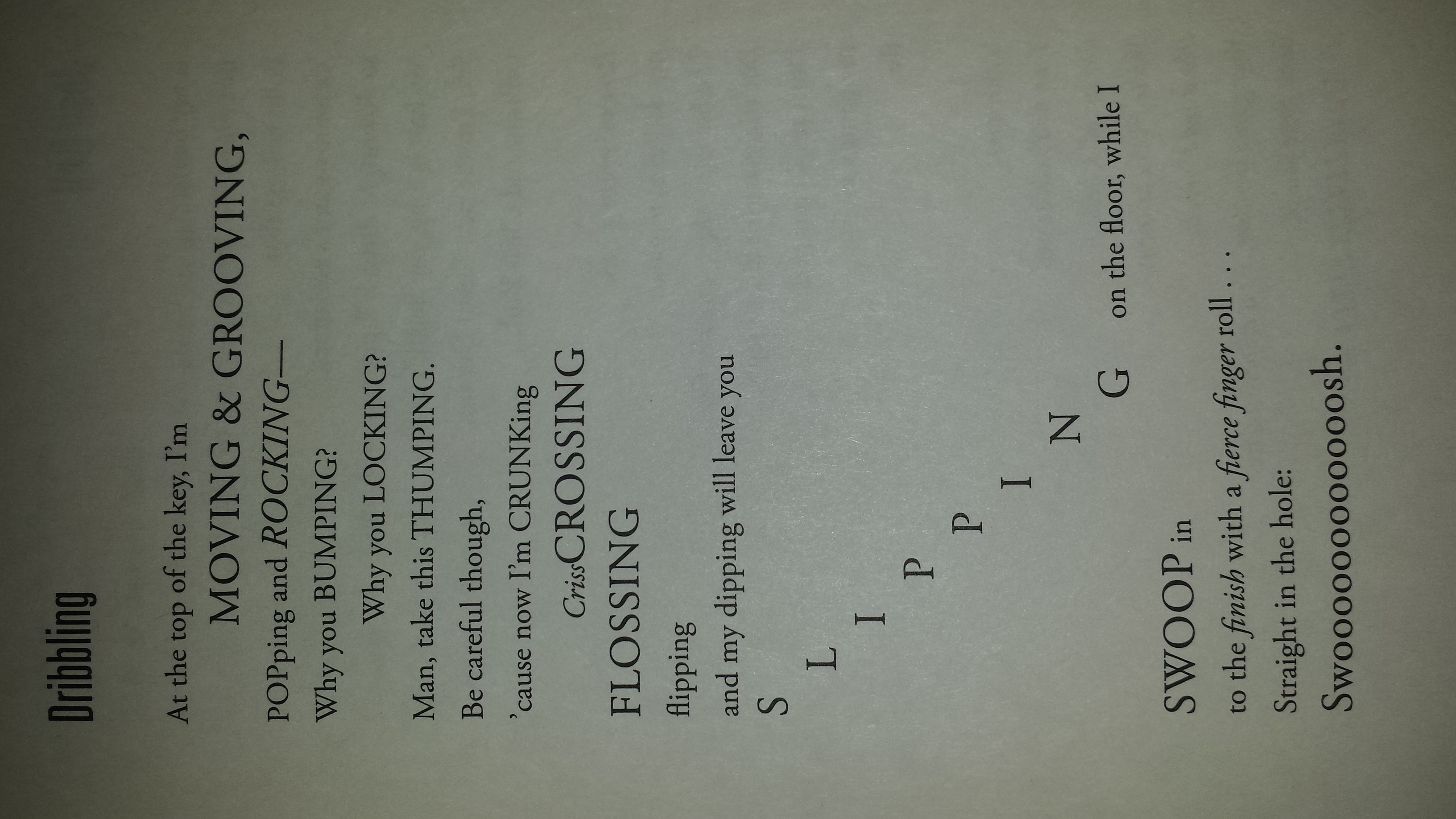
Discussion Questions: Why is Josh so impacted by Jordan getting a girlfriend?; Who do you think influences Josh more: his dad or his mom? Explain.; Within his poems, Josh uses formatting, bolding, and different fonts to put emphasis on certain words. Why does he do this?; Josh uses figurative language throughout his poems. Find an example and share why you think Josh used it.; How are Josh and Jordan similar? Different?

We Flagged: 

20150216_141647

Read This If You Loved: Jumped In by Patrick Flores-Scott (YA), The Sports Pages edited by Jon Sciezska, The Moves Make the Man by Bruce Brooks, Summer Ball by Mike Lupica

Recommended For: 

classroomlibrarybuttonsmall readaloudbuttonsmall closereadinganalysisbuttonsmall

Signature

The Secret Hum of a Daisy by Tracy Holczer

Share

secret hum of daisy

The Secret Hum of a Daisy
Author: Tracy Holczer
Published: July 24, 2014 by Annick Press

Summary: Twelve-year-old Grace and her mother have always been their own family, traveling from place to place like gypsies. But Grace wants to finally have a home all their own. Just when she thinks she’s found it her mother says it’s time to move again. Grace summons the courage to tell her mother how she really feels and will always regret that her last words to her were angry ones.

After her mother’s sudden death, Grace is forced to live with a grandmother she’s never met. She can’t imagine her mother would want her to stay with this stranger. Then Grace finds clues in a mysterious treasure hunt, just like the ones her mother used to send her on. Maybe itis her mother, showing her the way to her true home.

Lyrical, poignant and fresh, The Secret Hum of a Daisy is a beautifully told middle grade tale with a great deal of heart.

Ricki’s Review: The Secret Hum of a Daisy truly pulled my heartstrings. Readers of this blog know that I am a slightly critical reader of middle grade texts, and I often prefer high school texts, but my oh my, this one is beautiful. Having lost loved ones and friends, I know that grief hits you at random times. Holczer captured this reality beautifully. This book feels melancholy at the same time as it feels hopeful and lyrical. Young people will learn strength and resilience in Grace. Holczer’s thoughtful pacing makes this poignant coming of age story quite beautiful.

Kellee’s Review: This is one of those books that grabs you and sucks you in. I mostly love our main character. She has had to grow up too quickly thus making her a bit rough around the edges, but the way that friendship, family, history, poetry, and stories smooth her out is just so well done. Although at times I felt Grace came off older than she is, I realized, after talking to Carrie G., that it is because of the hardships she has endured. And the cast of characters, family and friends, who play a role in Grace’s transformation all are so well crafted. The Secret Hum of Daisy is a beautiful book because of Holczer’s word choice, Grace’s story, and the look at grief, family, and friendship.

Teacher’s Tools for Navigation: The Robert Frost references in this book easily lend themselves to instructional supplements for teachers. The sadness of this novel is important to discuss with students. They might consider poetry or journaling as an outlet for their emotions. Additionally, teachers my show students the stages of grief to help them better understand Grace’s emotions. Grace says that she gathers “every bit” she can of her Mama. Teachers might consider asking students to gather bits of people they love and sharing these with the class. Curriculum Guide from Penguin.

Check out our Guest Post from Tracy Holczer here!

Discussion Questions: Does Grace’s mom make mistakes in her parenting? What might she have done differently?; Do you agree with Grace’s decision to live in the shed? Do you consider this to be immature or strong of her? Why?

We Flagged: “Mama pulled me into her lap and her yellow chair creaked under our weight. ‘You have to trust me, Grace. We don’t need anyone else.'” (p. 8)

“Trying to ignore the blasts of rain against the tin roof, I dug a flashlight out of one of the boxes and laid my sleeping bag and pillow on our flower-garden sofa. I took my latest notebook out of my duffel and climbed into the sleeping bag.

I hadn’t written anything in the six days since Mama died, and the words were scratching at me in the way they always did. I hoped to find the end of that string inside of myself–the string that tended to work into knots–and pull it straight. That was how the words felt sometimes as I wrote them down. Like I was taking something scrambled and unscrambling it.” (p. 24)

We also loved page 57, 97, and 134.

Read This If You Loved: In This Moment by Wendy Glenn, A Tree Grows in Brooklyn by Betty Smith, Bridge to Terabithia by Katherine Paterson, A Monster Calls by Patrick Ness, The Impossible Knife of Memory by Laurie Halse Anderson, Love Letters to the Dead by Ava Dellaira, The Carnival at Bray by Jessie Ann Foley, All the Bright Places by Jennifer Niven, Fish in a Tree by Lynda Mullaly Hunt, Rain Reign by Ann M. Martin, Torn Away by Jennifer Brown


Recommended For:

closereadinganalysisbuttonsmall litcirclesbuttonsmall classroomlibrarybuttonsmall

RickiSig andSignature

**Thank you to Tracy Holczer for providing copies for review**