Review and Author Interview!: Ebola: Fears and Facts by Patricia Newman

Share

NFPB2015

Nonfiction Picture Book Wednesday

Nonfiction Picture Book Wednesday is hosted by Kid Lit Frenzy and was started to help promote the reading of nonfiction texts. Most Wednesdays, we will be participating and will review a nonfiction text (though it may not always be a picture book).
Be sure to visit Kid Lit Frenzy and see what other nonfiction books are shared this week!
ebola

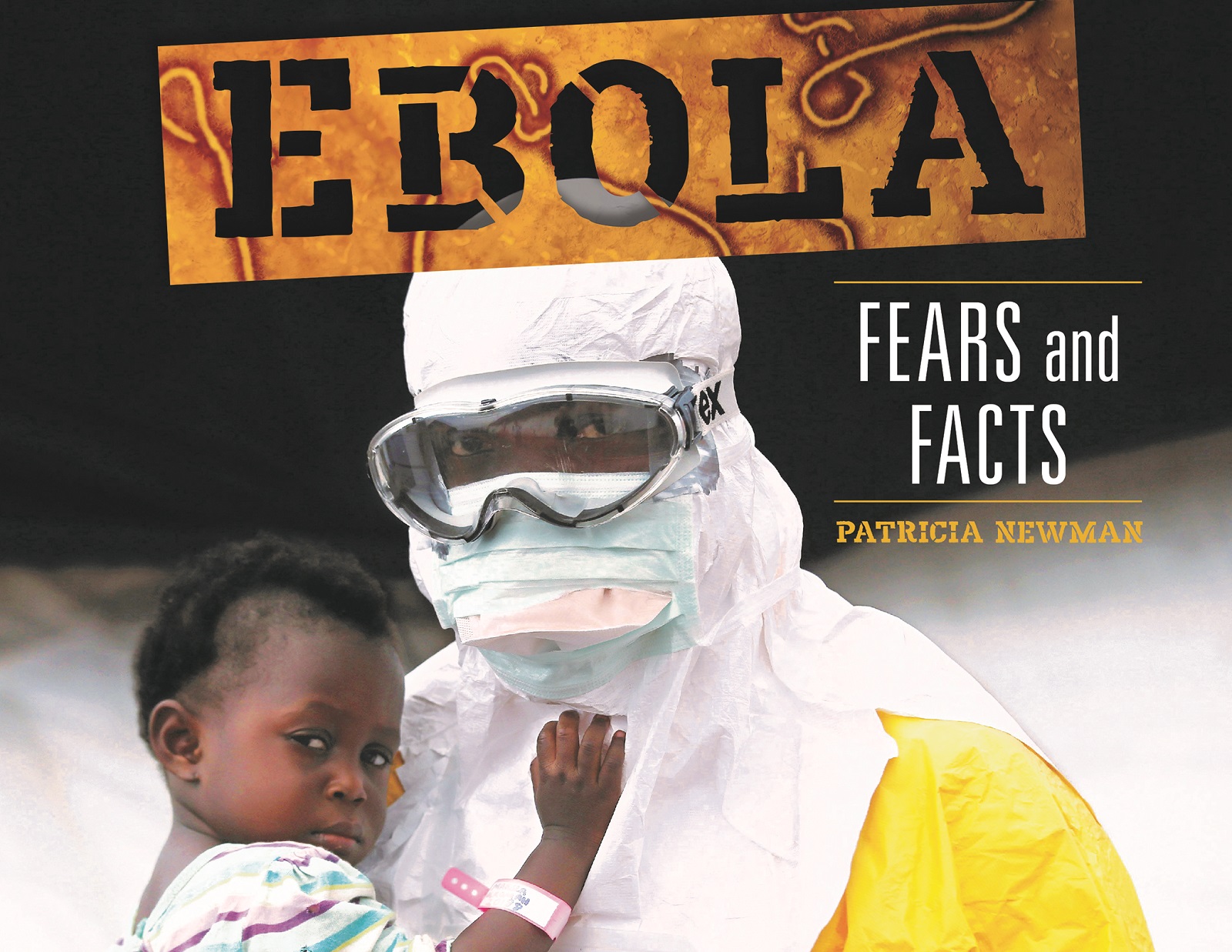
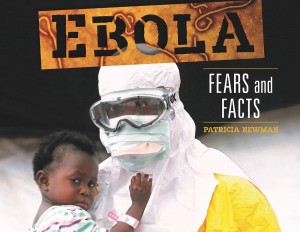
Ebola: Fears and Facts
Author: Patricia Newman
Expected Published October 28th, 2015 by Lerner Publishing Group

Goodreads Summary: Ebola is a deadly contagious disease. From 1975 to 2013, it killed about 1,500 people. But a 2014 epidemic killed more than six times that number. At first the outbreak was contained to one country. But soon it spread to two others―the virus was on the move, and people were scared. When two American healthcare workers became infected and were sent to the United States for treatment, many people feared a pandemic―an outbreak that would spread all over the world. Could it happen?

Ebola: Fears and Facts takes you behind the sensational headlines to address questions and concerns about the virus. Learn about the history of the disease, its symptoms, and how it spreads. Find out how the 2014 epidemic compares to past Ebola outbreaks, as well as to outbreaks of other infectious diseases. With a question-and-answer section and reference maps, Ebola: Fears and Facts will help you to better understand this most-feared disease.

My Review: The Ebola epidemic of 2014 caused pure panic around the world. Because of the 24-hour news coverage of the disease as it entered the U.S, Ebola became a hot topic; however, there was so much misconception about the disease. As a teacher during the epidemic, I saw how scared students were of the disease and how little they knew about it. The text is a wonderful resource to help kids learn about the disease.

Teachers’ Tools for Navigation: Patricia Newman’s middle grade nonfiction texts are a necessity for middle school classrooms. They teach the reader so much about the topic though do so in an interesting way to keep the readers’ attention. They are also about important topics that kids can make a difference by learning about. Her books, including Ebola, need to be available to students.

I really like how the book is set up. It begins with the history then goes into the way Ebola works and finally looks at the 2014 outbreak and how Ebola could possibly be conquered. It allows readers to navigate to the section they want or build up their knowledge from beginning to end.

Discussion Questions: What did you learn about Ebola that you didn’t know before reading?; What is the difference between Ebola and diseases like the measles?; How did the Ebola virus begin?; How is the Ebola virus a threat to apes in Africa?

“Truth or Hype?…The next time you come across a story about Ebola–or any topic–ask yourself the following questions. 1. What does the storyteller want us to remember? 2. How might different people understand the story? 3. Does the storyteller present facts or opinions? How do we know? What words are used? Does the storyteller quote scientific or eyewitness sources? 4. What action does the storyteller want us to take? 5. Do our emotions influence the way we evaluate the story?” (p. 35)

Author Interview: Thank you to Patricia for answering some of my questions!

What research did you do when writing Ebola? 

I visited East Africa several years ago, so I had a general sense of the landscape, the bush, the people, the cadence of their speech. But the crowded cities and steamy jungles of West Africa are different than the wide open savannas of the east. Of course, I needed to learn about the physiology of the disease, but I also wanted to know where in the jungle it came from and how it affected all aspects of peoples’ lives.

I interviewed a CDC epidemiologist who’d just returned from Liberia; read books by David Quammen and Peter Piot; deciphered scientific studies in journals such as the New England Journal of Medicine and Vector Borne and Zoonotic Diseases; scoured the CDC, WHO and MSF websites for case counts and anecdotal information; and read every news story (or watched every video) I could get my hands on. I also interviewed a nurse at a Sacramento hospital near my home who specializes in speaking to children about serious illnesses. Her compassion and common sense were tremendously helpful. A small fraction of my sources are listed in the back of the book.

My nurse-source also gave me a full set of Ebola protective gear. I share it with students at school visits and talk to them about how health-care professionals put it on and take it off.

Why did you decide to research and write about Ebola?

My editor, Carol Hinz, came to me in November 2014 with the idea. Millbrook Press wanted to publish a book about the 2014 epidemic, and thought I was the person to do it. I was flattered by their faith in me and overjoyed with the way they handled Plastic, Ahoy! Investigating the Great Pacific Garbage Patch, so I said yes. Carol and I learned a lot from this book. Because the deadline was so tight (my final manuscript was due February 1, 2015) we developed the outline together. Before we went to press, we revised or otherwise massaged every line in the book, always working to stay abreast of current reports. At one point I added several hundred words because of planned vaccine trials and Ebola survivors. Thank goodness Millbrook paid for a fact checker because the editing process became more and more chaotic. For example at one point in April, I gave an all-day writing workshop to a group of conservation scientists interested in writing their research for children. During my lunch break I had to edit Ebola one final time before it went to press!

What is the biggest misconception you have found about Ebola? 

I think there are two frequent misconceptions. The first is that Ebola is airborne like measles or the common cold. It is not, nor is it every likely to be. Ebola is spread by contact with bodily fluids (saliva, vomit, stool, sweat, blood, semen). Generally one person infected with an airborne disease spreads the disease to more people than one person infected with Ebola. For instance, one Ebola patient infects between 1.5 and 2 people. In comparison, one measles patient infects 18 others (assuming those people have not been vaccinated). NPR wrote an interesting article about this concept.

The second misconception is that Ebola is deadly no matter what we do. Based on our success treating Ebola patients in the U.S., and the successes in some of the vaccine trials, Ebola need not be a death sentence. Two factors that contributed to the high death rate in West Africa were the lack of education about communicable diseases and the lack of high-quality medical care.

As information about the disease changes rapidly, what would be the best resources for people who want to continue learning about the disease? 

News from the front lines altered the manuscript even as my editor and I were preparing it for printing, and I worried about how my readers will stay informed as our understanding of Ebola develops. I decided to include a sidebar in the last chapter of the book, Conquering Ebola, to help readers stay informed by sharing the Ebola pages for WHO, CDC, USAid, and Doctors Without Borders. For students writing Ebola reports, many of these sites have RSS feeds that will deliver information straight to their inbox.

What is the topic of your next book? 

I have a book proposal under consideration at Millbrook—hopefully the editorial team will decide to take it—so for now the topic is a secret. But I can tell you to expect more science.

We Flagged: “Ebola. The word calls up images of sick people in Africa and doctors wearing space-suit-like protective gear. Before 1976, however, Ebola was simply the name of a winding river in central Africa.” (p. 5)

Read This If You Loved: Plastics Ahoy! by Patricia Newman

Recommended For: 

classroomlibrarybuttonsmall readaloudbuttonsmall closereadinganalysisbuttonsmall

Signature

**Thank you to Patricia and Lerner for providing a copy for review and specifically to Patricia for the Q&A!!**

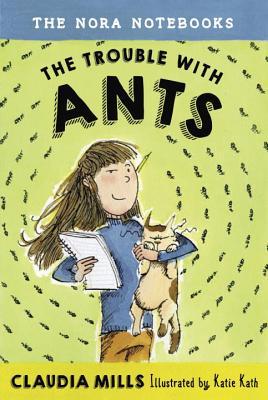
Review, Author Q&A, and Giveaway!: The Trouble with Ants by Claudia Mills

Share

Trouble with Ants

The Nora Notebooks: The Trouble with Ants
Author: Claudia Mills
Illustrator: Katie Kath
Published September 22nd, 2015 by Knopf Books for Young Readers

Goodreads Summary: Science-obsessed fourth grader Nora has ants all figured out—now she just has to try to understand her fellow humans!

The trouble with ants is . . .
. . . people think they’re boring.
. . . they are not cuddly.
. . . who would ever want them for a pet?

Nora Alpers is using her new notebook to record the behavior of ants. Why? Because they are fascinating! Unfortunately, no one agrees with her. Her mom is not happy about them being in the house, and when Nora brings her ant farm to school for show and tell, her classmates are not very impressed. They are more interested in cat videos, basketball practice, or trying to set a Guinness World Record (although Nora wouldn’t mind that).

Mostly they are distracted by the assignment their teacher Coach Joe has given them—to write a persuasive speech and change people’s minds about something. Will Nora convince her friends that ants are as interesting as she thinks they are? Or will everyone still think of ants as nothing but trouble?

With real science facts, a classroom backdrop, an emphasis on friendship, and appealing black-and-white interior illustrations from artist Katie Kath, The Nora Notebooks is perfect for newly independent readers—especially budding scientists like Nora!—and adults who want to encourage awareness of STEM subjects in young readers.

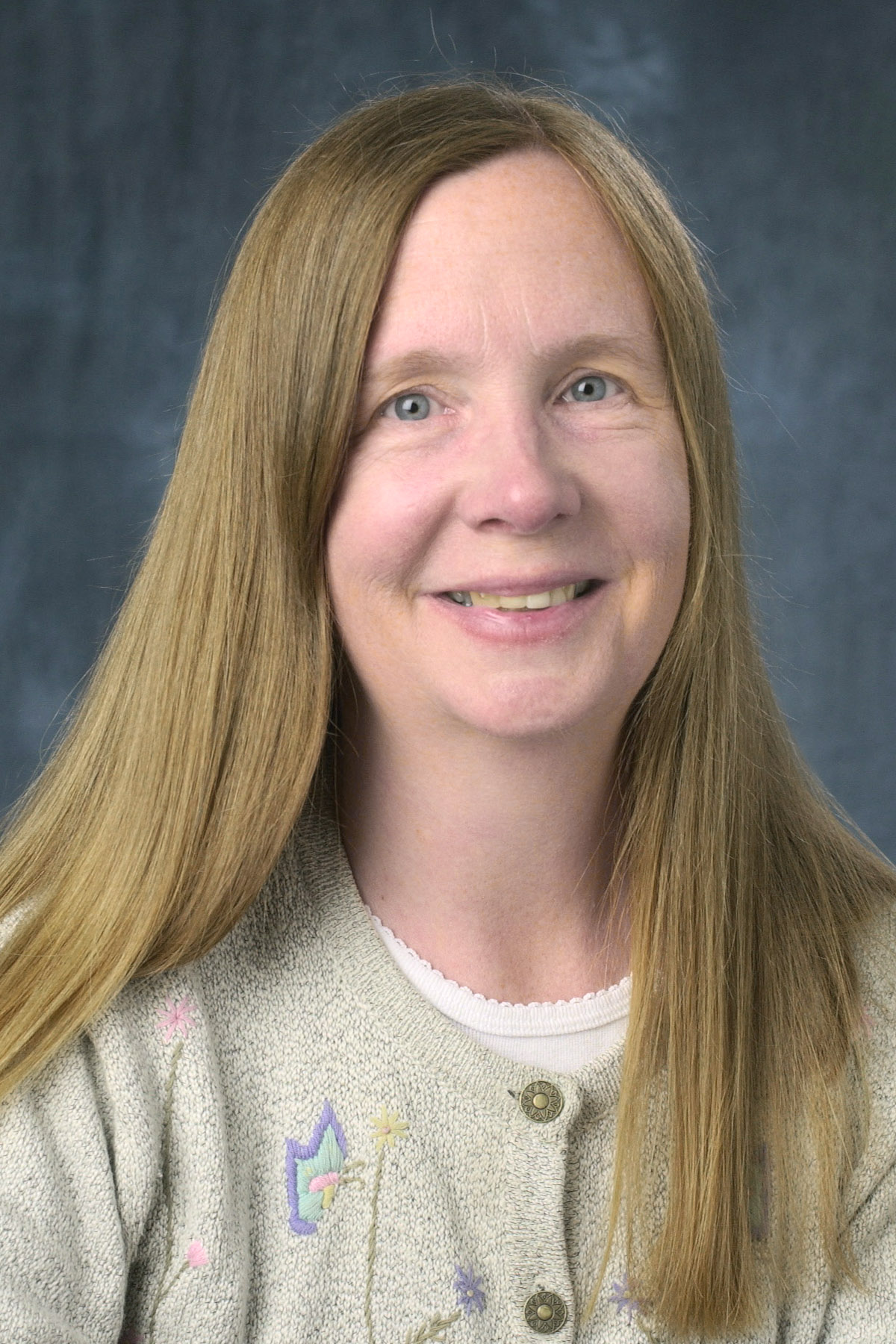
About the Author: Claudia Mills is the author of over fifty books for young readers. She does not personally keep an ant farm, but she does have a cat, Snickers, with whom she curls up on her couch at home in Boulder, Colorado, drinking hot chocolate and writing. To learn more, and to download free curriculum guides for her books, visit her website at claudiamillsauthor.comClaudia Mills, Philosophy claudia.mills@colorado.edu photo by: Larry Harwood

My Review: I love books that promote girls being smart and doing well in school. This book goes even further and promotes girls finding a love in science and, specifically, insects. Nora is a girl that I hope that lots of readers find a connection with and strive to be like. She is a role model for all kids. She is smart, doesn’t mind being a bit different, and has great friends and family. I also love that she is at the heart of it a normal girl who just happens to be smart and like science. The story is more than just her science and ants. It is about growing up.  There is so much you will love in this book: Nora, her parents, her teacher, her friends, and, of course, Precious Cupcake.

Author Q&A: We are so excited to host Claudia today! Thank you for taking part in the Q&A.

Do you like ants as much as Nora does?

No! But some ants somewhere must have read my book and gotten the wrong impression, as I had my first-ever invasion of ants in my pantry as the book was going to press. It was hard to convince them that I much prefer to have them outside in their usual habitat. But I had a pang thinking how much Nora would have come to their defense.

What was the hardest part about writing this book?

The research was a challenge. Most of my books are contemporary school stories. It helps that I love going to schools on author visits where I pay close attention to the details on how the classrooms are organized, what kind of work the kids are doing, and how classmates interact. But I don’t need to do any other research. Here I had to try to equal Nora’s knowledge about ants, and that meant reading about ants, interviewing a leading ant scientist, and combing the internet for promising ant experiments.

What’s next for Nora?

She is going to star in two more books. In The Trouble with Babies she devotes herself to the scientific study of babies as a new a-u-n-t; in The Trouble with Friends she wants to replicate Mendel’s experiments on the genetics of peas in the class garden, but finds herself instead learning the limits of her own scientific approach to life.

Thanks for hosting me today, Kellee!

Teachers’ Tools for Navigation: I love the cross-curricular aspect of this novel. You can use aspects in science and in language arts. I love Nora’s example of an experiment and persuasive essay. I also think having an ant farm while reading the novel would really add an extra aspect to the reading.

Discussion Questions: What are the steps to doing a science experiment?; Why did all of Nora’s ants die?; How is Nora different than her friends? How does their relationship show that different types of people can be friends.; How did Nora’s parents influence her?; Why do you think Dunk acts the way he does?; What was so special about Nora’s classroom?

We Flagged: “Nora loved scribbling down all kinds of facts in all kinds of notebooks: big ones, little ones, fat ones, skinny ones, spiral ones, and now this new super fancy one.

She had waited to start her new notebook on the first day of the new year.

‘Fascinating Facts About Ants,’ she now wrote on the first blank page with her blue ballpoint pen.” (p. 2)

Read This If You Loved: The Categorical Universe of Candice McPhee by Barry Jonsberg, Cody and the Fountain of Happiness by Tricia Springstubb

Giveaway: 

a Rafflecopter giveaway

Recommended For:

classroomlibrarybuttonsmall readaloudbuttonsmall closereadinganalysisbuttonsmall

  Signature

**Thank you to Barbara at Blue Slip Media for providing copies for review and giveaway and also a big thank you to Claudia Mills for taking part in the Q&A!!**

Early Chapter Books: Francine Poulet Meets the Ghost Raccoon by Kate DiCamillo, The Princess in Black and the Perfect Princess Party by Shannon Hale & Dean Hale, and Sparky and Tidbit by Kathryn O. Galbraith

Share

francine poulet

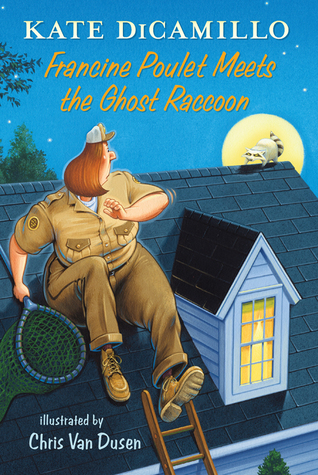
Francine Poulet Meets the Ghost Raccoon
Author: Kate DiCamillo
Illustrator: Chris Van Dusen
Published August 25th, 2015 by Candlewick Press

Goodreads Summary: Deckawoo Drive’s intrepid Animal Control Officer meets her match—or does she? A funny, heartfelt, and fast-paced romp from the National Ambassador for Young People’s Literature.

Francine Poulet is the greatest Animal Control Officer in Gizzford County. She hails from a long line of Animal Control Officers. She’s battled snakes, outwitted squirrels, and stared down a bear. “The genuine article,” Francine’s dad always called her. She is never scared—until, that is, she’s faced with a screaming raccoon that may or may not be a ghost. Maybe Francine isn’t cut out to be an Animal Control Officer after all! But the raccoon is still on the loose, and the folks on Deckawoo Drive need Francine back. Can she face her fears, round up the raccoon, and return to the ranks of Animal Control? Join a cast of familiar characters—Frank, Stella, Mrs. Watson, and Mercy the porcine wonder—for some riotous raccoon wrangling on Deckawoo Drive

My Review: Kate DiCamillo has a special way of writing stories. Her characterization is amazing which leads to truly full characters. Her vocabulary always pushes the reader yet never leaves the reader out of the story either. Her voice rings throughout the pages to where you can hear the narrator in your head. In this book, Francine Poulet is a character that all readers will love. She is determined, good at her job, and loves what she is doing. But then she faces her adversary. What happens after is what truly shows what type of person Francine Poulet can be.

Discussion Questions: Do you think Francine does her job because she loves it or because she felt pressured to do it because of her father and grandfather?; What vocabulary words do Kate DiCamillo use throughout the book to add more descriptive language and imagery to the book?; How would you describe Francine? Frank? The raccoon?

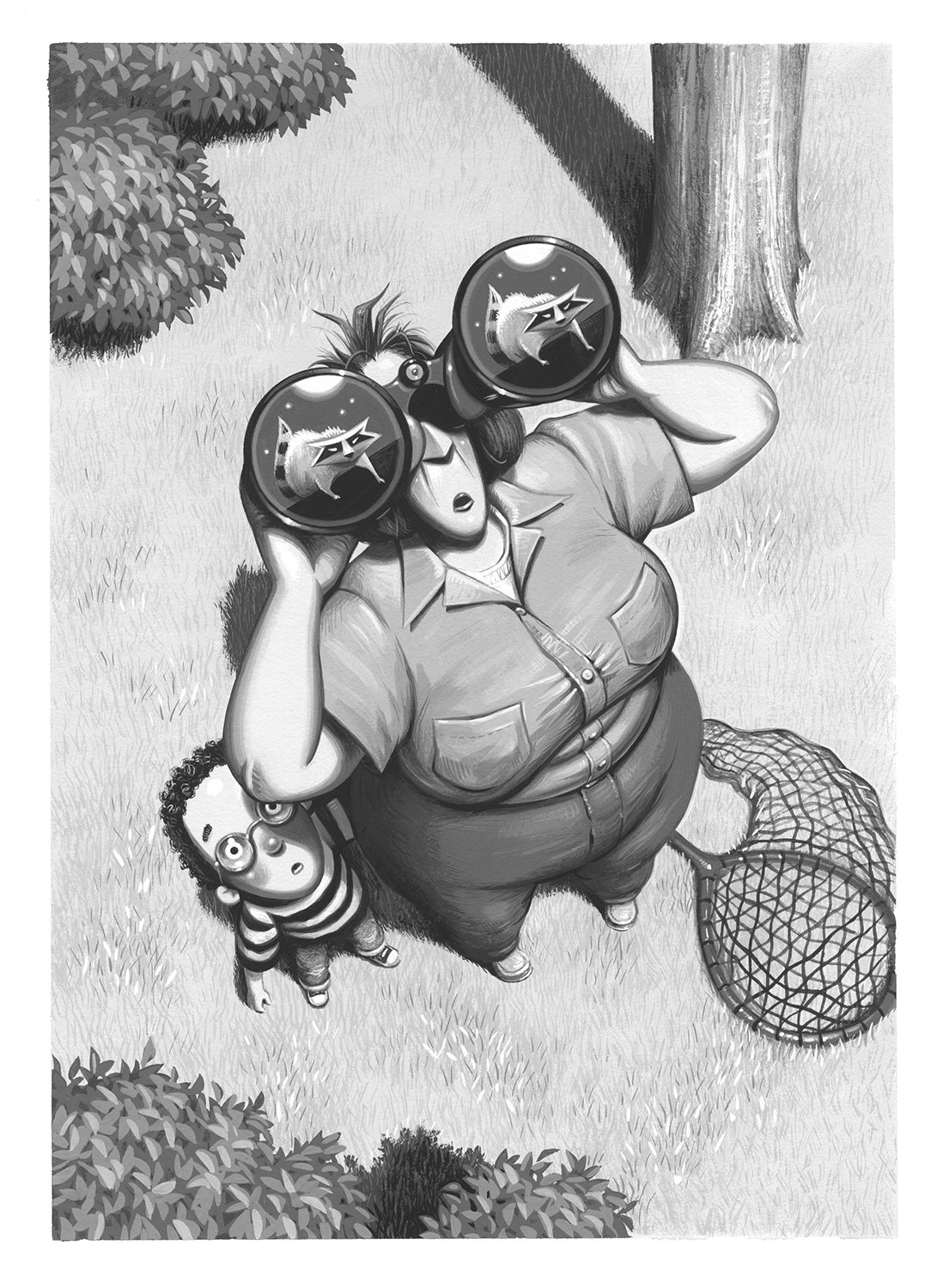
We Flagged: “Francine put the net on the ground. She took the binoculars. She held them up and looked through them. She saw the raccoon sitting on the roof, staring at her.

The moon was bright, and it was shining on the raccoon’s fur. The raccoon shimmered.”

Francine Poulet Image

Recommended For: 

classroomlibrarybuttonsmall readaloudbuttonsmall closereadinganalysisbuttonsmall


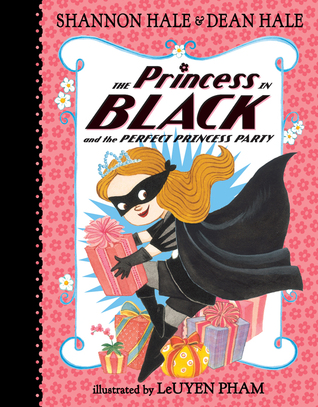
princess in black 2

The Princess in Black and the Perfect Princess Party
Authors: Shannon Hale & Dean Hale
Illustrator: LeUyen Pham
Expected Publication October 13th, 2015 by Candlewick Press

Goodreads Summary: Inconvenient monster alarms, a sparkly array of princess guests, and spot-on slapstick pacing make for a party readers will celebrate.

Today is Princess Magnolia’s birthday party, and she wants everything to be perfect. But just as her guests are arriving . . . Brring! Brring! The monster alarm! Princess Magnolia runs to the broom closet, ditches her frilly clothes, and becomes the Princess in Black! She rushes to the goat pasture, defeats the monster, and returns to the castle before her guests discover her secret. But every time Princess Magnolia is about to open her presents, the monster alarm rings again. And every time she rushes back—an inside-out dress here, a missing shoe there—it gets harder to keep the other princesses from being suspicious. Don’t those monsters understand that now is not a good time for an attack?

My Review: Princess Magnolia has some major close calls in this one! Because of that, I was so worried for Princess Magnolia throughout the book which kept me on the edge of my seat. Like the first one, I rooted for her the entire book and love that she can be both a dainty, frilly princess and a kick-butt, monster-fighting princess. I think she is such a wonderful role model for girls and a great role model OF girls for all readers. I also adore the illustrations. They are so colorful and animated. Everyone is going to enjoy the newest Princess in Black. 

Discussion Questions: What do you think would happen if everyone found out Princess Magnolia is the Princess in Black?; What could be some other ways to help keep monsters from coming from Monster Land?; Do you think Princess Sneezewort believed Princess Magnolia? How can you tell?

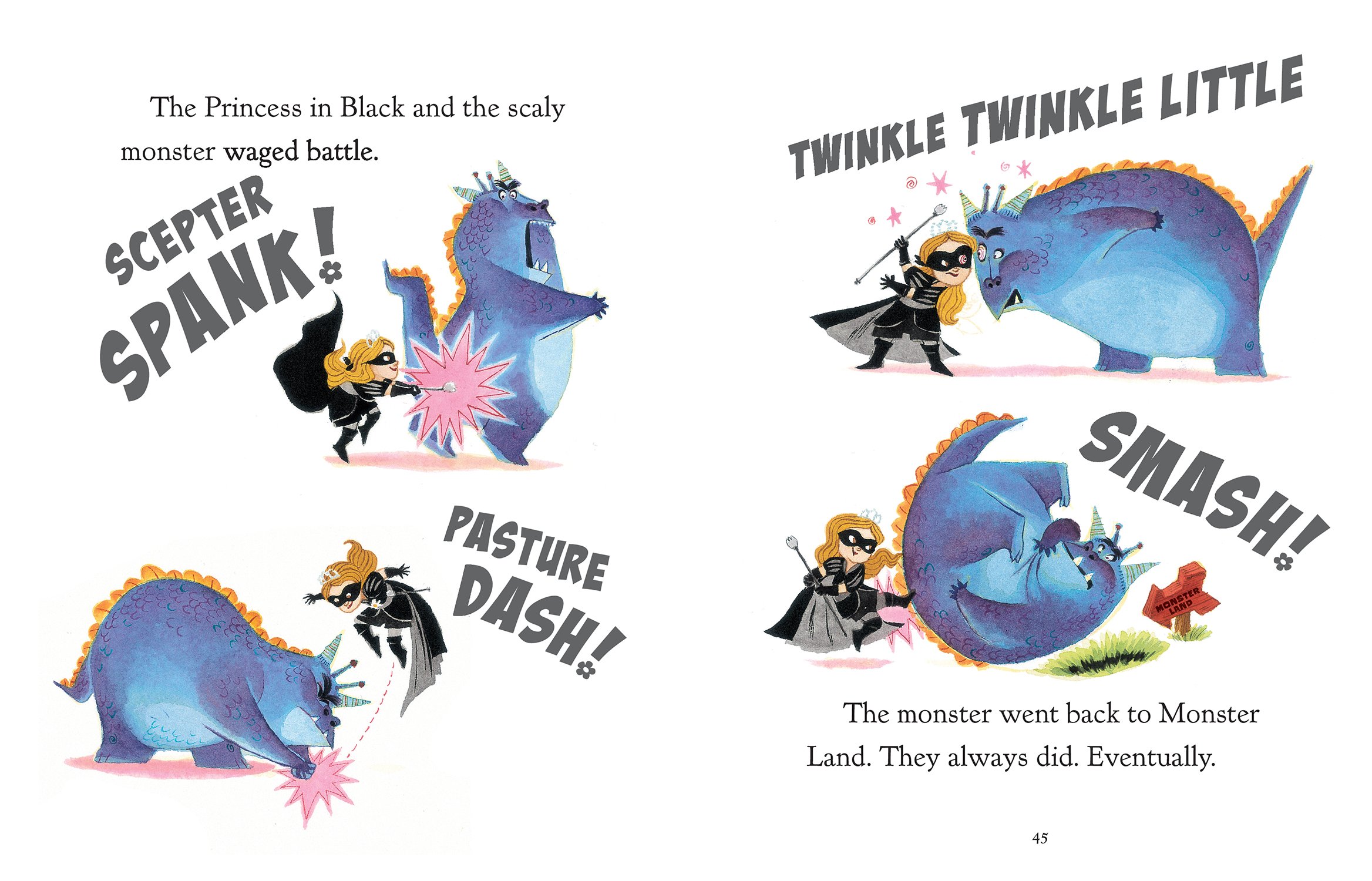
We Flagged: 

princess in black 2 image

Recommended For: 

classroomlibrarybuttonsmall readaloudbuttonsmall

Check out my review for the first Princess in Black and Tales from Deckawoo Drive books here.


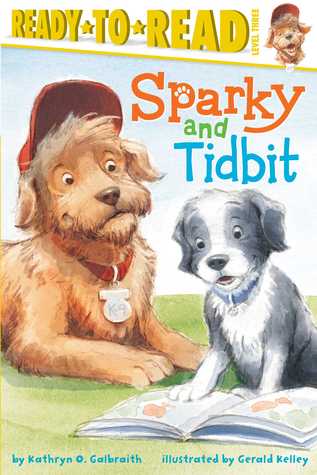
sparky and tidbit

Sparky and Tidbit
Author: Kathryn O. Galbraith
Illustrator: Gerald Kelley
Published February 3rd, 2015 by Simon Spotlight

Goodreads Summary: An intrepid do-gooder dog named Sparky and an eager young pup named Tidbit star in this charming Level 3 Ready-to-Read that’s all about helping others, gaining confidence—and learning to read!

Brave and bold Sparky receives a K-9 badge for his birthday and cannot wait to start doing heroic things. But he’s having a hard time finding ways to help. Then he hears Tidbit, the neighborhood pup, yipping and howling away because he is the worst in his class at reading. Sparky sighs. He can’t possibly help with that…or can he?

Join the adorable team of Sparky and Tidbit in a story that will teach young readers that with a lot of patience and a little help from a friend, reading will become as easy as it is fun!

My Review: Sparky wants to be a hero, and he becomes one–just not the way he expected.

Sparky and Tidbit is the sweet story of a young pup who is struggling with reading and an older pup who helps him. I love the message that this book sends, and I think that kids just learning to read are going to really enjoy watching Tidbit excel. The tribute to Sparky at the end is “Awww!” worthy as well.

Discussion Questions: What kind of hero did Sparky want to be? What did he become?; How did Sparky help change Tidbit’s life?

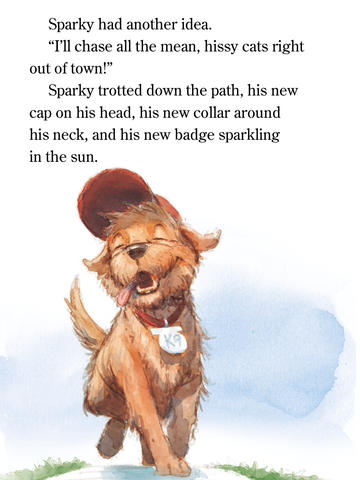
We Flagged: 

sparky and tidbit image

Recommended For: 

classroomlibrarybuttonsmall

Kellee Signature

**Thank you to Barbara from Blue Slip Media and Raquel from Candlewick Press for providing copies for review!!**

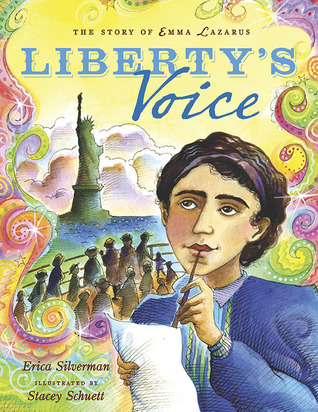
Liberty’s Voice: The Story of Emma Lazarus by Erica Silverman

Share

NFPB2015

Nonfiction Picture Book Wednesday

Nonfiction Picture Book Wednesday is hosted by Kid Lit Frenzy and was started to help promote the reading of nonfiction texts. Most Wednesdays, we will be participating and will review a nonfiction text (though it may not always be a picture book).
Be sure to visit Kid Lit Frenzy and see what other nonfiction books are shared this week!

Liberty's Voice

Liberty’s Voice: The Story of Emma Lazarus
Author: Erica Silverman
Illustrator: Stacey Schuett
Published February 3rd, 2011 by Dutton Books for Young Readers

Goodreads Summary: Emma Lazarus overcame the barriers of her day to become one of the leading poets of the nineteenth century. She used her celebrity to help the poor and impoverished immigrants of Eastern Europe. When the statue Liberty Enlightening the World came to the United States as a gift from France, it was Emma’s poem “The New Colossus” that became forever connected with this American icon. Emma’s words have served as a rallying call to generations of immigrants. In breathtaking color, veteran artist Stacey Schuett brings life to Erica Silverman’s story of one of the great women of America.

My Review:  I am always looking for biographies of strong women, and this is one I’d definitely add to my list. Emma Lazarus is a poet who everyone knows, but may not know her name, and that should change. She did so much not only with poetry, but with her editorials and articles speaking out against the oppressed, specifically the Russian Jewish immigrants. Emma Lazarus was lucky enough to have a dad that supported women getting education and helped her become a published poet and meet her mentor, Ralph Waldo Emerson. Without her dad supporting her in a time where society would not have, we wouldn’t have her beautiful poetry and much of the oppression being faced on Ward’s Island would not have been known by the public.

Teachers’ Tools for Navigation: This text is a wonderful introduction to Lazarus, but also to the plight that Jews faced in Russia because of pogroms in the late 1800s. It would be a great cross curricular read aloud to start discussions about poetry in reading/English as well as the history of Russia during this time.

Discussion Questions: How could Emma’s life have been different if she’d been poor or had a father who didn’t support her poetry?; Why were so many Russian Jews immigrating to America in the 1880s?; What is the meaning behind “The New Colossus,” and what does imply about America’s acceptance of immigrants?

We Flagged: “Emma thought about the immigrants she had met on Ward’s Island. They had known so much fear and suffering. They needed to be held, welcomed, comforted. If this statue was to have a name, it should be . . .

Mother of Exiles. From her beacon-hand
Glows world-wide welcome; her mild eyes command
The air-bridged harbor that twin cities frame.

Read This If You Loved: A River of Words: The Story of William Carlos Williams by Jennifer Fisher Bryant, The Dreamer by Pam Muñoz Ryan, The Right Word: Roget and his Thesaurus by Jennifer Fisher Bryant

Recommended For: 

classroomlibrarybuttonsmall readaloudbuttonsmall closereadinganalysisbuttonsmall

Signature

Blog Tour and Review!: Monster Needs Your Vote by Paul Czajak

Share

monster-banner-4

monster needs vote

Monster Needs Your Vote
Author: Paul Czajak
Illustrator: Wendy Grieb
Expected Publication September 4th, 2015  by Mighty Media Kids

Goodreads Summary: Election season is here and Monster is ready to vote! But why cast your ballot when you can run for president instead? With speeches, debates, and a soapbox or two, Monster’s newest tale is a campaign encouraging kids to take a stand and fight for what they believe in.

Kellee’s Review and Teachers’ Tools for Navigation: Monster wants to make a difference, but he has to go about it a little bit differently than he had planned. Monster Needs Your Vote is a great look at politics and making a difference in your community within a fun story with enjoyable characters. Monster is a little bit like Elephant in the Elephant and Piggie books. He gets so excited and wants to just go, go, go. The Boy is a bit more like Piggie. He reins Monster in. It is a great relationship! Then you add the fun story and the movie-like, colorful illustrations, and you have a book that kids, parents, and teachers are going to enjoy. Since there is such an underlying political charge to the book (who can be president, voting, education advocacy, etc.) teachers can use it in conjunction with introduction voting and democracy to students.

Ricki’s Review and Teachers’ Tools for Navigation: What a wonderful text to introduce kids to politics! Teachers might consider asking the class to look at different platforms that politicians might select. Then, they could consider different political platforms that interest them. Depending on the age of the students, these platforms could be silly or serious. Teachers might use this text to introduce the basic concepts of the election process or the requirements to run for presidency. As a child, I loved when we had mock votes in elementary school. This book is just in time for the election season and would be a fantastic way for teachers to connect literature to current events!

Campaign Kit: http://mightymediapress.com/wp-content/uploads/2015/07/MMP_MonsterCampaignKit.pdf
The kit contains presidential timelines, infographics, and activity sheets—even a ballot so kids can practice voting!

Info about the purpose and vocabulary in the Monster and Me series: http://www.bigredpaint.com/words_edit.mp4

Mini Monster and Me story: http://monsterwants.com/

Discussion Questions: Why wasn’t Monster able to run for President? What other laws are there for who can run for President?; Monster advocates for libraries and education. What would be your platform if you ran for President right now?; Why wasn’t summer and food something that drew attention from the masses? What did the people want instead?; How are Monster and the Boy different? How do they help each other?; What is the author’s purpose for writing this book?

We Flagged: 

Monster needs vote spread

Read This If You Loved: Other Monster and Me books, Books about politics, the Elephant and Piggie series by Mo Willems, the Mal and Chad series by Stephen McCranie

classroomlibrarybuttonsmall closereadinganalysisbuttonsmall readaloudbuttonsmall

Signatureand RickiSig

**Thank you to Sammy at Mighty Media Press for providing copies for review!!**

Children Growing Up with War by Jenny Matthews

Share

NFPB2015

Nonfiction Picture Book Wednesday

Nonfiction Picture Book Wednesday is hosted by Kid Lit Frenzy and was started to help promote the reading of nonfiction texts. Most Wednesdays, we will be participating and will review a nonfiction text (though it may not always be a picture book).
Be sure to visit Kid Lit Frenzy and see what other nonfiction books are shared this week!

children growing

Children Growing Up with War
Author and Photographer: Jenny Matthews
Published October 14th, 2014 by Candlewick Press

Goodreads Summary: Through personal narrative and candid photographs, a photojournalist chronicles young lives upended by violence and strife.

The right to adequate nutrition and medical care.
The right to free education.
The right to a name and nationality.
The right to affection, love, and understanding.

In conflict zones around the world, children are denied these and other basic rights. Follow photographer Jenny Matthews into refugee camps, overcrowded cities, damaged villages, clinics, and support centers where children and their families live, work, play, learn, heal, and try to survive the devastating impact of war. This moving book depicts the resilience and resourcefulness of young people who, though heavily impacted by the ravages of war, search for a better future for themselves, their families, and their cultures.

Kellee’s Review:  This was a very tough book to read. I thought I’d be able to sit and read it all in one sitting, but I couldn’t. As a mother and a teacher, I love children, and it truly saddened me to see the situations that these children are in.

Fortunately, as an American, very few wars touch our lives. Unfortunately, our news doesn’t focus on many of the tumultuous conflicts that are active throughout the world, so we have become detached from reality. Our students are even more detached. That is why this book is important. It puts it all into perspective and really makes me feel and think. We rarely look at the humans that are being affected by the wars, we always focus on getting the bad guy. This book puts faces to the people, specifically the children, being affected every day.  I found it very interesting how the author set up the book. You can tell she is a photojournalist because it is set up to give information in the most impactful way.

Ricki’s Review: When I was teaching high school, one of my main goals was to provide my students with a more global perspective. I wish I had had this incredible text available at the time because it evoked powerful emotions in me. I know it would do the same for my students. The balance of photography and words is very well done, and I will admit that I took many breaks because these images and words hit me to my core. This is an important book that belongs in classrooms. It is a good length that teachers will easily be able to use it as a pairing with other texts about war and genocide. It is important to learn about our past, but it is just as important to understand the wars that persist today—which is foundational to this book. I wish I could meet this author to thank her for writing a text that moved me so deeply.

Teachers’ Tools for Navigation: This book presents many different discussion opportunities (e.g., the affects of war on children throughout the world, different active wars,Rights of the Child, importance of journalism). It would be fascinating to read with students and hear their perspective on the very tough topics and perspectives shared in the book.

Also, the book sets up nicely for a jigsaw discussion. The author set up the book to look at the different ways lives are affected: home & displacement, family, health, work, and school & play. Within each of these sections, she also looks at different places in the world such as Tunisia, Jordan, Afghanistan, Uganda, Rwanda, Gaza, and Kurdistan. She also includes different Rights of the Child throughout the book. The teacher could jigsaw either with the topic, the places, or the Rights and have students dig deeper.

Another way to look at this book is from a journalistic/photography point of view. I [Kellee] teach journalism, and I already plan on using Photos Framed as part of my photography unit, and I think this book will add an even deeper look into the importance of photography/journalism and with a topic (children’s lives) that my students can connect with.

Discussion Questions: How does Jenny Matthews’s photos, books, and stories help children who are growing up with war?; Why would Jenny Matthews choose to go into such dangerous situations?; If you had to choose one single photo to sum up Children Growing Up with War, which of these would you choose? (p. 42); Which of the UN’s Rights of the Child are affected when war is involved?; In what different way does war affect the children growing up in the conflict area?

We Flagged: “How would you feel if you lost your home and had to flee from your own country? Imagine losing some or all of your family, either as a direct result of fighting or indirectly through illness or disease. You might have to work to support your family or fight and kill other people just to survive. And how can you go to school if it’s being used as an army command outpost and all the books have been destroyed?

This is the reality for too many children and their families in the world. Today, children are still growing up with war—the consequences of which they’ll live with for the rest of their lives” (p. 3).

Read This If You Loved: Photos Framed: A Fresh Look at the World’s Most Memorable Photographs by Ruth Thomson
This would be an excellent nonfiction companion to: Never Fall Down by Patricia McCormick, Endangered by Eliot Schrefer, Caminar by Skila Brown, The Other Side of the Wall by Simon Schwartz, The Milk of Birds by Sylvia Whitman, or Son of a Gun by Anne de Graaf.

Recommended For: 

readaloudbuttonsmall closereadinganalysisbuttonsmall

Signatureand RickiSig

Reading Workshop 2.0 by Frank Serafini

Share

reading workshop 2.0

Reading Workshop 2.0
Author: Frank Serafini
Published March 26th, 2015 by Heinemann Educational Books

Goodreads Summary: As reading teachers, how do we deal with the massive shifts that digital literacy is creating? We can’t abandon what we know works to keep up with the latest online-literacy fads. Yet, we need to prepare readers for a world of digital content. Reading Workshop 2.0 gives us teaching that puts reading for meaning first while also balancing the need for kids to become sophisticated users of books as well as online reading resources.

“This book,” writes Frank Serafini, “is designed to help teachers organize their reading workshops in order to take advantage of the latest technologies.” With his guidance, you’ll bring more digital reading into your teaching without sacrificing sound instructional principles or practices. Reading print shares four essential processes with digital reading: accessing and navigating; archiving and sharing; commenting and discussing; and interpreting and analyzing.

Frank introduces important, well-established digitally based resources that further these processes, while his lesson ideas transfer learning from classroom to real-world digital reading.

“If it doesn’t help children develop as readers,” writes Frank Serafini, “it doesn’t matter how shiny the new object is.” With Reading Workshop 2.0, you’ll help students with print while also helping them use online resources and technologies as they are intended-to make sense of texts more deeply, effectively, and efficiently.

My Thoughts: When I read a professional text, I hope that it is a perfect mix of theory and practical practices so that not only do I understand the WHY and WHAT but also the HOW. This book does just that. Part One of the text deals with the foundations of reading workshop. Dr. Serafini shares a brief overview of what can be found in his initial book about workshop, The Reading Workshop: Creating Space for Readers, including the “Ten Theoretical Principles About Teaching Reading,” “Pedagogical Strands” of reading workshop, and “Instructional Components of the Reading Workshop.” As I haven’t read any other texts by Dr. Serafini, I loved this overview (this will be fixed soon though as I have now bought 4 others books by him!). Throughout this part of the book, I found myself thinking, “YES!” and wanting to go share what I was reading with every teacher I knew. He writes about much of what I stand for when it comes to teaching reading.

Part two jumps into the 2.0 part of the text. He breaks up this part into four processes that should be added to reading workshop to move it into the digital age: “Accessing and Navigating Digital Texts,” “Archiving and Sharing Our Reading Lives,” “Commenting on and Discussing Digital Texts,” and “Interpreting and Analyzing Digital Texts.” He stresses throughout that this isn’t instead of reading workshop, this is along with. Students must get familiar with digital texts, so our workshops really need to move to 2.0. Within each chapter on a process, he gives information, resources, and explicit lessons for teaching the process. So informative and practical.

Loved this expansion on the traditional reading workshop. Filled with theory, resources, and practical practices, this PD text was very beneficial!

Teachers’ Tools for Navigation: Dr. Serafini has “Resources for Supporting Readers in the Digital Age” on his website that he will update regularly.

We Flagged: There is so much highlighting and underlining in my text that it is hard to choose what to share, but one of my favorite foundational things that was said was:

“Time is the second dimension of the opportunity strand–time to read, time to share ideas, time to wonder, and time to explore new texts. We cannot master something we don’t dedicate our time to, it’s that simple.”

Dr. Serafini joined #rwworkshop (reading/writing workshop) chat on August 5th, and really gave us great insight into his text and moving reading workshop to the digital era. Check out the archive at the #rwworkshop wiki http://rwworkshop.wikispaces.com

Read This If You Loved: Other texts by Dr. Frank Serafini, Nancie Atwell texts, The Book Whisperer by Donalyn Miller, Book Love by Penny Kittle,

Signature