Blog Tour and Review!: Monster Needs Your Vote by Paul Czajak

Share

monster-banner-4

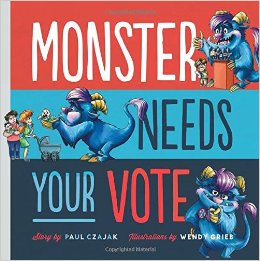
monster needs vote

Monster Needs Your Vote
Author: Paul Czajak
Illustrator: Wendy Grieb
Expected Publication September 4th, 2015  by Mighty Media Kids

Goodreads Summary: Election season is here and Monster is ready to vote! But why cast your ballot when you can run for president instead? With speeches, debates, and a soapbox or two, Monster’s newest tale is a campaign encouraging kids to take a stand and fight for what they believe in.

Kellee’s Review and Teachers’ Tools for Navigation: Monster wants to make a difference, but he has to go about it a little bit differently than he had planned. Monster Needs Your Vote is a great look at politics and making a difference in your community within a fun story with enjoyable characters. Monster is a little bit like Elephant in the Elephant and Piggie books. He gets so excited and wants to just go, go, go. The Boy is a bit more like Piggie. He reins Monster in. It is a great relationship! Then you add the fun story and the movie-like, colorful illustrations, and you have a book that kids, parents, and teachers are going to enjoy. Since there is such an underlying political charge to the book (who can be president, voting, education advocacy, etc.) teachers can use it in conjunction with introduction voting and democracy to students.

Ricki’s Review and Teachers’ Tools for Navigation: What a wonderful text to introduce kids to politics! Teachers might consider asking the class to look at different platforms that politicians might select. Then, they could consider different political platforms that interest them. Depending on the age of the students, these platforms could be silly or serious. Teachers might use this text to introduce the basic concepts of the election process or the requirements to run for presidency. As a child, I loved when we had mock votes in elementary school. This book is just in time for the election season and would be a fantastic way for teachers to connect literature to current events!

Campaign Kit: http://mightymediapress.com/wp-content/uploads/2015/07/MMP_MonsterCampaignKit.pdf
The kit contains presidential timelines, infographics, and activity sheets—even a ballot so kids can practice voting!

Info about the purpose and vocabulary in the Monster and Me series: http://www.bigredpaint.com/words_edit.mp4

Mini Monster and Me story: http://monsterwants.com/

Discussion Questions: Why wasn’t Monster able to run for President? What other laws are there for who can run for President?; Monster advocates for libraries and education. What would be your platform if you ran for President right now?; Why wasn’t summer and food something that drew attention from the masses? What did the people want instead?; How are Monster and the Boy different? How do they help each other?; What is the author’s purpose for writing this book?

We Flagged: 

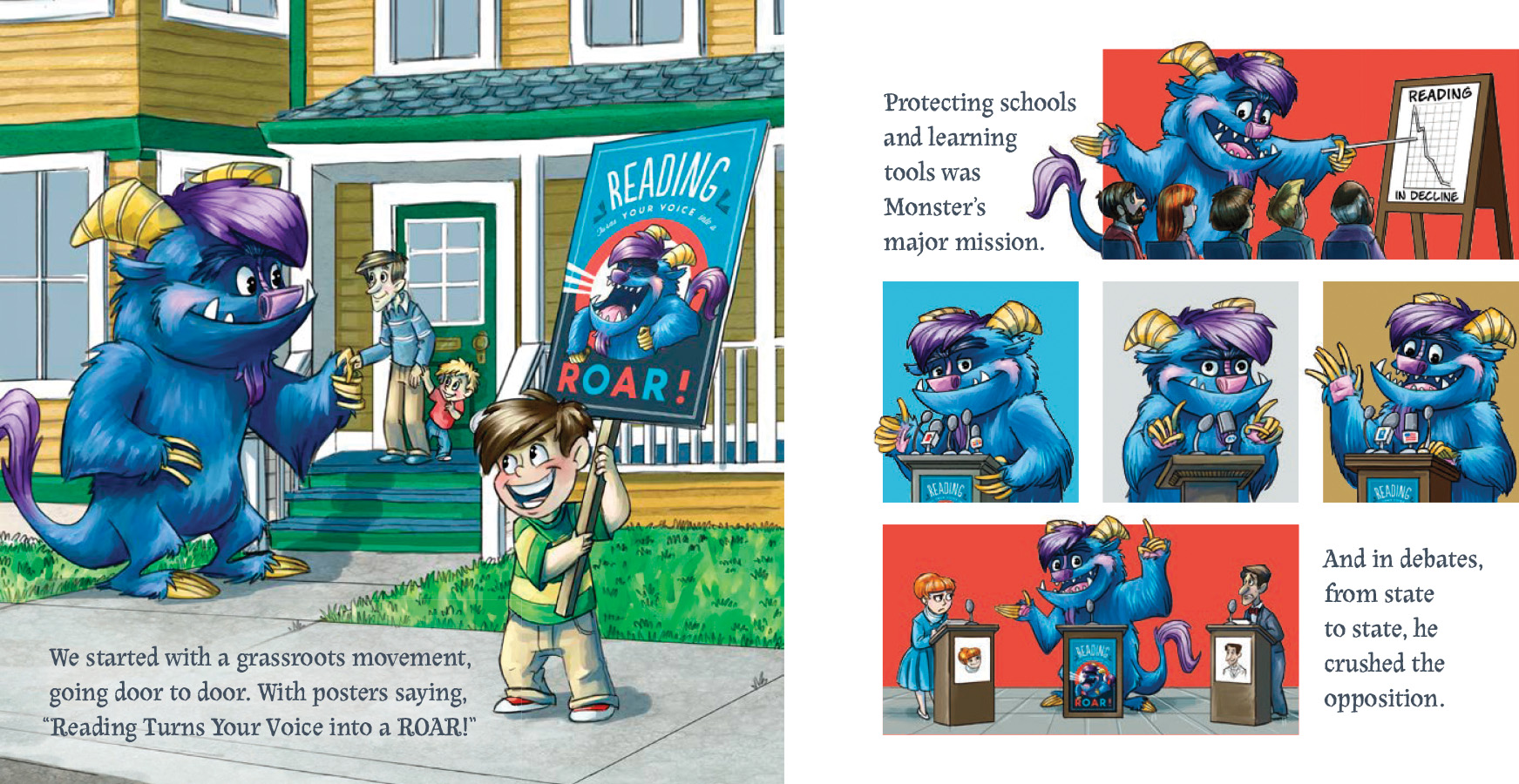
Monster needs vote spread

Read This If You Loved: Other Monster and Me books, Books about politics, the Elephant and Piggie series by Mo Willems, the Mal and Chad series by Stephen McCranie

classroomlibrarybuttonsmall closereadinganalysisbuttonsmall readaloudbuttonsmall

Signatureand RickiSig

**Thank you to Sammy at Mighty Media Press for providing copies for review!!**

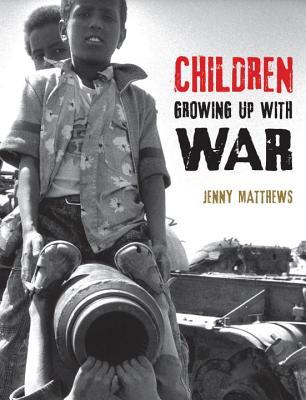
Children Growing Up with War by Jenny Matthews

Share

NFPB2015

Nonfiction Picture Book Wednesday

Nonfiction Picture Book Wednesday is hosted by Kid Lit Frenzy and was started to help promote the reading of nonfiction texts. Most Wednesdays, we will be participating and will review a nonfiction text (though it may not always be a picture book).
Be sure to visit Kid Lit Frenzy and see what other nonfiction books are shared this week!

children growing

Children Growing Up with War
Author and Photographer: Jenny Matthews
Published October 14th, 2014 by Candlewick Press

Goodreads Summary: Through personal narrative and candid photographs, a photojournalist chronicles young lives upended by violence and strife.

The right to adequate nutrition and medical care.
The right to free education.
The right to a name and nationality.
The right to affection, love, and understanding.

In conflict zones around the world, children are denied these and other basic rights. Follow photographer Jenny Matthews into refugee camps, overcrowded cities, damaged villages, clinics, and support centers where children and their families live, work, play, learn, heal, and try to survive the devastating impact of war. This moving book depicts the resilience and resourcefulness of young people who, though heavily impacted by the ravages of war, search for a better future for themselves, their families, and their cultures.

Kellee’s Review:  This was a very tough book to read. I thought I’d be able to sit and read it all in one sitting, but I couldn’t. As a mother and a teacher, I love children, and it truly saddened me to see the situations that these children are in.

Fortunately, as an American, very few wars touch our lives. Unfortunately, our news doesn’t focus on many of the tumultuous conflicts that are active throughout the world, so we have become detached from reality. Our students are even more detached. That is why this book is important. It puts it all into perspective and really makes me feel and think. We rarely look at the humans that are being affected by the wars, we always focus on getting the bad guy. This book puts faces to the people, specifically the children, being affected every day.  I found it very interesting how the author set up the book. You can tell she is a photojournalist because it is set up to give information in the most impactful way.

Ricki’s Review: When I was teaching high school, one of my main goals was to provide my students with a more global perspective. I wish I had had this incredible text available at the time because it evoked powerful emotions in me. I know it would do the same for my students. The balance of photography and words is very well done, and I will admit that I took many breaks because these images and words hit me to my core. This is an important book that belongs in classrooms. It is a good length that teachers will easily be able to use it as a pairing with other texts about war and genocide. It is important to learn about our past, but it is just as important to understand the wars that persist today—which is foundational to this book. I wish I could meet this author to thank her for writing a text that moved me so deeply.

Teachers’ Tools for Navigation: This book presents many different discussion opportunities (e.g., the affects of war on children throughout the world, different active wars,Rights of the Child, importance of journalism). It would be fascinating to read with students and hear their perspective on the very tough topics and perspectives shared in the book.

Also, the book sets up nicely for a jigsaw discussion. The author set up the book to look at the different ways lives are affected: home & displacement, family, health, work, and school & play. Within each of these sections, she also looks at different places in the world such as Tunisia, Jordan, Afghanistan, Uganda, Rwanda, Gaza, and Kurdistan. She also includes different Rights of the Child throughout the book. The teacher could jigsaw either with the topic, the places, or the Rights and have students dig deeper.

Another way to look at this book is from a journalistic/photography point of view. I [Kellee] teach journalism, and I already plan on using Photos Framed as part of my photography unit, and I think this book will add an even deeper look into the importance of photography/journalism and with a topic (children’s lives) that my students can connect with.

Discussion Questions: How does Jenny Matthews’s photos, books, and stories help children who are growing up with war?; Why would Jenny Matthews choose to go into such dangerous situations?; If you had to choose one single photo to sum up Children Growing Up with War, which of these would you choose? (p. 42); Which of the UN’s Rights of the Child are affected when war is involved?; In what different way does war affect the children growing up in the conflict area?

We Flagged: “How would you feel if you lost your home and had to flee from your own country? Imagine losing some or all of your family, either as a direct result of fighting or indirectly through illness or disease. You might have to work to support your family or fight and kill other people just to survive. And how can you go to school if it’s being used as an army command outpost and all the books have been destroyed?

This is the reality for too many children and their families in the world. Today, children are still growing up with war—the consequences of which they’ll live with for the rest of their lives” (p. 3).

Read This If You Loved: Photos Framed: A Fresh Look at the World’s Most Memorable Photographs by Ruth Thomson
This would be an excellent nonfiction companion to: Never Fall Down by Patricia McCormick, Endangered by Eliot Schrefer, Caminar by Skila Brown, The Other Side of the Wall by Simon Schwartz, The Milk of Birds by Sylvia Whitman, or Son of a Gun by Anne de Graaf.

Recommended For: 

readaloudbuttonsmall closereadinganalysisbuttonsmall

Signatureand RickiSig

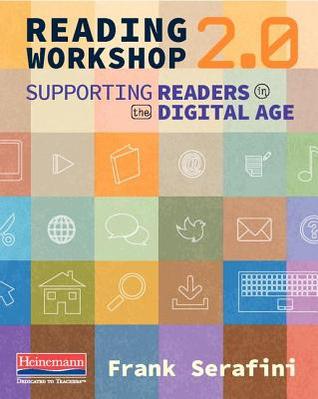
Reading Workshop 2.0 by Frank Serafini

Share

reading workshop 2.0

Reading Workshop 2.0
Author: Frank Serafini
Published March 26th, 2015 by Heinemann Educational Books

Goodreads Summary: As reading teachers, how do we deal with the massive shifts that digital literacy is creating? We can’t abandon what we know works to keep up with the latest online-literacy fads. Yet, we need to prepare readers for a world of digital content. Reading Workshop 2.0 gives us teaching that puts reading for meaning first while also balancing the need for kids to become sophisticated users of books as well as online reading resources.

“This book,” writes Frank Serafini, “is designed to help teachers organize their reading workshops in order to take advantage of the latest technologies.” With his guidance, you’ll bring more digital reading into your teaching without sacrificing sound instructional principles or practices. Reading print shares four essential processes with digital reading: accessing and navigating; archiving and sharing; commenting and discussing; and interpreting and analyzing.

Frank introduces important, well-established digitally based resources that further these processes, while his lesson ideas transfer learning from classroom to real-world digital reading.

“If it doesn’t help children develop as readers,” writes Frank Serafini, “it doesn’t matter how shiny the new object is.” With Reading Workshop 2.0, you’ll help students with print while also helping them use online resources and technologies as they are intended-to make sense of texts more deeply, effectively, and efficiently.

My Thoughts: When I read a professional text, I hope that it is a perfect mix of theory and practical practices so that not only do I understand the WHY and WHAT but also the HOW. This book does just that. Part One of the text deals with the foundations of reading workshop. Dr. Serafini shares a brief overview of what can be found in his initial book about workshop, The Reading Workshop: Creating Space for Readers, including the “Ten Theoretical Principles About Teaching Reading,” “Pedagogical Strands” of reading workshop, and “Instructional Components of the Reading Workshop.” As I haven’t read any other texts by Dr. Serafini, I loved this overview (this will be fixed soon though as I have now bought 4 others books by him!). Throughout this part of the book, I found myself thinking, “YES!” and wanting to go share what I was reading with every teacher I knew. He writes about much of what I stand for when it comes to teaching reading.

Part two jumps into the 2.0 part of the text. He breaks up this part into four processes that should be added to reading workshop to move it into the digital age: “Accessing and Navigating Digital Texts,” “Archiving and Sharing Our Reading Lives,” “Commenting on and Discussing Digital Texts,” and “Interpreting and Analyzing Digital Texts.” He stresses throughout that this isn’t instead of reading workshop, this is along with. Students must get familiar with digital texts, so our workshops really need to move to 2.0. Within each chapter on a process, he gives information, resources, and explicit lessons for teaching the process. So informative and practical.

Loved this expansion on the traditional reading workshop. Filled with theory, resources, and practical practices, this PD text was very beneficial!

Teachers’ Tools for Navigation: Dr. Serafini has “Resources for Supporting Readers in the Digital Age” on his website that he will update regularly.

We Flagged: There is so much highlighting and underlining in my text that it is hard to choose what to share, but one of my favorite foundational things that was said was:

“Time is the second dimension of the opportunity strand–time to read, time to share ideas, time to wonder, and time to explore new texts. We cannot master something we don’t dedicate our time to, it’s that simple.”

Dr. Serafini joined #rwworkshop (reading/writing workshop) chat on August 5th, and really gave us great insight into his text and moving reading workshop to the digital era. Check out the archive at the #rwworkshop wiki http://rwworkshop.wikispaces.com

Read This If You Loved: Other texts by Dr. Frank Serafini, Nancie Atwell texts, The Book Whisperer by Donalyn Miller, Book Love by Penny Kittle,

Signature

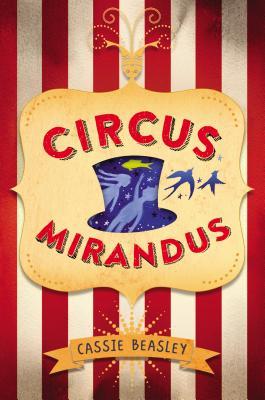
Circus Mirandus by Cassie Beasley

Share


circus mirandus

Circus Mirandus
Author: Cassie Beasley
Published January 1, 2015 by Dial

Goodreads Summary:
Do you believe in magic?
Micah Tuttle does.

Even though his awful Great-Aunt Gertrudis doesn’t approve, Micah believes in the stories his dying Grandpa Ephraim tells him of the magical Circus Mirandus: the invisible tiger guarding the gates, the beautiful flying birdwoman, and the magician more powerful than any other—the Man Who Bends Light. Finally, Grandpa Ephraim offers proof. The Circus is real. And the Lightbender owes Ephraim a miracle. With his friend Jenny Mendoza in tow, Micah sets out to find the Circus and the man he believes will save his grandfather.

The only problem is, the Lightbender doesn’t want to keep his promise. And now it’s up to Micah to get the miracle he came for.

Ricki’s Review: I was only a few pages in when I knew this book would be special. I was captivated by the beautifully described setting and the words that seemed to dance off the pages. This book is about magic, but the writing is quite magical in itself. I usually give my ARCs away, but I am hanging on to this copy because I plan to read it to my son when he is a bit older. I’ll likely buy another copy because I am eager to see the illustrations! I suspect that this text will create lifelong readers. It belongs in every classroom in America. Circus Mirandus is the kind of book that takes you to another world—one that will stay in your heart forever.

Kellee’s Review: I liked Circus Mirandus  from the very beginning, but as soon as the circus officially enters he story, the magic just engulfs you. I think it is the Lightbender that makes the story. He is a mystery, but also the person that I feel like I connected with the most. I truly feel that he is what makes this book as magical as it is. I also really liked Jenny. Jenny represents the main stream (which is odd to say because Jenny is a little bit odd), but Jenny has already moved past magic and is so straight forward. Convincing her to believe in anything past what she sees and knows was such a challenge for Micah. (But she is such a great friend!)

One of the things I really liked about the text is the theme of helping kids stay kids for as long as possible. Circus Mirandus is around to help keep the magic of childhood alive. That is something I can believe in!

Circus Mirandus was my informal Twitter book club’s choice for July, and I loved chatting with them about the book (and Ricki joined us this time!). To see the archive of our chat, you can view it here. (Warning: There are spoilers for the book in the chat.)
Some of my favorite quotes from the chat were:

“I loved that Jenny was willing to go along on the journey even if she had trouble believing.” -Alyson Beecher

–“Yes! That is what made me love her. She was willing to support her friend.” -Kellee Moye

–“And Jenny needed a friend, found something in herself that “might” want to believe, too?” -Linda Baie

–“I love how great Jenny and Micah are for each other…helping each other find courage and comfort.” -Beth Sanderson

“It was interesting that the light bender just dismissed G., rather as we all should dismiss evil people.” -Linda Baie

“I loved the relationship between Micah and Gpa. He had so many words of wisdom to prepare Micah.” -Leigh Anne Eck

–“The wonderful relationship between Micah and his Grandpa is what I will remember the most about this book.” -Cynthia Alaniz

“I don’t think we should hide kids from life truths like death. Kids need to be taught healthy ways to grieve.” -Ricki Ginsberg

“The artwork is special! It is interesting to read the Ch then look at the art & find the reasoning behind the art.” -Kellee Moye

–“Yes! There is something special when physical aesthetic of book matches aesthetic of the language.” -Christy Rush-Levine

Favorite quotes shared from the book:

“Because when you try too hard to hold on to something, you break it.”

“Who you are is more than good enough.”

Teachers’ Tools for Navigation: This book naturally lends itself to a creative project. I would love to have students work together to design their own circus. Perhaps each student could be in charge of designing a different section of the circus and writing about it. For example, one student might be in charge of writing the opening speech for a circus act; another student could be in charge of writing a newspaper article about the events; another student might be in charge of writing to the mayor to ask permission to use a field for the circus. I’d allow students to generate their own ideas, so they can take ownership of their work.

However, the best place that this book could end up is in as many kids’ hands as possible! It deserves to be read and read widely.

Discussion Questions: What is Jenny’s role in the novel? How does she add to the story?; Do you think you would believe in the circus? Why or why not?; Which characters showed bravery? Why or why not?; What role does fantasy play in this text? How would it be different if it was a work of realistic fiction?

We Flagged: “You never need an invitation to go home.”

Read This If You Loved: Books by Roald Dahl, A Snicker of Magic by Natalie Lloyd, Wonder Show by Hannah Barnaby, Miss Peregrine’s Home for Peculiar Children by Ransom Riggs, Big Fish by Daniel Wallace, Night Circus by Erin Morgenstern, Peter Pan by J.M. Barrie

Recommended For: 

 readaloudbuttonsmall litcirclesbuttonsmall closereadinganalysisbuttonsmall classroomlibrarybuttonsmall

 RickiSigandSignature

**Thank you to Penguin for providing copies for review!**

2015 Big Book Summer Challenge: Revolution by Deborah Wiles & East of Eden by John Steinbeck

Share

bigbooksummer

Big Book Summer Challenge is a challenge hosted by Sue at Book by Book. The inspiration behind the challenge is to push the bigger books to the top of the TBR pile during summer time.

The Details:

  • Anything over 400 pages qualifies as a big book.
  • The challenge will run from Memorial Day weekend (starting May 22 this year) through Labor Day weekend (Labor Day is September 7 this year).
  • Choose one or two or however many big books you want as your goal.  Wait, did you get that?  You only need to read 1 book with over 400 pages this summer to participate! (Though you are welcome to read more, if you want.)
  • Choose from what’s on your shelves already or a big book you’ve been meaning to read for ages or anything that catches your eye in the library – whatever peaks your interest!
  • Sign up on Book by Book.
  • Write a post to kick things off – you can list the exact big books you plan to read or just publish your intent to participate, but be sure to include the Big Book Summer Challenge pic above, with a link back to Book by Book.
  • Write a post to wrap up at the end, listing the big books you read during the summer.
  • You can write progress posts if you want to and/or reviews of the big books you’ve read…but you don’t have to!  There is a separate links list below for big book review posts.

Today, we are combining the last three bullet points–we both have finished our big books!

Kellee
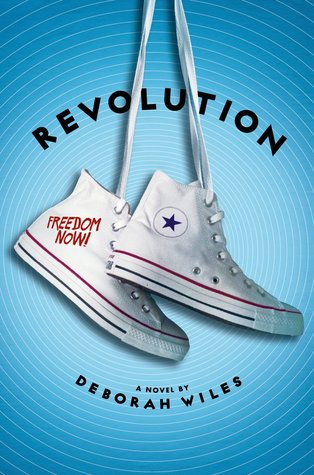
revolution

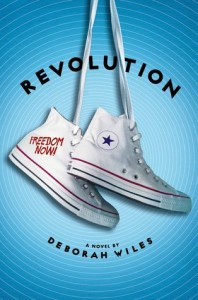
Revolution
Author: Deborah Wiles
Published May 27th, 2014 by Scholastic Press
538 pages

Goodreads Summary: It’s 1964, and Sunny’s town is being invaded.  Or at least that’s what the adults of Greenwood, Mississippi, are saying. All Sunny knows is that people from up north are coming to help people register to vote.  They’re calling it Freedom Summer.

Meanwhile, Sunny can’t help but feel like her house is being invaded, too.  She has a new stepmother, a new brother, and a new sister crowding her life, giving her little room to breathe.  And things get even trickier when Sunny and her brother are caught sneaking into the local swimming pool — where they bump into a mystery boy whose life is going to become tangled up in theirs.

As she did in her groundbreaking documentary novel Countdown, award-winning author Deborah Wiles uses stories and images to tell the riveting story of a certain time and place — and of kids who, in a world where everyone is choosing sides, must figure out how to stand up for themselves and fight for what’s right.

*A 2014 National Book Award Finalist

Kellee’s Thoughts: What is so amazing about this book is that it doesn’t feel like a big book. Well, it FEELS like a big book because it is heavy and thick, but when you are done reading, it doesn’t feel like you had to trudge through anything. Not once did I feel like there were too many pages. Wiles does an amazing job filling each and every page with important information for the historical context, characterization, or plot development.

Revolution is a perfectly-crafted look at one of the toughest times in American history. What Wiles does is truly delve into the emotions felt during the Freedom Summer and some of the smaller actions that may not have made the history books. One of my favorite things about Wiles’s Sixties Trilogy books is that she includes historical resources throughout the book that truly puts the story in context. The primary sources/stories and other embedded pieces of history really show that the narrative she has created is not truly a work of fiction. It may include fictional characters, but the setting, the feelings, the conflict, the time period, the history–those are all fact.

Revolution couldn’t work without the Sunny and her cast of characters though. This book could have gone terribly wrong if the voice, thoughts, and feelings of our protagonist were not so believable since Wiles was having us learn about such a tumultuous time through the eyes of a child. However, no need to worry about that because Sunny is perfect. She is easy to connect to and seems true. My favorite characters are those around her that push her and help change her: Annabelle, Jo Ellen, and Ray. Annabelle is so patient, truly loves Sunny, and has some of the best lines in the book; Jo Ellen is so head-strong, forward-thinking, and intelligent; and Ray is just crazy but also overwhelmingly brave.

I am part of an informal Twitter book club, and our June read was Revolution. Deborah Wiles even stopped by to chat with us! If you are interested in reading it, I archived it here. Warning: There may be spoilers if you haven’t read the book. Some of my favorite quotes from the chat that truly show the impact of the book are:

“What a brilliant idea Deborah Wiles had with these books–to embed all of the history.” -Carrie Gelson

“Sunny’s story hit my heart.” -Michele Knott

Countdown and Revolution are like…seeing beyond the headlines.” -Cheriee Weichel

“So hard to read how something you think people could do (register) but couldn’t because of effects (lose job, name in paper, etc.)” -Michele Knott

“It took Sunny witnessing the civil unrest to grow up and realize how to accept her own life.” -Kellee Moye

“There is so much about the Civil Rights Movement that seems like it should be easy, but ignorance stops it.” Kellee Moye

“Immerse as much as possible.” -Deborah Wiles, referencing part of her research process

Favorite quote from the book: “Everything is connected. Every choice matters.Every person is vital, valuable, and worthy of respect.” pg. 361

Recommended For: 

classroomlibrarybuttonsmall readaloudbuttonsmall closereadinganalysisbuttonsmall litcirclesbuttonsmall

Ricki

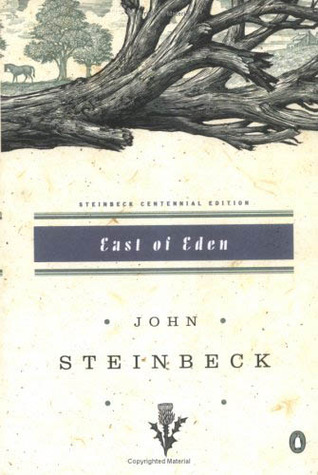
I also plan to tackle Wonderstruck by Brian Selznick, as well, but I am not sure if I will make it by the end of the summer. East of Eden was quite an epic read!
east of eden

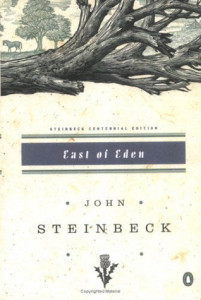
East of Eden
Author: John Steinbeck
Published in 1952
601 pages

Goodreads Summary: Set in the rich farmland of California’s Salinas Valley, this sprawling and often brutal novel follows the intertwined destinies of two families—the Trasks and the Hamiltons—whose generations helplessly reenact the fall of Adam and Eve and the poisonous rivalry of Cain and Abel. Here Steinbeck created some of his most memorable characters and explored his most enduring themes: the mystery of identity; the inexplicability of love; and the murderous consequences of love’s absence.

Ricki’s Thoughts: I’ve had this book on my to-be-read list for several years. In fact, I realized I own three identical copies of it, so I have considered reading it for quite some time. I love Of Mice and Men and Grapes of Wrath. In fact, I love the six or so Steinbeck books I’ve read. I’d heard this book was related to the Cain/Abel story, so I never got around to reading it because I thought I knew the ending. As an aside, I didn’t, but even if all of my predictions were accurate, it still would have been well worth the read.

The book consists of several interwoven stories and families. Two good friends (who aren’t avid readers) listened to this book in the car, and they continually urged me to read it. When I finally started, they kept saying, “We know which character you will love.” Sam Hamilton is a good man–a salt of the Earth kind of man. He reminds me of Slim for Of Mice and Men. Essentially, he teaches us what it means to be good to the very hollows of our souls. Another character who will stick with me forever is Cathy. Phew. She is quite a complex character—a sociopath, I would say—and her evilness makes my skin crawl. She is unlike any other character I’ve ever read. I could continue forward and describe more characters, but it feels as if I won’t do them justice.

The story does meander at times, but anyone who appreciates Steinbeck’s work knows that this is, in fact, a positive quality. His stories feel very true to life. We don’t follow plot diagrams. I will never forget reading this book. The story and its characters will stay with me forever. I highly recommend it.

A few great quotes that depict the beauty of Steinbeck’s words:

“I believe a strong woman may be stronger than a man, particularly if she happens to have love in her heart. I guess a loving woman is indestructible.”

“All great and precious things are lonely.”

“I believe that there is one story in the world, and only one. . . . Humans are caught—in their lives, in their thoughts, in their hungers and ambitions, in their avarice and cruelty, and in their kindness and generosity too—in a net of good and evil. . . . There is no other story. A man, after he has brushed off the dust and chips of his life, will have left only the hard, clean questions: Was it good or was it evil? Have I done well—or ill?”

“There’s more beauty in truth, even if it is dreadful beauty.”

Recommended For: 

classroomlibrarybuttonsmall closereadinganalysisbuttonsmall

Thank you to Sue for hosting the challenge and pushing us! 

What big books do you have planned for the summer? You should join in the challenge too!

Signature andRickiSig

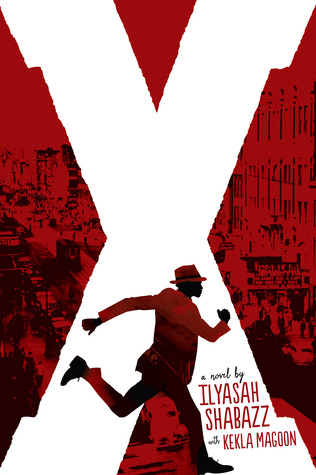
X by Ilyasah Shabazz and Kekla Magoon

Share

x

X
Authors: Ilyasah Shabazz and Kekla Magoon
Published: January 6, 2015 by Candlewick Press

GoodReads Summary: Cowritten by Malcolm X’s daughter, this riveting and revealing novel follows the formative years of the man whose words and actions shook the world.

I am Malcolm.
I am my father’s son. But to be my father’s son means that they will always come for me.

They will always come for me, and I will always succumb.

Malcolm Little’s parents have always told him that he can achieve anything, but from what he can tell, that’s nothing but a pack of lies—after all, his father’s been murdered, his mother’s been taken away, and his dreams of becoming a lawyer have gotten him laughed out of school. There’s no point in trying, he figures, and lured by the nightlife of Boston and New York, he escapes into a world of fancy suits, jazz, girls, and reefer.

But Malcolm’s efforts to leave the past behind lead him into increasingly dangerous territory when what starts as some small-time hustling quickly spins out of control. Deep down, he knows that the freedom he’s found is only an illusion—and that he can’t run forever.

X follows Malcolm from his childhood to his imprisonment for theft at age twenty, when he found the faith that would lead him to forge a new path and command a voice that still resonates today.

Review: If you’ve been reading the blog the past few weeks, my love for this book may feel repetitive (and I am not sorry!). Some books just stick to our bones and by Ilyasah Shabazz and Kekla Magoon will remain with me forever. It kept me awake late at night, and I was floored by the captivating writing. This is a very special book and well worth the hype it has received. I plan to use it in my future Methods classes because there are so many themes and topics for discussion. Most texts are written about Malcolm Little’s later life, but this book encapsulates his early years—this restless young man is dissatisfied with his circumstances and attempts to make a name for himself. He does not always make the best choices, but he learns from his many mistakes, and his spirit will inspire readers. I highly recommend this book for all readers. Malcolm has a lot to teach us.

Teachers’ Tools for Navigation: This book made me want to sign out Malcolm X’s autobiography from the library. I wondered what else I could learn about him. Teachers might ask students to research Malcolm X’s life. They might explore the ways Malcolm inspired troubled youth and why he made connections with them. Based on this text and others, it seems that many of Malcolm X’s actions may be misrepresented, so it might be wise for teachers to discuss his life, mission, and actions with students. This would allow students to form their own understandings of his later life.

Discussion Questions: If you could change one decision Malcolm made, what would it be? What do you think he should have done differently?; Malcolm may inspire us, but who inspired Malcolm?; How is Malcolm different from his family members? How does this impact him?

We Flagged: “I did what I had to. Didn’t see anything wrong with it. Not a thing” (p. 36).

Read This If You Loved: The Rock and the River by Kekla Magoon; How it Went Down by Kekla Magoon; Freedom Summer by Deborah Wiles; Audacity by Melanie Crowder; The Boy in the Black Suit by Jason Reynolds

Recommended For:

readaloudbuttonsmall litcirclesbuttonsmall closereadinganalysisbuttonsmall classroomlibrarybuttonsmall

RickiSig

Flight of the Honey Bee by Raymond Huber

Share

NFPB2015

Nonfiction Picture Book Wednesday

Nonfiction Picture Book Wednesday is hosted by Kid Lit Frenzy and was started to help promote the reading of nonfiction texts. Most Wednesdays, we will be participating and will review a nonfiction text (though it may not always be a picture book).
Be sure to visit Kid Lit Frenzy and see what other nonfiction books are shared this week!

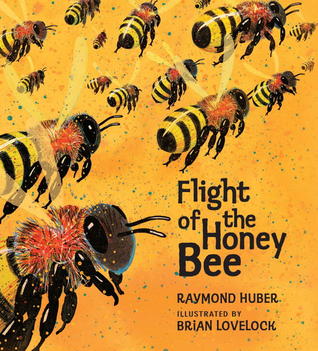
flight of the honey

Flight of the Honey Bee
Author: Raymond Huber
Illustrator: Brian Lovelock
Published September 10th, 2013 by Candlewick Press

Goodreads Summary: Follow the flight of a honey bee as she searches for nectar to sustain her hive and, along the way, pollinates flowers to produce seeds and fruits.

A tiny honey bee emerges from the hive for the first time. Using sunlight, landmarks, and scents to remember the path, she goes in search of pollen and nectar to share with the thousands of other bees in her hive. She uses her powerful sense of smell to locate the flowers that sustain her, avoids birds that might eat her, and returns home to share her finds with her many sisters. Nature lovers and scientists-to-be are invited to explore the fascinating life of a honey bee.

Kellee’s Review and Teachers’ Tools for NavigationI love books that mix narrative and information nonfiction within one book. This text introduces Scout as she exits the hive and goes about her bee-siness (hehe!). This part of the story is told as a story. Then on each page, there is information about bees in general to help the reader understand Scout’s journey. This unique text structure mixed with the realistic yet artistic illustrations really makes Flight compelling to read. In addition to learning about bees and the vocabulary included in the book, this book could be a great addition to a lit circle inquiry group about insects or as a mentor text to create student narrative and informational mixed writing about a animal after researching. 

Ricki’s Review and Teachers’ Tools for Navigation: I read this book aloud to my son while he was eating breakfast, and he was captivated by the illustrations and story. I immediately texted Kellee and told her we had to schedule a day to review it! I had a lot of fun following Scout on her adventure, and I know kids will become so engaged in this story that they will forget they are learning. I thought I knew a lot about bees, but I was surprised by how much information is packed into this text. Readers will cheer for Scout as she encounters obstacles. I try to integrate nonfiction into every unit, and this would be a great book to show students just how accessible nonfiction can be. Then, they could pick a creature or object in nature, conduct research, and write their own narrative nonfiction texts.

Discussion Questions: How do bees help the environment and humans?; How can we help save the bees?; What are the different types of bees? Why are they all important?

Flight of the Honey Bee Teacher Guide from Candlewick

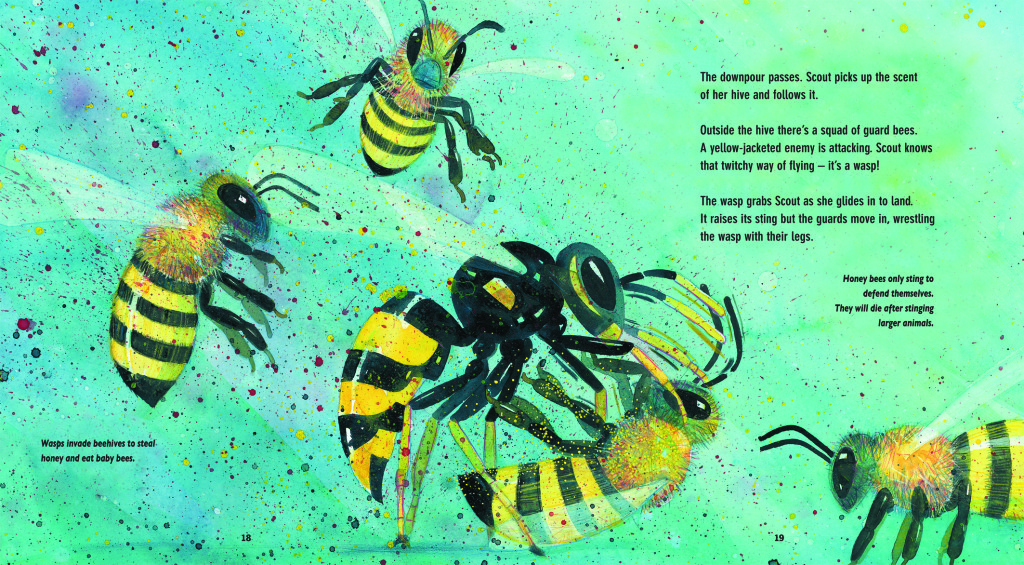
We Flagged: 

flight of the honey page
(c) 2013 Raymond Huber http://www.raymondhuber.co.nz/

Read This If You Loved: Lifetime by Lola M. Schaefer, Winter Bees & Other Poems of the Cold by Joyce SidmanThe Alphabet of Bugs by Valerie Gates

Recommended For: 

classroomlibrarybuttonsmall readaloudbuttonsmall closereadinganalysisbuttonsmall

Signatureand RickiSig

**Thank you to Candlewick for providing copies of the text for review!!**