Earth! My First 4.54 Billion Years by Stacy McAnulty

Share

nfpb2017

Nonfiction Wednesday

Nonfiction Picture Book Wednesday is hosted by Kid Lit Frenzy and was started to help promote the reading of nonfiction texts. Most Wednesdays, we will be participating and will review a nonfiction text (though it may not always be a picture book).
Be sure to visit Kid Lit Frenzy and see what other nonfiction books are shared this week!
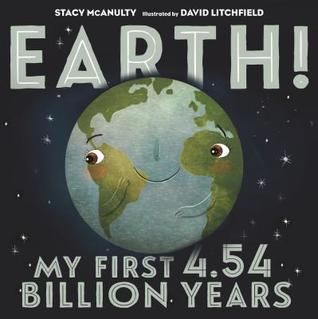
Earth! My First 4.54 Billion Years
Author: Stacy McAnulty
Illustrator: David Litchfield
Published October 24th, 2017

Summary: “Hi, I’m Earth! But you can call me Planet Awesome.”

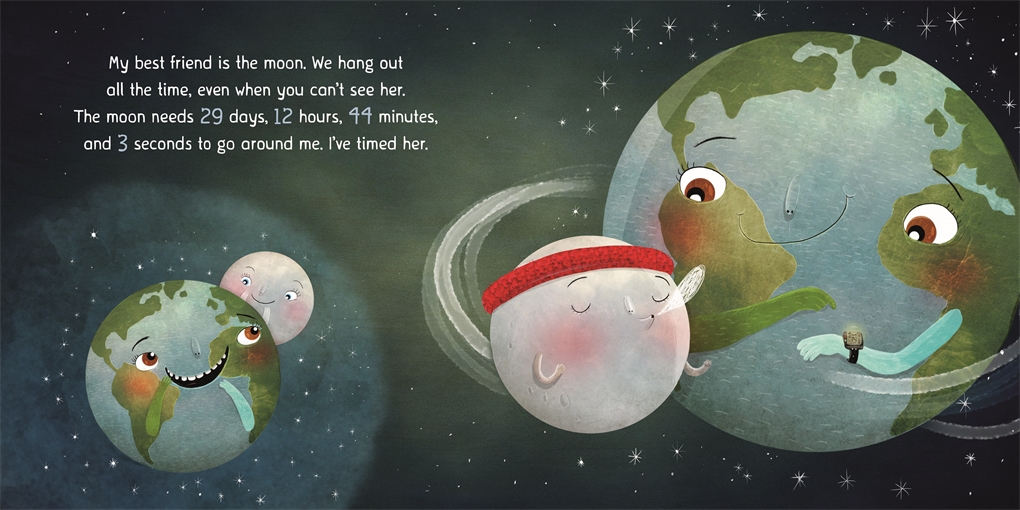
Prepare to learn all about Earth from the point-of-view of Earth herself! In this funny yet informative book, filled to the brim with kid-friendly facts, readers will discover key moments in Earth’s life, from her childhood more than four billion years ago all the way up to present day. Beloved children’s book author Stacy McAnulty helps Earth tell her story, and award-winning illustrator David Litchfield brings the words to life. The book includes back matter with even more interesting tidbits.

ReviewWow! This book went above and beyond my expectations! Think of it as Earth’s humorous autobiography. The voice that Stacy McAnulty gave Earth is perfect, and you learn things too! Although the book is silly and is told from Earth’s point of view, it is still a book that should be taken seriously because the knowledge it (and the back matter) holds is tremendous. It goes through the history of Earth is a truthful yet understandable way. Kids will leave the book knowing more than they did before but also really interested in learning more. Stacy McAnulty’s narrative with David Litchfield’s cartoonish illustrations lends itself to the perfect picture book for entertainment and information. Just check out the flagged passages to see why I say this is a must-get book!

Teachers’ Tools for Navigation: When Earth’s history is first introduced in elementary school, Earth! would be the perfect introduction book because it goes over the entire history in a way that students will pay attention to but also without dumbing down any of the information.

Discussion Questions: 

  • How did the author use text features throughout the book?
  • How did the author’s use of an unconventional narrator help you understand the history of Earth better?
  • What humorous parts of the book were your favorite? Why?
  • Using the ruler visual within the book, how much of Earth’s history have human’s inhabited? What else do you learn from this visual?
  • Read the back matter of the book. What else did Stacy McAnulty teach you in the back of the book?
  • What is something new you learned about Earth or the solar system in Earth!?
  • Would you classify the book as fiction or non-fiction? Why?

Flagged Passages: 

Read This If You Love: Science, Space, Picture books with humorous narrators like It’s Not Jack and the Beanstalk by Josh FunkNothing Rhymes with Orange by Adam Rex

Recommended For: 

classroomlibrarybuttonsmall closereadinganalysisbuttonsmall

Signature

**Thank you to Kelsey at MacMillan for setting up the blog tour for Earth!**

Blog Tour with Author Guest Post with Activities and Discussion Questions!: Dragonfly Song by Wendy Orr

Share

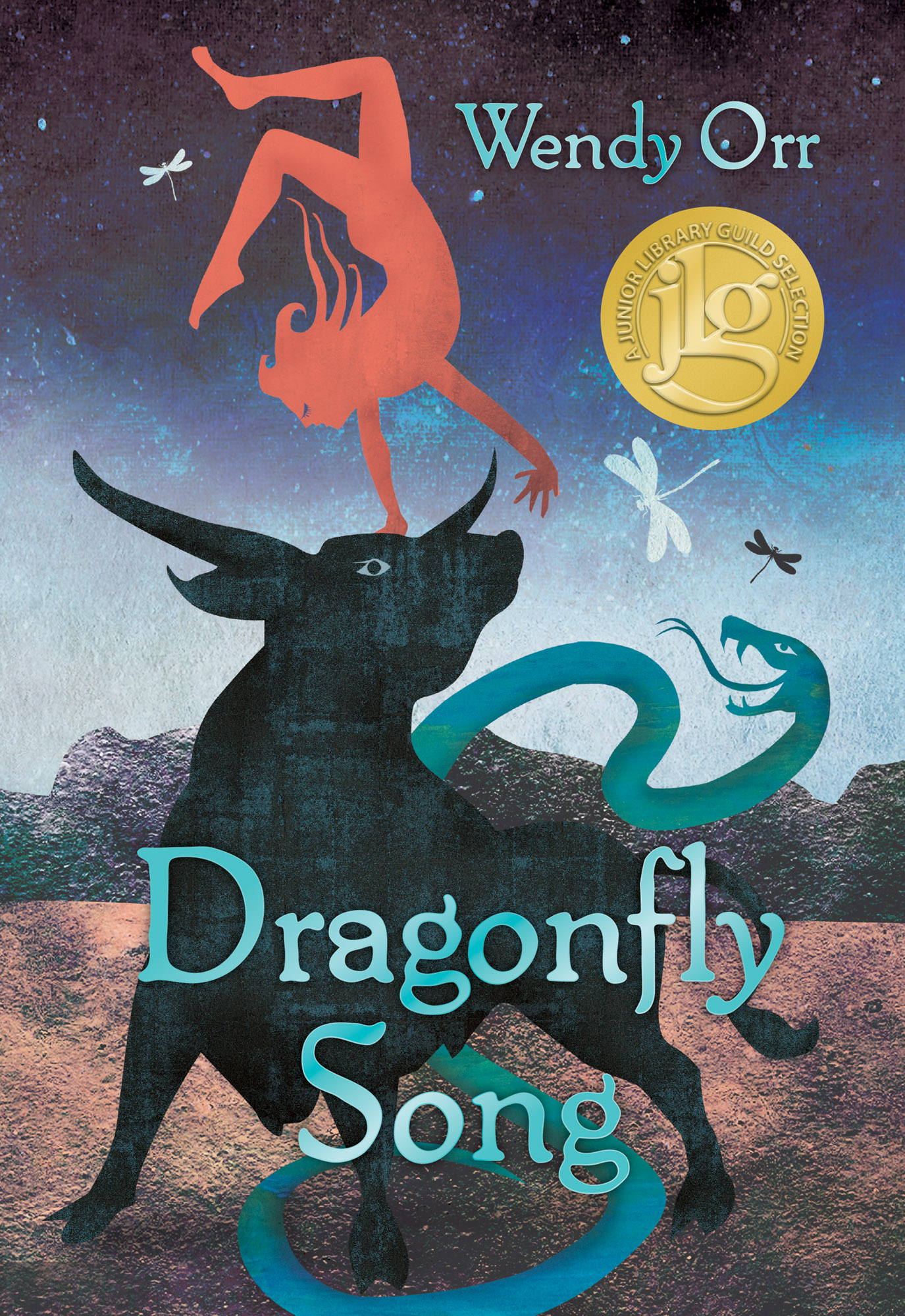
Dragonfly Song
Author: Wendy Orr
Published October 27th, 2017 by Pajama Press

Summary: The whispers say it’s not true that the Lady’s firstborn died at birth. They say it’s worse—the baby was born with an extra thumb dangling from each wrist. If she’s not perfect, she can never follow in her mother’s footsteps.

Nobody but the old wise-woman knows what truly happened to Aissa, the firstborn daughter of the priestess. If they saw the half-moon scars on the servant girl’s wrists they would find it out, but who would look twice at lowly, mute No-Name? Then the soldiers of Crete come to the island, demanding children as tribute for their god-king’s bull dances as they do every year. Aissa is determined to seize this chance to fight for her own worth and change her destiny once and for all.

Lyrically written and refreshingly unpredictable, Dragonfly Song is a compelling Bronze Age fantasy that suggests a fascinating origin for the legend of the Minotaur and his dark tribute.

“As mesmerizing as a mermaid’s kiss, the story dances with emotion, fire, and promise.” -Kirkus Reviews, starred review

More information about Dragonfly Song: http://pajamapress.ca/book/dragonfly_song/

About the Author: Wendy Orr was born in Edmonton, Canada, but grew up in various places across Canada, France, and the USA. She studied occupational therapy in the UK, married an Australian farmer, and moved to Australia. She’s the author of many award-winning books, including Nim’s Island, Nim at Sea, Rescue on Nim’s Island, Raven’s Mountain, and Peeling the Onion.

More information about Wendy Orr: http://www.wendyorr.com/

Author-Created Activity Guide:

  • Art: In Chapter 2, Aissa and the potter’s daughter make ‘circles of flowers
    in a ring of stones.’ Later, Aissa makes patterns of flowers and shells for the fishers’ goddess (the first in Chapter 9) and patterns of rocks and her small treasures for the goddess in her sanctuary cave. Patterns are used in some religions and meditative practices; Indian or Tibetan mandalas and Navajo sandpaintings are probably the best known now.
    To draw a mandala: http://www.art-is-fun.com/how-to-draw-a-mandala/
    Ideas for mandala-type patterns using fresh flowers: http://twistedsifter.com/2014/07/flower-mandalas-by-kathy-klein/
    Make your own patterns with sea shells, flowers, pebbles, leaves, seeds, or other natural materials. Glue them into place on card, or photograph them.
  • Writing: In Chapter 24, Aissa learns to write on the clay tablets used for taxation records. The writing she used was called Linear B, and was a combination of a ‘syllabary’ – each symbol representing a syllable of a word – and ‘logograms,’ which are symbols of whole words. These tablets were supposed to be temporary, but were baked into pottery when the palaces burned down. Have students make their own clay tablets using real clay or as in these instructions: http://www.ehow.com/how_12110304_make-egyptian-hieroglyphics-tablet.html
    For some of the Linear B logograms: http://www.omniglot.com/writing/linearb.htm
  • Time Capsule: Without written historical records, interpreting archaeological finds can be very difficult. Put together ‘time capsules’ of small items – e.g. a birthday card, Barbie doll, shopping list, old iPod, CD… Break the class into small groups and have them use the items to ‘interpret’ questions such as this society’s religion, dress code, and social structure.

Author-Created Discussion Questions: 

  • Like The Hunger Games, Dragonfly Song draws on the Greek myth of Theseus, in which seven youths and seven maidens are sent as tribute from Athens to Crete, to be eaten by the monstrous half-man, half-bull Minotaur. However, Dragonfly Song looks back to the possible origins of the myth in Bronze Age Greece, and the palace of Knossos in Crete. The bull was obviously a very important symbol, probably even a god – even though the real animals would be sacrificed to their god – and there were many scenes, on paintings, vases, and gold jewellery, showing young acrobats somersaulting over the backs of bulls. What if these acrobats were part of a payment to Crete in return for protection by – or from – their powerful navy? If so, the tribute would have come from as far as the Minoan navy reached. Discuss the power of myth – why have some stories lasted for thousands of years?
  • Discuss how the physical setting of Aissa’s home is a metaphor for the grimness of her life there. (e.g. The island is rocky, poor and isolated; buildings are dark, built of rock or burrowed into the side of the mountain.) What about the springtime when she develops new strengths after being cast out of the servants’ kitchen?
  • In the Bull King’s palace, the buildings are awe-inspiring, filled with light and extraordinary art. The culture appears to be obsessed with beauty – but is there a darkness underpinning it?
  • Dragonfly Song is set in the Bronze Age, but the ordinary people of Aissa’s island still use stone tools as well. Why do you think that would be?
  • In the prologue, The Firstborn Daughter, what are the clues to tell us that this is a matriarchal society? How does it differ from a patriarchal society? The Mosuo of China are an example of a matriarchal society in the present day. https://www.youtube.com/watch?v=eoTrARDa8BU
  • Chapter 8 mentions that the chief killed the last lion for his cloak when he married the Lady. Why might he have wanted a lionskin cloak rather than a deerskin? Why do you think the islanders didn’t worry about conservation and keeping all their native species alive?
  • In Chapter 9, the servants are ‘screaming with joy at their game of hate.’ Why do you think the author described bullying Aissa as a game? How does bullying Aissa make the servants feel?
  • Aissa is an ‘elective mute’ because there is nothing physical or intellectual preventing her from speaking. However, that doesn’t mean that she could speak if she wanted to: Mama’s command, ‘Stay quiet, still as stone till I come back,’ is buried so deep in her subconscious, and is so mixed with the trauma of the family’s death and disappearance, that Aissa can’t simply decide to start talking, even when she’s safe. Would she have been more accepted by the other servants if she could talk? How might it have changed the story if she had regained her speech after singing the snake away from Luki? Do you think she could have regained her speech if she had been treated kindly after being rescued? Do you think that meeting Mama again was the only reason she regained her speech, or might it have been partly because she’d faced death in the bull ring, and was safe now? A real-life example of a child choosing to become mute after trauma is Maya Angelou’s story (summarized in Goodnight Stories for Rebel Girls).
  • Discuss the book’s structure with the students. What was their reaction to the combination of free verse and prose?
  • Wendy Orr says that using free verse made it easier for her to access and portray Aissa’s emotions. Have the students choose an emotion, e.g. rage, grief, or joy – and write about it in free verse. Next, have them write a short story using the ideas and images that arose from the verse.
  • Why do you think the author chose to write in free verse rather than rhyming, like the children’s rhyme in Chapter 10?
    Here comes rabbit, hippity hop
    See his ears flap and flop;
    Here comes hedgehog, curled up small
    Roll him over like a ball.
  • Wendy Orr says that she normally writes in silence, on the computer, but found that the verse sections for this story had to be written by hand, playing the album Agaetis Byrjun by the Icelandic band Sigur Ros. Experiment with playing different types of music as the students write verse.
  • For useful images and links, see the Pinterest board: https://www.pinterest.com/wendyorr1/dragonfly-song-bits-of-background-and-teaching-ideas/

Don’t Miss Out On the Rest of the Tour!

October 22: Unleashing Readers, Activity Guide and Discussion Questions https://www.unleashingreaders.com/
October 23: YA and Kids Book Central, Book Playlist http://www.yabookscentral.com/blog/
October 24: Log Cabin Library, Guest Post http://logcabinlibrary.blogspot.com/
October 25: The Children’s Book Review, Character Interview https://www.thechildrensbookreview.com/
October 26: Bluestocking Thinking, Review http://bluestockingthinking.blogspot.com/
October 27: Charlotte’s Library, Interview http://charlotteslibrary.blogspot.com/
October 28: A Foodie Bibliophile in Wanderlust, Interview http://www.foodiebibliophile.com/
October 29: Writers’ Rumpus, Guest Post https://writersrumpus.com/

Recommended For: 

Thank you to Wendy Orr for her fantastic activities and questions!

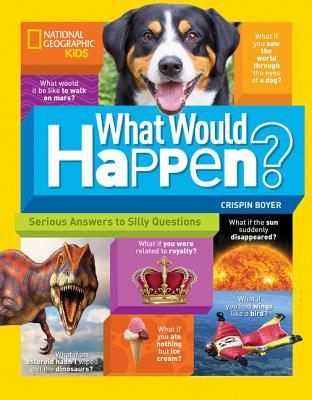
National Geographic Kids: What Would Happen? by Crispin Boyer

Share

nfpb2017

Nonfiction Wednesday

Nonfiction Picture Book Wednesday is hosted by Kid Lit Frenzy and was started to help promote the reading of nonfiction texts. Most Wednesdays, we will be participating and will review a nonfiction text (though it may not always be a picture book).
Be sure to visit Kid Lit Frenzy and see what other nonfiction books are shared this week!

National Geographic Kids: What Would Happen? 
Author: Crispin Boyer
Published July 11th, 2017 by National Geographic Society

Summary: Ever wondered what would happen if some cool or crazy things were possible? Like what would happen if: you got sucked into a black hole; dinosaurs still existed; humans could fly; you could communicate with dolphins; or you could dig a hole through to the center of the Earth?

Get ready to explore all kinds of scenarios that would or could happen if the world was just a slightly different place. Each scenario is examined with real scientific, historical, and cultural facts in mind. This out-of-the-box book encourages readers to cultivate a better understanding of the world as it is – and as it could be!

ReviewA favorite book of mine and my husband’s that we read years ago was Why do Men have Nipples?, and we really loved getting answers to questions that you may not even know to ask yet are really intriguing. What Would Happenis the middle grade equivalent! So many interesting questions are answered! Do you want to know about global warming? Honeybees? Time machines? You will find answers in this book. Each question’s answer is set up to give the reader background knowledge, potential outcomes, extenuating circumstances, etc. to fill in any blanks and curiosities there may be. And as with all National Geographic books, the photographs are superb!

Teachers’ Tools for Navigation: I love that so many of the National Geographic books touch on such a variety of topics, but also in the books that are like What Would Happen?, the information only touches the surface. This book would be a perfect jump start to passion or inquiry projects. What do students want to learn more about? They can start by reading the spread in What Would Happen? then research more to prepare a presentation about everything they learn.

The book also definitely has a place in libraries: school, classroom, and home. It is a wonderful book filled with questions that kids will love to learn the answers to!

Discussion Questions: Every page in this book has a discussion question!

Flagged Passages: 

Read This If You Love: Getting answers to burning questions

Recommended For: 

classroomlibrarybuttonsmall closereadinganalysisbuttonsmall

Signature

**Thank you to Karen from Media Masters Publicity for providing a copy for review!**

Twinderella: A Fractioned Fairy Tale by Corey Rosen Schwartz

Share

Twinderella: A Fractioned Fairy Tale
Author: Corey Rosen Schwartz
Illustrator: Deborah Marcero
Published September 5th, 2017 by G.P. Putnam’s Sons Books for Young Readers

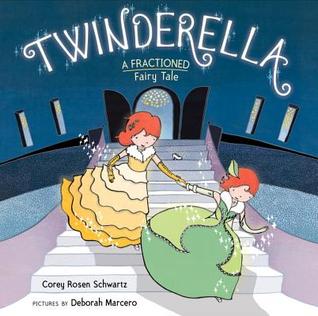
Summary: Have you heard the story of Cinderella? Well, you don’t know the half of it.

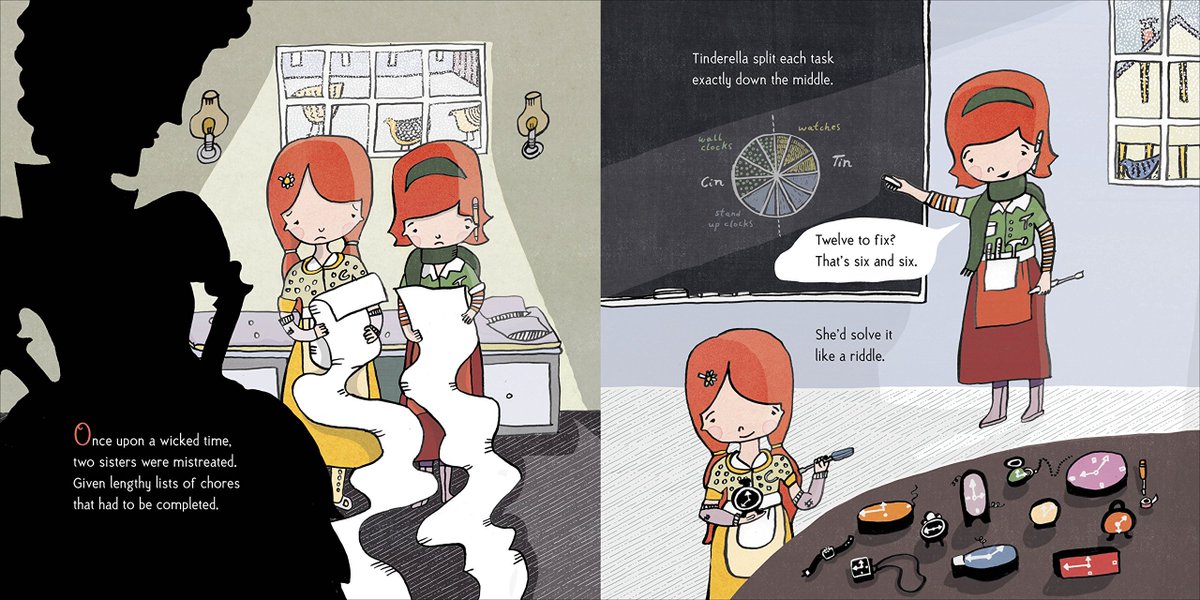
Cinderella and her lesser-known twin, Tinderella, split everything right down the middle. They each do half the housework, half the mending, and half the mean step-sister tending. When the Prince throws a ball, their fairy godmother sends them both, and they dance the night away with the prince. But he simply can’t choose between Cin and Tin, and they are in need of some clever thinking and just a pinch of magic. The Prince agrees to share his kingdom half and half, and the fairy-godmother makes him a twin too, so they can all live happily ever after. Cin and the Prince rule the kingdom, while Tin and the Twin win all the kingdom’s math competitions. It truly is a happily ever half-ter.

Review: I am a huge fan of fairy tale retellings. I think they are a perfect way to bring attention to something, tell a unique story, or teach students because it is set in a basis of prior knowledge that most students already have thus allowing for a comfortable base to scaffold up from. With Twinderella, the story of Cinderella is used to teach about fractions and division while also telling a story of two sisters that find a way to make sure they can live happily ever half-ter.

Schwartz and Marcero are a perfect team to tell these twins’ story in a way that not only teaches but entertains. The balance was done so well between the math concepts and narrative. You learn how the twins make it all work, and you root for them to be happy.

Teachers’ Tools for Navigation: When I finished this book, I immediately texted my friend who teaches 2nd grade because I know that it is perfect for the classroom! It meets standards for second grade because of the focus on fairy tales and retellings and is a perfect introduction to easy fractions that they will begin looking at in 3rd grade.

Discussion Questions: 

  • How is Twinderella different from the traditional Cinderella stories?
  • How did Tinderella make sure that everything was split equally between the two sisters?
  • What math concepts were taught in the story?
  • With the quadruplets, how would chores and such needed to be divided?

Flagged Passages: 

Read This If You Love: Math, Fairy Tale Retellings

Recommended For: 

classroomlibrarybuttonsmall 

Signature

**Thank you to Penguin Young Readers for providing a copy for review!**

The Peculiar Incident on Shady Street by Lindsay Currie

Share

The Peculiar Incident on Shady Street
Author: Lindsay Currie
Published October 10th, 2017 by Aladdin

Summary: A girl unravels a centuries-old mystery after moving into a haunted house in this deliciously suspenseful mystery.

Tessa Woodward isn’t exactly thrilled to move to rainy, cold Chicago from her home in sunny Florida. But homesickness turns to icy fear when unexplainable things start happening in her new house. Things like flickering lights, mysterious drawings appearing out of nowhere, and a crackling noise she can feel in her bones.

When her little brother’s doll starts crying real tears, Tessa realizes that someone—or something—is trying to communicate with her. A secret that’s been shrouded in mystery for more than one hundred years.

With the help of three new friends, Tessa begins unraveling the mystery of what happened in the house on Shady Street—and more importantly, what it has to do with her!

Review: I always go in tentatively to spooky books because I am so jumpy and also really don’t enjoy when the only point of a book is to scare the reader. But I could tell right away that Shady Street was going to completely exceed other just-scary books because it was about so much more. Sure, there was definitely a shady mystery and some really scary moments, but it was all entwined with a story about friendship, family, identity, and moving. Lindsay Currie did a perfect job balancing the two goals of the book: to scare the reader and to make the reader care so much about her characters.

In addition to the plot development being on point, Shady Street‘s characters were each were fully-developed to give every reader someone to connect with. I also liked how Currie included actual Chicago folklore and landmarks to enhance the story (and as a girl who lives in Florida and loves Chicago, I loved the Florida truths throughout also). Check out Currie’s website for behind the scenes info, and here’s a video of Lindsay Currie on a walking tour through Graceland cemetery, one of the settings of the book:

Teachers’ Tools for Navigation: Students are going to love this story because it is a perfect mix of ghost story and coming-of-age story, so classroom, school, and public libraries all definitely need to have a copy–once one students reads it, the word is going to get out, and it’ll never be on the shelf!

In the classroom, using Lindsay Currie’s website and video, Shady Street is a good example of author’s decision-making, how the setting of a story can impact the plot, and how an author uses the setting to affect the mood.

Book Trailer: 

Discussion Questions: 

  • How would the story have been different if Tessa had not gone to the pond the first time?
  • Why do you think Inez chose Tessa?
  • Did the story end how you thought it was going to?
  • How did the author use the setting to affect the mood of the story? The plot?
  • Which character do you connect with the most? Explain.
  • What caused Inez to act the way she did?
  • Similar to what Tessa did at the end for Inez, create a name plate for yourself with illustrations that identify you.
  • Explain the act of condensation.

Flagged Passages: “The door clicks shut behind her, and I grab a pair of jeans off the chair I slung them over last night. My sketchpad is open just slightly and I stop in my tracks, confused at the small blur I can see in the upper left-hand corner of the sheet. It’s grayish black, like I started something then just barely ran the bad of my thumb over it.

‘What in the–‘ I start, bending closer to the page.

I didn’t draw anything last night. I was so tired from carrying boxes all over this ginormous place that I crawled into bed without even brushing my teeth.

I stare at the mark. It’s small and shaped like an upside-down L. Lifting the book and giving the paper a tap, I watch asn the unwelcome spot becomes dust again and drifts into the air. There will still be a darkened area there, but I’ll camouflage it with shading later. Still. There’s something about the mark that bothers me. Something off.”

Read This If You Love: Mary Downing Hahn novels, The Key to Extraordinary by Natalie Lloyd, Ghostlight by Sonia GenslerDoll Bones by Holly Black, The Seer of Shadows by Avi

Recommended For: 

classroomlibrarybuttonsmall 

Signature

**Thank you to Lindsay Currie for providing a copy of the book for review!**

Author Guest Post!: “Teaching Kids Hope” by Carla Mooney, Author of Terrorism: Violence, Intimidation, and Solutions for Peace

Share


Terrorism: Violence, Intimidation, and Solutions for Peace
Author: Carla Mooney
Expected Publication November 15th, 2017 by Nomad Press

Summary: Why did terrorists attack the World Trade Center on September 11, 2001? The answer to that question is ancient, complicated, and crucial to a perceptive understanding of the global community we live in today. In Terrorism: Violence, Intimidation, and Solutions for Peace, readers ages 12 to 15 explore the history, causes, psychology, and potential solutions to the problem of terrorism in an objective way that promotes comprehension and empowerment.

  • Investigating previous events in the world’s history can help students understand the causes and effects of current events.
  • Activities encourage the development of important skills, including comparing and contrasting, looking for detailed evidence, making deductions, and applying critical analysis to a wide variety of media.

Teacher’s Tools for Navigation and Discussion Questions: 

“Teaching Kids Hope” by Carla Mooney

There’s a lot of bad news out there. There’s a lot of good news, too! But unless kids are living in a soundproof room with no cell service or internet access, they’re going to hear at least some of the depressing, no matter how much the adults in their lives try to protect them.

Some of this bad news concerns terrorism. While terrorism has been around since ancient times, the struggle between different ideologies has become far more visible in recent years because of the ease and speed of communication. We all know about attacks happening all around the world, almost as soon as they happen. Kids included.

When the bombing at the Ariana Grande concert in Manchester, England, happened last spring, the audience was full of young teens, fans of the singer, and it was teenagers who were watching events unfold via texts and posts from other kids around the world. Just about every elementary school has a ceremony of some kind on September 11—children who weren’t even alive when the Twin Towers fell spend time recognizing the victims and honoring their memories.

Terrorism is all around us, even when we live in what we consider safe societies that have not yet been touched directly.

How do we—as educators, parents, and mentors—support children as they grow up in a world where terrorism is a regular occurrence? How do we teach them to think critically and creatively about potential solutions? How do we create that balance between knowing the issues and not letting that knowledge cause fear and anxiety, when the reality is the vast majority of citizens will not experience a terrorist attack in their lifetime? How do we get kids to see themselves as part of the solution and empower them to make wise choices, learn about the issues, and work to find solutions?

This might sound like a tall order for kids, but maybe they are the generation that will solve the problems of terrorism.

I wrote my book Terrorism: Violence, Intimidation, and Solutions for Peace specifically with the intent of providing kids with not just the history of terrorism (which is an important part of recognizing its role in today’s world), but also as a jumping off point to start thinking about how to curb terrorism.

Here are three activities I came up with to help kids understand that while terrorism is a very real part of life, it’s not a problem that can’t be solved. I hope you find them useful, and remember, never give up hope.

ASSASSINATIONS—AN ACT OF TERROR?

Throughout history, assassination is one tactic used by terror groups to achieve certain goals. However, not every assassination is an act of terror. When should murders of political figures be considered acts of terror or when are they simply horrible crimes? What separates terrorism from criminal activity?

  • Choose a political leader who was assassinated or who survived an assassination attempt. Some leaders to consider researching include:
    • Abraham Lincoln
    • William McKinley
    • Czar Alexander II of Russia
    • Indira Gandhi
    • Benazir Bhutto
  • Research the assassination attempt on your chosen Consider the following questions.
    • Who was the leader? Where were they from? What country did they lead?
    • What political or social views did the leader have that were controversial?
    • Who was the perpetrator?
    • What was the perpetrator’s objective? Did they succeed?
    • Did their actions affect history in the short-term? In the long-term?
    • Was the assassination attempt an act of terror? Explain your point of view.

THE PROCESS OF RADICALIZATION

The process of radicalization is different for every individual. While the path each person takes toward adopting extremist views is different, are there some similarities? By studying the radicalization of several different individuals, you can look for common themes in their stories.

PREVENTING TERROR ATTACKS

While successful terror attacks make headlines around the world, there are dozens of plots that have been thwarted by counterterrorism efforts. You can read about some of these plots here.

  • Select three or four thwarted terror plots to research. Find and read newspaper or magazine articles about the foiled attacks.
  • Create a chart to categorize the plots.
    • What types of attacks were planned?
    • What methods did terrorists use?
    • Who was involved?
    • What targets did they choose?
    • What was the objective?
    • How was the plot stopped?
    • What counterterrorism methods were used?
    • What was the outcome?
  • Does the number of thwarted terror plots make you feel more or less secure? Explain.

About the Author: Carla Mooney is the author of many books for young readers including Globalization: Why We Care About Faraway Events, The Holocaust: Racism and Genocide in World War II, Forensics: Uncover the Science and Technology of Crime Scene Investigation, The Industrial Revolution: Investigate How Science and Technology Changed the World and Explore Rivers and Ponds! With 25 Projects from Nomad Press. Her work has appeared in many magazines including Highlights, Faces, and Learning Through History. Carla lives in Pittsburgh, Pennsylvania.

Thank you to Carla for her important post with so many useful tools and to Andi from Nomad Press for introducing us to this book!

and 

Blog Tour with Book Trailer, 30 Day #ProtectOurWorld Challenge, and Review!: Zoo Scientists to the Rescue by Patricia Newman, Photographs by Annie Crawley

Share

nfpb2017

Nonfiction Wednesday

Nonfiction Picture Book Wednesday is hosted by Kid Lit Frenzy and was started to help promote the reading of nonfiction texts. Most Wednesdays, we will be participating and will review a nonfiction text (though it may not always be a picture book).
Be sure to visit Kid Lit Frenzy and see what other nonfiction books are shared this week!

Zoo Scientists to the Rescue
Author: Patricia Newman
Photographer: Annie Crawley
Published October 1st, 2017 by Millbrook Press

Summary: Zoos take care of animals and welcome visitors of all ages, but that’s not all zoos do. Author Patricia Newman and photographer Annie Crawley bring readers behind the scenes at three zoos to meet scientists working to save endangered animals.

Meredith Bastian’s experiences studying wild orangutans help educate both zoo visitors and the zoo workers who care for captive orangutans. Jeff Baughman breeds black-footed ferrets and reintroduces them into the wild. And Rachel Santymire examines poop from black rhinoceroses at the zoo and in their natural habitat to benefit all black rhinos. Find out how zoo scientists are helping us learn more about these remarkable, at-risk species before it’s too late!

Visit the authors at http://www.patriciamnewman.com and https://www.anniecrawley.com/

ReviewPatricia Newman’s work always blows me away and Annie Crawley’s photos in Plastics, Ahoy! were breathtaking, so I was so happy to see that they had a new book coming out. In Zoo Scientists, a text is just as brilliantly done as Newman’s other works, she once again focuses on a topic that needs a spotlight. This time, we see how zoos are working towards saving endangered animals. Zoos are such important places when they are done correctly, so I loved this focus on three specific stories about how zoos are helping rhinos, orangutans, and black-footed ferrets. Each section tells us about a scientist at a different zoo, how they came to be where they are today, and how they help the species they work with. I loved the inclusion of each scientist’s story paying special attention to how they each became an expert. This makes Zoo Scientists perfect for looking at not only looking at endangered animals and zoos but how to reach your potential in a career making this book a must-get for classrooms that study any of these things.

Teachers’ Tools for Navigation: Teaching guides for all of Patricia’s books including the Zoo Scientist one coming soon can be found at http://www.patriciamnewman.com/teacher-guides/.

Rhino bookmarks!: http://www.patriciamnewman.com/wp-content/uploads/2017/07/Bookmark.pdf

Pinterest board with activities and articles to supplement the reading of Zoo Scientists to the Rescuehttps://www.pinterest.com/newmanbooks/zoo-scientists-to-the-rescue/

Consider an Author for Earth Day visit! Consider an Authors for Earth Day visit in conjunction with Zoo Scientists to the Rescue. Students research a list of five conservation nominees selected by Patricia Newman and then vote for their favorite. Newman writes a check to the winning organization. The mission? To empower young readers to shape the world around them!

Participate in the 30 Day #ProtectOurWorld Challenge! Here is the Orangutan example. Visit http://www.patriciamnewman.com/books/zoo-scientists-rescue/ to see the rhino and black-footed ferret posters.

Discussion Questions: Use any or all of these discussion questions to extend the learning with Zoo Scientists to the Rescue:

  • What steps did each scientist take to become an expert in their field?
  • Why are orangutans’ habitat being destroyed?
  • Why is the poaching of rhinos for their horns such a devastating action?
  • How did the expansion of our nation effect the black-footed ferret?
  • How did humans play a role in each of these animals’ endangered status?
  • What can you do to help these animals?
  • Visit some of the resources about other conservation stories in the end of the book and share what you learn.
  • What words did you learn from the book? (Check out the glossary!)

Flagged Passages: 

“A sign outside the orangutan enclosure at the National Zoo explains that the apes red coloring mimics shadows in the forest’s canopy. As little as 30 feet above the forest floor, orangutans essentially disappear, which is surprising given their bulk. Fully grown wild wild male orangutans can weigh up to 220 pounds and wild females can weight up to 120 pounds. Zoo orangutans tend to be between 50 to 100 pounds heavier because of their nutritious diet.”

“About 15 years ago, black-footed ferrets roamed the Great Plains from Canada to Mexico. The Lakota call them pispiza itopta sapa (black-faced prairie dog) and believe they are sacred. But in the late 1800s, settlers moving westward and travelers from across the Pacific Ocean unknowingly put the ferrets in danger.”

“Unfortunately, rhinos are no match for armed poachers, hunters who kill wild animals illegally for profit. Approximately 5,050 black rhinos remain in the world due to poaching and habitat loss. They are labeled critically endangered–one step from extinct in the wild, and only two steps from fully extinct. Lincoln Park Zoo hopes to play a role in saving them.”

Book Trailer: 

Read This If You Love: Zoos, Animals, Learning about scientists, Science, Conservation efforts, Earth Day

Recommended For: 

classroomlibrarybuttonsmall closereadinganalysisbuttonsmall 

Make sure to visit the other stops on the Blog Tour!

Signature

**Thank you to Patricia Newman for asking me to be part of the blog tour!**