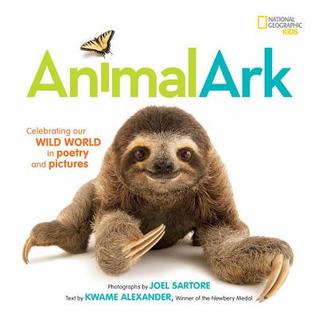
Animal Ark by Joel Sartore and Kwame Alexander

Share

nfpb2017

Nonfiction Wednesday

Nonfiction Picture Book Wednesday is hosted by Kid Lit Frenzy and was started to help promote the reading of nonfiction texts. Most Wednesdays, we will be participating and will review a nonfiction text (though it may not always be a picture book).
Be sure to visit Kid Lit Frenzy and see what other nonfiction books are shared this week!
HAPPY NATIONAL POETRY MONTH!

And don’t forget to celebrate EARTH DAY on the 22nd!

Animal Ark
Created by and Photographer: Joel Sartore
Poet: Kwame Alexander
Published February 14th, 2017 by National Geographic Society

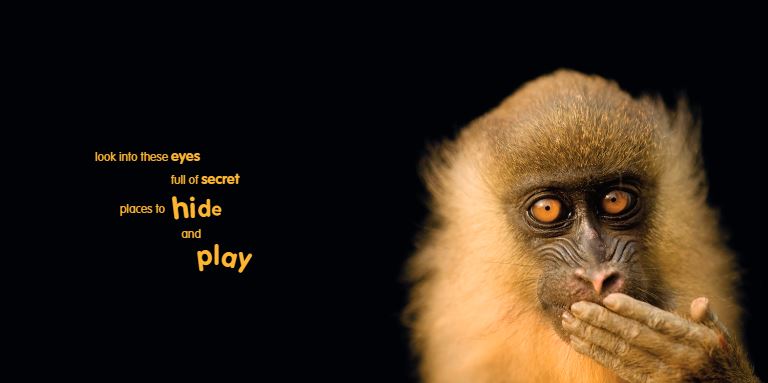
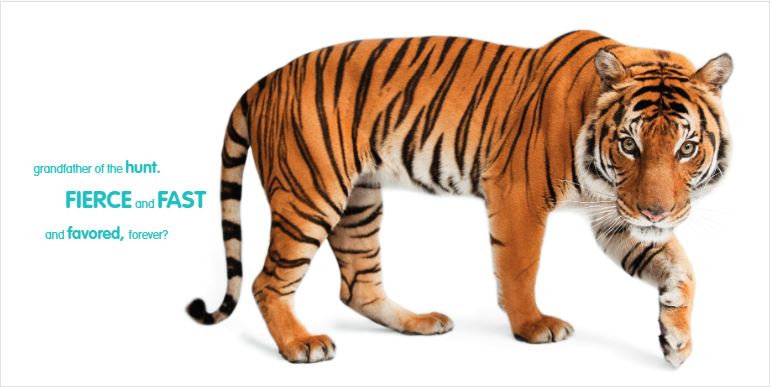
About the Book: National Geographic Kids proudly announces the release of Animal Ark: Celebrating Our Wild World in Poetry and Pictures, a picture book for children ages 4-8 written by Newbery Medal-winning author Kwame Alexander and featuring photographs by acclaimed National Geographic Fellow and photographer Joel Sartore. Animal Ark pairs Alexander’s uplifting poetry and prose with more than 100 of Sartore’s most compelling images of the world’s species to create a book for children that highlights the importance of conservation and the beauty of the animal kingdom.

Animal Ark is inspired by the National Geographic Photo Ark, a multiyear effort with Sartore and the National Geographic Society to document every species in captivity—inspiring people not just to care, but also to help protect these animals for future generations. To date, Sartore has completed portraits of more than 6,000 species, photographed on either a plain black or white background. No matter its size, each animal is treated with the same amount of affection and respect. The results are portraits that are not just stunningly beautiful, but also intimate and moving.

The companion adult book, National Geographic The Photo Ark: One Man’s Quest to Document the World’s Animals (National Geographic Books)—with a foreword by Harrison Ford—also showcases Sartore’s animal portraits: from tiny to mammoth, from the Florida grasshopper sparrow to the greater one-horned rhinoceros. In 2017, National Geographic Photo Ark exhibitions are opening at Omaha’s Henry Doorly Zoo and Aquarium, the Dallas Zoo, and the Cincinnati Zoo. Learn more at NatGeoPhotoArk.org and join the conversation on social media with #SaveTogether.

About Joel Sartore: Joel Sartore is a photographer, speaker, author, teacher, conservationist, National Geographic fellow, regular contributor to National Geographic magazine and founder of the National Geographic Photo Ark.  In addition to the work he has done for National Geographic, Sartore has contributed to Audubon magazine, Time, Life, Sports Illustrated, The New York Times, the Smithsonian magazine and numerous book projects.  His next book for adults, National Geographic The Photo Ark: One Man’s Quest to Document the World’s Animals  will be released in March 2017.

About Kwame Alexander: Kwame Alexander is a poet, educator, and New York Times bestselling author of 21 books, including The Crossover, which received the 2015 John Newbery Medal for the Most Distinguished Contribution to American Literature for Children. His other recent works include Booked, Surf’s Up, and He Said, She Said. He is the founder of Book-in-a-Day, a student-run publishing program that has created more than 3,000 student authors in 75 schools; and LEAP for Ghana, an international literacy project that builds libraries, trains teachers, and empowers children through literature. In 2015, Kwame served as Bank Street College of Education’s first writer-in-residence.

Book Trailer: 

My Review: I am in love with all of these animals! Do you see how cute they are?!?! And I love the message that Joel Sartore, National Geographic Kids, and Kwame Alexander are spreading with this text: “At its heart, the Photo Ark was born out of necessity… I  started to see that people weren’t paying much attention to the fate of all the others species we share this planet with. Without action, and soon, I worried that many animals could go extinct. The Photo Ark is my answer to this. By introducing the entire world to thoughts of photographs of [animals], I hope we can get everyone following, liking, tweeting, and even talking about this wondrous world of ours.” -Joel Sartore. I care deeply for all living things, and I have the same fear that Sartore has–that too many people are so caught up in their own little worlds that they aren’t focusing on the big world around us. The continual denial of climate change, the recent possible elimination of many of the EPA’s environmental protections, and so many other things makes the possibilities of us ruining our Earth even closer to reality 🙁

Teachers’ Tools for Navigation: Animal Ark has writing and science opportunities for the classroom. First, the theme of the book works beautifully within a science unit about endangered animals. Mix the text with the website What is Missing? by Maya Lin, and there are so many opportunities to discuss conservation and sustainability. Kwame Alexander’s poetry also gives an opportunity for poetry writing. In the Author’s Note, National Geographic shares information about haiku. Although all of Kwame’s poetry does not fit the traditional haiku format and we wouldn’t recommend it for a haiku mentor text, it shows how poets can take a traditional format and embrace yet manipulate it for their purpose.

Discussion Questions: Which animal would you like to learn more about?; What can humans do to help save these animals?; What is the theme of Animal Ark? What is the author/photographer trying to teach us?

Flagged Passages: 

Photography Outtakes!

Read This If You Love: National Geographic texts about animals, Poetry anthologies about nature including Water is Water by Miranda Paul, Books about making a difference like Dare to Dream…Change the World by Jill Corcoran & Be a Changemaker by Laurie Ann Thomson

Recommended For: 

classroomlibrarybuttonsmall closereadinganalysisbuttonsmall 

Signature

**Thank you to Karen at Media Masters Publicity for providing copes for review!**

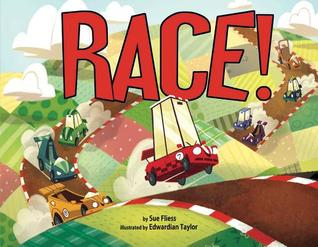
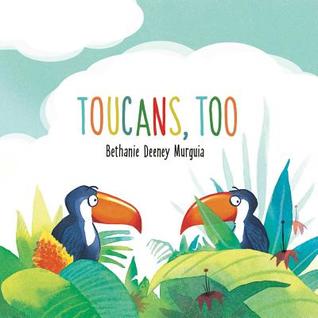
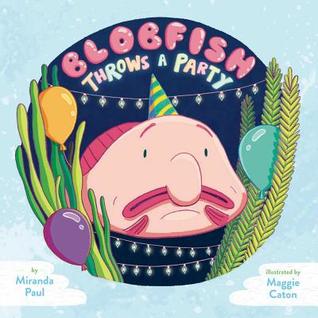
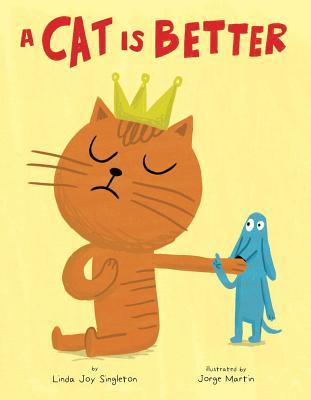
Upcoming Must Haves from little bee books: Race! by Sue Fliess; Toucans, Too by Bethanie Deeney Murguia; Blobfish Throws a Party by Miranda Paul; and A Cat is Better by Linda Joy Singleton

Share

These picture books are all MUST HAVES that are coming out soon from little bee books!

Race!
Author: Sue Fliess
Illustrator: Edwardian Taylor
Expected Publication July 4th, 2017

About the Book: In this imaginative book, a tiny car lines up next to all the other cars revving their engines. . . . Will it be able to take the Winner’s Cup?

Race cars!
Line up!

Who will take the Winner’s Cup?

Cars start,
lights glow…
“Rev your engines…GO GO GO!”

All the cars are lining up for the race, but one car is smaller than the rest. As it squeezes in between all of them, the cars rev their engines . . . and they’re off! Down mountains and by waterfalls, through tunnels and past landslides, the cars race through places that somehow look oddly familiar.

My Thoughts: I love the onomatopoeias in this story! It mixed with the rhythm of the text, the fun illustrations, and the suspense of the race make the story a perfect read aloud. Along the way, readers can predict what they think can happen next, and try to predict the surprise ending (yes, there is a surprise ending!).

Toucans, Too
Author and Illustrator: Bethanie Deeney Murguia
Expected Publication May 2nd, 2017

About the Book: This hilarious follow-up book to Cockatoo, Too features cockatoos, toucans, two-can stew, and gnus!

One can. Two cans. Toucans?
Toucans, too.
Toucan stew???!

The cockatoos are back, and the toucans are too! But the toucans think the cockatoos say “toucan stew” and run away in a toucan canoe, so the cockatoos make them some two-can stew, which attracts the gnus, who ask the reader, “Can gnu?”

Bethanie Deeney Murguia’s fabulous follow-up to the well-received Cockatoo, Too combines fantastically funny wordplay with lush, vibrant illustrations, making this a humorous read-aloud that both children and parents will love!

My Thoughts: This is such a hilarious book! I haven’t read Cockatoo, Too, so I didn’t know what I was getting into (I’ve already requested it from my library though because I want to see what cleverness hides inside), and the word play and illustrations in this one make it one that I cannot wait to read to kids–I think they will find it as laugh out loud as I did.

Blobfish Throws a Party
Author: Miranda Paul
Illustrator: Maggie Caton
Expected Publication: May 2nd, 2017

About the Book: Introducing Blobfish Throws a Party, a wild and hilarious story from award-winning author Miranda Paul!

Blobfish lives at the bottom of the ocean with no lights, no friends, and no delicious treats. The only two ways he can think to change this would be to 1) throw a party, or 2) save the world in true hero style. He decides to do the first one. However, when he announces, “Deep sea party! Bring a treat to share!”, the mermaids hear “Cheap, free party! Sling on a sheet to wear!”, and the shorebirds hear “Cheep-peep party! Sing a tweet with flair!”, and so on. Soon the whole world is partying in strange ways based on what they think they heard, and Blobfish is still sad and alone at the bottom of the sea. Will Blobfish ever get his lights, friends, and delicious treats?

My Thoughts: Oh, Blobfish. He is the most lovable sad little fish. All alone in the bottom of the sea, all he wants is someone to spend time with. But his plan to throw a party just doesn’t go as planned. The hilarity that follows, in words and illustrations, will make anyone laugh. And like Toucans, Too the word play in this one make it a perfect read aloud and the basis for a rhyming teaching opportunity. So many kids are going to love Blobfish; it is going to be a majorly requested read aloud!

A Cat is Better
Author: Linda Joy Singleton
Illustrator: Jorge Martin
Expected Publication: June 13th, 2017

About the Book: Find out why a cat is the purrfect pet in this fantastically funny picture book!

A sparkly necklace for me?
Yes, I am beautiful.
Thank you very much.
See how perfect I am?

What makes cats better than dogs? Is it how gracefully they leap through the air? How much smarter they are than dogs? How much more musical and cleaner they are? Or is it how good they are at making you think they’re all these things?

Find out why cats are the purrfect pet in this fantastically funny picture book!

My Thoughts: The debate over which pet is the best starts at a very young age and is often the topic for an early argumentative paragraph because kids are so opinionated about it. A Cat is Better takes a look at the topic and puts a fun twist on it starting with one very clear claim that slowly morphs into a love of all pets.

All Recommended For: 

Thank you Caitlin at little bee books for allowing me to preview and share these titles!

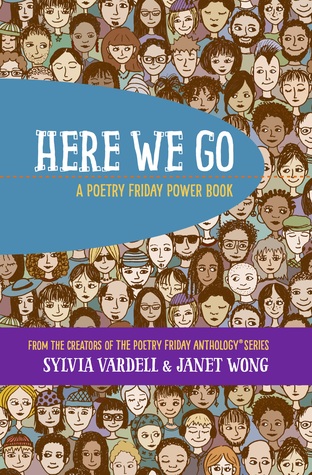
Here We Go: A Poetry Friday Power Book by Sylvia Vardell and Janet Wong

Share

nfpb2017

Nonfiction Wednesday

Nonfiction Picture Book Wednesday is hosted by Kid Lit Frenzy and was started to help promote the reading of nonfiction texts. Most Wednesdays, we will be participating and will review a nonfiction text (though it may not always be a picture book).
Be sure to visit Kid Lit Frenzy and see what other nonfiction books are shared this week!

HAPPY NATIONAL POETRY MONTH!

Here We Go: A Poetry Friday Power Book
Authors: Sylvia Vardell & Janet Wong
Illustrator: Franzi Paetzold
Published January 11th, 2017 by Pomelo Books

Summary: Here We Go: A Poetry Friday Power Book is a story in poems and a writing journal designed to help kids think about social change. It contains 12 PowerPack sets featuring Ameera, David, Jack, and Jenna, a diverse group of kids working together to make an impact in their community. Sylvia Vardell’s inventive PowerPlay activities make it easy for writers to get inspired, while her Power2You writing prompts extend learning. Vardell also created extensive back matter resources for young readers, writers, and activists.

Praise: “This interactive book and the abundance of resources provided will motivate students to take action through words and ideas to make their world a better place—a must have for today’s classrooms.” —Lynne Dorfman and Rose Cappelli, Authors of Mentor Texts

“I absolutely love this book! The invitations are inspiring and offer opportunities to think about the world and respond both personally and critically.” —Mary Napoli, Associate Professor of Reading, Penn State Harrisburg

“This book will allow all sorts of emotions and thoughts to bubble forth, including difficult and painful ones . . . and that will be a source of healing.” —Ed Spicer, Educator and literacy expert

“Really glad and excited that this book will be in the hands of young people.” —Jeana Hrepich, Core Faculty, Antioch University Seattle

This book is a Children’s Book Council “Hot Off the Press” selection for January 2017 and the second Poetry Friday Power Book. The first book in that series, You Just Wait: A Poetry Friday Power Book, is a 2017 NCTE Poetry Notable.

About the Authors: Here We Go: A Poetry Friday Power Book features the work of the dynamic team of Sylvia Vardell and Janet Wong, plus 12 poets: Ibtisam Barakat, Michelle Heidenrich Barnes, Robyn Hood Black, David Bowles, Joseph Bruchac, Kate Coombs, David L. Harrison, Renée M. LaTulippe, Naomi Shihab Nye, Margaret Simon, Eileen Spinelli, and Carole Boston Weatherford. Illustrations by Franzi Paetzold.

Sylvia M. Vardell is Professor at Texas Woman’s University and teaches courses in children’s and young adult literature. She has published five books on literature, as well as over 25 book chapters and 100 journal articles. Her current work focuses on poetry for young people, including a regular blog, PoetryforChildren.blogspot.com, since 2006.

Janet Wong is a graduate of Yale Law School and a former lawyer who became a children’s poet. Her work has been featured on The Oprah Winfrey Show and other shows. She is the author of 30 books for children and teens on chess, creative recycling, yoga, superstitions, driving, and more.

Together, Vardell and Wong are the creative forces behind The Poetry Friday Anthology series.

About the Book (from the authors): Why is this a “Poetry Friday Power Book”? Because we believe in the power of poetry to express our deepest feelings, and our most powerful experiences, and to inspire us to use our words to create change in teh world. Plus, we want you to discover the power of poetry in your own thinking and writing with the PowerPlay prewriting and Power2You writing prompts that pull you into poetry and inspire you to get your own ideas on paper–creatively, whimsically, powerfully, and immediately–right now in this book…

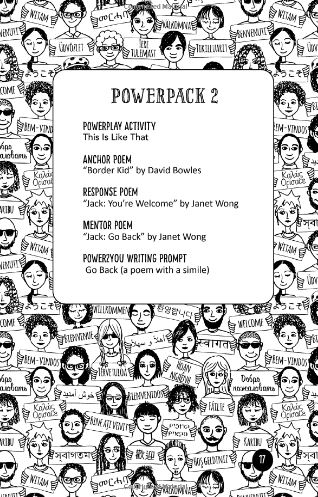
This book offers you several choices for reading, thinking, writing, and responding. Overall, it’s a story in poems, but all of this is also organized in PowerPack groups that help you get a “behind the scenes” look at how poems work and how poets write and think. In each of these PowerPack groups, you’ll find five things:

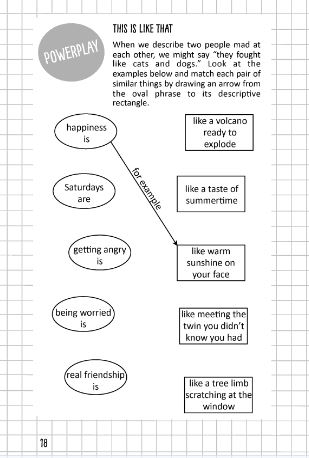
-PowerPlay activity
-Anchor poem (from an outside source)
-Response poem
-Mentor poem
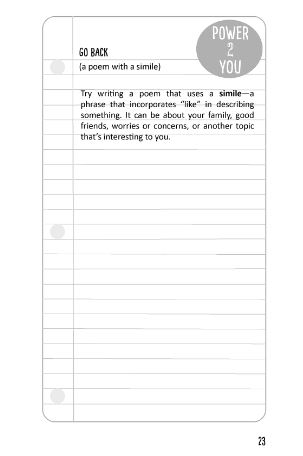
-Power2You writing prompt

Have fun reading and thinking about poetry and learning about how poetry uses just a few words but says so much and can inspire us to take action. Ready? Let’s “power up” and get started!

Review: I have an interesting relationship with poetry. I overall love it. I love writing it, and I love reading it, but I really have trouble with the analyzing aspect. It is in this very serious analyzing step that kids get afraid of poetry, but I think books like Here We Go help students learn to love poetry instead of being afraid of it while still teaching about the beauty and importance of poetry.

Teachers’ Tools for Navigation: Here We Go is a book that is made for classroom use! There are 12 PowerPacks, each with a different anchor poem and focus. Some PowerPacks work on rhyming, some work on format, and others focus on inspiration. There are so many different ways these PowerPacks could be organized to be used in the classroom! They can be daily during a poetry unit or weekly for half of the school year–whatever works best in your classroom, but this book is begging to be in children’s hands as an inspiration for our future poets.

Discussion Questions: What inspires you to write?; What is your favorite season? Why?; What are your favorite rhyming words?; How can you use your daily life to inspire you as a poet?

Flagged Passages: 

Read This If You Love: Writing poetry; Any poetry anthology including Out of Wonders by Kwame Alexander, Chris Colderley, and Marjory Wentworth and When Green Becomes Tomatoes by Julie Fogliano

Recommended For: 

classroomlibrarybuttonsmall closereadinganalysisbuttonsmall

Signature

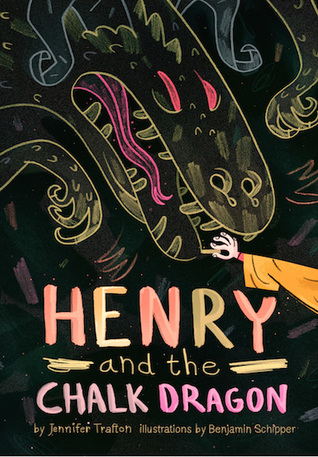
Review and Giveaway!: Henry and the Chalk Dragon by Jennifer Trafton

Share

Henry and the Chalk Dragon
Author: Jennifer Trafton
Illustrator: Benjamin Schipper
Published April 4th, 2017 by Rabbit Room Press

Summary: In the town of Squashbuckle, just about anything can happen, and when Henry Penwhistle draws a mighty Chalk Dragon on his door, the dragon does what Henry least expects–it runs away. Now Henry’s art is out in the world for everyone to see, and it’s causing trouble for him and his schoolmates, Oscar and Jade. If they don’t stop it, the entire town could be doomed! To vanquish the threat of a rampaging Chalk Dragon, Sir Henry Penwhistle, Knight of La Muncha Elementary School, is going to have to do more than just catch his art–he’s going to have to let his imagination run wild. And THAT takes bravery.

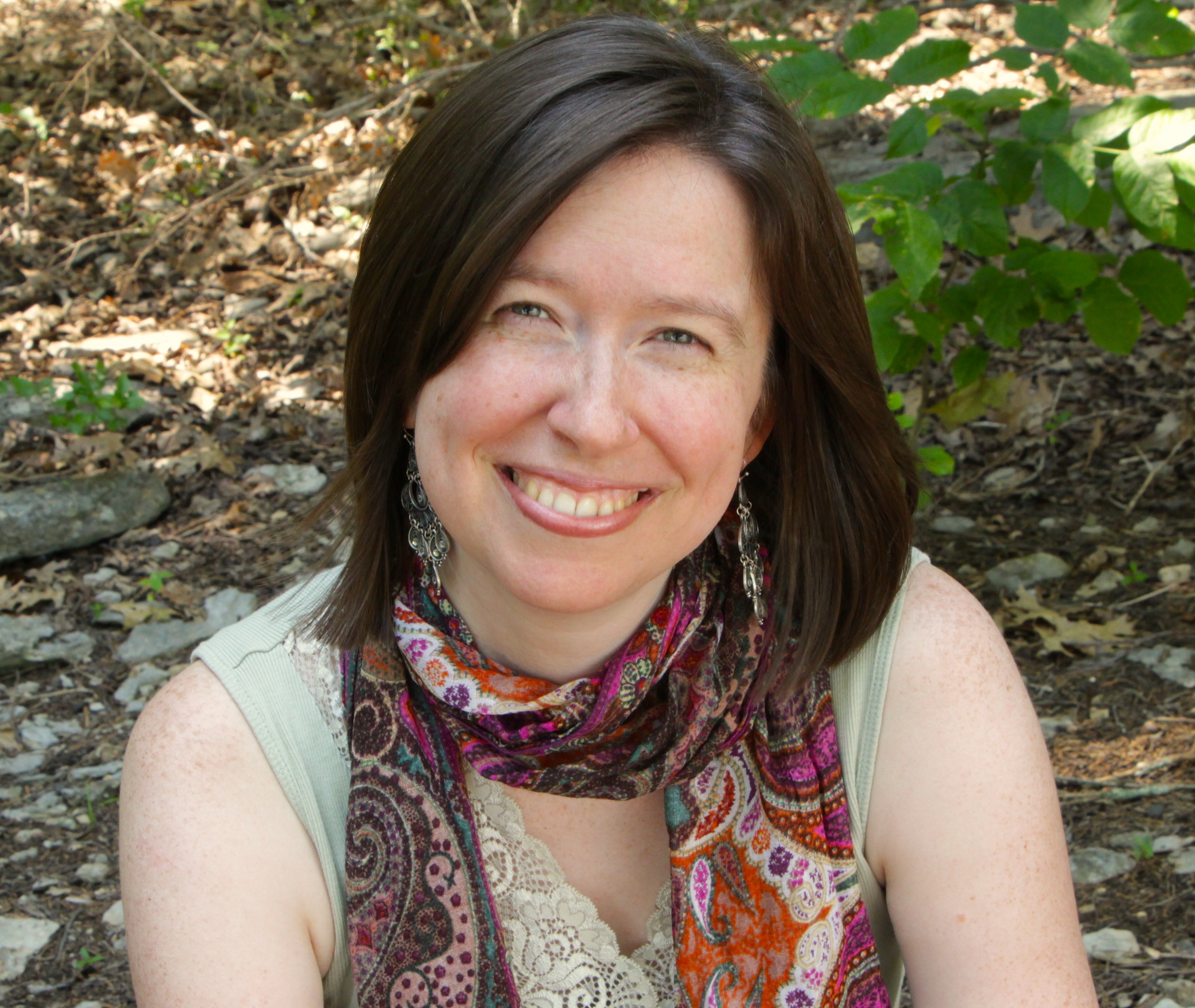
About the Author: Jennifer Trafton is the author of The Rise and Fall of Mount Majestic (Dial, 2010) which received starred reviews in Publishers Weekly and School Library Journal and was a nominee for Tennessee’s Volunteer State Book Award and the National Homeschool Book Award. Henry and the Chalk Dragon arose from her lifelong love of drawing and her personal quest for the courage to be an artist. She lives in Nashville, Tennessee, where, in addition to pursuing her love of art and illustration, she teaches writing classes, workshops, and summer camps in a variety of schools, libraries, and homeschool groups in the Nashville area, as well as online classes to kids around the world. To learn more, and to download free materials, visit jennifertrafton.com.

Critical Praise: 

★“A delicious face-off between forces of conformity and creativity run amok, spiced with offbeat names as well as insights expressed with eloquent simplicity.” —Booklist (starred review)
★“A perfect title to hand to young readers looking for laughs along with a wild and crazy adventure.”
                                                                                —School Library Journal (starred review)

Review: I love any book that promotes imagination, and it isn’t too often that you find a novel that is all about keeping your imagination. Henry’s story is a Pleasantville one–he lives in a boring town and takes boring classes, but when he closes his door, his imagination goes wild. It is when his imaginative Chalk Dragon escapes and wrecks havoc on his school does the power of an imagination really start to show. 

On a side note, and only some of you will understand this, but the cover of Henry and the Chalk Dragon is matte and SO SOFT!

Teachers’ Tools for Navigation: Along with a read aloud, the text gives lots of opportunities to discuss imagination, art, and creative writing. Also, chunking the text to fit the most opportune times will lead to some great writing and art prompts.

Discussion Questions: How did the principal end up the way he is? How do we know that he was not that way when he was younger?; Was Henry’s class/school doing the best thing to promote Vegetable Week?; Which adults understand Henry and his imagination? Which hinder him?; How does the power of Henry’s imagination cause havoc on the school? How does it save the school?; What does Henry’s chalk dragon coming to life symbolize in the grand scheme of things?; What is the lesson that the author is trying to teach us about imagination and growing up?

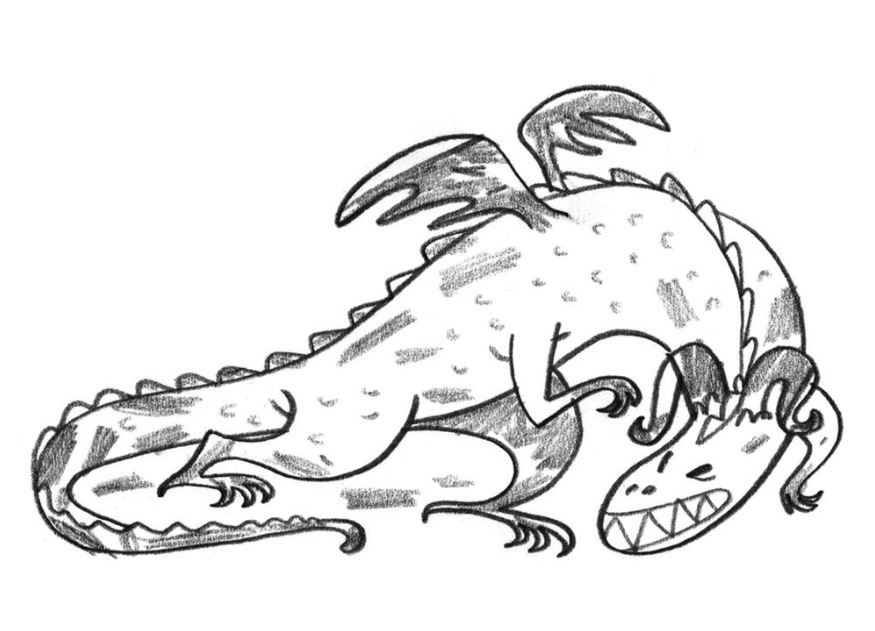
Flagged Passages: “Henry recognized the curve of those horns and the arrow-tipped tail. He recognized every sharp green flick of scaly skin, every zigzag of the bony spines running down the creature’s back. It was his dragon. Just as he had imagined it. Just as he had drawn it. Here it was, standing in front of him! There was something brand new in the world, and he had put it there!

There is a kind of fear that squeezes your heart with an icy hand and freezes you into a popsicle. But there is another kind of fear that is thrilling and hot, that makes your fingers tingle and your toes tickle each other inside your shoes until you want to leap over the Empire State Building. Henry was afraid with this kind of fear, and it felt good.

The dragon stared back at him–up and down, from his sneakers to his shiny helmet. It did not look afraid of Henry. It spread its wings proudly. It stretched its scaly neck as high as it would go. Its mouth widened slowly into a dragonish grin.

How long had Henry been waiting for this moment? Here he was, in his shiny suit of armor, with a sword in his hand. And here was a real live dragon–a dragon who could knock the house down with a few flicks of its tail, who could eat his mother for breakfast, who could send a ball of fire bouncing down the street. He knew exactly what he had to do.” (p. 32-33)

Read This If You Loved: The Journey Trilogy by Aaron BeckerHarold and the Purple Crayon by Crockett Johnson, Other picture books that spark imagination

Recommended For:

classroomlibrarybuttonsmall 

Giveaway!

a Rafflecopter giveaway

**Thank you to Barbara at Blue Slip Media for providing a copy for review!**

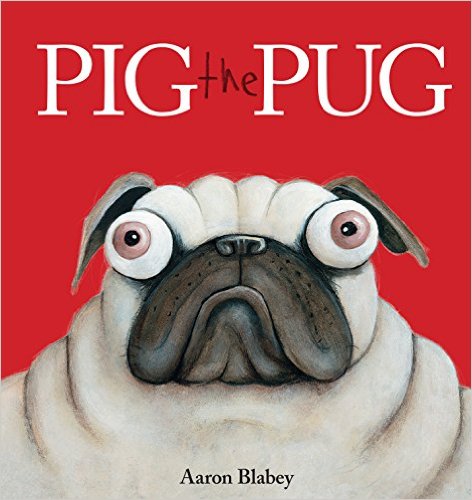
Pig the Pug by Aaron Blabey

Share

Pig the Pug
Author: Aaron Blabey
Published: July 1, 2014 by Scholastic

A Guest Review by Rebecca Welch

Summary: Pig is a greedy dog and does not want to share his toys with his housemate, Trevor. Trevor thinks it would be a great idea if him and Pig shared toys because then they would be able to play together. Pig does not give in and gathers all of his toys so Trevor can’t get to them. A mishap occurs that makes pig realize the importance of sharing and friendship.

Review: This book is great for any elementary school classroom! I absolutely loved it and thought that the message at the end was applicable to any group of young children. The rhyming makes the book great for a fun read aloud and the illustrations are fantastic. There was also a bit of humor. I highly recommend this picture book.

Teachers’ Tools for Navigation: This book would be great to teach rhyming because each page rhymes. You could talk about the moral of a story and use it as a segway to students’ writing about a time where they learned an important lesson (moral). You could have students determine the meaning of the idiom “flip a wig” by the using context clues and then study other common idioms afterwards. In addition, you could introduce character traits and determine the traits of Pig and Trevor. You can also practice making predictions by predicting what will happen to Pig. It would also be a great classroom discussion facilitator on sharing and the importance of friendship.

Discussion Questions: How do you think Trevor may be feeling when Pig won’t share his toys?; What does it mean to be greedy or selfish?; What do you predict will happen to Pig?; Can we think of any times that we have been greedy or selfish?; What does “flip a wig mean”?; What is the moral of this story?

Flagged Passage: “I know what your game is, you want me to SHARE! But I’ll never do that! I won’t and I swear!” (p. 7).

Read This If You Loved: Dog vs. Cat by Chris Gall; Mr. Fuzzbuster Knows He’s the Favorite by Stacy McAnulty

Recommended For:
 classroomlibrarybuttonsmall

Thank you, Rebecca!

RickiSig

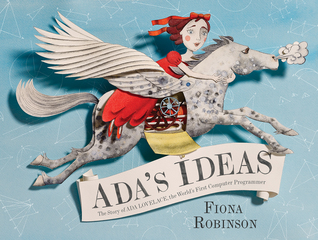
Teaching Guide for Ada’s Ideas: The Story of Ada Lovelace, the World’s First Computer Programmer by Fiona Robinson

Share

nfpb2017

Nonfiction Wednesday

Nonfiction Picture Book Wednesday is hosted by Kid Lit Frenzy and was started to help promote the reading of nonfiction texts. Most Wednesdays, we will be participating and will review a nonfiction text (though it may not always be a picture book).
Be sure to visit Kid Lit Frenzy and see what other nonfiction books are shared this week!

Ada’s Ideas: The Story of Ada Lovelace, the World’s First Computer Programmer
Author and Illustrator: Fiona Robinson
Published August 2nd, 2016 by Abrams Books

Summary: Ada Lovelace (1815–1852) was the daughter of Lord Byron, a poet, and Anna Isabella Milbanke, a mathematician. Her parents separated when she was young, and her mother insisted on a logic-focused education, rejecting Byron’s “mad” love of poetry. But Ada remained fascinated with her father and considered mathematics “poetical science.” Via her friendship with inventor Charles Babbage, she became involved in “programming” his Analytical Engine, a precursor to the computer, thus becoming the world’s first computer programmer. This picture book biography of Ada Lovelace is a portrait of a woman who saw the potential for numbers to make art.

Teaching Guide with Discussion Questions and Activities: 

Ada’s Ideas: The Story of ADA LOVELACE, the World’s First Computer Programmer

Ada Lovelace (1815–1852) was the daughter of Lord Byron, a poet, and Anna Isabella Milbanke, a mathematician. Her parents separated when she was young, and her mother insisted on a logic-focused education, rejecting Byron’s “mad” love of poetry. But Ada remained fascinated with her father and considered mathematics “poetical science.” Via her friendship with inventor Charles Babbage, she became involved in “programming” his Analytical Engine, a precursor to the computer, thus becoming the world’s first computer programmer. This picture book biography of Ada Lovelace is a portrait of a woman who saw the potential for numbers to make art.

Note about this guide and Ada’s Ideas

Ada Lovelace was a mathematician far ahead of her time. Because of this, much of the math included in Ada’s Ideas are quite complex. Because of this, Ada’s Ideas could be used for a wide range of students from early-elementary, focusing on Ada’s impact on math, to college, focusing on her use of complex math to write the first computer programs. Within this guide, you will find activities and discussion questions that primarily focus on its use in elementary and middle classrooms, but this does not limit it to these grade levels.

Vocabulary

These vocabulary words can be found throughout the book (in the order they are listed). Use these words as a starting point for a vocabulary study with Ada’s Ideas. Research shows that reading and discussing vocabulary within the context of reading is one of the most effective ways to learn vocabulary.

Despaired     |     Era     |    Defy     |    Reckless     |    Parallelogram     |    Influence     |    Steady     |    Whirred     |    Clanked     |    Newly Harnessed     |    Mechanical     |    Affectionate     |    Carrier Pigeon     |    Confined     |    Poetical expression     |    Aside     |    Eligible     |    Thrust     |     Regimented     |    Re-ignited     |    Potential     |    Orient     |    Corresponding     |    Loom     |    Thereby     |    Algorithm     |    Compute     |    Potential     |    Foresaw     |    Impact     |    Stunned     |    Envision

Activities: Use these activities to extend student learning with Ada’s Ideas.

Ana’s Parents

  • Ana’s parents are both well-renowned and intelligent; however, they are both very different.
  • Get to know George Byron
    • Have your students read the first stanza of “She Walks in Beauty” by Lord Byron. Analyze the stanza with them and discuss: How is Lord Byron describing the subject of his poem? Does it fit your idea of “Romantic” as Lord Byron was considered a leading figure in the Romantic Movement of poetry.
      • She walks in beauty, like the night
        Of cloudless climes and starry skies;
        And all that’s best of dark and bright
        Meet in her aspect and her eyes;
        Thus mellowed to that tender light
        Which heaven to gaudy day denies.
  • Get to know Anne Isabella Byron
    • Lady Byron was wealthy and educated. She was tutored by a Cambridge University professor as a child and found she excelled at mathematics. Discuss with your students: How did Lady Byron’s fascination of mathematics influence Ana’s life? Do you think her life would have been the same if her mother had not been a mathematician herself?

Nature vs. Nurture

  • Discuss with your students the idea of nature vs. nurture.
  • Lord and Lady Byron worked hard to separate Lord Byron from Ada to try and limit her poetical and imaginative behavior; however, Ada still ended up with quite the imagination. What does this show us about nature vs. nurture? Was Ada’s mother able to change how she was going to grow up by separating her from her father, or did it not matter since she is biologically his daughter?
  • Have your students break into two sides and research the ideas of nature vs. nurture then debate whether a person’s DNA decides their development or if experiences and environment can change the development.
    • Extension: Move the debate to Ada’s situation instead of a generic debate about the idea.

Industrial Revolution

  • The Industrial Revolution was possible because of the engineers, scientists, and mathematicians who put theory into practice. These new exciting feats of engineering and science included the first reliable steam engine, the cotton gin, telegraph, dynamite, vaccines, telephone, light bulb, airplane, and automobile.
  • Individually, in partners, or in groups, assign a different Industrial Revolution invention and look at how it was created, how it changed the world, and how it changed science/math/engineering then present their findings to the class.
  • After learning more about the Industrial Revolution, tie it back to Ada Lovelace’s life by discussing if the class believes that Ada’s accomplishments could have happened during a different time in history.

Influence

  • Ada Lovelace’s findings are largely said to be the first computer program. Her programs, in conjunction with Babbage’s hardware, were a theory over a century before the first computers were invented in the United States and England. Even though she was not part of the actual invention and start of computer science, she influenced much of modern computer science. Use the information below as the starting point for a research paper/project or discussion.
  • Some of the ways Ada has influenced computer science are:
    • Mill made by Babbage’s son
      • Charles Babbage’s son made the part of the analytical engine called the mill which carried out numerical operations.
    • Alan Turing
      • Babbage and Lovelace’s analytical engine was the original “drum” computer though Turing is often portrayed as the inventor of the idea.
    • John Graham-Cumming
      • Graham-Cumming is a British programmer who is working to bring the analytical engine, known as Plan 28, to realization.
    • Some ways Ada has been commemorated:
      • ADA: a standardized computer language used by the US Department of Defense
        • A computer language that appeared for the first time in 1980 and is still used today.
      • Ada Lovelace Day
        • Ada Lovelace Day was founded in 2011 and aims to share female pioneers in STEM fields. Ada Lovelace Day is the second Tuesday of October.

Discussion Questions: Use these questions as whole class discussions, reading check-ins, or as writing prompts with Ada’s Ideas. The discussion questions are written as if they are being asked to a student.

  • Ada’s schedule as an 8-year-old was very intense. Compare and contrast your current schooling schedule to what Ada was expected to do daily.
    • How many hours did she spend on each subject? How long do you spend?
    • Do you feel like what was expected of her was too high of expectations or fair?
  • How did Ada’s contraction of measles change her life?
  • Why did the author choose to cover Ada’s comforter in geometric shapes on the page when she is suffering with measles?
  • Ada surrounded herself with some very intelligent and influential people including Mary Fairfax Somerville, nominated to be jointly the first female member of the Royal Astronomical Society; Charles Dickens, one of the greatest novelist of the Victorian era; Florence Nightingale, the founder of modern nursing; and Charles Babbage. How do you think having these historical figures as her friends helped influence her focus and trajectory in life?
  • The mentorship of Charles Babbage changed Ada’s life as well as the trajectory of computer science. How did Ada influence Charles’s work and vice versa? Do you think either could have accomplished what they did without each other?
    • Compare their work to modern technologies: Ada’s work ended up influencing the creations of ____, and Mr. Babbage’s work ended up influencing the creations of ____.
  • How did Joseph-Marie Jacquard’s loom influence Ada’s idea of the program for the Analytical Engine?
  • The author’s note about Bernoulli Numbers states that Ada chose them as “beautiful examples” of the complexity of the Analytical Engine. Elaborate on this statement: Why would Ada choose something so complicated as the first program she wrote for the Analytical Engine?
  • The illustrations of Ada’s Ideas are Japanese watercolor pieces cut out and rearranged at different depths to achieve 3-D artwork then photographed. How does this artwork fit Ada’s story? Would another type of illustrations have been able to capture Ada’s ideas and personality as well?

Common Core Standards: English Language Arts

Examples of English Language Arts Common Core Anchor Standards that can be met by extending Ada’s Ideas with the above discussion questions/activities.

  • ELA-LITERACY.CCRA.R.1
    Read closely to determine what the text says explicitly and to make logical inferences from it; cite specific textual evidence when writing or speaking to support conclusions drawn from the text.
  • ELA-LITERACY.CCRA.R.2
    Determine central ideas or themes of a text and analyze their development; summarize the key supporting details and ideas.
  • ELA-LITERACY.CCRA.R.3
    Analyze how and why individuals, events, or ideas develop and interact over the course of a text.
  • ELA-LITERACY.CCRA.R.4
    Interpret words and phrases as they are used in a text, including determining technical, connotative, and figurative meanings, and analyze how specific word choices shape meaning or tone.
  • ELA-LITERACY.CCRA.R.5
    Analyze the structure of texts, including how specific sentences, paragraphs, and larger portions of the text (e.g., a section, chapter, scene, or stanza) relate to each other and the whole.
  • ELA-LITERACY.CCRA.W.7
    Conduct short as well as more sustained research projects based on focused questions, demonstrating understanding of the subject under investigation.
  • ELA-LITERACY.CCRA.W.9
    Draw evidence from literary or informational texts to support analysis, reflection, and research.

Computer Science Teachers Association Standards

  • Computational Thinking: Grades K-3, #4: The student will be able to recognize that software is created to control computer operations.
  • Computational Thinking: Grades K-6, #6: The student will be able to understand the connections between computer science and other fields.
  • Computational Thinking: Grades 6-9, #3: The student will be able to define an algorithm as a sequence of instructions that can be processed by a computer.
  • Computing Practice and Programming: Grades K-3, #5: The student will be able to identify jobs that use computing and technology.
  • Computing Practice and Programming: Grades 6-9, #7: The student will be able to identify interdisciplinary careers that are enhanced by computer science.
  • Computers and Communication Devices: Grades 6-9, #3: The student will be able to demonstrate an understanding of the relationship between hardware and software.
  • Computers and Communication Devices: Grade 6-9, #4: The student will be able to use developmentally appropriate, accurate terminology when communicating about technology.
  • Community, Global, and Ethical Impacts: Grade 6-9, #2: The student will be able to demonstrate the knowledge of changes in information technologies over time and the effects those changes have had on education, the workplace, and society.

Author/Illustrator

Fiona Robinson is originally from the north of England she now lives in Brooklyn, New York. She is an author and illustrator of books for children including Whale Shines, What Animals Really Look Like, and Ada’s Ideas. What Animals Really Like received the 2012 Irma Black Award, and Bank Street named it one of the 2012 Best Children’s Books. She has been praised by Publishers Weekly for her “humor tinged with heart,” and her work has been honored by the Royal Academy of Arts in London. Her favorite things include drawing, reading, drinking tea and telling her stories to children. She doesn’t like loud noises or clapping and often reads newspapers and magazines back to front. When she was in elementary school her teachers called her Little Leonardo, and she’s forever thankful for their support and that of her fabulous family in England too.

Resources

https://en.wikipedia.org/wiki/Ada_Lovelace

http://www.telegraph.co.uk/technology/11285007/Ada-Lovelace-paved-the-way-for-Alan-Turings-more-celebrated-codebreaking-a-century-before-he-was-born.html

http://findingada.com/

https://plus.maths.org/content/ada-lovelace-visions-today

The teaching guide can also be viewed at: https://www.scribd.com/document/341092371/Ada-s-Ideas-Teaching-Guide# or http://www.abramsbooks.com/academic-resources/teaching-guides/

Recommended For: 

classroomlibrarybuttonsmall closereadinganalysisbuttonsmall 

Signature

Author Guest Post: “Journey” by Michael Cottman, Author of Shackles from the Deep

Share

“Journey” by Michael Cottman

My journey to write Shackles From The Deep started when I was a boy growing up in Detroit and watching a popular television show called Sea Hunt, a 1960s adventure program about an underwater detective.

From the time I was a kid, I wanted to scuba dive and explore the ocean’s depths. And because National Geographic embraces adventure tales like no other company, this was a perfect publishing partnership.

I wrote Shackles From The Deep in a conversational way for young readers to share the story of the Henrietta Marie, a sunken 17th century slave ship. This is more than just the story of one ship – it’s the untold story about millions of African people taken as captives to the New World.

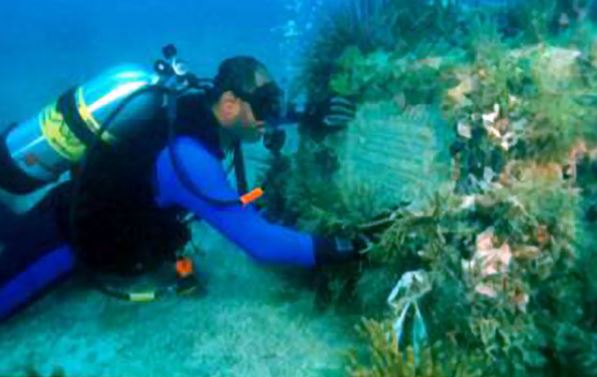
I traveled to three continents to piece together a trans-Atlantic puzzle. I reviewed shipping records and slave-ship captain’s logs in London. I retraced the route of the Henrietta Marie slave ship and scuba-dived the ship’s ports of call in Jamaica, Barbados, and West Africa.

During my research, I learned amazing things:  Today, the Henrietta Marie is believed to be the world’s largest source of tangible objects from the early years of the slave trade.

The Henrietta Marie is the only slave ship in America that has been scientifically documented and where more than 20,000 artifacts were recovered, including the largest collection of slave-ship shackles ever found on one site.

I also learned the shackles were discovered in 1973 by Moe Molinar, a black underwater treasure hunter who was searching for the Atocha, a Spanish galleon that had sunk nearly 400 years ago filled with gold, silver and $400 million worth of jewels.

Treasure hunters didn’t know what to make of these relics. Then in 1983, maritime archaeologists, intrigued by the mystery, revisited the site and came upon a ship’s bell. As they chipped away at the limestone encrustation a name and a date emerged: Henrietta Marie, 1699.

Beneath the sea, on the wreck of the Henrietta Marie, I ran my hands through the sand and held the tiny glass trade beads that were used by the Henrietta Marie’s crew to trade for African people.

The story of Shackles From The Deep also introduces young readers to the unprecedented partnership between members of The National Association of Black Scuba Divers (I’m a lifetime member) and white maritime archaeologists who explored the Henrietta Marie together for a common purpose and forged lifelong friendships along the way.

After all, the global institution of slavery is our collective history.

But because of slavery, it is nearly impossible for African Americans to pinpoint the origins of our ancestors.

We cannot always identify a country in Africa where they were born, let alone a city or village. We can only know they came from somewhere on the west coast of the enormous continent.

Are my people Ibo from Nigeria, or Fulani from Mali, or Wolof from Senegal, or Ashanti from Ghana? I may never know.

What’s important, however, is my appreciation for the African culture — my culture, too — and my need to draw strength from the African people who came before me and survived.

And we continue to honor them.

In 1993, I joined members of The National Association of Black Scuba Divers to place a one-ton concrete memorial on the site of the Henrietta Marie shipwreck.

The bronze inscription on the memorial is a powerful testament to the human spirit: “In memory and recognition of the courage, pain and suffering of enslaved African people. Speak her name and gently touch the souls of our ancestors.”

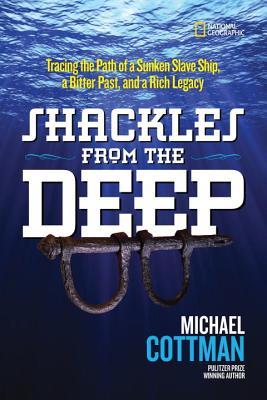
Shackles from the Deep: Tracing the Path of a Sunken Slave Ship, a Bitter Past, and a Rich Legacy
Author: Michael Cottman
Published January 3rd, 2017 by The National Geographic Society

Summary: A pile of lime-encrusted shackles discovered on the seafloor in the remains of a ship called the Henrietta Marie, lands Michael Cottman, a Washington, D.C.-based journalist and avid scuba diver, in the middle of an amazing journey that stretches across three continents, from foundries and tombs in England, to slave ports on the shores of West Africa, to present-day Caribbean plantations. This is more than just the story of one ship it’s the untold story of millions of people taken as captives to the New World. Told from the author’s perspective, this book introduces young readers to the wonders of diving, detective work, and discovery, while shedding light on the history of slavery.

Critical Praise: 

“The idea of identity is at the center of this fascinating narrative nonfiction book…This truly multidisciplinary volume….engagingly explores a wide scope of topics, including the history of slavery, marine archaeology, and contemporary racial discrimination, culminating in a dive down to the wreck itself. Every bit of this concise, detailed book feels personal, and Cottman’s exploration and investigation of the wreck is rich with intrigue and poignant, thought-provoking questions.” -Booklist (STARRED REVIEW)

“Cottman weaves his personal story of discovery with history of the slave trade, helping readers understand why a sunken slave ship from the 1700s still matters. His emotional attachment to the artifacts, including child-sized shackles, deepens the storytelling in this highly readable narrative.” –Kirkus

“Accessible and very personal account….(a) chilling exploration of the slave trade.” -Publishers Weekly

“Cottman’s personal journey, fraught with reminders of the trials and injustice his own enslaved ancestors must have endured, is compelling” -BCCB

About the Author: Michael H. Cottman, Pulitzer Prize-winning journalist and author, is a former political reporter for the Washington Post. Cottman has appeared on National Public Radio’s (NPR) “Tell Me More” with Michel Martin and also the Oprah Winfrey Show in 2000 to discuss his (adult) book The Wreck of the Henrietta Marie. Cottman also serves as a special consultant to the National Oceanic Atmospheric Administration (NOAA) for a national multimedia project, “Voyage to Discovery,” an education initiative that focuses on the African-American contribution to the maritime industry spanning 300 years and efforts to teach students of color about careers in marine biology and oceanography. Visit his website at http://www.michaelhcottman.com/.

Thank you to Michael for his post and to Barbara from Blue Slip Media for providing the resources!

 and