Paint Me a Picture & Tell Me a Story by Emily Bannister

Share

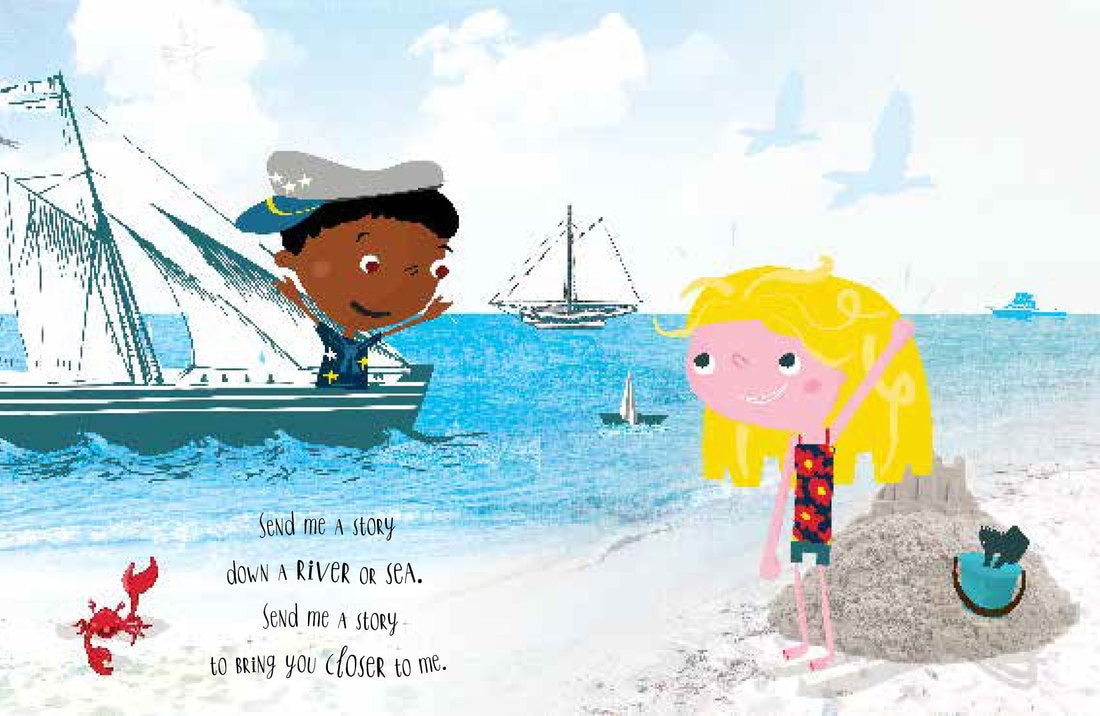
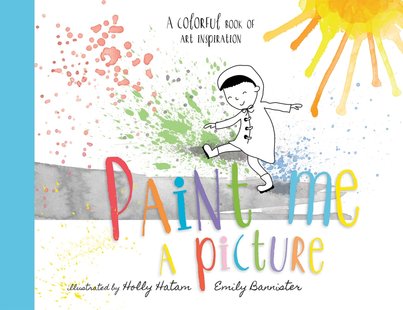
Paint Me a Picture: A Colorful Book of Art Inspiration
Author: Emily Bannister
Illustrator: Holly Hatam
Published by Kane Miller EDC Publishing
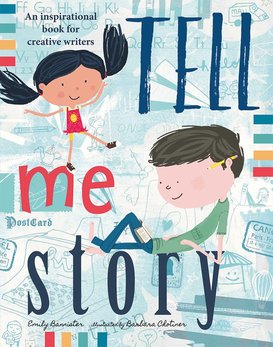
Tell Me a Story: An Inspirational Book for Creative Writers
Author: Emily Bannister
Illustrator: Barbara Chotiner
Published by Kane Miller EDC Publishing

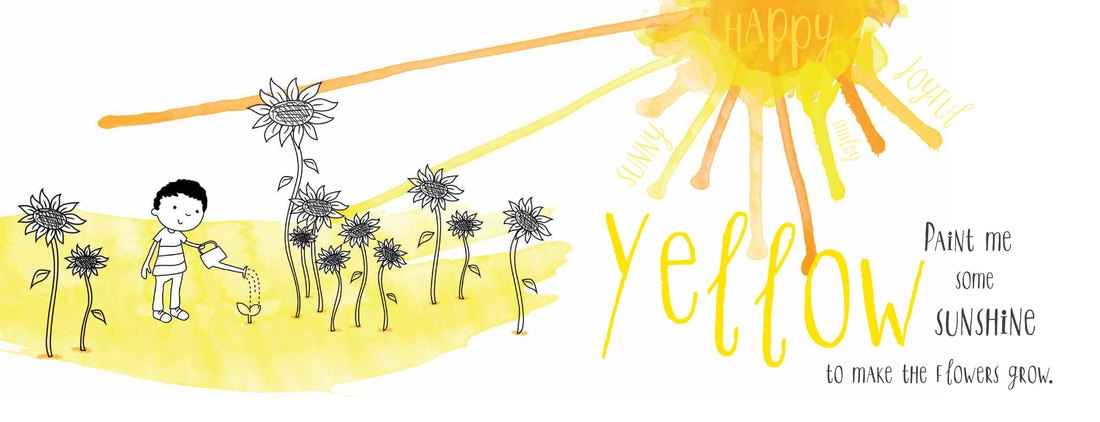
Summary: Paint Me a Picture equates color to mood, getting children thinking about the way they see and feel our colorful world.

Tell Me a Story lets children know that their words are important, that no matter the form, their stories are meaningful.

With simple rhyming text and accessible art, this book is a springboard for drawing and sharing stories, giving color to emotions, and kids permission to do, create, show and tell.

It delightfully, poetically, celebrates the joy and imagination in art in all its forms and inspires the storyteller in everyone.

Review: I love books that help students feel like they are artists, writers, or thinkers. I think creativity is such an important part of childhood and too often we are pushing kids to grow up too quickly and not learn how to be creative or we’re pushing kids to fit into a certain box instead of letting them think outside of the box. These books help kids see the joy in writing and creating. They celebrate creative thinking and writing and the colors of our world. They show how you can combine color and words to create something that others will want to read and see. 

Teachers’ Tools for Navigation: Sometimes all a student needs is inspiration to create a story or piece of art work. These texts are those inspiration. They help students know that their story means something. That their words are something someone wants to read. That color can mean something. That their color choices when making artwork make a difference but that all colors are beautiful.

Discussion Questions: If you wanted to draw a picture that symbolizes sadness/happiness/laughter/anger, etc., what color would you use? What would you draw?; What is your favorite color? What does it symbolize to you?; To write a story, you first need to start with an idea, a place, or a thing. What would you write a story about?

Flagged Passages: 
Read This If You Loved: What Do You See? by Kyla Ryman, The Amazing Crafty Cat by Charise Mericle Harper, A Child of Books by Oliver JeffersThe Museum by Susan Verde, My Life in Pictures by Deborah ZemkeDoodle Adventures by Mike LoweryMy Pen by Christopher Myers, Mix it Up! by Hervé Tullet, Sky Color by Peter H. Reynolds, Art by Patrick McDonnell, Not a Box by Antoinette Portis, Seen Art? by Jon Scieszka, The Cat and the Bird by Geraldine Elschner

Recommended For:

classroomlibrarybuttonsmall 

**Thank you to Lynn at Kane Miller for providing copies for review!!**
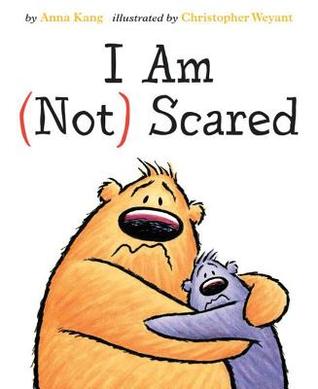
Review and Giveaway!: I Am (Not) Scared by Anna Kang, Illustrated by Christopher Weyant

Share

I Am (Not) Scared
Author: Anna Kang
Illustrator: Christopher Weyant
Published March 21, 2017 by Two Lions

Goodreads Summary: Two fuzzy friends go to an amusement park. They try to convince each other that there are much scarier things than the roller coaster. Hairy spiders! Aliens! Fried ants! They soon discover that sometimes being scared isn’t as “scary” as they thought. With expressive illustrations and simple text, this giggle-inducing tale about (not) being scared features the endearing characters from the Theodor Seuss Geisel Award winner You Are (Not) Small.

Ricki’s Review: These books crack me up. I have loved every book in this series, and they all make me giggle and giggle. Each book teaches an important lesson to kids. In this book, readers learn what it’s like to be scared, and why being scared can be transformed into something quite fun! I can’t decide which I like more—the writing or the illustrations. The characterization is beautifully done, and this wife and husband (author and illustrator) team is brilliant. I recommend this series highly to kids, and I also recommend it for use in creative writing classrooms.

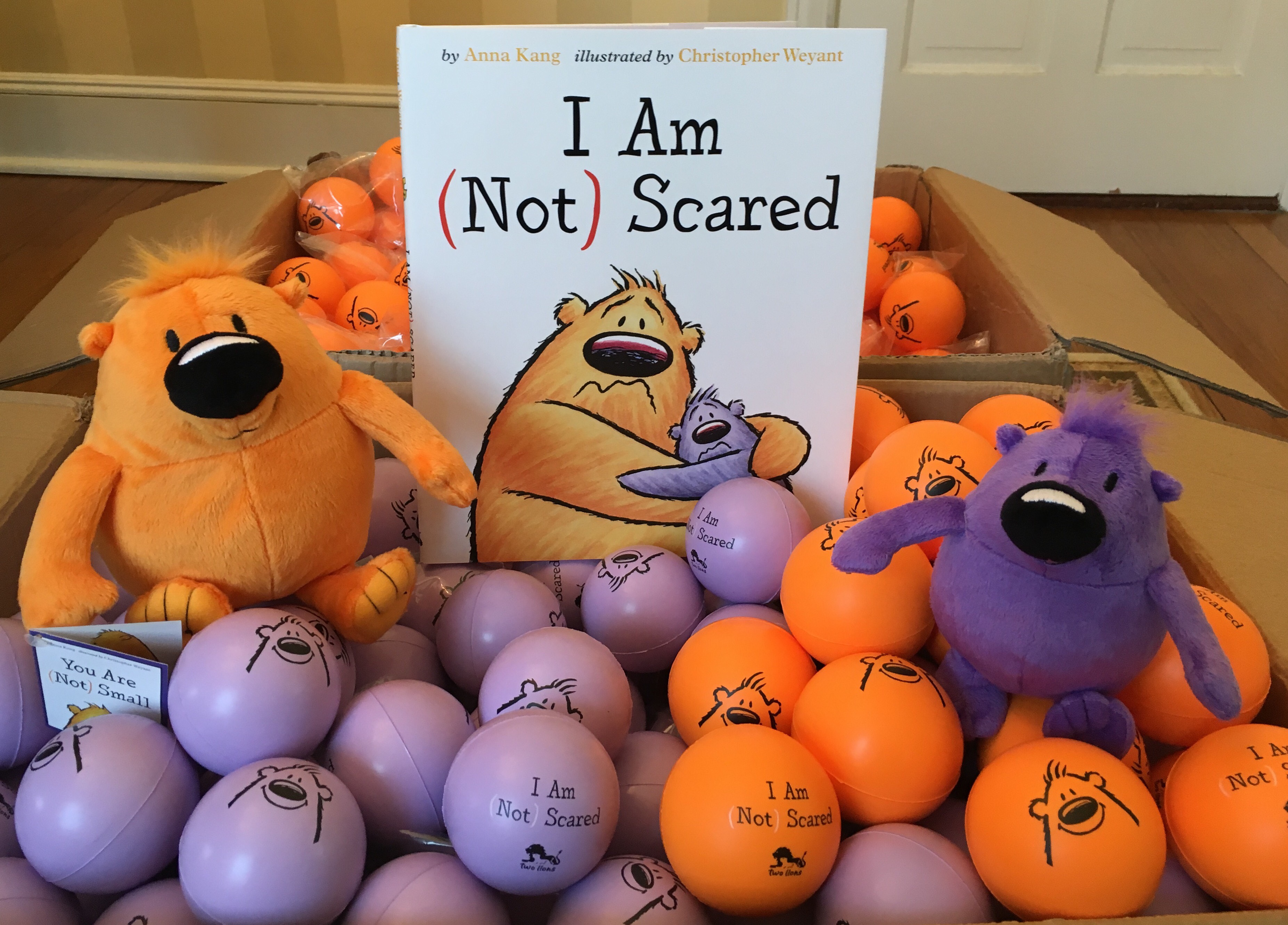
Kellee’s Review: We are huge fans of Kang and Weyant books here at the Moye house. Our wall growth chart is from You Are (Not) Small, and I cannot wait to buy the plush fuzzies for Trent! I think that each of their books take on a pretty serious childhood issue (sharing, comparing, now fear) and talk about it in a fun way that still has a pretty clear lesson intertwined with it. This one is going to especially be one I read with Trent because as a three year old, he is just starting to really be scared of things, so it will be a really good discussion to have with him. If you haven’t read any of these books, I highly recommend getting all three–you will not be disappointed. 

Teachers’ Tools for Navigation: Teachers will appreciate these books because they are great for use as beginning readers. Unlike some of the dry, boring beginning readers in classrooms, the books in this series use just the right number of words that will allow kids to read without getting incredibly frustrated. I’d recommend this series to both teachers and parents! I am happy to have all of the books in this series for when my own son begins to learn to read!

For more information, and to download a free activity kit, visit annakang.com, or download at: http://bit.ly/2mKbFWi

Discussion Questions: What are the two fuzzy creatures scared of? How does the writing work together with the illustrations to share the story?; How are the characters feeling on the last page? How do you know?

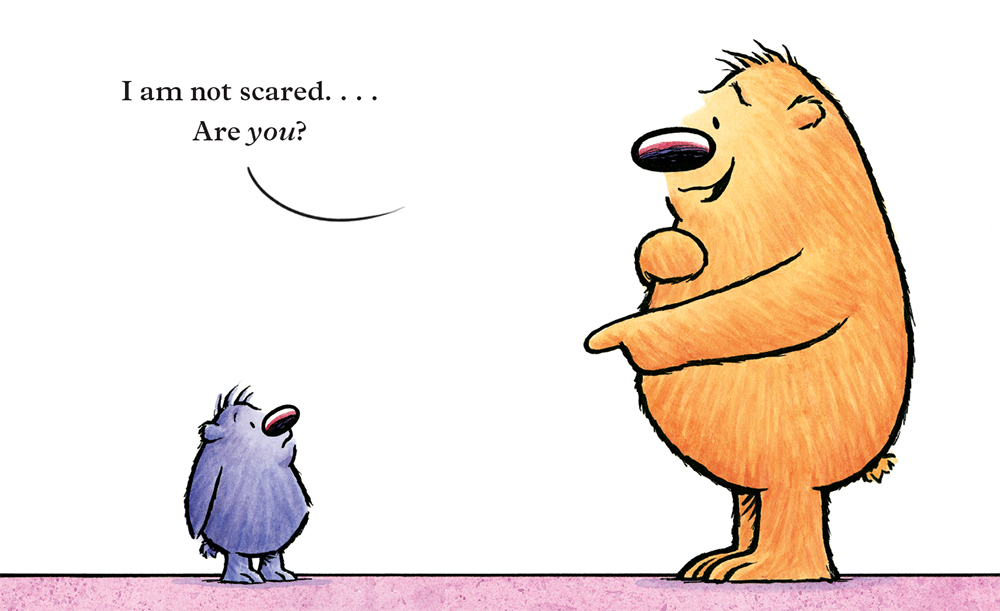
We Flagged: “I am not scared… Are you?

Read This If You Loved: You Are (Not) Small by Anna Kang, That’s (Not) Mine by Anna KangScaredy Squirrel  by Mélanie Watts, The Pigeon Needs a Bath by Mo Willems, Elephant and Piggie books by Mo Willems

Recommended For:

readaloudbuttonsmall classroomlibrarybuttonsmall

Giveaway!:

a Rafflecopter giveaway

About the Authors:

Anna Kang and Christopher Weyant are the creators of two other books featuring these characters: Theodor Seuss Geisel Award winner You Are (Not) Small and That’s (Not) Mine. Christopher’s work can be seen regularly in The New Yorker magazine and his cartoons are syndicated worldwide. This husband-and-wife team lives in New Jersey with their two daughters and their Bich-Poo. Visit them at www.annakang.com and www.christopherweyant.com.
Twitter: @annakang27 @chrisweyant05
Instagram: annakangbooks; christopherweyant
Facebook: Anna Kang – Author; Christopher Weyant


  RickiSigandSignature

**Thank you to Barbara at Blue Slip Media for providing copies for review!**

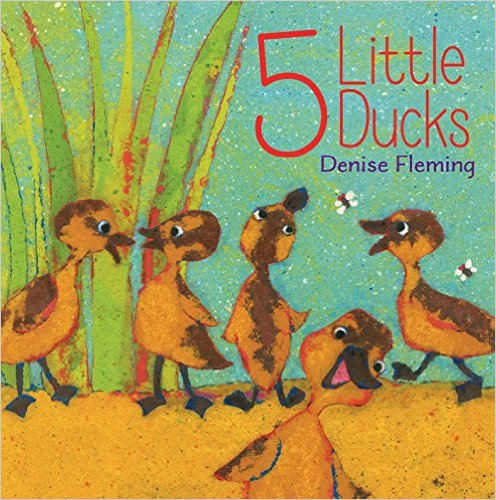
5 Little Ducks by Denise Fleming

Share

5 Little Ducks
Author: Denise Fleming
Published November 8, 2016 by Beach Lane Books

A Guest Review by Kathryn O’Connor

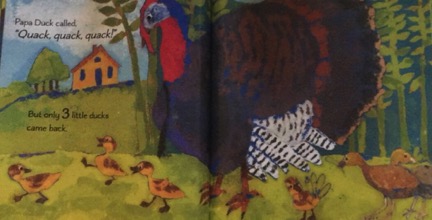
Summary: Papa Duck and his ducklings go on adventures through the woods and over the hills everyday. Each time Papa Duck yells out “Quack quack quack” to gather his ducklings, but not all of them come back. In fact, with each adventure, one fewer duck returns. Finally on Saturday, Papa Duck went out alone and yelled “Quack, quack, quack”. It was then that all of his ducks came back! When the family woke up together on Sunday, Mama Duck decided it would be best for the family to stay in and rest.

Review: Denise Fleming takes a modern spin on a classic nursery rhyme. It is fun to find out what new adventure the ducklings are taking on throughout the week. Because the ducks meet new people and explore new places each day, the reader is kept engaged. The repetition of the story makes it easy for young readers to follow along with and make predictions. In combination with this, the large text format and bolded numbers allow for easy comprehension.

The lively illustrations bring life to the text, and I love how perspective is used in all of them. Some of the pictures you’ll find to be zoomed out, while some are zoomed in. My favorite part of this picture book is at the end where Fleming has two non-fiction pages based on the animals of the story. This encourages the readers thinking and allows them to explore further.

Although this book is a helpful, entertaining tool for teaching days of the week and numbers 1-5, my only concern is that readers might become worried or anxious thinking about the well-being of the ducks. At some points while reading, I was concentrated on where the ducks were, if they were still alive, and when they were going to return to their family, rather than enjoying the text.

Teachers’ Tools for Navigation: This story can be used at first as a whole class read aloud, and perhaps even in a singing voice. Students will quickly pick up on the pattern of the story due to the repetition. By keeping the book in a classroom library, readers will then be willing to pick up the text and read independently or to a friend for they have already familiarized themselves with it. For beginning readers, this will spark motivation and love of reading. This story is also a helpful aid in teaching and counting numbers 1-5, days of the week, and sequencing text.

Discussion Questions: How many ducks do you think will come back?; What day comes next?; Why does Papa Duck yell “quack, quack, quack” everyday?; Where do you think the ducks are going?; Why do you think the ducks want to explore?; Why is Papa Duck feeling sad?; How do you think Papa Duck felt when his ducks returned?; Why does Mama Duck want all of the ducks to rest on Sunday?

Flagged Page:


Read This If You Loved: 10 Little Rubber Ducks by Eric Carle, Make Way for Ducklings by Robert McCloskey, or The Very Hungry Caterpillar by Eric Carle

Recommended For:
 classroomlibrarybuttonsmall

Thank you, Kathryn!

RickiSig

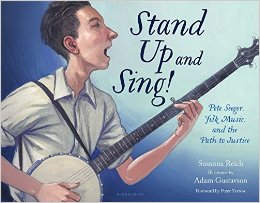
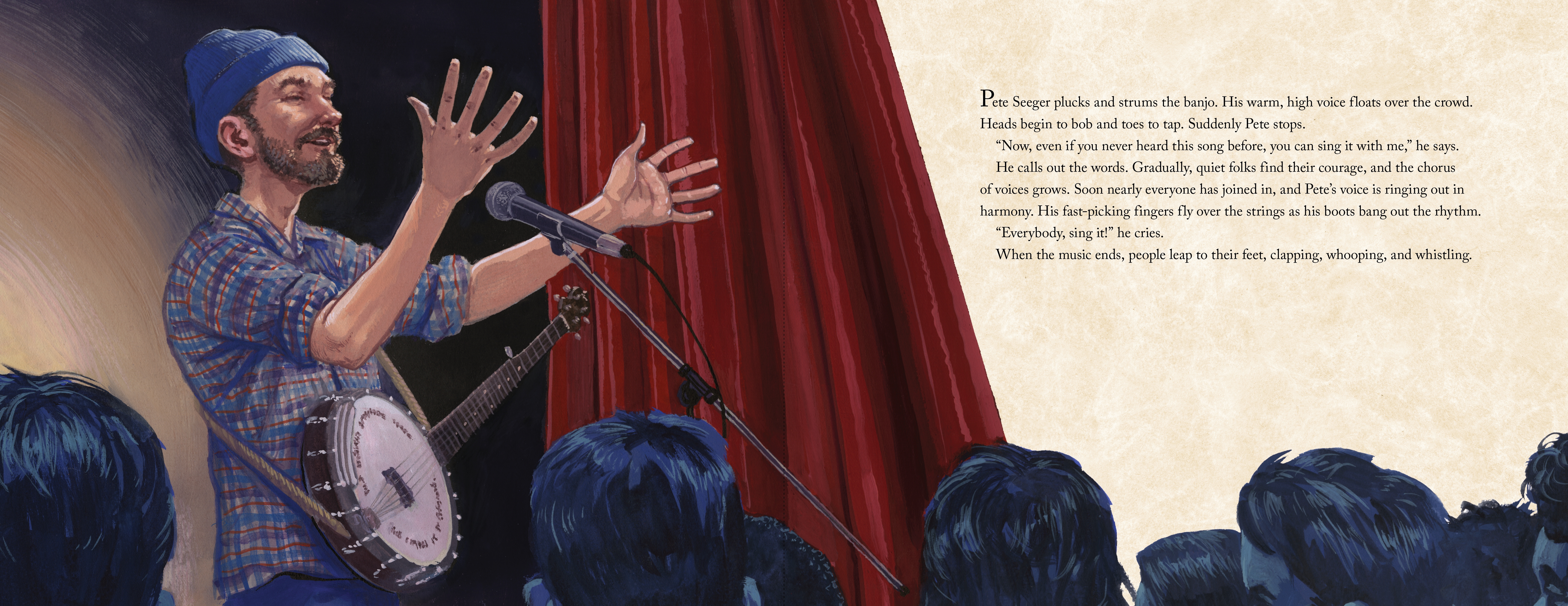
Stand Up and Sing!: Pete Seeger, Folk Music, and the Path to Justice by Susanna Reich

Share

nfpb2017

Nonfiction Wednesday

Nonfiction Picture Book Wednesday is hosted by Kid Lit Frenzy and was started to help promote the reading of nonfiction texts. Most Wednesdays, we will be participating and will review a nonfiction text (though it may not always be a picture book).
Be sure to visit Kid Lit Frenzy and see what other nonfiction books are shared this week!

Stand Up and Sing!: Pete Seeger, Folk Music, and the Path to Justice
Author: Susanna Reich
Illustrator: Adam Gustavson
Foreword by Peter Yarrow
Published March 21st, 2017 by Bloomsbury USA Childrens

Summary: Inspired by the rhythms of American folk music, this moving account of Pete Seeger’s life celebrates his legacy, showing kids of every generation that no cause is too small and no obstacle too large if, together, you stand up and sing!

Pete Seeger was born with music in his bones. Coming of age during the Great Depression, Pete saw poverty and adversity that would forever shape his worldview, but it wasn’t until he received his first banjo that he found his way to change the world. It was plucking banjo strings and singing folk songs that showed Pete how music had the incredible power to bring people together.

Using this gift throughout his life, Pete encouraged others to rally behind causes that mattered–fighting for Civil Rights, ending the Vietnam War, or cleaning up the Hudson River. For Pete, no challenge was too great, and what started out as a love for music turned into a lifetime of activism and change. His greatest talent–and greatest passion–would become an unforgettable part of American history.

Praise: 

“Gustavson’s mixed-media illustrations highlight Seeger’s modest upbringing and down-to-earth persona, pairing lushly illustrated scenes of him traveling and performing with rough, loose sketches . . . An intimate look at a pivotal American figure.” –  Publisher’s Weekly

“The ‘We Shall Overcome’ songwriter’s legacy spans decades, and this will surely help a new generation understand his fervor and still-relevant message.” –  Booklist

“Gustavson’s realistic art supports the admiring tone. . . . A solid introduction.” –  School Library Journal

Review: I grew up with parents who loved Bob Dylan, Janis Joplin, Jimi Hendrix, The Beatles, Van Morrison, and Neil Young, so I have definitely heard of Pete Seeger. I knew that he was influenced by Woody Guthrie just as Bob Dylan was (I once wrote a paper about Walt Whitman being the origin of American folk music because of his influence on Woody Guthrie). But I did not have any idea of Seeger’s influence on the social issues that I learned about in this picture book. Though Reich is clear in her Author’s Note that the picture book bio is just a snippit of his life, what she does cover shows me what an impact Seeger had in so many different social issues throughout his life. This story gave me hope. It showed me that music and people who care can definitely make a difference. That someone like Pete Seeger, someone of privilege, can join forces with the oppressed and fight against injustice. That music and poetry and words can make a difference.

Teachers’ Tools for Navigation: Pete Seeger’s story intertwines with many parts of history that are taught. It would be interesting to read Pete’s story when studying the 60s and see how he was influential throughout the different social issues in the 60s. I think it would also be fascinating to listen to Pete’s music while reading the book and discussing how the poetry that he turned into music reflected the feelings of those fighting oppression during this time.

Discussion Questions: How did Pete use music to unite people fighting for a cause?; How is Pete’s use of folk music like Martin Luther King Jr.’s use of speeches and words to fight?; Why did Pete not enjoy fame?

Flagged Passages: “In 1955 Pete was called into court by some congressmen who didn’t think he was a loyal American. Pete refused to answer their questions in the way they wanted. The threat of prison would hang over his head for the next seven years.

Meanwhile the civil rights movement was picking up steam. On a trip to Tennessee in 1957, Pete introduced Dr. Martin Luther King Jr. to the song ‘We Shall Overcome.’

‘That song really sticks with you, doesn’t it?’ Dr. King said.

‘We Shall Overcome’ spread throughout the country. In churches and community halls, at civil rights gatherings and protest marches, people stood arm in arm, their voices forming a bond of home and determination.”

“We Shall Overcome” by Pete Seeger

Read This If You Love: Martin’s Big Words by Doreen Rappaport, When Bob Met Woody by Gary Golio, Blood Brothers by Rich Wallace and Sandra Neil WallaceThe March Against Fear by Ann BausumBoycott Blues by Andrea Davis Pinkey

Recommended For: 

classroomlibrarybuttonsmall closereadinganalysisbuttonsmall

Signature

Blog Tour with Review, Teaching Guide, and Giveaway!: A Boy Called Bat by Elana K. Arnold

Share

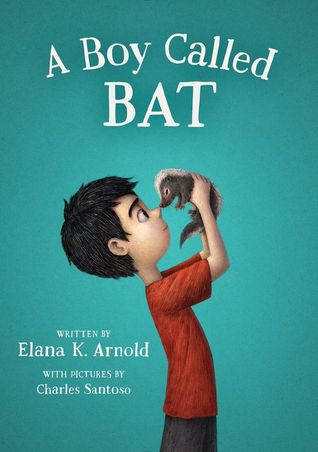
A Boy Called Bat
Author: Elana K. Arnold
Illustrator: Charles Santoso
Published March 14th, 2017 by Walden Pond Press

Summary: For Bixby Alexander Tam (nicknamed Bat), life tends to be full of surprises—some of them good, some not so good. Today, though, is a good-surprise day. Bat’s mom, a veterinarian, has brought home a baby skunk, which she needs to take care of until she can hand him over to a wild-animal shelter.

But the minute Bat meets the kit, he knows they belong together. And he’s got one month to show his mom that a baby skunk might just make a pretty terrific pet.

Critical Praise: 

“Delightful, endearing, and utterly relatable, Bat Tam is destined to be a dear and necessary friend for young readers. I adore him and his story.” — Anne Ursu, author of The Real Boy

“Written in third person, this engaging and insightful story makes readers intimately aware of what Bat is thinking and how he perceives the events and people in his life. With empathy and humor, Arnold delves into Bat’s relationships with his divorced parents, older sister, teachers, and classmates.” — Publishers Weekly (starred review)

“Comfortably familiar and quietly groundbreaking, this introduction to Bat should charm readers, who will likely look forward to more opportunities to explore life from Bat’s particular point of view.” — Kirkus Reviews

“Brimming with quietly tender moments, subtle humor, and authentically rendered family dynamics, Arnold’s story, the first in a new series, offers a nonprescriptive and deeply heartfelt glimpse into the life of a boy on the autism spectrum.” — Booklist

About the Author: Elana K. Arnold grew up in Southern California, where she was lucky enough to have her own perfect pet—a gorgeous mare named Rainbow—and a family who let her read as many books as she wanted. She is the author of picture books, middle grade novels, and books for teens. She lives in Huntington Beach, California, with her husband, two children, and a menagerie of animals. You can find her online at www.elanakarnold.com.

Review: A Boy Called Bat is one of those quiet yet impactful books that will find a special place in many hearts. The story is about Bat’s Asperger’s and his parent’s divorce without it being about that at all. The main character, Bat, is one of those special characters that as I was reading about him I knew that readers getting to know him will make them grow as people and that their empathy to fellow kids who may seem different will grow as well.

Bat’s story will not only appeal to our readers that love stories that promote empathy and understanding of others, Bat and his skunk, Thor, will definitely appeal to our readers who love animals. Bat’s mother is a veterinarian and Bat is 99.9% sure he is going to be as well. There are many animal references throughout the book, so these will all draw in readers who love animals. 

Teachers’ Tools for Navigation: In addition to an amazing read aloud opportunity, I can definitely see the text being part of lit circles. Bat himself is unique, but he and his story remind me of so many other characters who I love and I wish all students would read about: Auggie from Wonder; Melody from Out of my Mind; David from Rules; Candice from The Categorical Universe of Candice Phee; Rose from Rain, Reign; and Adam from How to Speak Dolphin. All of these texts are must reads! I picture all of these texts with their extraordinary characters being part of lit circles with a focus on disabilities/disorders and empathy.

Discussion Questions: How did Thor help Bat grow emotionally? What changes did you see within him and his actions since getting Thor?; What persuasive techniques did Bat use throughout the book to work to try to get his mom to agree to let him keep Thor?; What makes Mr. Grayson a good teacher in general? A good teacher for Bat?

Teaching Guide: 

Flagged Passages: “‘Bat’ was what almost everyone called Bixby Alxander Tam, for a couple of reasons: first, because the initials of his name — B, A, and T– spelled Bat.

But there were maybe other reasons. Bat’s sensitive hearing, for one. He didn’t like loud sounds. What was so unusual about that? And if Janei’s old earmuffs happened to make an outstanding muffling device, was it that funny if he liked to wear them?

There was also the way he sometimes flapped his hands, when he was nervous or excited or thinking about something interesting. Some of the kids at school seemed to think that was hilarious. And, of course, bats have wings, which they flap.

So between the initials and the earmuffs and the hand flapping, the nickname had stuck.

And truthfully, Bat didn’t mind. Animals were his very favorite thing.” (p. 2-3)

Read This If You Loved: Any of the lit circle books I listed above

Recommended For:

  litcirclesbuttonsmall classroomlibrarybuttonsmall 

Giveaway: 

a Rafflecopter giveaway

Don’t miss out on the other stops on the blog tour!

March 1 Read, Write, Reflect
March 2 A Foodie Bibliophile in Wanderlust
March 3 Bluestocking Thinking
March 6 The Official Tumblr of Walden Media
March 7 For Those About to Mock
March 8 Maria’s Melange
March 9 Novel Novice
March 10 Unleashing Readers
March 13 The Haunting of Orchid Forsythia
March 13 Mundie Kids
March 14 All the Wonders
March 15 Teach Mentor Texts
March 19 Nerdy Book Club
March 20 LibLaura5
March 22 Book Monsters
March 27 Librarian’s Quest
March 29 Satisfaction for Insatiable Readers
March 30 Lit Coach Lou

**Thank you to Walden Pond Press for providing a copy for review!**

Review and Giveaway: Mapping My Day by Julie Dillemuth

Share

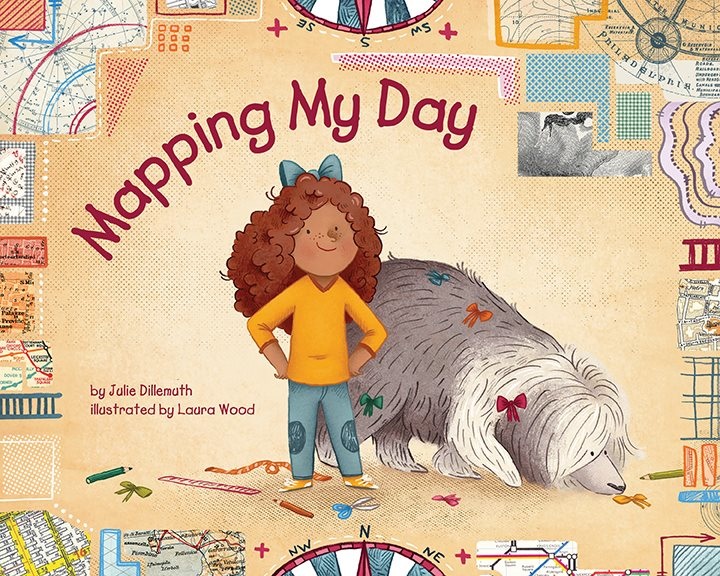
Mapping My Day
Author: Julie Dillemuth
Illustrator: Laura Wood
Published: March 13, 2017 by Magination Press

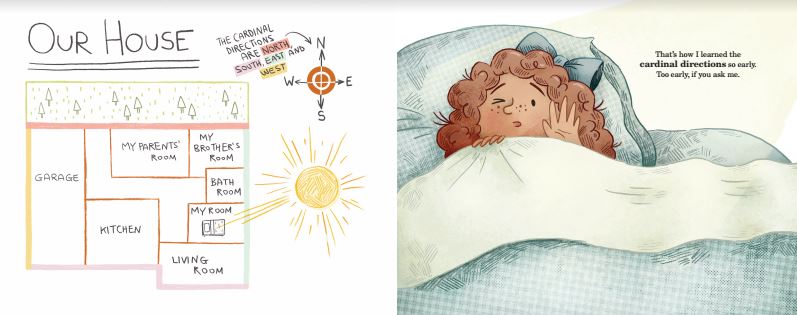
GoodReads Summary: Flora loves drawing maps and uses them to tell us about her life! Mapping My Day introduces spatial relationships and representation: where things and places are in relation to other things. This book intends to show readers how maps can convey information, inspire children to draw their own maps, and introduce basic map concepts and vocabulary. Spatial thinking is how we use concepts of space for problem solving and is shown to be a key skill in science, technology, engineering, and math. Includes a “Note to Parents and Caregivers” with extra mapping activities.

Ricki’s Review: As I read this book, I couldn’t help but think about how my husband will enjoy it. I am going to place it in my son’s room to surprise them. Interdisciplinary books are tricky to write, and Julie Dillemuth does a fantastic job making mapping and mathematics fun! While learning about arrows and symbols on a map, the reader also learns that Flora can make her brother snort milk out of his nose. As a bonus, this is a book that features a multiracial family without being a book about a multiracial family. This made me very happy. This is a book that will be appreciated by teachers and readers alike!

Kellee’s Review: Mapping My Day’s Flora loves maps. She thinks in cardinal directions, she maps out where everything is, and she even plays games using maps. It is because of Flora’s enthusiasm that the readers of her story are going to want to play with maps also which will *surprise, surprise* lead to them learning about mapping skills and even some mathematics. I know this book is going to find its place in elementary classrooms and so many kids out there are going to map their days out just like Flora. 

Teachers’ Tools for Navigation: The back of this book features map-making pages that are free for readers to download at www.apa.org/pubs/magination/441B206.aspx. The maps are connected to the story and allow readers to practice their mapmaking skills—very cool!

Discussion Questions: How does the author incorporate maps in a way that is fun and exciting?; What parts of Flora’s day does she map? What other parts of her day could she have mapped?; How might Flora’s brother’s maps look a bit different?

Flagged Passage:

Read This If You Loved: My Map Book by Sara Fanelli; Math Curse by Jon Scieszka; My Life in Pictures by Deborah Zemke

Recommended For:

  classroomlibrarybuttonsmall

Giveaway!:

a Rafflecopter giveaway

About the Author: Julie Dillemuth was mystified by maps until she figured out how to read them and make them, and it was a particularly difficult map that inspired her to become a spatial cognition geographer. She lives with her family and writes children’s books in Santa Barbara, California, where the west coast faces south. Visit her at her website: http://juliedillemuth.com.

RickiSig andKellee Signature

**Thank you to Barbara at Blue Slip for providing copies for review!**

Honey Girl: The Hawaiian Monk Seal by Jeanne Walker Harvey

Share

nfpb2017

Nonfiction Wednesday

Nonfiction Picture Book Wednesday is hosted by Kid Lit Frenzy and was started to help promote the reading of nonfiction texts. Most Wednesdays, we will be participating and will review a nonfiction text (though it may not always be a picture book).
Be sure to visit Kid Lit Frenzy and see what other nonfiction books are shared this week!

Honey Girl: The Hawaiian Monk Seal
Author: Jeanne Walker Harvey
Illustrator: Shennen Bersani
Published February 1st, 2017 by Arbordale Publishing

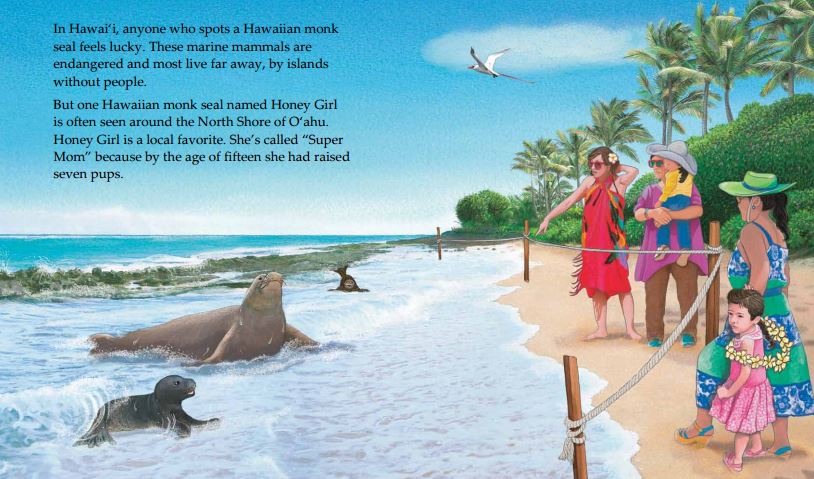
Summary: Hawaiian locals and visitors always enjoy spotting endangered Hawaiian monk seals, but Honey Girl is an extra special case. She has raised seven pups, and scientists call her “Super Mom.” After Honey Girl is injured by a fishhook, she gets very sick. Scientists and veterinarians work to save Honey Girl until she can be released back to her beach. This true story will have readers captivated to learn more about this endangered species.

Website: https://arbordalepublishing.com/bookpage.php?id=HoneyGirl

Review: I loved Honey Girl’s story. Honey Girl is a mother, a survivor, a symbol of hope, and a miracle of science. Jeanne Walker Harvey did a fabulous job not only developing Honey Girl’s character and developing her story but intertwining all of that with scientific undertones. She brings to the forefront issues of endangered species, humans effects on animals, and the importance of conservation scientists. All of this mixed with the colorful illustrations and amazing setting gives us such a beautiful picture picture.

Teachers’ Tools for Navigation: Honey Girl’s back matter gives such a wealth of information. Anything that wasn’t taught during Honey Girl’s story is revealed. The “For Creative Minds” section includes information on the Hawaiian Monk Seal life cycle, fun facts, conservation information, and rescue & rehabilitation.

In addition to all of the science and geography components of Honey Girl’s story that can be discussed and learned from, there are definitely reading and vocabulary opportunities within the book also. Check out:
Teaching Activity Guide
Reading Quiz
Related Websites
For Creative Minds Quiz

Discussion Questions: How did humans effect Honey Girl’s life?; What are some ways that we could help endangered species?; How does Honey Girl give us hope about the Hawaiian Monk Seal?

Flagged Passages: 

Read This If You Love: Who Lives in the Sea?: Ocean Animals of Hawaii by Monika Mira, Ocean Animals by Johnna Rizzo

Recommended For: 

classroomlibrarybuttonsmall closereadinganalysisbuttonsmall 

Signature

**Thank you to Barbara at Blue Slip Media for providing a copy for review!**