The Beginning of Everything by Robyn Schneider

Share

beginning

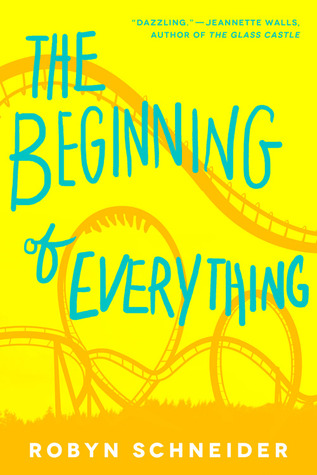
The Beginning of Everything
Author: Robyn Schneider
Published August 27, 2013 by Katerine Tegen

Goodreads Summary: Golden boy Ezra Faulkner believes everyone has a tragedy waiting for them—a single encounter after which everything that really matters will happen. His particular tragedy waited until he was primed to lose it all: in one spectacular night, a reckless driver shatters Ezra’s knee, his athletic career, and his social life.

No longer a front-runner for Homecoming King, Ezra finds himself at the table of misfits, where he encounters new girl Cassidy Thorpe. Cassidy is unlike anyone Ezra’s ever met, achingly effortless, fiercely intelligent, and determined to bring Ezra along on her endless adventures.

But as Ezra dives into his new studies, new friendships, and new love, he learns that some people, like books, are easy to misread. And now he must consider: if one’s singular tragedy has already hit and everything after it has mattered quite a bit, what happens when more misfortune strikes?

Robyn Schneider’s The Beginning of Everything is a lyrical, witty, and heart-wrenching novel about how difficult it is to play the part that people expect, and how new beginnings can stem from abrupt and tragic endings.

My Review: Another novel filled with smart high schoolers—that makes me so happy!! I hope this is a trend because I love seeing brainy characters in my book and not stereotypical ones. The Beginning of Everything is described as witty, and it is very much so. The sarcasm and wit just bleeds out of this book. I found myself laughing out loud at parts, and usually just because a character had the audacity to say something they shouldn’t have.

In The Beginning of Everything, I actually connected more with the secondary characters than the protagonist. They were so well established and had such unique voices while Ezra sounded like any good-0le boy; however, I will say that by making his voice less distinct allowed for him to grow even in his prose. As he found his new, true identity, his voice became to ring out more true. I am not sure if the author did this on purpose or not, but either way it worked!

Oh, and the final pages. Guys, they were so good! Although it felt a bit rushed to me, the lyrical writing got me in the end. Perfect.

Teachers’ Tools for Navigation: Although this book’s main home is in teens’ hands from a classroom, school, or public library, there are definitely parts that can be pulled out to be used in a classroom.

Since the characters are intelligent, many of the conversations have allusions to literature (Mary Oliver, Shakespeare, Fitzgerald, Frost) or their topics are quite deep (connecting organic chemistry to life, panopticon, Banksy, German insults). Also, there are debate topics that would be so interesting to look into such as imperialism, capitalism, and the economy.

One fun activity that I would definitely pull out of this book is fake debates. When Ezra, Toby, Cassidy, etc. were at their debate tournament, they had fake debates where they had to choose a side of quite silly topics like “Should vampires be allowed to vote?” This would be a great activity to do in classes to work on persuasion and arguments. (However, be careful about actually reading aloud the scene this is in as they also make it a drinking game.)

Discussion Questions: Do you feel like we live in a society similar to the panopticon? [If you don’t know what this is, it is quite fascinating: http://en.wikipedia.org/wiki/Panopticon]; Do you think Cassidy made the right choice in the end?; Ezra truly connects with The Great Gatsby because of all the changes his life is going through. What book to you connect with and why?

Flagged: “Her face was inches from mine. I could see the freckles that dusted her nose and the gold flecks in the disquieting blue of her eyes.” (p. 111)

“My admirable opponent argues that vampires do not deserve suffrage, as many great yet misinformed politicians have done before her while calling for the continued marginalization of women, or other minorities.” Cassidy began. “Yet vampires were, at some point human. At what point can a man’s voting rights be revoked, if he is proven to be of rational mind?” (p. 157)

Read This If You Loved: Life in Outer Space by Melissa Kiel, Stargirl by Jerry Spinelli, Paper Towns by John Green

Recommended For: 

classroomlibrarybuttonsmall closereadinganalysisbuttonsmall

Signature

Amulet Books Graphic Novel Teaching Guide

Share

abrams

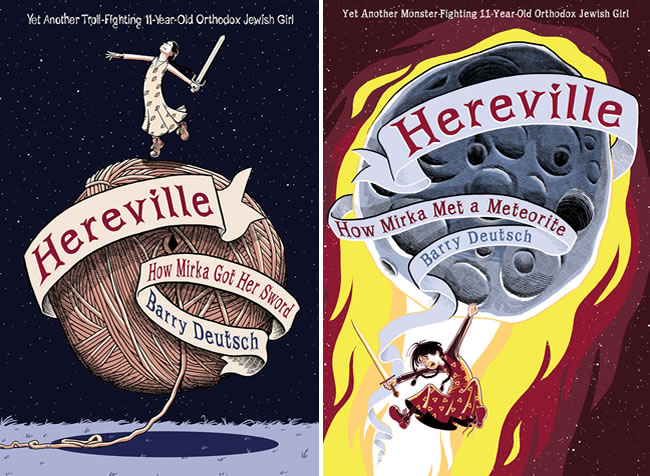
In January, I was contacted by a publicity and marketing associate from Abrams Books/Amulet Books out of the blue. In this email, I was asked to work on a teaching guide about their graphic novels: The Misadventures of Salem Hyde, Nathan Hale’s Hazardous Tales, Hereville, and the Explorer series.

1729025518405488 

13591161135911621729026018405492

1283377017290285

I was beyond honored! And, of course, I said that I would definitely love to do it as I had read all of the graphic novels, and I am a huge fan of them.

First, they asked me to write an introduction about graphic novels and their importance in the classroom. I am a huge advocate for using graphic novels in schools, so I immediately began researching and writing. Here is the introduction:

What are graphic novels? The easiest way to describe graphic novels is to say that they are book-length comic books. However, a more complex definition that educators and librarians use is “book-length narratives told using a combination of words and sequential art, often presented in comic book style” (Fletcher-Spear, 37). Graphic novels are not written in just one genre; they can be in any genre, since graphic novels are a format/medium. Graphic novels are much like novels, but they’re told through words and visuals. They have all narrative elements, including characters, a complete plot, a conflict, etc.

Middle grade and young adult graphic novels cover a wide spectrum of themes and topics. Some common themes found in graphic novels for this age include the hero’s journey; overcoming hardship; and finding one’s identity. For example, in Hereville, we meet Mirka, an everyday girl who learns to use her brains and brawn to overcome her foes. In The Misadventures of Salem Hyde, Salem is working on finding out just who she is (both as a witch and as a person) with the help of her friend Whammy. Graphic novels can cross curricular lines. One example is the Nathan Hale’s Hazardous Tales series—comical nonfiction that takes historical events and presents them in interesting ways, using graphics and humor that will make students want to learn even more about the historical time periods. In the Explorer series, stories include topics such as animal adaptation, volcanic eruptions, and the fate of humanity. Like novels, graphic novels offer opportunities in all subject areas to extend students’ thinking.

Over the past few years, graphic novels have become a hot topic, growing in popularity with both children and educators. While many teachers are beginning to include them in the classroom, there are still teachers, administrators, and librarians who struggle with including this format in their schools. So, why should you use them in your classroom and have them available for students?

  • Graphic novels can make a difficult subject interesting and relatable. (Cohen)
  • Students are visual learners, and today’s students have a much wider visual vocabulary than students in the past. (Karp)
  • Graphic novels can help foster complex reading skills by building a bridge from what students know to what they still have to learn. (NCTE)
  • Graphic novels can help with scaffolding when trying to teach higher-order thinking skills or other complex ideas.
  • For students who struggle to visualize while they read, graphic novels provide visuals that shows what good readers do. (NCTE)
  • Many graphic novels rely on symbol, allusion, satire, parody, irony, and characters/plot and can be used to teach these, and other, literary devices. (Miller; NCTE)
  • Often, in between panels (called the gutter), the reader must make inferences to understand how the events in one panel lead to the events in the next. (McCloud)
  • Graphic novels can make differentiating easier. (Miller)
  • Graphic novels can help ELL (English Language Learners) and reluctant and struggling readers since they divide the text into manageable chunks, use images (which help students understand unknown vocabulary), and are far less daunting than prose. (Haines)
  • Graphic novels do not reduce the vocabulary demand; instead, they provide picture support, quick and appealing story lines, and less text, which allow the reader to understand the vocabulary more easily. (Haines)
  • Research shows that comic books are linguistically appropriate reading material, bearing no negative impact on school achievement or language acquisition. (Krashen)
  • Students love them.

Although you can find graphic novel readers at all reading levels, graphic novels can truly be a gateway to the joys of reading for reluctant and struggling readers. Reluctant readers often find reading to be less fun than video games, movies, and other media, but many will gravitate toward graphic novels because of the visuals and the fast pace. Struggling readers will pick up graphic novels for these reasons as well but also because the graphic novel includes accommodations directly in the book: images, less text, etc.

All in all, graphic novels can interest your most reluctant and struggling readers and also extend all of your readers, including your most gifted.  

Resources

  • Cohen, Lisa S. “But This Book Has Pictures! The Case for Graphic Novels in an AP Classroom.” AP Central. CollegeBoard.
  • Fletcher-Spear, Kristin, Merideth Jenson-Benjamin, and Teresa Copeland. “The Truth About Graphic Novels: A Format, Not a Genre.” The ALAN Review Winter (2005): 37­–44.
  • Haines, Jennifer. “Why Use Comics in The Classroom?” Comic Book Daily. N.p., 20 Mar. 2012.
  • Karp, Jesse. “The Case for Graphic Novels in Education.” American Libraries. N.p., 1 Aug. 2011.
  • Krashen, Stephen. The Power of Reading. Englewood, CO: Libraries Unlimited, Inc. 1993.
  • McCloud, Scott. Understanding Comics. Northampton, Mass.: Kitchen Sink, 1993. 
  • Miller, Andrew. “Using Graphic Novels and Comics in the Classroom.” Edutopia. N.p., 11 Jan. 2012.
  • NCTE, comp. “Using Comics and Graphic Novels in the Classroom.” The Council Chronicle September (2005) http://www.ncte.org/magazine/archives/122031.

 I then began reading and rereading the graphic novels and planning activities and discussion questions that could go along with each book. I was asked to come up with activities for all subjects, so this pushed me out of my comfort zone a bit; however, I loved trying to figure out how these amazing books could be used throughout all classes.  Some examples:

  • Salem Hyde [Science]: At the end of Spelling Trouble, Salem and Whammy have to rescue a whale, but it is done in a very unconventional way. How would real scientists rescue a whale in distress?
  • Hazardous Tales [Language Arts/History]: The Provost (a British soldier) and Nathan Hale disagree about the cause of the Revolutionary War. Based on One Dead Spy, what events caused the Americans to revolt? Do you agree with the Provost or with Nathan Hale about the causes of the war? (This could also be used as a debate question in class.)
  • Hereville [Math]: On pages 31–32 [of Hereville 1], Mirka is given a math problem: Three people are splitting a cake, so they cut it into thirds. But then a fourth person shows up. How can they cut the cake so that each person gets an equalamount of cake? (Mirka comes up with a solution, but are there others?) What if two more people had shown up? Three more? Four more? 
  • Explorer [History]: On page 84 [of The Mystery Boxes], in The Soldier’s Daughter, the man says, “War is a dark power.” Where in history have we seen war consume someone? Have there been wars that did not need to be fought? Research past wars and determine if a war was started because of the need for power or if there was a legitimate reason for it. 

These are just some examples.

I am happy to share the entire teaching guide with you. It can be found at http://www.abramsbooks.com/academic-resources/teaching-guides/ along with other teaching guides. The direct link to the PDF is http://www.abramsbooks.com/pdfs/academic/GraphicNovels_TeachingGuide.pdf.

I hope you find it useful as I am very proud of it,

Signature

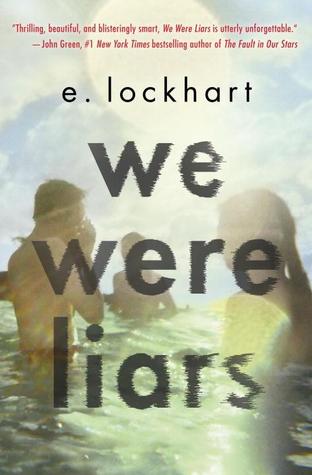
We Were Liars by e. lockhart

Share

we were liars

We Were Liars
Author: e. lockhart
Expected Publication: May 13th, 2014 by Delacorte

Summary: A beautiful and distinguished family.
A private island.
A brilliant, damaged girl; a passionate, political boy.
A group of four friends—the Liars—whose friendship turns destructive.
A revolution. An accident. A secret.
Lies upon lies.
True love.
The truth.

We Were Liars is a modern, sophisticated suspense novel from National Book Award finalist and Printz Award honoree e. lockhart.

Read it.
And if anyone asks you how it ends, just LIE.

Review: I can’t tell you anything about this book without giving anything way, and I would never do that to you, so let me just say this—this is a book that I will remember forever. It is haunting and sent chills up my spine. I was sucked into the story of this beautifully screwed up family with too much money for its own good.

Teacher’s Tools for Navigation: This would bridge beautifully with The Great Gatsby. There are so many parallels, and I can’t write them here, or I will give away too much of the plot. The figurative language in this title is also stunning. English teachers will go gaga over the pages upon pages of text that can be used for close reading. It made me want to go back to teaching English!

Discussion Questions: What does this story teach us about humanity?; What drives each of the family members?; What does Gat’s character add to the story?; How does lockhart unravel the plot? What makes her an effective writer?; What is the message of this complex text?

We Flagged: “If you want to live where people are not afraid of mice, you must give up living in palaces” (Chapter 40).

Please note: The above quote is from the Advanced Reader Copy. The chapter numbers is included instead of page numbers because the e-reader did not provide page numbers. The quotes may change when the book is published.

Read This If You Loved: The Great Gatsby by F. Scott Fitzgerald, I Will Save You by Matt de la Peña, If I Stay by Gayle Forman

Recommended For:

closereadinganalysisbuttonsmall litcirclesbuttonsmall classroomlibrarybuttonsmall

RickiSig

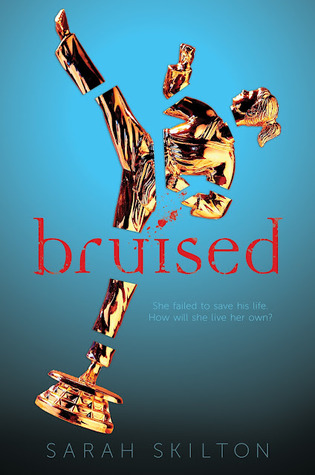
Bruised by Sarah Skilton

Share

bruised

Bruised
Author: Sarah Skilton
Published March 5, 2013 by Amulet/Abrams

Goodreads Summary: Imogen has always believed that her black belt in Tae Kwon Do made her stronger than everyone else–more responsible, more capable. But when she witnesses a holdup in a diner, she freezes. The gunman is shot and killed by the police. And it’s all her fault.

Now she’s got to rebuild her life without the talent that made her special and the beliefs that made her strong. If only she could prove herself in a fight–a real fight–she might be able to let go of the guilt and shock. She’s drawn to Ricky, another witness to the holdup, both romantically and because she believes he might be able to give her the fight she’s been waiting for.

But when it comes down to it, a fight won’t answer Imogen’s big questions: What does it really mean to be stronger than other people? Is there such a thing as a fair fight? And can someone who’s beaten and bruised fall in love?

My Review and Teachers’ Tools for Navigation: Imogen is broken and she must overcome this feeling of hopelessness that surrounds her constantly. What an intense way to introduce us to a character? We then go on a journey with Imogen as she tries to rebuild her life, her memories, her friendships, and her family.

At first I struggled with this book because the timeline was choppy, and Imogen was hard to pinpoint. But then, through the flashbacks, Imogen starts to become clearer to us, the reader, and Imogen’s memories start to become clearer to her. Then you are so sucked into wanting to know everything, and you can only know everything if you stick with the book and see Imogen’s memories as they are revealed. This is a pretty brilliant tactic in making the reader feel like they are in the protagonist’s brain.

Bruised actually reminds me a lot of Speak by Laurie Halse Anderson. Both young ladies are thrown into a tragedy, let that tragedy eat away at their hearts and souls, and have to figure out how to find themselves again. Truly a remarkable journey to go on with a character.  And, like Speak, there are some intense topics/themes dealt with in Bruised that will definitely grab a teen’s attention: sibling rivalry, a disabled parent, disconnected family, friendship, sex, love, survival, and martial arts. It is one of those books that teens need to read, so they can learn to become resilient and to overcome whatever is in their path.

Discussion Questions: Is it ever okay to lie?; Would you have been able to forgive your best friend if she’d done what Shelly did?; Was it right of Imogen to call Grant down during the demonstration?; Why was having Ricky there such an important part of Imogen’s recovery?

We Flagged: “Don’t you recognize me?” says Ricky after a moment.
Confused, I force myself to look up from the floor, up his legs and along his body, until I’m looking him in the eyes.
I hear gunshots, the cashier crying, and the police sirens, but I don’t look away.
He’s my friend from under the table.” (p. 60)

“Today, eleven days later, I slide down the wall of my own shower and curl up in a ball, tuck my knees under my chin, and wrap my arms around my head. I’ve taken showers since the diner, but this one’s different. Get smaller. Small as you can be. Low to the ground is comforting, standing up is bad. Why is standing up bad? What happins if you stand up? (You don’t want to know.) Reset button. Start at the beginning. Gretchen’s in the bathroom when the gunman comes in. I see the glint of his gun, and I hide under the table. There’s Ricky, under a different table, he brings his finger to his lips. Shh…” (p. 95-96)

Read This If You Loved: Speak by Laurie Halse Anderson, Stained by Cheryl Rainfield, Rape Girl by Alina Klein

Recommended For: 

classroomlibrarybuttonsmall

Signature

Each Kindness by Jacqueline Woodson (Ricki’s Review)

Share

Each Kindness

Each Kindness
Author: Jacqueline Woodson
Illustrator: E.B. Lewis
Published October 2nd, 2012 by Nancy Paulsen Books

Summary: Each kindness makes the world a little better

Chloe and her friends won’t play with the new girl, Maya. Maya is different–she wears hand-me-downs and plays with old-fashioned toys. Every time Maya tries to join Chloe and her gang, they reject her. Eventually, Maya plays alone, and then stops coming to school altogether. When Chloe’s teacher gives a lesson about how even small acts of kindness can change the world, Chloe is stung by the lost opportunity for friendship, and thinks about how much better it could have been if she’d shown a little kindness toward Maya.

This unforgettable book is written and illustrated by the award-winning team that created The Other Side and the Caldecott Honor winner Coming On Home Soon. With its powerful message and striking art, it will resonate with readers long after they’ve put it down.

Review: This is a beautiful story that would be FANTASTIC for the classroom. Students of any age can learn from this book, and I would read it to my class on the very first day of school. It is easy to get caught up in drama and gossip, and Jackie Woodson reminds us how hurtful this can be. I am so glad that I own a copy of this book. I plan to read it to my son very often because the lessons are so important, and the story is simply stunning. Usually, I don’t review a book that Kellee has also reviewed on Unleashing Readers, but I couldn’t help but share my thoughts about this incredible text.

Teacher’s Tool For Navigation: I would be remiss if I didn’t direct you to Kellee’s post about this book. She did a fantastic activity with her class that used multi-flow maps.

One of my favorite parts about this book is that it doesn’t have a happy ending. I would love to discuss this with students–why might this be? Is Woodson teaching us something? Then, we might explore other books that don’t have happy endings and discuss why authors might do this intentionally and how it might impact readers’ feelings about the books. Students are notorious for disliking sad endings, so I think this would provoke much discussion.

This book can be both preventative and reactionary to bullying issues in the classroom/school community. While I would read it at the beginning of the school year, I could also see it as an effective tool for teachers who are having issues with bullying during the school year.  This book makes us want to be better people.
Discussion Questions: Why is Chloe so mean to Maya?; What do we know about Maya? Why do you think Woodson characterizes her this way?; Why does this book end in an unhappy way? What does it teach us?; How might we spread kindness?

We Flagged: “And on that first day, Maya turned to me and smiled. But I didn’t smile back. I moved my chair, myself and my books a little farther away from her. When she looked my way, I turned to the window and stared out at the snow” (6).

Read This If You Loved:  Unicorn Thinks He’s Pretty Great by Bob Shea, Endgame by Nancy Garden, Thirteen Reasons Why by Jay Asher,  The Silver Linings Playbook by Matthew Quick, Burn by Suzanne Phillips, The Perks of Being a Wallflower by Stephen Chbosky, Twisted by Laurie Halse Anderson, Everybody Sees the Ants by A.S. King, The Spectacular Now by Tim Tharp, Inexcusable by Chris Lynch

Recommended For: 

readaloudbuttonsmall classroomlibrarybuttonsmall 

RickiSig


Fangirl by Rainbow Rowell (Kellee’s Review)

Share

fangirl

Fangirl
Author: Rainbow Rowell
Published September 10th, 2013 by St. Martin’s Press

Goodreads Summary: A coming-of-age tale of fan fiction, family and first love.

Cath is a Simon Snow fan. Okay, the whole world is a Simon Snow fan . . . But for Cath, being a fan is her life — and she’s really good at it. She and her twin sister, Wren, ensconced themselves in the Simon Snow series when they were just kids; it’s what got them through their mother leaving.

Reading. Rereading. Hanging out in Simon Snow forums, writing Simon Snow fan fiction, dressing up like the characters for every movie premiere.

Cath’s sister has mostly grown away from fandom, but Cath can’t let go. She doesn’t want to. Now that they’re going to college, Wren has told Cath she doesn’t want to be roommates. Cath is on her own, completely outside of her comfort zone. She’s got a surly roommate with a charming, always-around boyfriend, a fiction-writing professor who thinks fan fiction is the end of the civilized world, a handsome classmate who only wants to talk about words . . . And she can’t stop worrying about her dad, who’s loving and fragile and has never really been alone.

For Cath, the question is: Can she do this? Can she make it without Wren holding her hand? Is she ready to start living her own life? Writing her own stories?  And does she even want to move on if it means leaving Simon Snow behind?

Ricki’s Review: Ricki was lucky enough to read this book before me and wrote a wonderful review in December, so check that one out too!

Kellee’s Review: You know a book is good when in the first 5 pages you already know and feel for you main character. Cath is like many college freshman–afraid. She has known one world for so long and everything around her is changing. This book is about her figuring out her way. Anyone that went to college will connect with Cath and her struggles of finding a balance between who you were in high school and who you are becoming. I really appreciate Rainbow Rowell’s main characters and how they are not perfect–this makes them so much more relatable. (I just give a shout out to the Emergency Dance Party scene–this made me love Cath so much!)

Oh, and the dialogue! I love the way her characters converse. The banter is hilarious and just perfect. Also, I cannot review this book without giving props to the secondary characters. They are so solid and thought out. Although Cath is the main character, no one feels like Rainbow Rowell didn’t put love and time into them. I especially love their father who is probably the most flawed character but is so full of love. (Oh, and Levi. Who cannot love Levi?!?!?!)

[As a teacher, I also liked the look into Levi’s struggle with reading yet his amazing intelligence. I think it is a great conversation starter and a great example of many of the students I encounter. Pg. 168 is Levi’s explanation of his struggles–powerful.]

And all of the book love! Anyone who has ever loved a book or series will adore the fangirl moments. Although an obvious allusion to Harry Potter, Cath and Wren’s love of Simon Snow will make any reader think about their favorite novel which they lose themselves in.

Also this book is about writing: the beauty of good writing and the struggle of good writing. Cath can write in the world of Simon Snow, but struggles in finding her own world. This actually runs parallel quite beautifully with her finding of her self. She is literally and figuratively trying to find her own voice. (And I love that a teacher plays a role in this.)

Overall, a just-right book. I read it in one sitting and didn’t want to put it down. (It did remind me a lot of Anna and the French Kiss–did anyone else feel this way?), but it really was a solid story filled with just enough love, nerdy, and soul searching.

Teacher’s Tools For Navigation: I can see how many aspects of this novel could be used in a creative writing course. So much of Cath’s story revolves around writing and different scenes or pieces of fanfiction could be pulled out to use in class. I especially like the discussion about “Why write fiction?” on pg. 21-23.

I also would love to analyze more the excerpts that are put before each chapter and how they connect with the chapter. Many have theme connections or direct character connections. They were placed very intentionally and discussing why would be so interesting.

Check out Ricki’s recommendations here.

Discussion Questions: Cath loves to write, but often finds it hard; what is something you do that you love, but often find challenging? How do you overcome this?; How does Simon Snow compare to Harry Potter?

We Flagged: “Cath wasn’t sure how she was going to keep everything straight in her head. The final project, the weekly writing assignments–on top of all her other classwork, for every other class.  All the reading, all the writing. The essays, the justifications, the reports. Plus Tuesdays and sometimes Thursdays writing with Nick. Plus Carry on. Plus e-mail and notes and comments… Cath felt like she was swimming in words. Drowning in them, sometimes.” (p. 100)

Read This If You Loved: Anna and the French Kiss by Stephanie Perkins, Eleanor and Park by Rainbow Rowell, Olivia Twisted by Vivi Barnes, You Against Me by Jenny Downham, My Life Undecided by Jessica Brody

Recommended For: 

classroomlibrarybuttonsmall closereadinganalysisbuttonsmall

Signature

Threatened by Eliot Schrefer

Share

threatened

Threatened
Author: Eliot Schrefer
Published: February 25th, 2014 by Scholastic Press

GoodReads Summary: Into the jungle. Into the wild. Into harm’s way. When he was a boy, Luc’s mother would warn him about the “mock men” living in the trees by their home — chimpanzees whose cries would fill the night. Luc is older now, his mother gone. He lives in a house of mistreated orphans, barely getting by. Then a man calling himself Prof comes to town with a mysterious mission. When Luc tries to rob him, the man isn’t mad. Instead, he offers Luc a job. Together, Luc and Prof head into the rough, dangerous jungle in order to study the elusive chimpanzees. There, Luc finally finds a new family — and must act when that family comes under attack.

As he did in his acclaimed novel Endangered, a finalist for the National Book Award, Eliot Schrefer takes us somewhere fiction rarely goes, introducing us to characters we rarely get to meet. The unforgettable result is the story of a boy fleeing his present, a man fleeing his past, and a trio of chimpanzees who are struggling not to flee at all.

Review: If you follow this blog, you know that Kellee and I are advocates for Eliot Schrefer’s writing. He is an incredibly talented writer; his settings feel authentic in that he makes far away places seem very close to home. I develop a strong kinship with his characters—animal or human. Kellee has been raving about Threatened since the ALAN conference, and I knew I wanted to read it as soon as I got a hang of being a new mom. It didn’t disappoint. The writing is stunning.

I expected Threatened to be very similar to Endangered, but I was wrong. Endangered is about an American girl visiting her mother in a Congolese bonobo sanctuary when a civil war breaks out. Threatened, on the other hand, is about an orphan boy from Gabon who goes into the wild with a professor in order to learn more about chimpanzees. But these books are more than their settings and the animals. They teach us about what it means to be human. Threatened, in particular, made me think about humanity’s evolution and the difficulties that come from living in the wild. I couldn’t help but think about how far humanity has strayed from nature. Even when Luc feels that he wants for nothing, he is ashamed that he still holds material desires. This book makes readers think critically, and it would be a great book to use in the classroom.

Teacher’s Tools for Navigation: After reading this book, I wanted to learn more about chimpanzees and how they are different from humans. Schrefer’s book has a call to action. He gives suggestions of how we might help these endangered animals. In particular, he discusses the sad state of animal testing and provides readers with ways to take action. This book will help students become critical thinkers, and hopefully, teachers will help students enact social justice for these animals which are so genetically close to us.

Discussion Questions: Are humans too far removed from nature?; How does Luc become more animalistic after he lives for extensive time in the wild? Are his changes mental? Physical?; What do the chimpanzees teach us about humanity? How are they similar and different from us?; What can we do to help these endangered species?

We Flagged: “We can try so hard, but in some basic way we’re bound by how we’re raised. There’s no escaping it. We can love someone and want to be open to the feeling but fail because our hearts got wired one way long before we knew it was happening. We can break our own hearts because of what our souls believe” (Chapter 10).

**Please note: This quote is taken from the NetGalley. It may be different in the published version of the book.**

Read This If You Loved: Endangered by Eliot Schrefer, Into That Forest by Louis Nowra, Dog Boy by Eva Hornung, Second Nature by Alice Hoffman, Into the Wild by Jon Krakauer

Recommended For:

 readaloudbuttonsmalllitcirclesbuttonsmallclassroomlibrarybuttonsmall

RickiSig