This is My America by Kim Johnson

Share

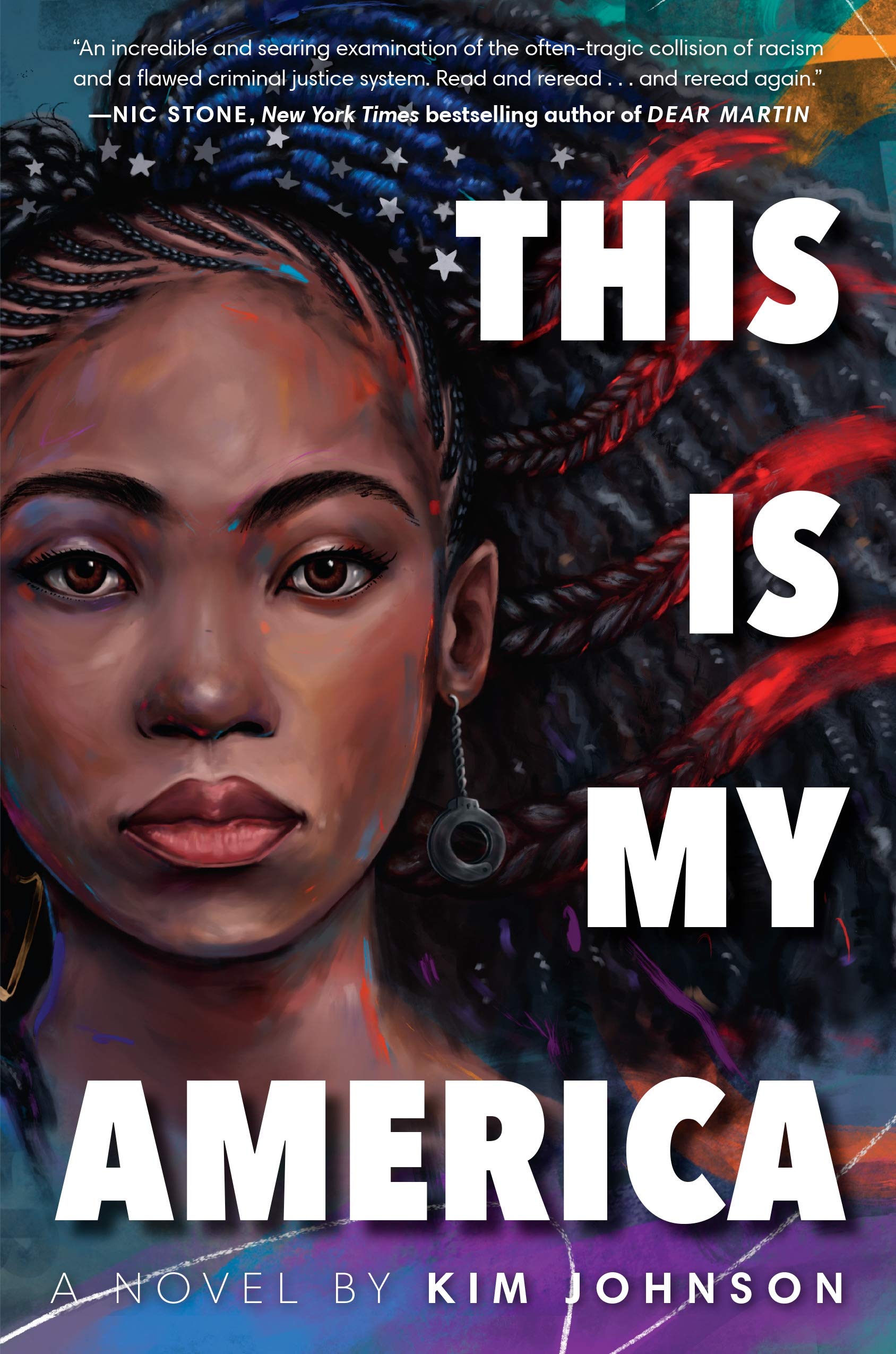
This is My America
Author: Kim Johnson
Published: February 28, 2017 by Balzer + Bray

GoodReads Summary: Dear Martin meets Just Mercy in this unflinching yet uplifting YA novel that explores the racist injustices in the American justice system.

Every week, seventeen-year-old Tracy Beaumont writes letters to Innocence X, asking the organization to help her father, an innocent Black man on death row. After seven years, Tracy is running out of time—her dad has only 267 days left. Then the unthinkable happens. The police arrive in the night, and Tracy’s older brother, Jamal, goes from being a bright, promising track star to a “thug” on the run, accused of killing a white girl. Determined to save her brother, Tracy investigates what really happened between Jamal and Angela down at the Pike. But will Tracy and her family survive the uncovering of the skeletons of their Texas town’s racist history that still haunt the present?

Fans of Nic Stone and Jason Reynolds won’t want to miss this provocative and gripping debut.

Review: This is a book that will stick with me forever. The characters are powerfully written, and the plot unfolds itself beautifully. It tackles complex themes that offer excellent fodder for classroom discussion. Some of these include implicit and explicit racism, the ripple effects of White supremacy and racism, White privilege, and injustices in the judicial system. I could go on. This book is truly exceptional, and I envision it winning some big awards this year. There is so much to unpack and so much to admire in Johnson’s writing. It’s absolutely brilliant. If you buy no other book this summer, buy this one. It will make you think deeply about equity and justice.

Teachers’ Tools for Navigation: I highlighted so many passages of this book while I was reading it. There are so many sections that would make phenomenal close readings in the classroom. I highly recommend pairing this text with portions or all of Michelle Alexander’s The New Jim Crow: Mass Incarceration in the Age of Colorblindness.

Discussion Questions: What are some of the injustices in this text?; How can we, as a society, work to change these injustices?; How do the injustices have a ripple effect on other characters?; How does Johnson layer the plot to elevate the reading and message of the text?

Flagged Passage: “Corinne never held that memory [of Daddy getting arrested], but I know she feels it in everything we breathe. It’s in the polite nods across the street we have to make, the way our family turns down our music when there are others around. Say yes ma’am and no sir. Leave our jackets and backpacks in the car when we go shopping.

It’s in the way I carry myself that tells our story now. I can’t risk being accused of anything. Because if something goes wrong or missing, I know it’s in the back of someone’s mind that maybe I had something to do with it. And it’s in the way that the voice of the strongest woman I know stumbles when saying, ‘Hello, Officer’ as she walks through the visitation gates to see Daddy.”

Read This If You Loved: Just Mercy by Bryan Stevenson; The Hate U Give by Angie Thomas; All American Boys by Jason Reynolds and Brendan Kiely; by Ilyassah Shabazz and Kekla Magoon; The Rock and the River by Kekla Magoon; How it Went Down by Kekla Magoon; Freedom Summer by Deborah Wiles;

Recommended For:

 litcirclesbuttonsmall closereadinganalysisbuttonsmall classroomlibrarybuttonsmall

RickiSig

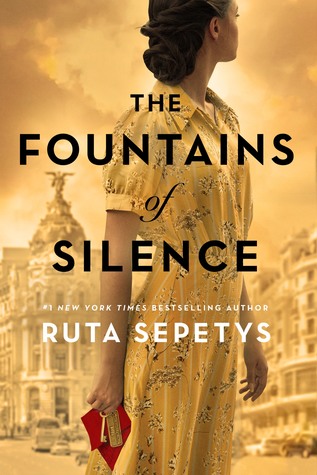
The Fountains of Silence by Ruta Sepetys

Share

Fountains of Silence
Author: Ruta Sepetys
Published: October 1, 2019 by Philomel Books

GoodReads Summary: A portrait of love, silence, and secrets under a Spanish dictatorship.

Madrid, 1957. Under the fascist dictatorship of General Francisco Franco, Spain is hiding a dark secret. Meanwhile, tourists and foreign businessmen flood into Spain under the welcoming promise of sunshine and wine. Among them is eighteen-year-old Daniel Matheson, the son of an oil tycoon, who arrives in Madrid with his parents hoping to connect with the country of his mother’s birth through the lens of his camera. Photography–and fate–introduce him to Ana, whose family’s interweaving obstacles reveal the lingering grasp of the Spanish Civil War–as well as chilling definitions of fortune and fear. Daniel’s photographs leave him with uncomfortable questions amidst shadows of danger. He is backed into a corner of difficult decisions to protect those he loves. Lives and hearts collide, revealing an incredibly dark side to the sunny Spanish city.

Includes vintage media reports, oral history commentary, photos, and more.

My Review: This book rocked me. It is so beautifully written, and I felt so lucky to be able to share it with others at NCTE this year. Because I have so many teaching ideas for this book, I am organizing this post a bit differently and focusing on many more teaching tools than usual. I hope that the information below helps other teachers use this book in their classrooms. It is so worthy of being read, studied, and loved.

Inquiry to Consider the Complexity of The Fountains of Silence:

The Connection of People: Ana, Daniel, Rafa, Fuga, Julia, Puri
“Some friendships are born of commonality. Others of proximity. And some friendships, often the unlikely ones, are born of survival” (p. 53).

Place as Character
The Castellana Hilton Madrid and Madrid
“After all, a hotel is a house of secrets” (p. 171).
“Madrid’s soil is untender, strong, and enduring like many who walk upon it” (p. 457).

Gender Norms
“Estamos más guapas con la boca cerrada. We are prettier with our mouths shut” (p. 240, 243, 300).

Social Class
“What lies outside the country’s borders is untouchable for families like hers” (p. 47).

Family Responsibility
“Julia needs the wages to feed her family and pay their debts” (p. 63).
“The family business needs you” (p. 82).

Human resilience
“It’s warrior skin, very strong” (p. 113)

Secrets
“There is a category of unspeakable things, a dark drawer where inexpressible truths live in exile” (p. 240).

Dreams
“Ana is tired of silence, tired of unanswered questions, and tired of secrets. A girl of patched pieces, she dreams of new beginnings. She dreams of leaving Spain” (p. 24).

Fountains of Silence
Analysis of the power of the title. Whose stories are heard? Whose are silenced?

Culminating Project Idea: Multigenre Inquiry Project
The Fountains of Silence is story which uses layered writing to illuminate the fear and terror that people experienced under Franco’s fascist regime. The novel reveals the brute strength and resilience of the people during the time period. Select a time and place in history to research. Consider researching a time and place which is deeply connected with your own story. Read the narratives of the people and develop a multigenre project which reflects your learning. You might include fictional narratives of stories you create, nonfiction excerpts that you find in your research, a photo essay which includes photos you find in your research. Whatever the final form, your culminating project should include various types of writing and media and demonstrate your knowledge about the time and place you selected to research.

Recommended For:

 closereadinganalysisbuttonsmall litcirclesbuttonsmall classroomlibrarybuttonsmall

RickiSig

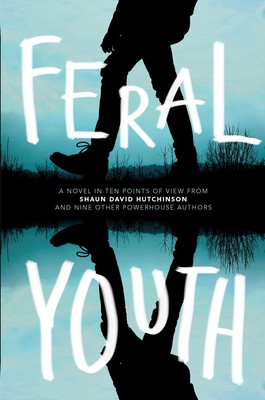
Feral Youth by Shaun David Hutchinson, Brandy Colbert, Suzanne Young, Tim Floreen, Justina Ireland, Alaya Dawn Johnson, Stephanie Kuehn, E.C. Myers, Marieke Nijkamp, Robin Talley

Share

Feral Youth
Authors: Shaun David Hutchinson, Brandy Colbert, Suzanne Young, Tim Floreen, Justina Ireland, Alaya Dawn Johnson, Stephanie Kuehn, E.C. Myers, Marieke Nijkamp, Robin Talley
Published: September 5, 2017 by Simon Pulse

Guest Review by Natalia Sperry

Summary: At Zeppelin Bend, an outdoor education program designed to teach troubled youth the value of hard work, cooperation, and compassion, ten teens are left alone in the wild. The teens are a diverse group who come from all walks of life, and they were all sent to Zeppelin Bend as a last chance to get them to turn their lives around. They’ve just spent nearly two weeks learning to survive in the wilderness, and now their instructors have dropped them off eighteen miles from camp with no food, no water, and only their packs, and they’ll have to struggle to overcome their vast differences if they hope to survive.

Inspired by The Canterbury Tales, Feral Youth features characters, each complex and damaged in their own ways, who are enticed to tell a story (or two) with the promise of a cash prize. The stories range from noir-inspired revenge tales to mythological stories of fierce heroines and angry gods. And while few of the stories are claimed to be based in truth, they ultimately reveal more about the teller than the truth ever could.

Review: This is a complex anthology of traditionally ignored teenaged voices that demand to be heard; I couldn’t put it down! Feral Youth is compelling from the front flap to the final page. The distinct voices of all 10 characters shone through in every part, from their individual stories to the transitional narration, creating an established sense of the full cast that is difficult to attain when juggling so many stories.

In this day and age, it feels more important than ever read book that remind us that all people, even those “troubled kids” traditionally written off by society, have a unique story to tell. Though I initially felt a bit overwhelmed by the number of characters (especially those with similar sounding names!) having such a diverse cast of characters share their stories was really rewarding. Those stories, both those intended to be “factual” and those grounded in fantasy, refuse to go quietly from my mind. In a story centered around teens whose voices have been all but silenced by society, I think that’s a victory.

Teacher’s Tool For Navigation: As the book was inspired by Chaucer’s Canterbury Tales, teachers could have students read the two (or passages from both) and compare and contrast. In particular, looking for thematic parallels could lend itself to discussions about the nature of storytelling and whose voices get told. In that regard, the book could also fit into a unit about “objective truth” in storytelling, perhaps in discussing other narratives or nonfiction.

Even in including the text as a free-reading option, I think it is essential to build empathy through reading diverse stories. Including this text could be not only a way to build empathy, but could provide a starting point for further future reading of a diversity voices as well.

Discussion Questions: What parallels do you find to the Canterbury Tales? Which stories surprised you? Were there any characters you related to that you wouldn’t have anticipated connecting with?  

Flagged: “’They think we’re probably nothing but a bunch of animals, but we showed them who we really are. We showed them that they can’t ignore us’” (287).

Read This If You Loved: The Canterbury Tales by Chaucer, Les Miserables by Victor Hugo, other YA anthologies

Recommended For: 

classroomlibrarybuttonsmall 

RickiSig

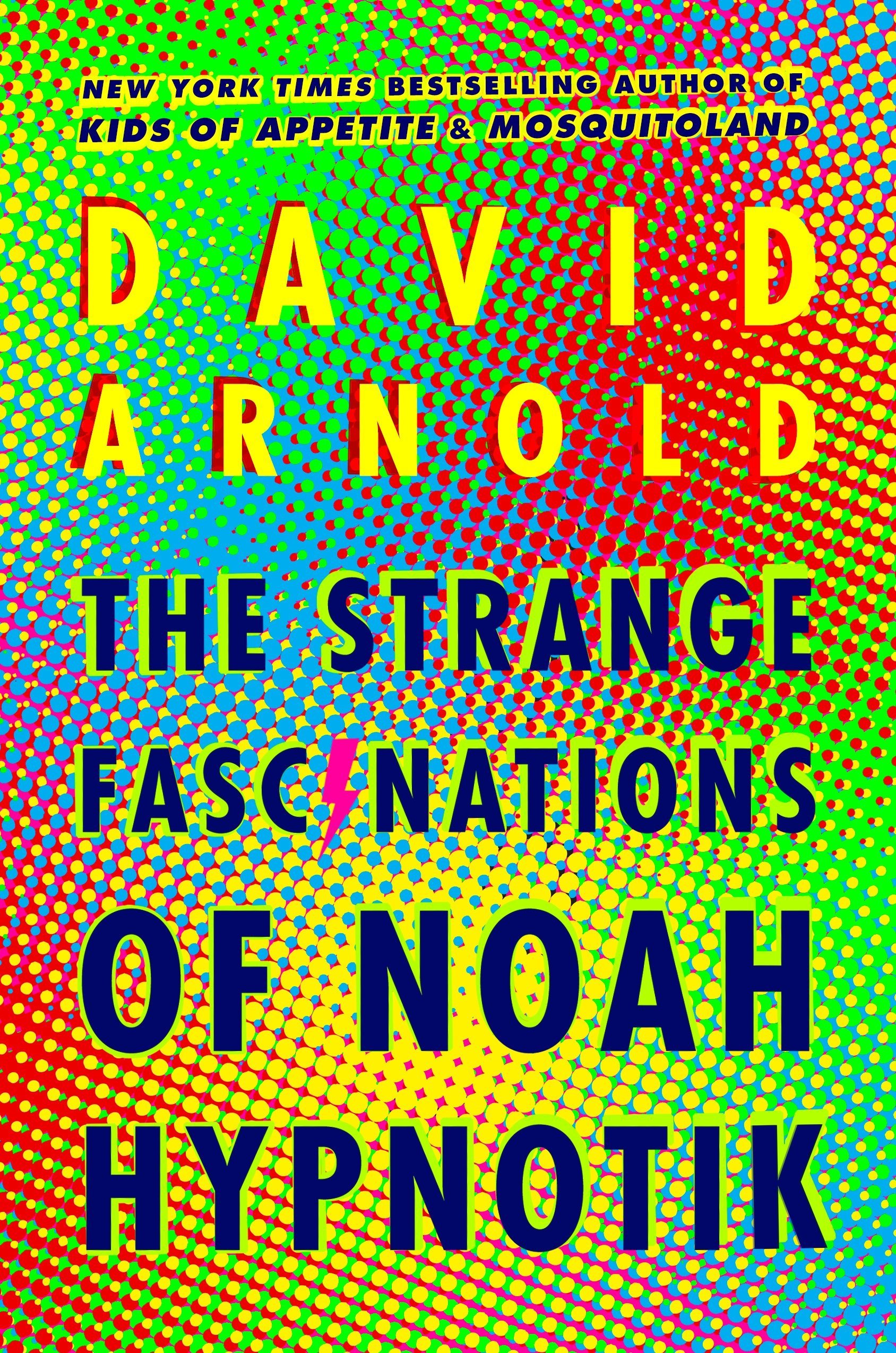
The Strange Fascinations of Noah Hypnotik by David Arnold

Share

The Strange Fascinations of Noah Hypnotik
Author: David Arnold
Published: May 22, 2018 by Viking

Guest Review by Natalia Sperry

Summary: This is Noah Oakman → sixteen, Bowie believer, concise historian, disillusioned swimmer, son, brother, friend.

Then Noah → gets hypnotized.

Now Noah → sees changes—inexplicable scars, odd behaviors, rewritten histories—in all those around him. All except his Strange Fascinations . . .

Review: The longer I sit with this book, the more I feel like I’m still it; every time I sit down to think about it, I find new things to consider. If that’s not the sign of a good book,I don’t know what else is. The Strange Fascinations of Noah Hipnotik is a surreal exploration of identity, friendship, and family on the brink of the many changes protagonist Noah Oakman faces (both before and after his hypnotic episode) as he looks to the future beyond high school.

Above all else, I loved the nerdom in this book, both in its literary and historical detail as well as the variety of pop-culture references. In particular, much of the book (including its title) is drawn from musical icon David Bowie, so I’ll admit,  it’s hard to go wrong. The humor also brings some lightness to the moral questions and philosophical questions of self and reality, which helps keep the largely internal narrative afloat.

Through it all, this book captures an important to capture the emotional gamut of someone’s life, especially when it feels like everything is ch-ch-ch-changing around you. Whether you’re looking for fun or serious contemplation of reality, this book will let you escape for a while (and even for a while longer after you’re done!)

Teacher’s Tool For Navigation: Though grounded in humor and pop culture references, this book would make for a really interesting companion to classics like James Joyce’s Portrait of the Artist as a Young Man, or J.D. Salinger’s The Catcher in the Rye. In asking students to compare the latter with Strange Fascinations, there are some really interesting parallels to be made both in the coming of age story and in the respective protagonists’ relationships with their sisters.

Discussion Questions: Do you agree, like Circuit, that genuine conversations are rare in the contemporary world? What do you think of Noah’s “strange fascinations?” Do you have any “fascinations” of your own, in this sense?

Flagged: “Some books are songs like that, the ones you go back to, make playlists of, put on repeat” (page 108).

Read This If You Loved: Mosquitoland by David Arnold, Everybody Sees the Ants by A.S. King, Ready Player One by Ernest Cline

Recommended For: 

classroomlibrarybuttonsmall 

RickiSig

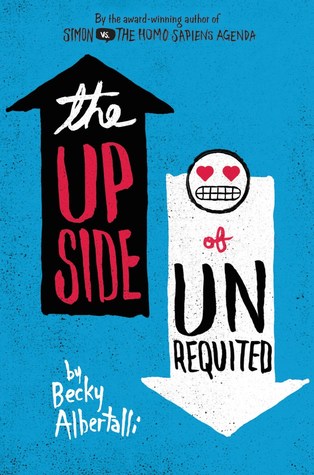
The Upside of Unrequited by Becky Albertalli

Share

The Upside of Unrequited
Author: Becky Albertalli
Published: April 11, 2018 by Balzer + Bray

Guest Review by Rachel Krieger

Summary: Seventeen-year-old Molly Peskin-Suso knows all about unrequited love—she’s lived through it twenty-six times. She crushes hard and crushes often, but always in secret. Because no matter how many times her twin sister, Cassie, tells her to woman up, Molly can’t stomach the idea of rejection. So she’s careful. Fat girls always have to be careful.

Then a cute new girl enters Cassie’s orbit, and for the first time ever, Molly’s cynical twin is a lovesick mess. Meanwhile, Molly’s totally not dying of loneliness—except for the part where she is. Luckily, Cassie’s new girlfriend comes with a cute hipster-boy sidekick. Will is funny and flirtatious and just might be perfect crush material. Maybe more than crush material. And if Molly can win him over, she’ll get her first kiss and she’ll get her twin back.

There’s only one problem: Molly’s coworker Reid. He’s an awkward Tolkien superfan with a season pass to the Ren Faire, and there’s absolutely no way Molly could fall for him. Right?

Review: This heart-warming, flirtatious, love-filled book will bring you a wave of nostalgia. From the sunny summer days to all of Molly’s firsts, Becky Albertalli’s story is sure to set your heart a-flutter. The main characters make up an interracial family with LGBTQ members and an amazing affinity for love and forgiveness. With every passing page, the characters grow a little more, figuring out how to live their own lives while still making time for each other. There can be no doubt for the reader that despite all the conflict, Molly and Cassie will survive their teenage years with their strong relationship intact. Albertalli’s firm grasp on young love makes this book sweet and fun, with twists and turns that will make you read until the last word. This is a must read for any young adults, parents of teens, teachers, or anyone who enjoys a quick, uplifting read.

Teacher’s Tool For Navigation: The Upside of Unrequited can start a lot of amazing conversations in the classroom. One really important aspect of the story is the main character, Molly’s weight. She has felt her whole life as though she deserves the harsh words people send her way simply because of her weight. It could be very interesting to start a conversation with students about bullying and the effect it can have on people in the long run. Another important aspect of the story that can be brought up in the classroom is identity. In the novel, Molly self-identifies as fat. She doesn’t necessarily want to become skinnier or have people stop looking at her as fat, but she wishes that her weight didn’t matter. She adopts it as part of her identity and wants acceptance for it. It would be really beneficial to discuss identity and the specific positives and negatives that can stem from it.

Discussion Questions: 

  • What did the first-person point of view do for the story?
  • Did you find the adult characters in this novel realistic?
  • What was important about the familial relationships in this novel?
  • What is the poignancy of the title?

We Flagged: “I think this is me letting go. Bit by bit. I think these are our tiny steps away from each other. Making not-quite-identical footprints in not-quite-opposite directions. And it’s the end of the world and the beginning of the world and we’re seventeen. And it’s an awesome thing.”

Read This If You Loved: Simon vs. The Homo Sapiens Agenda by Becky Albertalli, Aristotle and Dante Discover the Secrets of the Universe by Benjamin Alire Sáenz, Fangirl by Rainbow Rowell, I’ll Give You the Sun by Jandy Nelson

Recommended For: 

classroomlibrarybuttonsmall 

RickiSig

On the Come Up by Angie Thomas

Share

On the Come Up
Authors: Angie Thomas
Published: February 5, 2019 by Balzer + Bray

GoodReads Summary: Sixteen-year-old Bri wants to be one of the greatest rappers of all time. Or at least make it out of her neighborhood one day. As the daughter of an underground rap legend who died before he hit big, Bri’s got big shoes to fill. But now that her mom has unexpectedly lost her job, food banks and shutoff notices are as much a part of Bri’s life as beats and rhymes. With bills piling up and homelessness staring her family down, Bri no longer just wants to make it—she has to make it.

On the Come Up is Angie Thomas’s homage to hip-hop, the art that sparked her passion for storytelling and continues to inspire her to this day. It is the story of fighting for your dreams, even as the odds are stacked against you; of the struggle to become who you are and not who everyone expects you to be; and of the desperate realities of poor and working-class black families.

My Review: After reading this book, I promptly went into my course syllabus for next semester and swapped out another book to include this one. There are so many things that I love about this book. In particular, I really liked how this book tackled the issues of violence against and the assumptions stereotypically made of black females. There are only a few other recent books that tackle these issues, and they are critically important. I get incredibly frustrated by assumptions like “aggressive black female.” Angie Thomas deftly addresses these assumptions and provides a variety of angles for readers. Bri, the narrator, is incredibly strong, and I admire her greatly. I will never have a daughter, but if I did, I would be so proud if my daughter turned out to be like her. This book just feels different from any book that I’ve read. It offers something different that is going to make for great classroom conversations.

Teachers’ Tools for Navigation: I am going to be using this book in a Social Movements and Collective Action course. I will be using it with other texts to talk about the history and currency of the #blacklivesmatter movement. I am very excited that this book exists in the world, and I know that my students will love it.

Discussion Questions: How does the author craft dialogue? What might other writers learn from her work?; What messages does the text reveal? Which messages are less obvious but implicit in a reading of the text?; What connections does this text have with the world today?

Flagged Passage: “There’s only so much you can take being described as somebody you’re not.”

Read This If You Loved: The Hate U Give by Angie Thomas; All American Boys by Jason Reynolds and Brendan Kiely; by Ilyassah Shabazz and Kekla Magoon; The Rock and the River by Kekla Magoon; How it Went Down by Kekla Magoon; Freedom Summer by Deborah Wiles; Audacity by Melanie Crowder; The Boy in the Black Suit by Jason Reynolds

Recommended For:

 litcirclesbuttonsmall closereadinganalysisbuttonsmall classroomlibrarybuttonsmall

RickiSig

Pride by Ibi Zoboi

Share

Pride
Author: Ibi Zoboi
Published: September 18, 2018 by Balzer + Bray

Summary: Pride and Prejudice gets remixed in this smart, funny, gorgeous retelling of the classic, starring all characters of color, from Ibi Zoboi, National Book Award finalist and author of American Street.

Zuri Benitez has pride. Brooklyn pride, family pride, and pride in her Afro-Latino roots. But pride might not be enough to save her rapidly gentrifying neighborhood from becoming unrecognizable.

When the wealthy Darcy family moves in across the street, Zuri wants nothing to do with their two teenage sons, even as her older sister, Janae, starts to fall for the charming Ainsley. She especially can’t stand the judgmental and arrogant Darius. Yet as Zuri and Darius are forced to find common ground, their initial dislike shifts into an unexpected understanding.

But with four wild sisters pulling her in different directions, cute boy Warren vying for her attention, and college applications hovering on the horizon, Zuri fights to find her place in Bushwick’s changing landscape, or lose it all.

In a timely update of Jane Austen’s Pride and Prejudice, critically acclaimed author Ibi Zoboi skillfully balances cultural identity, class, and gentrification against the heady magic of first love in her vibrant reimagining of this beloved classic.

Teaching Pride

I love retellings of classics, and I would argue that this retelling is far superior to the original. Ibi presented at the NCTE convention, and she is absolutely brilliant. She talked about how she values the inclusion of the pantheon in literature and how she does so in her own texts. She also shared how different poems within Pride are retellings of classic poems. I love her work and will read anything she writes.

Love stories are tricky. They can get sappy quickly. This book is so much more than a love story. It interrogates themes related to economics, race, education, and gender.

Gentrification

“It’s a truth universally acknowledged that when rich people move into the hood, where it’s a little bit broken and a little bit forgotten, the first thing they want to do is clean it up. But it’s not just the junky stuff they’ll get rid of. People can be thrown away too, like last night’s trash left out on sidewalks or pushed to the edge of wherever all broken things go. What those rich people don’t always know is that broken and forgotten neighborhoods were first built out of love” (p. 1).

Teaching Idea: As a class, explore the impacts of gentrification and displacement. Using this knowledge develop your own form of political art (https://youtu.be/JMVd5k2a2IM) to make a statement.

Culture

If Madrina’s basement is where the tamboras, los espíritus, and old ancestral memories live, the roof is where the wind chimes, dreams, and possibilities float with the stars, where Janae and I share our secrets and plan to travel all over the world, Haiti and the Dominican Republic being our first stop” (p. 23).

Teaching Idea: Pick a place in your life, and Use Zoboi’s writing as a mentor text to share that place with others (e.g. “If [place] is where_________, [another place] is where__________, where________.”

Equity

“Sometimes love is not enough to keep a community together. There needs to be something more tangible, like fair housing, opportunities, and access to resources” (p. 33).

Teaching Idea: As a class, discuss whether love is enough and whether tangible aspects must exist in order to keep a community together. Generate a concept or brain map that depicts tangible aspects that can impact communities.

Male/Female Gender Roles

I don’t need no knights in shining armor

Ain’t no horses in the hood

I killed chivalry myself with a pocketknife…” (p. 243).

Teaching idea: The teachers finds materials/advertisements that are gender-specific, and students rewrite the materials to remove gender from the text. Students evaluate how the meaning or the impact has changed.

Education

“There is more to learn

about my old, old self, and black and brown girls like me

from hoods all over this country want to

take over the world,

but there’s something missing

in our history books the public schools give us” (p. 147).

Teaching idea: Consider the school curricula. Whose voices are honored? Whose are missing? Rewrite a course to be more inclusive.

Home

“I have always thought of Bushwick as home, but in that moment, I realize that home is where the people I love are, wherever that is” (p. 270).

Teaching idea: Where is home? Create a visual depiction of your own home, and below it, write, “Home is…” How do our interpretations of home differ? What do they have in common?

Read This If You Loved: American Street by Ibi Zoboi, Pride and Prejudice by Jane Austen, Piecing Me Together by Renée Watson

Recommended For: 

classroomlibrarybuttonsmall 

RickiSig