Highly Illogical Behavior by John Corey Whaley

Share

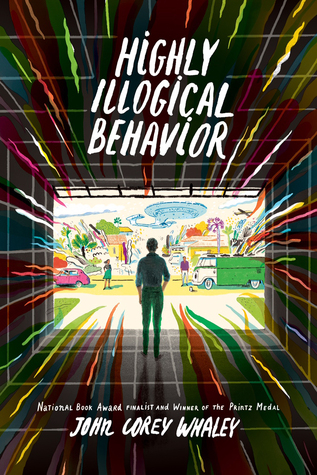
Highly Illogical Behavior
Author: John Corey Whaley
Published: May 10, 2016 by Dial

Summary: Sixteen-year-old Solomon is agoraphobic. He hasn’t left the house in three years, which is fine by him.

Ambitious Lisa desperately wants to get into the second-best psychology program for college (she’s being realistic). But is ambition alone enough to get her in?

Enter Lisa.

Determined to “fix” Sol, Lisa steps into his world, along with her charming boyfriend, Clark, and soon the three form an unexpected bond. But, as Lisa learns more about Sol and he and Clark grow closer and closer, the walls they’ve built around themselves start to collapse and their friendships threaten to do the same.

Ricki’s Review: I didn’t expect this book to hit me quite as hard as it did. The summary was compelling, and I enjoyed reading the first few chapters, and then I became personally invested in the characters’ lives. There are many complex emotions within this text. Because of the alternating perspectives, I’d be rooting for Lisa in a chapter and then feel like a jerk because I was betraying Solomon. And then I’d wonder if rooting for Lisa meant that I was also rooting for Solomon, in a way. This book makes readers question their values and consider ethics. I’ll be thinking about this one for quite some time.

Two other things I love about this book: 1. Solomon’s parents are great! I love when a YA book features good parents! 2. Sexuality is discussed in the book, but it isn’t the only (or main) feature of the book. This goes along with my belief that books that feature discussions about sexuality need not be purely focused on sexuality.

Teacher’s Tools for Navigation: I am a big advocate for literature circles that consider mental health. I think that placing texts like these in conversation allows us to consider the complexity of mental health issues. Some great texts to include in these literature circles follow: Dr. Bird’s Advice for Sad Poets by Evan Roskos, Forgive Me, Leonard Peacock by Matthew Quick, It’s Kind of a Funny Story by Ned Vizzini, The Perks of Being a Wallflower by Stephen Chbosky, Twisted by Laurie Halse Anderson, Everybody Sees the Ants by A.S. King, and 13 Reasons Why by Jay Asher. A discussion of these titles would foster incredibly rich discussions about phobias, depression, anxiety, and suicide. In my opinion, we must have these conversations with our students.

Discussion Questions: Do you think that Lisa “did the right thing” throughout the text? Were all of her decisions selfish, or could some of them be considered simultaneously selfless? Can a decision be selfish and selfless at the same time?

We Flagged: “We’re just floating in space trying to figure out what it means to be human.”

Read This If You Loved: (Many of these are listed above.) Dr. Bird’s Advice for Sad Poets by Evan Roskos, Forgive Me, Leonard Peacock by Matthew Quick, It’s Kind of a Funny Story by Ned Vizzini, The Perks of Being a Wallflower by Stephen Chbosky, Twisted by Laurie Halse Anderson, Everybody Sees the Ants by A.S. King, Reality Boy by A.S. King, Dear Life, You Suck by Scott Blagden, 13 Reasons Why by Jay Asher

Recommended For:

 closereadinganalysisbuttonsmall litcirclesbuttonsmall classroomlibrarybuttonsmall

RickiSig

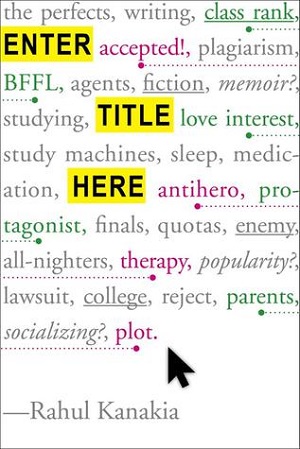
Enter Title Here by Rahul Kanakia

Share

entertitlehere-rahulkanakia

Enter Title Here
Author: Rahul Kanakia
Published: August 2, 2016 by Disney-Hyperion

Summary: I’m your protagonist—Reshma Kapoor—and if you have the free time to read this book, then you’re probably nothing like me.

Reshma is a college counselor’s dream. She’s the top-ranked senior at her ultra-competitive Silicon Valley high school, with a spotless academic record and a long roster of extracurriculars. But there are plenty of perfect students in the country, and if Reshma wants to get into Stanford, and into med school after that, she needs the hook to beat them all.

What’s a habitual over-achiever to do? Land herself a literary agent, of course. Which is exactly what Reshma does after agent Linda Montrose spots an article she wrote for Huffington Post. Linda wants to represent Reshma, and, with her new agent’s help scoring a book deal, Reshma knows she’ll finally have the key to Stanford.

But she’s convinced no one would want to read a novel about a study machine like her. To make herself a more relatable protagonist, she must start doing all the regular American girl stuff she normally ignores. For starters, she has to make a friend, then get a boyfriend. And she’s already planned the perfect ending: after struggling for three hundred pages with her own perfectionism, Reshma will learn that meaningful relationships can be more important than success—a character arc librarians and critics alike will enjoy.

Of course, even with a mastermind like Reshma in charge, things can’t always go as planned. And when the valedictorian spot begins to slip from her grasp, she’ll have to decide just how far she’ll go for that satisfying ending. (Note: It’s pretty far.)

My Review: Whew! I really enjoyed this book! Rahul Kanakia really nails the pressure that overachievers experience. I was reminded of myself a bit. Reshma is willing to do anything to maintain her valedictorian status, and she takes things a bit too far. She is such an unlikeable character that I found her to be quite likable. I notice the GoodReads ratings of this book are high (a 3.58 average) but not incredibly high, and I laughed. Books with unlikable characters are always unfairly low in their ratings. When I put this book down, I felt like I’d learned a lot. Reshma feels like a real person because she makes some major mistakes. She is an anti-hero. I had difficulty putting the book down because I wanted to see how far she would go, and it made me cringe a bit. This book evoked a visceral reaction out of me!

Teachers’ Tools for Navigation: I would love to teach this book because it would evoke some excellent classroom discussions. Reshma represents the ugly side of many people, and I think that readers will have strong reactions to her selfishness. I’d particularly like to dive into her relationship with her mother. Readers could discuss family histories and how these may influence our decisions and our concepts of self.

This book is a great way to introduce metafiction. It would be very interesting to tease apart how the plot relates to the narrator’s book.

Discussion Questions: How do Reshma’s parents differ? How do they influence her decisions? What impact do they have on her as a person?; Does Reshma go too far? What are the consequences? Would you have gone as far as she did?; Why might the author have chosen to write the book as if Reshma was writing it? How does this impact your reading of the text?

Flagged Passage: “The thing no one understands about me is that sometimes, once in a while, I get this feeling like I can do anything, and that feeling is so rare and so beautiful that it’s really hard not to simply surrender to it.”

Read This Book If You Loved: The Secret Side of Empty by Maria E. Andreu; I Crawl Through It by A.S. King


Recommended For: 

classroomlibrarybuttonsmall litcirclesbuttonsmall

  RickiSig

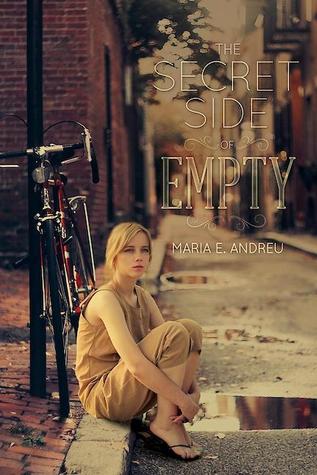
The Secret Side of Empty by Maria E. Andreu

Share

the secret side of empty

The Secret Side of Empty
Author: Maria E. Andreu
Published: March 11, 2014 by Running Press

Summary: As a straight-A student with a budding romance and loyal best friend, M.T.’s life seems as apple-pie American as her blondish hair and pale skin. But M.T. hides two facts to the contrary: her full name of Monserrat Thalia and her status as an undocumented immigrant.

But it’s harder to hide now that M.T.’s a senior. Her school’s National Honor Society wants her to plan their trip abroad, her best friend won’t stop bugging her to get her driver’s license, and all everyone talks about is where they want to go to college. M.T. is pretty sure she can’t go to college, and with high school ending and her family life unraveling, she’s staring down a future that just seems empty. In the end, M.T. will need to trust herself and others to stake a claim in the life that she wants.

Author Maria E. Andreu draws from her personal experience as a (formerly) undocumented immigrant to explore an issue that affects over one million children in the U.S. But while the subject matter is timely, it is M.T.’s sharp, darkly funny voice and longing for a future that makes this story universally poignant.

My Review: In the last year, I have met many people who have told me that they were or are undocumented immigrants. Immigration reform is a hot topic in politics right now, and I can’t help but wonder if people are thinking about others in terms of their humanity. I’ve become increasingly heavy-hearted as I have listened to speeches about immigration, and I longed to learn more about the topic. After searching news articles, research studies, statistics, and government websites, I felt that I needed more story, and so I picked up this book from the library. It received excellent reviews, and I understand why. The author draws upon her personal experiences as a formerly undocumented immigrant, and the narrator, M. T., feels very real. I learned about some of the struggles undocumented immigrants experience, and I am grateful for all that I learned from this book. M. T. deals with other complex issues beyond her immigrant status—relationship issues, domestic abuse, and contemplations of suicide. There is so much to discuss regarding the text. I loved the book and am so glad I found it. I highly recommend it.

Teachers’ Tools for Navigation: This is a fantastic book to discuss undocumented immigrants with students. It would be wonderful to help students consider aspects of immigration reform and explore other perspectives. The author is featured in this article about Donald Trump.

Discussion Questions: How might the author’s perspective have influenced her work?; What do you learn about immigration? How does this influence, change, or solidify your beliefs?; How does M. T.’s relationship with Nate evolve? Do you agree with everything he did?; Did M. T. make the right decision to leave home? Why or why not?

Flagged Passage: I will always be a stranger everywhere. With my parents, I am too American. With Americans, I am a spectator with my nose pressed against their windowpanes, watching their weird rituals and rites of passage, never quite understanding them completely. A little chunk of me will always be a stranger everywhere, different chunks of stranger in different situations. (p. 98).

Read This Book If You Loved: Return to Sender by Julia Alvarez, Ask Me No Questions by Marina Budhos, Girl in Translation by Jean Kwok, Illegal by Bettina Restrepo


Recommended For: 

classroomlibrarybuttonsmall litcirclesbuttonsmall

  RickiSig

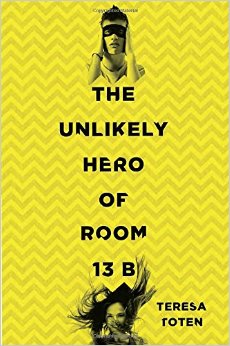
The Unlikely Hero of Room 13B by Teresa Toten

Share

the unlikely hero of room 13b

The Unlikely Hero of Room 13B
Author: Teresa Toten
Published: March 10, 2015 by Delacorte

GoodReads Summary: Deep, understated, and wise, this engaging YA novel, winner of the Governor General’s Award in Canada, is about more than the tough issue of teens dealing with obsessive-compulsive order. It also has romance, and a whodunit element that will keep readers guessing. Perfect for readers who love Eleanor & Park as well as All the Bright Places.

Adam Spencer Ross is almost fifteen, and he’s got his hands full confronting the everyday problems that come with having divorced parents and a stepsibling. Add to that his obsessive-compulsive disorder and it’s just about impossible for him to imagine ever falling in love. Adam’s life changes, however, the instant he meets Robyn Plummer: he is hopelessly, desperately drawn to her. But is it possible to have a normal relationship when your life is anything but?

Filled with moments of deep emotion and unexpected humor, The Unlikely Hero of Room 13B explores the complexities of living with OCD and offers the prospect of hope, happiness, and healing.

Review: Fourteen-year-old Adam Spencer Ross is coping with many struggles—his obsessive compulsive disorder, his mother’s troubles, and his step-brother’s reliance on him. Adam joins a support group and connects deeply with Robyn, a fellow group member. All of the group members adopt superhero alter egos, but Adam finds it difficult to hide the fact that his rituals are increasingly getting worse. Adam wonders how he can have a normal relationship amidst the chaos he feels. Emotionally-charged, raw story with complex characters.

Teachers’ Tools for Navigation: Similar to my post about Kids of AppetiteI’d love to include this book in a group of literature circle books that all reflect disability and friendship. It would be interesting for students to examine and conceptualize their definitions of normal. The ALAN Review‘s Fall 2016 issue is about (Re)Defining Normal, and many of the articles would be very useful for this very topic.

Discussion Questions: What struggles does Adam face? How do each of them impact his life?; What role does Adam’s mother play in his life? His father? Sweetie? Robin? Chuck? How do they all impact him positively and/or negatively?; How does Adam change throughout the novel?; What do the superhero personas offer the characters?; What is the role of family in the text? How may family be examined by traditionally and untraditionally within the context of the characters?

We Flagged: “I believe that I am a liar because I have to hide all the things I have to hide. It’s hard to remember where one lie ends and another begins. I believe lying that much changes you, makes you sick” (p. 12).

Read This If You Loved: Eleanor & Park by Rainbow Rowell, All the Bright Places by Jennifer Niven, The Fault in Our Stars by John Green, Not If I See You First by Eric Lindstrom

Recommended For:

litcirclesbuttonsmall classroomlibrarybuttonsmall

RickiSig

Fun Home: A Family Tragicomic by Alison Bechdel

Share

NFPB2016

Nonfiction Wednesday

Nonfiction Picture Book Wednesday is hosted by Kid Lit Frenzy and was started to help promote the reading of nonfiction texts. Most Wednesdays, we will be participating and will review a nonfiction text (though it may not always be a picture book).
Be sure to visit Kid Lit Frenzy and see what other nonfiction books are shared this week!

Fun Home

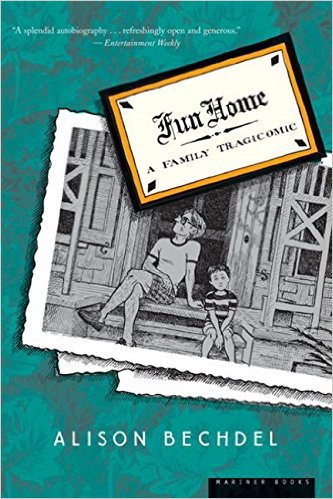
Fun Home: A Family Tragicomic
Author: Alison Bechdel
Published: June 5, 2007 by Mariner Books

Summary: In this graphic memoir, Alison Bechdel charts her fraught relationship with her late father.

Distant and exacting, Bruce Bechdel was an English teacher and director of the town funeral home, which Alison and her family referred to as the Fun Home. It was not until college that Alison, who had recently come out as a lesbian, discovered that her father was also gay. A few weeks after this revelation, he was dead, leaving a legacy of mystery for his daughter to resolve.

Review: I don’t tend to read many adult books each year, but I kept seeing this book referenced. I noticed it was a 2007 publication, and when books are still being discussed frequently almost ten years later, you know they have to be good! I finally requested it from my library, and boy did I love it. I usually try to review only new books, but this book was too good not to share. I felt deeply connected with Alison and her life—despite the fact that it is nothing like mine. I was really drawn to the psychological themes she embedded and the phenomenal writing. She is incredibly smart, and this shines in her writing. The drawings are equally captivating. I am not surprised that young adults tend to read this book. It’s quite edgy and many sections made me blush, but I know this doesn’t stop teens. I will be thinking about this book for a long time.

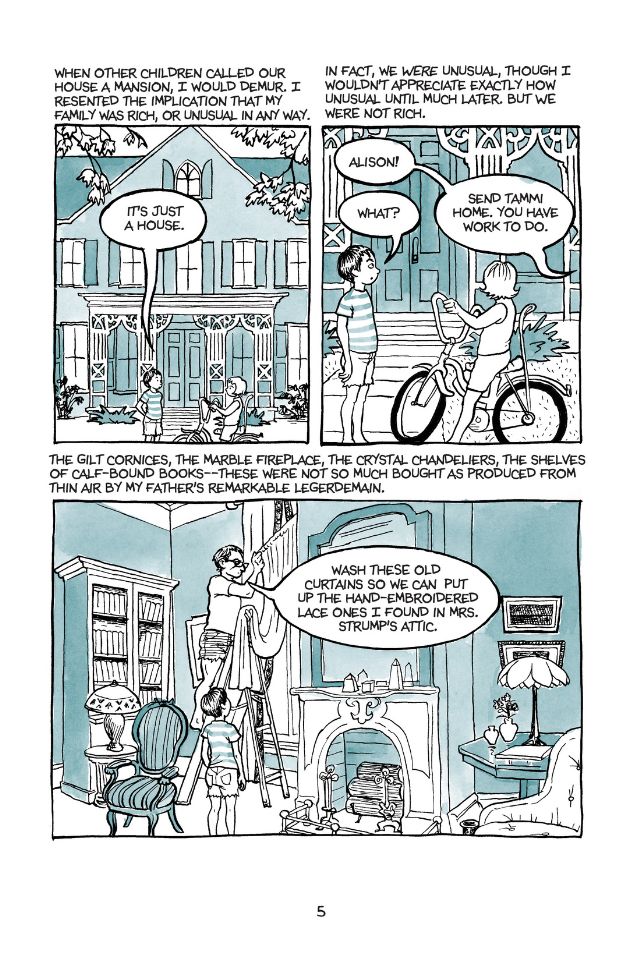
Teacher’s Tools for Navigation: I am not a stranger to controversy, but I’d probably use this book for close reading because the images might be a bit uncomfortable for some (but not most!) of my students. There is a lot of nudity, and there are sexually explicit drawings. That said, I most certainly would have it in my classroom (nothing stops me, controversy-wise, if a book is really good and a great learning tool). A close reading of many of the beginning chapters would lead to fantastic conversations about family dynamics and psychology. There is so much to teach from this book: Tone, Author’s Perspective, Vocabulary, etc. 

Discussion Questions: How does Alison navigate her childhood?; What is her response to her father’s death? Why might this be?; What role does the Fun Home play in her life? How does this graphic novel differ from others that you’ve read?; How is the author’s writing style similar to short vignettes? What scenes stand out to you? Why might this be?

Flagged Passage: 

Fun Home ImageSource of Image

Read This If You Love: How the World Was: A California Childhood by Emmanuel Guibert; The Photographer by Emmanuel Guibert; Alan’s War by Emmanuel Guibert; The Stranger by Albert Camus; The House on Mango Street by Sandra Cisneros

Recommended For:

closereadinganalysisbuttonsmall classroomlibrarybuttonsmall

RickiSig

Still a Work in Progress by Jo Knowles

Share

still a work in progress

Still a Work in Progress
Author: Jo Knowles
Published August 2nd, 2016 by Candlewick Press

Summary: In a return to middle-grade fiction, master of perspectives Jo Knowles depicts a younger sibling struggling to maintain his everyday life while coping with his sister’s secret struggle.

Noah is just trying to make it through seventh grade. The girls are confusing, the homework is boring, and even his friends are starting to bug him. Not to mention that his older sister, Emma, has been acting pretty strange, even though Noah thought she’d been doing better ever since the Thing They Don’t Talk About. The only place he really feels at peace is in art class, with a block of clay in his hands. As it becomes clear through Emma’s ever-stricter food rules and regulations that she’s not really doing better at all, the normal seventh-grade year Noah was hoping for begins to seem pretty unattainable. In an affecting and realistic novel with bright spots of humor, Jo Knowles captures the complexities of navigating middle school while feeling helpless in the face of a family crisis.

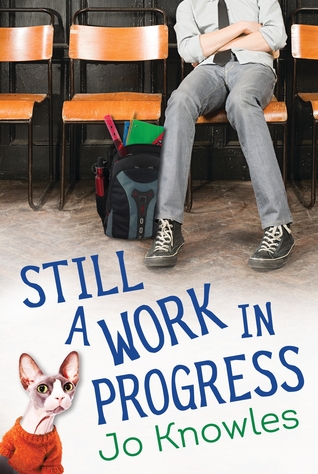
Review: What I am always amazed by when I read a book by Jo Knowles is her ability to tell the truth about our world, and this book once again fits this description. Jo has a way of making her characters ones that are so real that you can imagine them walking into a school and know exactly which kids they’d hang out with. Noah and his friends could definitely be middle school students at my school. Her stories always seem to include a bit of humor (see: hairless cat on the cover) while never taking away from the seriousness of the book’s topic. The emotions, specifically pain or sadness, she portrays through her characters radiates out of the pages, so the reader can feel it. 

Teachers’ Tools for Navigation: This is an important book to have available for students to read. Although the main story is about Noah fitting into middle school, it is also about dealing with pain and anger and sadness and still having to live. This book needs to be in classroom libraries and should be booktalked so students are aware of its brilliance.

Discussion Questions: What makes the art room such a special place for Noah?; Why does Noah and his family not talk about Emma’s problems? Did not talking about it end up being hurtful or helpful?; Noah’s school is a bit different than traditional schools. How does his school differ from yours?; What does the title mean in reference to Noah? Emma? Their family? Other characters?; How did Emma’s experience with Lord of the Flies spiral out of control?

Flagged Passages: “Community meetings happen once a week. Everyone in the school has to go, including the teachers. The Community Room used to be the music room, but our town had budget cuts and they cut the music program. The wars are painted green, and old couches donated by various families line the walls so that if we’re all sitting on them, we form a circle/square. The problem is that there are more students than seats on couches, so if you get to a Community Meeting late, you’re stuck sitting on a beanbag or on the floor in front of the couch sitters. The beanbags are mysteriously sticky and smell like dirty sheets. The floor is cold and kind of gross because it doesn’t get washed very much. In either case, you have to sit in front of the people on the couch which means you are close to their feet, which means, depending on who you end up in front of, you are probably going to have a miserable hours.” (p. 9-10)

“‘Sara is new to vaganism,’ Emma explains.

‘Is your family vegan, too?’ my mom asks.

‘No, just me. My parents are all stressed-out about it. They think I’m going to become anemic or something.’

Emma sighs dramatically, as if to say, So typical.

My mom clears her throat uncomfortably. ‘We were worried about Emma, too. But she’s very aware of her dietary needs. Right, Emma?’

‘Kind of hard not to be with you and Dad obsessing about everything I eat,’ Emma says sarcastically.

My  mom doesn’t answer, just grips the steering wheel tighter. Sara shifts in her seat awkwardly, probably remember the time a few years ago that no one talks about. Even though she and Emma weren’t good friends then, everyone know about the Thing That Happened.” (p. 29-30)

Read This If You Loved: Perfect by Natasha Friend, Awkward by Svetlana Chmakova, Zack Delacruz by Jeff Anderson

Recommended For:

  classroomlibrarybuttonsmall

Kellee Signature

Blog Tour, Giveaway, and Review!: Good Morning Yoga by Mariam Gates

Share

Good Morning Yoga-UPDATED cover hi-res

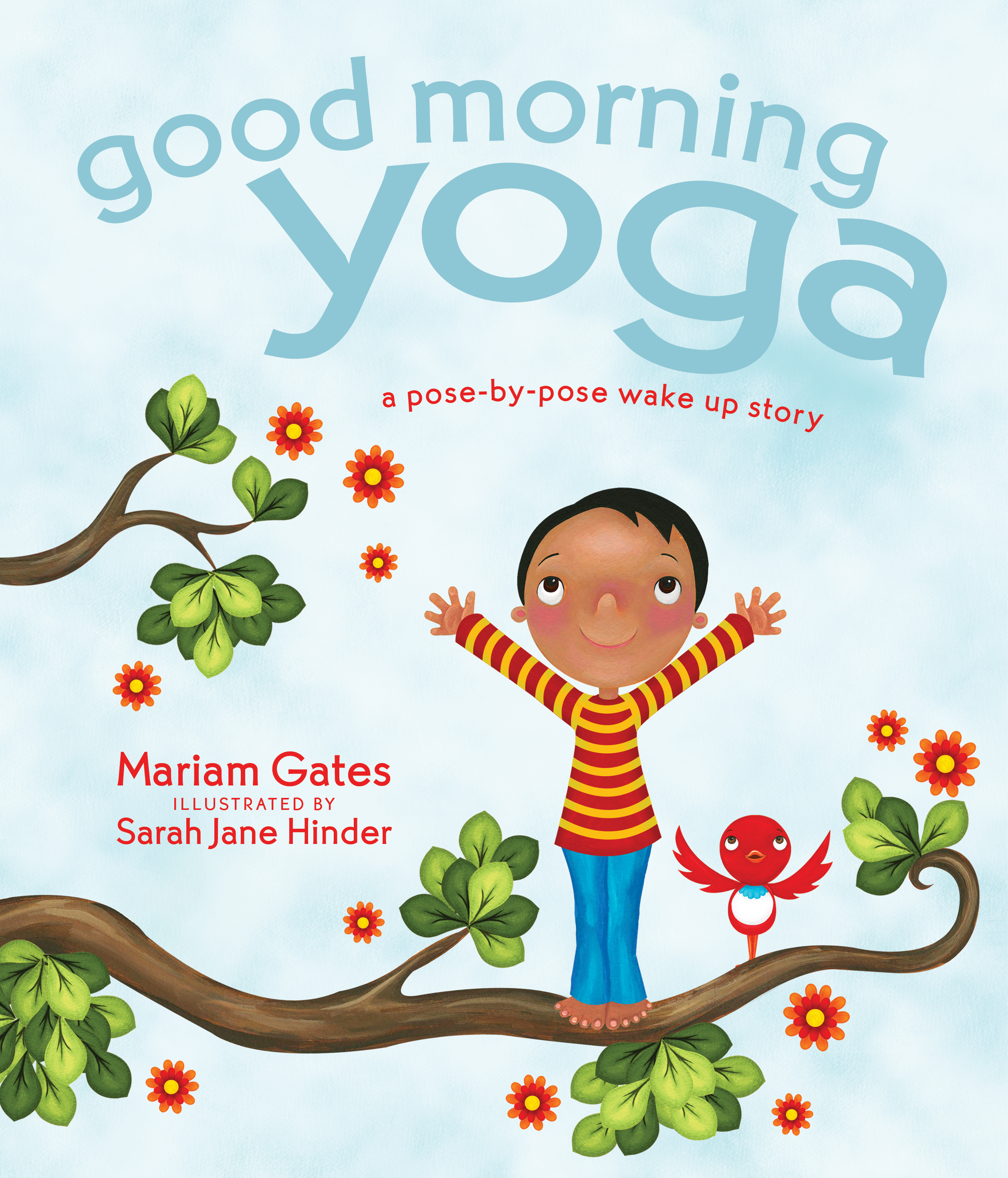
Good Morning Yoga: A Pose-By-Pose Wake Up Story
Author: Mariam Gates; Illustrator: Sarah Jane Hinder
Published March 1, 2016 by Sounds True

Goodreads Summary: Yoga helps children learn how to focus, relax, and both self-monitor and self-soothe Good Morning Yoga instills these four skills and more, enabling children to jumpstart the day with energy and excitement and meet the adventures that come with mindfulness and perspective.

Good Night Yoga tells the story of the world retiring for the evening and a new generation of readers has fallen in love with the relaxing sequences and beautiful pictures that lead them to dreamland. Good Morning Yoga weaves gentle exercises with a heartwarming narrative and wonderful illustrations to empower children to manage the energies that visit throughout the day from the fiery volcano to the mountain quiet and still. Good Morning Yoga concludes with a visualization for kids to set intentions for the day.

About the Author: Mariam Gates holds a master’s in education from Harvard University and has more than twenty years’ experience working with children. Her renowned Kid Power Yoga program combines her love of yoga with teaching to help children access their inner gifts. She is the author of Good Night Yoga (Sounds True, April 2015), and lives in Santa Cruz, CA, with her husband, yoga teacher Rolf Gates, and their two children. For more information, visit mariamgates.com.

Twitter:  @gatesmariam
Instagram: mariam.gates

Mariam Gates

Review: My father is a pediatrician, and he is constantly recommending meditation and yoga to his patients. He wasn’t a meditation kind of guy when he started practicing medicine, but he came to realize that many of the children who came to him were asking for natural ways to deal with stress and anxiety. I can’t wait to share this book (and Good Night Yoga) with him! There is a definite need for these two texts. Children are rarely taught stress-relieving practices in school, and I wish I’d been taught yoga as a child. 

My two-year-old son and I have had so much fun with this book since it arrived. He constantly asks for the “Woga book.” We practice yoga at least once a day with this book, and it we really enjoy this time together. The narrative that weaves through the book will engage readers and allow them to connect with the yoga moves. The illustrations match the calm beauty of this text, and I think kids will love it. I can’t help but think about how Gates’ books would really help kids grow and develop emotionally and physically.

Teachers’ Tools for Navigation: As a high school teacher, there were many times that I found my students’ energy was flagging. Also, during exams, they were very stressed. We stopped for stretch or meditation breaks. They appreciated these moments and reminded me of them when they’d visit me many years later. This book would be excellent to use in classrooms of all ages. The teacher might read the entire text the first time and then use excerpts in future yoga breaks, depending on time allowance. Research shows that kids who have more recess time perform better. I’d love to do some research on the effect of yoga breaks during schools! This book should be printed in oversized book format!

Encourage yoga time in your home, bookstore, or library with this downloadable kit!

Discussion Questions: How did reading this book make you feel? How might yoga fit into your life?; What are the benefits of yoga?; How does the author’s language connect you with the narrative and yoga moves? How does the illustrator creatively depict the text?; How do the different yoga moves work together?

Book Trailer:


Book Reading:

Another Great Video!:

Read This If You Loved: 

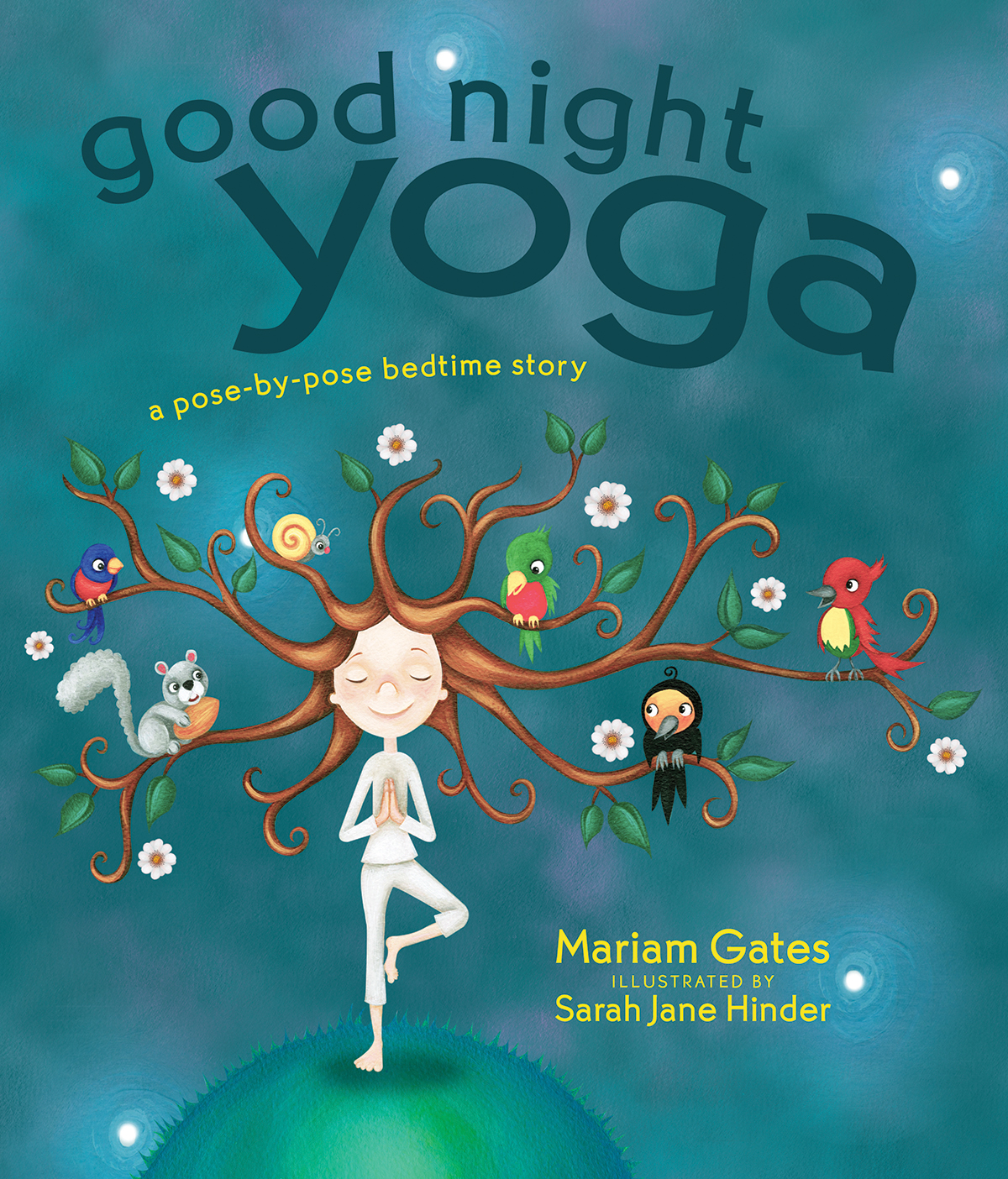
Good Night Yoga (2)

Recommended For: 

readaloudbuttonsmall classroomlibrarybuttonsmall


Follow All the Stops on the Tour: 

Wed, Feb 24
Teach Mentor Texts
Fri, Feb 26
Where Imagination Grows
Mon, Feb 29
A Rup Life
Tues, Mar 1
Proseandkahn
Wed, Mar 2
Kid Lit Frenzy
Thurs, Mar 3
5 Minutes for Books
Fri, Mar 4
Once Upon a Story
Mon, Mar 7
Wrapped in Foil
Tues, Mar 8
Sharpread
Wed, Mar 9
A Foodie Bibliophile in Wanderlust
Thurs, Mar 10
Unleashing Readers
Fri, Mar 11
Children’s Book Review
Tues, Mar 15
The Library Fanatic
And Don’t Forget to Enter the Giveaway!:

a Rafflecopter giveaway

RickiSig

**Thank you to Barbara Fisch for sending us this book and for allowing us to host the giveaway!**