Hundred Percent by Karen Romano Young

Share

hundred-percent

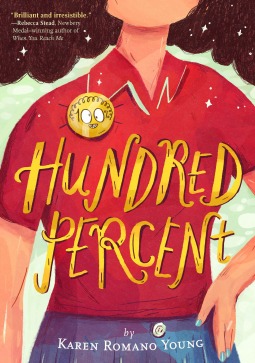
Hundred Percent
Author: Karen Romano Young
Published August 9th, 2016 by Chronicle Books

Summary: The last year of elementary school is big for every kid. Christine Gouda faces change at every turn, starting with her own nickname—Tink—which just doesn’t fit anymore. Christine navigates a year’s cringingly painful trials in normalcy—uncomfortable Halloween costumes, premature sleepover parties, crushed crushes, and changing friendships. Throughout all this, Tink learns, what you call yourself, and how you do it, has a lot to do with who you are.

This book marks beloved author Karen Romano Young’s masterful return to children’s literature: a heartbreakingly honest account of what it means to be between girl and woman, elementary and middle school, inside and out—and just what you name that in-between self.

“A lovely, lovely tale full of warmth, humor, and intelligence.”—Kirkus Reviews, starred review

“Perfectly captures the emotions of middle schoolers and their evolving friendships and familial relationships.”—School Library Journal, starred review

“Romano’s characters jump off the page in a thoughtful and realistic look at what it means to be on the precipice of adolescence.”—Publishers Weekly

“A brilliant and irresistible book about the sharp pains and joys of real life. Karen Romano Young is a writer like no other.—Rebecca Stead, Newbery Award–winning author of When You Reach Me

“Karen Romano Young must be twelve. There’s no other way she can possibly know what she knows about sixth grade in all its weirdness and glory.”—Annie Barrows, New York Times bestselling author of the Ivy & Bean series

“Karen Romano Young has an unerring feel for the shifting alliances and uncomfortable intrigues of sixth graders.” —Ellen Wittlinger, Printz Honor–winning author of Hard Love

Review: The blurbs for Hundred Percent state that the book delves into the true emotions and experiences of a sixth grader, and that it does. It actually is so realistic that it will make adults, myself included, a bit uncomfortable. Thinking back to sixth grade, it was the time where everyone was figuring out their identities: social, emotional, physical, sexual. Hundred Percent captures this. Tink is trying to figure out who her friends are, if it is worth liking boys, how to deal with changes all over the place, and so much more. I do know that there are parts of the book that some adults will be uncomfortable with their students/child reading if they are the same age as Tink. For example, there are derogatory terms used such as slut/slutty and horny skank, a lip syncing scene to “Honky Tonk Women,” and a discussion of what “sleeping together” is. Although this may be a bit uncomfortable, the more I think about the more I have come to realize that these conversations are definitely happening between 6th graders, and we can’t, as the adults in their life, pretend like they are not (though I still don’t know why the teachers let them choose “Honky Tonk Women”). With all this being said, I still think this text is for our most mature sixth graders, but those students need Tink’s story. 

Teachers’ Tools for Navigation: In addition to a classroom library book, the text could be used within the classroom during a creative writing unit. The prose of Hundred Percent is lyrical and beautifully written. Karen Romano Young is able to take the most mundane of thoughts or activities and make them sing on the page. Because of this, some parts of the story could definitely be used as a mentor text for writing.

Flagged Passages: “Tink could have cried, but instead she smiled. She was thinking about the moment when she’d held the dishpan down to the surface of the water and turned it sideways to let the lobster slosh out of it. Its clause had sprung wide open, as if it was looking for something to grab on to. The Sound was so cool and blue and clear. She hung over the water to watch the lobster sinking down into the gloom. Back where it belonged again, back home like Tink. She felt like–like crying, but also laughing, like smiling through a storm, like an ambassador of lobsters. She wondered: Does an ambassador ever forget that the foreign land he’s learned so much about isn’t the place he’s from?” p. 55

Read This If You Loved: Truth or Dare by Barbara DeeStill a Work in Progress by Jo KnowlesThe Secret Hum of Daisy by Tracy Holczer

Recommended For:

  classroomlibrarybuttonsmall

Kellee Signature

**Thank you Chronicle Books for providing a copy for review!**

The Honest Truth by Dan Gemeinhart

Share

honest truth

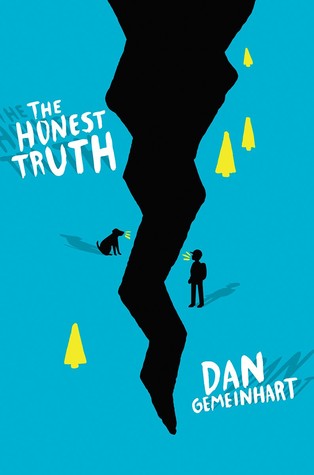
The Honest Truth
Author: Dan Gemeinhart
Published: January 27, 2015 by Scholastic Press

Summary: In all the ways that matter, Mark is a normal kid. He’s got a dog named Beau and a best friend, Jessie. He likes to take photos and write haiku poems in his notebook. He dreams of climbing a mountain one day.

But in one important way, Mark is not like other kids at all. Mark is sick. The kind of sick that means hospitals. And treatments. The kind of sick some people never get better from.

So Mark runs away. He leaves home with his camera, his notebook, his dog, and a plan to reach the top of Mount Rainier–even if it’s the last thing he ever does.

The Honest Truth is a rare and extraordinary novel about big questions, small moments, and the incredible journey of the human spirit.

Ricki’s Review: In the introduction of the ARC, Dan Gemeinhart writes that this story was inspired by his friend Mark, who passed away from cancer. While the book is not about Mark, there are “smooth rocks of truth” within it. He wrote the story in hopes that Mark would enjoy reading it. With this in mind, I began the book already emotionally invested. Mark is a 12-year-old boy who has recently relapsed with cancer. He is tired of being sick, and he has set out with his dog and plans to go to Mt. Rainier to die. Much of the book is Mark’s journey to Rainier, and we slowly learn about his experiences with cancer throughout the story. Every other chapter is written by his best friend Jesse, and I found their friendship to be inspiring, particularly given the author’s introduction. This is a beautiful story that will leave a mark on readers’ hearts. I will be recommending it often.

Kellee’s Review: The Honest Truth was my first choice for my school’s faculty book club because I had only hear amazing things about it. I jumped into reading it without knowing anything about it, but by the end of the first page, I knew that all my friends who recommended it to me were right. Mark has a voice that is so full of hurt and sorrow that it jumps off the page and into your heart. The obstacles he faces and overcomes while also making his way to die alone show the strength of his character. I also was a big fan of the two points of view because it allows the reader to see what was going on at home and maybe get some more truth than what Mark was telling us (though he swears it all is the honest truth).

For our book club meeting, I tabbed up my book with passages I loved (I’ll list all the pages below), haikus that Mark wrote, and descriptions of all of the photographs he took along the way.

Teachers’ Tools for Navigation: This would make a fantastic read-aloud. It has so much to discuss! The richly realized themes would make for fantastic conversations in the classroom. I would love to hear students’ thoughts about the story, particularly in relation to the discussion questions below. There are many debatable points in the story—which makes it all the more interesting to use as a read aloud!

Additionally, The Honest Truth would be a good introduction to haiku and visual story telling since Mark writes haiku and takes photographs to help tell his story. The haiku (in chronological order) are found on pages 120, 8, 22, 78, 79, 130. The photos Mark took are explained on pages 226-227. Using these as mentor texts, students can create their own story using poetry and photography.

More discussion ideas can be found at http://www.scholastic.com/teachers/lesson-plan/honest-truth-discussion-guide.

Discussion Questions: Was Mark selfish to leave home? Do you think he should have told his parents? Do you think what he did was fair? Were his actions fair to his dog?; If you were Jesse, would you have told authorities? Was she wrong to keep a secret? Do you think Mark had the ability to make such a big decision?; How did Gemeinhart use personification to help make the setting a character (see pages 34, 124, and 196)?; How much pressure do sick children have to act like adults?; How was Mark’s journey selfish? How was is selfless?; Who called? Wesley or Jess?; Why didn’t the mom ever look at her credit card report to see the train ticket?; Were you angry at Mark? Scared? How do you think students will feel?; Is a 12-year-old old enough to decide you want to die? Is it reasonable for adults to expect a kid to keep on going through treatment after treatment?

Flagged Passage: “Dogs die. But dogs live, too. Right up until they die, they live. They live brave, beautiful lives. They protect their families. And love us. And make our lives a little brighter. And they don’t waste time being afraid of tomorrow.”

Kellee’s favorite passages can be found on page 5 (“Here’s…”), 19 (“I bit…”), 21 (“I closed…”), 46 (“I was…”), 70 (“She knew…), 82 (“I like…), 97 (“Here’s…”), 179 (“They would…”), 212 (“And then…”), 228 (“There’s more…)

Read This Book If You Loved: “To Build a Fire” by Jack London; Hatchet by Gary Paulsen; The Call of the Wild by Jack London; Wonder by R.J. Palacio, The Fault in Our Stars by John Green

Recommended For: 

classroomlibrarybuttonsmall readaloudbuttonsmall litcirclesbuttonsmall

  RickiSigand Kellee Signature

The Unlikely Hero of Room 13B by Teresa Toten

Share

the unlikely hero of room 13b

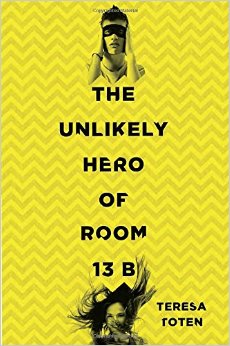
The Unlikely Hero of Room 13B
Author: Teresa Toten
Published: March 10, 2015 by Delacorte

GoodReads Summary: Deep, understated, and wise, this engaging YA novel, winner of the Governor General’s Award in Canada, is about more than the tough issue of teens dealing with obsessive-compulsive order. It also has romance, and a whodunit element that will keep readers guessing. Perfect for readers who love Eleanor & Park as well as All the Bright Places.

Adam Spencer Ross is almost fifteen, and he’s got his hands full confronting the everyday problems that come with having divorced parents and a stepsibling. Add to that his obsessive-compulsive disorder and it’s just about impossible for him to imagine ever falling in love. Adam’s life changes, however, the instant he meets Robyn Plummer: he is hopelessly, desperately drawn to her. But is it possible to have a normal relationship when your life is anything but?

Filled with moments of deep emotion and unexpected humor, The Unlikely Hero of Room 13B explores the complexities of living with OCD and offers the prospect of hope, happiness, and healing.

Review: Fourteen-year-old Adam Spencer Ross is coping with many struggles—his obsessive compulsive disorder, his mother’s troubles, and his step-brother’s reliance on him. Adam joins a support group and connects deeply with Robyn, a fellow group member. All of the group members adopt superhero alter egos, but Adam finds it difficult to hide the fact that his rituals are increasingly getting worse. Adam wonders how he can have a normal relationship amidst the chaos he feels. Emotionally-charged, raw story with complex characters.

Teachers’ Tools for Navigation: Similar to my post about Kids of AppetiteI’d love to include this book in a group of literature circle books that all reflect disability and friendship. It would be interesting for students to examine and conceptualize their definitions of normal. The ALAN Review‘s Fall 2016 issue is about (Re)Defining Normal, and many of the articles would be very useful for this very topic.

Discussion Questions: What struggles does Adam face? How do each of them impact his life?; What role does Adam’s mother play in his life? His father? Sweetie? Robin? Chuck? How do they all impact him positively and/or negatively?; How does Adam change throughout the novel?; What do the superhero personas offer the characters?; What is the role of family in the text? How may family be examined by traditionally and untraditionally within the context of the characters?

We Flagged: “I believe that I am a liar because I have to hide all the things I have to hide. It’s hard to remember where one lie ends and another begins. I believe lying that much changes you, makes you sick” (p. 12).

Read This If You Loved: Eleanor & Park by Rainbow Rowell, All the Bright Places by Jennifer Niven, The Fault in Our Stars by John Green, Not If I See You First by Eric Lindstrom

Recommended For:

litcirclesbuttonsmall classroomlibrarybuttonsmall

RickiSig

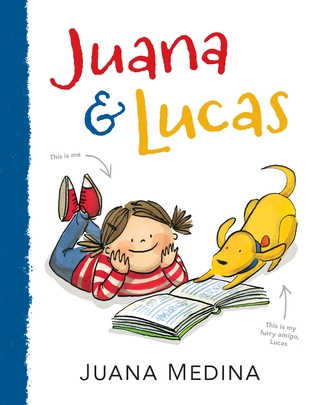
Juana & Lucas by Juana Medina

Share

juana

Juana & Lucas
Author and Illustrator: Juana Medina
Expected Publication September 27th, 2016 by Candlewick Press

Summary: Juana loves many things — drawing, eating Brussels sprouts, living in Bogotá, Colombia, and especially her dog, Lucas, the best amigo ever. She does not love wearing her itchy school uniform, solving math problems, or going to dance class. And she especially does not love learning the English. Why is it so important to learn a language that makes so little sense? But when Juana’s abuelos tell her about a special trip they are planning—one that Juana will need to speak English to go on—Juana begins to wonder whether learning the English might be a good use of her time after all. Hilarious, energetic, and utterly relatable, Juana will win over los corazones — the hearts — of readers everywhere in her first adventure, presented by namesake Juana Medina.

Review: Early chapter books are one of my book gaps, and I have been trying, over the last few years, to read as many of them as I can, so I was very happy to have the chance to read Medina’s Juana & Lucas. One thing I have noticed as I read these beloved early chapter books are that although the characters may be diverse in some aspects of their culture/identity, most of the characters are not diverse in their ethnicity. However, now here comes Juana (and Bea Garcia!). She is a character that everyone reading will relate to in some way, and now Latina/Latino students or students learning English will have a character to relate to in early chapter books. 

In addition to the new diversity in this group of books, Juana & Lucas is also just a funny and sweet book about a young girl who has to learn that working hard to learn or be able to do something new is worth the work. This theme will definitely resonate with so many students!

I also want to add that I didn’t know much about Columbia when I started, but when Juana starts talking about Bogotá, you can hear her love of the city come through the pages, so I went to Wikipedia right away to learn more about the city, and I am in love! I told Jim I want to retire there. It is beautiful, and their temperature varies from 43 to 66 degrees! That is the perfect weather! Now, I have to go through the same thing as Juana and learn Spanish, so I am ready to go in 25 or so years 🙂

 Teachers’ Tools for Navigation: Juana’s story will be an asset for writing, reading, Spanish, and ELL classes. Medina’s writing can be used as a mentor text for voice and descriptive language, the story is perfect for reading strategies such as context clues and character analysis, the book includes Spanish words throughout the story that aren’t always defined, and Juana is struggling with learning English. All of these things make Juana’s story one that is a perfect addition to all classrooms.

Discussion Questions: How did the character pages help you learn about the different characters in the book vs. if they had not been included? (Class activity: have students complete a character page like Juana’s about members of their family, characters in different books, or a character before they write a narrative.); How does Juana overcome the struggles she has with English at the beginning of the book?; How does each character throughout help Juana grow as a students and person?; Why do you think the author chose to have some words in different size and bold font?; How did the author help you “hear” Juana’s voice while you were reading?; How were you able to determine the meaning of the Spanish words throughout the book?

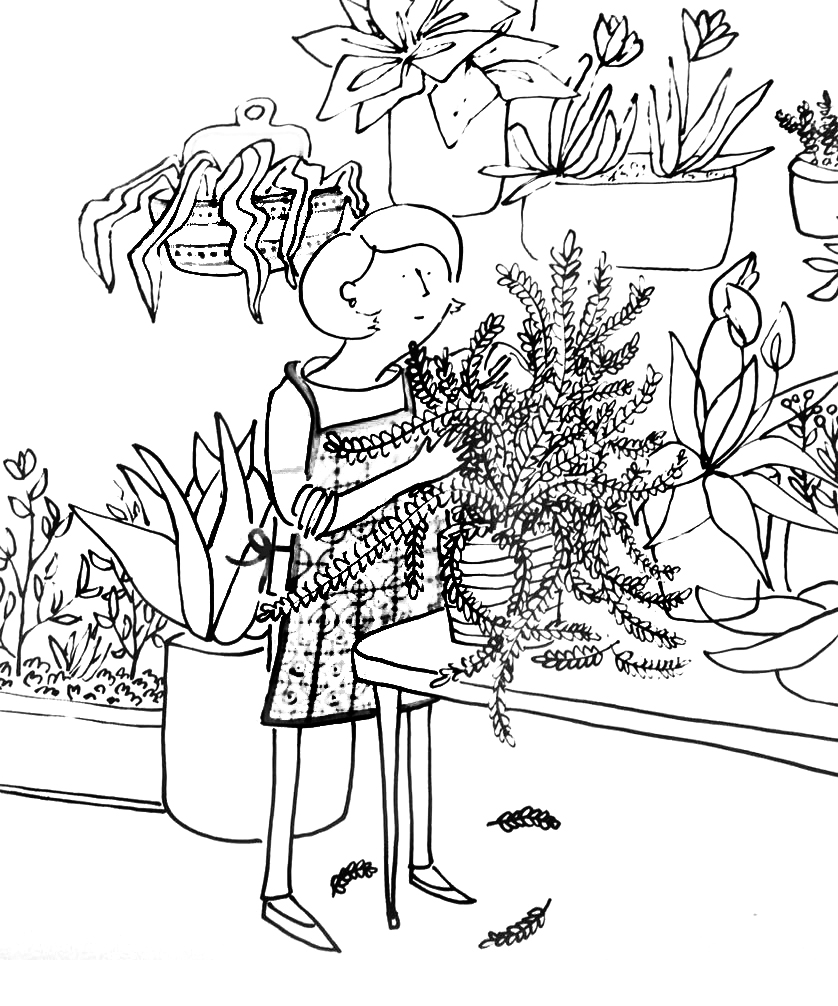
Flagged Passages: “Mami is the most important person in my life. Most. Important. And here’s why: Besides being the best of moms, Mami is really good at taking care of plants. She loves all plants, even the ones with the complicated names I can’t pronounce…” (p. 31)

Early Sketch for Juana & Lucas (http://juanamedina.tumblr.com/post/139399423961/early-sketch-for-juana-lucas)

Read This If You Loved: Bea Garcia: My Life in Pictures by Deborah Zemke, Amelia’s Notebook series by Marissa Moss, Judy Moody series by Megan McDonald

Recommended For:

  classroomlibrarybuttonsmall readaloudbuttonsmall closereadinganalysisbuttonsmall

Kellee Signature

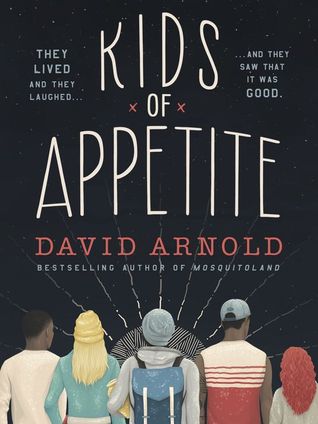
Kids of Appetite by David Arnold

Share

kids of appetite

Kids of Appetite
Author: David Arnold
Published: September 20, 2016 by Viking

GoodReads Summary: The bestselling author of Mosquitoland brings us another batch of unforgettable characters in this tragicomedy about first love and devastating loss.

Victor Benucci and Madeline Falco have a story to tell.
It begins with the death of Vic’s father.
It ends with the murder of Mad’s uncle.
The Hackensack Police Department would very much like to hear it.
But in order to tell their story, Vic and Mad must focus on all the chapters in between.

This is a story about:

1. A coded mission to scatter ashes across New Jersey.
2. The momentous nature of the Palisades in winter.
3. One dormant submarine.
4. Two songs about flowers.
5. Being cool in the traditional sense.
6. Sunsets & ice cream & orchards & graveyards.
7. Simultaneous extreme opposites.
8. A narrow escape from a war-torn country.
9. A story collector.
10. How to listen to someone who does not talk.
11. Falling in love with a painting.
12. Falling in love with a song.
13. Falling in love.

Review: I fell into this book. From the moment I started reading, I had difficulty putting it down. David Arnold has true talent at engaging readers in a thought-provoking story in which the characters have great depth. The allusions to The Outsiders will not be lost on readers. This group of kids captured my heart just like the kids within the classic. Comparing the two stories is interesting, but this book explores very different issues, and I appreciated that the author didn’t seem to intentionally align the texts too much.

The point-of-view alternates between two characters, Vic and Mad. Vic has Moebius Syndrome, which causes partial facial paralysis. He is grieving the loss of his father and struggling to come to terms with his mother’s new relationship (and the mean-spirited step-brothers that come along with this). Mad is a tortured soul—dedicated to her grandmother but struggling with the losses of her parents and a very difficult situation (no spoilers here). The other members of the crew, who don’t have their own narrative sections but whose voices are very powerful, have individual struggles that weigh on them. This group of kids finds solace in each other, and the dynamic between them is unforgettable.

Teachers’ Tools for Navigation: I’d love to include this book in a group of literature circle books that all reflect disability. I think it would be particularly interesting to explore the intersections between friendship and disability. Students might examine and conceptualize their definitions of normal. The ALAN Review‘s Fall 2016 issue is about (Re)Defining Normal, and many of the articles would be very useful for this very topic.

Discussion Questions: What struggles do each of the characters face? How does each cope with these struggles in different ways?; How does Vic’s disability impact his interactions with others? How do others (strangers and other characters) respond to him?; What power does friendship have? How do each of these characters from different backgrounds come together, and why?; What is the role of Baz’s book? Why is it important to the story?

We Flagged: “‘We are all part of the same story, each of us different chapters. We may not have the power to choose setting or plot, but we can choose what kind of character we want to be'” (p. 104).

*This excerpt was taken from an advanced reader copy. The quote may change after the book is published.*

Read This If You Loved: The Outsiders by S. E. Hinton, The Unlikely Hero of Room 13B by Teresa Toten, The Absolutely True Diary of a Part-Time Indian by Sherman Alexie, Martyn Pig by Kevin Brooks, All the Bright Places by Jennifer Niven, Not If I See You First by Eric Lindstrom

Recommended For:

litcirclesbuttonsmall closereadinganalysisbuttonsmall classroomlibrarybuttonsmall

RickiSig

Still a Work in Progress by Jo Knowles

Share

still a work in progress

Still a Work in Progress
Author: Jo Knowles
Published August 2nd, 2016 by Candlewick Press

Summary: In a return to middle-grade fiction, master of perspectives Jo Knowles depicts a younger sibling struggling to maintain his everyday life while coping with his sister’s secret struggle.

Noah is just trying to make it through seventh grade. The girls are confusing, the homework is boring, and even his friends are starting to bug him. Not to mention that his older sister, Emma, has been acting pretty strange, even though Noah thought she’d been doing better ever since the Thing They Don’t Talk About. The only place he really feels at peace is in art class, with a block of clay in his hands. As it becomes clear through Emma’s ever-stricter food rules and regulations that she’s not really doing better at all, the normal seventh-grade year Noah was hoping for begins to seem pretty unattainable. In an affecting and realistic novel with bright spots of humor, Jo Knowles captures the complexities of navigating middle school while feeling helpless in the face of a family crisis.

Review: What I am always amazed by when I read a book by Jo Knowles is her ability to tell the truth about our world, and this book once again fits this description. Jo has a way of making her characters ones that are so real that you can imagine them walking into a school and know exactly which kids they’d hang out with. Noah and his friends could definitely be middle school students at my school. Her stories always seem to include a bit of humor (see: hairless cat on the cover) while never taking away from the seriousness of the book’s topic. The emotions, specifically pain or sadness, she portrays through her characters radiates out of the pages, so the reader can feel it. 

Teachers’ Tools for Navigation: This is an important book to have available for students to read. Although the main story is about Noah fitting into middle school, it is also about dealing with pain and anger and sadness and still having to live. This book needs to be in classroom libraries and should be booktalked so students are aware of its brilliance.

Discussion Questions: What makes the art room such a special place for Noah?; Why does Noah and his family not talk about Emma’s problems? Did not talking about it end up being hurtful or helpful?; Noah’s school is a bit different than traditional schools. How does his school differ from yours?; What does the title mean in reference to Noah? Emma? Their family? Other characters?; How did Emma’s experience with Lord of the Flies spiral out of control?

Flagged Passages: “Community meetings happen once a week. Everyone in the school has to go, including the teachers. The Community Room used to be the music room, but our town had budget cuts and they cut the music program. The wars are painted green, and old couches donated by various families line the walls so that if we’re all sitting on them, we form a circle/square. The problem is that there are more students than seats on couches, so if you get to a Community Meeting late, you’re stuck sitting on a beanbag or on the floor in front of the couch sitters. The beanbags are mysteriously sticky and smell like dirty sheets. The floor is cold and kind of gross because it doesn’t get washed very much. In either case, you have to sit in front of the people on the couch which means you are close to their feet, which means, depending on who you end up in front of, you are probably going to have a miserable hours.” (p. 9-10)

“‘Sara is new to vaganism,’ Emma explains.

‘Is your family vegan, too?’ my mom asks.

‘No, just me. My parents are all stressed-out about it. They think I’m going to become anemic or something.’

Emma sighs dramatically, as if to say, So typical.

My mom clears her throat uncomfortably. ‘We were worried about Emma, too. But she’s very aware of her dietary needs. Right, Emma?’

‘Kind of hard not to be with you and Dad obsessing about everything I eat,’ Emma says sarcastically.

My  mom doesn’t answer, just grips the steering wheel tighter. Sara shifts in her seat awkwardly, probably remember the time a few years ago that no one talks about. Even though she and Emma weren’t good friends then, everyone know about the Thing That Happened.” (p. 29-30)

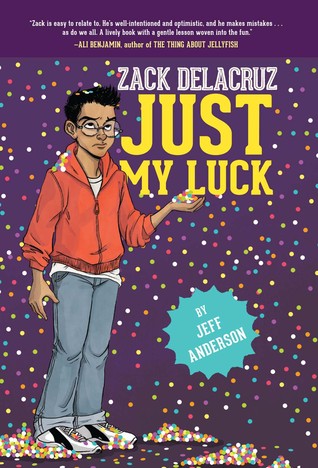
Read This If You Loved: Perfect by Natasha Friend, Awkward by Svetlana Chmakova, Zack Delacruz by Jeff Anderson

Recommended For:

  classroomlibrarybuttonsmall

Kellee Signature

The Memory of Things by Gae Polisner

Share

the memory of things

The Memory of Things
Author: Gae Polisner
Published: September 6, 2016 by St. Martin’s Griffin

GoodReads Summary: The powerful story of two teenagers finding friendship, comfort, and first love in the days following 9/11 as their fractured city tries to put itself back together.

On the morning of September 11, 2001, sixteen-year-old Kyle Donohue watches the first twin tower come down from the window of Stuyvesant High School. Moments later, terrified and fleeing home to safety across the Brooklyn Bridge, he stumbles across a girl perched in the shadows. She is covered in ash and wearing a pair of costume wings. With his mother and sister in California and unable to reach his father, a New York City detective likely on his way to the disaster, Kyle makes the split-second decision to bring the girl home. What follows is their story, told in alternating points of view, as Kyle tries to unravel the mystery of the girl so he can return her to her family. But what if the girl has forgotten everything, even her own name? And what if the more Kyle gets to know her, the less he wants her to go home? The Memory of Things tells a stunning story of friendship and first love and of carrying on with our day-to-day living in the midst of world-changing tragedy and unforgettable pain—it tells a story of hope.

Review: I read this book several weeks ago, and I still can’t thinking about it. As a few other bloggers have said, this is a book about 9/11—but it isn’t a book about 9/11. It is more a book about friendship, about growing up, and about being human. There are so many topics in this book that are worthy of discussion, and I think teachers will really appreciate its beauty. The writing is quiet yet powerful, and the book has a sort of shattering impact on readers. I loved the connections that Kyle makes in this book, and I particularly enjoyed the ways each of the individuals he interacts with tells the reader more about him. He grows from everyone in this book, and I’d love to discuss this growth with students.

Teacher’s Tools for Navigation: Teachers might ask students to research the many themes of this book to provide background information. They might look at disability/caregivers, PTSD, suicide, and 9/11—just to name a few. They could also look at the different stages of trauma to learn more about how each of the characters reacts differently to the tragic events that occurred on 9/11.

Discussion Questions: Is Kyle helping the girl, or is she helping him?; What do we learn from Kyle’s uncle? What does he teach us about disability and humanity?; In what ways does Kyle show strength, and in what ways does he show weakness? How does he grow from each experience of the text?

We Flagged: “So now I get it. Now I fully understand. Tuesday, and those planes, they’ve broken something. Permanently. And in the process, they’ve changed everything. And everyone.”

This is a quote from an advanced reader’s copy. Some quotes may change before publication.

Read This If You Loved: Extremely Loud and Incredibly Close by Jonathan Safran Foer; The Impossible Knife of Memory by Laurie Halse Anderson; Personal Effects by E.M. Kokie, The Things a Brother Knows by Dana Reinhardt, If I Lie by Corrine Jackson, Purple Heart by Patricia McCormick

Recommended For:

 litcirclesbuttonsmall classroomlibrarybuttonsmall

RickiSig