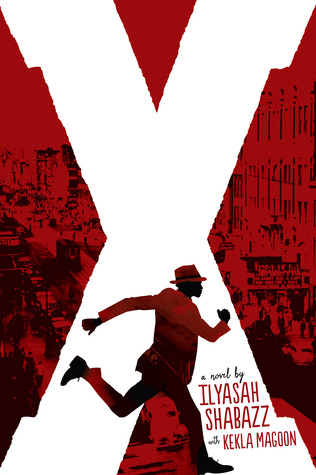
X Authors: Ilyasah Shabazz and Kekla Magoon
Published: January 6, 2015 by Candlewick Press
GoodReads Summary: Cowritten by Malcolm X’s daughter, this riveting and revealing novel follows the formative years of the man whose words and actions shook the world.
I am Malcolm.
I am my father’s son. But to be my father’s son means that they will always come for me. They will always come for me, and I will always succumb.
Malcolm Little’s parents have always told him that he can achieve anything, but from what he can tell, that’s nothing but a pack of lies—after all, his father’s been murdered, his mother’s been taken away, and his dreams of becoming a lawyer have gotten him laughed out of school. There’s no point in trying, he figures, and lured by the nightlife of Boston and New York, he escapes into a world of fancy suits, jazz, girls, and reefer.
But Malcolm’s efforts to leave the past behind lead him into increasingly dangerous territory when what starts as some small-time hustling quickly spins out of control. Deep down, he knows that the freedom he’s found is only an illusion—and that he can’t run forever.
X follows Malcolm from his childhood to his imprisonment for theft at age twenty, when he found the faith that would lead him to forge a new path and command a voice that still resonates today.
Review: If you’ve been reading the blog the past few weeks, my love for this book may feel repetitive (and I am not sorry!). Some books just stick to our bones and X by Ilyasah Shabazz and Kekla Magoon will remain with me forever. It kept me awake late at night, and I was floored by the captivating writing. This is a very special book and well worth the hype it has received. I plan to use it in my future Methods classes because there are so many themes and topics for discussion. Most texts are written about Malcolm Little’s later life, but this book encapsulates his early years—this restless young man is dissatisfied with his circumstances and attempts to make a name for himself. He does not always make the best choices, but he learns from his many mistakes, and his spirit will inspire readers. I highly recommend this book for all readers. Malcolm has a lot to teach us.
Teachers’ Tools for Navigation: This book made me want to sign out Malcolm X’s autobiography from the library. I wondered what else I could learn about him. Teachers might ask students to research Malcolm X’s life. They might explore the ways Malcolm inspired troubled youth and why he made connections with them. Based on this text and others, it seems that many of Malcolm X’s actions may be misrepresented, so it might be wise for teachers to discuss his life, mission, and actions with students. This would allow students to form their own understandings of his later life.
Discussion Questions: If you could change one decision Malcolm made, what would it be? What do you think he should have done differently?; Malcolm may inspire us, but who inspired Malcolm?; How is Malcolm different from his family members? How does this impact him?
We Flagged: “I did what I had to. Didn’t see anything wrong with it. Not a thing” (p. 36).
Read This If You Loved: The Rock and the River by Kekla Magoon; How it Went Down by Kekla Magoon; Freedom Summer by Deborah Wiles; Audacity by Melanie Crowder; The Boy in the Black Suit by Jason Reynolds
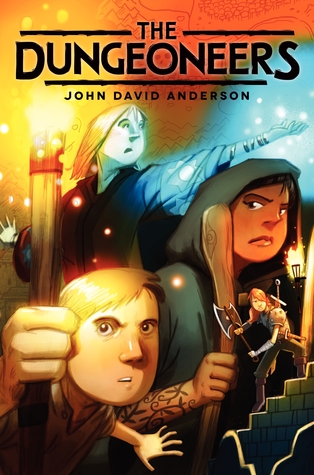
The Dungeoneers Author: John David Anderson
Published June 23, 2015 by Walden Pond Press
Publishers Summary: The Dungeoneers is an action-packed, funny, and heartbreaking middle grade fantasy-adventure from the author of the acclaimed Sidekicked and Minion, John David Anderson.
The world is not a fair place, and Colm Candorly knows it. While his parents and eight sisters seem content living on a lowly cobbler’s earnings, Colm can’t help but feel that everyone has the right to a more comfortable life. It’s just a question of how far you’re willing to go to get it.
In an effort to help make ends meet, Colm uses his natural gift for pickpocketing to pilfer a pile of gold from the richer residents of town, but his actions place him at the mercy of a mysterious man named Finn Argos, a gilded-toothed, smooth-tongued rogue who gives Colm a choice: he can be punished for his thievery, or he can become a member of Thwodin’s Legions, a guild of dungeoneers who take what they want and live as they will. Colm soon finds himself part of a family of warriors, mages, and hunters, learning to work together in their quest for endless treasure. But not all families are perfect, and even as Colm hones his skills with fellow recruits, it becomes clear that something from outside threatens the dungeoneers–and perhaps something from inside as well.
My Review: This is one of those fantasy novels that transports you to another place and throws you into an adventure that keeps you guessing and reading. In The Dungeoneers, I loved going to school with Colm and learning all about dungeoneering ways including how to be the best rogue, history of dungeoneering, swordplay, and all about monsters. This aspect reminded me a bit of Harry Potter because I got so sucked into his schooling and education, like I did with Harry’s, because I wanted to know everything I could about this world. The Dungeoneers also has some majorly suspenseful moments which makes sense in a book about stealing treasure from dungeons. In addition to his world building, he really knows how to build some characters! The three other members of Colm’s guild are such well-rounded characters and all so different. I can picture each of them, and I so want to be their friends (even Lena, who is a bit barbaric). I also loved the plot twist at the climax of the book! I did not see it coming! Just wait for it everyone!
Teachers’ Tools for Navigation/We Flagged: First and foremost, if you teach middle school, you should probably buy this for your classroom. High fantasy and adventure lovers are going to eat this one up.
Also, if you want to talk to students about building characters or setting, this book can definitely be a help with either. There are specific sections in this book that could be pulled out and used to discuss imagery, word choice, and characterization:
“In the flickering torchlight it was hard to make out all of her features clearly, but he couldn’t miss the sharp chisel of her chin, like a weapon itself. Her crimson hair was cropped short in the back, falling across one eye in front, the other shining brown in the flicker of light. Her lips were pursed, pulled tight against her teeth in a determined smirk.” (p. 93)
“Except Quinn didn’t look like he could call lightning from the sky or produce fireballs from his fingers. Colm had expected the first wizard he met to be more in keeping with the descriptions from his book–white-bearded and billowing and larger than life. Quinn looked barely big enough to summon his own shadow.” (p. 96)
“In contrast to the dreary tunnel behind them, the great hall before them was filled with light. Huge chandeliers hung from chains of gold, the flicker of a thousand candles casting fiery halos against the ceiling. Giant marble pillars anchored the four corners of the room, and a hug winding staircase with gold rails led both up and down in its center like a vortex. The floors were polished marble as well, dark green and buffed to a mirror sheen. A strange clock with twenty-four separate hourglasses hung over a set of huge double doors…” (p. 115)
Discussion Questions: If you were Colm, would you have gone with Finn?; What secret do you think Wolfe is keeping?; Lena is expected by her family to do well as a barbarian because of her upbringing. How would it feel to have that type of pressure put on you?; Colm makes a decision at the end of the book–do you agree with it or not?
Book Trailer:
John David Anderson’s Top Five Dungeoneers
Obviously The Dungeoneers owes a lot to fantasy tropes and conventions that have been around since Gandalf packed his first pipe. In fact, while writing it I sometimes felt like I should roll a d20 to see what my characters would do next (here’s hoping the book is a critical hit—ah, nerd humor). Afternoons spent playing Baldur’s Gate or reading Mercedes Lackey (or in my younger days, Lloyd Alexander) coalesced into a love of sword-swinging, lock-picking, monster-bashing rogues who risk everything on the hopes of finding that fabled cache of riches at the end of the corridor. In short, I was raised by dragons. Maybe I’m a Targaryen.
Obviously popular culture is not hurting for dungeoneers of interest, but I thought I would pick five key dungeon divers that had a distinct influence on me and the book. Note: I am defining a dungeoneer as anyone who willingly enters into some dank, creature-and-trap-infested cavern, catacomb, crypt, tomb or lair with the express purpose of taking whatever shiny, valuable objects are to be had. In other words, I’m kind of liberal with my use of the word.
5. Minsc and Boo: If you’ve ever played the game Baldur’s Gate, you will know these two. Minsc, the butt-kicking, infinitely quotable ranger, and his trusty hamster, Boo. Minsc was a tank and liked to carry big swords. More than that he had a big heart and recognized a noble enterprise, especially when it required some head bashing. Favorite quote: “Make way evil! I’m armed to the teeth and packing a hamster!
4. Ellen Ripley. All right, this one is a stretch, I admit, but in Aliens she does go down into a lair and fight off monsters (lots of them, including a queen) to rescue something she treasures (the little girl, Newt). Plus ever since I saw Aliens I’ve been drawn to tough female characters. I won’t lie—there’s a little bit of warrant officer Ripley’s feistiness in The Dungeoneers’ Lena Proudmore, though Lena doesn’t get to fire a grenade launcher (much to her chagrin).
3. Bilbo Baggins. You could name several characters from Tolkien’s mythos that fought their way out of dungeons, but Bilbo gets the cake for not coming out empty-handed. In fact, it’s the Burglar’s snatching of the Precious that drives the mythology. What did you find down there in the goblin caves, Bilbo? Oh—just the makings of a gazillion-dollar franchise. Finn Argos would be proud.
2. Link. Yes, it’s another video game, but for me, Link was the start of my love affair with dungeoneering. Link never met a rupee he didn’t like and spelunking through monster-infested lairs in search of Zelda was in his spritely 8-bit blood. I can still remember playing the original Zelda and getting eaten by an undulating stack of pancakes or impaled by a triceratops all because I didn’t know I was supposed to feed it bombs. To this day I still carry around a candle and a big stick of meat. Thank you Nintendo for stimulating my imagination and sucking away my time.
1. Indiana Jones. No sword (except in the second movie, and then it’s more of a machete). No armor. No dragons or ogres or orcs (though the Nazis are monstrous enough). But Indy, for me, is the archetypal treasure-hunter. Not only was he the dashing film hero of my childhood (and what I wanted to be when I grew up until I realized that everything cool had already been dug up already), he also helped engender my love for wise-cracking, whip-smart, ruggedly-charming, and occasionally flawed protagonists. His make-it-up-as-you go philosophy and daredevil antics were often replicated by a young, eight year old boy named Dave, who would pretend the floor was made of lava as he jumped from dining room table to couch and back again. Plus Indy knew that the greatest treasures always came at a price, a lesson that struck a chord with me.
So those are my top five. I’m sure your list is different. That’s the cool thing about inspiration—there are a lot of wells, and we get to drink from whichever ones we please. Who knows, maybe in twenty years some kid will be making a list of his favorite dungeoneers and put Colm Candorly somewhere near the top.
Read This If You Loved:Hero’s Guide (series) by Christopher Healy, Harry Potter (series) by J.K. Rowling, Foiled (series) by Jane Yolen, Giants Beware! (series) by Jorge Aguirre
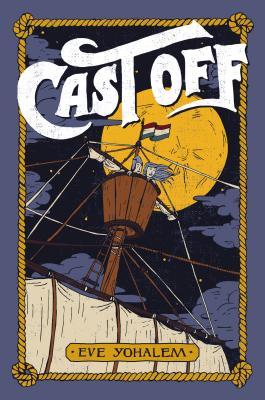
Cast Off: The Strange Adventures of Petra de Winter and Bram Broen Author: Eve Yohalem
Published: March 10, 2015 by Calkins Creek
GoodReads Summary: It’s 1663 and there is an extra passenger on board a Dutch merchant ship setting sail for the East Indies. Twelve-year-old Petra has stowed away to escape her abusive father. But she quickly realizes that surviving for months at sea will be impossible without help. So when Bram, the half-Dutch / Half-Javanese son of the ship’s carpenter, finds her hiding spot, Petra convinces him to help her stay hidden . . .and help disguise her as a boy.
If Petra is discovered and exposed as a girl, she could be tossed overboard, or worse . . . returned to her father. And if Bram is exposed for helping her, he could lose the only home—and family—he has. As tensions rise on the ship, with pirates attacking, deadly illness, and even mutiny, Petra and Bram face impossible decisions that test their friendship and threaten their dreams of freedom.
Told in alternating voices and filled with secrets and intrigue, this richly researched novel is historical fiction at its best.
Review: Take me away! This book whisked me off on a marvelous adventure filled with grave dangers, stow aways, tall ships, and mutiny. I couldn’t help but be reminded of one of my childhood favorites, The True Confessions of Charlotte Doyle by Avi. Petra escapes from a horribly abusive relationship with her father, and her bravery is an excellent model for young readers. She is discovered by Bram, the illegitimate son of the ship’s carpenter, and they form a very special friendship. This book delivers richly realized themes—particularly those of loyalty, heroism, sexism, and racism—that are very relevant to readers across time. I imagine a wide variety of audiences would appreciate this text because it touches on so many fascinating topics. It is clear that the author did her homework, and the result is magnificently entertaining.
Teachers’ Tools for Navigation: This book is an excellent example of a text that could be analyzed with a critical theorist lens. (See Appleman’s book about teaching critical theory to students of all levels.) I imagine rich classroom discussions would evolve from the application of gender theory or race theory, for instance, to this text. This is a compliment to the author and the depth of this book.
Discussion Questions: In what ways do gender and race play a role in this text?; How does the author weave history into the story?; What does Petra and Bram’s friendship teach us about humans in general?; How do the main characters display qualities of bravery?
Read This If You Loved: The True Confessions of Charlotte Doyle by Avi; Leviathan by Scott Westerfeld; Secrets of the Realm by Bev Stout; Peter Pan by J.M. Barrie
Recommended For:
Giveaway!
One lucky winner will receive a copy of CAST OFF: The Strange Adventures of Petra De Winter and Bram Broen (U.S. addresses; allow 4-6 weeks for delivery; offer ends 7/10/15).
In 2009 I got this great idea for a seafaring adventure about two kids who sail from Amsterdam to the East Indies in the seventeenth century. There was just one problem: I knew next to nothing about the seventeenth century. Or the Netherlands. Or the East Indies. Or sailing.
No matter. I like a challenge. I researched for a full year before I started writing, and after I started writing, I kept researching. I’m still researching. (I like researching.)
Today my Cast Off file has more than four hundred different source notes. I read lots of books: scholarly academic stuff, journalistic stuff, fiction, memoirs, journals, every first person account I could find. I spoke to people who knew much more than me—VOC scholars, maritime scholars, curators, my husband (he sails), surgeons, and dentists. I hung out in oddball museums. I traveled to Indonesia, where I slept in the jungle and held baby orangutans, and to the Netherlands, where I retraced every step of my characters that I could and explored the dark nooks of two different full-scale East Indiamen replicas.
I have no research training. It would have helped if I’d majored in history in college, but I didn’t. Mostly, I followed my nose. I knew that my story would begin in Amsterdam and take place mostly at sea on an East Indiaman bound for Batavia. I knew two of my characters: a Dutch girl and an East Indian boy, both twelve years old. That’s a lot to get started with.
What’s surgery like by candlelight below deck on a rocking ship before the invention of anesthesia? How do you fire a 4,000 pound canon without getting crushed by the recoil? These were the kinds of questions I tried to answer.
I tried to convey what it felt like to cram three hundred men onto a 150-foot long vessel for six months (damp, dark, and airless below, smelled bad, no privacy). The layout of the ship is based on actual ships of the period, as are the various jobs, daily schedule, terrible food.
For my characters’ medical knowledge, I have to thank John Woodall’s The Surgeon’s Mate, a seventeenth century medical guide no ship’s surgeon would have been without.
And in case anyone’s wondering, I got most of my slang from the always entertaining A New Dictionary of the Terms Ancient and Modern of the Canting Crew: In Its Several Tribes of Gypsies, Beggars, Thieves, Cheats, &c., with an Addition of Some Proverbs, Phrases, Figurative Speeches, &c. by B. E. Gent, c 1698. In my opinion, some of these terms should be brought back into everyday use. Please help make “Kiss my blind cheeks!” go viral!
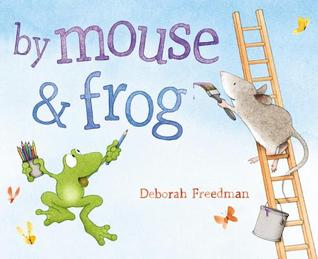
By Mouse & Frog Author and Illustrator: Deborah Freedman Published April 14th, 2015 by Viking Books for Young Readers
Goodreads Summary: Fastidious Mouse has one idea about how to tell a story. Free-spirited Frog has another. What happens when Frog crashes into Mouse’s story with some wild ideas? Chaos!…followed by the discovery that working together means being willing to compromise—and that listening to one another can lead to the most beautiful stories of all.
Kellee’s Review and Teachers’ Tools for Navigation:I love this book. There is so much wonderful in these pages. First, the book is just so funny! Mouse and Frog are so different and the back and forth is laugh-out-loud comedic. Second, the story really makes you look at personality types and think about how to work together. Frog and Mouse’s story would be a wonderful one to read and then talk about norms when working in groups on projects/assignments. Third, the book also looks at story writing and narrative elements. What is needed in a good story? Do all stories have to have the same things? All in all, this book is fun to read and will be a good jumping off point for all sorts of discussions. I think this book is going to find some major love in homes, schools, and libraries alike.
Ricki’s Review and Teachers’ Tools for Navigation: This magical story is about two friends who co-write a book together. It would be a great book to teach kids about the importance of listening and valuing others’ opinions. I would use this in the classroom at times when there is a lot of conflict. Very few students benefit from a pamphlet about conflict resolution. Instead, I would read this book aloud to students, and we could talk about the value of listening to and understanding each other. Overall, this is a great book to get students’ creative juices flowing. The whimsical creativeness of this title reminds me a bit of The Dot by Peter Reynolds, another picture book favorite.
Discussion Questions: What is needed in a good story? Do all stories have to have to have the same things?; Why didn’t Mouse and Frog get along at first? How did they compromise at the end?
We Flagged:
Read This If You Loved: Look! by Jeff Mack, The Story of Fish and Snail by Deborah Freedman, Little Red Writing by Joan Holub; The Dot by Peter Reynolds
Recommended For:
and
**Thank you to Penguin Young Readers for providing a copy for review!**
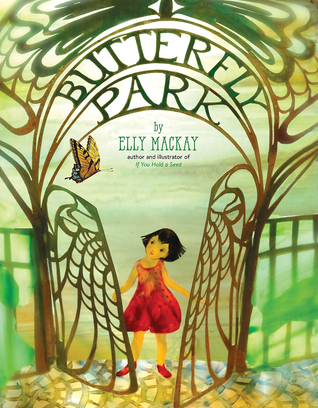
Butterfly Park Author and Illustrator: Elly MacKay
Published May 5th, 2015 by Running Press Kids
Goodreads Summary: When a little girl moves to a new town, she finds a place called Butterfly Park. But when she opens the gate, there are no butterflies. Determined to lure the butterflies in, the girl inspires her entire town to help her. And with their combined efforts, soon the butterflies—and the girl—feel right at home.
Elly MacKay’s luminous paper-cut illustrations and enchanting story encourage community, friendship, and wonderment in the beauty of everyday life.
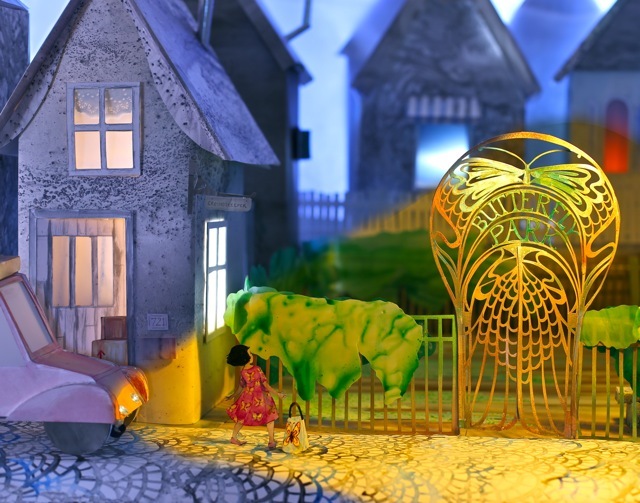
Kellee’s Review:What a wonderful book about community and perseverance! MacKay’s beautiful paper-cut illustrations push this book to a whole new level. I am in awe of her work! It is amazing that each of the intricate pieces of her illustrations are cut out and designed. In addition to the illustrations, I really liked this story of a community gathering together to rebuild a butterfly park. I think the book highlights beauty in nature as well as working together to reach a goal. This is a wonderful book to read aloud and wonder at with children.
Ricki’s Review:Let me count the ways I love this book. Illustrators are getting more and more creative with their craft. Drawings and paintings are old news it seems. I absolutely adored the paper cut outs, which inspired me to hop onto the internet to look at other creative forms of artwork. I kept thinking about how neat it would be for students to create a class book similar to this one! We describe further ideas for classroom implementation of this book in the next section, but I can’t help but to express how inspiring this story is. My husband kept looking over as I said, “Ooooo.” This would be a great resource for creative writing classes because teaches students to break the mold with the presentation of their prose.
Teachers’ Tools for Navigation: This book would be a wonderful introduction to tone and theme. There are a few different themes that could be discussed as well as the drastic tone change of our narrator from her move to the end of the book.
Additionally, on the reverse side of the book jacket, there is a poster of butterflies and flowers. It charges the reader to “Plant Your Own Butterfly Garden” which would be a wonderful project for a class. The flowers included are labeled and specifically shown because they are ones butterflies love. You could even go as far as to research the different flowers to determine why butterflies like them the best.
I also think this book could be an amazing mentor text for an art project on paper-cut illustrations. Students could make their own illustrated books using the paper-cut technique.
Discussion Questions: Why do you think the whole neighborhood helped the girl?; Could the young girl have finished the butterfly park without help?; Why was the butterfly park so important to the girl?
We Flagged:
“And then there was her house, plain and gray like all the others.
But next to it was a gate unlike any other. The girl repeated the letters. Suddenly, she felt very lucky!”
Read This If You Loved: Weeds Find a Way by Cindy Jenson-Elliott, Up in the Garden and Down in the Dirt by Kate Messner, The Sky Painter by Margarita Engle, In the Garden by Elizabeth Spurr
Nonfiction Picture Book Wednesday is hosted by Kid Lit Frenzy and was started to help promote the reading of nonfiction texts. Most Wednesdays, we will be participating and will review a nonfiction text (though it may not always be a picture book).
Be sure to visit Kid Lit Frenzy and see what other nonfiction books are shared this week!
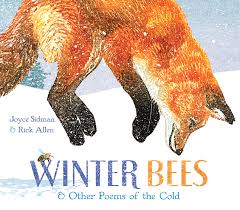
Winter Bees & Other Poems of the Cold
Author: Joyce Sidman
Illustrator: Rick Allen
Published November 4th, 2014 by HMH Books for Young Readers
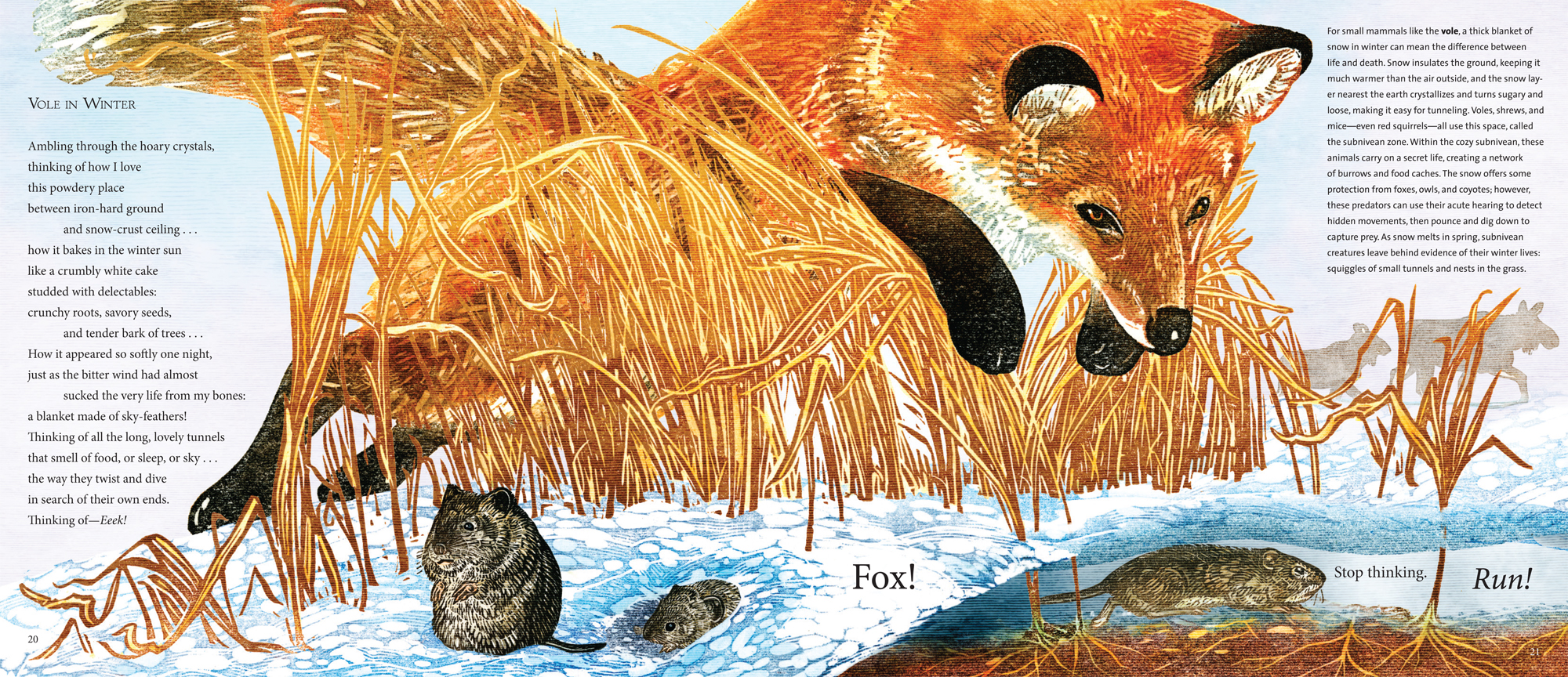
Goodreads Summary: In this outstanding picture book collection of poems by Newbery Honor-winning poet, Joyce Sidman (Song of the Water Boatman, Dark Emperor and Other Poems of the Night), discover how animals stay alive in the wintertime and learn about their secret lives happening under the snow. Paired with stunning linoleum print illustrations by Rick Allen, that celebrate nature’s beauty and power.
My Review: Alyson and Carrie both nominated this book for our Mock Sibert Award, so I knew it was a book I had to read. After requesting that my library purchase it, I was so happy to finally receive the book. This book is beautiful. Each aspect of the book can stand alone: the poetry is full of imagery and figurative language, the informational aspects are interesting and fact-based, and the illustrations are exceptional and bring the animals to life.
Teachers’ Tools for Navigation: First, this book can be used as a mentor text for poetry. Many different types of poetry are represented and each poem is different. Second, I think this book can be a great jumping off point for an inquiry-based project where students research an animal, write a poem about it, and also write an informational piece of text to accompany the poem. This book is also a great companion to Kate Messner’s Over and Under Snow and other animal survival books which would cause for a great unit as well.
Discussion Questions: Which of the winter animals has the best plan for survival?; What fact in Winter Bees surprised you the most about how an animal survives during the winter?
We Flagged:
Read This If You Loved: Firefly July by Paul Janeczko, Feathers by Melissa Stewart, Born in the Wild by Lita Judge, Forest Has a Song by Amy Ludwig VanDerwater, Over and Under Snow by Kate Messner
Henry Aaron’s Dream Author: Matt Tavares
Published January 12th, 2010 by Candlewick Press
Goodreads Summary: Matt Tavares hits one out of the park with this powerful tale of a kid from the segregated south who would become baseball’s home-run king.
Before he was Hammerin’ Hank, Henry Aaron was a young boy grow ing up in Mobile, Alabama, with what seemed like a foolhardy dream: to be a big-league baseball player. He didn’t have a bat. He didn’t have a ball. And there wasn’t a single black ball player in the major leagues. B ut none of this could stop Henry Aaron. In a captivating biography of Henr y Aaron’s young life – from his sandlot days through his time in the Negro Leagues to the day he played his first spring training game for the Braves – Matt Tavares offers an inspiring homage to one of baseball’s all-time greats.
There Goes Ted Williams: The Greatest Hitter Who Ever Lived Author: Matt Tavares Published February 14th, 2012 by Candlewick Press
Goodreads Summary: A lively picture book biography of Ted Williams from a master of the genre — just in time for Fenway Park’s centennial.
Ted Williams lived a life of dedication and passion. He was an ordinary kid who wanted one thing: to hit a baseball better than anyone else. So he practiced his swing every chance he got. He did fingertip push-ups. He ate a lot of food. He practiced his swing again. And then practiced it some more. From his days playing ball in North Park as a kid to his unmatched .406 season in 1941 to his heroic tours of duty as a fighter pilot in World War II and Korea, the story of Teddy Ballgame is the story of an American hero. In this engrossing biography, a companion to Henry Aaron’s Dream, Matt Tavares makes Ted Williams’s life story accessible to a whole new generation of fans who are sure to admire the hard work, sacrifice, and triumph of the greatest hitter who ever lived.
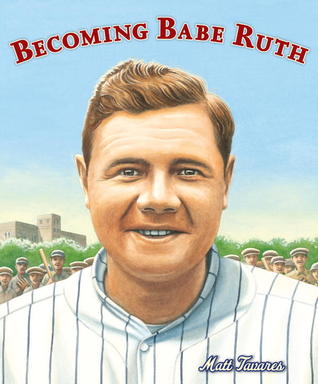
Becoming Babe Ruth Author: Matt Tavares Published February 12th, 2013 by Candlewick Press
Goodreads Summary: Matt Tavares’s striking homage to one of baseball’s legends offers a rare view into Babe Ruth’s formative years in “the House that built Ruth.”
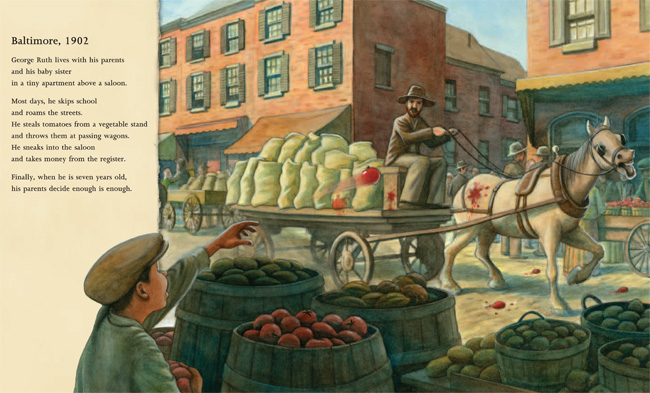
Before he is known as the Babe, George Herman Ruth is just a boy who lives in Baltimore and gets into a lot of trouble. But when he turns seven, his father brings him to the gates of Saint Mary’s Industrial School for Boys, and his life is changed forever. At Saint Mary’s, he’s expected to study hard and follow a lot of rules. But there is one good thing about Saint Mary’s: almost every day, George gets to play baseball. Here, under the watchful eye of Brother Matthias, George evolves as a player and as a man, and when he sets off into the wild world of big-league baseball, the school, the boys, and Brother Matthias are never far from his heart. With vivid illustrations and clear affection for his subject, Matt Tavares sheds light on an icon who learned early that life is what you make of it — and sends home a message about honoring the place from which you came.
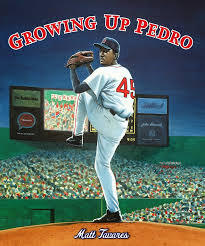
Growing Up Pedro: How the Martinez Brothers Made it From the Dominican Republic All Way to the Major Leagues Author: Matt Tavares Published February 10th, 2015
Goodreads Summary: The love between brothers is key to Matt Tavares’s tale of Dominican pitcher Pedro Martinez, from his days of throwing rocks at mangoes to his years as a major-league star.
Before Pedro Martinez pitched the Red Sox to a World Series championship, before he was named to the All-Star team eight times, before he won the Cy Young three times, he was a kid from a place called Manoguayabo in the Dominican Republic. Pedro loved baseball more than anything, and his older brother Ramon was the best pitcher he’d ever seen. He’d dream of the day he and his brother could play together in the major leagues—and here, Matt Tavares tells the story of how that dream came true. In a fitting homage to a modern day baseball star, the acclaimed author-illustrator examines both Pedro Martinez’s improbable rise to the top of his game and the power that comes from the deep bond between brothers.
My Review: These four superbly crafted biographies take a look at the life of each man, but as more than a baseball player. We learn about their childhoods, where they came from, and their dreams and hopes. Each book includes aspects of the history surrounding them including the Depression, wars, and racism. Additionally, these books are crafted beautiful with lyrically written prose. These books are must reads for lovers of baseball, history, and biographies in general.
Teachers’ Tools for Navigation: I was lucky enough to be asked to write a teachers’ guide for each of these books. For each book, I created discussion questions and activities (including cross-curricular activities). I plan on using this guide in my own classroom with the books in a lit circle type of setting. Each group will be given one of the biographies, will complete the discussion questions and activities, and then become experts on their player before presenting. These biographies are asking to be in classrooms, and I hope the guide helps show how they can fit into a language arts/reading class.
Becoming Babe Ruth
News spread differently in the early twentieth century. Discuss with your students the way news about Babe Ruth was spread during his lifetime and have students find examples in the text. Then have them discuss the way news is spread digitally nowadays. Invite the class to debate the pros and cons of digital news.; How did Babe Ruth’s life change when he left Saint Mary’s to play for the Orioles?
There Goes Ted Williams Have students write down Ted Williams’s batting average and home run stats as well as those of two other Hall of Famers. After comparing the players’ stats, have students write a paragraph discussing whether or not they believe that Ted Williams is the best hitter ever.; How did Ted Williams’s childhood perseverance help him become a professional baseball player?
Henry Aaron’s Dream Baseball began integrating before all cities in the United States had ended segregation. As a class, discuss how this reality affected black players on major-league baseball teams and how black players’ trips to segregated cities differed from those of their white teammates. Then, with your students, complete a graphic organizer comparing and contrasting the life of white and black baseball players during Hank Aaron’s lifetime. Invite students to write an essay about how life has changed for players of color over time.; How did Jackie Robinson influence Henry Aaron? What did Jackie Robinson’s accomplishments mean for other black baseball players?
Growing Up Pedro Pull up a map of North America. Have students mark all the different places that Pedro played: the Dominican Republic, Montana, Montreal, and so on. Ask students to determine the miles between each location. Which place was the farthest from Pedro’s home? Which place was the closest?; Have students write a journal entry as Pedro Martínez. Invite them to write, from Pedro’s point of view, what it feels like to move so far away from home when he is so young. Does he miss his family? Is he sad, happy, or excited to be in Montana.
Discussion Questions: Examples of discussion questions and activities for each of the biographies can be found in my teachers’ guide; however, after reading all four of the books, two discussion questions could be: Most of the baseball players had a mentor or idol that he looked up to and learned from. How did these mentors or idols help guide the players into becoming the greats they are?; Each of the baseball players helped a charity that was close to his heart. Who did each player help? Why did players choose the charity they did?
We Flagged:
http://www.matttavares.com/becomingbaberuth.html from Becoming Babe Ruth