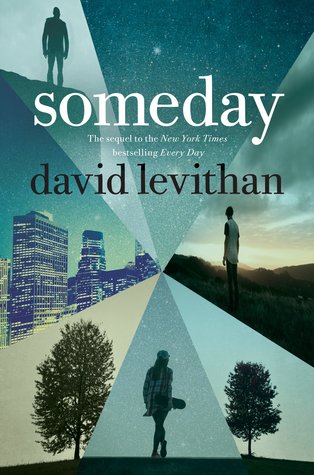
Complexity in Someday by David Levithan

Share

Someday
(Every Day #3)
Author: David Levithan
Published October 2nd, 2018 by Alfred A. Knopf Books for Young Readers

Scroll through the following handout for an explanation of complexity and examples/discussion questions from Someday by David Levithan:

Recommended For: 

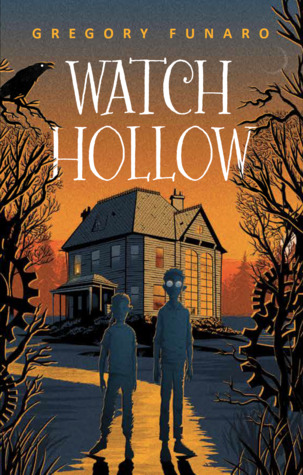
Watch Hollow by Gregory Funaro

Share

Watch Hollow
Author: Gregory Funaro
Published February 12th, 2019 by HarperCollins

Summary: Deep within the enchanted woods in the town of Watch Hollow stands the once-grand Blackford House, whose halls hold a magical secret: a giant cuckoo clock that does much more than tell time. But when the clock’s gears cease to turn, an evil presence lurking among the trees begins to come out of the shadows.

When Lucy and Oliver Tinker arrive in Watch Hollow, they have no idea that anything is wrong. A mysterious stranger has made their father an offer that’s too good for him to refuse. All Mr. Tinker needs to do is fix the clock at Blackford House and fistfuls of gold coins are his to keep.

It doesn’t take long, however, for the children to realize that there is more to Blackford House than meets the eye. And before they can entirely understand the strange world they’ve stumbled into, Lucy and Oliver must join forces with a host of magical clock animals to defeat the Garr—a vicious monster that not only wants Blackford House for itself, but also seeks to destroy everything the Tinkers hold dear.

About the Author: Gregory Funaro grew up in Cranston, Rhode Island, and wrote his first story, The Ghost in the Window, in the fourth grade. He considers this to be his finest work, but unfortunately it has been lost to time. Following high school Greg majored in theatre at the University of New Hampshire, and after various acting gigs, received his AM in Theatre Arts from Brown University and an MFA in Acting from the FSU/Asolo Conservatory. He began his literary career writing thrillers for adults, but switched to children’s books after the birth of his daughter. His first book for Disney-Hyperion, ALISTAIR GRIM’S ODDITORIUM (2015), was a New York Times best seller and an Amazon Best Book of the Month, and his second, ALISTAIR GRIM’S ODD AQUATICUM (2016), received a Kirkus STARRED review. Look for WATCH HOLLOW and THE MAZE OF SHADOWS, coming from HarperCollins in 2019/20. Greg also teaches drama at East Carolina University, and is busy working on his next novel.

Follow him on Facebook and Twitter (@GregoryFunaro) and visit his https://www.gregoryfunaro.com/ to learn more about his books and him.

Review: I am so glad that Harper allows Gregory Funaro to continue expanding his creative tendrils because every one of his books I read, I am intrigued by how he crafts a story, the voice he gives his characters, the point of view he decides, and the surprises he gives me throughout the reading. With Watch Hollow, I love how Lucy and Oliver obviously have a voice even though the book is in third person, the way he ties everything together from the slightest mention at the beginning of the book to huge events in the end, and I love that I cannot predict what is going to happen.

And not only is the story crafted well, the plot is one that is going to suck in our readers that are always looking for spookiness. It is just the right amount of weirdness, supernatural, creepy mansions, unknown creatures, and magic. The characters are also crafted really well which gives the readers someone to connect with.

Teachers’ Tools for Navigation: Gergory Funaro’s fantasy is so different than the traditional fantasy books, and his stories will fascinate readers who may not be sure if they like fantasy because of the twist, turns, and intelligence in his narratives. Not only should his books be found in all libraries, classroom, public, and school, but it would also be an interesting to have an in-class book club focusing on different examples of fantasy and have students, at the end of the clubs, discuss what made their books fantasy and look at the wide variety within the genre.

Discussion Questions: 

  • How did the inclusion of illustrations throughout the book help with your understanding of the plot?
  • What does the animals quick acceptance of Lucy show you about her personality?
  • What were your initial assumptions about Mr. Quigley?
  • What did the inclusion of the crow from before they went to Blackford House tell you about the kids?
  • Once you find out the truth behind the house, what clues can you find when you go back through the book?
  • How did the third person limited point of view switching between the two siblings affect the narrative?
  • How did the author use imagery throughout the book to engage his readers?
  • How does the author set the Gothic and dark mood in the story?

Flagged Passages: 

“Oliver hung back in the doorway as Lucy and their father stepped into a cavernous, darkened foyer. Rectangles of dim dusty light filtered in from the rooms on the other side, and Oliver could just make out a wide staircase dissolving up into the gloom at the far end of the foyer…

Oliver pushed up his glasses, stepped inside, and set down his suitcase. His eyes had adjusted a bit, but with only the daylight streaming in, the foyer was still dim–in part because the walls were paneled three-quarters high in dark wood. To his left, he spied a shadowy parlor filled with antique furniture; to his right, a dining room with a long table. There were a handful of paintings on the walls, and where there was no paneling, the paper was peeled and gray…” (Chapter 4)

Read This If You Love: Explorer series by Adrienne Kress, The Peculiar Incident on Shady Street by Lindsay Currie, The Nest by Kenneth Oppel, A Monster Calls by Patrick Ness

Recommended For: 

classroomlibrarybuttonsmall 

Signature

**Thank you to the author for providing a copy for review!**

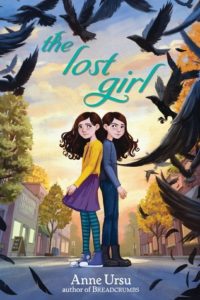
Blog Tour with Review, Educators’ Guide, and Giveaway!: The Lost Girl by Anne Ursu

Share

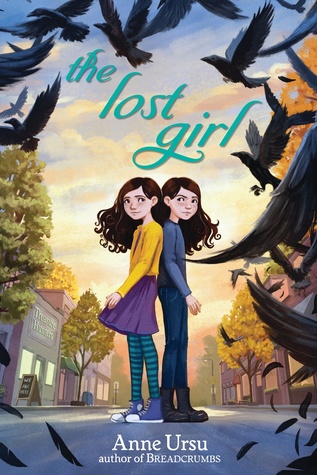
The Lost Girl
Author: Anne Ursu
Published February 12th, 2019 by Walden Pond Press
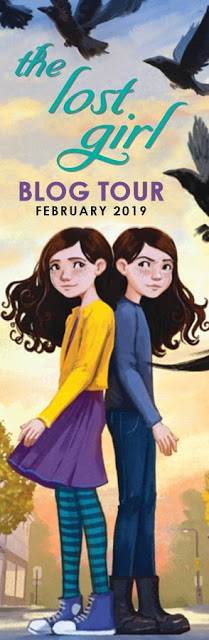
Summary: When you’re an identical twin, your story always starts with someone else. For Iris, that means her story starts with Lark. Iris has always been the grounded, capable, and rational one; Lark has been inventive, dreamy, and brilliant—and from their first moments in the world together, they’ve never left each other’s side. Everyone around them realized early on what the two sisters already knew: they had better outcomes when they were together.

When fifth grade arrives, however, it is decided that Iris and Lark should be split into different classrooms, and something breaks in them both. Iris is no longer so confident; Lark retreats into herself as she deals with challenges at school. And at the same time, something strange is happening in the city around them, things both great and small going missing without a trace. As Iris begins to understand that anything can be lost in the blink of an eye, she decides it’s up to her to find a way to keep her sister safe.

About the Author: Anne Ursu is the author of Breadcrumbs, named one of the best books of 2011 by Publishers Weekly and the Chicago Public Library, and The Real Boy, which was longlisted for the National Book Award. She is also a member of the faculty at Hamline University’s MFA in Writing for Children and Young Adults. Anne lives in Minneapolis with her family and an ever-growing number of cats. You can visit her online at www.anneursu.com.

Praise: 

“The Lost Girl is a jewel of a book—hard, bright, sharp, and precious. It reminds us of the boundless and subversive power of sisterhood and the inherent magic of girls.”—Kelly Barnhill, Newbery-Medal winning author of The Girl Who Drank the Moon

“I raced through The Lost Girl, breathless. And when I was finished, I found myself full of hope. It’s a beautiful, riveting, important book.”—Laurel Snyder, award-winning author of Orphan Island

“When the world makes no sense, I read books by Anne Ursu. When the world makes all the wrong kinds of sense, I read books by Anne Ursu. If you crave a story with the wit, wisdom, and magic to unriddle the world, then you need to read The Lost Girl by Anne Ursu.”—William Alexander, award-winning author of A Festival of Ghosts

“A beautiful, timeless tale of love conquering darkness in the midst of mystery and the angst of change. A must-have for any middle grade collection.” School Library Journal (starred review)

“This suspenseful mystery offers a story of empowerment, showing how one girl with the help of others can triumph.” Publishers Weekly (starred review)

“National Book Award nominee Ursu laces her story with fairy-tale elements and real-life monsters, while taking great care to cast girls in an empowering light and as authors (and heroes) of their own stories.” Booklist (starred review)

Review: Anne Ursu has a way of telling what seems like an ordinary tale and adding twists and turns that the reader does not expect but once you are on the narrative ride she has created, you never want to get off! And although I am always skeptical of magical realism, she does it in a way that just makes her books seem like realistic fiction that just happens to be bit magical, so it is hard not to buy in. In The Lost Girl, the story also is fascinating in the way that the author plays with the narrator/point of view as well as how she shapes both girls equally as the story moves between their narratives and shows the strengths and weaknesses in both. It is impossible to tell who the lost girl is and who is the ones saving because both sisters feel like they play a part in saving the other. I’m still thinking about responsibilities, love, and protection long after the book ended. You are going to love Lark and Iris and will root for both of them until you turn that final page.

Teachers’ Tools for Navigation: There are readers who need this book. There are kids that don’t feel like they belong in this world or kids who feel like they don’t mesh with others their own age or kids dealing with a huge change in their life. These are the kid who will need this book. They need the lost girl to guide them.

Discussion Questions: 

  • Which of the twins is the lost girl?
  • How did the crows play a part in the story?
  • Without the magic in the story, how would everything have been different?
  • What mistakes does Iris make in her decision making once the girls enter 5th grade?
  • What lesson are the adults trying to teach the girls?
  • How did the Club Awesome girls turn out differently than Iris assumed? What does this tell you about them? Iris?
  • How are the sisters alike? Different?

Flagged Passages: “Once upon a time, there were two sisters, alike in every way, except for all the ways that they were different. Iris and Lark Maguire were identical twins, and people who only looked at the surface of things could not tell them apart. Same long busy black hair, same pale skin, same smattering of freckles around the cheeks, same bright hazel eyes and open face.

But Iris and Lark had no patience with people who only looked at the surface of things, when what lay beneath was the stuff that truly mattered.

Because the girls were identical, but not the same.

Iris was the one who always knew where she’d left her shoes. Iris was the one who could tell what the collective nouns were for different animals and that Minnesota was home to the world’s largest ball of twine. Iris always knew when her library books were due.

Lark always knew when their parents had been arguing. Lark could tell you what the consequences for stealing were in different fairy tales, and that the best bad guys had interesting back stories. Lark always knew which books she wanted to check out from the library next.

No they were not the same.” (p. 1-2)

Read This If You Love: The Real Boy by Anne Ursu, Watch Hollow by Greg Funaro, The Explorers by Adrienne Kress, Wishtree by Katherine Applegate, The Seventh Wish by Kate Messner

Recommended For: 
classroomlibrarybuttonsmall 

Giveaway!

a Rafflecopter giveaway

Don’t miss out on the other stops in the blog tour!

FRIDAY, FEBRUARY 1: Teach Mentor Texts
SATURDAY, FEBRUARY 2: About to Mock
SUNDAY, FEBRUARY 3: Novel Novice
MONDAY, FEBRUARY 4: Maria’s Melange
TUESDAY, FEBRUARY 5: A Foodie Bibliophile in Wanderlust
WEDNESDAY, FEBRUARY 6: Bluestocking Thinking
THURSDAY, FEBRUARY 7: Kirsticall.com
FRIDAY, FEBRUARY 8: Unleashing Readers
SATURDAY, FEBRUARY 9: Book Monsters
SUNDAY, FEBRUARY 10: Fat Girl Reading
MONDAY, FEBRUARY 11: Word Spelunker
TUESDAY, FEBRUARY 12: Nerdy Book Club

Signature

**Thank you to Walden Pond Press for providing a copy for review!**

Ape Quartet #4: Orphaned by Eliot Schrefer

Share

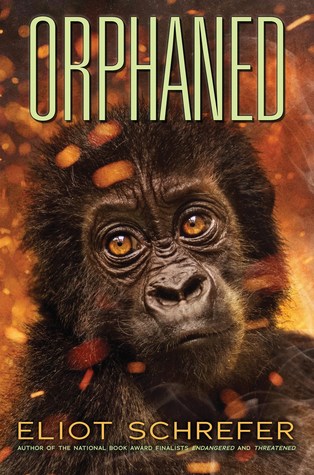
Orphaned
Author: Eliot Schrefer
Published September 25th, 2018 by Scholastic Press

Summary: Before humans, and before human history, there were the apes.
Snub is a young gorilla, living in the heart what will eventually be known as Africa. She is jealous of her mother’s new baby . . . and restless in her need to explore. When a natural disaster shakes up her family, Snub finds herself as the guardian of her young sibling . . . and lost in a reshaped world.

Snub may feel orphaned, but she is not alone. There are other creatures stalking through the woods — a new form of predator, walking on two legs. One of their kind is also orphaned, and is taken in by Snub. But the intersection of the human world and the gorilla world will bring both new connections and new battles.

In his boldest work yet, two-time National Book Award finalist Eliot Schrefer shows us a riveting, heartbreaking early encounter between ape and man — told from the ape’s point of view. It is a journey unlike any other in recent literature.

About the Author: Eliot Schrefer is a New York Times-bestselling author, and has twice been a finalist for the National Book Award. In naming him an Editor’s Choice, the New York Times has called his work “dazzling… big-hearted.” He is also the author of two novels for adults and four other novels for children and young adults. His books have been named to the NPR “best of the year” list, the ALA best fiction list for young adults, and the Chicago Public Library’s “Best of the Best.” His work has also been selected to the Amelia Bloomer List, recognizing best feminist books for young readers, and he has been a finalist for the Walden Award and won the Green Earth Book Award and Sigurd Olson Nature Writing Award. He lives in New York City, where he reviews books for USAToday.

Praise: “Scientific accuracy paired with lyrical, subjective language describing the young gorilla’s impressions of her surroundings and bodily needs make this book an imaginative, eloquent evocation of a little-known era in prehistory from an animal’s viewpoint. A plausibly authentic account skillfully avoiding risk of excessive anthropomorphism.” – Kirkus Reviews

Review: What a fascinating book! Orphaned is so different than Schrefer’s other novels but in a way that is new and so well done. Where Endangered, Rescued, and Threatened were about humans interacting with apes in a contemporary setting, Orphaned is about apes interacting with early humans in a pre-historic setting. There is no book like this! And it is done beautifully.

When we visited virtually with Eliot Schrefer he shared with us that the story was originally told in prose but his editor, David Levithan, pointed out to him that apes, though intelligent, would not think the way that Eliot writes prose. That their thoughts would be focused on immediate needs and would lack in descriptive and fluffy language. He then completely rewrote the story in verse and WOW! Snub’s voice is perfect.

While I originally thought that the point of view and setting would make the story a challenge, but it was the contrary–it made it just that more interesting!

Teachers’ Tools for Navigation: What a great mentor text for point of view and setting! Have students write a story with an animals main character in an interesting setting. Then have them change from prose to verse to hone in on the point of view of the animal and make sure they are including the setting as a main aspect of the story.

Discussion Questions: 

  • How does the inclusion of the ape “language” help with the realism of the story?
  • Why do you think the author included the illustrations of what apes were currently in the story at the top of the page?
  • How did the change from prose to verse storytelling impact the way the story was perceived?
  • How do you think the early humans perceived the gorillas when they interacted with them?
  • How does the point of view shape this story?
  • How did the eruption change the life of the gorillas and early humans?
  • How are gorillas and early humans similar and different?

Flagged Passages: 

“Central Eastern Africa
600,000 Years Ago

Until this time, gorillas lived by the millions in a broad band of jungle across Africa. Then a series of volcanic eruptions, many times more foreful than any the modern world has experience, occurred in the Great Rift Valley. The shift in landscape allowed tribes of early humans to travel south into this area for the first time. 

It would be the first meeting between ape and human.

Part One: Home

Rock. Nut.
Snub looks between the two, thinking.
This tree keeps its nuts high in its branches–
a fallen one is a lucky treat.
She imagines rolling the inside nugget in her mouth,
biting its oily flesh.
Tongue between her teeth, brow scrunched,
she raps the rock on top of the nut.
It does not crack.
She licks the rock.
The rock tastes like rock.
She licks the nut.
The nut tastes like dirt.
Snub twists the woody halves.
They will not part.
Opening nuts is Mother’s job,
but Mother let Snub go off alone.

                                                                              mrgh. 

Fresh fury surges.
Snub hurts the nut, aiming
at a pair of magpies.
It goes wide and disappears into the foliage.
Worthless nut.
Snub looks to see if anyone has
been impressed by her rage.
But this only reminds her:
Her family is not here.”

Read This If You Love: The Ape Quartet books #1-3, Early humans, Gorillas

Recommended For: 

classroomlibrarybuttonsmall 

Signature

Teaching Guide and Review!: Water in May by Ismée Amiel Williams

Share

Water in May
Author: Ismée Amiel Williams
Published September 12th, 2017 by Abrams Books

Summary: Fifteen-year-old Mari Pujols believes that the baby she’s carrying will finally mean she’ll have a family member who will love her deeply and won’t ever leave her—not like her mama, who took off when she was eight; or her papi, who’s in jail; or her abuela, who wants as little to do with her as possible. But when doctors discover a potentially fatal heart defect in the fetus, Mari faces choices she never could have imagined.

Surrounded by her loyal girl crew, her off-and-on boyfriend, and a dedicated doctor, Mari navigates a decision that could emotionally cripple the bravest of women. But both Mari and the broken-hearted baby inside her are fighters; and it doesn’t take long to discover that this sick baby has the strength to heal an entire family.

Inspired by true events, this gorgeous debut has been called “heartfelt, heartbreaking and—yes!—even a little heart-healing, too” by bestselling YA novelist Carolyn Mackler.

About the Author: Ismée Williams is a pediatric cardiologist who practiced at the Columbia University Medical Center in the Washington Heights neighborhood of New York City for fifteen years. She currently sees patients at Montefiore Hospital in the Bronx. As the daughter of a Cuban immigrant, partially raised by her abuelos, her background helped her understand the many Maris she met along the way. Water in May is her first novel.

Praise: 

“Full of spot-on cultural texture and packing an emotional punch, this is an unusual take on the teen-pregnancy problem novel… Williams presents her experience in a way that demands not pity but respect while also reminding readers of Mari’s heartbreaking youth and innocence at unexpected times…Fierce and tender—and absolutely worth reading.” — Kirkus, STARRED REVIEW

“Mari is a deeply credible character, a girl who’s always spoiling for a fight, usually a physical one, but who’s turning that impulse into fighting for her baby. Williams, formerly a pediatric cardiologist at Columbia, brings vivid authenticity to the medical side of things, including the details of life with a baby in the NICU and the varying personalities of health care personnel.” — Bulletin of the Center for Children’s Books

“This novel is realistic and compelling, heartfelt and heartbreaking all at the same time. The author’s experience as a pediatric cardiologist brings authenticity to her writing as much as does her experience of navigating cultural barriers. Young adult readers will connect with Mari’s feisty personality, strength, and vulnerability.” — VOYA Magazine

Review: Mari’s story is one that isn’t often told. Mari is someone most people would see on the streets and would try to ignore because getting to know her would be getting to know how hard life in America can be. But Mari is also someone who is stronger than many of us will ever be. Her story is one that will make readers think about assumptions OR will help readers see a mirror into struggles they may be having in life. Although I hope teens don’t see Mari’s story as an invitation for a teenage pregnancy, I believe the truth of her hardships show the tremendous change a baby brings to life and will show that Mari’s decisions are made out of desperation when there are other paths she could have taken. Some who read the book have said they don’t like Mari as a character, but I found that when Mari was frustrating, it was because she was acting like what she is: a fifteen-year-old girl trying to find her place in this crazy world.

Teachers Guide with Activities and Discussion Questions written by me: 

Guide can also be accessed through Abrams Books’s Resource Page.

Recommended For: 

classroomlibrarybuttonsmall 

Signature

**Thank you to Ismée Williams for finding me and allowing me to complete this guide!**

Book Tour with Review and Giveaway!: It’s Show and Tell, Dexter! by Lindsay Ward

Share

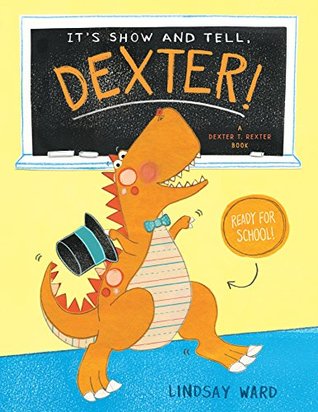
It’s Show and Tell, Dexter!
Author: Lindsay Ward
Published July 17th, 2018 by Two Lions

Summary: Dexter T. Rexter is going to school. But will anyone like him?

Tomorrow is the biggest event ever in Dexter’s life: his best friend, Jack, is taking him to school for Show and Tell Day! Dexter has been getting ready for weeks. But now he’s a little nervous. What if the other kids don’t like him? So Dexter decides to come up with a plan. He’ll wear a costume. Dinosaurs in bunny ears look good, right? He’ll recite state capitals starting with…uh…ah…er. Then he realizes something. He can’t dance. He can’t recite things. He doesn’t have ANY skills. What’s a dino to do?

This comical, interactive tale of belonging, friendship, anticipation, and first-day-at-school jitters lets readers experience the excitement and nervousness along with Dexter—and even offer him a little advice along the way.

About the Author: 

Lindsay Ward is the author of the Dexter T. Rexter book Don’t Forget Dexter! Though she never got to bring an orange dinosaur to Show and Tell Day, she did once take all four albums of her sticker collection. She is also the author and illustrator of Brobarians, Henry Finds His Word, and When Blue Met Egg. Her book Please Bring Balloons was also made into a play.

Most days you can find Lindsay with her family, writing and sketching at her home in Peninsula, Ohio. Learn more about her at www.LindsayMWard.com.

Praise: “Ward’s gentle art features cut-paper forms with residual pencil outlines, providing an ad hoc quality to the spreads. Readers prone to anxiety over big events should be tickled by the idea that a toy has concerns too.” —Publishers Weekly

“Ward’s illustrations, made with printmaking ink, colored pencil, and cut paper, wonderfully capture Dexter’s every emotion and over-the-top ideas.” —Kirkus Reviews

Review: Dexter is going to school, and he is feeling many things that so many kids feel about themselves when they are going to school, either for show and tell or on the first day of school. How is he going to make everyone at school like him? What he needs to realize is that he should be proud of who he is and not question himself.

What I love about Dexter’s books is that he really does deal with some tough issues that many kids deal with throughout their childhood, but it is done in a super hilarious way with Dexter’s voice which is one of a kind. This makes for really fun read alouds with some great follow up discussions.

Teachers’ Tools for Navigation: What a fun book to read when you are introducing show and tell in elementary school! It will help kids realize that it doesn’t matter what they bring as long as it has a story and means something to you. Students will also love rereading this, so it definitely needs to be in libraries, both public, school, and classroom, also.

And check out the fun coloring sheet here!

Discussion Questions: 

  • Why is Dexter so nervous about Show and Tell?
  • What lesson does Dexter’s story teach us about impressions and/or show and tell?
  • What tune do you think Dexter’s song is set to?
  • Why would Dexter feel like he needs to wear a costume? Or look different?
  • How does it end up in the end?
  • What toy would you bring to show and tell?

Flagged Passages: 

Book Trailer: 

Read This If You Love: Don’t Forget Dexter by Lindsay Ward, Lily’s Purple Plastic Purse by Kevin Henkes, A Squiggly Story by Andrew Larsen, Not Norman by Kelly Bennett, Knuffle Bunny by Mo Willems

Recommended For: 

classroomlibrarybuttonsmall 

Giveaway!

One lucky winner will receive a copy of both Dexter T. Rexter books–Don’t Forget Dexter! and It’s Show and Tell, Dexter!, courtesy of Two Lions (U.S. addresses).

a Rafflecopter giveaway

Signature

**Thank you to Barbara at Blue Slip Media for setting up the blog tour!**

Amal Unbound by Aisha Saeed

Share

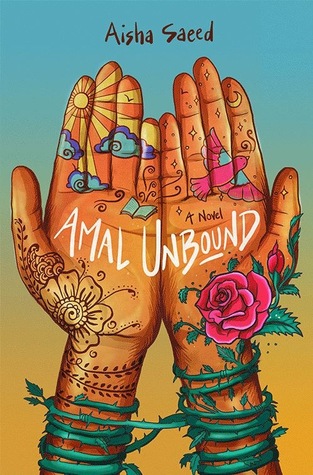
Amal Unbound
Author: Aisha Saeed
Published May 8, 2018 by Nancy Paulsen Books

Goodreads Summary: Life is quiet and ordinary in Amal’s Pakistani village, but she had no complaints, and besides, she’s busy pursuing her dream of becoming a teacher one day. Her dreams are temporarily dashed when—as the eldest daughter—she must stay home from school to take care of her siblings. Amal is upset, but she doesn’t lose hope and finds ways to continue learning. Then the unimaginable happens—after an accidental run-in with the son of her village’s corrupt landlord, Amal must work as his family’s servant to pay off her own family’s debt.

Life at the opulent Khan estate is full of heartbreak and struggle for Amal—especially when she inadvertently makes an enemy of a girl named Nabila. Most troubling, though, is Amal’s growing awareness of the Khans’ nefarious dealings. When it becomes clear just how far they will go to protect their interests, Amal realizes she will have to find a way to work with others if they are ever to exact change in a cruel status quo, and if Amal is ever to achieve her dreams.

Ricki’s Review: I read this book in one sitting. I’ve been thinking about it almost daily since I’ve read it. It’s an unforgettable story about a girl’s courage to survive. I don’t know her age, and although I suspect that the book is targeted by marketing teams for middle graders, it is quite simply a must-read for everyone. The book provides layers upon layers of themes and issues to consider. It made me think about privilege, freedom, education, and bravery, in particular. Amal is inspiring, and I greatly admire her courage in the face of adversity. When I was reviewing this book on GoodReads, I noticed that every one of my reader friends rated the book highly, and I am not surprised. Amal’s story is one that will stick with all readers. 

This is an important book. This is a book that will make your heart race. This is a book that I will read again and again.

Kellee’s Review: This story affected me much in the way that Sold, A Long Walk to Water, Rickshaw Girl, or Queen of Water did. As we fight for so many injustices here in America, there are unimaginable things happening to humans in other places around the world. Often somewhere like Pakistan seems so far away, but then you read a story like Amal’s and you see that the gap between you and her is not that big and we all just want happiness in our life. Amal’s strive for knowledge and willingness to help others are traits that make her unforgettable mostly when paired with the bravery she shows throughout this book. Amal’s story will truly help readers look through windows (and possibly mirrors) and have to face the privilege we do have and the injustice others face. 

On top of the very important theme and amazing main character, the story of Amal Unbound is heartwarming as well as heartbreaking and heart wrenching. And there is a truly suspenseful part also! The story is definitely one that will keep kids reading while also doing all of what I said above.

Teachers’ Tools for Navigation: Teachers could use this book as a read aloud, close reading/analysis, lit circle/book club, or classroom library text. It is rare that Kellee and I designate a book with all of these categories, but it’s a very adaptable text. It might be interesting for teachers to use this book as a whole-class read but using book groups. The groups could select a theme to study (e.g. education) and read other fiction and nonfiction related to the theme. This might allow for rich discussion across groups where they share their findings and teach each other.

Discussion Questions: 

  • In what ways did Amal show courage? Did you agree with all of her actions?
  • What is the role of education in this book?
  • Which characters stood out to you? What made them three-dimensional?
  • What is the role of family in the text?
  • What do you think the author’s purpose(s) might be?

We Flagged: “If everyone decided nothing could change, nothing ever would.”

Read This If You Loved: Written in the Stars by Aisha Saeed, Sold by Patricia McCormick, A Long Walk to Water by Linda Sue Park, The Queen of Water by Laura Resau, Now is the Time for Running by Michael Williams, Diamonds in the Shadows by Caroline B. Cooney, Shabanu by Suzanne Fisher Staples, So Long a Letter by Mariama Ba

Recommended For: 
readaloudbuttonsmall closereadinganalysisbuttonsmall
classroomlibrarybuttonsmall litcirclesbuttonsmall
and Signature