Never Fall Down by Patricia McCormick

Share

NFPB2015

Nonfiction Picture Book Wednesday

Nonfiction Picture Book Wednesday is hosted by Kid Lit Frenzy and was started to help promote the reading of nonfiction texts. Most Wednesdays, we will be participating and will review a nonfiction text (though it may not always be a picture book).
Be sure to visit Kid Lit Frenzy and see what other nonfiction books are shared this week!
**This book is technically historical fiction, but I felt it was pretty darn close to nonfiction**

never fall down

Never Fall Down
Author: Patricia McCormick
Published May 8th, 2012 by Balzer + Bray

Goodreads Summary: This National Book Award nominee from two-time finalist Patricia McCormick is the unforgettable story of Arn Chorn-Pond, who defied the odds to survive the Cambodian genocide of 1975-1979 and the labor camps of the Khmer Rouge.

Based on the true story of Cambodian advocate Arn Chorn-Pond, and authentically told from his point of view as a young boy, this is an achingly raw and powerful historical novel about a child of war who becomes a man of peace. It includes an author’s note and acknowledgments from Arn Chorn-Pond himself.

When soldiers arrive in his hometown, Arn is just a normal little boy. But after the soldiers march the entire population into the countryside, his life is changed forever.

Arn is separated from his family and assigned to a labor camp: working in the rice paddies under a blazing sun, he sees the other children dying before his eyes. One day, the soldiers ask if any of the kids can play an instrument. Arn’s never played a note in his life, but he volunteers.

This decision will save his life, but it will pull him into the very center of what we know today as the Killing Fields. And just as the country is about to be liberated, Arn is handed a gun and forced to become a soldier.

My Review: When I started Never Fall Down, I had no idea what I was getting myself into. I began it because Ricki recommended it to me, but I didn’t read the back or have any prior knowledge about the book. So, when I began, I had no idea how tough this book was going to be.

I also have to preface with my ignorance of the Cambodian Genocide. I blame my lack of world history education because this is a time of history that should be taught. It, along with the Holocaust and Armenian Genocide, was based in racism and the attempt to purify a country. Reading Arn’s story throws you right in the middle of the genocide, and Patricia McCormick doesn’t hold anything back. Every time you think nothing can get worse for Arn and the Cambodians, something does, but you also have such hope for Arn’s survival as you seen him overcome every obstacle he faces. Even though death actually stares him in the face throughout the book, this young boy somehow continues. He continues through starvation, excessive work, lack of sleep, and murder surrounding him.  Arn stated in interviews with McCormick that music saved his life, but I think it was more about his willingness to do whatever was needed to survive and especially anything to help those he cared for to survive.

Patricia McCormick tells our story in a broken English dialect that was influenced by “Arn’s own beautiful, improvised English” that McCormick heard in her head after interviewing him and traveling with him to Cambodia over a couple of years.  The extent that Ms. McCormick went to ensure that Arn’s story was a true representation of his trials and heroism is honorable.

Teachers’ Tools For Navigation: This would be a perfect cross-curricular text! It could be read in a world history class in full or in parts. Although it is McCormick’s writing, it is definitely Arn’s story, and Arn’s story is one that needs to be shared. This book could also be used in lit circles where each group has a different book about a piece of history or an individual who/that is not usually learned about (maybe with Between Shades of Gray by Ruta Sepetys, Sold, Caminar by Skila Brown, The Glass Collector by Anna Perera, Son of a Gun by Anne de Graaf, Inside Out & Back Again by Thanhha Lai, Guantanamo Boy by Anna Perera, A Long Walk to Water by Linda Sue Park, The Queen of Water by Laura Resau, or Now is the Time for Running by Michael Williams).

One of my amazing 8th grade students read this book recently, and she was as enthralled with it as I was. Immediately after finishing, she got online and started learning more about Arn and Cambodia. She came across an amazing video with both Patricia McCormick and Arn in it. It is 27 minutes long, but it is so worth watching:

Discussion Questions: What do you think ultimately helped Arn survive?; How did Sombo save Arn’s life at the orphan camp? When the war with the Vietnamese started? At the killing fields?; Do you think music is what saved Arn?; How were the Khmer Rouge able to make their prisoners do whatever they wanted them to?; Why did the Khmer Rouge kill all the educated Cambodians?; Why was Sombo so unsure about the Coca Cola?

We Flagged: “All the time now we hear girl screaming, girl running, girl crying. At night but also sometime in the daytime. All the tie, the Khmer Rouge they chase the girl, cut the hair. Sometime with scissor, sometime with knife. Chop short, to the chin, like boy. The girl, they cry and sometime they run. They run, it’s no good. The Khmer Rouge may shoot them, maybe take them to the bushes, do whatever they want. A lot of the girl afterward, they pull on their hair, pull like maybe they can stretch it, make it long, make it beautiful again.

My number two big sister, Maly, her hair like silk. Most proud thing about her, her hair. Shiny black, like blue, like a crow has. Every night she brush her hair, every morning. Sometime even she brush her hair not thinking, just dreaming maybe about the boy she love. One morning I wake up before everyone and see her making rice. Her neck, it’s bare now, her skin there is pale, never saw the sun, her long hair gone. Last night while I was asleep, the soldier, they cut her beauty. So now when she give me a bowl of rice soup, her eyes stay on the ground.” (p. 29-30)

Read This If You Loved: Titles listed above in Teachers’ Tools for Navigation

Recommended For: 

classroomlibrarybuttonsmall litcirclesbuttonsmall closereadinganalysisbuttonsmall

Signature

Two Must Have Early Chapter Books: The Princess in Black by Shannon Hale & Dean Hale and Leroy Ninker Saddles Up by Kate DiCamillo

Share

princessinblack

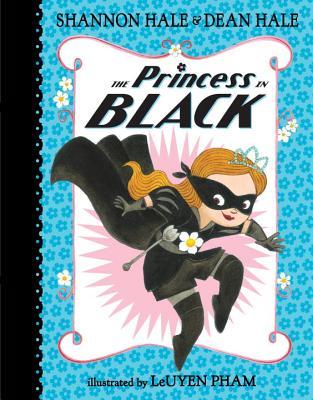
The Princess in Black
Authors: Shannon Hale and Dean Hale
Illustrator: LeUyen Pham
Published October 14th, 2014 by Candlewick Press

Goodreads Summary: Who says princesses don’t wear black? When trouble raises its blue monster head, Princess Magnolia ditches her flouncy dresses and becomes the Princess in Black!

Princess Magnolia is having hot chocolate and scones with Duchess Wigtower when . . . Brring! Brring! The monster alarm! A big blue monster is threatening the goats! Stopping monsters is no job for dainty Princess Magnolia. But luckily Princess Magnolia has a secret —she’s also the Princess in Black, and stopping monsters is the perfect job for her! Can the princess sneak away, transform into her alter ego, and defeat the monster before the nosy duchess discovers her secret? From award-winning writing team of Shannon and Dean Hale and illustrator LeUyen Pham, here is the first in a humorous and action-packed chapter book series for young readers who like their princesses not only prim and perfect, but also dressed in black.

My Review and Teachers’ Tools for Navigation: I am a sucker for girl power books. So much, I was part of writing three Nerdy Book Club Girl Power posts (here, here, and here). Princess in Black fits right in this these books. Although Princess Magnolia must live up to society’s expectations of a proper princess, in secret she fights crime, isn’t afraid of anything, and doesn’t wear pretty dresses. I love the idea that Magnolia can be a princess and all kick some butt. (I wish she could do it not in secret, but that wouldn’t fit the societal views of princesses in most fairy tales.) I know that the Hales wrote this book for their daughters, and I can see why they did: a great heroine, lots of action, funny, and colorful, fun illustrations. Princess in Black would actually be a perfect first introduction to the narrative elements and plot arc. It also just enough complex vocabulary that you could start a discussion about some of the words.

We Flagged: Chapter Two: “Princesses do not run. Princesses do not stuff frilly pink dresses into broom closets. Princess do not wear black. And princesses most definitely do not slide down secret chutes and high-jump castle walls. But then, most princess do not live near an entrance to Monster Land. Stopping monsters was no job for prim and perfect Princess Magnolia. But fortunately Princess Magnolia did have a secret. She was secretly the Princess in black! And stopping monsters was the perfect job for the Princess in Black.”

Read This If You Loved: Salem Hyde (series) by Frank Cammuso, Battle Bunny by Jon Sciezska, Fairy Tales

Recommended For: 

readaloudbuttonsmall classroomlibrarybuttonsmall

leroy ninker
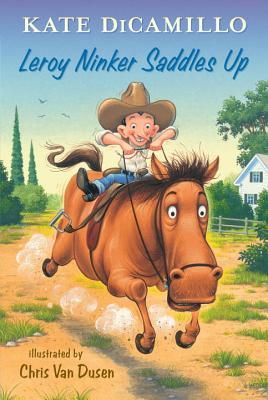
Leroy Ninker Saddles Up
Author: Kate DiCamillo
Illustrator: Chris Van Dusen
Published August 26th, 2014 by Candlewick Press

Goodreads Summary: Yippie-i-oh! Saddle up for the first in a spin-off series starring favorite characters from Kate DiCamillo’s New York Timesbest-selling Mercy Watson books.

Leroy Ninker has a hat, a lasso, and boots. What he doesn’t have is a horse — until he meets Maybelline, that is, and then it’s love at first sight. Maybelline loves spaghetti and sweet nothings, and she loves Leroy, too. But when Leroy forgets the third and final rule of caring for Maybelline, disaster ensues. Can Leroy wrestle fate to the ground, rescue the horse of his heart, and lasso loneliness for good? Join Leroy, Maybelline, and a cast of familiar characters — Stella, Frank, Mrs. Watson, and everyone’s favorite porcine wonder, Mercy — for some hilarious and heartfelt horsing around on Deckawoo Drive.

My Review and Teachers’ Tools for Navigation: I must be honest: I have not read the Mercy Watson books, but luckily it does not matter because Leroy is just so darn loveable. His personality shines through the pages and you just are so happy that Leroy and Maybelline found each other. Also, Kate DiCamillo has a way with voice! I can always hear her characters talking in my head, and they each are so very distinct. I also love her use of vocabulary and humor–perfect! This one is going to be loved by many!

Discussion Questions: Why do you think that Maybelline is the perfect horse for Leroy?; Was Leroy truly prepared to have a horse? How do you know?; Why does Leroy want to be a cowboy?

We Flagged: Leroy Ninker said ‘Yippie-i-oh’ because Leroy Ninker had a dream. He wanted to be a cowboy.

On Wednesday nights, the Bijou Drive-In Theater ran a Western double feature, and Leroy Ninker Stood and watched in wonder as the great white expanse of the Bijou screen filled with purple mountains, wide-open plains, and cowboys.

The cowboys wore ten-gallon hats. The wore boots. They carried lassos. The cowboys were men who cast long shadows and knew how to fight injustice. They were men who where never, ever afraid.

‘Yippie-i-oh,’ Leroy Ninker whispered to the screen. ‘That is the life for me. A cowboy is who I was meant to be.'” (p.2)

Read This If You Loved: Lulu and the Brontosaurus (series) by Judish Viorst, Frankie Pickle (series) by Eric Wight, Bramble and Maggie (series) by Jessie Haas

Recommended For: 

readaloudbuttonsmall classroomlibrarybuttonsmall

Signature

**Thank you to Candlewick Press for providing copies for review**

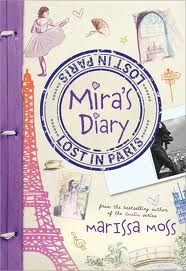
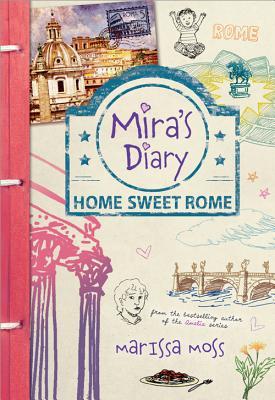
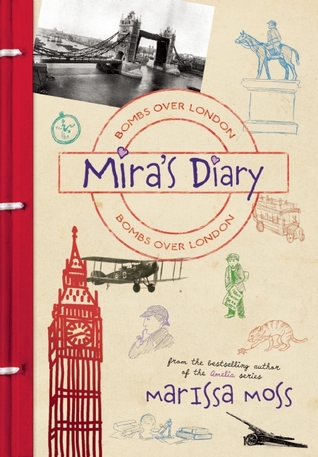
Holiday Blog Hop with Reviews!: Mira’s Diary series by Marissa Moss

Share

mira1 mira2 bombs

Mira’s Diary
Author: Marissa Moss
Lost in Paris Published September 4th, 2012 by Sourcebooks
Home Sweet Rome Published April 2nd, 2013 by Sourcebooks
Bombs Over London Published August 26th, 2014 by Creston Books

Lost in Paris Goodreads Summary: Mira is shocked when she receives a postcard from her missing mother from Paris. Her father decides it’s time for a trip to France to search for her. While visiting Notre Dame, Mira touches a gargoyle and is whirled into the past. There she meets the famous painter Degas and catches a brief, shocking glimpse of her mother. Mira begins to suspect that her mom didn’t run out on them but is a prisoner of the past. Can one family on an incredible worldwide adventure stop a plot in time?

Home Sweet Rome Goodreads Summary: As if traveling to a new country in search of her missing mother weren’t difficult enough, Mira has to do it dressed as a boy. In a different century.

A new postcard from her time-traveling mother points Mira to the 16th century Rome. But before she can rescue her mom, she must follow the clues left around the city to find Giordano Bruno, a famous thinker and mathematician, who discovered something so shocking that important Italian officials don’t want it revealed. All the while avoiding the Watchers–time-traveling police who want Mira back in her own time.

It’s another whirlwind adventure for Mira, and this time she is determined to bring her mother out of the past.

Bombs Over London Goodreads Summary: In the third book of the popular time-travel series, Mira navigates her way through WWI London, meeting famous suffragists and writers like Sir Arthur Conan Doyle. Instructed by her time-traveling mother to steal a German spy’s briefcase full of secrets and pass on the information to British Intelligence, Mira struggles with whether the changes she has been working for are the right thing to do after all. How much control do we really want of history? When is it best to leave our fate in destiny’s hands?

My Review of Lost in Paris:  I was enthralled by this smart, yet still accessible middle grade novel. Once I began it, I did not want to put it down.

The book was not only packed with an interesting concept (Mira and her mother travel through time to try to right wrongs that haven’t happened yet), but the book was filled with information about late 19th century Paris, French history, and art. Although some may feel like there was information overload, I found it all so fascinating. I am primarily sucked in when a book includes history that is less well known and that is exactly what this book did. Do you know about the Dreyfus Affair? After reading you will. I was also so excited to read a book so full of art history and art elements. Each page includes sketches from Mira and throughout the book you meet incredible artists such as Degas, Monet and Rodin. A cast of characters that is better than any fiction. This part of the book actually reminds me a lot of Woody Allen’s Midnight in Paris except Mira is trying to fix something instead of fixing herself.

My Review of Home Sweet Rome and Bombs Over LondonI don’t want to share too much about these titles as my thoughts are a bit spoilery, but I want to say that they did not disappoint. After reading book 1, all I wanted was to know what happened to Mira next, and I was not disappointed in her next adventures. I know book 4 is going to be in our future, and I cannot wait to read that one as well.

Teachers’ Tools for Navigation: One wish I had while reading books 1 & 2 was wanting to see the artists’ works as each artist was introduced. I was blessed enough to have an art-filled childhood so I could picture many of the pieces; however, many students do not have that background knowledge. This would be a great thing to do when reading the novel–share the artwork with students as you encounter them in the story. It would also be meaningful to find primary sources from the time period to share with students as you read Mira’s story.  This will make learning about the time period even more impactful.

Additionally, Marissa Moss’s writing is one that can definitely be used as an example of imagery and descriptive writing during writing workshop or other writing lessons. She actually sucks you in when Mira time travels, and deposits you in history that you can visualize.

Discussion Questions: Research one of the artists mentioned in book 1 or 2, write about his or her life, artwork, beliefs, etc.; Write about a time in your life when you had to trust your instincts, when you weren’t sure what to do but had to make a decision based on what felt right to you in the moment.; Was there a time when you had a feeling your parents were incorrect? What happened?; Which of the three places that Mira has visited would you have liked to go? Why?

We Flagged: “Dad was right – [Notre Dame is] truly a wonder of the world…

Usually when you go into a building, it’s lighter or darker, cooler or warmer than outdoors, but it’s still part of the same world. Stepping into Notre Dame was like changing time zones or countries, crossing some magical border. A hush filled the cavernous, echoey space of the cathedral, despite all of the voices of tourists murmuring and people praying, as if the sound was absorbed into the bones of the building itself.

Light streamed in from the windows like a physical presence, the kind of light you think you can reach out and touch…The air itself felt still and chilled by the stone all around. The walls were stretched thin between the pillars that soared into a vault overhead, like the skin of a massive beast taut between its ribs.” (Lost in Paris, p. 14-15)

“The day was gray and cold. I found myself in a busy street lined with crumbling brick buildings, shabby tenements with darkened windows. Dingy laundry hung in lines across the narrow alleyways. This may have been historical London, but there was nothing charming here. Just three-story houses of shuddering poverty with narrow doors and small pinched windows, as if sunlight cost money. The whole place was dark, muddy, broken-down, stinking of fish and rot and some indefinable yuck. The stench was so thick it had a physical presence, like a filthy hand pressed against my nose.”  (Bombs Over London, p. 26)

Read This If You Loved: Ruby Red (series) by Kerstin Gier, All Our Yesterdays by Cristin Terrill, When You Reach Me by Rebecca Stead, Blue Balliet novels

Recommended For: 

classroomlibrarybuttonsmall closereadinganalysisbuttonsmall

Signature

**Thank you to Gina and Samantha at JKSCommunications for having us as part of the blog hop!**

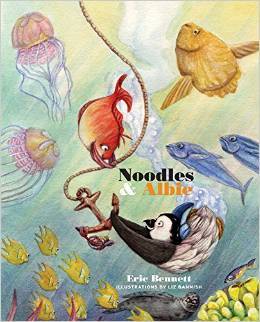
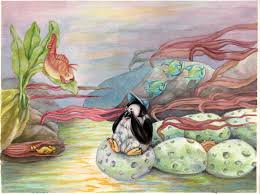
Noodles & Albie by Eric Bennett

Share

noodles&albie

Noodles & Albie
Author: Eric Bennett
Illustrator: Liz Bannish
Published January 1st, 2014 by Small Batch Books

Publisher’s Summary: Noodles, a young penguin, is on his first and very memorable adventure at sea in the mysterious Southern Ocean. When his fun takes a turn and Noodles discovers he is lost, he tries to find his way home before darkness sets in, meeting an
interesting cast of characters along the way. Noodles has nearly given up when he meets a friendly fish named Albie who knows the sea “like the back of my fin.” Together, they begin their journey. Children will go along for the ride while wondering if this duo will make it home to the penguin colony before dark. This charming and imaginative story is set against a backdrop of beautifully intricate watercolor illustrations that help bring it to life.

About the Author: A native of New York City, Eric Bennett’s passion for penguins began as a kid. After graduating Queens College, he opened the world’s first all-penguin shop at South Street Seaport. In time, Bennett began offering his retail rookery online when he launched PenguinGiftShop.com. “Penguin & Fish” was one of the many inspired stories Bennett would recite to entertain his daughters in car rides and at bedtime. Bennett showed the story to his artist friend, Liz Bannish, and soon Noodles & Albie came to be. Eric presently lives in Northampton, Massachusetts with his daughters and a few hundred penguins. This is his first book. Eric Bennett is available for interview. You may find out more about the author here: http://penguingiftshop.com/noodles-albie

About the Illustrator: Liz Bannish was raised in landlocked West Springfield, Massachusetts/Amherst and currently lives in Northampton. Bannish spends her time making art and thinking about her favorite sea creatures. You may find more of the author’s work at www.lizbannish.com.

Kellee’s Review: I love penguins, I love penguin books, and I love when I find a new, good penguin book. The penguin fan in me really loved that this book had the correct setting for penguins and included science about Antartica. The author also included a penguin Q&A at the end of the book which makes this book easily cross-curricular. Then the story goes into a picture book version of a hero’s journey filled with a side kick and lots of adventures. The teacher in me loved the journey, the descriptive language (great verbs and adjectives such as sleepy, cranky, stammered, yawned), and that the dialogue was colored in blue. Then underneath it all, a friendship theme runs deep throughout. Overall, a fun picture book that would be a fantastic read aloud.

Ricki’s Review: When I was a young reader, I remember that as books became more complex, there weren’t any pictures on the page. This was always disappointing to me. I particularly like this book because I think it would make a great transitional text for young readers. There are a lot of words on each page, but the illustrations are filled with just as much fun and adventure as the passages of text. Like Kellee, I loved the possibilities for interdisciplinary connections in the end matter. Kids will be inspired to learn more about penguins after reading this book.

Teachers’ Tools for Navigation: This book would be a wonderful tool to use as a reading/science cross-curricular text. For reading, you can focus on the descriptive language, dialogue, and plot arc. Then for science, the book includes great information about penguins and Antarctica.

Discussion Questions: What other animals could Noodles have run into when on his adventure?; What other questions do you have about penguins? What new things did you learn?; Which of the words in the book were adjectives? Verbs?

We Flagged: 

noodles&albie1

“”Hey, little penguin. Why so sad?” a voice called out. As Noodles looked around through the shadows a small fish swam toward him. “Are you lost?” asked the fish.
“I am,” said Noodles.” This is my first day in the ocean and I got separated form my friends and now I’m…I’m…”
“Lost,” the first said, finishing the penguin’s sentence.”

More Information About the Book and Author: You can find articles about the author and his book at Gazettenet and Mass Live.

Read This If You Loved: Penguin series by Salina Yoon, If You Were a Penguin by Florence Minor, Your Personal Penguin by Sandra Boynton, Penguins by Seymour Simon, Tacky series by Helen Lester, A Penguin Story by Antoinette Portis

Recommended For: 

classroomlibrarybuttonsmall readaloudbuttonsmall

Signature andRickiSig

**Thank you to Carol for providing copies for review!**

Rain Reign by Ann M. Martin (Kellee’s Review)

Share

rain

Rain Reign
Author: Ann M. Martin
Published October 7th, 2014 by Feiwel & Friends

Goodreads Summary: In her most powerful novel yet, Newbery Honor author Ann M. Martin tells the story of girl with mental/emotional challenges and the dog she loves.

Rose Howard has OCD, Asperger’s syndrome, and an obsession with homonyms (even her name is a homonym). She gave her dog Rain a name with two homonyms (Reign, Rein), which, according to Rose’s rules of homonyms, is very special. Rain was a lost dog Rose’s father brought home. Rose and Rain are practically inseparable. And they are often home alone, as Rose’s father spends most evenings at a bar, and doesn’t have much patience for his special-needs daughter.

Just as a storm hits town, Rain goes missing. Rose’s father shouldn’t have let Rain out. Now Rose has to find her dog, even if it means leaving her routines and safe places to search. Rose will find Rain, but so will Rain’s original owners.

Hearts will break and spirits will soar for this powerful story, brilliantly told from Rose’s point of view.

My Review and Teachers’ Tools for Navigation: If you have read A Corner of the Universe,  you know what an emotionally-charged author Ann M. Martin can be, and she once again tells a heart-wrenching story with a voice that will not leave your head. In Rain Reign, Martin tackles Rose’s story. Rose is such a true character. A brilliant young girl with OCD and Asperger’s syndrome who is obsessed by homonyms. She is a girl that is so unique and intriguing. As a teacher, I very much connected with her and how I would nurture her gifts within my classroom; however, I also saw the challenges that Rose faces as well.

What makes this book truly stand out is the first person point of view. You, as the reader, are in Rose’s mind and living her life. You experience the neglect of her father, the love of Reign, the obsessiveness, the homonyms, the outbursts, and the support of her uncle. Because I was IN her life, I just couldn’t put down the book. I had to know that Rose and Rain were going to be okay.

As a teacher, I want kids to read this book because they will fall in love with Rose and Rain. Through this love, they will build empathy in their hearts because they will just want to know that Rose and Rain will be okay.

Ricki’s Review: Check out Ricki’s Review here!

Discussion Questions: How do you feel about Rose’s dad?; Can you think of homonyms that weren’t mentioned in the book?; Do you think it was right of Rose’s dad to take Rain?; How would you feel if your dog disappeared?

We Flagged: “I’m going to tell you a story. It’s a true story, which makes it a piece of nonfiction.

This is how you tell a story: First you introduce the main character. I’m writing this story about me, so I am the main character.

My first name has a homonym, and I gave my dog a homonym name too. Her name is Rain, which is special because it has two homonyms–rein and reign. I will write more about Rain in Chapter Two. Chapter Two will be called “My Dog, Rain (Rein, Reign).”

Something important about the word write is that is has three homonyms–right, rite, and wright. That’s the only group of four homonyms I’ve thought of. If I ever thing of another four-homonym group, it will be a red-letter day.” (Chapter One)

Read This If You Loved: Rules by Cynthia Lord, Wonder by R.J. Palacio, Mockingbird by Kathryn Erskine, Out of my Mind by Sharon Draper, Each Kindness by Jaqueline Woodson

Recommended For: 

classroomlibrarybuttonsmall readaloudbuttonsmall litcirclesbuttonsmall

Signature

Captain Underpants Series by Dav Pilkey

Share

captain1 captain11

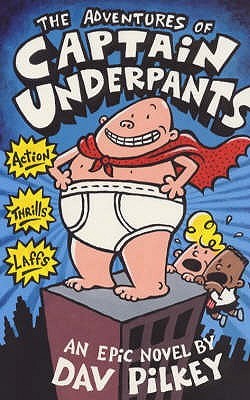
Captain Underpants series
Author: Dav Pilkey
#1: Adventures of Captain Underpants published September 1st, 1997 by Scholastic, Inc.
#11: Captain Underpants and the Tyrannical Retaliation of the Turbo Toilet 2000 published August 26th, 2014 by Scholastic Inc.

Goodreads Summary #1: Pilkey plays with words and pictures, providing great entertainment. The story is immediately engaging – two fourth-grade boys who write comic books and love to pull pranks find themselves in big trouble. Mean Mr. Krupp, their principal, videotapes George and Harold setting up their stunts and threatens to expose them. The boys’ luck changes when they send for a 3-D Hypno-Ring and hypnotize Krupp, turning him into Captain Underpants, their own superhero creation.

Goodreads Summary #11: When the Incredible Robo-Plunger defeated the evil Turbo Toilet 2000, George and Harold thought their toilet troubles were over. Unfortunately, their porcelain problems were only beginning . . . Just when you thought it was safe to flush . . . The Turbo Toilet 2000 strikes back! The carnivorous commode known for devouring everything in its path has built up a real appetite . . . for REVENGE! Join Captain Underpants for another epic showdown of Wedgie Power vs. Potty Power as our tighty-whitey-wearing superhero GOES TO ELEVEN!

My Review and Teachers’ Tools for Navigation: Ever since I started teaching I have had Captain Underpants fans in my classroom. Readers (especially boys though, like all books, it is not exclusive) love these books. When I started teaching intensive reading, my students loved that I read so much but were astonished that I had never read a Captain Underpants book. So, during the summer of 2012, I read the entire series that was out at the time.  And suprsingly, I am happy I did. I enjoyed the books so much, and I found many different ways that I could use in the series in classroom. As I read I not only enjoyed the stories (well most of them; the booger one was quite gross), but I kept notes on different ways each book could be a mentor text.  I know that students already love the books so I would love to be able to use them in the classroom. I think that part of what makes Pilkey’s humor work is that he never talks down to his reader. The humor is intelligent and witty, and he makes sure to have his books be as entertaining as possible to keep the reader’s attention.

Teachers’ Tools for Navigation: Some of my favorite things that are addressed in the series are spelling, grammar, vocabulary, and puns. The spelling is not directly addressed; however, Harold and George misspell a lot of words and it would be good to use to talk about phonics and spelling.  Also, each book begins with an anagram which is great word play.  The grammar is sporadic only showing up in some books, but the vocabulary is in all of them.  Some vocabulary I found was billowing, narratively convenient, fizzled, improbability, jubilant, mock, scurried, and merciless and that is just in book 3! Also the puns in each book are really quite clever (check out p. 34 in #11 and any of the flip-o-ramas to see what I mean). Each book also has some great alliteration (#11, p. 29, 27, 208)- each title alone has alliteration in them. There are also allusions and onomatopoeias!

Additionally, I love the set up of the novels. They are a great mix of novel, graphic novel, comics, and picture books. It is a great transition between picture books and Diary of a Wimpy Kid. I especially like the flip-o-ramas. They are unique to the Captain Underpants books and I think it puts a great interactive and kinesthetic feel to the books.

One thing I do not understand is why these books are challenged. Yes, they have some potty humor. Yes, the adults aren’t the best representation of teachers. Yes, it is silly. But they are harmless and actually have some really great qualities to them.

Discussion Questions: In the first Captain Underpants, Harold and George brainstorm a superhero including his name and then create a comic based on their superhero. With a partner, brainstorm a name for a superhero and then complete a story to go along with your superhero. To expand it even more, complete a comic for your superhero.; In #11 novel, time travel plays a large part of in the plot. What event could you go back in time to try to change?; In some of the Captain Underpants books, there are grammar, convention, and spelling mistakes. Why do you think Dav Pilkey makes the choice to use incorrect grammar? What mistakes idd you find?; In #11, Harold and George end up being cloned (kind of). What would you do if there were two of you?

We Flagged (#11): 

Read These If You Loved: Diary of a Wimpy Kid series by Jeff Kinney, Big Nate series by Lincoln Peirce, Charlie Joe Jackson series by Tommy Greenwald, The Adventures of Ook & Gluk and Super Diaper Baby series by Dav Pilkey, Lunch Lady series by Jarrett Krosoczka, Frankie Pickle series by Eric Wight, Knights of the Lunch Table series by Frank Cammuso 

Recommended For: 

readaloudbuttonsmall classroomlibrarybuttonsmall

Signature

Review and Teaching Guide!: El Deafo by Cece Bell

Share

NF PB 2014

Nonfiction Picture Book Wednesday

Nonfiction Picture Book Wednesday is hosted by Kid Lit Frenzy and was started to help promote the reading of nonfiction texts. Most Wednesdays, we will be participating and will review a nonfiction text (though it may not always be a picture book).
Be sure to visit Kid Lit Frenzy and see what other nonfiction books are shared this week!

deafo

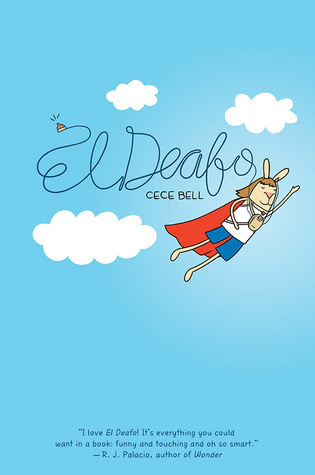
El Deafo
Author: Cece Bell
Published September 2nd, 2014 by Abrams

Publisher Summary: Going to school and making new friends can be tough. But going to school and making
new friends while wearing a bulky hearing aid strapped to your chest? That requires superpowers! In this funny, poignant graphic-novel memoir, author/illustrator Cece Bell chronicles her hearing loss at a young age and her subsequent experiences with the Phonic Ear, a very powerful—and very awkward—hearing aid. The Phonic Ear gives Cece the ability to hear—sometimes
things she shouldn’t—but also isolates her from her classmates. She really just wants to fit in and find a true friend, someone who appreciates her as she is. After some trouble, she is finally able to harness the power of the Phonic Ear and become “El Deafo, Listener for All.” And more importantly, declare a place for herself in the world and fi nd the friend she’s longed for.

Author: Cece Bell has written and illustrated several books for children, including the Geisel Honor book Rabbit & Robot: The Sleepover. She lives in Virginia with her husband, author Tom Angleberger.

My Review: There are times that you read a book and when you are done, you just know that it is a special book. El Deafo is one of those books. As you all know, I am a huge fan of Hurt Go Happy by Ginny Rorby, and one of the reasons I am is because it looks at disabilities in a positive light and shows that a disability is not an end, but just a change. El Deafo is another novel that does this. Although Cece, like Joey in Hurt Go Happy, finds herself deaf at a young age, we see her overcome this blow and turn it into a superpower. But this book is about more than deafness; it is about being a kid, about growing up, about friendship, about ackwardness, about school, about crushes, about family, about life. This book is truth.

Teachers’ Tools For Navigation: There is so much you can do with this graphic novel. Many activities can be found in the teaching guide that I wrote for Abrams. This book is perfect for independent reading, for lit circles  with other graphic novel memoirs, for jigsawing, for read alouds, and for looking deeply into the text.

(Also, and I didn’t want to harp on this because they are both such unique books, but this book will be loved by the readers of Smile. They both look at such an important part of life.)

Discussion Questions: Language Arts:  Cece uses many different kinds of clues to help her lip-read. (pages 30–31) What are the 4 types of clues? How do they help with lip-reading? In what other ways can these clues be helpful?; On page 60, Cece shares an analogy of her friendship with Laura. She feels like a baited fish that is caught on Laura’s hook. What analogies could we make to
describe Cece’s friendship with Ginny? Martha? Emma?; Science: What is meningitis? How can it cause deafness?;  What is an audiologist? What would you have to study to become one?; History/Social Studies: Many deaf and hard of hearing individuals have made history, including Helen Keller, William Ellsworth Hoy, and Juliette Gordon Low. Research these or other deaf or hard of
hearing individuals throughout history and today. How did being deaf affect their lives? What were their accomplishments?

We Flagged: 

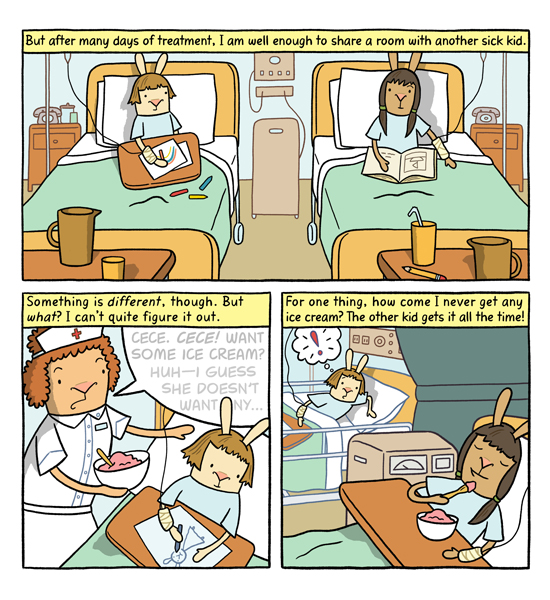
01ORIGINSPanelsREVISED
**From Cece Bell’s blog**

Read This If You Loved: Smile and Sister by Raina Telgemeier, The Dumbest Idea Ever! by Jimmy Grownley, I Remember Beirut by Zeina Abirached, Odd Duck by Cecil Castellucci

Recommended For: 

classroomlibrarybuttonsmall readaloudbuttonsmall closereadinganalysisbuttonsmall litcirclesbuttonsmall

Signature