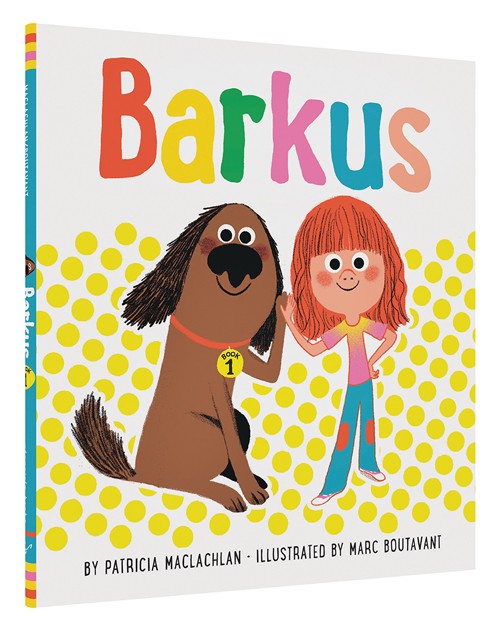
Today we are happy to be able to be able to exclusively reveal the teaching guide for Barkus by Patricia MacLachlan. This is an early chapter book that is a must-get for all of our early elementary friends.
About the Book: Meet Barkus. Barkus is loyal. Barkus is generous. Barkus is sometimes a little too energetic! But in the end, Barkus is family. The exuberant Barkus and his lucky young owner jump, whirl, and twirl across this delightful early chapter book series from two award-winning book creators.
About the Author: Patricia MacLachlan is the celebrated author of many timeless books for young readers, including Sarah, Plain and Tall, winner of the Newbery Medal. Her novels for young readers include: Arthur, For the Very First Time; The Facts and Fiction of Minna Pratt; Skylark; Caleb’s Story; More Perfect than the Moon; Grandfather’s Dance; Word After Word After Word; Kindred Souls; and The Truth of Me. She is also the author of countless beloved picture books, a number of which she co-wrote with her daughter, Emily.
About the Illustrator: Marc Boutavant is an illustrator, graphic artist, and comic strip author. He lives in Paris.
About the Guide: This guide consists of discussion opportunities and classroom extension activities designed for use by Pre-K through second grade students in classroom, small group, or individual assignments.
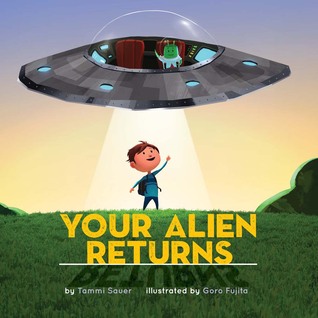
Your Alien Returns Author: Tammi Sauer
Illustrator: Goro Fujita
Published October 4th, 2016 by Sterling Children’s Books
Summary: When you least expect it, something special will get your attention. Your alien will be back. He will invite you over for a play date.
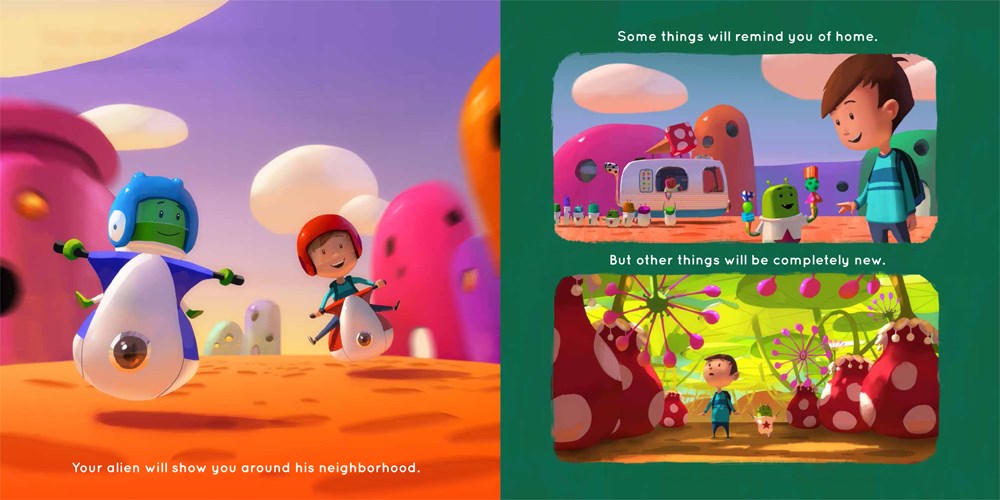
Come along on an out-of-this-world experience! In this heartwarming sequel to the critically acclaimed Your Alien, it’s the human boy’s turn to visit the extraterrestrial’s home planet—and to feel like an outsider. But with a little help from his very best friend in the whole universe, our young hero finds a way to fit in. Like the two irresistible characters, readers will have the ride of their lives.
About the Author: Tammi Sauer is the author of many Sterling books, including Your Alien, Mary Had a Little Glam, Chicken Dance, Bawk & Roll, and Cowboy Camp. She is an active blogger and highly involved in the children’s writer community. Tammi has worked as a teacher and library media specialist, but now writes full time and visits schools around the country. She lives in Edmond, OK. Follow Tammi on Twitter @SauerTammi or visit her website at http://www.tammisauer.com/.
About the Illustrator: Goro Fujita was born in Japan and now lives in San Jose, CA. He works as a book illustrator, animator, and art director on virtual-reality experiences. Visit him online at area-56.de.
Review: I definitely recommend checking out the first book, Your Alien, and our review of it because it really does point out a lot of what made me definitely have to review the second book, and the second book did not disappoint. The theme of friendship and perspective rings true in the sequel as well but what I love the most about the narrator and his alien is the true friendship they have! They are an example of being able to be friends, true friends, without changing who you really are. And I am so in awe of the illustrations. Goro Fujita brings the story to life in such a fun and colorful yet realistic way!
Teachers’ Tools for Navigation: As we mentioned in the first book’s review, the point of view of this text is so unique! Tammi Sauer uses 2nd person point of view to bring the reader literally into the story and makes them part of it. Usually in elementary school when point of view is taught, only 1st and 3rd person are taught, but Your Alien and Your Alien Returns would give teachers away to show what 2nd person is and how it can be utilized in narrative form.
Discussion Questions: What emotions did the boy go through from the beginning to the end of the book?; How did the alien help the boy feel better when he was feeling left out?; How does the author’s choice of 2nd person POV change how the story experience is?; If you were going to retell the story like the narrator does for his parents at the end, how would you tell it?
Flagged Passages:
Read This If You Loved: Your Alien by Tammi Sauer, Faraway Friends by Russ Cox, Boy + Bot by Ame Dyckman, Life on Mars by Jon Agee
Sophie Quire and the Last Storyguard A Peter Nimble Adventure Author: Jonathan Auxier
Published April 5th, 2016 by Abrams Books
Summary: It’s been two years since Peter Nimble and Sir Tode rescued the kingdom of HazelPort. In that time, they have traveled far and wide in search of adventure. Now Peter and Sir Tode have been summoned by Professor Cake for a new mission: find a 12-year-old girl named Sophie Quire.
Sophie knows little beyond the four walls of her father’s bookshop, where she works as a bookmender and dreams of leaving the confines of her city walls. But when a strange boy and his talking cat/horse companion show up searching for a rare and mysterious book, she finds herself pulled into an adventure beyond anything she has ever read.
Teaching Guide:
Sophie Quire is a special young lady, and you and your students are going to adore her adventure! Here is a teaching guide to help guide you or your students through your reading. This guide can be used as a tool for classrooms or book clubs.
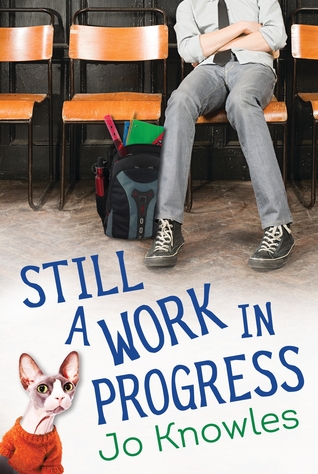
Still a Work in Progress Author: Jo Knowles
Published August 2nd, 2016 by Candlewick Press
Summary: In a return to middle-grade fiction, master of perspectives Jo Knowles depicts a younger sibling struggling to maintain his everyday life while coping with his sister’s secret struggle.
Noah is just trying to make it through seventh grade. The girls are confusing, the homework is boring, and even his friends are starting to bug him. Not to mention that his older sister, Emma, has been acting pretty strange, even though Noah thought she’d been doing better ever since the Thing They Don’t Talk About. The only place he really feels at peace is in art class, with a block of clay in his hands. As it becomes clear through Emma’s ever-stricter food rules and regulations that she’s not really doing better at all, the normal seventh-grade year Noah was hoping for begins to seem pretty unattainable. In an affecting and realistic novel with bright spots of humor, Jo Knowles captures the complexities of navigating middle school while feeling helpless in the face of a family crisis.
Review: What I am always amazed by when I read a book by Jo Knowles is her ability to tell the truth about our world, and this book once again fits this description. Jo has a way of making her characters ones that are so real that you can imagine them walking into a school and know exactly which kids they’d hang out with. Noah and his friends could definitely be middle school students at my school. Her stories always seem to include a bit of humor (see: hairless cat on the cover) while never taking away from the seriousness of the book’s topic. The emotions, specifically pain or sadness, she portrays through her characters radiates out of the pages, so the reader can feel it.
Teachers’ Tools for Navigation: This is an important book to have available for students to read. Although the main story is about Noah fitting into middle school, it is also about dealing with pain and anger and sadness and still having to live. This book needs to be in classroom libraries and should be booktalked so students are aware of its brilliance.
Discussion Questions: What makes the art room such a special place for Noah?; Why does Noah and his family not talk about Emma’s problems? Did not talking about it end up being hurtful or helpful?; Noah’s school is a bit different than traditional schools. How does his school differ from yours?; What does the title mean in reference to Noah? Emma? Their family? Other characters?; How did Emma’s experience with Lord of the Flies spiral out of control?
Flagged Passages: “Community meetings happen once a week. Everyone in the school has to go, including the teachers. The Community Room used to be the music room, but our town had budget cuts and they cut the music program. The wars are painted green, and old couches donated by various families line the walls so that if we’re all sitting on them, we form a circle/square. The problem is that there are more students than seats on couches, so if you get to a Community Meeting late, you’re stuck sitting on a beanbag or on the floor in front of the couch sitters. The beanbags are mysteriously sticky and smell like dirty sheets. The floor is cold and kind of gross because it doesn’t get washed very much. In either case, you have to sit in front of the people on the couch which means you are close to their feet, which means, depending on who you end up in front of, you are probably going to have a miserable hours.” (p. 9-10)
“‘Sara is new to vaganism,’ Emma explains.
‘Is your family vegan, too?’ my mom asks.
‘No, just me. My parents are all stressed-out about it. They think I’m going to become anemic or something.’
Emma sighs dramatically, as if to say, So typical.
My mom clears her throat uncomfortably. ‘We were worried about Emma, too. But she’s very aware of her dietary needs. Right, Emma?’
‘Kind of hard not to be with you and Dad obsessing about everything I eat,’ Emma says sarcastically.
My mom doesn’t answer, just grips the steering wheel tighter. Sara shifts in her seat awkwardly, probably remember the time a few years ago that no one talks about. Even though she and Emma weren’t good friends then, everyone know about the Thing That Happened.” (p. 29-30)
In place of our weekly Top Ten Tuesday, we are instead so excited to join Cathy Mere and Mandy Robek for their annual August 10th Picture Books 10 for 10 event. The event features educators, librarians, parents, and other picture book lovers sharing their favorite ten picture books. Today, we are going to share our favorite 10 picture books for use in our secondary classrooms.
Today’s Topic: Ten Must-Have Picture Books for the Secondary Classroom
Kellee
I wanted to share some picture books I used for the regular precept activity in my classroom with my middle schoolers. On my original post, I listed Each Kindness by Jacqueline Woodson, Red by Michael Hall, The Dot by Peter H. Reynolds, and Last Stop on Market Street by Matt de la Peña; however, here are others that I added during the rest of the year or will add this upcoming year:
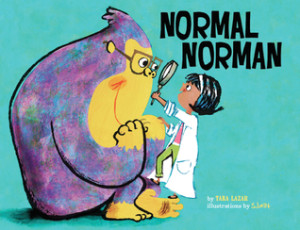
When I reviewed this book, the first thing I thought of was using it for a precept because the theme of novel is so relevant to middle schoolers. They all want to be normal when really it is the extraordinary that should be striving for!
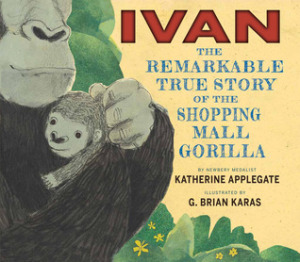
I used Ivan this year in a different individualized picture book activity, but the conversations that came about during that activity made me realize that the book needs to be a whole-group read aloud so we can discuss empathy for all living things.
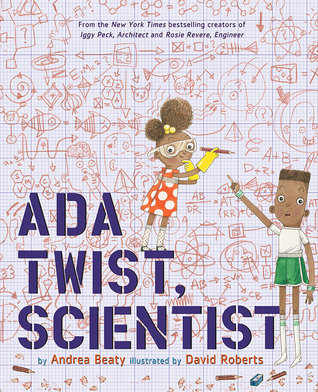
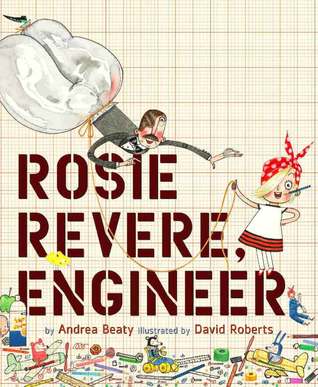
4. Ada Twist, Scientist and Rosie Revere, Engineer by Andrea Beaty and Iggy Peck, Architect (though I haven’t read it yet)
I love these texts that focus on going for your dreams, overcoming obstacles, and finding your passion. Beaty’s writing is rhythmic and imaginative, and Roberts’s illustrations are so detailed and beautiful.
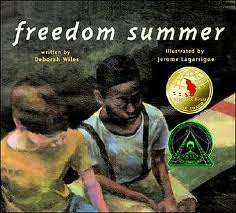
Freedom Summer is such an accessible introduction to the Civil Rights Movement for students who are just learning about the civil unrest of the past and in the middle of racial tension currently. This book will start discussions and make students think. Luckily, Deborah Wiles helps us out a ton by sharing so many resources with us on her Pinterest board https://www.pinterest.com/debbiewiles/ and her website http://deborahwiles.com/site/resources-for-educators/.
Ricki
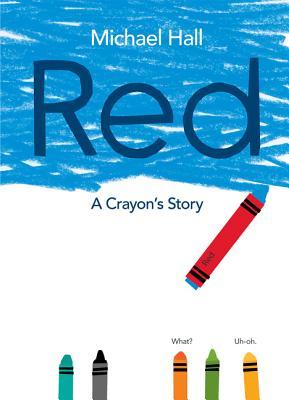
1. Red by Michael Hall
I use this picture book to talk about theme. I love reading this book to secondary students (or preservice teachers) and then asking them what they thought the book was “really” about. They are always surprised that their peers have different interpretations than they do. It’s a fabulous book with a beautiful message.
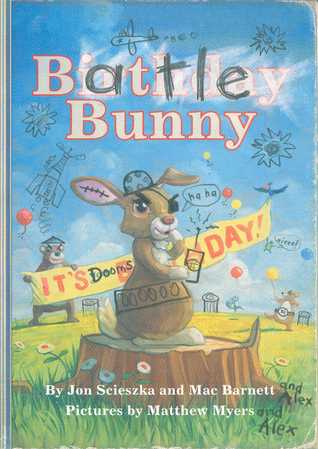
2. Battle Bunny by Jon Scieszka and Mac Barnett (I linked to Kellee’s Review of the book)
This is one of my favorite activities to do with students of all ages (elementary school through college!). You can easily download the Birthday Bunny book from the internet. I like this idea, but I do the activity a bit differently. I put the students into groups of five and purchase five copies of The Poky Little Puppy. The story is fairly flat, and it is a classic. We talk about why this might be. Then, I let them go at it—they create their own versions (each group writes directly in the five books I purchased). Each group shares with the class, and they are stunned at what we come up with. This gives us opportunities to talk about all kinds of literary goodness. 🙂
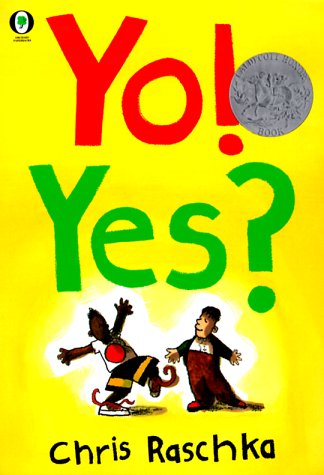
3. Yo! Yes? by Chris Raschka
My advisor, Wendy Glenn, introduced this book to me during our Methods class, and I still use it many years later (along with her activity!). She gave us a slip of paper with all of the words from this book but with the punctuation removed. We were instructed to find a partner and together, add punctuation and perform a skit for the class. It taught us the power of punctuation! I still use this activity with pre-service teachers and loved doing it with my high schoolers.
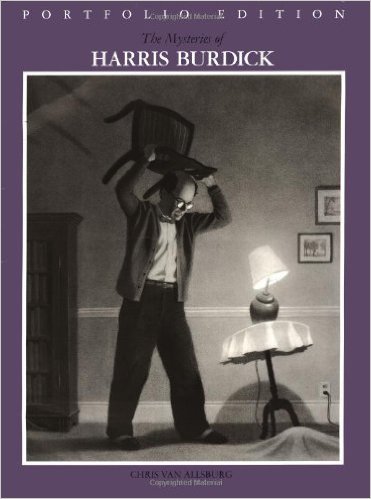
4. The Mysteries of Harris Burdick (Portfolio Edition) by Chris Van Allsburg
I took this idea from Caitlin Hoffman, a teacher in my department who always had clever ideas. (I am not sure if this idea was her own, but it is a clever one.) I bought the portfolio edition of this book, but it can also be purchased in picture book form. I hang the pictures around my classroom and tell my students to tell the rest of the story. Each picture in this book begs to be elaborated into a story.
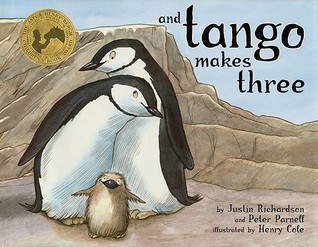
I love reading this book to my students to kick off banned books week. Most of them are stunned that it might even be banned because it is based on a true story. Following the reading and discussion, I put them into groups and give each group a different banned book, and we continue our conversation and sharing.
Which books do you think are a must-have for the classroom?
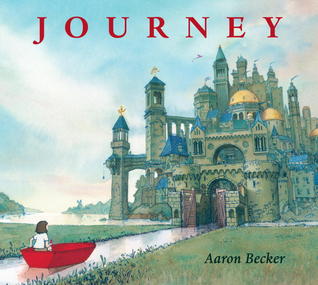
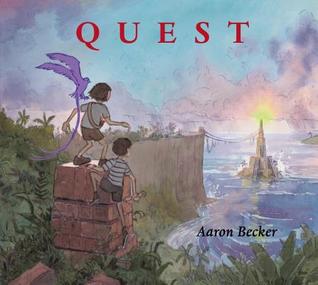
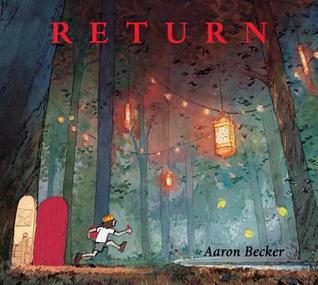
Journey Trilogy
Author and Illustrator: Aaron Becker Journey Published August 6th, 2013 Quest Published August 26th, 2014 Return Published August 2nd, 2016
By Candlewick Press
Journey Summary: Follow a girl on an elaborate flight of fancy in a wondrously illustrated, wordless picture book about self-determination — and unexpected friendship.
A lonely girl draws a magic door on her bedroom wall and through it escapes into a world where wonder, adventure, and danger abound. Red marker in hand, she creates a boat, a balloon, and a flying carpet that carry her on a spectacular journey toward an uncertain destiny. When she is captured by a sinister emperor, only an act of tremendous courage and kindness can set her free. Can it also lead her home and to her heart’s desire? With supple line, luminous color, and nimble flights of fancy, author-illustrator Aaron Becker launches an ordinary child on an extraordinary journey toward her greatest and most exciting adventure of all.
Journey Review: This book is very hard to explain the magic of it. Lorna (@notforlunch) described it the best, I think: “a wonderful mashup of a David Wiesner book and Harold and the Purple Crayon.” I think this is perfect. It has the illustration beauty and magic of a wordless David Wiesner picture book and it is about creativity (and a crayon) like Harold. The beauty of the castle she visited also reminded me of Cathedral by David Macaulay. This book is just full of amazing!
Quest Summary: A king emerges from a hidden door in a city park, startling two children sheltering from the rain. No sooner does he push a map and some strange objects into their hands than he is captured by hostile forces that whisk him back through the enchanted door. Just like that, the children are caught up in a quest to rescue the king and his kingdom from darkness, while illuminating the farthest reaches of their imagination. Colored markers in hand, they make their own way through the portal, under the sea, through a tropical paradise, over a perilous bridge, and high in the air with the help of a winged friend. Journey lovers will be thrilled to follow its characters on a new adventure threaded with familiar elements, while new fans will be swept into a visually captivating story that is even richer and more exhilarating than the first.
QuestReview: Quest is a beautiful continuation of Journey. Aaron Becker starts where the first book left off, but Quest is as unique as Journey was. The kids we met in the first book are swept into an adventure to save a king who has armed them with the tools to save the kingdom. I read this book over and over again because there are so many different little nuances in this adventure that promotes creativity, imagination, and teamwork. To be honest, I almost like Quest better than journey because the kids work together.
Return Summary: Welcome the much-anticipated finale of Caldecott Honoree Aaron Becker’s wordless trilogy—a spectacular, emotionally satisfying story that brings its adventurer home.
Failing to get the attention of her busy father, a lonely girl turns back to a fantastic world for friendship and adventure. It’s her third journey into the enticing realm of kings and emperors, castles and canals, exotic creatures and enchanting landscapes. This time, it will take something truly powerful to persuade her to return home, as a gripping backstory is revealed that will hold readers in its thrall. Caldecott Honor winner Aaron Becker delivers a suspenseful and moving climax to his wordless trilogy, an epic that began with the award-winning Journey and continued with the celebrated follow-up Quest.
Return Review: You will adore the conclusion to the trilogy. Becker does an amazing job of tying the beginning of Journey to the end of Return. To think that all the books happened in a day! The girl had quite an amazing journey, quest, and return in only one day! It is amazing what can go on when magic is involved. I don’t want to give away much else about the finale, but I will say it is as much a must read as the first two.
Teachers’ Tools for Navigation: In my classroom, the first thing I would do is project the book and just have the students read it with me. No talking; just looking. Then we’d go back and discuss what is going on in the book, talk about some of the smaller parts of the illustrations, relive the journey. If I wanted to include a writing activity, we could add words to the book (although, I think this book’s illustrations stand alone). We could also discuss what we’d do if we had a magic crayon. I think this book would be a great addition to Dot Day and discussing creativity. Finally, I think a discussion of observing your surroundings would be appropriate as what the girl wanted the most was right in front of her at the beginning of the book. (From 10/5/13 post)
Additionally, this trilogy would be a wonderful mentor text to discuss narrative elements because Becker has given us a perfect plot arc filled with conflict, suspense, and resolution. It would also be interesting to talk to students about characterization in a wordless picture book because the characters still have very evident traits though it is through illustration and actions that we have to determine them. Although, I would be careful in taking the magic away from these books. I don’t want to analyze and dig into them too much because they are beautiful pieces of art that should be enjoyed first and foremost.
Discussion Questions: What would you do with a magic crayon?; Why did the girl have to turn to a magical land instead of remaining at home?; Were you surprised about who finally saved the day?; What is happening on the final page of Return? How do you feel about this resolution to the story?; How did the story progress through each book?
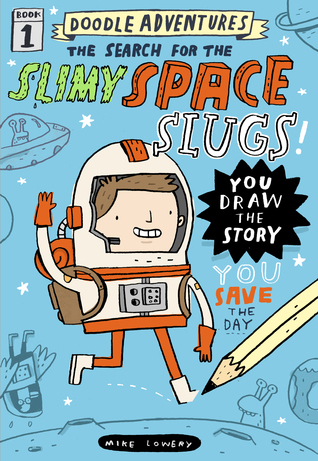
Doodle Adventures: The Search for the Slimy Space Slugs Author: Mike Lowery
Illustrator: Mike Lowery and YOU!
Published May 17th, 2016 by Workman Publishing Company
Summary: Draw your way through the story!
Doodle Adventures: The Search for the Slimy Space Slugs! is a lighthearted fantasy where the reader first draws him- or herself into the story, and then continues by following prompts and adding more illustrations and doodles. Set in space, the book invites the reader to join Carl, a duck and member of a super-secret international group of explorers, on a journey in search of a very important grail-like object. The book is sturdy paper over board with beautiful cream paper—perfect for defacing! And by the end, the reader will have co-written a tale to return to again and again, and show off to family and friends.
Kellee’s Review: I cannot wait to see this book completed by students. I think so many kids of all sorts of ages will enjoy this book. It is silly enough for young elementary students, and its plot is interesting enough for middle school students. I love the narrator, Carl, who is a puny and out spoken duck who takes the reader on a journey to the Slug Planet (in 2nd person point of view!). The illustrations are also so well done for what the book is trying to do. They are comic-esque and funny. I truly enjoyed my journey with Carl, but I am really looking forward to watching a kid complete this book in the interactive way that it is made for.
Ricki’s Review: After I review books, I almost always give them away to schools. I couldn’t help but think it would be such a great book for the boys who live next door. They are always adventuring in their backyard, and they will surely be captivated by this book. The narrator Carl (a duck) is highly entertaining, and I couldn’t help but laugh as I read the book. He talks to the reader, and the second-person narrative makes the book particularly funny. The reader will be catapulted into the story because of its interactive nature. Even kids who don’t enjoy drawing will want to put their pens to the pages.
Teachers’ Tools for Navigation: This book promotes creativity, plot development, and humor. There are so many different ways that a teacher could utilize this book, one for each of our recommendations below. First, it could be a class read aloud where the teacher does the drawing based on the class’s votes or students can take turn drawing. It could also be a lit circle/book club book where students complete the book in groups then they can jigsaw into new groups to share their newly created book. Lastly, the book could definitely be an independent read or class read where students draw in their own books and each student will have their own unique book.
Discussion Questions: How does drawing help you interact with the story? Which drawings were particularly fun to draw?; How does the second person narration make this story engaging? What other stories are written in this point of view?; Why might the book be narrated by a duck? What does this do for you, the reader?
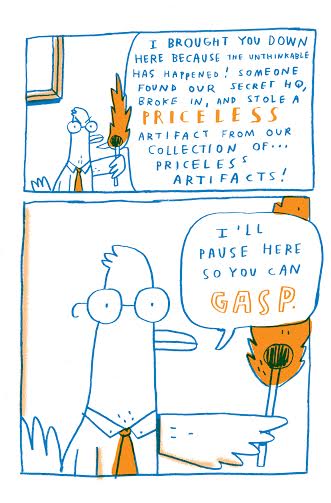
Flagged Passages: “I brought you down here because the unthinkable has happened! Someone found our secret HQ, broke in, and stole a PRICELESS artifact from our collection of…priceless artifacts!
I’ll pause here so you can GASP!” (p. 26)
See more at www.mikelowery.com or the author’s Instagram @mikelowerystudio
Read This If You Loved:Captain Underpants series by Dav Pilkey, Diaper Baby series by Dav Pilkey, Choose Your Own Adventure books, Drawing/Illustrating books
Recommended For:
and
**Thank you to Estelle at Workman Publishing for providing copies for review!**