Landscape with Invisible Hand by M. T. Anderson

Share

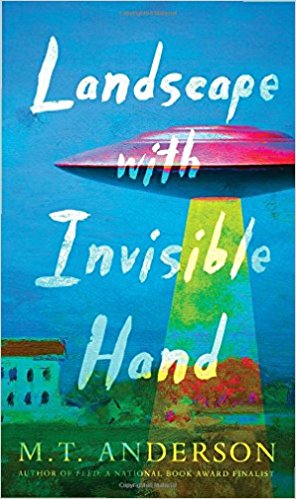
Landscape with Invisible Hand
Author: M. T. Anderson
Published: September 12, 2017 by Candlewick

Summary: National Book Award winner M. T. Anderson returns to future Earth in a sharply wrought satire of art and truth in the midst of colonization.

When the vuvv first landed, it came as a surprise to aspiring artist Adam and the rest of planet Earth – but not necessarily an unwelcome one. Can it really be called an invasion when the vuvv generously offered free advanced technology and cures for every illness imaginable? As it turns out, yes. With his parents’ jobs replaced by alien tech and no money for food, clean water, or the vuvv’s miraculous medicine, Adam and his girlfriend, Chloe, have to get creative to survive. And since the vuvv crave anything they deem “classic” Earth culture (doo-wop music, still-life paintings of fruit, true love), recording 1950s-style dates for the vuvv to watch in a pay-per-minute format seems like a brilliant idea. But it’s hard for Adam and Chloe to sell true love when they hate each other more with every passing episode. Soon enough, Adam must decide how far he’s willing to go – and what he’s willing to sacrifice – to give the vuvv what they want.

Review: 

  • Futuristic, dark satire that is an unusual, intelligent social commentary
  • Forces readers to think deeply about their personal, social, and political lives
  • Somewhat non-linear story with an interesting layout: each chapter has a title that corresponds with the artwork created by the main character
  • Stylistically, Anderson chooses every word with intention. The text is a 149-page novella that features chapters that can be taught instructionally as vignettes.

Teachers’ Tools for Navigation:  Teachers might ask students to begin by looking closely at the text for short passages that they find particularly interesting or inspiring. Students might write a one-pager that a) unpacks the passage they chose, and b) examines the passage through the lens of a topic that they find particularly interesting and relevant. For example, they might connect a passage to the following topics which are relevant in the text:

Art

Automation

Capitalism

Classism

Economy

Entrepreneurship

Existentialism

Extraterrestrial Life

Health Care

Immigration

Love

Politics

Poverty

Sickness

Nostalgia

Unemployment

After the students have written several one-pagers and explored a variety of topics, they might select one topic that interests them most. They can research scholarship about the topic and look across the entire text for relevant passages.

Sample research paper topics:

Examining economic disparities and classism within Landscape with Invisible Hand

Finding the soul: M.T. Anderson’s treatment of love and art in Landscape with Invisible Hand

Discussion Questions: Do you think M. T. Anderson had a purpose for writing this text?; What kind of social commentary does this text offer?; What does it tell us about love? Society? Humanity?; How does Anderson use art to enhance the story?; How is the text structured? How does this enhance your reading?

Flagged Passage: “We are tiny figures, faceless, pointing at wonders, provided for scale, no lives of our own, surveying the landscape that has engulfed us all.”

Read This If You Loved: Feed by M. T. Anderson; Books by Scott Westerfeld; The House of the Scorpion by Nancy Farmer

Recommended For:
 classroomlibrarybuttonsmall

Thank you, Candlewick!

RickiSig

The Peculiar Incident on Shady Street by Lindsay Currie

Share

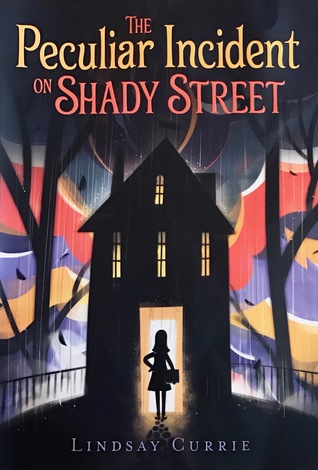
The Peculiar Incident on Shady Street
Author: Lindsay Currie
Published October 10th, 2017 by Aladdin

Summary: A girl unravels a centuries-old mystery after moving into a haunted house in this deliciously suspenseful mystery.

Tessa Woodward isn’t exactly thrilled to move to rainy, cold Chicago from her home in sunny Florida. But homesickness turns to icy fear when unexplainable things start happening in her new house. Things like flickering lights, mysterious drawings appearing out of nowhere, and a crackling noise she can feel in her bones.

When her little brother’s doll starts crying real tears, Tessa realizes that someone—or something—is trying to communicate with her. A secret that’s been shrouded in mystery for more than one hundred years.

With the help of three new friends, Tessa begins unraveling the mystery of what happened in the house on Shady Street—and more importantly, what it has to do with her!

Review: I always go in tentatively to spooky books because I am so jumpy and also really don’t enjoy when the only point of a book is to scare the reader. But I could tell right away that Shady Street was going to completely exceed other just-scary books because it was about so much more. Sure, there was definitely a shady mystery and some really scary moments, but it was all entwined with a story about friendship, family, identity, and moving. Lindsay Currie did a perfect job balancing the two goals of the book: to scare the reader and to make the reader care so much about her characters.

In addition to the plot development being on point, Shady Street‘s characters were each were fully-developed to give every reader someone to connect with. I also liked how Currie included actual Chicago folklore and landmarks to enhance the story (and as a girl who lives in Florida and loves Chicago, I loved the Florida truths throughout also). Check out Currie’s website for behind the scenes info, and here’s a video of Lindsay Currie on a walking tour through Graceland cemetery, one of the settings of the book:

Teachers’ Tools for Navigation: Students are going to love this story because it is a perfect mix of ghost story and coming-of-age story, so classroom, school, and public libraries all definitely need to have a copy–once one students reads it, the word is going to get out, and it’ll never be on the shelf!

In the classroom, using Lindsay Currie’s website and video, Shady Street is a good example of author’s decision-making, how the setting of a story can impact the plot, and how an author uses the setting to affect the mood.

Book Trailer: 

Discussion Questions: 

  • How would the story have been different if Tessa had not gone to the pond the first time?
  • Why do you think Inez chose Tessa?
  • Did the story end how you thought it was going to?
  • How did the author use the setting to affect the mood of the story? The plot?
  • Which character do you connect with the most? Explain.
  • What caused Inez to act the way she did?
  • Similar to what Tessa did at the end for Inez, create a name plate for yourself with illustrations that identify you.
  • Explain the act of condensation.

Flagged Passages: “The door clicks shut behind her, and I grab a pair of jeans off the chair I slung them over last night. My sketchpad is open just slightly and I stop in my tracks, confused at the small blur I can see in the upper left-hand corner of the sheet. It’s grayish black, like I started something then just barely ran the bad of my thumb over it.

‘What in the–‘ I start, bending closer to the page.

I didn’t draw anything last night. I was so tired from carrying boxes all over this ginormous place that I crawled into bed without even brushing my teeth.

I stare at the mark. It’s small and shaped like an upside-down L. Lifting the book and giving the paper a tap, I watch asn the unwelcome spot becomes dust again and drifts into the air. There will still be a darkened area there, but I’ll camouflage it with shading later. Still. There’s something about the mark that bothers me. Something off.”

Read This If You Love: Mary Downing Hahn novels, The Key to Extraordinary by Natalie Lloyd, Ghostlight by Sonia GenslerDoll Bones by Holly Black, The Seer of Shadows by Avi

Recommended For: 

classroomlibrarybuttonsmall 

Signature

**Thank you to Lindsay Currie for providing a copy of the book for review!**

Author Guest Post!: Giving Kids a Break: What’s so normal about “normal”? Or, in other words, is it OK to be “average”? by J.L. Powers (with M.A. Powers), Authors of Broken Circle

Share

Giving Kids a Break: What’s so normal about “normal”?  Or, in other words, is it OK to be “average”?

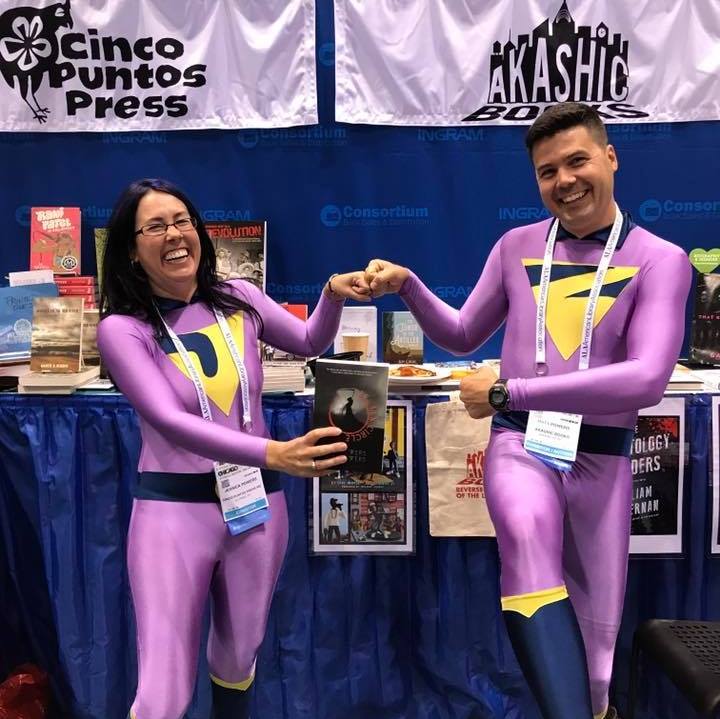
A few years ago, I started writing books with my “little” brother (he’s younger but much taller…and a whole lot cooler!).

Broken Circle is the first book in a series that examines cultural concepts of death through teen characters who serve as “soul guides”—that is, the entities charged with ushering recently departed souls from this world to the next. Modern day Charons, rowing patrons across the River Styx. Each teen soul guide belongs to a particular family of psychopomps—from the Reaper family to the Angel of Death family to the La Muerte family, etc. And each soul guide teen brings to the table a little bit of cultural reference in how they understand death and the process of dying. In the first book, however, our main character 15-year-old Adam doesn’t even realize that he’s a soul guide. He doesn’t know that his father is the Grim Reaper and he’s about to inherit the family business.

When I called Matt to talk about writing this blog post, we spent some time trying to figure out what we could say that would be useful to teachers and readers. After all, “death” is not an everyday topic for teachers! (As an aside, maybe it should be. We all die someday….shouldn’t we prepare for it rather than avoid it? That is, by the way, part of the impetus for writing this book…. The series is an extended philosophical meditation about death via fast-paced fantasy novels. Why, as a culture, are we so afraid of something we all must do someday?)

As we thought about this, we explored the following questions: Why did we write this book about a kid who’s just trying to live a so-called “normal” life and who discovers that he’s anything but normal—that he is, in fact, the personification of something everybody fears? How would he cope with that? How should we, as people, cope with the way other people perceive us or the ways we feel we aren’t “normal”? Can the things we fear most become our friend? Can we learn to embrace what is “abnormal” because it is healthier for us than what is “normal”?

Matt and I did not grow up “normal,” although it certainly felt “normal” to us because it was what we knew. We lived in a neighborhood on the U.S.-Mexico border, where half our neighbors and friends were “undocumented” immigrants, and many of them refugees fleeing the violence of Central America. Our mother homeschooled us before homeschooling was trendy—in fact, for the first few years, we kept it secret because the state of Texas was actively prosecuting parents who were homeschooling. My parents always tried to stay out of debt so we drove old clunkers, like the 1972 sky-blue Montego that embarrassed us so much whenever we went to church, where other families drove nice cars. (In our neighborhood, though, that 1972 Montego was COOL….low-rider material!) We wore hand-me-down clothes. Our mom cut our hair. We lived in a decrepit old perpetually-remodeling house. We were the antithesis of cool.

Today, both Matt and I are live on opposite sides of the country—Matt in Maine and me in California, the “Left Coast.” We are both trying—hard—not to get caught up in what our current culture regards as “normal,” whether that’s the most recent trend or the rat race of trying to keep up with the Joneses. Of trying to live up to some standard of what others deem “success.” And one of the things that worries both of us about modern childhood is the extreme stress society and families place on kids in order to make them achieve some predetermined notion of “success.” From preschool to college, we expect not just perfection in grades and school but we seem to pressure our kids to fill every moment of their lives with some activity that will help them “achieve” some undetermined level of greatness. It’s not enough to just enjoy soccer—you have to be so good at soccer that you can earn a scholarship. It’s not enough just to enjoy karate—you need to earn a black belt. And so on and so forth. It’s a terrible cycle that never ends—and to what purpose? What are our kids supposed to achieve? Couldn’t it be enough to live a good life, fall in love (or not), go to a “mediocre” school (is it really necessary to go to Yale?) or learn a trade, have kids (or not), travel a little bit, and generally be happy?

“We need T-shirts,” Matt said, “that say, ‘Celebrating the Average!’”

This doesn’t mean, by the way, that we think people and kids shouldn’t strive to achieve their dreams—only that our modern vision of what that should look like or how to get there is fundamentally problematic.

In Broken Circle, Adam is forced to leave his regular public school and attend a special boarding school. There will be no college for him, so this isn’t an expensive prep school designed to get him into Harvard or Yale.  Instead, he must learn the skills necessary to help newly departed souls cross a world we named “Limbo” to reach the “other side.”

And what are those skills exactly? What does Adam need to know in order to fulfill the obligations of this very different kind of profession?

Actually, he doesn’t need to KNOW anything. But he does need a skill set, one we think all people would benefit from.

In the world of Broken Circle, each departed soul enters a world called “Limbo.” If they don’t pass through Limbo to the other side, they remain stuck in Limbo forever. Limbo, as we constructed it, is a world each person experiences differently. It represents the emotional apex of a person’s life—their obsessions or fears or loves or desires. A soul guide must help each soul solve the problem of their life so they can pass peacefully on. So for example, a person who has spent much of his life pushed and pulled between the competing whims of a manipulative parent or spouse may have to endure a monstrous exaggeration of that world in Limbo and learn to stand up for himself before he can pass on to the other side. Or a mathematician might find herself stuck in a difficult, seemingly impossible math equation that she must solve. Or a librarian might find himself facing a stack of books he must shelve but they all lack their Dewey classification numbers. Or an electrician faces a live wire and a body of water she must somehow cross. You get the point…

These soul guides can’t possibly “know” everything they need in order to do this job! How do you prepare for something that is impossible to prepare for? Every soul these teens will guide across Limbo will have a different world they must navigate—a different emotional or literal problem they must solve. As a result, at the School for Soul Guides, these teens are allowed to learn whatever interests them. If they want to cook, they can learn to cook. If they want to learn karate, learn karate. If they want to build a pyramid, let them build a pyramid—figuring out mathematical proportions, soldering, and everything else required to create a pyramid. School in this case isn’t made up of required subjects that they have to master. They don’t all need to progress through rote systems of knowledge. Instead, whatever interests them, they pursue.

In our book, a soul guide in training must learn skills that helps them adapt to different situations and different people’s needs. A soul guide must learn how to be a good friend and mentor so he or she can help souls navigate the complexity of their emotional world. In other words, a “good” soul guide is one who is curious, flexible, judicious, and non-judgmental.

In the end, as teachers and parents, what are the skills we should impart to our kids to prepare them for a rapidly changing world? Do we need them to be so stressed, to cram every minute full of learning? Is it knowledge they need—or something else? Can we give them more space and time to grow as people in these fundamentally necessary skills of curiosity, flexibility, sagacity, and acceptance of others?

In the book, when he realizes that he is allowed to learn whatever he wants and nobody will stand in his way by requiring him to learn something else, one of our characters jokes, “Are we becoming jacks of all trades, masters of none?” The answer is no. They are learning to pursue learning for the sake of learning. They are learning to be people.

I have spent twenty years teaching college English. Yes, I like my students to be better writers, thinkers, and readers when they leave my classroom. But more important than that , I hope that when they leave my classroom, they have grown as people….that they have become better, kinder citizens of an increasingly globalized world. In my students and my own kid, and especially in myself, I hope I celebrate this kind of growth rather than cultural and financial and educational markers of “success”…..
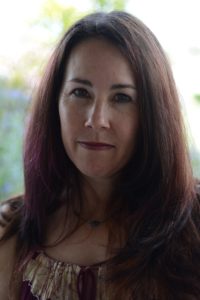

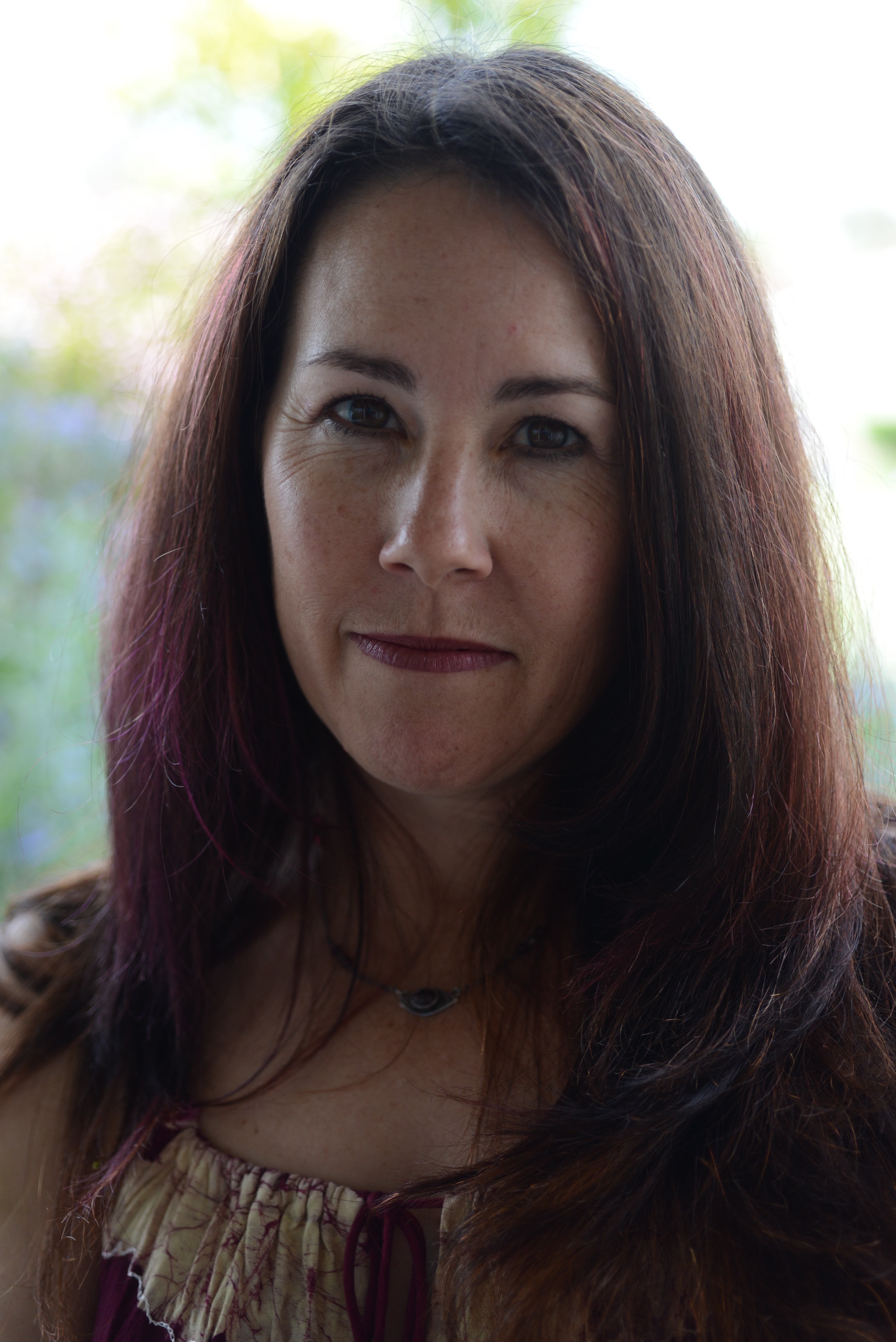
J.L. POWERS is the award-winning author of three young adult novels, The Confessional, This Thing Called the Future, and Amina. She is also the editor of two collections of essays and author of a picture book, Colors of the Wind. She works as an editor/publicist for Cinco Puntos Press, and is founder and editor of the online blog, The Pirate Tree: Social Justice and Children’s Literature. She  teaches creative writing, literature, and composition at Skyline College in California’s Bay Area, served as a jurist for the 2014 NSK Neustadt Prize for Children’s Literature, and is launching Catalyst Press in 2017 to publish African writers.

M.A. POWERS is J.L.’s “little” (but much taller) brother. He has a PhD in the oncological sciences from the Huntsman Cancer Institute at the University of Utah in Salt Lake City. He is currently a stay-at-home dad and lives in Maine.
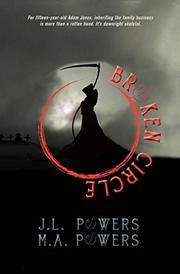
For young Adam Jones, inheriting the family business is more than a rotten hand. It’s downright skeletal.

PRAISE FOR BROKEN CIRCLE

“Adam’s ‘nightmares’ are so amped up that they begin to reveal to him truths about his parentage, and the mantle that has been placed upon his shoulders by his father, a grim reaper. There are so many other questions he wants answered and consequentially, he is shipped off to a ‘rehab’ which is actually the citadel for ‘soul guides.’ Teen and adult fans of the Sookie Stackhouse novels and the Mortal Instruments [series] will find Broken Circle a tight competitor for the new most addictive paranormal read.”

—Jilleen More, Square Books (Oxford, MS)

“Adam can’t even grow a man beard yet, but he can do something his friends can’t do—go to Limbo and back. Prepare to root for him as he makes new friends, discovers who he is, and saves a few souls in the process. This is a fast-paced, page-turning story!”

—Skila Brown, author of Caminar

“With a perfect balance of real-world and mythical, Adam’s story explores life, death, and everything in between. Anyone looking for a thoughtful take on life’s big questions will find it here, paired with fresh details, a fastmoving story, and bold world building.”

—Amy Rose Capetta, author of Entangled

ABOUT BROKEN CIRCLE

Adam wants nothing more than to be a “normal” teen, but his reality is quickly leaking normal. Afraid to sleep because of the monster that stalks him in his dreams, Adam’s breakdown at school in front of his crush Sarah lands him in the hospital. As he struggles to cope with his day-to-day life, Adam can only vaguely comprehend some sort of future. His mother died when he was only four and his eccentric father—who might be an assassin, a voodoo god, the reincarnation of the Buddha, or something even stranger—is never available when Adam really needs him. Even his paranoid grandfather, who insists that people are “out to kill the entire family,” is no help.

Adam’s life takes an even stranger turn when a fat man with a gold tooth and a medallion confronts his father regarding Adam’s supposed “True Destiny.” Adam is soon headed toward a collision with life, death, and the entities charged with shepherding souls of the newly dead, all competing to control lucrative territories where some nightmares are real and psychopomps of ancient legends walk the streets of North America.

Thank you for this guest post! It is so important for each kid to find their own path. 

and 

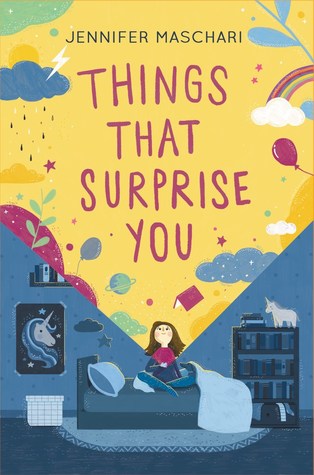
Review and Giveaway!: Things That Surprise You by Jennifer Maschari

Share

Things That Surprise You
Author: Jennifer Maschari
Published August 22nd, 2017 by Balzer + Bray

Summary: Emily Murphy is about to enter middle school. She’s sort of excited… though not nearly as much as her best friend Hazel, who is ready for everything to be new. Emily wishes she and Hazel could just continue on as they always have, being the biggest fans ever of the Unicorn Chronicles, making up dance moves, and getting their regular order at The Slice.

But things are changing. At home, Emily and her mom are learning to move on after her parents’ divorce. Hardest of all, her beloved sister Mina has been in a treatment facility to deal with her anorexia. Emily is eager to have her back, but anxious about her sister getting sick again.

Hazel is changing too. She has new friends from the field hockey team, is starting to wear makeup, and have crushes on boys. Emily is trying to keep up, but she keeps doing and saying the wrong thing. She want to be the perfect new Emily. But who is that really?

Things That Surprise You is a beautifully layered novel about navigating the often shifting bonds of family and friendship, and learning how to put the pieces back together when things fall apart.

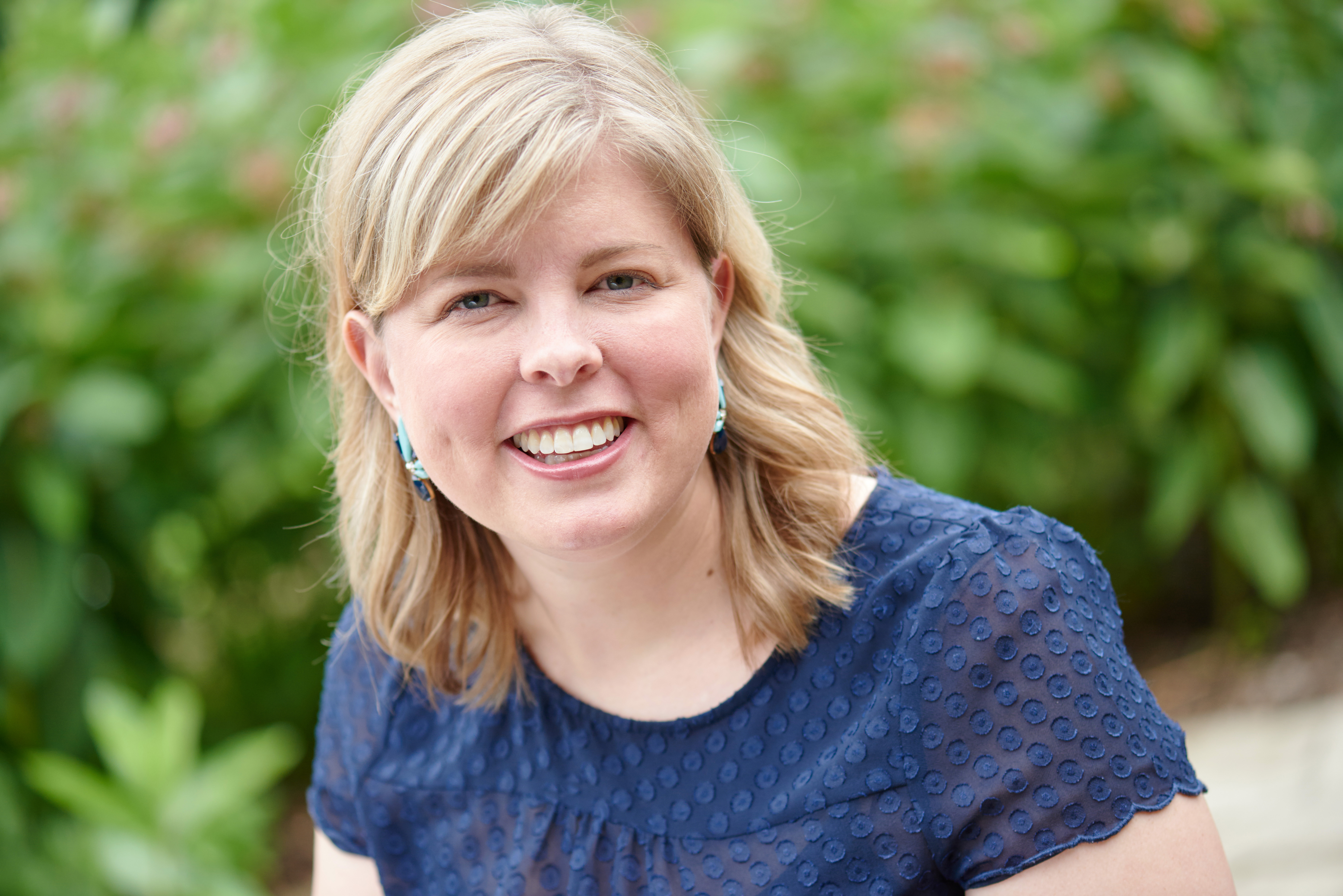
About the Author: Jennifer Maschari is a classroom teacher and the author of THE REMARKABLE JOURNEY OF CHARLIE PRICE and THINGS THAT SURPRISE YOU. She is hard at work on her next middle grade novel with Balzer+Bray/HarperCollins. Jennifer lives in Ohio with her husband and stinky (yet noble) English bulldogs, Oliver and Hank. To learn more, visit http://jenmaschari.com/.

Review: Things that Surprise You is a perfect starting middle school book because it really shows the truth of how that transition is a turning point in kids’ lives. As a middle school teacher, I see students all start coming into their own or getting pushed by peer pressure to be something they’re not. It is such a tough time in a kids’ life; a book like this will surely make them feel less alone during the turbulent time.

There are other two minor plot lines/characters that I felt were really well done. First, I think the inclusion of Emily’s sister’s eating disorder was done tastefully and was not added in just to make the book an issues book. Although this story didn’t take center stage, it was dealt with in a way that was respectful yet also brought light to anorexia. The struggles that Emily’s sister, family, and Emily face during this time is realistic because so many middle schoolers are facing adversity at home and when starting middle school.  I also really enjoyed Emily’s teacher. I think her ability to make students feel like her classroom is a home for them and that she is there for them was honorable, and I hope that I can be just a tiny bit like her.

Teachers’ Tools for Navigation: curriculum guide has been created by the publisher that includes discussion questions and activities that meet Common Core standards.

Discussion Questions: What do you think surprised Emily the most about middle school and was the most impactful?; What is the theme of this book? What is the author trying to tell us about middle school?; Do you have a book series that you love as much as Emily loves her unicorn books? What series is it? Why do you love it?; What do you think was the hardest for Emily in middle school?; Hazel changed a lot throughout the book. How would you compare/contrast Hazel from the beginning to the end of the book?; Mina’s eating disorder is one of the main conflicts of the book. Do you feel hopeful about Mina going forward?

Flagged Passages: “While Hazel and I wait, we bench dance to the music from the jukebox. It’s a lot like car dancing but a little more restrained since you’re in public and everything. She does the squid, a move she made up where you wiggle your arms on either side of your body. I do the turtle, where you bob your head forward and backward. Hazel’s snort-laughing and I practically have tears coming out of my eyes, when I hear a noise behind me. Hazel stops dancing. I turn my head to look, but not so fast that I miss Hazel taking the purple horn off her head and hiding it below the table. I blink once and then again Confused.

‘Hazel!’ the voice cried but it sound like ‘Heyyyyzel’ the way she draws it out.

Three girls wearing the same field hockey shirt Hazel was before crowd around the booth.” (p. 18-19)

Read This If You Love: The Real Us by Tommy GreenwaldHundred Percent by Karen Romano YoungTruth or Dare by Barbara DeeStill a Work in Progress by Jo KnowlesThe Secret Hum of Daisy by Tracy HolczerGeorgia Rules by Nanci Turner Stevenson, Forget Me Not by Ellie Terry

Recommended For: 

classroomlibrarybuttonsmall

GIVEAWAY!!

One lucky winner will receive a copy of THINGS THAT SURPRISE YOU (U.S. addresses).

a Rafflecopter giveaway

Signature

**Thank you Barbara at Blue Slip Media for providing a copy for review!!**

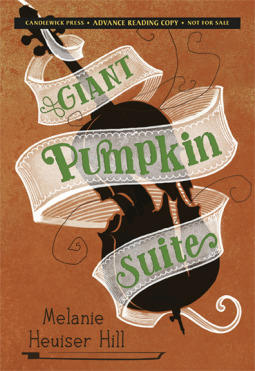
Giant Pumpkin Suite by Melanie Heuiser Hill

Share

Giant Pumpkin Suite
Author: Melanie Heuiser Hill
Published September 12th, 2017 by Candlewick Press

Summary: Who are you, if you can’t be what you always expected? A moving coming-of-age tale of prodigy and community, unlikely friendship and growing things.

Twelve-year-old Rose Brutigan has grown seven inches in the last eight months. She’s always been different from her twin brother, Thomas, but now she towers over him in too many ways. The gap in their interests continues to widen as well. Musically talented Rose is focused on winning the upcoming Bach Cello Suites Competition, while happy-go-lucky Thomas has taken up the challenge of growing a giant pumpkin in the yard of their elderly neighbor, Mr. Pickering. But when a serious accident changes the course of the summer, Rose is forced to grow and change in ways she never could have imagined. Along the way there’s tap dancing and classic musicals, mail-order worms and neighborhood-sourced compost, fresh-squeezed lemonade, the Minnesota State Fair — and an eclectic cast of local characters that readers will fall in love with.

Review: I must be honest as I start this review. I love the cello. I started playing at 11, went to a music school of choice in high school, and minored in music in college. And I believe that the Bach Cello Suites are some of the most beautiful pieces of music in existence. All of these facts may have made me a bit biased when it came to Giant Pumpkin Suite.

Rose is one special young lady. She is a prodigy of the cello and academics. She is taking college courses and has skipped grades and is in high school at age 12. And at the beginning of the book because of all of these things, she has lost what it is like to be a child. The only child-like thing she does in the first 50 pages or so is read Charlotte’s Web, which is her favorite book. Everything else in her life is structured and serious. But then something happens and everything changes. This is where the pumpkin comes in.

Rose truly transforms in this novel in a way that is believable yet amazing. The girl at the end of the novel seems so far away from the young lady you meet at the beginning, but as a reader, I loved the transformation. Rose is one amazing character who really finds who she is because of all the people in her world who truly do care for her.

Speaking of the other people, I loved the supporting cast in the novel. Hill did a great job making sure every character in the novel had their own personality and story and each played such an important part. I felt like I was part of the neighborhood by the time I was done with the book. And it isn’t only Rose that grows throughout the book. I loved seeing how Thomas, Jane, and other characters really found themselves throughout the book.

Teachers’ Tools for Navigation: I am interested to hear what students think of this book! I had it in my book speed dating in my classroom, and students seemed to love the cover and synopsis. I personally think that fans of the books listed below are going to love Rose’s story, so please put this book in your libraries 🙂

Discussion Questions: How did Rose change from the beginning to the end of the book?; Who do you think made the biggest impact on Rose?; How did the pumpkin affect the whole neighborhood?; Why did the bowl from Japan mean so much to Rose?; How do you think the story would have been different if the accident didn’t happen?

Flagged Passages: From Chapter 1:

“It was all so clever. Bach was a musical genius, but he didn’t even stop with beautiful music. He had all these jokes and numerical riddles running in the notes — forward, backward, and upside down, sometimes. Two of her favorite things in one package: math and music! Oh, how she loved Bach.”

“At age twelve (and two weeks and three days), Rose was almost a foot and a half taller and four grades ahead of her twin. Thomas had been sick a lot in first grade and had been held back, while she’d skipped a grade a couple of times and had started high school this past fall. She was left-handed; Thomas was right-handed. She loved to read; Thomas hated it. She went to university for math, but Thomas had never passed his multiplication tables. Nearly everyone had forgotten they were twins. Except Mr. Pickering, who seldom mentioned it. And Calamity Jane. Who mentioned it all the time.”

Read This If You Love: Vanished by James Ponti, The Way to Stay in Destiny by Augusta Scattergood, Echo by Pam Muñoz Ryan, Audition and Subtraction by Amy Fellner Dominy, A Crooked Kind of Perfect by Linda Urban

Recommended For: 

classroomlibrarybuttonsmall

Signature

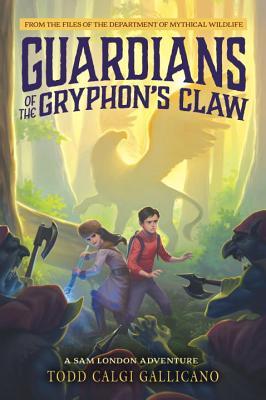
Guardians of the Gryphon’s Claw by Todd Calgi Gallicano

Share

Guardians of the Gryphon’s Claw
Author: Todd Calgi Gallicano
Published August 29th, 2017 by Delacorte Press

Summary: A new action adventure series set in our famous national parks! Enter the world of the Department of Mythical Wildlife, where our protagonist, Sam London, is tasked with protecting legendary animals that secretly live amongst our treasured wildlife.

Haunted by a dream of a mythical gryphon, Sam London uncovers an ancient secret that will change the way he sees the world forever. Recruited by Dr. Vance Vantana, an eccentric zoologist and park ranger sent by the government, Sam is whisked away on an adventure that takes him to the farthest reaches of the globe. Along this journey, Sam learns an incredible truth: mythical creatures are real and living among us in our national parks. A special department in the U.S. government ensures that their existence remains hidden. 

But Sam’s dream is an omen that the secret may now be in danger. Someone seeks the power to expose these creatures and overthrow humankind–and that power can only be found in a magical talisman known as the gryphon’s claw.

“A fun-filled start to a series that is sure to keep lovers of Rick Riordan running to the shelves.”-SLJ

“A death-defying, globe-spanning adventure, packed with creatures out of folklore and myth….[Guardians of the Gryphon’s Claw is] a solid series opener and debut for Gallicano, who stocks his story with engaging characters, human, and otherwise.”-Publishers Weekly

Review: I could not stop raving about this book as I read it! I tweeted about it, talked to everyone I saw about it, and even mentioned in a couple of IMWAYR posts. You know why? Because it is so much fun, the plot is so well-crafted, and finally my fans of Riordan’s mythological adventures are going to finally have a book that they’re going to love has much as his books. However, I don’t want you to think this is a Riordan copy-cat. It is a totally unique adventure with mythical creatures. I loved the combination of mythologies from different cultures, humor!, the new explanation of mythical creatures living with us yet hidden among us, and the inclusion of national parks in Sam’s story.

Teachers’ Tools for Navigation: Guardians of the Gryphon’s Claw will be a perfect new addition to mythology units in middle school to share along side Percy Jackson and other Riordan words. Gallicano even included a glossary of the mythical creatures that will be a wonderful asset to classrooms. However, I feel that primarily the book will be found in students’ hands.

Discussion Questions: What do you think the cliffhanger means?; What character traits does Sam posess that helped him in his adventures?; Which mythical creature would scare you the most? Which mythical creature would you want to have in your house? Which mythical creature would you want to hang out with?; Do you think Phylassos did the right thing in hiding his identity? About getting Sam London involved in the adventure?; Discuss Chriscanis and his journey in the book.; How did Sam’s story fit the Hero’s Journey?

Flagged Passages: “The flapping of the creature’s massive wings sent up a swirling column of dust that blanketed the plateau and rose hundreds of feet into the air. In Death Valley, these whirlwinds of dirt were often called sand augers — twisting, dust-filled tornados that fed off the desert floor as they moved across the landscape. Sam had forgotten about this part of the dream and closed his eyes and covered his mouth a moment too late. When he heard the wings slow and felt the haze begin to settle, he cautiously opened his eyes. They instantly stung from the dissipating cloud of dust, and he coughed as particles of desert sand forced their way into his throat. But it was all suddenly worth it–the stinging, the coughing, the lying, the possible grounding for eternity–for what he saw standing before him was truly extraordinary. Phylassos had returned.”

Read This If You Love: Mythology, Mythical Creatures, Adventure

Recommended For: 

classroomlibrarybuttonsmall closereadinganalysisbuttonsmall

Signature

**Thank you to Random House Children’s Books for providing a copy for review!**

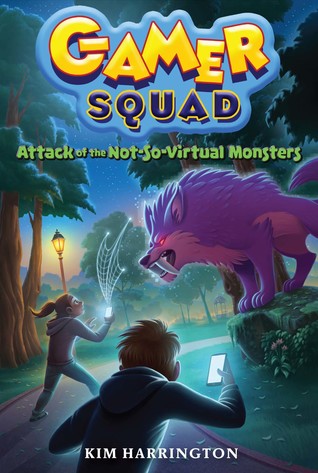
Gamer Squad #1: Attack of the Not-So-Virtual Monsters by Kim Harrington

Share

Gamer Squad #1: Attack of the Not-So-Virtual Monsters
Author: Kim Harrington
Published August 1st, 2017 by Sterling Children’s Books

Summary: What happens when your cool virtual-reality game . . . becomes REAL? Pokemon GO meets The Goonies in this action-packed middle-grade series.

Monsters Unleashed–where you catch virtual-reality monsters on your cellphone–is one of the hottest mobile games around, and Bex and Charlie just can’t stop playing. They even check out an old map in Charlie’s grandfather’s attic in hopes of discovering some forgotten places in town where the rarest monsters might hide. But they find a strange machine up there too, and after Charlie switches it on, the WiFi goes down . . . and Bex’s entire catalog of monsters vanishes! And that’s not the worst of it: all the creatures she’s collected on her phone escape into the real world. Can the friends nab the beasts before they become monster lunch?

Author Bio: Kim Harrington is the author of ClarityPerceptionThe Dead and Buried, and Forget Me for teens and the Sleuth or Dare and Gamer Squad series for kids. She lives in Massachusetts with her husband and son. When not writing, she’s most likely reading, watching one of her favorite TV shows, or fantasizing about her next vacation. She can be found on Twitter (@Kim_Harrington), Instagram (@KimHarringtonAuthor) and on her website: www.kimharringtonbooks.com.

Don’t miss out on our Interview with the Author, Kim Harrington!!

Review: Kim Harrington’s new series combining video games, science fiction, and adventure is going to be a huge hit with middle grade readers! The first book is a quick, fun read which you cannot put down. Monsters Unleashed, I believe purposefully, is like Pokemon Go! in that the players walk around town looking for monsters to catch, but what would happen if one person’s caught monsters escaped?!?! That was happens with Bex and Charlie, and now it is up to them to figure out how to save their town. This is when it gets unique and crazy! How are they going to get all of the monsters? They are clever 🙂

I cannot wait to read the rest of the series! I cannot wait to see what Bex and Charlie do next!

Teachers’ Tools for Navigation: I can promise that this is a must buy for middle grade classroom and school libraries. Students are going to love these!

Discussion Questions: How does Bex and Charlie overcome their monster obstacles? What different strategies do they use?; What type of people are Bex and Charlie? Do you think that plays a part in them being able to be successful?; Do you think Charlie did the right thing when it came to his brother?; How is Monsters Unleashed and Pokemon Go alike? Different?; What characters surprised you with their interest in Monsters Unleashed? What does that teach you?

Flagged Passages: “The monster emerged from behind a tree. It was covered in fur, like a wolf, but also had two long, sharp fangs poking out of its mouth, and glowing red eyes. The VampWolf was the perfect combination of horrifying and terrifying. It was torrifying. I didn’t even care that wasn’t a word. I was so scared, I needed a new word.

‘Are you seeing what I’m seeing?’ I asked Charlie.

‘If you’re seeing an actual VampWolf walking toward us, then yes.’

‘How can this be happening?’ I looked down at my phone. The Monsters Unleashed app wasn’t even open. I wasn’t looking through the screen. The monster was really there, in the middle of the street.

This wasn’t a game. The VampWolf was right there in front of us on the street.” p. 26-27

Read This If You Love: Tesla’s Attic by Neal Shusterman and Eric Elfman, Frenzy by Robert Lettrick, Heir Apparent by Vivian Vande Velde, Secret Coders by Gene Luen Yang, Frank Einstein by Jon Sciezska, Goosebumps by R.L. Stine

Recommended For: 

classroomlibrarybuttonsmall

Signature

**Thank you to Ardi at Sterling Publishing for providing a copy for review!!**