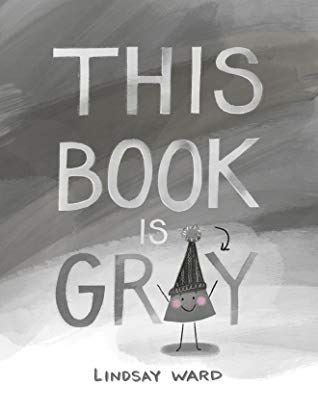
This Book is Gray by Lindsay Ward

Share

The Day the Crayons Quit
Author and Illustrator: Lindsay Ward
Published: December 1, 2019 by Two Lions

Goodreads Summary:Gray just wants to be included. But the other colors are always leaving him out. So he decides to create his own project: an all-gray book. Once upon a time, there lived a wolf, a kitten, and a hippo…

Gray just knows it’s going to be perfect. But as he adds page after page, the Primary and Secondary colors show up…and they aren’t quite so complimentary.

A book within a book, this colorful tale explores the ideas of fitting in, appreciating others, and looking at things from another perspective and also uses personality and wit to introduce basic color concepts.

Ricki’s Review: I adored this book. I love stories about the underdog, and gray is definitely an underdog color! Fans who love The Day the Crayons Quit will absolutely love this story. It is very funny and a fantastic read aloud. There are many themes for discussion within the book. Kids might consider whose stories are missing as they think about gray’s emotions. They might also think about the other colors and how they are rude to gray and what this might feel like. The characterization of all of the colors offers much for discussion, too. Teachers and parents will love to read this aloud to children.

Kellee’s Review: As a daughter of an art teacher and art museum director, art education has always been important to me. I think the lack of art classes in elementary and secondary school as well as the push away from imagination in schools is a detriment to our children, so books like this give me so much hope! This book celebrates color education, creative writing, word play, and mood. It even pulls in social emotional learning with a focus on friendship and cooperation. Lindsay Ward did such a fantastic job with all of the elements of the story, and I cannot wait to share this book far and wide. It will be a fantastic read aloud in classrooms when discussing primary/secondary colors, story telling and mood, or even just to talk about how to work together. I cannot tell you enough how much you, your teacher friends, your parent friends, and all the kids you know need this book 🙂

Teacher’s Tools for Navigation: The possibilities of this text are very exciting. Teachers might have students choose a story of a lesser known or lesser considered character and have students develop their own fiction! They can share these stories and have a discussion about the people and things we don’t often consider.

Discussion Questions: How does gray feel? How do the other crayons make him feel?; How might you apply gray’s experiences to your own life?; How does the author make the book funny? How does this add to your experience as a reader?

We Flagged: “They never let me color! Just one tiny bit of GRAY? Is that so much to ask?”

You can also look inside the book HERE.

Read This If You Loved: The Day the Crayons Quit by Drew Daywalt, Red: A Crayon’s Story by Michael Hall, Who Stole Mona Lisa? by Ruthie Knapp, The Dot and Sky Color by Peter H. Reynolds, Chalk by Bill Thomson, Art & Max by David Weisner, Not a… series by Antoinette Portis, Art by Patrick McDonnell, Perfect Square by Michael Hall, Cloudette by Tom Lichtenheld

Recommended For: 

readaloudbuttonsmall classroomlibrarybuttonsmall 

andSignature

**Thank you to Blue Slip Media for providing copies for review!!**

Teacher Guide for AstroNuts Mission One: The Plant Planet by Jon Scieszka

Share

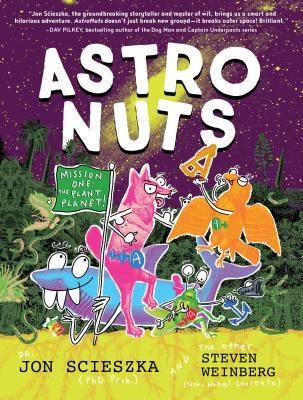
AstroNuts Mission One: The Plant Planet
Author: Jon Scieszka
Illustrator: Steven Weinberg
Published: September 10th, 2019 by Chronicle Books

Summary: AstroWolf, LaserShark, SmartHawk, and StinkBug are animals that have been hybridized to find other planets for humans to live on once we’ve ruined Earth. So off they rocket to the Plant Planet! Will that planet support human life? Or do Plant Planet’s inhabitants have a more sinister plan?

Teachers’ Tools for Navigation and Discussion Questions: 

Please view and enjoy the teachers’ guide I created for AstroNuts Mission One:

You can also access the teaching guide here.

You can learn more about AstroNuts on its webpage.

Recommended For: 

readaloudbuttonsmall classroomlibrarybuttonsmall litcirclesbuttonsmall closereadinganalysisbuttonsmall

Kellee Signature

Educators’ Guide for The Trouble with Shooting Stars by Meg Cannistra

Share

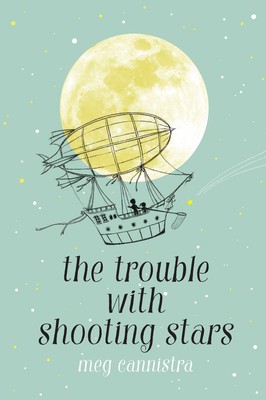
The Trouble with Shooting Stars
Author: Meg Cannistra
Published: August 20th, 2019 by Simon & Schuster for Young Readers

Summary: Twelve-year-old Luna loves the nighttime more than anything else. It’s when no one gives her “that look” about the half mask she has to wear while healing from a disfiguring car accident. It’s also the perfect time to sit outside and draw what she sees. Like the boy and girl from the new family next door…zipping out of the window in a zeppelin and up to the stars.

At first she thinks she’s dreaming. But one night the siblings catch her watching. Now Luna spends her nights on adventures with them, as they clean full moons, arrange constellations, and catch jars of stardust. She even gets to make a wish on a shooting star they catch.

But Luna learns that no wish is strong enough to erase the past — as much as she may hope to.

Teachers’ Tools for Navigation and Discussion Questions: 

Please view and enjoy the teachers’ guide I created for The Trouble with Shooting Stars:

You can also access the teaching guide here.

You can learn more about The Trouble with Shooting Stars on Meg Cannistra’s Cake Literary page.

Recommended For: 

readaloudbuttonsmall classroomlibrarybuttonsmall litcirclesbuttonsmall closereadinganalysisbuttonsmall

Kellee Signature

Teachers’ Guide for Beverly, Right Here by Kate DiCamillo

Share

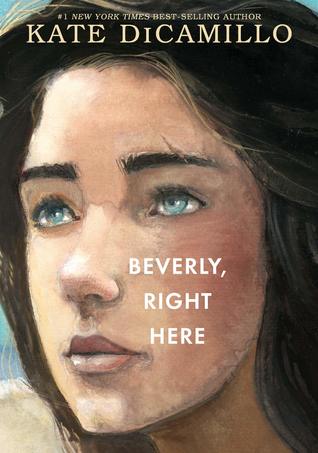
Beverly, Right Here
Author: Kate DiCamillo
Published: September, 2019 by Candlewick Press

Summary: Beverly put her foot down on the gas. They went faster still.
This was what Beverly wanted — what she always wanted. To get away. To get away as fast as she could. To stay away.

Beverly Tapinski has run away from home plenty of times, but that was when she was just a kid. By now, she figures, it’s not running away. It’s leaving. Determined to make it on her own, Beverly finds a job and a place to live and tries to forget about her dog, Buddy, now buried underneath the orange trees back home; her friend Raymie, whom she left without a word; and her mom, Rhonda, who has never cared about anyone but herself. Beverly doesn’t want to depend on anyone, and she definitely doesn’t want anyone to depend on her. But despite her best efforts, she can’t help forming connections with the people around her — and gradually, she learns to see herself through their eyes. In a touching, funny, and fearless conclusion to her sequence of novels about the beloved Three Rancheros, #1 New York Times best-selling author Kate DiCamillo tells the story of a character who will break your heart and put it back together again.

Revisiting once again the world of Raymie Nightingale, two-time Newbery Medalist Kate DiCamillo turns her focus to the tough-talking, inescapably tenderhearted Beverly.

View my post about Raymie Nightingale and Louisiana’s Way Home to learn about the two companion books to Beverly.

Teachers’ Tools for Navigation and Discussion Questions: 

Please view and enjoy the teachers’ guide I created for Beverly, Right Here:

You can also access the teaching guide here.

You can learn more about Beverly, Right Here on Candlewick’s page.

Recommended For: 

readaloudbuttonsmall classroomlibrarybuttonsmall litcirclesbuttonsmall closereadinganalysisbuttonsmall

Kellee Signature

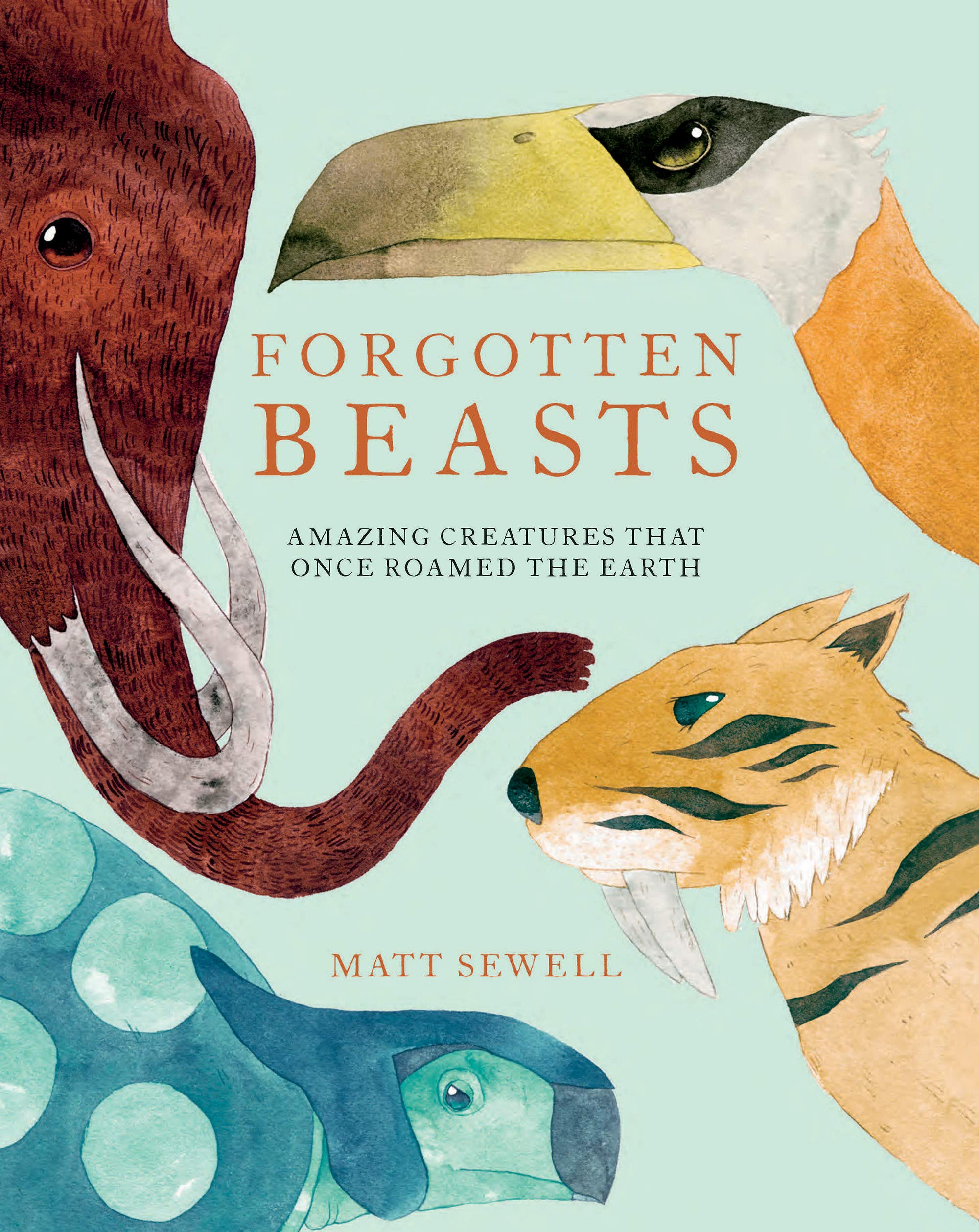
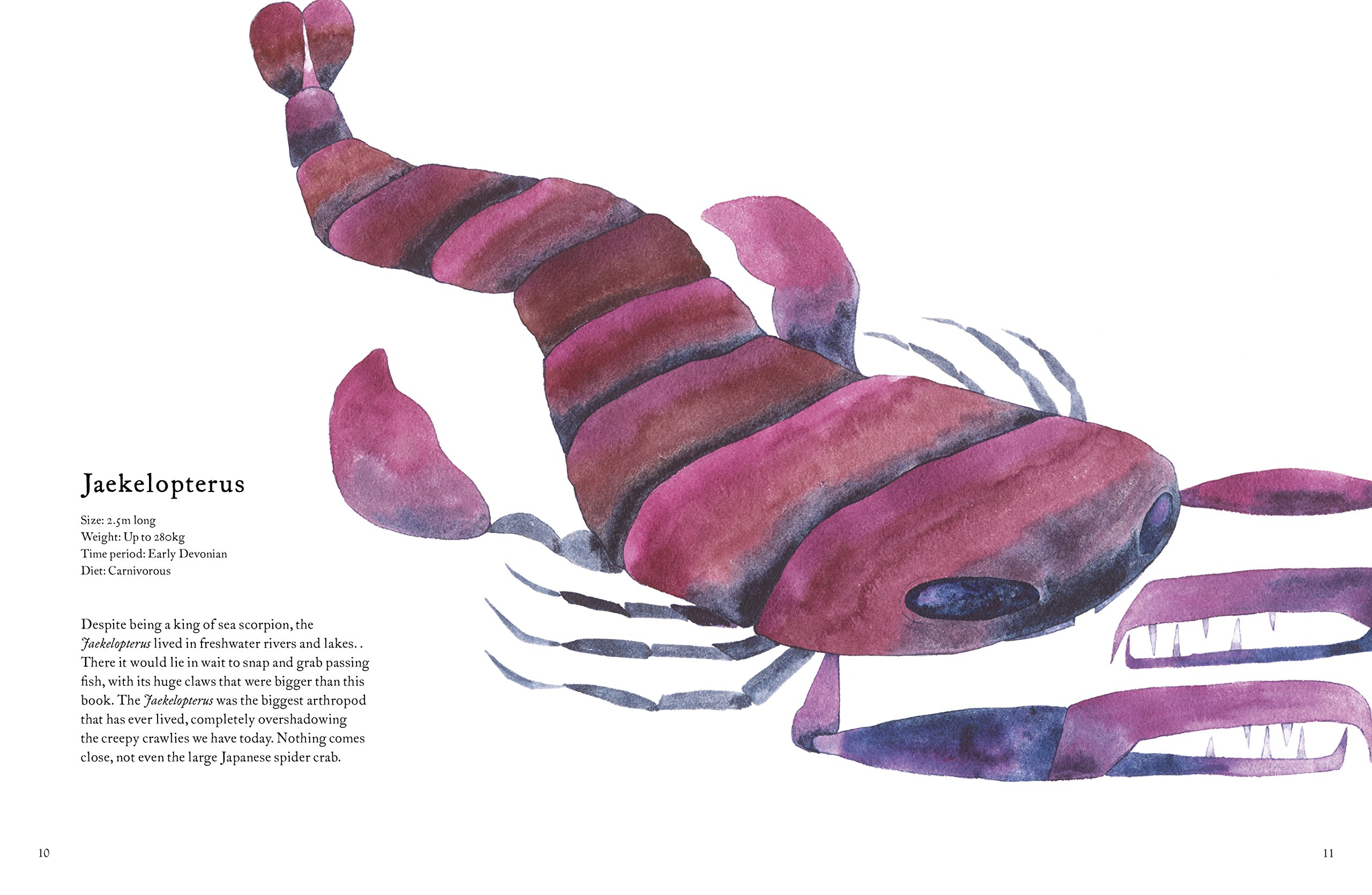
Forgotten Beasts: Amazing Creatures That Once Roamed the Earth by Matt Sewell

Share

Forgotten Beasts: Amazing Creatures That Once Roamed the Earth
Author: Matt Sewell
Published October 4th, 2019 by Pavilion Books

Summary: A witty, colorful celebration of the amazing lost creatures of this planet; with a strong message of protection and conservation.

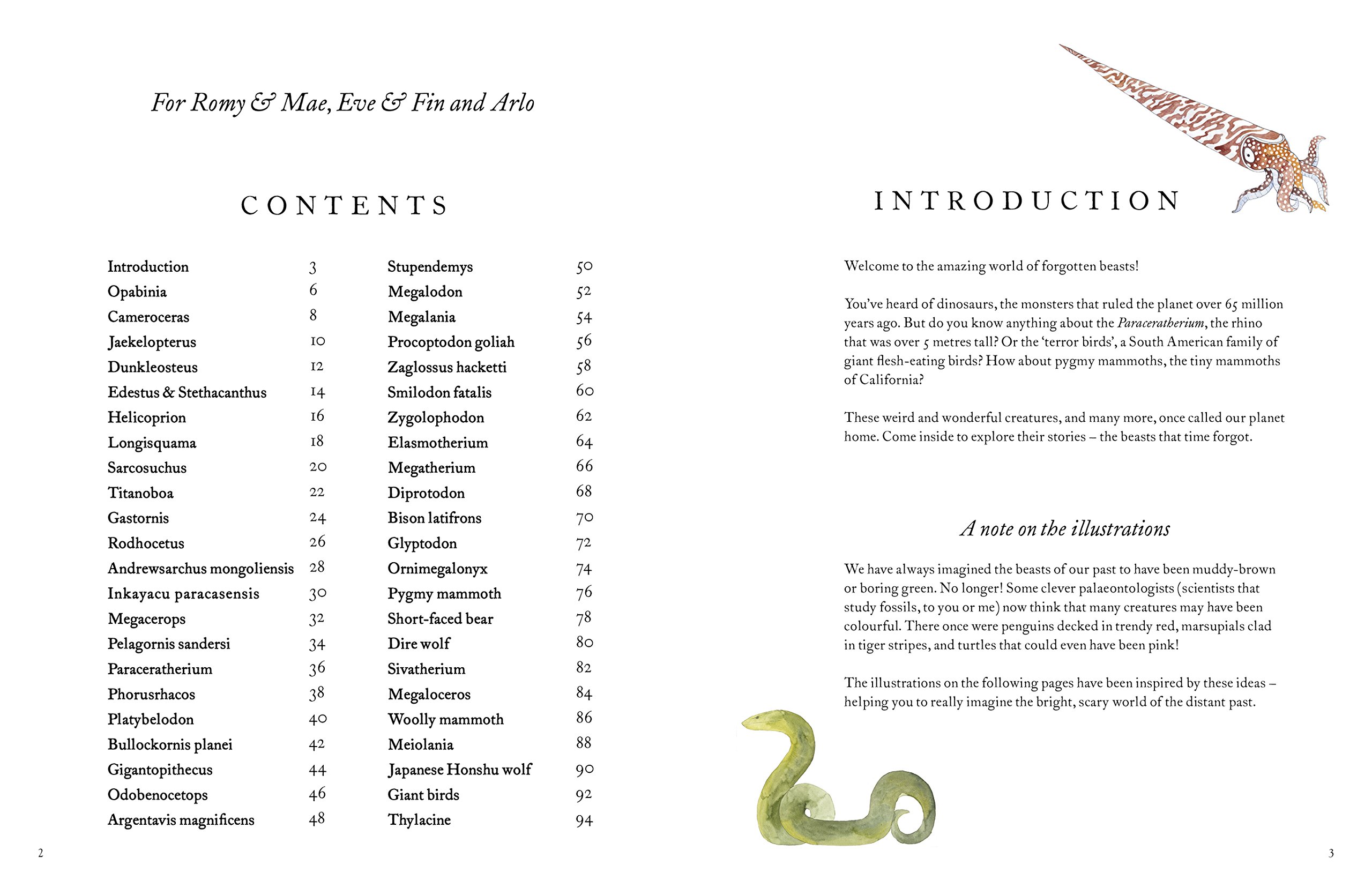
Matt Sewell’s follow-up to the mega-hit The Colorful World of Dinosaurs is a beautifully-illustrated large format look at the amazing beasts that time forgot – from the relatively well known, such as the sabre-toothed tiger and woolly mammoth, to the obscure monsters that walked the earth millions of years ago – many now forgotten. These beasts are arranged chronologically–from the strange invertebrate Opabinia that lived over 500 million years ago, to the Thylacine, or Tasmanian Tiger, that became extinct in 1936. New findings are being made every year, and research is showing us exactly how these beasts looked and how they lived.

Creatures illustrated and described include:

Sabre tooth tigers and woolly mammoths
Glyptodon – an armadillo as big as a VW Beetle car
Megalodon – a monster 60 foot (18m) shark
Water King penguin – a red and grey penguin the size of a man
Ornimegalonyx – a huge Cuban flightless owl, the largest owl that ever existed, at over 3 feet (1m) tall
Deinotherium – a strange-looking and huge, elephant-like creature with tusks positioned on its lower jaw and curved, facing downwards
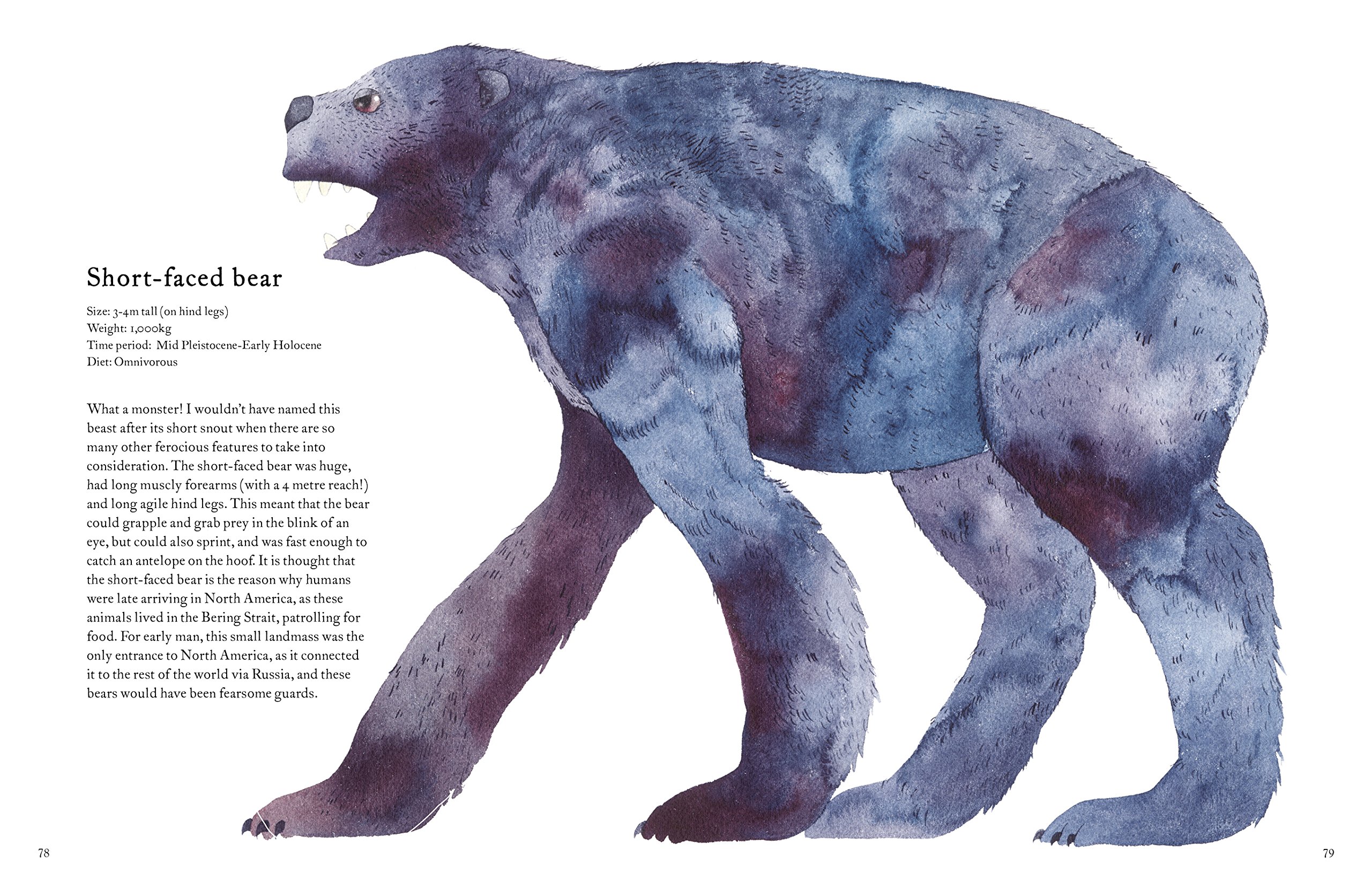
Short-nosed bear – a massive fearsome bear that kept North America human free
Megatherium – the giant sloth, as large as a modern elephant

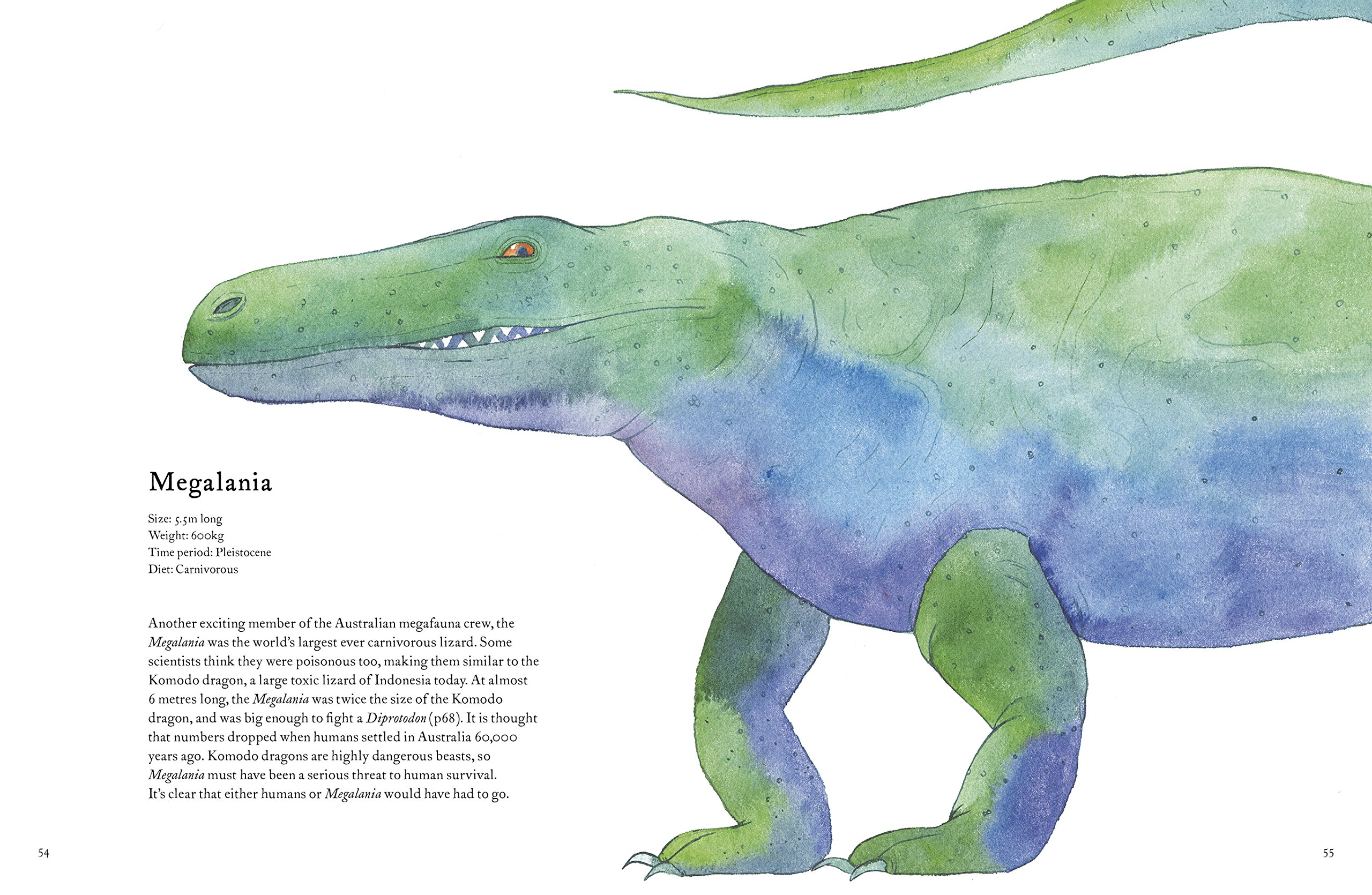
Less celebrated than the dinosaurs, the range of beasts is equally impressive, every one a scary, amazing creature that actually stalked the planet. Like the dinosaurs, these beasts are awe-inspiring in their variety, with amazing details not seen on animals today and in a wide variety of furs, feathers and colors, making for a stunning collection of illustrations.

About the Creator: Matt Sewell, who has been described as “the Banksy of the bird world,” is an avid ornithologist and artist. He is the author of OwlsOur Garden BirdsOur Woodland BirdsOur Songbirds, and Penguins and Other Seabirds and has illustrated for the Guardian and Big Issue among many other publications. His art has been exhibited in London, Manchester, New York, Tokyo, and Paris.

Review: What a fascinating introduction to species of animals that used to walk on our Earth. As a reader, mom, and teacher I immediately enjoyed this book. Each spread includes a synthesized blurb about the animal and a large, colorful illustration that definitely catches the eye. While the book is science-driven, it is written in a way that many different levels of scientific understanding would find it interesting. I also really liked the choice of animals that were included because it wasn’t only animals that people know about already.

Teachers’ Tools for Navigation: I want to know more, and Trent wanted to know more, so I think when kids read this, they would want to know more also. So let’s jump off on this curiosity and dive into inquiry!

First, the book starts with a timeline and each animal says what time period they are from, but it does not show the timeline. I would love to take the timeline and place each animal on it.

Also, with the foundational knowledge shared in the book, students can jump into a full on inquiry project about animals of their choice looking at when they lived, what they’re related to in modern time, how they became extinct, etc. Then students can make a presentation for a gallery walk.

Discussion Questions: 

  • When did _______ live?
  • How many years ago was that?
  • What is _______ related to [modern animals]?
  • Why did ______ go extinct?
  • What other animals lived during the same time?

Flagged Passages: 

Read This If You Love: History, Dinosaurs, Animals

Recommended For: 

classroomlibrarybuttonsmall 

Stop by Kid Lit Frenzy for more Nonfiction Picture Book love!

Signature

**Thank you to Media Master Publicity for providing a copy for review!**

Author Guest Post: “Bonding a Classroom Over Books: Read Aloud as a Community Builder” by Kristin Thorsness, Author of The Wicked Tree

Share

“Bonding a Classroom Over Books: Read Aloud as a Community Builder”

My third year of teaching, I welcomed my fifth-grade class back from mid-winter break by revealing Sharon Creech’s Walk Two Moons as our next read aloud. Immediately, an excited titter spread amongst the table groups of my classroom. A student raised his hand with a grin and asked, “Are you going to cry? I heard when you read that book last year, you cried … in front of everyone!” The students exchanged excited looks, shocked by the boldness of the question-asking kid and eagerly waiting for the answer. I smiled and nodded.

It was true—I would cry. Walk Two Moons always makes me cry. Always. It did when I first read it as a fifth grader, curled up on the couch in the formal living room of my childhood home (the only place to escape my three younger siblings for quiet reading time), it did every time I read it aloud to one of my classes as a teacher in my twenties, and if I read it today … you guessed it, blubbery mess. That’s what evocative writing does to me, and Sharon Creech is a master.

Over the course of weeks, I read the book aloud to my class and we dissected it together. We made predictions about where Phoebe’s mother had gone, about what would happen if Sal did/didn’t reach her own mother by her birthday, about who the “lunatic” might be, and what, if anything, would happen between Sal and Ben. We discussed our favorite and least favorite characters—writing scenes from their perspectives, really getting into their heads—and when we got to THE SCENE (Walk Two Moons is an older book, but just in case I’ll avoid any spoilers!), my eyes weren’t the only wet ones in the room.

Did all my students cry? Of course not. But no one mocked those who did, which, in the world of tweens, showed a level of respect and empathy I always worked hard to build into my classroom. Whether they were moved to tears or not, they had shared an emotional experience, and they understood that that meant something. They were more than just classmates; they’d gone on a journey together.

This is the power of books.

Not all my read aloud choices were “crying” books. I made sure to read a wide variety of authors and genres to my classes, and I also let them propose read aloud books for the group to vote on. Listening to students explain why they loved a book and why they thought the whole class should read it always gave us insight into them as a person. And the more insight students have into each other, the more tightly knit a classroom becomes. We read scary books, mysteries, historical fiction, funny books, on a student’s recommendation I even read Brian Seiznick’s The Invention of Hugo Cabret (a heavily illustrated novel) under the document camera so we could all experience the magic that happens when a well written story and beautiful illustrations combine.

Whenever it was time to choose a new book, inevitably there would be questions about which books I had found sad, scary, or funny when I was a tween. The kids were always delighted if I named a book they’d read and enjoyed—books were sometimes my best “in” with struggling students. If you’re curious, some of my top answers were  Wilson Rawls’s Where the Red Fern Grows (sad), Mary Downing Hahn’s Wait Til Helen Comes (scary books are my personal favorite—I still have the battered copy of this book that I received in third grade!), and Louis Sachar’s There’s a Boy in the Girl’s Bathroom (funny, though that book really runs the gamut).

I made sure to have copies of all these books in my classroom library, and almost without fail, any book I endorsed quickly became a hot commodity. Students would discuss with me and with each other what their own takes on my recommended books were. Then, they’d suggest books they thought I might like, which is how I discovered Mary Downing Hahn is still the queen of ghost stories. (I can only hope to still be publishing books when I’m in my eighties!)

The five years I spent in the classroom showed me that not only is reading a fun way to spend a rainy afternoon (or the last ten minutes of lunch), books have the power to forge connections. I loved spending my days with the delightful, witty (and yes, sometimes sassy!), tween students in my class. When I left teaching to raise my young children and write, I thought of my former students often and my desire to write was refined into a desire to write books for them—for middle grade readers.

My debut middle grade novel, The Wicked Tree, is first and foremost a creepy tale, but there is humor, grief, mystery, and a lot of friendship woven in. I can’t wait for Tav’s story to be in the hands of middle grade readers and their teachers, and it would be my greatest joy to hear that it sparked a classroom discussion that helped bring the students and teacher closer together.
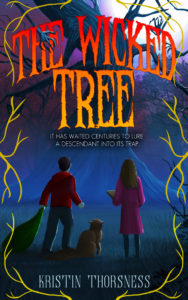
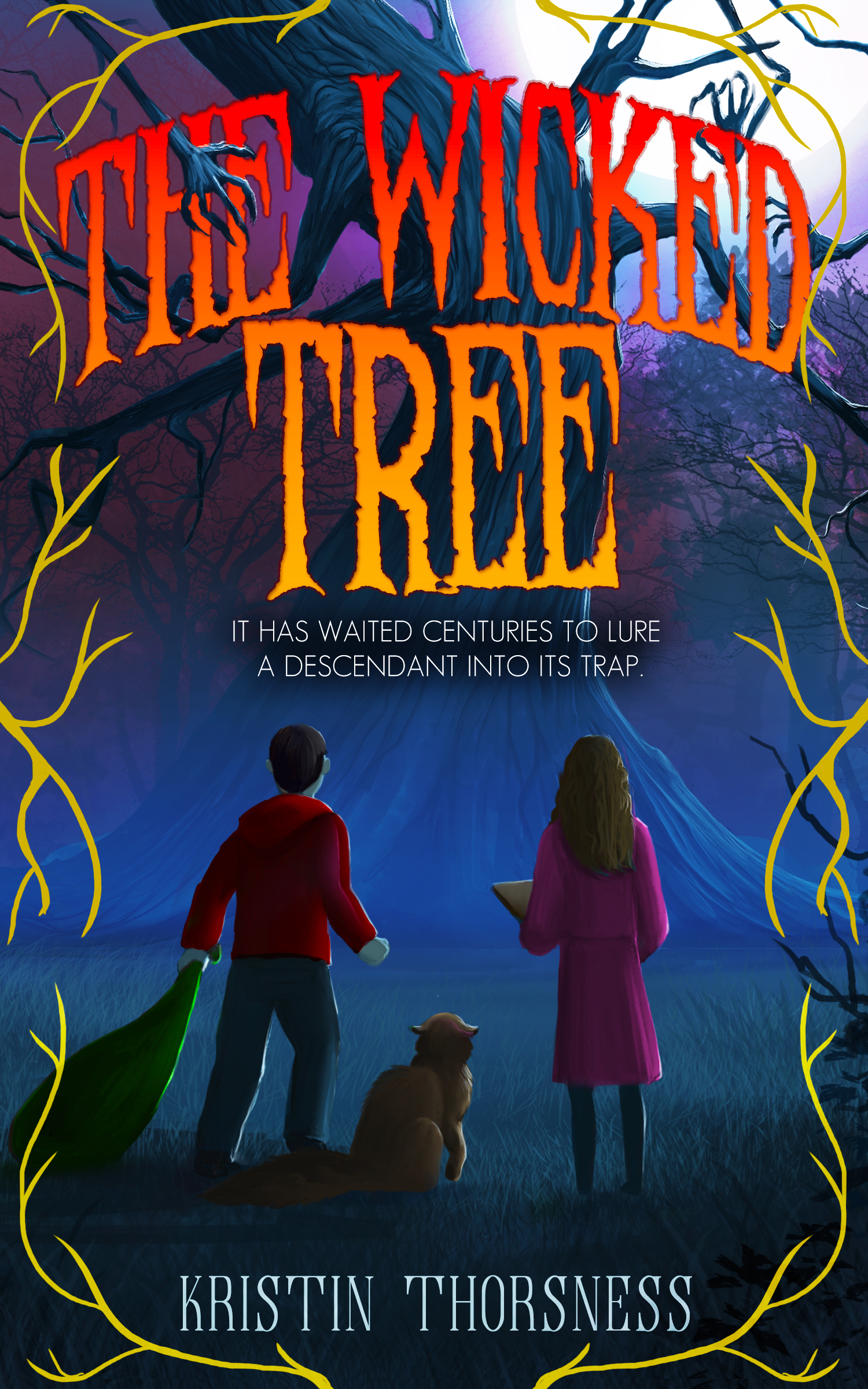
The Wicked Tree
Author: Kristin Thorsness
Publication Date: October 8th, 2019 by Month 9 Books

About the Book: Deep in the woods, a gnarled tree grows. Its thick, black trunk twists angrily up into the night sky. Held in place by the magic of a long-ago patriarch, it has waited centuries to lure a descendant into its trap.

Eleven-year-old Tavorian Kreet hates it when money troubles force his mom to move them in with his great-grandmother – though the historic house and grounds are pretty awesome. Tav is told to stay out of the estate’s woods, but he can’t resist the chance to explore.

After Tav’s first trip into the woods, he begins to have strange dreams about a supernatural tree. The dreams start out pleasant, but soon grow dark and menacing. On a dare, Tav ventures further into the woods with his new friend Harper, and they meet a mysterious, mute boy named Edward who lives in a decrepit cabin there. Though he’s unable to communicate where he came from or why he lives alone, in clear distress he scrawls two words: Bad Tree.

Tav knows what it’s like to be afraid. If he’d been brave enough to act four years ago, he could have saved his dad from the fire that took their home. But he wasn’t, and he’s been trying to redeem himself since. Now Tav is determined to help Edward. He enlists Harper, and together they search the estate for clues to Edward’s identity and how to help him.

While searching, Tav and Harper find antique photo albums, ancient diaries, and a secret laboratory. They piece together the Kreet family history, and discover a curse that’s been waiting generations for an heir. Tav’s dreams grow more ominous, and he realizes time is running short. To save himself and his friends, Tav must go to the heart of the woods, find the Bad Tree, and confront an evil magic before it consumes him completely.

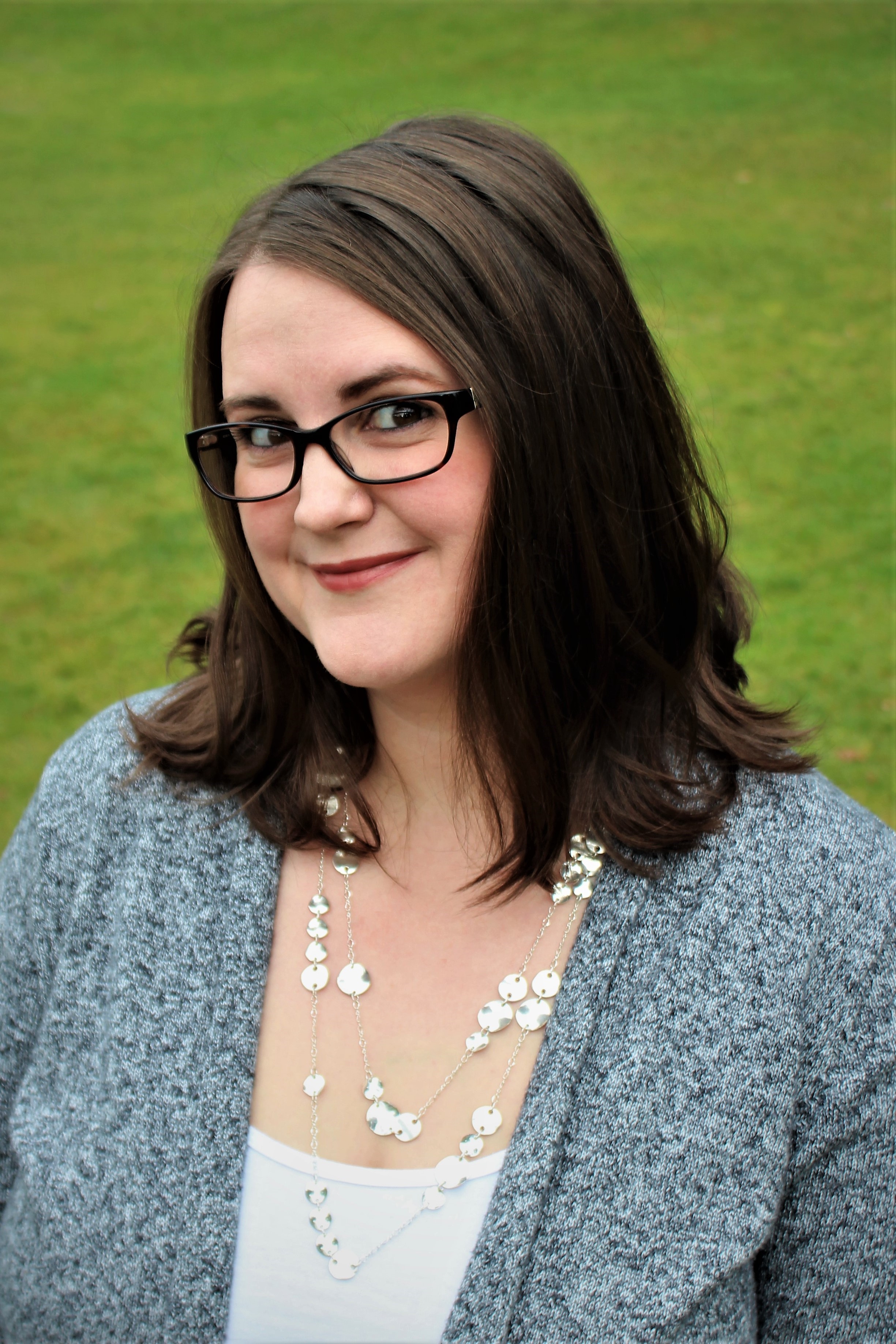
About the Author: Kristin Thorsness is a former 5th and 6th grade teacher who lives in the Pacific Northwest with her husband, their son and daughter, and two spoiled dogs. She likes dark chocolate, strong coffee, and creepy stories that keep her up reading late into the night. For more info or to get in touch, visit her online at www.kristinthorsness.com.

Thank you so much for this guest post about the power of books!

Review and Giveaway!: My Name is Wakawakaloch! by Chana Stiefel

Share

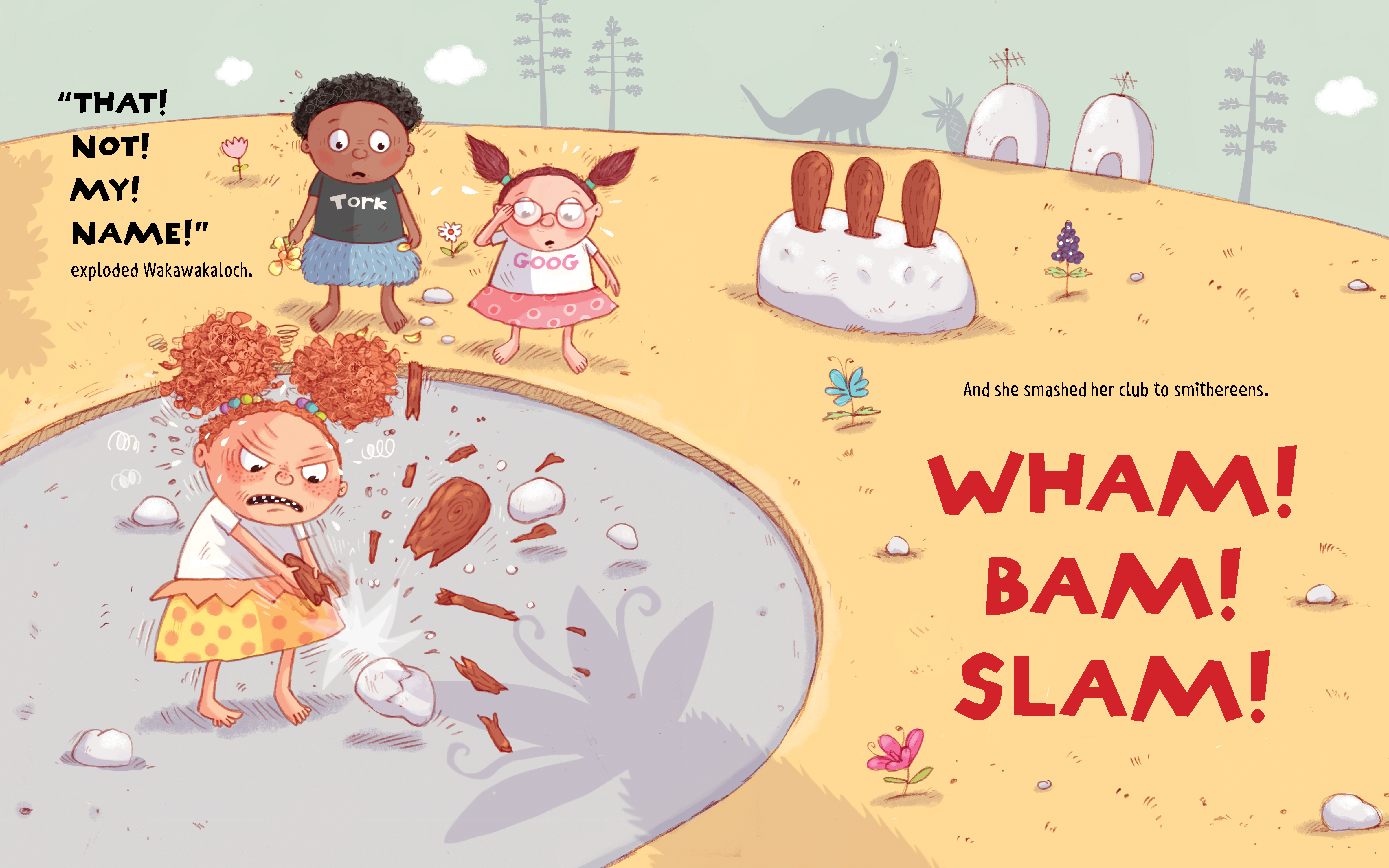
My Name is Wakawakaloch!
Author: Chana Stiefel
Illustrator: Mary Sullivan
Published August 27th, 2019 by HMH Books for Young Readers

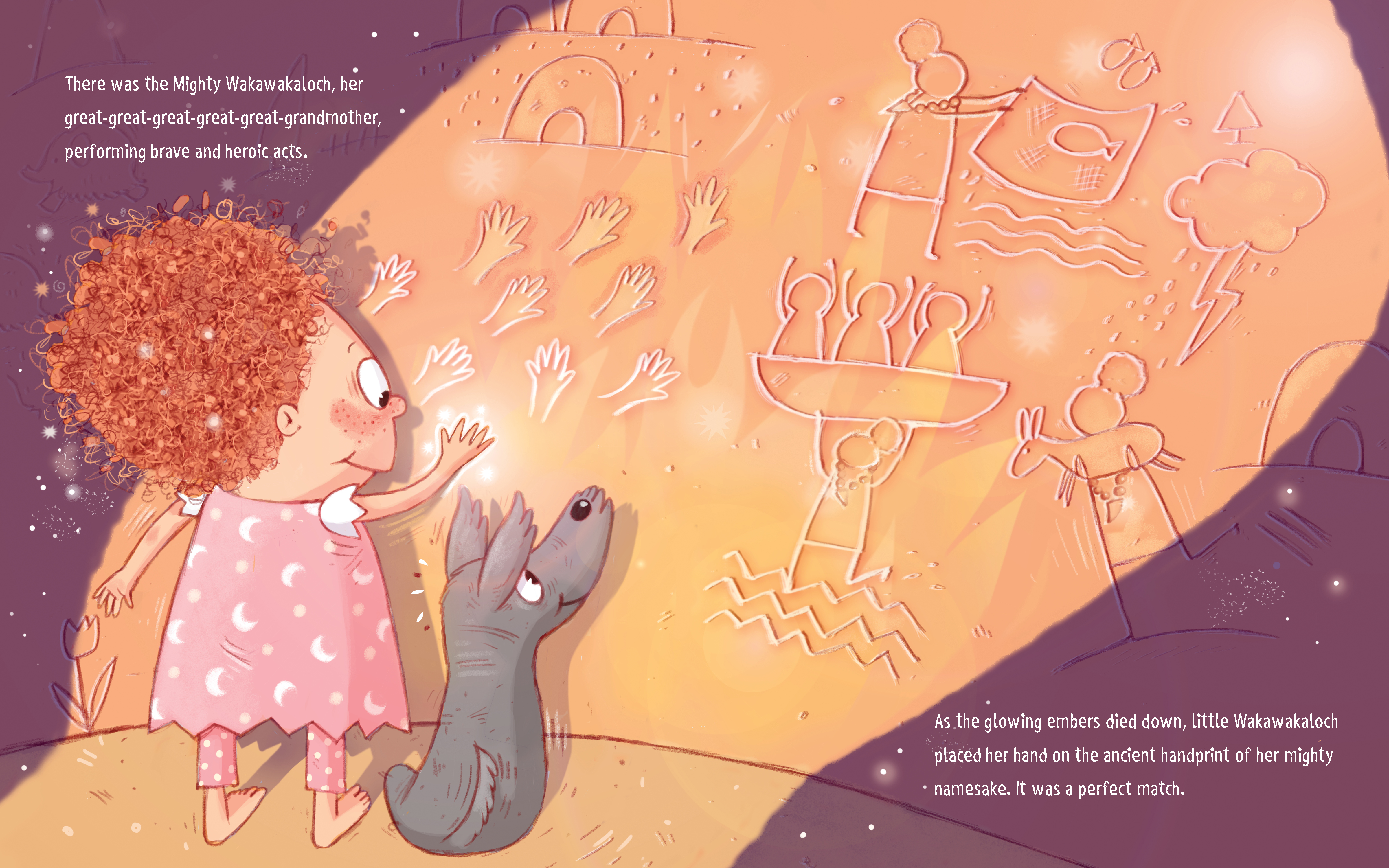
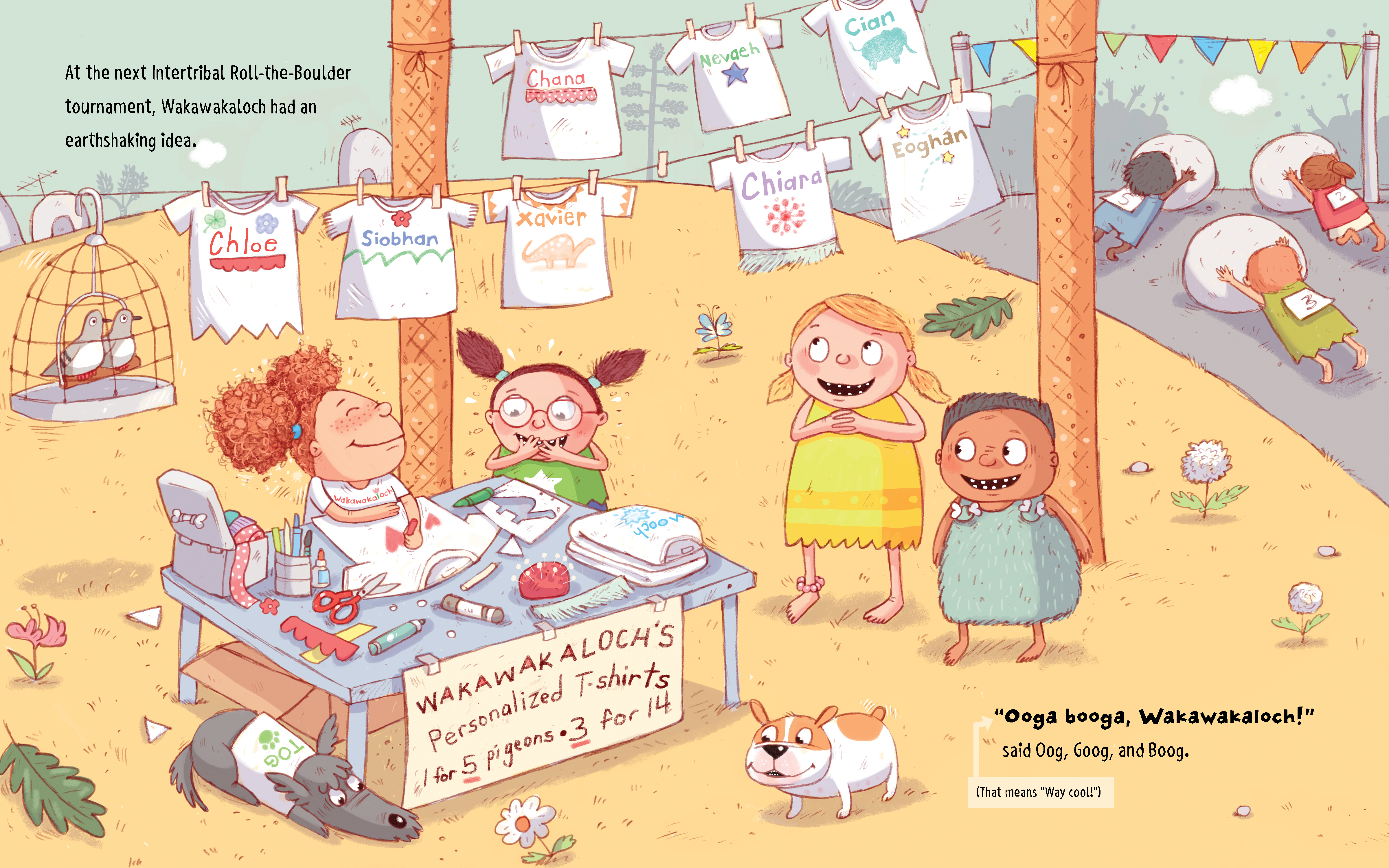
Summary: In this lighthearted picture book, the intrepid, determined, and savvy Wakawakaloch learns to embrace what makes her special while lifting up her neanderthal community.

No one can pronounce Wakawakaloch’s name. Why couldn’t she be called something simple . . . like Gloop? That’s a name you can find on a T-shirt! But after a visit with her tribe’s elder, Wakawakaloch discovers what her name means, and how powerful names can be. Gloop may be easy to say, but the girl who helps her friends embrace differences and wear their names proudly? Her name is Wakawakaloch!

Praise: “Wakawakaloch’s frustrations surrounding the mispronunciation of her name will resonate with many. . . .This bombastic main character allows the story to shine.” —Kirkus

About the Author: CHANA STIEFEL is the author of more than 25 books for kids about exploding volcanoes, stinky castles, and other fun stuff. In addition to My Name Is Wakawakaloch! she is the author of Daddy Depot, illustrated by Andy Snair (Feiwel & Friends, 2017). Recent nonfiction titles include Animals Zombies . . . . & Other Real-Life Monsters (National Geographic Kids, 2018), which was selected as a Top Ten YALSA Quick Pick for Reluctant YA Readers in 2019. Check out the fun book trailer and more at her website: chanastiefel.com.

Twitter: @chanastiefel
Instagram: @chanastiefel

ReviewThis is such a timely books for classrooms, well for society in general! Pronouncing and remembering students’ names correctly is so important and not can have a lasting effect:

How We Pronounce Student Names, and Why it Matters


http://neatoday.org/2016/09/01/pronouncing-students-names/
https://www.pbs.org/newshour/education/a-teacher-mispronouncing-a-students-name-can-have-a-lasting-impact

Wakawakaloch starts this conversation at a young age, not only for teachers but for other students. Name is part of our identity and Wakawakaloch should be mad that others aren’t trying!

Not only is the concept important, it is really well done! Done in a way that doesn’t feel preachy, is funny, but also still gets its message across clearly.

Teachers’ Tools for Navigation: If I was reading this aloud in my classroom, I would focus on the theme then complete activities about names. Every name has a story, either a personal one or a historical one.

(Please be careful about asking about history of names with all students as this may be a tough subject for anyone who doesn’t have access to a stable family environment to discuss why they were named their name. Make sure to have alternate assignments for this situation.)

Discussion Questions: 

  • Why is it so important to know peoples’ names?
  • Why is Wakawakaloch’s name so important?
  • What does not learning someone’s name say to them?

Flagged Passages: 

Read This If You Love: What if We Were All the Same? by C.M. Harris, The Name Jar by Yangsook Choi, My Name is Elizabeth! by Annika Dunklee, Alma and How She Got Her Name by Juana Martinez-Neal, My Name is Yoon by Helen Recorvits

Recommended For: 

classroomlibrarybuttonsmall

Giveaway!

a Rafflecopter giveaway

Signature

**Thank you Blue Slip Media for providing copies for review and giveaway!**