Nonfiction Picture Book Wednesday is hosted by Kid Lit Frenzy and was started to help promote the reading of nonfiction texts. Most Wednesdays, we will be participating and will review a nonfiction text (though it may not always be a picture book).
Be sure to visit Kid Lit Frenzy and see what other nonfiction books are shared this week!
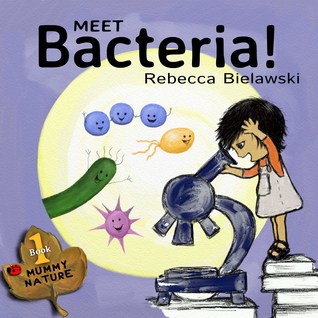
Mummy Nature Book 1: Meet Bacteria! Author and Illustrator: Rebecca Bielawski
Published October 8, 2014 by Rebecca Bielawski
Goodreads Summary: Peak through the microscope and down into a fantastic world of teeny tiny shapes, amazing colours and little friends who want to say – Hello. Who are these bacteria? Where do they live and what do they do all day? Meet Bacteria! is for little kids brimming with curiosity. It gives them their first basic notions of bacteria; a very interesting topic for children, seldom dealt within children’s books at this level.
Each book in the series is one mini nature lesson wrapped up in colour and rhyme. These books are intended for very young children including toddlers and will give them just a glimpse into some of the wonders of the natural world. Illustrated for maximum vibrancy and visual impact, using rhyme to engage young minds and encourage participation. Read the rhymes to your children and soon they will be reading them to you!
What We Can Learn:
The idea of the microscope
Why we should wash our hands
Concepts:
Basic bacteria shapes
Some bacteria habitats
New Words:
Bacteria, Microscope, Rod, Chain, Bunch, Multiply
Kellee’s Review and Teachers’ Tools for Navigation: This book is a great introduction to scientific exploration and then to bacteria itself. I love that the protagonist is a young girl who is exploring the world around her. I think students will see themselves in her, and that along with the interesting, rhyming information about the different types of bacteria will really persuade kids to want to explore.
I do think that this is just an introduction though. Each bacteria is briefly mentioned along with a fun illustration. I would love to see this book be a jumping off point to an inquiry unit about bacteria.
Discussion Questions:Why does bacteria have a bad reputation? Which bacteria cause this? Which bacteria are actually good?; How can you prevent the bad bacteria from making us sick?; Bacteria make some foods. How does this work?
Nonfiction Picture Book Wednesday is hosted by Kid Lit Frenzy and was started to help promote the reading of nonfiction texts. Most Wednesdays, we will be participating and will review a nonfiction text (though it may not always be a picture book).
Be sure to visit Kid Lit Frenzy and see what other nonfiction books are shared this week!
**This book is technically historical fiction, but I felt it was pretty darn close to nonfiction**
Never Fall Down Author: Patricia McCormick
Published May 8th, 2012 by Balzer + Bray
Goodreads Summary: This National Book Award nominee from two-time finalist Patricia McCormick is the unforgettable story of Arn Chorn-Pond, who defied the odds to survive the Cambodian genocide of 1975-1979 and the labor camps of the Khmer Rouge.
Based on the true story of Cambodian advocate Arn Chorn-Pond, and authentically told from his point of view as a young boy, this is an achingly raw and powerful historical novel about a child of war who becomes a man of peace. It includes an author’s note and acknowledgments from Arn Chorn-Pond himself.
When soldiers arrive in his hometown, Arn is just a normal little boy. But after the soldiers march the entire population into the countryside, his life is changed forever.
Arn is separated from his family and assigned to a labor camp: working in the rice paddies under a blazing sun, he sees the other children dying before his eyes. One day, the soldiers ask if any of the kids can play an instrument. Arn’s never played a note in his life, but he volunteers.
This decision will save his life, but it will pull him into the very center of what we know today as the Killing Fields. And just as the country is about to be liberated, Arn is handed a gun and forced to become a soldier.
My Review: When I started Never Fall Down, I had no idea what I was getting myself into. I began it because Ricki recommended it to me, but I didn’t read the back or have any prior knowledge about the book. So, when I began, I had no idea how tough this book was going to be.
I also have to preface with my ignorance of the Cambodian Genocide. I blame my lack of world history education because this is a time of history that should be taught. It, along with the Holocaust and Armenian Genocide, was based in racism and the attempt to purify a country. Reading Arn’s story throws you right in the middle of the genocide, and Patricia McCormick doesn’t hold anything back. Every time you think nothing can get worse for Arn and the Cambodians, something does, but you also have such hope for Arn’s survival as you seen him overcome every obstacle he faces. Even though death actually stares him in the face throughout the book, this young boy somehow continues. He continues through starvation, excessive work, lack of sleep, and murder surrounding him. Arn stated in interviews with McCormick that music saved his life, but I think it was more about his willingness to do whatever was needed to survive and especially anything to help those he cared for to survive.
Patricia McCormick tells our story in a broken English dialect that was influenced by “Arn’s own beautiful, improvised English” that McCormick heard in her head after interviewing him and traveling with him to Cambodia over a couple of years. The extent that Ms. McCormick went to ensure that Arn’s story was a true representation of his trials and heroism is honorable.
Teachers’ Tools For Navigation: This would be a perfect cross-curricular text! It could be read in a world history class in full or in parts. Although it is McCormick’s writing, it is definitely Arn’s story, and Arn’s story is one that needs to be shared. This book could also be used in lit circles where each group has a different book about a piece of history or an individual who/that is not usually learned about (maybe with Between Shades of Gray by Ruta Sepetys, Sold,Caminar by Skila Brown, The Glass Collector by Anna Perera, Son of a Gun by Anne de Graaf, Inside Out & Back Again by Thanhha Lai, Guantanamo Boy by Anna Perera, A Long Walk to Water by Linda Sue Park, The Queen of Water by Laura Resau, orNow is the Time for Running by Michael Williams).
One of my amazing 8th grade students read this book recently, and she was as enthralled with it as I was. Immediately after finishing, she got online and started learning more about Arn and Cambodia. She came across an amazing video with both Patricia McCormick and Arn in it. It is 27 minutes long, but it is so worth watching:
Discussion Questions: What do you think ultimately helped Arn survive?; How did Sombo save Arn’s life at the orphan camp? When the war with the Vietnamese started? At the killing fields?; Do you think music is what saved Arn?; How were the Khmer Rouge able to make their prisoners do whatever they wanted them to?; Why did the Khmer Rouge kill all the educated Cambodians?; Why was Sombo so unsure about the Coca Cola?
We Flagged: “All the time now we hear girl screaming, girl running, girl crying. At night but also sometime in the daytime. All the tie, the Khmer Rouge they chase the girl, cut the hair. Sometime with scissor, sometime with knife. Chop short, to the chin, like boy. The girl, they cry and sometime they run. They run, it’s no good. The Khmer Rouge may shoot them, maybe take them to the bushes, do whatever they want. A lot of the girl afterward, they pull on their hair, pull like maybe they can stretch it, make it long, make it beautiful again.
My number two big sister, Maly, her hair like silk. Most proud thing about her, her hair. Shiny black, like blue, like a crow has. Every night she brush her hair, every morning. Sometime even she brush her hair not thinking, just dreaming maybe about the boy she love. One morning I wake up before everyone and see her making rice. Her neck, it’s bare now, her skin there is pale, never saw the sun, her long hair gone. Last night while I was asleep, the soldier, they cut her beauty. So now when she give me a bowl of rice soup, her eyes stay on the ground.” (p. 29-30)
Read This If You Loved: Titles listed above in Teachers’ Tools for Navigation
Nonfiction Picture Book Wednesday is hosted by Kid Lit Frenzy and was started to help promote the reading of nonfiction texts. Most Wednesdays, we will be participating and will review a nonfiction text (though it may not always be a picture book).
Be sure to visit Kid Lit Frenzy and see what other nonfiction books are shared this week!
**This book is technically historical fiction, but I felt it was pretty darn close to nonfiction**
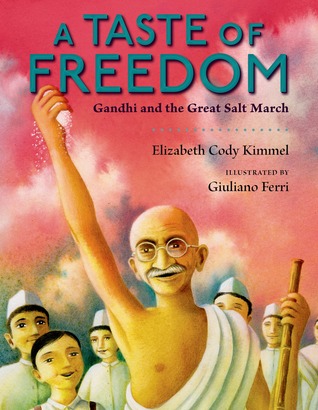
A Taste of Freedom: Gandhi and the Great Salt March Author: Elizabeth Cody Kimmel
Illustrator: Giuliano Ferri
February 11th, 2014 by Walker Childrens
Goodreads Summary: No one ever forgets their first taste of freedom.
Gandhi’s famous Salt March shook the foundations of the British Empire and the world, showing the strength of a people united in peace to fight for freedom. Gandhi’s march had a significant effect on changing world and British attitudes towards Indian independence, and inspired the use of non-violence in other protest movements, like the US Civil Right movement. You’ll never forget Elizabeth Cody Kimmel’s heartwarming, insightful account or Guiliano Ferri’s stunning illustrations of the event seen through the eyes of a child inspired by Gandhi’s vision for a better world.
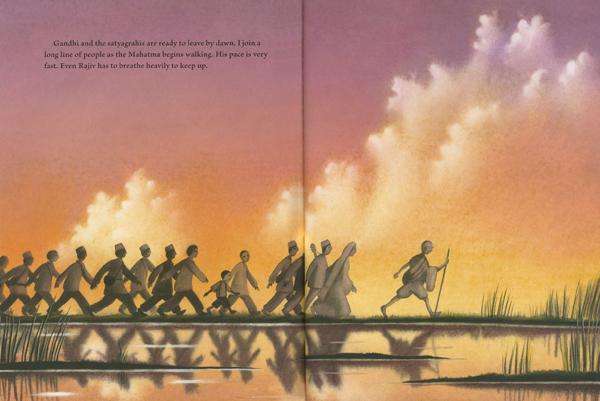
My Review: This is a good introduction to one of the greatest, most peaceful men ever to live. Although it is a little tame about the history, it overall stays truthful to the history. I very much liked the story-telling feeling of the story and the water color and pencil drawings were so beautiful and soft.
Teachers’ Tools for Navigation: The back matter includes a lot of information including resources to get further information, a map that shows the route of the Dandi March, and an afterword with more information about Gandhi.
Discussion Questions: Why did the young boy join the march?; How did Gandhi change India?; Who do you think is easier to respect in this story: the British or the Indians?
We Flagged:
“Gandhi and the satyagrhis are ready to leave by dawn. I join a long line of people as the Mahatma begins walking. His pace is very fast. Even Rajiv has to breathe heavily to keep up.”
Read This If You Loved: Nonfiction books about people fighting for what they believe in.
Recommended For:
**Thank you to Candlewick for providing a copy of the book**
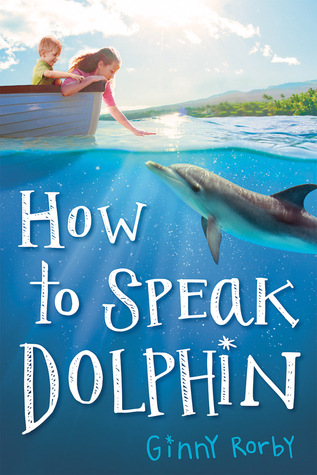
How to Speak Dolphin
Author: Ginny Rorby
Expected Publication May 26th, 2015 by Scholastic Press
(Though available in Spring Scholastic Book Fairs)
Goodreads Summary: Schneider Family Book Award-winning author Ginny Rorby has created an irresistible dolphin story about a girl’s struggle to help her autistic brother and herself.
Lily loves her half-brother, Adam, but she has always struggled with him, too. He’s definitely on the autism spectrum–though her step-father, Don, can barely bring himself to admit it–and caring for him has forced Lily to become as much mother as sister. All Lily wants is for her step-father to acknowledge that Adam has a real issue, that they need to find some kind of program that can help him. Then maybe she can have a life of her own.
Adam’s always loved dolphins, so when Don, an oncologist, hears about a young dolphin with cancer, he offers to help. He brings Lily and Adam along, and Adam and the dolphin–Nori–bond instantly.
But though Lily sees how much Adam loves Nori, she also sees that the dolphin shouldn’t spend the rest of her life in captivity, away from her family. Can Adam find real help somewhere else? And can Lily help Nori regain her freedom without betraying her family?
My Review: How to Speak Dolphin is a tale that looks at the struggles and triumphs of growing up with an autistic family member. Lily has lost her mom and is still mourning when we meet her, yet she is being expected to pretty much be her brother Adam’s caretaker. Because of this, Lily has very few friends and finds herself lonely and sad often. Her stepfather is lost in fantasy thinking that Adam is less work and less autistic than he really is. Lily is lost and tired though knows something needs to be done. She just wants her brother to be taken care of correctly, and she needs her stepfather to see it as well. It is through Lily’s guiding, and a bit of help from Adam’s new caretaker Suzanne, that Don finally seeks getting treatment for Adam through DAT, dolphin-assisted therapy, with a young dolphin named Nori recovering from cancer. During Lily’s journey through helping her brother (and herself), she becomes friends with Zoe, a young girl who lost her sight due to retinoblastoma, who also helps her realize that her life may not be what she’d expected, but it can still be good. This book, like all of Ginny’s, is quite a ride and makes the reader think about animal and human issues that are often ignored. Ginny Rorby has done it again.
Teachers’ Tools For Navigation: There are many books that look at autism or animal rights. I can definitely see this book being in a lit circle set (with the titles listed below) where students in groups can each read a book about the topic then share what they have learned from their book at the end. This could be done beautifully with most of Ginny’s titles (Hurt Go Happy, Outside of a Horse, and Dolphin Sky) because they each look at a human and animal struggle. Additionally, this book is going to be loved by students who love Rules, Out of My Mind, Wonder, and other books that look at overcoming differences.
I could also see inquiry projects blossoming out of the lit circles or a whole-class read of How to Speak Dolphin. In Dolphin alone, students could find themselves questioning animal captivity, DAT, autism, retinoblastoma, sign language, oil spill, and more.
Discussion Questions: Do you agree with the choice that is made with Nori at the end of the book?; Zoe was quite pushy with Lily when they disagree. Do you agree with how Zoe dealt with the situation?; Do you think it was Lily’s responsibility to care for Adam after her mother died?; Practice walking using echoing like Zoe does. How easy/hard is it?; Zoe is a very positive person. How does how she is dealing with her blindness help Lily be more optimistic about Adam and her life?; Why do you think Don had such a hard time admitting to himself that Adam may need help outside what he and Lily could give?
We Flagged: “Don holds Adam pressed to his chest, one arm around his legs and the other pinning his arms to his sides as I test the water temerature and start filling the tub. Don’s eyes are closed. I think from the pain of Adam’s screaming in his ear, but decided maybe it’s because his heart is broken. I was seven and a half when Mom and Don found out she was pregnant and that the baby would be a boy. Don was so over-the-top thrilled that Mom looked at me and said she’d wanted another girl. She was trying to make sure my feelings weren’t hurt, but it made me wonder if my real father had wished fora boy, too.” (p. 8)
Read This If You Loved: Rules by Cynthia Lord, Rain Reign by Ann M. Martin, Mockingbird by Kathryn Erskine, Dolphin Sky by Ginny Rorby, Wonder by RJ Palacio, Hurt Go Happy by Ginny Rorby
Nonfiction Picture Book Wednesday is hosted by Kid Lit Frenzy and was started to help promote the reading of nonfiction texts. Most Wednesdays, we will be participating and will review a nonfiction text (though it may not always be a picture book).
Be sure to visit Kid Lit Frenzy and see what other nonfiction books are shared this week!
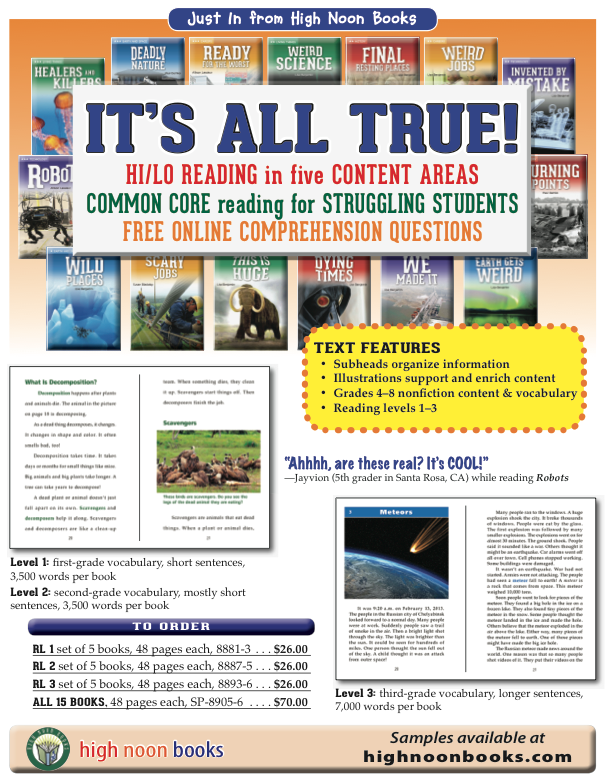
About the Series: These 15 books focus on grades 4 through 8 content but are focused on students with lower reading levels. They contain high-interest nonfiction topics like Earth and Space, Living Things, History, Technology, and Careers, and highlight content areas outside of English/language arts.
Ricki’s Review and Teachers’ Tools for Navigation: As a former high school teacher, I know the struggle to match kids with great books. Oftentimes, struggling readers cannot find books that match their reading abilities and interests. For instance, a student may find books with grade-level topics to be interesting, but the texts are simply too challenging. This series is great because the books contain middle school topics but are written at lower elementary school reading levels. They are carefully crafted with attention to vocabulary and sentence structure to support readers.
I enjoyed We Made It by Lisa Benjamin. It was composed of five chapters about manmade structures: the International Space Station, the Great Pyramid, the Lincoln Cathedral, Skyscrapers, the Three Gorges Dam, and the Eden Project. I learned a lot, and I suspect future engineers will enjoy learning about these structures. Teachers could explore interdisciplinary connections by integrating other content areas, like science and social studies. High Noon Books rates this book one star, which means it is designed to be at a first grade reading level.
Robots by Allison Lassieur was at a higher reading level, ranked grade three (three stars) by High Noon Books. I immediately noticed a difference from We Made It. While both books are the same number of pages, the sentences in Robots were closer together, and the book was longer. Additionally, the book contained complex sentence structures. Robots explores a lot of interesting aspects about…you guessed it, robots! Dancing robots, robots that keep us safe, firefighting robots, ancient robots, and robots of the future are just a few of the topics of this text. I am saving this book because if my son enjoys robotics when he is a bit older, he will definitely love this overview. I think teachers could have a guest speaker come in and discuss real-life applications of robots. Or, students could research robots that are used in their community.
Kellee’s Review and Teachers’ Tools for Navigation: I am the reading coach at my school and have worked with struggling readers for for the last few years. One of the struggles that struggling readers have, as Ricki stated, is finding a book that is at their interest level but also at their reading level. It’s All True! is trying to remedy that by having informational nonfiction texts at a middle grade interest level, but at a reading level that these students can reach. It reminds me of fiction series like Bluford, but with specific purposes for instruction. I could see these texts being used in a small group setting when teachers differentiating for their students.
I read two different books in the “Living Things” series: This is Huge by Lisa Benjamin (1 star) and Healers and Killers by Allison Lassieur (3 stars). Both included very specific information about the topics they were focusing on: This is Huge was about large animals over time; Healers and Killers was about plants and animals that can kill or heal us. The information in both seemed to be on grade level (middle school); however, the “three star” book had more text per page, tougher vocabulary, and more complex sentence structures.
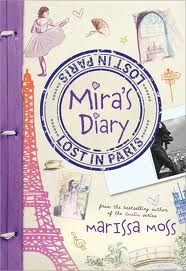
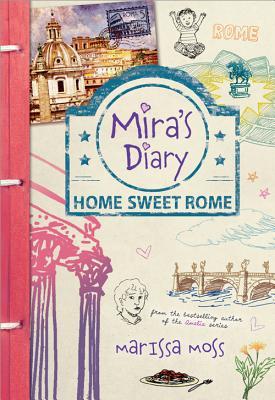
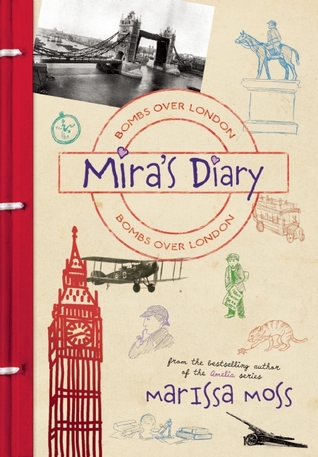
Mira’s Diary
Author: Marissa Moss Lost in Paris Published September 4th, 2012 by Sourcebooks Home Sweet Rome Published April 2nd, 2013 by Sourcebooks Bombs Over London Published August 26th, 2014 by Creston Books
Lost in Paris Goodreads Summary: Mira is shocked when she receives a postcard from her missing mother from Paris. Her father decides it’s time for a trip to France to search for her. While visiting Notre Dame, Mira touches a gargoyle and is whirled into the past. There she meets the famous painter Degas and catches a brief, shocking glimpse of her mother. Mira begins to suspect that her mom didn’t run out on them but is a prisoner of the past. Can one family on an incredible worldwide adventure stop a plot in time?
Home Sweet Rome Goodreads Summary: As if traveling to a new country in search of her missing mother weren’t difficult enough, Mira has to do it dressed as a boy. In a different century.
A new postcard from her time-traveling mother points Mira to the 16th century Rome. But before she can rescue her mom, she must follow the clues left around the city to find Giordano Bruno, a famous thinker and mathematician, who discovered something so shocking that important Italian officials don’t want it revealed. All the while avoiding the Watchers–time-traveling police who want Mira back in her own time.
It’s another whirlwind adventure for Mira, and this time she is determined to bring her mother out of the past.
Bombs Over London Goodreads Summary: In the third book of the popular time-travel series, Mira navigates her way through WWI London, meeting famous suffragists and writers like Sir Arthur Conan Doyle. Instructed by her time-traveling mother to steal a German spy’s briefcase full of secrets and pass on the information to British Intelligence, Mira struggles with whether the changes she has been working for are the right thing to do after all. How much control do we really want of history? When is it best to leave our fate in destiny’s hands?
My Review of Lost in Paris: I was enthralled by this smart, yet still accessible middle grade novel. Once I began it, I did not want to put it down.
The book was not only packed with an interesting concept (Mira and her mother travel through time to try to right wrongs that haven’t happened yet), but the book was filled with information about late 19th century Paris, French history, and art. Although some may feel like there was information overload, I found it all so fascinating. I am primarily sucked in when a book includes history that is less well known and that is exactly what this book did. Do you know about the Dreyfus Affair? After reading you will. I was also so excited to read a book so full of art history and art elements. Each page includes sketches from Mira and throughout the book you meet incredible artists such as Degas, Monet and Rodin. A cast of characters that is better than any fiction. This part of the book actually reminds me a lot of Woody Allen’s Midnight in Paris except Mira is trying to fix something instead of fixing herself.
My Review of Home Sweet Rome and Bombs Over London: I don’t want to share too much about these titles as my thoughts are a bit spoilery, but I want to say that they did not disappoint. After reading book 1, all I wanted was to know what happened to Mira next, and I was not disappointed in her next adventures. I know book 4 is going to be in our future, and I cannot wait to read that one as well.
Teachers’ Tools for Navigation: One wish I had while reading books 1 & 2 was wanting to see the artists’ works as each artist was introduced. I was blessed enough to have an art-filled childhood so I could picture many of the pieces; however, many students do not have that background knowledge. This would be a great thing to do when reading the novel–share the artwork with students as you encounter them in the story. It would also be meaningful to find primary sources from the time period to share with students as you read Mira’s story. This will make learning about the time period even more impactful.
Additionally, Marissa Moss’s writing is one that can definitely be used as an example of imagery and descriptive writing during writing workshop or other writing lessons. She actually sucks you in when Mira time travels, and deposits you in history that you can visualize.
Discussion Questions: Research one of the artists mentioned in book 1 or 2, write about his or her life, artwork, beliefs, etc.; Write about a time in your life when you had to trust your instincts, when you weren’t sure what to do but had to make a decision based on what felt right to you in the moment.; Was there a time when you had a feeling your parents were incorrect? What happened?; Which of the three places that Mira has visited would you have liked to go? Why?
We Flagged: “Dad was right – [Notre Dame is] truly a wonder of the world…
Usually when you go into a building, it’s lighter or darker, cooler or warmer than outdoors, but it’s still part of the same world. Stepping into Notre Dame was like changing time zones or countries, crossing some magical border. A hush filled the cavernous, echoey space of the cathedral, despite all of the voices of tourists murmuring and people praying, as if the sound was absorbed into the bones of the building itself.
Light streamed in from the windows like a physical presence, the kind of light you think you can reach out and touch…The air itself felt still and chilled by the stone all around. The walls were stretched thin between the pillars that soared into a vault overhead, like the skin of a massive beast taut between its ribs.” (Lost in Paris, p. 14-15)
“The day was gray and cold. I found myself in a busy street lined with crumbling brick buildings, shabby tenements with darkened windows. Dingy laundry hung in lines across the narrow alleyways. This may have been historical London, but there was nothing charming here. Just three-story houses of shuddering poverty with narrow doors and small pinched windows, as if sunlight cost money. The whole place was dark, muddy, broken-down, stinking of fish and rot and some indefinable yuck. The stench was so thick it had a physical presence, like a filthy hand pressed against my nose.” (Bombs Over London, p. 26)
Read This If You Loved: Ruby Red (series) by Kerstin Gier, All Our Yesterdays by Cristin Terrill, When You Reach Me by Rebecca Stead, Blue Balliet novels
Recommended For:
**Thank you to Gina and Samantha at JKSCommunications for having us as part of the blog hop!**
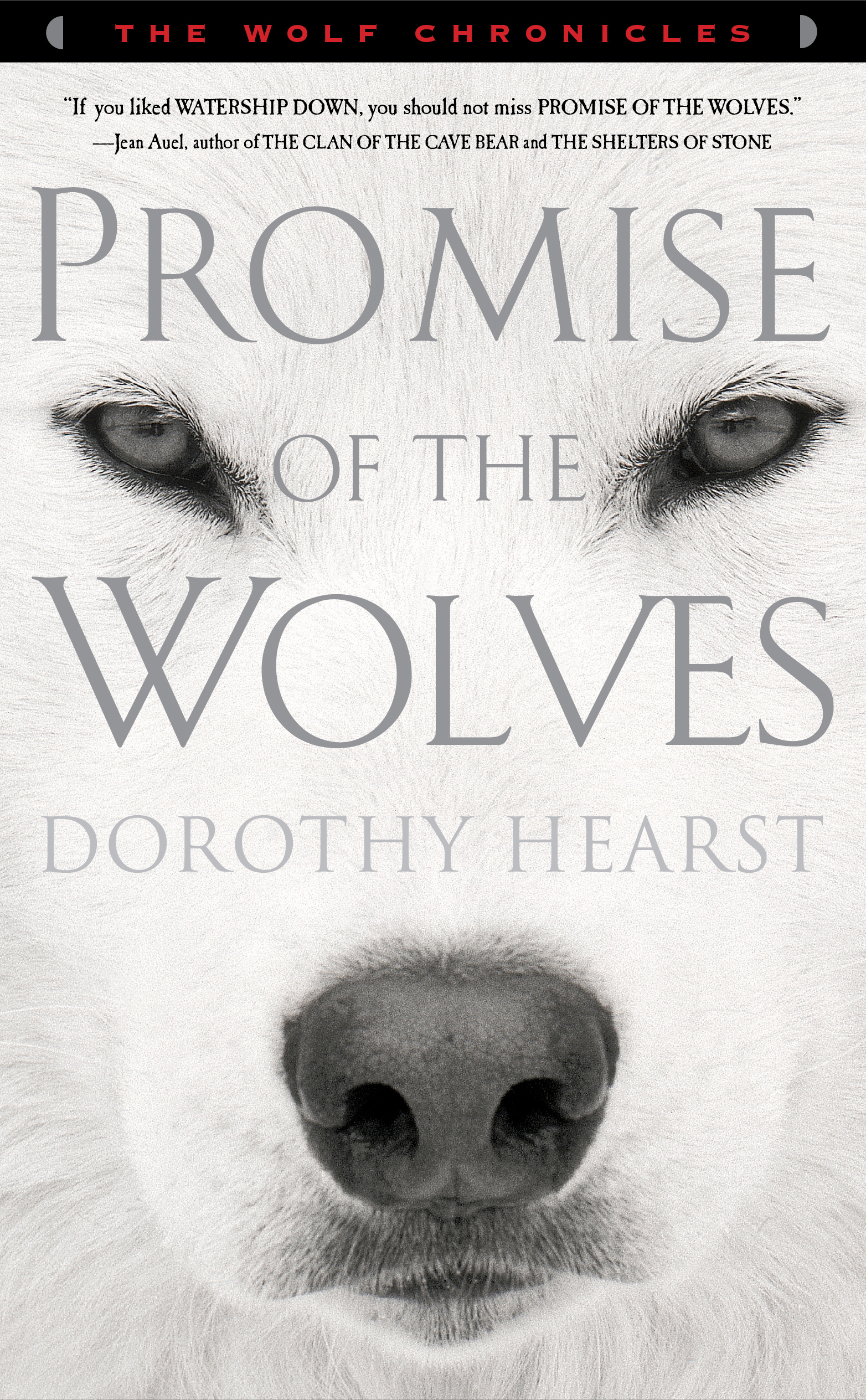
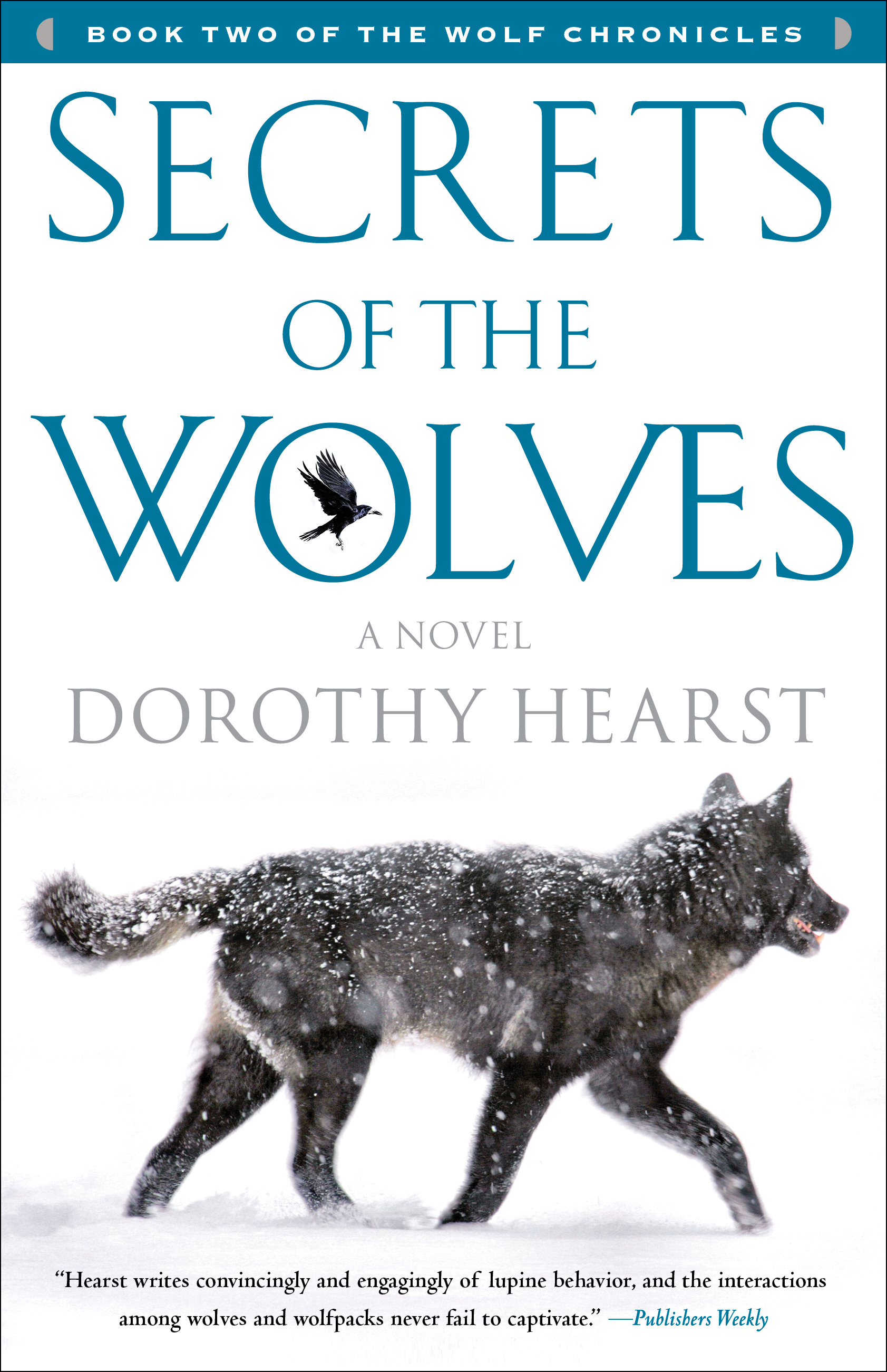
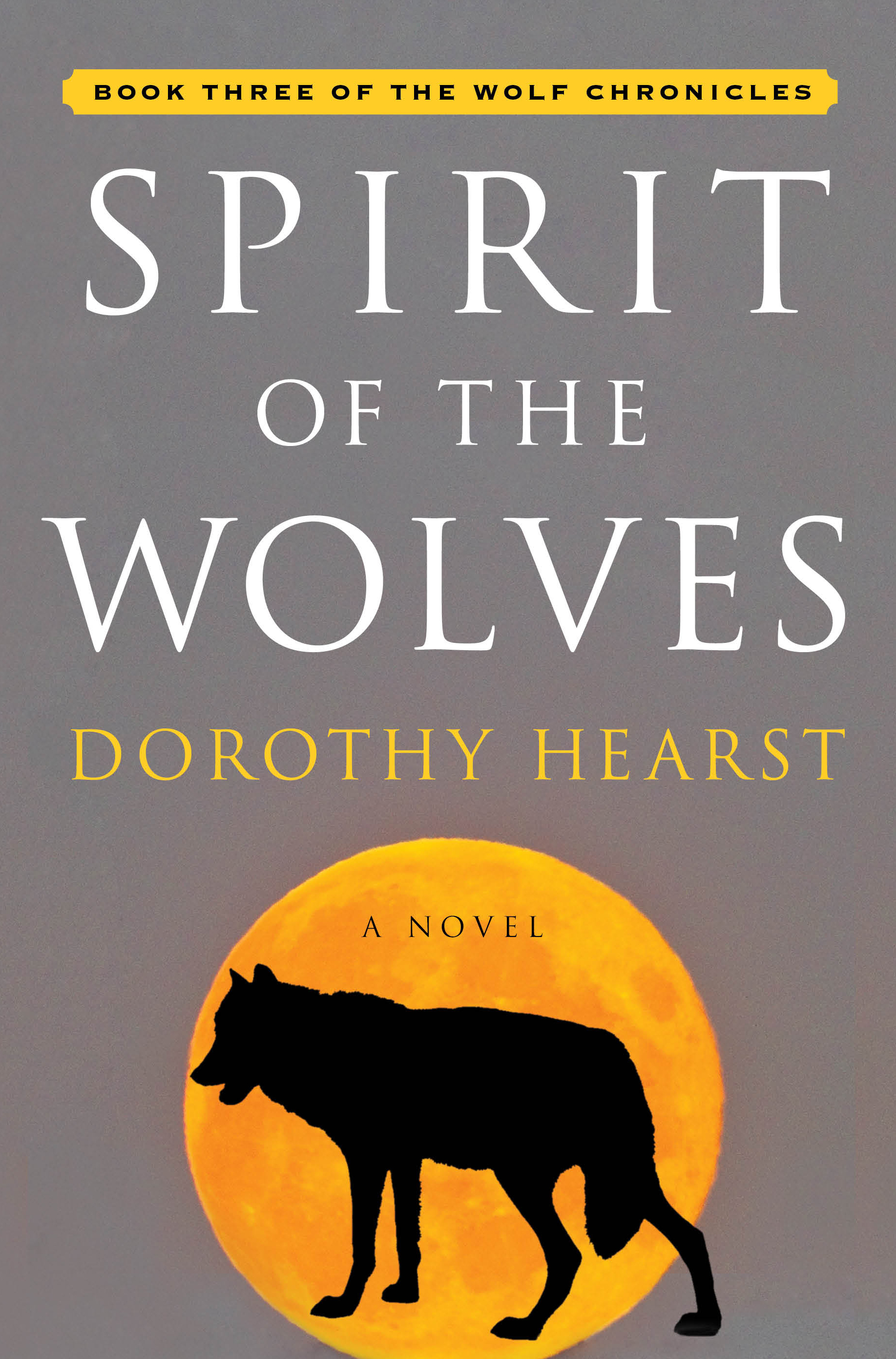
Series Synopsis: Inspired by the theory that it was wolves, and later dogs, that made humans the dominant species on earth by teaching mankind to hunt cooperatively and form complex societies, The Wolf Chronicles begins 14,000 years ago with PROMISE OF THE WOLVES. It is engagingly told from the point of view of lovable Kaala—an outcast young wolf who has been charged with watching over humans in order to prevent them from losing touch with nature and thus destroying the world.
About the Author: Before the wolves barged in the door, demanding that their story be told, Dorothy Hearst was a senior editor at Jossey-Bass, where she published books for nonprofit, public, and social change leaders. She currently lives, writes, and plays with dogs in Berkeley, California.Spirit of the Wolves, the third and final title in the Wolf Chronicles, will be released December 2. For more information, and to download free CCSS-aligned discussion questions for all three novels, visit her website: dorothyhearst.com
“How Research Transformed The Wolf Chronicles”
When I got the idea to write novels about how the wolf became the dog from the wolf’s point of view, I knew that I had a lot of research ahead of me. And I balked. I’d never been any good at research.
But wolves can’t type, and they wanted their story told, so I hunkered down and got started.
It turned out that research was one of the best parts of the writing process. I snow-shoed in Yellowstone, chased huskies in the French Alps, spent hours in wonderful public and university libraries, and walked through a cave where someone had stood 14,000 years ago, painting a bison.
But what surprised me most was how research shaped my story. It profoundly changed The Wolf Chronicles in several ways:
It changed my wolves:
Like many people, I used to think that wolves were vicious animals that fought all the time and were very different from us. Books like Richard Busch’s Wolf Almanac showed me that wolves are actually highly social animals that rarely fight. Then I read up on prehistoric cultures, and learned that our ancestors and wolves lived surprisingly similar lives. This changed all the interactions between wolf and human characters, and made Kaala and her pack much more complex.
It deepened the story:
Early in my research, I learned about wolf-human coevolution, the theory that wolves and dogs may have greatly influenced our evolution. good lThen, Barry Lopez’s Of Wolves and Men showed me that wolves have long been emblematic of very different views of nature. This research made Kaala’s story more than the tale of a young wolf on a quest. It grew to be about our own connection to the natural world, and what that connection means for our future.
It gave me new characters:
While reading up on wolves, I learned that wolves and ravens often play together, so I decided to write just one scene with ravens in it. The raven Tlitoo decided he wanted a bigger part in the book, and became a major character. While on a trip to Yellowstone to watch wolves, I was awoken by a herd of elk bellowing outside my window. Ranor the elkryn marched into the story.
It gave me new scenes
Two scenes in the trilogy are drawn directly from the many documentaries and videos I watched. In Promise of the Wolves, Kaala and Ázzuen struggle to cross a great plain. This is from a video about wild dogs. The filmmakers actually rescued a pup who fell behind (I write about it here) which they weren’t supposed to do. A scene in which Kaala steals from sabre-toothed cat cub is based on a video of a young wolf playing with a young bear until Mama bear got annoyed.
In the end, research enriched The Wolf Chronicles in ways I never could have imagined. I am now a dedicated research devotee.
Some Classroom Applications:
I love the idea of the wolves making their way into classrooms. Here are some topics that lope through the books:
Animal biology and behavior (wolves, ravens, prey animals)
Ecology and the Environment
Life in prehistoric times
Wolf-Human coevolution—the controversial theory that wolves and dogs directly affected our evolution
Mythology: Norse myths, European folktales, Native American tradition as the basis for parts of the story.
The Educators page of my website also has some tools and guidelines for using The Wolf Chronicles in the classroom. You can read more about my research for The Wolf Chronicles at YAReviewNet.
Thanks so much to Unleashing Readers for hosting me!