Dump Truck Duck by Megan E. Bryant

Share

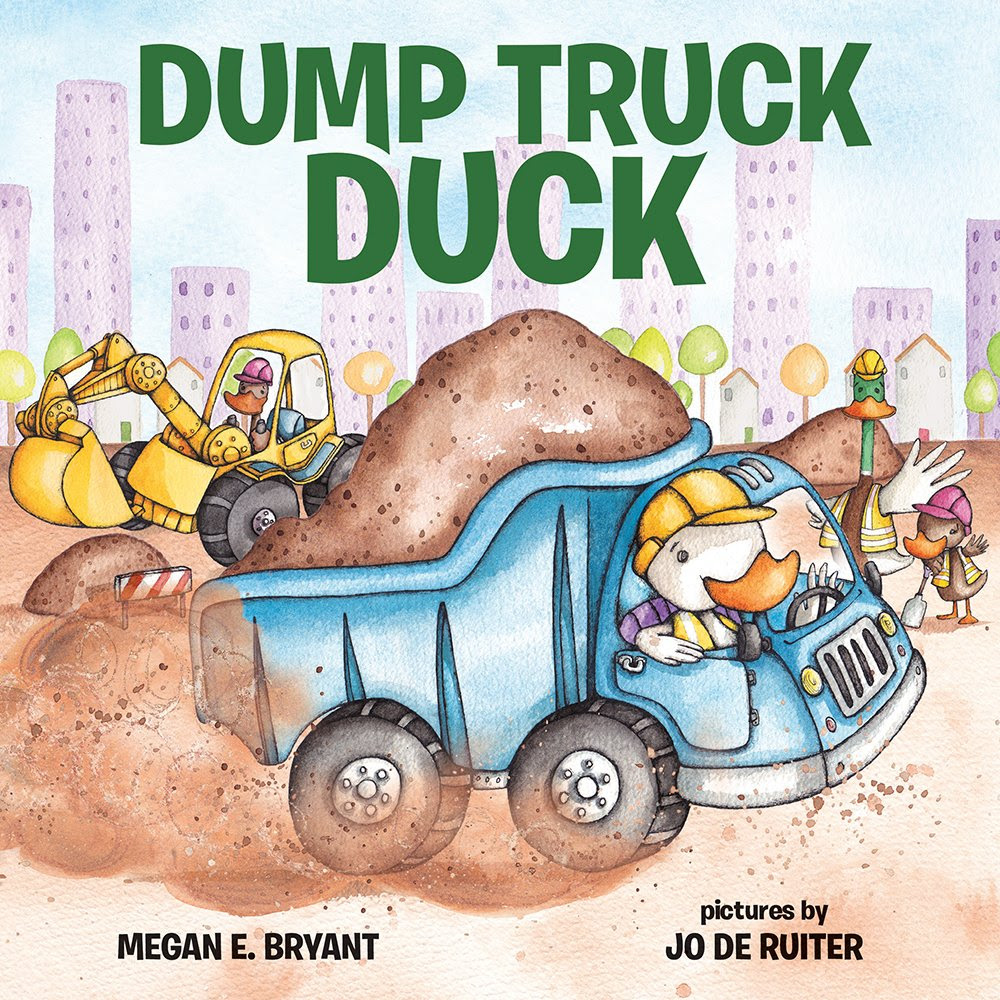
Dump Truck Duck

Dump Truck Duck
Author: Megan E. Bryant;  Illustrator: Jo de Ruiter
Published: May 1, 2016 by Albert Whitman & Company

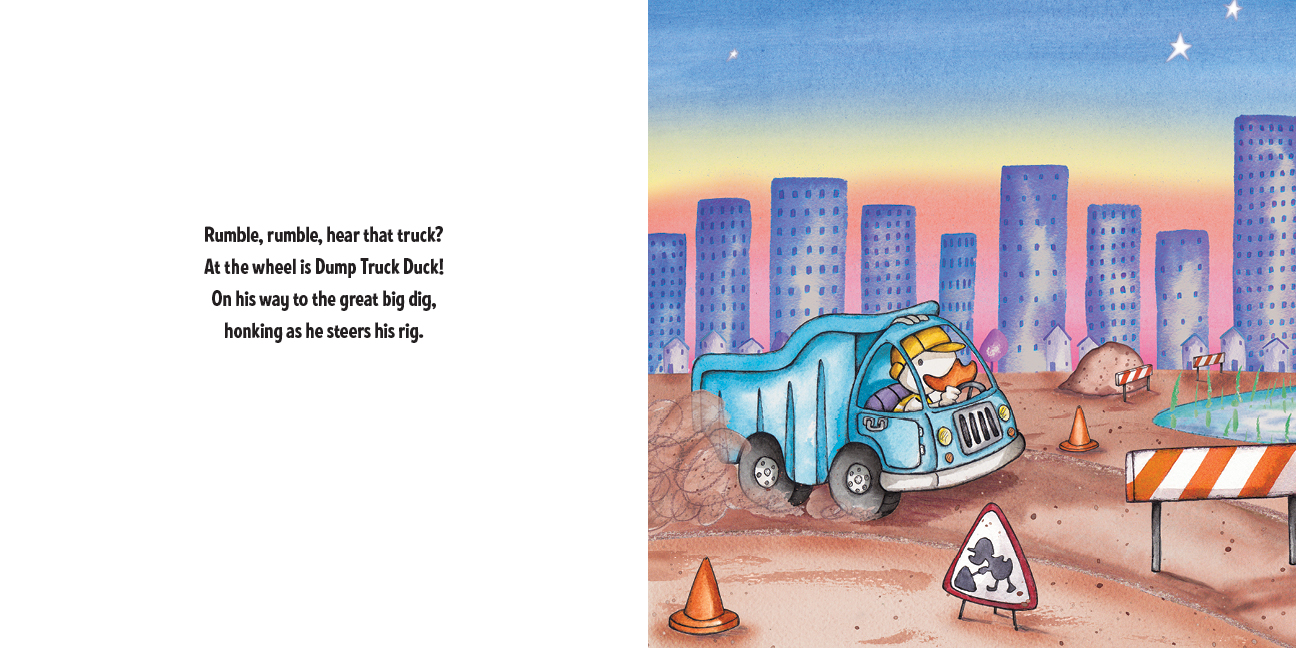
Goodreads Summary: Dump Truck Duck honks and zooms and steers his dump truck all through the day, helping the other hardworking ducks build a new park. With adorable illustrations and playful rhyming text, Dump Truck Duck is certain to become a new read-aloud favorite!

Ricki’s Review: My son has so much fun reading this picture book. I am of the mindset that there can never be too many vehicle-themed picture books. As the mother of a child who reads dozens of truck picture books a day, I love the variety. On top of it all, this playful, fun picture book makes us giggle! The rhymes work well, and the story line is very amusing. The book is quite clever, and we really enjoy reading it together. It is sure to be a favorite amongst little readers. I want my own Dump Truck Duck stuffed animal!

Kellee’s Review: Trent is so picky about his picture books. He owns so many books, but he has a set few books that he reads over and over again. It is really hard for a book to make its way into his book rotation, but Dump Truck Duck did. He even made me bring it to breakfast with us, and we had to read it while we waited for our food. I think what really sucks the little readers in are the combination of a favorite animal (everyone loves to quack!) and construction vehicles. Take this winning combination and add in fun illustrations and great rhyme, and you get a well-loved picture book! 

Teachers’ Tools for Navigation: We imagine that this book would be very inspirational, writing-wise, for students. After reading this story, teachers might ask students to create their own animal-themed story. They should try to stray from ducks and trucks. Perhaps, they could work as an entire class to create their own rhyming story. The teacher could then submit the story for publication!

Discussion Questions: How does the author use rhyme to capture your attention?; How does the rhythm/pacing enhance your reading?; What other animals would make great, funny truck drivers?; In what ways is the author creative with her craft? How might you use this in your own writing?; What literary devices does the author use?

Flagged Passage: 

DumpTruckDuck_INT2-3

Read This If You Loved: Goodnight, Goodnight, Construction Site by Sherri Duskey Rinker, Demolition by Sally Sutton, Little Blue Truck by Alice Shertle, Where Do Diggers Sleep at Night? by Brianna Caplan Sayres

Recommended For: 

readaloudbuttonsmall classroomlibrarybuttonsmall

Don’t miss out on other stops on the tour!

DTD blog tour graphic

RickiSigand Kellee Signature

**Thank you to Megan for providing copies for review!**

Review and Teaching Guide!: Poptropica: Mystery of the Map by Jack Chabert

Share

Poptropica 1

Poptrpica: Mystery of the Map
Author: Jack Chabert
Illustrator: Kory Merritt
Idea: Jeff Kinney
Published March 1st, 2016 by Amulet Books

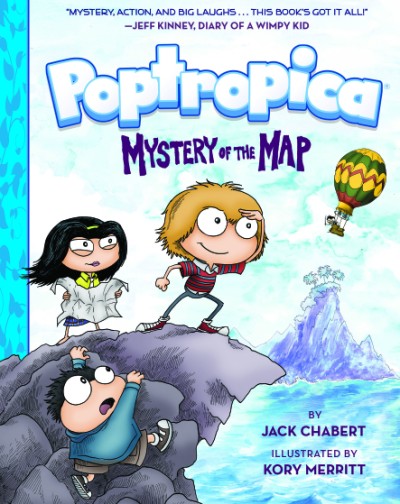
Goodreads Summary: Based on a concept by Wimpy Kid author Jeff Kinney comes Poptropica, a brand-new graphic novel adventure series by Jack Chabert and Kory Merritt. In “Mystery of the Map,” Oliver, Mya, and Jorge take a ride in a hot-air balloon, only to crash-land on an unknown island filled with extinct animals and a horde of angry Vikings. Welcome to Poptropica, an uncharted group of islands whose existence is hidden from the rest of the world. As the three friends embark on a perilous search for a way home, they quickly discover the shocking reason they were brought there something that threatens the very existence of Poptropica and their ability to ever make it off the island!

My Review: I love learning about new graphic novels because they are so popular in my classroom, and I think this one will be another one that will be loved by students. Although the Poptropica idea was made by Jeff Kinney, I see it more as a ladder rung for late elementary school/early middle school before students jump to Amulet or Doug TenNapel books. I also know that there are millions of Poptropica users who will love to explore Poptropica through Oliver, Mya, and Jorge’s journey.

Although, I hadn’t played Poptropica when I first heard about the book, as soon as I knew I was getting it, I went onto the website to play, and I loved it! I can see why so many kids/teens like it–it is a role-playing game with adventure, puzzles, and a great story.  However, I will say that when I read the book, it would not have mattered if I’d played the game or not. I think that is the beauty of it. It can be an extension of the game, an intro to the game, or an adventure-filled graphic novel separate from the game.

The graphic novel itself is very well done. The graphics are fun and easy to read, the story is a page turner filled with adventure and humor, and it has fun history facts. I look forward to the rest of the series.

Teachers’ Tools for Navigation, Discussion Questions, and Flagged Passages: 

The teaching guide below that I wrote for Abrams Books includes vocabulary, cross-curricular activities, and cross-curricular discussion questions as well as example passages.

You can also access the teaching guide here.

Read This If You Loved: Bird & Squirrel series by James Burk, Rutabaga series by Eric Colossal, The Great Pet Escape by Victoria Jamieson, Little Robot by Ben Hatke, Salem Hyde series by Frank Cammuso

Recommended For: 

readaloudbuttonsmall classroomlibrarybuttonsmall

Kellee Signature

Teeny Tiny Toady by Jill Esbaum

Share

teeny tiny toad

Teeny Tiny Toady
Author: Jill Esbaum
Illustrator: Keika Yamaguchi
Published: March 1, 2016 by Sterling Children’s Books

Goodreads Summary: When a giant hand scoops up her mama and puts her in a pail, a terrified tiny toad named Teeny hops faster than she ever did in her life. “Mama’s stuck inside a bucket! Help me get her out!” she begs her big, clumsy brothers. “Don’t you worry, kid. We’ll save her!” they promise, bumbling and stumbling and jumbling out the door. But as the boys rush headlong to the rescue, pushing their little sister aside, it becomes clear: brawn isn’t always better than brains—and the smallest of the family may just be the smartest one of all.  Written in lilting verse.

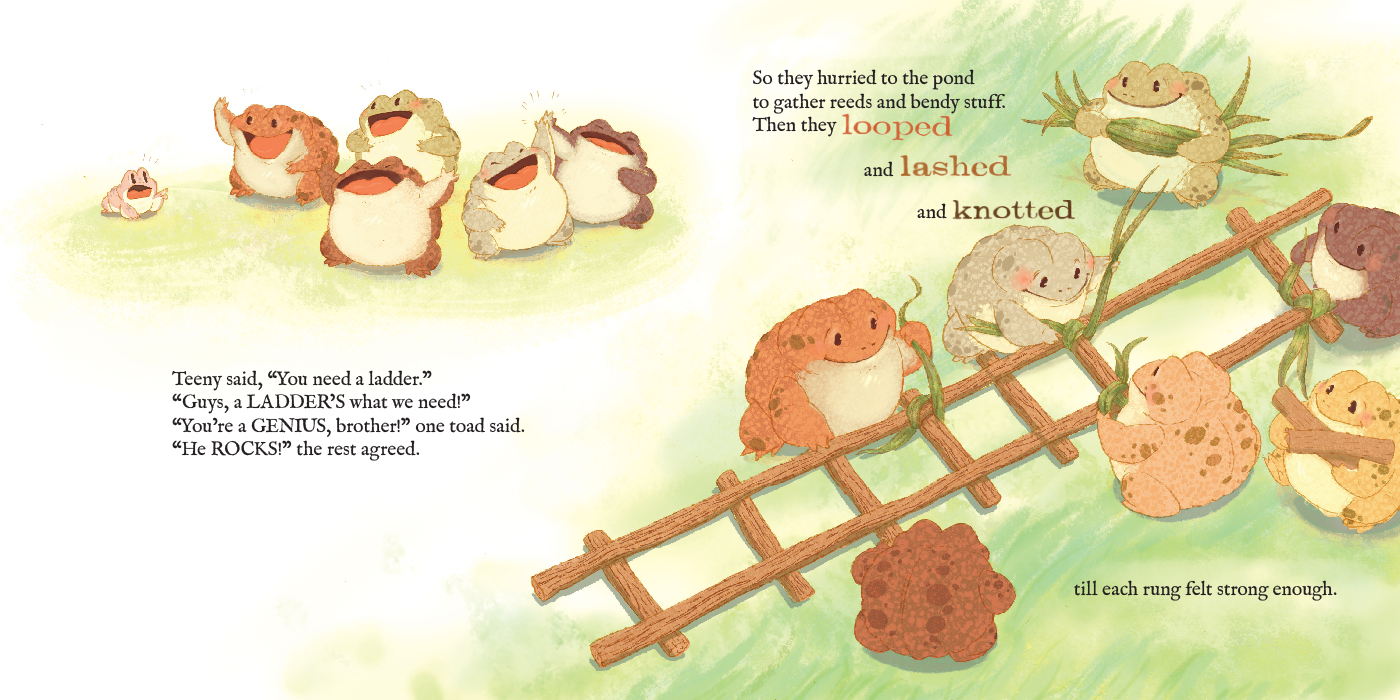
Ricki’s Review: I should be honest that frogs and toads are my favorite animal. I love everything about them! Reading this book was such a joy. I loved how the words danced across the page. If you look at the image below, you will see the way the words pop. The toads are personified in a way that makes me smile. They high five, cheer, hold each other up, etc. Teeny may be little, but she is fierce. It takes her some time to realize that she has valuable ideas. I enjoy teaching my son to be critical of gender as we read this book, and I particularly enjoyed the feminist theme.

Kellee’s Review: I should be honest that frogs and toads are one of my least favorite animals. However, that did not keep me from loving this book! Ricki touched on much of what is superb about the book including the onomatopoeias throughout, the way the words hop like toads all over the page, and the joyousness of these toads’ family. I also particularly enjoyed the theme of this book–it definitely shows how you shouldn’t underestimate people especially if you are basing it off of a prejudicial stereotype. It also  I plan on using this for one of my precept/theme activities with my students because I feel there is so much that could be discussed in this teeny, tiny book. 

Teachers’ Tools for Navigation: This story would be great to use in a creative writing class. The author and illustrator cleverly craft the phrasing and presentation of the story, and this will be inspirational for writers and illustrators. Teachers might also use this text to teach personification, onomatopoeias, and effective use of rhyme.

Discussion Questions: When does Teeny realize that her ideas are valuable? How does her size impact how she feels about herself?; Are there other ways that Teeny could have gotten her family out of the bucket? Try to think of as many ways as you can and how they would have impact the telling of the story.

Flagged Passage:

teeny passageSpread from: http://andreacmiller.com/projects/teeny-tiny-toady/

Read This If You Loved: The Frog and Toad series; Stick by Steve Green; Green Wilma by Tedd Arnold

Recommended For: 

readaloudbuttonsmall classroomlibrarybuttonsmall

RickiSigand Kellee Signature

**Thank you to Josh at Sterling Books for providing copies for review!**

Exclusive Reveal!: Teaching Guide for Raymie Nightingale by Kate DiCamillo

Share

raymie

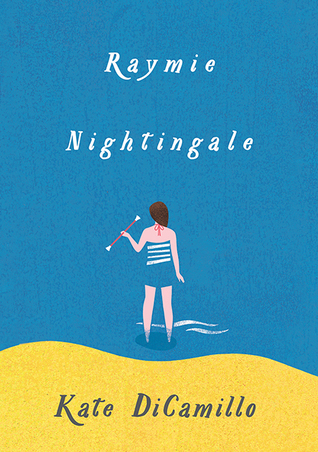
Raymie Nightingale by Kate DiCamillo is out today!

And we are happy to be able to be able to exclusively reveal the teaching guide.

Kate DiCamillo writes heartprint stories, and Raymie Nightingale is no different. Raymie Nightingale shares with the reader a story of three very different girls who all are enveloped in sadness for different reasons and need each other to find their way out. You will love Raymie and the Three Rancheros!

I had so much fun writing this guide, and I hope that many of you find the activities and discussion questions within it useful to you and your students!

Please note: There are some spoilers in the guide, so please be aware if you are reading the guide before reading the book.

You can also access the teaching guide here.

You can learn more about Raymie on Candlewick Press’s Raymie Nightingale page.

Recommended For: 

readaloudbuttonsmall classroomlibrarybuttonsmall litcirclesbuttonsmall closereadinganalysisbuttonsmall

Don’t miss out on this one!

Kellee Signature

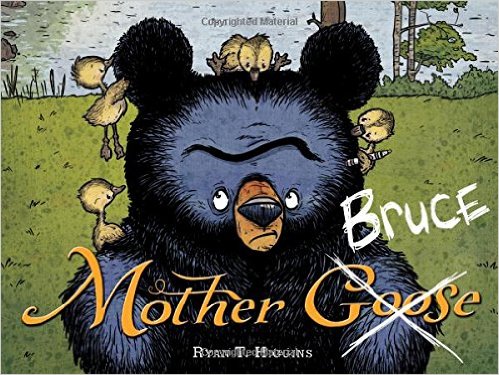
Mother Bruce by Ryan T. Higgins

Share

Mother Bruce

Mother Bruce
Author: Ryan T. Higgins
Published November 24, 2015 by Disney-Hyperion

Goodreads Summary: Bruce the bear likes to keep to himself. That, and eat eggs. But when his hard-boiled goose eggs turn out to be real, live goslings, he starts to lose his appetite. And even worse, the goslings are convinced he’s their mother. Bruce tries to get the geese to go south, but he can’t seem to rid himself of his new companions. What’s a bear to do?

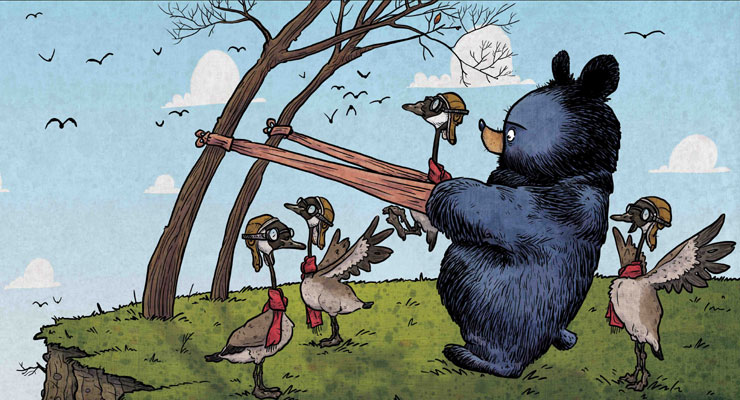
Ricki’s Review: I dare you to try reading this book without smiling. I had so much fun reading this book with my son. It tells the story of a grumpy bear who accidentally hatches goslings instead of hard-boiled eggs for his newest recipe. The goslings imprint on him, and he can’t get rid of them! As you can see below, the illustrations are hilarious. The author is very clever. I will be reading more of his work!

Teachers’ Tools for Navigation: It is always fun to look at original fairy tales and the ways they compare to fairy tale retellings. This book is a bit different because Mother Goose is the imaginary author of fairy tales. The title of this book is a pun on the Mother Goose name. ‘d love to hear the ways that kids can compare this story to other fairy tales. I imagine they would come up with some really clever ideas!

Discussion Questions: What strategies does Bruce use to try to get rid of the goslings?; How does Bruce change throughout the story?; In what ways does the author add humor to the story in both the language and illustrations?; What does the title mean?

We Flagged: 

Mother-Bruce-2

**Image from: http://www.modernmom.com/mother-bruce-giveaway-100-visa-gift-card-116459.html. **

Read This If You Loved: Wilfred by Ryan T. Higgins, Wolfie the Bunny by Ame Dyckman, No Fits, Nilson by Zacharia Ohora, Sylvester and the Magic Pebble by William Steig, This Is Not My Hat by Jon Klassen

Recommended For: 

readaloudbuttonsmall classroomlibrarybuttonsmall

RickiSig

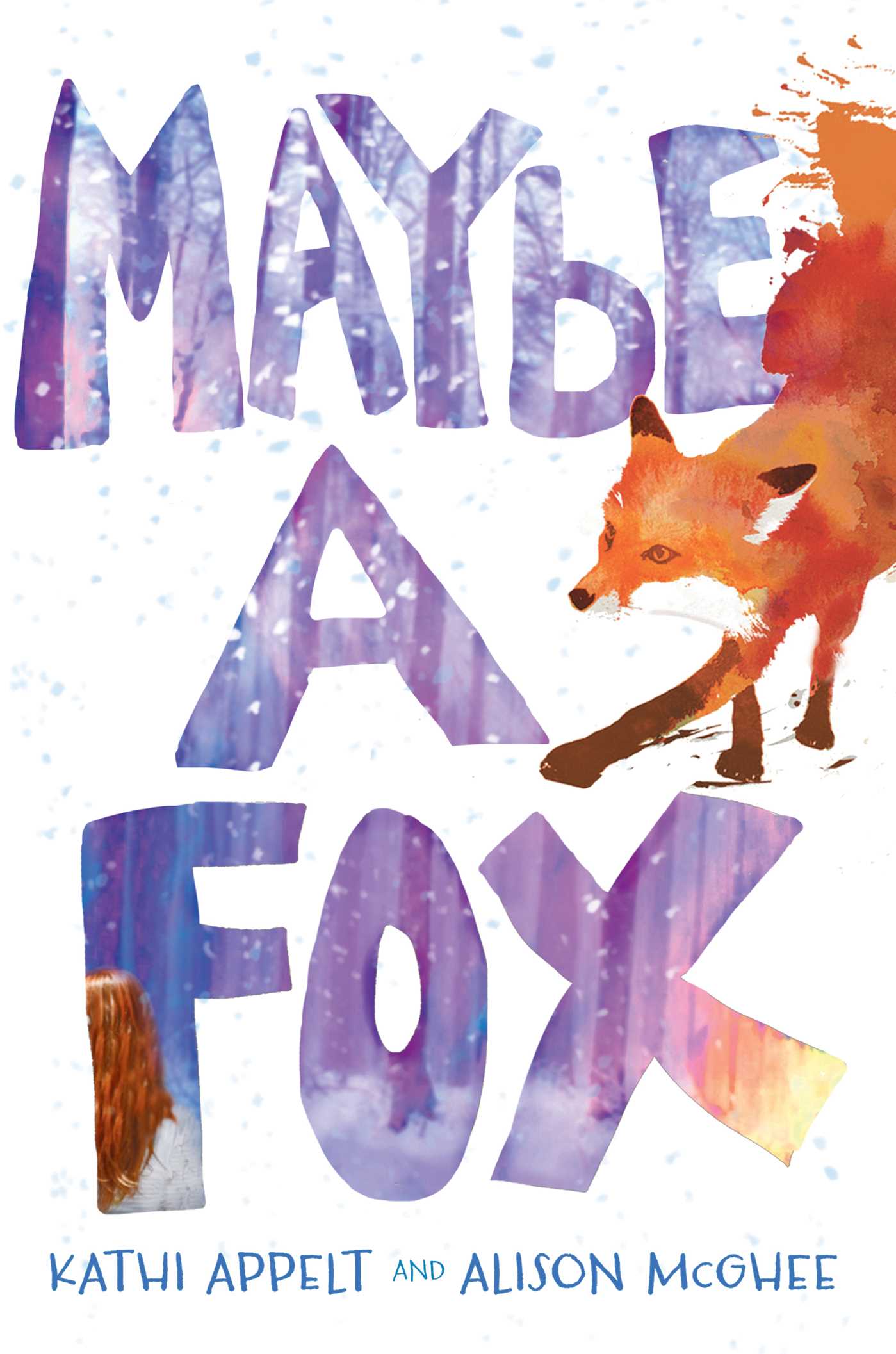
Blog Tour, Author Guest Post, Giveaway, and Review!: Maybe a Fox by Kathi Appelt and Alison McGhee

Share

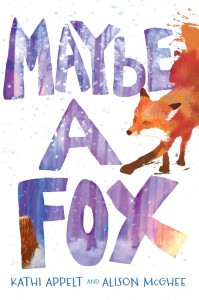
maybe a fox

Maybe a Fox
Author: Kathi Appelt and Alison McGhee
Published: March 8, 2016 by Atheneum/Caitlyn Dlouhy Books

Goodreads Summary: A tale about two sisters, a fox cub, and what happens when one of the sisters disappears forever.

Sylvie and Jules, Jules and Sylvie. Better than just sisters, better than best friends, they’d be identical twins if only they’d been born in the same year. And if only Sylvie wasn’t such a fast—faster than fast—runner. But Sylvie is too fast, and when she runs to the river they’re not supposed to go anywhere near to throw a wish rock just before the school bus comes on a snowy morning, she runs so fast that no one sees what happens…and no one ever sees her again. Jules is devastated, but she refuses to believe what all the others believe, that—like their mother—her sister is gone forever.

At the very same time, in the shadow world, a shadow fox is born—half of the spirit world, half of the animal world. She too is fast—faster than fast—and she senses danger. She’s too young to know exactly what she senses, but she knows something is very wrong. And when Jules believes one last wish rock for Sylvie needs to be thrown into the river, the human and shadow worlds collide.

Writing in alternate voices—one Jules’s, the other the fox’s—Kathi Appelt and Alison McGhee tell the tale of one small family’s moment of heartbreak.

Ricki’s Review: I read this entire book in one sitting because, quite simply, I could not put it down. I sobbed through the entire book because I connected so strongly with these characters. As a mom, I couldn’t imagine my son experiencing the pain that these sisters felt from the loss of their mother. As a sister, I can’t imagine my own sister disappearing. These two connections, along with the stunning portrayal of character and story, made this book feel deeply personal for me. While younger students won’t be moms, and thus, won’t have this personal connection I had with the text, they will be sons and daughters. Regardless of a reader’s point of view, they will connect with this book because it is written so beautifully. I won’t forget this book, and I don’t think other readers will forget it, either.

Kellee’s Review: This book is one I’ll be talking about for a while. I will say it is probably the saddest book that I’ve ever read; however, it is beautiful. It is very hard to explain unless you’ve experienced because it gives hope while also being so terribly sad. The characters, animal and humans, are so thought out and detailed that as you read you feel with them and for them. I was also in awe of the way Kathi and Alison were able to tell such a unique story without the reader ever feeling like it was an odd scenario. Whenever I try to describe this book to someone, they give me quite a weird look, so I just stop trying and tell them they should read it because it is a heart print book. There is no other way to describe it. Like Ricki said, every reader will feel for someone in the book. And every reader won’t be able to deny how beautifully written the prose is. 

Teachers’ Tools for Navigation: As you will read in Kathi and Alison’s guest post below, point-of-view makes this story quite powerful. Teachers might ask students to consider the varying perspectives of this story and how they work together to form a cohesive whole. The teacher might provide other examples of texts that feature different points-of-view to compare and contrast authors’ styles. Students might then try their hand at writing in various, connected points-of-view and subsequently analyze how this enhances a narrative.

Discussion Questions: How do the authors unfold the plot in the narrative?; What predictions did you make while reading this story? How might the story have turned out quite differently?; How does Senna’s point-of-view enhance the story for you?; Were there any allusions within the text?; What theme do you take away from Maybe a Fox?

We Flagged: “The baby girl fox, Senna, came into the world in darkness, thirty feet below ground in the end dug out of cool brown earth. She was the middle child, born between her older and younger brothers, the three of them separated by minutes.

The first thing she knew was the feel of her mother’s tongue. Shhh shhh shhh, cleaning her off, licking her into life and warmth and love and safety.

The second thing she knew was the feel and smell of her brothers’ bodies pressed against hers as their mother nursed them, their front paws kneading her belly.

The third thing she knew was that there was someone waiting for her, someone she needed to find.” (p. 75-76)

Read This if You Loved: The House of Purple Cedar by Tim TinglePax by Sara PennyPacker, Counting Crows by Kathi Appelt

Recommended For: 

litcirclesbuttonsmall closereadinganalysisbuttonsmall readaloudbuttonsmall classroomlibrarybuttonsmall

Giveaway!
A Guest Post from Kathi and Alison about Point-of-View

Finding the best possible point of view for a story is one of the most important choices that a writer can make. The point of view, more than any other aspect of literature, dictates the distance created between the character and the reader. When we embarked upon this story, Alison chose to write from the fox’s story and she decided early on that she wanted to write from an omniscient point of view. This allowed her to place Senna deeply within the pocket of her fox family, and to give our readers an intimate sense of their world. It gave her a way to present the fox-world via the senses of all five members of their family, and put the readers squarely inside of the natural landscape.

When we were first drafting, Kathi chose to write Jules from a first person point of view. However, it didn’t take long before she realized that the first person was too limiting. Yes, first person is quite intimate and there are good reasons to use it, but in this case it felt as though it created too many blind spots. Jules needed a bigger canvas and so Kathi switched to third person. That allowed her to broaden the scope of Jules’ experience, and to let Jules, as well as the omniscient narrator, experience the events as they unfolded.

We always knew that Sam’s point of view would be from the third person too, and he stepped into the story in a way that let the reader get a more objective perspective. We also hoped to show that even though Sylvie’s death primarily impacted Jules and her dad, her loss was felt strongly by the entire community. As well, Sam’s earnest desire for the return of the catamount helped to create a sense of possibility that the other characters couldn’t, simply because of their closeness to Sylvie.

The landscape also gave us a perspective. The woods and rocks, and of course the Slip itself with its local legends, provided not only a backdrop, but its own wild voice, a voice that spoke to each of our characters—fox, Jules, Sam, Elk, Sylvie, Zeke, Dad, and the catamount—in a way that only a wild place can speak.

All this to say that the multiple points of view hopefully helped to create stories within stories that, when woven together, made a single story that was enriched by the viewpoints of each character.

Kathi and Alison.

About the Authors:
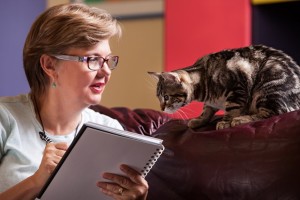
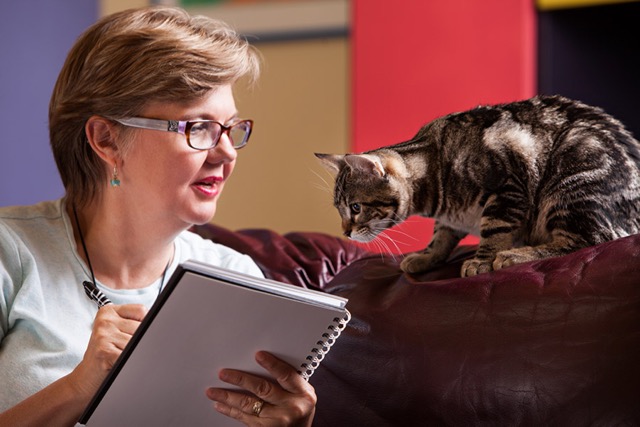
Kathi Appelt photo 2015_credit Igor Kraguljak

Kathi Appelt is the New York Times best-selling author of more than forty books for children and young adults. Her picture books include Oh My Baby, Little One, illustrated by Jane Dyer, and the Bubba and Beau series, illustrated by Arthur Howard. Her novels for older readers include two National Book Award finalists: The True Blue Scouts of Sugar Man Swamp and The Underneath, which was also a Newbery Honor Book. In addition to writing, Ms. Appelt is on the faculty in the Masters of Creative Writing for Children and Young Adults at Vermont College of Fine Arts. She lives in College Station, Texas. To learn  more, visit Kathi’s website at kathiappelt.com.
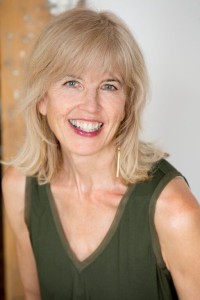
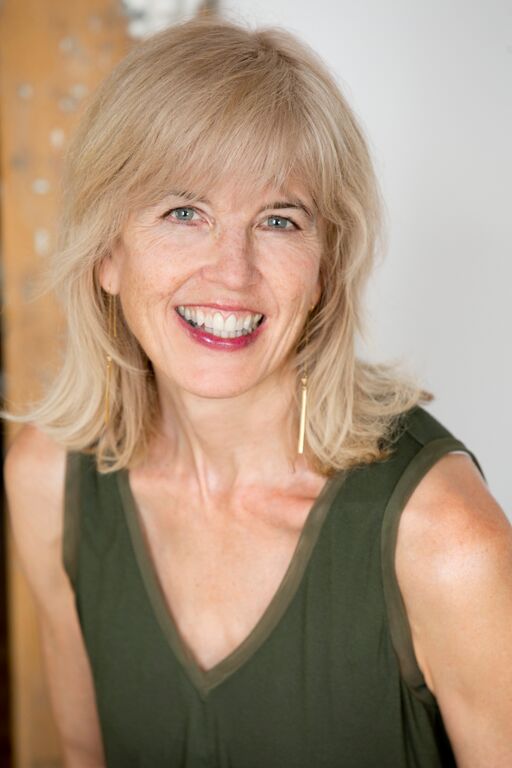
Alison McGhee photo 2015 credit Dani Werner
Alison McGhee is the New York Times bestselling author of Someday, as well as Firefly Hollow, Little Boy, So Many Days, Bye-Bye Crib, Always, A Very Brave Witch, and the Bink and Gollie books. Her other children’s books include All Rivers Flow to the Sea, Countdown to Kindergarten, and Snap. Alison is also the author of the Pulitzer Prize–nominated adult novel Shadowbaby, which was also a Today show book club selection. She lives in Minneapolis, Minnesota, and you can visit her at AlisonMcGhee.com.
MaybeAFox_banner

Follow the blog and book tour!

See Another Guest Post by Kathi Appelt Here!

RickiSigandSignature

**Thank you to Barbara at Blue Slip Media for providing copies for review and the giveaway. Also, thank you to Kathi and Alison for the wonderfully insightful guest post!**

National Geographic Kids: Farm Animals & Rascally Rabbits!

Share

NFPB2016

Nonfiction Wednesday

Nonfiction Picture Book Wednesday is hosted by Kid Lit Frenzy and was started to help promote the reading of nonfiction texts. Most Wednesdays, we will be participating and will review a nonfiction text (though it may not always be a picture book).
Be sure to visit Kid Lit Frenzy and see what other nonfiction books are shared this week!

farm animals

Farm Animals
Author: Catherine D. Hughes
Photographs from National Geographic
Published February 9th, 2016 by National Geographic Children’s Books

Goodreads Summary: Young readers will meet their favorite farm animals and learn more about them through simple, age-appropriate language in this colorful board book.

rascally

Rascally Rabbits! And More True Stories of Animals Behaving Badly!
Author: Aline Alexander Newman
Photographs from National Geographic
Published February 9th, 2016 by National Geographic Children’s Books

Goodreads Summary: These bunnies may look adorable, but there’s more than meets the eye! In Rascally Rabbits, meet some rabbits that cause nothing but trouble, a rescue pup who will eat ANYTHING, and a sneaky bear with a taste for treats. Readers won’t stop laughing as they read these hilarious–and completely true!–stories. Filled with engaging photos, fast facts, and fascinating sidebars, readers won’t want to put this book down.


Kellee’s Review: What I like so much about National Geographic Kids books are that they really do take nonfiction to the next level. First, they have nonfiction for all ages. The Look & Learn series are for kids ages 1-4 then move to their Readers Series which is an early reader then to Chapters that is primary level. Each level adds more text but continue to include interesting facts and photographs. Once you get up to Chapters, the text even includes sidebars, an index, and a bibliography. 

Farm Animals was a favorite with Trent immediately. One of his stations at school is all about animals and they spend their time there talking about the different animals, what color they are, and what sound they made, so Trent loved telling me all of the animals’ names and the sound they make. I loved that there were animals facts and sidebars in addition to just the animal photographs and sounds.

Rascally Rabbits! is a perfect first chapter book because it is quite funny (these animals do some crazy things), it is educational because it teaches about the animals as well, and it splits up the stories into nice sections.

Ricki’s Review: I completely agree with Kellee. I much prefer narrative nonfiction, so I always hesitate to pick up informational nonfiction. The National Geographic books remind me just how wrong my assumptions are. I am not crazy about leveling, particularly with nonfiction, but I think that some parents really like it. And I think the leveling in these books is far more accurate than in fiction texts. 

I knew Henry would love Farm Animals the second we got it in the mail. Like most kids, he loves animals. He immediately began singing “Old McDonald” as we started reading the book, and he was bouncing up and down as we went through each of the brightly colored pictures.

Rascally Rabbits! is a bit challenging for him, but he loved the pictures. I opted to read selected text to him aloud, and I read the entire book on my own. Kids who are interested in rabbits will absolutely adore these books. I still remember reading dozens of books about poodles when I was younger. Because I was so interested in the content, I didn’t realize how much I was learning! The book is organized very well, and they did a really nice job with this one.

Teachers’ Tools for Navigation: National Geographic Kids’ books should be a go to for a teacher’s informational nonfiction section. Students will love reading and learning from these texts. Farm Animals and other Look & Learn books are perfect for read alouds and helping young children learn about different parts of our world. Rascally Rabbits! and other chapter books can be used for read aloud, independent reading, or even within a lit circle/jigsaw. For example, with Rascally Rabbits! each group could read about each of the different animals who made a mistake then go group with one person from each of the other groups to share what they read.

Discussion Questions: (Farm Animals) What product do each of these animals give to us?; What other farm animals do you know? What sounds do they make?; (Rascally Rabbits!) What are some things that Babbity does to make Flopsy’s life tough?; What makes bears get near humans?; Why was Neil afraid something bad might happen with Moose? Did something bad happen? Was it Neil’s fault?

We Flagged: “Moo! Cows eat grass. A group of cows is called a herd. People drink milk that comes from cows. Guess What? One cow can give enough milk in a day to fill 400 glasses.” (Farm Animals)

“Did You Know? The best way to pet a rabbit is to gently scratch its forehead and between its eyes.” (Rascally Rabbits!, p. 9)

“A young black dog ran without purpose along a forest road in Lewis County, New York, U.S.A. Rain was pouring down and freezing on the ground. Tiny icicle hung from the dog’s ears and chin. He had a wild-eyed look on his face.” (Rascally Rabbits!, p. 71)

Read This If You Loved: Nonfiction animals books

Recommended For: 

classroomlibrarybuttonsmall readaloudbuttonsmall litcirclesbuttonsmall

Signatureand RickiSig

**Thank you Karen from Media Masters Publicity for providing copies for review!**