Blog Tour, Giveaway, Author Guest Post, and Reviews!: Antsy Ansel: Ansel Adams, A Life in Nature by Cindy Jenson-Elliott

Share

NFPB2016

Nonfiction Wednesday

Nonfiction Picture Book Wednesday is hosted by Kid Lit Frenzy and was started to help promote the reading of nonfiction texts. Most Wednesdays, we will be participating and will review a nonfiction text (though it may not always be a picture book).
Be sure to visit Kid Lit Frenzy and see what other nonfiction books are shared this week!
antsy-adams

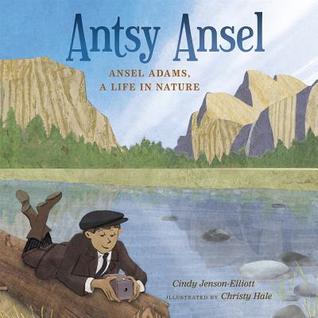
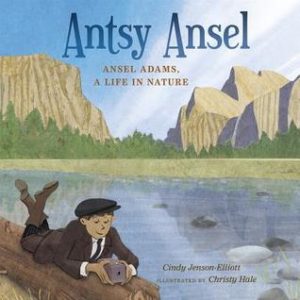
Antsy Adams: Ansel Adams, A Life in Nature
Author: Cindy Jenson-Elliott
Illustrator: Christy Hale
Published September 6th, 2016 by Henry Holt and Co.

Goodreads Summary: You may be familiar with Adams’s iconic black-and-white nature photographs. But do you know about the artist who created these images?

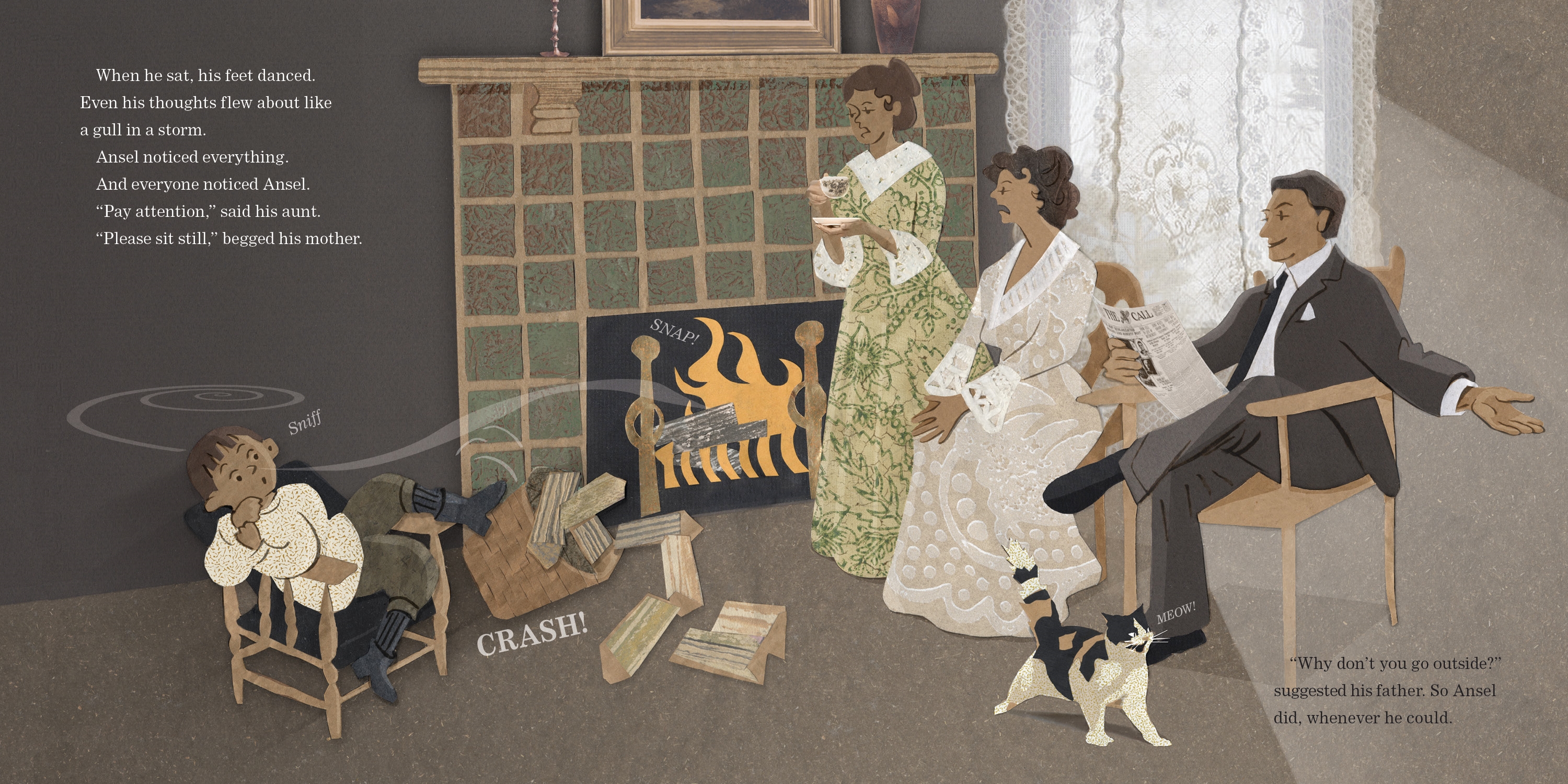
As a child, Ansel Adams just couldn’t sit still. He felt trapped indoors and never walked anywhere–he ran. Even when he sat, his feet danced. But in nature, Ansel felt right at home. He fell in love with the gusting gales of the Golden Gate, the quiet whisper of Lobos Creek, the icy white of Yosemite Valley, and countless other remarkable natural sights.

From his early days in San Francisco to the height of his glory nationwide, this book chronicles a restless boy’s path to becoming an iconic nature photographer.

Cindy Jenson-Elliott photo

About the Author: Cindy Jenson-Elliott is the author of 17 books, a teacher and environmental educator. She teaches writing workshops through her small business Words to Go (www.wordstogosd.com) You can see her work on her website at www.cindyjensonelliott.com.

Kellee’s Review: As a child of a museum director and a photographer, Ansel Adams has been a name that I’ve known since I was quite young. He was one of the first artists whose work I could identify on my own. I was fascinated by his photographs–almost spooky in their lights and shadows but beautiful to where you cannot take your eyes off of them.

I loved learning about Ansel as a child. His story rang true as a teacher especially because there are so many kids like Ansel who are not made for the traditional setting of school yet are brilliant and should be educated a bit differently than the norm. Cindy Jenson-Elliott and Christy Hale do a very good job at showing and telling how Ansel viewed the world. With detailed illustrations, onomatopoeias, and a rhythmic texts, Ansel’s story is told in such an authentic way that really takes the reader into his brilliant mind.

Ricki’s Review: I’ve heard the name Ansel Adams, but I never connected it to the beautiful photography. I am so glad to have read this book because it made me aware of an important man that I didn’t know much about! As a mom of a son that is always itching to go outdoors, this was a great book to read to him. He felt very connected to Ansel! It also taught him all of the lessons he learns while he is outside! It is great to learn about who this man was as a child and what his life was like when he was growing up. 

Teachers’ Tools for Navigation: Ansel’s story fits into art, history, and language arts. Ansel Adams is a very significant artist of the 20th century and his story could be told within the context of art history or American history. The historical aspect in addition to the imagery, figurative language, and rhythm makes this text perfect for the classroom.

Discussion Questions: How did Ansel’s life change after his dad pulled him out of school? How did this choice affect the rest of his life?; How did Ansel’s personality differ from what the school expected of him?; Who do you think had the biggest influence on Ansel’s life?; Ansel was able to do what he loved for a living. What do you love to do? How could you make a living doing it?

Author Guest Post: I really enjoyed working on this book, partly because I loved the character, but also because I spend a lot of time in the places Ansel Adams haunted. I went to Yosemite for the first time at the same age as Ansel Adams went. And each year, my family treks up to the High Sierra to camp and explore.

I also loved deeply immersing myself in his life and discovering so many things I had not realized: that he explored nearby nature — not far away and exotic locales — as a child, and that forged his connection with the natural world;  that he did commercial work to make a living for his family (so affirming for artists and writers who have to do the same thing!); that he was a concert pianist.

Sometimes when you deeply research a life in order to write a biography, you fall a little bit in love with your subject. Though this was my first biography, from what I understand from other biographers, that’s a common experience. I also understand that many biographers, after spending a few years with someone, fall out of love as they discover all the dimensions of a personality. That didn’t happen for me with Ansel Adams. Reading about the person, seeing where he lived and what he valued throughout his life, and particularly through reading autobiography, I felt such admiration and respect. In a well-written autobiography, you get into a state where you feel like you are experiencing a person’s essence. Reading Ansel Adams’s autobiography was like that for me — his poetic word choices, the way he described the world he lived in and his experience in that world, I had the feeling of standing beside him and seeing his world through his eyes. I wanted to carry that essence into my picture book about Ansel Adams. I wanted young readers to feel what Ansel Adams must have felt making a connection with nature in quiet Lobos Creek behind his house, or meeting his beloved Yosemite for the first time. I wanted the experience of reading Antsy Ansel: Ansel Adams, a Life in Nature, to be visceral. I hope that through my words and Christy Hale’s collage art, that people experience the world through a beautiful set of eyes.

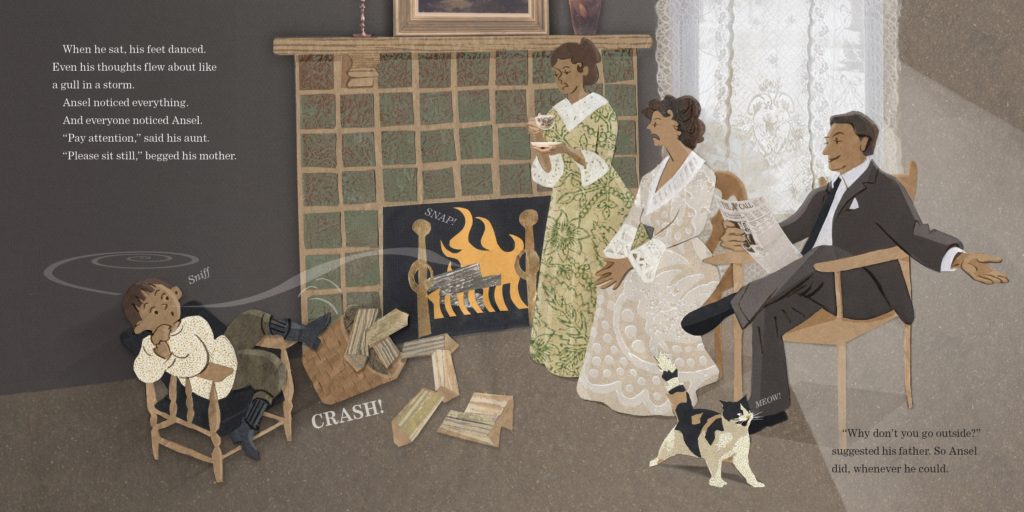
Flagged Passages: 
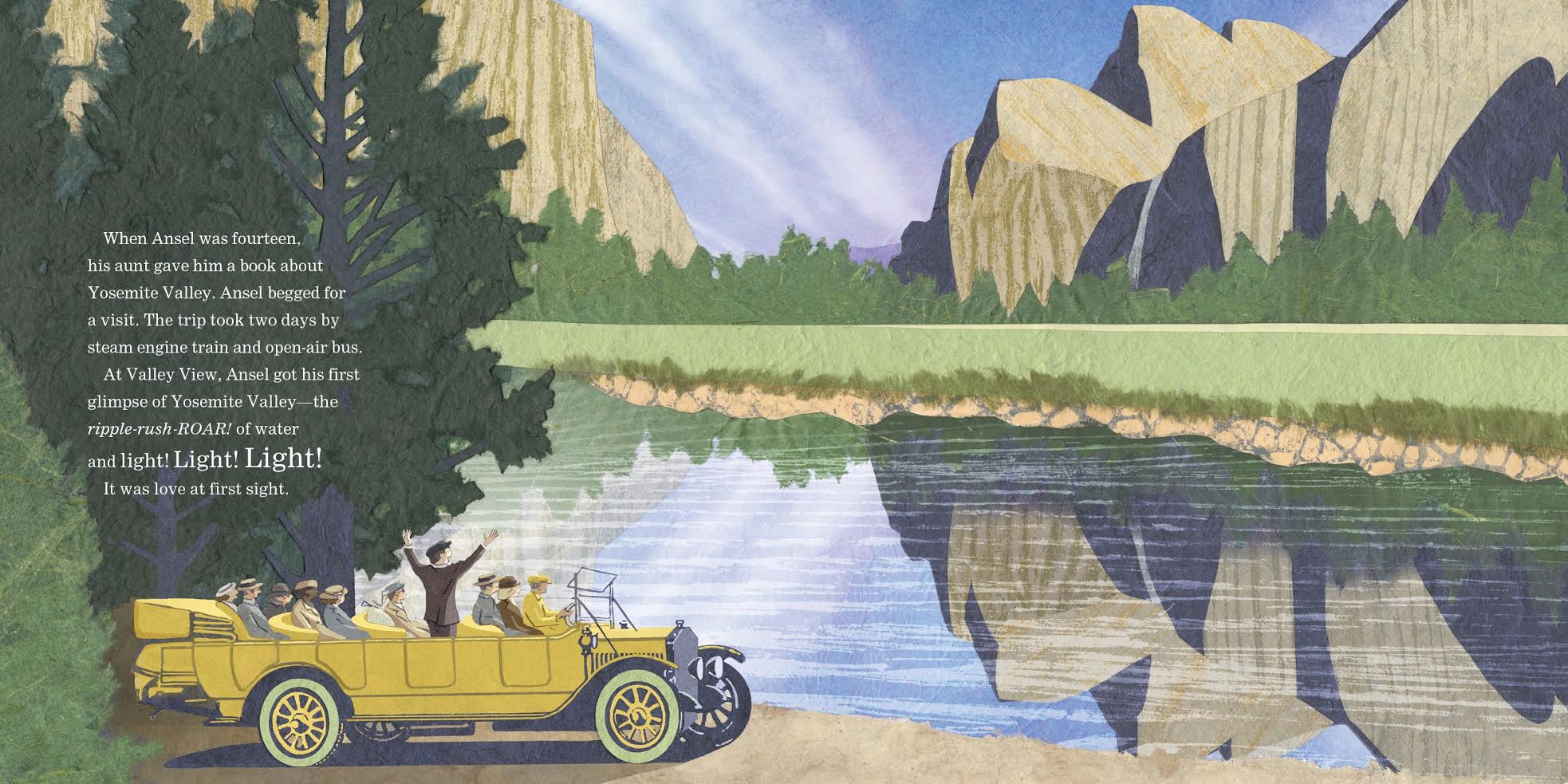
ansel-yosemite ansel-adams-spread-2

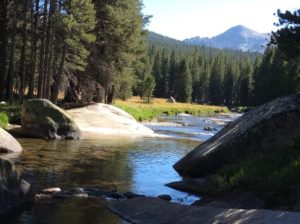
(Yosemite photographs to see the beauty and precision of Christy Hale’s artwork)
ansel-adams-spread

Read This If You Love: Art/photography, The Noisy Paintbox by Barb Rosenstock, The Museum by Susan Verde, Dorothea’s Eyes by Barb Rosenstock, Photos Framed by Ruth ThomsonThe Sky Painter by Margarita Engle, On a Beam of Light by Jennifer Berne

Recommended For: 

classroomlibrarybuttonsmall readaloudbuttonsmall closereadinganalysisbuttonsmall litcirclesbuttonsmall

Giveaway!

a Rafflecopter giveaway

Signatureand RickiSig

**Thank you to Cindy and Morgan at Macmillan for providing copies for review!**

Shy by Deborah Freedman

Share

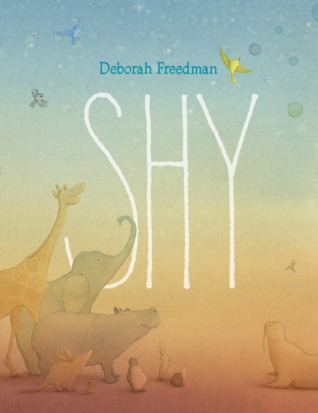
shy

Shy
Author and Illustrator: Deborah Freedman
Published: September 27, 2016 by Viking

Summary: Shy loves birds. He’d love to watch them fly and hear them sing, but he’s only ever read about them in books. . .until a real bird comes along. He’s dying to meet her, but there’s just one problem: Shy is, well, shy–so shy, in fact, that he’s afraid to leave the gutter of the book. Can Shy overcome his fears and venture out onto the page?

This sweetly relatable picture book from the acclaimed Deborah Freedman speaks to every child who’s ever felt like hiding instead of facing the daunting world.

Ricki’s Review: I have read this book dozens and dozens of times with my son. He absolutely loves the story. When my husband walked him upstairs to bed the night after we got the book, he didn’t even make it to the top of the stairs before he requested his reading choices for the night, “Race car books and Shy, please.” The book features a character who is Shy and who is unable to say hello to a yellow bird. I won’t give anything away, but this is a book that will teach many lessons to readers (and not just the shy ones!). It’s a daunting, scary world out there, and all kids will be fearful in situations. This book teaches lessons of courage and friendship. This stunningly beautiful book captured my attention from the start, and I immediately shared it with colleagues.

Kellee’s Review: Deborah Freedman can do no wrong. Her ability to illustrate differently depending on the story and her ability to tell such a wide variety of stories just moves her to an all-star level. In Shy, Freedman tells us a story of Shy who could represent any kid who fears doing something. His story helps kids who may feel like him go through his journey of facing his fears. I also love that books are such a large part of Shy’s life and really help him with the real world.

Teachers’ Tools for Navigation: Teachers might have students analyze the way shyness is portrayed in this book. They can examine the wording, mood, etc. Then, as a class or in small groups, they might pick a different emotion to portray. They could create and publish their own creations. Then, they might compare and contrast the way the emotion shapes the text as a whole.

Discussion Questions: When is a time that you felt shy? Did you gain the courage to be brave? What happened to the bird when Shy wasn’t brave?; It isn’t until later in the book that we know what kind of animal Shy is. Why do you think the author structured the story this way? What does it add to your reading?

Flagged Passage: “But Shy didn’t know how to talk to a bird. What if he stuttered? What if he blushed? What if–“

Read This If You Loved: Blue Chicken by Deborah Freedman, Little Tree by Loren Long, Giraffes Can’t Dance by Giles Andreae, Say Hello by Jack Foreman, The Cloud by Hannah Cumming, Each Kindness by Jacqueline Woodson, By Mouse & Frog by Deborah Freedman

Recommended For:

  readaloudbuttonsmall classroomlibrarybuttonsmall

RickiSig andKellee Signature

Blog Tour with Review: Race Car Dreams by Sharon Chriscoe

Share

race car dreams

Race Car Dreams
Author: Sharon Chriscoe
Illustrator: Dave Mottram
Anticipated Published: September 13, 2016 by Running Press Kids

Goodreads Summary: After a day at the track of zipping and zooming, a race car is tired and ready for bed. He washes his rims, fills his tummy with oil, and chooses a book that is all about speed. All toasty and warm, he drifts off to sleep, he shifts into gear . . . and dreams of the race!

Ricki’s Review: I know I won’t be the only parent to say that my child cannot get enough cars. He eats, sleeps, and breathes cars, so I jumped at the chance to review this book. And boy, I wasn’t disappointed. The characterization within the text is engaging and fun, and I loved all of the integration of car parts/ideas in the race car’s preparation for bedtime. The race car comes to life, and I am grateful to have this book to read before bedtime. It engages my son while making him a sleepy boy! This charming book is going to be a story that parents read again and again.

Kellee’s Review: Any fan of Pixar cars or race cars in general is going to love the race car’s story. The personification of the car is adorable, I specifically like how his emotions can be read by looking at his eyes, and I love that the race car reads before bed! I would love to have students write their own stories of bedtime for vehicles (or other inanimate object) to see how school buses or tow trucks get ready for bed. In my life though, it is a bedtime story that my son loves to read.

Teachers’ Tools for Navigation: It would be really fun to compare and contrast this book to some of the texts listed below in the “Read This If You Love” section. As avid readers of vehicle books, we know that each book has a different angle, and these are nuances that kids recognize and appreciate. It would be interesting to capitalize on these comparisons and differences to talk about how authors craft stories creatively and uniquely.

Discussion Questions: What does the race car do to prepare for bed? How does this compare to your bedtime routine?; How does the author make the race car come alive with personification?; How does the author craft the story in ways that make you sleepy?

Flagged Passage: “The zooming has stopped. The sun’s almost set. / A race car is tired. He’s wringing with sweat. / His day has been filled with high octane fun. He’s hugged all the curves. He’s had a good run.”

Read This If You Love: Race Car Count by Rebecca Kai Dotlich, Goodnight, Goodnight, Construction Site by by Sherri Duskey Rinker; The Racecar Alphabet by Brian Floca, Alphabeep: A Zipping, Zooming ABC by Debora PearsonThe Three Little Rigs by David Gordon, Ten Little School Cars by School Specialty Publishing

Follow the Tour!:

9/6 My Word Playground

9/7 MomReadIt

9/8 Unleashing Readers

9/9 Once Upon a Time…

9/10 Stacking Books

9/11 Geo Librarian

9/12 Flowering Minds

9/13 Unpacking the POWER of Picture Books

9/14 Little Crooked Cottage

9/14 MamaBelly

9/15 #kidlit Book of the Day

9/16 Just Kidding

Recommended For: 

classroomlibrarybuttonsmall readaloudbuttonsmall

RickiSigandSignature

**Thank you to Cassie for providing copies for review!**
Blog Tour with Reviews and Giveaway!: Coyote Moon by Maria Gianferrari

Share

NFPB2016

Nonfiction Wednesday

Nonfiction Picture Book Wednesday is hosted by Kid Lit Frenzy and was started to help promote the reading of nonfiction texts. Most Wednesdays, we will be participating and will review a nonfiction text (though it may not always be a picture book).
Be sure to visit Kid Lit Frenzy and see what other nonfiction books are shared this week!

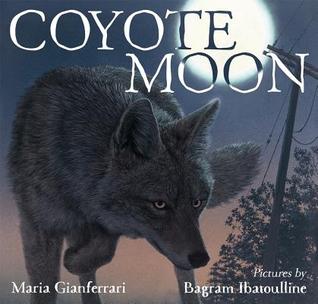
coyote moon

Coyote Moon
Author: Maria Gianferrari
Illustrator: Bagram Ibatoulline
Published July 19th, 2016 by Roaring Brook Press

Summary: A howl in the night.
A watchful eye in the darkness.
A flutter of movement among the trees.
Coyotes.

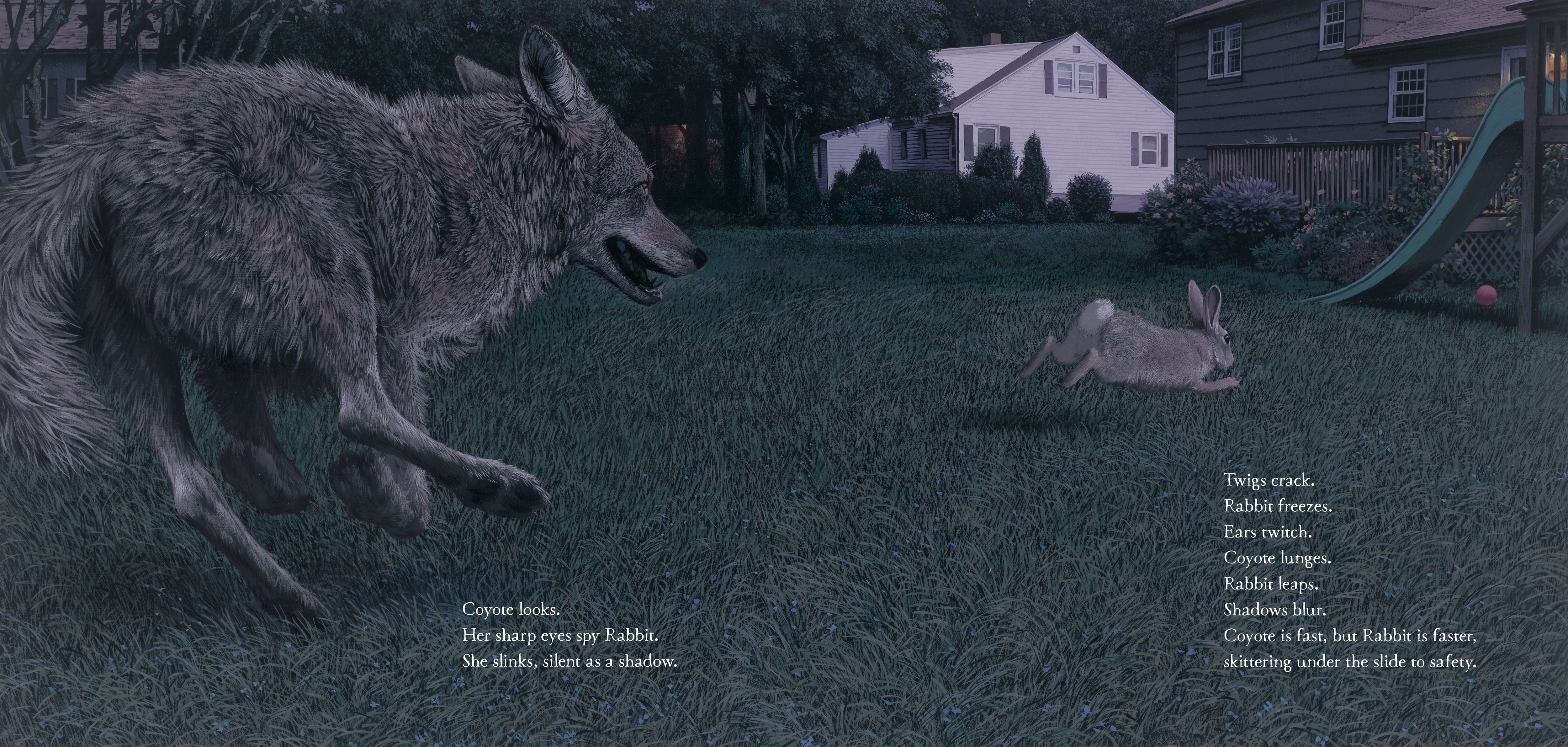
In the dark of the night, a mother coyote stalks prey to feed her hungry pups. Her hunt takes her through a suburban town, where she encounters a mouse, a rabbit, a flock of angry geese, and finally an unsuspecting turkey on the library lawn

POUNCE!

Perhaps Coyote’s family won’t go hungry today.

About the Author: Maria writes both fiction and nonfiction picture books from her sunny, book-lined study in northern Virginia, with dog, Becca as her muse. Maria’s debut picture book, Penny & Jelly: The School Show, illustrated by Thyra Heder, was released in July 2015 (HMH Books for Young Readers); a companion book, Penny & Jelly Slumber Under the Stars, was released in mid-June. Her debut nonfiction book, Coyote Moon, illustrated by Bagram Ibatoulline, will be published by Roaring Brook Press in July and is a Junior Library Guild Selection. In October, Aladdin Books for Young Readers will publish another fiction title, Officer Katz & Houndini: A Tale of Two Tails, illustrated by Danny Chatzikonstantinou. Maria has five additional books forthcoming from Roaring Brook Press, Boyds Mills Press and GP Putnam’s Sons. To learn more about Maria, visit her at mariagianferrari.com on Facebook or Instagram.

Kellee’s Review: I love how this piece of narrative nonfiction is told. Although it is in third person (for most of the book), it gets the reader into the head of the coyote. It takes the reader on her nightly hunt for survival, and the suspense of the hunt is palpable. In addition to the fantastic way the story is told, the realistic and beautiful illustrations bring everything to life.

Ricki’s Review: The beautiful cover of this book reflects the mysterious, dark illustrations that will surely lure readers. I loved how the book is written in the narrative nonfiction style. I was learning about coyotes but enjoying this information through a captivating story. This is a book that will most certainly appeal to students. I can imagine a group of kids, listening to this book with wide eyes. I think it will inspire them to want to know even more about this majestic creature.

Teachers’ Tools for Navigation: There are a few different ways that this text could be considered in the classroom. First, it is an interesting text to discuss point of view choices specifically because this book is told in third AND Second point of view. Also, this book could be the jumping off point for a student who wants to learn more about coyotes. Finally, Coyote Moon would be a perfect writing mentor text. Students could research their own animal then tell their animal’s story in a very detailed and similar way or with a different point of view choice.

Discussion Questions: How do the young coyotes survive while their mother is away?; What are some survival techniques that the prey use to escape from the coyote’s grasp?; What writing choices did the author make to help the reader become more involved in the story?; What point of view is the text in?; Is this text nonfiction or fiction?;

Flagged Passages: 

Coyote Moon Spread
From http://us.macmillan.com/coyotemoon-1/mariagianferrari

Read This If You Loved: Frozen Wild: How Animals Survive in the Coldest Places on Earth by Jim ArnoskyFlight of the Honey Bee by Raymond HuberWhen Lunch Fights Back: Wickedly Clever Animal Defenses by Rebecca L. JohnsonEye to Eye: How Animals See the World by Steve Jenkins,

Recommended For: 

classroomlibrarybuttonsmall readaloudbuttonsmall closereadinganalysisbuttonsmall

Giveaway!

a Rafflecopter giveaway

Don’t miss out on the other stops on the COYOTE MOON blog tour!

FRI 7/15:                   Pragmatic Mom
MON 7/18:                 Nonfiction Detectives
TUES 7/19:                Debtastic Reads
WED 7/20:                 Kid Lit Frenzy
THURS 7/21:              Librarian’s Quest
FRI 7/22:                   Kidlit411
MON 7/25:                 The Reading Zone
TUES 7/26:                Bartography
WED 7/27:                 Unleashing Readers

Signatureand RickiSig

**Thank you to Maria for providing copies for review!
And thank you to Roaring Book Press for providing a copy for giveaway!**

My Friend Maggie by Hannah E. Harrison

Share

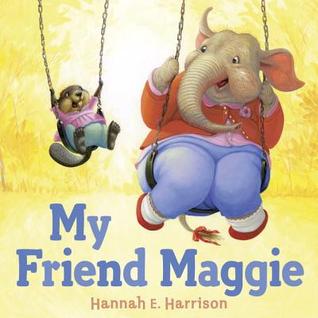
my friend maggie

My Friend Maggie
Author and Illustrator: Hannah E. Harrison
Anticipated Publication: August 9, 2016 by Dial

Goodreads Summary: A sweet and heart-tugging story about bullying, friendship, and fitting in, perfect for readers of Stand Tall, Molly Lou Melon

Paula and Maggie have been friends forever. Paula thinks Maggie is the best—until mean girl Veronica says otherwise. Suddenly, Paula starts to notice that Maggie is big and clumsy, and her clothes are sort of snuggish. Rather than sticking up for Maggie, Paula ignores her old friend and plays with Veronica instead. Luckily, when Veronica turns on Paula, Maggie’s true colors shine through.

This moving friendship story has all the heart and emotion of The Giving Tree and Kevin Henkes’s Chrysanthemum. The gorgeous artwork and important message make this a book to treasure. It’s truly a classic in the making.

Ricki’s Review: I loved this book from the moment I read it, and it will always hold a special place in my heart. I read it to some family members, and they had tears in their eyes by the end. It is a very special book that teaches wonderful lessons to children about friendship and bullying. The characters are incredibly endearing, and the illustrations make them come alive. My son asks me to read this book over and over again. I received this book as a galley, but I will be buying it to have a hard cover copy to love forever.

Kellee’s Review: This text deals with such a true issue that is not often touched in picture books: bullying and lack of friends because of being overweight. But anyone who is in schools knows that this type of behavior is happening younger and younger which leaves a large portion of young students feeling excluded from their peers. Maggie’s story gives teachers and parents an opportunity to discuss this issue without it seeming “real” because it is with animals. But this story is more than a bullying story, it is a story about true friends and how they aren’t always who you are looking for. 

Teachers’ Tools for Navigation: This would be a fantastic book to share with students on the first day of school. The characters experience problems that are common to most humans as their friendships evolve. It shows the effects of bullying and the power of friendship. Teachers might refer back to this book whenever bullying or friendships seem to be affecting students and/or the classroom environment.

Discussion Questions: What choices does Paula make? Why do you think that she makes these choices? How do they affect her friendship with Maggie?; What kinds of qualities does Maggie portray? Do you think she made the right decision?; How have some of your friendships evolved as you’ve grown up?

Flagged Passage: “This is my friend Maggie. We’ve been friends forever. She’s great at splashing in mud puddles. She helps me reach the reddest apples. She even lifts me up when I can’t see.”

*Make sure to check out the book to see the detailed and perfect illustrations.

Read This If You Loved: You Are (Not) Small by Anna Kang, Each Kindness by Jacqueline Woodson (Kellee’s Review | Ricki’s Review), Big Bug by Henry Cole, Horns to Toes by Sandra Boynton, Giraffes Can’t Dance by Giles Andreae, Unicorn Thinks He’s Pretty Great by Bob Shea, The Magic of Maxwell and His Tail by Maureen Stolar Kanefield

Recommended For: 

readaloudbuttonsmall classroomlibrarybuttonsmall

RickiSigandSignature

Review and Giveaway!: Can You Canoe? and Other Adventure Songs by The Okee Dokee Brothers

Share

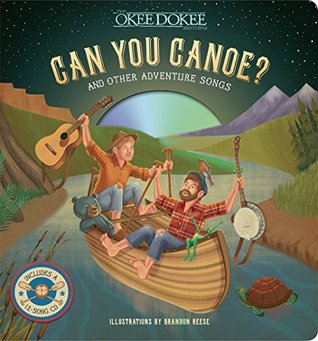
can you canoe

Can You Canoe? And Other Adventure Songs
Author: The Okee Dokee Brothers
Illustrator: Brandon Reese
Published April 19th, 2016 by Sterling Children’s Books

Summary: Can You Canoe? invites you to journey cross-country with The Okee Dokee Brothers through twelve of their irresistible, boot-stompin’ tunes. You’ll encounter hungry black bears and tall-tale spinners; quiet canoes and cozy camping tents; a jumpin’ jamboree and a bullfrog opera. As you listen to the songs and follow along with the illustrated lyrics in this collection, you might even be inspired to head out on some outdoor adventure of your own!

Kellee’s Review: We love music in my house, so anytime a book and music can be connected really makes me happy. I think the Okee Dokee Brothers’ music is catchy, knee-slapping, sometimes funny, and have great messages. I love how they all promote the out doors and adventure. And just when you think it cannot get any better, you see the illustrations. Brandon Reese’s illustrations are perfect! They are so colorful and loud and cartoon-ish. Just the type of fun you think would be in a book by the Okee Dokee Brothers. 

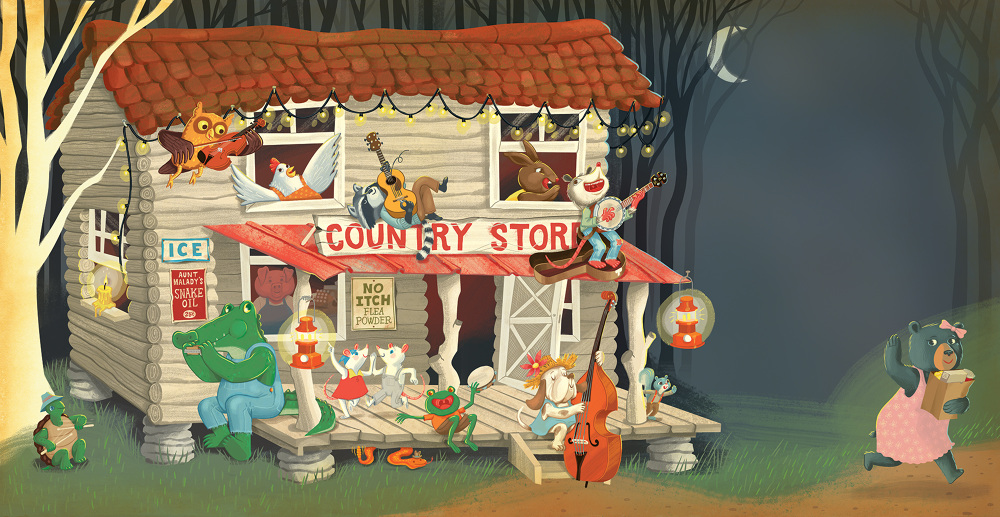
Ricki’s Review: This book is pure fun. My toddler was bouncing around the room as I played the CD. My husband is an outdoorsy guy, so he particularly liked the messages within the songs. The rhymes are great, and they will help my son learn the lyrics as we listen/read. I’ve never been to an Okee Dokee concert, and now I want to go to one! We’ll be bringing this CD along for long car rides. Below, we include an illustration, and you can see the pure beauty of this text. I will be buying it as a gift for my music-loving friends.

Teachers’ Tools for Navigation: We love using music during my poetry lessons because it helps students hear poetry and not be as afraid of it like they are with classics. Starting with music and lyrics allows you to help them understand how to read poetry differently than prose while using something they can easily understand. Can You Canoewould be a perfect text to use this for because you can analyze for poetic elements and meaning, but the Okee Dokee Brothers also have a field journal in the back which help give background information about each song making analyzing them less of a guessing game.

Can You Canoe? would also be a wonderful poetry mentor texts. The authors talk about how they find ideas for their songs and many of their songs have a format that could be emulated (like Jack in Love that Dog) if you wanted to go that route in class.

Discussion Questions: How do the authors use rhythm and rhyme in their lyrics?; What is a time that the authors used descriptive language to help the reader imagine the scene they are describing?; What is a time the authors used figurative language to add imagery to their songs?

Flagged Passages:

“There’s a country store
In a country town.
Every Friday night
The people dance around.
It don’t look like much
And it ain’t no chore,
But while they’re dancin’
They polish that floor.

They play this song
Right on key.
They play this song –
It’s called JAMBOREE.”

Okee_Jamboree_1000
(c) http://www.brandonreese.com/

Check out their You Tube channel to hear some of their music:
https://www.youtube.com/user/OkeeDokeeBros

Read This If You Loved: Goodnight Songs by Margaret Wise BrownFresh Delicious by Irene Latham

Recommended For:

  readaloudbuttonsmall closereadinganalysisbuttonsmall

Enter to win your own copy!

a Rafflecopter giveaway

Kellee Signatureand RickiSig

**Thank you to Lauren at Sterling Publishing for providing a copy for review!**

What Do You Do with a Problem? by Kobi Yamada

Share

what do you do with a problem

What Do You Do with a Problem?
Author: Kobi Yamada; Illustrator: Mae Besom
Published: July 1, 2016 by Compendium Inc.

GoodReads Summary: From the same author and illustrator as our #1 nationally best-selling What Do You Do With an Idea? comes a new book to encourage you to look closely at problems and discover the possibilities they can hold.

What do you do with a problem? Especially one that follows you around and doesn’t seem to be going away? Do you worry about it? Ignore it? Do you run and hide from it?

This is the story of a persistent problem and the child who isn’t so sure what to make of it. The longer the problem is avoided, the bigger it seems to get. But when the child finally musters up the courage to face it, the problem turns out to be something quite different than it appeared.

This is a story for anyone, at any age, who has ever had a problem that they wished would go away. It’s a story to inspire you to look closely at that problem and to find out why it’s here. Because you might discover something amazing about your problem… and yourself.

What are problems for? They challenge us, shape us, push us, and help us to discover just how strong and brave and capable we really are. Even though we don’t always want them, problems have a way of bringing unexpected gifts.

So, what will you do with your problem? Now that’s up to you.

Review: There is something so magical about the combination of writer Kobi Yamada and illustrator Mae Besom. When I saw that these creators of What Do You Do with an Idea? had another book, I jumped at the chance to read it. It’s no secret that I am in love with this first book. I have gifted it to many friends and children, and I include it on many of my favorites and Top Ten Tuesday lists. I was pleased that What Do You Do with a Problem? is just as stunning. These two books are a teacher’s dream. They utilize many literary elements and are perfect for close analysis. I would use them at all grade levels. What Do You Do with a Problem? is a great text to teach readers how to reconsider a problem (or problems) that they might have. They can compare the problem with illustrations and consider how that problem may, for example, be all-encompassing. I like how the book balances both the weight of the problem and the proverbial light at the end of the tunnel. By looking at this problem in a new light, readers will be able to take more of an outside perspective of the conflict—and hopefully/potentially work toward a resolution.

Teacher’s Tools for Navigation: To start, teachers might ask students to consider the symbolism within the text. They might even grapple with the definition of an allegory and discuss ways the definition might be connected with the text and illustrations. Then, students could think of an abstract idea and try to associate an object with that idea. They might even consider writing their own picture book that connects the object and abstract idea. I also think it would be great for teachers to read both this text and What Do You Do with an Idea? to students. Then, they might compare and contrast the stories and their messages.

Discussion Questions: What do you do with a problem? How do we deal with problems in different ways? How do others in our lives deal with problems in ways that differ from us?; How do the author and illustrator work together to create a compelling story? What symbols do they use to convey their message?

Flagged Passage: 

what do you do with a problem spread

Image from: www.amazon.com

Read This If You Loved: What Do You Do with an Idea? by Kobi Yamada; The Most Magnificent Thing by Ashley Spires; The Dot by Peter H. Reynolds, The Noisy Paint Box by Barb Rosenstock, Lost and Found by Oliver Jeffers, Journey by Aaron Becker

Recommended For:

  readaloudbuttonsmall closereadinganalysisbuttonsmall classroomlibrarybuttonsmall

RickiSig