The Noisy Paint Box: The Colors and Sounds of Kandinsky’s Abstract Art by Barb Rosenstock

Share

NF PB 2014

Nonfiction Picture Book Wednesday

Nonfiction Picture Book Wednesday is hosted by Kid Lit Frenzy and was started to help promote the reading of nonfiction texts. Most Wednesdays, we will be participating and will review a nonfiction text (though it may not always be a picture book).
Be sure to visit Kid Lit Frenzy and see what other nonfiction books are shared this week!

noisy

The Noisy Paint Box: The Colors and Sounds of Kandinsky’s Abstract Art
Author: Barb Rosenstock
Illustrator: Mary Grandpré
Published February 11th, 2014 by Alfred A. Knopf

Goodreads Summary: In this exuberant celebration of creativity, Barb Rosenstock and Mary Grandpre tell the fascinating story of Vasily Kandinsky, one of the very first painters of abstract art. Throughout his life, Kandinsky experienced colors as sounds, and sounds and colors–and bold, groundbreaking works burst forth from his noisy paint box.

Review: I love the visual arts. Growing up with a father that ran an art museum, going to visit museums and learning about art was part of my life. Throughout all of this exploration, I found that I loved modern art more than any other: Seurat, Rauschenberg, Picasso, etc. Kandinsky is one of the artists whose art I really enjoyed. This book let me see into Kandinsky’s mind, and see how abstract art came to be through his synesthesia. Fascinating!

Teachers’ Tools for Navigation: This is a perfect introduction to Kandinsky and abstract art. Abstraction is a hard concept to understand (though kids seem to get it more than kids), and this book helps explain how abstract art came to be. I can see this book being used in a lit circle/jig saw type fashion where kids learn about different creative people through narrative nonfiction biographies and research, write an evidence-based biography, and then share them with the other groups.

Discussion Questions: How did Kandinsky change art?; Have you ever had teachers/parents who didn’t understand you? What happened?; What is synesthesia? How did it affect the art Kandinsky made?

Book Trailer: 

We Flagged: “His artist friends understood. They too were tired of painting pretty landscapes and pretty ladies. They thought art needed to change.
‘Art should make you feel,’ Vasya told them. ‘Like music.’
‘Exactly!’ said his friends. But none of them knew how to paint feelings…
until the day Vasya grew brave enough…
and invited the world to see the paintings roaring from his noisy paint box.”

Read This If You Loved: Linnea in Monet’s Garden by Christina Björk, Sky Color by Peter H. Reynolds, Sandy’s Circus: A Story About Alexander Calder by Tanya Lee Stone, Art by Patrick McDonnell, Art & Max by David Wiesner, Concerning the Spirituality in Art by Wassily Kandinsky

Recommended For: 

readaloudbuttonsmall classroomlibrarybuttonsmall litcirclesbuttonsmall

Signature

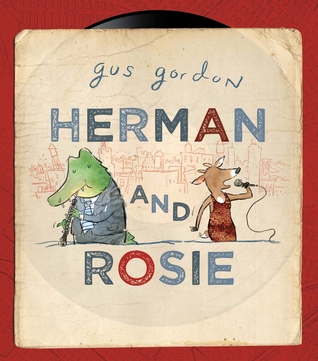
Herman and Rosie by Gus Gordon

Share

herman

Herman and Rosie
Author and Illustrator: Gus Gordon
Published October 15th, 2013 by Roaring Brook Press

Goodreads Summary: Once upon a time in a very busy city, on a very busy street, in two very small apartments, lived…
 Herman and Rosie. Herman liked playing the oboe, the smell of hot dogs in the winter, and watching films about the ocean. Rosie liked pancakes, listening to old jazz records, and watching films about the ocean. They both loved the groovy rhythm of the city, but sometimes the bustling crowds and constant motion left them lonely, until one night …

My Review: This book is a love note to music and for finding a friend to share your love. This wonderful story is told in a way that makes you fall in love with the characters immediately and feel every up and down with them. Also, the illustrations in this picture book are probably some of my favorite ever. I love the cartoony style mixed with some mixed media. Beautiful.

Teachers’ Tools for Navigation: I think this book will find its most love as a read aloud and as a wait to promote music and other passions; however, the book could definitely be used in other ways in the classroom. The tone and mood of the book takes a drastic turn about halfway through and would be a good introduction to these two narrative elements. It is interesting to look at how the illustrations helped drive the change. Also, there are onomatopoeias throughout that add to the imagery of the book.

Discussion Questions: How does music bring Herman and Rosie together?; Would Herman and Rosie every had become friends without the bad event happening to them?; How are Herman and Rosie similar? Different?

We Flagged: 

“Herman lived on the seventh floor. He liked potted plants, playing the oboe, wild boysenberry yogurt, the smell of hot dogs in the winter, and watching films about the ocean.”

Read This If You Loved: Marvin Makes Music by Marvin Hamlisch, Jazz ABZ by Wynton Marsalis, Ella Fitzgerald and Duke Ellington by Andrea Davis Pinkney, The Fantastic Undersea Life of Jacque Cousteau by Dan Yaccarino

Recommended For: 

readaloudbuttonsmall classroomlibrarybuttonsmall

Signature

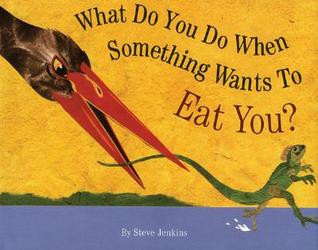
What Do You Do When Something Wants To Eat You? by Steve Jenkins

Share

NF PB 2014

Nonfiction Picture Book Wednesday

Nonfiction Picture Book Wednesday is hosted by Kid Lit Frenzy and was started to help promote the reading of nonfiction texts. Most Wednesdays, we will be participating and will review a nonfiction text (though it may not always be a picture book).
Be sure to visit Kid Lit Frenzy and see what other nonfiction books are shared this week!

eatyou

What Do You Do When Something Wants To Eat You?
Author and Illustrator: Steve Jenkins
Published October 27th, 1997 by HMH Books for Young Readers

Goodreads Summary: What would you do if something wanted to eat you? Walk on water? Stick out your tongue? Play dead? Animals in the wild use all kinds of methods to protect themselves from their enemies. Using dynamic and intricate cut-paper collages, Steve Jenkins explores the many fascinating and unique defense mechanisms creatures use to escape from danger.

My Review: Steve Jenkins just has a way of making nonfiction more interesting than other authors, and this book is no different than his others. This book takes different animals and shows the different ways they protect themselves: from squirting ink to camouflage.  The illustrations are done in Steve Jenkins’s paper-cut style and are done as well as his other books. The text, though simple, is full of information and definitely makes the reader want to learn more.

Teachers’ Tools for Navigation: This book can definitely be used in reading and science class. It is a good introduction to animal defenses and animal adaptations. It can lead to inquiry and research of each of these animals. It would be a great first research project for students to choose one of the animals and learn more about them. It is also a good introduction to cause and effect. What causes _____ to need to defend themselves? What is the effect of ____ being attacked?

Discussion Questions: What type of defenses do animals use to keep themselves from being harmed?; How does camouflage work?; What causes animals to need to defend themselves? What are the effects of them being attacked?

We Flagged: “A flying fish escapes danger by leaping from the water, spreading its winglike fins, and gliding as far as a thousand feet.”

Read This If You Loved: Any Steve Jenkins book, Any Seymour Simon animal book, Lifetime by Lola M. Schaefer, Frog Song by Brenda Z. Guiberson

Recommended For: 

readaloudbuttonsmall closereadinganalysisbuttonsmall
classroomlibrarybuttonsmall litcirclesbuttonsmall

Signature

Amulet Books Graphic Novel Teaching Guide

Share

abrams

In January, I was contacted by a publicity and marketing associate from Abrams Books/Amulet Books out of the blue. In this email, I was asked to work on a teaching guide about their graphic novels: The Misadventures of Salem Hyde, Nathan Hale’s Hazardous Tales, Hereville, and the Explorer series.

1729025518405488 

13591161135911621729026018405492

1283377017290285

I was beyond honored! And, of course, I said that I would definitely love to do it as I had read all of the graphic novels, and I am a huge fan of them.

First, they asked me to write an introduction about graphic novels and their importance in the classroom. I am a huge advocate for using graphic novels in schools, so I immediately began researching and writing. Here is the introduction:

What are graphic novels? The easiest way to describe graphic novels is to say that they are book-length comic books. However, a more complex definition that educators and librarians use is “book-length narratives told using a combination of words and sequential art, often presented in comic book style” (Fletcher-Spear, 37). Graphic novels are not written in just one genre; they can be in any genre, since graphic novels are a format/medium. Graphic novels are much like novels, but they’re told through words and visuals. They have all narrative elements, including characters, a complete plot, a conflict, etc.

Middle grade and young adult graphic novels cover a wide spectrum of themes and topics. Some common themes found in graphic novels for this age include the hero’s journey; overcoming hardship; and finding one’s identity. For example, in Hereville, we meet Mirka, an everyday girl who learns to use her brains and brawn to overcome her foes. In The Misadventures of Salem Hyde, Salem is working on finding out just who she is (both as a witch and as a person) with the help of her friend Whammy. Graphic novels can cross curricular lines. One example is the Nathan Hale’s Hazardous Tales series—comical nonfiction that takes historical events and presents them in interesting ways, using graphics and humor that will make students want to learn even more about the historical time periods. In the Explorer series, stories include topics such as animal adaptation, volcanic eruptions, and the fate of humanity. Like novels, graphic novels offer opportunities in all subject areas to extend students’ thinking.

Over the past few years, graphic novels have become a hot topic, growing in popularity with both children and educators. While many teachers are beginning to include them in the classroom, there are still teachers, administrators, and librarians who struggle with including this format in their schools. So, why should you use them in your classroom and have them available for students?

  • Graphic novels can make a difficult subject interesting and relatable. (Cohen)
  • Students are visual learners, and today’s students have a much wider visual vocabulary than students in the past. (Karp)
  • Graphic novels can help foster complex reading skills by building a bridge from what students know to what they still have to learn. (NCTE)
  • Graphic novels can help with scaffolding when trying to teach higher-order thinking skills or other complex ideas.
  • For students who struggle to visualize while they read, graphic novels provide visuals that shows what good readers do. (NCTE)
  • Many graphic novels rely on symbol, allusion, satire, parody, irony, and characters/plot and can be used to teach these, and other, literary devices. (Miller; NCTE)
  • Often, in between panels (called the gutter), the reader must make inferences to understand how the events in one panel lead to the events in the next. (McCloud)
  • Graphic novels can make differentiating easier. (Miller)
  • Graphic novels can help ELL (English Language Learners) and reluctant and struggling readers since they divide the text into manageable chunks, use images (which help students understand unknown vocabulary), and are far less daunting than prose. (Haines)
  • Graphic novels do not reduce the vocabulary demand; instead, they provide picture support, quick and appealing story lines, and less text, which allow the reader to understand the vocabulary more easily. (Haines)
  • Research shows that comic books are linguistically appropriate reading material, bearing no negative impact on school achievement or language acquisition. (Krashen)
  • Students love them.

Although you can find graphic novel readers at all reading levels, graphic novels can truly be a gateway to the joys of reading for reluctant and struggling readers. Reluctant readers often find reading to be less fun than video games, movies, and other media, but many will gravitate toward graphic novels because of the visuals and the fast pace. Struggling readers will pick up graphic novels for these reasons as well but also because the graphic novel includes accommodations directly in the book: images, less text, etc.

All in all, graphic novels can interest your most reluctant and struggling readers and also extend all of your readers, including your most gifted.  

Resources

  • Cohen, Lisa S. “But This Book Has Pictures! The Case for Graphic Novels in an AP Classroom.” AP Central. CollegeBoard.
  • Fletcher-Spear, Kristin, Merideth Jenson-Benjamin, and Teresa Copeland. “The Truth About Graphic Novels: A Format, Not a Genre.” The ALAN Review Winter (2005): 37­–44.
  • Haines, Jennifer. “Why Use Comics in The Classroom?” Comic Book Daily. N.p., 20 Mar. 2012.
  • Karp, Jesse. “The Case for Graphic Novels in Education.” American Libraries. N.p., 1 Aug. 2011.
  • Krashen, Stephen. The Power of Reading. Englewood, CO: Libraries Unlimited, Inc. 1993.
  • McCloud, Scott. Understanding Comics. Northampton, Mass.: Kitchen Sink, 1993. 
  • Miller, Andrew. “Using Graphic Novels and Comics in the Classroom.” Edutopia. N.p., 11 Jan. 2012.
  • NCTE, comp. “Using Comics and Graphic Novels in the Classroom.” The Council Chronicle September (2005) http://www.ncte.org/magazine/archives/122031.

 I then began reading and rereading the graphic novels and planning activities and discussion questions that could go along with each book. I was asked to come up with activities for all subjects, so this pushed me out of my comfort zone a bit; however, I loved trying to figure out how these amazing books could be used throughout all classes.  Some examples:

  • Salem Hyde [Science]: At the end of Spelling Trouble, Salem and Whammy have to rescue a whale, but it is done in a very unconventional way. How would real scientists rescue a whale in distress?
  • Hazardous Tales [Language Arts/History]: The Provost (a British soldier) and Nathan Hale disagree about the cause of the Revolutionary War. Based on One Dead Spy, what events caused the Americans to revolt? Do you agree with the Provost or with Nathan Hale about the causes of the war? (This could also be used as a debate question in class.)
  • Hereville [Math]: On pages 31–32 [of Hereville 1], Mirka is given a math problem: Three people are splitting a cake, so they cut it into thirds. But then a fourth person shows up. How can they cut the cake so that each person gets an equalamount of cake? (Mirka comes up with a solution, but are there others?) What if two more people had shown up? Three more? Four more? 
  • Explorer [History]: On page 84 [of The Mystery Boxes], in The Soldier’s Daughter, the man says, “War is a dark power.” Where in history have we seen war consume someone? Have there been wars that did not need to be fought? Research past wars and determine if a war was started because of the need for power or if there was a legitimate reason for it. 

These are just some examples.

I am happy to share the entire teaching guide with you. It can be found at http://www.abramsbooks.com/academic-resources/teaching-guides/ along with other teaching guides. The direct link to the PDF is http://www.abramsbooks.com/pdfs/academic/GraphicNovels_TeachingGuide.pdf.

I hope you find it useful as I am very proud of it,

Signature

Locomotive by Brian Floca (Kellee’s Review)

Share

NF PB 2014

Nonfiction Picture Book Wednesday

Nonfiction Picture Book Wednesday is hosted by Kid Lit Frenzy and was started to help promote the reading of nonfiction texts. Most Wednesdays, we will be participating and will review a nonfiction text (though it may not always be a picture book).
Be sure to visit Kid Lit Frenzy and see what other nonfiction books are shared this week!

locomotive

Locomotive
Author and Illustrator: Brian Floca
Published September 3rd, 2013 by Atheneum Books for Young Readers

Goodreads Summary: The Caldecott Medal Winner, Sibert Honor Book, and New York Timesbestseller Locomotive is a rich and detailed sensory exploration of America’s early railroads, from the creator of the “stunning” (Booklist)Moonshot.

It is the summer of 1869, and trains, crews, and family are traveling together, riding America’s brand-new transcontinental railroad. These pages come alive with the details of the trip and the sounds, speed, and strength of the mighty locomotives; the work that keeps them moving; and the thrill of travel from plains to mountain to ocean.

Come hear the hiss of the steam, feel the heat of the engine, watch the landscape race by. Come ride the rails, come cross the young country!

My Review: Rhythm. Onomatopoeias. (Well-researched) History. Gorgeous (and historically accurate) illustrations. Lyrical narrative. Unique point of view. This book has everything.

YOU (second person POV!) are a passenger on a train cross America with your family in 1869. Throughout the book, you will encounter many different landmarks, experience things on a train very few had at this time in history, and learn about the intricacies of the train. So fascinating! And all told in rich, beautiful language. It is hard to even share much more about the book because it is such an experience.

Check out Ricki’s review of Locomotive as well HERE.

Teachers’ Tools for Navigation: I would LOVE to read this to kids. There are so many places to stop and discuss and research and learn, but never without an enthralling story accompanying.  It would be a great book to use across subjects. There are definitely opportunities for all subjects: social studies (trans-continental travel, history, trains); science (the science of steam engines); math (travel); reading/writing (onomatopoeia, point of view, rhythm).

Also, and this is fresh on my mind because I just read it, but I would love to read this and The Donner Dinner Party and then look at the two journeys. How long did each take? Dangers? It would be an interesting look at how trains truly changed transportation.

Discussion Questions: How does having the book in 2nd point of view make it more enthralling?; What onomatopoeias were used in the book? How did these words help suck you into the story?; How did the author’s rhythm make you feel like you are actually on the train?; What are the landmarks that were passed on the trans-continental railroad? Why are these landmarks significant?; How does a steam engine work? What are the jobs of all of the different people on board?

We Flagged:
“Here is how this road was built,
with a grunt and a heave and a swing,
with the ring of shovels on stone,
the ring of hammers on spikes:

CLANK CLANK CLANK!

Men came from far away
to build from the East,
to build from the West,
to meet in the middle.

They cleared the rocks
and dug the tunnels.
They raised the hammers
and brought them down—

“Three strokes to the spike,
ten spikes to the rail!”

CLANK CLANK CLANK!”

Read This If You Loved: The Donner Dinner Party by Nathan Hale, Train by Elisha Cooper

Recommended For: 

readaloudbuttonsmall closereadinganalysisbuttonsmall classroomlibrarybuttonsmall

Signature

Little Red Writing by Joan Holub

Share

little

Little Red Writing
Author: Joan Holub
Illustrator: Melissa Sweet
Published September 24th, 2013 by Chronicle Books

Goodreads Summary: Acclaimed writer Joan Holub and Caldecott Honoree Melissa Sweet team up in this hilarious and exuberant retelling of Little Red Riding Hood, in which a brave, little red pencil finds her way through the many perils of writing a story, faces a ravenous pencil sharpener (the Wolf 3000)… and saves the day.

My Review and Teachers’ Tools for Navigation: I really think these wonderful woman created this book for just for teachers. It is a perfect, perfect, perfect book for a read aloud AND for a mentor text!

First, the book is a direct allusion to Red Riding Hood and is a great book to throw into the mix when looking at different versions of Red Riding Hood. I can just picture this book, with a version of the original story, Hoodwinked the movie, and Lon Po Po. Wow! What great discussions and activities you could do with this.

Second, this book is not just an awesome narrative and it includes a great lesson about writing a narrative. Red, our main character, is given the job to write a story and the book takes us through her journey of writing the story where she needs to include characters, setting, trouble, and fixing the trouble. A perfect opportunity to discuss narrative elements.  Taking this even further, it would be so much fun to look at the ideas that each of the other pencils had for their stories and write the entire story. You would have to look at each pencil’s personality and think about how s/he would write the story.

Finally, the book also deals with some parts of speech and how to use them. First are verbs where Red looks for more interesting verbs. She then looks for adjectives to add description. Then learns the importance of conjunctions (but watch out! They can lead to run-on sentences). Finally came adverbs with a bit of punctuation and capitalization discussion. Each part of speech is discussed in a nonboring way and the introduction could be a jumping off point to a deeper discussion.

Discussion Questions: How did Red use adjectives throughout the story to help you visualize the action?; What ended up being Red’s trouble, how did it get worse, and how did she fix it?; Pick one of the other pencils’ stories. How do you think it would end?

We Flagged: 

Read This If You Loved: Red Riding Hood by Brothers Grimm, Lon Po Po by Ed Young, The Day the Crayons Quit by Drew Daywalt

Recommended For: 

readaloudbuttonsmall closereadinganalysisbuttonsmall classroomlibrarybuttonsmall

Signature

Fangirl by Rainbow Rowell (Kellee’s Review)

Share

fangirl

Fangirl
Author: Rainbow Rowell
Published September 10th, 2013 by St. Martin’s Press

Goodreads Summary: A coming-of-age tale of fan fiction, family and first love.

Cath is a Simon Snow fan. Okay, the whole world is a Simon Snow fan . . . But for Cath, being a fan is her life — and she’s really good at it. She and her twin sister, Wren, ensconced themselves in the Simon Snow series when they were just kids; it’s what got them through their mother leaving.

Reading. Rereading. Hanging out in Simon Snow forums, writing Simon Snow fan fiction, dressing up like the characters for every movie premiere.

Cath’s sister has mostly grown away from fandom, but Cath can’t let go. She doesn’t want to. Now that they’re going to college, Wren has told Cath she doesn’t want to be roommates. Cath is on her own, completely outside of her comfort zone. She’s got a surly roommate with a charming, always-around boyfriend, a fiction-writing professor who thinks fan fiction is the end of the civilized world, a handsome classmate who only wants to talk about words . . . And she can’t stop worrying about her dad, who’s loving and fragile and has never really been alone.

For Cath, the question is: Can she do this? Can she make it without Wren holding her hand? Is she ready to start living her own life? Writing her own stories?  And does she even want to move on if it means leaving Simon Snow behind?

Ricki’s Review: Ricki was lucky enough to read this book before me and wrote a wonderful review in December, so check that one out too!

Kellee’s Review: You know a book is good when in the first 5 pages you already know and feel for you main character. Cath is like many college freshman–afraid. She has known one world for so long and everything around her is changing. This book is about her figuring out her way. Anyone that went to college will connect with Cath and her struggles of finding a balance between who you were in high school and who you are becoming. I really appreciate Rainbow Rowell’s main characters and how they are not perfect–this makes them so much more relatable. (I just give a shout out to the Emergency Dance Party scene–this made me love Cath so much!)

Oh, and the dialogue! I love the way her characters converse. The banter is hilarious and just perfect. Also, I cannot review this book without giving props to the secondary characters. They are so solid and thought out. Although Cath is the main character, no one feels like Rainbow Rowell didn’t put love and time into them. I especially love their father who is probably the most flawed character but is so full of love. (Oh, and Levi. Who cannot love Levi?!?!?!)

[As a teacher, I also liked the look into Levi’s struggle with reading yet his amazing intelligence. I think it is a great conversation starter and a great example of many of the students I encounter. Pg. 168 is Levi’s explanation of his struggles–powerful.]

And all of the book love! Anyone who has ever loved a book or series will adore the fangirl moments. Although an obvious allusion to Harry Potter, Cath and Wren’s love of Simon Snow will make any reader think about their favorite novel which they lose themselves in.

Also this book is about writing: the beauty of good writing and the struggle of good writing. Cath can write in the world of Simon Snow, but struggles in finding her own world. This actually runs parallel quite beautifully with her finding of her self. She is literally and figuratively trying to find her own voice. (And I love that a teacher plays a role in this.)

Overall, a just-right book. I read it in one sitting and didn’t want to put it down. (It did remind me a lot of Anna and the French Kiss–did anyone else feel this way?), but it really was a solid story filled with just enough love, nerdy, and soul searching.

Teacher’s Tools For Navigation: I can see how many aspects of this novel could be used in a creative writing course. So much of Cath’s story revolves around writing and different scenes or pieces of fanfiction could be pulled out to use in class. I especially like the discussion about “Why write fiction?” on pg. 21-23.

I also would love to analyze more the excerpts that are put before each chapter and how they connect with the chapter. Many have theme connections or direct character connections. They were placed very intentionally and discussing why would be so interesting.

Check out Ricki’s recommendations here.

Discussion Questions: Cath loves to write, but often finds it hard; what is something you do that you love, but often find challenging? How do you overcome this?; How does Simon Snow compare to Harry Potter?

We Flagged: “Cath wasn’t sure how she was going to keep everything straight in her head. The final project, the weekly writing assignments–on top of all her other classwork, for every other class.  All the reading, all the writing. The essays, the justifications, the reports. Plus Tuesdays and sometimes Thursdays writing with Nick. Plus Carry on. Plus e-mail and notes and comments… Cath felt like she was swimming in words. Drowning in them, sometimes.” (p. 100)

Read This If You Loved: Anna and the French Kiss by Stephanie Perkins, Eleanor and Park by Rainbow Rowell, Olivia Twisted by Vivi Barnes, You Against Me by Jenny Downham, My Life Undecided by Jessica Brody

Recommended For: 

classroomlibrarybuttonsmall closereadinganalysisbuttonsmall

Signature