The Great American Dust Bowl by Don Brown

Share

NF PB 2014

Nonfiction Picture Book Wednesday

Nonfiction Picture Book Wednesday is hosted by Kid Lit Frenzy and was started to help promote the reading of nonfiction texts. Most Wednesdays, we will be participating and will review a nonfiction text (though it may not always be a picture book).
Be sure to visit Kid Lit Frenzy and see what other nonfiction books are shared this week!
dust

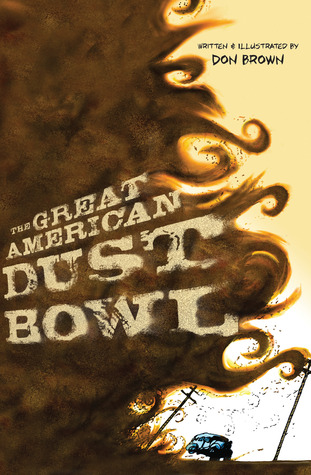
The Great American Dust Bowl
Author and Illustrator: Don Brown
Published October 8th, 2013 by HMH Books for Young Readers

Goodreads Summary: A speck of dust is a tiny thing. In fact, five of them could fit into the period at the end of this sentence.

On a clear, warm Sunday, April 14, 1935, a wild wind whipped up millions upon millions of these specks of dust to form a duster—a savage storm—on America’s high southern plains.

The sky turned black, sand-filled winds scoured the paint off houses and cars, trains derailed, and electricity coursed through the air. Sand and dirt fell like snow—people got lost in the gloom and suffocated . . . and that was just the beginning.

Don Brown brings the Dirty Thirties to life with kinetic, highly saturated, and lively artwork in this graphic novel of one of America’s most catastrophic natural events: the Dust Bowl.

Review: Ever since I read Out of the Dust by Karen Hesse, I’ve loved learning about this scary time in American history (also, the danger hasn’t ceased just because it happens less often). This book does a beautiful job of taking this time in history and laying it out for the reader so that it is very easy to understand. It includes background about the geographical area, information about the Depression, and then takes you through the Dust Bowl all the way to modern days. So interesting!

Teacher’s Tools For Navigation: First, this book will make a great companion to Out of the Dust. I think many readers struggle with Hesse’s book because they don’t have the background knowledge needed to understand the book and Don Brown’s book gives all the background needed.  The Great America Dust Bowl can also be used as a resource when teaching the Dust Bowl, the depression, or agriculture.

Discussion Questions: How did the Depression impact farmers thus help cause the Dust Bowl to happen?; How is the problems of the Dust Bowl still impacting us today?

We Flagged: 

Read This If You Loved: Out of the Dust by Karen Hesse, Grapes of Wrath by John Steinbeck, The Storm in the Barn by Matt Phelan, Survival in the Storm: The Dust Bowl Diary of Grace Edwards, Dalhart, TX 1935 by Katelan Janke

Recommended For: 

classroomlibrarybuttonsmall closereadinganalysisbuttonsmall

Signature

Life in Outer Space by Melissa Keil (Kellee’s Review)

Share

outerspace

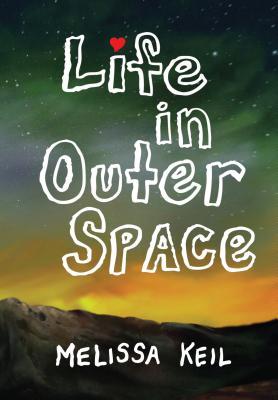
Life in Outer Space
Author: Melissa Keil
Published August 1st, 2013 by Peachtree Publishers

Goodreads Summary: Sam is a geek movie-buff with a ragtag group of loser friends who have been taking abuse from the popular kids for years. But when the super-cool Camilla moves to town, she surprises everyone by choosing to spend time with Sam’s group. Suddenly they go from geek to chic, and find that not everything boils down to us and them. With their social lives in flux, Sam and Camilla spend more and more time together. They become the best of friends, and Sam finds that he’s happier and more comfortable in his own skin than ever before. But eventually Sam must admit to himself that he’s fallen in love. If he confesses his true feelings to Camilla, will everything change again?

My Review: Loved this book. A perfect combination of Spinelli’s Stargirl, a John Green book, and a rom-com. Loved the voice, quirks, characters, and plot. A sleeper title from 2013 that you should read.

A couple things I really loved about this book:

  • The characters are such good people. Although they evolve, they never were kids I wouldn’t want my son to hang out with.
  • A romance-y book from a boy’s point of view!
  • Camilla is so cool yet so uncool and just shows how the labels and cliques and such of high school are just so stupid. Oh, and that you cannot judge a book by its cover.
  • The writing, music, and movie references. Just a bit of geeky, but not too much.

Ricki’s Review: Can be viewed here.

Teachers’ Tools for Navigation: I think first and foremost, this book needs to be in libraries so that kids (and adults!) can get their hands on it. In the classroom, it can definitely be used as for a mentor text. I think it is perfect for an example of character development and voice.  The characters in this book are so strong and there are lines and passages throughout that show the characters’ personality. There are also parts that deal with writing poetry/music and would be great passages to talk about writing with students.

Discussion Questions: How does Camilla change the dynamic at Sam’s school? And how did she change Sam and his friends?; (During) Why do you think Mike quit karate?; How does Melissa Keil use music and movies to help move the plot? Show character’s personalities?; How is Sam’s parents’ issues affecting him?;

We Flagged: “She is wearing a yellow dress that looks like it belongs to a 1950s housewife, and a pair of flat red boots. Her hair is longer than I’d imagine would be practical; it’s parted in the middle and hangs in brown waves almost to her waist. She peers around the room impassively. She doesn’t look terrified. She doesn’t look insanely overconfident, like Adrian that time in year seven when he performed a song as his book report for The Outsiders. Mike and I mark that event as ground zero for the downward social spiral of our group.” (p. 11)

Read This If You Loved: Stargirl by Jerry Spinelli, Paper Towns by John Green, Eleanor and Park by Rainbow Rowell

Recommended For: 

closereadinganalysisbuttonsmall classroomlibrarybuttonsmall litcirclesbuttonsmall

Signature

Frog Song by Brenda Z. Guiberson

Share

NF PB 2014

Nonfiction Picture Book Wednesday

Nonfiction Picture Book Wednesday is hosted by Kid Lit Frenzy and was started to help promote the reading of nonfiction texts. Most Wednesdays, we will be participating and will review a nonfiction text (though it may not always be a picture book).
Be sure to visit Kid Lit Frenzy and see what other nonfiction books are shared this week!

frogsong

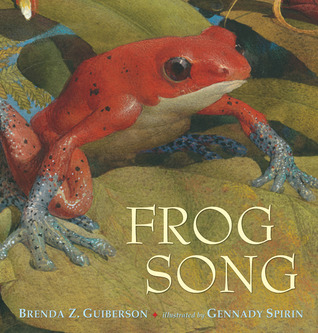
Frog Song
Author: Brenda Z. Guiberson
Illustrator: Gennady Spirin
Published February 5th, 2013 by Henry Holt and Co.

Goodreads Summary: Since the time of the dinosaurs, frogs have added their birrups and bellows to the music of the earth. Frogs are astonishing in their variety and crucial to ecosystems. Onomatopoeic text and stunning illustrations introduce young readers to these fascinating and important creatures, from Chile to Nepal to Australia.

Review and Teacher’s Tools for Navigation: I must admit–I am not a fan of frogs. They actually scare me quite a bit. They are so sporadic and unpredictable–one even jumped on my head at a party once! However, animals of all kind fascinate me and this is a book full of amazing facts about these slimy, jumpy creatures.  The book is set up so that it is easy to navigate with quick interesting facts about 11 different frogs (& toads) with extra information in the back.  I also liked the information given in the back about the trouble that frogs are in because of human activity. I think this book would be a great asset in any science classroom studying biology or ecology (would also be wonderful in a reading class or even a geography lesson because of the different places the frogs came from). Another wonderful way this book could be used in a reading class is because of all of the onomatopoeias within the book. I would love to hear the actual sounds of the frogs and then see the onomatopoeia that the author chose.

Discussion Questions: Which frog fact fascinates you the most? Do extra research about this frog and find other interesting facts about the animal.; Compare and contrast two of the frogs.; Write a fact book about animals like Frog Songs and include the sounds the animals make.

We Flagged: “In Chile, the Darwin’s frog sings in the beech forest. CHIRP-CHWEEET! The male guards 30 eggs in the damp leaves for three weeks. when the tadpoles wiggle, he scoops them into his mouth. SLURP! They slither into his vocal sacs, where he keeps them safe and moist for seven weeks. Then he gives a big yawn, and the little froglets pop out.” (p. 16)

Read This If You Loved: Lifetime by Lola Schaefer, Actual Size by Steve Jenkins, Island by Jason Chin, Seabird in the Forest by Joan Dunning, Slap, Squeak, and Scatter by Steve Jenkins

Recommended For: 

classroomlibrarybuttonsmall readaloudbuttonsmall closereadinganalysisbuttonsmall

Signature

Lifetime: The Amazing Numbers in Animal Lives by Lola M. Schaefer

Share

NF PB 2014

Nonfiction Picture Book Wednesday

Nonfiction Picture Book Wednesday is hosted by Kid Lit Frenzy and was started to help promote the reading of nonfiction texts. Most Wednesdays, we will be participating and will review a nonfiction text (though it may not always be a picture book).
Be sure to visit Kid Lit Frenzy and see what other nonfiction books are shared this week!

lifetime

Lifetime: The Amazing Numbers in Animal Lives
Author: Lola Schaefer
Illustrator: Christopher Silas Neal
Published September 20th, 2013 by Chronicle Books

Goodreads Summary: In one lifetime, a caribou will shed 10 sets of antlers, a woodpecker will drill 30 roosting holes, a giraffe will wear 200 spots, a seahorse will birth 1,000 babies.

Count each one and many more while learning about the wondrous things that can happen in just one lifetime. This extraordinary book collects animal information not available anywhere else—and shows all 30 roosting holes, all 200 spots, and, yes!, all 1,000 baby seahorses in eye-catching illustrations. A book about picturing numbers and considering the endlessly fascinating lives all around us, Lifetime is sure to delight young nature lovers.

Review and Teacher’s Tools for Navigation: I learned so much reading this book. My friend Amanda actually read it first and kept yelling out the facts because they are just so interesting; obviously students would find them interesting as well. On top of it just being interesting, this book is a little book of gold! It is a perfect combination of reading, math, and science! Also, the illustrations are just so well done! Throughout the book, scientific facts about animals are shared with the reader (all with numbers) and then in the end of the book Lola Schaefer also shares with the reader even more information about the animals, how to find an average, and other math facts.  And not once does the book even feel a bit boring–it is a perfect read aloud and cross-curricular text.

Discussion Questions: Which of the animals interests you the most?; Using how the author teaches you to find an average, pick an animal and determine the average number of offspring they will have in a lifetime.

We Flagged: 

Read This If You Loved: Frog Song by Brenda Z. Guiberson, Weird but True! by National Geographic, Island by Jason Chin, Can We Save the Tiger? by Martin Jenkins, Actual Size by Steve Jenkins

Recommended For: 

closereadinganalysisbuttonsmall classroomlibrarybuttonsmall readaloudbuttonsmall

Signature

For the Good of Mankind?: The Shameful History of Human Medical Experimentation by Vicki O. Wittenstein

Share

NF PB 2013

Nonfiction Picture Book Wednesday

Nonfiction Picture Book Wednesday is hosted by Kid Lit Frenzy and was started to help promote the reading of nonfiction texts. Most Wednesdays, we will be participating and will review a nonfiction text (though it may not always be a picture book). Be sure to visit Kid Lit Frenzy and see what other nonfiction books are shared this week!

for the good of mankind

For the Good of Mankind?: The Shameful History of Human Medical Experimentation
Author: Vicki O. Wittenstein
Published: August 1st, 2013 by Lerner Publishing Group

Summary: 

Experiment: A child is deliberately infected with the deadly smallpox disease without his parents’ informed consent.
Result: The world’s first vaccine.
Experiment: A slave woman is forced to undergo more than thirty operations without anesthesia.
Result: The beginnings of modern gynecology.
Experiment: From 1946 to 1953, seventy-four boys are fed oatmeal laced with radioactive iron and calcium.
Result: A better understanding of the effects of radioactivity on the human body.

Experimental incidents such as these paved the way for crucial medical discoveries and lifesaving cures and procedures. But they also violated the rights of their subjects, many of whom did not give their consent to the experiments. The subjects suffered excruciating pain and humiliation. Some even died as a result of the procedures. Even in the twenty-first century—despite laws, regulations, and ethical conventions—the tension between medical experimentation and patient rights continues.

How do doctors balance the need to test new medicines and procedures with their ethical and moral duty to protect the rights of human subjects? What price has been paid for medical knowledge? Can we learn from the broken oaths of the past?

Take a harrowing journey through some of history’s greatest medical advances—and its most horrifying medical atrocities. You’ll read about orphans injected with lethal tuberculosis and concentration camp inmates tortured by Nazi doctors. You’ll also learn about radiation experimentation and present-day clinical trials that prove fatal. Through these stories, explore the human suffering that has gone hand in hand with medical advancement.

Review: Human experimentation is a very difficult subject matter, one that both horrifies and fascinates teens. I always try to believe in the good of mankind, but books like this always seem to challenge that assumption. It was difficult for me to read this book because I cannot fathom how any person could justify using individuals (including CHILDREN!) for experimentation. This book is incredibly well-researched and documents a variety of cases of experimentation. I couldn’t put it down because I was so astonished by the details of the cases. It is colorful and eye-appealing, and this will captivate reluctant readers. I think teenagers would see nonfiction in a very positive light if they were given books like this one. I absolutely recommend it to teachers.

Teacher’s Tools for Navigation: Teachers might assign different chapters to groups of students. Students will enjoy reading about and presenting the material covered in this book. Persuasive essays are always a chore, but there are many controversial issues within this book, and I think students would really enjoy writing essays about this subject matter. This book also includes discussion questions for readers.

Discussion Questions: Can we justify the experimentation on a human being if it will better the lives of millions of people?; Why do you think human experimentation was allowed for such a long time? Can we judge the doctors who experimented on people centuries ago?; Applying the stories to animals, do you think animal experimentation is justifiable? Why or why not?

Read This If You Loved: The Immortal Life of Henrietta Lacks by Rebecca Skloot, books in the Real Justice series, Brave New World by Aldous Huxley


Recommended For:

closereadinganalysisbuttonsmall classroomlibrarybuttonsmall

RickiSig

Thrice Told Tales: Three Mice Full of Writing Advice by Catherine Lewis

Share

Thrice Told Tales

Thrice Told Tales: Three Mice Full of Writing Advice
Author: Catherine Lewis
Published: August 27th, 2013 by Atheneum Books for Young Readers

GoodReads Summary: Three Blind Mice. Three Blind Mice. See how they run? No. See how they can make all sorts of useful literary elements colorful and easy to understand! Can one nursery rhyme explain the secrets of the universe? Well, not exactly—but it can help you understand the difference between bildungsroman, epigram, and epistolary.

From the absurd to the wish-I’d-thought-of-that clever, writing professor Catherine Lewis blends Mother Goose with Edward Gorey and Queneau, and the result is learning a whole lot more about three not so helplessmice, and how to fine tune your own writing, bildungsroman and all.

If your writing is your air, this is your laughing gas.*

*That’s a metaphor, friends.

Review: This is one of those books that is so clever, I am depressed that I didn’t come up with the idea myself. Reading and writing teachers will adore the way this book is constructed and be excited to use it in their classrooms. A different writing term is creatively interpreted on each page within the context of the Three Blind Mice nursery rhyme. At the bottom of each page, Lewis gives an explanation of the writing term and how it can be employed in writing (see the flagged passage below). I loved the ways Lewis humorously portrayed each term. For example, on the page about style, she takes a line from the nursery rhyme and rewrites it in the style of famous authors like Dickens and Hemingway. As a bonus, I learned about a few literary terms that I didn’t know! It was so fun to read. I shared it with my pre-service teachers, and they also adored it and were excited to use it in their own classrooms.

Teacher’s Tools for Navigation: Teachers can hand-pick terms they want to teach to their students. I wish this book was published when I was teaching because it makes the literary terms very accessible. Teachers can take the terms and ask students to reinterpret them within the context of a different nursery rhyme (or even within the context of a song or movie).

Discussion Questions: How can I rewrite a nursery rhyme to show a literary term?; How can I employ these literary/writing terms to make me a better writer?

We Flagged: “Developing one’s style is like developing a sense of fashion. You may start off by trying on a lot of costume jewelry; big showy ten-dollar words. They’ll get attention all right, but maybe you’ll discover there’s something better out there for you. Perhaps you’ll try a charm bracelet full of dangling modifiers. Or a simple silver bracelet and an onyx ring. Keep experimenting for pleasant combinations, and a truer picture of yourself and your work will begin to emerge” (p. 134).

Read This If You Loved: In the Middle by Nancie Atwell, Bird by Bird by Anne Lamott, Writing Workshop by Ralph Fletcher, Celebrating Writers by Ruth Ayres with Christi Overman

Recommended for:

readaloudbuttonsmall closereadinganalysisbuttonsmall classroomlibrarybuttonsmall

026F3FBCC8C3913BD3A4D3F6920340D5

What is your favorite book for teaching writing? Can you think of creative ways to use this in the classroom?


Let it Snow by John Green, Maureen Johnson, and Lauren Myracle

Share

letitsnow

Let it Snow
Authors: John Green, Maureen Johnson, Lauren Myracle
Published October 2nd, 2008 by Speak

Goodreads Summary: Sparkling white snowdrifts, beautiful presents wrapped in ribbons, and multicolored lights glittering in the night through the falling snow. A Christmas Eve snowstorm transforms one small town into a romantic haven, the kind you see only in movies. Well, kinda. After all, a cold and wet hike from a stranded train through the middle of nowhere would not normally end with a delicious kiss from a charming stranger. And no one would think that a trip to the Waffle House through four feet of snow would lead to love with an old friend. Or that the way back to true love begins with a painfully early morning shift at Starbucks. Thanks to three of today’s bestselling teen authors—John Green, Maureen Johnson, and Lauren Myracle—the magic of the holidays shines on these hilarious and charming interconnected tales of love, romance, and breathtaking kisses.

My Review: You cannot go wrong with those authors! What I found was not only a romantic, funny book, but a perfect holiday read! Let it Snow is like those movies where you follow three very different stories and then eventually they intertwine and everything seems to follow into place. I loved reading each story, wanting to learn more about a certain character and then realizing the next story was about them! The authors also did a fantastic job throwing in aspects of Christmas and pushing the holiday cheer without shoving it down your throat. Let is Snow is one of those books that I want to curl up and read by the fire while it snows outside.

Teacher’s Tools for Navigation: I would love to read this book in its entirety with students and then try to make a timeline of the three stories and how they overlap. It would be a great discussion of connections and sequence. Also, you could look at the voice of characters and how each author made theirs distinct (and how the others authors kept them distinct in their sections). This could also lead to a great discussion about style.

This book is also loved by students and should definitely be in teen libraries.

Discussion Questions: Think of a time when you were stuck somewhere that you didn’t want to be and couldn’t really do anything about it, how did you feel? What did you do to keep yourself busy? Did something happen that you would not have expected or that wouldn’t have happened if you weren’t stuck or stranded? 

We Flagged:
From “The Jubilee Express” by Maureen Johnson

“‘Oh my god!’ said one of the Ambers. ‘Is this not the worst trip ever? Did you see the snow?’
She was a sharp one, this Amber. What would she notice next? The train? The moon? The hilarious vagaries of human existence? Her own head?
I didn’t say any of that, because death by cheerleader is not really the way I want to go.” p. 22

From “A Cheertastic Christmas Miracle” by John Green

“I dashed upstairs, my socks sliding on the hardwood floor in the kitchen, and stumbled into my bedroom. I tore open the closet door and began feverishly sorting through the shirts piled on the floor in the vain hope that inside that pile there might be some wondrously perfect shirt down there, a nice striped button-down with no wrinkles that said, ‘I’m strong and tough but I’m also a surprisingly good listener with a true and abiding passion for cheers and those who lead them.’ Unfortunately, there was no such shirt to be found. I quickly settled on a dirty but cool yellow Threadless T-shirt under a black v-neck sweater. I kicked off my watching-James-Bond-movies-with-the-Duke-and-JP jeans and hurriedly wiggled into my pair of nice, dark jeans.” p. 131-132

From “The Patron Saint of Pigs” by Lauren Myracle

     “Being me sucked. Being me on this supposedly gorgeous night, with the supposedly gorgeous snow looming in five-foot drifts outside my bedroom window, double-sucked. Add the fact that today was Christmas, and my score was up to triple-suck. And add in the sad, aching, devastating lack of Jeb, and ding-ding-ding! The bell at the top of the Suckage Meter couldn’t ring any louder. Instead of jingle bells, I had suckage bells. Lovely.” p. 215
Read This If You Loved:
Recommended For: 
classroomlibrarybuttonsmall closereadinganalysisbuttonsmall
Signature