Ivan: The Remarkable True Story of the Shopping Mall Gorilla by Katherine Applegate

Share

NF PB 2014

Nonfiction Picture Book Wednesday

Nonfiction Picture Book Wednesday is hosted by Kid Lit Frenzy and was started to help promote the reading of nonfiction texts. Most Wednesdays, we will be participating and will review a nonfiction text (though it may not always be a picture book).
Be sure to visit Kid Lit Frenzy and see what other nonfiction books are shared this week!

ivanpb

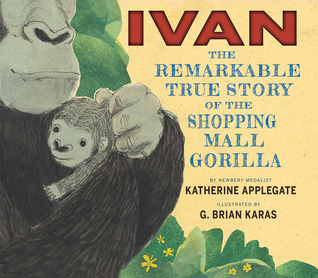
Ivan: The Remarkable True Story of the Shopping Mall Gorilla
Author: Katherine Applegate
Illustrator: G. Brian Karas
Published October 7th, 2014 by Clarion Books

Goodreads Summary: In a spare, powerful text and evocative illustrations, the Newbery medalist Katherine Applegate and the artist G. Brian Karas present the extraordinary real story of a special gorilla.

Captured as a baby, Ivan was brought to a Tacoma, Washington, mall to attract shoppers. Gradually, public pressure built until a better way of life for Ivan was found at Zoo Atlanta. From the Congo to America, and from a local business attraction to a national symbol of animal welfare, Ivan the Shopping Mall Gorilla traveled an astonishing distance in miles and in impact.

This is his true story and includes photographs of Ivan in the back matter

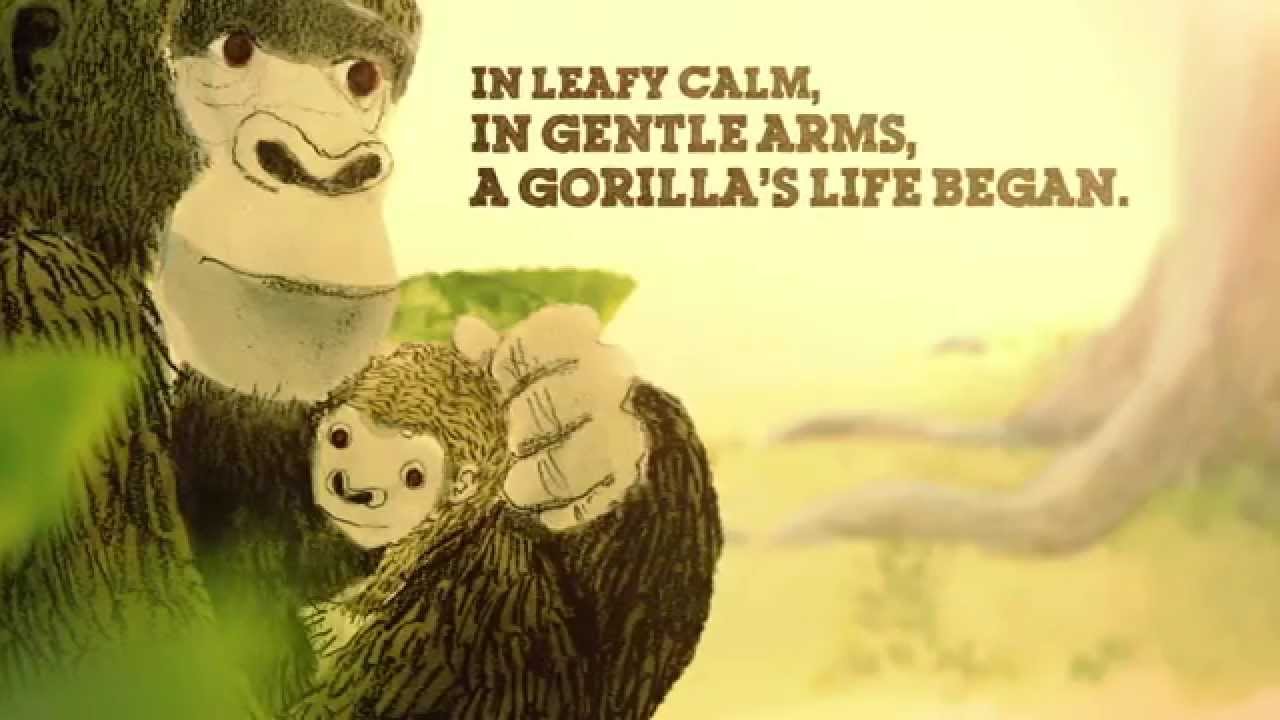
My Review and Teachers’ Tools for Navigation: Anyone who knows me knows that I adore apes (see my Nerdy Book Club Top Ten Ape books and my Hurt Go Happy interview with Ginny Rorby as well as my Hurt Go Happy Primatesand Endangered reviews). They are such fascinating creatures. I enjoy reading about them and am a true advocate for their care here on Earth. This book is just another supporting document in the beauty, intelligence, and awesomeness of these creatures. Katherine Applegate has written a perfect companion to her Newbery winning One and Only Ivan which takes the reader into Ivan’s life and once again makes our heart break for him. It is written in verse with words that transport you into Ivan’s life. This book made me cry because of the power of the words, but more importantly, the power of Ivan’s story. Please read this. You will thank me (and curse Katherine Applegate for the tears).

Teachers’ Tools for Navigation: The best way for this book to be used in the classroom is in conjunction with The One and Only Ivan or other books about animals in captivity or apes. It will start lots of conversation and is a wonderful introduction into empathy for all living things.

Discussion Questions: Why was it wrong for the poachers to take Ivan?; Do you think wild animals should be allowed to be pets?; How do you think Ivan felt when he went to Atlanta?

We Flagged: 

Read This If You Loved: The One and Only Ivan by Katherine Applegate, Hurt Go Happy by Ginny Rorby, Endangered and Threatened by Eliot Shrefer, Faithful Elephants by Yukio Tsuchiya, Me…Jane by Patrick McDonnell, Primates by Jim Ottaviani, Little Beauty by Anthony Browne, Half Brother by Kenneth Oppel

Recommended For: 

classroomlibrarybuttonsmall readaloudbuttonsmall closereadinganalysisbuttonsmall

Signature

Review and Teaching Guide!: El Deafo by Cece Bell

Share

NF PB 2014

Nonfiction Picture Book Wednesday

Nonfiction Picture Book Wednesday is hosted by Kid Lit Frenzy and was started to help promote the reading of nonfiction texts. Most Wednesdays, we will be participating and will review a nonfiction text (though it may not always be a picture book).
Be sure to visit Kid Lit Frenzy and see what other nonfiction books are shared this week!

deafo

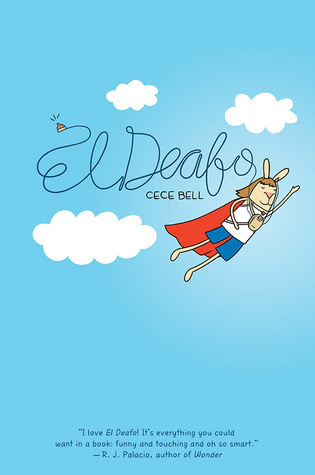
El Deafo
Author: Cece Bell
Published September 2nd, 2014 by Abrams

Publisher Summary: Going to school and making new friends can be tough. But going to school and making
new friends while wearing a bulky hearing aid strapped to your chest? That requires superpowers! In this funny, poignant graphic-novel memoir, author/illustrator Cece Bell chronicles her hearing loss at a young age and her subsequent experiences with the Phonic Ear, a very powerful—and very awkward—hearing aid. The Phonic Ear gives Cece the ability to hear—sometimes
things she shouldn’t—but also isolates her from her classmates. She really just wants to fit in and find a true friend, someone who appreciates her as she is. After some trouble, she is finally able to harness the power of the Phonic Ear and become “El Deafo, Listener for All.” And more importantly, declare a place for herself in the world and fi nd the friend she’s longed for.

Author: Cece Bell has written and illustrated several books for children, including the Geisel Honor book Rabbit & Robot: The Sleepover. She lives in Virginia with her husband, author Tom Angleberger.

My Review: There are times that you read a book and when you are done, you just know that it is a special book. El Deafo is one of those books. As you all know, I am a huge fan of Hurt Go Happy by Ginny Rorby, and one of the reasons I am is because it looks at disabilities in a positive light and shows that a disability is not an end, but just a change. El Deafo is another novel that does this. Although Cece, like Joey in Hurt Go Happy, finds herself deaf at a young age, we see her overcome this blow and turn it into a superpower. But this book is about more than deafness; it is about being a kid, about growing up, about friendship, about ackwardness, about school, about crushes, about family, about life. This book is truth.

Teachers’ Tools For Navigation: There is so much you can do with this graphic novel. Many activities can be found in the teaching guide that I wrote for Abrams. This book is perfect for independent reading, for lit circles  with other graphic novel memoirs, for jigsawing, for read alouds, and for looking deeply into the text.

(Also, and I didn’t want to harp on this because they are both such unique books, but this book will be loved by the readers of Smile. They both look at such an important part of life.)

Discussion Questions: Language Arts:  Cece uses many different kinds of clues to help her lip-read. (pages 30–31) What are the 4 types of clues? How do they help with lip-reading? In what other ways can these clues be helpful?; On page 60, Cece shares an analogy of her friendship with Laura. She feels like a baited fish that is caught on Laura’s hook. What analogies could we make to
describe Cece’s friendship with Ginny? Martha? Emma?; Science: What is meningitis? How can it cause deafness?;  What is an audiologist? What would you have to study to become one?; History/Social Studies: Many deaf and hard of hearing individuals have made history, including Helen Keller, William Ellsworth Hoy, and Juliette Gordon Low. Research these or other deaf or hard of
hearing individuals throughout history and today. How did being deaf affect their lives? What were their accomplishments?

We Flagged: 

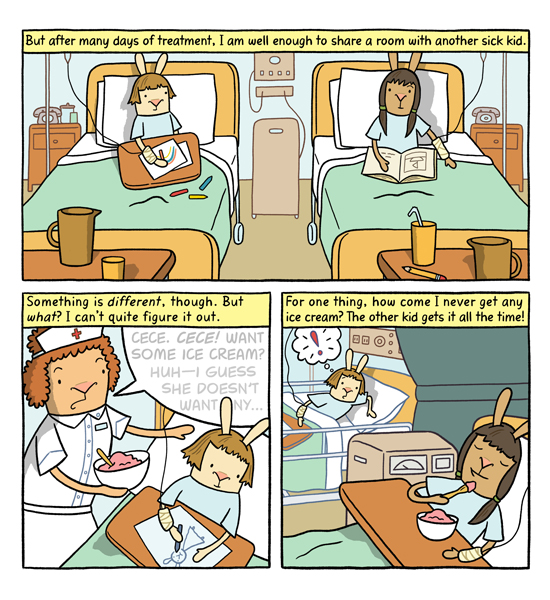
01ORIGINSPanelsREVISED
**From Cece Bell’s blog**

Read This If You Loved: Smile and Sister by Raina Telgemeier, The Dumbest Idea Ever! by Jimmy Grownley, I Remember Beirut by Zeina Abirached, Odd Duck by Cecil Castellucci

Recommended For: 

classroomlibrarybuttonsmall readaloudbuttonsmall closereadinganalysisbuttonsmall litcirclesbuttonsmall

Signature

Sam & Dave Dig a Hole by Mac Barnett

Share

sam and dave

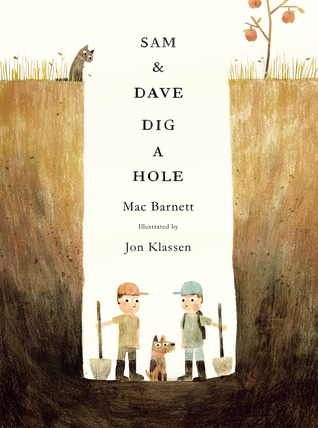
Sam & Dave Dig a Hole
Author: Mac Barnett
Illustrator: Jon Klassen
Published October 14th, 2014 by Candlewick Press

Publisher’s Summary: Sam and Dave are on a mission. A mission to find something spectacular. So they dig a hole. And they keep digging. And they find . . . nothing. Yet the day turns out to be pretty spectacular after all. Attentive readers will be rewarded with a rare treasure  n this witty story of looking for the extraordinary — and finding it in a manner you’d never expect.

About the Creators: Mac Barnett is the author of several award-winning books for children, including President Taft Is Stuck in the Bathillustrated by Chris Van Dusen, and Extra Yarn, illustrated by Jon Klassen, which won a Boston Globe–Horn Book Award and a Caldecott Honor. Mac Barnett lives in California.

Jon Klassen is the author-illustrator of I Want My Hat Back, a Theodor Seuss Geisel Honor book, and This Is Not My Hat, winner of the Caldecott Medal. He is also the illustrator of House Held Up by Trees, written by Ted Kooser, which was named a New York Times Book Review Best Illustrated Children’s Book, and Extra Yarn, written by Mac Barnett, which won a Caldecott Honor. Originally from Niagara Falls, Ontario, Jon Klassen now lives in Los Angeles.

My Review and Teachers’ Tools for Navigation: I just love the work that Mac and Jon do. I don’t think I have read any of their books that I haven’t enjoyed and haven’t found myself wanting to talk about. What I love most about their books is that they are unique and so, so, so smart. Their books are like no other, and this book is no different. It has nuances you have to carefully look for, it has an ending that you can debate about for a very long time, and overall is just so well done. I think this, along with the Hat books, may be the best open-ended picture books out there. Just like wordless books, open-ended books truly invokes conversing. When I finished, I immediately asked my husband to read it, so we could discuss the ending. Travis Jonker has a great post about the different theories about the ending, but I warn you: there are spoilers in the post! Think of all the great conversations or writing your students will have/do because of this thought-provoking picture book.

For some laughs, also check out Mac Barnett and Jon Klassen Make a Book: A Transcript.

Discussion Questions: What do you think happened at the end?; What do you notice about the dog as you are reading the book?; How is the ending different from the beginning?

Book Trailer: 

Read This If You Loved: I Want My Hat Back and This Is Not My Hat by Jon Klassen, Extra Yarn by Mac Barnett

Recommended For: 

classroomlibrarybuttonsmall readaloudbuttonsmall closereadinganalysisbuttonsmall

Signature
**Thank you to Laura at Candlewick for providing a copy for review**

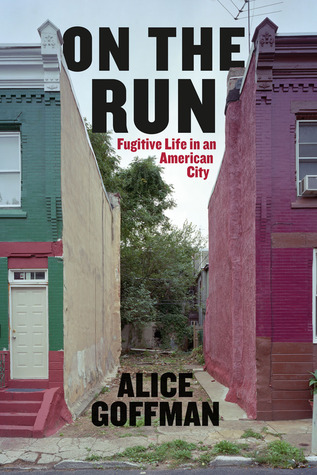
On the Run: Fugitive Life in an American City by Alice Goffman

Share

on the run

On the Run: Fugitive Life in an American City
Author: Alice Goffman
Published: May 1, 2014 by University Of Chicago Press

Summary: Forty years in, the War on Drugs has done almost nothing to prevent drugs from being sold or used, but it has nonetheless created a little-known surveillance state in America’s most disadvantaged neighborhoods. Arrest quotas and high-tech surveillance techniques criminalize entire blocks, and transform the very associations that should stabilize young lives—family, relationships, jobs—into liabilities, as the police use such relationships to track down suspects, demand information, and threaten consequences.

Alice Goffman spent six years living in one such neighborhood in Philadelphia, and her close observations and often harrowing stories reveal the pernicious effects of this pervasive policing. Goffman introduces us to an unforgettable cast of young African American men who are caught up in this web of warrants and surveillance—some of them small-time drug dealers, others just ordinary guys dealing with limited choices. All find the web of presumed criminality, built as it is on the very associations and friendships that make up a life, nearly impossible to escape. We watch as the pleasures of summer-evening stoop-sitting are shattered by the arrival of a carful of cops looking to serve a warrant; we watch—and can’t help but be shocked—as teenagers teach their younger siblings and cousins how to run from the police (and, crucially, to keep away from friends and family so they can stay hidden); and we see, over and over, the relentless toll that the presumption of criminality takes on families—and futures.

While not denying the problems of the drug trade, and the violence that often accompanies it, through her gripping accounts of daily life in the forgotten neighborhoods of America’s cities, Goffman makes it impossible for us to ignore the very real human costs of our failed response—the blighting of entire neighborhoods, and the needless sacrifice of whole generations.

Review: Inspired by a college course in her sophomore year, Alice Goffman seeks an ethnographic experience in inner-city Philadelphia. She gets a part-time job tutoring an African American girl, Aisha, and soon befriends the boys of 6th Street (pseudonym). Mike adopts her as a younger sister, and she comes to live with these boys—studying their every move. This quality piece of ethnographic research is a page turner. While it reads a bit more like a book than a scholarly publication, readers can glean her methodological approach through the footnotes. Goffman’s mission is clear. She wants readers to understand the inequities these African American boys of 6th Street face, and she shows how the criminal justice system (both law enforcement and the justice/prison system) are not working. I was ashamed at the actions of the police, specifically, and think this is very educational to readers of all ages, particularly in the wake of the racially based crimes that we consistently see in the news.

Teacher’s Tools for Navigation: This book is written for adults, but I think it would be very educational for high school students. I would use excerpts of this text to show students the realities of life on 6th Street in Philadelphia. It could be used to better understand crimes in the news, to teach inequity, to examine class issues, to understand the drug trade, and to fight racism. It would be eye-opening for students. While teaching this, I would also consider pairing it with Malcolm Gladwell’s review.

Discussion Questions: What can we do to stop the injustice of the court system? How is it flawed?; What role does race play in this text?; Was Goffman too close to the subjects of her ethnography? Do you think this affected her portrayal of 6th Street? What are the positives and negatives of this approach of qualitative study?

We Flagged: “To be on the run is a strange phrase for legally compromised people, because to be on the run is also to be at a standstill.”

“Thus, the great paradox of a highly punitive approach to crime control is that it winds up criminalizing so much of daily life as to foster widespread illegality as people work to circumvent it. Intensive policing and the crime it intends to control become mutually reinforcing. The extent to which crime elicits harsh policing, or policing itself contributes to a climate of violence and illegality, becomes impossible to sort out.”

Read This If You Loved: Punished: Policing the Lives of Black and Latino Boys by Victor M. Rios; The New Jim Crow: Mass Incarceration in the Age of Colorblindness by Michelle Alexander 

Recommended For:

  closereadinganalysisbuttonsmall classroomlibrarybuttonsmall

RickiSig

Freedom Summer by Deborah Wiles (Ricki’s Review)

Share

freedom summer

Freedom Summer
Author: Deborah Wiles; Illustrator: Jerome Lagarrigue
Published: January 1, 2005 by Aladdin

Summary: 

John Henry swims better than anyone I know.
He crawls like a catfish,
blows bubbles like a swamp monster,
but he doesn’t swim in the town pool with me.
He’s not allowed. 

Joe and John Henry are a lot alike. They both like shooting marbles, they both want to be firemen, and they both love to swim. But there’s one important way they’re different: Joe is white and John Henry is black, and in the South in 1964, that means John Henry isn’t allowed to do everything his best friend is. Then a law is passed that forbids segregation and opens the town pool to everyone. Joe and John Henry are so excited they race each other there…only to discover that it takes more than a new law to change people’s hearts.

Review: I rarely review picture books or texts that weren’t published recently. For me, the blog is a place for me to highlight newer books (whenever possible). I love picture books, but Kellee often reviews them, and I love young adult literature, so those are often the titles I review. After I read this book, I couldn’t wait to blog about it because it is easily one of the best picture books I have ever read and is worthy of the praise it receives. Set in the 1960s South, this moving, lyrical text depicts the Civil Rights Movement through the eyes of a child who just wants to adventure with his friend. The messages are powerful, and I plan to purchase it to read again and again with my son. After we read this as a family, my husband and I wondered if it was a work of nonfiction because it felt so very real to us. 

You can view Kellee’s review of Freedom Summer here.

Teachers’ Tools for Navigation: The most obvious choice would be to use this text to teach about diversity, discrimination or the Civil Rights Movement. I would also love to pair this with The Other Side by Jacqueline Woodson. Students would find great value in comparing and contrasting the imagery and messages of these two texts. I could also see it being paired with texts like To Kill a Mockingbird by Harper Lee. More than anything, this is a book about the power of friendship.

Discussion Questions: How do these boys view their world differently from the adults around them?; Why might the author have chosen to end the text the way she does? What message does it send?; How do the illustrations support the readers’ understanding of the text?

We Flagged: 

“John Henry’s skin is the color of

browned butter.

He smells like pine needles after a

good rain.

My skin is the color of the pale

moths that dance around the porch

light at night.

John Henry says I smell like a just-washed sock.

‘This means war!’ I shout.”

Read This If You Loved: The Other Side by Jacqueline Woodson, Something Beautiful by Sharon Dennis Wyeth, Goin’ Someplace Special by Patricia C. McKissack

Recommended For:

  readaloudbuttonsmall closereadinganalysisbuttonsmall classroomlibrarybuttonsmall

RickiSig

Teaching Young Adult Literature Today: Insights, Considerations, and Perspectives for the Classroom Teacher, Edited by Judith A. Hayn and Jeffrey S. Kaplan

Share

Teaching Young Adult Literature Today

Teaching Young Adult Literature Today: Insights, Considerations, and Perspectives for the Classroom Teacher
Edited by Judith A. Hayn and Jeffrey S. Kaplan
Published: March 15th 2012 by Rowman & Littlefield Publishers 

GoodReads Summary: Teaching Young Adult Literature Today introduces the reader to what is current and relevant in the plethora of good books available for adolescents. More importantly, literary experts illustrate how teachers everywhere can help their students become lifelong readers by simply introducing them to great reads smart, insightful, and engaging books that are specifically written for adolescents. Hayn, Kaplan, and their contributors address a wide range of topics: how to avoid common obstacles to using YAL; selecting quality YAL for classrooms while balancing these with curriculum requirements; engaging disenfranchised readers; pairing YAL with technology as an innovative way to teach curriculum standards across all content areas. Contributors also discuss more theoretical subjects, such as the absence of lesbian, gay, bisexual, transgender and questioning (LGBTQ) young adult literature in secondary classrooms; and contemporary YAL that responds to the changing expectations of digital generation readers who want to blur the boundaries between page and screen.

Review: This informative text is divided into the sections, “Where Has YAL Been?,” “Where is YAL Now?” and “Where is YAL Going?” I very much appreciated the expertise of the scholars who wrote each chapter. 

While each chapter was organized a bit differently, the research is solid. In one chapter, Laura A. Renzi, Mark Letcher, and Kristen Miraglia discuss LGBTQ Young Adult Literature in the Language Arts Classroom. I appreciated their recommendations for infusing LGBTQ texts into the school setting with recommendations tailored to the range of community environments: hostile, ignorant/open, open/accepting, and open. The texts were well-matched with the aims of bringing LGBTQ texts into focus. 

Another chapter I loved was “Crossing Boundaries: Genre-Blurring in Books for Young Adults” by Barbara A. Ward, Terrell A. Young, and Deanna Day. They give solid examples of authors who blur genres, making readers question genre classifications as a whole. These authors show the awesomely innovative authorship within the field of YAL.

Steven T. Bickmore writes a well-informed chapter about best-selling adult novelists who write YA fiction. He divides his piece into two sections–writers of adult best-sellers or pulp fiction and writers with literary accolades in adult fiction. I very much enjoyed his insight about this phenomenon. 

While I only highlight three chapters in this review, I must say that each chapter was special in its own way. The book begins with the history and background of YAL, and it ends with chapters about where the field is heading. As a researcher of this field, some of the information was not new to me, yet I learned much from the scholars of the text, whose extensive research is reflected in each chapter.

We Flagged: “[T]eachers need to gain insider perspectives by reading the books presented to their students. As a result, a wider range of quality adolescent literature will reach the hands of adolescents, and teachers will become increasingly confident about the merits of teaching with YAL”(Elliott-Johns, Chapter 3, Teachers as Readers of YAL section).

Read This If You Loved: Articles from The ALAN Review, Young Adult Literature in the 21st Century by Pam B. Cole, Literature for Today’s Young Adults by Alleen Nilsen & Ken Donelson

RickiSig

Boys of Blur by N. D. Wilson

Share

boys of blur

Boys of Blur
Author: N. D. Wilson
Published: April 8, 2014 by Random House

Ricki’s Summary and Review: 12-year-old Charlie Reynolds’ family travels to town of Taper to attend the funeral of a beloved football coach. When Charlie’s stepfather is given the opportunity to coach the town’s football team, Charlie is not thrilled to learn that they will be living in this creepy town filled with ancient stories of runaway slaves, native tribes, and monsters that rise organically from the murky swamps. He tries to fit into this mysterious place, where boys chase rabbits through burning sugarcane and everything seems to revolve around football. As he comes to learn about this town of secrets, Charlie wonders if he has the courage to uncover the mysteries that surround him.

Set deep in the heart of the Florida Everglades, this text is sure to grip readers with its muck, swords, blood, and gore. Wilson integrates complex allusions to Beowulf, which will compel readers to uncover all of the parallels with the classic legend. The beautifully complex language of this fast-paced story inspires close readings while also teaching readers lessons about evilness, heroism, and family.

Kellee’s Review: What I found most intriguing about this book is that Wilson was able to allude to Beowulf in a middle grade book without completely scaring away the reader.  Although I have read in multiple reviews that this book will grab reluctant readers’ attention, I think that some of the allusions are hard to grasp without prior knowledge, so reluctant readers may need some assistance understanding thus making the book a great read aloud as it will grab attention and start deep discussion (see Tools for Navigation).  In addition to the allusions, there are opportunities to discuss hero’s quest, abuse, and loyalty.

You will also find some beautiful writing in this novel. Wilson has a way with words that made this novel lyrical yet easy to read. From the very first line: “When the sugarcane’s burning and the rabbits are running, look for the boys who are quicker than flame.” I was impressed with how literary the novel was.  

Teacher’s Tools for Navigation: There are obvious parallels between this novel and  the legend of Beowulf, and pairing these two texts for discussion would prove very rewarding. Perhaps, teachers could use this Boys of Blur in conjunction with Gareth Hinds’ graphic novel of Beowulf. Then, the class could compare and contrast both the story lines and the differing formats authors might employ to convey a story and message.

Discussion Questions: How is Charlie characterized? Do you find him to be a strong character?; What role does Cotton play in the story?; What role does Charlie’s father play in the story? Can he be forgiven?; How does the author use language effectively?

We Flagged: “‘Yes,’ Mrs. Wisdom said, ‘you are. You’re made of tiny spinning bits as fast as light. But those bits aren’t all of you. They fly off. They get lost, and new ones come on and join the swirling Charlie-shaped dance that is your body. And dwelling in that dance, woven through every racing bit, heating it all with life and guiding it, there is a fire, a soul—you. It takes a dream to see something like that, something closer to the way things really are” (110).

Read This If You Loved:  Beowulf by Unknown, 100 Cupboards by N. D. Wilson, Maniac Magee by Jerry Spinelli, Holes by Louis Sachar, Ophelia and the Marvelous Boy by Karen FoxleeRaining Sardines by Enrique Flores-Galbis

Recommended For:

 readaloudbuttonsmall litcirclesbuttonsmall closereadinganalysisbuttonsmall classroomlibrarybuttonsmall 

RickiSigand Signature