Where’s the Architect?: From Pyramids to Skyscrapers by Susanne Rebscher

Share

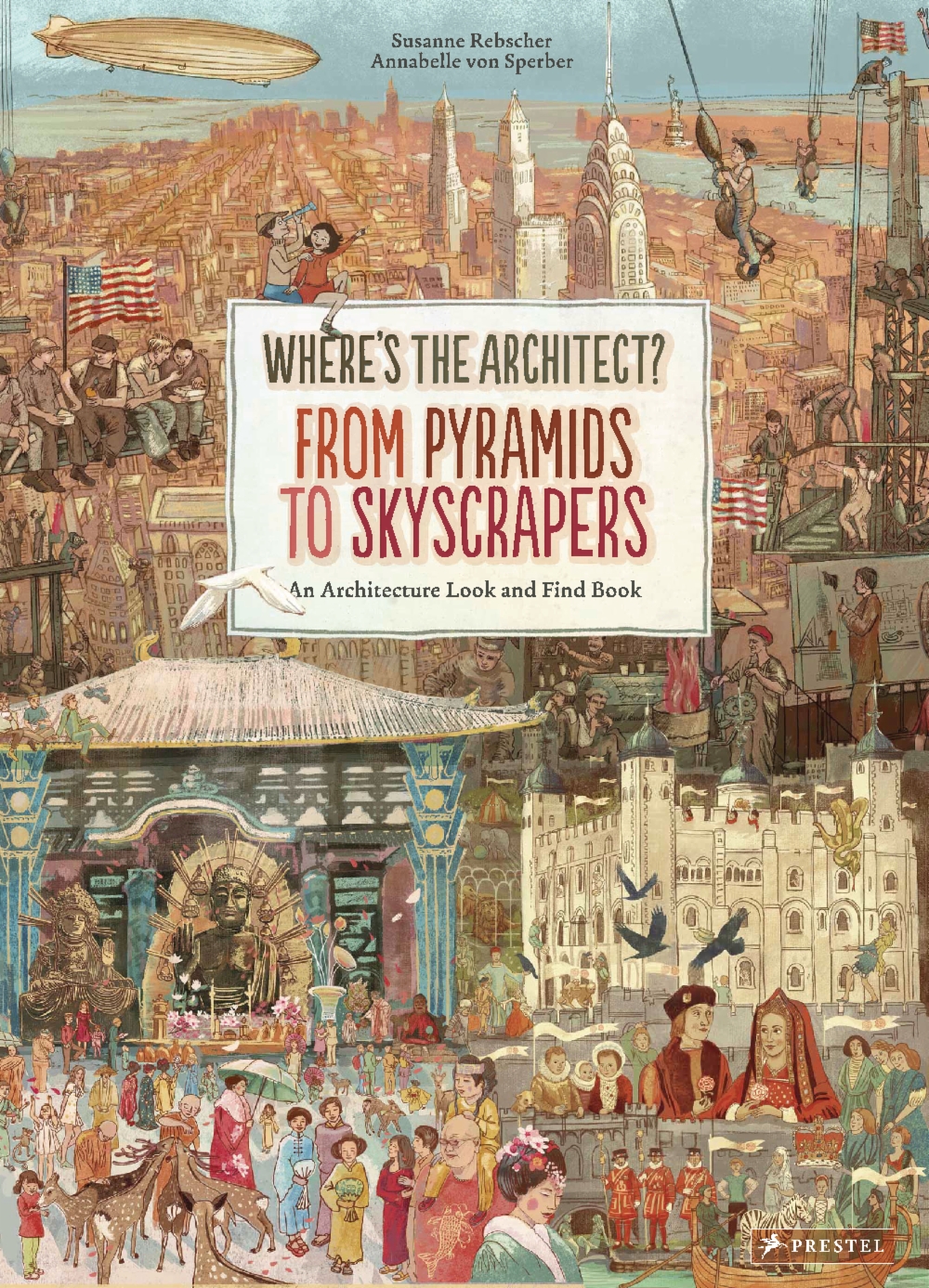
Where’s the Architect?: From Pyramids to Skyscrapers: An Architecture Look and Find Book
Author: Susanne Rebscher; Illustrator: Annabelle von Sperber
Published October 23, 2018 by Prestel Junior

Summary: This wonderfully illustrated and captivating introduction to the wonders of architecture will have young readers poring over each spread and learning as they go.

From the top of China’s Great Wall to the base of the Pyramids of Giza and the Sphinx, this journey through the world of architecture stops in nearly every continent and travels through centuries. Annabelle von Sperber populates her dynamic and intricate double-page spreads with many details and a hidden architect or important figure on every page that kids will have fun trying to locate. Along the way they’ll learn about the iron workers who built the Empire State building, how many bulbs it takes to light the Eiffel Tower, where the royal jewels are kept at the Tower of London, and why there is so much red and yellow in Beijing’s Forbidden City. Young readers will find themselves fully immersed in this large format book while learning about the incredible architectural wonders that continue to amaze us today.

Review: My son and I absolutely loved this book. It is oversized with giant illustrations, and we spent much time on each spread. The pages feature magnificent works of architecture from the past (and currently existing in the present). In most of the drawings, the architecture is in the process of being built or was recently built, so the book leads readers into a historical time period. We learned so much from this book, and I loved all of the new-to-me facts about the famous architectural structures. My son loved looking and talking about the buildings, and he enjoyed doing the search-and-finds on each page. It is a wonderful book that would be a great resource for classrooms.

Teachers’ Tools for Navigation: Teachers might ask students to work in groups to pick a page that is particularly compelling for them. They can research more about the structure and the time period to understand context and explore historical aspects of the architecture that interest them.

Discussion Questions: 

  • Which architectural design is most interesting to you? Why do you find it to be interesting?
  • Which facts surprised you?
  • Do you notice differences in the architecture throughout time?
  • Which structures are close to you? Which are far away?

Flagged Passages: 
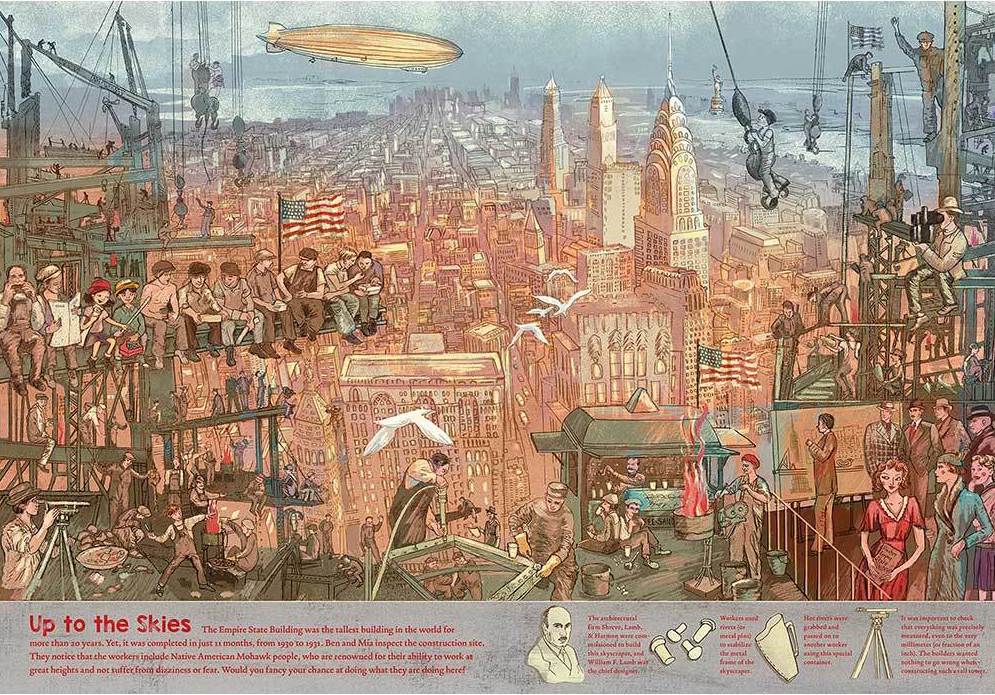
Read This If You Love: Interactive search-and-find (seek-and-find, look-and-find) activity books filled with educational information

Recommended For: 

classroomlibrarybuttonsmall

**Thank you to Casey at Media Masters Publicity for providing a copy for review!**
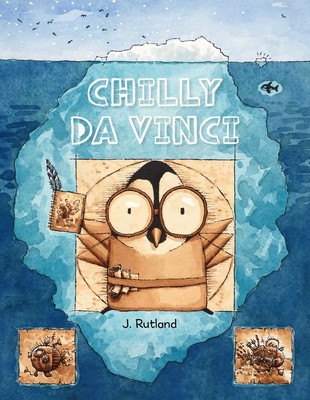
Chilly Da Vinci by J. Rutland

Share

Chilly Da Vinci
Author and Illustrator: J. Rutland
Published by December 4, 2018 by NorthSouth Books

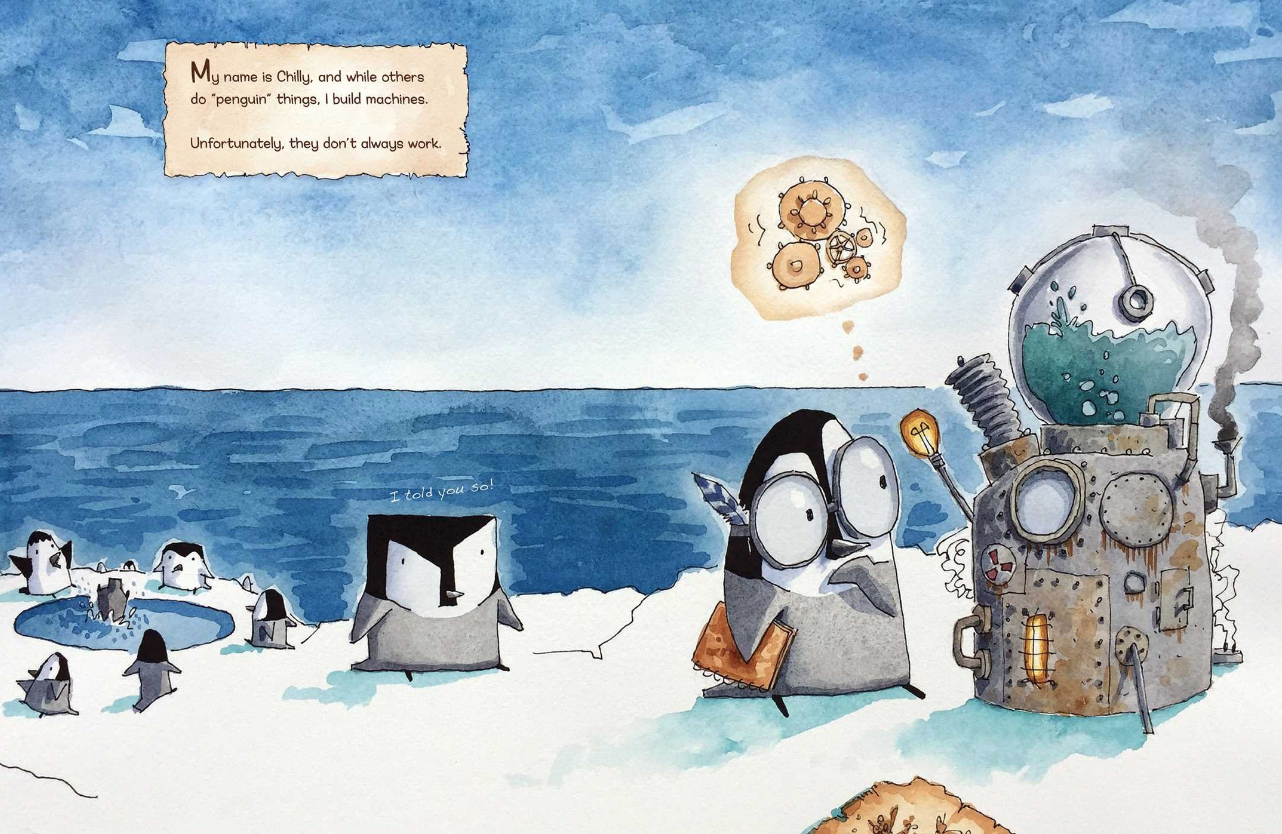
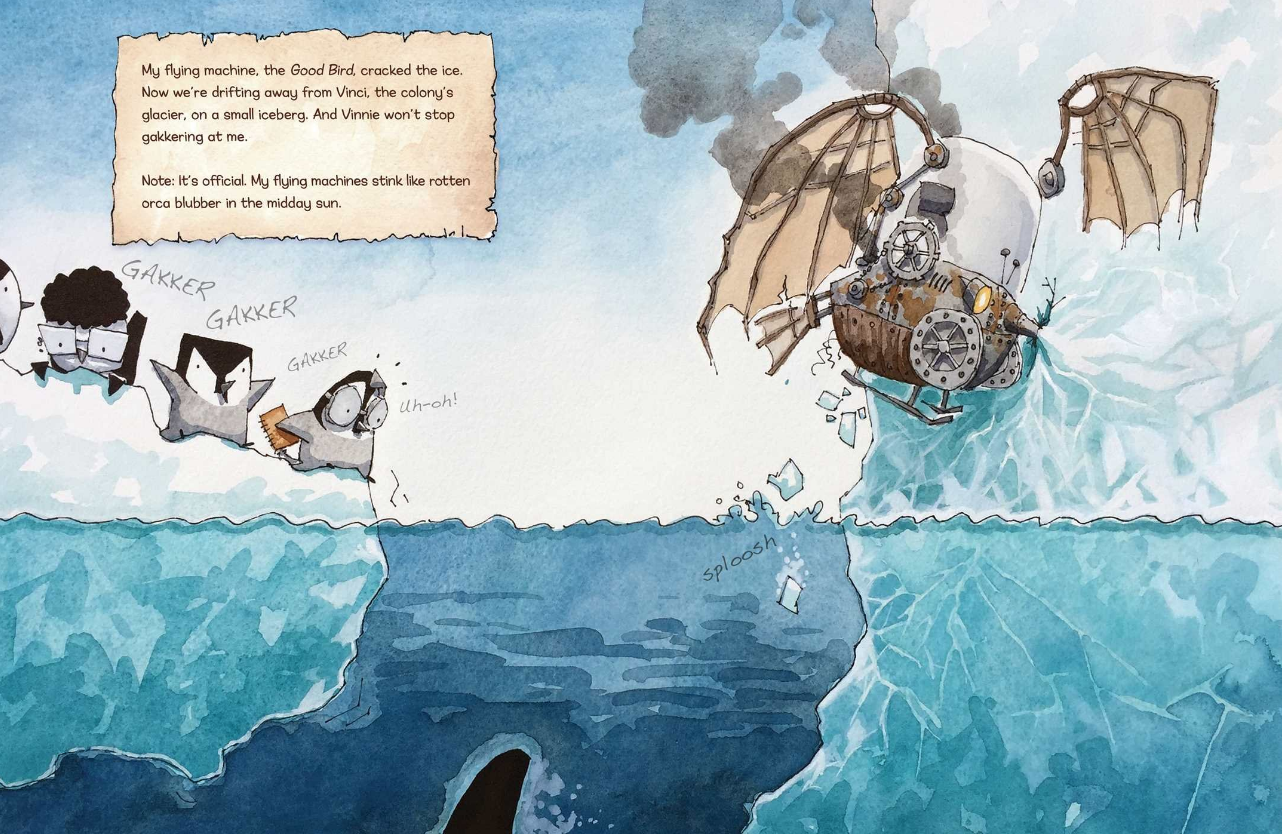
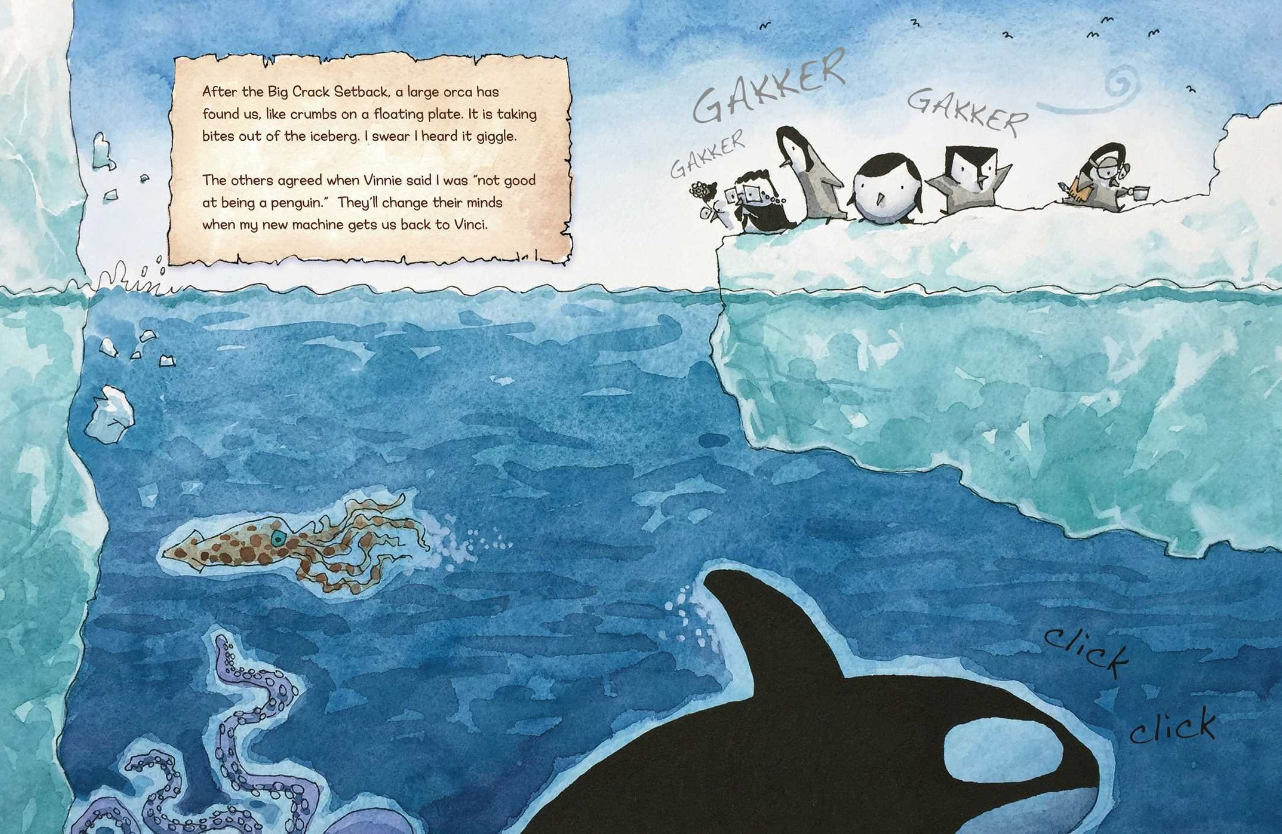
Goodreads Summary: While others do “penguin” things, Chilly da Vinci—self-declared inventor penguin, builds machines that don’t work…yet!  Chilly ties into the popular “maker” movement with humor and imagination.

While others do “penguin” things, Chilly da Vinci—self-declared inventor penguin, builds machines that don’t work…yet!

Ricki’s Review: My son tells everyone that he is an engineer. He spends a lot of time drawing his inventions and then building them with blocks. Needless to say, he was thrilled about this book. Chilly is an inventor who builds machines that don’t work. This offers great opportunities for conversations about the revision process and the time and patience required for inventors to be successful. The book ties well with history and Da Vinci’s inventions. There is wonderful classroom potential with this book. The illustrations border realistic and fantastic, which makes for fun examinations across pages. This book will be a favorite in classrooms and it is quite inspiring. I am most excited about its interdisciplinary potential.

Kellee’s Review: The structure of this book is so interesting! It switches between the reality of Chilly’s situation and a narrative of possibilities and his imagination. This will lead to some amazing conversations and also gives an example of a different type of narrative. I also think that so much can be done with the different creations that Chilly makes looking at real inventions and the sketches and research of Leonardo da Vinci. On top of that, I love the message of Chilly’s journey! It is all about not giving up and never letting anyone tell you something isn’t doable. Oh, and he’s a super cute penguin!

Teacher’s Tools For Navigation: Students might begin by investigating Da Vinci’s inventions and how they compare with those in the book. This offers a rich look into history. Then, students might draw out and design their own inventions. Working in small groups, they might try to build their inventions to experience and talk through the emotions that Chilly might be experiencing as he invents new creations!

Discussion Questions: 

  • How do Chilly’s inventions compare with those of Da Vinci?
  • What emotions and characteristics does Chilly display when his inventions don’t work?
  • How does the author use personification to enhance the reading of this text?
  • How might this book be different if Chilly was a person rather than a penguin? What does Chilly’s penguin character add to the story?

We Flagged: 

Read This If You Loved: Nonfiction books about Leonardo da Vinci, If Da Vinci Painted a Dinosaur by Amy Newbold, The Most Magnificent Thing by Ashley Spires, Lost and Found by Oliver Jeffers

Recommended For: 

classroomlibrarybuttonsmall  readaloudbuttonsmall 

and Signature

Pride by Ibi Zoboi

Share

Pride
Author: Ibi Zoboi
Published: September 18, 2018 by Balzer + Bray

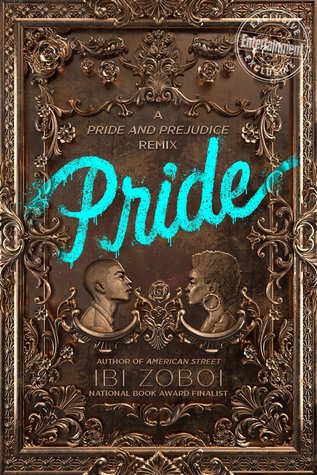
Summary: Pride and Prejudice gets remixed in this smart, funny, gorgeous retelling of the classic, starring all characters of color, from Ibi Zoboi, National Book Award finalist and author of American Street.

Zuri Benitez has pride. Brooklyn pride, family pride, and pride in her Afro-Latino roots. But pride might not be enough to save her rapidly gentrifying neighborhood from becoming unrecognizable.

When the wealthy Darcy family moves in across the street, Zuri wants nothing to do with their two teenage sons, even as her older sister, Janae, starts to fall for the charming Ainsley. She especially can’t stand the judgmental and arrogant Darius. Yet as Zuri and Darius are forced to find common ground, their initial dislike shifts into an unexpected understanding.

But with four wild sisters pulling her in different directions, cute boy Warren vying for her attention, and college applications hovering on the horizon, Zuri fights to find her place in Bushwick’s changing landscape, or lose it all.

In a timely update of Jane Austen’s Pride and Prejudice, critically acclaimed author Ibi Zoboi skillfully balances cultural identity, class, and gentrification against the heady magic of first love in her vibrant reimagining of this beloved classic.

Teaching Pride

I love retellings of classics, and I would argue that this retelling is far superior to the original. Ibi presented at the NCTE convention, and she is absolutely brilliant. She talked about how she values the inclusion of the pantheon in literature and how she does so in her own texts. She also shared how different poems within Pride are retellings of classic poems. I love her work and will read anything she writes.

Love stories are tricky. They can get sappy quickly. This book is so much more than a love story. It interrogates themes related to economics, race, education, and gender.

Gentrification

“It’s a truth universally acknowledged that when rich people move into the hood, where it’s a little bit broken and a little bit forgotten, the first thing they want to do is clean it up. But it’s not just the junky stuff they’ll get rid of. People can be thrown away too, like last night’s trash left out on sidewalks or pushed to the edge of wherever all broken things go. What those rich people don’t always know is that broken and forgotten neighborhoods were first built out of love” (p. 1).

Teaching Idea: As a class, explore the impacts of gentrification and displacement. Using this knowledge develop your own form of political art (https://youtu.be/JMVd5k2a2IM) to make a statement.

Culture

If Madrina’s basement is where the tamboras, los espíritus, and old ancestral memories live, the roof is where the wind chimes, dreams, and possibilities float with the stars, where Janae and I share our secrets and plan to travel all over the world, Haiti and the Dominican Republic being our first stop” (p. 23).

Teaching Idea: Pick a place in your life, and Use Zoboi’s writing as a mentor text to share that place with others (e.g. “If [place] is where_________, [another place] is where__________, where________.”

Equity

“Sometimes love is not enough to keep a community together. There needs to be something more tangible, like fair housing, opportunities, and access to resources” (p. 33).

Teaching Idea: As a class, discuss whether love is enough and whether tangible aspects must exist in order to keep a community together. Generate a concept or brain map that depicts tangible aspects that can impact communities.

Male/Female Gender Roles

I don’t need no knights in shining armor

Ain’t no horses in the hood

I killed chivalry myself with a pocketknife…” (p. 243).

Teaching idea: The teachers finds materials/advertisements that are gender-specific, and students rewrite the materials to remove gender from the text. Students evaluate how the meaning or the impact has changed.

Education

“There is more to learn

about my old, old self, and black and brown girls like me

from hoods all over this country want to

take over the world,

but there’s something missing

in our history books the public schools give us” (p. 147).

Teaching idea: Consider the school curricula. Whose voices are honored? Whose are missing? Rewrite a course to be more inclusive.

Home

“I have always thought of Bushwick as home, but in that moment, I realize that home is where the people I love are, wherever that is” (p. 270).

Teaching idea: Where is home? Create a visual depiction of your own home, and below it, write, “Home is…” How do our interpretations of home differ? What do they have in common?

Read This If You Loved: American Street by Ibi Zoboi, Pride and Prejudice by Jane Austen, Piecing Me Together by Renée Watson

Recommended For: 

classroomlibrarybuttonsmall 

RickiSig

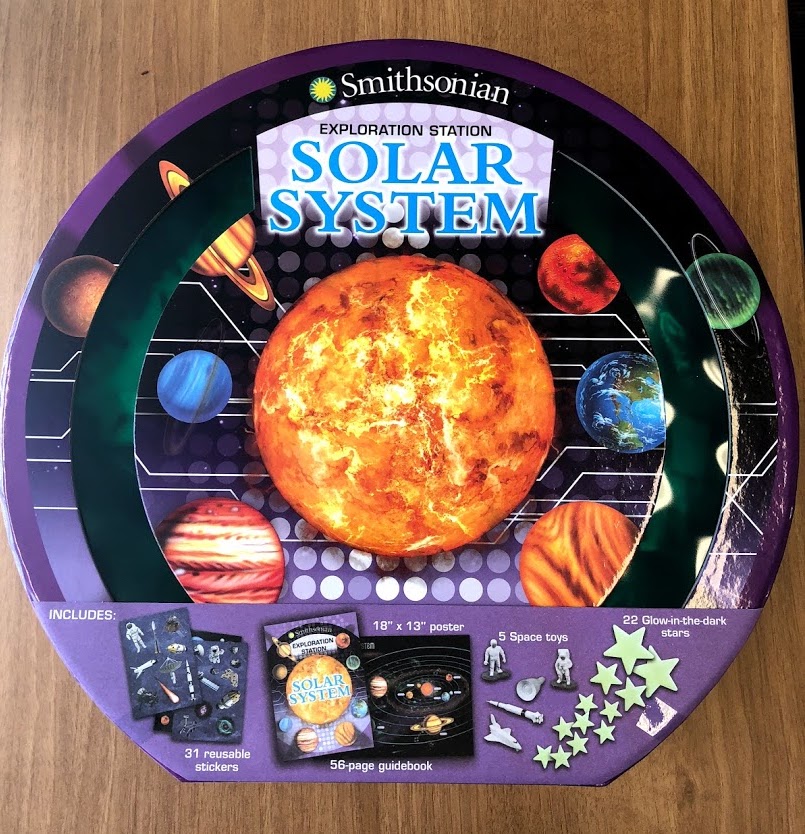
Smithsonian Exploration Station: Solar System

Share

Smithsonian Exploration Station: Solar System

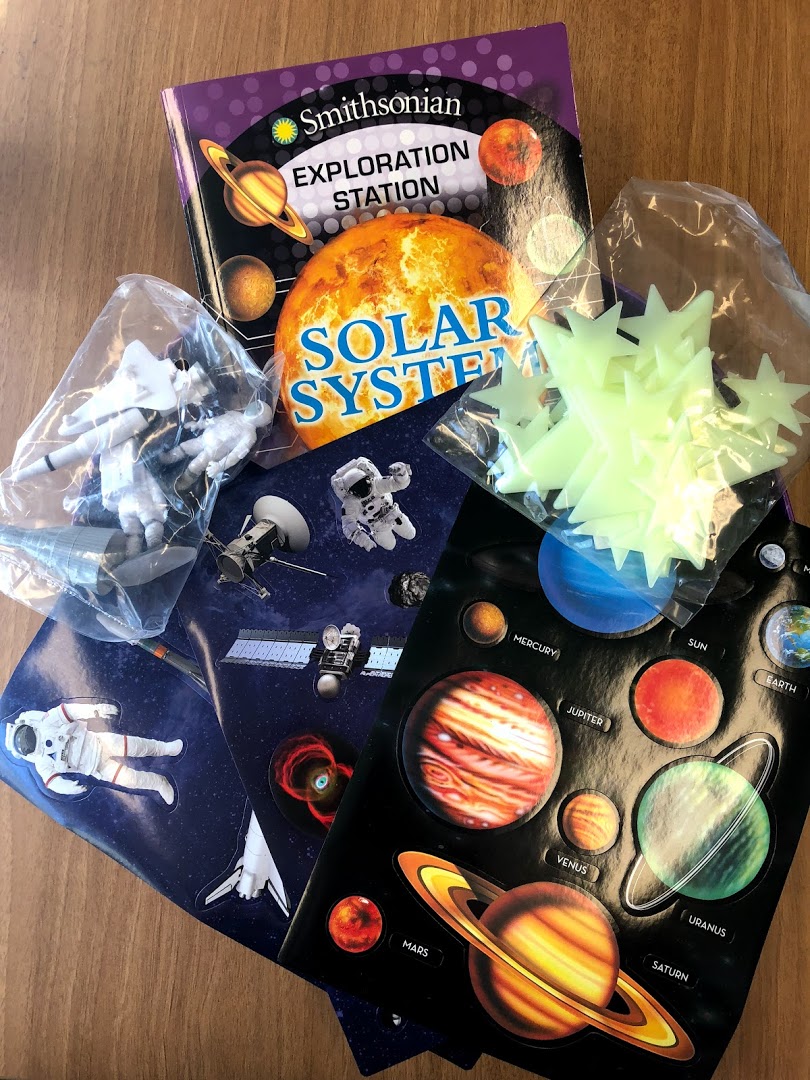
Summary: Take a trip into the stratosphere with Smithsonian Exploration Station: Space! With informative text and full-color photographs, young astronomers will learn about the intricate makeup of our solar system as well as distant galaxies and constellations. The 56-page fact book combined with the sticker sheet, space figurines to play with, and the glow-in-the-dark stars make this space experience interactive and engaging.

Includes a 56-page fact book, 30 stickers, 22 glow-in-the-dark stars, and 2 figurines (astronaut and rocket).

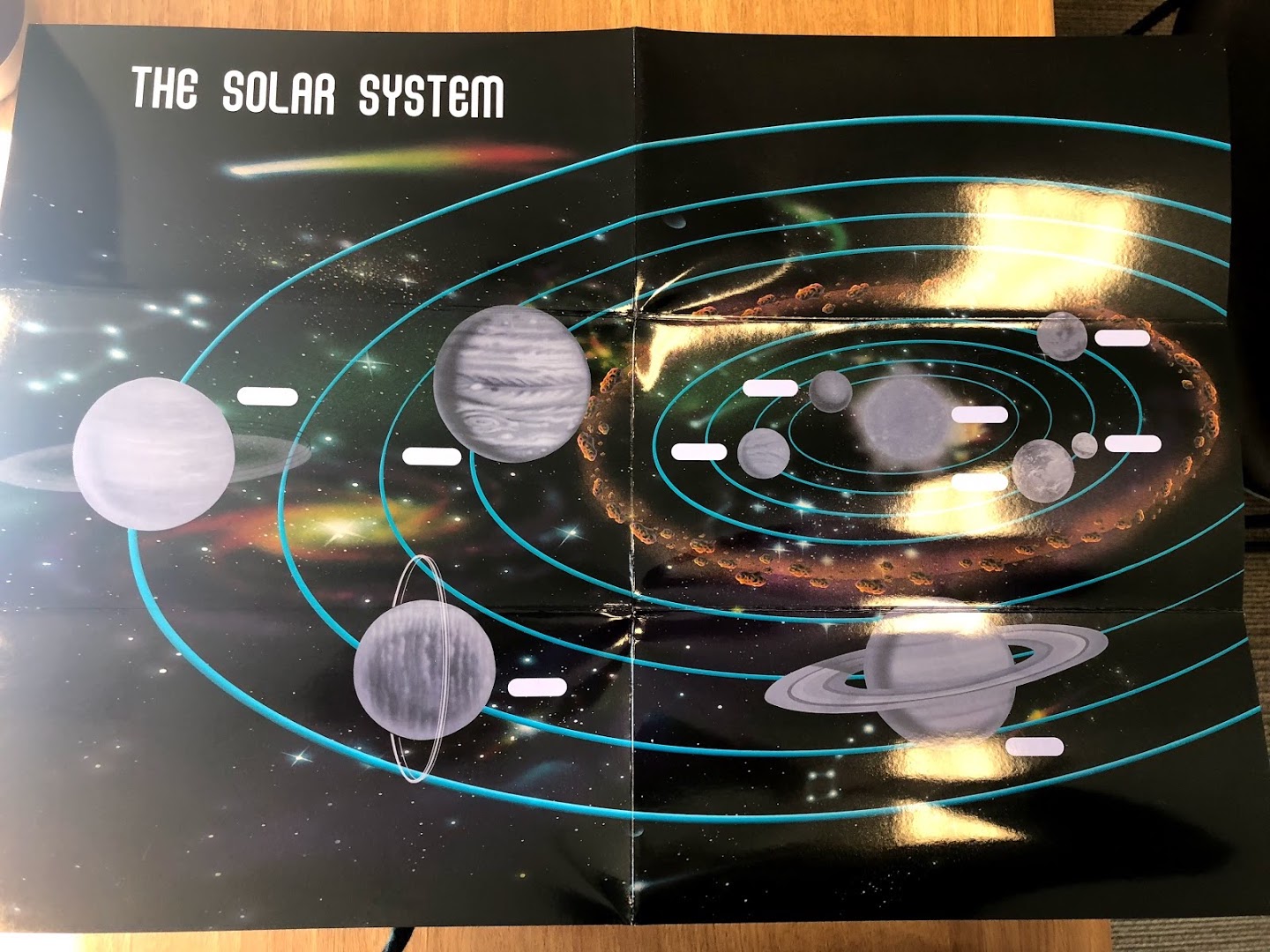
ReviewI love book kits. There is something about them that makes me feel warm and fuzzy. My almost 5-year-old loves them just as much. Opening the box is like opening a world of fun. We were thrilled to receive this kit, and it didn’t disappoint. My son played with the rocket and astronaut figurines as we read the book together. The rocket and astronaut touched every page of the book! After we read about each part of the solar system, he affixed the appropriate sticker on his poster. He’s very much looking forward to sticking the glow in the dark stars on his ceiling! Parents will love these kits. The interactive learning component is wonderful. I intend to purchase several other kits from this company!

Teachers’ Tools for Navigation: Teachers might purchase 1-2 kits each of the Smithsonian Exploration Station series. These include the Human Body, World Atlas, and Human Body. They can be found here. Students can select the kit that is most interesting to them and engage in an inquiry unit on the topic. These kids would be very fun to use in small groups!

Discussion Questions: 

  • What did you learn as you did the activities?;
  • What parts of solar system do you find most interesting? Why?;
  • How do the different parts of the solar system together?

We Flagged: 

The kit!

The full-sized poster! Notice the grayed out planets. The stickers match these and make for a great interactive reading experience!

Read This If You Loved: Any nonfiction books about the solar system; interactive books and kits (like this one about the human body)

Recommended For: 

classroomlibrarybuttonsmall

**Thank you to Casey at Media Masters Publicity for providing a copy for review**

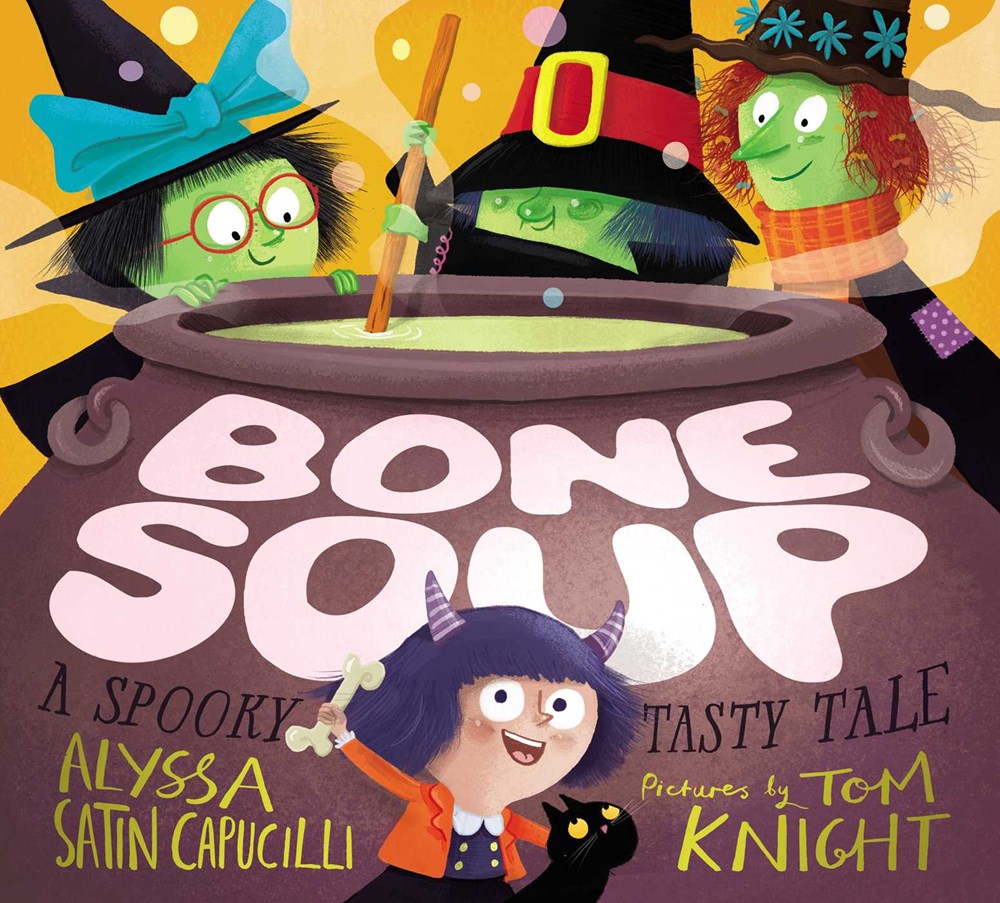
Bone Soup: A Spooky Tasty Tale by Alyssa Satin Capucilli

Share

Bone Soup: A Spooky Tasty Tale
Author: Alyssa Satin Capucilli
Illustrator: Tom Knight
Published: July 24, 2018 by Simon & Schuster

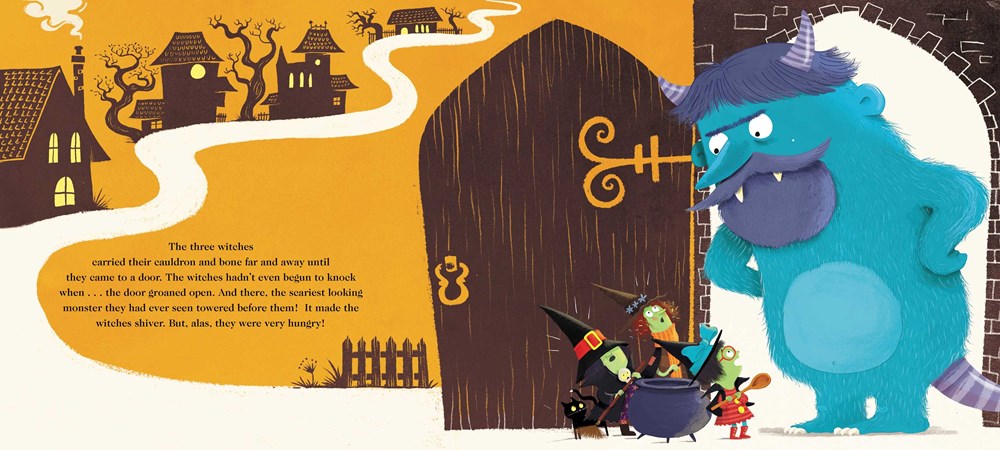
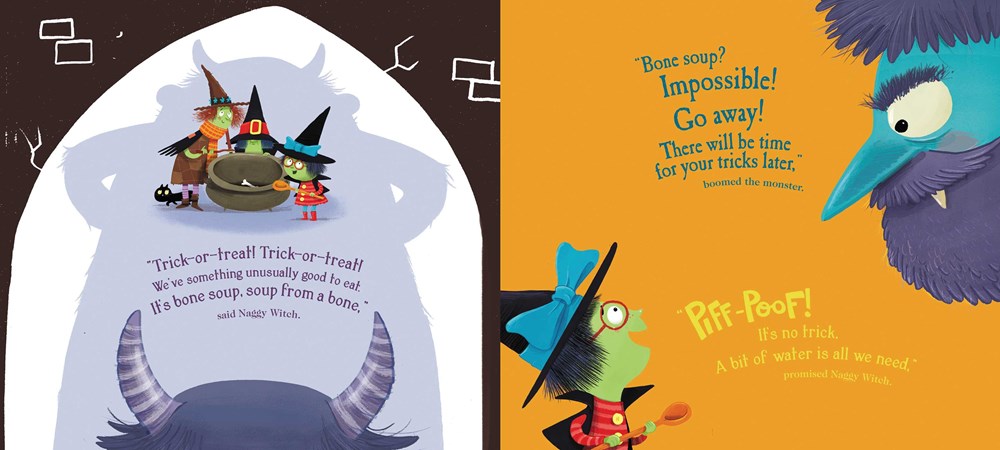
Goodreads Summary: Three little witches and a bunch of spooky characters come together to prepare a delicious batch of Bone Soup in this Halloween tale based on the beloved fable, Stone Soup. This just-scary-enough picture book comes with a recipe for Bone Soup—perfect for Halloween eating.

Trick-or-treat? Trick-or-treat!
We’ve something usually good to eat!

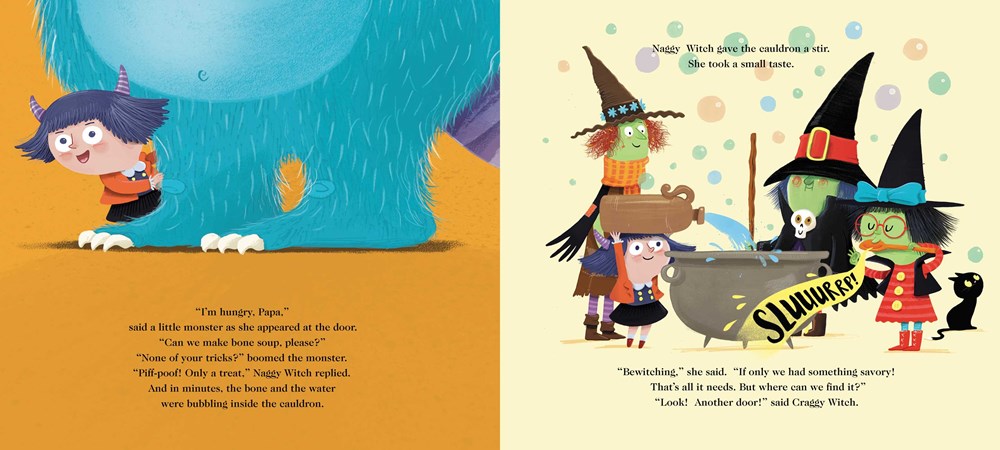
One Halloween morning three witches are looking for a tasty treat and they find only a small bone in their cupboard. So they decide to go from door to door in their village to find just the right ingredients for their Bone Soup. No one in the village is convinced that soup can be made from a bone, until the littlest monster reveals just what the special ingredient should be.

My Review: We received this book earlier in the month, and we’ve read it dozens and dozens of times. I was very excited about it and have held it in my pocket for Halloween! If you enjoy spooky, fun tales, this book is for you. I find myself walking around repeating, “It’s bone soup! Soup from the bone!” and “Piff-Poof!” The text is quite catchy, and it’s a highly entertaining read-aloud. This is a book that parents and teachers will find extra fun for their classrooms and homes. I recommend adding Bone Soup to your Halloween collection!

Teacher’s Tools for Navigation: Students might take a trip outdoors and gather their own materials for bone soup. For instance, a stick could be imagined as the bone from a pirate. Grass might be the hair from a goblin. Then, they can take their materials inside and craft their own class story together.

Discussion Questions: 

  • How do the sister witches interact?
  • How do they build their bone soup? What do they add to it?
  • What creative things would you add to your own bone soup?

We Flagged:

Read This If You Loved: Halloween Hustle by Charlotte Gunnufson, Spider and the Fly by Mary Howitt, Dragon’s Halloween by Dav Pilkey, Goodnight Goon by Michael Rex, Monster Mash (Babymouse #9) by Jennifer L. Holm, Scaredy Squirrel Prepares for Halloween by Melanie Watt; Man Made Boy by Jon Skovron

Recommended For: 

readaloudbuttonsmall 

RickiSig

**Thank you to Barbara at Blue Slip Media for providing a copy for review!**
Death and Douglas by J.W. Ocker

Share

Death and Douglas
Author: J.W. Ocker
Published October 31st, 2017 by Sky Pony Press

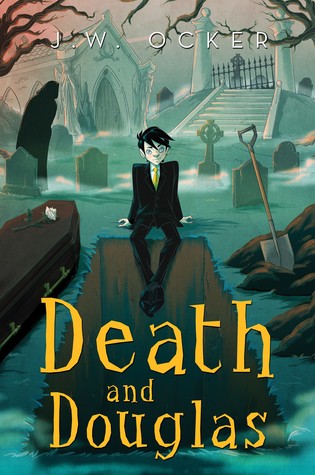
Summary: Douglas has grown up around the business of death.

Generations of his family have run the Mortimer Family Funeral Home. The mortician and gravediggers are all his buddies. And the display room of caskets is an awesome place for hide and seek. It’s business as usual in Douglas’s small New England town.

Until one day an incredibly out of the ordinary murder victim is brought to the funeral home. And more startling: others follow. On the cusp of Halloween, a serial killer has arrived. And unsatisfied with the small-town investigation, Douglas enlists his friends to help him solve the mystery.

With sumptuous descriptions of a bucolic town and its quirky people, fascinating yet middle grade–appropriate insider information about the funeral process, and a crackling mystery with a heart-pounding conclusion—Death and Douglas has something for readers young and old.

About the Author: J. W. Ocker is the Edgar Award–winning author of Poe-Land: The Hallowed Haunts of Edgar Allan Poe. His work has appeared in Rue Morgue magazine, the Boston Globe, CNN, the Atlantic, and other places people stick writing. He’s from Maryland but has lived in New Hampshire since 2008. This is his first book for children.

Praise: 

“Ocker populates his eerie New England town with a memorable cast, and gives us a compelling hero in Douglas Mortimer. Kids and coffee-drinkers beware!” —Patrick Moody, author of The Gravedigger’s Son

“With the perfect balance of macabre and mystery, the ideal combination of horror and humor, the Ghastlies are bringing plenty of goosebumps and giggles for everyone!” —Brooks Benjamin, author of My Seventh Grade Life in Tights

Review: To be honest, I didn’t know what I was getting myself into when I started this book because it is way creepier than I thought it was going to be, but a serial killer on the loose in a town definitely will add that creep factor to any book.

Douglas is definitely well-rounded and mature when it comes to death, it has been around him his entire life, but all death he’s encountered has been natural or an accident until now. This is an interesting point of view for a character as I’ve never read a middle grade book with a character like Douglas. All of a sudden, a young boy who never feared death realizes that there is evil in some deaths and that scares him more than it may scare most because it is a new realization. This definitely adds to the suspense because Douglas is not only questioning everything around him but also on the look out for a serial killer, so all bumps in the night are a reason to jump.

I will also say that the conclusion was not what I saw coming!

Side note: Douglas and his friends did some DANGEROUS things, and I know that we have to suspend our belief when reading, but the whole time as an adult I wanted to yell at them for being so ridiculously careless in their safety by searching for a serial killer! Kids: Do not do that at home!

Teachers’ Tools for Navigation: My students are always asking me for mystery books or horror books, and they are so hard to come by in middle school; however, this one will be perfect for them! Death and Douglas belongs in libraries of any kind!

Discussion Questions: 

  • Why are Douglas’s friends jealous of how his parents treat him?
  • How did Douglas become so well rounded when it comes to death?
  • What is a mortician vs a medical examiner?
    • The different terms for mortician are discussed: What are the different connotations of the different terms (mortician, undertaker, funeral director)?
  • How did Douglas and his friends put themselves in danger? What should they have done instead?
  • Who do you think is the serial killer? Were you right?
  • How are Lowell and Douglas different? Why does their friendship work so well?

Flagged Passages: “Maybe Lowell’s crazy plan was worth going along with, for a little while at least. Despite the terrors of teh night, both old and new, Douglas found himself comfortably lost in his own thoughts.

Until the dogwoods spoke to him.

Somewhere behind the ordered row of trunks, a short hiss of words seemed to connect the space behind him and them. They sounded hollow, inhuman, almost breaths.

He ran.

Ran like he’d never run in gym class, like no game of tag he’d ever played in the cemetery. Cold terror is the best fuel for the body.

Douglas didn’t dare look back. Didn’t even dare try to use the cane, which suddenly seemed silly in his hands. His breath came out ragged, and his feed slapped the ground even harder as he raced across the street to the front lawn of the funeral home. As he ran, he thought he could hear echoes of those sounds behind him. So close behind.

He ran even faster.

The night silhouette of the funeral home loomed above him–a scary place for some, a safe harbor for him.” (Chapter 11)

Read This If You Love: Murder mysteries or any mysteries!

Recommended For: 

classroomlibrarybuttonsmall

Signature

**Thank you to Sky Horse for providing a copy for review!**

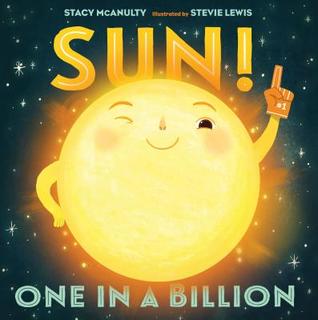
Sun! One in a Billion by Stacy McAnulty

Share

Sun! One in a Billion
Author: Stacy McAnulty
Illustrator: Stevie Lewis
Published October 23, 2018

Summary: From the author of Earth! My First 4.54 Billion Years comes a new picture book about space—
this time starring our Sun!

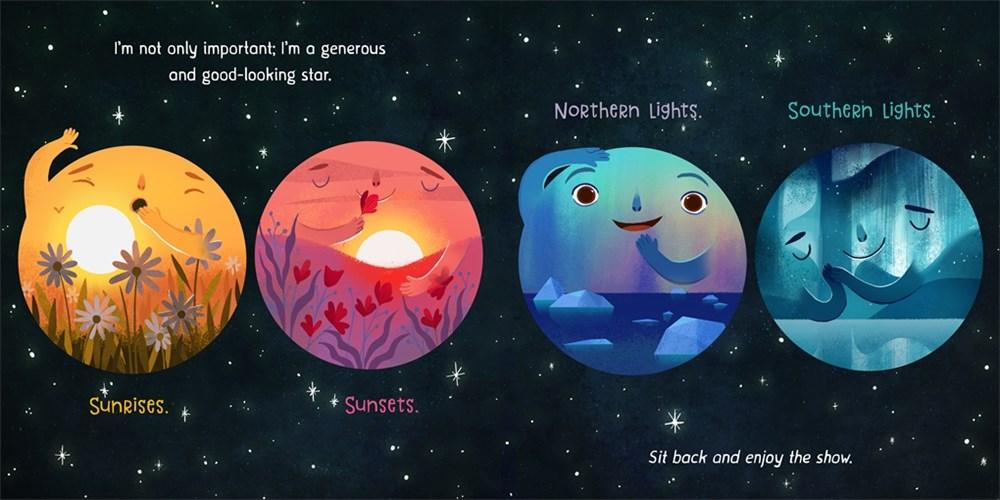
Meet Sun: He’s a star! And not just any star—he’s one in a billion. He lights up our solar system and makes life possible. With characteristic humor and charm, Stacy McAnulty channels the voice of Sun in this next celestial “autobiography.” Rich with kid-friendly facts and beautifully illustrated, this is an equally charming and irresistible companion to Earth! My First 4.54 Billion Years.

Ricki’s ReviewThis is my new favorite book about space. (And I have read a lot of books about space.) The author perfectly balances factual information and appeal. The illustrations pop off of the page, and the planets, sun, etc. are personified. I feel very lucky to have received this book for review. I am quite excited to read it to my son tomorrow night. I think I smiled throughout my entire reading of the book. If you are interested in space, get this book. It includes facts that were new to me, and the back matter offers a wealth of information for readers who want to delve deeper.

Kellee’s Review: The humor that Stacy McAnulty adds to her books about space really add to the engagement factor (for both the reader and listener); the Sun’s attitude in this one actually made me laugh out loud while reading, but I also learned some pretty cool facts while reading. I know that this book is going to be in our rotation because Trent wants to be an astronaut, and this one was an instant hit! I am so glad that there are amazing space books out there that add something new to the conversation and go about the information in a new and funny way! I really hope that this series continues because I’d love to see the personalities of all of the other parts of our solar system (and maybe some cool space objects from other systems!).

Teachers’ Tools for Navigation: Teachers might ask students to pick one fact in the book that makes them want to learn more about the world. They could look, for example, into a planet, or into the history of Earth. This inspires student-centered inquiry about a topic of choice!

Discussion Questions: 

  • How is the text structured in ways that are engaging and interesting?
  • What new facts did you learn?
  • Which page was your favorite, and why?
  • Did this book inspire you to want to learn more about any topics or information?

Flagged Passages: 

Read This If You Love: Earth! My First 4.54 Billion Years by Stacy McAnulty; Science, Space, Picture books with humorous narrators like It’s Not Jack and the Beanstalk by Josh FunkNothing Rhymes with Orange by Adam Rex

Recommended For: 

classroomlibrarybuttonsmall closereadinganalysisbuttonsmall

andSignature

**Thank you to Kelsey at Macmillan for setting up the blog tour for Sun!**