Earthrise: Apollo 8 and the Photo that Changed the World by James Gladstone

Share

Earthrise: Apollo 8 and the Photo that Changed the World
Author: James Gladstone
Illustrator: Christy Lundy
Published October 15th, 2018 by OwlKids

Summary: 1968 was a year of unrest: many nations were at war. People marched for peace, fairness, and freedom. At the same time, the Apollo 8 crew was about to go farther into space than anyone had gone before–to the moon.

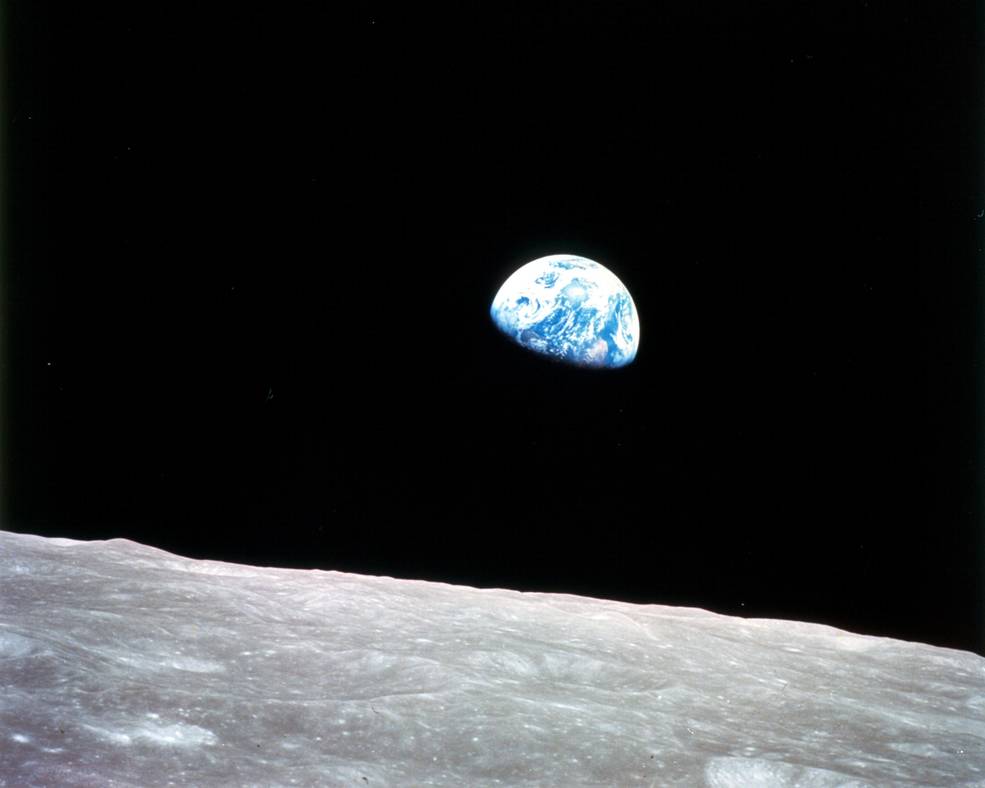
As they surveyed the moon’s surface, astronauts aboard Apollo 8 looked up just when Earth was rising out of the darkness of space. They saw the whole planet–no countries, no borders. The photograph they took, Earthrise, had a profound effect when published widely back on Earth, galvanizing the environmental movement, changing the way people saw our single, fragile home planet, and sparking hope during a year of unrest.

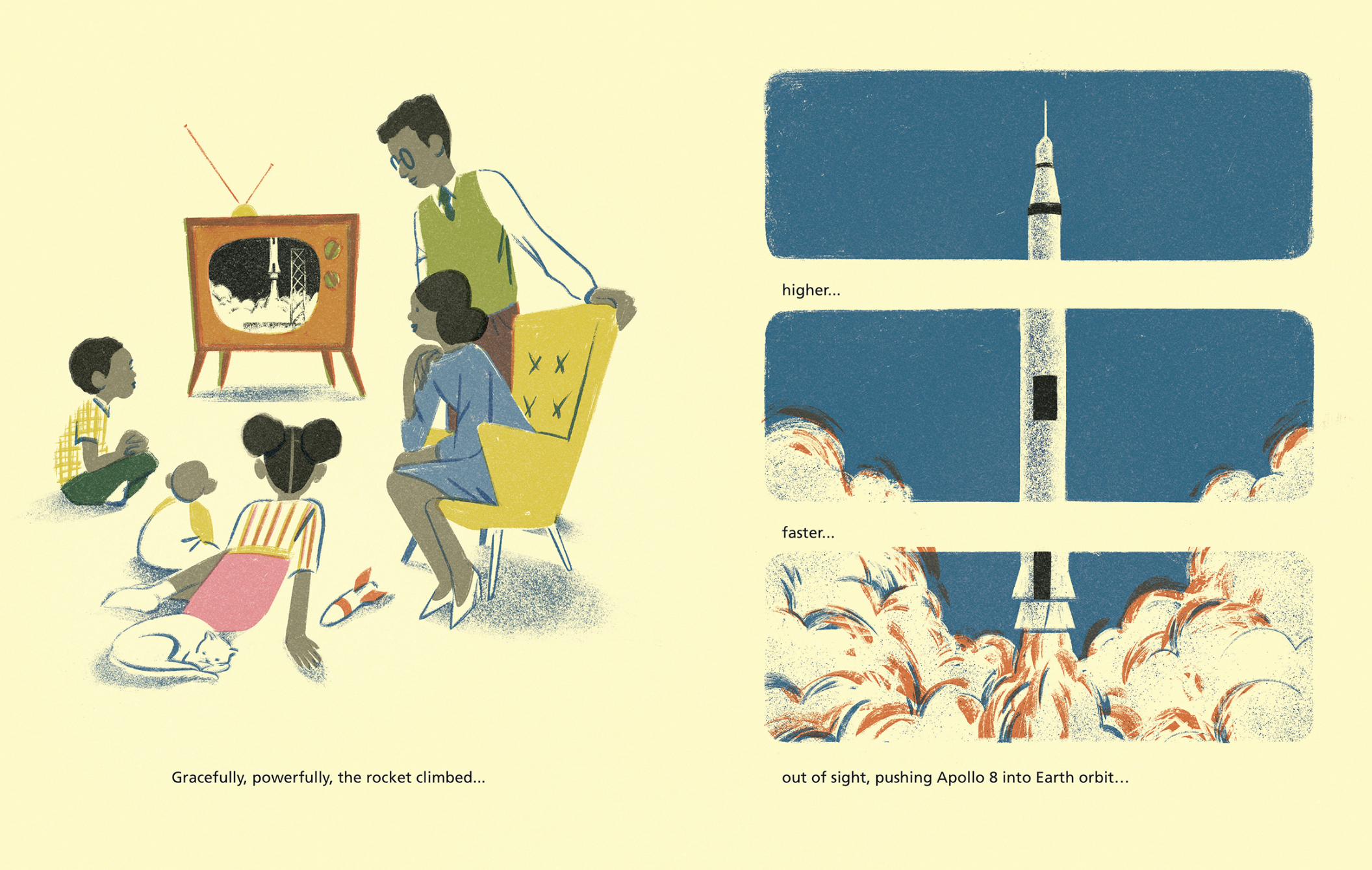
This important and timely picture book is publishing to coincide with the 50th anniversary of the Apollo 8 mission, telling the story behind the photograph, both inside the spaceship and back on Earth. Text includes dialogue pulled from NASA’s Apollo 8 transcript, drawing readers into the moment Earth was first photographed in color from space. An author’s note at the end explains more about the photograph, the Apollo 8 mission, and how Earthrise went on to inspire Earth Day.

About the Author: JAMES GLADSTONE is an editor and author of books for children. His great fondness for planet Earth inspired him to write Earthrise. James is also the author of When Planet Earth Was New and Turtle Pond. James lives in Toronto, Ontario.

About the Illustrator: CHRISTY LUNDY enjoys exploring the relationship between characters and their environment in her work. She designs locations and creates background paintings for children’s animated shows, as well as doing editorial illustrations for a wide variety of clients. Earthrise is her first children’s book.

Praise: A Junior Library Guild Selection, 2018; Starred Review, Kirkus Reviews

Review: My son wants to be an astronaut, so I have read many space books; however, I never tire of them because there is just so much to learn about when it comes to our space history, space future, and space in general. I, of course, had seen the Earthrise photograph, but I did not know its story nor did I know about the importance of Apollo 8, so I enjoyed learning about the voyage (and going on a bit of a Google spiral after learning more). Gladstone did a great job incorporating the mission with life on Earth in 1968 as well as getting specific about the mission but without getting so specific that readers will be lost. I also am a huge fan of Lundy’s illustrations which are purposeful in their use of line and color and have a huge impact on the book.

Teachers’ Tools for Navigation: There are many photographs that can be used in conjunction with the picture book including the original Earthrise and photographs of the astronauts, the rocket, and 1968.

This year is the 50th anniversary, so it would be fantastic to introduce students to this mission as many may not know it, and Earthrise is a perfect way to introduce it, and there are many aspects of the text that can be applied to standards in addition to its ability to be a perfect read aloud.

Discussion Questions: 

  • How did the image taken from the Apollo 8 spacecraft effect civilians when they saw it?
    • How was this different than the live feed that was sent earlier in the mission?
  • Based on the book, what has changed over the last 50 years?
  • Saturn V and Apollo 8 took off together–how was the rocket/space craft set up?
  • The author seems to have two purposes in writing this story–what do you think they are?
  • How did the images back on Earth help tell the story of the Apollo 8 mission?

Flagged Passages: 

Read This If You Love: Space, Learning about History, Astronauts, Photography/Art Impact

Recommended For: 

classroomlibrarybuttonsmall 

Signature

Disney Villains: The Evilest of Them All by Rachael Upton

Share

Disney Villains: The Evilest of Them All
Author: Rachael Upton
Illustrator: Various Disney Story Art Team
Published 2018 by Fun Studio International

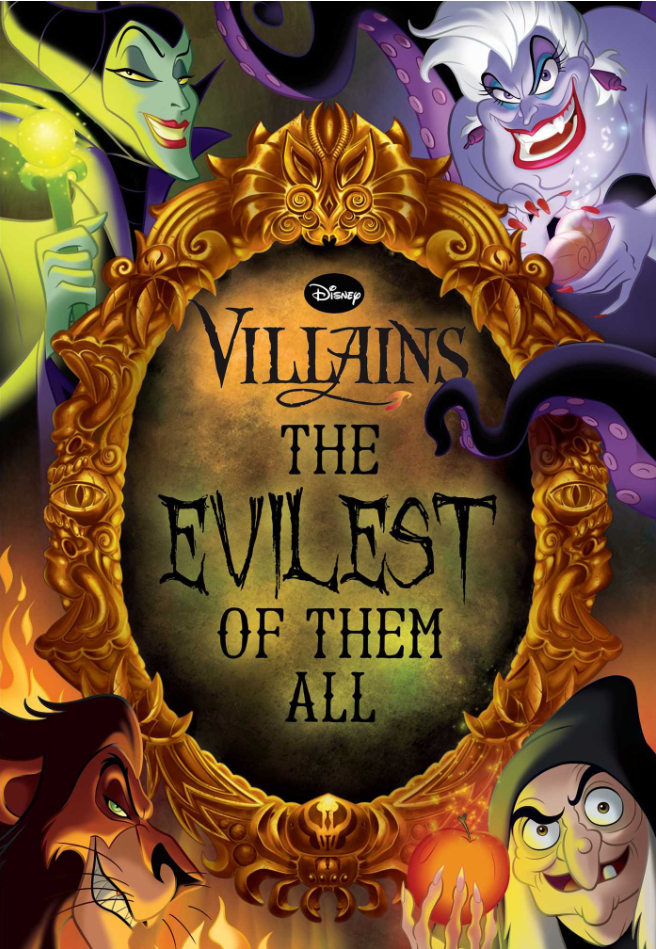
Summary: Dive into the devilish thoughts of Disney’s most masterful villains and become a part of the story . . . for better or for worse.

WANTED: The most evil, wicked, abhorrent, vile villain to ever curse this world . . . or any others.

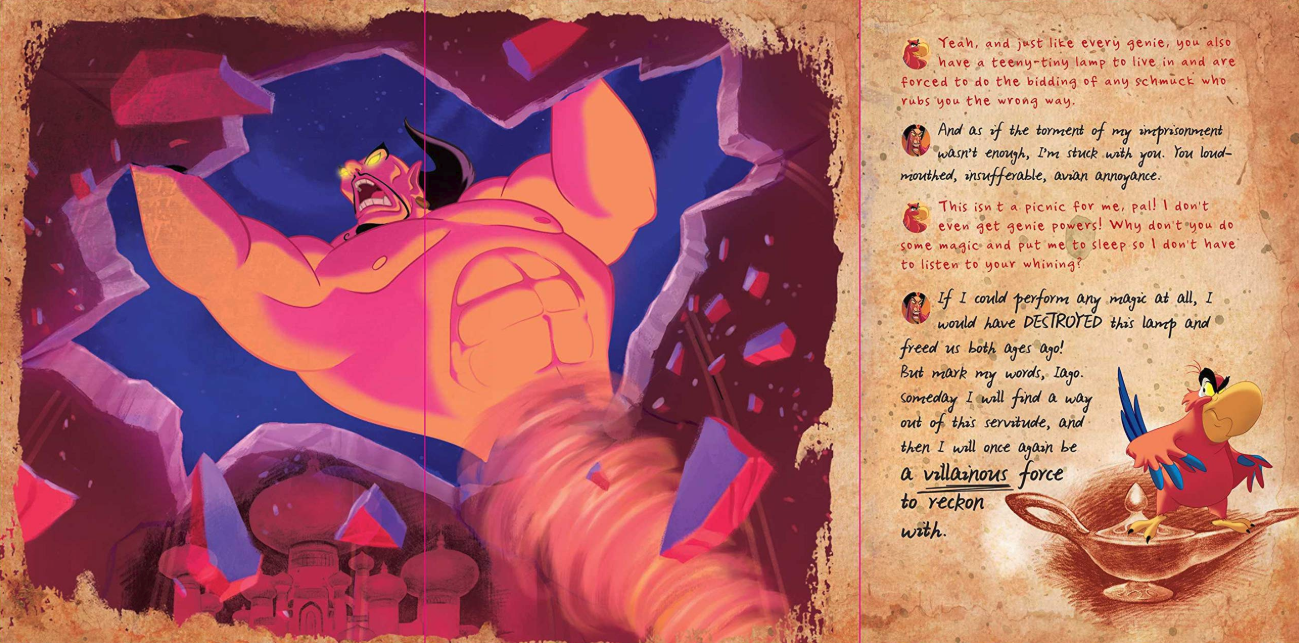
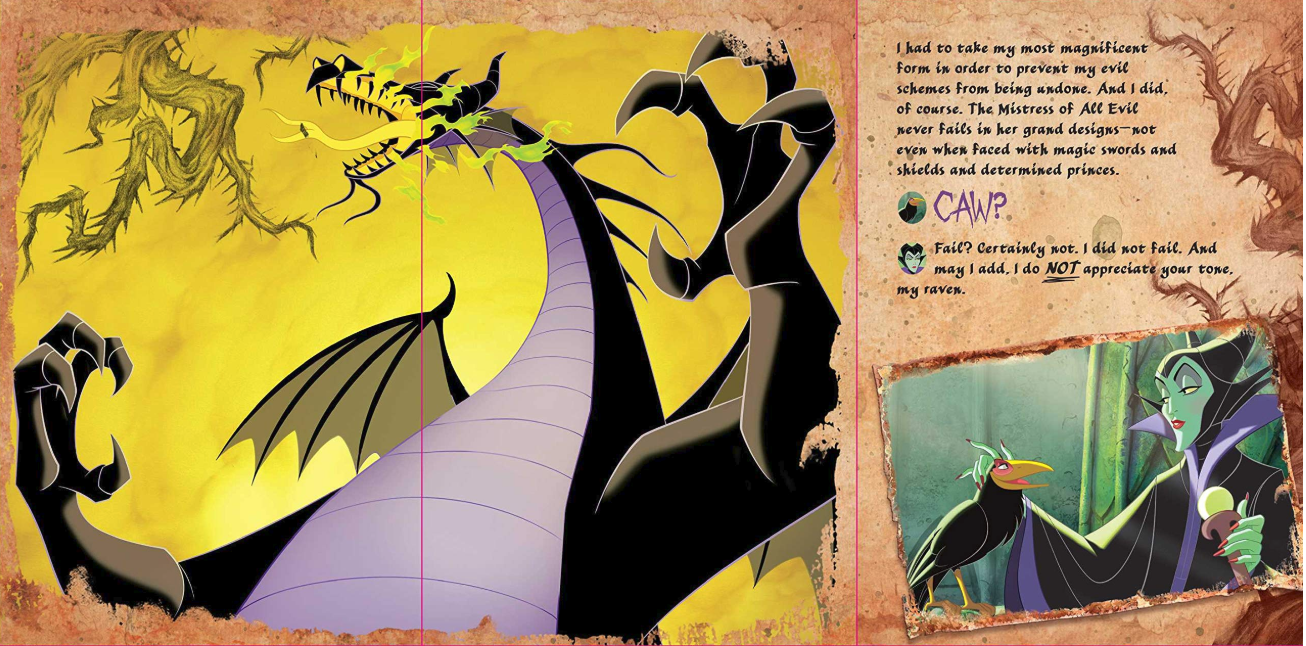
A villain acting vile is merely part of the job description . . . but which of Disney’s famed scoundrels is the evilest of them all? Dive into the devilish thoughts of The Evil Queen, Jafar, Ursula, and more as they recall their most wicked achievements. With gatefolds and lift-the-flaps, readers can dive into minds of the best of the worst in this fun read for Disney fans of all ages.

Villains Include…
Evil Queen (Snow White)
Jafar (Aladdin)
Mother Gothel (Rapunzel)
Lady Tremaine (Cinderella)
Ursula (The Little Mermaid)
Scar (Lion King)
Cruella De Vil (101 Dalmatians)
Gaston (Beauty and the Beast)
Malificent (Sleeping Beauty)
Queen of Hearts (Alice in Wonderland)
Captain Hook (Peter Pan)
Hades (Hercules)
Dr. Facilier (The Princess and the Frog)

Review: I must share that I am very bias when it comes to this one. I love Disney. Period. However, this book was even better than expected. I loved the highlight of the villains and how the book was set up as a character profile for each of them like a business resume as well as fun anecdotal information about each of them–including a lot of humor!

Teachers’ Tools for Navigation: I am so ready to use this book in my class as an argumentative or debate activity! Each section does a phenomenal job breaking down the evilness of each of the villains including their skills, possessions, education, work experience, likes, dislikes, and a random list of information about them. Using this information, students would make an argument for why their villain is the “evilest of them all.”

The book also would fit perfectly in a compare and contrast unit since each villain has the same topics highlighted.

Discussion Questions: 

  • Which villain do you think is the evilest of them all?
    • Why do you think they are more evil than ____?
  • Who is the foe of _____?
  • Which villain has the most impressive skills? Explain.
  • How did the author use humor in the book to lighten the mood?

Flagged Passages: 

Read This If You Love: Disney, Villains, Profile Books, Humor

Recommended For: 

classroomlibrarybuttonsmall 

Signature

**Thank you to Casey at Media Masters Publicity for providing a copy for review!**

We Are Grateful: Otsaliheliga by Traci Sorell

Share

We Are Grateful: Otsaliheliga
Author: Traci Sorell
Illustrator: Frané Lessac
Published September 4, 2018 by Charlesbridge Publishing

Summary: A look at modern Native American life as told by a citizen of the Cherokee Nation

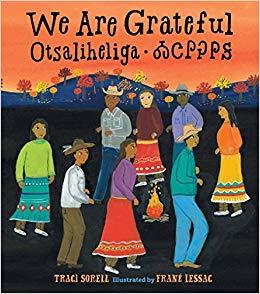
The word otsaliheliga (oh-jah-LEE-hay-lee-gah) is used by members of the Cherokee Nation to express gratitude. Beginning in the fall with the new year and ending in summer, follow a full Cherokee year of celebrations and experiences.

Appended with a glossary and the complete Cherokee syllabary, originally created by Sequoyah

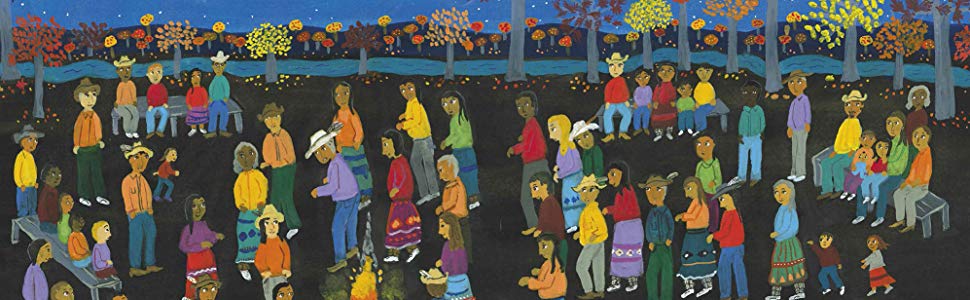
Review: This beautiful book makes for a wonderful read-aloud. I loved the repetition and the different things to be grateful for. The images are captivating, and I found myself slowing down as I read and turned each page. The seasons shift through the text, which offers great opportunities for discussion. Indigenous people are often perceived to be people of the past, but this book demonstrates that they are living, breathing people. The culture is very much alive. I’ll be gifting this book to several friends with young children.

Teacher’s Tool For Navigation: Students might list the different things that they are grateful for and draw accompanying pictures. It offers great opportunities for discussing how Native people still exists and are not relics of the past, reserved for discussions on Thanksgiving day.

Discussion Questions: How do the seasons change across the pages? How does this shift the story?; Describe the people you see on the pages. What can you learn from them?; Find three words that you don’t know. Learn what they mean and share their definitions with a peer.

We Flagged: “…while we collect buckbrush and honeysuckle to weave baskets.”

Read This If You Loved: The People Shall Continue by Simon J. Ortiz; Dreamers by Yuyi Morales; The Day You Begin by Jacqueline Woodson

Recommended For: 

readaloudbuttonsmall classroomlibrarybuttonsmall 

RickiSig

**Thank you, Donna, from Charlesbridge Publishing for sending a copy for review!**

Blog Tour with Review, Book Trailer, and Giveaway!: Eduardo Guadardo, Elite Sheep by Anthony Pearson

Share

Eduardo Guadardo, Elite Sheet
Author: Anthony Pearson
Illustrator: Jennifer E. Morris
Published October 1st, 2018 by Two Lions

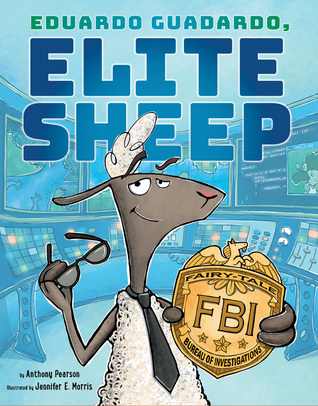
Summary: Eduardo Guadardo may look fluffy. He may look cute. But he’s no little lamb. He’s about to graduate from the FBI—that’s the Fairytale Bureau of Investigations—as an Elite Sheep. He knows five forms of kung fu, and he can outfox the foxiest of foxes. In fact, he’s so good they put him on his own case: to keep the farmer’s daughter, Mary, safe from Wolf, Troll, and Witch. It’s a job for somebody baaaaaaad—someone like a soon-to-be Elite Sheep. The thing is, protecting Mary isn’t quite as easy as Eduardo expected…

This imaginary backstory for “Mary Had a Little Lamb” is hilarious, action-packed, and filled with subterfuge (that means pulling the wool over your eyes, for you civilians).

About the Author: Anthony Pearson is not a spy. He’s not. We promise. He’s actually a school counselor, a child therapist, and the author of Baby Bear Eats the Night, illustrated by Bonnie Leick. But that didn’t stop him from digging for clues about “Mary Had a Little Lamb.” What he found made him imagine what could have inspired the rhyme: a sheep that is totally, absolutely, 100 percent in control of things … or maybe just 95 percent. And squirrels in sunglasses. Oh, and a witch flying a helicopter. But you didn’t hear about the Fairytale Bureau of Investigations from him. Anthony and his family live in deep cover in Georgia. Get more intel about him at www.AnthonyPearson.info. Twitter: @APearson_Writer

About the Illustrator: Jennifer E. Morris has written and illustrated award-winning picture books and has also illustrated children’s magazines, greeting cards, partyware, and educational materials. She has not illustrated classified documents nor is she a super secret agent. She is, however, the creator of May I Please Have a Cookie? which has infiltrated more than a million homes. If you say “The dove flies at noon,” she may tell you what the ducks recorded on their cameras. Maybe. But most likely not. Jennifer lives with her family in Massachusetts, just a few miles from the little red schoolhouse where “Mary Had a Little Lamb” originated. Read more of her dossier (that’s DAH-see-ay) at www.jenmorris.com. Twitter: @jemorrisbooks

Review: What a fun and quite smart idea! I didn’t know that I ever wondered how Mary got her lamb, but this backstory is one epic way for that nursery rhyme to come about! And Eduardo Guadardo is quite the character, and it really does give another outlook on why Mary’s lamb went to school with her. I also liked the additional layer that the author added to the story to show how arrogance does not lead to success and that even if you are good at something, if you can’t learn and work with others, you will not do well.

Teachers’ Tools for Navigation: Allusions, allusions, allusions! Eduardo Guadardo may be a backstory for Mary Has a Little Lamb, but so many other fairy tale and nursery rhyme characters are scattered throughout the book! Trent and I played a scavenger hunt for characters in the book and with older students who could do more discussions and analysis with these cameos.

Discussion Questions: 

  • What other fairy tale and nursery rhyme characters did you see in the book?
  • Why were the witch, troll, and wolf the bad guys in the story? What other stories are they the antagonists?
    • How did the author use your preconceived notions to trick you about these three in the end?
  • Why did Mary’s lamb follow her to school one day?
  • How did Mary trick Eduardo? What did the trick teach Eduardo?
  • Based on the final spread, what fairy tale are Eduardo and Mary going to take on next?
    • What do you think is going to happen?

Book Trailer: 

Read This If You Love: Fractured Fairy Tales!

Recommended For: 

classroomlibrarybuttonsmall 

Giveaway!

a Rafflecopter giveaway

Signature

*Thank you to Blue Slip Media and Two Lions for providing copies for review and giveaway!**

Blog Tour with Review and Giveaway!: Garbage Island by Fred Koehler

Share

Garbage Island
Author and Illustrator: Fred Koehler
Published October 9th, 2018 by Boyds Mills Press

Summary: Mr. Popli, the mouse mayor of Garbage Island, is always at odds with Archibald Shrew, a brilliant but reckless inventor. When Garbage Island, their home in the Great Pacific Garbage Patch, splits apart, they are trapped together in Mr. Popli’s houseboat, desperate to find their way back home. At first, they only argue, but when they face a perilous thunderstorm and a series of predators, they begin to work together and recognize – in themselves and in each other – strengths they didn’t know they had.

About the Author: Fred Koehler won a Boston Globe/Horn Book Honor Award for his illustrations for One Day, The End. He is the author-illustrator of How To Cheer Up Dad, which received three starred reviews, and he is the illustrator of This Book Is Not About Dragons and Puppy, Puppy, Puppy and Flashlight Night.  He lives with his children in Lakeland, Florida.

Visit the Garbage Island Boyds Mills Press page to view an interview about his inspirations and what’s coming next!

Praise: 

“In this series opener, a mouse and a shrew find themselves unlikely allies as they unite to save Garbage Island. The clever pairing of opposites adds humor, making the gradual emergence of friendship…all the sweeter. Dramatic black-and-white illustrations highlight key action. Exciting, fast-paced adventure and unexpected friendship in a “trashy” venue.” –Kirkus Reviews

“This adventurous tale is packed with action, examples of creative thinking, and ingenuity. Use this as an introduction to STEM thinking, a science fair project, a lesson on ecology, or simply read it for the enjoyment the story provides. This book will appeal to the adventure seeker, animal lover, explorer, and just about everyone else. A must-read for readers ready to strap in for a great ride!” – School Library Connection, starred review

“(With) fast-paced action and danger… this entertaining animal adventure stands out… because of its strong characters and an underlying message of environmental awareness.”–School Library Journal

Review: I love Archibald Shrew. He actually reminds me of Tinkerbell, specifically from the movie Tinkerbell and the Lost Treasure. Archie is a genius; he just is a genius that sometimes makes a mess when he is creating or may forget something essential if he’s brainstorming or might put him or someone else in danger if trying something new. But he is just so gosh darn lovable! From the very first page when we meet him, and he’s trying out his bicycle invention. Archie is obviously just ahead of his time. And while Mr. Popli starts off as a bit of a stern, uptight character, he is forced to see what is most important through this journey. Lastly, Merri. She is a special character who I connect with so much. She tries so hard to take care of everyone. She is never not helping or doing something; everyone can rely on her. But she also feels a lot of pressure to be a caregiver in so many different ways; so much that she pushes herself way too hard sometimes. It is because of these three characters plus the plot arc of Mr. Popli and Archie’s nearly always perilous adventure that this book is hard to put down. I know this is going to be one that Trent and I will read when he is a bit older: so much to unpack and just so entertaining!

Teachers’ Tools for Navigation: There is an Educator Guide available:

Discussion Questions: 

  • How did Mr. Popli change over the course of the book?
  • What did the egg teach Archie and Mr. Popli?
  • What are the differing character traits between Archie, Mr. Popli, Merri, and Edward? Similarities?
  • How does Archie effect the other characters at the beginning of the book? The end?
  • What part of the book surprised you?
  • How does the book promote environmental awareness?
  • Which of the opponents was the biggest foe for Archie and Mr. Popli? Explain why you think that foe was the toughest?

Flagged Passages: Chapter 3

“A week into his punishment for the sea-cycle incident, Archie had taken to his new routine with all the enthusiasm of a one-armed starfish. During the day, he did everything that was asked of him, but the work made him hungry, and the hunger made him grumpy. And still, his yearning for his workshop rose in his throat each evening like the moon in the sky.

Merrie had come to visit Archie each night at the Watchtower. She was the only bird left on Garage Island. He was the only shrew. In many ways, they were kindred. But Merri was an outsider because of her species. And she was sure that Archie was treated as an outsider because of his actions. If she could get him to see that, perhaps his life could improve. Her attempts to convince him turned into another argument.” (p. 30)

Read This If You Love: Anthropomorphic stories like Redwall by Brian Jacques, Silverwing by Kenneth Oppel, Seekers series by Erin Hunter, Mez’s Magic by Eliot Schrefer, Good Dog by Dan Gemeinhart, An Army of Frogs by Trevor Pryce;Fiction that promotes environmental awareness; Plastics Ahoy! by Patricia Newman

Giveaway!:

a Rafflecopter giveaway

Don’t Miss Out on the Other Blog Tour Stops!: 

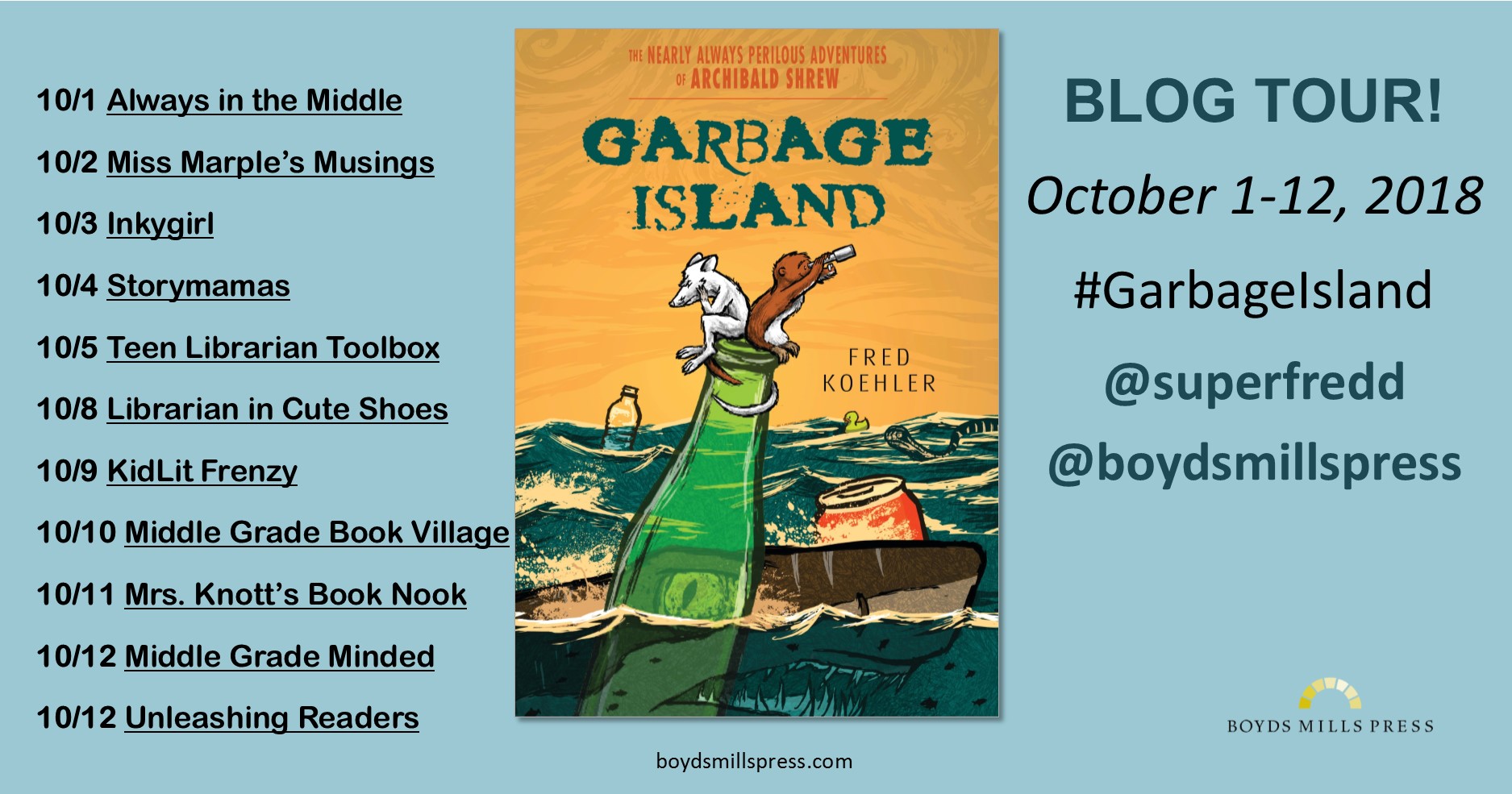
Mon 10/1           Always in the Middle
Tue 10/2             Miss Marple’s Musings
Wed 10/3           Inkygirl
Thu 10/4             Storymamas
Fri 10/5               Teen Librarian Toolbox
Mon 10/8           Librarian in Cute Shoes
Tue 10/9             KidLit Frenzy
Wed 10/10         Middle Grade Book Village
Thu 10/11          Mrs. Knott’s Book Nook
Fri 10/12             Middle Grade Minded
Fri 10/12            Unleashing Readers

Recommended For: 

classroomlibrarybuttonsmall 

Signature

**Thank you to Boyds Mills for providing copies for review and giveaway and for hosting the blog tour!**

The Astonishing Color of After by Emily X. R. Pan

Share

The Astonishing Color of After
Author: Emily X. R. Pan
Published: March 20, 2018 by Little, Brown

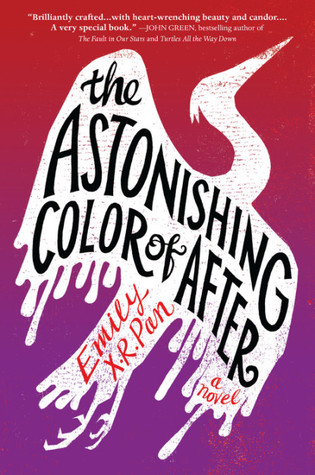
Goodreads Summary: Leigh Chen Sanders is absolutely certain about one thing: When her mother died by suicide, she turned into a bird.

Leigh, who is half Asian and half white, travels to Taiwan to meet her maternal grandparents for the first time. There, she is determined to find her mother, the bird. In her search, she winds up chasing after ghosts, uncovering family secrets, and forging a new relationship with her grandparents. And as she grieves, she must try to reconcile the fact that on the same day she kissed her best friend and longtime secret crush, Axel, her mother was taking her own life.

Alternating between real and magic, past and present, friendship and romance, hope and despair, The Astonishing Color of After is a novel about finding oneself through family history, art, grief, and love.

My Review: I just finished discussing this book with my class, and they loved it. It is a bit of a longer book and moves somewhat slowly, but even my students who didn’t finish it in time insisted that I should use it again next year. The writing is absolutely stunning. Pan depicts humanity in ways that are very powerful. She integrates color and emotion to connect readers to the characters. We had two one-hour class periods to discuss this book, and there were so many things to talk about. Discussion was easy, and students made meaningful connections with the book. This book is simply unforgettable. I recommend it highly and hope it wins some awards in January!

Teachers’ Tools for Navigation: My students said that they Googled the colors within the text as they read. We spent a lot of time talking about the colors as an effective writing tool. I asked students to think of a moment in their lives that they’d be willing to share. Then, I asked them to attach a color with the moment. They shared beautiful stories of working at drive-ins, meeting their SOs, visiting places with friends, etc. The colors they attached with the images were fascinating and made the stories come alive.

Discussion Questions: 

  • How does the author incorporate magical realism in the text? Is it effective?
  • Did Leigh and Axel’s relationship feel realistic to you? Why or why not?
  • Which scenes are beautifully written, and how do they demonstrate excellent writing?
  • Should we forgive Leigh’s father? Why might he make the decisions he makes?

We Flagged: “Once you figure out what matters, you’ll figure out how to be brave.”

Read This If You Loved: Goodbye Days by Jeff Zentner, When the Moon Was Ours by Anna-Marie McLemore, Miles Away From You by A. B. Rutledge, All the Bright Places by Jennifer Niven, Looking for Alaska by John Green, Forgive Me, Leonard Peacock by Matthew Quick

Recommended For:classroomlibrarybuttonsmall

  RickiSig

Vincent and Theo by Deborah Heiligman

Share

Vincent and Theo: The Van Gogh Brothers
Author: Deborah Heiligman
Published April 18th, 2017 by Henry Holt and Co.

Summary: The deep and enduring friendship between Vincent and Theo Van Gogh shaped both brothers’ lives. Confidant, champion, sympathizer, friend, Theo supported Vincent as he struggled to find his path in life. They shared everything, swapping stories of lovers and friends, successes and disappointments, dreams and ambitions. Meticulously researched, drawing on the 658 letters Vincent wrote to Theo during his lifetime, Deborah Heiligman weaves a tale of two lives intertwined and the love of the Van Gogh brothers.

About the Author: Deborah Heiligman has written many books for children, including National Book Award Finalist Charles and Emma: The Darwins’ Leap of Faith and The Boy Who Loved Math. She lives with her family in New York City.

AccoladesMichael L. Printz Award – Honor, School Library Best Books of the Year, CPL: Chicago Public Library Best of the Best, NYPL Books for the Teen Age, Booklist Editors’ Choice, YALSA Award for Excellence in Nonfiction Finalist, YALSA Award for Excellence in Nonfiction Winner, BCCB Blue Ribbon Award, Boston Globe – Horn Book Award, Kirkus Best Teen Books of the Year, Publishers Weekly Best Books of the Year, Texas TAYSHAS High School Reading List, Horn Book Magazine Fanfare List

Praise: 

“A remarkably insightful, profoundly moving story of fraternal interdependence and unconditional love.” —Kirkus, starred review

“A breathtaking achievement that will leave teens eager to learn more.” —School Library Journal, starred review

“In fittingly painterly language, Heiligman offers vivid descriptions of Vincent’s artwork and life, which grow more detailed and colorful as Vincent’s own artistic style becomes richer and more refined . . . This illuminating glimpse into the van Goghs’ turbulent life and historical period will add compelling depth to readers’ understanding of the iconic painter. ” —Booklist, starred review

“A unique and riveting exploration of art, artists, and brotherly love.” —The Horn Book, starred review

“An intensive exploration of their turbulent lives” —Publishers Weekly, starred review

“This title is a treasure for readers who want to immerse in a roiling domestic drama and who don’t back away from a good cry” —The Bulletin, starred review

Review: I could not stop talking about this book while I was listening to it. That, and that I couldn’t stop listening to the book–I would listen whenever I could, show me what a fabulous book it was. Hieligman does an amazing job making Vincent and Theo’s story come to life through such emotional narrative that the reader cannot help but feel as if we are living alongside the Van Gogh brothers. As someone who loves learning about history and art as well as an interest in brain health, this was a story that was more fascinating than I can even describe.

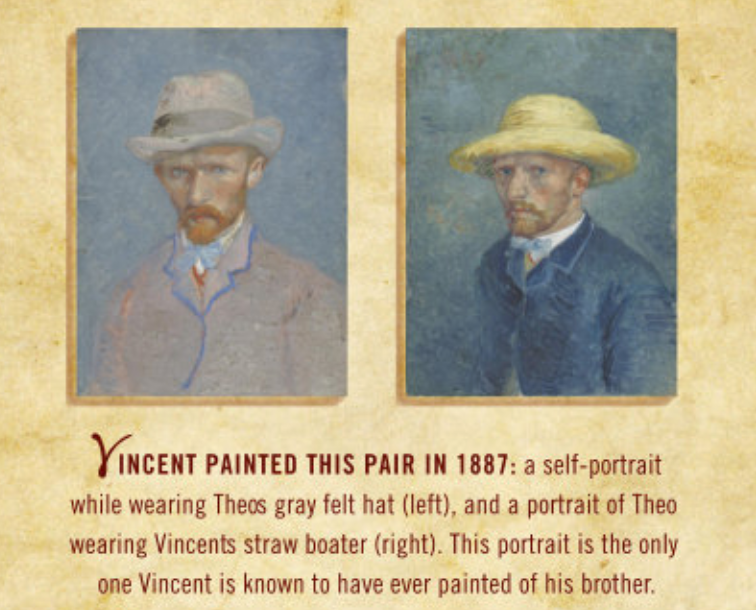
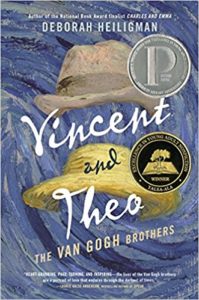
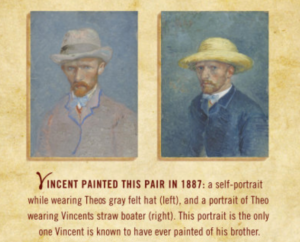
Also, I feel personally connected to this book in a fun way. In November, 2016 Deborah Heiligman and I had a dinner at NCTE, and we got talking about art since she had just finished Vincent and Theo. If you didn’t know, my dad has a BA in Art History and a MFA in Museumology and runs art museums (currently the LSU Museum of Art), so I have grown up around art museums my whole life and with art as a big part of it. One of the things we spoke about is the new information that a painting thought to be a self-portrait (right below) was actually the only known painting of Theo Van Gogh that Vincent painted. One thing that made it hard to determine this was that Theo is wearing the straw hat that Vincent is known to wear while Vincent is wearing Theo’s business felt hat. And this is where Deborah’s question came in: “The hats on the cover matched the hats the men are wearing in the photo although those are not actually their hats. Does it matter?” Now although I love art, I am not the expert, so I offered to ask my dad, and he responded with, “I like the cover as it is. I think it causes a questioning that evidences the new research in an interesting way. It defies previous thoughts and expectations.” Thus the cover stayed as is with an explanation on the jacket (below).
But I think what can show you about the book more than just me raving is all of the awards it received, ⇑ see above, and all of the amazing information about how Deborah researched for the book, ⇓ see below, and of course an excerpt from the book, ⇓ also below.

Teachers’ Tools for Navigation: View Deborah Hieligman’s research for Vincent and Theo and view all the articles & interviews about the book to use with students when reading this nonfiction text. There is so much that can be done with this story and the author’s writing process; use this amazing text in your classrooms, have it in your libraries, read it yourself–however you see fit, but read and share it!

Discussion Questions: 

  • How were Vincent and Theo’s life parallel with each other?
  • In what way were Vincent and Theo’s view of love part of their downfall emotionally?
  • Looking at the two portraits above and after reading the article about the portrait being of Theo, what do you believe? What similarities and differences do you see between the two?
  • How did Deborah Hieligman take all of the letters and research she did and turn them into a narrative?
  • I described this book to my sister as “A love story about two brothers.” Why would I call it a love story?
  • How did Theo’s short but mighty marriage set up for the current popularity of Vincent Van Gogh?
  • Why did it take so long for Vincent to find art?
  • In what way did finding friends in the impressionist art community help Vincent as an artist?

Flagged Passages: 1. TWO BROTHERS, ONE APARTMENT, PARIS, 1887

There was a time when I loved Vincent very much, and he was my best friend, but that’s over now. —Theo van Gogh to his sister Willemien, March 14, 1887

THEO’S BROTHER VINCENT has been living with him for just over a year, and Theo cannot take it anymore.

It is “almost intolerable for me at home,” he writes to their sister Wil in March 1887. Even though Theo has moved them to a larger apartment, this one still feels too small to hold Vincent’s outsized personality and Theo’s desperate need for quiet. He’s dying to tell Vincent to move out, but he knows if he does, Vincent will just be more determined to stay.

Dogged. Contrary. Stubborn. Vincent.

Theo van Gogh is the manager of Goupil & Cie, a successful art gallery on the fashionable Boulevard Montmartre in Paris. Theo is good at his job, but it’s terrifically frustrating for him right now. The owners of the gallery want him to sell paintings in the traditional style because they’re popular and bring in money. Though Theo certainly needs to make money—he has to support himself and Vincent and help their mother—he wants to sell art that is truly exciting to him, paintings by the Impressionists and their crowd, friends of his and Vincent’s: Émile Bernard, Paul Gauguin, Claude Monet, and Henri de Toulouse-Lautrec. Soon, maybe even paintings by Vincent himself.

But these modern painters don’t bring in enough money, so it’s a constant battle with his bosses. Theo haspersuaded them to let him set up a little display of Impressionists on the entresol. The entresol is not the ground floor, and it’s not the first floor. It’s the floor in between. It’s as if the paintings are there, but not quite yet, a glimpse into the future. It’s a start. But he spends his days working hard and comes back to the apartment at 54 Rue Lepic exasperated and exhausted. What he needs at home is rest and peace, but instead he gets VINCENT.

Theo loves his brother’s brilliant mind, his gregariousness, even his fiery temperament. Vincent can be a good antidote to Theo’s own inwardness and tendency to melancholy.

But after so many months of the cold Parisian winter spent indoors with Vincent, Theo is a wreck both mentally and physically. A few months back, in December, he was actually paralyzed—he couldn’t move at all for a few days. Although Theo knows he can’t blame his bad health on his brother, to get better he needs a break from Vincent’s gusts, his squalls, his constant talking and lecturing.

And, to make matters worse, lately Vincent has been furious at him. “He loses no opportunity to let me see that he despises me and I inspire aversion in him,” Theo tells Wil.

A portrait done of the brothers at this time would be sizzling with streaks of red-orange paint.

* * *

WHEN VINCENT AND THEO were young, growing up in the village of Zundert in the Netherlands, their father, a pastor, had written a special prayer. All the Van Gogh children had to memorize it and recite it when they left home:

“O Lord, join us intimately to one another and let our love for Thee make that bond ever stronger.”

Theo has valiantly been living up to that prayer. He’s been Vincent’s best friend for most of the last fifteen years, ever since they made a pledge to each other on a walk. And through many ups and downs and storms, for the past seven years, Theo has been giving Vincent money for paint, pencils and pens, ink, canvases, paper, clothing, food, and, until he moved in, rent.

On March 30 Vincent turns thirty-four; on May 1 Theo will be thirty. They’ve made it this far in their journey together—how can Theo kick him out now?

* * *

VINCENT AND THEO VAN GOGH look a lot alike: They both have red hair, though Vincent’s is redder, Theo’s more reddish blond. Vincent has freckles; Theo does not. They are both medium height—around five feet seven—but Vincent is broader, bigger; Theo slighter, thinner. They have pale blue eyes that sometimes darken to greenish blue. They are definitely brothers.

But they couldn’t give more different impressions.

Vincent in his workman’s clothes spends his days painting, outside if it’s not too cold, or inside the apartment. He is covered with Parisian soot and grime, overlaid with splatters and spatters of paint: ochre, brick red, orange, lemon chrome, cobalt blue, green, black, zinc white.

He doesn’t bathe often, which is typical for a nineteenth-century man, but it’s even less often than he should. He stinks—of body odor, dirt, food, paint, turpentine, wine, and tobacco. He usually has a pipe in his mouth, though he has very few teeth left, and those that are left are rotten.

And yet Vincent looks healthy: he’s robust, sturdy, and vehemently alive. Passion pours from him, as if the world he’s trying to capture is inside him, bursting to come out.

Theo is tidy, well dressed in a suit, looking very much the proper Parisian businessman. His features are finer, more refined. He would be handsome if he weren’t so sick: he’s thin and pale; he looks as though the life is being sucked out of him. He feels that way, too.

* * *

IN MANY WAYS, Vincent’s move to Paris has been good for both brothers. Thanks to Theo’s influence, to the artists he’s met, and to his own tenacious work, Vincent’s paintings are better than ever: they are imbued with color and light and Vincent’s own particular style.

And Vincent has given Theo more of a life. He’d been lonely in Paris, so lonely, and now, even though he doesn’t have a wife and family, Theo at least has a circle of friends through Vincent. For that he is grateful. So even though he’s desperate, Theo doesn’t kick out his brother. Yet.

In April, Theo acknowledges to another sister, Lies, that he’s been ill, “particularly in my spirit, and have had a great struggle with myself.” If he were well, he could deal with Vincent.

In fact both brothers do better with sun and warm air and hours spent outside. The Parisian days are getting longer—by minutes, anyway. If only spring would arrive! But there’s still too much gloom outside and in.

Gloom and fire.

It’s as if there are two Vincents, Theo has told Wil. He knows both sides of his brother very well. Sometimes Vincent is ebulliently happy and kind, sometimes furiously angry and difficult. He has a huge heart, but he’s stubborn and argumentative.

Vincent argues not only with Theo, and with himself, but also with friends and people he admires. One cold and fiery night in the near future, Vincent will fight with another roommate. And that argument will end in blood.

Read This If You Love: History, Art, Brain health, Van Gogh, Heiligman’s writing

Recommended For: 

classroomlibrarybuttonsmall 

Signature