Review and Interview!: Star Challengers: Moonbase Crisis by Rebecca Moesta and Kevin J. Anderson

Share

moonbase

June Scobee Rodgers presents
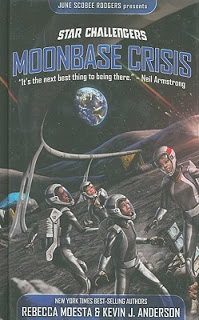
Star Challengers: Moonbase Crisis
Authors: Rebecca Moesta and Kevin J. Anderson
Published October 22nd, 2010 by Catalyst Game Labs

Goodreads Summary: After an exhilarating space simulation field trip at the local Challenger Center, a group of students are hand-picked by the mysterious Commander Zota for a special adventure: to travel to the future and a real moonbase in trouble, where they will learn skills to save the human race.

My Review: Since I live in Florida, I am right in the middle of the NASA debate. Some feel that the science behind NASA and space exploration is not worth the money where others completely disagree. There are others who are somewhere in the middle, not knowing. To me, losing the space program is terrifying and the authors of this book take the same stance as me.

Moonbase Crisis is a book written by Rebecca Moesta and Kevin J. Anderson but it is presented by June Scobee Rodgers, the widow of a commander on the Challenger, and endorsed by many NASA legends such as Buzz Aldrin, Neil Armstrong and Sally Ride. It is also a direct endorsement for Challenger Centers which are centers across the US that teach kids about space and hope to inspire them by letting them experience simulated space missions. That is where this book begins.

JJ and Dylan Wren are invited to a special space simulation after going on a field trip to the Challenger Center. When they arrive the find out that they are 2 of 4 young people chosen to be part of this mission. They are taught how to use actual communication devices and even put on real space suits. Then Commander Zota, the man who invited them, asks them to step into a room and next thing they know they find themselves on a Moonbase. In the future.

Then on top of all of this, it is a pretty good story with some major suspense. I look forward to the 2nd book as this was obviously an exposition for more to come.

Teacher’s Tools For Navigation: Throughout this book, science is definitely a main topic. It is sprinkled throughout discussing astronomy, botanical sciences, chemistry, and more I am sure. Though the book is science fiction, the science within in pure fact. The book shows a future where science and space exploration are not priorities and hopes to promote science by showing how important it is.

My father gave me this book as a gift and was kind enough to connect me with Ms. June Scobee Rodgers who helped make this book happen. Ms. Scobee Rodgers is the widow of Challenger Space Shuttle Commander Dick Scobee and has spent her life making sure his legacy and NASA continue for years to come. I was lucky enough to be given an opportunity to interview her about the Star Challengers series and the Challenger Center programs:

Kellee: After the Challenger tragedy, yourself and other family members of lost Challenger astronauts opened the Challenger Center to honor them. Why was it decided to use their memory to focus on the education of children?

Ms. Scobee Rodgers: The Challenger 51-L mission soon became the “Teacher in Space” mission. The teacher Christa McAuliffe and I had a great deal in common as teachers. My husband Dick Scobee the Commander had always been mission oriented.  So after we lost the “mission” the other family members of the shuttle crew joined with me to create an opportunity to reach the students and teachers around the globe still waiting for their lessons from the beloved school teacher who died along with my husband.

Kellee: What is your goal when it comes to the Challenger Centers?

JSR: Our board of directors and staff as well as all the Challenger Learning Centers all want to continue to reach students to inspire them with the importance of STEM education and the pursuit of careers with a tremendous shortage in those fields.

Kellee: How did the Star Challengers books come about?

JSR: Introduced through a mutual friend to famous author Kevin Anderson and his wife Rebecca, we explored opportunities to tell the Challenger story and STEM education with real science fiction that would both entertain and teach as well as inspire our youth across the country.

Kellee: As an educator and advocate for children’s education, what do you say to those who don’t believe that NASA and space exploration is beneficial for the future?

JSR: The largest concerns facing us as citizens right now are jobs and the economy. Job and economy growth is the direct outcome of new businesses, products and processes which since the end of World War II were created from our focus and investments in technology, engineering, research and science. And that can only happen when you have a citizenry and workforce with the talent to perform this vital role. Since 50% of all potential future scientists, engineers, technicians and similar key workforce tend to decide by the early age of 10-13 years that they either cannot do it or do not want to, we need to continue to expand our efforts to inspire and engage all of them. Even if they choose not to enter those fields. We need a STEM literate citizenry to ensure we hold the correct values for our society.

Kellee: What do you hope comes from the publication of the Star Challenger books?

JSR: I hope to inspire a whole new generation of “Star Challengers” – young people like our main characters who want to make a difference for our planet and who will reach for the stars no matter their circumstances.

Kellee: How do you hope they are used in the classroom? With children?

JSR: Students are now creating book reports and reading the books for pleasure. It would be terrific if the books could be made available in classroom sets to allow for classroom discussion.

Kellee: I loved Moon Base Crisis and cannot wait to read the second one- how many books are planned in the series?

JSR: The second book is titled Space Station Crisis, and the third is Asteroid Crisis. We need students to write the follow on books.  For example, Mars City Crisis is waiting to be written by an enterprising young person.

 **Thank you so much to Ms. Scobee Rodgers for taking part in this interview!**
Links to information about the Challenger Centers and NASA For Educators:
 

Discussion Questions: 

  • Currently, there is a search for a young writer to write Mars City Crisis for the Star Challengers series- what would you make the book about?
  • If you had the chance to go live on the space station, would you? 

We Flagged: “Also,” the commander pointed out, “the Moon is near a quarter of a million miles from Earth, while the speed of our signal – the speed of light – is a mere 186,282 miles per second. Therefore it takes 1.3 seconds for a message to travel from Earth to the Moon, which will produce a noticeable lag when you talk to anyone at Moonbase Magellan.” (p. 26)

“Zota continued as if he hadn’t heard. “Because of the Moon’s lack of atmosphere, walking on its surface will be like stepping out into a hard vacuum  Your spacesuit maintains your body’s integrity. If your suit fails, your tissues explode and freeze. We wouldn’t want that now, would we?” The cadets shook their heads.” (p. 37)

Read This If You Loved: Zita the Spacegirl by Ben Hatke, The Softwire by PJ Haarsma, C.H.A.O.S. by Jon S. Lewis, Nonfiction books about space

Recommended For: 

readaloudbuttonsmall classroomlibrarybuttonsmall litcirclesbuttonsmall

 I think this book is a great resource for the classroom;
I hope you fill find a way to use it!

Signature

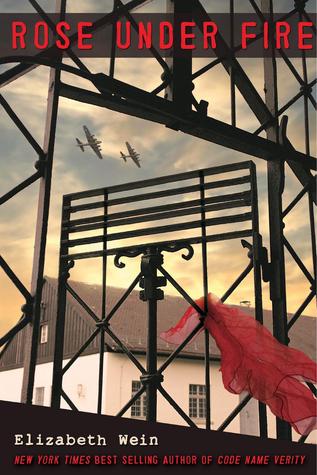
Rose Under Fire by Elizabeth Wein

Share

17262236
Title: Rose under Fire
Author: Elizabeth Wein
Expected Publication: September 10th, 2013 by Miramax (Disney)

Summary: While flying an Allied fighter plane from Paris to England, American ATA pilot and amateur poet, Rose Justice, is captured by the Nazis and sent to Ravensbrück, the notorious women’s concentration camp. Trapped in horrific circumstances, Rose finds hope in the impossible through the loyalty, bravery and friendship of her fellow prisoners. But will that be enough to endure the fate that’s in store for her?

Elizabeth Wein, author of the critically-acclaimed and best-selling Code Name Verity, delivers another stunning WWII thriller. The unforgettable story of Rose Justice is forged from heart-wrenching courage, resolve, and the slim, bright chance of survival.

Review: Out of the thousands of books I’ve read, this one is going to sit among my all-time favorites. There is a phenomenal balance of history and narrative that will engage readers while offering harrowing lessons in history. I am not an air and space girl. My husband loves planes, and he was giddy when we went to the Smithsonian Air and Space Museum in Washington D.C. As much as I want to love planes, I don’t find them to be interesting. This book changed my outlook.

Rose under Fire has many similarities with Wein’s Code Name Verity. They are both written in an epistolary format, involve pilots/airplanes, and are set during World War II. Both offer wonderfully complex themes about friendship, loyalty, and the strength of women. However, Rose under Fire focuses more on concentration camps, while Code Name Verity dealt more with the interrogation techniques used during World War II. Neither of these two elements drove the novels, but they are two plot features that make the texts quite different from one other. I found CNV to be a bit slow in the beginning (which isn’t the case with all readers), but I was hooked to Rose under Fire from the very first page. Wein writes characters so vividly that I still feel their presence in my life, long after I finish the books. I recommend this book to everyone. It will appeal to readers of all ages, backgrounds, genders, and interest levels.

Teacher’s Tools for Navigation: Teachers, this is a MUST-HAVE book. It is phenomenally written and shows the truly complexity of young adult literature. It can be used to teach elements like setting, character, dialogue, the epistolary format, imagery, voice, and theme. Students might write letters back to Rose, or they could analyze one of the many well-developed characters in this story. It would also make for a great research unit of topics like the Nuremberg Trials, female WWII pilots, flying bombs, or the experimentation on Holocaust prisoners. History teachers will also find this text to be invaluable.

Discussion Questions: What loyalties did the Holocaust prisoners have for each other? What are some examples of incidents that showed this loyalty?; Why were the Rabbits so important to the concentration camp? What did they add to the story as a whole?; How does Maddie’s friendship with Rose differ from her friendship with Julie?; Why was Nick’s character important throughout the story? How does his level of importance change, and why?; Rose has very different friendships with many of the characters. Describe how three of these friendships differ from one another.; Does the novel end in a hopeful way? Why or why not?

We Flagged: I marked so many passages that it is hard to choose just a few, so I selected two longer quotes that show the quality of Wein’s writing.

Incredible Imagery:

“…and the reason everyone in there was trying to get out in the rain was because they were dying of thirst.

Really dying of it, I think.

Hands and arms and heads stuck out anywhere there was a gap—cupped hands collecting rainwater, some holding bowls or even just a piece of cloth to collect moisture—I saw one woman lying on her back with her hair in the black cinder mud at the tent’s edge, her mouth open, letting a rivulet of water stream down the canvas and into her mouth.”

And Beautiful Figurative Language:

“Hope—you think of hope as a bright thing, a strong thing, sustaining. But it’s not. It’s the opposite. It’s simply this: lumps of stale bread stuck down your shirt. Stale gray bread eked out with ground fish bones, which you won’t eat because you’re going to give it away, and maybe you’ll get a message through to your friend. That’s all you need.

God, I was hungry.”

Please note: The above quotes are from the Advanced Reader Copy. The e-book (a galley) did not provide page or chapter numbers. The quotes may change when the book is published.

Read This If You Loved: Code Name Verity by Elizabeth Wein, Between Shades of Gray by Ruta Sepetys, Nazi Hunters by Neal Bascomb, Night by Elie Wiesel

Recommended For:

 litcirclesbuttonsmall closereadinganalysisbuttonsmall classroomlibrarybuttonsmall

026F3FBCC8C3913BD3A4D3F6920340D5

Thank you to NetGalley and Disney for sending me the Advanced Reader Copy!

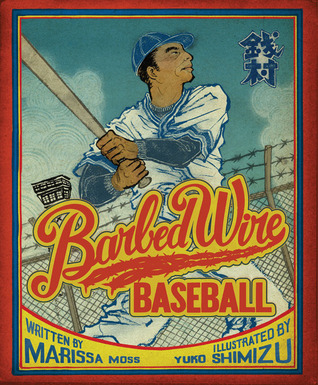
Barbed Wire Baseball by Marissa Moss

Share

NF PB 2013

Nonfiction Picture Book Wednesday

Nonfiction Picture Book Wednesday is hosted by Kid Lit Frenzy and was started to help promote the reading of nonfiction texts. Most Wednesdays, we will be participating and will review a nonfiction text (though it may not always be a picture book).
Be sure to visit Kid Lit Frenzy and see what other nonfiction books are shared this week!

barbed

Barbed Wire Baseball
Author: Marissa Moss
Illustrated by: Yuko Shimizu
Published April 9th, 2013 by Harry N. Abrams

Goodreads Summary: As a boy, Kenichi “Zeni” Zenimura dreams of playing professional baseball, but everyone tells him he is too small. Yet he grows up to be a successful player, playing with Babe Ruth and Lou Gehrig! When the Japanese attack Pearl Harbor in 1941, Zeni and his family are sent to one of ten internment camps where more than 110,000 people of Japanese ancestry are imprisoned without trials. Zeni brings the game of baseball to the camp, along with a sense of hope.

This true story, set in a Japanese internment camp during World War II, introduces children to a little-discussed part of American history through Marissa Moss’s rich text and Yuko Shimizu’s beautiful illustrations. The book includes author and illustrator notes, archival photographs, and a bibliography.

Review: World War II is the most infamous war and it is taught to all students at some point in their career. They learn about Pearl Harbor and the Atomic Bomb and the Holocause and Hitler, but way too often what happened here in the US is not discussed. All of the Japanese Americans living on the West Coast of the US (62% were US citizens) were interned because our fear overwhelmed us so much that it was the only solution that seemed plausible. I felt that the fear that was felt after the Pearl Harbor bombings is very similar to what was felt 12 years ago today.

Barbed Wire Baseball does discuss the internment camps, but I think that the theme of this book is not about the camps but about how a love of something can turn a poor situation into something else if you are determined.

The story is just one part of the book. What moves it to a higher level is the author and illustrator. Marissa Moss has someone captured the tone of the story. It begins with hopefulness then to hopelessness and finally back to joyousness. Her ability to manipulate the tone throughout makes the story touch the reader even more. Yuko Shimizu’s illustrations are done with a Japenese calligraphy brush and ink adding to the connection the reader will feel with the story. Just beautiful.

Teacher’s Tools for Navigation: I think this book mostly leads to a discussion about the historical event that is shared in the book. In my classroom, I would share it as a read aloud and then jump into a discussion about Zeni, baseball, the internment camps, and World War II. The bibliography in the back of the book gives great websites to visit to continue the discussion.

Discussion Questions: Zeni doesn’t listen to his parents and went for what he wanted: baseball. He overcame his height and those who didn’t believe in him and was able to work towards his dreams. What is something that you’ve overcome even though others didn’t believe in you?; How can you compare/contrast how US citizens responded to Japanese Americans after Pearl Harbor to how US citizens responded to American Muslims after 9/11?

We Flagged: “Zeni stood staring at the dry earth, which was broken up every now and then by a few scrubby bits of green. In all the brown and gray, with a dull, coppery sky overhead, he felt as if he were shrinking into a tiny hard ball.

There was only one thing that could make the desert camp a home – baseball. Zeni unpacked his favorite photo, the one that showed him in uniform, lined up with baseball legends Babe Ruth and Lou Gehrig towering like redwood trees beside him. He had played with the Yankee stars in an exhibition game back home in Fresno, and he hadn’t felt small at all. He pinned the picture up over his bed. He was going to play baseball again. Here, in the desolate middle of nowhere.” (p. 9-10)

Read This If You Loved: Something to Prove by Robert Skead, Silent Star by Bill Wise, Brothers at Bat by Audrey Vernick, Keeping Score by Linda Sue Park, Nonfiction books about World War II or Japanese Internment Camps

Recommended For: 

readaloudbuttonsmall classroomlibrarybuttonsmall closereadinganalysisbuttonsmall

Signature

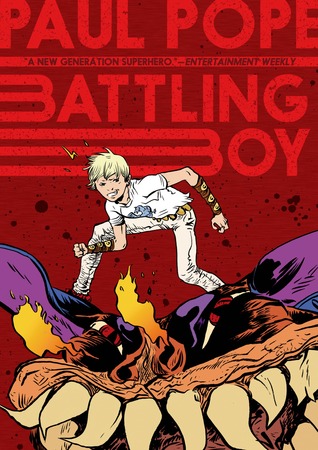
Battling Boy by Paul Pope

Share

battling

Battling Boy
Author and Illustrator: Paul Pope
Expected publication October 8th, 2013 by First Second

Goodreads Summary: The adventure begins in the new graphic novel by comics legend Paul Pope.

Monsters roam through Arcopolis, swallowing children into the horrors of their shadowy underworld. Only one man is a match for them – the genius vigilante Haggard West.

Unfortunately, Haggard West is dead.

Arcopolis is desperate, but when its salvation comes in the form of a twelve-year-old demigod, nobody is more surprised than Battling Boy himself.

IT’S TIME TO MEET AN ELECTRIFYING NEW HERO.

My Review: I am always impressed when an author can not only make an entire new world, but also new mythology. That is exactly what Paul Pope does in his new graphic novel (will be a series).  Arcopolis is a terrifying apocalyptic-esque town where you cannot walk around at night and you are always being watched by monsters. The setting is what makes this story really able to happen.

When reading, I could tell that Paul Pope is a “comic mastermind” because this story is set up very much like a traditional comic (good vs. evil, superheroes); however, there is a new twist on it because our hero is an underdog. This makes the reader root for him even more.

Warning: Cliffhanger ending! Battling Boy better be the first in a series, because I am dying to know what happens!

Teacher’s Tools For Navigation: This book will be loved in middle and high school classroom libraries. Pure comic book fans will love it, fantasy fans will love it, and adventure fans will love it.

Discussion Questions: Battling Boy lets the town believe he did something that he really didn’t – was this the right choice?; How do you think Aurora will play a part in the adventure?; Do you think Battling Boy is going to be able to save Arcopolis?

We Flagged: “The public ceremony of mourning for Haggard West was scheduled for one day… It was extended to three. The private funeral followed. A somber affair by necessity closed-casket.. and it rained. The tomb of the fallen hero. She stood under the umbrella wearing her public face… She learned long ago the special responsbilities of being a hero’s daughter… She wouldn’t allow herself to cry in public. Waves of faces in the rain.” (p. 52-53)

Check out Previews World’s Sneak Peek of Battling Boy to see some of the epic artwork.

Read This If You Loved: Amulet (series) by Kazu Kibuishi, Olympians (series) by George O’Connor, Foiled (series) by Jane Yolen, The Last Dragon by Jane Yolen
[These are adult graphic novels, but very similar feeling with mythology and epic stories] Sandman (series) by Neil Gaiman, Fables (series) by Bill Willingham, The Book of Magic by Neil Gaiman

Recommended For: 

classroomlibrarybuttonsmall

Signature

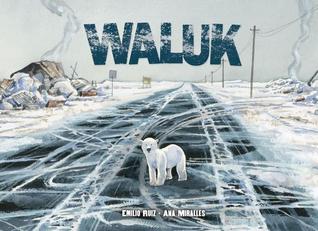
Waluk by Emilio Ruiz

Share

waluk

Waluk
Author: Emilio Ruiz
Illustrator: Ana Miralles
Expected publication November 1st, 2013 by Delcourt

Goodreads Summary: Young Waluk is all alone. His mother has abandoned him, as is the way of polar bears, and now he must fend for himself. But he doesn’t know much about the world—and unfortunately, his Arctic world is changing quickly. The ice is melting, and food is hard to find.

Luckily, Waluk meets Manitok, a wise old bear with missing teeth and a bad sense of smell. Manitok knows many survival tricks, and he teaches Waluk about seals, foxes, changing seasons, and—when Manitok is caught in a trap—human beings. Has Waluk learned enough from his friend to find a way to save him?

My Review: I’m always a big fan of books that books that tell a great story, but also teaches the reader something – Waluk fits this description.

I love that this story is told in a graphic novel because it allows us to see what Waluk is experiencing. I think this is really important because many readers will not be familiar with the setting and animals.

Additionally, there are nonfiction aspects where global warming and human impact on polar bears is discussed even with a bibliography in the end for students who want to learn more.

Teacher’s Tools For Navigation: I would love to read this graphic novel aloud to my class just to discuss with them the environmental aspects of the book. I think the story really brings global warming and the threat polar bears feel to life. Also, the story would be a great way to discuss point of view/perspective since the story is told from Waluk’s point of view.

Discussion Questions: How is global warming threatening polar bears?; What type of character traits must Waluk have to be willing to go save Manitok?

We Flagged: Manitok “If you want to be like the great Nanook, you’ll have to feed on seal blubber and whale fat.”
Waluk “Sure. Like it’s that easy. The seals laugh at me. Not even the puny lemmings are afraid of me.”
Manitok “Nah, that’s no problem, Buddy. I’m Manitok! Descended from the legend of the great whit bears. I know how to hunt anything.”
Waluk “Really?”
Manitok “Of course! Seals, walruses, belugas, lemmings, razorbills, humans–”
Waluk “Then why are you so thin?”
Manitok “Well, it’s age… see, I’m not as good as I used to be. Frankly, it’s been a while since I’ve gorged on sea lion – taken him down with my fangs, ya know, like it’s no big deal.” (p. 18)

Read This If You Loved: Seekers (series) by Erin Hunter, Nonfiction books about global warming or polar bears, Neversink by Barry Wolverton, [For further POV discussions] Who Stole Mona Lisa? by Ruthie Knapp and The Day the Crayons Quit by Drew Daywalt

Recommended For: 

classroomlibrarybuttonsmall readaloudbuttonsmall

Signature

**Thank you to Netgalley and Lerner Publishing Group (Graphic Universe) for providing the e-galley!**

Living with Jackie Chan by Jo Knowles

Share

17262306

Living with Jackie Chan
Author: Jo Knowles
Expected Publication: September 10th, 2013 by Candlewick Press

Summary: After fathering a baby, a teenager moves in with his karate-loving uncle and tries to come to terms with his guilt — and find a way to forgive.

This isn’t how Josh expected to spend senior year. He thought he’d be hanging out with his best friends, Dave and Caleb, driving around, partying, just like always. But here he is, miles from home — new school, new life, living with his Jackie-Chan-obsessed uncle, Larry, and trying to forget. But Josh can’t forget. So many things bring back memories of last year and the night that changed everything. Every day the pain, the shame, and the just not knowing are never far from his thoughts. Why is he such a loser? How could he have done what he did? He finds some moments of peace when he practices karate with Stella, the girl upstairs and his one real friend. As they move together through the katas, Josh feels connected in a way he has never felt before. He wonders if they could be more than friends, but Stella’s jealous boyfriend will make sure that doesn’t happen. And maybe it doesn’t matter. If Stella knew the truth, would she still think he was a True Karate Man? Readers first met Josh in Jumping Off Swings which told the story of four high school students and how one pregnancy changed all of their lives. In this companion book, they follow Josh as he tries to come to terms with what happened, and find a way to forgive.

Ricki’s Review: Jumping off Swings is a favorite in my classroom, so I was very excited to read this companion text. I always wondered what happened to Josh, and this novel shows the other side of the story. In many ways, Jo Knowles makes this story unpredictable for readers. When Josh meets Stella, the reader anticipates this novel will progress similarly to other novels with a budding romance. But instead, the two characters develop a deep, meaningful friendship that feels much more important than a love connection. Stella’s mother neglects her, and she submits to her boyfriend’s emotional abuse. In a way, she needs healing just as badly as Josh does. Larry, at first, seems to be a minor character with his goofy grin and karate moves, but as the story progresses, his depth of character is apparent. He isn’t a secondary character who plays second fiddle. Instead, he drives Josh’s healing process. There is so much to think about and discuss in regards to this text. It is beautifully written, and the characters will stick with me.

Kellee’s Review: I can’t say enough great things about this novel as it helped me out of my latest reading slump! I also think it is interesting because I read Jackie Chan before reading Jumping Off Swings, and I think that may have changed my perspective. It is interesting to think about how the different order of reading can change how you view a book. I went in with no expectations because I didn’t even know what had happened to Josh, so I think that the reveal of that secret was bigger for me than if I’d read it in the other order. Because I was naive about the past, I went in with no past feelings for Josh and really just hoping for the best for him. I found myself struggling with him and crying with him because his hurt was so deep. Though Stella and Larry enter his life, I didn’t think he’d let them in, but instead, they become a huge part in him healing. I really loved Living with Jackie Chan (as well as Jumping off Swings which I read immediately after finishing Jackie Chan). Jo Knowles always impresses me with her ability to tell tough stories in ways that makes it so that the reader can connect.

Teacher’s Tools for Navigation: This is a great text to teach internal conflict. Josh has extremely low self-esteem and blames himself for his decisions. He goes through various stages of grief and tries a variety of coping mechanisms, many of which are unsuccessful. Teachers might have students research the stages of grief and various coping mechanisms that can be used with internal conflicts and relate them back to specific scenes from the text.

Discussion Questions: How does karate play an important role in Josh’s character development?; What stages of grief does Josh go through?; Do you think Josh is morally good? Do you think he should be judged for his mistakes?; Does Britt seem truly remorseful for the way he treats Stella? How does karate play a role in Stella’s character development?; By the end of the novel, is Josh a True Karate Man? Why or why not?

We Flagged: “A true karate man lifts those who have fallen, no matter how low. I can imagine him thinking this as he looks at me. That he’s going to e a true karate man and get me out of this mess. But he doesn’t know everything that happened. He doesn’t know what I did. He doesn’t know how low I’ve gone.”

Please note: The above quote is from the Advanced Reader E-Galley and did not provide page numbers. The quotes may change when the book is published.

Read This If You Loved: Jumping off Swings by Jo Knowles, First Part Last by Angela Johnson, Personal Effects by E.M. Kokie, How to Save a Life by Sara Zarr, Everybody Sees the Ants by A.S. King

Recommended For:

 litcirclesbuttonsmall  classroomlibrarybuttonsmall

026F3FBCC8C3913BD3A4D3F6920340D5

**Thank you to NetGalley and Candlewick Press for providing us with the Advanced Reader Copies!**

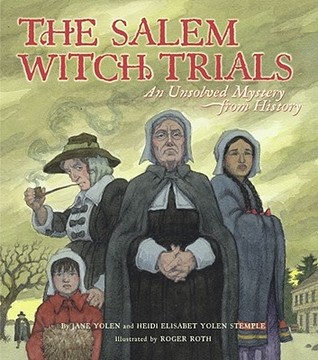
The Salem Witch Trials: An Unsolved Mystery from History by Jane Yolen & Heidi Elisabet Yolen Stemple

Share

NF PB 2013

Nonfiction Picture Book Wednesday

Nonfiction Picture Book Wednesday is hosted by Kid Lit Frenzy and was started to help promote the reading of nonfiction texts. Most Wednesdays, we will be participating and will review a nonfiction text (though it may not always be a picture book).
Be sure to visit Kid Lit Frenzy and see what other nonfiction books are shared this week!

salem

The Salem Witch Trials: An Unsolved Mystery from History
Authors: Jane Yolen & Heidi Elisabet Yolen Stemple
Illustrated by: Roger Roth
Published September 7th, 2004 by Simon & Schuster Books for Young Readers

Goodreads Summary: In 1692 Salem, Massachusetts, witnessed one of the saddest and most inexplicable chapters in American history. When a group of girls came down with a horrible, mysterious bout of illness, the town doctor looked in his medical books but failed to find a reasonable diagnosis. Pretty soon everyone in town was saying the same thing: The girls were ill because they were under a spell, the spell of witchcraft! And still, the question remains: Why did the hysteria occur? The townspeople had many things to worry about back then: smallpox, strife with the local Indians, a preacher demanding higher wages, and the division of land in the community. But did all of those problems justify a witch hunt?

Become a detective as you read this true story, study the clues, and try to understand the hysteria! The Unsolved Mystery from History series is written by acclaimed author Jane Yolen and former private investigator Heidi Elisabet Yolen Stemple. This is an innovative history lesson that’s sure to keep kids thinking throughout.

Review: The mystery of the Salem Witch Trials is one that has haunted the United States for over 3oo years now and is one that students love to read about (and I do, too!). Most of my thoughts about this book are about how awesome this book is for the classroom. The Yolens seemed to have written it specifically for teachers to use.

Teacher’s Tools For Navigation: This book promotes studying history, inquiry, and vocabulary. The book begins with an introduction to a young girl who enjoys unsolved mysteries from history and then the book is set up like her case notebook. Each page of the case notebook includes a narrative nonfiction section about what was going on in Salem, an informational nonfiction section where facts about the story are explained even more in detail, and then there are vocabulary words from the two sections defined for the reader. Finally, in the back of the book the different theories about what could be the answer to the unsolved mystery are shared and briefly discussed. The set up of this book leads to infinite possibilities of being used in the classroom. Students could debate, write research papers, could do their very own case notebook about a different mystery, etc. Another option is to get all of the Unsolved Mystery from History books and have students get into lit circle groups and have each group read a different mystery then research and share.

Discussion Questions: What do you think happened in Salem? [Could be a wonderful debate or cooperative research presentation/paper in class. Have each students, after reading the different theories, decide which they believe is true. Then within their groups come up with evidence that supports the theory that they believe in.]

We Flagged: Narrative Nonfiction Section: One bitterly cold day in February, Betty and Abigail both fell ill, collapsing onto their small rope beds. They convulsed. They contorted. Their arms and legs jerked about. They shouted bizarre, unintelligible words. They crouched under chairs and cowered as if frightened. In other houses in Salem Village several of their friends began to act the same way.

Informational Nonfiction Section: The other sick girls in Salem village included Ann Punam Jr. (age 12), Mercy Lewis (age 19), Mary Walcott (age 16), Elizabeth Hubbard (age 17), and Mary Warren (age 20). Like Abigail, Elizabeth and Mercy were orphans; Mercy may have witnessed her parents being killed in an Indian attack three years earlier in Main. Mary Walcott had lost her mother when she was eight. Ann and Betty were daughters of landowners, but Marry Warren, Elizabeth, and Mercy were maidservants.

Vocabulary: Convulsed: shook violently, Contorted: Twisted into unusual shapes, Unintelligible: Impossible to understand” (p. 12-13)

Read This If You Loved: I Walk in Dread by Lisa Rowe Fraustino, The Sacrifice by Kathleen Benner Duble, Witch Child by Celia Rees, The Witch of Blackbird Pond by Elizabeth George Speare, Witches: The Absolutely True Tale of Disaster in Salem by Rosalyn Schanzer and other nonfiction books about Salem

Recommended For: 

closereadinganalysisbuttonsmall readaloudbuttonsmall

classroomlibrarybuttonsmall litcirclesbuttonsmall

Signature