Masterpiece Robot and the Ferocious Valerie Knick-Knack by Frank Tra

Share

Masterpiece Robot and the Ferocious Valerie Knick-Knack
Author: Frank Tra
Illustrator: Rebecca Evans
Published April 17th, 2018 by Tilbury House Publishers

Summary: Masterpiece Robot pays tribute to the power of a child’s vivid imagination, which can transform a suburban autumn backyard into a futuristic battleground and Laura’s lively siblings into unwitting but enthusiastic participants in a fight for a planet’s survival. We begin in Laura’s bedroom where she is struggling to find her way into the story she wants to write, and we end there with Laura putting the finishing touches on her triumphant tale.

When Laura―a.k.a. Masterpiece Robot―heads into the backyard with her little sister Molly―a.k.a. Sidekick―her active imagination places them instead on patrol around the perimeter of a dystopian city, guarding against super villains. Then older sister Amber―a.k.a. Valerie Knick-Knack―throws handfuls of fallen leaves at them, unknowingly initiating a battle for the ages.

This one is such a fun read, and one kids will definitely relate to! It also lets adults relive those childhood memories where ordinary things – such as a pile of leaves, or a large cardboard box – can turn extraordinary with just a bit of imagination. The transitions back and forth from suburbia to dystopia in this story within a story are deftly rendered with contrasting palettes. The rollicking interactions of the sibling heroes and villains make Masterpiece Robot pure fun to read.

About the Author & Illustrator: 

A child of Vietnamese immigrants, FRANK TRA proudly calls Wichita, Kansas home. Frank attended the University of Kansas to wrestle and write comic books. While there, he also earned a Doctorate in Pharmacy. He has been a cancer pharmacist for the last ten years. Frank’s writing credits include two graphic novels and several comic books. Masterpiece Robot is his first children’s book. Dr. Tra resides in a quiet neighborhood with his wife, Katy, and their six children: Amber, Laura, Roman, Molly, Tommy, and Isaac. He spends his spare time writing, fishing, and coaching his high school wrestling team.

REBECCA EVANS worked for nine years as an artist and designer before returning to her first love: children’s book illustrations and writing. Her children’s books include Someday I’ll Fly; Friends in Fur Coats; The Good Things; The Shopkeeper’s Bear; Naughty Nan; Amhale in South Africa; Vivienne in France; Mei Ling in China; Marcela in Argentina; Tiffany in New York; and Tatiana in Russia. She lives in Maryland with her husband and four young children, shares her love of literature and art regularly at elementary schools, teaches art at the Chesapeake Center for the Creative Arts, and works from her home studio whenever time permits. Rebecca’s boundless imagination enjoys free rein at www.rebeccaevans.net.

ReviewI love this book! I love the story, I love the spread of imaginative play, and I love the humor! It is so smart how the author and illustrator told both stories: the literal and the imaginative, and both stories are developed and fun to read together AND separately. This made for a quite complex book which is also really appealing to kids (and parents/teachers). I’m also a big fan of the artwork in the book. The illustrator did an amazing job changing the style just a bit for the imaginative and the reality but also kept her signature style in both. The illustrations definitely added to the narrative making this book a must get. I also loved that this is a sci-fi picture book because not many exist.

Teachers’ Tools for Navigation: There are a few different ways I envision this book being used in a classroom. First, I would like to say that it’s best would be in a read aloud with a conversation around the reality versus imaginative. There is also some great word choices and vocabulary throughout. Lastly, the reality has very little narrative, so students could write the story of what is actually happening. The discussion questions shared below will also lead to some great activities and discussions.

Discussion Questions: 

  • What character in real life was the imaginative characters?
  • Compare and contrast the reality and imaginative story.
  • How did the illustrator change her style for reality versus sci fi?
  • Think of a chore that you do at home. What could you imagine you were doing when you are doing your chore?

Flagged Passages: 

Read This If You Love: Zathura by Chris Van Allsburg, Du Iz Tak? by Carson Ellis, Where the Wild Things Are by Maurice Sendak, Not a Box by Antoinette Portis, Going Places by Paul and Peter Reynolds, Weslandia by Paul Fleishman, and other books that promote imagination and creativity

Recommended For: 

classroomlibrarybuttonsmall 

Signature

A Possibility of Whales by Karen Rivers

Share

A Possibility of Whales
Author: Karen Rivers
Published March 13th, 2018 by Algonquin Young Readers

Summary: The story of a girl who—thanks to her friends, her famous single dad, and an unexpected encounter with a whale—learns the true meaning of family.

Twelve-year-old Natalia Rose Baleine Gallagher loves possibilities: the possibility that she’ll see whales on the beach near her new home, the possibility that the trans­gender boy she just met will become her new best friend, the possibility that the paparazzi hounding her celebrity father won’t force them to move again. Most of all, Nat dreams of the possibility that her faraway mother misses her, loves her, and is just waiting for Nat to find her.

But how can Nat find her mother if she doesn’t even know who she is? She abandoned Nat as a baby, and Nat’s dad refuses to talk about it. Nat knows she shouldn’t need a mom, but she still feels like something is missing, and her questions lead her on a journey of self-discovery that will change her life forever.

About the Author: Karen Rivers’s books have been nominated for a wide range of literary awards and have been published in multiple languages. When she’s not writing, reading, or visiting schools, she can usu­ally be found hiking in the forest that flourishes behind her tiny old house in Victoria, British Columbia, where she lives with her two kids, two dogs, and two birds. Find her online at karenrivers.com and on Twitter: @karenrivers.

Praise: 

“A remarkable novel . . . Nat’s witty and vulnerable voice drives the novel, from her wry observations about contemporary celebrity culture to the thoughtful collection of untranslatable words that help define her world. The chapters that center Harry’s perspective are just as strong, emphasizing his desire to be seen and understood, not as an abstract exemplar of a transgender child but as an individual. The novel avoids offering simple solutions for questions of identity and adolescence, instead reveling in life’s nuance and complexity. Perfect for fans of Raymie Nightingale and Counting by Sevens, Rivers’s latest work brings an improbable combination of elements together in an unforgettable story that is quirky and wise.” —School Library Journal

“Charming and sweet as it explores personal identity, life changes, love, and, of course, whales . . . Nat’s story of self-discovery is sure to inspire anyone searching for their place in the world.” —Foreword Reviews

“A worthwhile addition to library collections.” —Booklist

ReviewI am a big fan of novels that switch points of view as I feel like it gives another perspective into the story that is being told, and with this story, I am so very happy that we get to hear from Nat AND Harry. There needs to be coming-of-age stories for all types of kids, and Nat and Harry will be someone that kids that may not have someone to connect to in other books will immediately find some kids that they’ll see themselves in. And Harry’s story is one that needed to be told in a middle grade book and hadn’t yet been in a book that I’ve read, and is one that many of my students have asked for. I am so glad that Harry exists for my middle schoolers! And Nat is a special young lady whose coming-of-age story is one that middle schoolers need as well–a look at family, growing up, friendship, school, and WHALES!

Teachers’ Tools for Navigation: The best home for Whales will be in the right kids’ hands. This book will be perfect for all libraries, classroom and school, as well as for the right lit circle or book club.

Discussion Questions: 

  • What does Nat’s acceptance of Harry right away show you about Nat’s character?
  • How has Nat’s father’s career and her lack of mother affected her life?
  • Why was the name lion perfect for the paparazzi who followed Nat and her father?
  • What do the whales symbolize in the story?
  • How did the two points of view help shape a more thorough story?
  • What was the author’s purpose of including Bird in the story? What role did she play in Nat’s life?

Flagged Passages: 

Nat: “On her fourth day at the new place, Natalia Rose Baleine Gallagher walked down the long, lumpy trail to the beach that lay at the bottom of the slope.

The ‘Baleine’ was silent, was what she told people when they asked , which was pretty much only when she was registering at a new school or had to show her passport. Baleine was the French word for ‘whale.’ Nat loved the fact that it was there, hiding inside her perfectly normal name. She pictured the whale swimming past the Natalia Rose on her passport, surfacing when no one was looking to take a long huffing breath of air before disappearing again, under the Gallagher.

‘Baleine’ was the heart of her name. (When Nat had to do an ‘All About Me’ poster in first grade, she drew a whale where most kids put a heart.)

‘Baleine was also a secret between Nat and her mother, who named her.

Her mother, who named her, and then left.” (p. 3-4)

Harry: “Harry scratched his ear again, so hard it was probably bleeding. It was just a coincidence that it was the same ear that got hurt the year before when a group of boys in his class decided it would be funny to beat him up.

They beat him up because they hated him for knowing who he was.

That is, they beat him up because even though some dumb doctor said he was a girl when he was born, he was really a boy.

The boys who beat him up were not the kind of kids who understood things like that.

No one in that town was.

Maybe no one anywhere was.” (p. 43)

Read This If You Love: Harbor Me by Jacqueline Woodson; All Summer Long by Hope Larson; Gracefully Grayson by Ami Polonsky; I Love You, Michael Collins by Lauren Baratz-LogstedTwo Naomis by Olugbemisola Rhuday-Perkovich & Audrey Vernick; Calli Be Gold by Michele Weber Hurwitz; Raymie Nightingale by Kate DiCamilloStealing Our Way Home by Cecelia Galante; The Real Us by Tommy Greenwald

Recommended For: 

classroomlibrarybuttonsmall 

Signature

**Thank you to Algonquin Young Readers for providing a copy for review!**

Alone Together by Sarah Donovan

Share

Alone Together
Author: Sarah J. Donovan
Published: May 1, 2018 by Seela Books

Summary: Sadie Carter’s life is a mess, as wavy and tangled as her unruly hair. At 15, she is barely surviving the chaos of her large Catholic family. When one sister becomes pregnant and another is thrown out, her unemployed dad hides his depression, and her mom hides a secret. Sadie, the peacekeeper and rule-follower, has had enough. The empty refrigerator, years of hand-me-downs, and all the secrets have to stop. She longs for something more and plans her escape.

However, getting arrested was not her plan. Falling in love was not her plan. With the help of three mysterious strangers—a cop, a teacher, and a cute boy—maybe Sadie will find the strength to defy the rules and do the unexpected.

Told in verse, Sarah J. Donovan’s debut Alone Together has secrets, romance, struggle, sin, and redemption, all before Sadie blows out her 16 candles. It’s a courageously honest look at growing up in a big family.

Review: Sarah’s writing shows that she has a firm grasp on adolescence. The book is a beautiful book in verse. I found myself thinking about the characters long after I had closed the text. Sadie lives in a Catholic household, and she is struggling emotionally. She is the only one of the eleven people in her family to sit at the breakfast table, and one of the few siblings who hasn’t left the family altogether. She is the peacemaker and is sick of the empty fridge and bad choices that others seem to make for her. I think that Sadie has a life that many young people will relate to. She is left wondering about the ways in which people exist alone together. This is a great read, and I will be using it (in part and in whole) in my classes.

Teacher’s Tools for Navigation: The title of this book is quite inspiring. Students might be asked to reflect on all of the ways that we are “alone together” in this world. Teachers can offer space and place for students to critically analyze whether we are alone together or whether we are something else. I’d love to hear students’ thoughts about this.

Discussion Questions: 

  • In this text, what is the role of family? In our world, what role does family play? How are we tied and not tied to our families?
  • How does Sadie’s family impact her life?
  • How does Sadie grow within the timeframe of the book? What does she learn?
  • Which verse resonated with you? How does it connect (or not connect) with your life?

Flagged Passage: 

“The only one of eleven

who sets the table every morning

with cereal bowls and spoons,

who matches mounds of socks

without complaint or disdain,

who obeys every stand, kneel, sing in mass

without sneaking out after communion” (6).

Read This If You Love: Because I Am Furniture by Thalia Chaltas; Stop Pretending by Sonia Sones; The House on Mango Street by Sandra Cisneros

Recommended For:

closereadinganalysisbuttonsmall classroomlibrarybuttonsmall

RickiSig

Teaching Guide with Activities and Discussion Questions for Fox + Chick: The Party and Other Stories by Sergio Ruzzier

Share

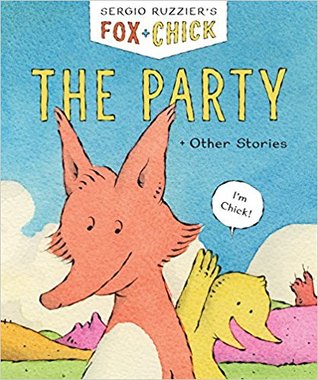
Fox + Chick: The Party and Other Stories
Author and Illustrator: Sergio Ruzzier
Published April 17th, 2018 by Chronicle Books

Summary: Fox and Chick don’t always agree. But Fox and Chick are always friends. With sly humor and companionable warmth, Sergio Ruzzier deftly captures the adventures of these two seemingly opposite friends. The luminous watercolor images showcased in comic-book panel form will entice emerging readers, while the spare text and airiness of the images make this early chapter book accessible to a picture book audience as well.

Teachers’ Tools for Navigation: Activities for The Party and Other Stories include:

How to Read a Graphic Novel

Reading a graphic novel differs from reading prose text because readers must infer everything outside of the dialogue they are given and what is presented in the illustrations.

First, using Fox + Chick discuss the differences with your class between a picture book, a chapter book, and a graphic novel. Make sure to point out the parts of a graphic novel like speech bubbles show what the characters are saying, panels (each square), and the gutter (the space between panels). Then discuss how to read a graphic novel (typically read left to right, top to bottom).

Extension activity: Discuss with students why an author would choose to write their story as a graphic novel versus a chapter book or picture book.

Then, to show how inferences have to be made between panels, use pages 2/3 to page 4. As a reader you can infer that Chick continued walking to the house shown on page 2/3 even though the illustrations don’t show each little step. Also, between the first two panels on page 4, the reader can infer that Chick had to wait a bit even though the panels don’t show it.

After reading the story, have students show how they use inferring to comprehend the story by:

K-1st: Retell the story including inferences made between panels and what the illustrations show.

2nd-3rd: Rewrite the story as a narrative including inferences made between panels and what the illustrations show.

Conflict and Resolution

Conflict is the problem with a story or part of a story while the resolution is how that problem is solved. In each of the chapters in Fox + Chick, there is a conflict and a resolution. Each chapter gives an opportunity to learn these narrative elements.

For chapter 1, “The Party,” as a class, determine the conflict and the resolution.

For chapter 2, “Good Soup,” have students determine the conflict and resolution in pairs.

For chapter 3, “Sit Still,” have students determine the conflict and resolution independently.

Character Traits

Character traits are all the aspects of a character’s behavior from how they act to what they think.

Before reading: As a class, list the character traits the students assume a fox and a chick are going to have. How will they act? What type of personality will they have? How are they going to interact with each other?

After reading: Independently or as a class, have students complete a character trait activity on each character. Have students answer the following questions then place their answers into a graphic organizer:

How did the character act in the story?

What feelings did the character portray in the story?

What words would you use to describe the character’s personality?

See the Teaching Guide Created by me (Kellee) for even more activities and discussion questions! 

You can also access the teaching guide through Chronicle’s website here.

Recommended For: 

readaloudbuttonsmall classroomlibrarybuttonsmall closereadinganalysisbuttonsmall

Kellee Signature

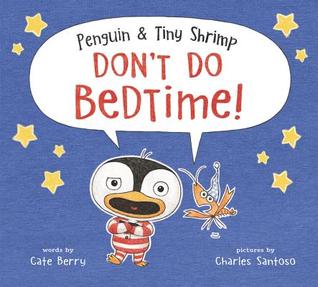
Penguin and Tiny Shrimp Don’t Do Bedtime! by Cate Berry

Share

Penguin and Tiny Shrimp Don’t Do Bedtime
Author: Cate Berry; Illustrator: Charles Santoso
Published May 8, 2018 by Balzer + Bray

Goodreads Summary: Penguin and Tiny Shrimp will charm, amuse, but never put you to sleep in this meta bedtime tale in the vein of Goodnight Already.

Penguin and Tiny Shrimp DO NOT have a bedtime story to share with you.

There are no soft beds or cozy covers here. There are fireworks! And shark-infested waters!!

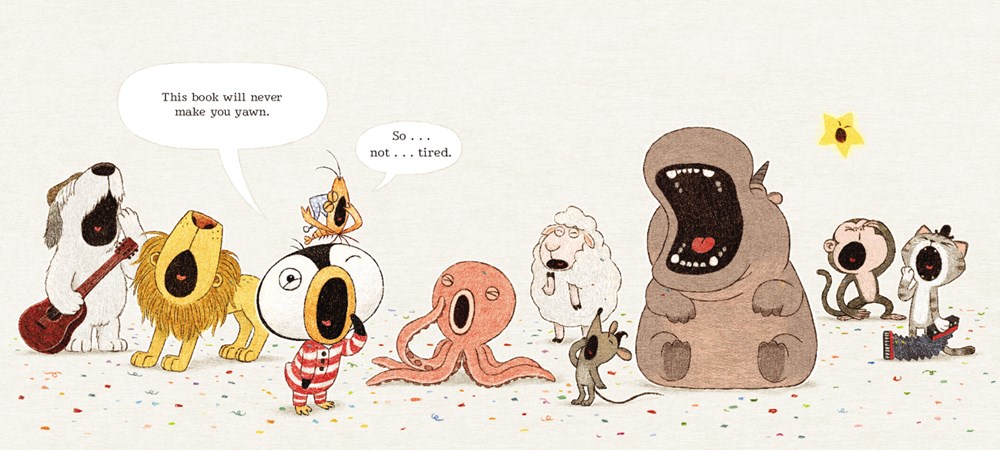
This book will never make you sleepy. Not at all. Not even a little. . .

Ricki’s Review: Whenever my son pulls this book from the shelf, I get a happy feeling inside of me. There are some books that are really fun to read, and this is one of them. It’s the perfect bedtime book. It makes us laugh, and it makes us y-a-w-n. I love the silly characters and smile every time that I read it. 

Most apparent to me is that the author and illustrator know kids. The middle of the book features a lot of wild activities that really resonate with my son. Then we get to the silly pages where the characters resist their tiredness… is this sounding familiar, parents and guardians? I absolutely adore this book and recommend it highly. If bedtime is an issue in your house, this book might help.

Kellee’s Review: This book is definitely a laugh-out-loud book! Penguin and Tiny Shrimp have such unique and perfect voices that kids, and parents alike, will find so entertaining. The illustrations are perfect companions to the narrative also; they are silly, colorful, and full of personality!

Also, Penguin and Tiny Shrimp are the embodiment of my son right now. He doesn’t do bedtime and would rather be doing all of the things that Penguin and Tiny Shrimp take part in: swinging in the jungle, flying in hot air balloons, riding on a boat, signing songs, and even jokes! But then in the end, Penguin and Tiny Shrimp are too tired to go on (and their yawns are actually contagious!), and I love using their story to talk to Trent about bedtime.

Teachers’ Tools for Navigation: This book would serve as a great mentor text for kids to write their own bedtime stories. The animals are very inspirational. Teachers might start by asking students to pick two animals that are very different (like Penguin and Tiny Shrimp) and to write their own story of the two characters’ adventures.

Discussion Questions: What do Penguin and Tiny Shrimp do to try to resist bedtime?; Which animals are your favorite? How are the animals similar and different? What does this say about bedtime?; Do you resist bedtime? Why?

We Flagged: 

Read This If You Loved: Twenty Yawns by Jane Smiley; Goodnight Moon by Margaret Wise BrownGoodnight Songs by Margaret Wise Brown

Recommended For: 

readaloudbuttonsmall classroomlibrarybuttonsmall

RickiSigand Kellee Signature

**Thank you to Keely Platte for sending us this book! We loved it.**

Teaching Rescued by Eliot Schrefer in a Middle School Reading Classroom

Share

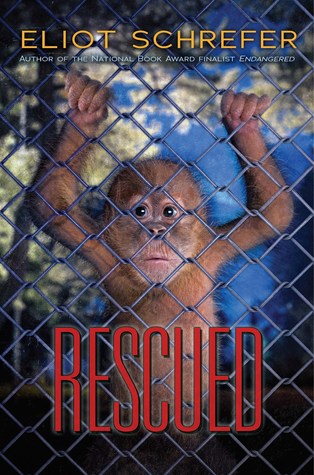
Rescued
Ape Quartet #3
Author: Eliot Schrefer
Published April 26th, 2016 by Scholastic Press

Summary: They grew up together. Now they have to escape together.

Raja has been raised in captivity. Not behind the bars of a zoo, but within the confines of an American home. He was stolen when he was young to be someone’s pet. Now he’s grown up and is about to be sent away again, to a place from which there will be no return.

John grew up with Raja. The orangutan was his friend, his brother. But when John’s parents split up and he moved across the country, he left Raja behind. Now Raja is in danger.

There’s one last chance to save Raja—a chance that will force John to confront his fractured family and the captivity he’s imposed on himself all of these years.

About the Author: Eliot Schrefer is a New York Times-bestselling author, and has twice been a finalist for the National Book Award. In naming him an Editor’s Choice, the New York Times has called his work “dazzling… big-hearted.” He is also the author of two novels for adults and four other novels for children and young adults. His books have been named to the NPR “best of the year” list, the ALA best fiction list for young adults, and the Chicago Public Library’s “Best of the Best.” His work has also been selected to the Amelia Bloomer List, recognizing best feminist books for young readers, and he has been a finalist for the Walden Award and won the Green Earth Book Award and Sigurd Olson Nature Writing Award. He lives in New York City, where he reviews books for USAToday.

ReviewI think out of the three Ape Quartet books published so far, this is the one that is going to hit closest to home for many. It will make many readers uncomfortable and want to make a change. First, it takes place in the United States unlike Africa like the first two. Second, it really digs into an issue that is still very much prominent here–animal injustice.

I find Schrefer’s writing to be so beautiful yet so easy to read. He can pull you into his stories and makes you feel for not only his human characters but also his animal characters. He does such a tremendous amount of research for all of his books and with this one it brings the injustice of Raja alive.

I am a sucker for ape books. I find apes to be the most fascinating animals, and orangutans may be my favorite because they have these amazing eyes that just show me that they are so intelligent and deep thinkers. They are also introverts; I think I just relate to them in that way. This book brings orangutans to life through Raja.

As evident from Schrefer’s status as a two-time National Book Award finalist, his books can be used as a mentor text for just about any aspect of writing that you are looking for: characterization, imagery, voice, conflict, etc. Read any of his books, and you can pull out so much to discuss and use within the classroom. Additionally, there are some amazing ape books, including Schrefer’s other Ape Quartet books, that would make for an amazing lit circle opportunity or text set.

Review originally posted here on May 13, 2016.

Teachers’ Tools for Navigation: Last year, our whole-class novel unit was done using Hurt Go Happy and included a trip to Center for Great Apes. This year, I had a completely different type of novel planned, but my students begged to read more about apes (and visit CFGA again). After looking at all of the available ape books, I decided that Rescued was perfect for the standards I wanted to teach and also included orangutans instead of chimps, and orangutans are the other great ape at CFGA. After setting up a Donors Choose and getting funded (THANK YOU ALL DONORS!), Eliot Schrefer also so kindly contacted me and offered to send even more copies of Rescued to my students–wow! So much kindness! Now that we had a plethora of copies, I wanted to share the love, so I contacted my South Carolina middle school teacher friend, Jennie Smith, to see if she wanted to read Rescued with us and collaborate some how. I was so happy that she said yes!

The Unit

Because I do love whole-class novels, but I also don’t like how a whole-class novel can also ruin a book with too much time spent on one book with way too many assignments during the unit. To try to fight this, I planned the unit quite simply:

  • Each week the students were given a focus question on Monday that they could think about all week then answer on Friday.
    • These focus questions are how we collaborated with Mrs. Smith’s class as well. My 1st and 2nd period posted their answers on Padlet and Mrs. Smith’s students would also post. The kids would then respond to each other.
    • Focus questions:
      • 1. What’s a big idea that’s emerging that’s worth talking about?
      • 2. Is there a passage that struck you as important in developing a character or a conflict in the reading so far? Share the passage and explain.
      • 3. What incident up to this point has had the most impact on the plot? How so? What did the characters’ response to this incident teach you about them?
      • 4. There are many who argue that Great Apes are human-like, including the lawyer who will take apes as plaintiffs to demand rights. What are some examples in this section of Raja showing how close to humans he truly is?
      • 5. How did the characters (specifically John’s mom, John’s dad, John, and Raja) change throughout the book? What other narrative elements helped shape their final persona? Find a piece of dialogue and a specific incident in the book that is evidence for your analysis of the character.
    • The idea of focus questions was something I got from a talk by Kelly Gallagher and Penny Kittle at NCTE 2017.
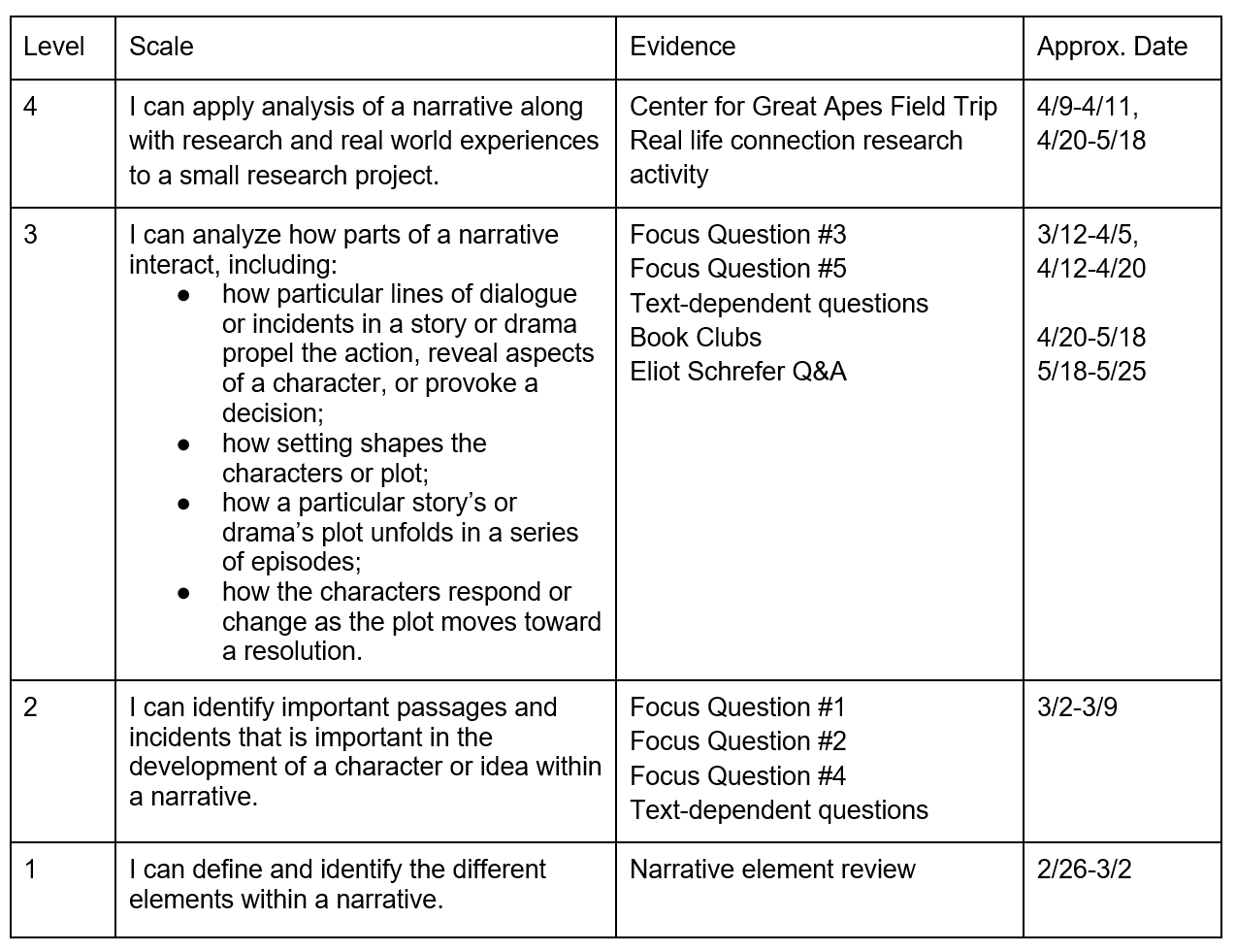
  • Because of one of the standards the unit was focusing on, we also looked at narrative elements, specifically dialogue, setting, and conflicts. Here is my scale for the unit:
  • Throughout the unit, I would also stop to have students think about certain text-dependent questions. I tried not to do this too often to not slow down the narrative; however, I loved seeing my students’ thinking. We would then discuss these questions, but I like allowing my students to write answers first before discussing because it allows them to get their thinking organized. (I shared some of these text-dependent questions and an example of a student’s answers below.)

The Field Trip

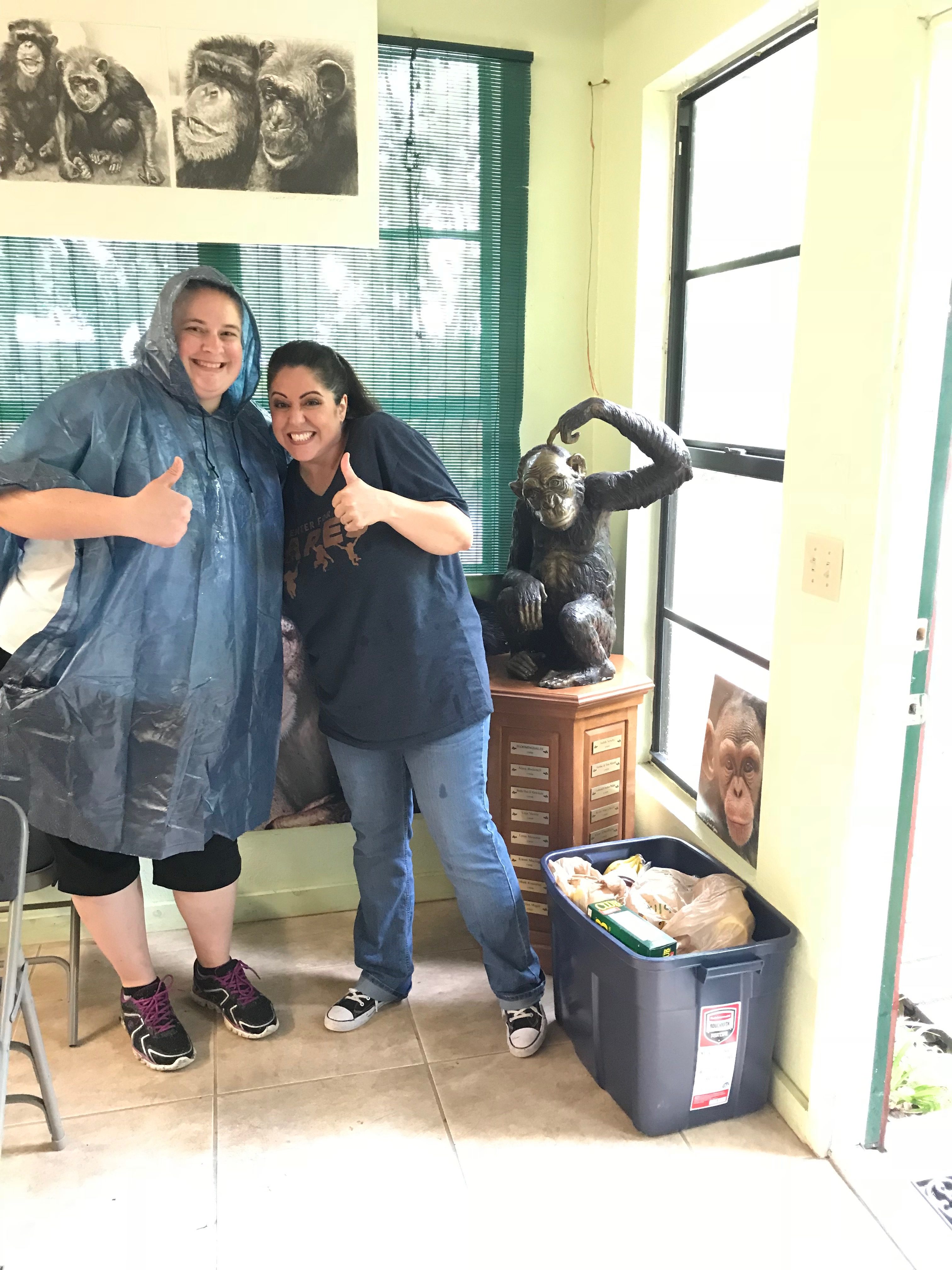
Once again I was lucky enough to bring my students to the CFGAs. All students were able to attend this year, and they were so kind to donate to the Center goodies for the Apes–it always fills my heart to see the empathy in their hearts!

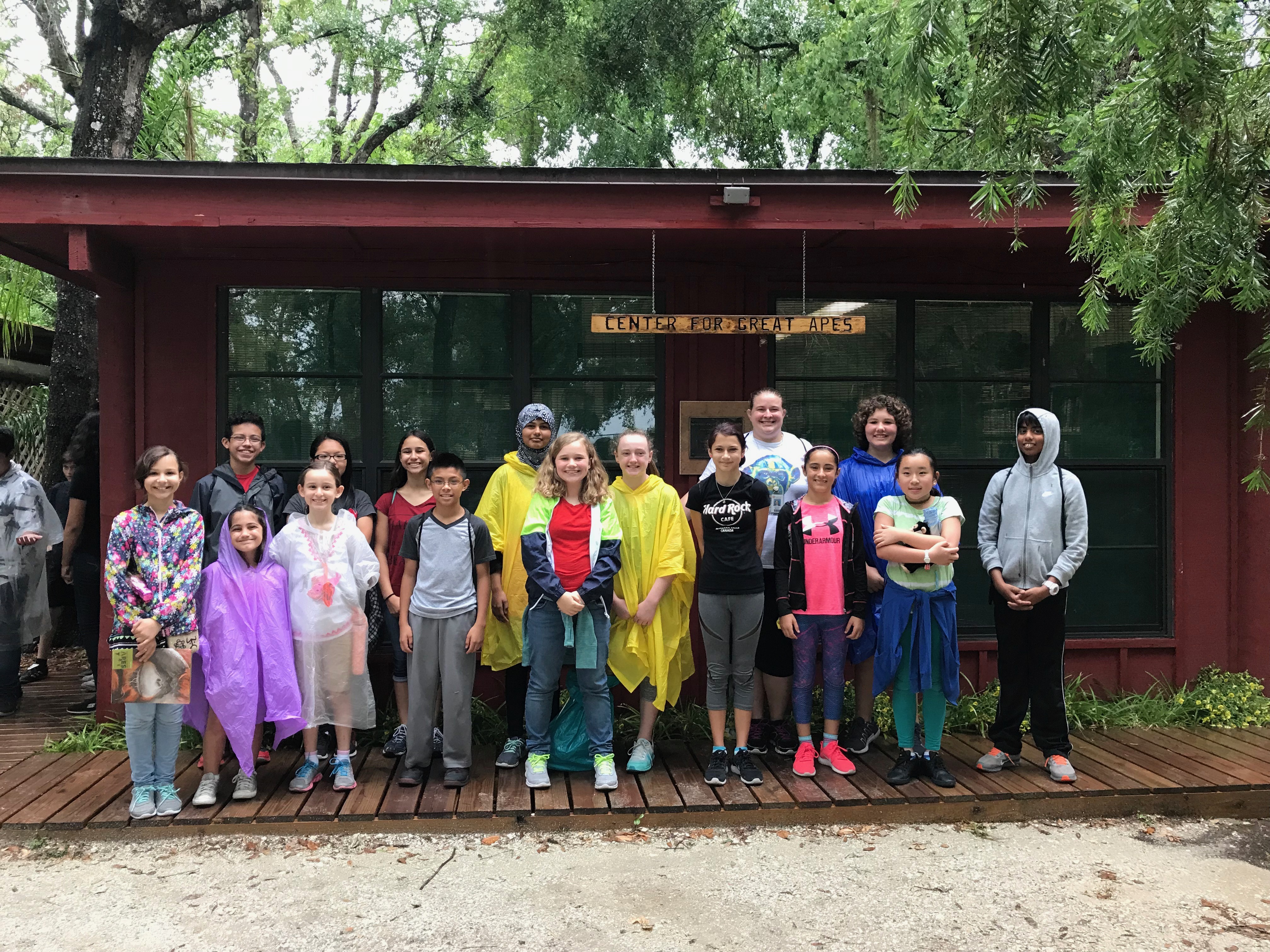
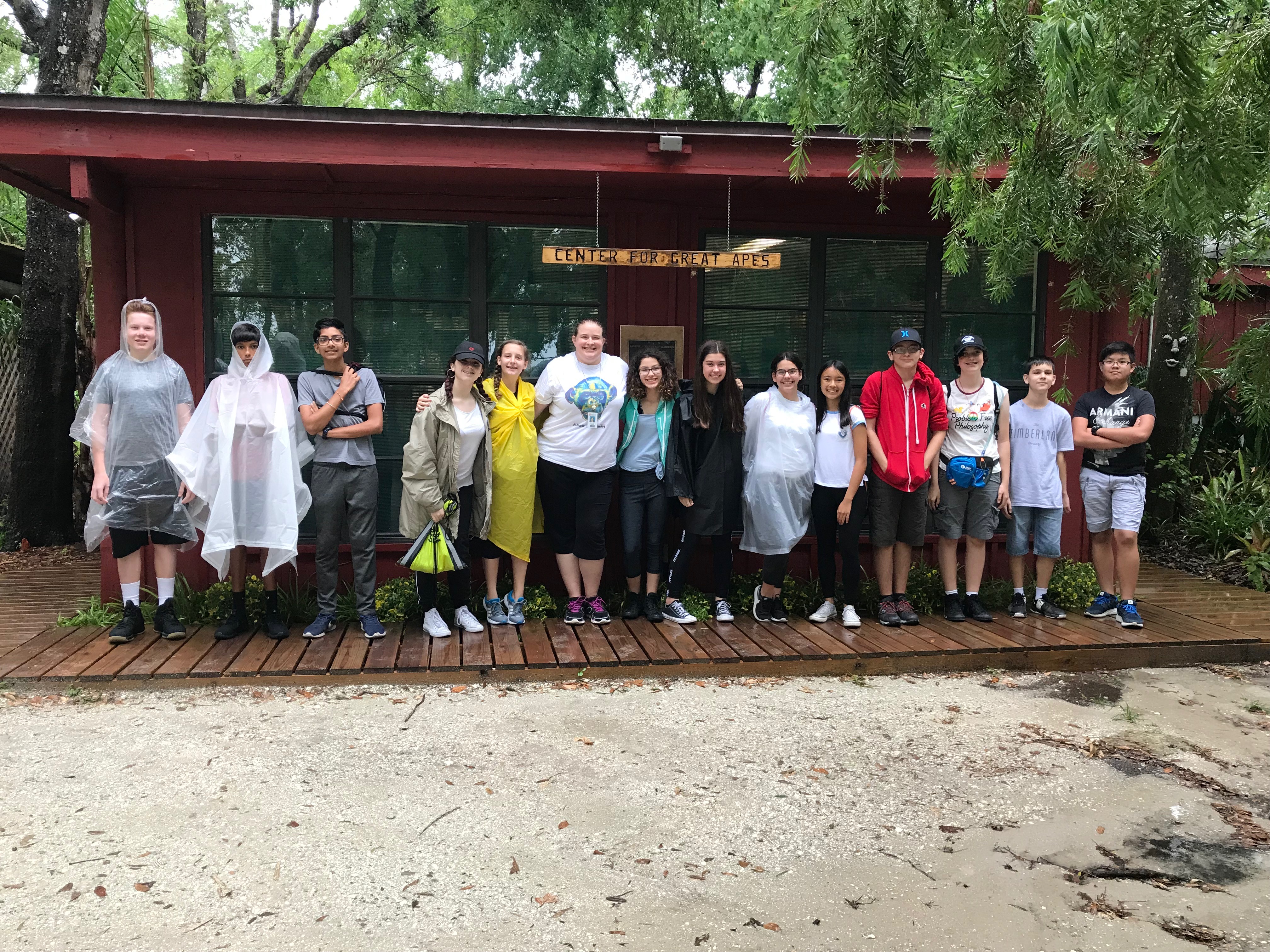
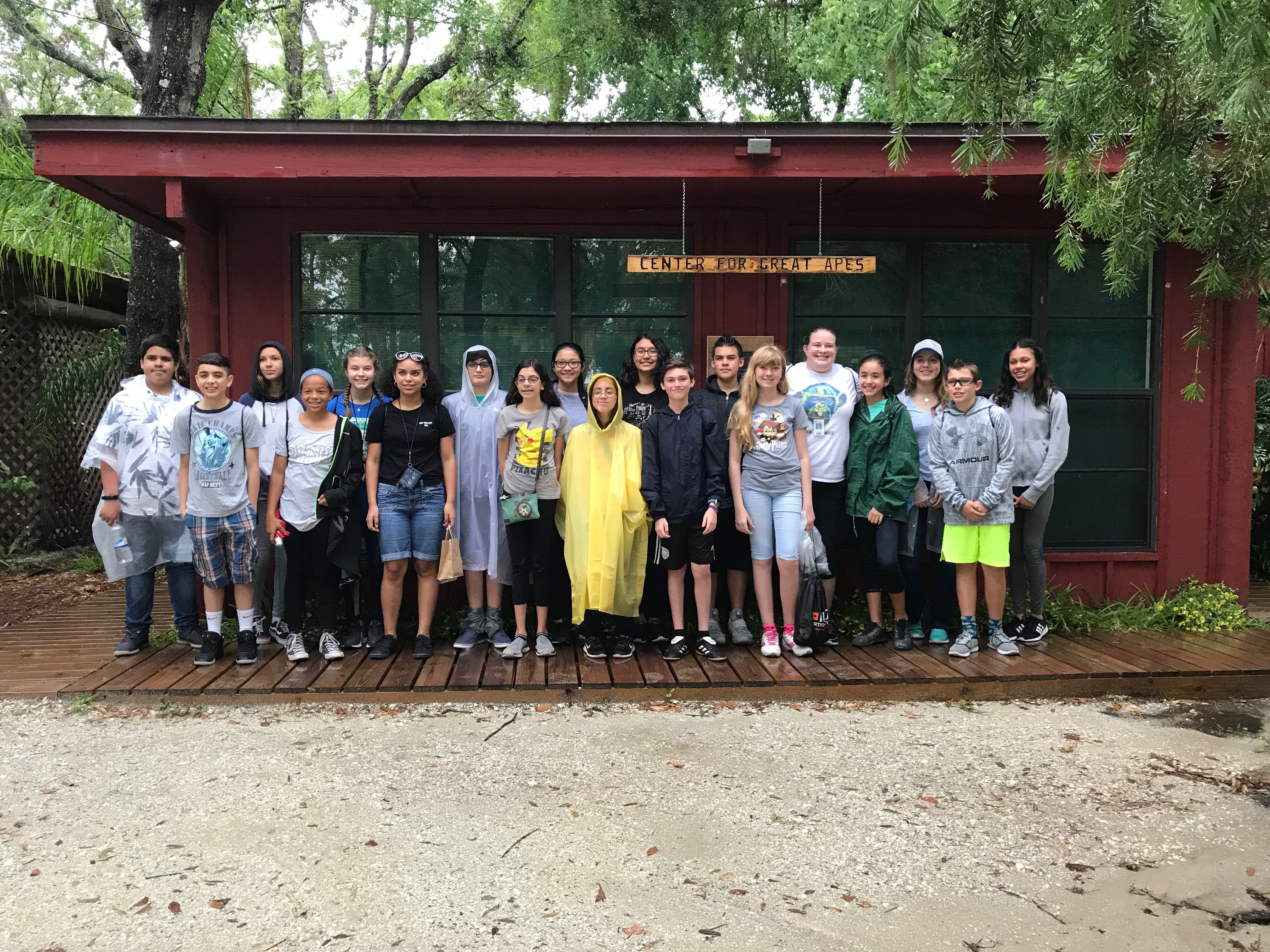
I have gone to the Center for Great Apes for years, and sadly this is the first year it rained. Luckily, we were able to get in a 90-minute tour to see the amazing animals who inspired Schrefer’s novel. To see more about the Center, the apes they’ve saved, and the amazing work they do, please visit http://www.centerforgreatapes.org/.

Author Virtual Visit

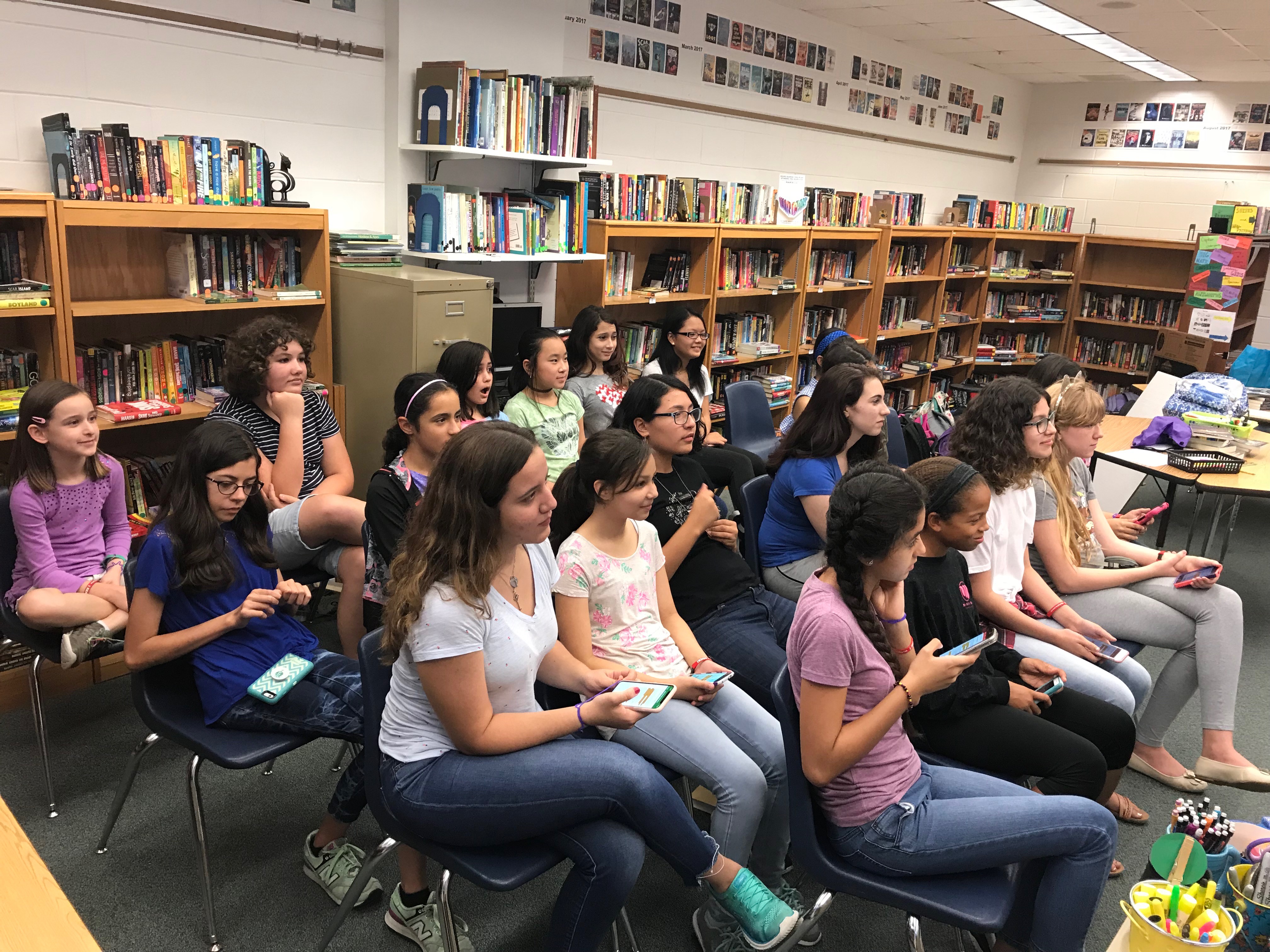
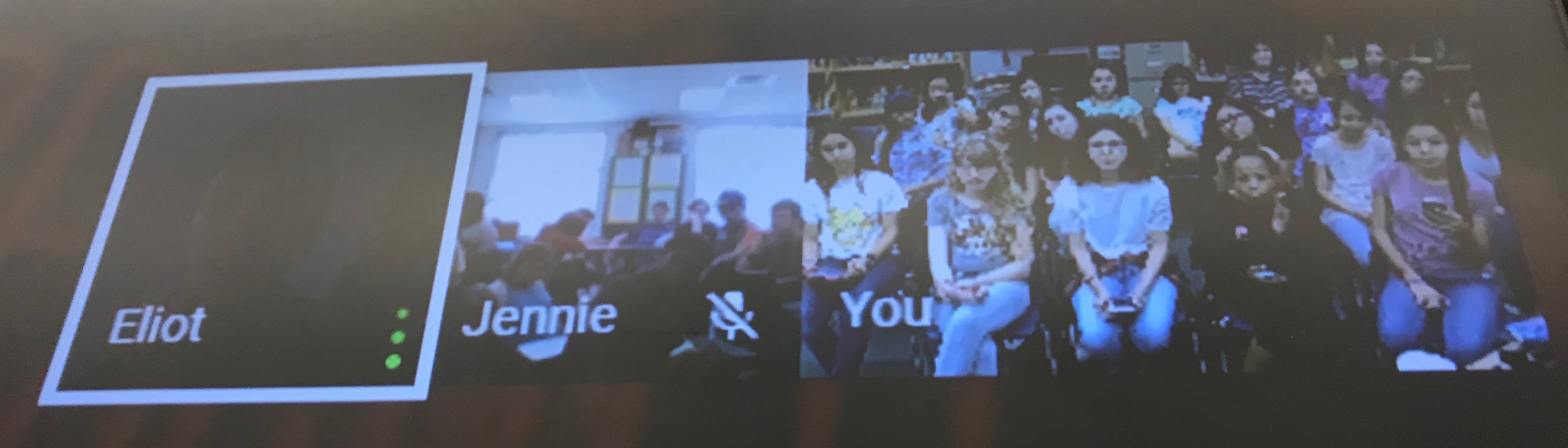
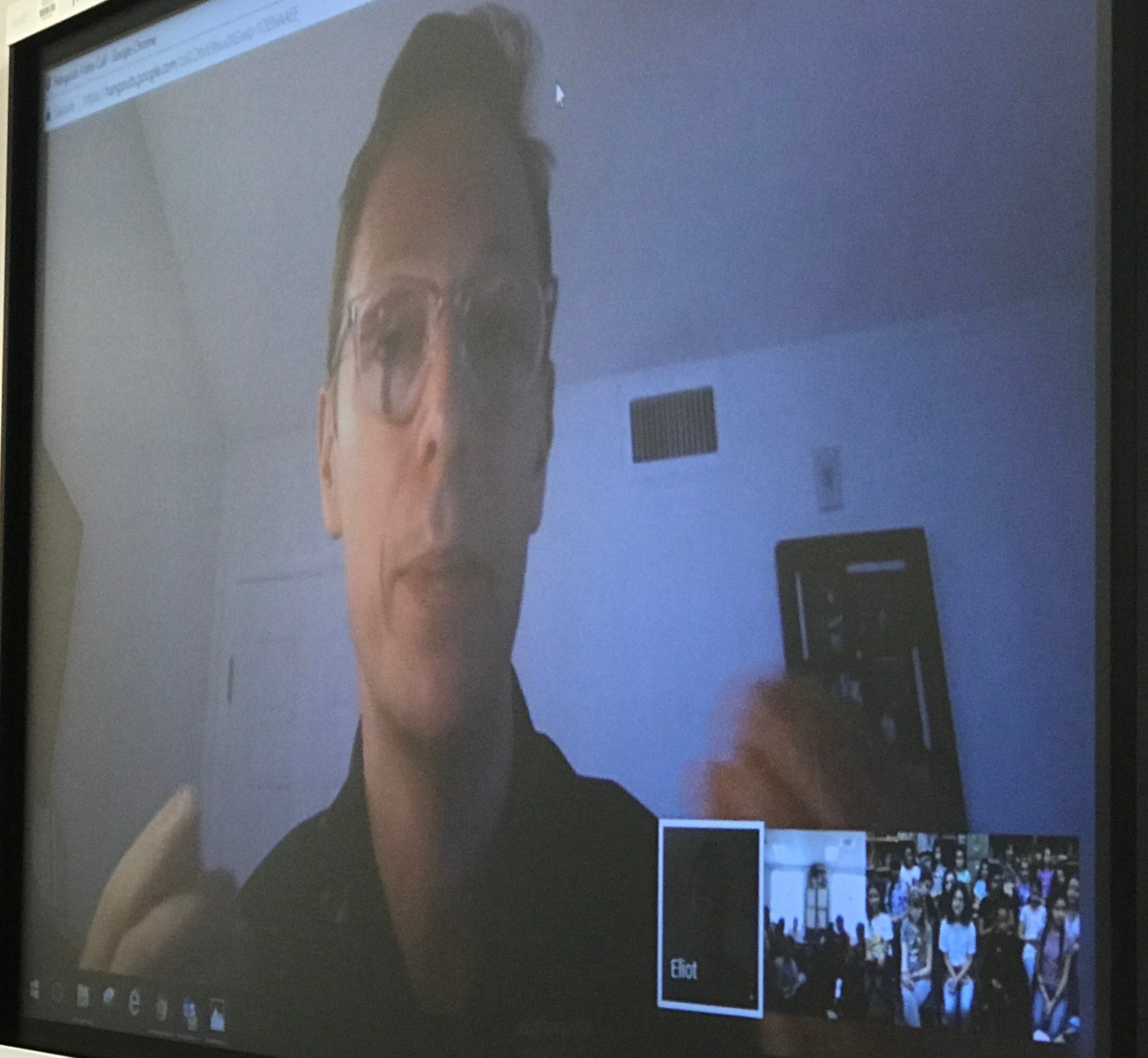
After reading Rescued, I was so happy to be able to give my (and Jennie’s) students an opportunity to interview Eliot Schrefer about the book. Each student wrote down at least one question they had for Eliot then in groups, the students chose their favorites, then based on these choices, we broke it down to 5 per class equaling fifteen interview questions altogether:

  • Why did you start writing about apes in the first place? And how did you decide on the order of publication for the Ape Quartet? 
  • Do you like writing realistic fiction like Rescued or fantasy like Mez’s Magic better?
  • Will you continue to write about apes now that you are done with the Ape Quartet? 
  • While the titles of your other books, Endangered, Threatened, and Captured, inspire a feeling of fear, the title Rescued inspires hope. Did this change in connotation of your title mark your different opinion about orangutans?
  • Were you ever stuck in between two decisions while writing the book? When? 
  • Who do you think the antagonist of the book is?
  • How did you come up with the whole “Raja bites off John’s finger” scenario? 
  • How did you come up with the concept of Friendlyland? 
  • How did you come up with the character traits for each character (Ex. Gary being a bad father)? Did you base them off people you know or knew? 
  • Can you tell us more about the corruption happening in Indonesia which allows palm oil companies to be able to keep burning down forests even though it is illegal? 
  • Do you feel that apes should be treated like human beings and given the same rights such as due process, land, etc. like the lawyer in the book? 
  • Was it hard for you to decide what would happen to Raja at the end of the book or did you know that you wanted Raja to be released into the wild instead of being kept at the sanctuary?
  • Do you have a favorite sanctuary or zoo you’ve visited? Have you visited the CFGA?
  • You used the word “merantau” which means “hitting a dead end and leaving one life to live another elsewhere” which pretty much sums up the theme of the book. Where did you come across this word? 
  • What writing tips can you give to students who want to be a writer?

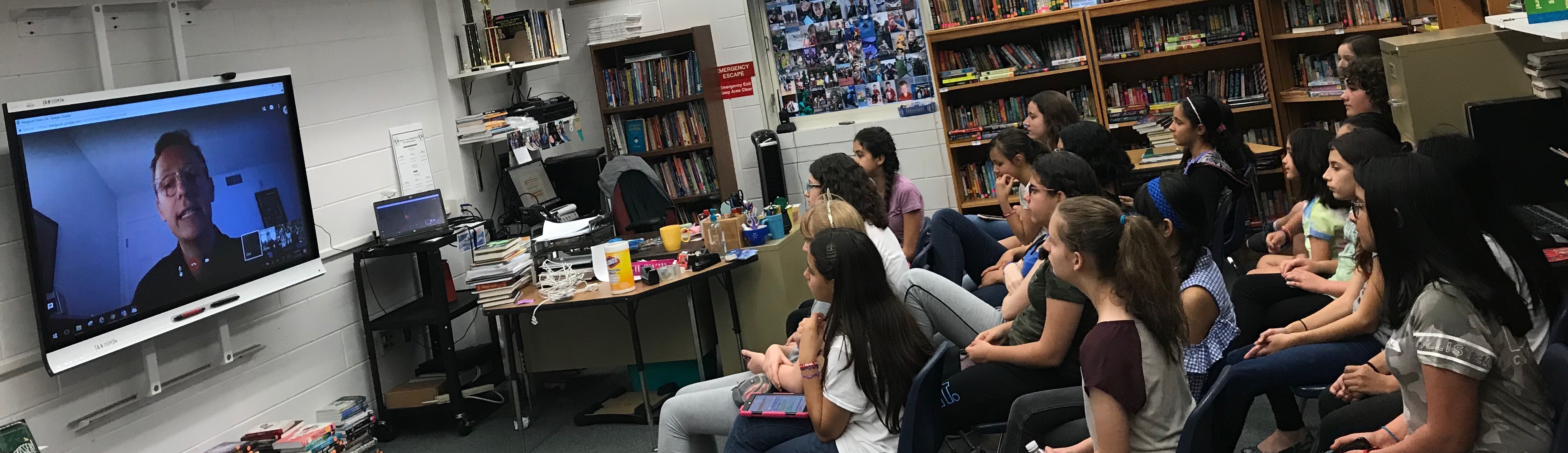
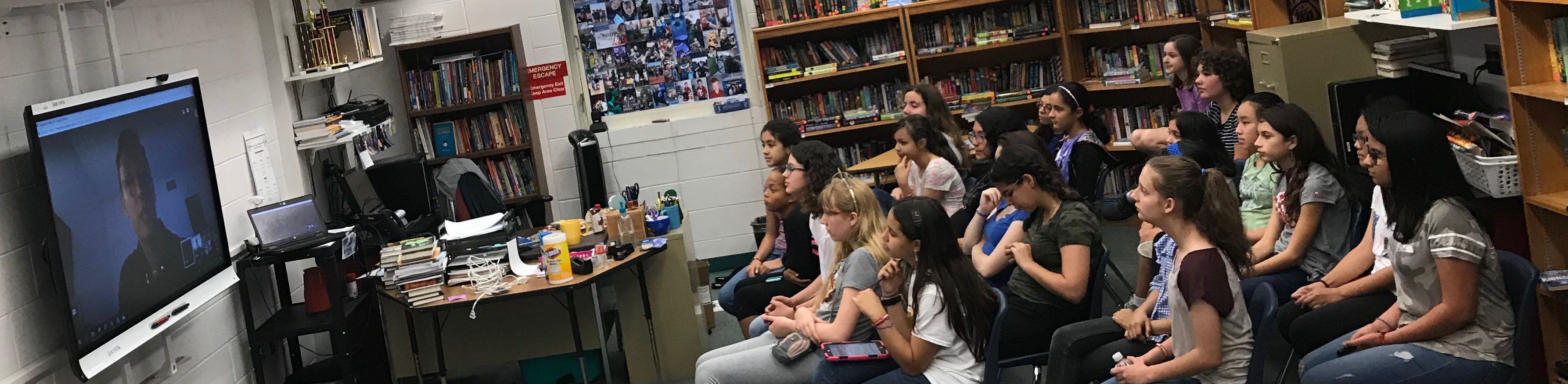
We then did a Google Hangout with Mrs. Smith’s class and Eliot Schrefer on May 25th after school:

Some of my favorite answers/quotes from the visit were:

  • Realistic fiction allows for a shifting antagonist.
  • Wanted to help people realize that orangutans aren’t stuffed animals come to life.
  • I don’t have characters first. I have stories first then make the best characters for that story.
  • Apes should not be kept against their will.
  • I used the idea of merantau to develop the plot.
  • Advice: For any artistic pursuit, I encourage you to think of the long range range view. It is risky to put all expectations of self in one basket. Focus on the joy you feel when doing the art. Remember what brings you joy! And do research, take advice, and read.

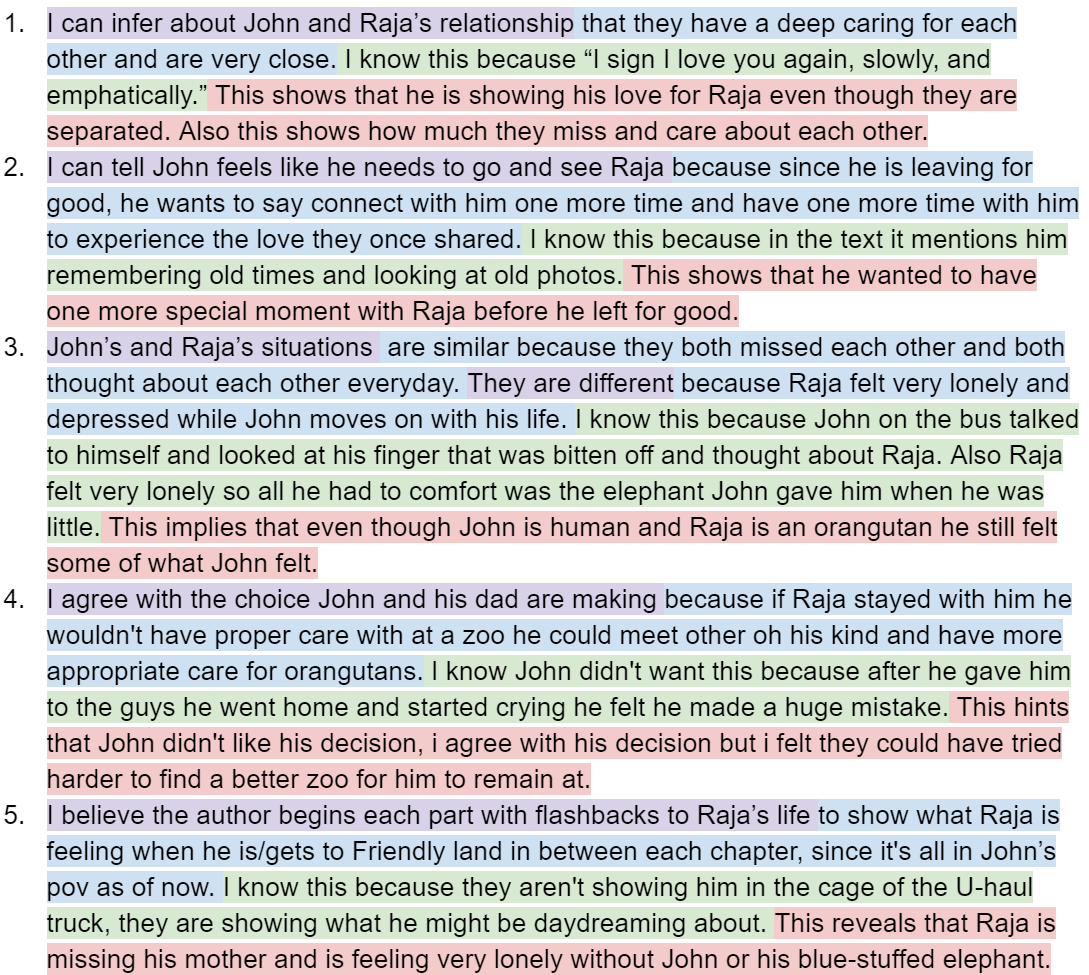
Discussion Questions: These were the first five of the text-dependent questions I asked during our reading of Rescued as well as an example of a student response (color coded for RATE. R=restate, A=answer, T=text evidence, E=elaborate/explain).

  • What can you infer about John and Raja’s relationship based on the first section?
  • Why does John feel like he needs to go see Raja before he leaves?
  • In the Q&A, the author says he “realized that a captive ape’s situation was similar to the plight of a kid during a divorce, getting swept along by the needs of powerful parents, at risk for being seen for what he represents instead of as a child with his own needs” (p. 251). How are John’s and Raja’s situations similar after the divorce? How are they different?
  • Do you agree with the choice John and his dad are making? Why or why not?
  • Why do you believe the author is beginning each part with a memory of Raja’s?
  • How did the author foreshadow this scene (on pg. 99) earlier in the book?

Flagged Passages: “My telltale heart, the one I’d left behind.” (p. 38)

Read This If You Love: Eliot Schrefer novels: Endangered and ThreatenedHurt Go Happy by Ginny RorbyHalf Brother by Kenneth Oppel, The One and Only Ivan by Katherine Applegate, Ivan: The Remarkable True Story of the Shopping Mall Gorilla by Katherine ApplegatePrimates by Jim Ottaviani

Recommended For: 

classroomlibrarybuttonsmall  

Signature

Teaching Guide with Activities and Discussion Questions for Polly Diamond and the Magic Book by Alice Kuipers

Share

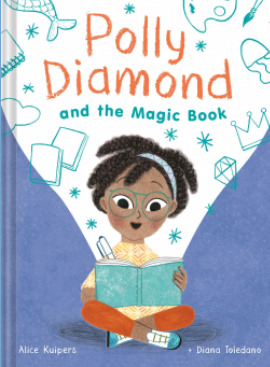
Polly Diamond and the Magic Book
Author: Alice Kuipers
Illustrator: Diana Toledano
Expected Publication May 1st, 2018 by Chronicle

Summary: Polly loves words. And she loves writing stories. So when a magic book appears on her doorstep that can make everything she writes happen in real life, Polly is certain all of her dreams are about to come true. But she soon learns that what you write and what you mean are not always the same thing! Funny and touching, this new chapter book series will entertain readers and inspire budding writers.

Teachers’ Tools for Navigation: Activities for Polly Diamond include:

Color Poem

On page one, Polly says that her teacher said her color poem was fantastic.

Have your students use the Read. Write. Think. template to create their own color poem.

Template

Finish her perfect house story

On page 3, Polly is interrupted while writing her perfect house story.

Finish her story with what your perfect house would include.

Wishes

When Polly realizes her book is magical, she thinks of many things she can wish for such as a cell phone, not frizzy hair, more books, a flat screen TV, and world peace.

Using a brainstorming graphic organizer, have your students think of all the things they wish for.

After brainstorming all of their wishes, have them circle your top three.

Using the five-paragraph format for informative essays, have students write explaining their three wishes.

Measuring

For Polly’s grandmother’s recipe for pancakes called for a cup of flour and a cup of milk. Many times, when baking, you do not have what you need to make the recipe, and not just ingredients—you may not have the right measuring cup.

Bring in one cup measuring cups along with 1/4, 1/3, 1/2, 3/4, tablespoon, and teaspoon measuring cups/spoons. Break students into groups and give each group one of each measuring cup/spoon as well as something to measure (water, rice, flour), and have them answering the following questions:

  • If you only had 1/4 cup, how could you get one cup of flour?
  • If you only had 1/3 cup, how could you get one cup of flour?
  • If you only had 1/2 cup, how could you get one cup of flour?
  • If you only had 3/4 cup, how could you get one cup of flour?
  • If you only had a tablespoon, how could you get one cup of flour?
  • If you only had a teaspoon, how could you get one cup of flour?

Favorite words

Polly has a lot of favorite words: words with double letters like doozy and mutli-meaning words like basil.

Have students make a list of three words that they really like.

For each word, they should define it and also explain why they like the word.

When finished, students should do a word meet and greet. Using clock buddies or some other buddy system, have students meet with other students in the classroom and learn about their favorite words. They should add the favorite words they learn about to their list.

Paint names

On page 29, Polly makes up names for paint that describes the color such as muddy pond, lunch bag, and baboon butt.

First, have students look at the colors Polly described on page 29 and find the corresponding color in either a crayon box or a color exploration site online.

Then, have students create color names using imagery. Either have them use the color exploration site online or the colors from Microsoft Word.

Affixes

Show students how there are different word parts (affixes) that can be put together to make new words. They are like puzzle pieces! Share with them the different types of word parts (prefix, suffix, root, and base) and how they fit together.

On page 56, Polly explains how adding un- to the beginning of a word gives it an opposite meaning. The word she uses as an example is unobservant. Share with your students that un- is a prefix that means NOT which does make a word the opposite. Have student brainstorm a list of words with un- at the beginning and define them using NOT as the definition for un.

Extension: dis-, il-, im-, in-, and ir- also mean NOT. Students can also explore words with these
prefixes.

Extension: On page 57, Polly also talks about adding –fully to the end a word to make it bigger,
but it does more than that. Share with your students that –fully is actually a combination of ful, a root word that means full of, and –ly, a suffix that turns an adjective to an adverb, so her example of sorrowfully means full of sorrow (adv).

After showing students how words break apart and how affixes help with word meanings, give students words with un- and –ful (or any other affix you taught) and have them mark the different word parts and define the word.

Coloring Sheets

Coloring sheets can also be downloaded from Chonricle’s website here.

See the Teaching Guide Created by Me (Kellee) for even more activities! 

You can also access the teaching guide through Chronicle’s website here.

Recommended For: 

readaloudbuttonsmall classroomlibrarybuttonsmall closereadinganalysisbuttonsmall

Kellee Signature