King and the Dragonflies by Kacen Callender

Share

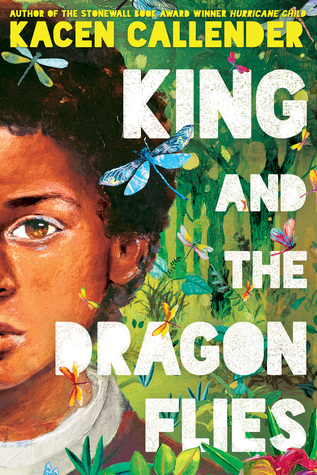
King and the Dragonflies
Author: Kacen Callender
Published: February 4, 2020 by Scholastic

GoodReads Summary: Twelve-year-old Kingston James is sure his brother Khalid has turned into a dragonfly. When Khalid unexpectedly passed away, he shed what was his first skin for another to live down by the bayou in their small Louisiana town. Khalid still visits in dreams, and King must keep these secrets to himself as he watches grief transform his family.

It would be easier if King could talk with his best friend, Sandy Sanders. But just days before he died, Khalid told King to end their friendship, after overhearing a secret about Sandy—that he thinks he might be gay. “You don’t want anyone to think you’re gay too, do you?”

But when Sandy goes missing, sparking a town-wide search, and King finds his former best friend hiding in a tent in his backyard, he agrees to help Sandy escape from his abusive father, and the two begin an adventure as they build their own private paradise down by the bayou and among the dragonflies. As King’s friendship with Sandy is reignited, he’s forced to confront questions about himself and the reality of his brother’s death.

Ricki’s Review: I finished this book a couple of weeks ago, and it is still on my mind. My goodness, it is beautifully written. I think I’ve recommended it about fifteen times to friends, colleagues, and students in the past two weeks. I don’t want to give away any spoilers in the review, so I’ll just say that this book shares powerful perspectives of friendship and of family. It also offers complex discussions of racism and homophobia—intersections and analysis. I am adopting this text for class use in the Fall, and I am really looking forward to discussing it with others.

Teachers’ Tools for Navigation: Teachers might ask students to select one aspect of the text that they want to explore in depth. I can think of many (but won’t name them because they are spoilers). Then, students might group according to interests and develop text sets to expand their understandings and think about the topics they choose from multiple perspectives.

Discussion Questions: 

  • What does Kingston learn in this text? What does he unlearn?
  • How does Kingston navigate his grief? How do his family members navigate their grief?
  • What did you learn from this text?

Flagged Passage: “Secrets are best kept hidden, because sometimes people aren’t ready to hear the truth. And that’s okay, King, he said, Because you don’t need other people to know the truth also. Just as long as you got that truth in you.”

Read This If You Loved:  Hurricane Child by Kacen Callender; Fighting Words by 

Recommended For:

readaloudbuttonsmall litcirclesbuttonsmall closereadinganalysisbuttonsmall classroomlibrarybuttonsmall

RickiSig andKellee Signature

Aven Green, Sleuthing Machine by Dusti Bowling, Illustrated by Gina Perry

Share

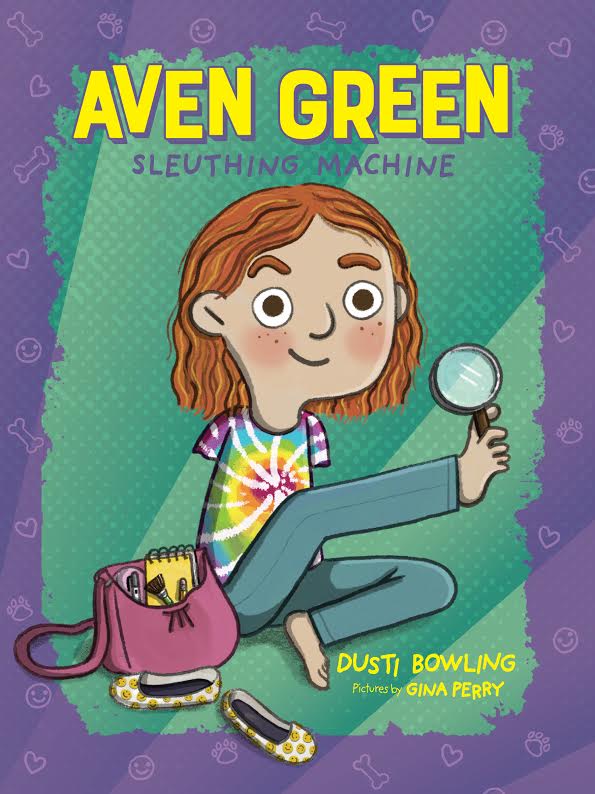
Aven Green, Sleuthing Machine
Author: Dusti Bowling
Illustrator: Gina Perry
Published April 13th, 2021 by Sterling Children’s Books

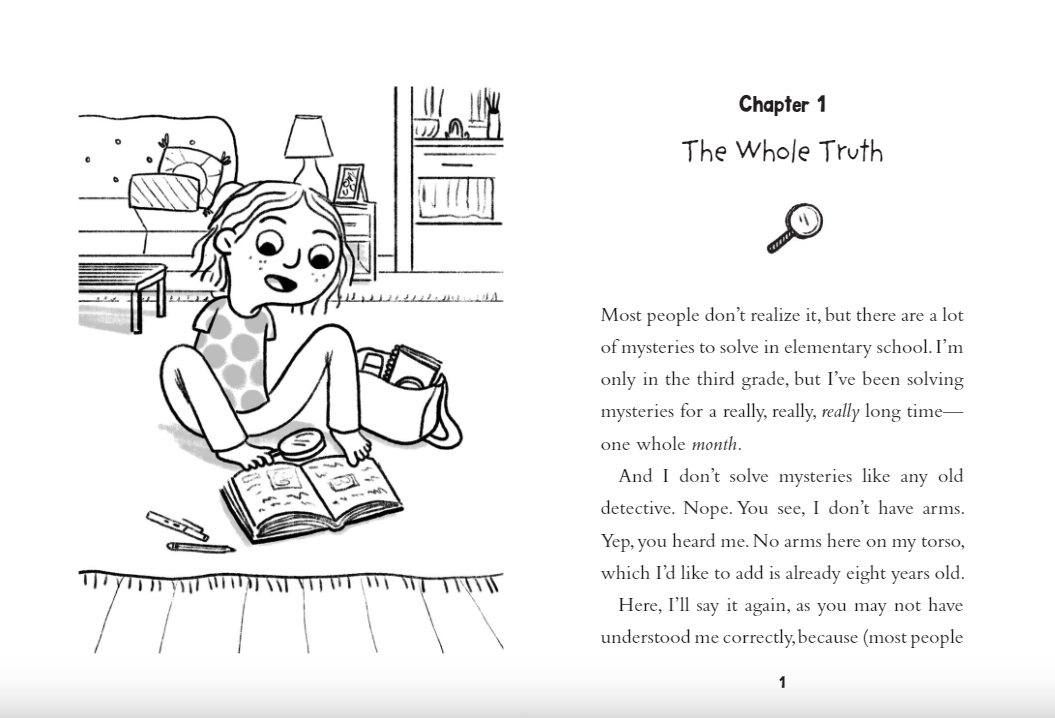
Summary: Third-grader Aven Green has been solving mysteries for a whole month—cracking such cases as The Mystery of the Cranky Mom. But can this perceptive detective solve two cases at the same time? First her teacher’s lunch bag disappears. Then Aven’s great-grandma’s dog goes missing. Fortunately, since Aven was born without arms, all the “arm” cells went to her super-powered brain instead. (That’s her theory.) This hilarious chapter book showcases a new side to Dusti Bowling’s unforgettable protagonist.

About the Creators:

DUSTI BOWLING is the award-winning, bestselling author of Insignificant Events in the Life of a CactusMomentous Events in the Life of a Cactus24 Hours in NowhereThe Canyon’s Edge, and the forthcoming Across the Desert and Aven Green chapter book series. Dusti currently lives in New River, Arizona with her husband, three daughters, a dozen tarantulas, a gopher snake named Burrito, a king snake name Death Noodle, and a cockatiel named Gandalf the Grey.

Gina Perry graduated from Syracuse University, worked as a compositor in animation, then an art director for a stationery manufacturer, before discovering her true passion—writing and illustrating children’s books. She lives with her family in NH.

Praise:

“[Bowling] infuses her writing with humor and empathy.” —School Library Journal (starred) 

“A fun series opener with a feisty protagonist who’ll keep readers on their toes.” —Kirkus Reviews

“Unapologetically smart and refreshingly confident in her abilities, this super-sleuth extraordinaire is a joy to tag along with.” —Booklist

“Aven’s candid voice ensures that this chapter book series starter will draw a young audience.” —Publishers Weekly

Review: I am so happy that Aven is now starring in chapter books. Her voice is one of my favorites in middle grade literature because it is full of truth and humor. Her voice is just as strong in this chapter book as it was in Insignificant Events in the Life of a Cactus and Momentous Events in the Life of a Cactus, just a bit younger.

In addition to Aven’s voice, the story is a compelling one! I’m a fan of mysteries, and this is a fun kid lit mystery. Also, the cast of characters are wonderful! I am a huge fan of Aven’s friends.

And I cannot wait until August when Aven Green, Baking Machine comes out!

Teachers’ Tools for Navigation: I would love to see Aven Green read in classrooms! It would be such a fun book to read together as a class! The class could even keep track of all of the clues and see if they can figure out the mystery!

There are also opportunities in the book to talk about acronyms and word play!

Discussion Questions: 

  • How did Aven keep track of her clues?
  • What type of materials does Aven need to be a good detective?
  • How did Aven help Sujata with acclimating with the new school?
  • What are your slumber party traditions?
  • What is a time you have heard a word incorrectly like Emily heard hen droids?
  • Have you ever lost something? How did you work to find it?
  • If you were going to do a report on a country

Flagged Passages: 

Read This If You Love: The Magnificent Makers series by Theanne Griffith; King and Kayla series by Dori Hillestad Butler; The Misadventures of Toni Macaroni in The Mad Scientists by Cetonia Weston-Roy; The Misadventures of Salem Hyde series by Frank Cammuso; Meena series by Karla Manternach; Questioneers series by Andrea Beaty; Weird Little Robots by Carolyn Crimi; A Boy Called Bat series by Elana K. Arnold

Recommended For: 

classroomlibrarybuttonsmall

Signature

**Thank you to Sterling for providing a copy for review!**

Blog Tour with Giveaway, Educators’ Guide, and Review: The House That Wasn’t There by Elana K. Arnold

Share

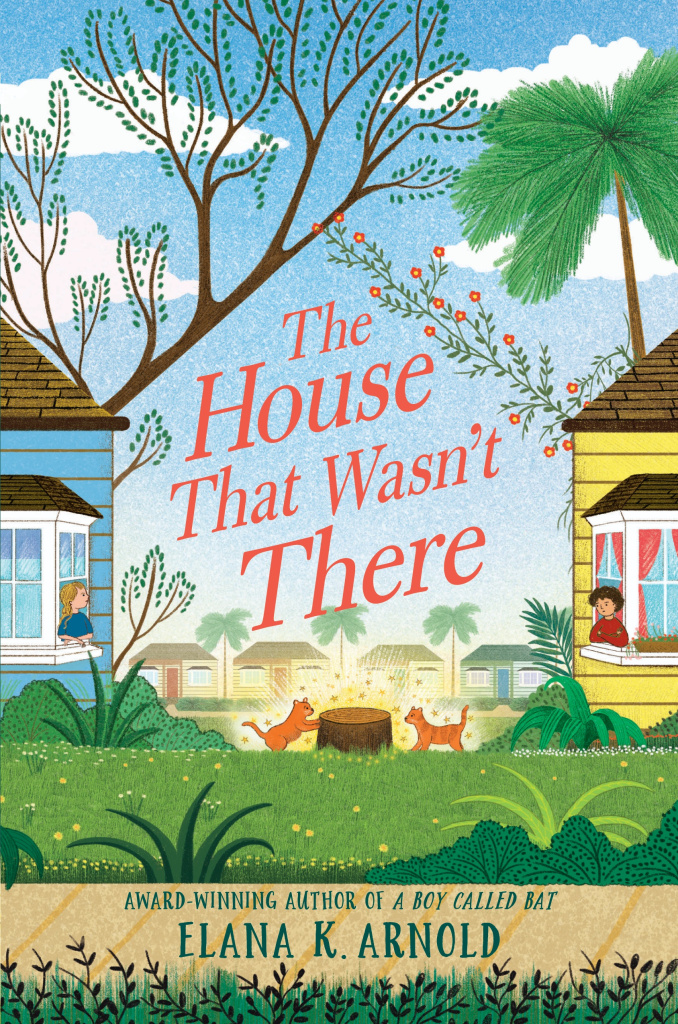
The House That Wasn’t There
Author: Elana K. Arnold
Published March 30th, 2021 by Walden Pond Books

Summary: Alder has always lived in his cozy little house in Southern California. And for as long as he can remember, the old, reliable, comforting walnut tree has stood between his house and the one next door. That is, until a new family—with a particularly annoying girl his age—moves into the neighboring house and, without warning, cuts the tree down.

Oak doesn’t understand why her family had to move to Southern California. She has to attend a new school, find new friends, and live in a new house that isn’t even ready—her mother had to cut down a tree on their property line in order to make room for a second floor. And now a strange boy next door won’t stop staring at her, like she did something wrong moving here in the first place.

As Oak and Alder start school together, they can’t imagine ever becoming friends. But the two of them soon discover a series of connections between them—mysterious, possibly even magical puzzles they can’t put together.

At least not without each other’s help.

Award-winning author Elana K. Arnold returns with an unforgettable story of the strange, wondrous threads that run between all of us, whether we know they’re there or not.

About the Author: Elana K. Arnold is the author of critically acclaimed and award-winning young adult novels and children’s books, including the Printz Honor winner Damsel, the National Book Award finalist What Girls Are Made Of, and Global Read Aloud selection A Boy Called Bat and its sequels. Several of her books are Junior Library Guild selections and have appeared on many best book lists, including the Amelia Bloomer Project, a catalog of feminist titles for young readers. Elana teaches in Hamline University’s MFA in Writing for Children and Young Adults program and lives in Southern California with her family and menagerie of pets.

Praise for The House That Wasn’t There:

“In this luminous story full of mystery and magic, Elana K. Arnold weaves a shimmering tapestry about the lovely and surprising ways we’re connected to each other. Heart-healing, hopeful, and wonderfully inventive, this beautiful novel by a master storyteller is not to be missed.” —Katherine Applegate, Newbery Medal-winning author of The One and Only Ivan

“Told through alternating perspectives that offer clearly rendered details, this compassionate novel gives a unique twist to familiar situations—feeling lonely, adjusting to new environments, forging new bonds—while inviting readers to open their imaginations to all sorts of wonderful possibilities.” —Publishers Weekly (starred review)

“The author enriches her sparely told story with hints of magic, song lyrics, good choices that key sudden sea changes in several relationships, and the small background details that make settings and backstories seem real. A low-key marvel rich in surprises, small fuzzy creatures, and friendships old and new.” —Kirkus Reviews (starred review)

Review: I love what Elana K. Arnold can do with a story! She is brilliant when it comes to weaving in secondary stories that often have way more impact than the reader realizes and for building secondary characters that leave a lasting impression.

In The House That Wasn’t There, I was struck with this talent again as I followed Alder’s and Oak’s life as they collide suddenly at the beginning of 6th grade and how their school project, a walnut tree, a dead possum, and adopted kittens all intertwine to help tell their story. The reader at times will wonder why certain things are happening or why something is being mentioned and then BAM it is revealed. It is quite fun to read! And with a bit of magical realism thrown in just for fun, a seemingly “normal” story becomes an extraordinary one!

It was also quite interesting how Arnold set up the chapters, alternating between Alder and Oak but in 3rd person. It helped keep the POV clear while also showing the reader a bit more about each of the character’s lives.

And finally: A shout out to Beck for not being what was expected; Faith for having a name, being a part of the story instead of the background, and being wonderful; and Mr. Rivera for being an innovative teacher that promotes collaboration, cross-curricular activities, and outside of the box thinking!

Educators’ Guide: 

Flagged Passages: Preview the first two chapters from the publisher: READ A SAMPLE

Read This If You Love: A Girl, a Raccoon, and the Midnight Moon by Karen Romano YoungBrave in the Woods by Tracy HolczerQuintessence by Jess Redman, Ikenga by Nnedi Okorafor, This Was Our Pact by Ryan Andrews, The Trouble with Shooting Stars by Meg Cannistra

Recommended For: 

classroomlibrarybuttonsmall

Don’t Miss the Other Stops on the Blog Tour!

March 28 Nerdy Book Club @nerdybookclub
March 29 YAYOMG @yayomgofficial
March 30 Unleashing Readers @UnleashReaders
March 31 Teachers Who Read @teachers_read
April 2 Maria’s Mélange @mariaselke
April 7 Bluestocking Thinking @BlueSockGirl
April 10 A Library Mama @librarymama
April 12 Storymamas @storymamas

Giveaway!

a Rafflecopter giveaway

Signature

**Thank you to Walden Pond Press for providing a copy for review and giveaway!**

Review and Giveaway!: Let Liberty Rise!: How America’s Schoolchildren Helped Save the Statue of Liberty by Chana Stiefel, Illustrated by Chuck Groenink

Share

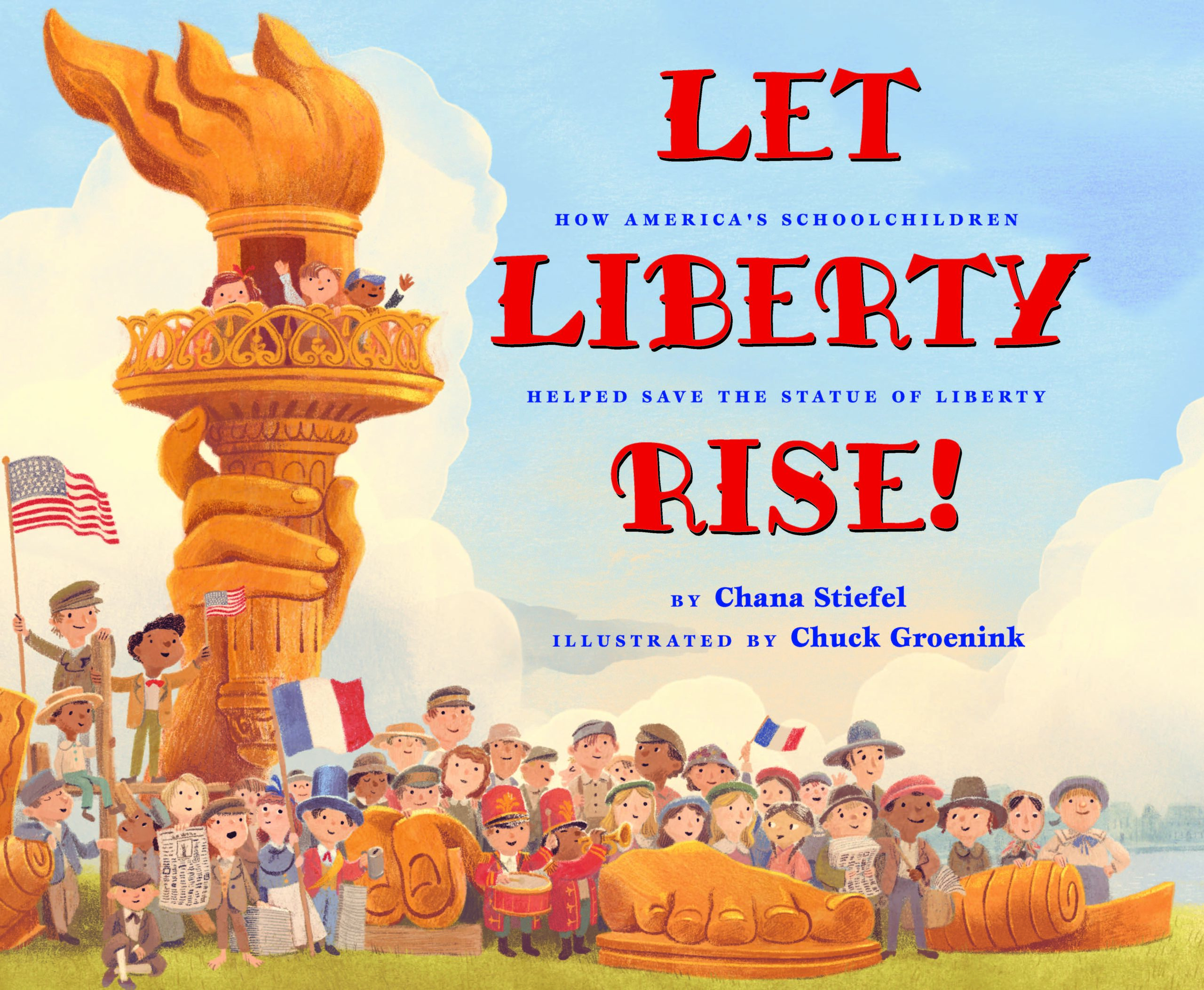
Let Liberty Rise!: How America’s Schoolchildren Helped Save the Statue of Liberty
Author: Chana Stiefel
Illustrator: Chuck Groenink
Anticipated Publication: March 2, 2021 by Scholastic

Goodreads Summary: How did 121,000 Americans save their most beloved icon? Here is an inspiring story about the power we have when we all work together!

“This charming history title is a true inspiration for the present. An informative must-have for all libraries.” — School Library Journal, starred review

“All rise to this evocative, empowering offering.” — Kirkus Reviews

“[A] true tale of cooperation among all ages.” — Publishers Weekly

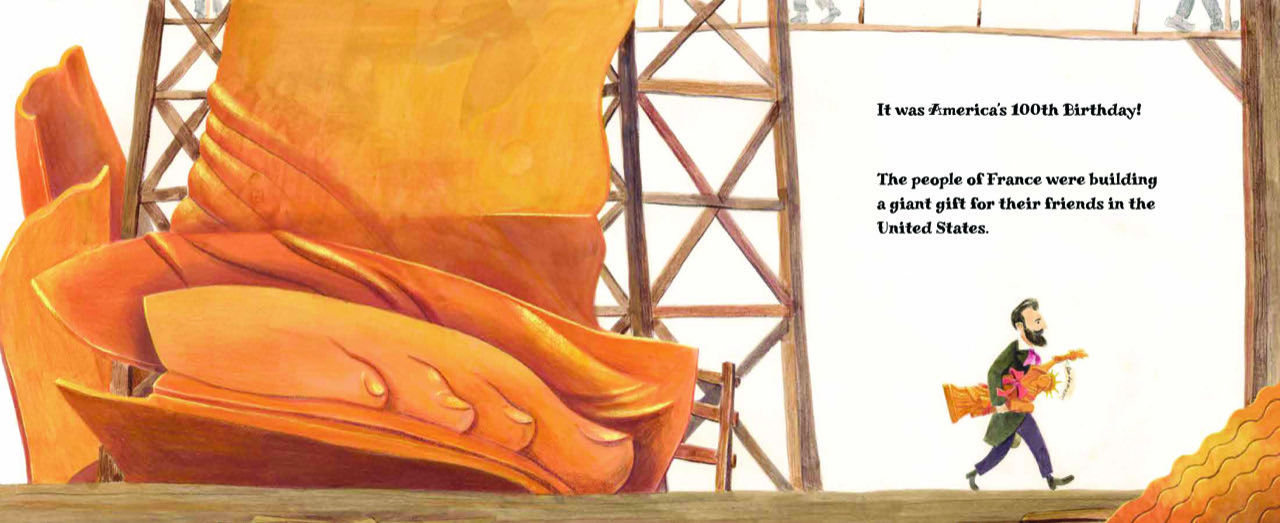
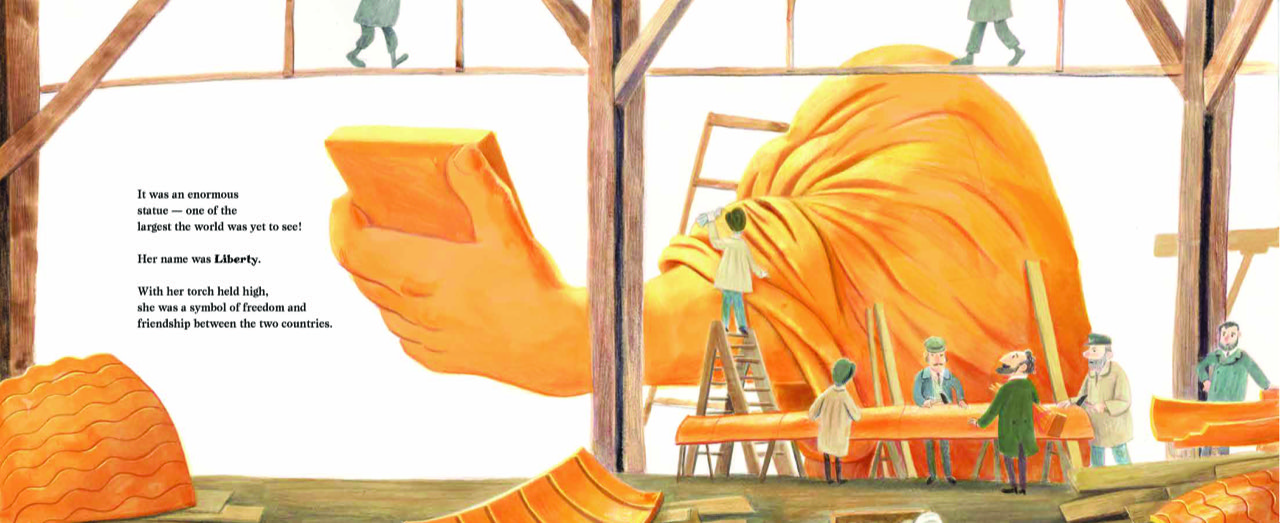
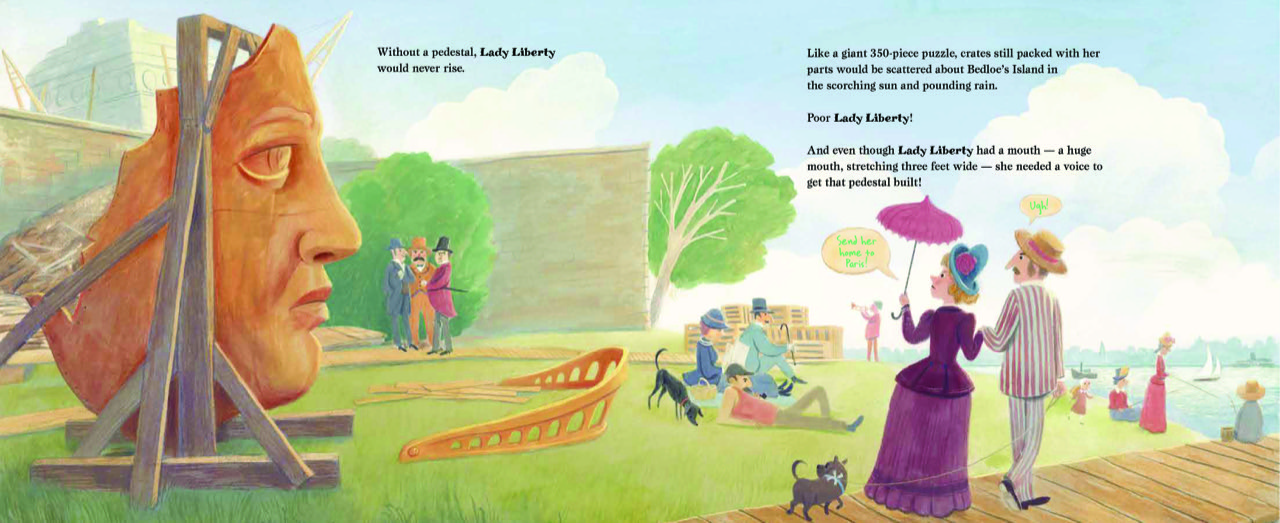
On America’s 100th birthday, the people of France built a giant gift! It was one of the largest statues the world had ever seen — and she weighed as much as 40 elephants! And when she arrived on our shores in 250 pieces, she needed a pedestal to hold her up. Few of America’s millionaires were willing to foot the bill.

Then, Joseph Pulitzer (a poor Hungarian immigrant-cum-newspaper mogul) appealed to his fellow citizens. He invited them to contribute whatever they could, no matter how small an amount, to raise funds to mount this statue. The next day, pennies, nickels, dimes, and quarters poured in. Soon, Pulitzer’s campaign raised enough money to construct the pedestal. And with the help of everyday Americans (including many thousands of schoolchildren!) the Statue of Liberty rose skyward, torch ablaze, to welcome new immigrants for a life of freedom and opportunity!

Chana Stiefel’s charming and immediate writing style is perfectly paired with Chuck Groenink’s beautiful, slyly humorous illustrations. Back matter with photographs included.

About the Creators:

Chana Stiefel is the author of more than 25 books for kids. She hails from sunny South Florida and now lives in New Jersey, just a ferry ride away from the Statue of Liberty. Chana loves visiting schools and libraries as well as sharing her passion for reading and writing with children. She earned a master’s degree in Science, Health, and Environmental Reporting from New York University. To learn more, visit Chana at chanastiefel.com. Facebook: Chana Stiefel; Twitter: @chanastiefel; Instagram: @chanastiefel

Chuck hails from an overgrown village among the peat bogs in the north of the Netherlands, where he spent his formative years climbing trees, drawing, reading, and cycling. He attended the Artez Institute of Visual Arts in Kampen, graduating from the Department of Illustration in 2004. He now resides in Valatie, New York, with his wife, dog, and two cats. Visit Chuck at chuckgroenink.com; Instagram: @c.groenink

Ricki’s Review: Wow! I did not know about this story, and it is really quite inspirational. As a person who values community and coming together for shared causes, I fell in love with this book. As one of the children in the text who donated 60 cents said, “Drops make an ocean.” After looking at the cover, my kids wanted to know why the statue of liberty wasn’t green, which started our first conversation. Then, we had many other wonderful conversations together. We even did some math to determine how much 40 elephants weigh! The illustrations feel majestic–they offer up-close looks at the different parts of the Statue of Liberty. I can’t get enough of this book. Also, be sure to check out the timeline and photographs. 

Teachers’ Tools for Navigation: Reading this story will make kids want to work toward a cause themselves. Culturally sustaining practices ask educators and schools to be accountable to their communities. I’d love to use this book to kick off a class discussion of how the students could work toward a cause in their own communities. 

Download a free curriculum guide and check out the book trailer on the book page for Let Liberty Rise!

Discussion Questions: 

  • What did you learn from the book?
  • Who is the hero of this book? Are there many heroes?
  • How can you give back in your own community?

Flagged Spreads: 

Giveaway:

Read This if You Love: Nonfiction picture books, history books, stories of heroism and community

Recommended For: 

readaloudbuttonsmall classroomlibrarybuttonsmall closereadinganalysisbuttonsmall

RickiSig

**Thank you go Barbara at Blue Slip Media for providing a copy for review!**

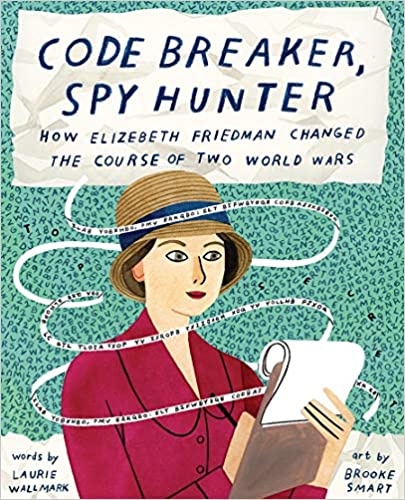
Review and Giveaway!: Code Breaker, Spy Hunter: How Elizebeth Friedman Changed the Course of Two World Wars by Laurie Wallmark, Illustrated by Brooke Smart

Share

Code Breaker, Spy Hunter: How Elizebeth Friedman Changed the Course of Two World Wars
Author: Laurie Wallmark
Illustrator: Brooke Smart
Anticipated Publication: March 2, 2021 by Harry N. Abrams

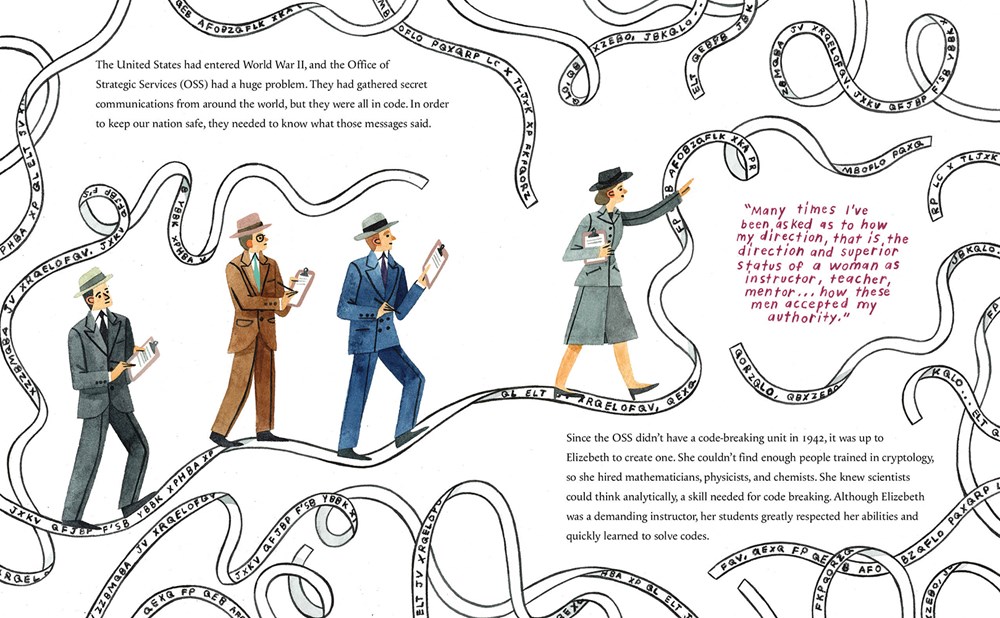
Goodreads Summary: Decode the story of Elizebeth Friedman, the cryptologist who took down gangsters and Nazi spies.

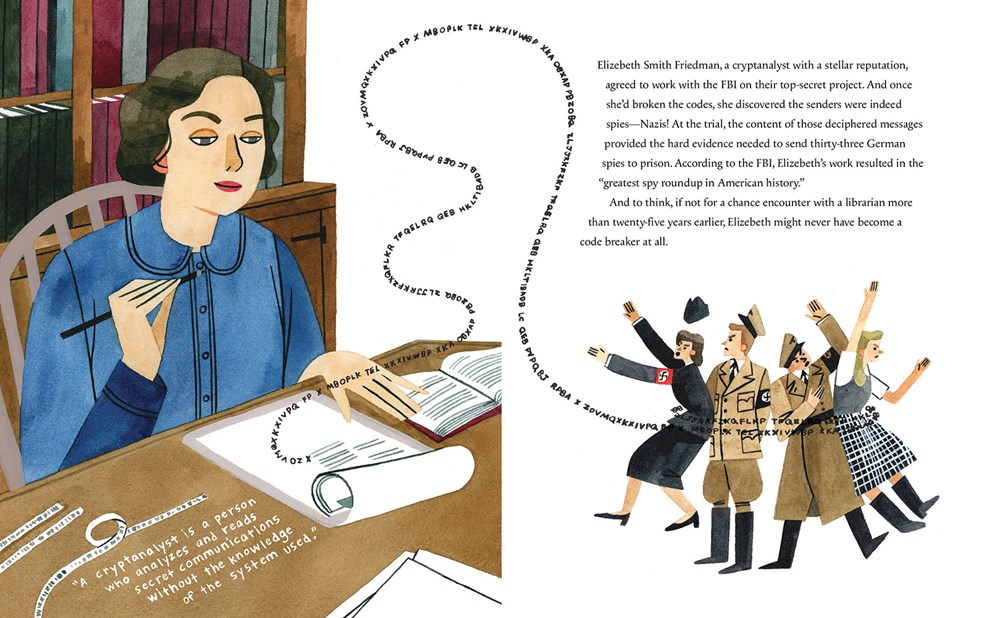
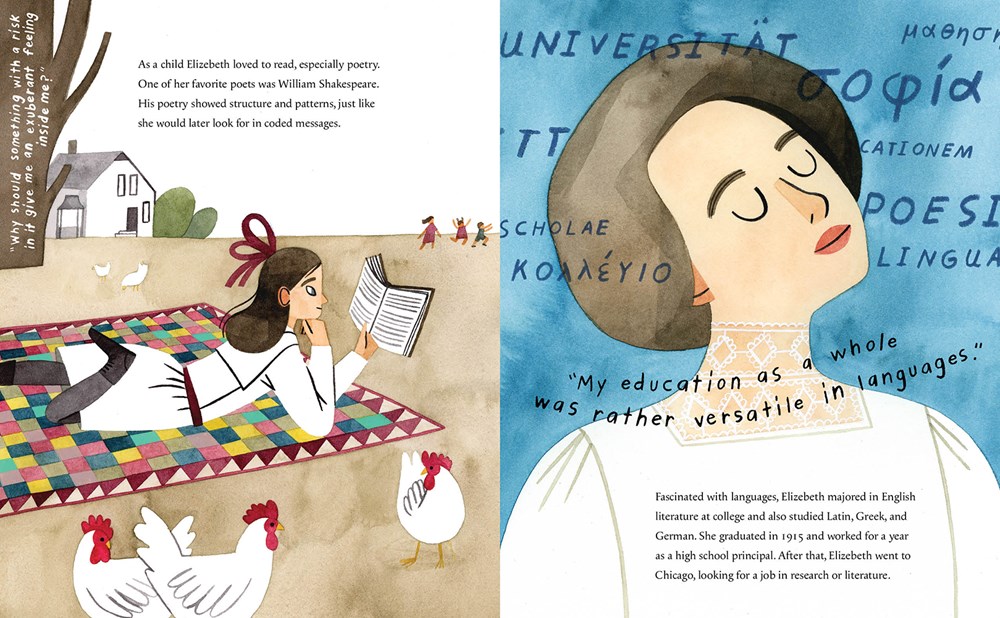
In this picture book biography, young readers will learn all about Elizebeth Friedman (1892-1980), a brilliant American code breaker who smashed Nazi spy rings, took down gangsters, and created the CIA’s first cryptology unit. Her story came to light when her secret papers were finally declassified in 2015. From thwarting notorious rumrunners with only paper and pencil to counter-spying into the minds and activities of&; Nazis, Elizebeth held a pivotal role in the early days of US cryptology. No code was too challenging for her to crack, and Elizebeth’s work undoubtedly saved thousands of lives. Extensive back matter includes explanations of codes and ciphers, further information on cryptology, a bibliography, a timeline of Elizebeth&;s life, plus secret messages for young readers to decode.

About the Creators: 

Award-winning author Laurie Wallmark has written picture-book biographies of women in STEM fields ranging from computer science to mathematics, astronomy to code breaking. Her books have earned multiple starred reviews, been chosen as Junior Library Guild Selections, and received awards such as Outstanding Science Trade Book, Cook Prize Honor, and Parents’; Choice Gold Medal. She is a former software engineer and computer science professor. She lives in Ringoes, New Jersey. You can find her at lauriewallmark.com. On Twitter: @lauriewallmark, Facebook: @lauriewallmarkauthor, Instagram: @lauriewallmark

Brooke Smart loves telling stories through her illustrations, especially stories about brave women from history. She has always loved to read, and growing up she could be found nightly falling asleep with a book on her chest. Illustrating books as a professional artist is a lifelong dream come true. She is living the busy, tired, happy, wonderful dream in Salt Lake City, Utah, with her husband, their three kids, and their naughty cat named Sunshine. Learn more about her at brooke-smart.com. Instagram: @bookesmartillustration

Ricki’s Review: This book is packed with information! I wasn’t familiar with this Women in STEM series, and now I feel like I need to get all of the books! The book has a great complexity—from the way in which the story is told in an engaging way that draw readers in to the way the illustrations and text are laid on the page. Typically, I give books away after I read and review them, but I am going to have a hard time parting with this one. Elizebeth Friedman’s bravery is simply awe-inspiring. She is a true heroine who needs to be named more frequently in history. Get this book. You truly won’t be disappointed.

Teachers’ Tools for Navigation: This book begs to be read in literature circles with other books about heroes/heroines, women in STEM, or powerful people in history. It would ignite powerful conversations about the characteristics of historical and contemporary heroes and heroines.

Check out the Code Breaker, Spy Hunter book page, where you’ll find a trailer, cool activity sheets, and more!

Discussion Questions: 

  • What is one intentional choice the author made in telling this story?
  • What are the qualities of a hero? Who are some historical and contemporary heroes who inspire you?
  • What are some of the pivotal moments in Friedman’s life story? How did she change the world for the better?

Flagged Spreads: 

Giveaway:


Other Books by Laurie Wallmark: Grace Hopper: Queen of Computer Code; Ada Byron Lovelace and the Thinking Machine; Hedy Lamarr’s Double Life: Hollywood Legend and Brilliant Inventor; Numbers in Motion: Sophie Kowalevski, Queen of Mathematics

Recommended For: 

readaloudbuttonsmall classroomlibrarybuttonsmall closereadinganalysisbuttonsmall

RickiSig

**Thank you go Barbara at Blue Slip Media for providing a copy for review!**

Love in English by Maria E. Andreu

Share

Love in English
Author: Maria E. Andreu
Published: February 2, 2021 by Balzer + Bray

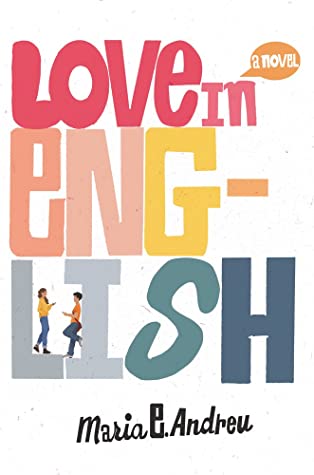
Summary: Sixteen-year-old Ana has just moved to New Jersey from Argentina for her Junior year of high school. She’s a poet and a lover of language—except that now, she can barely understand what’s going on around her, let alone find the words to express how she feels in the language she’s expected to speak.

All Ana wants to do is go home—until she meets Harrison, the very cute, very American boy in her math class. And then there’s her new friend Neo, the Greek boy she’s partnered up with in ESL class, who she bonds with over the 80s teen movies they are assigned to watch for class (but later keep watching together for fun), and Altagracia, her artistic and Instagram-fabulous friend, who thankfully is fluent in Spanish and able to help her settle into American high school.

But is it possible that she’s becoming too American—as her father accuses—and what does it mean when her feelings for Harrison and Neo start to change? Ana will spend her year learning that the rules of English may be confounding, but there are no rules when it comes to love.

With playful and poetic breakouts exploring the idiosyncrasies of the English language, Love in English tells a story that is simultaneously charming and romantic, while articulating a deeper story about what it means to become “American.”

Ricki’s Review: I read this book and immediately thought of the many people who would love reading it. It does a beautiful job offering a lived experience of a young girl who is finely attuned to language acquisition. I have been meeting regularly with two students who have shared similar experiences to those of Ana, and I plan to share this book with them. For many, this book will act as a mirror, window, and sliding glass door. I understand fully the criticism this book has received–Maria E. Andreu writes in the opening that she was born in Spain, and her grandparents moved from Spain to Argentina as toddlers. She grew up in the US, traveled to Argentina at age 6 and then was not allowed to return to the US. She was undocumented at age 8 in the US. She talks about her experiences with this and with White privilege in powerful ways in The Secret Side to Empty. My thoughts about this controversy are not as valuable as those of a person with Latinx descent. In the end, I do wish that the character more closely matched Maria E. Andreu’s story rather than that of a native Argentinian. I loved the book and appreciated all that it taught me about Maria E. Andreu’s experiences with language, and there simply aren’t enough books available that explicitly discuss the linguistic diversity within our schools. this book is one that I will remember for quite some time.

Kellee’s Review: One of the things I love most about my school is the amount of diversity and the acceptance and inclusion of all in the school; we do not care where you are from or what language you speak–you are welcome with open arms!  While reading Love in English, I found myself being so upset with the students and some of the teachers in Ana’s school. Why was her ethnicity and language acquisition something that anyone would find funny or bully-worthy?! But then I remember that other places are not like my school… 

I also found myself connecting with Mr. T the ELL teacher! When I first started working at my school, I was intimidated with teaching ELL students because I didn’t think I would be of any help with someone learning English when it was the only language I knew. But throughout my first few years there, I began to learn that teaching ELL students is one of my favorite honors of being a teacher. My 7th year teaching, I taught a class much like Mr. T’s class, and it is one of my favorite classes I’ve ever taught. Mr. T shows how an ELL class, done correctly, can truly become home at school. 

Also, as a reading teacher & librarian at a school with a large Latinx population, primarily from South America, I found that it is so hard to find books that truly reflect my students’ experiences, but Love in English is a mirror for so many of them! It made me so happy while reading because I know that Ana’s experience is one that they will connect with. 

Overall, this story looks at language acquisition in a way that I have not seen in another book and it does so during a wonderful story with some amazing poetry woven throughout. I also love that the language acquisition aspect is based on the author’s experiences.

Teachers’ Tools for Navigation: We would love to use this book to teach about language and translanguaging. We’d group texts that help us think about the power of discussions related to the nuances of language.

Ana, throughout the novel, focuses on aspects of English in her journal. Use Ana’s journals to guide activities on some of the more challenging and, some would say, nonsensical parts of English, like idioms, similar looking words that are pronounced differently, and more.

Ana’s journals are written in beautiful poetry! Use Ana’s poetry for a mentor text to have students write poetry about similar topics to Ana.

Many of Mr. T’s activities that he implemented in his classroom are amazing activities to work with students acquiring a new language. If you are in a language-focused classroom, they would be assets to your classroom.

Discussion Questions:

  • How does language influence the ways in which Ana moves in the world?
  • How do Ana’s relationships with family and friends impact her life?
  • What is the significance of the title of the book?
  • How might the author’s perspective have influenced her work?
  • Why does Mr. T recommend Ana and Neo watch movies as part of their language acquisition?
  • What is the impact of the author’s use of ### since Ana is the narrator?
  • What is a part of the English language that you find confusing?
  • How did the year that Ana and her dad were apart affect their current relationship?
  • Why was Ana so drawn to a relationship with Harrison at first?
  • How was Altagracia’s friendship lifechanging for Ana?

Flagged Passage: 

“‘We don’t have to speak English,’ I tell her. I think–

We don’t have to do it this way.

We don’t have to make it so hard.

We don’t have to erase everything about us. At least not all at once.

—but I do not say it” (Advanced Reader Copy p. 35).

Recipe for Disaster

How do you get an apple in your eye?
Just how easy is pie? 

Who would eat crow or eat their heart out? 
Or how could anyone eat enough hay to eat like a horse? 
How can a potato sit on the couch?
In a world where so many thins are confusing, even food, 
I dream of a day when it is a piece of cake.” (Digital Review Copy Loc 1125)

Read This Book If You Loved: The Secret Side to Empty by Maria E. Andreu, Return to Sender by Julia Alvarez, Ask Me No Questions by Marina Budhos, Girl in Translation by Jean Kwok, Illegal by Bettina Restrepo

Recommended For: 

classroomlibrarybuttonsmall litcirclesbuttonsmall

  RickiSig and

Sloth Wasn’t Sleepy by Kate Messner, Illustrated by Valentina Toro

Share

Sloth Wasn’t Sleepy
Author: Kate Messner
Illustrator: Valentina Toro
Published: January 12, 2021 by Sounds True

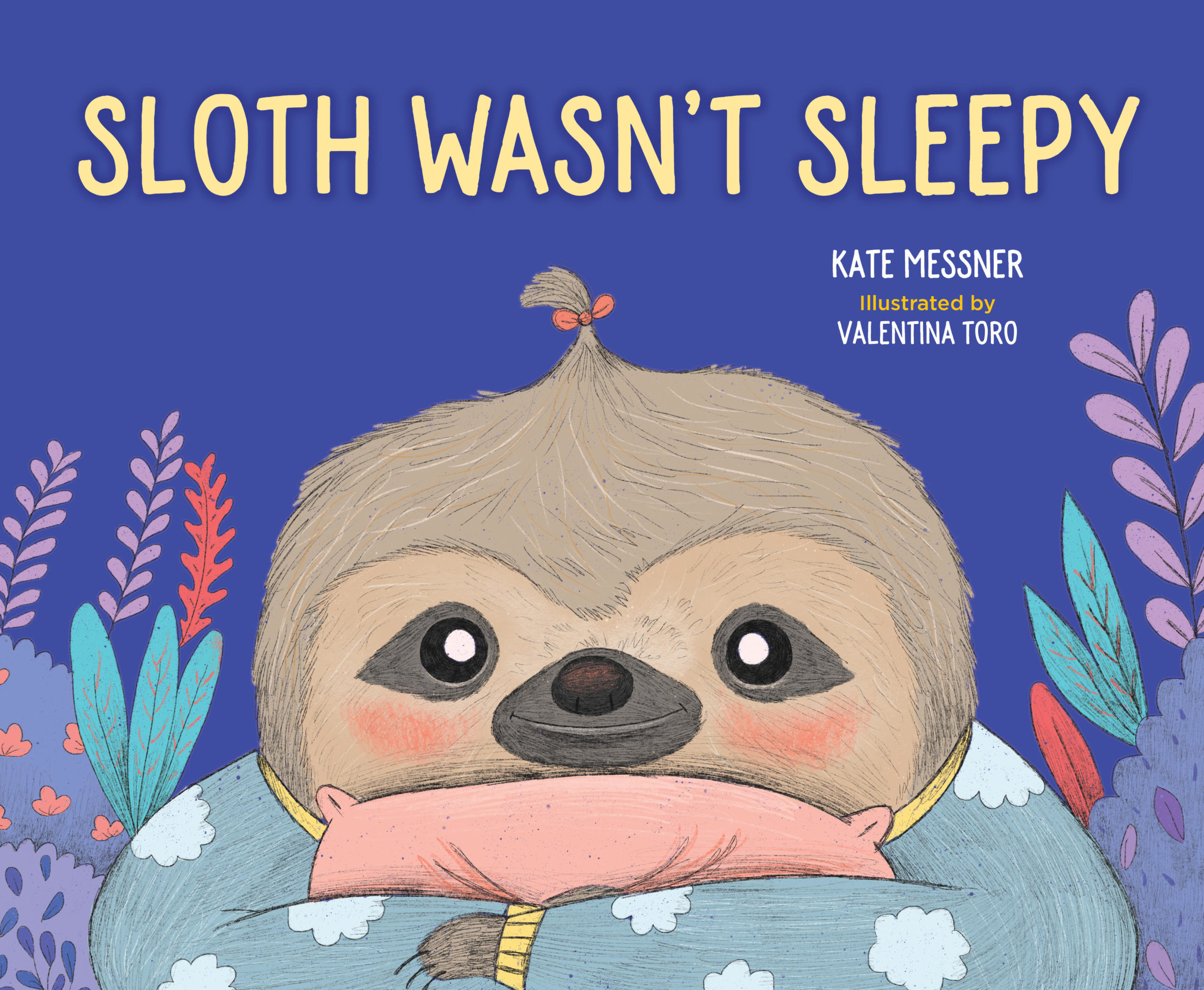
Goodreads Summary: For any child having trouble getting to sleep, the most lovable animal in the rain forest is here to help.

One night at bedtime, Sloth wasn’t sleepy.
“What if I worry when I try to fall asleep?” Sloth said.
“Ah … worries,” Mama said. “We will have to let them go.”

A tough day, a bad dream, a scary noise … these are just a few of the things that can keep kids wide awake and frightened after dark. But Mama Sloth knows the secrets for calming worried minds and getting to sleep—and as she shares them with her daughter, young readers will learn valuable relaxation skills that last a lifetime.

Sloth Wasn’t Sleepy does more than provide a sweet bedtime story—kids will join Sloth to learn mindfulness practices such as “shrinking down” fears in their mind and calming their body through breath and simple visualizations. Kate Messner’s beautiful book helps parents and kids relax into dreamland with a sense of peace, safety, and belonging.

Ricki’s Review: This book is simply magical. Since moving to Colorado, I have understood the value of mindfulness. My kids do meditation at night, and it has really helped their sleep. This book is going to be so helpful to facilitate the process. The charming illustrations drew my attention immediately, and my kids were giggling as we read the book. The words feel carefully and intentionally placed, and they soothed me, as the reader, too! I plan to gift this book to my younger sons’ teachers to use before naptime.

Kellee’s Review: My son is definitely afflicted with a large imagination, specifically when it comes to bedtimes and fears. Reading about Sloth’s worries and her mom’s advice on how to overcome this anxiety is something I will definitely be bringing up whenever these fears erupt at bedtime. I think many kids will find solace in these routines that Mama Sloth set up for Sloth in the story–between the relaxing onomatopoeias, the deep breathing, and the visualization, the story definitely brings a calm over the reader. And to add to this feeling is the adorable and cool-colored illustrations that just tie it all together.

Teachers’ Tools for Navigation: Implicit in this book is a description of anxiety. A common manifestation of anxiety comes with nighttime worrying. I’d love to use this book in literature circles centered around mental health, or in a way that allows children to think about the ways in which they negotiate feelings of worry and anxiety.

Discussion Questions: 

  • What interrupts Sloth’s desire to rest?
  • How does Sloth work to go to sleep?
  • How can you adjust your own habits to improve your sleep?
  • What worries do you have? Shrink them, lay it on a leaf, and set it free.
  • When else could you use a breathing technique like the one Mama Sloth taught Sloth?

We Flagged: “‘Sometimes,” Mama said, “I like to pretend I’m a tree. Drinking up breath from my roots to my crown, from my toes to the top of my head. Would you like to try that, too?'”

You can also check out:

Read This If You Loved: Sloth Wasn’t Sleepy by Frann Preston-Gannon; Sparky by Jenny Offill, “Slowly, Slowly, Slowly” Said the Sloth by Eric Carle, Dinosaur Farm by Frann Preston Gannon

Recommended For: 

RickiSigandKellee Signature

**Thank you to Samantha at Sounds True for providing copies for review!**