Amulet Books Graphic Novel Teaching Guide

Share

abrams

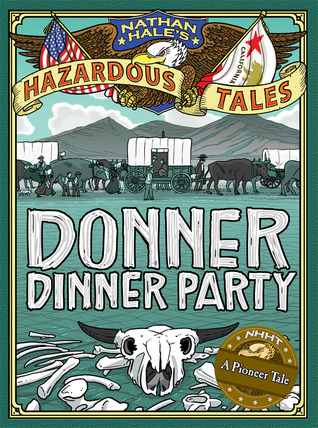
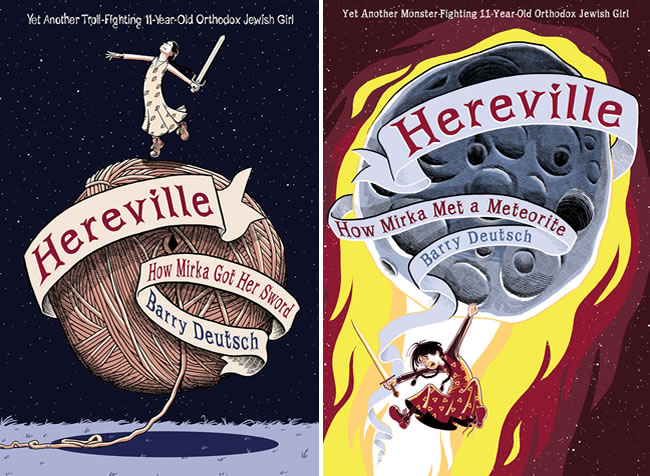
In January, I was contacted by a publicity and marketing associate from Abrams Books/Amulet Books out of the blue. In this email, I was asked to work on a teaching guide about their graphic novels: The Misadventures of Salem Hyde, Nathan Hale’s Hazardous Tales, Hereville, and the Explorer series.

1729025518405488 

13591161135911621729026018405492

1283377017290285

I was beyond honored! And, of course, I said that I would definitely love to do it as I had read all of the graphic novels, and I am a huge fan of them.

First, they asked me to write an introduction about graphic novels and their importance in the classroom. I am a huge advocate for using graphic novels in schools, so I immediately began researching and writing. Here is the introduction:

What are graphic novels? The easiest way to describe graphic novels is to say that they are book-length comic books. However, a more complex definition that educators and librarians use is “book-length narratives told using a combination of words and sequential art, often presented in comic book style” (Fletcher-Spear, 37). Graphic novels are not written in just one genre; they can be in any genre, since graphic novels are a format/medium. Graphic novels are much like novels, but they’re told through words and visuals. They have all narrative elements, including characters, a complete plot, a conflict, etc.

Middle grade and young adult graphic novels cover a wide spectrum of themes and topics. Some common themes found in graphic novels for this age include the hero’s journey; overcoming hardship; and finding one’s identity. For example, in Hereville, we meet Mirka, an everyday girl who learns to use her brains and brawn to overcome her foes. In The Misadventures of Salem Hyde, Salem is working on finding out just who she is (both as a witch and as a person) with the help of her friend Whammy. Graphic novels can cross curricular lines. One example is the Nathan Hale’s Hazardous Tales series—comical nonfiction that takes historical events and presents them in interesting ways, using graphics and humor that will make students want to learn even more about the historical time periods. In the Explorer series, stories include topics such as animal adaptation, volcanic eruptions, and the fate of humanity. Like novels, graphic novels offer opportunities in all subject areas to extend students’ thinking.

Over the past few years, graphic novels have become a hot topic, growing in popularity with both children and educators. While many teachers are beginning to include them in the classroom, there are still teachers, administrators, and librarians who struggle with including this format in their schools. So, why should you use them in your classroom and have them available for students?

  • Graphic novels can make a difficult subject interesting and relatable. (Cohen)
  • Students are visual learners, and today’s students have a much wider visual vocabulary than students in the past. (Karp)
  • Graphic novels can help foster complex reading skills by building a bridge from what students know to what they still have to learn. (NCTE)
  • Graphic novels can help with scaffolding when trying to teach higher-order thinking skills or other complex ideas.
  • For students who struggle to visualize while they read, graphic novels provide visuals that shows what good readers do. (NCTE)
  • Many graphic novels rely on symbol, allusion, satire, parody, irony, and characters/plot and can be used to teach these, and other, literary devices. (Miller; NCTE)
  • Often, in between panels (called the gutter), the reader must make inferences to understand how the events in one panel lead to the events in the next. (McCloud)
  • Graphic novels can make differentiating easier. (Miller)
  • Graphic novels can help ELL (English Language Learners) and reluctant and struggling readers since they divide the text into manageable chunks, use images (which help students understand unknown vocabulary), and are far less daunting than prose. (Haines)
  • Graphic novels do not reduce the vocabulary demand; instead, they provide picture support, quick and appealing story lines, and less text, which allow the reader to understand the vocabulary more easily. (Haines)
  • Research shows that comic books are linguistically appropriate reading material, bearing no negative impact on school achievement or language acquisition. (Krashen)
  • Students love them.

Although you can find graphic novel readers at all reading levels, graphic novels can truly be a gateway to the joys of reading for reluctant and struggling readers. Reluctant readers often find reading to be less fun than video games, movies, and other media, but many will gravitate toward graphic novels because of the visuals and the fast pace. Struggling readers will pick up graphic novels for these reasons as well but also because the graphic novel includes accommodations directly in the book: images, less text, etc.

All in all, graphic novels can interest your most reluctant and struggling readers and also extend all of your readers, including your most gifted.  

Resources

  • Cohen, Lisa S. “But This Book Has Pictures! The Case for Graphic Novels in an AP Classroom.” AP Central. CollegeBoard.
  • Fletcher-Spear, Kristin, Merideth Jenson-Benjamin, and Teresa Copeland. “The Truth About Graphic Novels: A Format, Not a Genre.” The ALAN Review Winter (2005): 37­–44.
  • Haines, Jennifer. “Why Use Comics in The Classroom?” Comic Book Daily. N.p., 20 Mar. 2012.
  • Karp, Jesse. “The Case for Graphic Novels in Education.” American Libraries. N.p., 1 Aug. 2011.
  • Krashen, Stephen. The Power of Reading. Englewood, CO: Libraries Unlimited, Inc. 1993.
  • McCloud, Scott. Understanding Comics. Northampton, Mass.: Kitchen Sink, 1993. 
  • Miller, Andrew. “Using Graphic Novels and Comics in the Classroom.” Edutopia. N.p., 11 Jan. 2012.
  • NCTE, comp. “Using Comics and Graphic Novels in the Classroom.” The Council Chronicle September (2005) http://www.ncte.org/magazine/archives/122031.

 I then began reading and rereading the graphic novels and planning activities and discussion questions that could go along with each book. I was asked to come up with activities for all subjects, so this pushed me out of my comfort zone a bit; however, I loved trying to figure out how these amazing books could be used throughout all classes.  Some examples:

  • Salem Hyde [Science]: At the end of Spelling Trouble, Salem and Whammy have to rescue a whale, but it is done in a very unconventional way. How would real scientists rescue a whale in distress?
  • Hazardous Tales [Language Arts/History]: The Provost (a British soldier) and Nathan Hale disagree about the cause of the Revolutionary War. Based on One Dead Spy, what events caused the Americans to revolt? Do you agree with the Provost or with Nathan Hale about the causes of the war? (This could also be used as a debate question in class.)
  • Hereville [Math]: On pages 31–32 [of Hereville 1], Mirka is given a math problem: Three people are splitting a cake, so they cut it into thirds. But then a fourth person shows up. How can they cut the cake so that each person gets an equalamount of cake? (Mirka comes up with a solution, but are there others?) What if two more people had shown up? Three more? Four more? 
  • Explorer [History]: On page 84 [of The Mystery Boxes], in The Soldier’s Daughter, the man says, “War is a dark power.” Where in history have we seen war consume someone? Have there been wars that did not need to be fought? Research past wars and determine if a war was started because of the need for power or if there was a legitimate reason for it. 

These are just some examples.

I am happy to share the entire teaching guide with you. It can be found at http://www.abramsbooks.com/academic-resources/teaching-guides/ along with other teaching guides. The direct link to the PDF is http://www.abramsbooks.com/pdfs/academic/GraphicNovels_TeachingGuide.pdf.

I hope you find it useful as I am very proud of it,

Signature

Locomotive by Brian Floca (Kellee’s Review)

Share

NF PB 2014

Nonfiction Picture Book Wednesday

Nonfiction Picture Book Wednesday is hosted by Kid Lit Frenzy and was started to help promote the reading of nonfiction texts. Most Wednesdays, we will be participating and will review a nonfiction text (though it may not always be a picture book).
Be sure to visit Kid Lit Frenzy and see what other nonfiction books are shared this week!

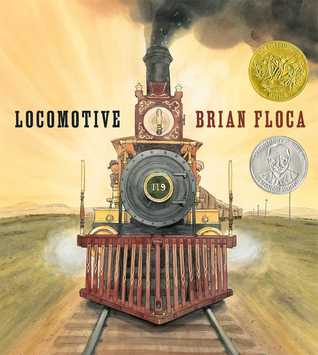
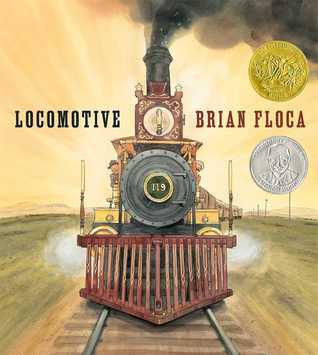
locomotive

Locomotive
Author and Illustrator: Brian Floca
Published September 3rd, 2013 by Atheneum Books for Young Readers

Goodreads Summary: The Caldecott Medal Winner, Sibert Honor Book, and New York Timesbestseller Locomotive is a rich and detailed sensory exploration of America’s early railroads, from the creator of the “stunning” (Booklist)Moonshot.

It is the summer of 1869, and trains, crews, and family are traveling together, riding America’s brand-new transcontinental railroad. These pages come alive with the details of the trip and the sounds, speed, and strength of the mighty locomotives; the work that keeps them moving; and the thrill of travel from plains to mountain to ocean.

Come hear the hiss of the steam, feel the heat of the engine, watch the landscape race by. Come ride the rails, come cross the young country!

My Review: Rhythm. Onomatopoeias. (Well-researched) History. Gorgeous (and historically accurate) illustrations. Lyrical narrative. Unique point of view. This book has everything.

YOU (second person POV!) are a passenger on a train cross America with your family in 1869. Throughout the book, you will encounter many different landmarks, experience things on a train very few had at this time in history, and learn about the intricacies of the train. So fascinating! And all told in rich, beautiful language. It is hard to even share much more about the book because it is such an experience.

Check out Ricki’s review of Locomotive as well HERE.

Teachers’ Tools for Navigation: I would LOVE to read this to kids. There are so many places to stop and discuss and research and learn, but never without an enthralling story accompanying.  It would be a great book to use across subjects. There are definitely opportunities for all subjects: social studies (trans-continental travel, history, trains); science (the science of steam engines); math (travel); reading/writing (onomatopoeia, point of view, rhythm).

Also, and this is fresh on my mind because I just read it, but I would love to read this and The Donner Dinner Party and then look at the two journeys. How long did each take? Dangers? It would be an interesting look at how trains truly changed transportation.

Discussion Questions: How does having the book in 2nd point of view make it more enthralling?; What onomatopoeias were used in the book? How did these words help suck you into the story?; How did the author’s rhythm make you feel like you are actually on the train?; What are the landmarks that were passed on the trans-continental railroad? Why are these landmarks significant?; How does a steam engine work? What are the jobs of all of the different people on board?

We Flagged:
“Here is how this road was built,
with a grunt and a heave and a swing,
with the ring of shovels on stone,
the ring of hammers on spikes:

CLANK CLANK CLANK!

Men came from far away
to build from the East,
to build from the West,
to meet in the middle.

They cleared the rocks
and dug the tunnels.
They raised the hammers
and brought them down—

“Three strokes to the spike,
ten spikes to the rail!”

CLANK CLANK CLANK!”

Read This If You Loved: The Donner Dinner Party by Nathan Hale, Train by Elisha Cooper

Recommended For: 

readaloudbuttonsmall closereadinganalysisbuttonsmall classroomlibrarybuttonsmall

Signature

Locomotive by Brian Floca (Ricki’s Review)

Share

locomotive

Locomotive
Author and Illustrator: Brian Floca
Published September 3rd, 2013 by Atheneum Books for Young Readers

Goodreads Summary: The Caldecott Medal Winner, Sibert Honor Book, and New York Timesbestseller Locomotive is a rich and detailed sensory exploration of America’s early railroads, from the creator of the “stunning” (BooklistMoonshot.

It is the summer of 1869, and trains, crews, and family are traveling together, riding America’s brand-new transcontinental railroad. These pages come alive with the details of the trip and the sounds, speed, and strength of the mighty locomotives; the work that keeps them moving; and the thrill of travel from plains to mountain to ocean.

Come hear the hiss of the steam, feel the heat of the engine, watch the landscape race by. Come ride the rails, come cross the young country!

My Review: Filled with a beautiful array images (watercolor, ink, acrylic, etc.), this incredibly well-researched book takes readers on a journey through the summer of 1869. It took my husband and me three nights to read this title to our son because we needed to pause and take in its magic. After I closed the last page of the book, a library copy, my husband looked at me and mouthed (because our son was asleep), “Let’s buy this one.” There is a wonderful balance of factual information about the train and lyrical language that brims with gorgeous figurative language. This book is a standout and well-deserving of the accolades it has received.

**A special thanks to Kellee, who texted me that I had to read this one. You can read her review here.**

Teachers’ Tools for Navigation: I would use this text in any grade level. I envision the eager eyes of elementary school students as their curiosity is piqued… middle schoolers, suddenly interested in trains and this time in our history…or high schoolers, researching the different parts of the train and learning how effective figurative language can be in writing. This book would be a great mentor text to teach creativity. The layout of the pages is so very purposeful, which pave the way for great classroom discussions.

Discussion Questions: How does Brian Floca grab the readers’ attention? How is his writing purposeful?; In what ways does Floca manipulate language?; How does the second person point-of-view add to the story?; What does this book teach us? Go beyond the obvious.; How do the pages differ in their visual appeal? Why do you think this is?

We Flagged:

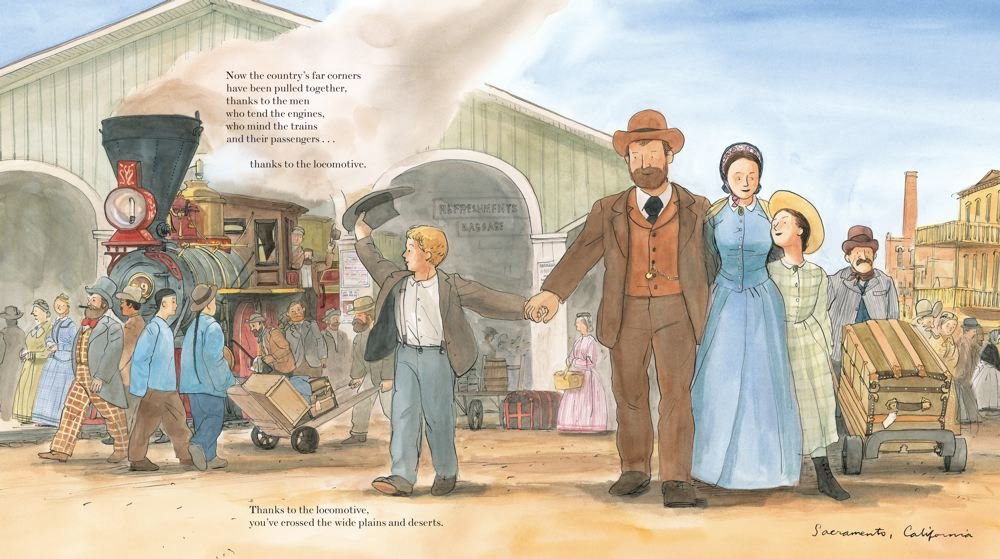
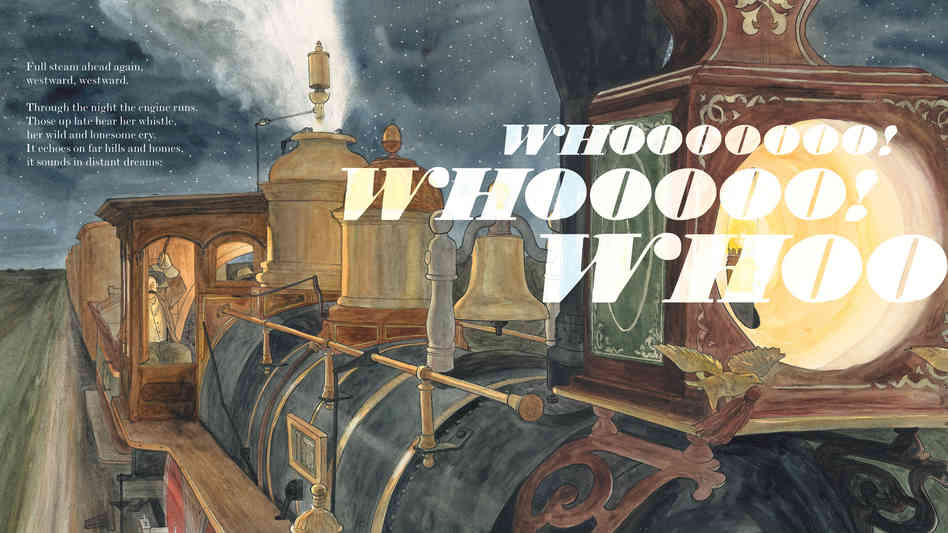
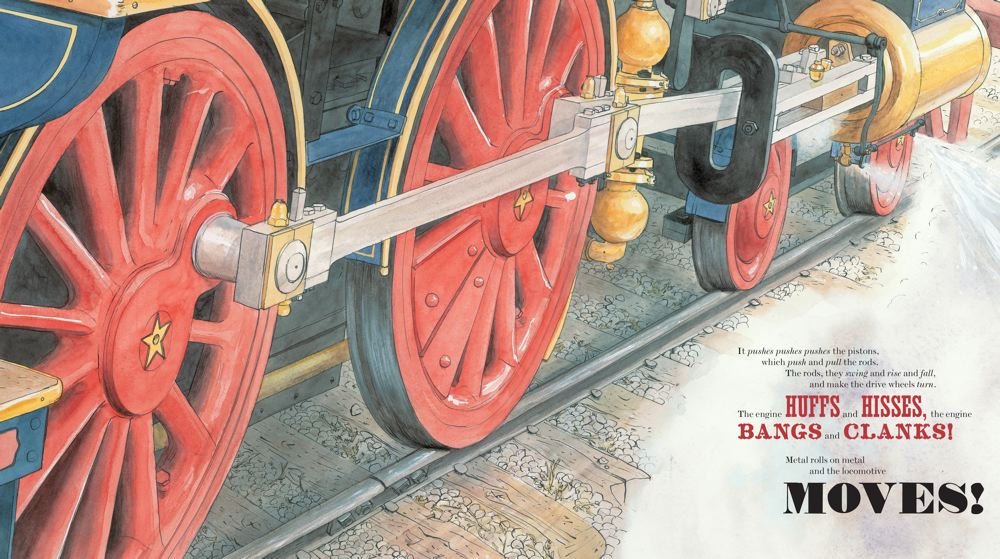
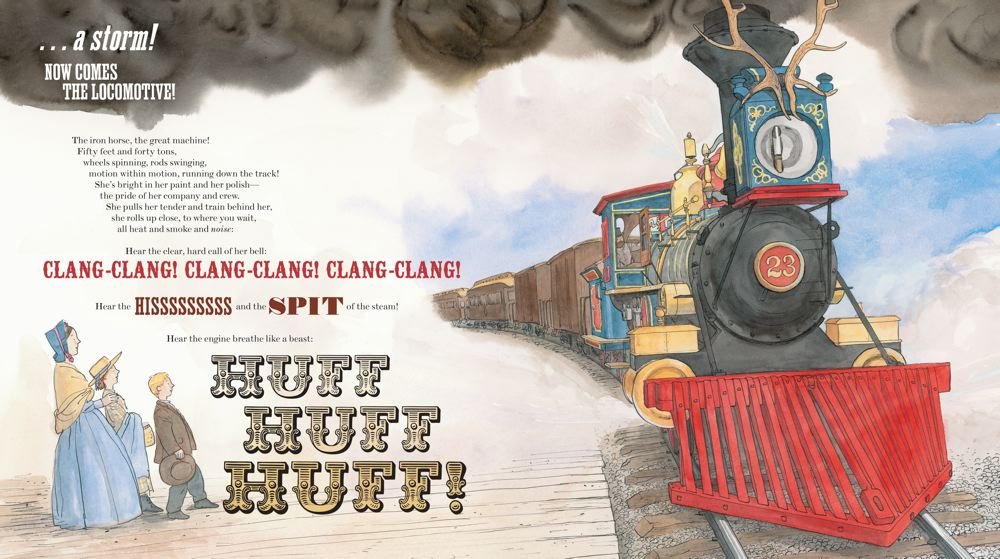
Rather than including a quote here, I wanted to show you a few of the gorgeous spreads with this book. These pages are pulled from images posted on Amazon.

locomotive1 locomotive2 locomotive4 locomotive3

Read This If You Loved: The Polar Express by Chris Van Allsburg

Recommended For: 

readaloudbuttonsmall closereadinganalysisbuttonsmall classroomlibrarybuttonsmall

RickiSig

Flying Solo: How Ruth Elder Soared into America’s Heart by Julie Cummins

Share

NF PB 2014

Nonfiction Picture Book Wednesday

Nonfiction Picture Book Wednesday is hosted by Kid Lit Frenzy and was started to help promote the reading of nonfiction texts. Most Wednesdays, we will be participating and will review a nonfiction text (though it may not always be a picture book).
Be sure to visit Kid Lit Frenzy and see what other nonfiction books are shared this week!

flying

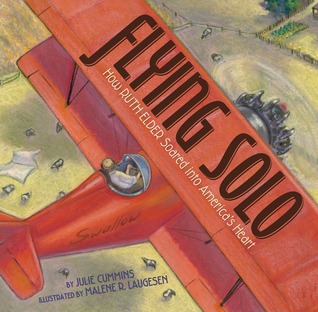
Flying Solo: How Ruth Elder Soared into America’s Heart
Author: Julie Cummins
Illustrator: Malene R. Laugesen
Published July 23rd, 2013 by Roaring Brook Press

Goodreads Summary: In 1927, airplanes were a thrilling but dangerous novelty. Most people, men and women, believed that a woman belonged in the kitchen and not in a cockpit. One woman, Ruth Elder, set out to prove them wrong by flying across the Atlantic Ocean. Ruth didn’t make it, crashing spectacularly, but she flew right into the spotlight and America’s heart. This is the story of a remarkable woman who chased her dreams with grit and determination, and whose appetite for adventure helped pave the way for future generations of female flyers.

My Review and Teachers’ Tools for Navigation: Ruth Elder joins the group of amazing women who have eye-opening picture books about them and how they changed history. (I love this trend!) More and more brilliant and brave women from history are getting recognition through their story being told. Ruth Elder was America’s sweetheart daredevil, and through her crazy feats showed America that woman were brave too. Although Amelia Earhart beat her in her mission to cross the Atlantic, she never stopped pushing herself and the women around her. I would love to see a unit about amazing women in history that uses the slew of beautiful picture books about these woman. One idea would be splitting up kids into groups, having them each read about one of the picture books, maybe doing some extra research, and then sharing with the other groups what they learned. It’d be a great way to give these women the spotlight they deserve.

Discussion Questions: Although Ruth did not cross the Atlantic, why did she become famous?; Ruth had the chance to be a Hollywood star, but she chose to go back to flying–why would she make this decision? Do you agree with her decision?; How did Ruth and her race help change America’s view of woman pilots?

We Flagged: “On August 18, 1929, Ruth and nineteen other women set out to show that women could fly airplanes just as well as men in the first women’s cross-country air race. The pilots had more than headwinds to counteract. One reporter sputtered, “The only thing worse than dames in planes is dames racing planes!””

Look inside Flying Solo at Amazon

Read This If You Loved: Daredevil by Meghan McCarthy, Amelia Lost by Candace Fleming

Recommended For: 

readaloudbuttonsmall classroomlibrarybuttonsmall litcirclesbuttonsmall

Signature

Threatened by Eliot Schrefer

Share

threatened

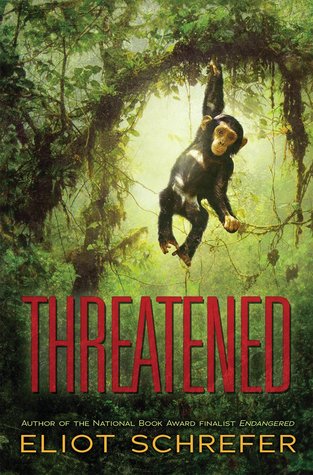
Threatened
Author: Eliot Schrefer
Published: February 25th, 2014 by Scholastic Press

GoodReads Summary: Into the jungle. Into the wild. Into harm’s way. When he was a boy, Luc’s mother would warn him about the “mock men” living in the trees by their home — chimpanzees whose cries would fill the night. Luc is older now, his mother gone. He lives in a house of mistreated orphans, barely getting by. Then a man calling himself Prof comes to town with a mysterious mission. When Luc tries to rob him, the man isn’t mad. Instead, he offers Luc a job. Together, Luc and Prof head into the rough, dangerous jungle in order to study the elusive chimpanzees. There, Luc finally finds a new family — and must act when that family comes under attack.

As he did in his acclaimed novel Endangered, a finalist for the National Book Award, Eliot Schrefer takes us somewhere fiction rarely goes, introducing us to characters we rarely get to meet. The unforgettable result is the story of a boy fleeing his present, a man fleeing his past, and a trio of chimpanzees who are struggling not to flee at all.

Review: If you follow this blog, you know that Kellee and I are advocates for Eliot Schrefer’s writing. He is an incredibly talented writer; his settings feel authentic in that he makes far away places seem very close to home. I develop a strong kinship with his characters—animal or human. Kellee has been raving about Threatened since the ALAN conference, and I knew I wanted to read it as soon as I got a hang of being a new mom. It didn’t disappoint. The writing is stunning.

I expected Threatened to be very similar to Endangered, but I was wrong. Endangered is about an American girl visiting her mother in a Congolese bonobo sanctuary when a civil war breaks out. Threatened, on the other hand, is about an orphan boy from Gabon who goes into the wild with a professor in order to learn more about chimpanzees. But these books are more than their settings and the animals. They teach us about what it means to be human. Threatened, in particular, made me think about humanity’s evolution and the difficulties that come from living in the wild. I couldn’t help but think about how far humanity has strayed from nature. Even when Luc feels that he wants for nothing, he is ashamed that he still holds material desires. This book makes readers think critically, and it would be a great book to use in the classroom.

Teacher’s Tools for Navigation: After reading this book, I wanted to learn more about chimpanzees and how they are different from humans. Schrefer’s book has a call to action. He gives suggestions of how we might help these endangered animals. In particular, he discusses the sad state of animal testing and provides readers with ways to take action. This book will help students become critical thinkers, and hopefully, teachers will help students enact social justice for these animals which are so genetically close to us.

Discussion Questions: Are humans too far removed from nature?; How does Luc become more animalistic after he lives for extensive time in the wild? Are his changes mental? Physical?; What do the chimpanzees teach us about humanity? How are they similar and different from us?; What can we do to help these endangered species?

We Flagged: “We can try so hard, but in some basic way we’re bound by how we’re raised. There’s no escaping it. We can love someone and want to be open to the feeling but fail because our hearts got wired one way long before we knew it was happening. We can break our own hearts because of what our souls believe” (Chapter 10).

**Please note: This quote is taken from the NetGalley. It may be different in the published version of the book.**

Read This If You Loved: Endangered by Eliot Schrefer, Into That Forest by Louis Nowra, Dog Boy by Eva Hornung, Second Nature by Alice Hoffman, Into the Wild by Jon Krakauer

Recommended For:

 readaloudbuttonsmalllitcirclesbuttonsmallclassroomlibrarybuttonsmall

RickiSig

Who Says Women Can’t Be Doctors? by Tanya Lee Stone

Share

NF PB 2014

Nonfiction Picture Book Wednesday

Nonfiction Picture Book Wednesday is hosted by Kid Lit Frenzy and was started to help promote the reading of nonfiction texts. Most Wednesdays, we will be participating and will review a nonfiction text (though it may not always be a picture book).
Be sure to visit Kid Lit Frenzy and see what other nonfiction books are shared this week!

doctors

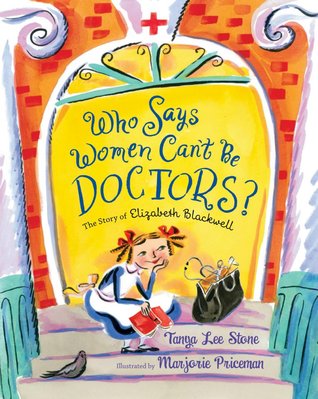
Who Says Women Can’t Be Doctors?
Author: Tanya Lee Stone
Illustrator: Marjorie Priceman
Published February 19th, 2013 by Henry Holt and Co.

Goodreads Summary: In the 1830s, when a brave and curious girl named Elizabeth Blackwell was growing up, women were supposed to be wives and mothers. Some women could be teachers or seamstresses, but career options were few. Certainly no women were doctors.

But Elizabeth refused to accept the common beliefs that women weren’t smart enough to be doctors, or that they were too weak for such hard work. And she would not take no for an answer. Although she faced much opposition, she worked hard and finally—when she graduated from medical school and went on to have a brilliant career—proved her detractors wrong. This inspiring story of the first female doctor shows how one strong-willed woman opened the doors for all the female doctors to come.

My Review: I love that Tanya Lee Stone chose to write about a women in history that changed our world in a big way, but has not get the credit for it.  It is amazing to think that one young lady was brave enough to be the first to try to get into medical school to help pave the way for millions of woman doctors today.  Although I realize there has to be a first for everything when overcoming prejudice and inequality, it is not often that you hear about who this one person was and how s/he had to do it alone, but that is how it was for Elizabeth Blackwell. No one had tried to jump over the barrier, but she did. This is such an inspirational story and such a big part of history–it should be shared with everyone.  And what tops off the book is the vibrant, colorful, playful illustrations that will draw the reader in even more.

Teachers’ Tools for Navigation: A couple of interesting themes that can definitely pulled out of this story is resilience (she never gave up after all of the rejections), the power of friendship (she has never considered being a doctor until a friend suggested it), and selflessness (just read the author’s note about the rest of Elizabeth’s life at the end). All three of these would lead to phenomenal discussions and can be connected to other historical figures and fiction texts.

Discussion Questions: Why do you think it took the townspeople longer to accept Elizabeth?; We learn that Elizabeth’s sister also became a doctor and the two of them eventually start a hospital. What type of people would Elizabeth and her sister have to be to be able to go from not being allowed to be a doctor to owning a hospital? What traits would they need?; How would life be different now if Elizabeth had never tried to become a doctor?

We Flagged: “I’ll bet you’ve met plenty of doctors in your life. And I’ll bet lots of them were women. Well, you might find this hard to believe, but there was once a time when girls weren’t allowed to become doctors.” (p. 3)

Read This If You Loved: Brave Girl by Michelle Markel, Me…Jane by Patrick McDonnell, Daredevil by Meghan McCarthy, Here Come the Girl Scouts by Shana Corey

Recommended For: 

readaloudbuttonsmall classroomlibrarybuttonsmall

Signature

Blog Tour and Author Guest Post!: Storm Watcher by Maria V. Snyder

Share

The Storm Watcher Blog Tour

Welcome to the Storm Watcher blog tour!

Feb 19 – Mar 5, 2014

Hosted by readnowsleeplater.com

Print 

Storm Watcher
Author: Maria V. Snyder
Published October 19th, 2013 by Leap Books

Goodreads Summary: Luke Riley is lost. His mother’s recent death has set Luke and his family adrift. Even though his father, twin brothers, and their three Bloodhounds are search and rescue volunteers, they have been unable to rescue themselves and become a family again. The summer after sixth grade looms in Luke’s mind as a long, lonely three months where the only thing he can look forward to is watching The Weather Channel. Luke is fascinated with the weather, but since his mother’s death in a storm, he is also terrified. Even the promised 13th birthday present of a Bloodhound puppy fails to lift Luke’s spirits. He would rather have a different breed – a petite Papillon, but his father insists he get a Bloodhound.

When Luke decides to get the Bloodhound from Willajean, a dog breeder who owns Storm Watcher Kennel, he works out a deal to help at her kennel in exchange for the expensive dog. Thrilled to have a summer with a purpose, Luke befriends Willajean’s daughter, Megan and together they plan how Luke can get a Papillon puppy instead of a Bloodhound. But nothing seems to work as they struggle with stubborn fathers, summer storms, unhelpful siblings, and hidden guilt. Can one little white dog really save both families?

So, how does one come to write a book about weather?

It all begins with a fascination with hydrometeors and a great teacher.
Squish this together with a writing career and VOILA! 

Hydrometeors are Falling on my Head
By Maria V. Snyder

Let me set the scene – sixth grade at Our Lady of Ransom, a Catholic school in the city of Philadelphia – my teacher, Miss Kane is doing a science unit on meteorology.  Meteo…what? At the time (1978), I’d never heard of it, except I had.  “Oh, you mean the weather, why didn’t you say so?” a beat later, “There are people who study the weather? Wow.”  Little did I know it at the time, but that unit was the vital first step to my eventually careers in both meteorology and writing.

I love big storms and loved the idea of studying them.  Not only was it super cool that Miss Kane made it rain in our classroom, but I was able to be a real smart-alecky kid.  You see I soon discovered that the adults in my life had never heard the word meteorology either. So when they asked me what I wanted to be when I grew up, I’d reply, “A meteorologist.”  Their blank look was always followed be a quizzical, “You want to study…meteors? Like from space?” and I chirped, “Not space meteors, hydrometeors.”  No comprehension so I’d explain in a I-can’t-believe-you-don’t-know-this tone that, “hydrometeors are raindrops.”  I did warn you that I was bratty – I was also eleven so I had a good excuse J.

As I continued in my education, the questions about my future remained the same, and so did the answer (except, by now my family was well acquainted with those pesky hydrometeors).  Sure, I loved acting, dancing, painting, and playing the cello, but I wasn’t a stand out in any of them.  However my math and science grades remained strong and nothing else sparked my interest.

Fast forward to my college graduation.  I’d earned my BS in Meteorology from Penn State University.  My forecasting skills were dismal so I ventured in the exciting new profession of environmental meteorology (whew – I think I have to rest my fingers after typing all that!).  Too bad envir meteo wasn’t all that exciting.  My creativity eventually woke from its catatonic state (caused by enduring endless hours of fluid dynamics and differential equations).  I started writing stories ‘cause it would have been awkward if I started practicing the cello in my cubicle at work.

Writing was a blast and, in my stories, I controlled the weather – hydrometeors fell at my whim – muuhhhaaawwwaaahhh!  Er…sorry.  Eventually I switched careers to writing, but I never lost my love for storms.  In fact, I incorporated the weather in many of my books.  However, the one book that brought me back to that snarky sixth grader is Storm Watcher, my debut novel for readers ages 8 to 14 years old.  I was able to geek-out along with the main protagonist, Luke.

While writing the story was fun, I was thrilled when my editor asked me to write an appendix of weather facts for those readers who also have a fascination with storms.  It’s called “Luke’s Weather Notebook.” For the appendix I drew pictures, found quirky weather facts, wrote a quiz, and included safety tips – delighting my inner weather weenie.  We hoped that the teachers who teach that meteorology unit would find the information helpful and maybe hook another student.

I’d like to thank Miss Kane in person – she probably has no idea she set me on this path.  Or…maybe she does.  Maybe she saw that spark in my eyes as she taught me about clouds and precipitation.  In either case, Thank You Miss Kane wherever you are!

Now, I’ve a question for you.  How many of you knew hydrometeors were raindrops?  Come on, be honest! 🙂

Just shows how one great teacher can truly change your life! 

Also, don’t forget to stop by each blog tour stop to learn more about the book.

Tour Schedule

Wed 2/19 – The Book Monsters – review

Thu 2/20 – I Am a Reader – interview

Fri 2/21 – Unleashing Readers – guest post

Mon 2/24 – Bookalicious – review

Tue 2/25 – Kid Lit Frenzy – guest post

Wed 2/26 – Sharpreads – review

Thu 2/27 – The Mod Podge Bookshelf – guest post

Fri 2/28 – The Windy Pages – review, interview

Mon 3/3 – Teenage Reader – review

Tue 3/4 – Read Now Sleep Later – review

Wed 3/5 – The Brain Lair – review

Signature

**Thank you to Alethea and Maria for allowing us to be part of the blog tour**