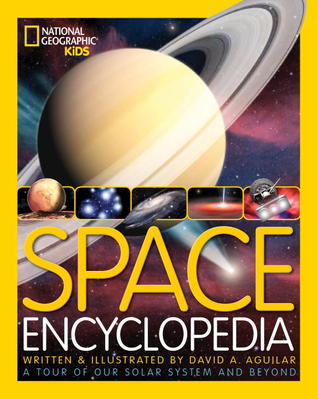
Space Encyclopedia by David A. Aguilar

Share

NF PB 2014

Nonfiction Picture Book Wednesday

Nonfiction Picture Book Wednesday is hosted by Kid Lit Frenzy and was started to help promote the reading of nonfiction texts. Most Wednesdays, we will be participating and will review a nonfiction text (though it may not always be a picture book).
Be sure to visit Kid Lit Frenzy and see what other nonfiction books are shared this week!
space

Space Encyclopedia: A Tour of our Solar System and Beyond
Author: David A. Aguilar
Published August 17th, 2013 by National Geographic Children’s Books

Goodreads Summary: Presenting the latest exciting findings on space exploration and research and cutting-edge, spectacular views of the universe that technology is bringing back to Earth, all in one ultimate reference book. Authored by David A. Aguilar of the Harvard-Smithsonian Center for Astrophysics, the National Geographic Space Encyclopedia is ideal for the family bookshelf, providing both accessible information for school reports and compelling reading on the mysteries beyond our world.

My Review and Teachers’ Tools for Navigation: This book is so full of information! It is almost more of a browsing or researching book because it is just so much. I will say the information is easy to understand (Aguilar constructed the book almost like a journey which makes it easier to follow) the the photographs and scientifically accurate illustrations are some of the best I’ve ever seen. In my time of reading this book, I learned so much and can definitely see how it would be a huge asset to a classroom (science or language arts).

Discussion Questions: After reading about _____, what did you learn?

We Flagged: “Neptune: We’re nearing the pale blue icy world of Neptune. It has the wildest weather of any planet in the solar system, with winds that blow at speeds over 1,200 miles per hour. Like the other Jovian planets, Neptune doesn’t have a surface to walk on. Although the clouds surrounding it are very cold, -350 degrees Fahrenheit, its rocky iron core is about the same temperature as the sun’s surface.” (p. 62)

Read This If You Loved: Any nonfiction book about space, for background knowledge when reading science fiction that takes place in space

Recommended For: 

classroomlibrarybuttonsmall closereadinganalysisbuttonsmall

Signature

**Thank you to Tracey Daniels at Media Masters Publicity for providing a copy for review**

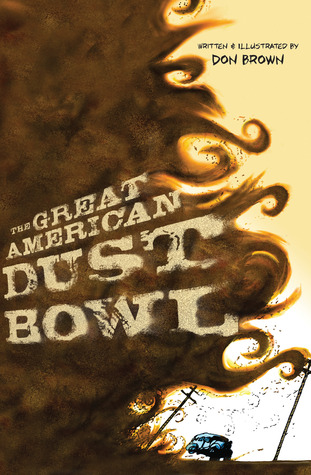
The Great American Dust Bowl by Don Brown

Share

NF PB 2014

Nonfiction Picture Book Wednesday

Nonfiction Picture Book Wednesday is hosted by Kid Lit Frenzy and was started to help promote the reading of nonfiction texts. Most Wednesdays, we will be participating and will review a nonfiction text (though it may not always be a picture book).
Be sure to visit Kid Lit Frenzy and see what other nonfiction books are shared this week!

dust

The Great American Dust Bowl
Author and Illustrator: Don Brown
Published October 8th, 2013 by HMH Books for Young Readers

Goodreads Summary: A speck of dust is a tiny thing. In fact, five of them could fit into the period at the end of this sentence.

On a clear, warm Sunday, April 14, 1935, a wild wind whipped up millions upon millions of these specks of dust to form a duster—a savage storm—on America’s high southern plains.

The sky turned black, sand-filled winds scoured the paint off houses and cars, trains derailed, and electricity coursed through the air. Sand and dirt fell like snow—people got lost in the gloom and suffocated . . . and that was just the beginning.

Don Brown brings the Dirty Thirties to life with kinetic, highly saturated, and lively artwork in this graphic novel of one of America’s most catastrophic natural events: the Dust Bowl.

Review: Ever since I read Out of the Dust by Karen Hesse, I’ve loved learning about this scary time in American history (also, the danger hasn’t ceased just because it happens less often). This book does a beautiful job of taking this time in history and laying it out for the reader so that it is very easy to understand. It includes background about the geographical area, information about the Depression, and then takes you through the Dust Bowl all the way to modern days. So interesting!

Teacher’s Tools For Navigation: First, this book will make a great companion to Out of the Dust. I think many readers struggle with Hesse’s book because they don’t have the background knowledge needed to understand the book and Don Brown’s book gives all the background needed.  The Great America Dust Bowl can also be used as a resource when teaching the Dust Bowl, the depression, or agriculture.

Discussion Questions: How did the Depression impact farmers thus help cause the Dust Bowl to happen?; How is the problems of the Dust Bowl still impacting us today?

We Flagged: 

Read This If You Loved: Out of the Dust by Karen Hesse, Grapes of Wrath by John Steinbeck, The Storm in the Barn by Matt Phelan, Survival in the Storm: The Dust Bowl Diary of Grace Edwards, Dalhart, TX 1935 by Katelan Janke

Recommended For: 

classroomlibrarybuttonsmall closereadinganalysisbuttonsmall

Signature

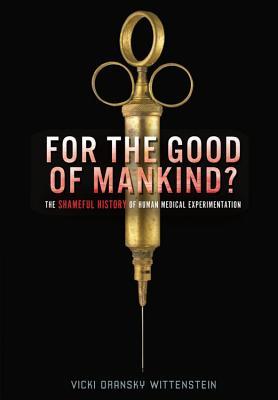
For the Good of Mankind?: The Shameful History of Human Medical Experimentation by Vicki O. Wittenstein

Share

NF PB 2013

Nonfiction Picture Book Wednesday

Nonfiction Picture Book Wednesday is hosted by Kid Lit Frenzy and was started to help promote the reading of nonfiction texts. Most Wednesdays, we will be participating and will review a nonfiction text (though it may not always be a picture book). Be sure to visit Kid Lit Frenzy and see what other nonfiction books are shared this week!
for the good of mankind

For the Good of Mankind?: The Shameful History of Human Medical Experimentation
Author: Vicki O. Wittenstein
Published: August 1st, 2013 by Lerner Publishing Group

Summary: 

Experiment: A child is deliberately infected with the deadly smallpox disease without his parents’ informed consent.
Result: The world’s first vaccine.
Experiment: A slave woman is forced to undergo more than thirty operations without anesthesia.
Result: The beginnings of modern gynecology.
Experiment: From 1946 to 1953, seventy-four boys are fed oatmeal laced with radioactive iron and calcium.
Result: A better understanding of the effects of radioactivity on the human body.

Experimental incidents such as these paved the way for crucial medical discoveries and lifesaving cures and procedures. But they also violated the rights of their subjects, many of whom did not give their consent to the experiments. The subjects suffered excruciating pain and humiliation. Some even died as a result of the procedures. Even in the twenty-first century—despite laws, regulations, and ethical conventions—the tension between medical experimentation and patient rights continues.

How do doctors balance the need to test new medicines and procedures with their ethical and moral duty to protect the rights of human subjects? What price has been paid for medical knowledge? Can we learn from the broken oaths of the past?

Take a harrowing journey through some of history’s greatest medical advances—and its most horrifying medical atrocities. You’ll read about orphans injected with lethal tuberculosis and concentration camp inmates tortured by Nazi doctors. You’ll also learn about radiation experimentation and present-day clinical trials that prove fatal. Through these stories, explore the human suffering that has gone hand in hand with medical advancement.

Review: Human experimentation is a very difficult subject matter, one that both horrifies and fascinates teens. I always try to believe in the good of mankind, but books like this always seem to challenge that assumption. It was difficult for me to read this book because I cannot fathom how any person could justify using individuals (including CHILDREN!) for experimentation. This book is incredibly well-researched and documents a variety of cases of experimentation. I couldn’t put it down because I was so astonished by the details of the cases. It is colorful and eye-appealing, and this will captivate reluctant readers. I think teenagers would see nonfiction in a very positive light if they were given books like this one. I absolutely recommend it to teachers.

Teacher’s Tools for Navigation: Teachers might assign different chapters to groups of students. Students will enjoy reading about and presenting the material covered in this book. Persuasive essays are always a chore, but there are many controversial issues within this book, and I think students would really enjoy writing essays about this subject matter. This book also includes discussion questions for readers.

Discussion Questions: Can we justify the experimentation on a human being if it will better the lives of millions of people?; Why do you think human experimentation was allowed for such a long time? Can we judge the doctors who experimented on people centuries ago?; Applying the stories to animals, do you think animal experimentation is justifiable? Why or why not?

Read This If You Loved: The Immortal Life of Henrietta Lacks by Rebecca Skloot, books in the Real Justice series, Brave New World by Aldous Huxley


Recommended For:

closereadinganalysisbuttonsmall classroomlibrarybuttonsmall

RickiSig

Seymour Simon: Animal books

Share

NF PB 2013

Nonfiction Picture Book Wednesday

Nonfiction Picture Book Wednesday is hosted by Kid Lit Frenzy and was started to help promote the reading of nonfiction texts. Most Wednesdays, we will be participating and will review a nonfiction text (though it may not always be a picture book).
Be sure to visit Kid Lit Frenzy and see what other nonfiction books are shared this week!

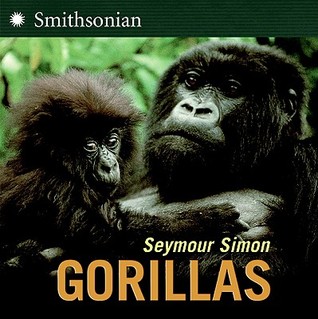
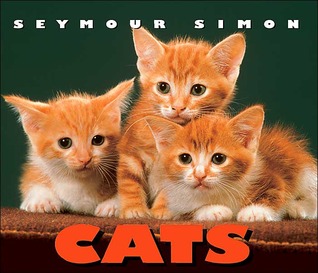
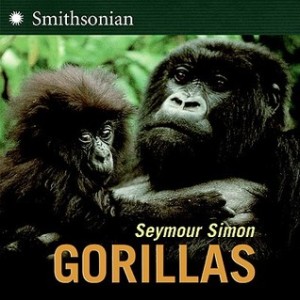
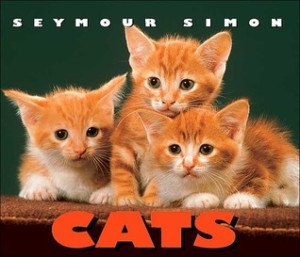
gorillaspenguinscats

Various Animals including Gorillas, Penguins, and Cats
Author: Seymour Simon
Published: Varies

Gorillas Goodreads Summary: Classic movies show giant gorillas scaling tall buildings and swatting planes from the sky, but actual gorillas are gentle social animals that live together in family groups like humans. In fact, gorillas are one of the closest genetic matches to people. And just like humans, gorillas can shriek, chuckle, hiccup, and even burp!

Award-winning science writer Seymour Simon has teamed up with the Smithsonian Institution to bring you an updated edition of his classic full-color photographic introduction to these fascinating animals.

Penguins Goodreads Summary: Did you know that: Penguins are champion swimmers. They spend 75 percent of their lives in water. They are birds, but they can’t fly. Penguins are classified as birds because they have feathers.

Now you can explore a penguin’s world by finding out how they can swim so fast, what they eat, and why people need to protect their habitats. Acclaimed science writer Seymour Simon has teamed up with the Smithsonian Institution to take you on a journey to the Antarctic region for a close-up look at one of nature’s most beloved and sociable animals.

Cats Goodreads Summary: Cats are fascinating, complex creatures. Since cats were first tamed about 5,000 years ago, they have enchanted people with their elegant beauty and mysterious manner. But cats can also be playful and cuddly pets, death-defying acrobats, or ruthless hunters. Come along as celebrated science writer Seymour Simon explores the many faces of this beloved animal with striking full-color photographs and engaging prose.

My Reviews and Teacher’s Tools For Navigation: Seymour Simon’s books have been a hit in my classroom (I even put them on my Top Books for Struggling and Reluctant Readers list); however, I, hypocritically, had never read any of his books. I decided a couple of weeks ago that I needed to remedy this and you will see that I did based on my next couple of weeks of Wednesday reviews.

After reading the three animal books pictured/mentioned above, I can see why Simon is a favorite informational nonfiction author. His books are friendly to read yet include essential information about the animals that they are about. The books are easy to navigate and the photographs that are included are beautiful. These books are written to engage and educate the reader.

There are such a plethora of ways to use Simon’s books in the classroom. They will find love in the classroom library, they can be used in conjunction with science or social studies to get more information about a topic, or they can be used in a lit circle type environment where each group has a different Simon book and then they come together to share what they learned. They can also be used for researching as well as academic vocabulary (and even just vocabulary) instruction. Simons books are made to be used in classes and to be in students’ hands.

Discussion Questions: What was the most interesting fact you learned about _____’s habitat? Diet? Parenting? Behavior? Types?

We Flagged: “Penguins are champion swimmers and divers. But they are not fish and they are not aquatic mammals such as dolphins. Penguins are birds because they have feathers, and only birds have feathers. Like birds, they lay their eggs and raise their chicks on land. But they don’t look or fly like most other birds. Instead they seem to fly through the water, and they spend much of their lives at sea.” (Penguins p. 5)

“All cats are hunting animals. They use claws and teeth to seize their prey. When you watch a cat play with a ball or piece of yarn, it is almost like watching a tiger or a leopard stalk its prey in the wild. Even well-fed pet cats will try to catch mice or birds or insects.” (Cats p. 5)

“Gorillas are sometimes called anthropoid (manlike) apes. A gorilla has two arms and two legs, and a head and body much like a human’s head and body. A gorilla has five fingers and five toes, and thirty-two teeth. You have all of those too, and twenty-eight teeth, in about the same positions. Of course, gorillas are much harrier than people. An adult gorilla has hair all over its body except its face, its chest, and the palms of its hands and soles of its feet.” (Gorillas p. 5)

Read This If You Loved: Any informational nonfiction about animals

Recommended For: 

classroomlibrarybuttonsmall readaloudbuttonsmall litcirclesbuttonsmall closereadinganalysisbuttonsmall

Signature

Ye Olde Weird but True! by National Geographic Kids

Share

NF PB 2013

Nonfiction Picture Book Wednesday

Nonfiction Picture Book Wednesday is hosted by Kid Lit Frenzy and was started to help promote the reading of nonfiction texts. Most Wednesdays, we will be participating and will review a nonfiction text (though it may not always be a picture book).
Be sure to visit Kid Lit Frenzy and see what other nonfiction books are shared this week!

yeolde

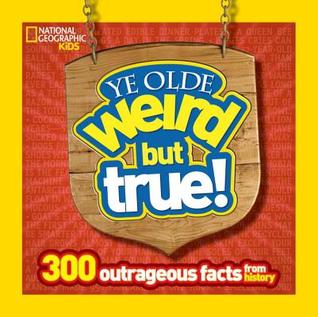
Ye Olde Weird but True!
Author: National Geographic Kids
Published October 8th, 2013 by National Geographic Children’s Books

Goodreads Summary: Nothing attracts young readers like the weird but true…especially when the weird truth is hundreds of years old. Ye Olde Weird But True, the newest addition to the blockbuster Weird But True series, is packed with 300 wacky facts for history lovers ages 6 and up.

In this latest addition to this phenomenal series, readers will have more zany fun, this time from the pages of history! Ye Olde Weird But True delivers 100 percent new content, with 500 more of the amazing facts and photos that kids just can’t get enough of.

My Review and Teacher’s Tools for Navigation: Students love these books (as do I)! They are fascinated with all of the facts and it causes such conversation in the classroom. What I would love to see done with them is take them beyond the just fun books that students read parts of and put aside. I can picture bringing out all of my Weird but True books and allowing students to choose a fact from them and researching the fact. They would then share their fact with the class—a little mini research project. I did this years ago with Sharks where I let them choose any facts or question about sharks, research, and share and it was a very successful project because everyone was so engaged. I could see the same thing happening with the Weird but True books because the students would be able to pick a topic that interests them. I can just picture one student researching using maggots to clean wounds in the 19th century while the student next to him researches Roy Chapman Andrews, the real Indiana Jones.

Discussion Questions: Find a Weird but True fact and research more information about it. After doing so, share with the class what you learned.

We Flagged: “The oldest known musical instrument is a 42,000-year-old flute made out of vulture bone.” (p. 38)
“One of the oldest maps in the world was drawn on a mammoth tusk.” (p. 110)
“French King Francis I once won a wrestling match against English King Henry VIII.” (p. 191)

Read This If You Loved: Any fact books, The Gruesome Truth About…. books

Recommended For: 

closereadinganalysisbuttonsmall classroomlibrarybuttonsmall

Signature

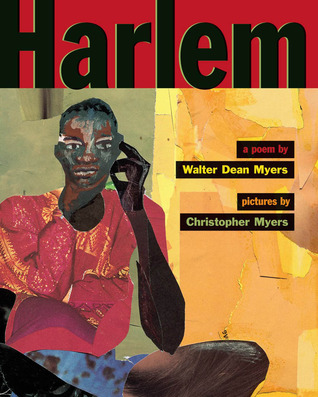
Harlem: A Poem by Walter Dean Myers

Share

0-590-54340-7

Harlem: A Poem
Author: Walter Dean Myers
Illustrator: Christopher Myers
Published 1997 by Scholastic Press

Goodreads Summary: Walter Dean Myers calls to life the deep, rich, and hope-filled history of Harlem, this crucible of American culture.

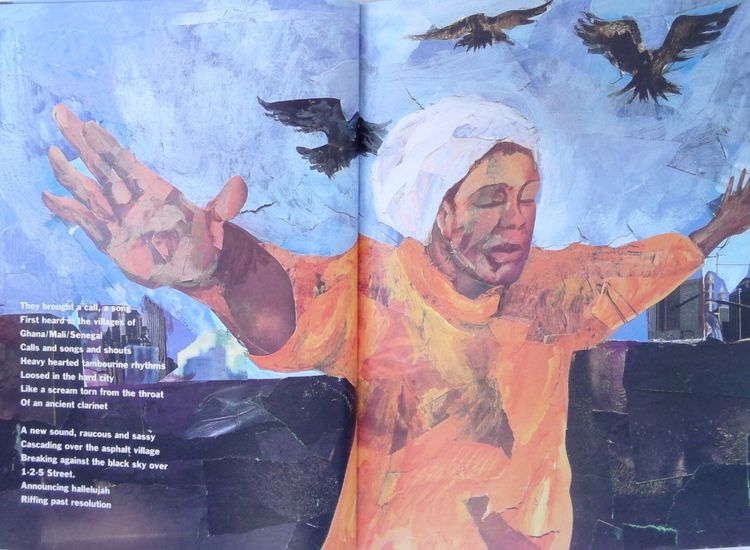
Christopher Myers’ boldly assembled collage art resonates with feeling, and tells a tale all its own. Words and pictures together connect readers -of all ages – to the spirit of Harlem in its music, art, literature, and everyday life, and to how it has helped shape us as a people.

My Review & Teacher’s Tools For Navigation: After reading this book the first time, I knew I was going to have to tackle it differently than just reading a picture book. I wanted to make sense of it and I knew that I didn’t have the background knowledge so I knew that the power of all of the words had not sunk in yet. So, I typed up the poem in Google Drive and began doing my very own close reading of the poem.  I started with research of terms and names that I didn’t know, building my knowledge of the culture and history of Harlem. Through this build up of knowledge, I began to understand the beauty behind Myers’s poem. The voice of this poem is one of heartbreak, but strength; proud of not only what he has become, but where he came from. This poem is a celebration of the history of Harlem and its citizens—a celebration of its religion, music, poets, authors, and everything that made/makes it a hub for the civil rights movement and African American culture.

This book would be a great one to use across many different subject areas- history, literature, and art.

Discussion Questions: What references to Harlem’s history did Myers intertwine into his poem?; How did Christopher Myers’s illustrations take the poem to another level?; (Writing) Do research about your ancestors and your heritage. Through this research, find people, places, literature, art, musicians, etc. that helped shape who you or your family are. Use this research to construct a poem about your heritage. Find a piece of artwork to accompany your poem. 

We Flagged: 

The uptown A
Rattles past 110th street
Unreal to real
Relaxing the soul

Shango and Jesus
Asante and Mende
One people, a hundred different
People
Huddled masses
And crowded dreams

Read This If You Loved: Duke Ellington: The Piano Prince and His Orchestra and Ella Fitzgerald: The Tale of a Vocal Virtuosa by Andrea Davis Pinkney, The Complete Poems including Harlem by Langston Hughes, Harlem Summer by Walter Dean Myers, Nonfiction books about Harlem

Recommended For: 

classroomlibrarybuttonsmall closereadinganalysisbuttonsmall readaloudbuttonsmall

Signature

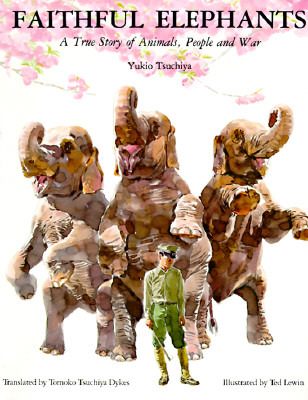
Faithful Elephants by Yukio Tsuchiya

Share

NF PB 2013

Nonfiction Picture Book Wednesday

Nonfiction Picture Book Wednesday is hosted by Kid Lit Frenzy and was started to help promote the reading of nonfiction texts. Most Wednesdays, we will be participating and will review a nonfiction text (though it may not always be a picture book).
Be sure to visit Kid Lit Frenzy and see what other nonfiction books are shared this week!

faithful

Faithful Elephants: A True Story of Animals, People, and War
Author: Yukio Tsuchiya
Translator: Tomoko Tsuchiya Dykes
Illustrator: Ted Lewin
Published October 30th, 1997 by HMH Books for Young Readers

Goodreads Summary: A zookeeper recounts the story of John, Tonky, and Wanly, three performing elephants at the Ueno Zoo in Tokyo, whose turn it is to die, and of their keepers, who weep and pray that World War II will end so their beloved elephants might be saved.

My Review: I picked up this book as soon as I read that  Jillian Heise thought that it’d be a good companion to Endangered. I read aloud Endangered with my 8th graders last year, and I trusted that Jillian knew what she was talking about. The subtitle warned me that this picture book would definitely not be a cheery one, but I could not have prepared myself for how emotional the book actually was. The lyrical writing and soft, watercolor illustrations add to the intensity of the story. Be warned: tears will happen.

Teacher’s Tools For Navigation: This book not only would be a perfect companion to Endangered, it is definitely a wonderful picture book to lead to deep discussions in the classroom. Children are always very emotional about books pertaining to animals, so I know they will have an intense opinion about what happens in this book. As the zookeepers kill the animals to protect the city in case of a bombing, students will definitely disagree with this decision and this will lead to a great debate. The story also lends itself towards discussions about animal emotions and abuse as well as cause and effect discussions.

Discussion Questions: In what ways is the story of the elephants in Faithful Elephants similar to the story of the bonobos in Eliot Schrefer’s Endangered?; Was there an alternate solution that the zookeepers could have considered for the elephants?

We Flagged: “Not far from the cheerful square, there stands a tombstone. Not many notice this monument for the animals that have died at the Ueno Zoo. It is quiet and peaceful here, and the sun warms every corner.” (p. 8)

Read This If You Loved: Endangered by Eliot Schrefer, The One and Only Ivan by Katherine Applegate, The Outside of a Horse by Ginny Rorby

Recommended For: 

readaloudbuttonsmall closereadinganalysisbuttonsmall classroomlibrarybuttonsmall

Signature