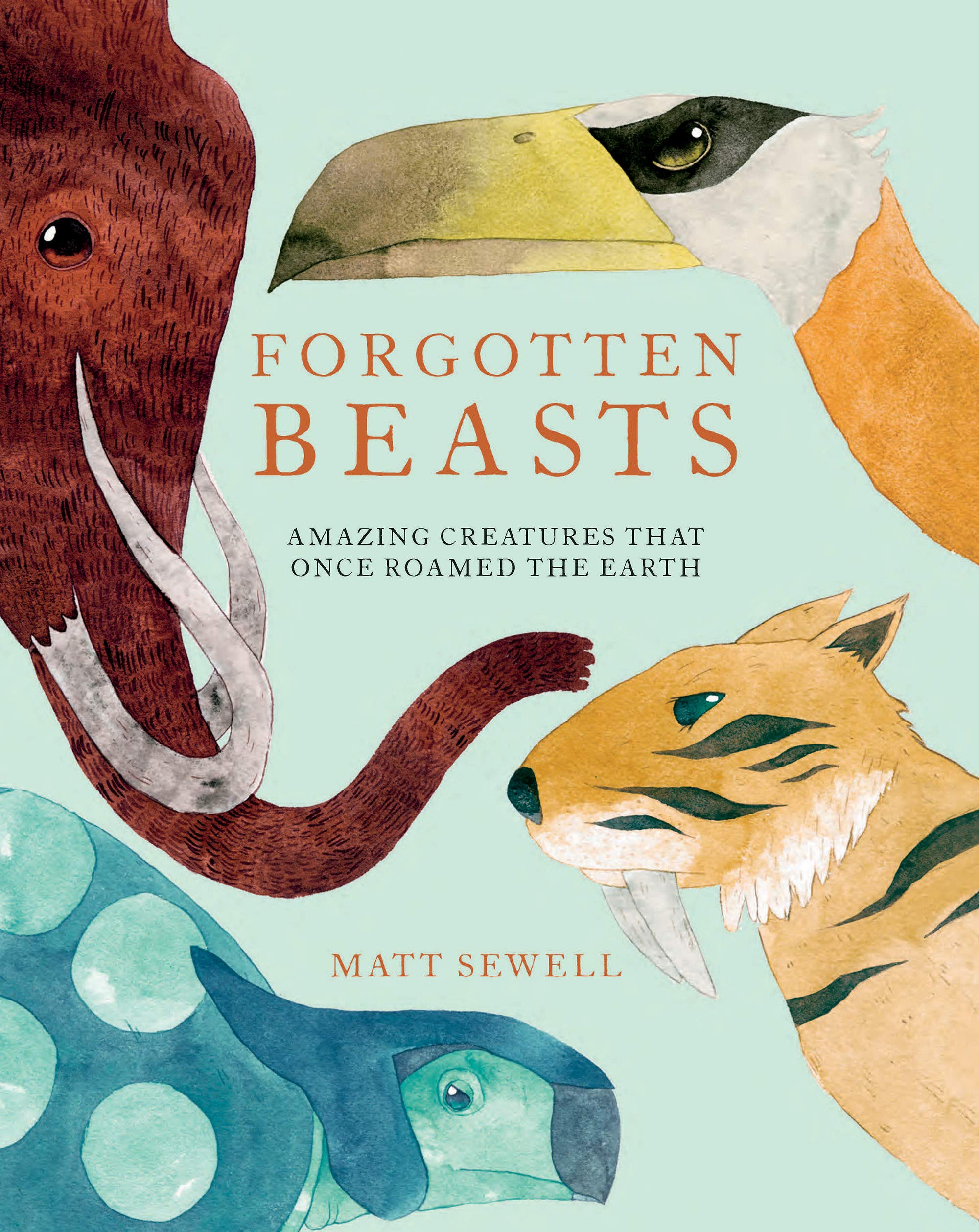
Forgotten Beasts: Amazing Creatures That Once Roamed the Earth by Matt Sewell

Share

Forgotten Beasts: Amazing Creatures That Once Roamed the Earth
Author: Matt Sewell
Published October 4th, 2019 by Pavilion Books

Summary: A witty, colorful celebration of the amazing lost creatures of this planet; with a strong message of protection and conservation.

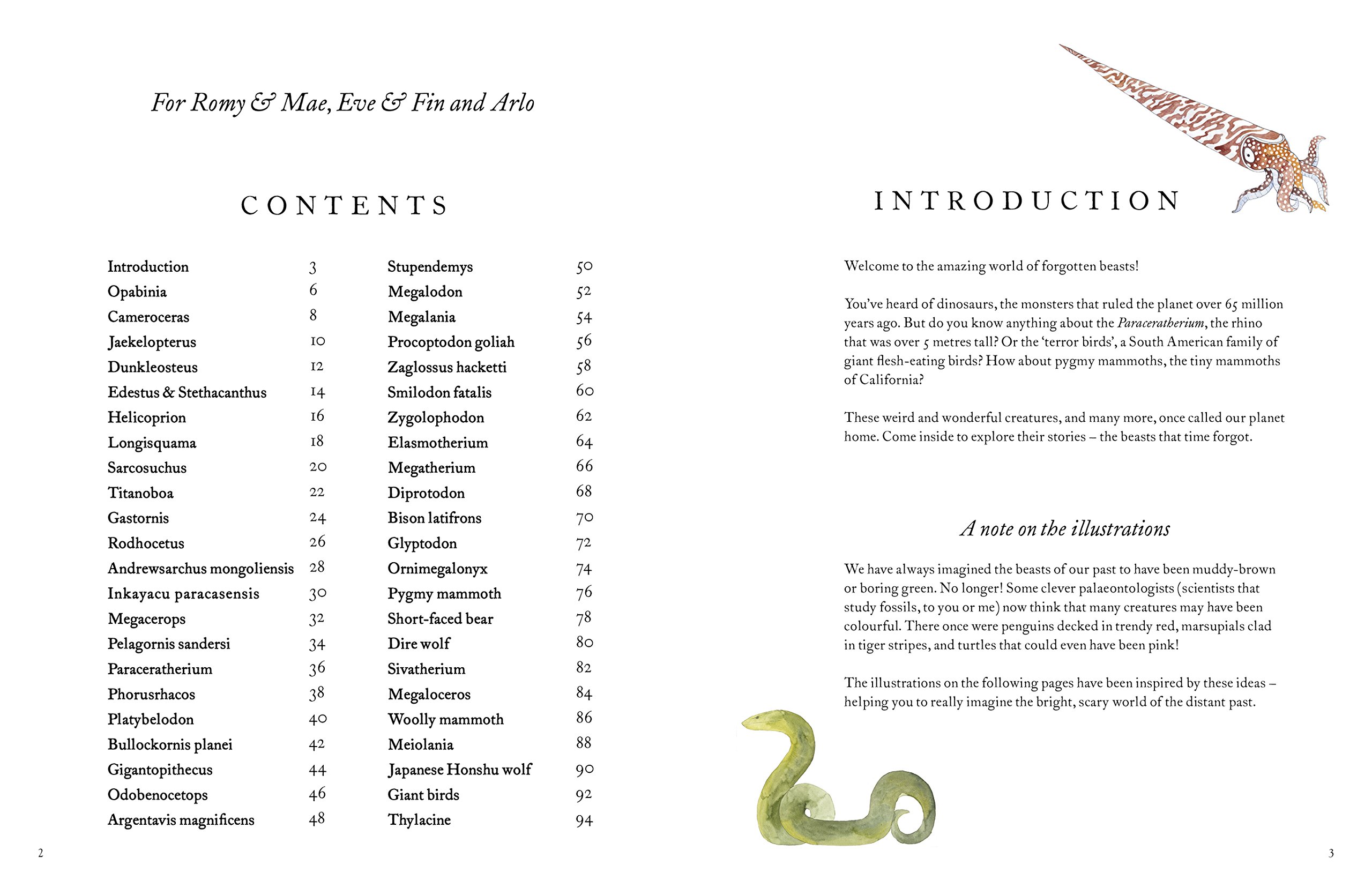
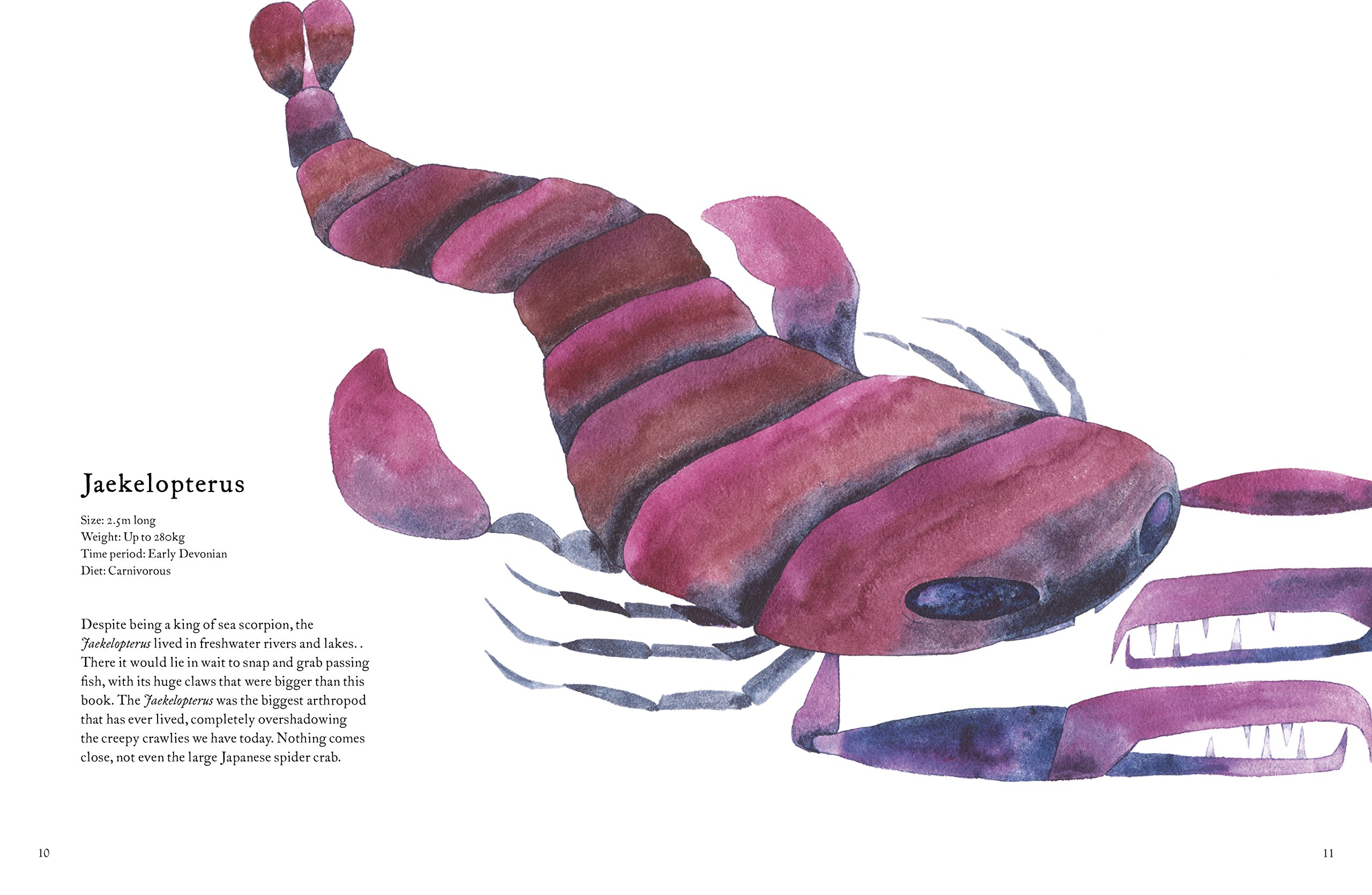
Matt Sewell’s follow-up to the mega-hit The Colorful World of Dinosaurs is a beautifully-illustrated large format look at the amazing beasts that time forgot – from the relatively well known, such as the sabre-toothed tiger and woolly mammoth, to the obscure monsters that walked the earth millions of years ago – many now forgotten. These beasts are arranged chronologically–from the strange invertebrate Opabinia that lived over 500 million years ago, to the Thylacine, or Tasmanian Tiger, that became extinct in 1936. New findings are being made every year, and research is showing us exactly how these beasts looked and how they lived.

Creatures illustrated and described include:

Sabre tooth tigers and woolly mammoths
Glyptodon – an armadillo as big as a VW Beetle car
Megalodon – a monster 60 foot (18m) shark
Water King penguin – a red and grey penguin the size of a man
Ornimegalonyx – a huge Cuban flightless owl, the largest owl that ever existed, at over 3 feet (1m) tall
Deinotherium – a strange-looking and huge, elephant-like creature with tusks positioned on its lower jaw and curved, facing downwards
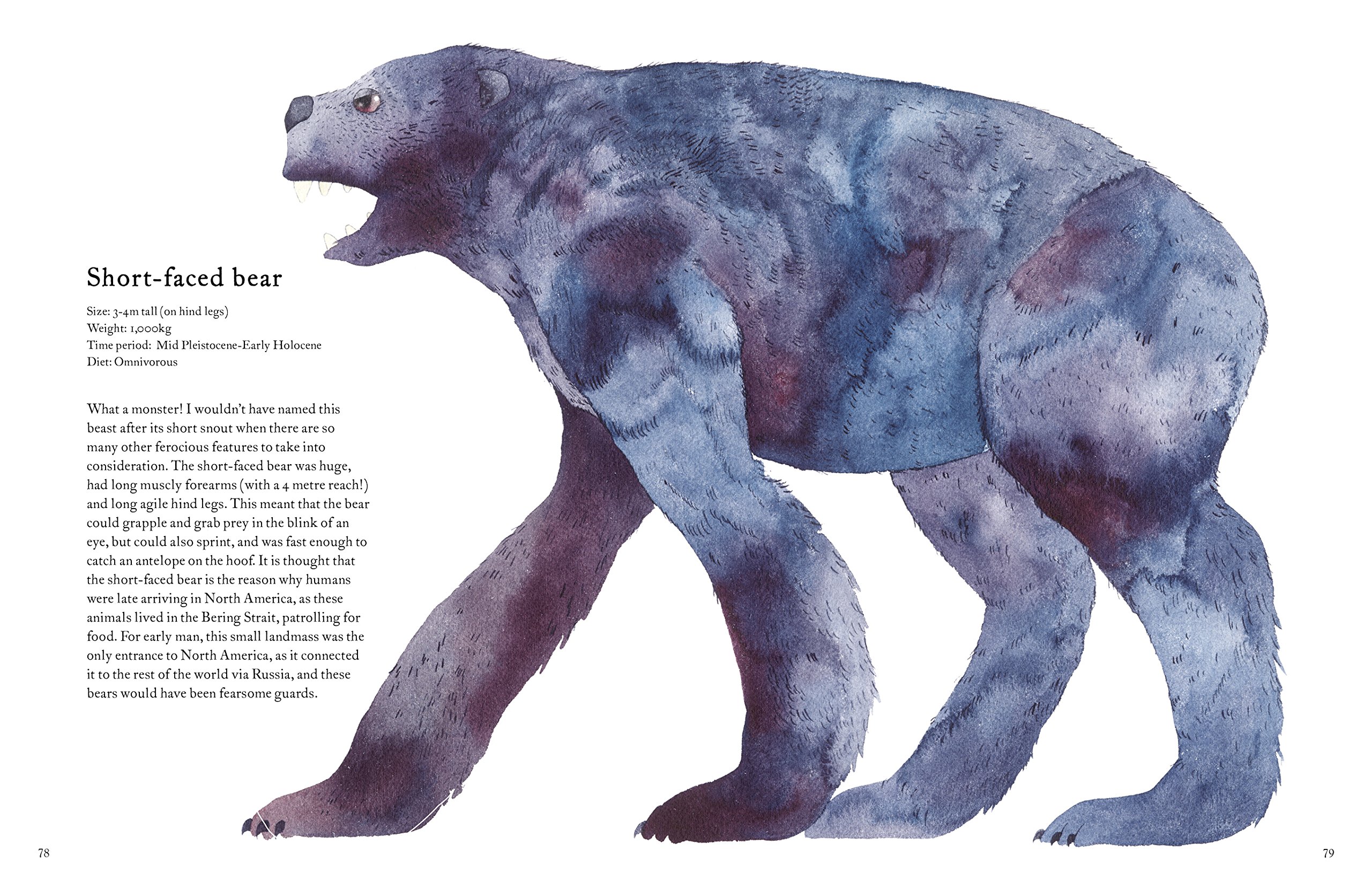
Short-nosed bear – a massive fearsome bear that kept North America human free
Megatherium – the giant sloth, as large as a modern elephant

Less celebrated than the dinosaurs, the range of beasts is equally impressive, every one a scary, amazing creature that actually stalked the planet. Like the dinosaurs, these beasts are awe-inspiring in their variety, with amazing details not seen on animals today and in a wide variety of furs, feathers and colors, making for a stunning collection of illustrations.

About the Creator: Matt Sewell, who has been described as “the Banksy of the bird world,” is an avid ornithologist and artist. He is the author of OwlsOur Garden BirdsOur Woodland BirdsOur Songbirds, and Penguins and Other Seabirds and has illustrated for the Guardian and Big Issue among many other publications. His art has been exhibited in London, Manchester, New York, Tokyo, and Paris.

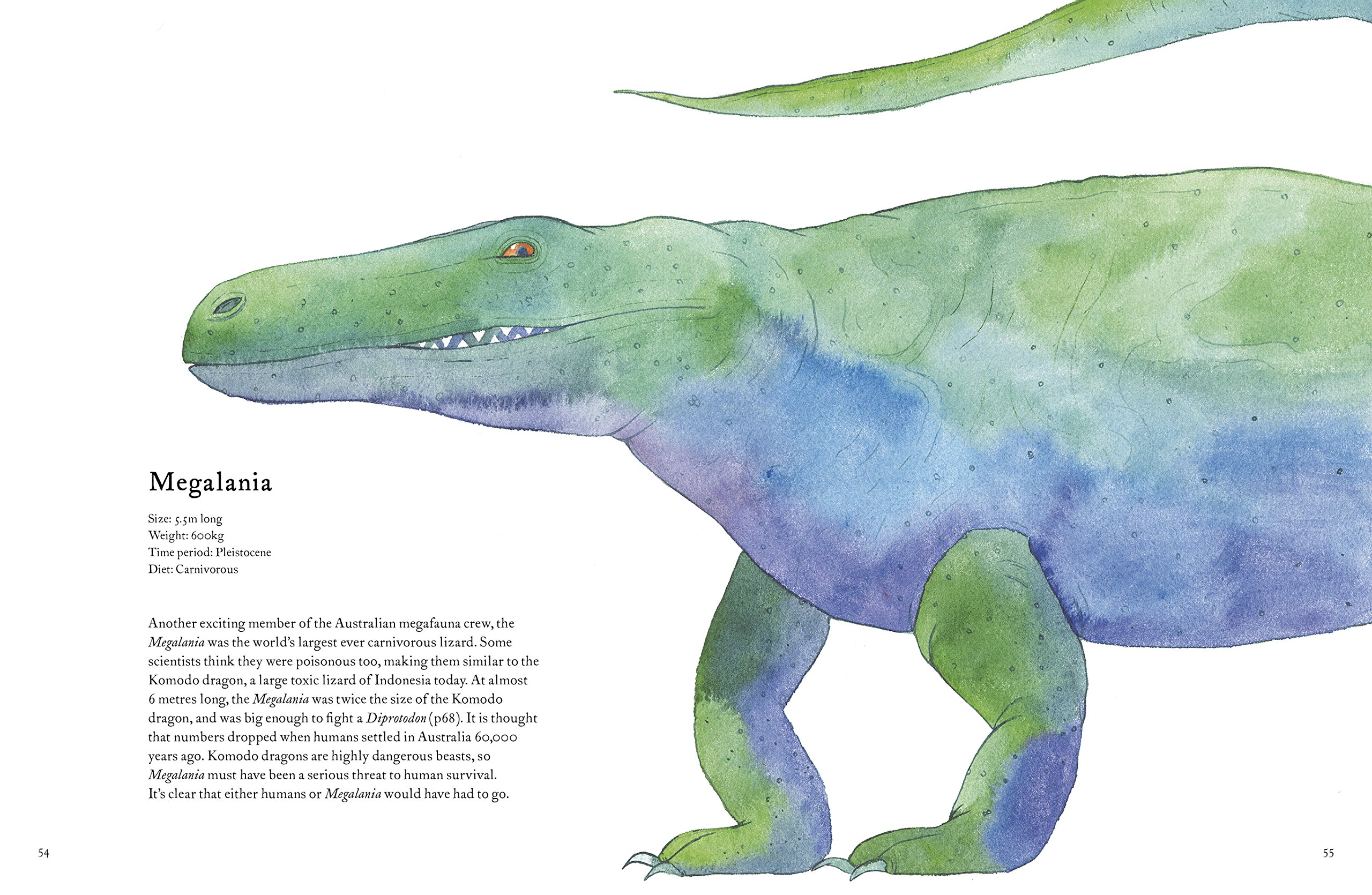
Review: What a fascinating introduction to species of animals that used to walk on our Earth. As a reader, mom, and teacher I immediately enjoyed this book. Each spread includes a synthesized blurb about the animal and a large, colorful illustration that definitely catches the eye. While the book is science-driven, it is written in a way that many different levels of scientific understanding would find it interesting. I also really liked the choice of animals that were included because it wasn’t only animals that people know about already.

Teachers’ Tools for Navigation: I want to know more, and Trent wanted to know more, so I think when kids read this, they would want to know more also. So let’s jump off on this curiosity and dive into inquiry!

First, the book starts with a timeline and each animal says what time period they are from, but it does not show the timeline. I would love to take the timeline and place each animal on it.

Also, with the foundational knowledge shared in the book, students can jump into a full on inquiry project about animals of their choice looking at when they lived, what they’re related to in modern time, how they became extinct, etc. Then students can make a presentation for a gallery walk.

Discussion Questions: 

  • When did _______ live?
  • How many years ago was that?
  • What is _______ related to [modern animals]?
  • Why did ______ go extinct?
  • What other animals lived during the same time?

Flagged Passages: 

Read This If You Love: History, Dinosaurs, Animals

Recommended For: 

classroomlibrarybuttonsmall 

Stop by Kid Lit Frenzy for more Nonfiction Picture Book love!

Signature

**Thank you to Media Master Publicity for providing a copy for review!**

Weird Little Robots by Carolyn Crimi

Share

Weird Little Robots
Author: Carolyn Crimi
Illustrator: Corinna Luyken
Published October 1st, 2019 by Candlewick

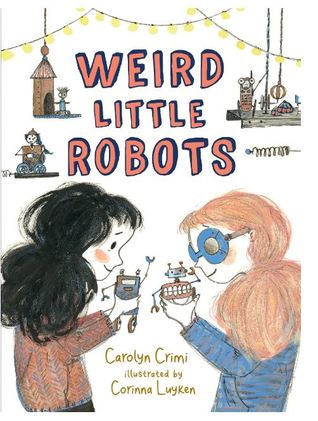
Summary: When two science-savvy girls create an entire robot world, they don’t expect the robots to come alive. But life may be a bit more magical than they thought.

Nine-year-old Penny Rose has just moved to a new town, and so far the robots she builds herself are her only company. But with just a bit of magic, everything changes: she becomes best friends with Lark, has the chance to join a secret science club, and discovers that her robots are alive. Penny Rose hardly remembers how lonely she used to feel. But then a fateful misstep forces her to choose between the best friend she’s always hoped for and the club she’s always dreamed of, and in the end it may be her beloved little robots that pay the price.

Praise: [A]uthor Crimi infuses this unassuming transitional novel with compassion, humor, and a refreshing storyline in which girls organically weave a love for science into their everyday lives. Illustrations by Luyken add to the guileless sensibility. A contemplation on the magic of friendship told with sweetness, simplicity, and science.—Kirkus Reviews

**BEA Middle Grade Book Buzz Book

About the Author: Carolyn Crimi enjoys snacking, pugs, Halloween, and writing, although not necessarily in that order. Over the years she has published 15 funny books for children, including Don’t Need Friends, Henry and the Buccaneer Bunnies, Where’s My Mummy?, There Might Be Lobsters, and I Am The Boss of This Chair. Weird Little Robots is her first novel.

For more information, and to download a free classroom guide for Weird Little Robots, visit her website. and Twitter @crims10.

Review: Thank goodness books like this exist out in the world. I cannot wait to see what this new generation of kids are like as adults now that they all have these amazing stories of smart girls to read. Even the characters who fit a certain stereotype for Penny Rose ended up proving her wrong. This book shows that there is more to everything than anyone can imagine: more to science, more to friendship, more to imagination… What a fantastic world that Penny and Lark’s story can be told!

And the story itself is one that is fun to read. Not only do you get to read about robots, engineering, ornithology, and even decorating, but the book includes a story that many kids will connect with: do you abandon one to join the others even if the one is your best friend and the others is giving an opportunity that is hard to refuse. That is something that everyone faces more than once in their life. And told in a lyrical and a bit quirky narrative, the story is just fun to read.

Teachers’ Tools for Navigation: A Classroom Guide for Weird Little Robots can be found on Carolyn Crimi’s website!

Discussion Questions: 

  • What do Penny Rose and Lark have in common?
  • Why do you think Penny Rose made the decision she did about the secret society? Did she regret it in the end? How could she have dealt with it differently?
  • If you were going to build a little robot RIGHT NOW, what items are in your backpack that you could use? Use these items and sketch out a plan.
  • How could Penny Rose have helped her other robots communicate with her?
  • Why do you think the robots waited to communicate?
  • What did the different members of the secret society show Penny Rose, and the reader, about judging others?
  • Create your own conversation starters. Then, in class, group with 2 other people and use the conversation starters to chat. Rotate.
  • What did Penny Rose’s one decision the turned her back on Lark cause?
  • Penny Rose finds her way through the woods just by listening. As a class create an obstacle course that has different sounds throughout it and see if students can navigate through using only their hearing.

Flagged Passages: “First though, Penny Rose would need a detailed plan. She went up to her bedroom, sat on her bed, and turned on the lamp she had made last year from an olive oil can. A stack of notebooks sat on her nightstand: her New Inventions notebook, her Robot Drawings and Descriptions notebook, and her To-Do List notebook. Her most secret notebook, Conversation Starters, was at the bottom of the pile.

She picked it up, found a clean page, and wrote a quick list of Possible Conversation Starters:

  1. “I think binoculars are fun.” (Lark seems to like binoculars.)
  2. “The sun seems strong today.” (Lark often wears sun goop. First determine if the sun does, indeed, seem strong.)
  3. “Sunglasses are very wise.” (Lark wears sunglasses.)
  4. “Do you like robots?” (It is unknown whether or not Lark likes robots, but it is probable that she does since most people do.)
  5. “Yesterday was my birthday. Would you like some leftover cake?” (This seems like a good bet, unless she has allergies or is gluten-free or vegan or something.)
  6. “What is in that metal box?” (This might be too nosy, although if you’re going to carry something so mysterious, you should be prepared for questions.)

Penny Rose looked over her list. She considered what her father said about Lark not hearing before. She decided she would speak loudly.

Penny Rose tore out the page and tucked it into the tool belt she wore in case she happened upon interesting items for her robots.” (Chapter One)

Read This If You Love: Ellie Engineer by Jackson Pearce, Ada Twist by Andrea Beaty, Marty McGuire by Kate Messner, The Evolution of Calpurnia Tate by Jacqueline Kelly, The Last Panther by Todd Mitchell, Frank Einstein by Jon Scieszka

Recommended For: 

classroomlibrarybuttonsmall

Signature

**Thank you to Blue Slip Media for providing a copy for review!**

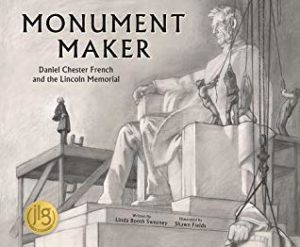
Monument Maker: Daniel Chester French and the Lincoln Memorial by Linda Booth Sweeney

Share

Monument Maker: Daniel Chester French and the Lincoln Memorial
Author: Linda Booth Sweeney
Illustrator: Shawn Fields
Published September 3rd, 2019 by Tilbury House Publishers

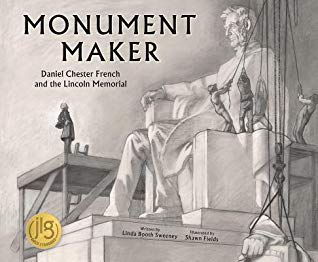
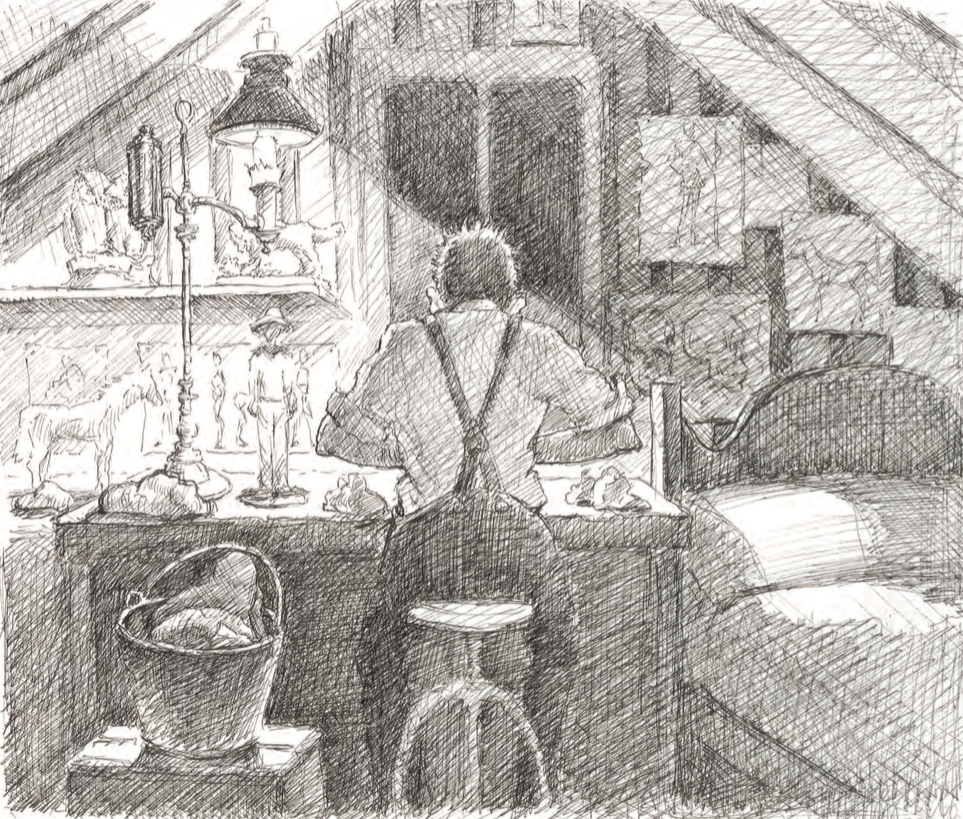
Summary: This is the story of how a farmboy became America’s foremost sculptor. After failing at academics, Dan was working the family farm when he idly carved a turnip into a frog and discovered what he was meant to do. Sweeney’s swift prose and Fields’s evocative illustrations capture the single-minded determination with which Dan taught himself to sculpt and launched his career with the famous Minuteman Statue in his hometown of Concord, Massachusetts.

This is also the story of the Lincoln Memorial, French’s culminating masterpiece. Thanks to this lovingly created tribute to the towering leader of Dan’s youth, Abraham Lincoln lives on as the man of marble, his craggy face and careworn gaze reminding millions of seekers what America can be. Dan’s statue is no lifeless figure, but a powerful, vital touchstone of a nation’s ideals. Now Dan French has his tribute too, in this exquisite biography that brings history to life for young readers.

Praise: 

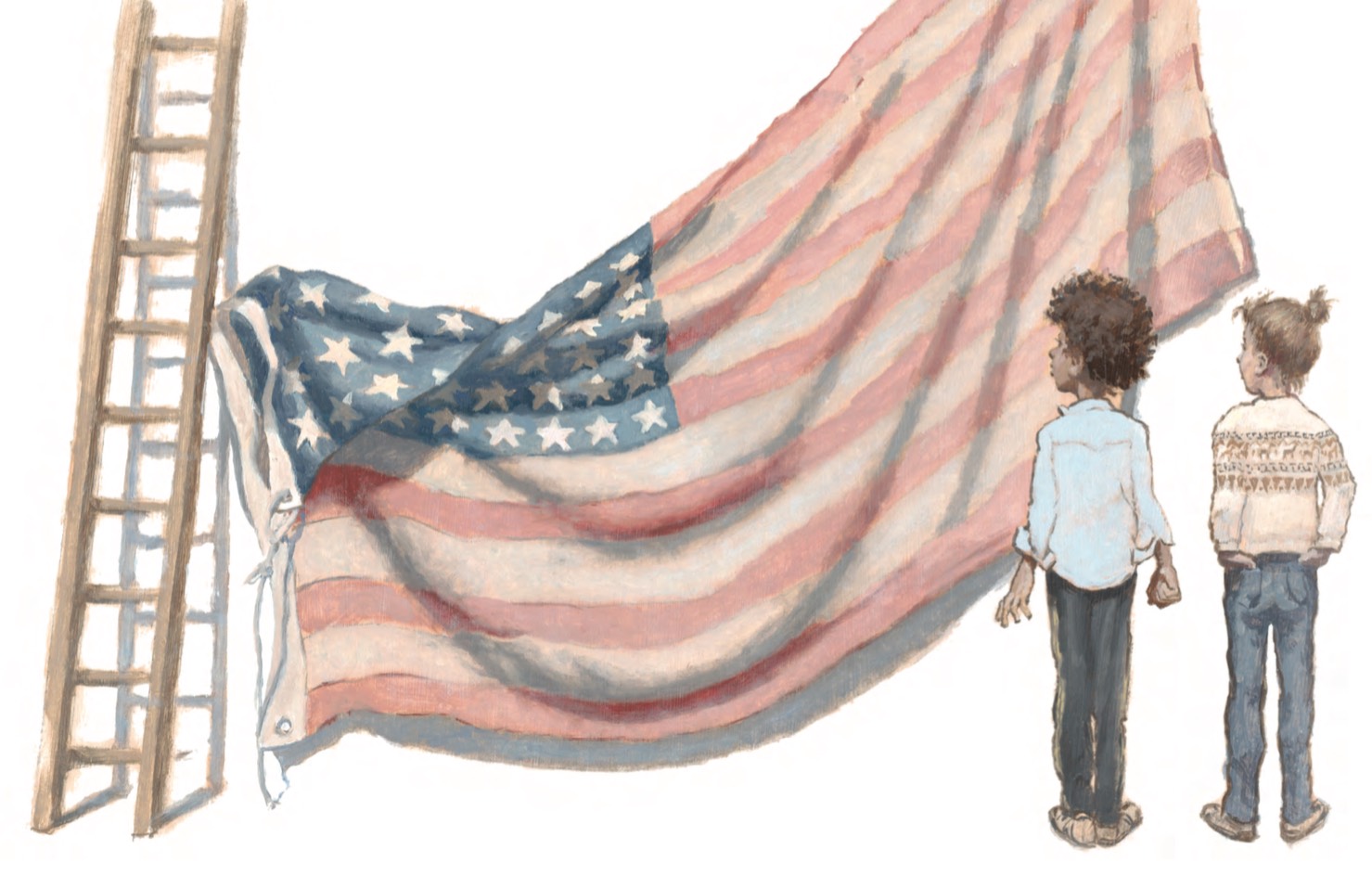
“The environment that nurtured Daniel Chester French is given loving treatment by Sweeney and Fields. . .  As Sweeney traces French’s way in the world, French goes on to create numerous statues of Civil War heroes, including the epic sculpture of Abraham Lincoln enshrined in his memorial. A timeline and author’s note fill in various gaps in the text, and Fields’ drawings are both powerful and graceful, just as French would have wanted, depicting a largely white cast but including some figures of color, including one of the two modern children who observe the story. . . Both bracing and winning, a fine tribute to the sculptor and his world. (Picture book biography. 8-12) ” – Kirkus Reviews

*Junior Library Guild Gold Standard

Note from the Creators:

When Abraham Lincoln was shot in 1865, fifteen-year-old Dan French had no way to know that one day his tribute to the great president would transform a Washington, DC marsh into a national gathering place. He only knew that he liked making things with his hands.

As a boy, Dan plowed the straightest lines on his family’s farm, but as a teen, he failed (quite spectacularly) out of MIT.  And yet, almost 50 years after Lincoln’s assassination, Daniel Chester French drew on his memories of Lincoln and his artistic talent to create a lovingly sculpted touchstone for a nation’s ideals, reminding millions of seekers what America strives for and still can be.

This is the story of how one young boy became very, very good at what he loves, and for that talent to inspire people across a country and around the world.

We hope this book both delights and unites!

About the Author: Linda Booth Sweeney is an accomplished writer and an educator specializing in the exploration of living systems. www.lindaboothsweeney.com

About the Illustrator: Shawn Fields studied art at the School of Visual Arts, the Arts Student’s League, and the New York Academy of Art. His work has been exhibited at ArtBasel Miami, Forbes Gallery NYC, Arcadia NYC, and is collected worldwide.

Review: If you have ever been to the Lincoln Memorial, you know that a very talented artist sculpted the statue you find within. Monument Maker tells us how a young farm boy takes something he is good at and makes it not only his job but his passion. And I think that is what I loved the most–it showed that there is so much more to life than what others want you to be good at and what society expects you to do well at. We all have talents and passions, look at what Daniel Chester French did with his!

Sweeney and Fields did a fantastic job telling his story while also tying in the theme mentioned above, celebrating history, and setting goals for the future. Overall, a truly deep and well done middle grade picture book!

Teachers’ Tools for Navigation: With ties to art and history as well as social-emotional learning, Monument Maker can find its home in may different classrooms.

Discussion Questions: 

  • What did Dan’s family do to help support him in his endeavors?
  • What are the different steps in creating a large monument like the Lincoln Memorial?
  • How did Daniel Chester French become one of the best in his field?
  • What is something you love that you want to do when you grow up? How can you become an expert?
  • Why was it important for Daniel to learn how to draw even though he wanted to be a sculptor?
  • What does Daniel Chester French failing out of some classes yet becoming a master sculpture tell you?
  • How does the author tie together Lincoln, French’s sculpture, other history, and the future?

Flagged Passages: 
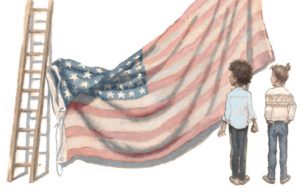
“History shapes our lives. And what we do with our lives can shape history. That’s how it was with Daniel Chester French.”
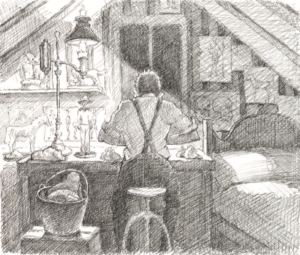
“Soon afterward, Dan’s father returned from Boston carrying a cardboard box. In it was ten pounds of cold, wet clay for a family sculpting night.

One by one the family gave up, but not Dan. He kept at it until the shape of a dog’s head appeared in his hands. From then on, Dan worked on the farm during the day and sculpted birds and animals at night.”

Read This If You Love: Art, Abraham Lincoln, Architecture, Sculpture

Recommended For: 

classroomlibrarybuttonsmall 

Don’t miss out on other nonfiction picture books! Check out Kid Lit Frenzy’s Nonfiction Picture Book Challenge: 
Signature

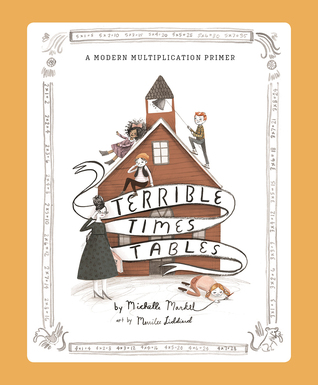
Terrible Times Tables by Michelle Markel

Share

Terrible Times Tables
Author: Michelle Markel
Illustrator: Merrilee Liddiard
Published August 6, 2019 by Cameron Kids

Goodreads Summary: Inspired by a Victorian math primer, Terrible Times Tables is a modern take on learning one’s multiplication tables, from numbers 2 to 10, featuring elementary school themes of homeroom, field trips, cafeteria food, holidays, and recitals. Featuring a reluctant narrator and a few unwitting critters, learning math has never been so much fun or amusing.

My Review: Ah! This book is so charming. The art and the words feel simultaneously old-fashioned and contemporary! It feels just like an older Victorian math primer, but yet the words make it relevant to children today! I read this with my son (who is in kindergarten and too young for multiplication), and we were giggling away at the rhymes and illustration. I’d love to see this book in classrooms. It makes math genuinely fun!

Teacher’s Tools For Navigation: Elementary school math teachers will find great joy in this book. Students might write and illustrate their own math primer with a theme. In this book, each number has a different theme, and I think students would love to create their own! This text is very inspiring for me as an adult, and I wanted to play with words, too! 🙂 I can’t wait for my sons to be old enough to use this book.

I’d also love to compare this with an older, Victorian math primer. Kids would get a kick out of that!

Discussion Questions: Which theme was your favorite, and why?; How do the words and art work together to make this book so successful?; How does the author integrate clever rhymes to make readers enjoy math?

We Flagged: “4 x 1 is 4

Sam pukes. Same pukes some more.”

Read This If You Love: I’m Trying to Love Math by Bethany Barton; On a Beam of Light: A Story of Albert Einstein by Jennifer Berne; Math 

Recommended For: 

readaloudbuttonsmall classroomlibrarybuttonsmall

Growing to Greatness Series: Just Like Beverly: A Biography of Beverly Cleary by Vicki Conrad

Share

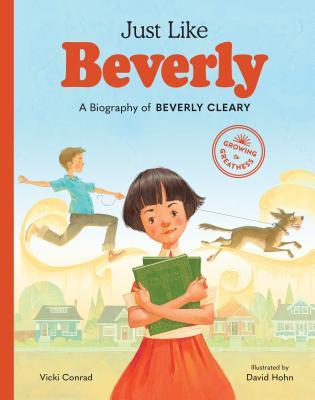
Just Like Beverly: A Biography of Beverly Cleary (Growing to Greatness)
Author: Vicki Conrad
Illustrator: David Hohn
Published August 13th, 2019

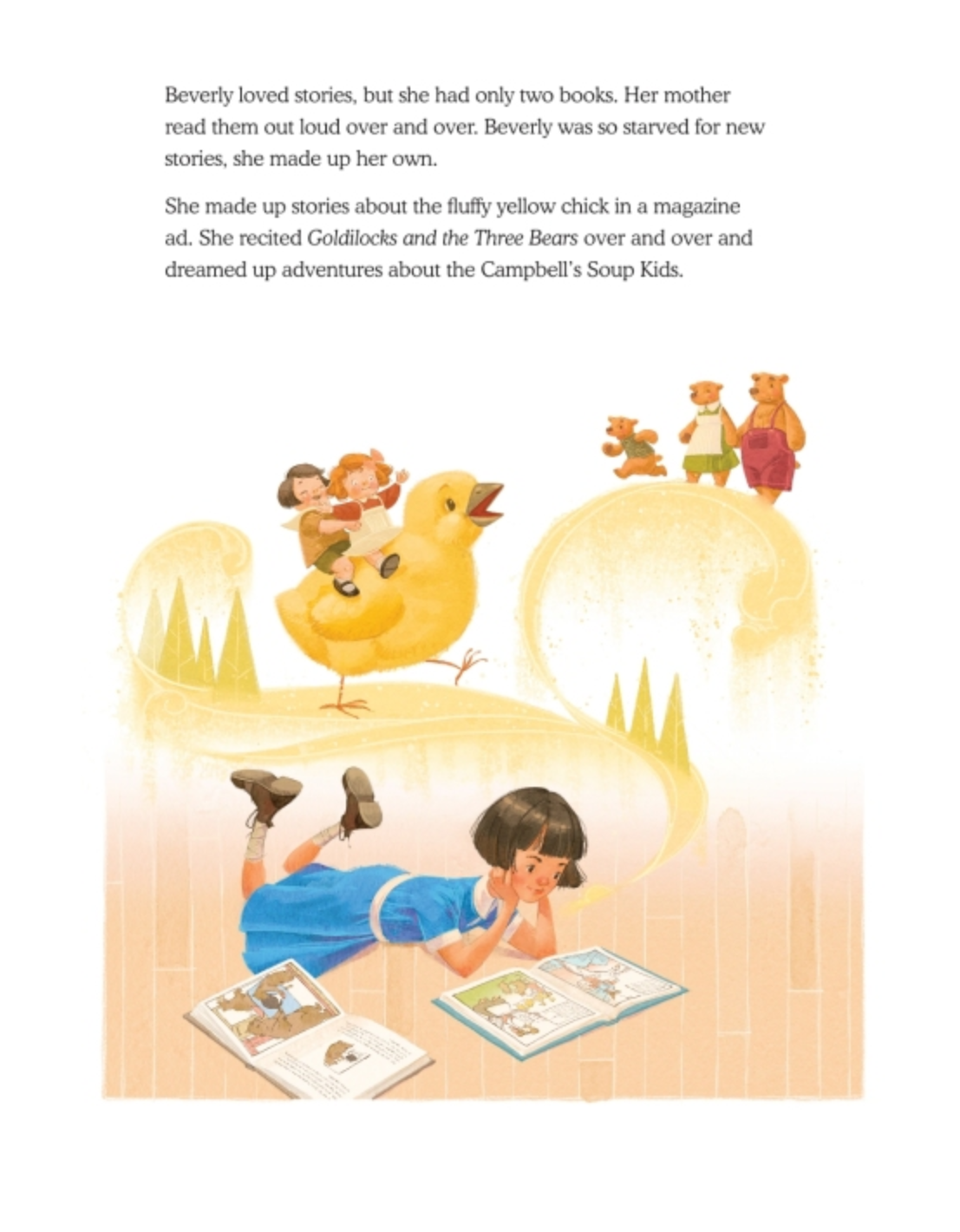
Summary: Just Like Beverly follows the life of beloved children’s author Beverly Cleary from her early years in Oregon to her career as a successful writer who wrote stories, including the wildly popular Ramona and Henry Huggins series, for kids just like her.

As a young girl, Beverly Cleary struggled to learn to read and found most children’s books dull and uninteresting. She often wondered if there were any books about kids just like her. With hard work, and the encouragement of her parents and a special teacher, she learned to read and at a young age discovered she had a knack for writing.

Beverly Cleary’s story comes to life in this narrative nonfiction picture book as she grows to follow her dreams of writing the books she longed for as a child, becoming an award-winning writer and one of the most famous children’s authors of all time.

Beautiful illustrations capture Cleary’s sense of humor, struggles, and triumphs, and are filled with Easter eggs throughout for fans to discover.

Praise: 

“Hohn captures her lively spirit through illustrations, reminiscent of those by Alan Tiegreen for Cleary’s own books, that will keep young readers entertained. A loving and informative tribute worthy of celebrating Cleary’s 103rd year of life.” —Kirkus Reviews, starred

“Conrad writes with clarity and features significant details that bring Cleary’s experiences and personality to life for kids today. Hohn makes good use of color, light, and pattern in his imaginative illustrations, which interpret the text sensitively. The artwork looks fresh and appealing while suggesting the period, the emotional resonance, and the upbeat spirit of Cleary’s books.”–Booklist, starred

“A celebration of Cleary, literacy, and the pursuit of ambitious dreams, this charming picture book will enhance any biography collection.”–School Library Journal

“Debut author Conrad’s storytelling is straightforward, ably conveying—in tandem with Hohn’s homespun, vintage-style illustrations—the various eras of Cleary’s life and her passion for writing and for nurturing readers.”–Publishers Weekly

About the Author: VICKI CONRAD is a teacher with a passion for literacy development and inspiring students to love reading just as much as she did as a child. Growing up, she was always found with a book in her hand, and she has stayed that way ever since. When she is not writing or teaching, she is traveling the world, growing a garden, or searching for stories. She has called Seattle her home for many years. She doesn’t mind the rain, as long as she has coffee, friends, and good books for company. Just Like Beverly is her first book.

About the Illustrator: DAVID HOHN is an illustrator based in Portland, Oregon. His days are spent in the studio imagining what it would be like to be someone else, doing something else–and then he paints it.

Review: It was so wonderful reading about Beverly Cleary’s childhood! It truly showed how supportive teachers and parents plus some access to books truly can result in brilliance! It just took some guidance, praise, and confidence to make her bloom as a writer.

From a parent and teacher point of view, I loved that Beverly saw a issue in the children lit world and used a talent to work to try to solve that issue–what a great role model!

Teachers’ Tools for Navigation: There are three ways I picture this book being an asset in the classroom.

First, it is a wonderful addition to any picture book biography text set/mentor text set.

Second, it is a beautiful book to read aloud! And truly would lead to wonderful discussions.

Third, I could see it being used in conjunction with Cleary’s novels. How does her childhood story connect to the novels that she wrote?

Discussion Questions: 

  • When looking for stories about kids like you and your friends, what type of characters are you looking for?
    • [Writing prompt] Write a fictionalized story that you can relate to.
  • What character traits did Beverly have to be as successful a writer as she was?
  • What does Beverly’s pride in winning a contest that she was the only entry say about you?
  • What do you believe is the author’s purpose for writing this title?
  • How does Beverly’s story fit the theme of “Growing to Greatness”?
  • How is children literature different now than it was during Beverly’s childhood?

Flagged Passages: 

Read This If You Love: Beverly Cleary!; Picture book biographies about writers such as Some Writer! by Melissa Sweet; A Boy, A Mouse, and a Spider by Barbara Herkert; A River of Words by Jennifer Bryant; Papa is a Poet by Natalie S. Bober

Recommended For: 

classroomlibrarybuttonsmall 

Don’t miss out on other nonfiction picture books! Check out Kid Lit Frenzy’s Nonfiction Picture Book Challenge: 

Signature

Weird But True: Class Collaborative Research Activity

Share

My students love the Weird but True books by National Geographic, but one thing they don’t like about the books are the lack of information found in the books. Because of this, as we chatted in class, we decided to make a class “Weird But True” presentation with not only the weird and true facts but with extra information and sources! 

All three of my classes all worked in the same Google Slides presentation and built this amazing document of fascinating facts: 

Weird But True
Please view the Google Slides presentation to see the extra information in the Speaker Notes.

This was such a fun and interesting project! It made students check on facts, learn about reliable sources, and learn all sorts of interesting and fun facts!

Signature

The Remember Balloons by Jessie Oliveros

Share

The Remember Balloons
Author: Jessie Oliveros;  Illustrator: Dana Wulfekotte
Published: August 28, 2018 by Simon & Schuster

Goodreads Summary: James’s Grandpa has the best balloons because he has the best memories. He has balloons showing Dad when he was young and Grandma when they were married. Grandpa has balloons about camping and Aunt Nelle’s poor cow. Grandpa also has a silver balloon filled with the memory of a fishing trip he and James took together.

But when Grandpa’s balloons begin to float away, James is heartbroken. No matter how hard he runs, James can’t catch them. One day, Grandpa lets go of the silver balloon—and he doesn’t even notice!

Grandpa no longer has balloons of his own. But James has many more than before. It’s up to him to share those balloons, one by one.

My Review and Teachers’ Tools for NavigationThis book is beautifully conceived. James’ grandpa has colored balloons that represent his favorite memories. Some of these memories begin to slip away, and James cannot catch them as they fly into the sky. Soon, his grandpa starts forgetting who James is, too. I read this in my son’s new school’s library and had to work very hard not to hold back tears. It is a stunning story, and I think it will resonate with both adults and children. This book allows for rich discussions of senility and Alzheimer’s Disease.

As I read this with my son, I was compelled to have him draw his own balloons to represent his favorite memories. While he drew his balloons, I drew a balloon of a shared memory at the same time. Teachers might have students cut balloons out of colored paper and ask students to create a giant bulletin board filled with their memories together.

This is a great text to teach the concept of the extended metaphor.

Discussion Questions: How does James feel when his grandpa starts to lose his balloons?; What memories would make up your own balloons?; What is a metaphor? How are the balloons a metaphor?

Flagged Spreads: 

Read This If You Loved: What a Beautiful Morning by Arthur A. Levine; Forget Me Not by Nancy Van Laan; The Memory Box by Mary Bahr, Still My Grandma by Veronique Van Den Abeele, Really and Truly by Emilie Rivard, Wilfrid Gordon McDonald Partridge, written by Mem Fox, What’s Happening to Grandpa? by Maria Shriver

Recommended For: 

readaloudbuttonsmall classroomlibrarybuttonsmall

RickiSig